Hin Yai: The Gulf Pinnacle Where Sharks Patrol at 14 Metres
23 เมษายน 2569
A submerged granite pinnacle off Samae San, Hin Yai rises from 32 metres to a coral-covered plateau at 14 m — drawing blacktip sharks, nudibranchs, and rare clownfish to one of the Gulf of Thailand's best offshore dives.
A Granite Giant Hiding in the Gulf
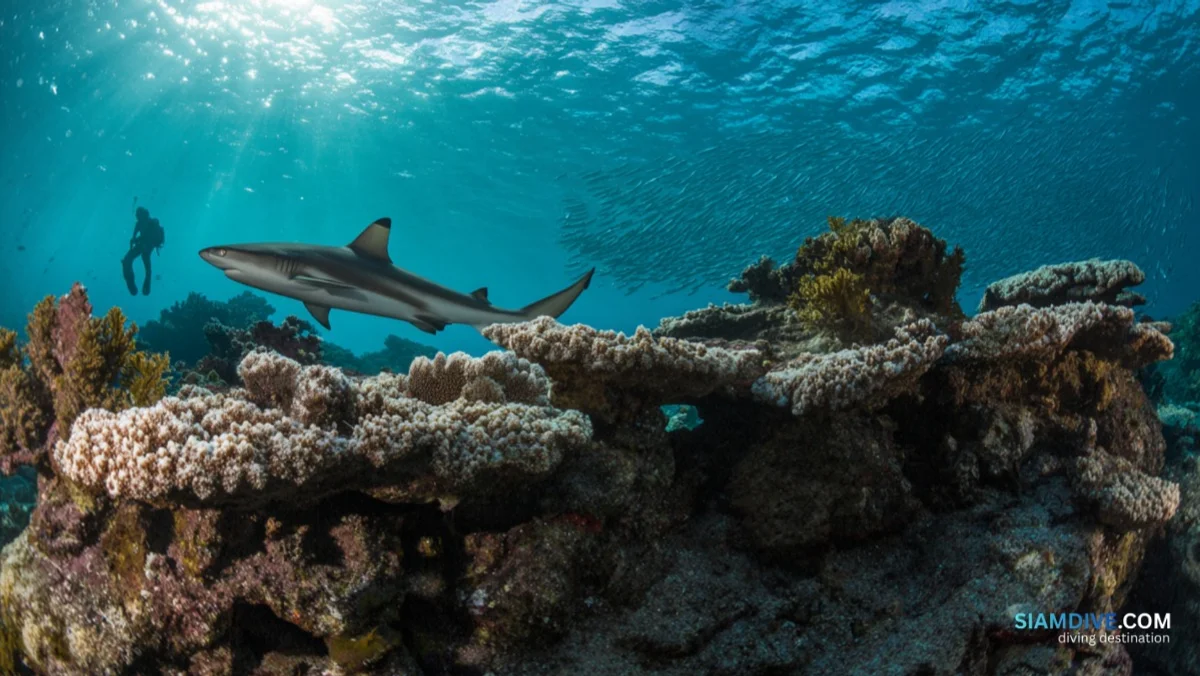
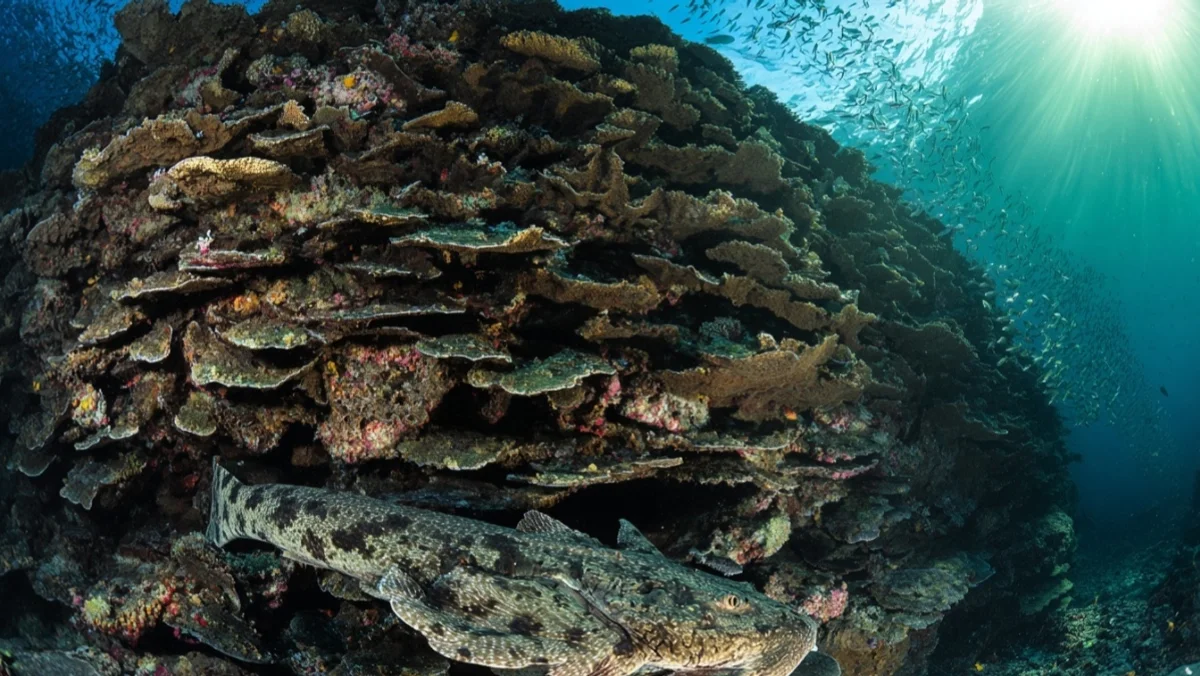
Fourteen metres below the surface, somewhere between the Samae San archipelago and the open Gulf of Thailand, a granite plateau appears out of deep blue water like the roof of a submerged cathedral. This is Hin Yai — Thai for "Big Rock" — and the name undersells it. The formation drops away on all sides into 30-plus metres of blue, its flanks carpeted in hard corals and patrolled by blacktip reef sharks that cruise the rock shelf with an air of casual ownership. For years, the site was little more than a hazard marker on Royal Thai Navy charts. Fishermen knew the coordinates; divers did not. That has changed.
Where Exactly Is Hin Yai?
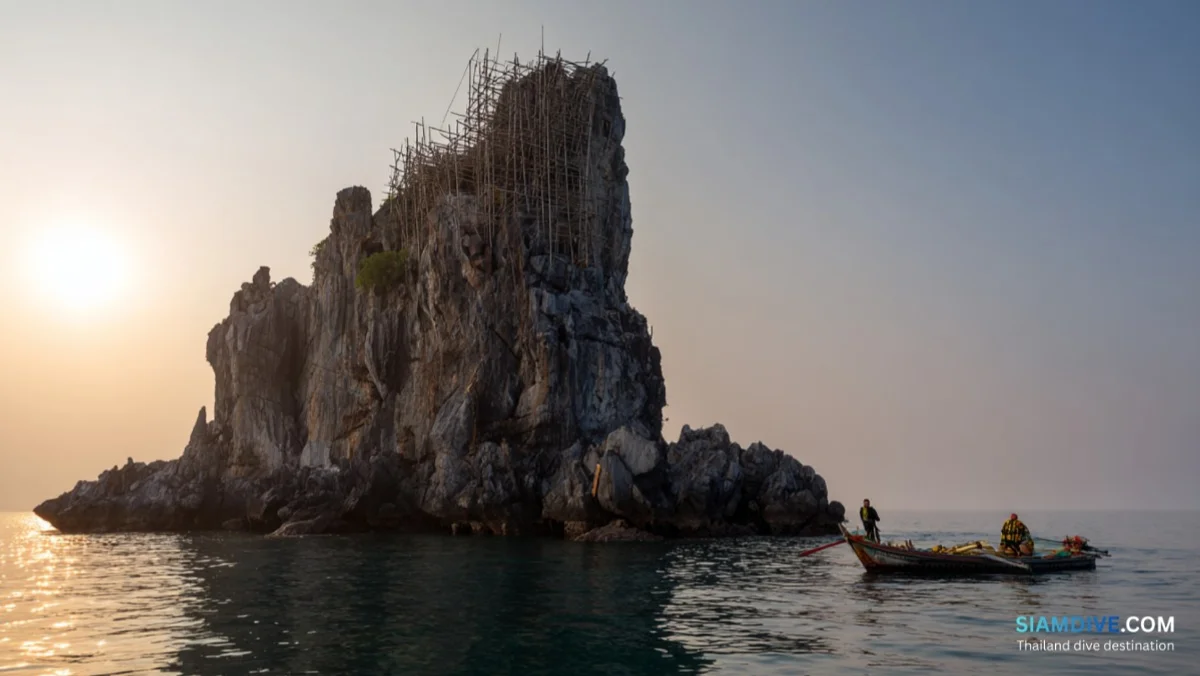
Hin Yai sits roughly one hour by dive boat southeast of Pattaya, beyond the inner islands of the Samae San archipelago. The pinnacle falls within the boundaries of Mu Ko Samae San, a marine protected area under Royal Thai Navy supervision that gained formal national park status in 2021. Unlike the nearshore reefs around Koh Samae San or Koh Chan, Hin Yai belongs to what operators call the "Far Island" group — a cluster of offshore formations that includes the neighbouring Hin San Chalarm (Shark Fin Rock), typically dived on the same trip.
- Province: Chonburi (Sattahip District)
- Marine park: Mu Ko Samae San
- Distance from Pattaya: ~45 minutes to 1 hour by dive boat
- Distance from Bangkok: ~2.5 hours by road to pier, then boat
- Departure pier: Khao Ma Jor (ท่าเรือเขามาจอ), Sattahip
- Park fees: 300 THB (Thai nationals) / 600 THB (foreigners)
Topography: What the Rock Looks Like Below
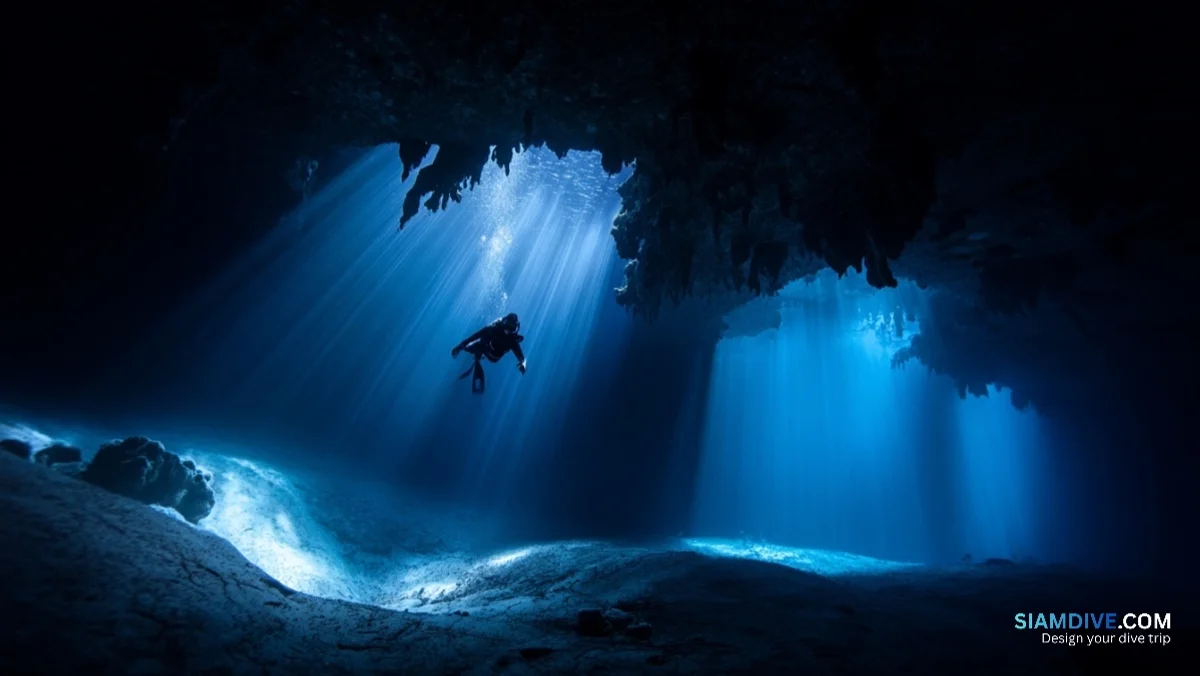
The pinnacle's main plateau begins at roughly 14 metres and forms a broad, flat shelf — wide enough that a group of divers can spread out without crowding. Think of it as a granite tabletop suspended in blue water, its edges dropping away into progressively deeper terrain. From this shelf, the rock slopes and tumbles in terraced steps toward a sandy seabed at 30-32 metres. Each terrace creates a distinct habitat band: the shallowest tier hosts dense hard coral gardens bathed in sunlight, while the middle tiers transition to mixed coral and sponge communities, and the deepest steps merge into sand channels where rays and bottom-dwellers settle.
The north face tends to be steeper, with boulder-sized blocks that have broken away from the main formation and now sit half-buried in sand. These fallen blocks are worth exploring individually — each one hosts its own micro-ecosystem of encrusting sponges, soft coral tufts, and the small cryptic creatures that macro photographers spend entire dives documenting. The gaps between boulders create overhangs and swim-throughs where moray eels and juvenile reef fish shelter from the current.
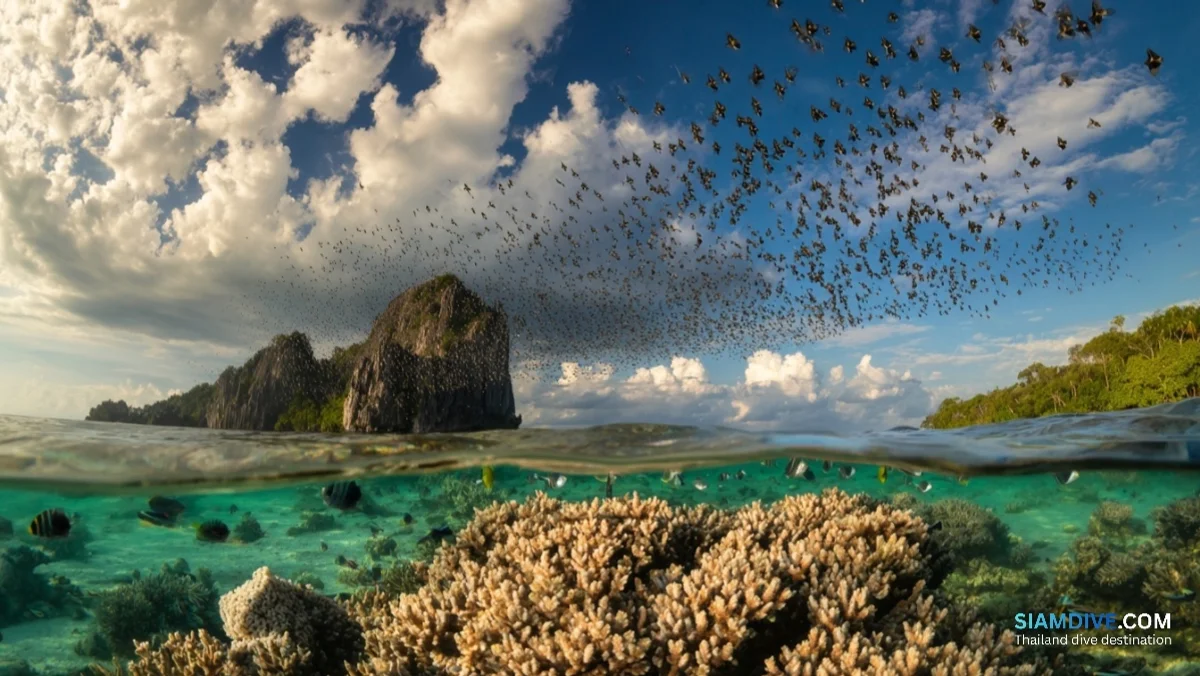
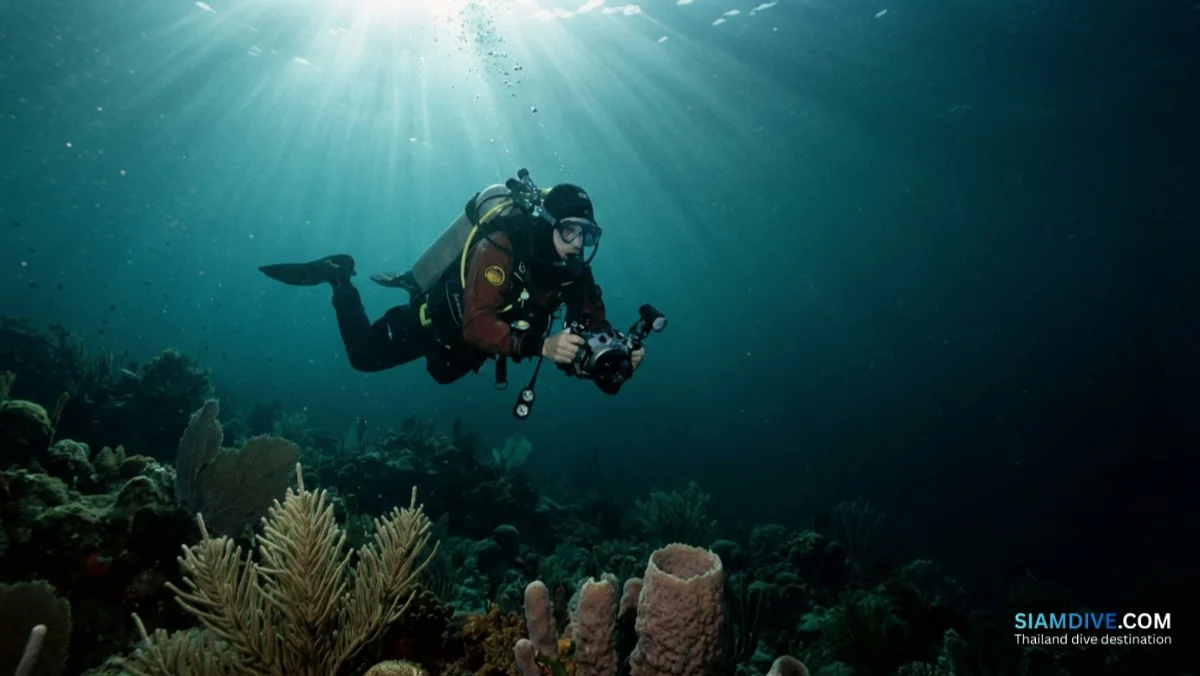
The upper sections are dominated by hard coral coverage: staghorn colonies, Porites bommies, and patches of leather coral fill the spaces between granite surfaces. Coral health here is notably better than at many nearshore Gulf sites — a function of the offshore position, cleaner water, and limited anchor damage within the marine park. Deeper, the rock gives way to sea fans and whip corals that sway in the mild current. The transition between hard coral garden and deeper blue water happens quickly here — one reason the site feels more like an Andaman pinnacle than a typical Gulf of Thailand reef.
Marine Life on the Pinnacle
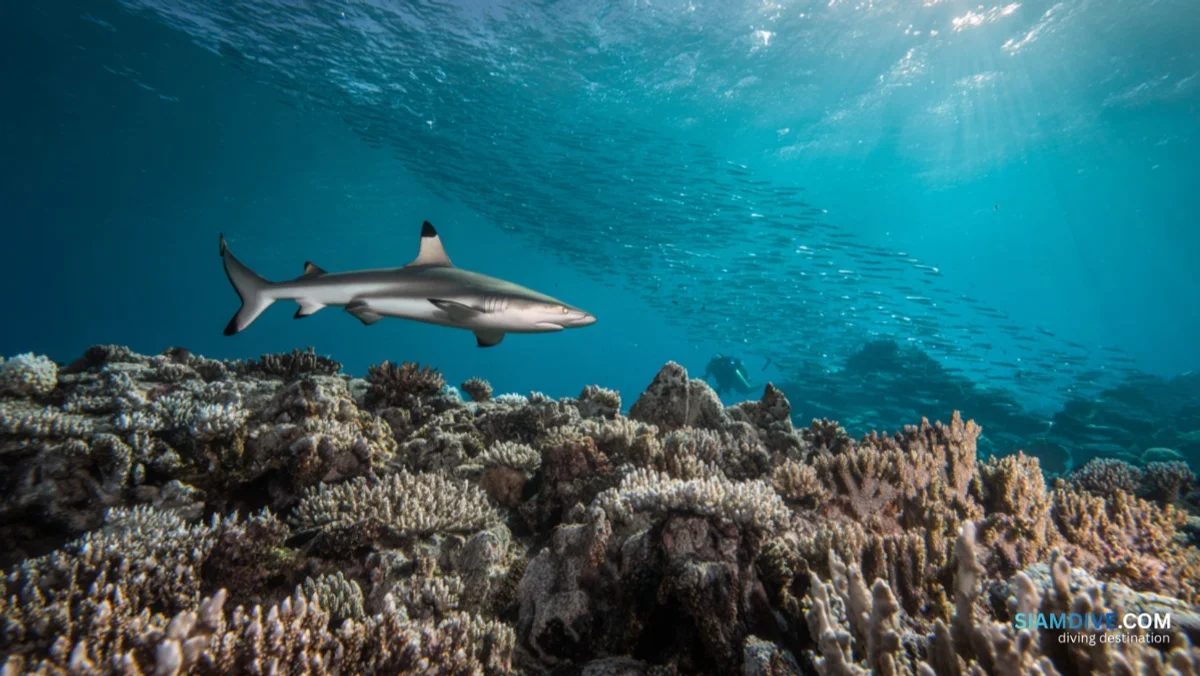
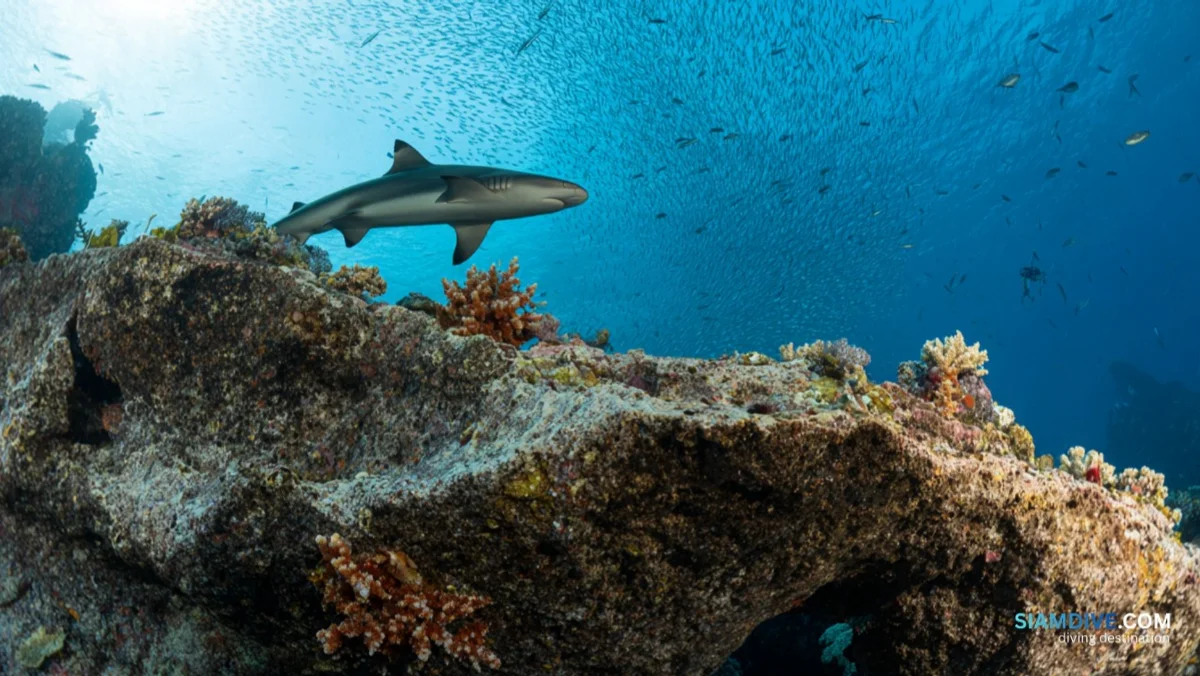
What makes Hin Yai memorable is the density of encounters packed into a single dive. The rock shelf at 14-16 metres is where blacktip reef sharks tend to patrol, often visible within the first minutes of a descent. Below the shelf, blue-spotted stingrays rest on sandy ledges, and large moray eels peer from crevices in the granite.
The Samae San region as a whole supports over 150 documented nudibranch species according to the Sea Slug Thailand citizen science database, and Hin Yai contributes generously to that count. Four or more nudibranch varieties are commonly spotted on a single dive. The area also harbours the false clown anemonefish — the fish most people call "Nemo" — a species that is genuinely rare in the Gulf of Thailand.
Two soft coral species new to science were first described from the Samae San area: Chironephthya sirindhornae and Chironephthya cornigera. While their exact distribution across individual sites is still being mapped, these findings highlight how much of this marine park's biodiversity remains uncatalogued.
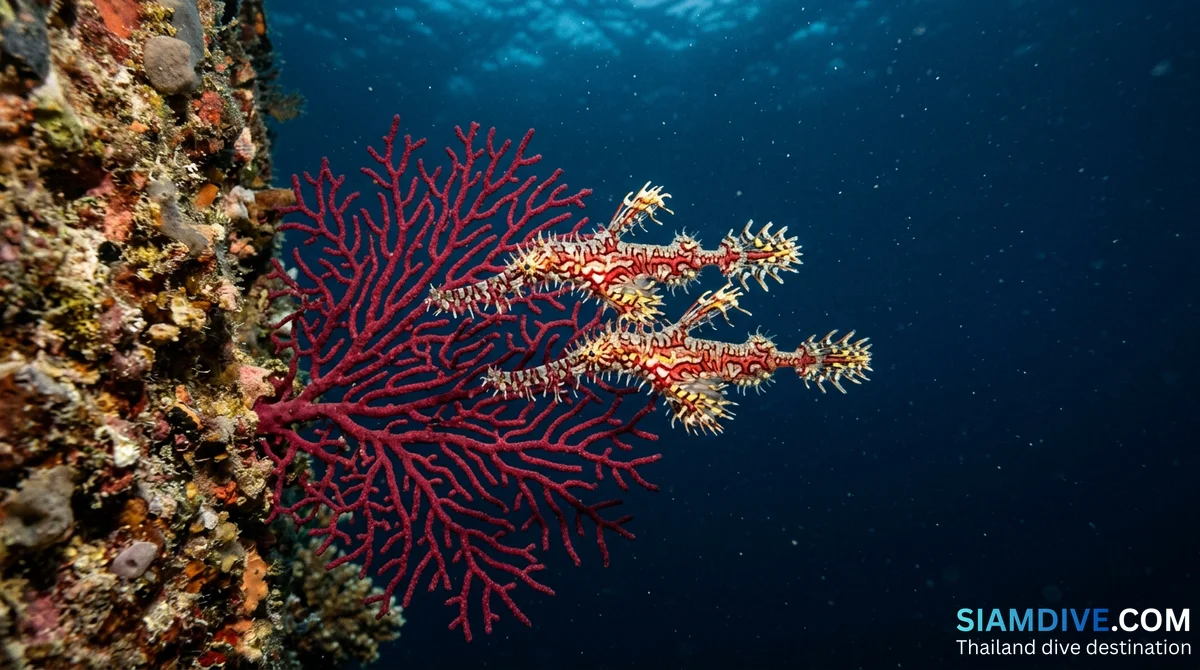
The macro life deserves its own mention. Beyond nudibranchs, patient divers find xeno crabs — tiny crustaceans that mimic the whip coral they inhabit — along with ornate ghost pipefish lurking among crinoids and occasional seahorses clinging to soft coral branches. The density of macro subjects on a single boulder can rival dedicated macro sites in the Lembeh Strait, albeit with different species composition. For photographers, this means a macro lens on Hin Yai is never wasted, even when the main draw is sharks.
- Sharks: Blacktip reef sharks on the rock shelf (14-18 m)
- Rays: Blue-spotted stingrays, occasional mobula rays in season
- Macro: 4+ nudibranch species per dive, xeno crabs, seahorses, cleaner pipefish
- Reef fish: Barracuda schools, batfish, trevally, parrotfish, clownfish (3+ species)
- Eels: Giant moray, white-eyed moray in granite crevices
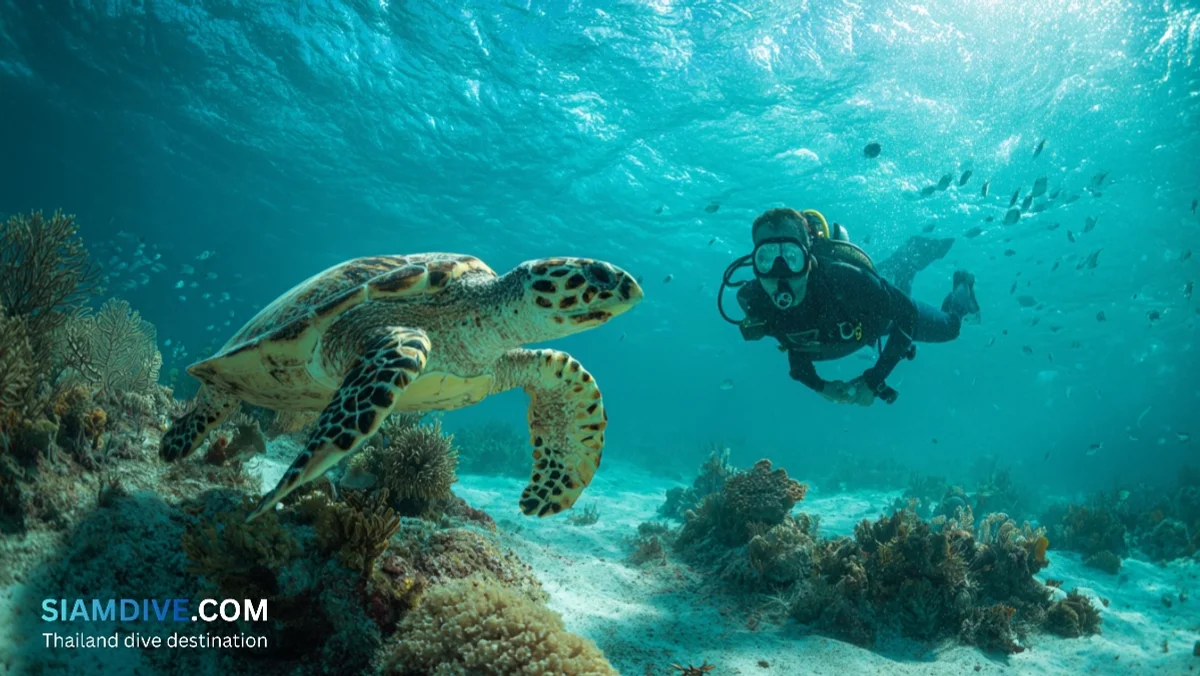
- Turtles: Hawksbill sea turtles reported at nearby sites
Diving Conditions and When to Go
Hin Yai can be dived year-round, though the Gulf of Thailand's seasonal patterns matter here more than at nearshore sites. The pinnacle's offshore position means it catches cleaner, bluer water than the islands closer to the coast — on a good day, visibility at Hin Yai reaches 20-25 metres, a figure that surprises divers who associate Pattaya-area diving with 5-8 metre viz.
The premium window runs from September through December, when the southwest monsoon has settled, plankton blooms have cleared, and the water turns that deep blue-green that makes wide-angle photography possible. January through March remains solid, though occasional northeast wind chop can make surface intervals uncomfortable. July through August brings rain squalls and reduced visibility on some days, but the site remains accessible.
- Best season: September – December (clearest water, calmest seas)
- Good season: January – March
- Water temperature: 27-30 °C year-round
- Visibility: 10-25 m (site-dependent; can exceed 20 m at the pinnacle)
- Current: None to moderate; occasionally strong on spring tides
- Depth range: 14-32 m
Currents at Hin Yai are generally manageable but can pick up during spring tides. Most dive operations time trips around slack high tide for the best combination of visibility and calm water. A surface marker buoy (SMB) is recommended, as the site sits in open water with no land reference above the surface.
Who Should Dive Hin Yai?
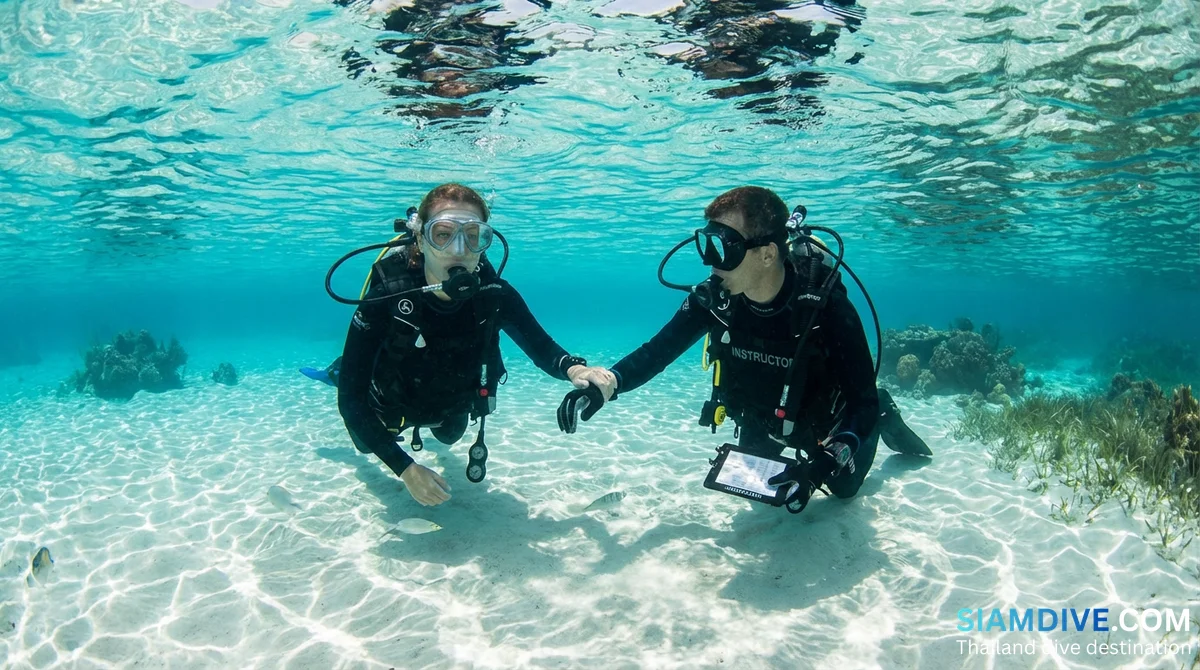
The minimum depth of 14 metres and the open-water location place Hin Yai firmly in the category of sites suited to certified Open Water divers and above, though experienced divers will get the most from it. Good buoyancy control matters — the coral-encrusted plateau is fragile, and the depth transitions happen quickly. Divers who struggle to maintain neutral buoyancy at 14-18 metres risk either damaging coral above or drifting into deeper water below.
The site also works well for Advanced Open Water training dives, particularly deep dive and navigation specialties. For underwater photographers, the combination of wide-angle subjects (sharks, schools, the pinnacle silhouette) and macro subjects (nudibranchs, pipefish) means both a fisheye and a macro lens could stay busy for an entire dive.
Hin Yai is not a snorkelling site. The plateau begins at 14 metres, and there are no shallow reef flats. Snorkellers looking for coral in the Samae San area should consider Koh Chan or Koh Kham, where reef starts within a metre of the surface.
Getting There: Logistics and Planning
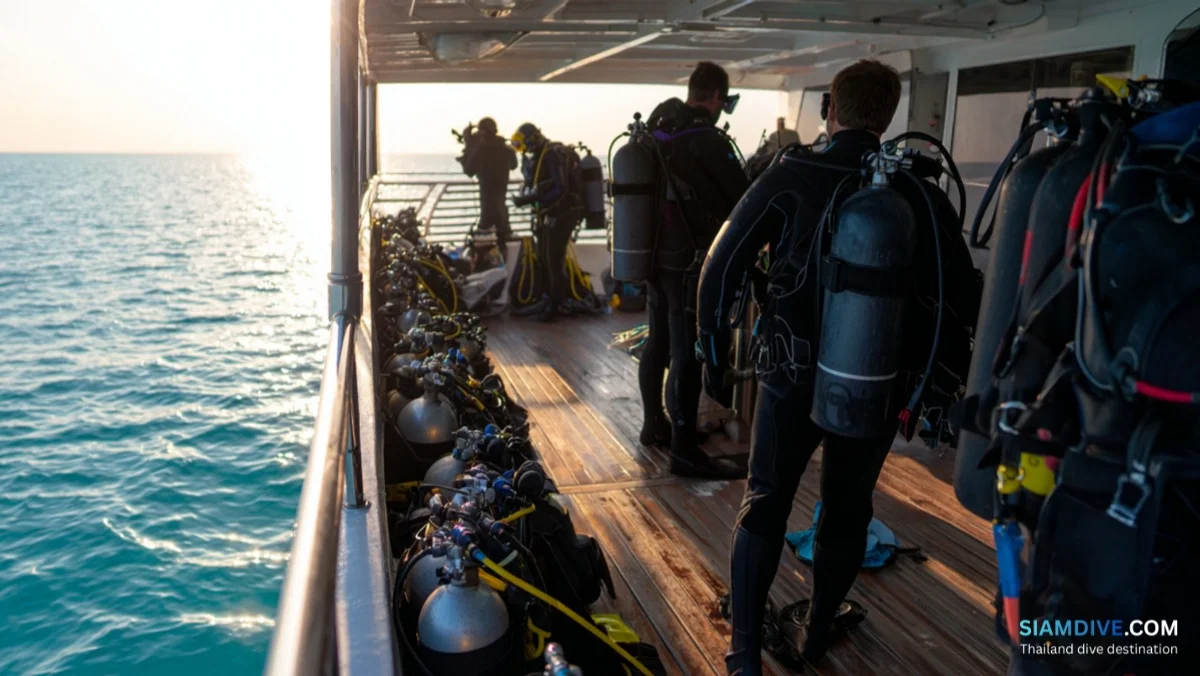
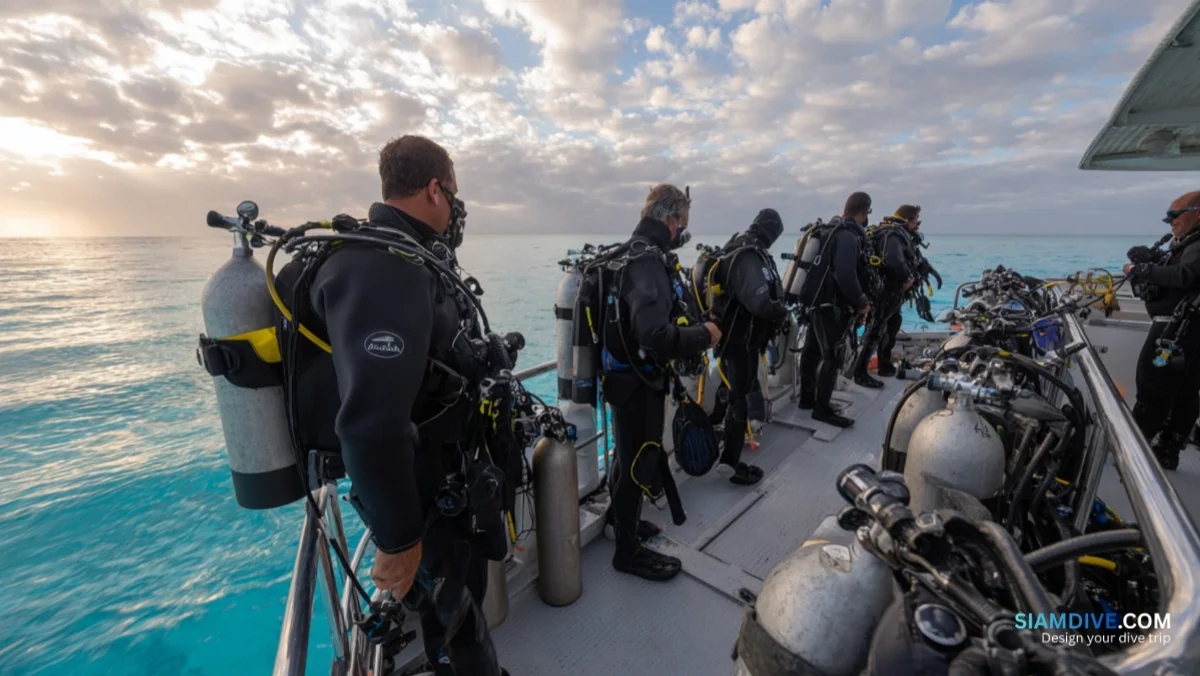
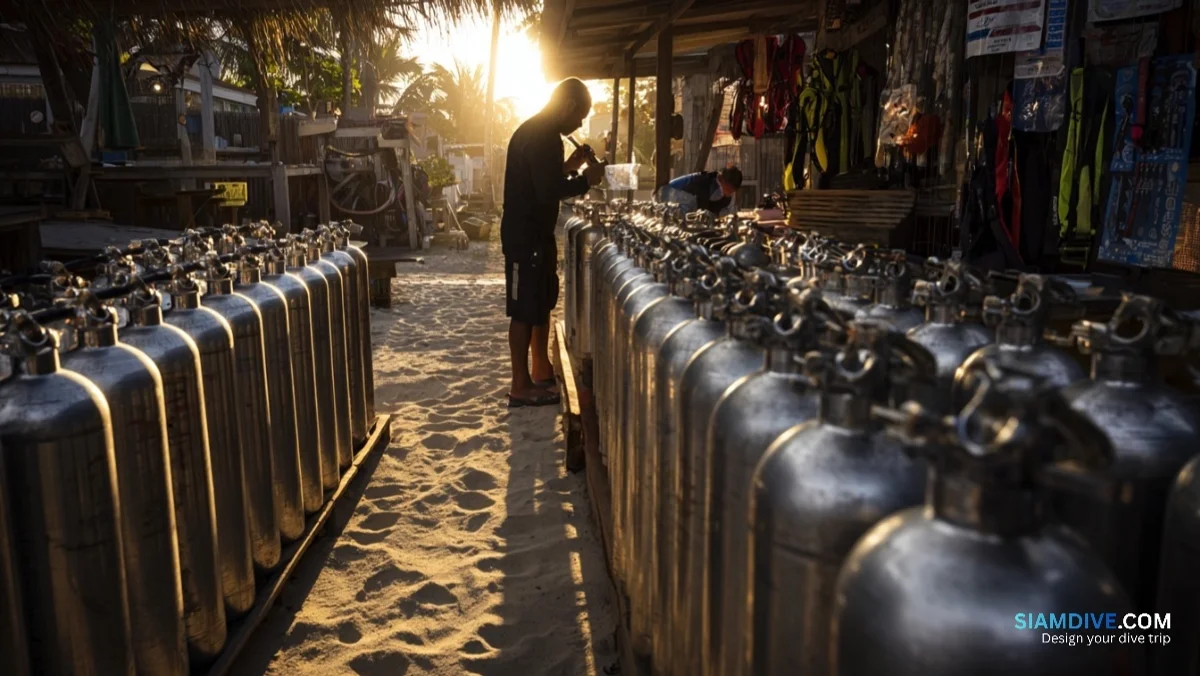
Hin Yai is reached via dive boats departing from Sattahip — either from the Navy-controlled Khao Ma Jor pier or from private marinas nearby. The standard itinerary pairs Hin Yai with Hin San Chalarm on a two-dive trip, with a surface interval spent drifting or anchored near Koh Rong Khon. A typical day involves an early-morning departure, two dives, and a return by mid-afternoon.
From Bangkok, the drive to Sattahip takes around 2.5 hours via Motorway 7, with the last stretch winding through Sattahip town toward the coast. Pattaya-based divers can reach the departure point in roughly 45 minutes. Some operators run day trips from Bangkok that include Hin Yai when conditions allow, though the longer boat ride means these trips depend heavily on sea state. Weekend trips are the most common format: drive down Saturday morning, dive Saturday and Sunday, drive back Sunday evening.
Because the entire area falls within a Navy-supervised marine park, visitors must pay the national park entry fee. Access is managed through authorised boats — independent vessels cannot simply motor out to the pinnacle without coordination. This controlled access has an upside: it keeps boat traffic manageable and prevents the kind of overcrowding that plagues some popular dive sites elsewhere in the Gulf.
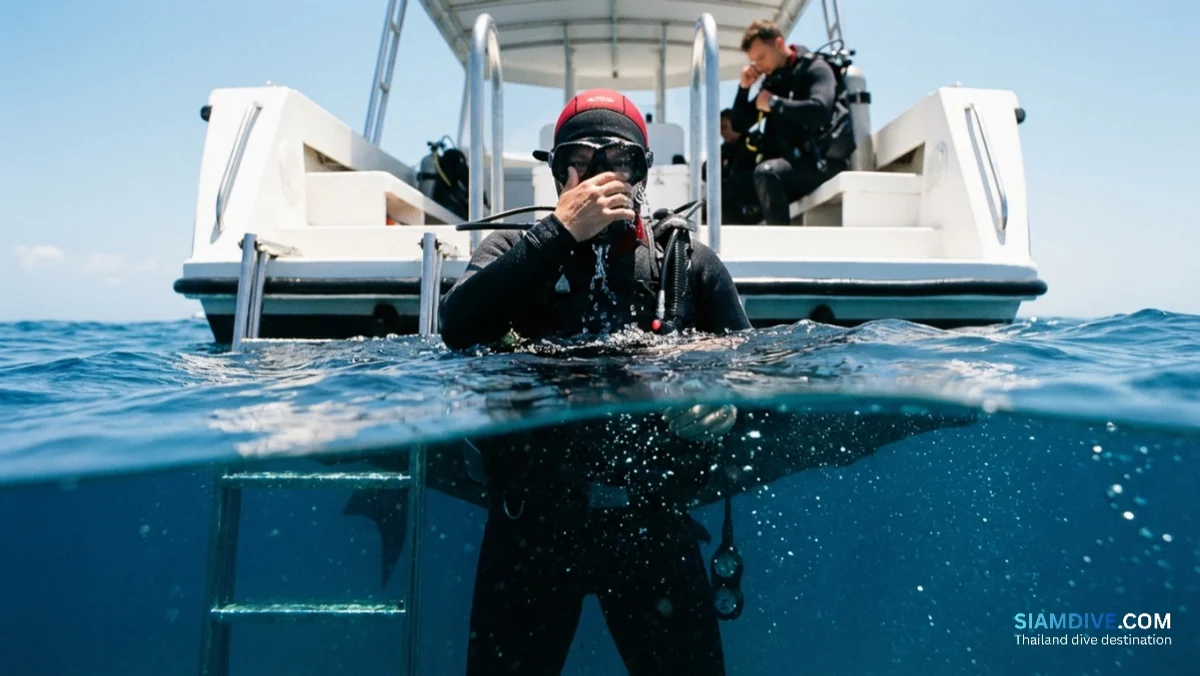
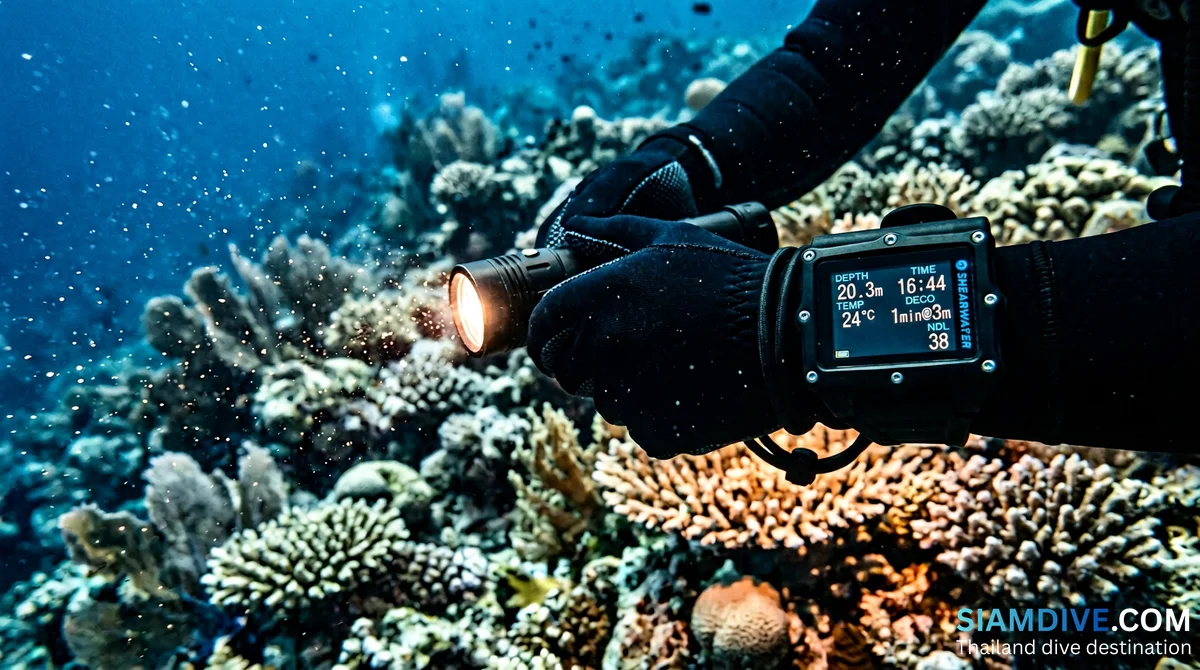
Equipment considerations are straightforward. A 5mm wetsuit handles the 27-30 degree water comfortably, though some divers prefer 3mm during the warmer months of April and May. Nitrox is available from most Pattaya and Sattahip operators and extends bottom time meaningfully on the 14-metre plateau. A dive computer, SMB, and reef hook (for holding position in current without grabbing coral) round out the recommended kit list.
Hin Yai in Context: Samae San's Offshore Frontier
A decade ago, Hin Yai was a curiosity — a GPS waypoint traded between boat captains and a handful of local divers willing to make the longer run offshore. The pinnacle has since become one of the defining dive sites in the greater Pattaya and Sattahip region, drawing weekend visitors from Bangkok who make the drive specifically for the clear water and shark sightings.
The comparison to better-known Gulf pinnacles — Chumphon Pinnacle off Koh Tao, Sail Rock between Koh Tao and Koh Phangan — is not accidental. Hin Yai shares their basic formula: a submerged rock formation in relatively deep, clean water that concentrates marine life far beyond what the surrounding seabed supports. The difference is proximity. Hin Yai sits less than three hours from Bangkok's eastern suburbs, no flight or ferry required. That accessibility makes it a realistic weekend trip for the capital's large diving community — something neither Chumphon Pinnacle nor Sail Rock can claim.
The growing popularity brings a familiar tension. More divers mean more awareness and more economic incentive to protect the reef, but also more fin kicks near fragile coral and more anchor drops in sensitive areas. The 2021 marine park designation provides a legal framework for protection, and Navy oversight limits the number of boats that can operate in the area. Mooring buoys at the site reduce anchor damage, and operators increasingly brief divers on no-touch protocols before the descent.
For now, Hin Yai remains one of the Gulf of Thailand's most rewarding pinnacle dives — a granite giant hiding in plain sight, just far enough offshore that the water runs blue. The sharks still patrol the shelf at 14 metres, the nudibranchs still dot every boulder, and the view from the plateau into open blue still carries that particular thrill of a submerged summit meeting the sea.