7 Reasons Thailand Is the Best Place to Scuba Dive
6 เมษายน 2569
Two coastlines, warm water year-round, whale sharks for the price of a nice dinner — here's why more divers choose Thailand than almost anywhere else on earth.
Thailand Has Two Completely Different Oceans
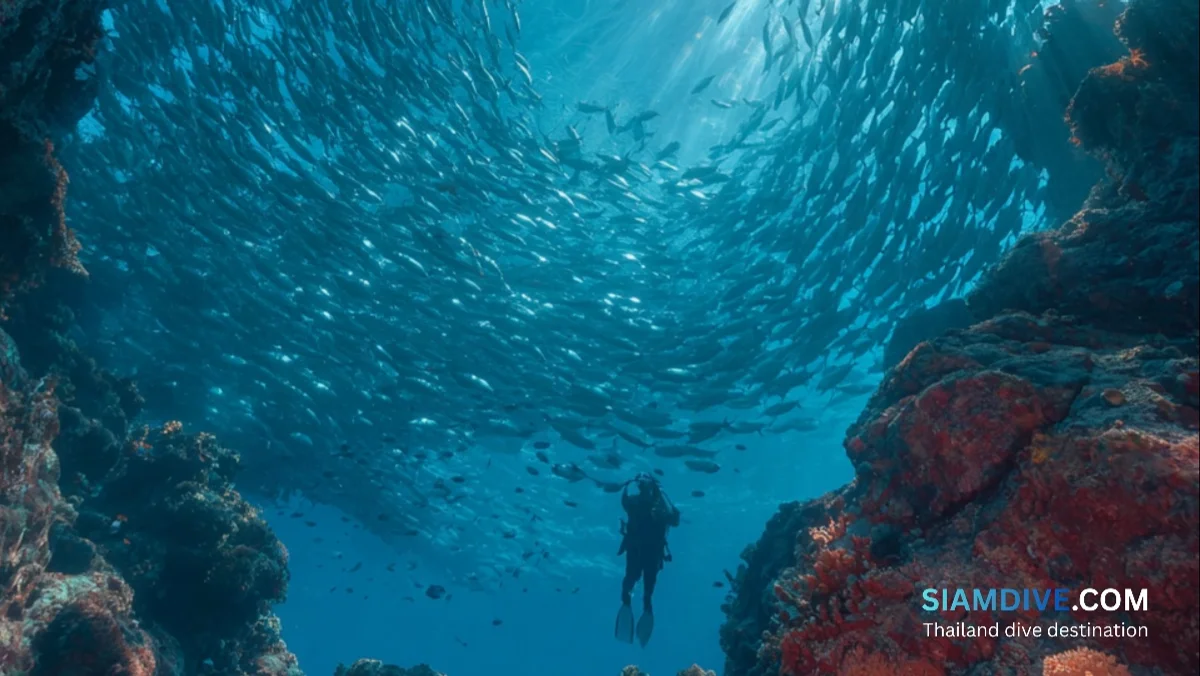
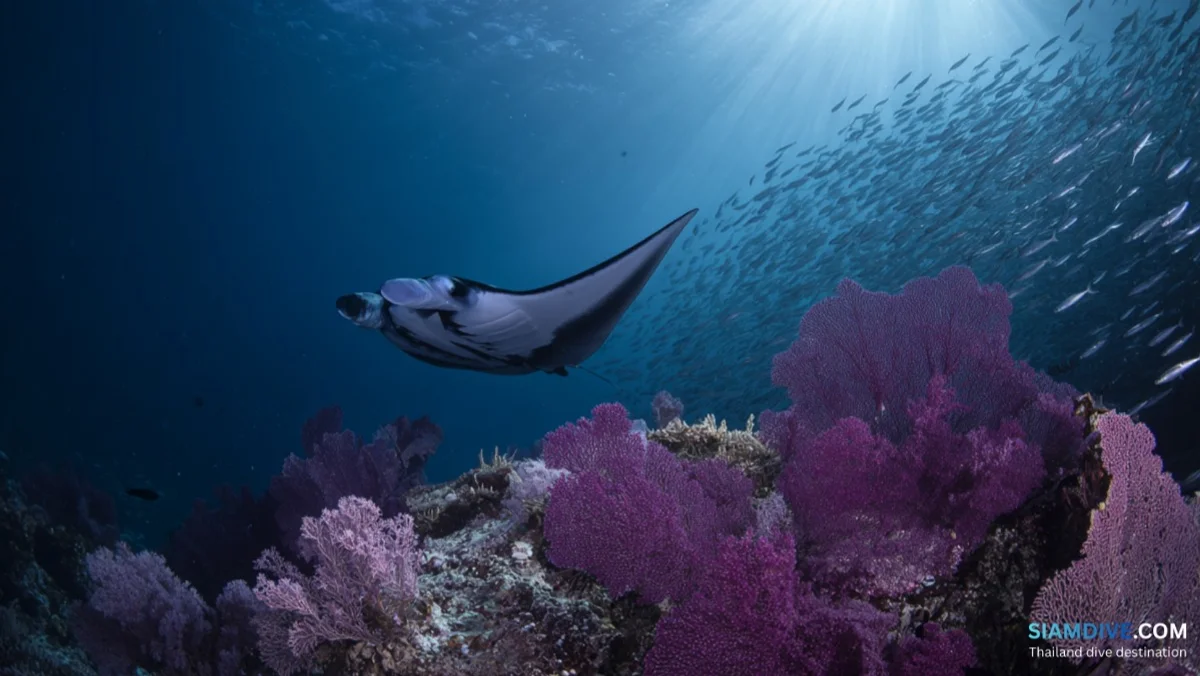
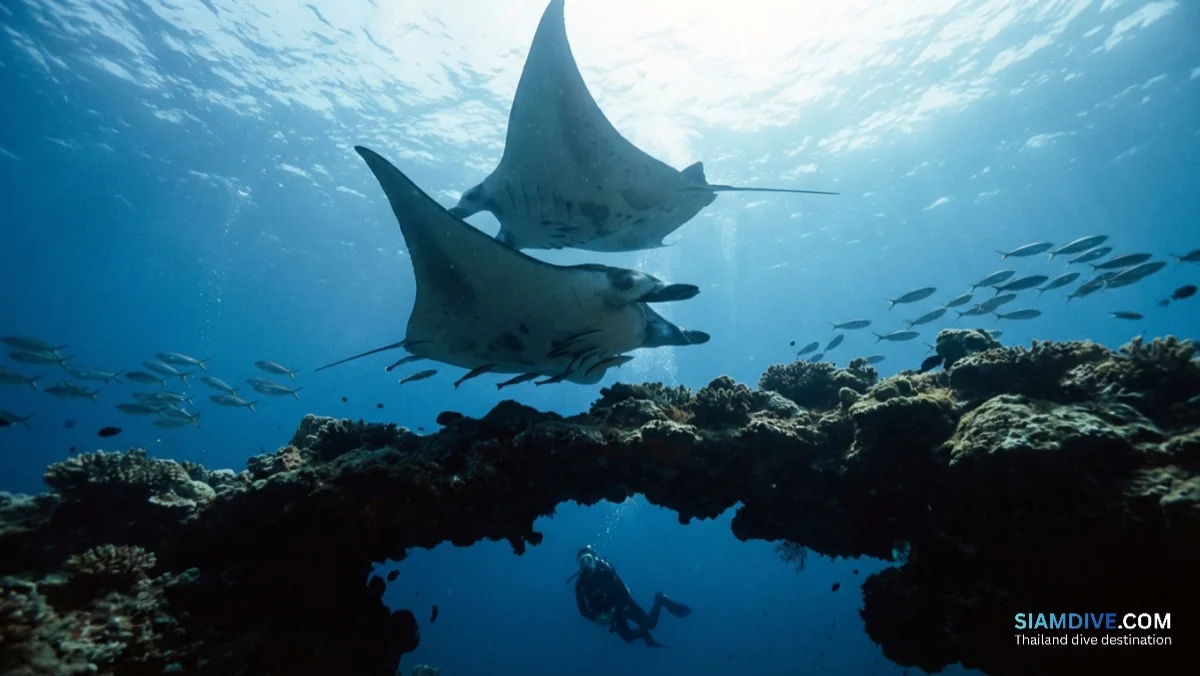
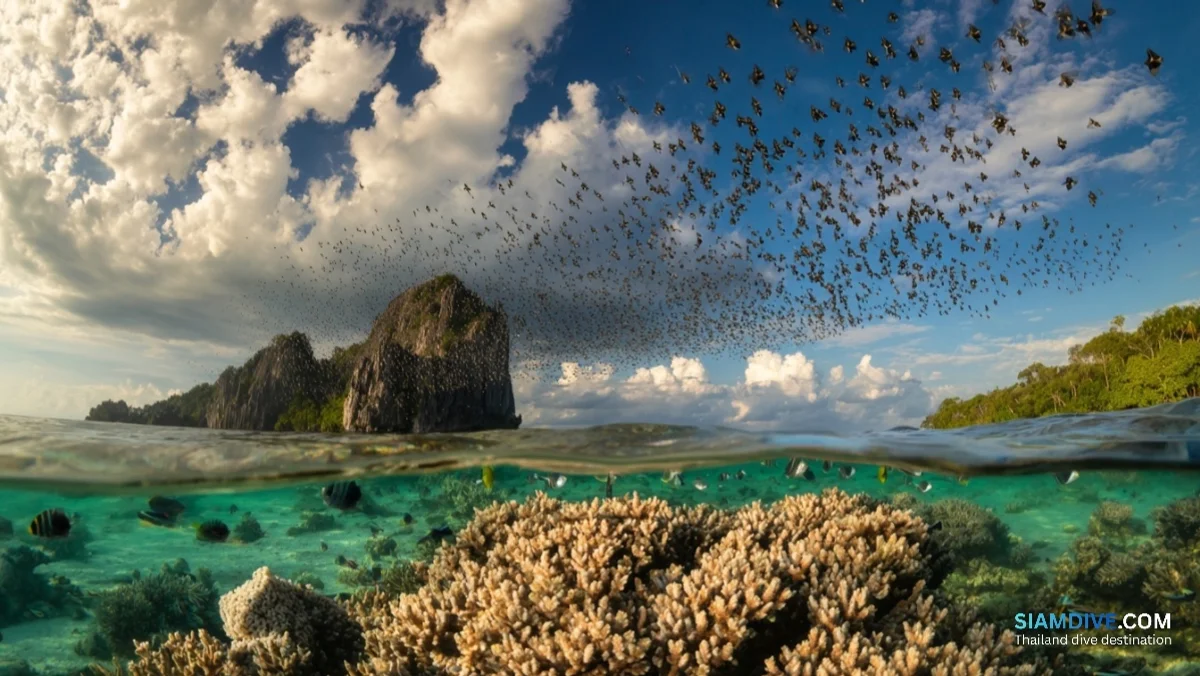
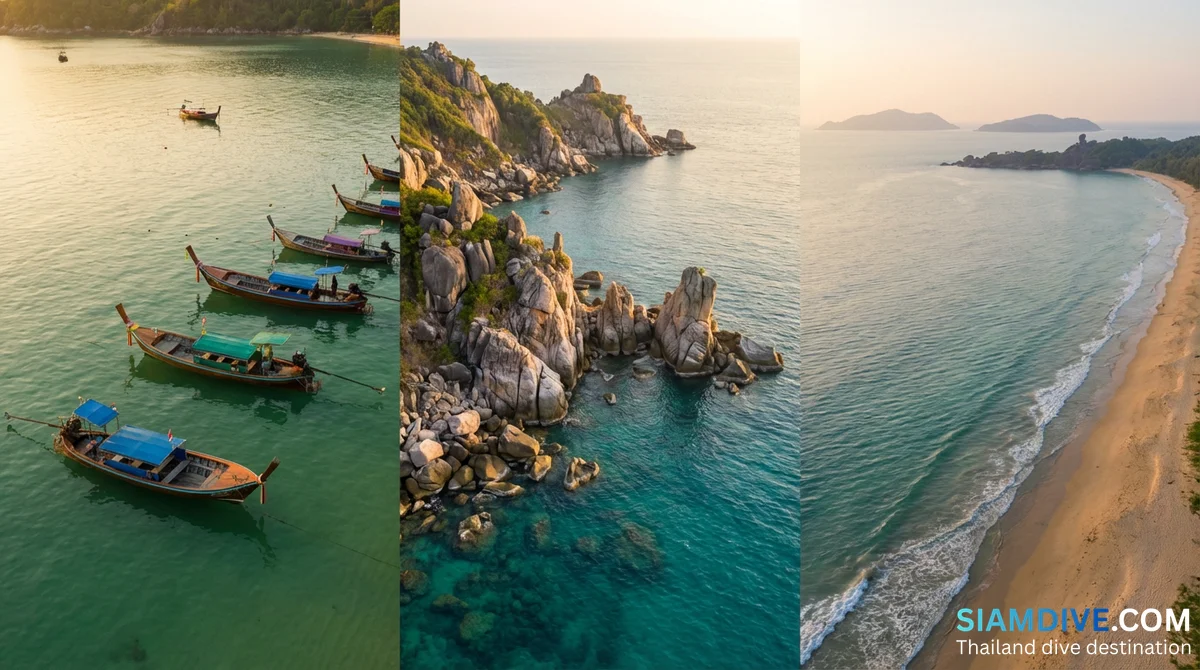
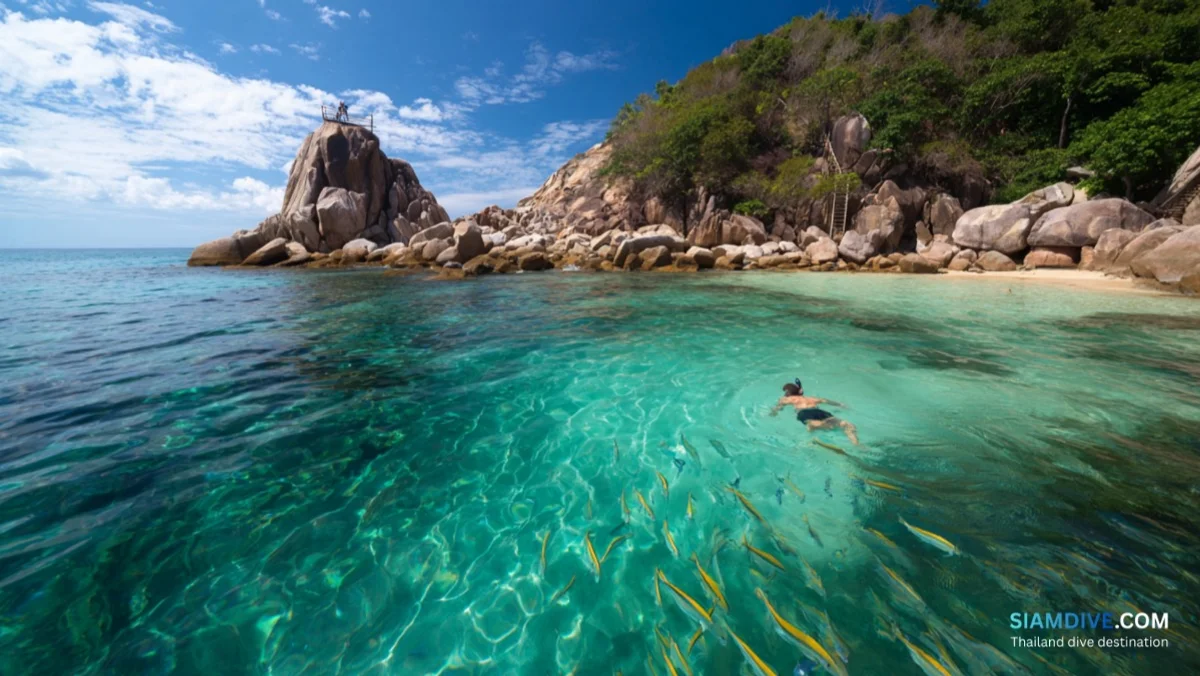
Most countries give you one coastline. Thailand gives you two, and they could not be more different. The Andaman Sea on the west coast is deep, current-rich, and home to world-class sites like the Similan Islands, Richelieu Rock, and Hin Daeng — places where manta rays circle cleaning stations, whale sharks cruise through plankton blooms, and visibility regularly hits 30 meters. The Gulf of Thailand on the east coast is shallower, calmer, and packed with accessible reef systems around Koh Tao, Koh Phangan, and Chumphon — where you can get certified, dive with blacktip reef sharks, and spend your surface interval eating pad thai on the beach. Two coastlines means two monsoon seasons that alternate, so when one side shuts down for weather, the other side opens up. Thailand is genuinely a year-round diving destination, not just in marketing copy but in practice.
It Costs a Fraction of What You'd Pay Elsewhere
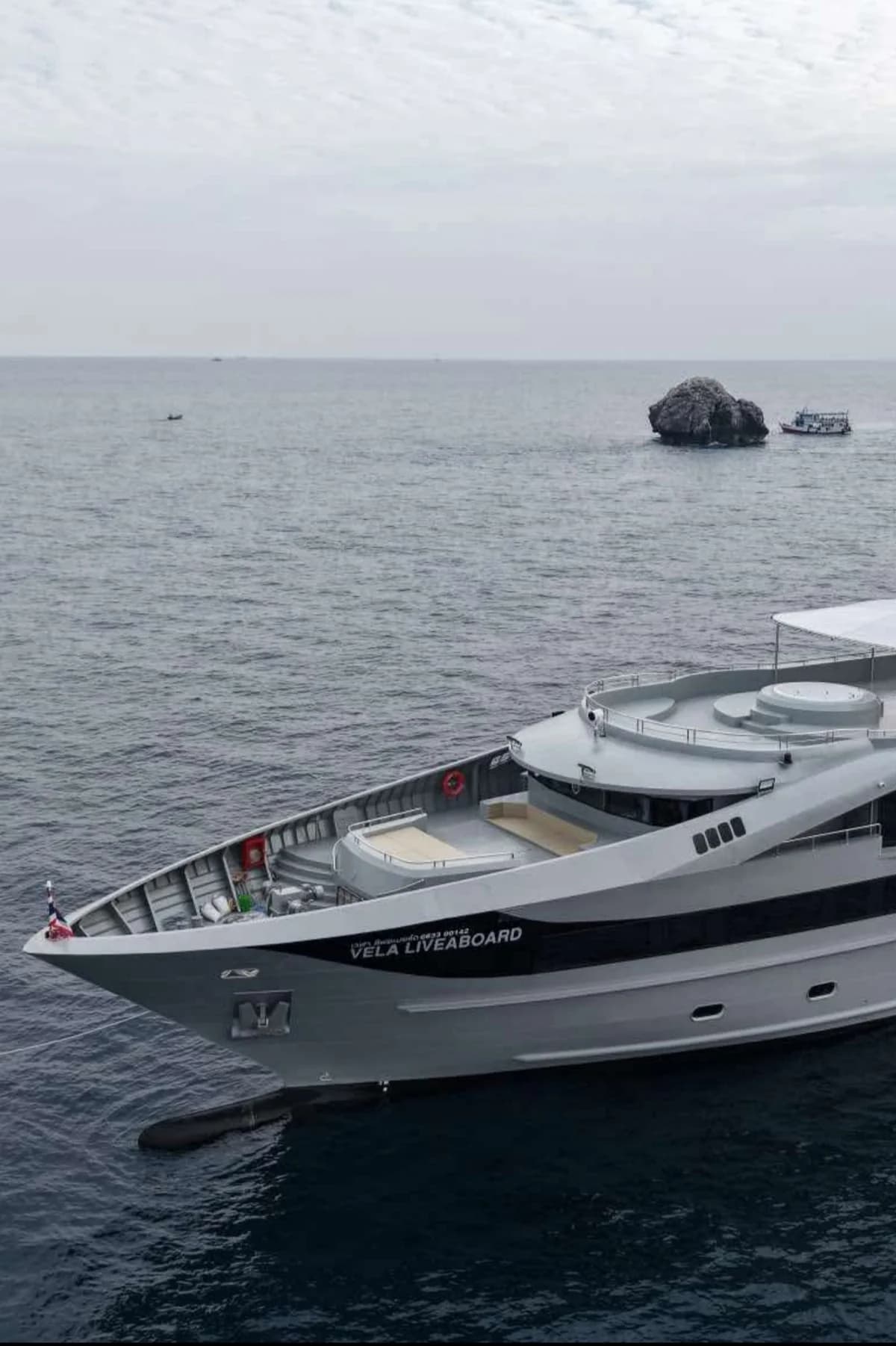
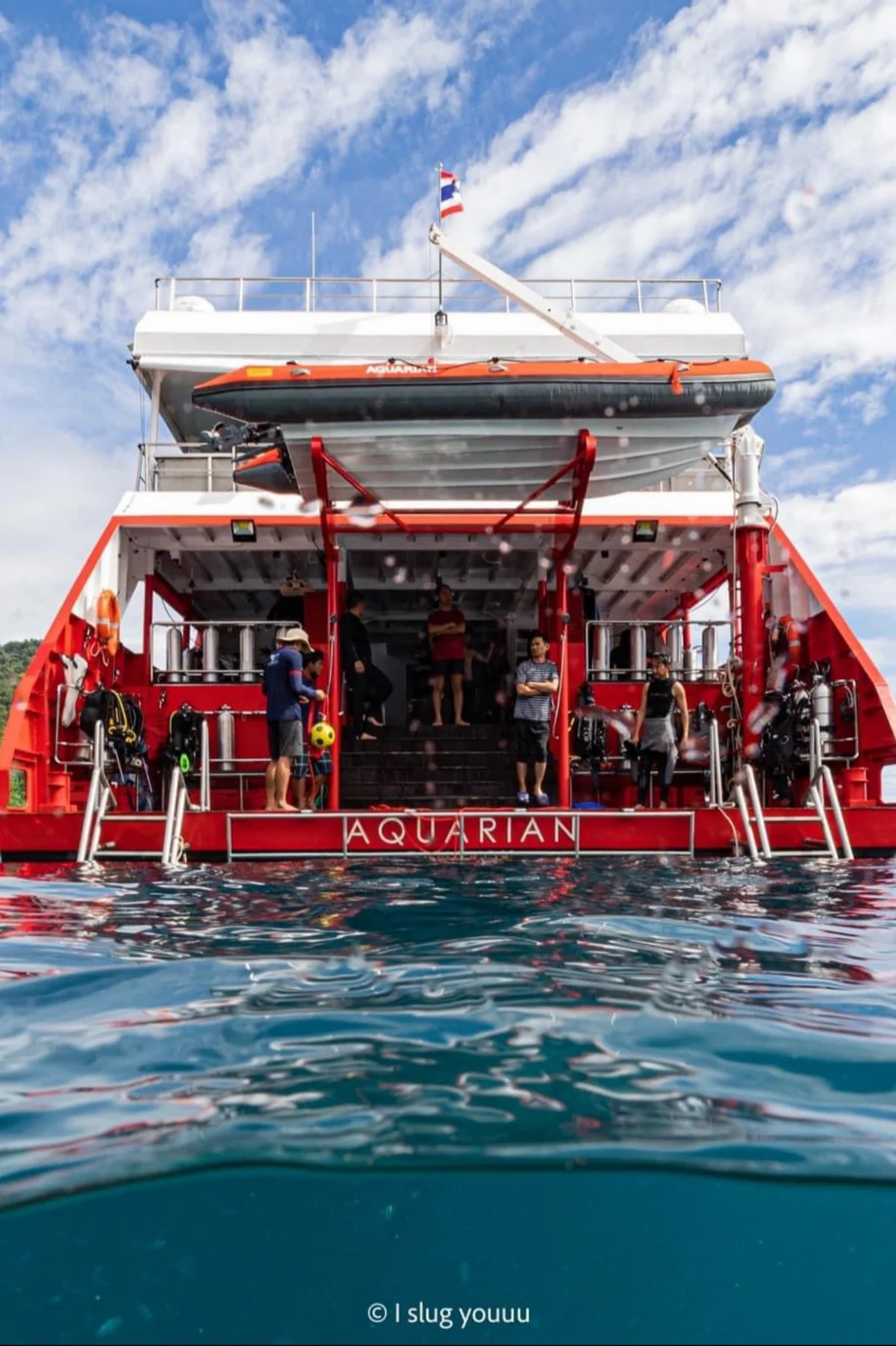
A PADI Open Water certification on Koh Tao costs between 9,000 and 11,000 THB — roughly $270 to $330 USD. That same course runs $500 to $800 in Australia, $600 to $1,000 in the United States, and $400 to $700 in the Caribbean. The price in Thailand includes all equipment rental, classroom materials (digital via SSI or PADI apps), pool sessions, and four open water dives with a maximum student-to-instructor ratio of 4:1. Fun dives after certification cost 800 to 1,500 THB per dive depending on location and boat type. A day trip to Sail Rock from Koh Phangan with two dives, lunch, and hotel pickup runs about 3,500 THB — less than $100 USD for one of the best pinnacle dives in Southeast Asia. Liveaboard trips to the Similan Islands start around 15,000 THB for a 2-night trip. Try finding those prices anywhere else with comparable marine life.
The Water Is Warm Enough to Dive in a Rashguard
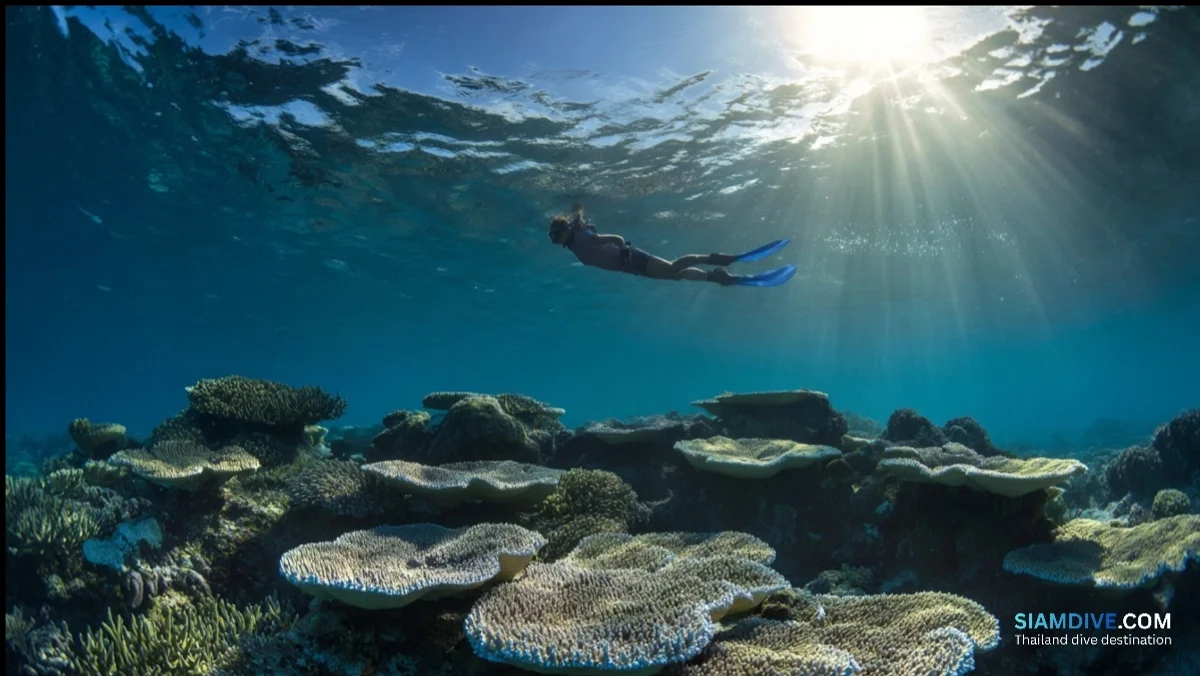
Thailand's water temperature stays between 27°C and 30°C year-round. That means no drysuit, no thick wetsuit, no hood, no gloves — just a 3mm shorty or even a rashguard if you run warm. This is not a small thing. Cold water limits dive time, increases air consumption, and makes the whole experience less enjoyable. In Thailand, you can comfortably do four dives a day without shivering on the surface interval. Beginners especially benefit from warm water — one less thing to worry about while learning buoyancy and equalization. Compare this to diving in the UK at 12°C, California at 15°C, or even the Mediterranean at 18°C outside of peak summer, and the appeal is obvious.
More Divers Get Certified Here Than Almost Anywhere
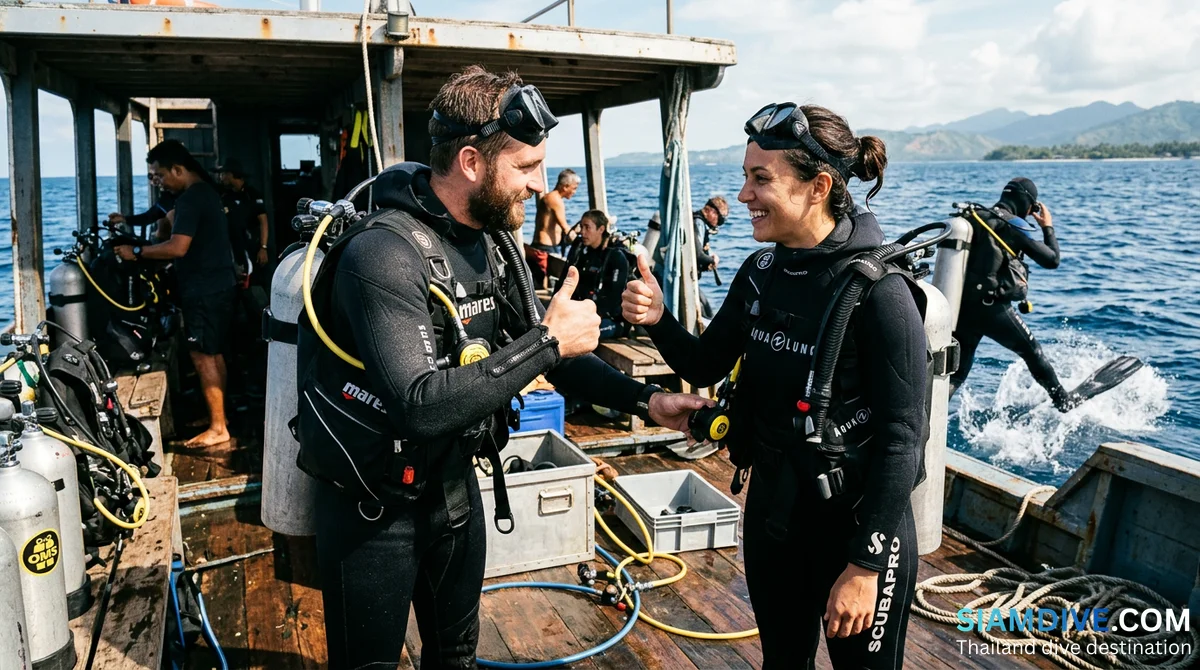
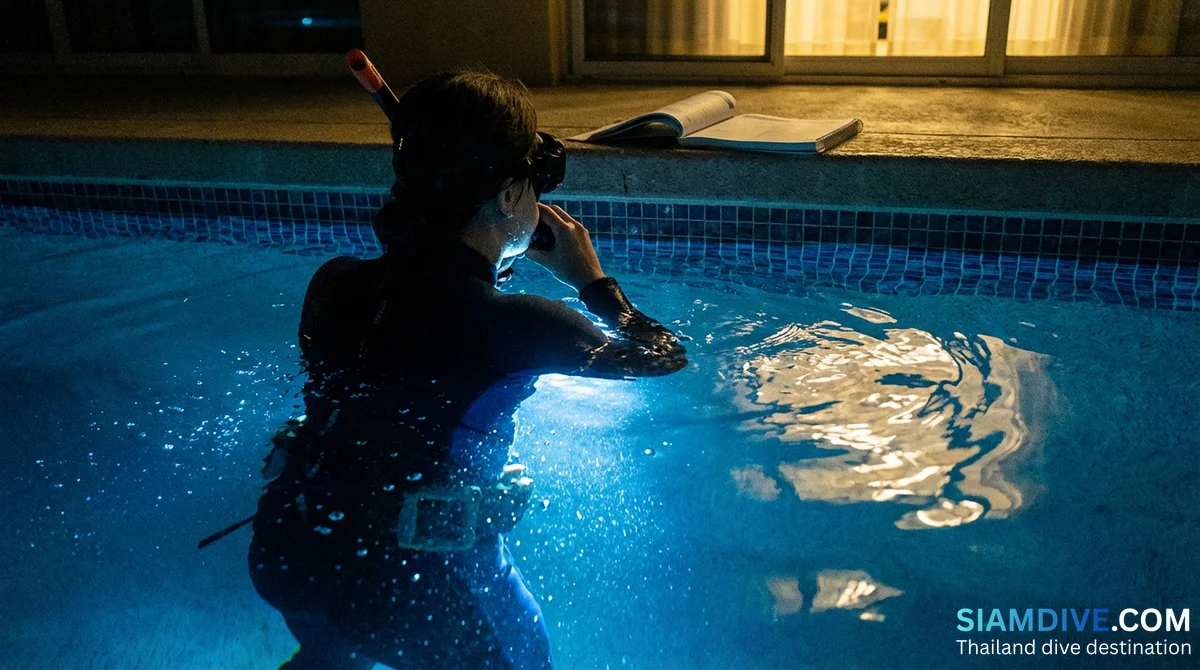
Over the past 25 years, Thailand has issued more than 2.5 million PADI certifications, making it the second-largest certification market in the world as of 2025. Koh Tao alone has earned the nickname "the scuba diving capital of the world" — a title that sounds like marketing but is backed by actual numbers. The island has over 50 dive schools within walking distance of each other, creating fierce competition that keeps prices low and quality high. SSI and RAID schools are also well-represented, and certifications from all major agencies are interchangeable worldwide. The infrastructure for learning to dive here is simply unmatched: courses run daily, equipment is well-maintained because it gets used constantly, and instructors come from every corner of the globe, meaning you can learn in English, Thai, German, French, Japanese, Korean, Chinese, Russian, or Spanish without difficulty.
The Marine Life Shows Up Reliably
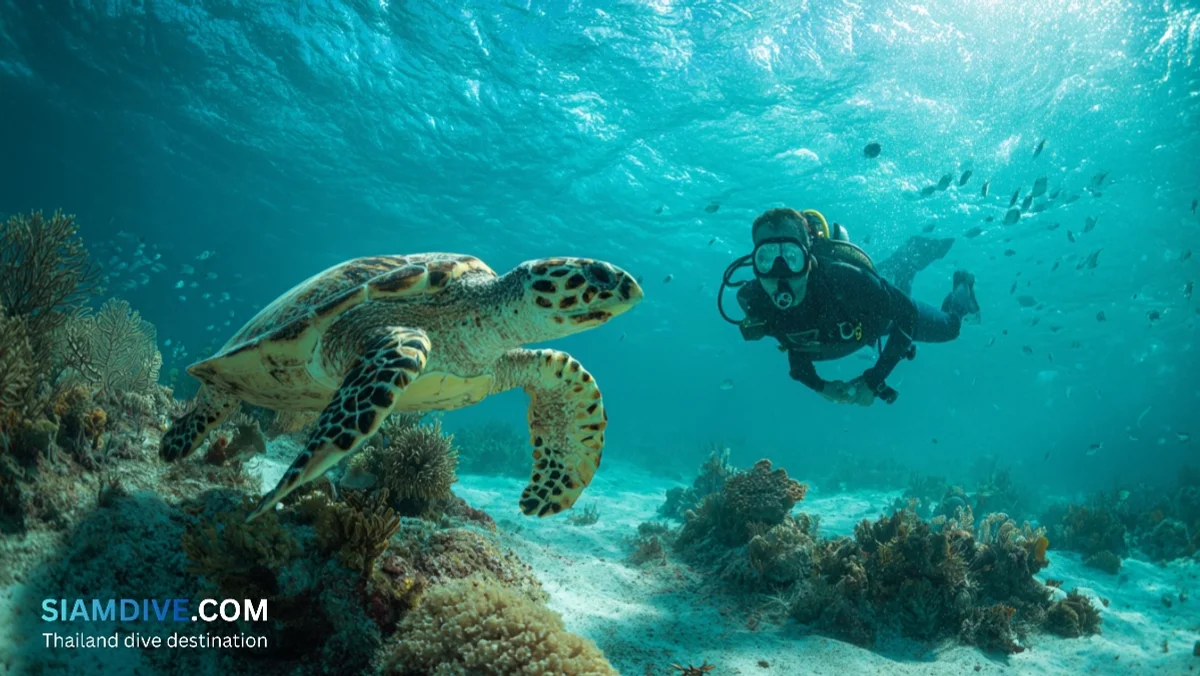
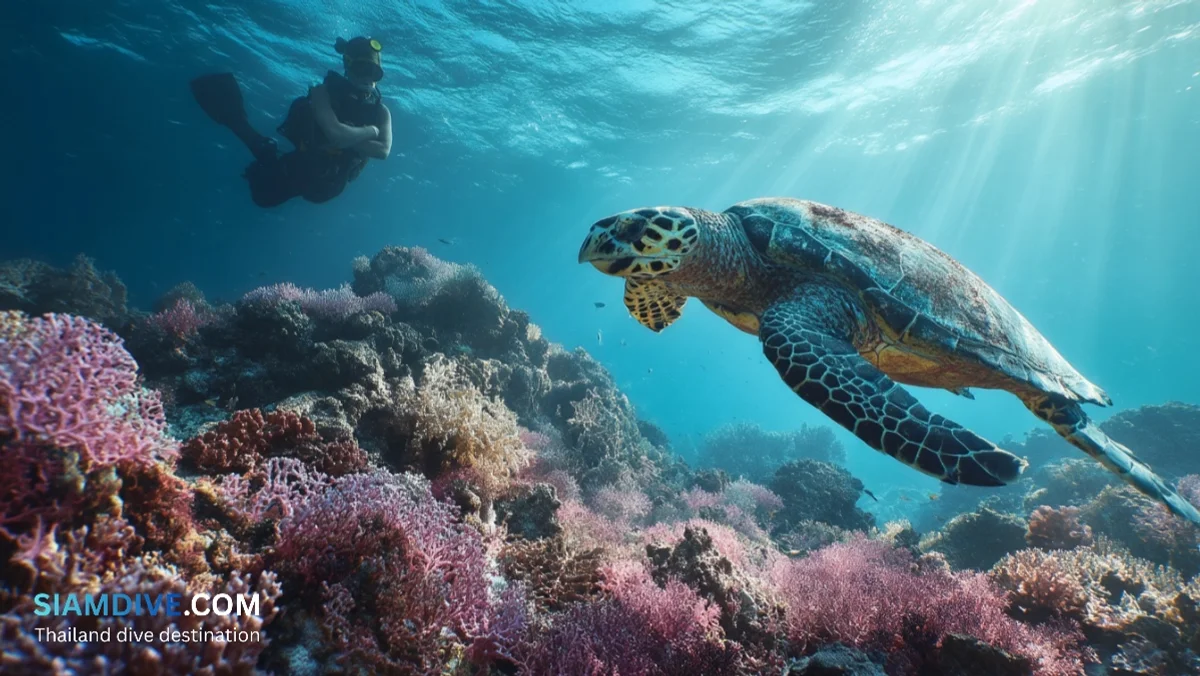
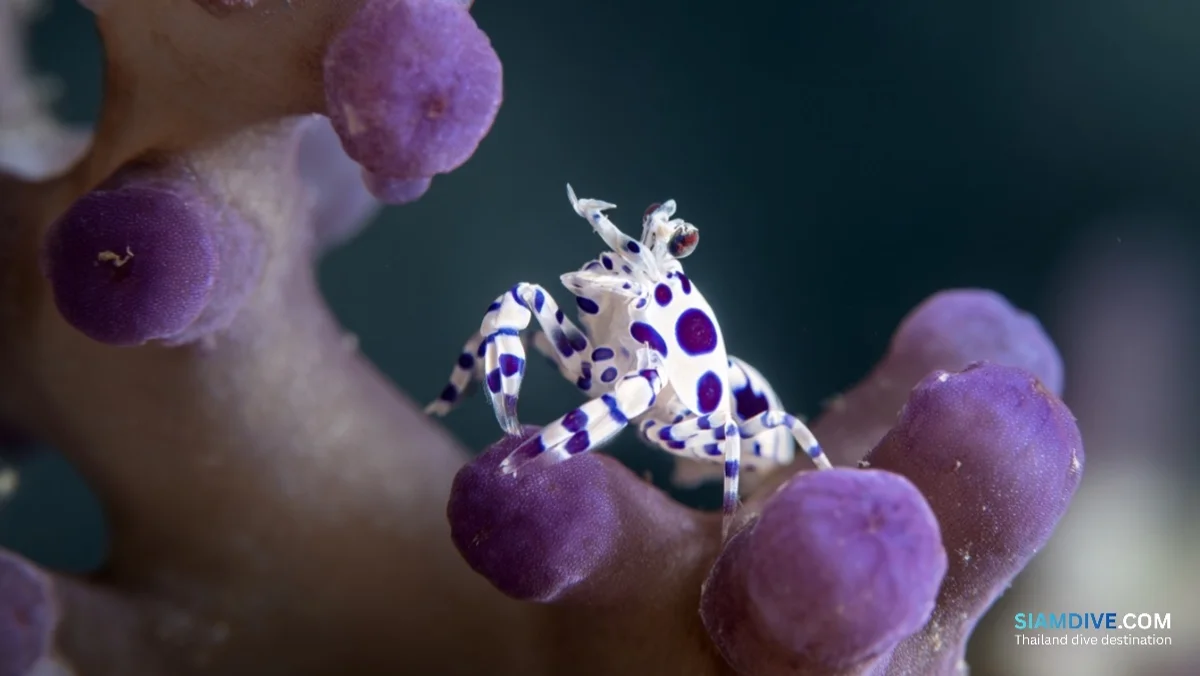
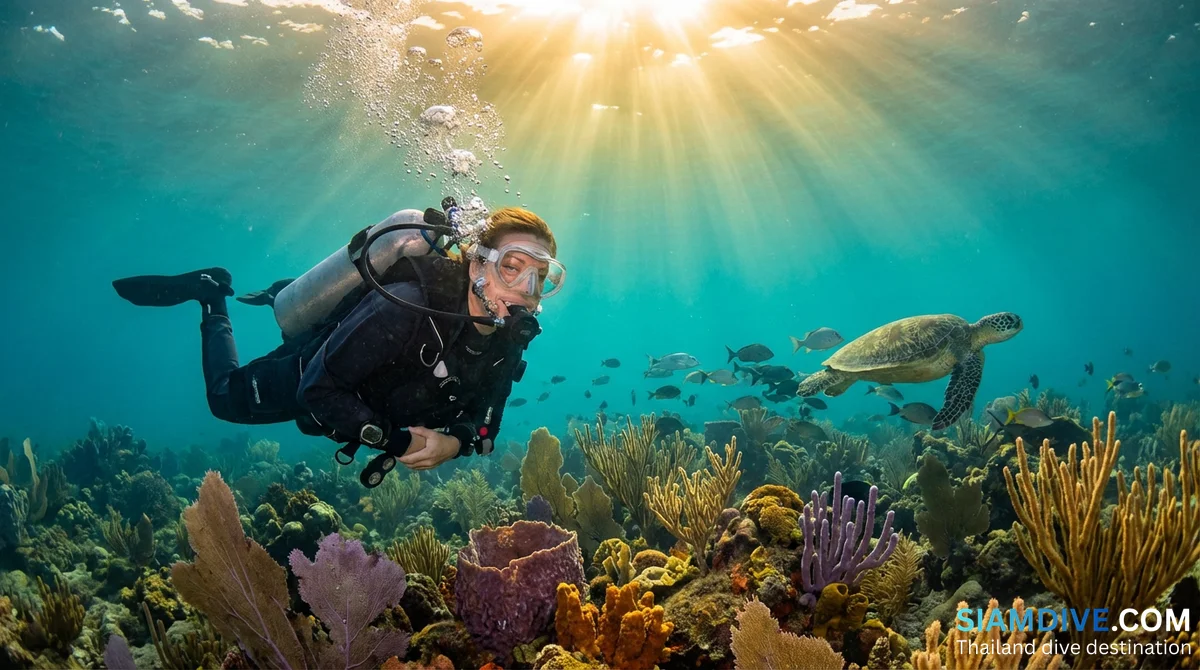
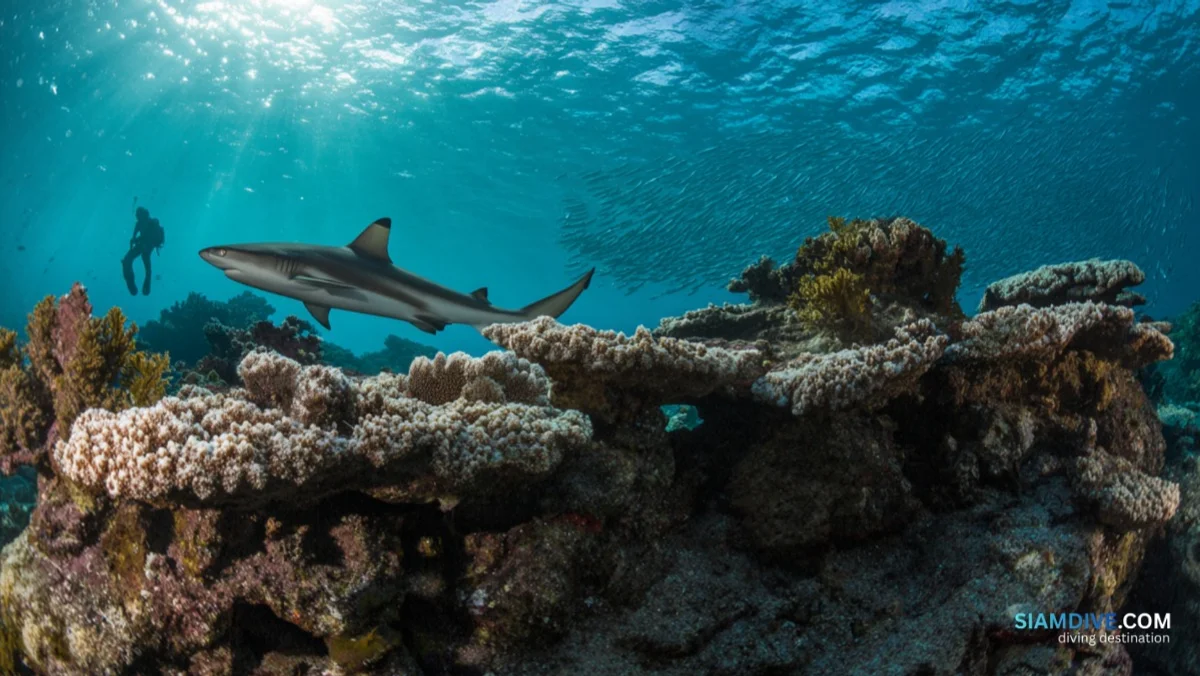
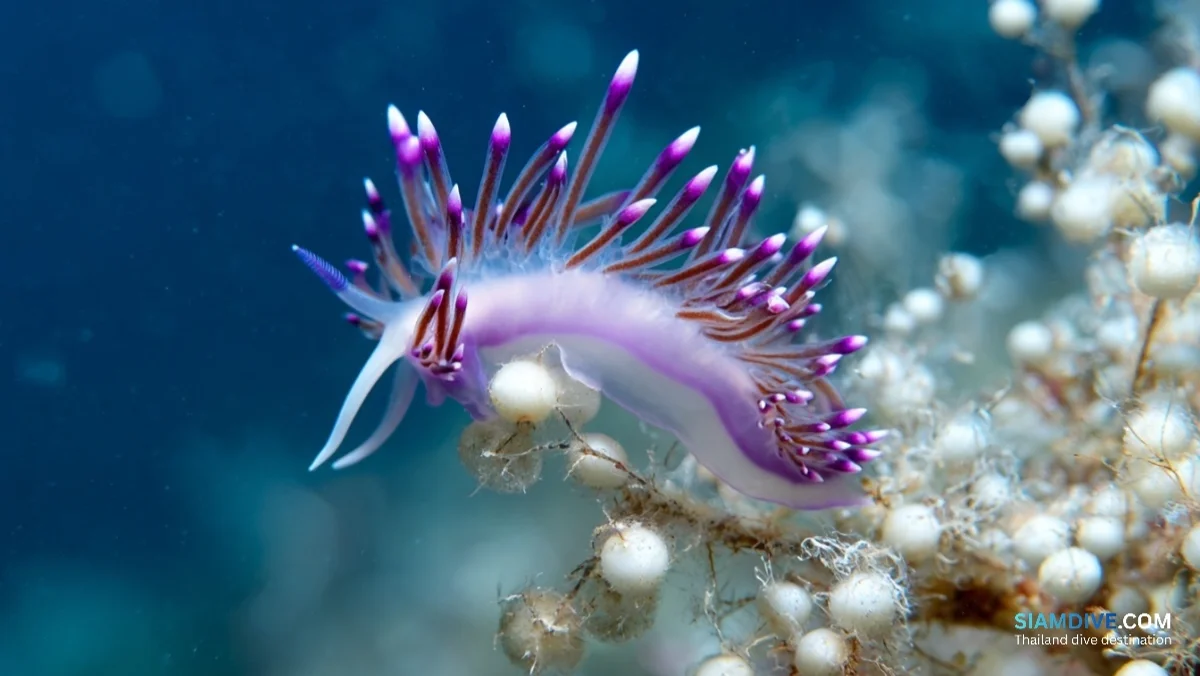
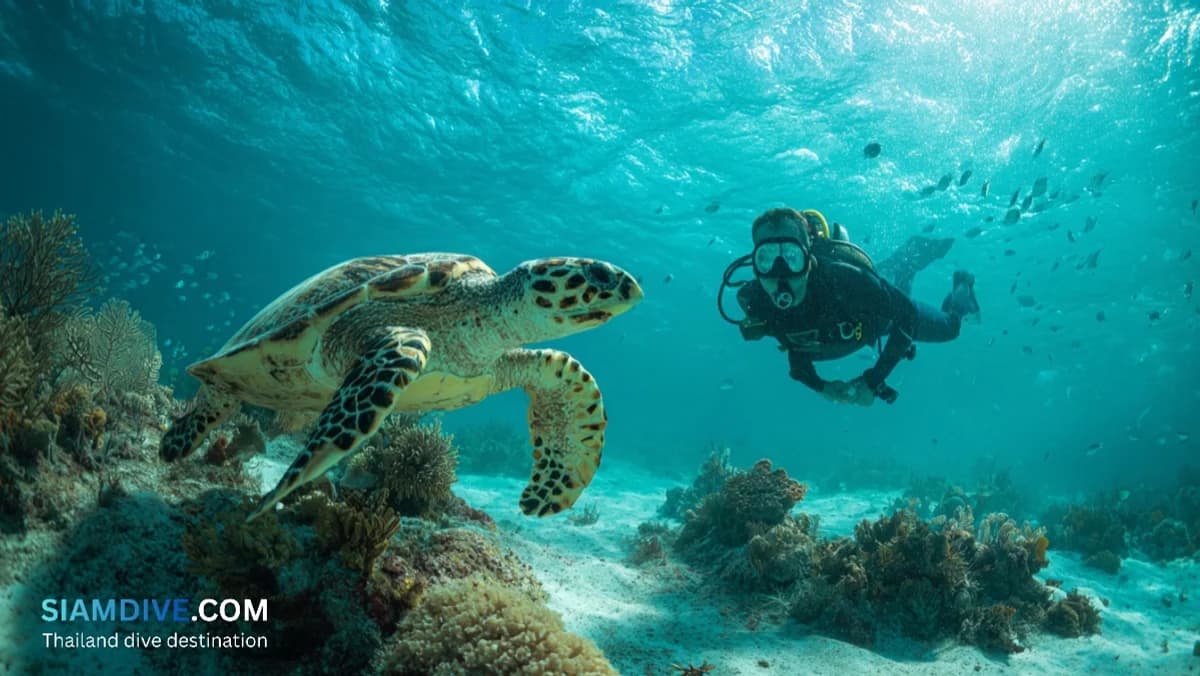
Some dive destinations sell the dream of big animal encounters but deliver mostly empty blue water. Thailand is different — the marine life here is consistent enough that dive shops can make specific promises about what you are likely to see, and they usually deliver. Manta rays at Koh Bon between February and April are about as close to a guaranteed encounter as marine life gets. Whale sharks at Sail Rock and Richelieu Rock during plankton bloom months (March to May, September to November) are spotted multiple times per week. Blacktip reef sharks at Shark Bay on Koh Tao are seen on nearly every dive. Giant groupers the size of small cars sit at Chumphon Pinnacle. Hawksbill and green sea turtles are common across both coasts. And the reef systems — particularly in the Similans — support an extraordinary density of tropical fish, soft corals, and macro critters that keep even the most jaded underwater photographers busy for days.
Everything Around the Diving Is Also Great
Here is something that gets overlooked in dive destination comparisons: what do you do between dives? In Thailand, the answer is "eat some of the best food on earth for almost nothing." A plate of green curry costs 60 to 80 THB. A fresh seafood dinner on the beach is 200 to 400 THB. A Thai massage after a day of diving is 300 THB for an hour. Accommodation ranges from 300 THB backpacker dorms to world-class resorts, with solid mid-range options at 1,000 to 2,000 THB per night. The islands have bars, live music, night markets, yoga studios, muay thai gyms, and motorcycle rental for exploring. This matters because a dive trip is not just diving — it is a vacation. Thailand makes the non-diving hours as good as the diving ones, which is something that remote atolls and dedicated dive resorts simply cannot match.
Getting Here Is Easy and Cheap
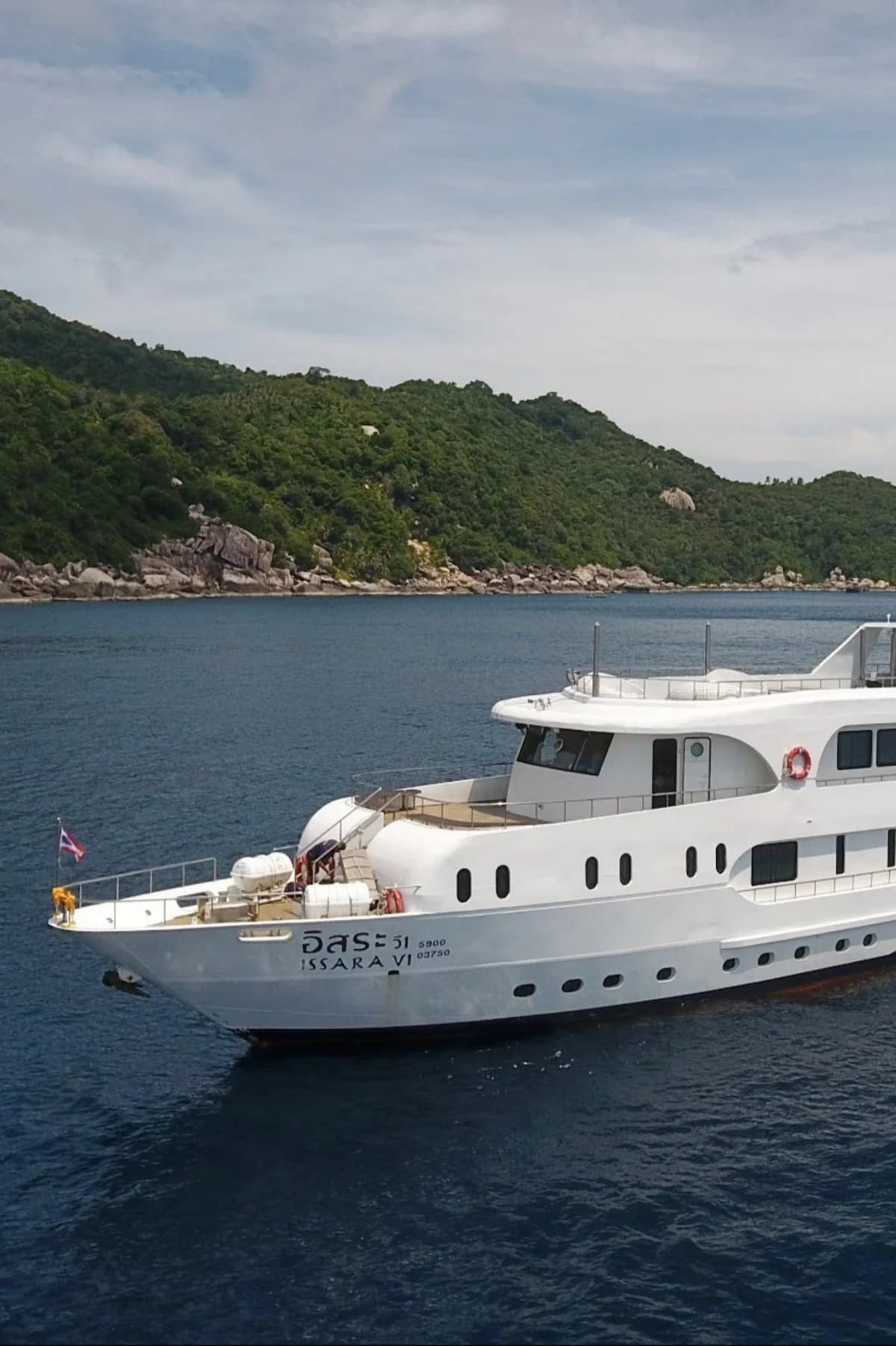
Bangkok is one of the best-connected airports in Asia, with direct flights from every major city in Europe, Asia, the Middle East, and Oceania. Budget airlines like AirAsia, Nok Air, and Thai VietJet connect Bangkok to Phuket, Krabi, Surat Thani, and Koh Samui for as little as 1,000 to 2,000 THB one way if booked in advance. From there, ferries and speedboats reach the dive islands within 1 to 4 hours depending on the route. Visa policy is generous — citizens of over 90 countries receive 60-day visa-free entry as of 2025, which is plenty of time for a dive trip, an island-hopping tour, and a week in Bangkok. Compare this to the logistical headaches of reaching Raja Ampat, the Galápagos, or even the remote Maldivian atolls, and Thailand's accessibility becomes a genuine competitive advantage. You can be on a dive boat 24 hours after leaving London, Frankfurt, Tokyo, or Sydney.
So Why Not Thailand?
Most divers end up in Thailand not because they carefully researched every option — they come because a friend told them about Koh Tao, or they saw a photo of Richelieu Rock, or they realized they could get certified and go on a Similan liveaboard for less than a weekend trip to a domestic dive site back home. And once they arrive, they understand why 2.5 million people have gotten their dive cards here. The water is warm, the marine life is reliable, the costs are low, the food is extraordinary, and the infrastructure makes everything work smoothly. Thailand does not have the most remote reefs on earth, and it does not have the most pristine walls in the Pacific. But it has the best overall package — and that is why more people learn to dive here, and keep coming back to dive here, than almost anywhere else. Start planning your Thailand dive trip at siamdive.com.