Tanote Bay Koh Tao Guide: Snorkeling, Diving, and Cliff Jumping
11 เมษายน 2569
Tanote Bay on Koh Tao's east coast offers fringing reefs, a cliff jumping rock, and a sunken catamaran — the island's best all-in-one shore day.
The East Coast Bay with the Jumping Rock
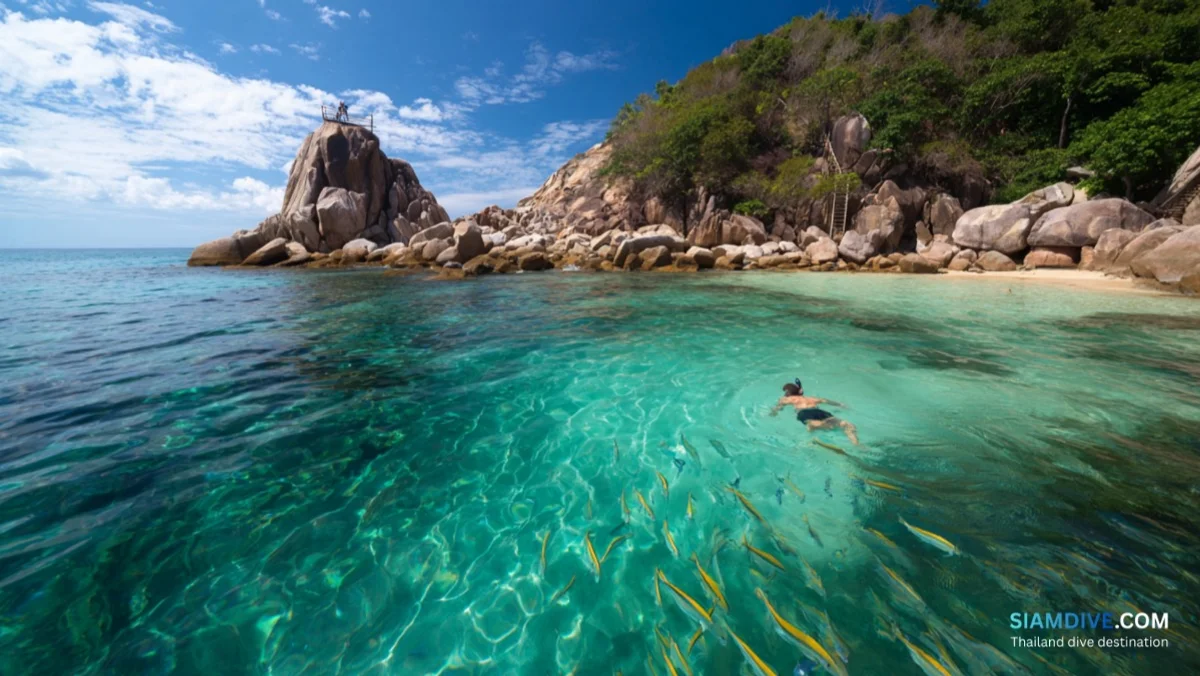
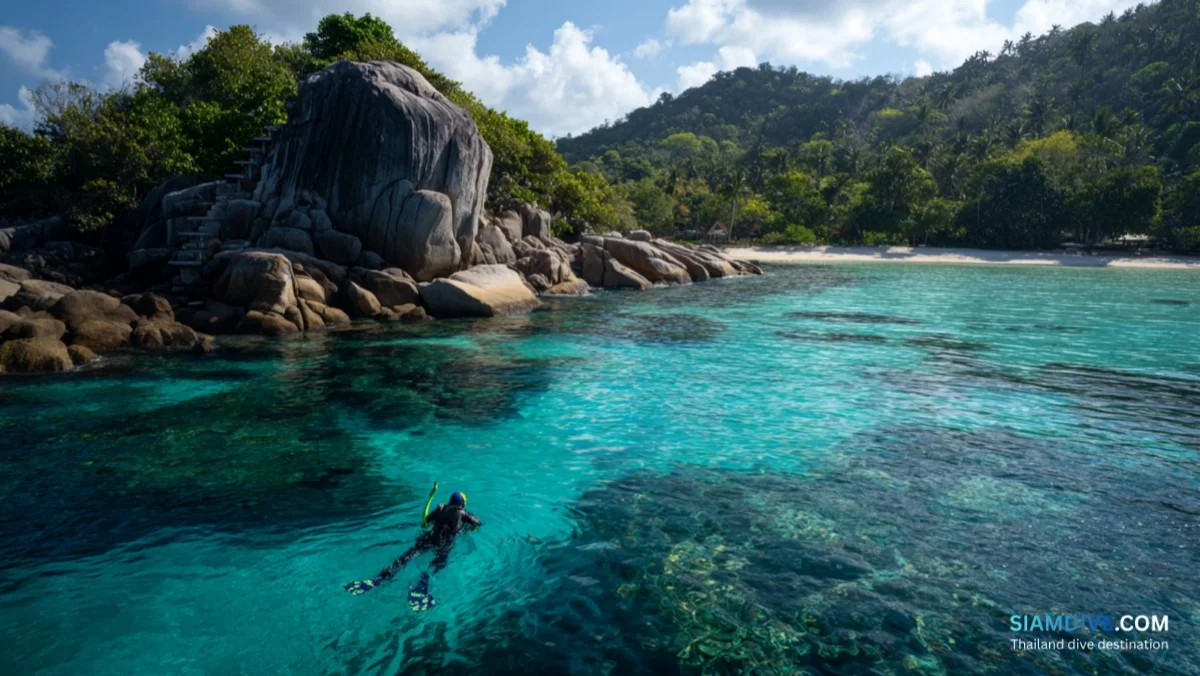
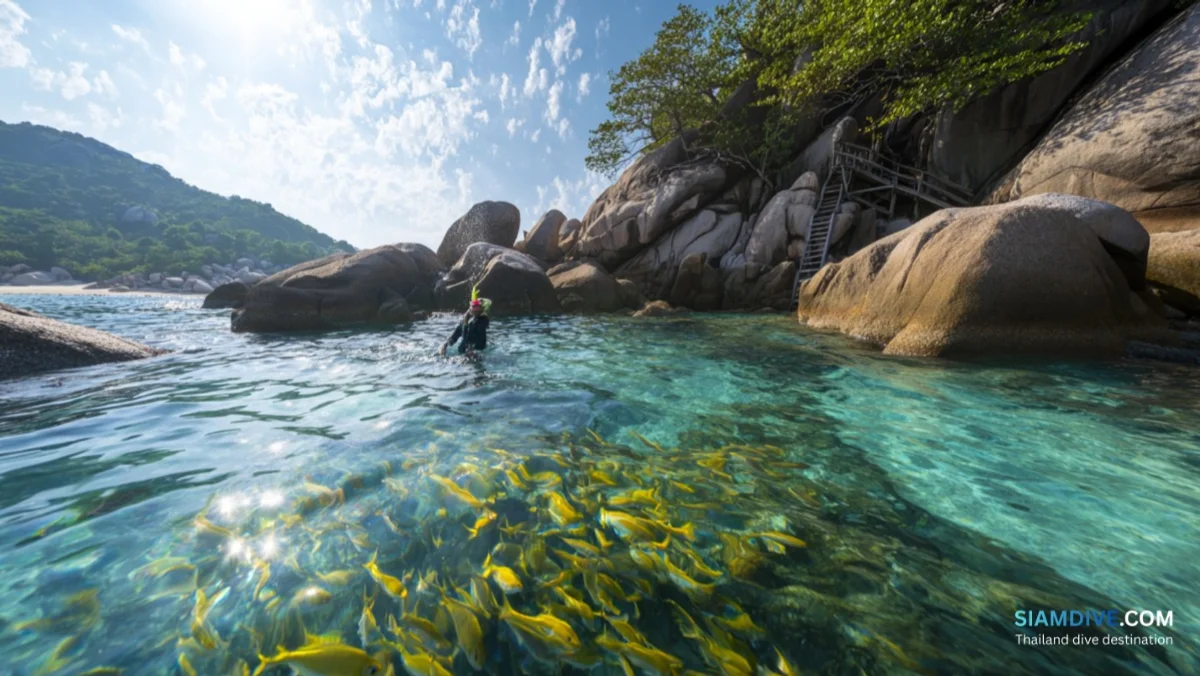
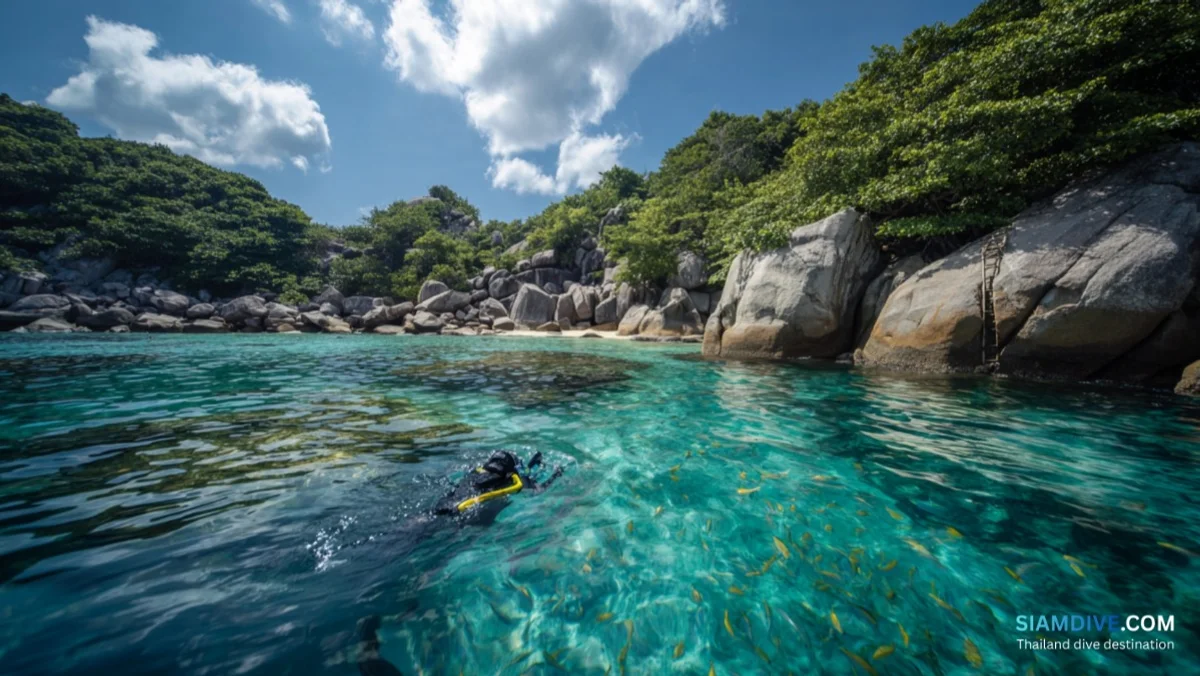
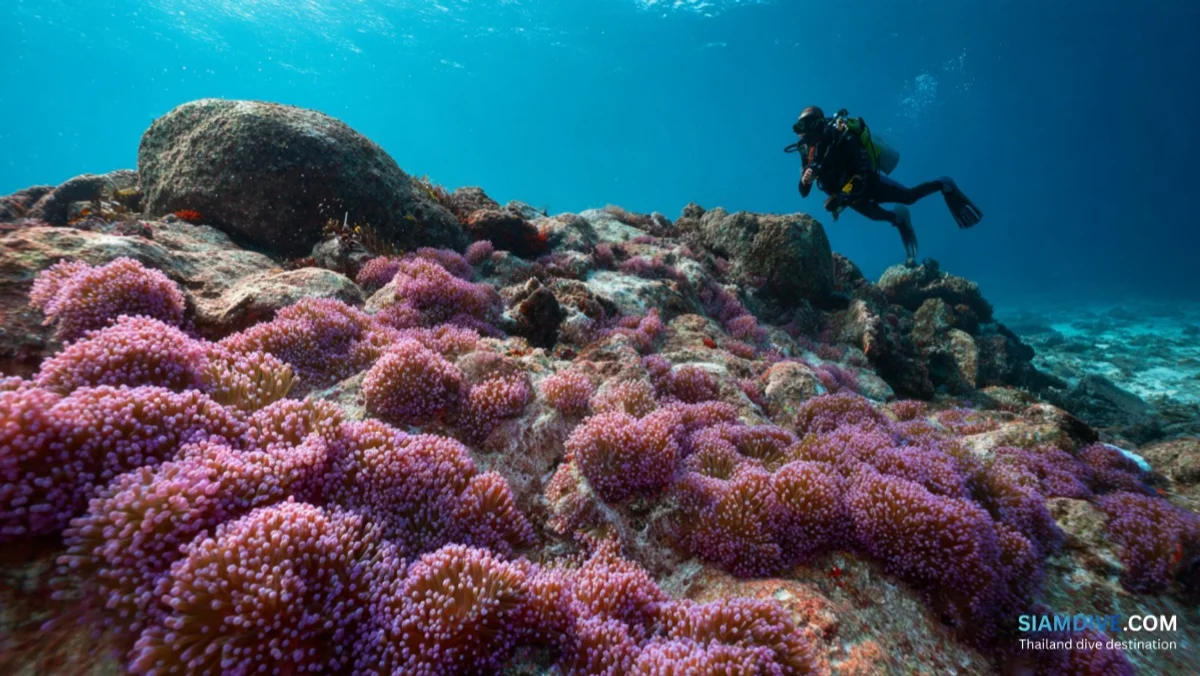
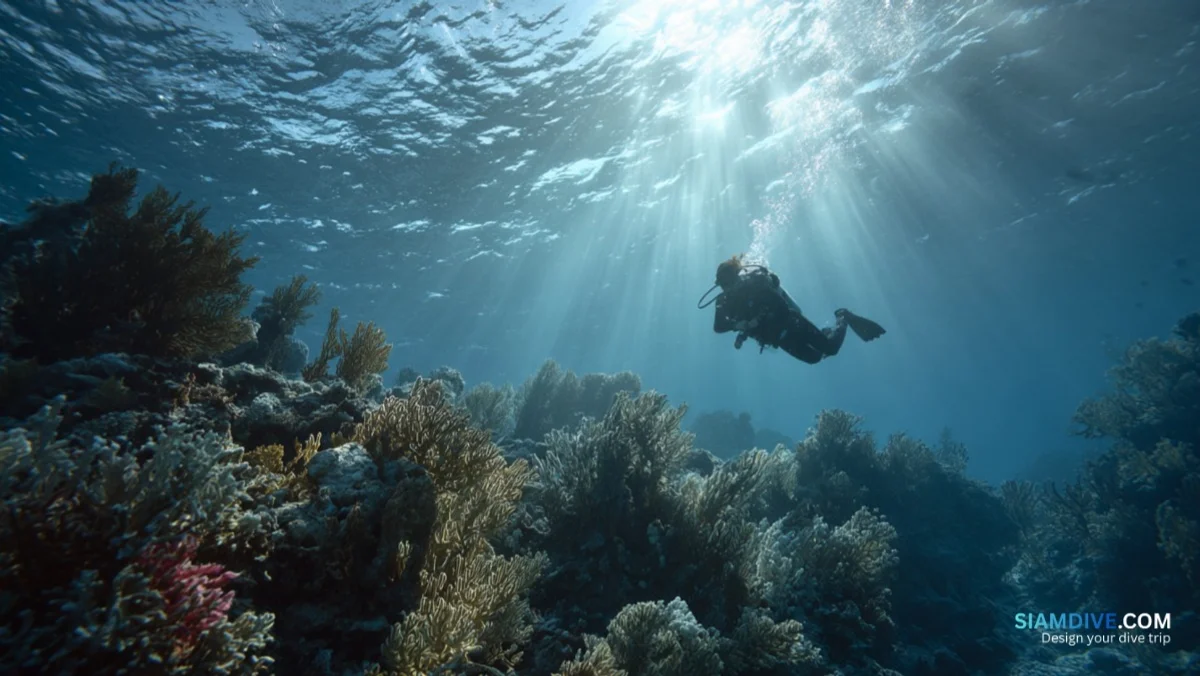
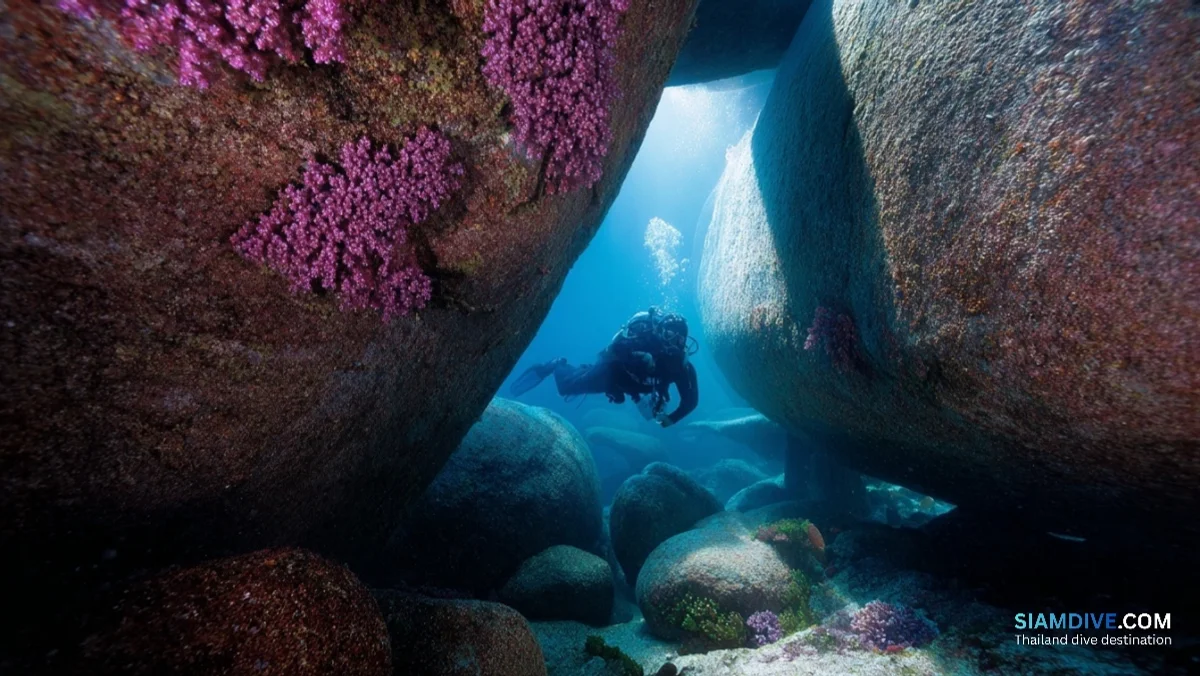
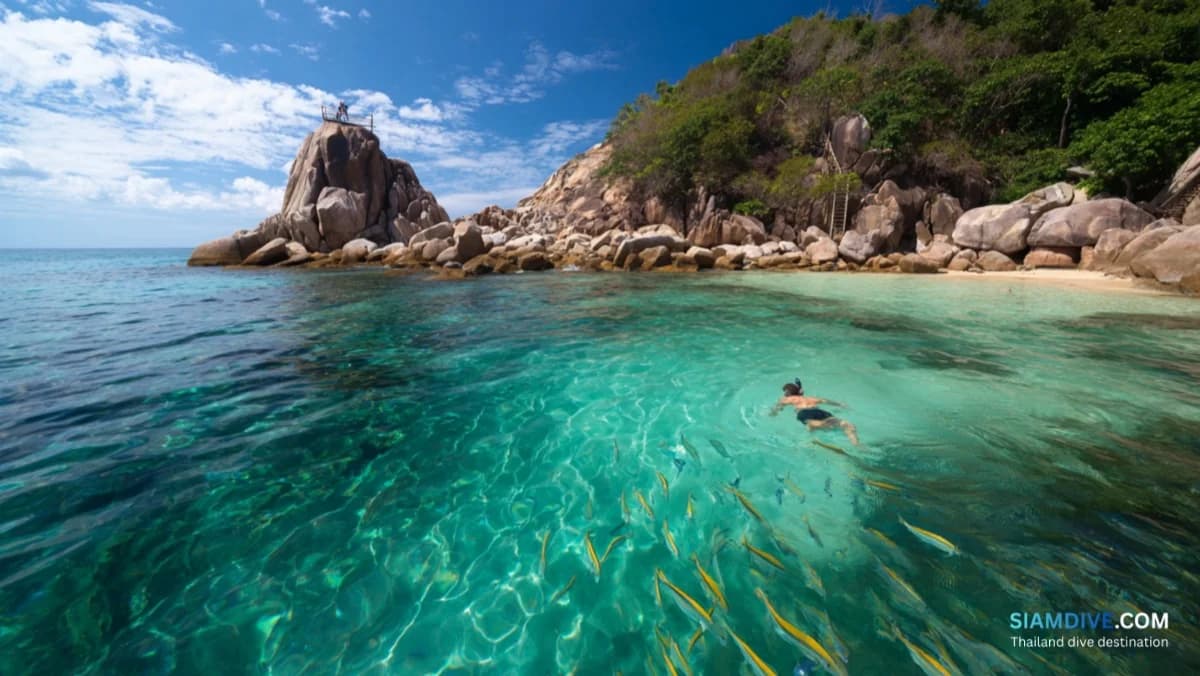
Tanote Bay (Ao Tanote) sits midway along Koh Tao's east coast, a crescent of white sand wrapped in jungle and framed by rocky headlands. In the middle of the bay, about 20 to 30 meters from shore, there is a tall boulder with a rope ladder bolted to one side — cliff jumpers climb it to 5 or 6 meters and jump into deep water below. That rock is also the centerpiece of the bay's snorkeling. Fringing reefs start just 5 meters off the beach and stretch north and south around the rocky points.
Unlike the western side of the island, which gets most of the dive tourism, Tanote Bay stays quieter. It is about 6 kilometers from Sairee Beach, reachable by a steep scooter road, and most day-trippers show up as part of an island snorkel tour rather than for dedicated diving. For divers who want shore access, a good shallow reef, and a few hidden underwater attractions without the crowds, Tanote Bay earns its reputation as one of the best snorkel and beginner dive spots on Koh Tao.
Why Tanote Bay Is Worth a Day
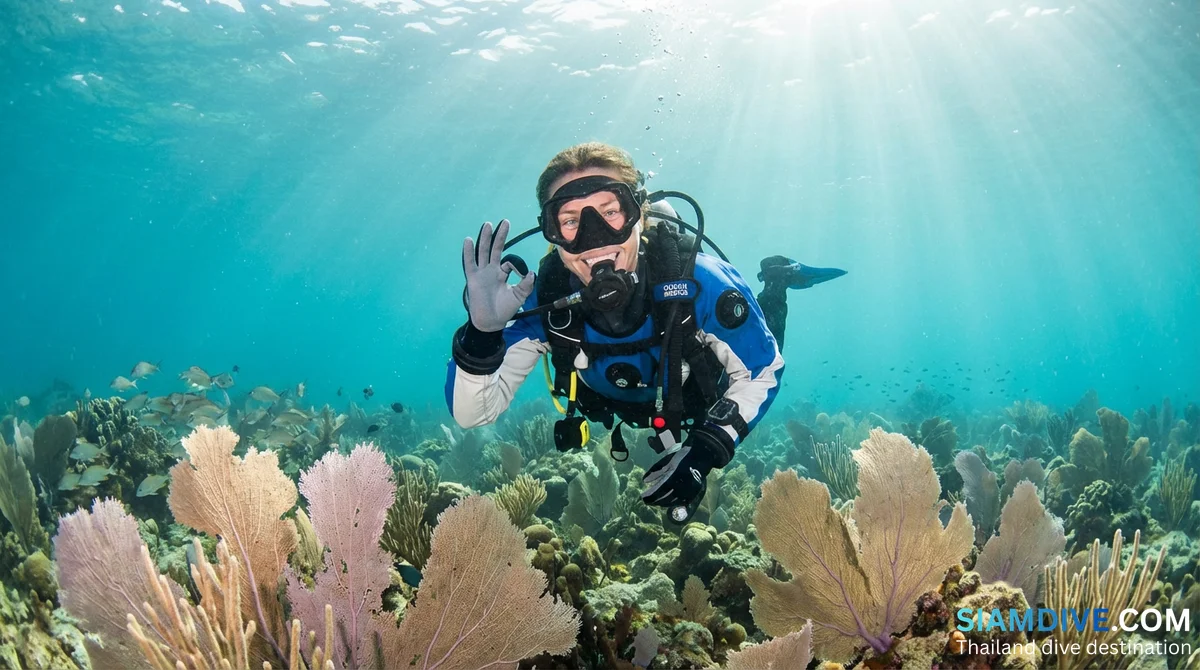
The bay does something most Koh Tao sites do not: it mixes snorkeling, scuba diving, cliff jumping, kayaking, and lazy beach time into a single location. You can spend a full day here without needing a boat or a guide. The reef is healthy, the water is consistently calm because the headlands shelter the bay, and the beach has a handful of restaurants and rental shops for gear, SUPs, and kayaks.
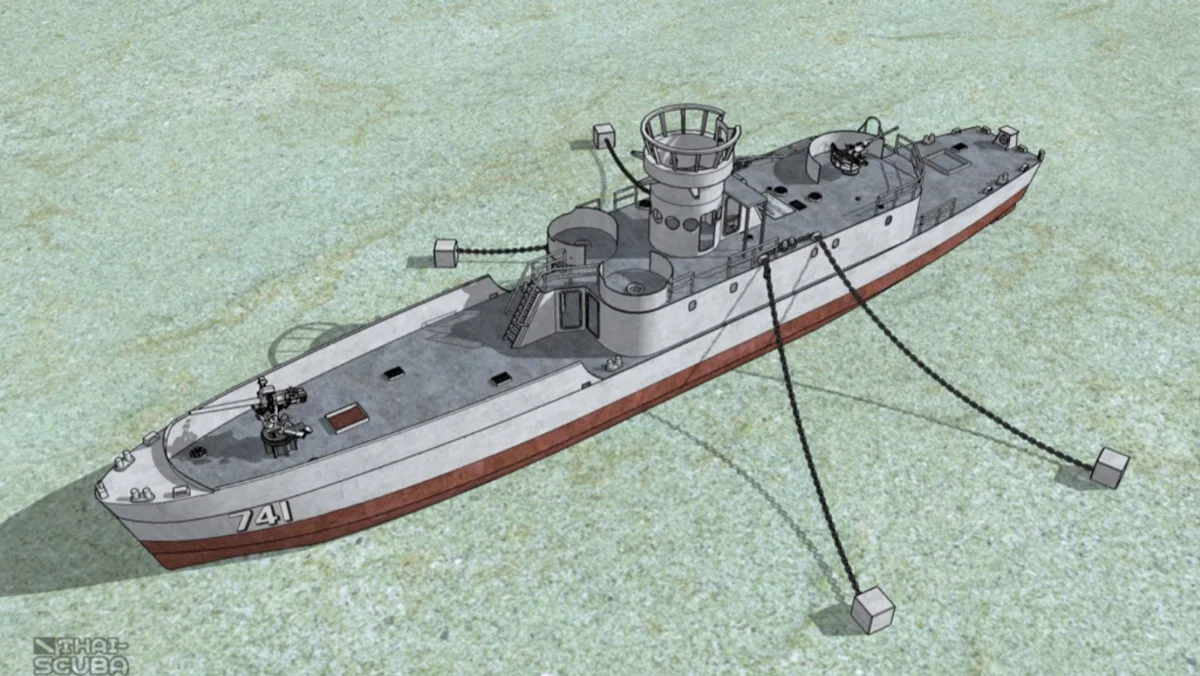
For scuba, the bay suits Open Water level divers because the depths stay between 5 and 18 meters and there is no real current. There is also a sunken catamaran around 18 meters for divers who want something more interesting than plain reef, plus a coral nursery and artificial reef balls on the south side that have grown into a real artificial reef over the years. Calypso Diving operates directly on Tanote Bay beach and knows the site better than anyone.
Best Dive and Snorkel Areas in the Bay
The bay divides into roughly three zones, and each one offers something different depending on what you are looking for. Most divers and snorkelers cover all three in a single outing because they are all within easy swimming distance.
- Tanote Rock (central boulder): the famous cliff jumping rock, surrounded by deep water (5-10 meters) and resident fish — swim out 20 to 30 meters from the beach to reach it, then circle around looking for sweetlips and trevally hiding in the shadows
- North reef (around the headland): the best coral cover, with parrotfish, yellowtail barracuda, and the occasional green sea turtle — follow the rocky boulders north from the beach into slightly deeper water
- South reef (coral nursery): artificial reef balls and concrete cubes at around 10 meters, part of a coral restoration project — great for new divers practicing navigation, and the structures have grown real coral cover over time
- Sunken catamaran: a submerged wreck at about 18 meters on the south side, sometimes on dive shop itineraries — ask Calypso Diving if you want to see it
Marine Life at Tanote Bay
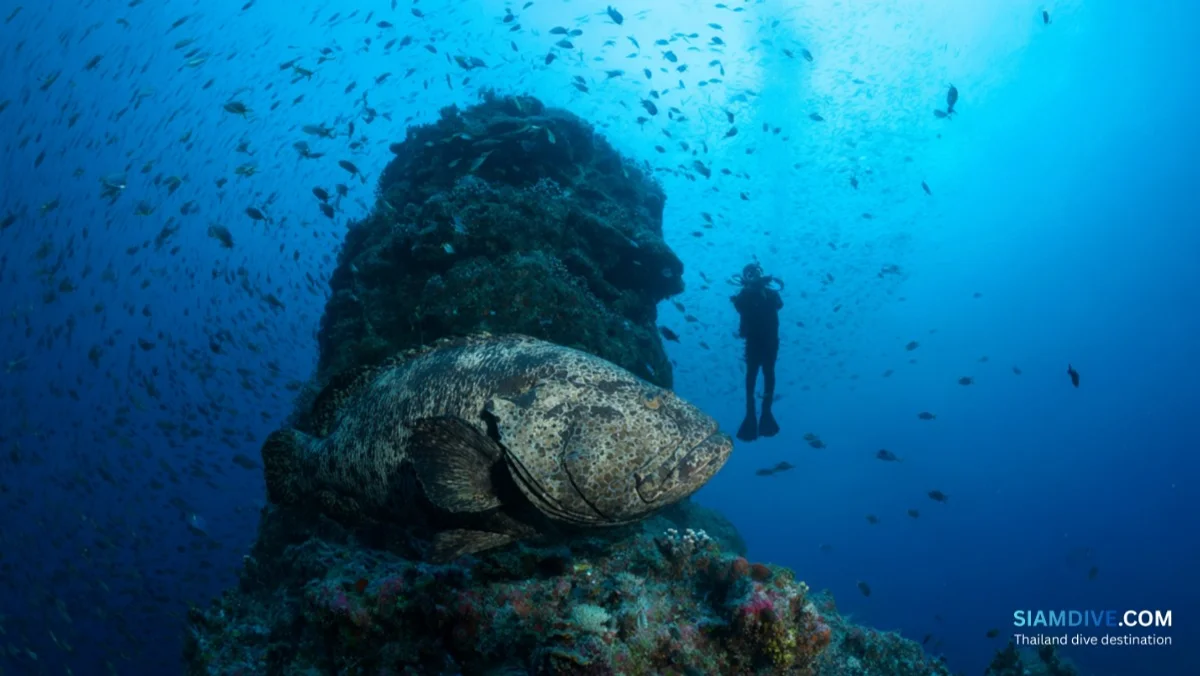
Tanote Bay's marine life is the classic Gulf of Thailand reef mix, heavy on reef fish and turtles, lighter on big pelagics. The bay gets steady visits from divers and snorkelers, so the fish are used to humans and let you get close without bolting.
- Parrotfish: big schools of bumphead and steephead parrotfish crunching on coral heads, particularly in the morning
- Yellowtail barracuda: hang in loose formation around Tanote Rock, often at the surface where snorkelers can see them
- Green sea turtles: visit the north reef regularly, usually feeding on the corals in the shallows
- Jenkins whipray: occasionally cruise the sand between reef sections — look carefully, they camouflage well
- Reef residents: butterflyfish, sergeant majors, clownfish in anemones around the reef balls, and moray eels tucked into rock cracks
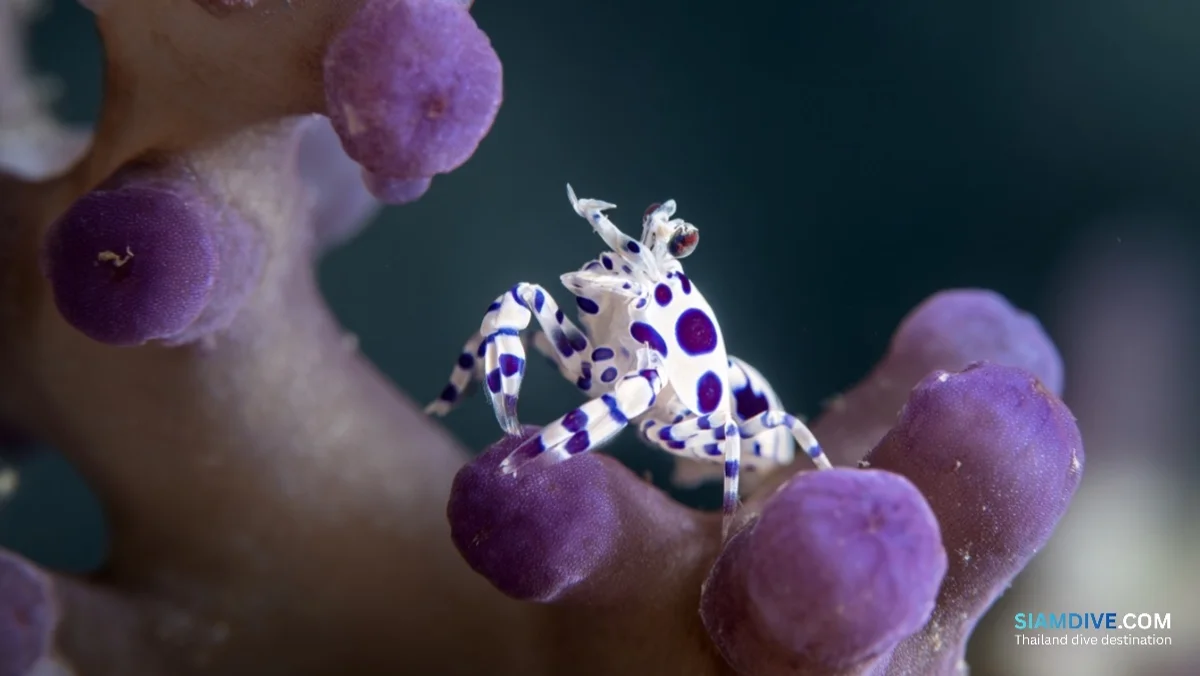
- Macro: the corals hide nudibranchs, small shrimp, and juvenile fish if you slow down and look closely
When to Visit Tanote Bay
Tanote Bay is best during the dry season from December to April, when visibility is highest and the mornings are calm. Early morning visits are the best way to see the bay at its quietest — before 9 AM the snorkel tour boats have not yet arrived from Mae Haad and the beach is nearly empty. By mid-morning the day-trippers start showing up, and the bay gets busy until around 3 PM.
The rainy season (May to October) can be rougher on the east coast but Tanote Bay is still usually divable on most days because of the sheltering headlands. Visibility averages 2 to 10 meters at Tanote, which is lower than the pinnacle sites but perfectly fine for reef snorkeling and shore diving. Water temperature sits between 28 and 30°C year-round.
How to Get to Tanote Bay
The most common way to get to Tanote Bay is by scooter. From Sairee or Mae Haad, head south toward Chalok village and turn left at the signs for Tanote Bay near the Koh Tao Animal Clinic — this is the only access road. Follow the steep winding road for about 15 minutes. There is free parking at Buddha View and at Tanote Bay Resort near the beach. Scooter rental runs 150 to 300 THB per day.
A word of warning: the road to Tanote Bay is steep, narrow, and winding, with some sharp descents that catch out inexperienced riders. Most Koh Tao scooter accidents happen on roads like this. If you have never ridden before or you are unsure of your skills, take a taxi instead — expect to pay around 550 THB one way from Sairee, shareable between passengers. You can also walk from Sairee, but it takes about an hour in the heat and is not recommended.
Alternatively, join an island-hopping snorkel tour from Mae Haad pier. Most daily tours include Tanote Bay as a top stop, usually with lunch, gear, and a guide. Tours typically run 1,000 to 1,500 THB per person for a full day and visit four or five sites around the island.
Practical Tips Before You Go
- Certification: Open Water is enough for the reef and the catamaran wreck. Snorkelers need no certification
- No entry fee: unlike Aow Leuk, the beach at Tanote Bay is free to access, and parking is free at the main lots
- Bring your own mask and snorkel if possible — rentals on the beach are okay but well-used. Calypso Diving supplies scuba gear for fun dives and courses
- Cliff jumping caution: the rope ladder up Tanote Rock feels rickety. Check for swimmers below before jumping — people get hit every season. Jump from the designated spots only, and do not try backflips or dives from the top
- Drive carefully: the road back up from the bay is steep — watch your brakes on the descent and gear down, do not coast
- Eat at the beach: the two or three small restaurants serve basic Thai food, Chang beer, and simple snacks. Cash only, bring enough for food, rentals, and any tips
- Stay for sunrise: Tanote faces east, so the sunrise views over the water are excellent if you stay overnight at one of the rustic bungalow resorts
Is Tanote Bay Worth the Drive?
For an easy half or full day of snorkeling and shore diving away from Sairee's crowds, Tanote Bay is one of the best choices on Koh Tao. The combination of fringing reef, cliff jumping rock, sunken catamaran, and beach bars makes it more than just a dive site — it is a full day out. Advanced divers chasing walls and currents will find it too mellow, but for beginners, families, and anyone who wants a relaxed day in the water with some variety, it is hard to beat. The quieter vibe compared to western sites is worth the bumpy scooter ride alone.
Planning a Koh Tao trip that includes Tanote Bay? Browse dive operators, snorkel tours, and liveaboards that cover the east coast on siamdive.com and lock in your day at Tanote.