Koh Ngam Noi Diving Guide: Chumphon's Smaller Sister Island
11 เมษายน 2569
Koh Ngam Noi is the shallow Chumphon reef where Open Water divers actually relax. Coral gardens, the HTMS Prab wreck nearby, and barely any crowds.
The Smaller Sister Island Worth a Whole Day
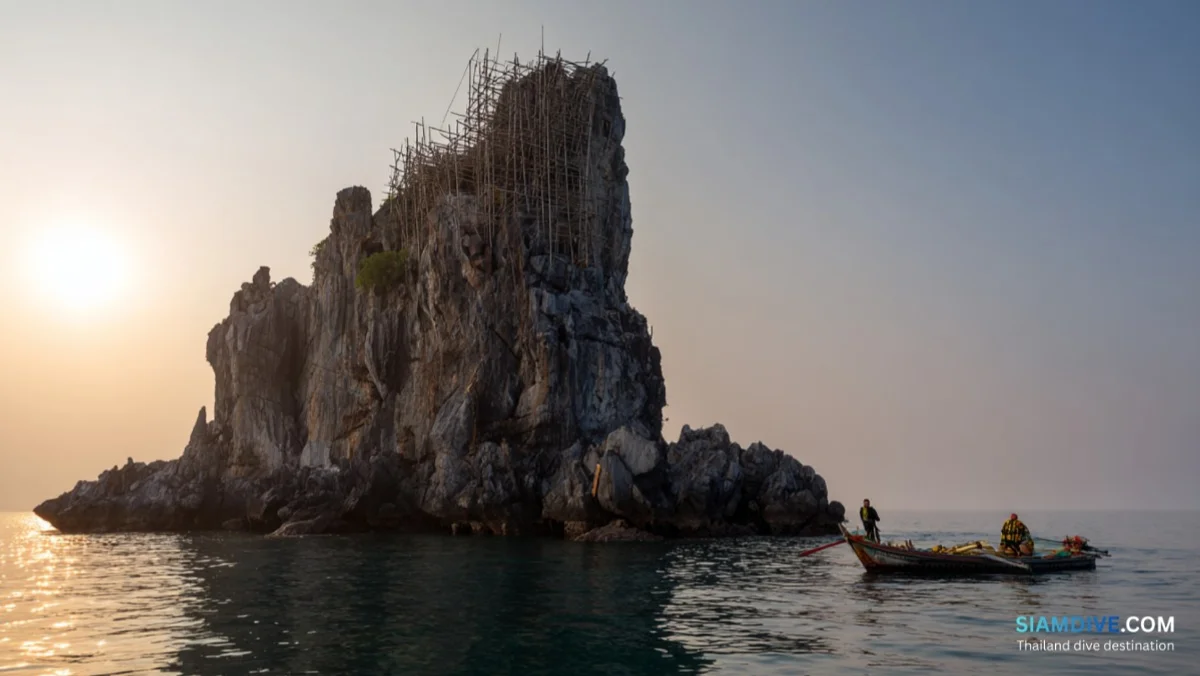
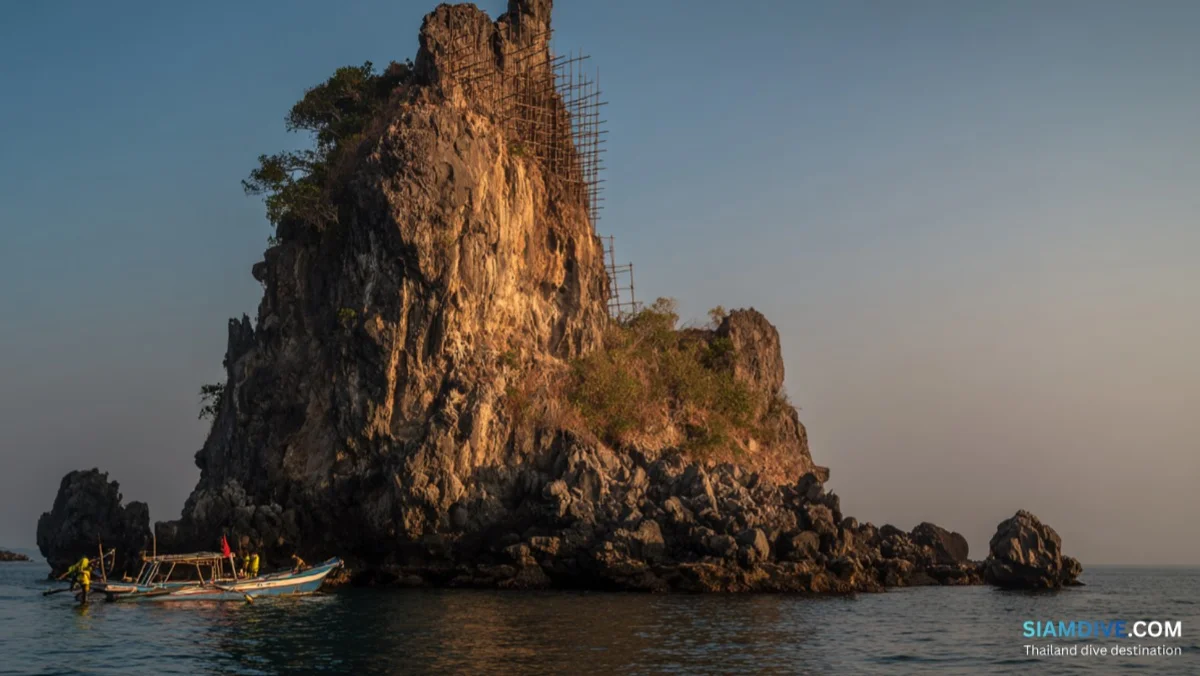
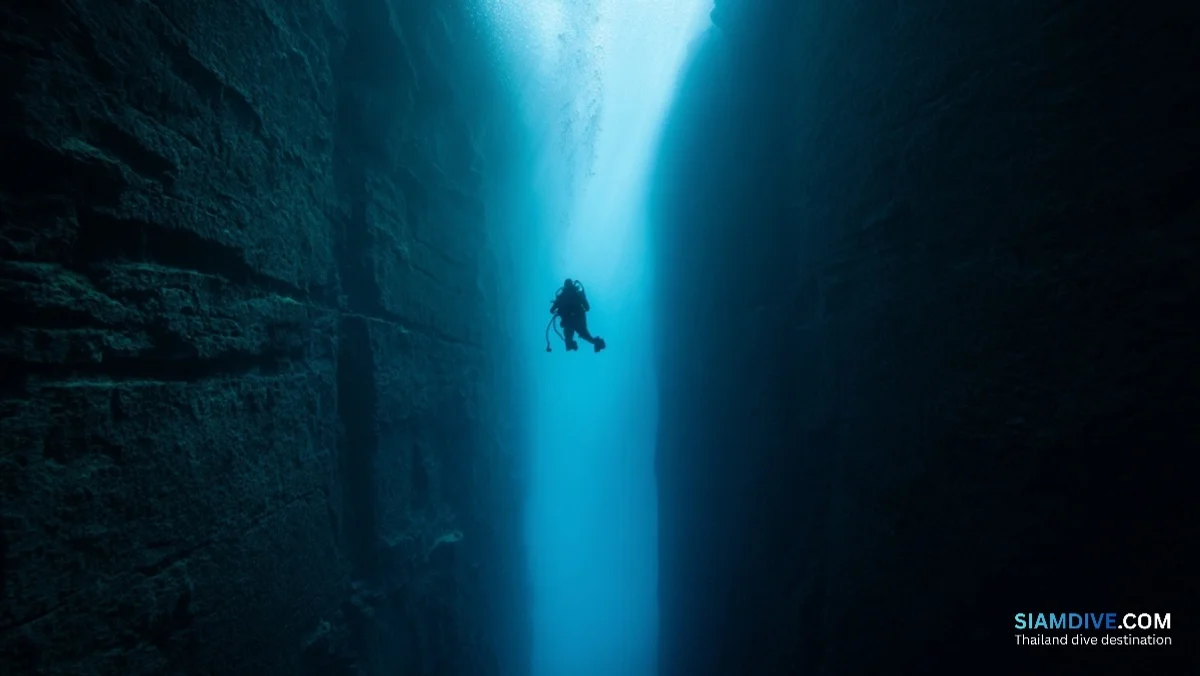
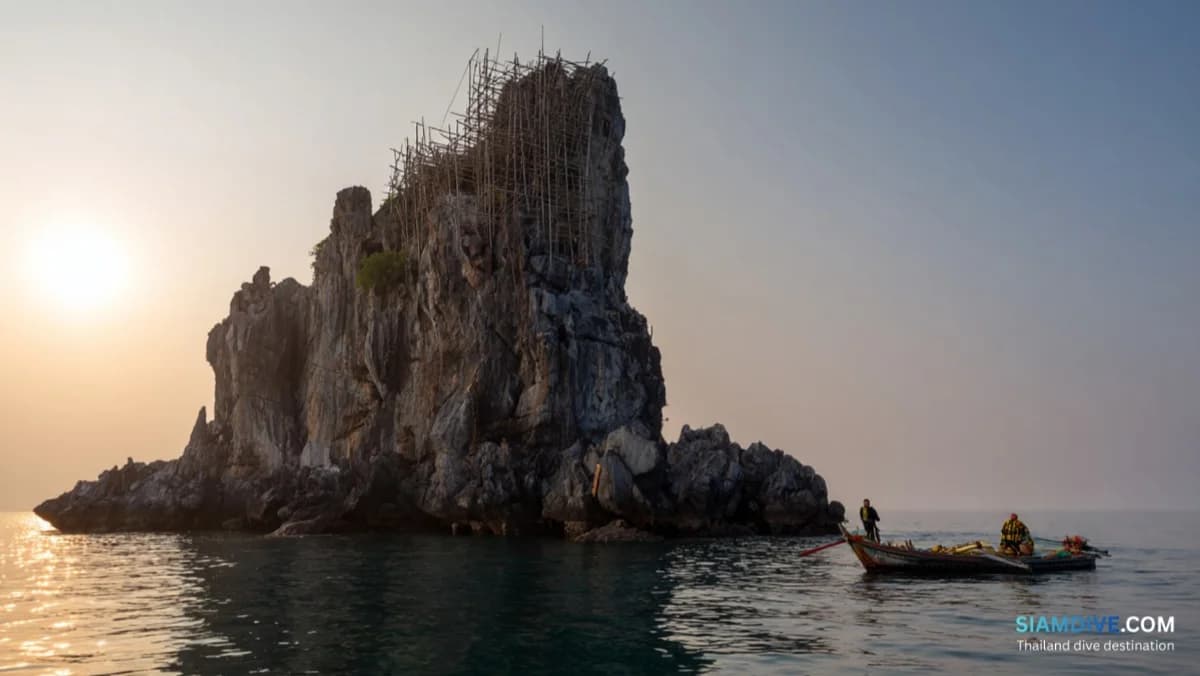
Koh Ngam Noi is the smaller of the two Ngam islands sitting 20 kilometers off the coast of Chumphon, in the Mu Ko Chumphon National Park. It is rocky, raw, completely undeveloped, and has no beach at all. People who first see it from the boat usually compare it to a movie set — one reviewer famously called it "a scene from Game of Thrones." That is the right vibe. The island is a jagged rock outcrop wrapped in coral gardens, with bamboo scaffolding clinging to the cliffs that local communities use to harvest swallow nests for the bird nest soup trade.
For divers and snorkelers, that combination of zero infrastructure, healthy national park reef, and a wreck just five minutes south is what makes Koh Ngam Noi worth the long boat ride from Chumphon Pier. You roll off the boat into 5 to 16 meters of clear water, and the dive starts immediately.
Why Divers Pair It with Koh Ngam Yai
Most day boats out of Chumphon do Koh Ngam Noi and Koh Ngam Yai together. There is a reason for that, and it is not just convenience. The two islands sit ten minutes apart and offer completely different dives. Ngam Yai is the bigger reef with the famous anemone fields, the deeper drop-off, and the best whale shark odds in the area. Ngam Noi is shallower, easier on certifications, and home to the kind of coral garden where new divers actually finish their air rather than running out from over-breathing.
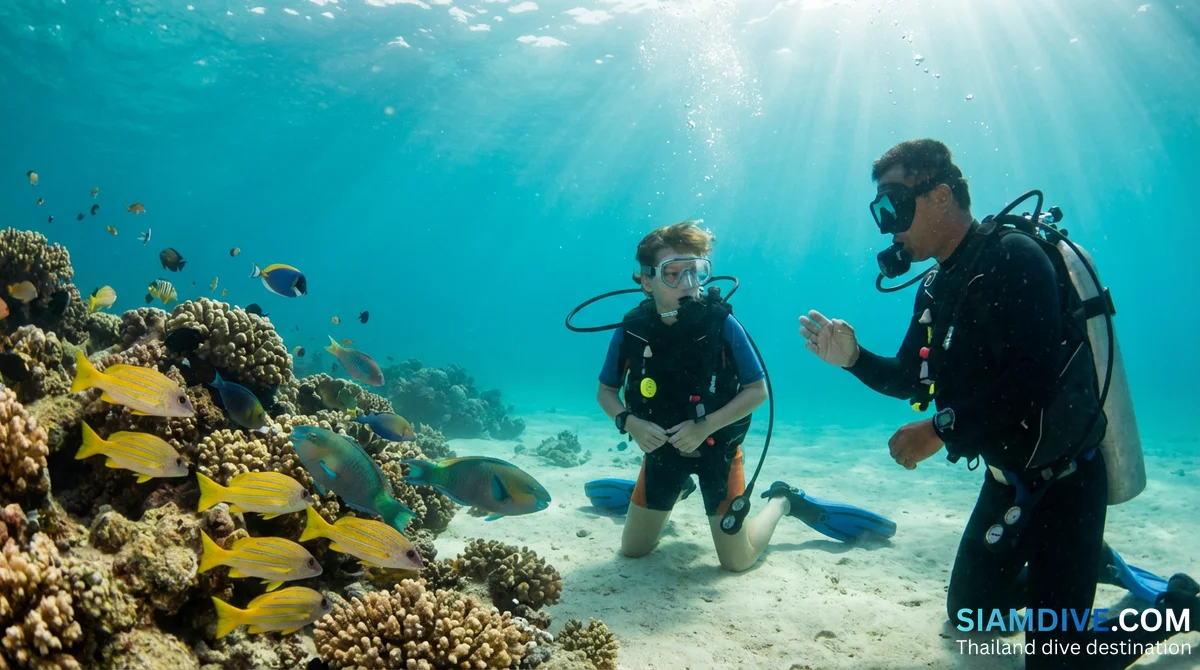
If you are an Open Water student doing your first non-training dives, ask the operator to put you on Ngam Noi first. The maximum depth is around 16 meters, the currents are usually mild to none, and the marine life is dense enough that you forget about your gauges. Save Ngam Yai for the second dive of the day when you are more relaxed and your air consumption has settled.
What's Down There
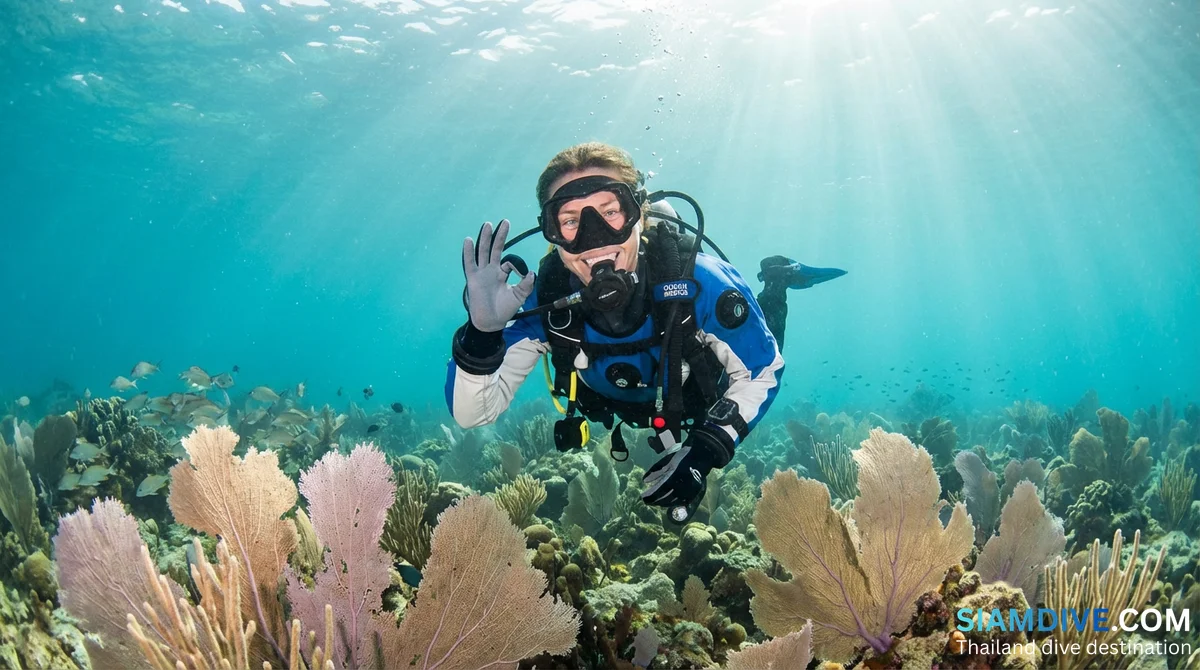
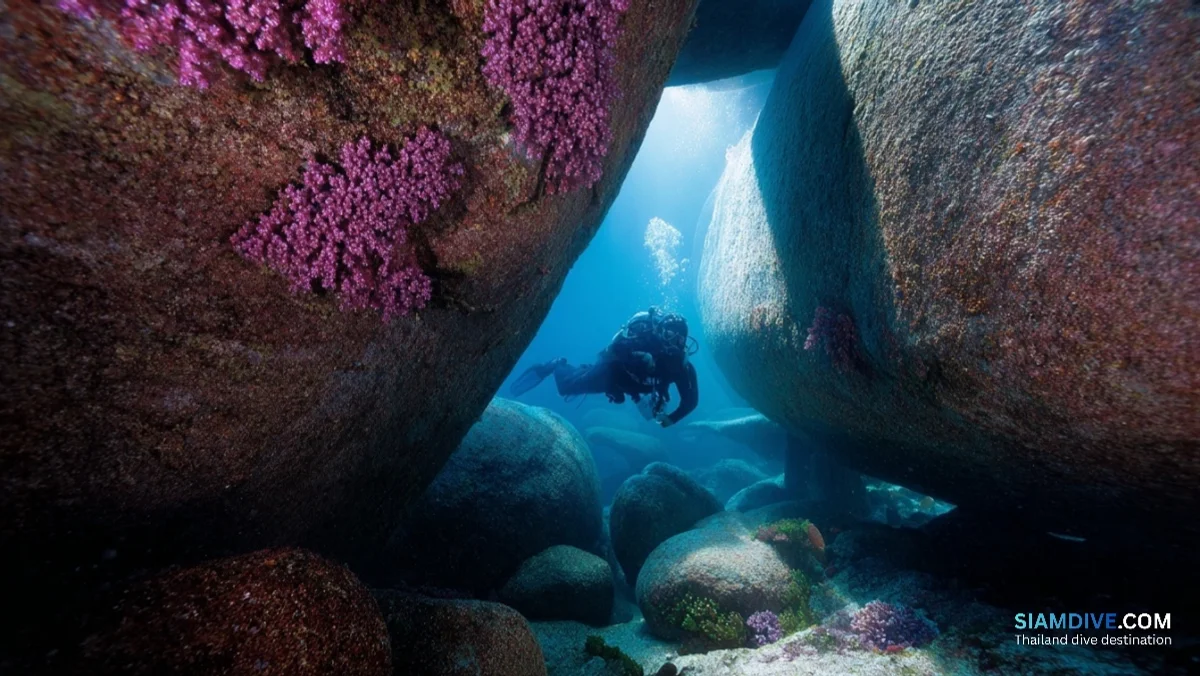
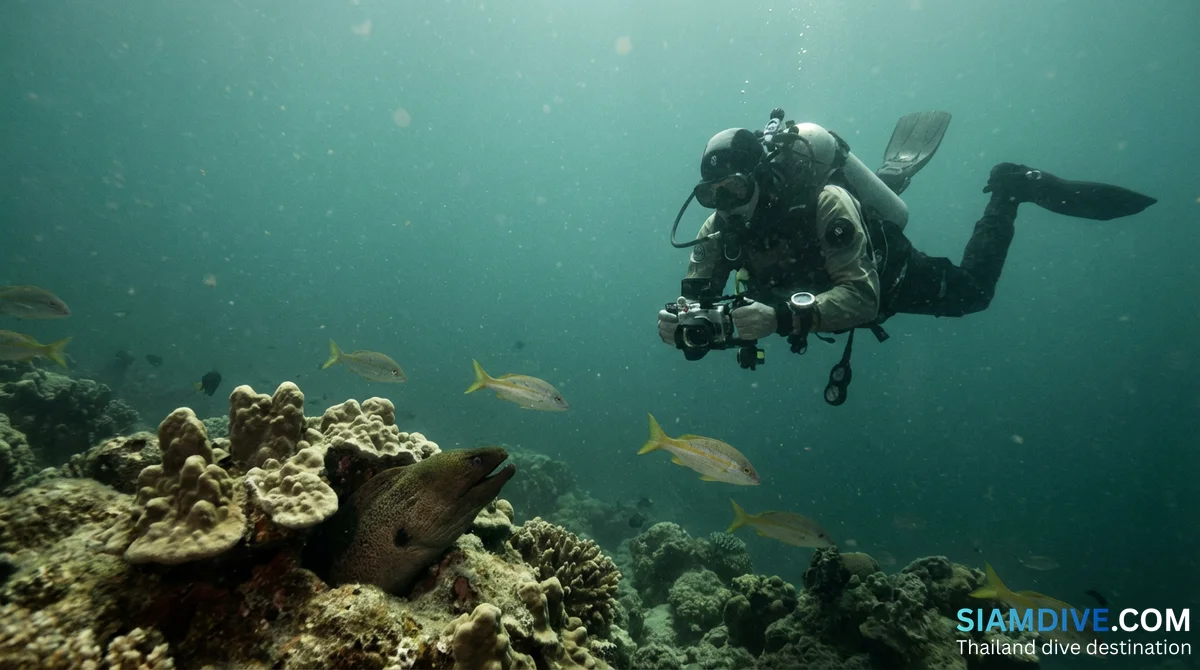
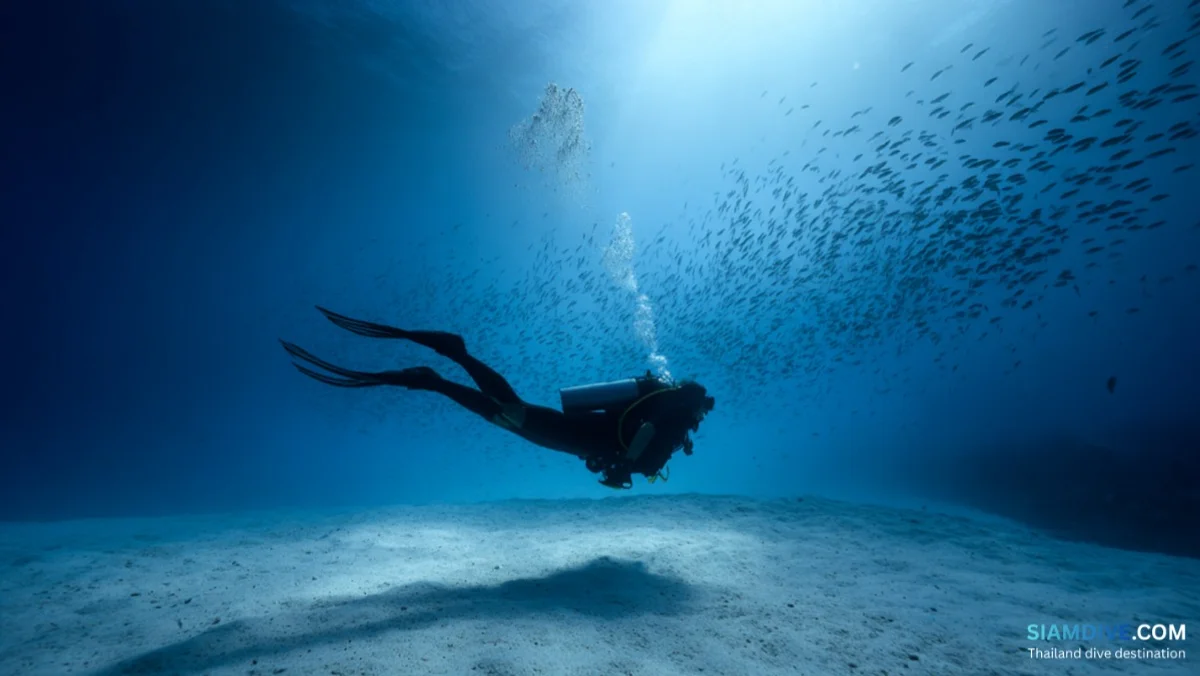
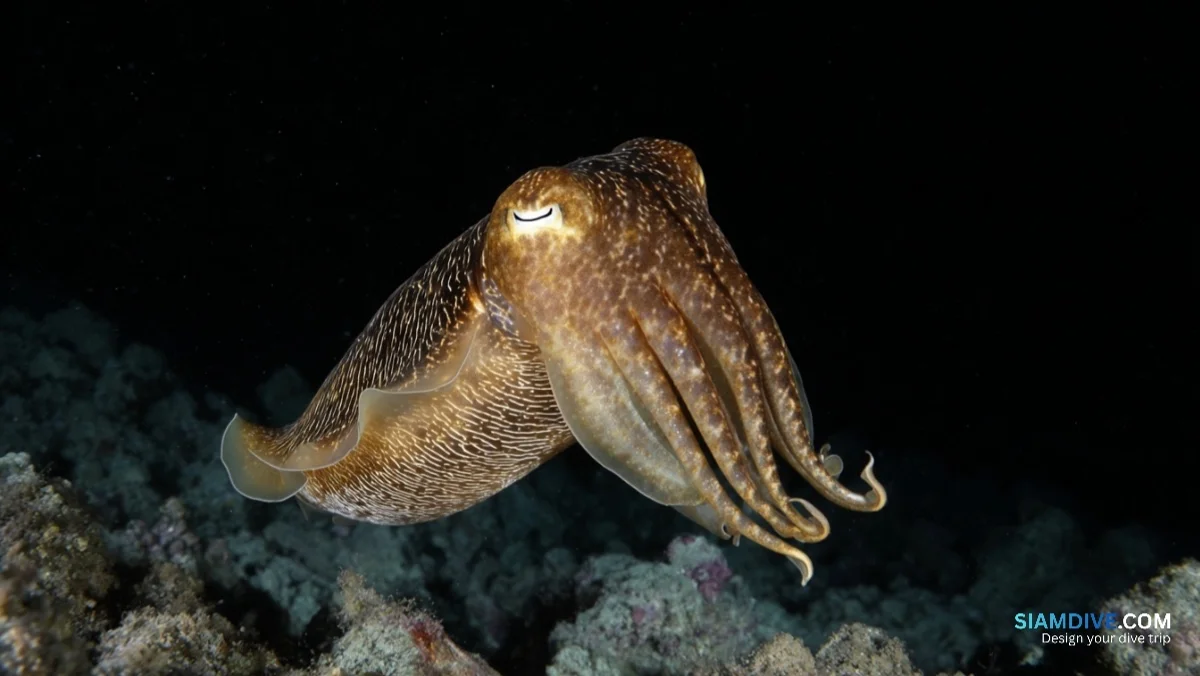
Koh Ngam Noi is shallow water dense coral cover. The site lives between 5 and 16 meters with sandy patches between rocks and a few rock swim-throughs at the southern end of the island. The marine life list looks unfair for a site this easy to dive:
- Clownfish in sea anemones at almost every coral head, the same dense fields you find at Ngam Yai but in shallower water.
- Schools of three-spot damselfish, humpback snappers, angelfish moving along the coral edges.
- Blue-spotted ribbontail rays on the sand patches between coral heads. Easy to spot if you look at the bottom rather than the water column.
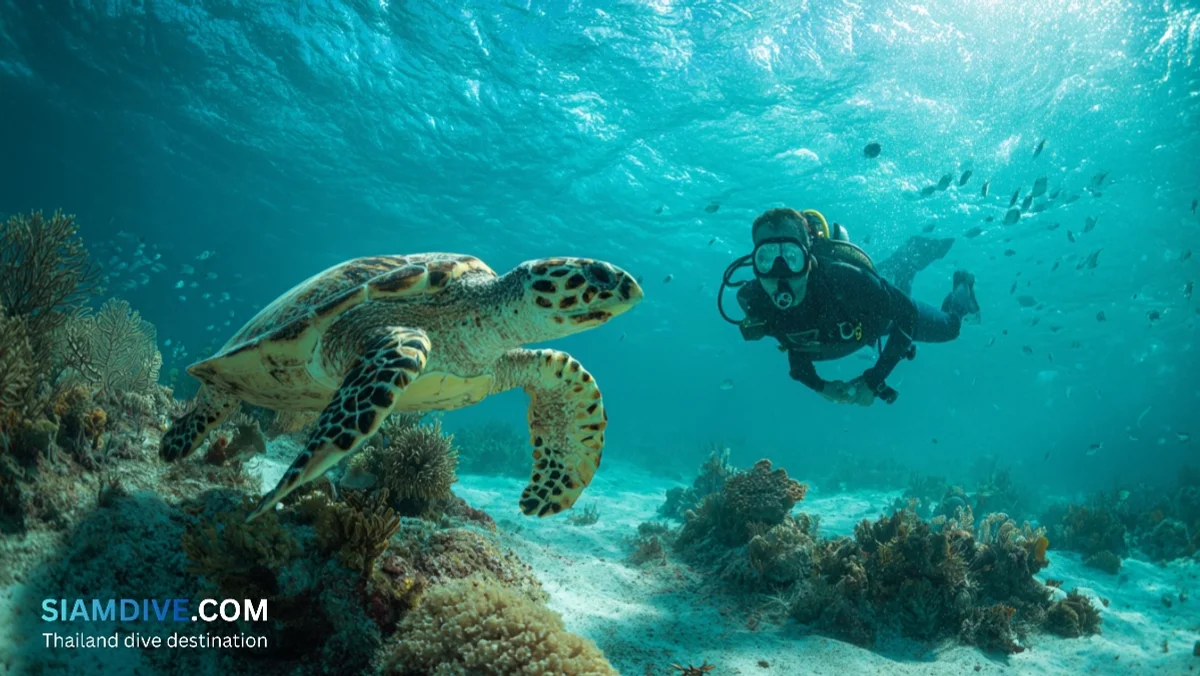
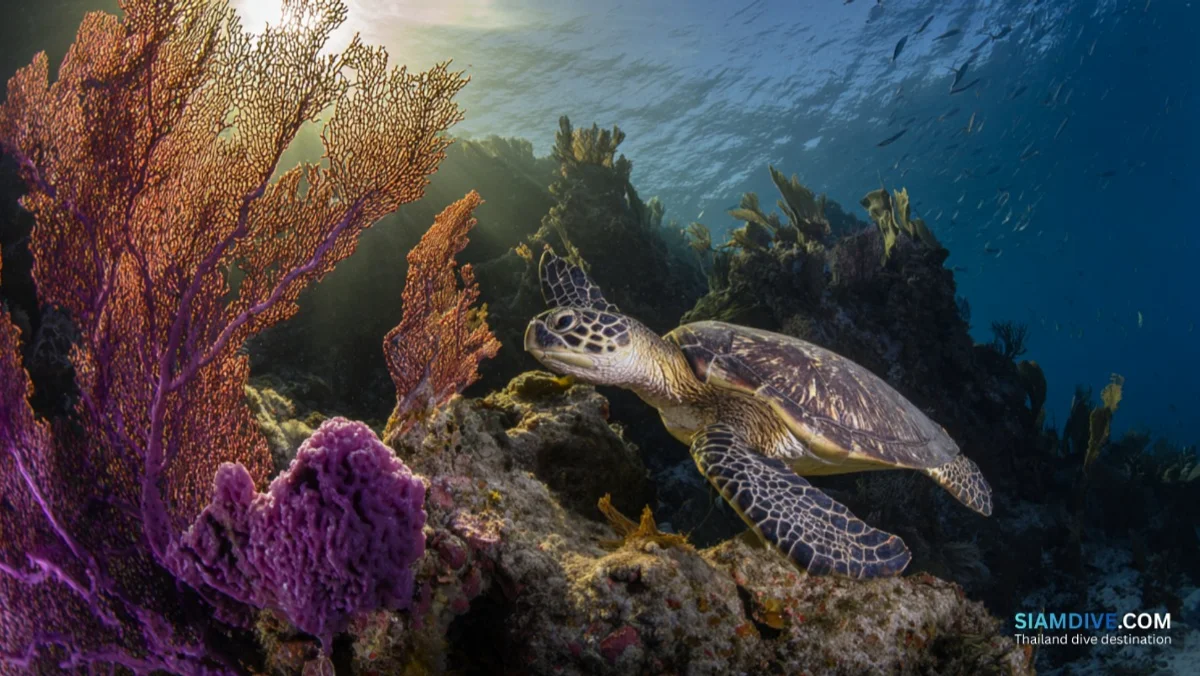
- Sea turtles cruising the reef. Most divers see at least one per trip.
- Lionfish, scorpionfish, and the occasional stonefish for the divers who slow down and look for the camouflaged ones.
- Schooling barracudas hanging near the rocks at the southern end where the swim-through creates current eddies.
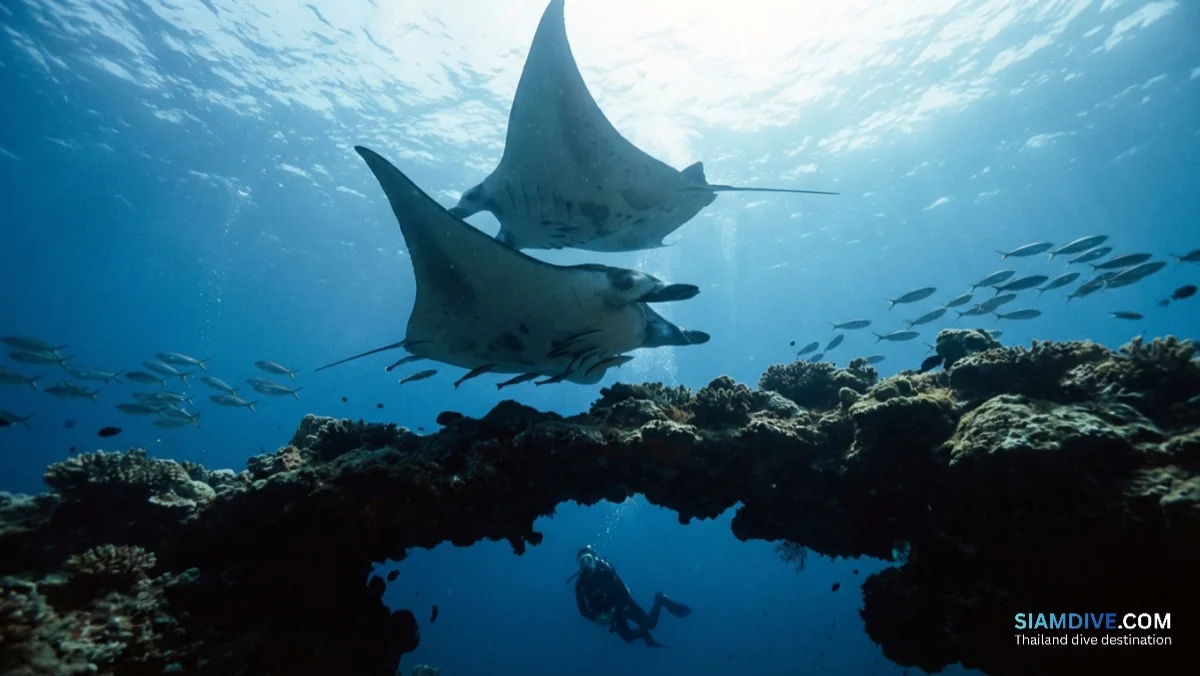
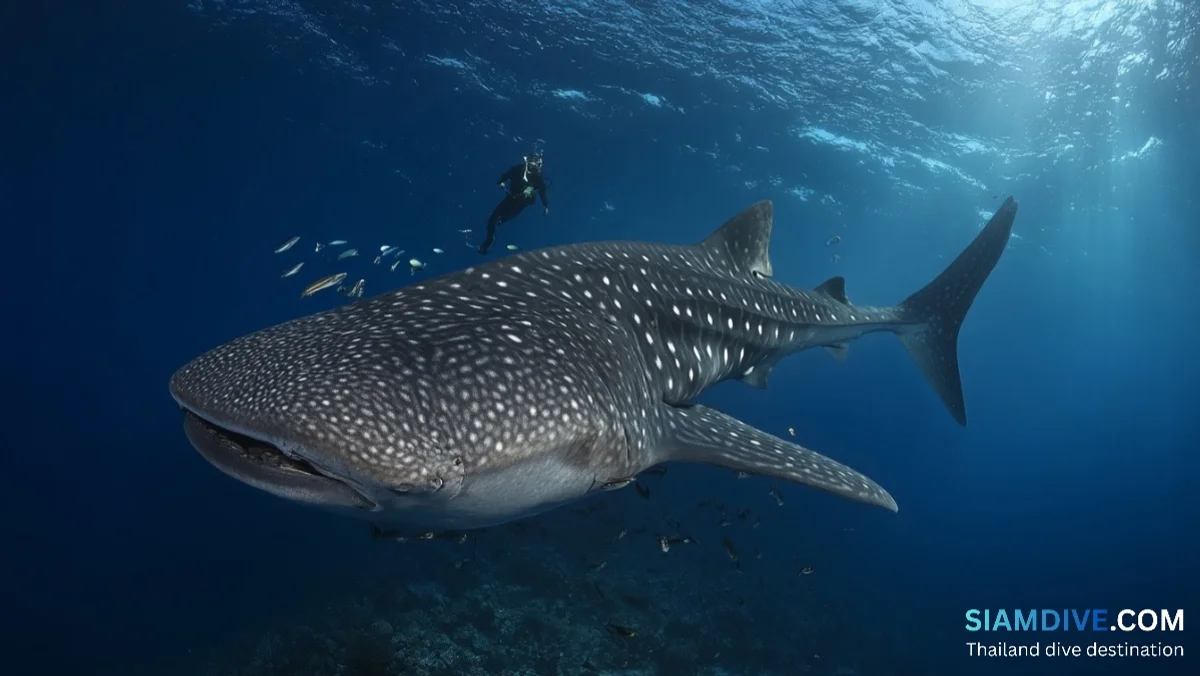
- Whale sharks, occasional but documented. The same ones that pass through Ngam Yai pass through here.
- Small reef sharks on the deeper edge of the site, more common at dawn and dusk.
The HTMS Prab Wreck Connection
One of the reasons Koh Ngam Noi day trips are worth booking is what sits five minutes south of the island: the HTMS Prab 741 wreck. The Prab is a small WWII-era US landing craft sunk in 2011 as an artificial reef, deck at 18 meters and bottom at 23 meters. Most operators that run Ngam Noi will combine it with the Prab as a two-tank day, giving you a shallow coral dive followed by a wreck dive without having to relocate hours of boat time. If you are doing a full-day trip, ask whether the wreck is on the schedule. It usually is, but a few operators skip it for less-experienced groups.
When to Visit
Conditions at Koh Ngam Noi follow the same pattern as the rest of the Chumphon dive sites. Best season is March through October, with peak visibility (up to 30 meters) and the calmest surface in April and May. Visibility typically runs 8 to 30 meters depending on tide and weather, with 10 to 15 meters being a fair expectation on average days. Water temperature stays at 25 to 31°C all year. November to February is the rainy season — boat trips are weather-dependent and may cancel on short notice.
If whale sharks matter to you, aim for April or May. The local divemasters keep informal sighting logs and the same patterns recur — plankton blooms during these months bring the sharks in. Nothing is guaranteed, but the odds at Ngam Noi are roughly the same as at Ngam Yai.
Getting There from Chumphon
You start in Chumphon town. From Bangkok, the easy options are the overnight train (about 8 hours, the most comfortable for the price), a Southern Bus Terminal coach (6-7 hours), or a one-hour Nok Air flight to Chumphon Airport. From town, a songthaew or Grab gets you to Chumphon Pier — locals still call it Siam Tours Pier — where the day boats depart.
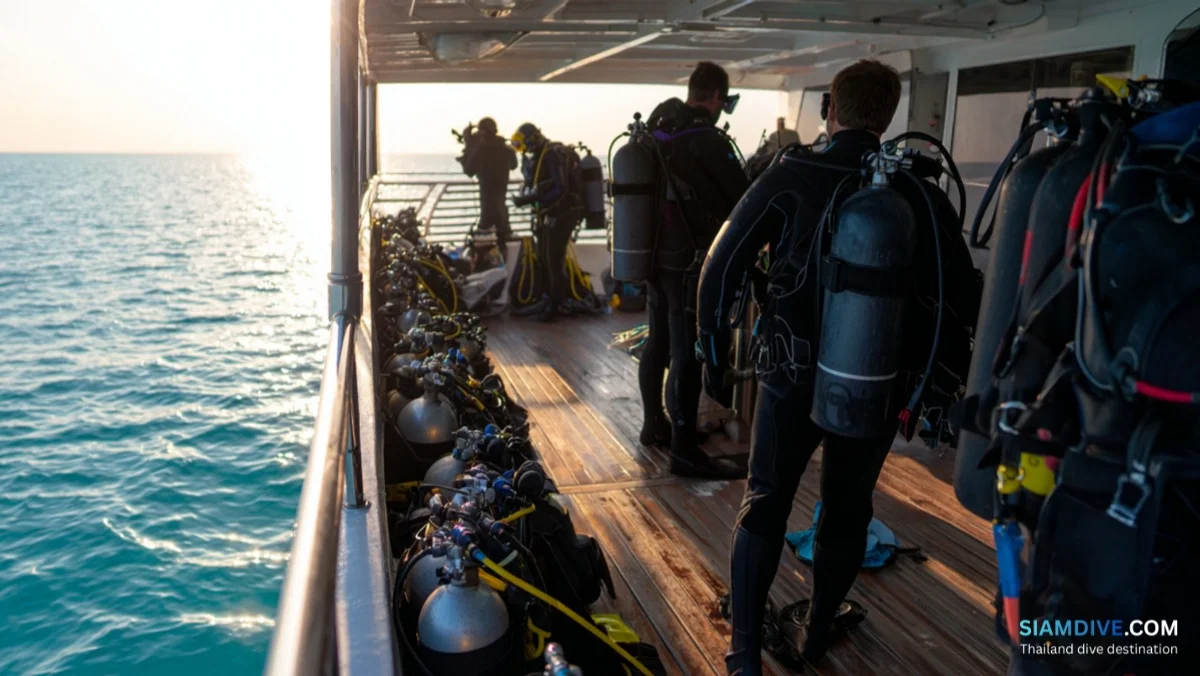
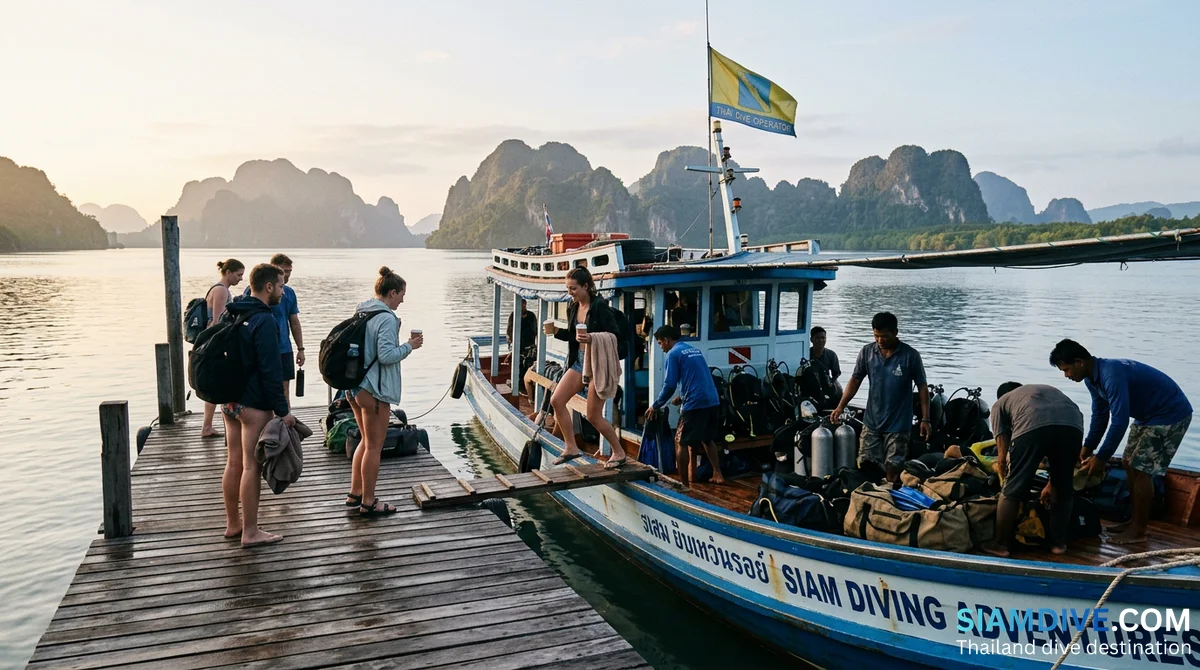
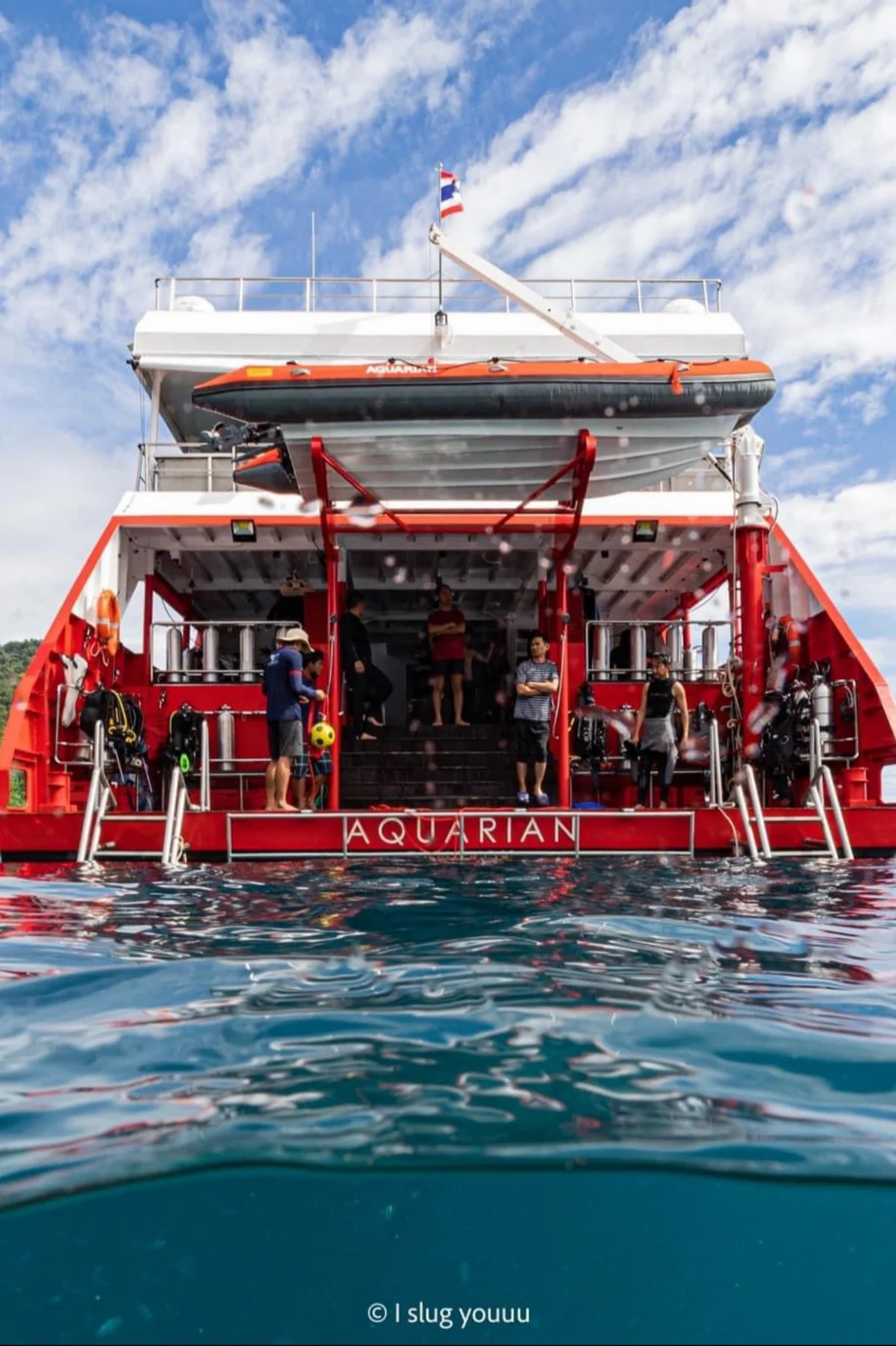
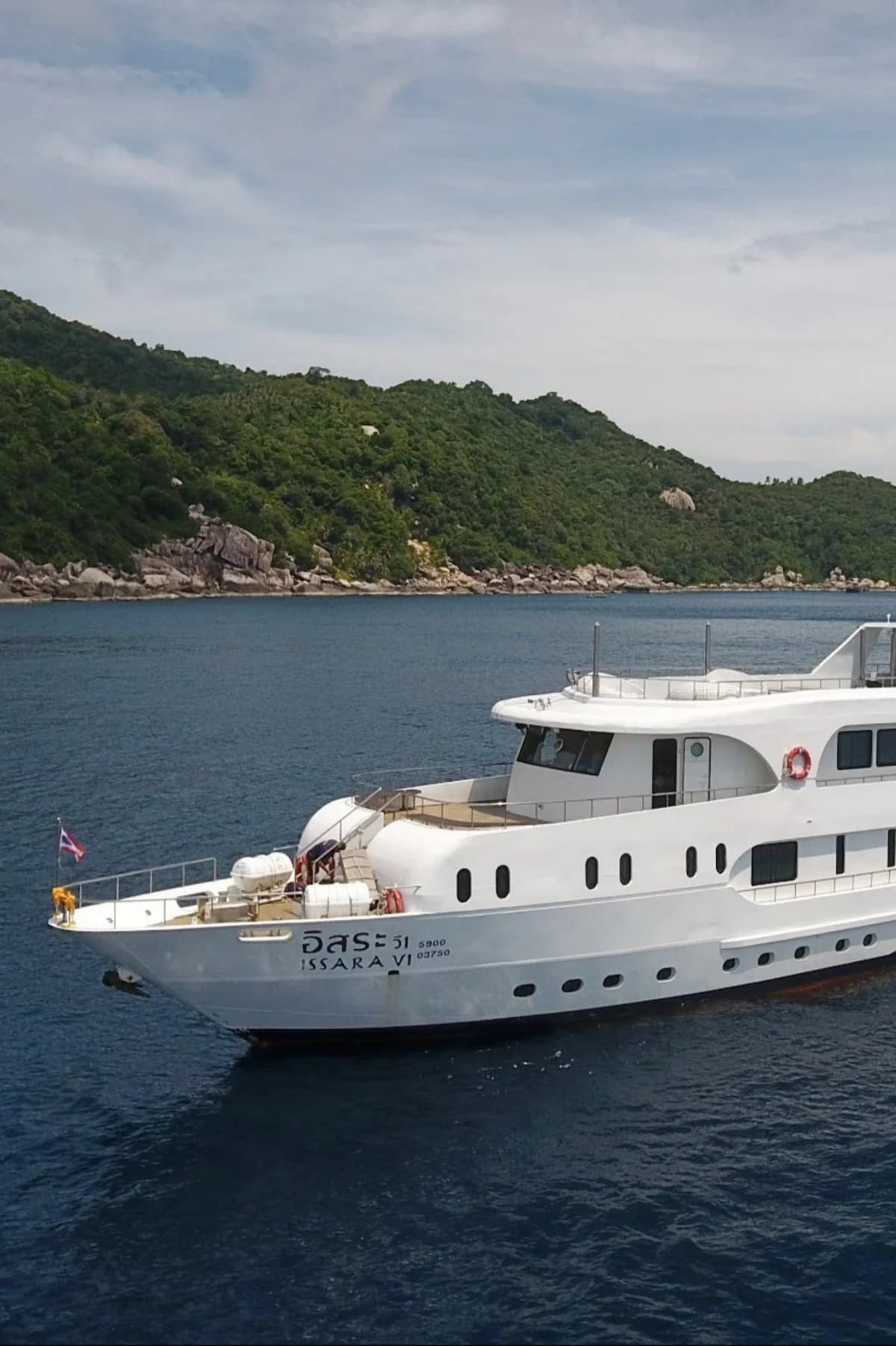
The boat ride to Koh Ngam Noi takes a little over an hour on a tour catamaran or speedboat. There is no public ferry or scheduled service. The 20-kilometer crossing is too far for long-tail boats, so you go with a dive operator or snorkel tour or you do not go at all. National park fee is 200 baht for adults and 100 baht for children, paid at the island when you arrive. Established operators that run the Ngam islands include Siam Catamaran Tours, Chumphon Cabana Resort and Diving Centre, and a handful of smaller PADI/SSI dive shops in town.
Practical Tips
- This island has no beach and no shade. You spend the day on the boat or in the water. Bring a hat, sunglasses, and reef-safe sunscreen.
- Bring your own snacks. Most boats include a basic lunch but the snack and drink situation varies by operator. The captain bought what he bought that morning.
- Combine snorkeling and diving. If you have non-diving friends, the shallow reef around Ngam Noi is excellent for snorkeling from the boat. Most operators run combined trips.
- Ask about the Prab wreck. If you are certified, make sure the day plan includes the HTMS Prab 741. It is the highlight that bumps the trip from good to great.
- Book the small operators in low season. Established operators run regardless, but the smaller shops sometimes consolidate into bigger boats during November to February. You may end up on a 20-person boat instead of a 6-person one if you walk in on a slow week.
- Confirm the language. A few of the smaller Chumphon dive shops only run Thai-language briefings. Ask before paying if you need English.
- Pay the park fee with small change. 200 baht notes are appreciated. The ranger station at the island doesn't always have change for 1,000s.
Worth the Boat Ride
Koh Ngam Noi is not a postcard island in the Phi Phi sense. There is nowhere to walk, nowhere to eat, and nothing to do above the waterline. But for divers and snorkelers who want a quiet, healthy national park reef paired with a real wreck dive and the occasional whale shark, it is one of the better day trips left in the Gulf of Thailand. Plan your trip and book a Chumphon day boat through siamdive.com — we work with the operators who include both Koh Ngam Noi and the HTMS Prab wreck on the same day, run small groups, and know the local conditions well enough to swap dives when the wind shifts. Tell them you want both islands and the wreck, and you will get the trip the locals do when nobody is watching.