Losin : Thailand's Best-Kept Diving Secret in the Deep Gulf
7 เมษายน 2569
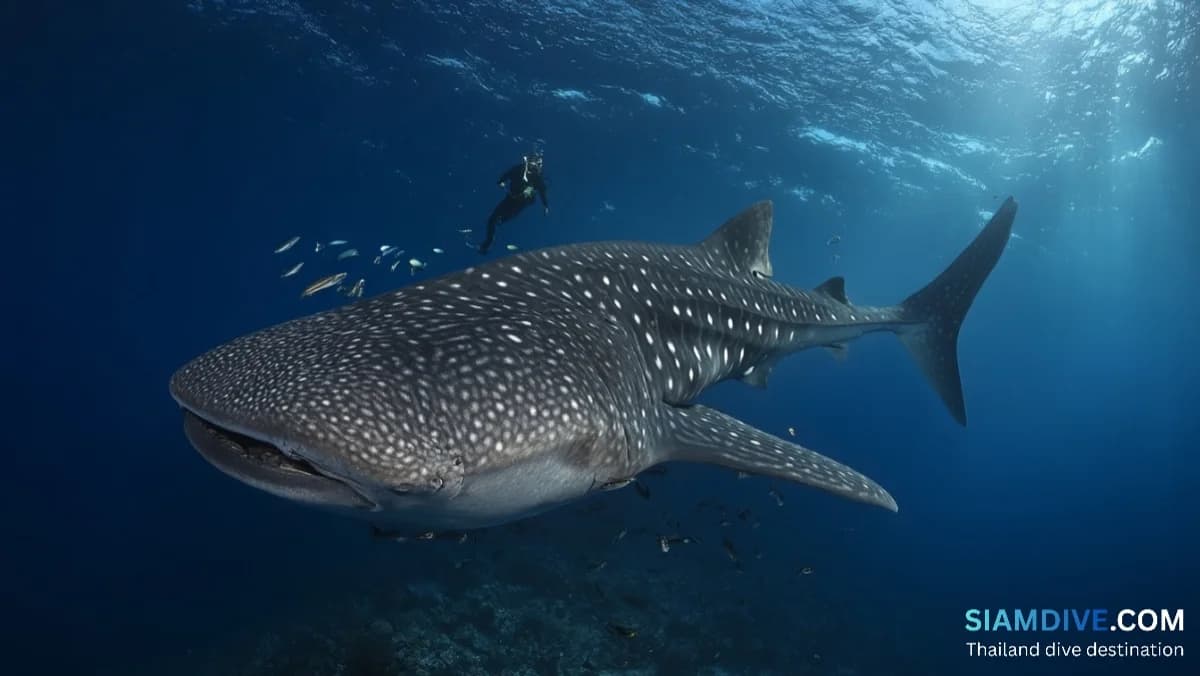
Losin is a remote liveaboard-only dive site off Pattani famous for manta rays, whale sharks, and bull sharks during March-May.
Losin : Thailand's Best-Kept Diving Secret in the Deep Gulf
Most divers who fly to Thailand head straight for the Andaman side — Similan, Richelieu Rock, Hin Daeng. The Gulf gets dismissed as "training waters." Then there's Losin. A submerged pinnacle 70 kilometers off the coast of Pattani, accessible only by liveaboard, with a short April-May window when manta rays, whale sharks, and jacks turn it into one of the most productive dive sites in Southeast Asia.
Hardly anyone goes. That's the point.
Why Losin is a Must-Visit for Serious Divers
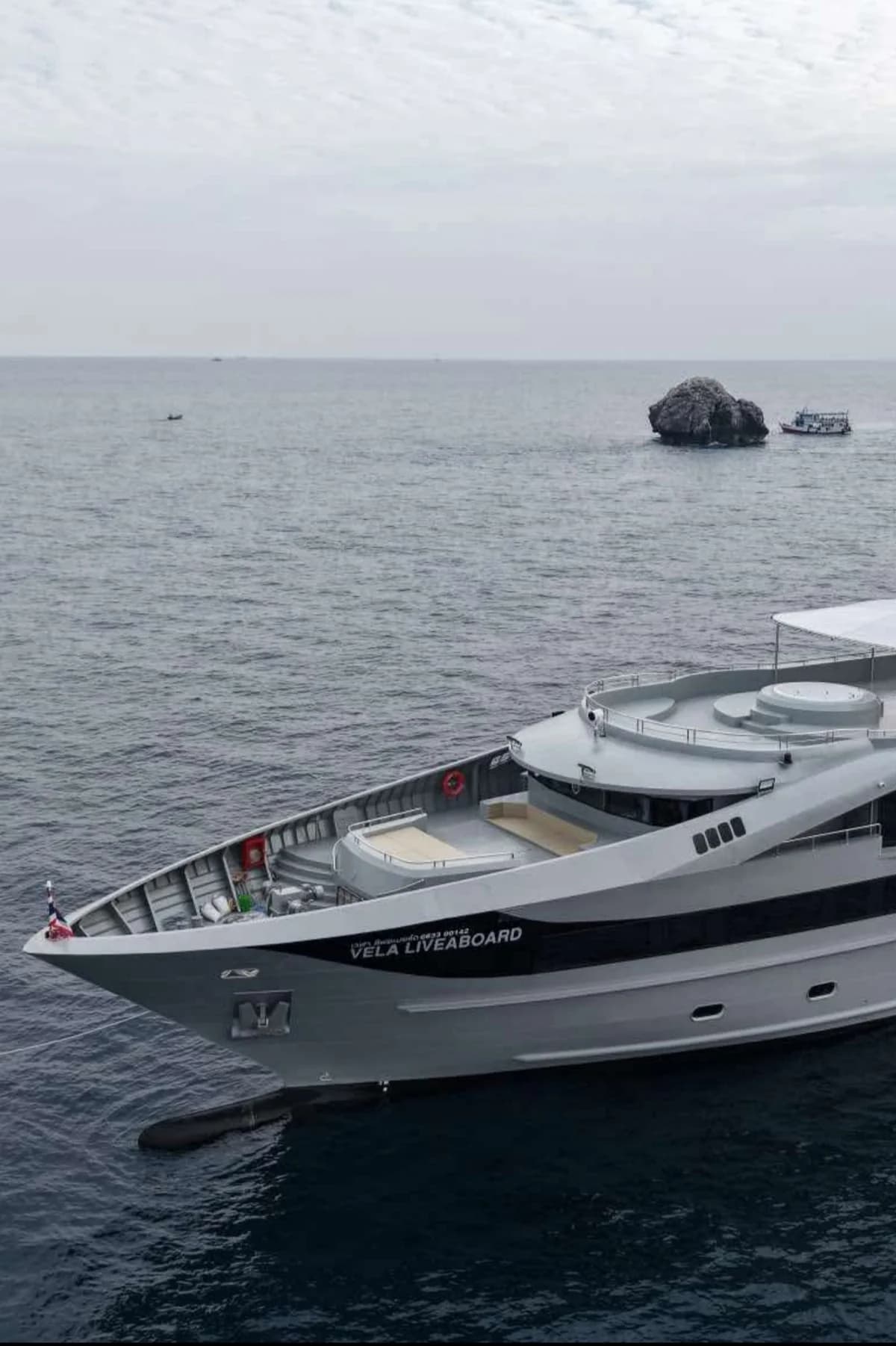
Losin Pinnacle is what every "untouched dive site" claims to be but rarely is. The remote location does the gatekeeping for you — there are no day boats, no resort dives, no rental quads on the beach. To dive Losin you commit to a 3-5 night liveaboard departing from Songkhla or Pattani, and once you're there you'll likely be the only group on the site.
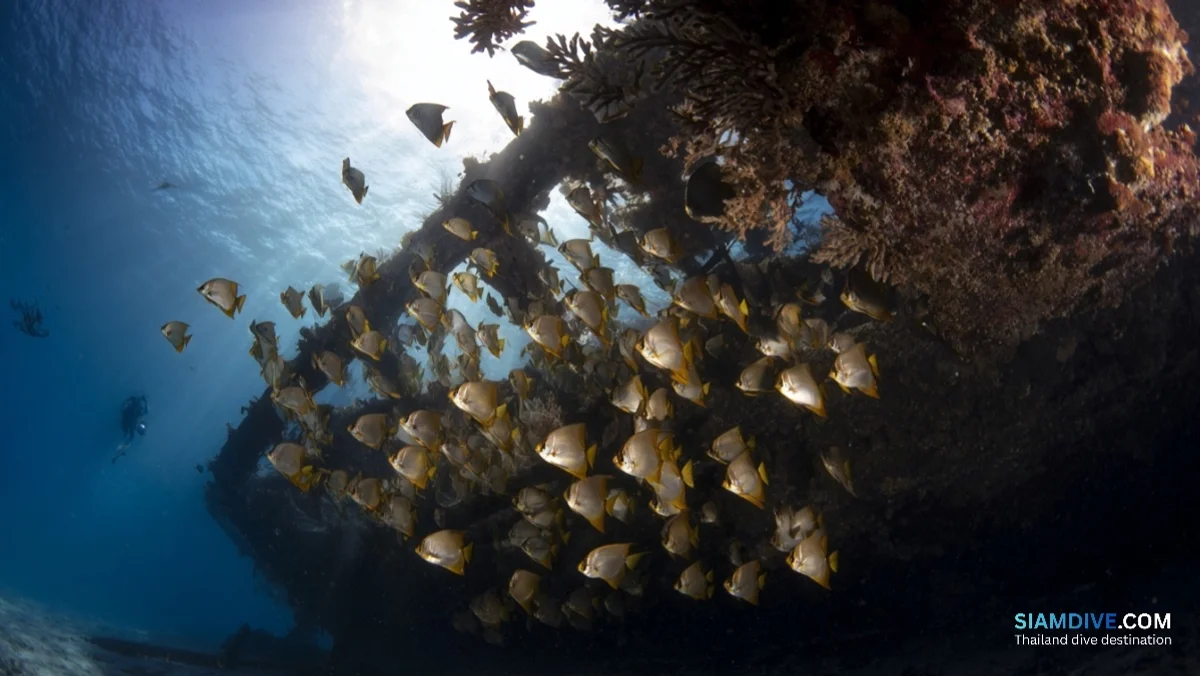
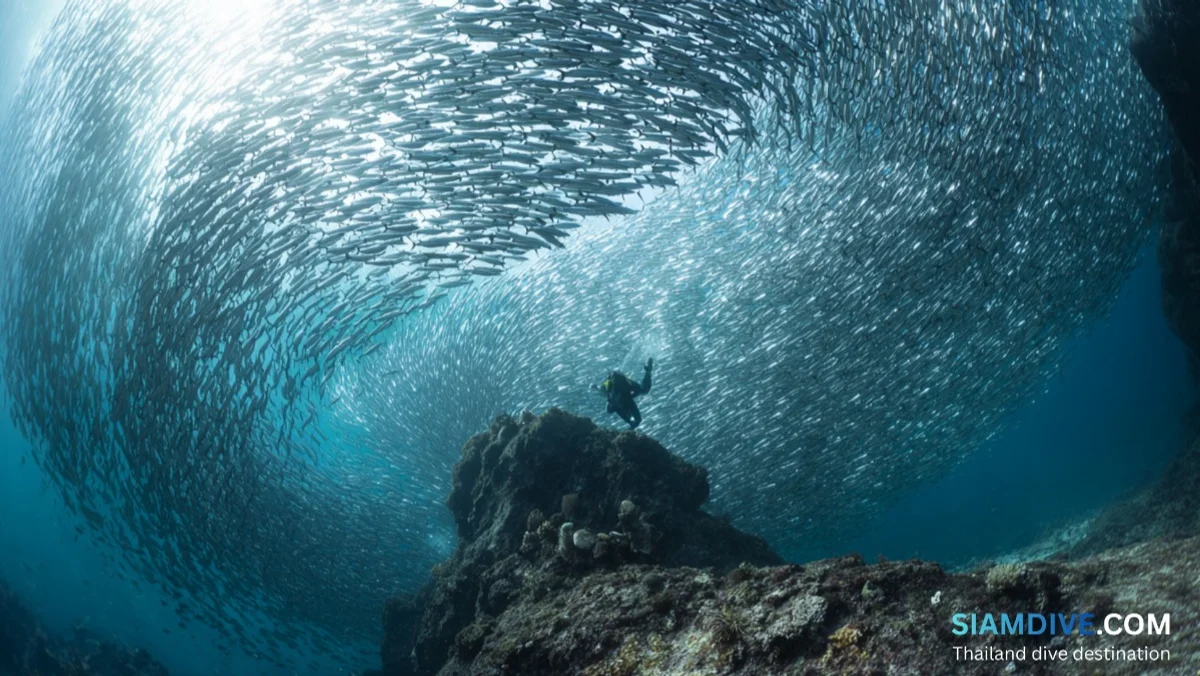
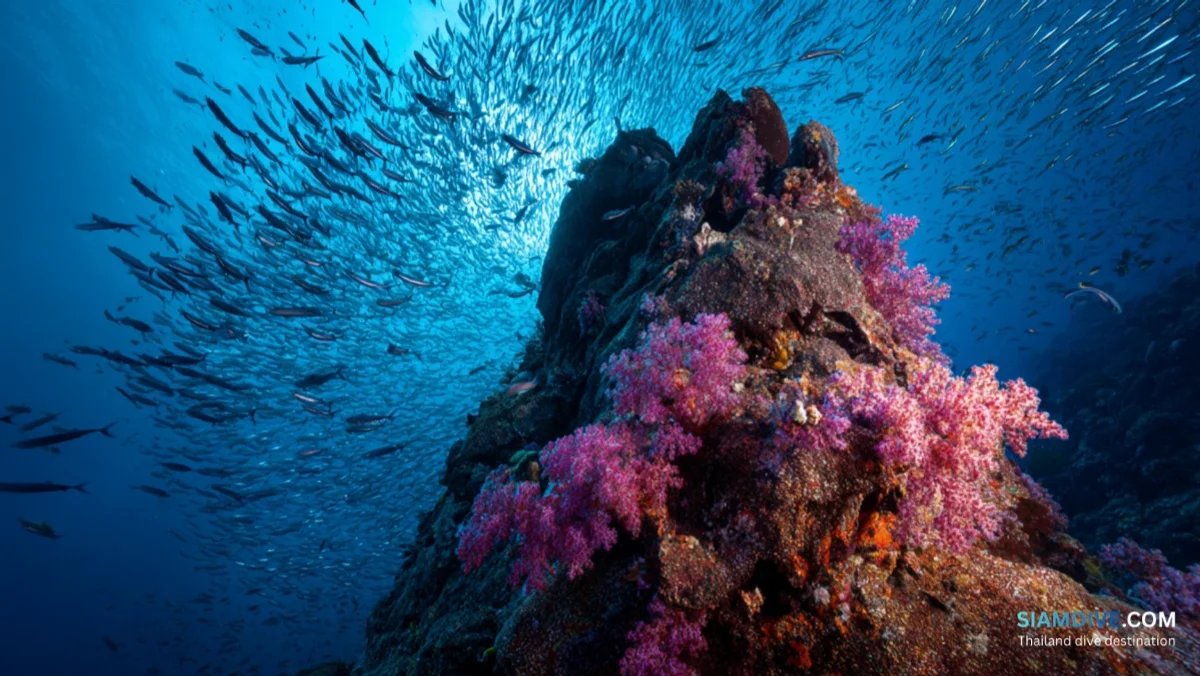
What makes it worth the effort is what's living on the pinnacle. Losin sits in the deep south Gulf where currents from the South China Sea meet a deep-water seamount, and that combination produces one of the highest concentrations of pelagic life in Thai waters. Manta rays come in to clean. Whale sharks pass through during the productive months. Bull sharks have been documented here multiple times. And the resident schools of barracuda and trevally are the kind of dense, swirling balls that photographers chase across the world.
If you've already done the Andaman classics and want a Thai dive site that almost no foreign diver has been to, Losin is the answer.
The Dive Site: Geography and Topography
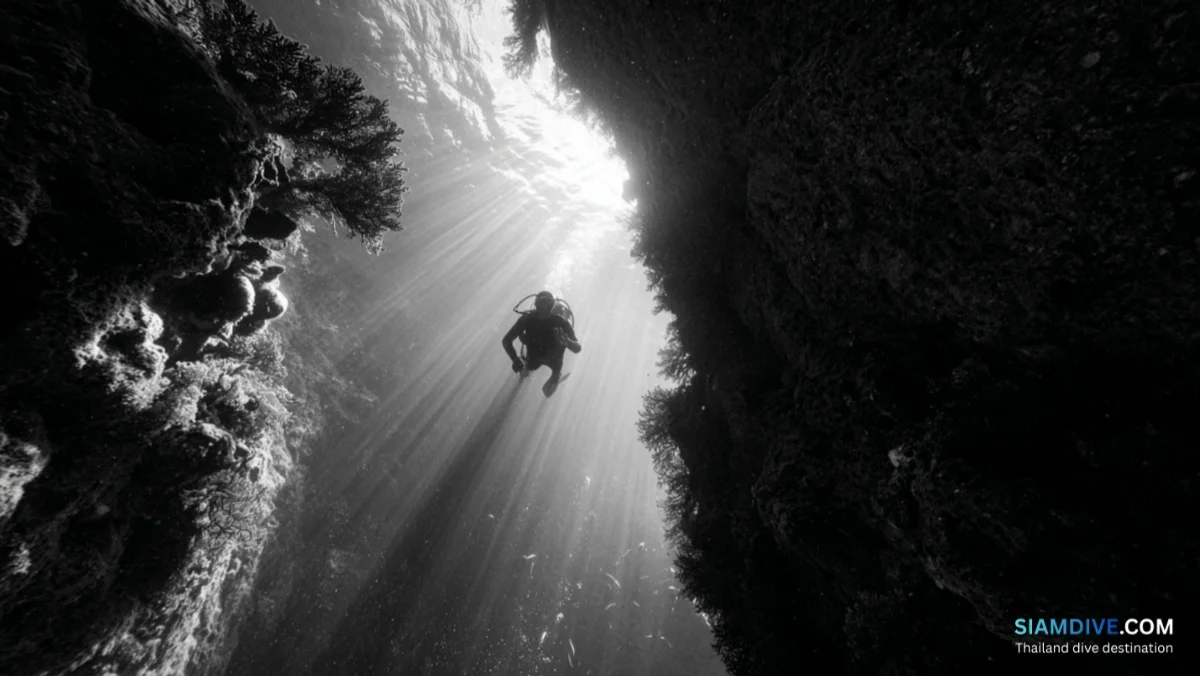
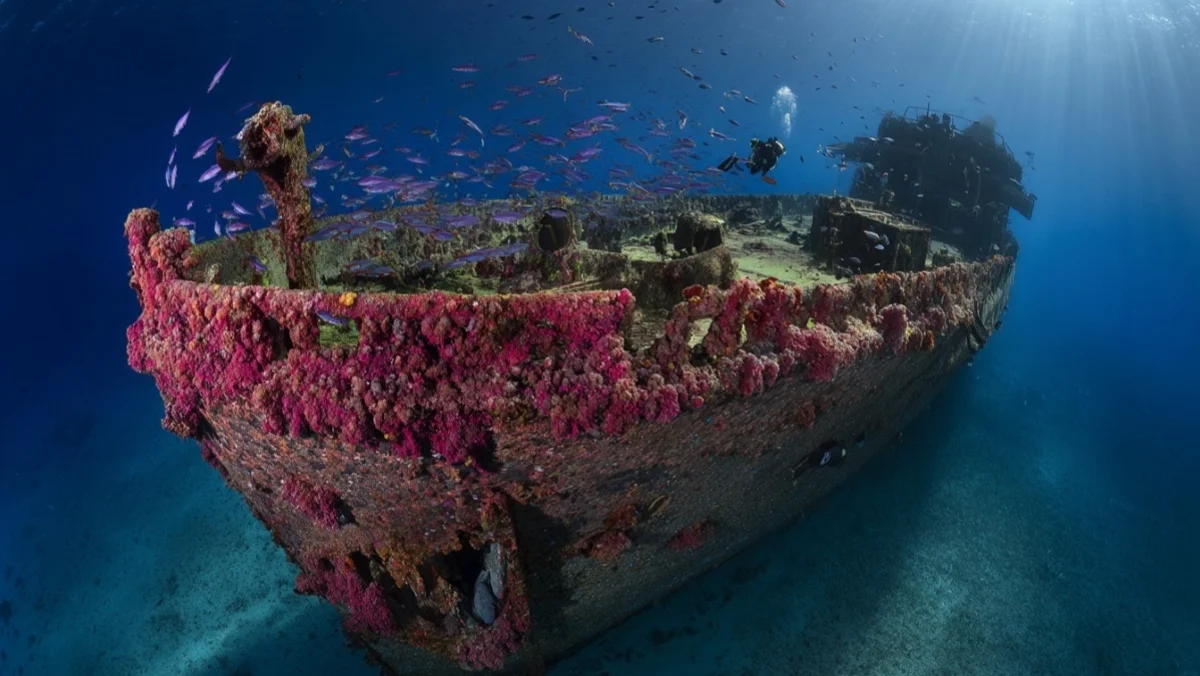
Losin is a single submerged pinnacle rising from a sandy bottom around 50 meters deep. The top of the pinnacle sits at 18-25 meters, and the wall drops off steeply on all sides. Unlike Chumphon Pinnacle off Koh Tao which is a compact granite tower, Losin is more sprawling — multiple rocky outcrops, hard coral gardens, and overhangs that you'll spend several dives exploring without seeing all of it.
Three features stand out:
- The cleaning stations on the eastern flank — at around 22-25 meters, manta rays come here to be groomed by cleaner wrasses. Hover at distance, stay still, and they'll often loop back for a second pass
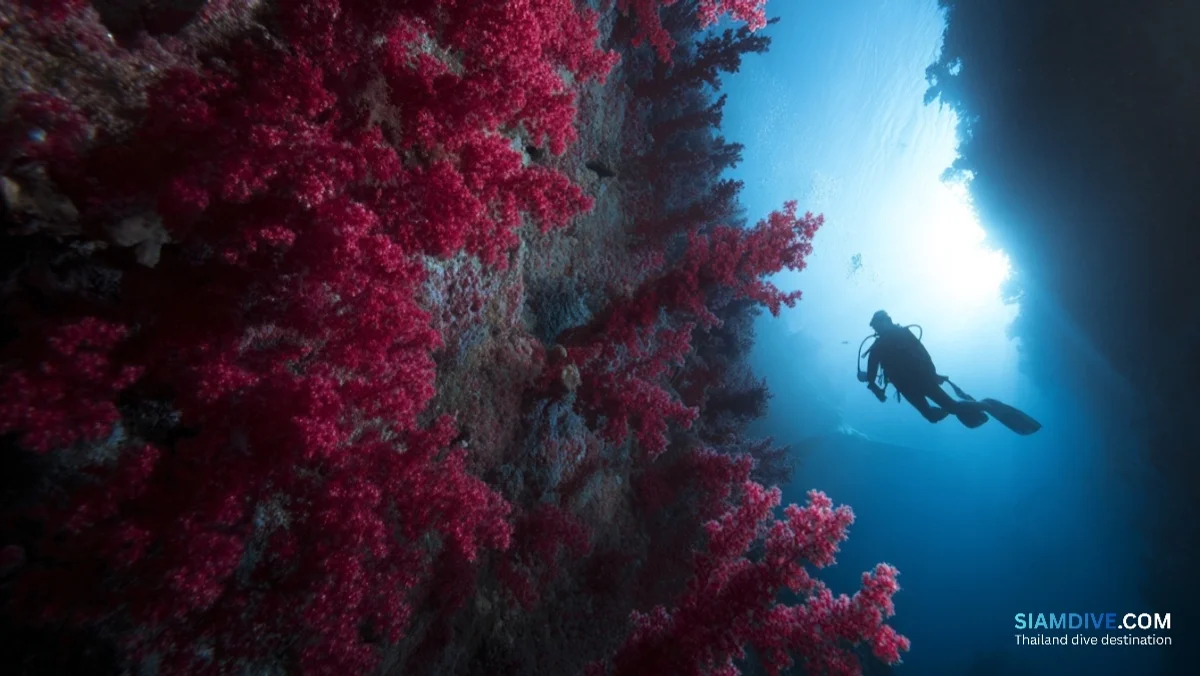
- The northern wall — drops cleanly from 18 meters to beyond 40, covered in sea fans and soft corals. This is where the bigger schools of jacks form up
- The deep south face — for tech-trained divers, the pinnacle continues below 50 meters into territory where bull sharks and large groupers live
Marine Life You'll Encounter at Losin
Losin's reputation rests on its big animal sightings. Here's the realistic breakdown of what you can expect:
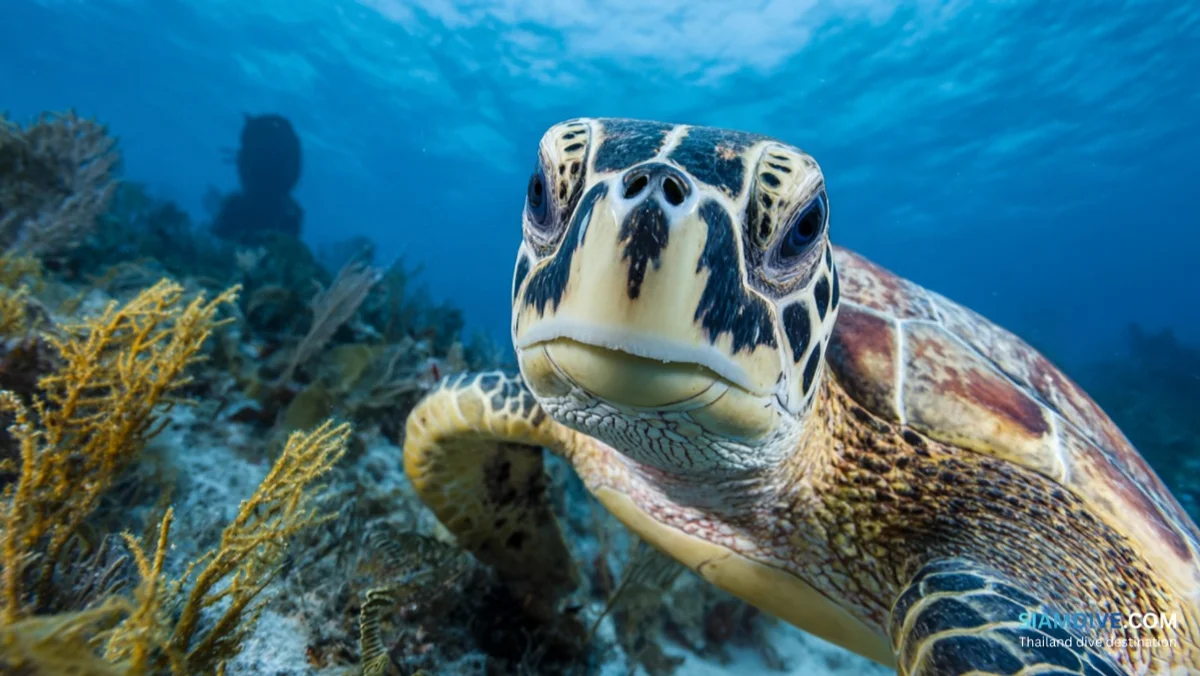
- Manta rays (peak: March-May) — reef mantas come in for cleaning and feeding. Encounters with 2-3 individuals on a single dive are not unusual during the season. They're habituated to divers but space them; mantas leave when crowded
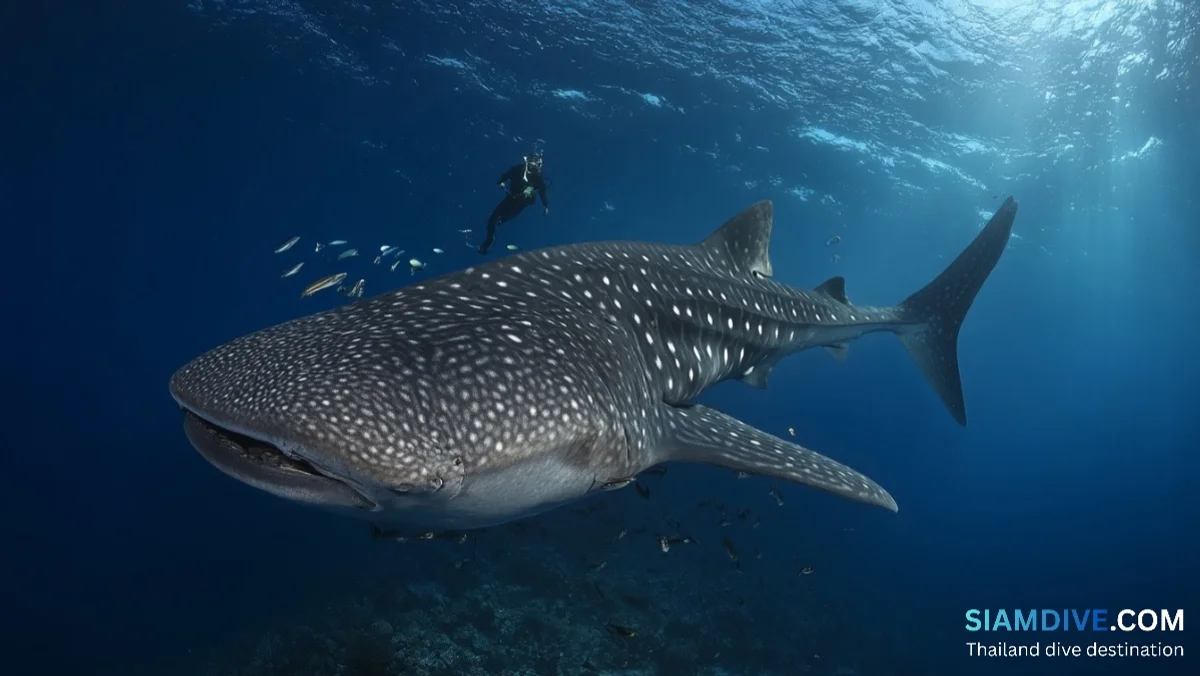
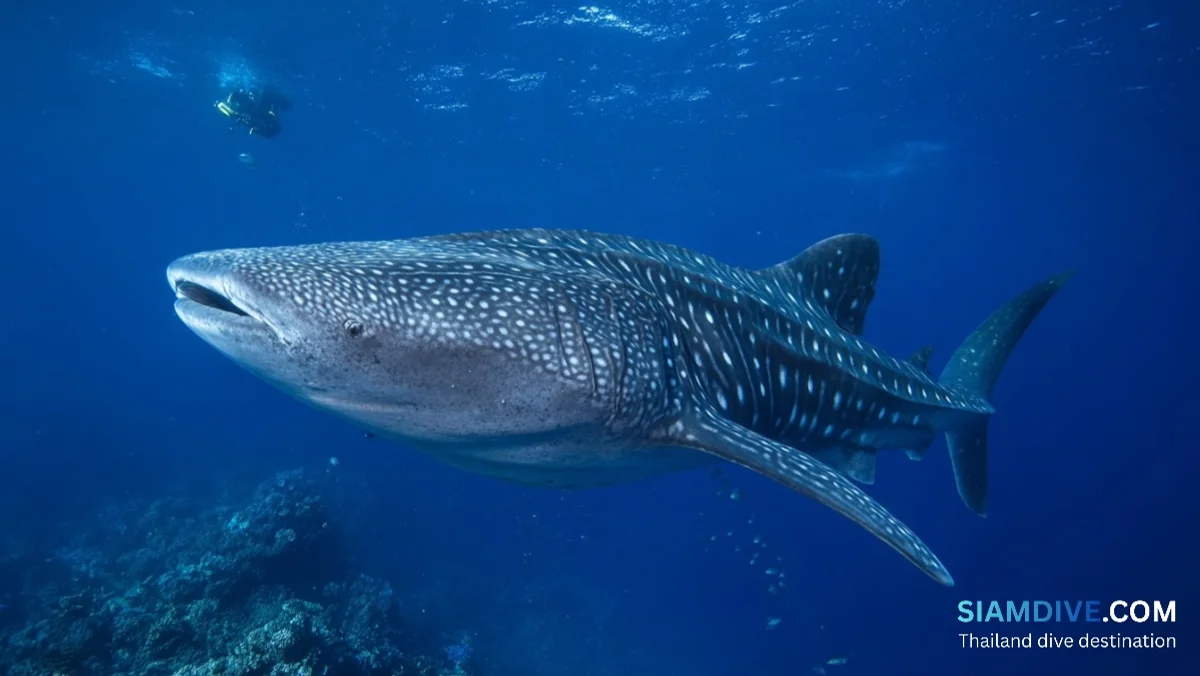
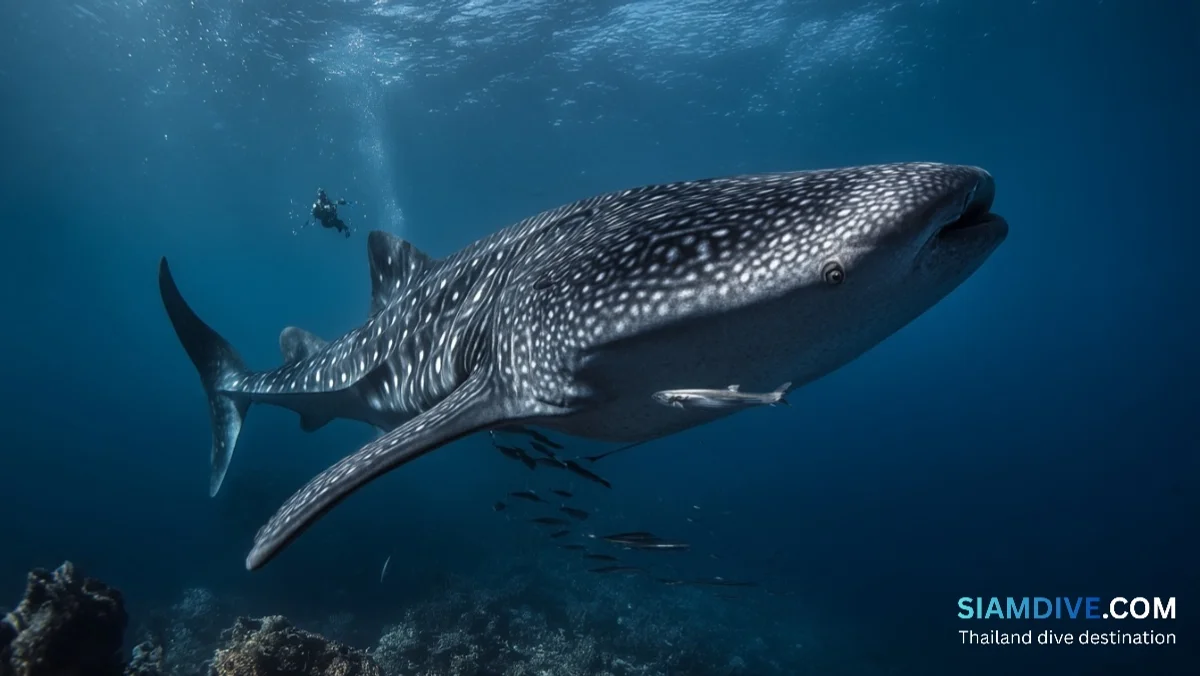
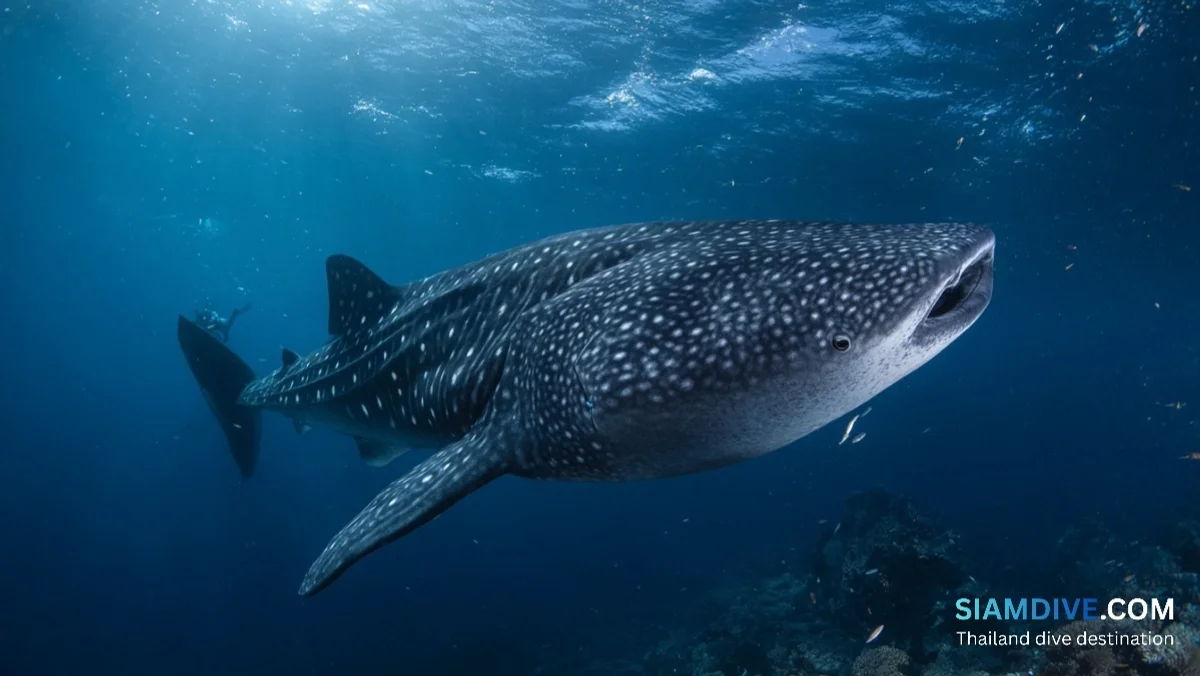
- Whale sharks (March-May) — less reliable than the manta sightings but documented every season. The same plankton-rich currents that bring the mantas bring the whale sharks
- Bull sharks — Losin is one of the few places in Thailand where bulls are seen with any regularity. They tend to patrol deeper, so technical-trained divers see them more often
- Massive schools of giant trevally, big-eye jacks, and chevron barracuda — these resident schools are the consistent draw. Often visible from the moment you descend
- Spotted eagle rays — passing through in pairs and small groups, particularly along the deeper edges
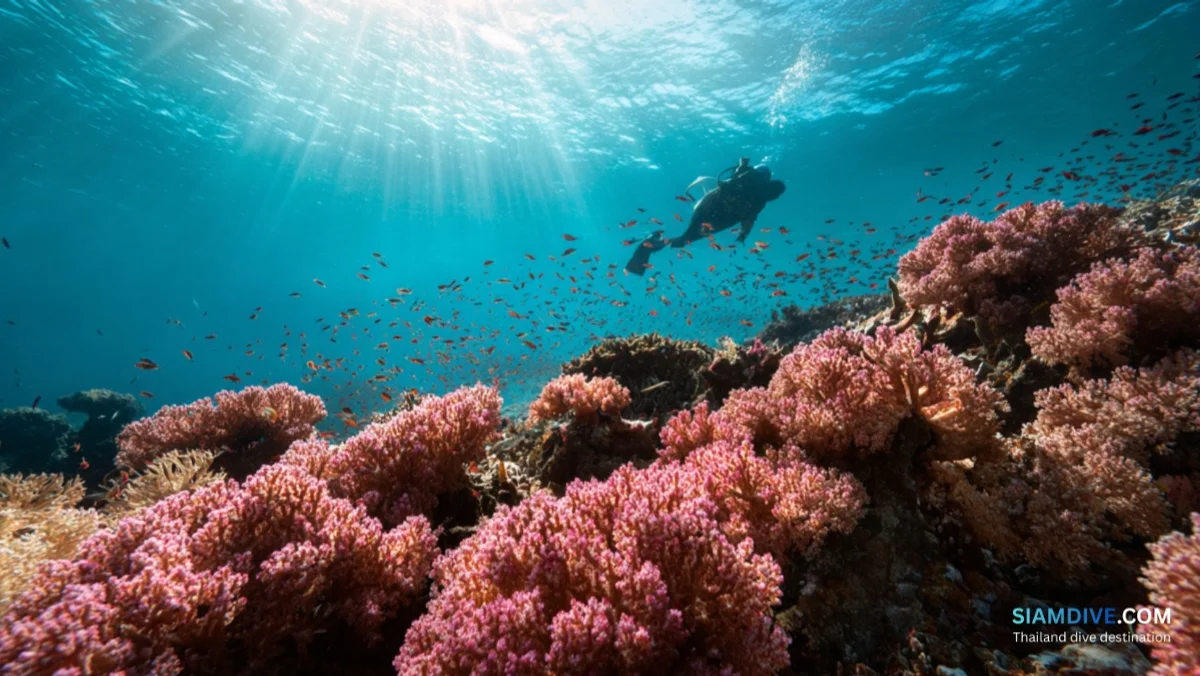
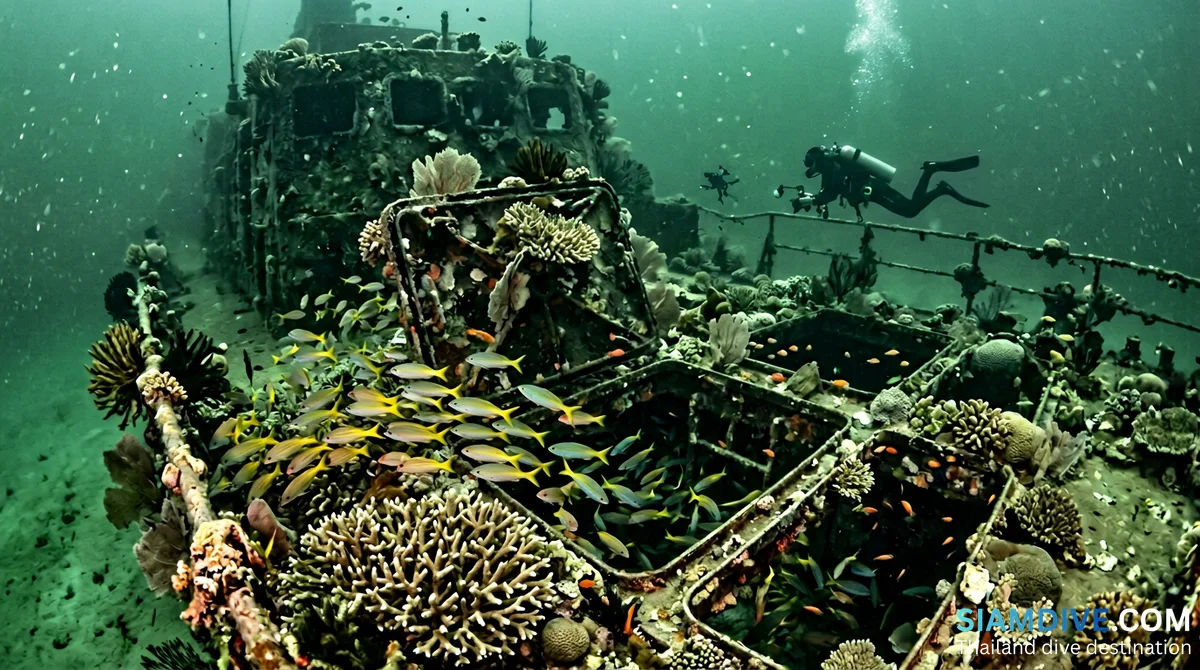
- Hard coral cover — Losin has some of the healthiest hard coral in the Gulf, including large stands of staghorn and table corals that would be unrecognizable to anyone who's only dived bleached reefs in tourist zones
- Macro and reef fish — moray eels, octopus, large groupers, sweetlips schools, and the typical Indo-Pacific reef fish in good numbers
The site's productivity comes from its position: a deep-water seamount in the path of nutrient-rich currents from the South China Sea. That's the same recipe that makes Richelieu Rock a top Andaman site, and Losin is the Gulf equivalent.
Best Time to Dive Losin Pinnacle
The Losin season is short and the timing is non-negotiable. The site is only practical to dive from late February through early June, with March-May being the absolute peak. Outside this window the deep south Gulf is rough, the boats don't go, and the visibility tanks.
Within that window:
- March — first reliable trips of the year, water still cool (26-27°C), good for manta encounters as cleaning activity peaks
- April — the best month overall. Calm seas, water warming to 28-29°C, peak whale shark sightings, mantas still around
- May — last reliable month. Some operators run trips into early June if the weather holds, but visibility starts dropping as the southwest monsoon begins to influence the area
Visibility through the season ranges from 15 to 30+ meters. The variable is plankton — clearer water means fewer big animals, hazier water means more.
How to Get to Losin Pinnacle
This is the part that filters out casual divers. You can't day-trip Losin. You can't fly into Phuket and add it to a Similan itinerary. To dive Losin, the route is:
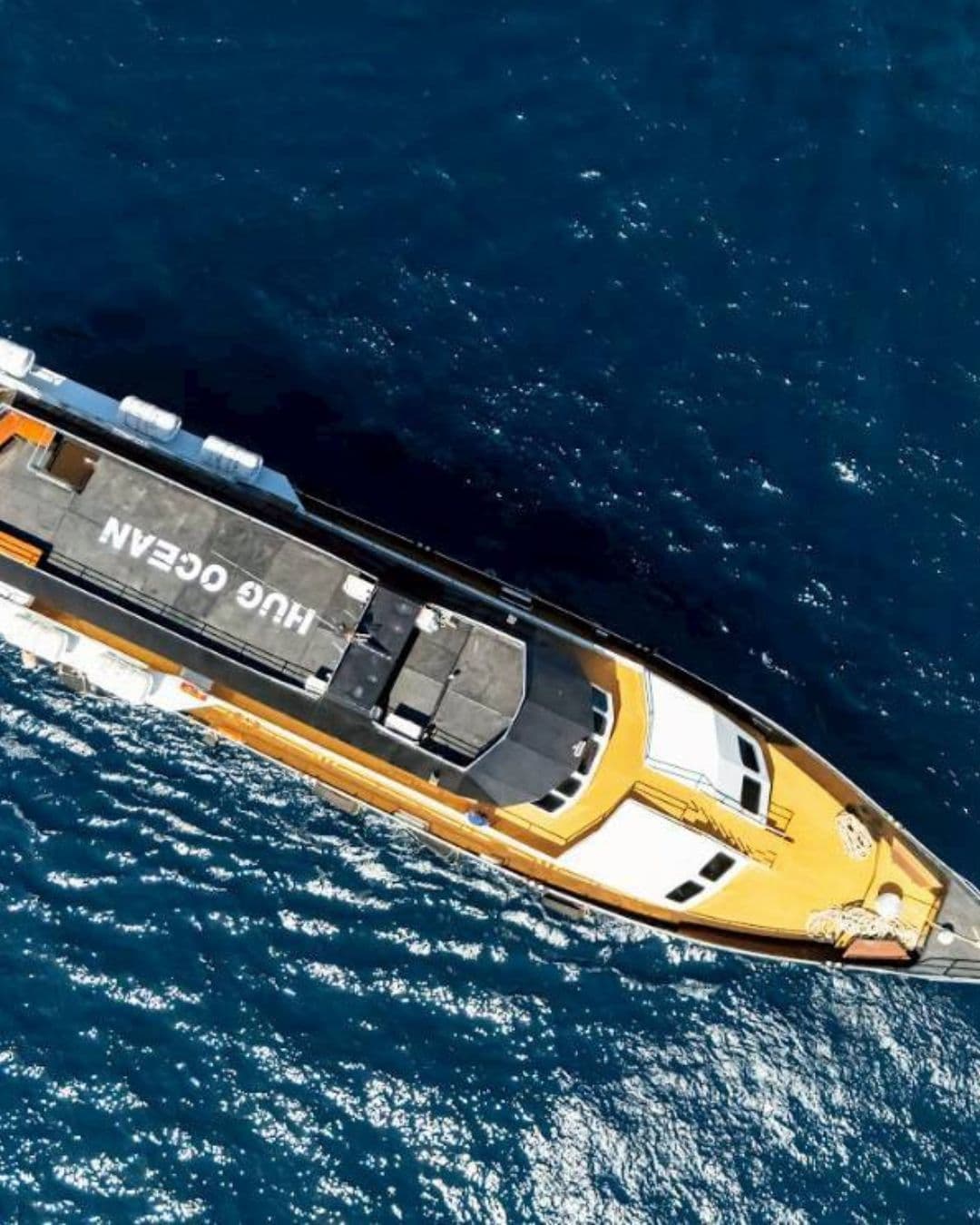
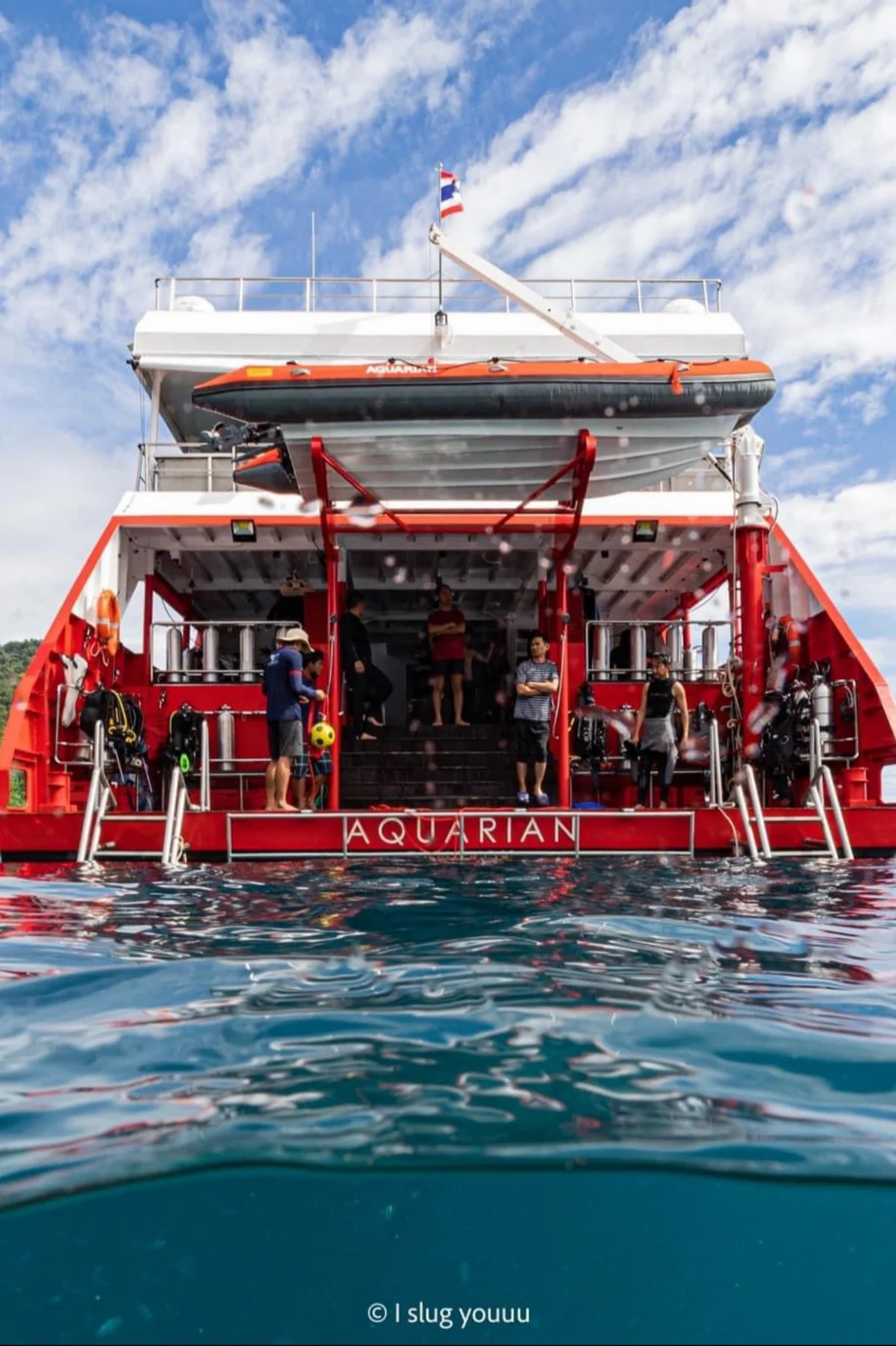
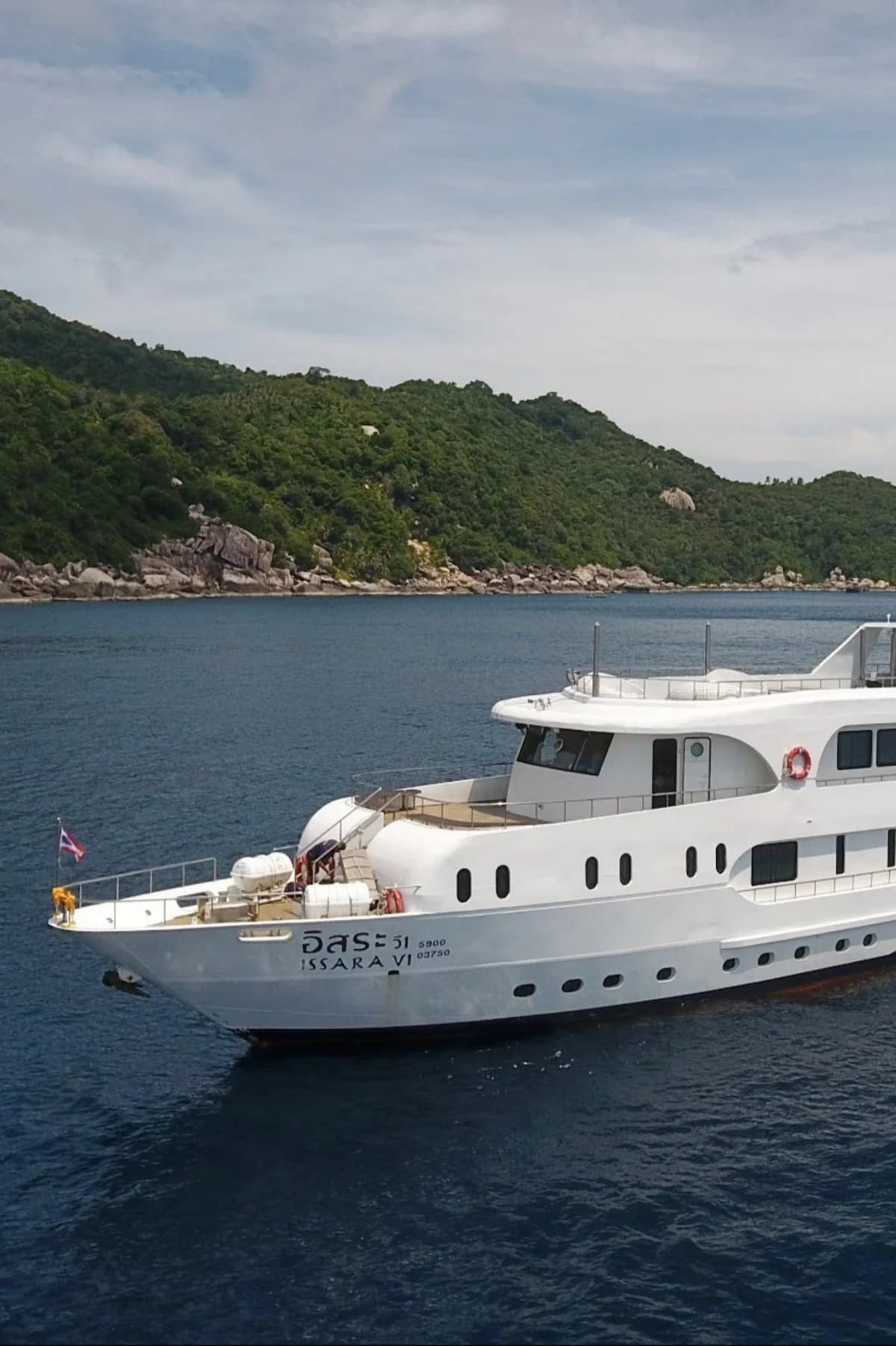
- Pick a liveaboard operator running Losin trips. There are only a handful — most are based out of Songkhla or operate seasonal trips from Phuket and Krabi during the Losin window
- Book a 3-5 night trip well in advance. Losin operators announce their season schedule in November-December for the following year's March-May window. Trips fill up fast because the boats are small and the dates are limited
- Get to the departure port. Songkhla is reachable via Hat Yai International Airport (1-hour drive), which has direct flights from Bangkok and several international cities
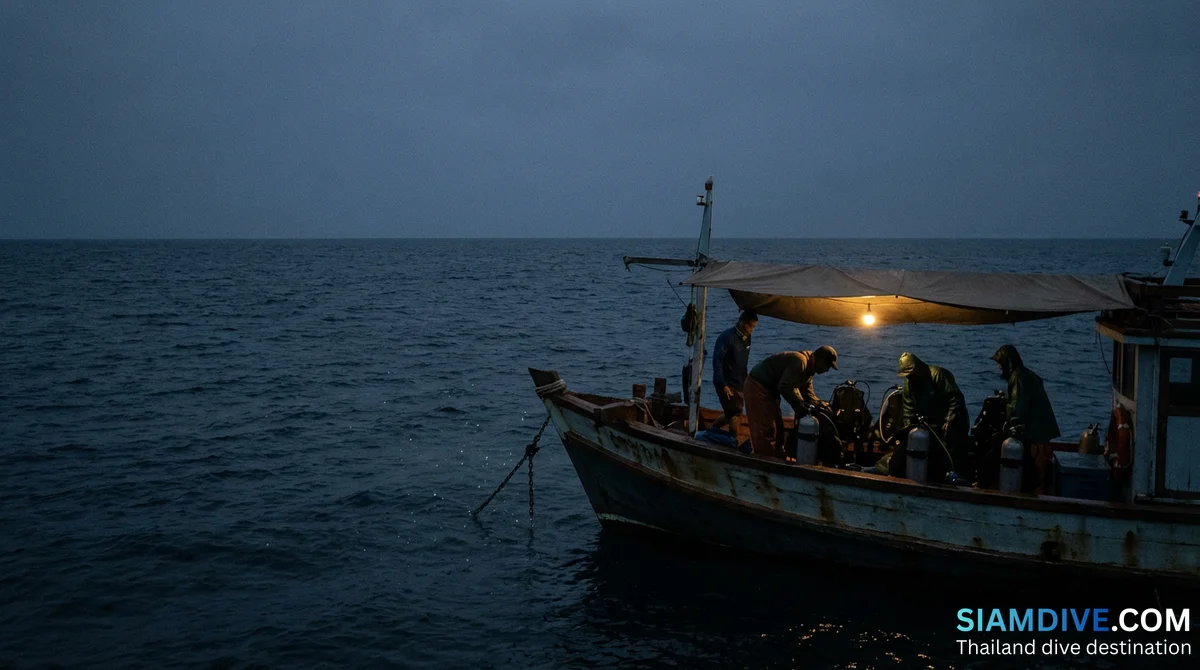
- Expect 12-18 hour transit from port to the pinnacle. Most operators run overnight to arrive at Losin in the morning, then dive the site for 3-4 dives a day before transiting back
Costs run roughly 25,000-45,000 THB per person for a typical 4-night trip including all dives, tanks, food, and accommodation. Equipment rental is usually 1,500-3,000 THB extra. This is more expensive than a Similan liveaboard for the same duration, mostly because of the smaller boats and less competition.
Tips for Diving Losin
- Advanced Open Water minimum, Deep + Nitrox strongly recommended. The most productive zones at Losin are below 25 meters and the dive plans run aggressive. Nitrox extends your bottom time on the deeper reefs and is offered by most operators
- Bring a long wetsuit. Despite the location being tropical, the deep water can be cool — 26°C is typical at depth, and you'll be doing 3-4 dives per day. A 5mm full suit or 3mm with hood is what most divers wear
- Carry a surface marker buoy and reel, and know how to deploy them. Losin has currents and the boat is sometimes far from the pinnacle. Drift ascents are common
- Manta etiquette is non-negotiable. Don't chase. Don't touch. Don't position yourself above them. Hover low, stay still, and let them come to you. The rangers and divemasters watch for this
- Bring DAN insurance or an equivalent dive accident plan. The nearest chamber from Losin is in Hat Yai, several hours away. This is not the place to skip insurance
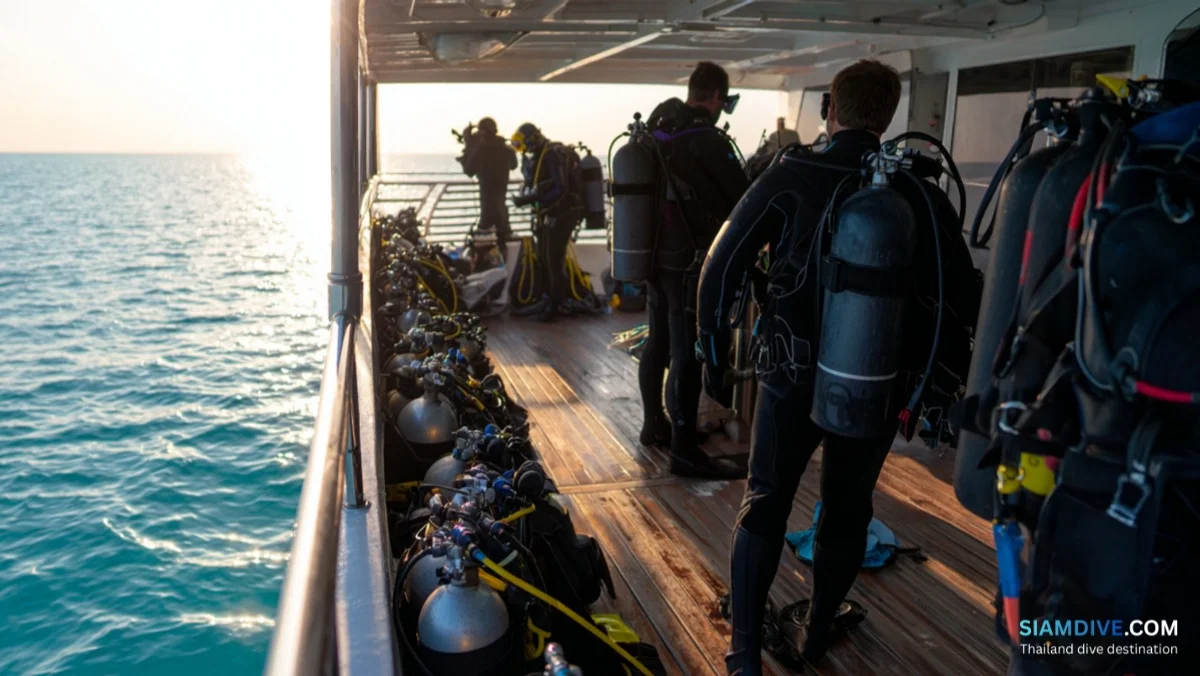
- Pack for the boat. Liveaboards in this area tend to be small (8-14 divers) with basic but comfortable cabins. Bring a dry bag, extra batteries, a power strip, and motion sickness medication for the transit legs
- Manage your expectations on visibility. The "good days" are when you might see less but encounter more. The locals will tell you cloudy water means the food is in — and the big animals come to feed
Final Thoughts
Losin Pinnacle is the dive site you do once you've outgrown the obvious Thai destinations. It rewards effort with the kind of encounters most divers travel to Indonesia or the Philippines for, and it does it within Thai waters that almost no foreign tourist knows about. The catch is that it requires planning, commitment, and a tolerance for small-boat liveaboards far from the resort circuit.
If that sounds like your kind of trip, the season window opens annually in March and the spots disappear fast. Looking to plan a Losin liveaboard? Check Gulf liveaboard operators on SiamDive and book directly with the boats running Losin trips during the upcoming season.