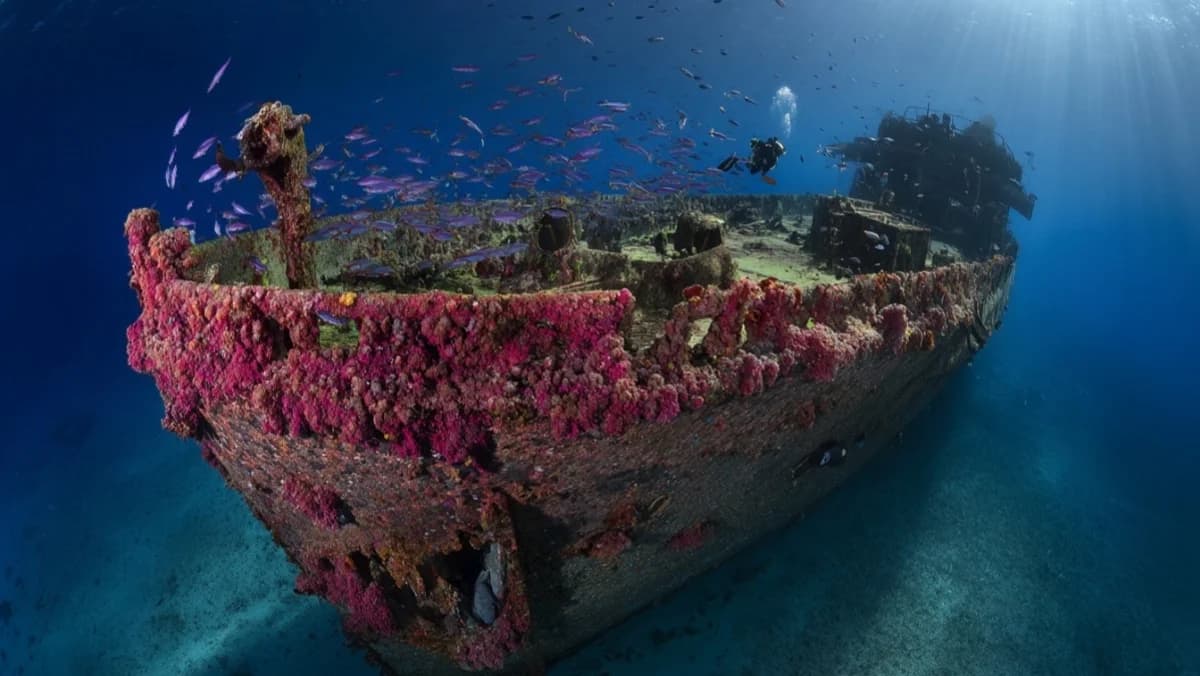
A Warship with 7 Battle Stars Now Grows Coral at 30 Metres
27 เมษายน 2569
A WWII landing ship that stormed Okinawa and Inchon sits upright at 30m off Koh Chang — blanketed in coral and visited by whale sharks.
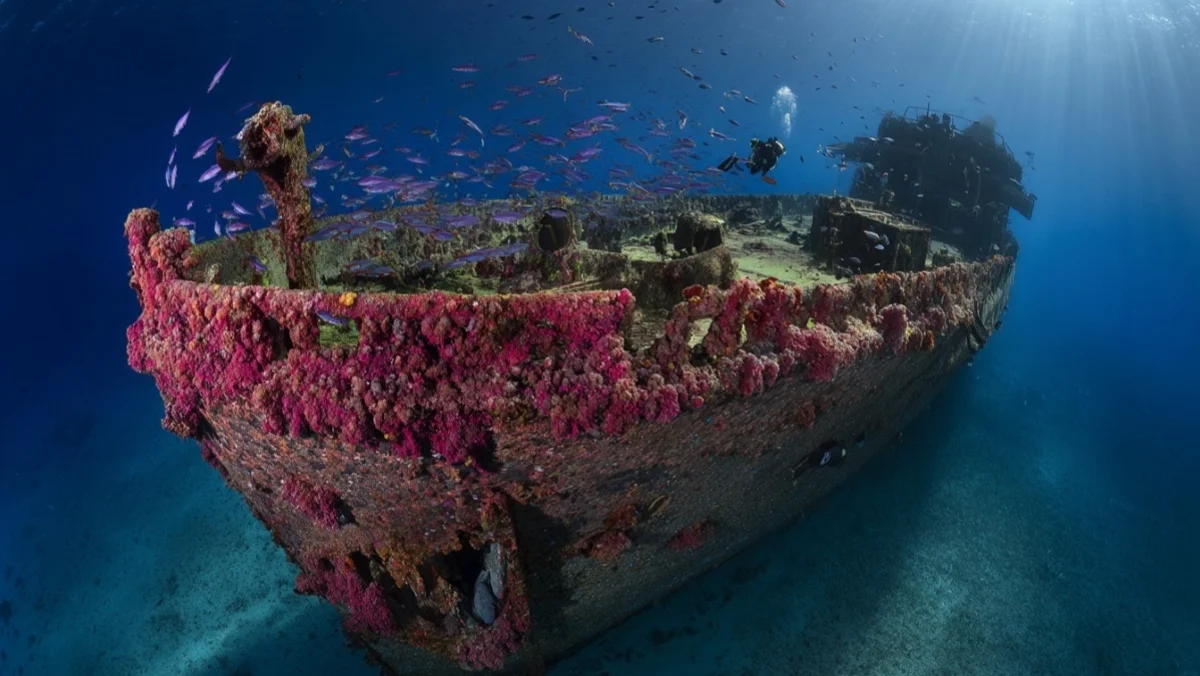
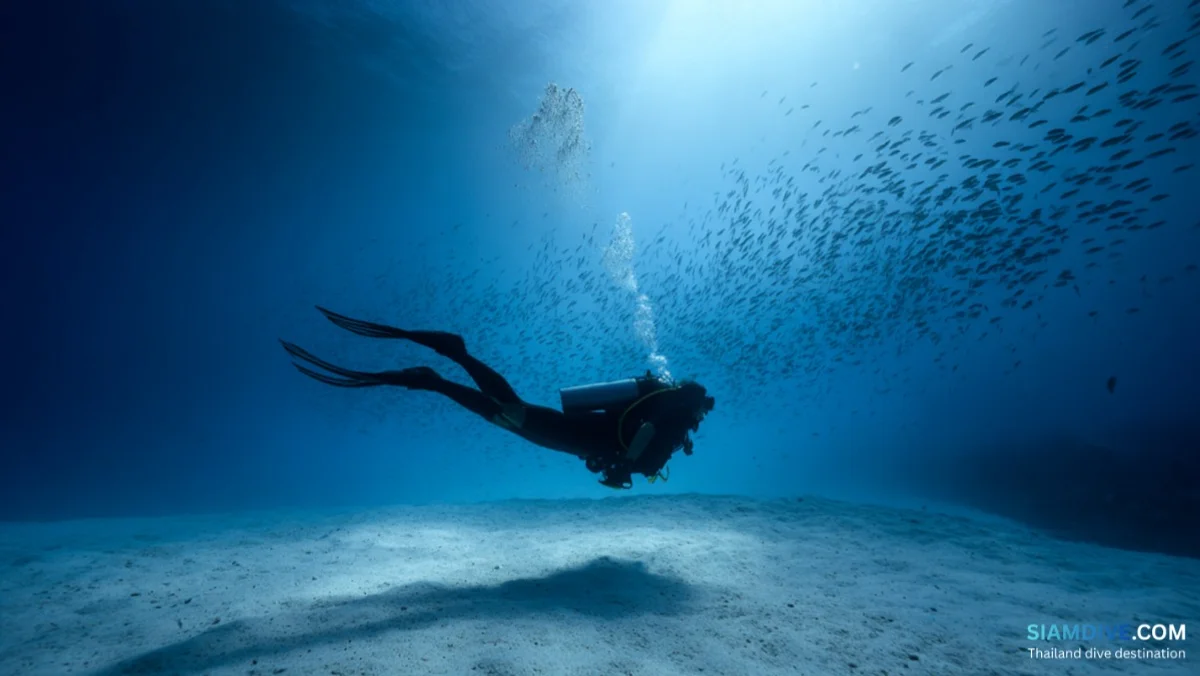
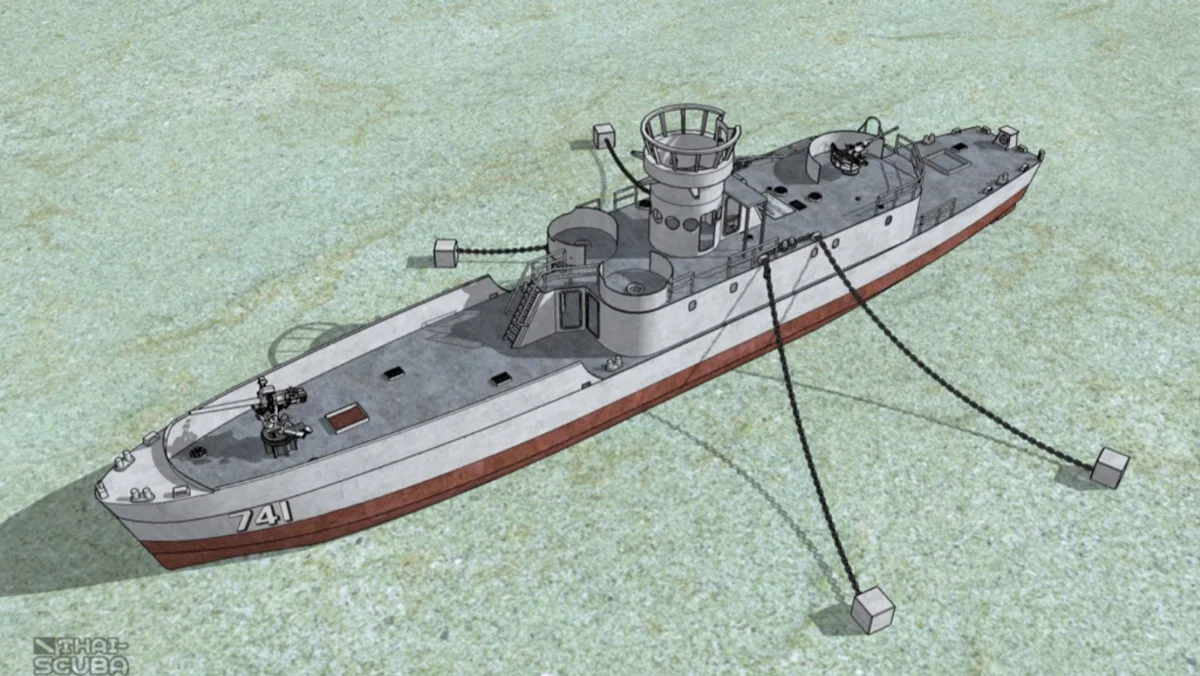
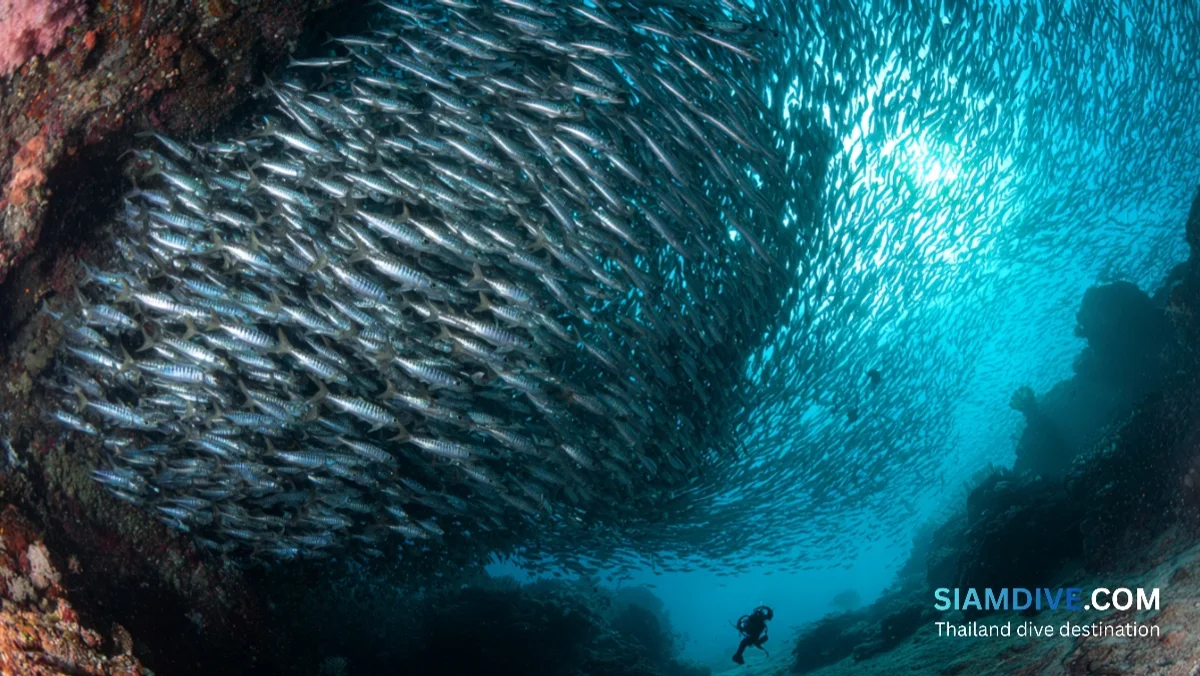
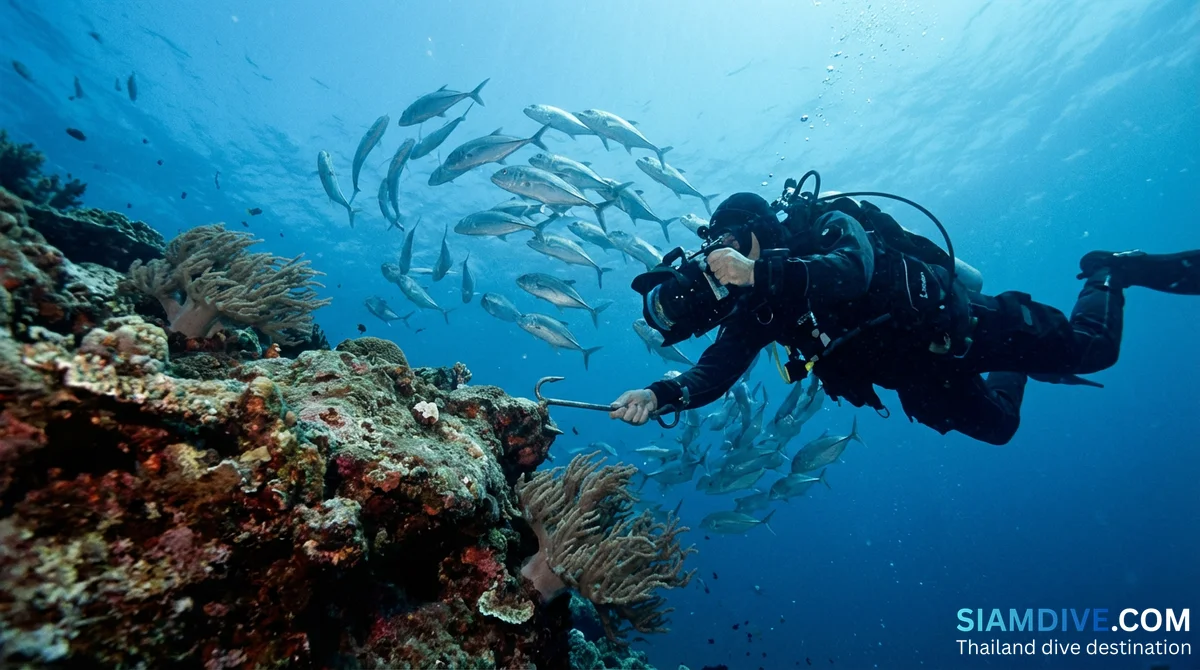
Barracuda hold formation at twenty metres. Hundreds of them, stacked in a slow-turning column along the port rail of something that does not belong on a seabed — a warship, sitting upright on clean sand as if it simply decided to stop sailing. HTMS Chang stretches a full hundred metres from bow to stern, the largest wreck in Thailand and the only one that earned seven battle stars before it grew coral.
Above, the mast pierces upward to within five metres of the surface. Below, the keel rests at thirty metres. In between lies an entire ship: gun turrets, cargo holds, a captain's cabin with portholes still framing the water beyond. Thirteen years after the Royal Thai Navy sank her deliberately off Koh Chang, the hull reads less like decommissioned steel and more like a reef that somebody built in the shape of a landing ship tank.
From Pittsburgh Steel to Pacific Frontline
Dravo Corporation laid her keel in Pittsburgh, Pennsylvania on 15 October 1944 — one of dozens of tank landing ships rolling off wartime production lines along the Ohio River. Six weeks later the hull launched. By 29 December, LST-898 was commissioned and heading west.
The specifications said utility, not glamour: 1,625 tonnes displacement, a hundred metres long, fifteen metres wide, top speed 11.6 knots. She carried thirteen officers and 104 crew and could transport sixteen officers and 147 soldiers along with their vehicles. The armament — two twin 40mm guns, four single 40mm, and twelve 20mm cannons — told the story of a ship designed to survive beach approaches, not win open-sea engagements.
Her first combat came at Okinawa. Between April and June 1945, LST-898 ran resupply missions into contested beaches during one of the Pacific war's bloodiest campaigns. That earned her first battle star.
Mothballed in May 1946, she returned five years later for Korea. Recommissioned in August 1950, she loaded troops and vehicles at Kobe, Japan and sailed for General MacArthur's September invasion at Inchon — the amphibious landing that turned the war. Over the next decade she hauled cargo and troops across the Korean theatre, collecting six more battle stars. Seven total: one Pacific, six Korean.
Redesignated USS Lincoln County on 1 July 1955, the ship served the Pacific Fleet until decommissioning on 24 March 1961. The Royal Thai Navy took delivery on 31 August 1962 and renamed her HTMS Chang, after the island off Thailand's eastern seaboard.
Why the Thai Navy Sank Its Own Ship
After four decades of Thai service, HTMS Chang faced the scrapyard. Thailand's Department of Marine and Coastal Resources proposed a different end: convert the hull into an artificial reef off the island whose name the ship carried. The Navy agreed.
Preparation took months. Every drop of fuel and lubricant came out. Loose fittings, cables, and anything that could trap or injure a diver were stripped. Welders cut entry and exit points into the hull at strategic locations — wide enough for a diver with a twin-set to pass through, spaced so no penetration route leads to a dead end. Environmental surveys confirmed the chosen site: a sandy patch five kilometres off Koh Chang's south coast, clear of seagrass beds and shipping channels.
On 22 November 2012, controlled flooding took the ship down in about ninety minutes. She settled upright on the sand at thirty metres — exactly as modelled. Within weeks, algae began colonising the hull. Within months, soft corals appeared on the gun turrets. The warship had begun its second career.
The site balanced two requirements: shallow enough for recreational divers (the main deck at twenty metres sits within Open Water limits), deep enough to stay clear of surface traffic. Current patterns at the location carry larvae from surrounding reefs onto the steel, speeding the transformation from hull to habitat.
Four Depth Zones on One Hull
The wreck stacks its rewards vertically. Each depth band opens to a different certification level, and a single well-planned dive can touch all four on the ascent.
5–12 metres: mast and captain's cabin
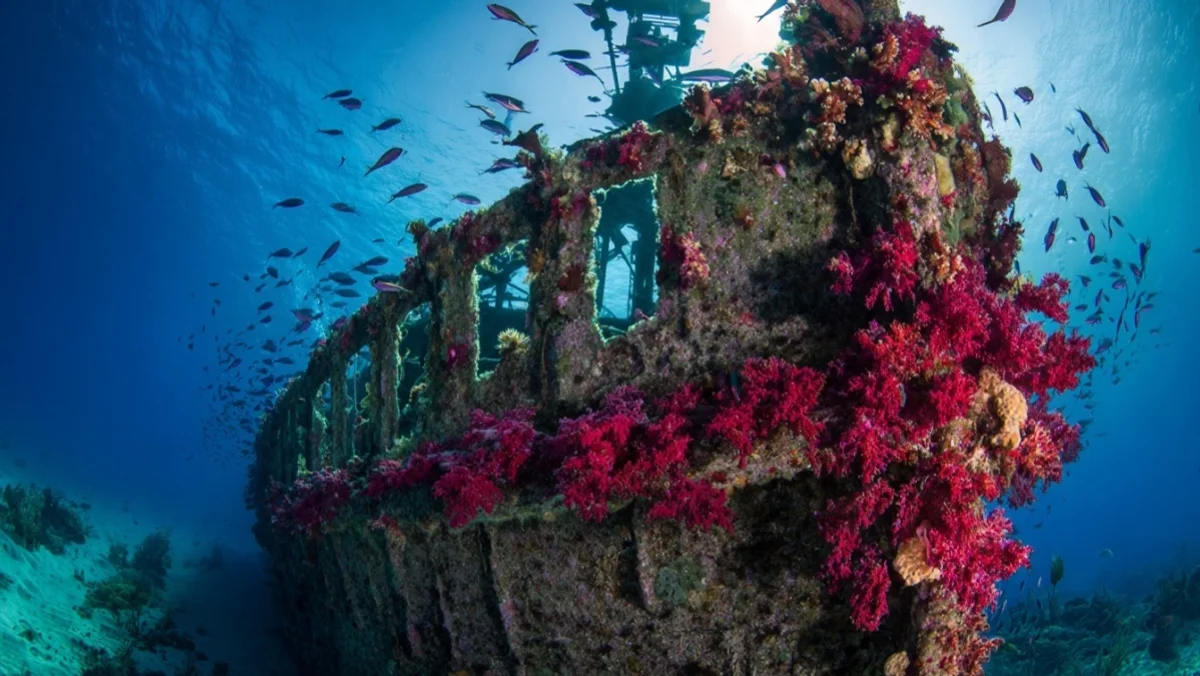
The ship's mast rises to within five metres of the surface — close enough for snorkellers on calm days to look down and see superstructure below. At twelve metres, the captain's cabin still holds its shape. Portholes frame the water beyond like gallery windows. On a day with twenty-metre visibility, you can hang here and trace the full outline of the ship stretching toward the bow, a hundred metres of warship laid out beneath you.
12–20 metres: upper deck and gun turrets
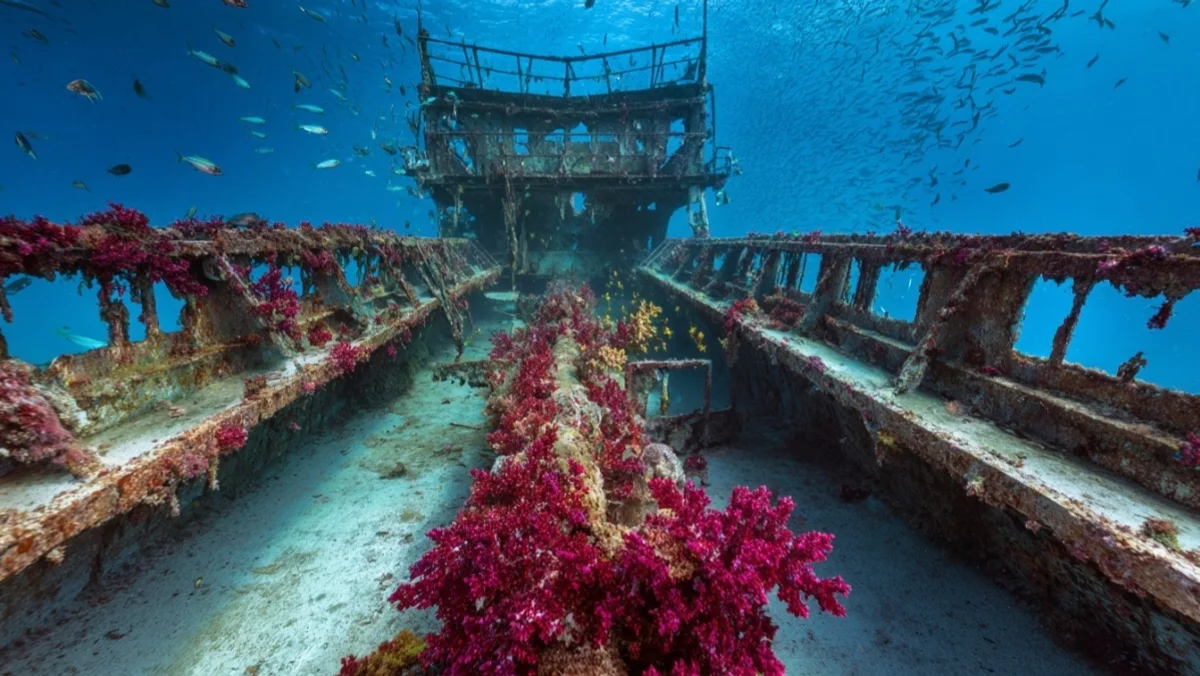
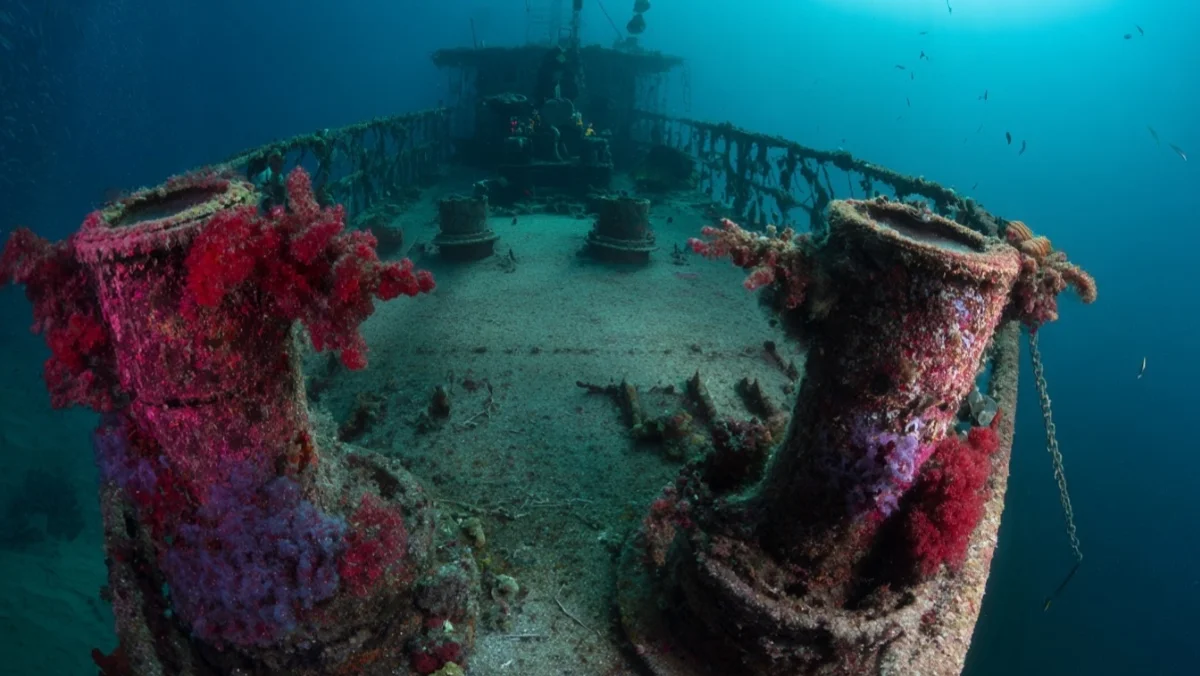
The main deck sits at twenty metres. This is the wreck's social zone — batfish congregate around the bridge in groups of thirty or more, unbothered by cameras and fin kicks. The twin 40mm gun mounts are the most-photographed feature at this depth, their barrels now furred with orange sponge. Open Water divers who are confident with buoyancy can spend an entire dive at this level without needing to descend further.
20–27 metres: passageways and swim-throughs
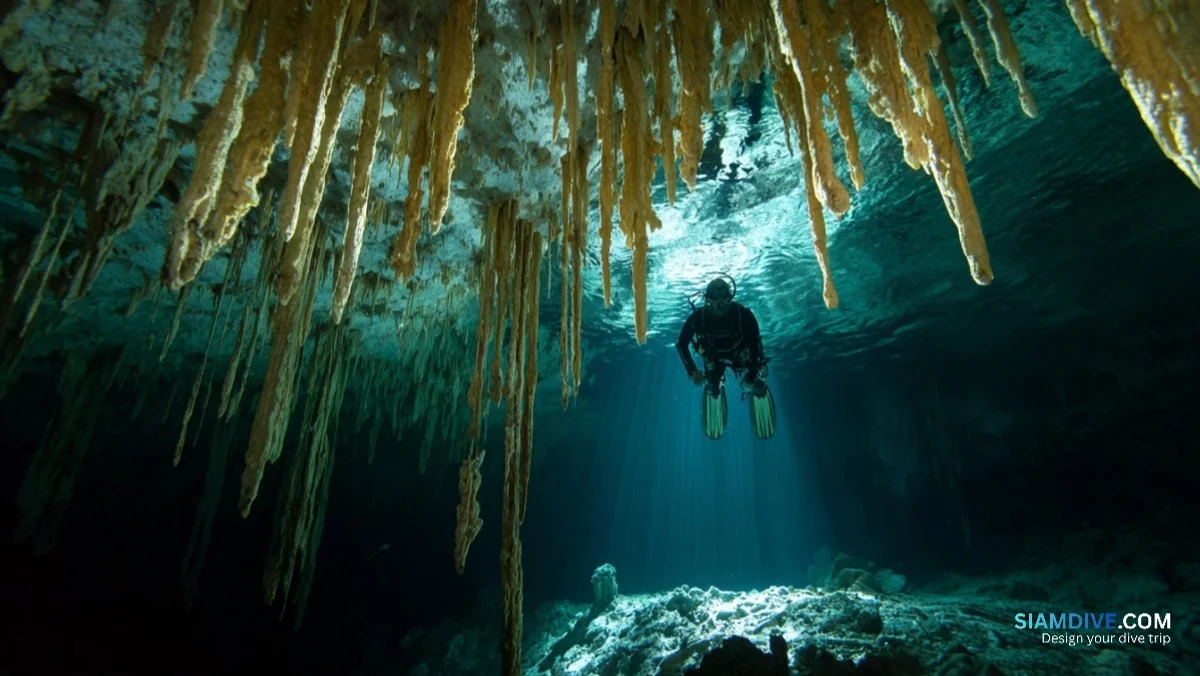
Advanced Open Water territory. Internal passageways connect compartments along the lower deck, with enough ambient light to navigate without a torch — though carrying one reveals the oranges and purples that have colonised the steel inside. Lionfish wedge into corners at head height. Groupers claim doorways, holding position until you fin within a metre before yielding ground. The swim-throughs feel spacious: wide enough for two divers side by side in most sections.
27–30 metres: cargo holds and keel
The deepest accessible zone. Cargo holds at 28–29 metres open wide enough to fin through without wall contact, but silt on the floor punishes poor trim and careless kicks. Penetration here calls for wreck specialty training or equivalent logged experience — most operators assess your comfort at twenty metres before offering to guide you deeper.
At thirty metres, the keel rests on clean white sand. Narcosis becomes a factor at this depth — manageable for experienced divers, but worth acknowledging before the dive. Nitrox, available at most Koh Chang shops, extends no-decompression time on the deeper portions without eliminating narcosis risk.
Thirteen Years of Steel Turned Reef
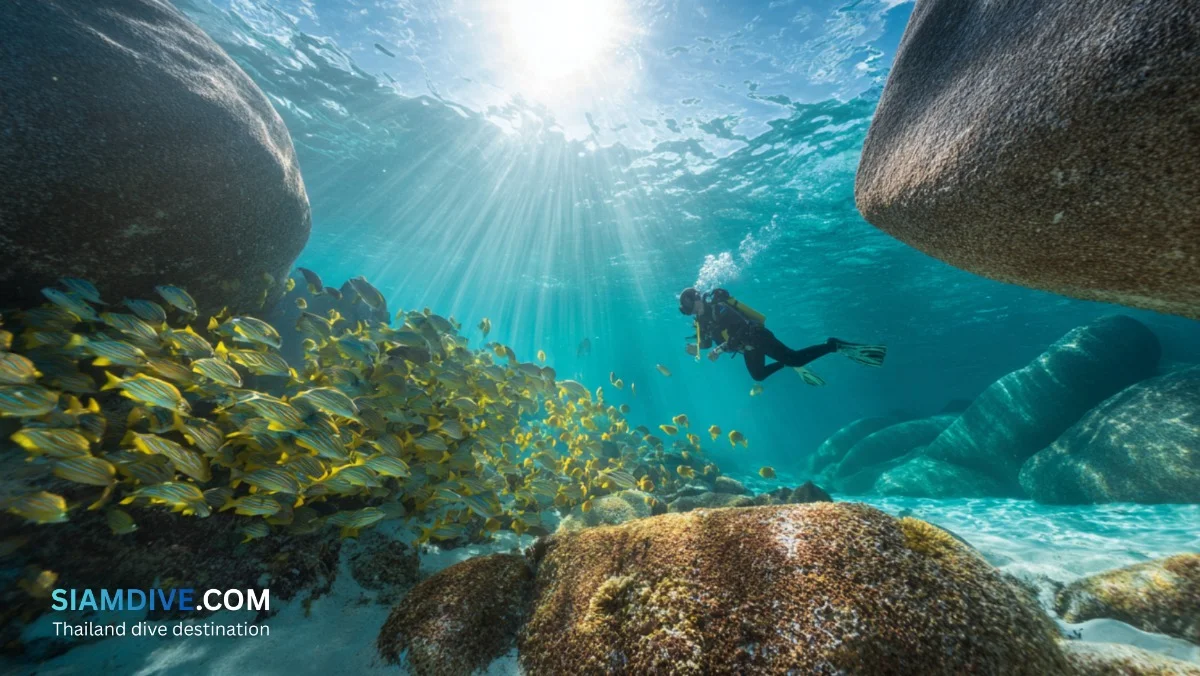
Artificial reefs either work or they rust into nothing useful. HTMS Chang belongs firmly in the first category. Thirteen years of immersion have built a layered ecosystem from keel to mast that functions like a compressed section of Gulf of Thailand reef mounted on a steel frame.
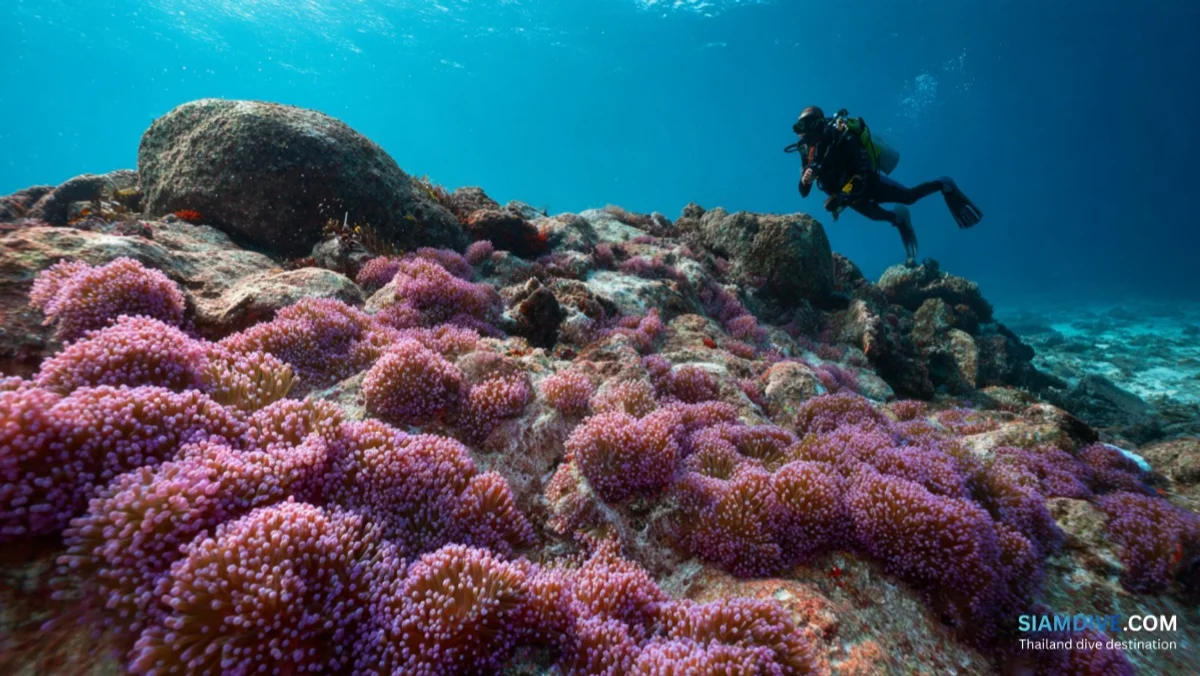
Horizontal surfaces — decks, railings, gun platforms — carry dense mats of soft coral in reds, purples, and bright oranges. Sponges fill the vertical walls. Anemones anchor in portholes and pipe openings, their clownfish adding flickers of movement to every corridor. The colour palette is striking against what was once uniform grey paint.
The fish list reads like a Gulf of Thailand inventory concentrated onto a single structure. Barracuda hold in their signature columns above the port rail. Giant trevally sweep through in hunting packs along the upper deck. Cobia cruise the midwater between the mast and the bridge. On the steel itself, several species of grouper — from small coral groupers to large marbled ones — guard doorways and overhangs like established reef residents. Moray eels thread through gaps in hull plating. Below the keel, Jenkins' whip rays glide across the sand.
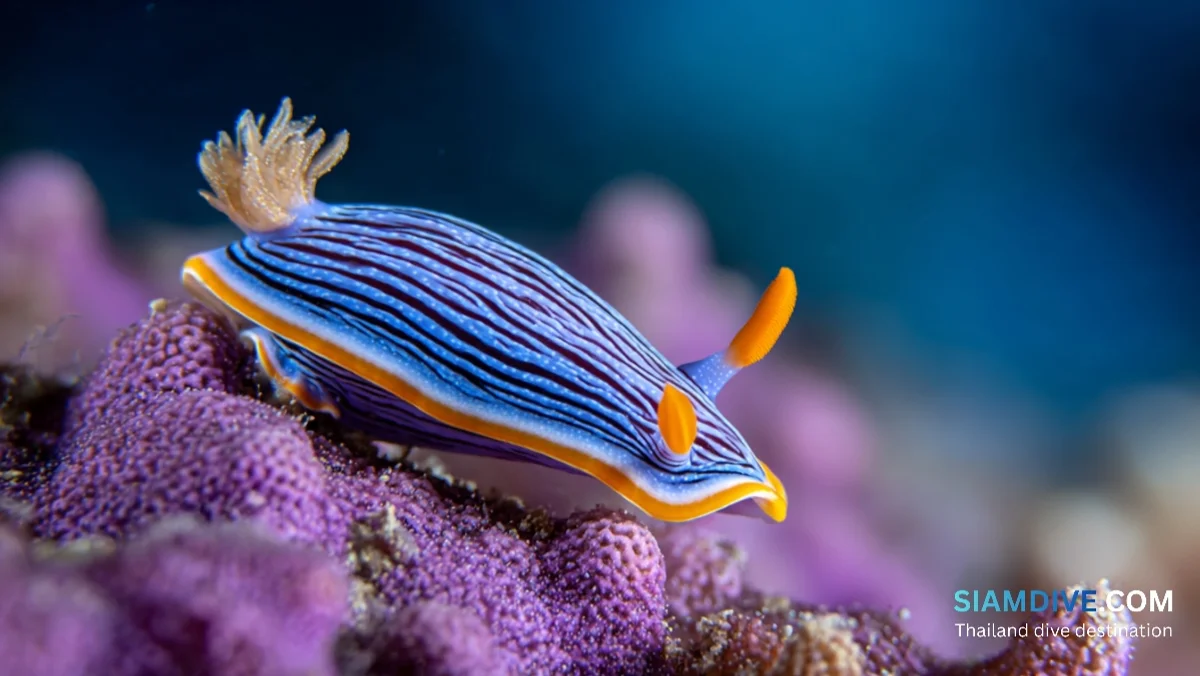
Slow down and the macro world opens up. Nudibranchs and flatworms decorate the railings where barnacles provide footholds. Porcelain crabs tuck into anemones. The steel provides texture that natural coral does not — bolt heads, rivets, chain links — and small organisms exploit every surface.
The January Whale Shark
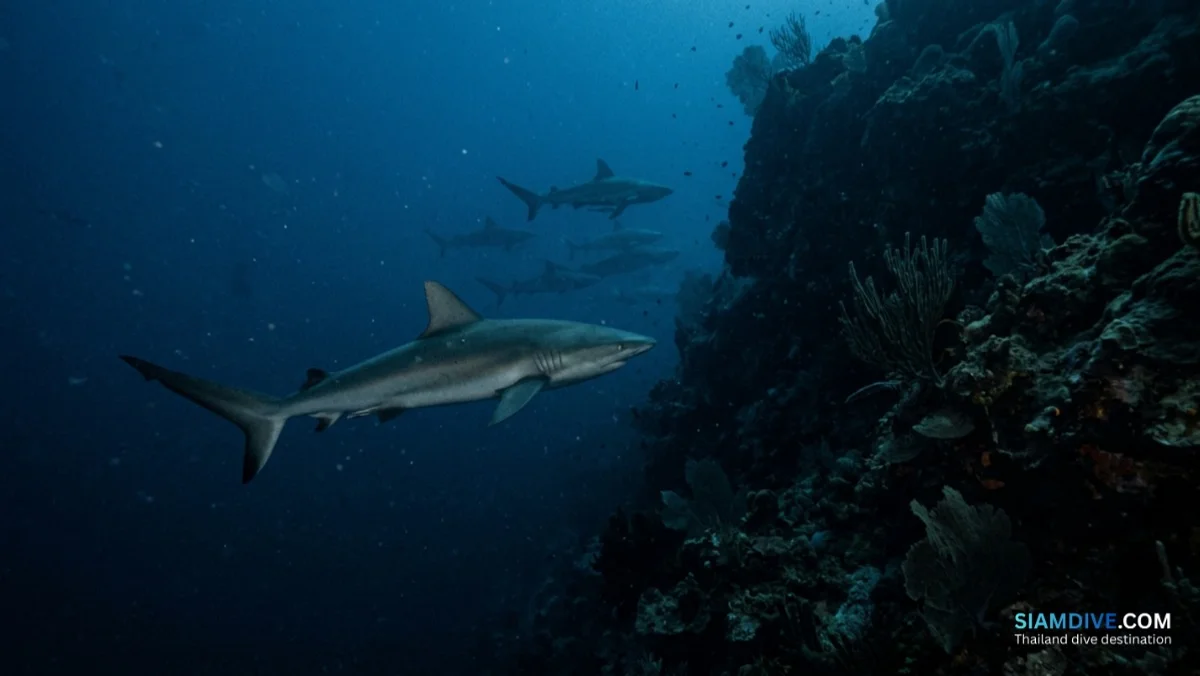
Between January and April, something much larger arrives. Whale sharks have been returning to Koh Chang's waters during this window, and the wreck — the tallest vertical structure for kilometres of open sand — acts as a waypoint along their route.
In January 2026, a whale shark was documented circling the wreck, captured on video by a local dive team. These encounters carry no guarantee — this is the Gulf of Thailand, not a managed feeding station — but the pattern of annual returns has held over recent high seasons. Dive shops on the island now schedule extra wreck runs during whale shark months, and some offer combined trips: wreck dive first, open-water search pattern second, following the known approach corridors south of the wreck site.
Encountering a whale shark at a wreck gives the moment a different frame than a cleaning station or open-ocean pass. The animal moves through structure — past gun turrets, above the bridge, along a hull longer than itself — and the scale registers in a way that blue water alone does not provide.
Reading the Water
Koh Chang sits in the eastern Gulf of Thailand, where conditions track the monsoon calendar with reliable precision:
- High season (November–April)
- Calm seas, light winds. Visibility typically 15–25 metres, peaking in February and March after the northeast monsoon settles and the water column clears. Water temperature holds at 28–29°C. Most operators run daily wreck departures during this window.
- Shoulder months (May and October)
- Diveable more often than not, but afternoon squalls can cancel second dives. Visibility narrows to 10–15 metres. Some operators lower prices during these months.
- Low season (June–September)
- The southwest monsoon brings surface chop and reduced visibility — 5–10 metres on rough days, 10–15 on calmer mornings. Water warms to 29–30°C. Some shops pause wreck trips entirely; others run early departures when seas allow. Fewer divers on the wreck means more fish per square metre of hull.
Currents at the wreck site run mild to moderate. Surface current occasionally picks up enough to warrant a drift protocol off the line, but most days a descent from the mooring buoy drops you onto the bridge in under a minute.
Getting There and What It Costs
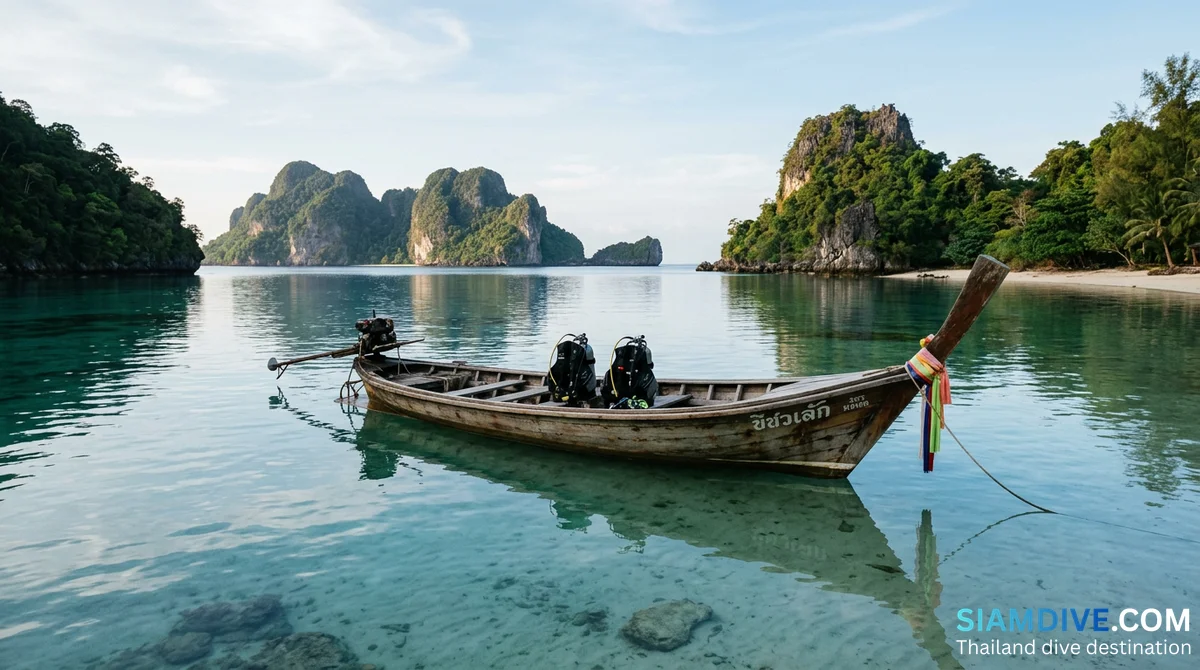
Koh Chang sits six hours east of Bangkok by road — or a one-hour flight to Trat airport followed by a taxi and a thirty-minute ferry. Once on the island, dive operations cluster along the west coast near Bang Bao pier at the southern tip.
- Fun dive, buddy pair, no guide — from 1,000 THB per person
- Guided wreck dive with divemaster — 2,000–2,500 THB (tanks, weights, boat included)
- Instructor-led wreck dive — around 3,500 THB per person
- Two-tank day trip, full package — 3,500–4,500 THB (breakfast, lunch, two dives, rental gear if needed)
Pricing across Koh Chang's dive shops stays consistent with little undercutting between operators. Multi-day bookings and group sizes unlock discounts at most shops. Equipment rental runs separately unless you book the full-day package.
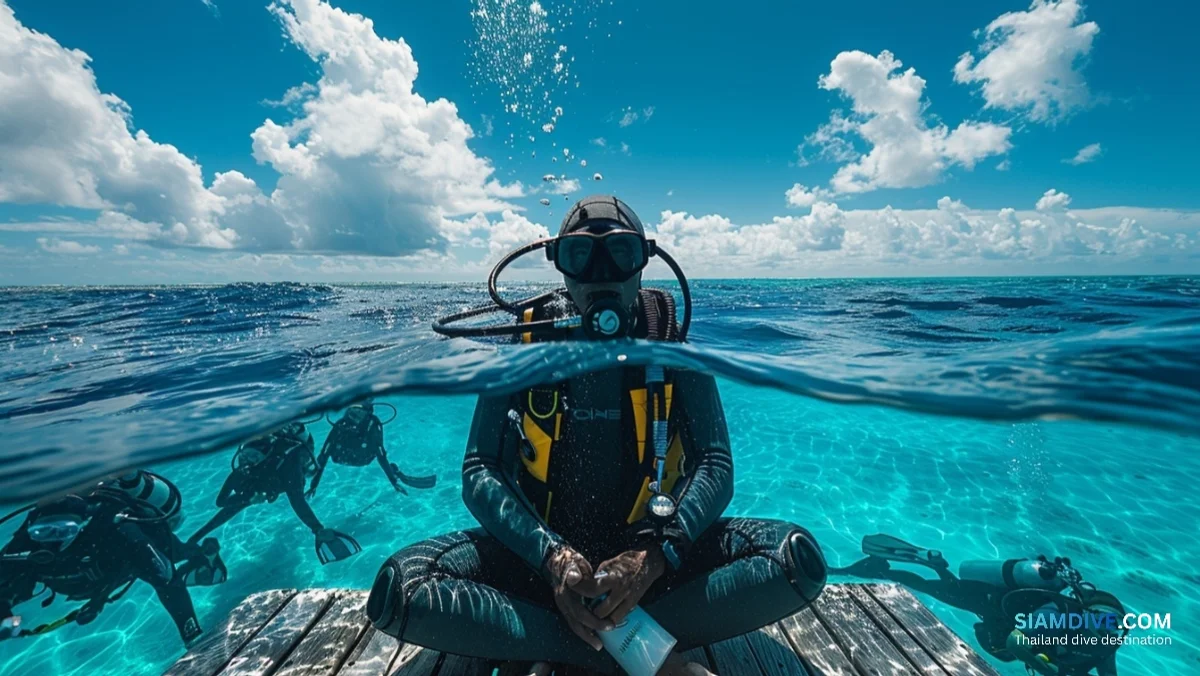
Minimum certification for the wreck exterior is Open Water. The deeper swim-throughs and internal passages expect Advanced Open Water or equivalent. Cargo hold penetration typically requires a Wreck Diver specialty — most guides will watch how you handle yourself at twenty metres before taking you lower.
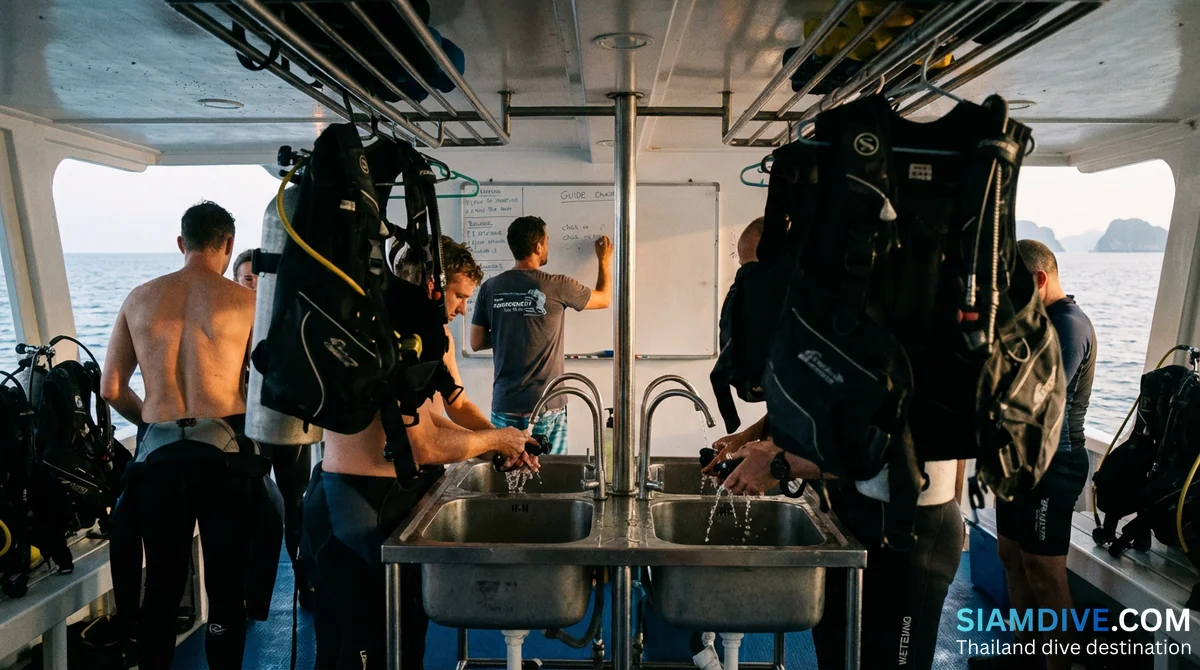
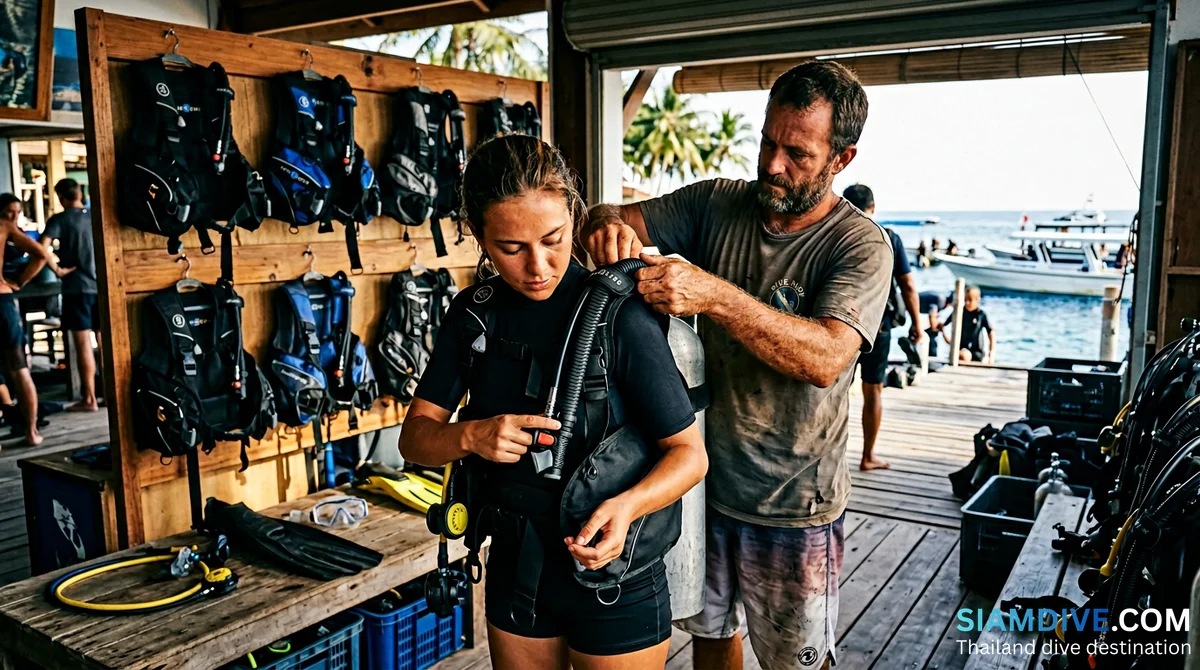
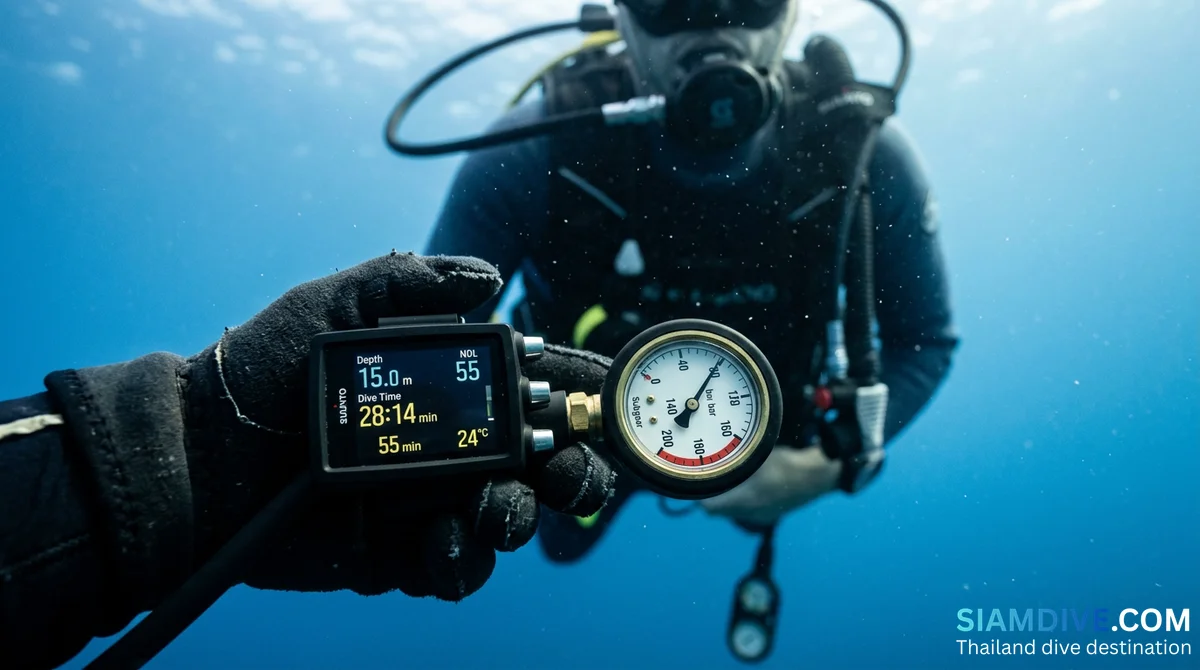
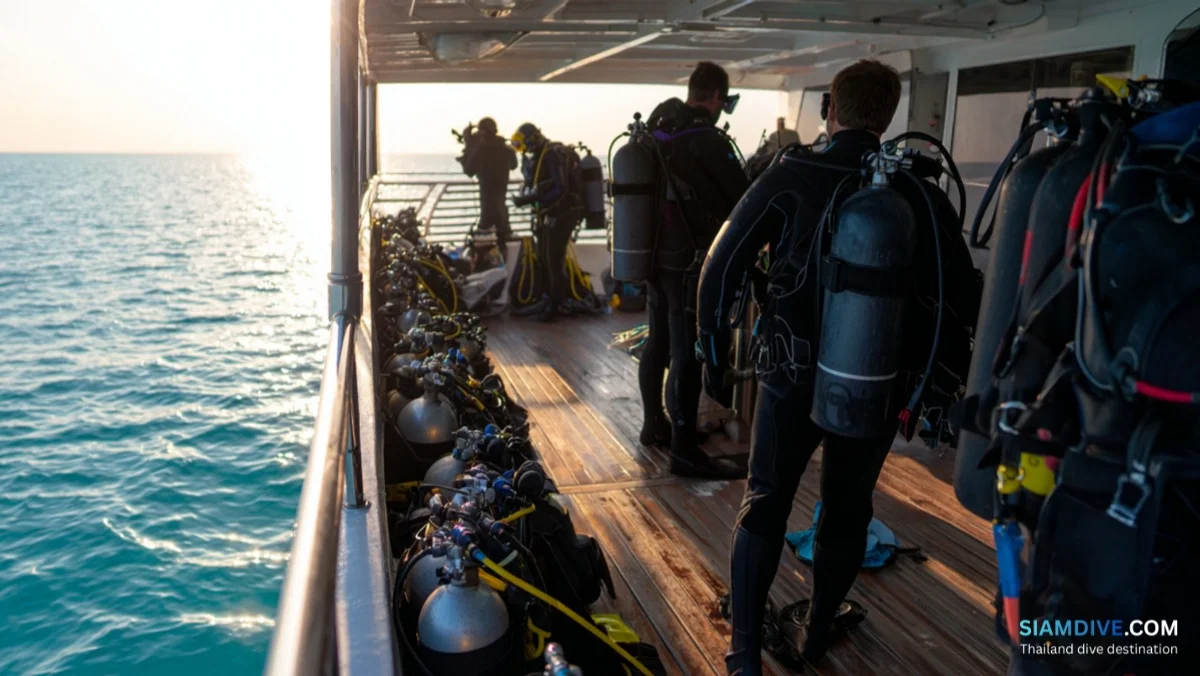
One practical note: an equipment check before boarding is worth the five minutes. The wreck's steel edges do not forgive a loose hose or a dangling pressure gauge.