Fried on the Dive Boat: The Complete Sun Protection Guide Every Diver Needs
17 เมษายน 2569
Scuba divers face extreme UV exposure — hours on open boat decks, water reflecting 25-40% more UV rays, and wet skin that burns faster. Learn about reef-safe sunscreen, UPF rash guards, and essential gear to protect your skin without harming marine life.
Why Divers Get Burned More Than Anyone Else
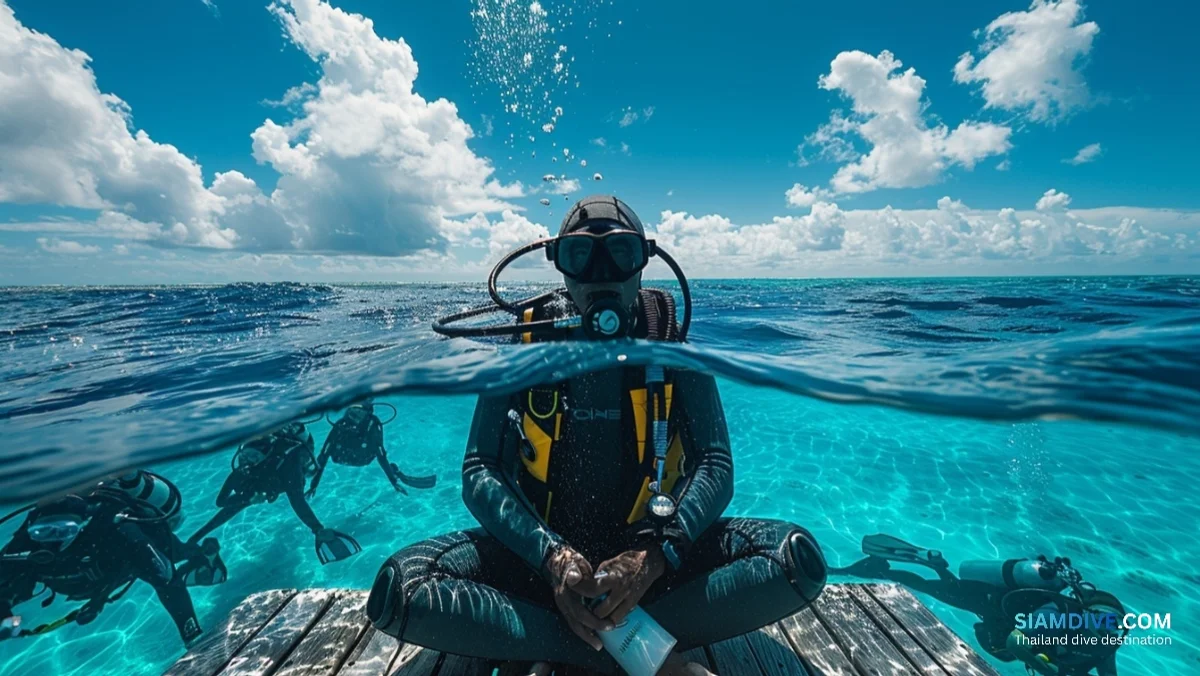
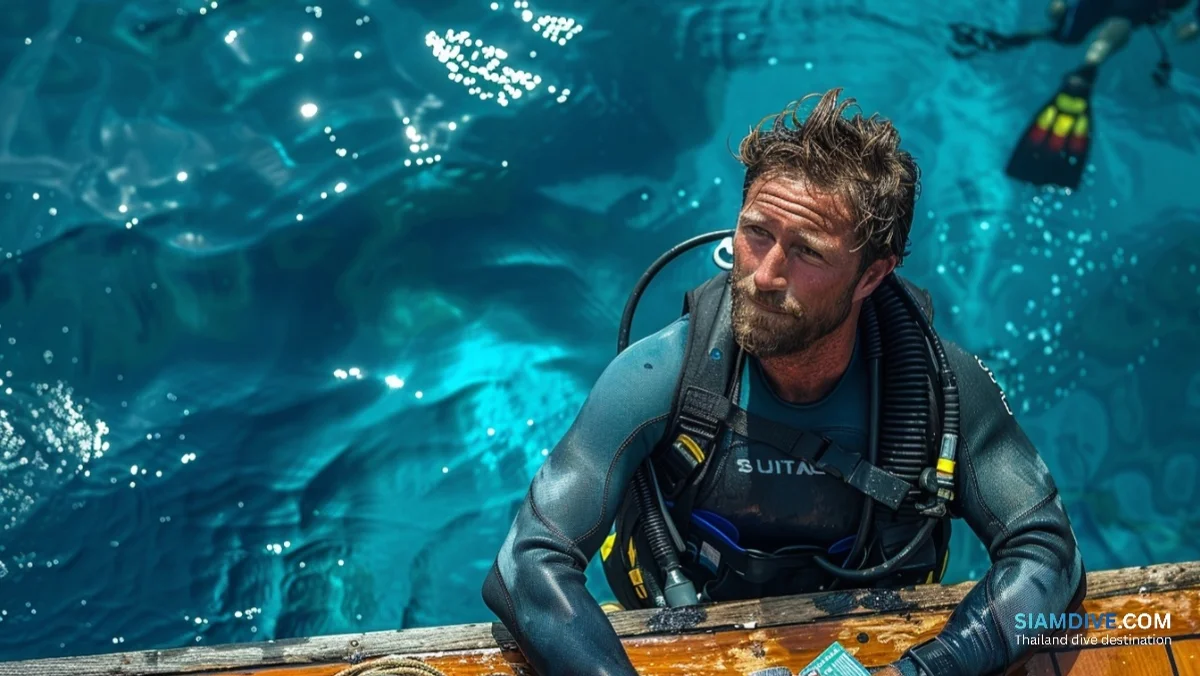
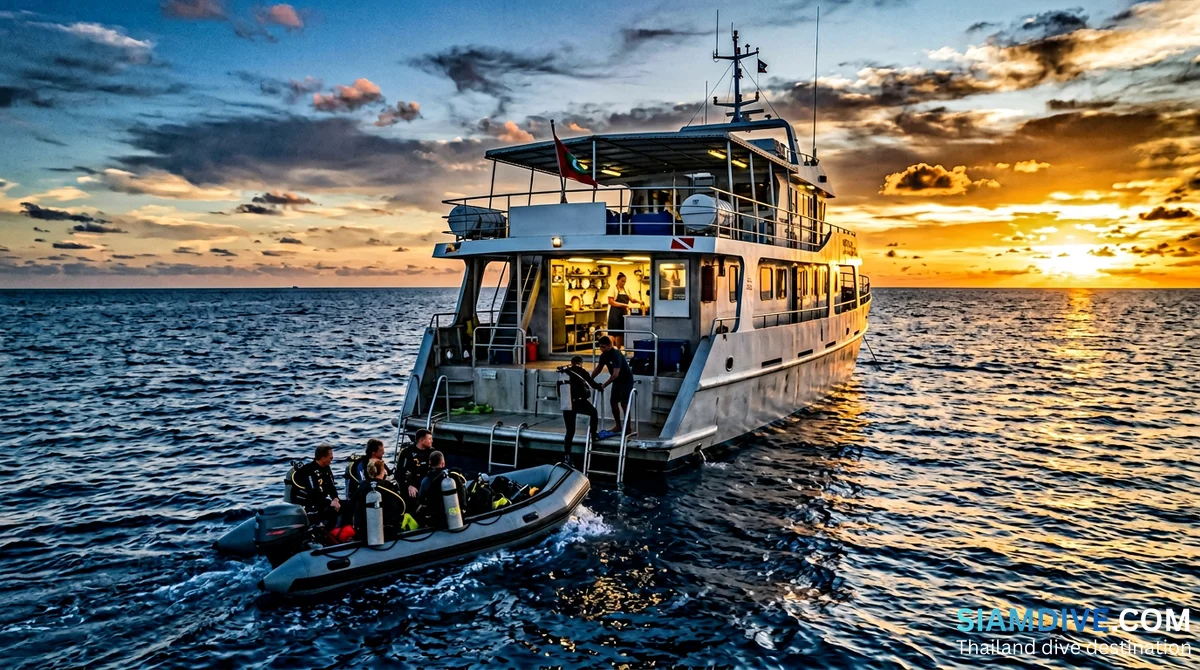
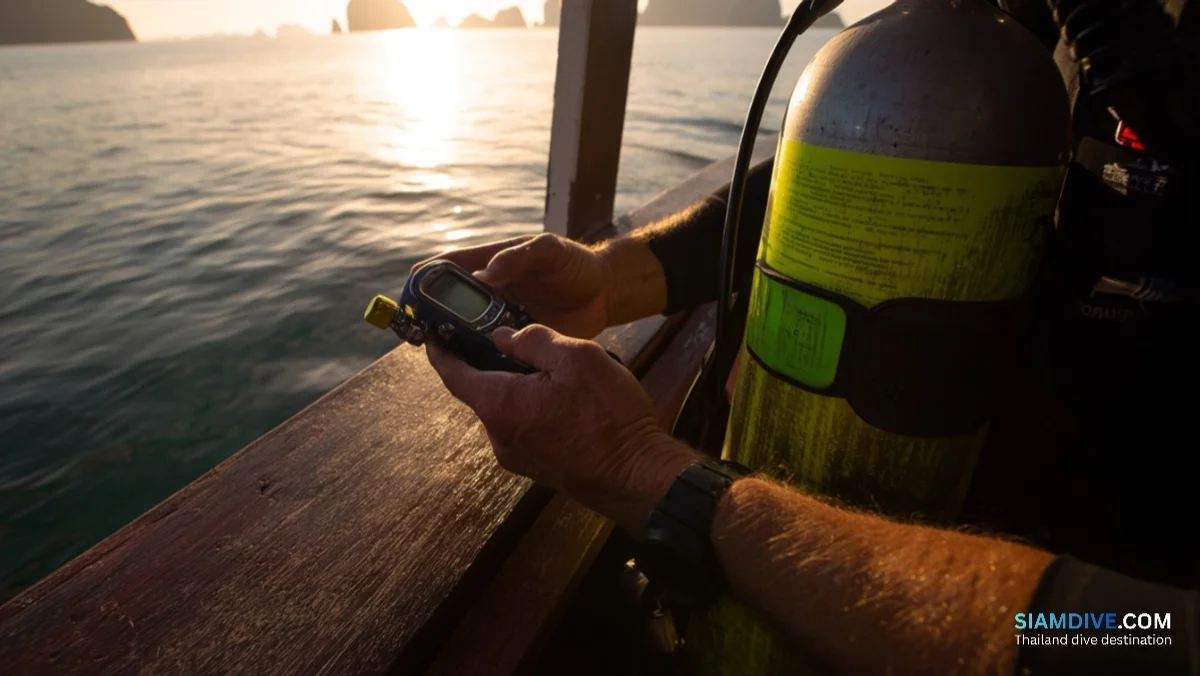
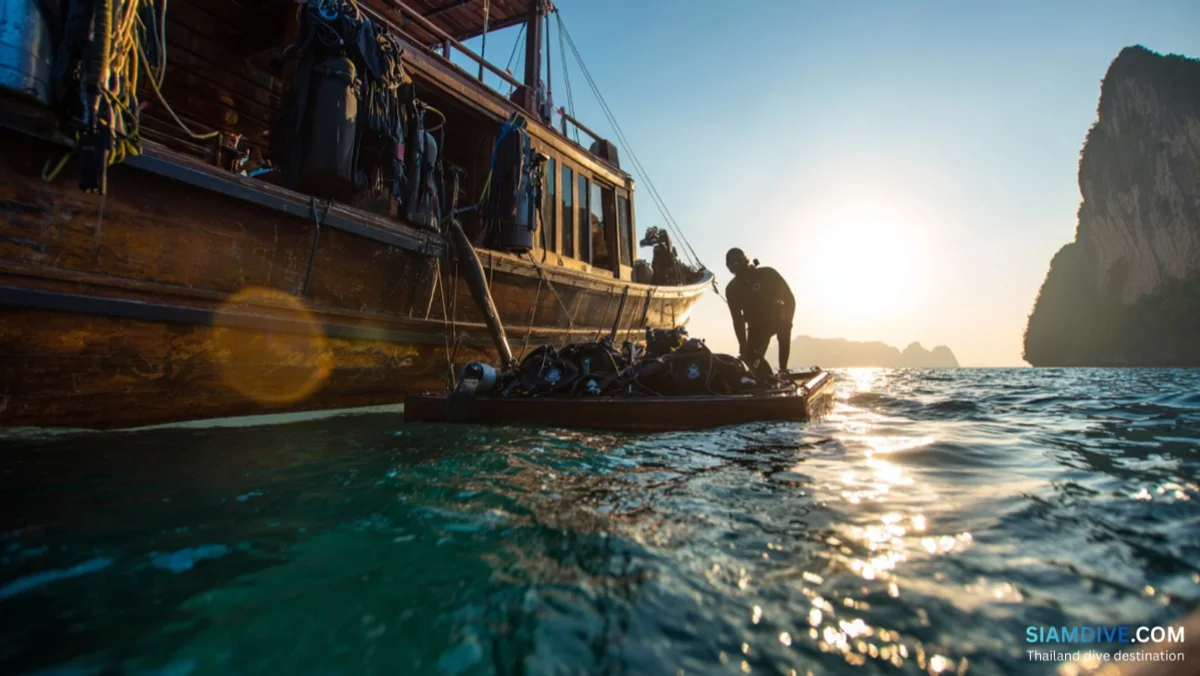
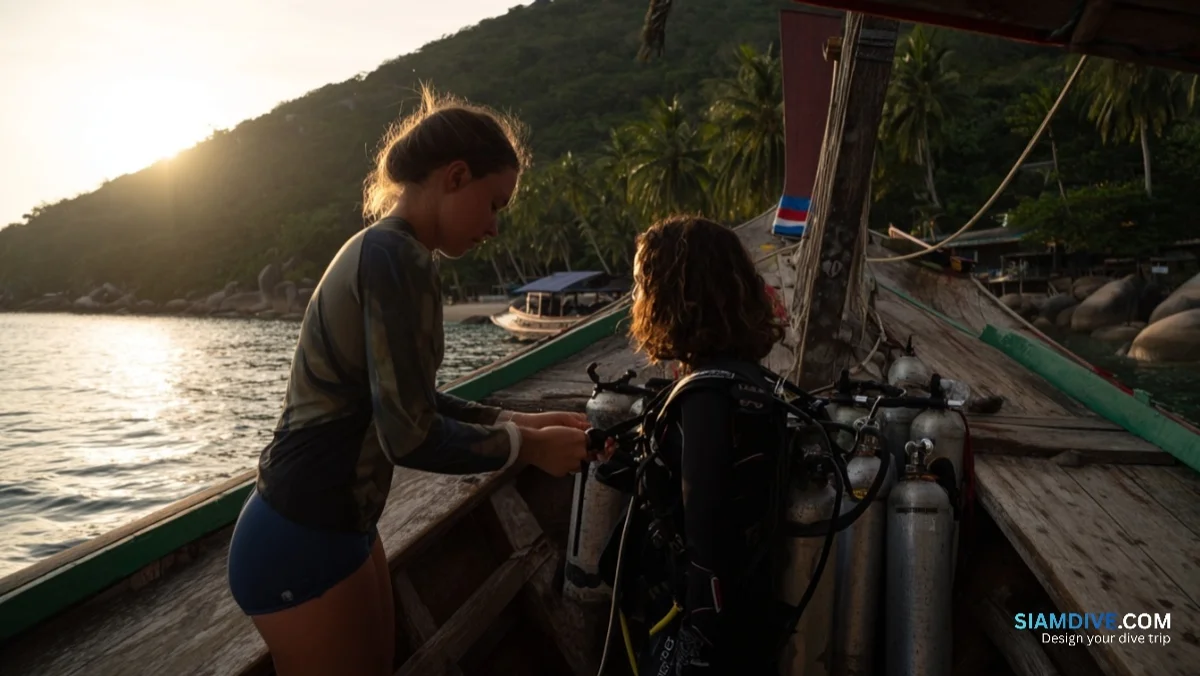
If you've ever come back from a dive trip looking like a lobster, you're not alone. Scuba divers face a perfect storm of sun exposure that most people never experience. Between dives, you're sitting on an open boat deck for one to three hours — often at tropical latitudes where the UV index regularly hits 11+.
But it gets worse. Water reflects 25-40% of UV radiation back at you, essentially doubling your exposure from above and below. Your wet skin after surfacing loses its natural oils, making it more vulnerable to UV penetration. And at typical dive destinations near the equator — Thailand, Indonesia, the Maldives, Egypt — the sun sits almost directly overhead, delivering maximum UV intensity.
Most divers are so focused on their gear, dive plan, and marine life that sun protection becomes an afterthought. That's a mistake you'll feel for days.
Reef-Safe Sunscreen: What It Actually Means
The term "reef-safe" isn't regulated by any government agency, so manufacturers can slap it on almost anything. Here's what actually matters: avoid oxybenzone and octinoxate. These two chemical UV filters have been shown to cause coral bleaching, damage coral DNA, and disrupt reproduction even at extremely low concentrations.
Truly reef-safe sunscreens use mineral (physical) filters — specifically zinc oxide and titanium dioxide. These sit on top of your skin and reflect UV rays rather than absorbing them chemically. They're less likely to wash off and don't break down into harmful compounds in seawater.
Other ingredients to avoid:
- Octocrylene
- 4-methylbenzylidene camphor (4-MBC)
- Butylparaben
- Triclosan
Look for sunscreens labeled "non-nano zinc oxide" — nano-particles can be ingested by coral polyps and small marine organisms.
Thailand's Marine Park Sunscreen Regulations
Thailand has taken a strong stance on reef protection. Since 2021, all Thai marine national parks — including the Similan Islands, Surin Islands, Mu Ko Lanta, and Ang Thong — have banned sunscreens containing oxybenzone, octinoxate, 4-MBC, and butylparaben. Rangers can confiscate non-compliant products at park checkpoints.
Popular reef-safe brands available in Thailand include Reef Repair, Raw Elements, Badger, and local Thai brands like SUNS by Tropicana. You can find them at dive shops in Khao Lak, Koh Tao, Phuket, and Krabi. Don't wait until you arrive at the pier — selection is better in town.
Pro tip: apply sunscreen at least 15-20 minutes before boarding the boat, so it has time to bond to your skin before wind and spray start working against you.
Rash Guards: Your Best Defense (Better Than Sunscreen)
Here's a truth that experienced divers know: a UPF 50+ long-sleeve rash guard is the single best sun protection you can wear. It blocks 98% of UV radiation, never washes off, doesn't harm the reef, and doubles as jellyfish sting protection.
UPF (Ultraviolet Protection Factor) ratings work like SPF but for fabric:
- UPF 15-24: Good protection
- UPF 25-39: Very good protection
- UPF 50+: Excellent — blocks 98%+ of UV
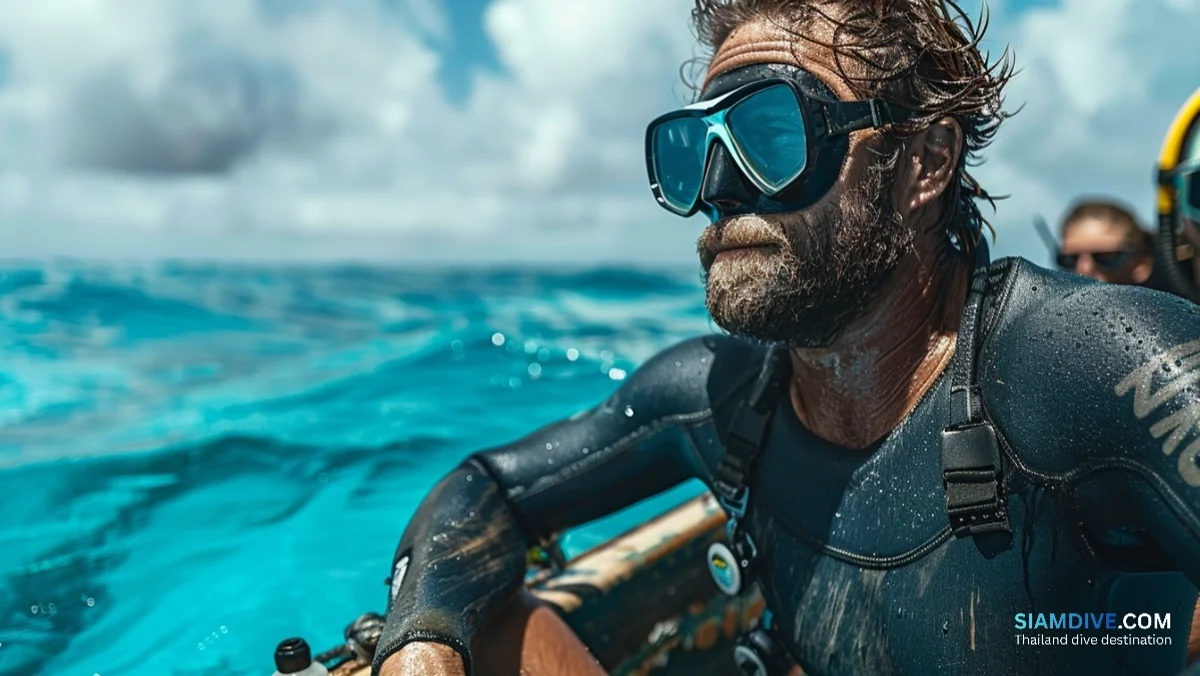
For diving, choose long-sleeve, high-neck rash guards in darker colors (which block more UV than white). They dry fast between dives, provide a base layer under your wetsuit, and reduce the skin-on-neoprene friction that causes chafing.
Many dive operators in Thailand now encourage or require rash guards over sunscreen during snorkeling activities, since even reef-safe sunscreen isn't 100% harmless in large quantities.
Essential UV Protection Gear for the Dive Boat
Beyond rash guards and sunscreen, smart divers pack a UV protection kit:
- Wide-brim hat or baseball cap: Your scalp and ears burn fast. A hat with a neck flap is ideal for liveaboards.
- Polarized sunglasses: Protect your eyes from glare and UV. Polarized lenses also cut surface glare, making it easier to spot marine life from the boat — manta rays, whale sharks, turtles near the surface.
- Buff or neck gaiter: UPF-rated neck gaiters protect your neck, ears, and lower face — areas sunscreen tends to miss or sweat off.
- Boardshorts or leggings with UPF: Cover your legs during surface intervals. Thighs and calves burn badly on open sun decks.
- Reef-safe SPF lip balm: Your lips have no melanin and burn extremely fast. This is the most commonly forgotten item. Reapply every hour.
Sunburn and Diving: A Painful Combination
Getting sunburned on a dive trip isn't just uncomfortable — it can genuinely ruin your diving. Here's why:
Neoprene on burned skin is torture. Pulling a wetsuit over sunburned shoulders, back, or legs creates friction that can blister already-damaged skin. Even a thin 3mm shorty becomes unbearable.
Overheating risk increases. Sunburned skin has impaired thermoregulation. Combine that with a tight neoprene wetsuit in tropical heat, and you're at higher risk of heat exhaustion during surface intervals.
Dehydration compounds the problem. Sunburn draws fluids to the skin surface. Divers are already prone to dehydration (breathing dry compressed air, sun exposure, seasickness). Dehydration is a significant risk factor for decompression sickness (DCS).
If you're already burned, wear a loose rash guard instead of a wetsuit if water temperature allows, drink extra water, and stay in the shade between dives.
Eye Care: The Overlooked Essential
Your eyes take a beating on dive trips. The combination of salt water, intense sun reflection, wind, and chlorine (from camera rinse tanks) creates a recipe for irritation, dryness, and even photokeratitis — essentially sunburn of the cornea.
After every dive:
- Rinse your eyes with fresh water
- Use preservative-free eye drops if they feel dry or irritated
- Put on sunglasses immediately — your pupils are dilated from being underwater in lower light, making them more vulnerable to UV
For divers who wear contact lenses: never dive with contacts in your mask (risk of losing them and eye infection from trapped salt water). Use a prescription mask instead, and bring backup glasses for the boat.
Post-Sun Recovery for Divers
Even with the best protection, you'll accumulate sun exposure over a multi-day trip. Smart post-sun care keeps your skin in diving condition:
- Aloe vera gel: Apply generously after your last dive each day. Pure aloe (not the green-dyed tourist shop kind) reduces inflammation and speeds healing.
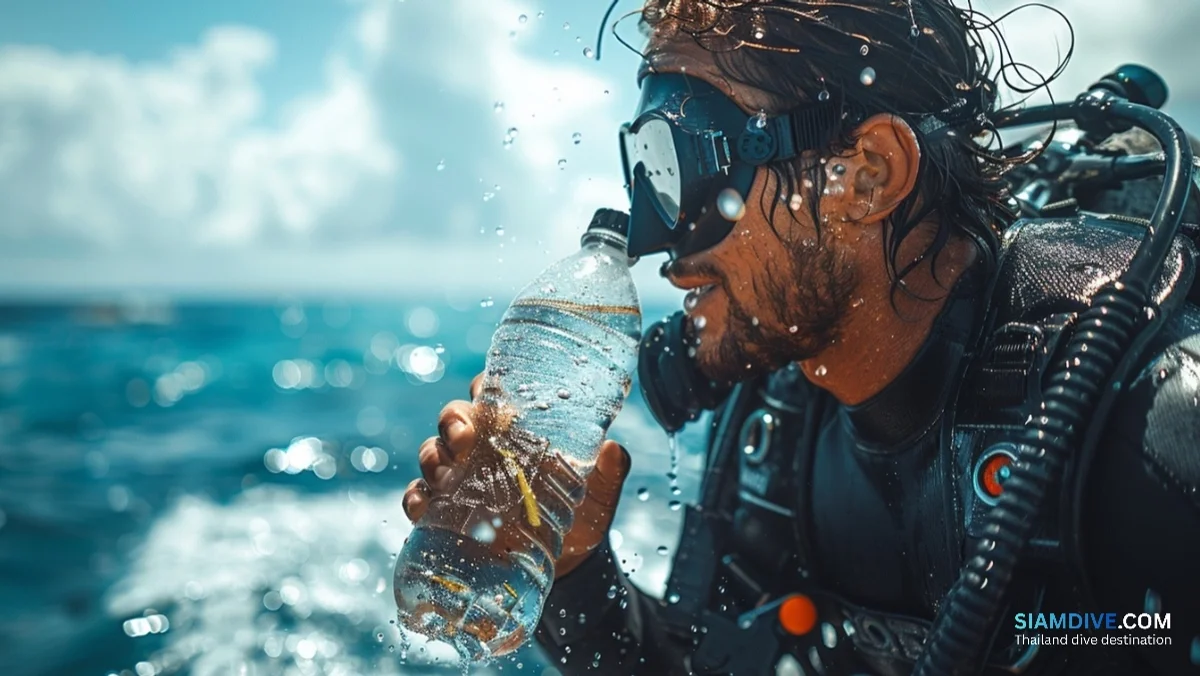
- Hydration: Drink at least 2-3 liters of water daily on dive trips. Coconut water is excellent — it replaces electrolytes naturally.
- After-sun moisturizer: Salt water and sun strip your skin's moisture barrier. A good moisturizer with vitamin E helps repair it overnight.
- Cool showers: Resist hot showers after sun exposure. Cool water reduces inflammation and feels incredible on sun-stressed skin.
- Avoid alcohol after heavy sun: It dehydrates you further — doubly bad when you're diving the next morning.
The best sun protection strategy for divers combines physical coverage first (rash guard, hat, sunglasses), reef-safe sunscreen second (on exposed areas like face, hands, feet), and smart behavior (seeking shade, timing surface intervals). Your skin — and the reef — will thank you.
Planning your next dive trip to Thailand? Browse dive destinations and liveaboard schedules at siamdive.com and dive protected from day one.