Cleaning Stations: The Secret Social Hubs of the Reef
6 เมษายน 2569
Discover cleaning stations — where predators open their mouths for tiny fish and shrimp to crawl inside. The most fascinating animal behavior you can witness on any dive.
The Underwater Behavior That Changes How You See the Reef
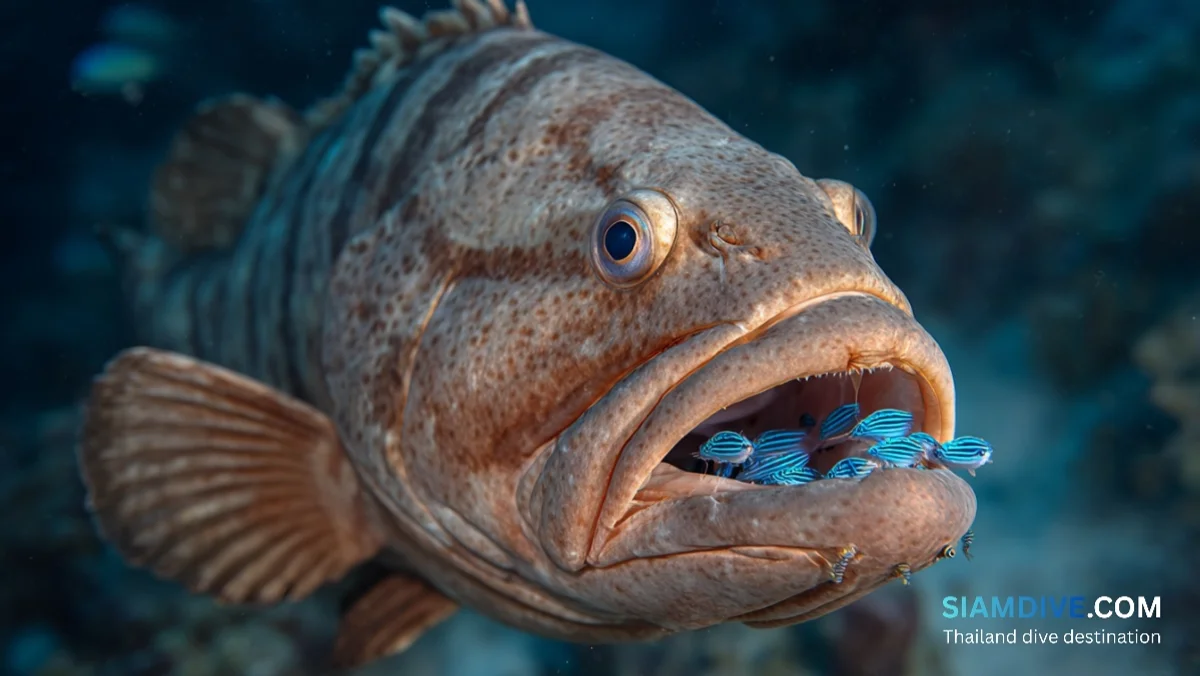
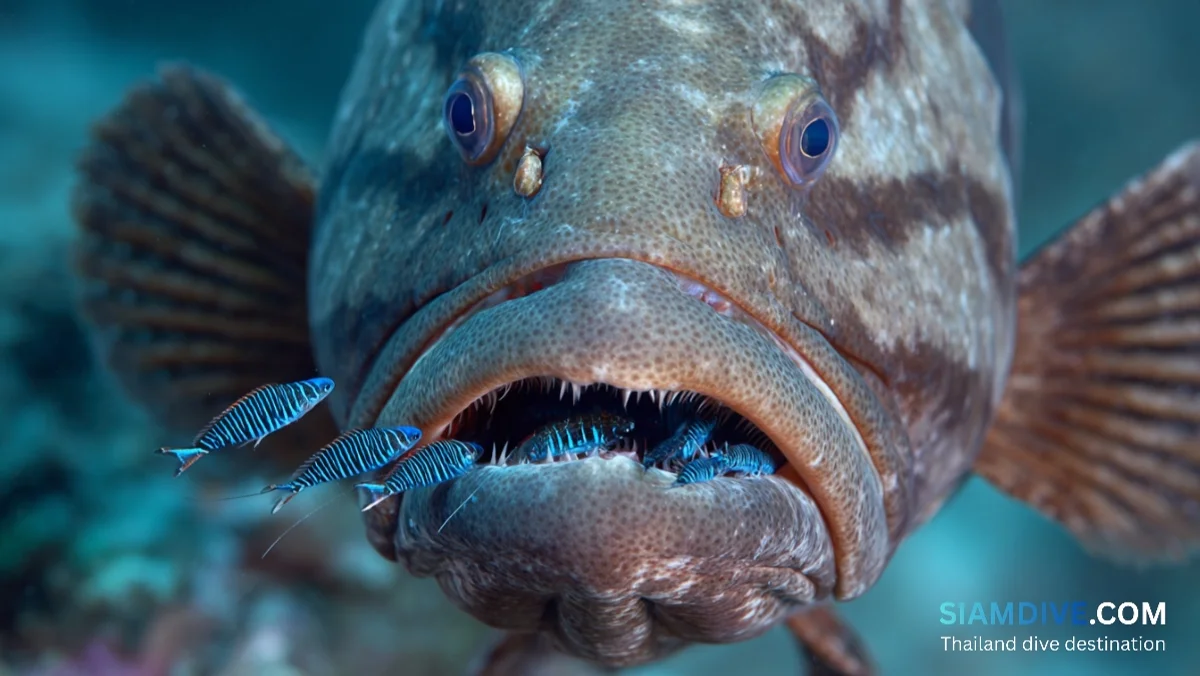
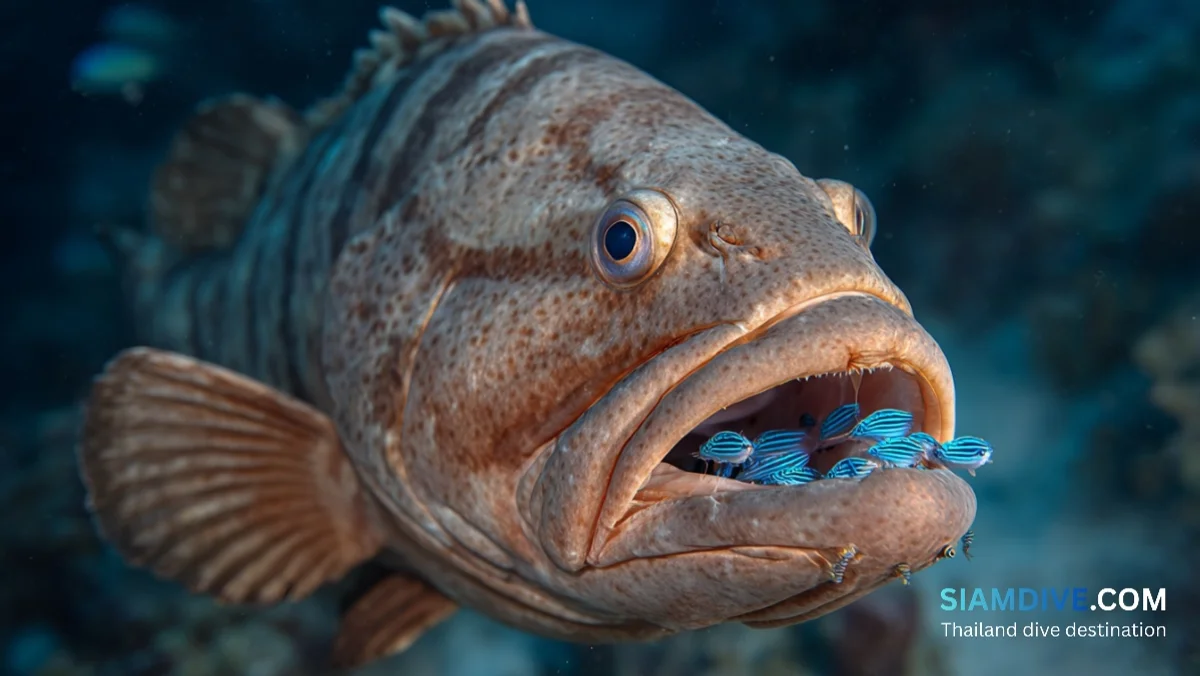
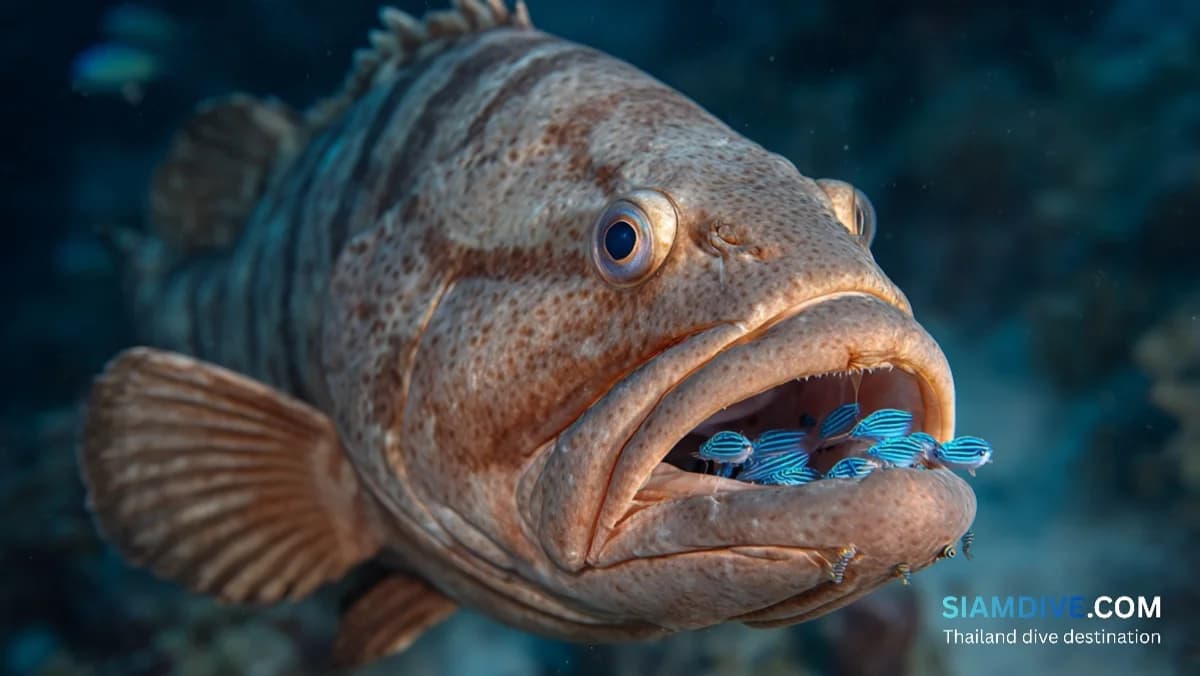
Imagine a 2-meter grouper hovering motionless with its mouth wide open while a 10-centimeter fish swims inside, picks parasites from between its teeth, and swims back out alive. No chase, no bite, no aggression. This scene plays out thousands of times a day on every healthy coral reef in the world, and most divers swim right past it without realizing they are witnessing one of the most sophisticated social behaviors in the animal kingdom. Welcome to the cleaning station — the reef's equivalent of a health clinic, barbershop, and social club rolled into one.
How Cleaning Stations Work
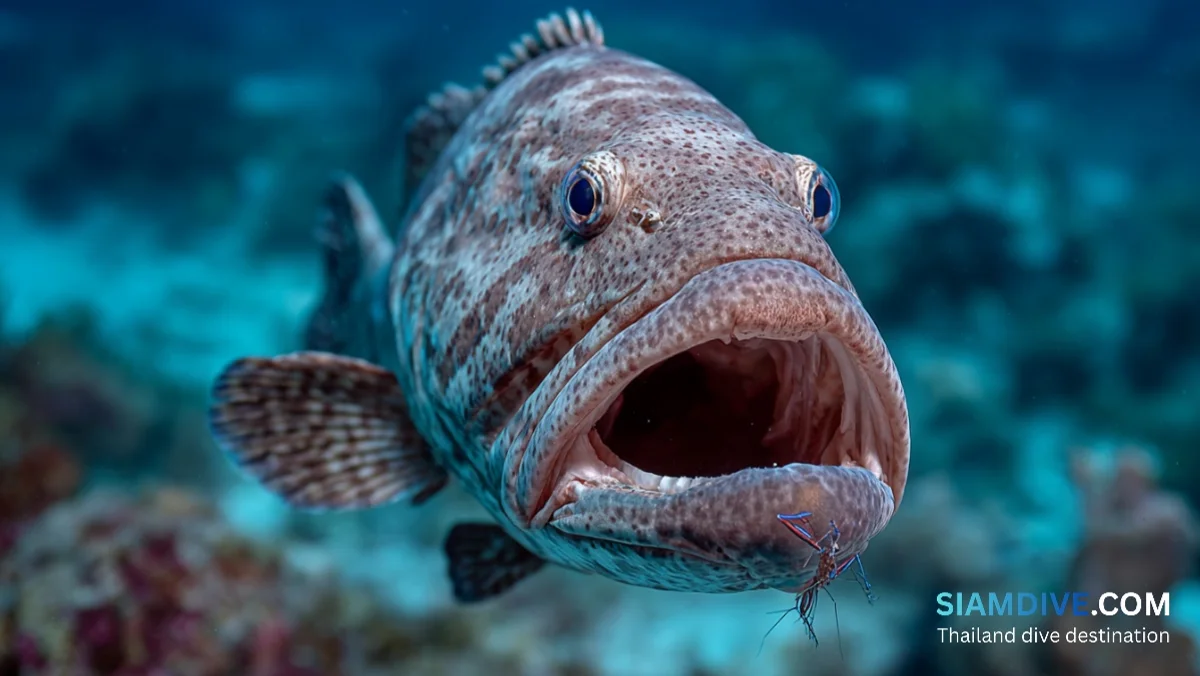
A cleaning station is a fixed location on the reef — usually a prominent coral head, rocky outcrop, or sponge-covered ledge — where small "cleaner" species set up shop. The two most common cleaners are the cleaner wrasse (Labroides dimidiatus), a finger-sized fish with distinctive blue racing stripes, and cleaner shrimp (Lysmata amboinensis), translucent crustaceans with long white antennae. These animals advertise their services through exaggerated swimming dances, bold postures, and bright colors that signal safety to approaching clients. Larger fish — the "clients" — arrive at the station, adopt a specific posture to indicate they want cleaning (mouth open, gills flared, body still), and allow the cleaners to crawl over their skin, enter their mouths, and even pass through their gills to remove parasites, dead tissue, and mucus. A single cleaner wrasse can perform up to 2,000 cleaning interactions per day.
Why Predators Don't Eat the Cleaners
This is the question everyone asks: why doesn't the grouper just eat the little fish inside its mouth? Research by marine biologist Redouan Bshary has documented over 20,000 cleaning interactions and found that clients eat their cleaners in less than 1% of visits. The reasons are fascinating:
- Long-term investment: Eating a cleaner means losing access to future cleanings. Studies show that fish without access to cleaning stations carry 3-4 times more parasites, which directly affects their health, growth, and survival.
- Reputation system: Clients watch how cleaners treat other fish. A cleaner caught cheating — stealing nutritious mucus instead of eating parasites — gets punished. The client chases the cheater away, and other nearby fish learn to avoid that cleaner. A punished cleaner can lose 50-70% of its clientele.
- Tactile manipulation: Cleaner wrasse physically stroke their clients with their pelvic fins during cleaning. Research suggests this releases calming neurochemicals in the client, creating a pleasurable sensation that overrides the predatory instinct. The client is essentially getting a massage while getting cleaned.
The Trust Signals You Can Observe
Watch a cleaning station for five minutes and you will see a remarkable communication system unfold:
- Client signals: A fish approaching a station will open its mouth, flare its gills, and hold perfectly still — a universal vulnerability display that says "I come in peace, clean me." Sharks have been observed hanging vertically at stations. Manta rays slow to a near-hover over cleaner-rich coral heads.
- Cleaner signals: The wrasse performs a distinctive swimming "dance" — a bobbing, weaving motion with its head jutted forward — that advertises its services and reassures clients. Cleaner shrimp wave their long antennae and snap their claws as a greeting.
- Queuing behavior: When stations are busy, large predatory fish form actual lines and wait their turn. Groupers have been observed waiting 10-30 minutes. Position disputes are resolved by size dominance, with larger fish cutting ahead — reef etiquette, essentially.
7 Facts About Cleaning Stations Most Divers Don't Know
- Cleaners have personalities: Bold wrasse cheat more often (eating mucus instead of parasites), while shy ones are more honest. Female clients strategically choose which cleaner to visit based on observed honesty.
- Cleaners can recognize individual clients: Studies show cleaner wrasse remember specific fish and adjust their behavior accordingly — giving better service to predators that could eat them versus harmless herbivores.
- Some fish fake being cleaners: The blenny Aspidontus taeniatus mimics the appearance and dance of cleaner wrasse to get close to larger fish, then takes a bite of healthy flesh and darts away. It is a con artist of the reef.
- Cleaning reduces stress hormones: Client fish show measurably lower cortisol levels after visiting a cleaning station — they are literally less stressed after the experience.
- Removal of cleaning stations damages entire reefs: Experiments where scientists removed all cleaners from a patch reef saw fish populations decline by over 50% within months. Cleaning stations are load-bearing infrastructure for reef ecosystems.
- Manta rays have favorite stations: Individual mantas return to the same cleaning station repeatedly over years, sometimes traveling long distances specifically for their preferred cleaners.
- Night shift cleaners exist: While cleaner wrasse sleep at night, certain shrimp species take over, offering 24-hour service to nocturnal fish like squirrelfish and soldierfish.
Where to Watch Cleaning Stations in Thailand
Cleaning stations are present on virtually every healthy reef, but some Thai dive sites are particularly famous for observable, active stations:
- Similan Islands: Multiple manta cleaning stations at Koh Bon, plus wrasse and shrimp stations throughout the granite boulder formations. Morning dives offer the best activity.
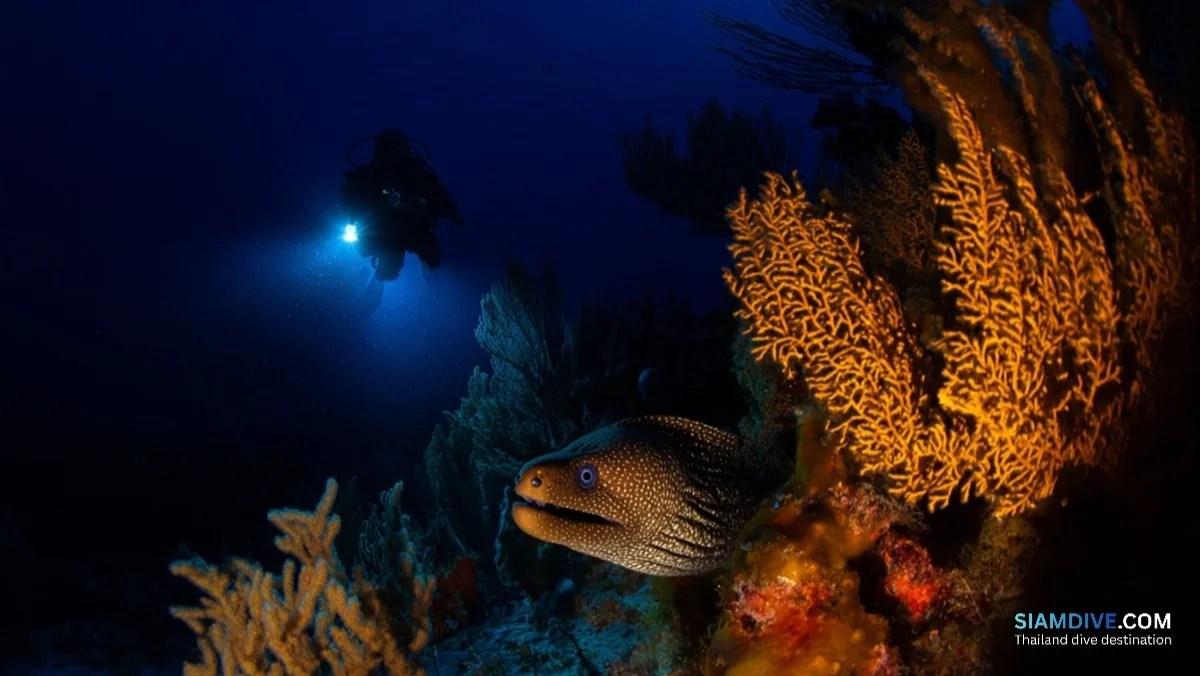
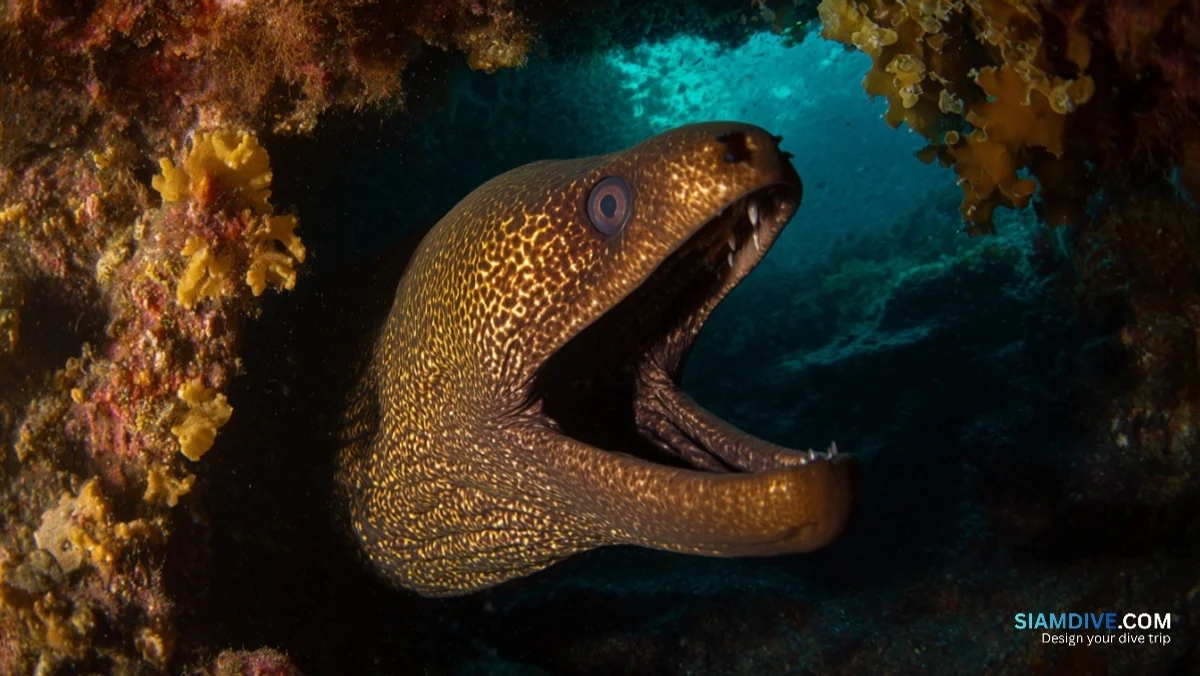
- Richelieu Rock: One of Thailand's best macro sites, with active cleaner shrimp stations on moray eels and groupers at nearly every depth.
- Koh Tao — Chumphon Pinnacle: Grouper cleaning stations around the pinnacle, visible even at the shallower depths accessible to Open Water divers.
- Surin Islands: Pristine reefs with butterflyfish, angelfish, and coral grouper stations amid excellent visibility.
How to Watch Without Disturbing
Cleaning stations are sensitive to diver behavior. If you approach wrong, the clients flee and the show is over. Follow these guidelines:
- Approach slowly and horizontally: Never swim directly at a station from above. Descend nearby and approach at reef level.
- Stop 2-3 meters away: Hover neutrally and do not move closer. The fish will habituate to your presence within a minute or two if you are still.
- Control your bubbles: Loud, irregular exhales create bubble curtains that frighten clients. Breathe slowly and steadily.
- Never touch or point: Extending a hand toward a station triggers flight response instantly.
- Morning dives are best: Cleaning activity peaks in the first hours of daylight when parasites have accumulated overnight.
- Be patient: The best cleaning station encounters happen after sitting still for 3-5 minutes. The longer you wait, the more the reef forgets you are there.
Final Thoughts
Cleaning stations reveal something profound about the ocean: even predators and prey can cooperate when it benefits both. This is not instinct alone — it is learned behavior, reputation management, and interspecies communication operating on a level that rivals human social systems. The next time you are on a dive and notice a fish hovering with its mouth open near a coral head, stop swimming. Settle in. Watch. You are about to witness one of the most elegant examples of animal cooperation on the planet. Find dive operators who know their local cleaning stations at siamdive.com.