Hin Wong Pinnacle Koh Tao Diving Guide: The East Coast's Best Kept Secret
11 เมษายน 2569
Hin Wong Pinnacle off Koh Tao's east coast has more fan corals than any site on the island, plus rich fish life and fewer crowds — here's everything divers need.
Koh Tao's East Coast Hidden Gem
Hin Wong Pinnacle sits about 1.5 kilometers offshore from Hin Wong Bay on the east side of Koh Tao. Most dive shops on the island are based on the west coast, so this site sees far fewer boats than Chumphon Pinnacle or White Rock. That alone makes it worth the trip — you often get the place to yourself. The pinnacle runs on a north-south axis with a shallow tabletop at the south end around 8 to 10 meters, and the rock drops down to about 30 meters, with some sections reaching 40 meters for deep training.
For a long time, Hin Wong Pinnacle was the backup plan — the site dive operators chose when the west coast was too rough to dive. Once you have been there, it stops feeling like a backup. The coral density and pinnacle topography rival anything on the more famous western sites, and the lower boat traffic means you actually get to enjoy the fish instead of weaving around other groups.
Why This Site Is Worth the Extra Boat Ride
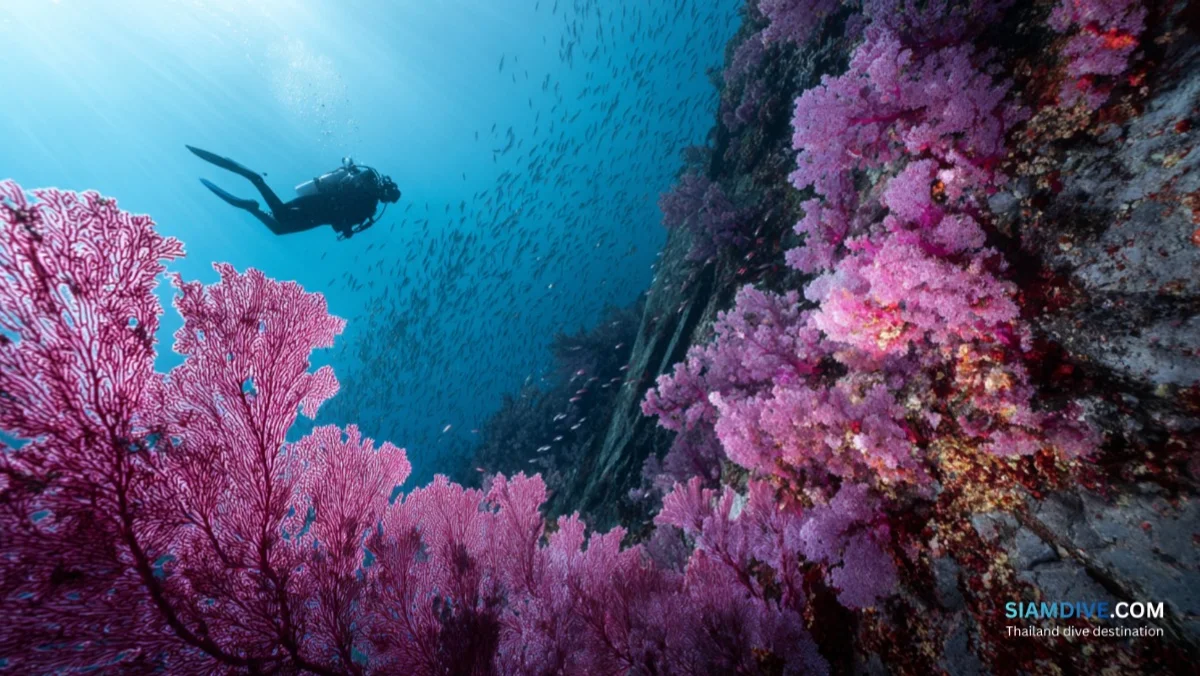
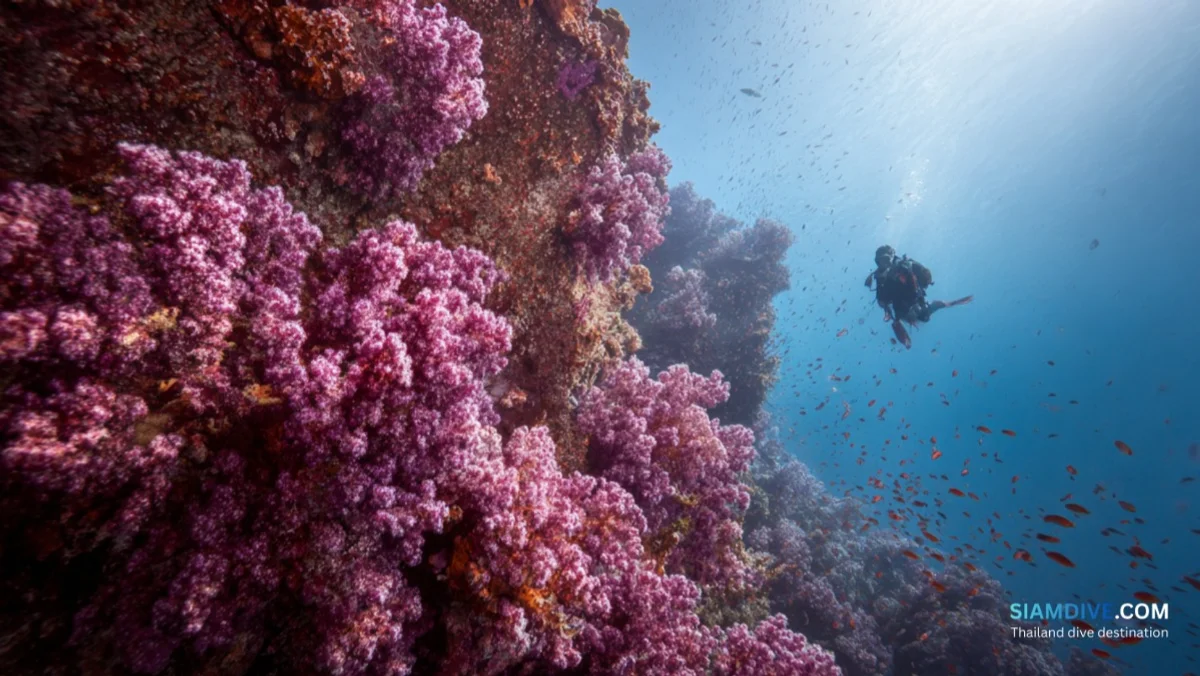
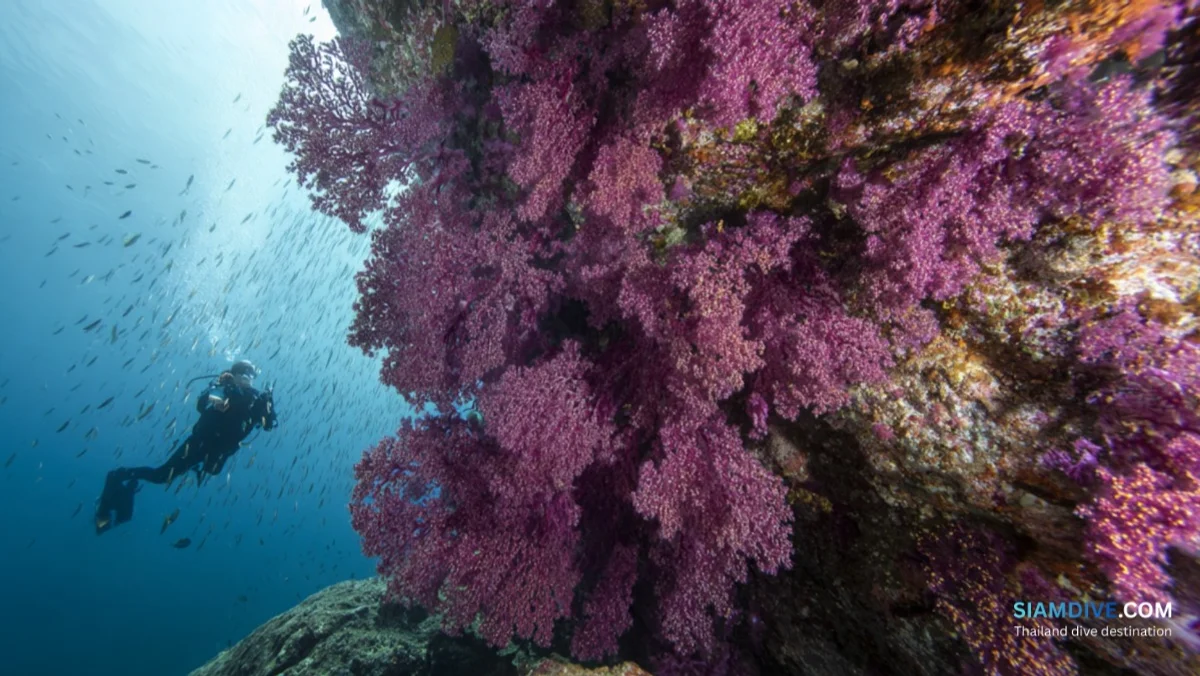
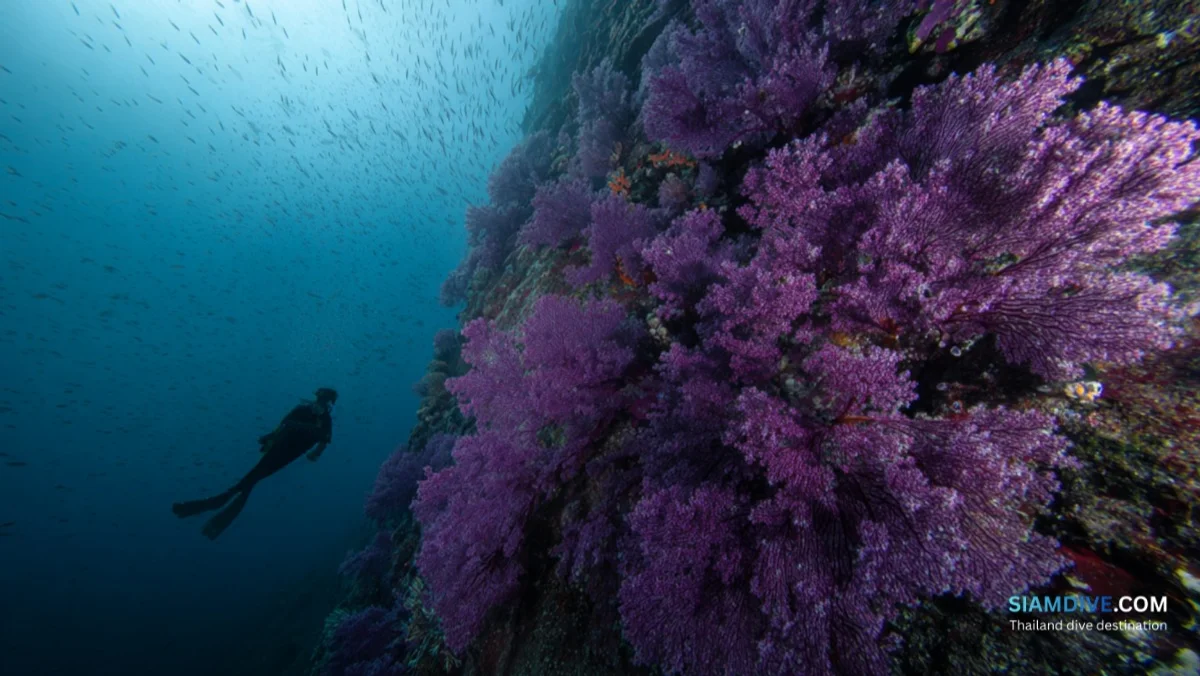
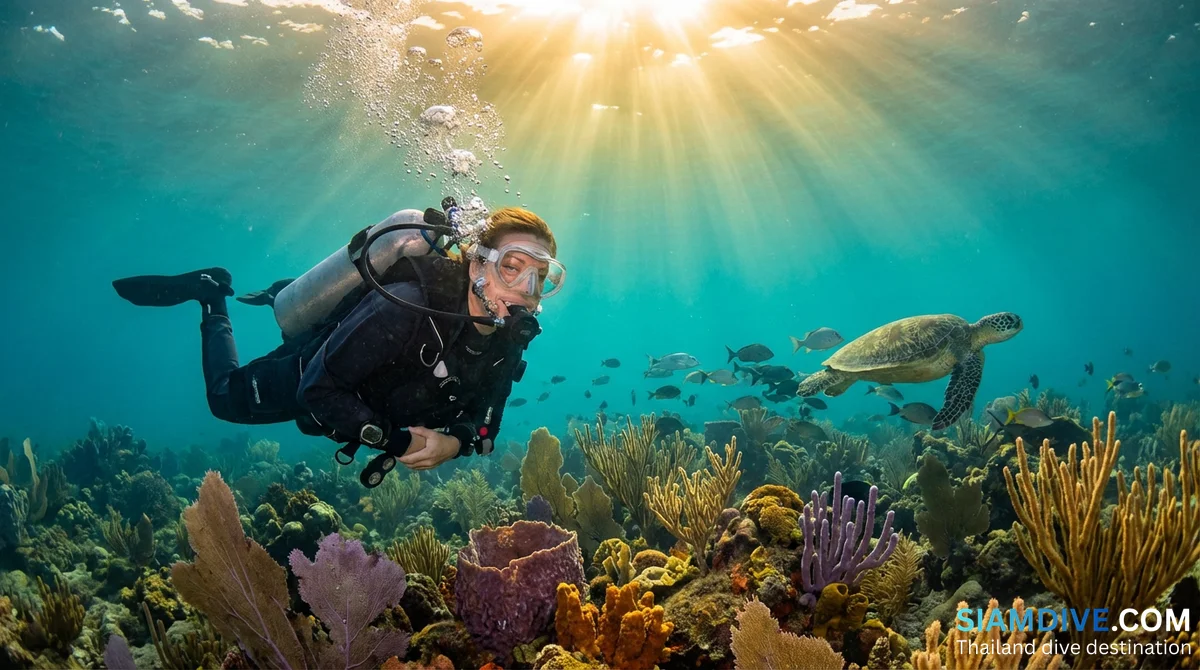
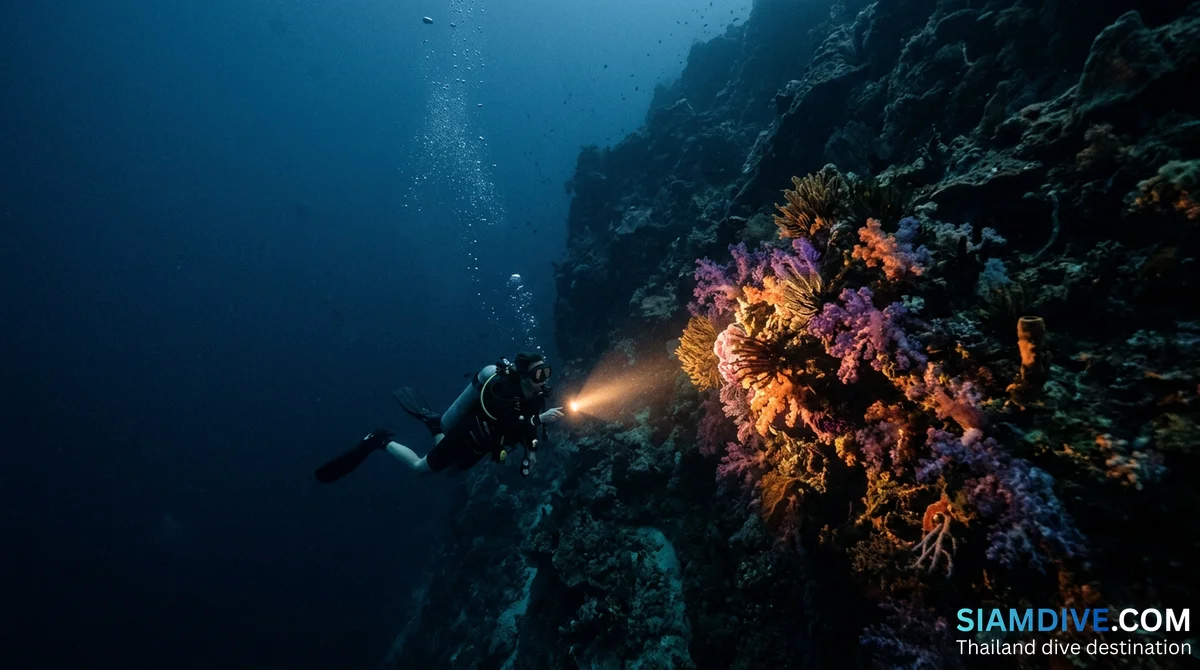
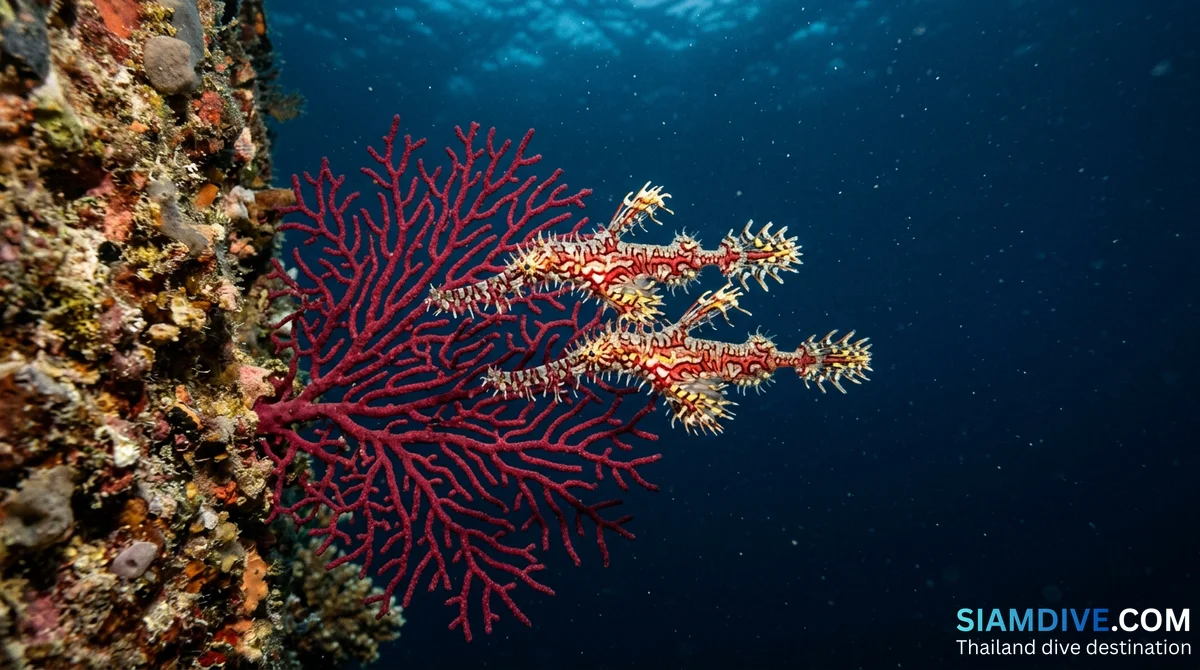
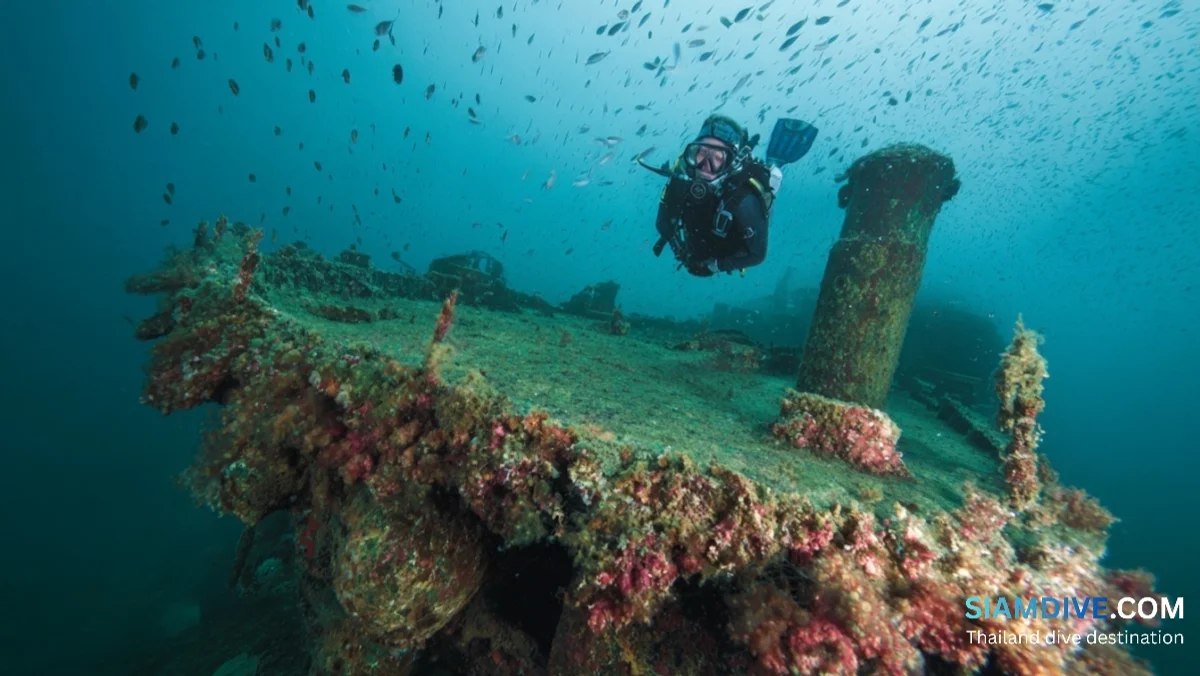
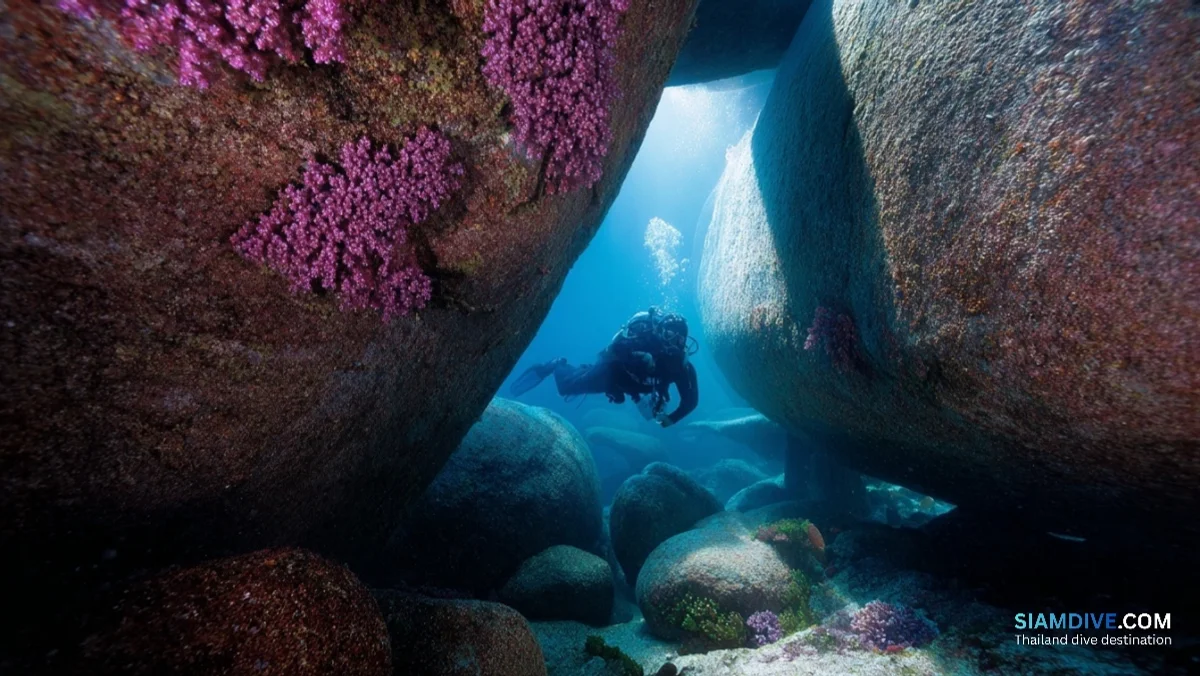
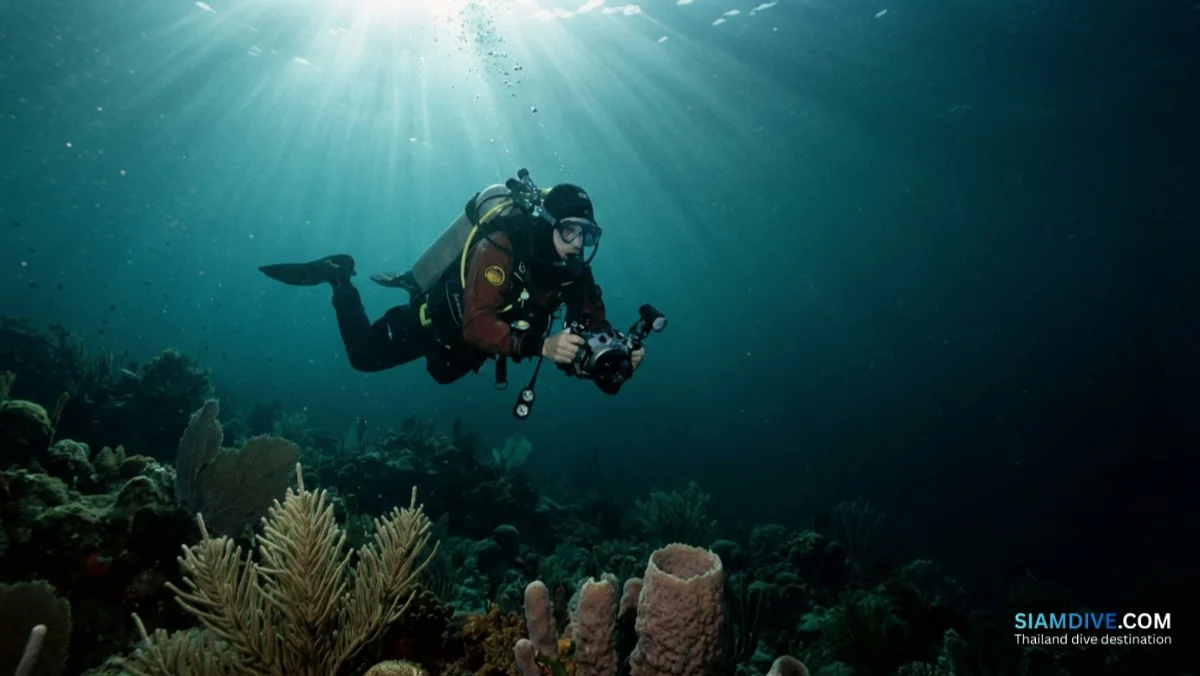
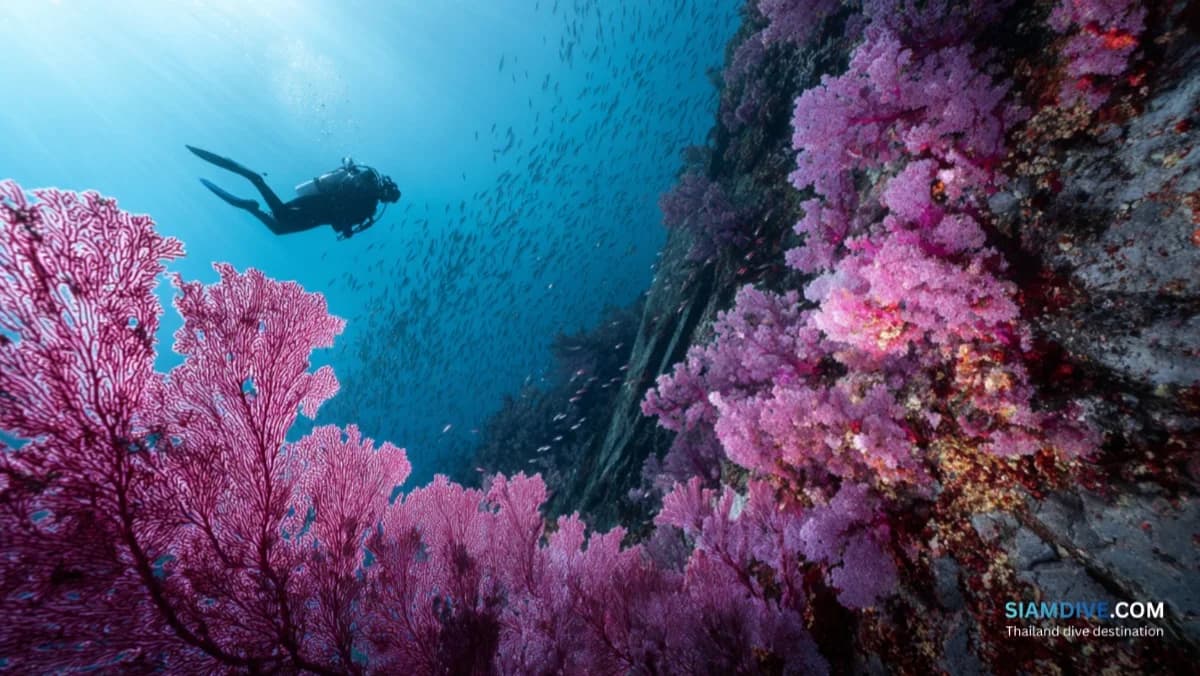
The biggest reason divers keep coming back to Hin Wong is the coral. This pinnacle has more fan corals than any other single dive site on Koh Tao. Purple soft tree corals, whip corals, sea fans, sea whips, toadstool corals, brain corals, and tube corals cover the granite in layers. When the visibility is good, the colors stack up in a way that feels almost tropical — not something you normally associate with Gulf of Thailand sites.
Hin Wong is also small enough to explore at a leisurely pace. You can swim the full perimeter of the pinnacle on a single tank and still have time to poke into the nooks, swim-throughs, and small caves that pepper the structure. That is different from the big western sites where you are constantly moving to cover ground.
The Marine Life Worth Looking For
High fish density is the other thing Hin Wong Pinnacle is known for. Because the site sits on the exposed east coast with nutrient-rich currents, it draws a mix of reef residents and schooling fish that you do not always see together.
- Reef fish: striped squirrelfish, black damselfish, scribbled filefish, harlequin sweetlips, blue-ringed angelfish, butterflyfish, razorfish, and pipefish tucked into the corals
- Schooling species: fusiliers, trevally, and barracuda circle above the shallows of the pinnacle, especially in the morning
- Large predators: brown marbled grouper live in the deeper sections, along with groupers of several species and snapper
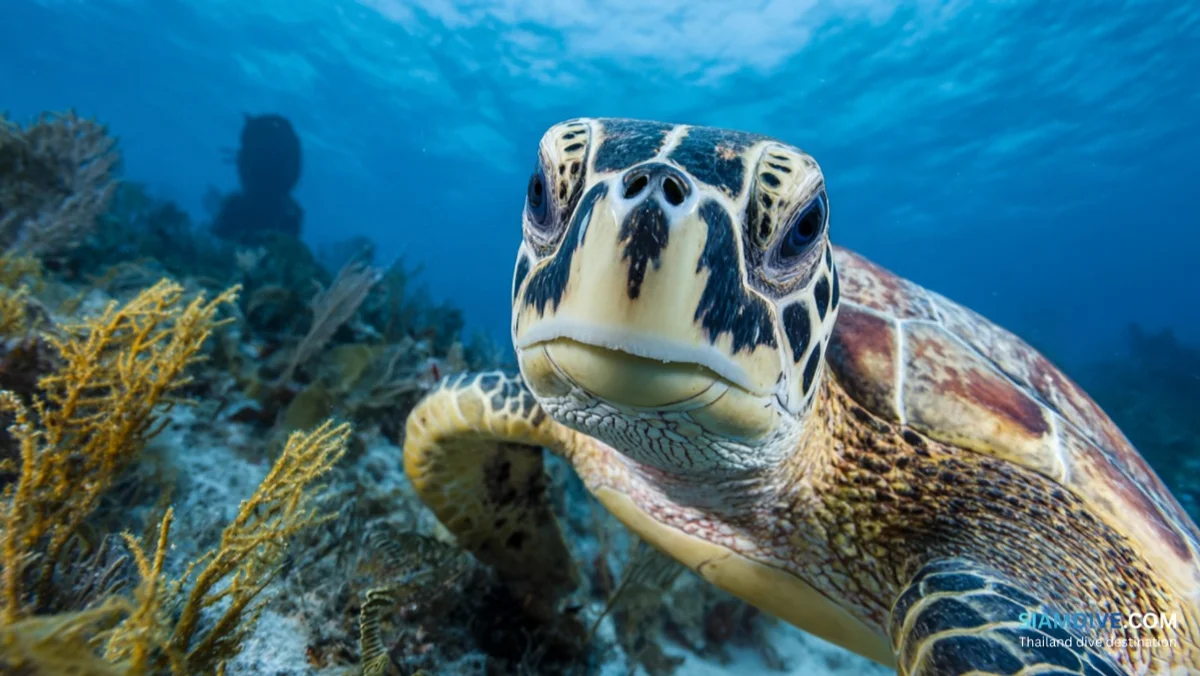
- Turtles and snakes: hawksbill sea turtles pass through regularly, and banded sea kraits hunt through the cracks in the rock
- Rays: blue-spotted stingrays are common, pink whiprays and rare eagle rays show up on lucky days
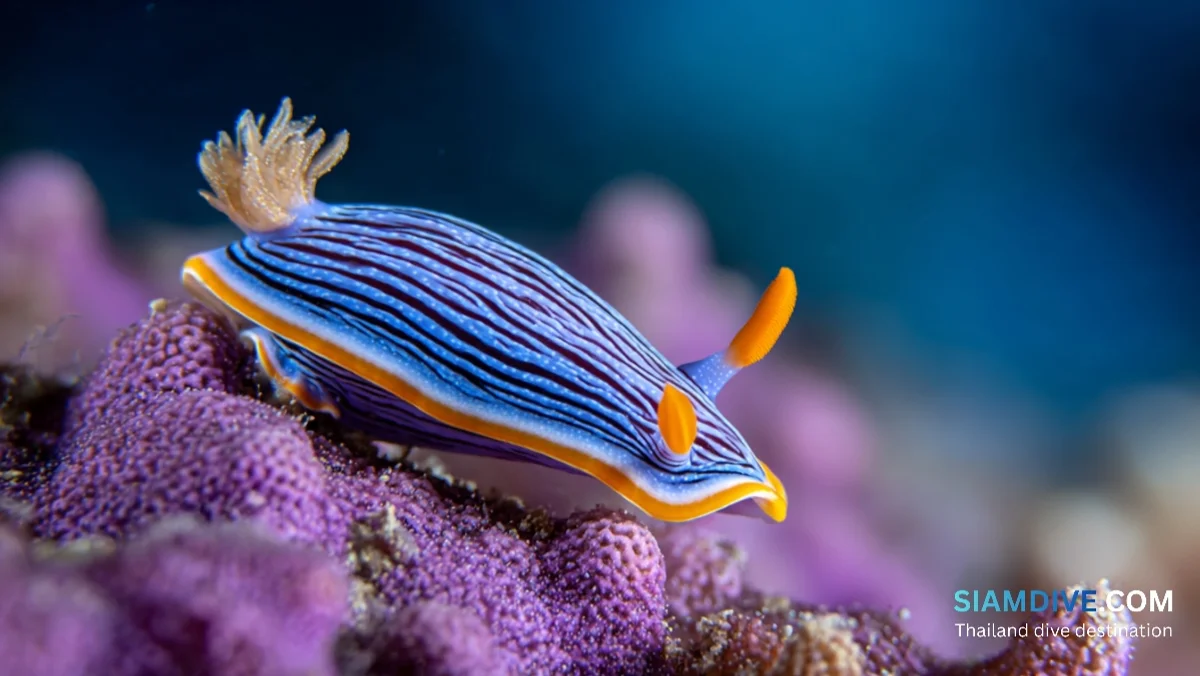
- Macro: nudibranchs, boxfish, and titan triggerfish guarding nests in sandy spots between rocks
One thing you will not commonly see at Hin Wong: whale sharks. They do pass through Koh Tao waters, but Hin Wong Pinnacle is not a reliable whale shark site. If that is your goal, Chumphon Pinnacle and Sail Rock are better bets.
Topography — Why the Dive Profile Matters
Hin Wong Pinnacle has a multi-level profile that rewards good air management. The standard approach is to descend to the deep east side first, swim along the coral-covered walls looking for macro and fans, then work your way up to mid-depth along the boulders, and finish with a long shallow pass along the tabletop at the south end for your safety stop. You can do the whole site in a 45-minute dive if you pace yourself.
The south-end tabletop is also the landmark most operators use for buoy-line ascents, so if conditions get weird or you get separated, finding it and ascending along the buoy line is the standard safety plan. It is shallow enough (8 meters) to make it a comfortable place to wait out a current or clear your ears.
Conditions, Currents, and Visibility
Hin Wong Pinnacle is unpredictable. Visibility ranges from 2 meters on a bad day to 25 meters on a clear one. Thermoclines often sit around the deeper sections, and when they cut through the dive, the base of the rocks can look smoky and almost eerie — cool for photography, tricky for group management.
Currents are the real variable. They can be strong and change direction during a dive. Divers who have only dived the calmer western Koh Tao sites are sometimes caught off guard. The upside is that east coast conditions often cooperate exactly when the west is closed out by wind swell, so if you are on Koh Tao during a rough patch, Hin Wong is often still diveable when Chumphon is not.
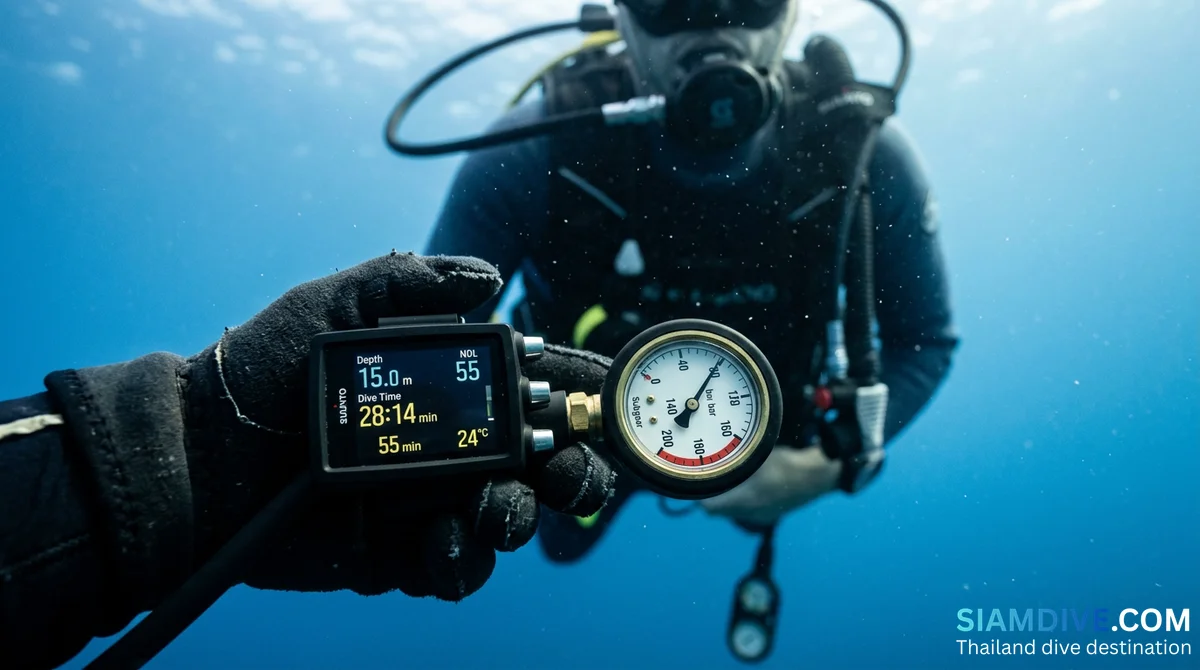
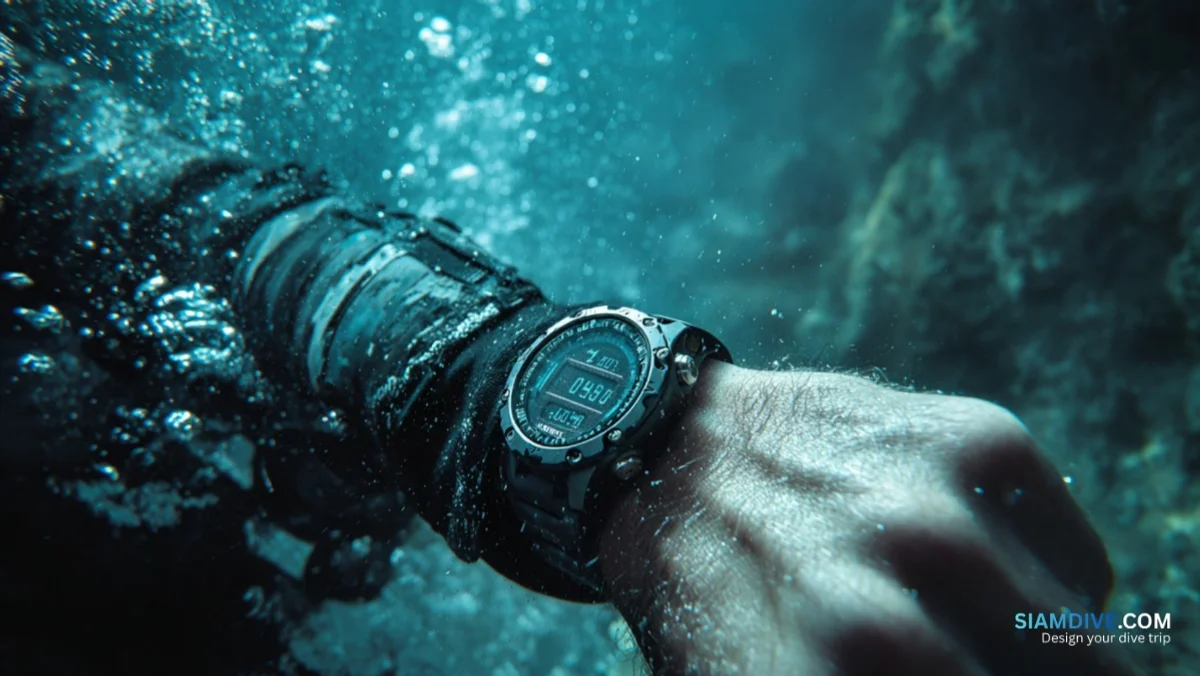
Water temperature holds at 28 to 30°C year-round. Bring a 3mm wetsuit, a torch for the deeper walls, and nitrox if you are certified — the multi-level profile benefits hugely from longer no-decompression limits at 18 to 20 meters.
How to Get to Hin Wong Pinnacle
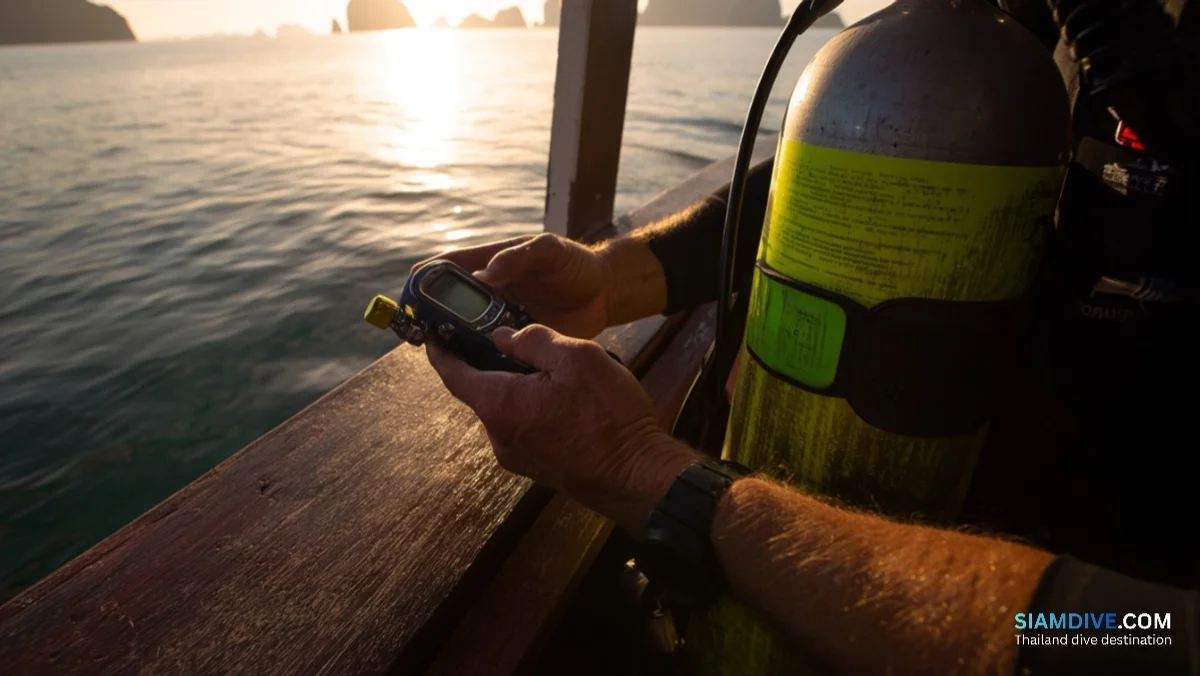
Hin Wong Pinnacle is boat-access only. Most dive operators will pick you up from their shop on the west coast, drive you across the island to Hin Wong Pier (15-20 minutes), then shuttle you out to the pinnacle on a smaller dive boat. Expect to start your day around 7 AM at the shop, because the crossing and shuttle take time.
Some operators on Koh Tao run Hin Wong Pinnacle as a scheduled trip only a few days a week, so it pays to ask in advance. If you really want to dive the east coast, book a day or two ahead and confirm the site is on the schedule — otherwise you might find yourself at Twins or White Rock instead.
Practical Tips Before You Dive
- Certification: Advanced Open Water is recommended. The best parts of the site are below 18 meters, and currents can demand good buoyancy and air management
- Use nitrox if you have it: the multi-level profile means longer bottom times, and nitrox stretches your no-deco limits exactly where you want them
- Bring a torch: the deeper walls on the east side get dim, and the fan corals really show their colors when you hit them with a light
- Watch the thermoclines: temperature drops can fog your mask and briefly reduce visibility — don't panic, just drop below or rise above the layer
- Ascend on the buoy line: the standard safety procedure is to return to the south tabletop and come up on the buoy line — memorize the shape of the pinnacle at the start of the dive
- Check the weather: if the east coast is getting swell, the site may be unsafe for descent, especially on smaller boats
Is Hin Wong Pinnacle Worth It?
For Advanced Open Water divers who want to see the densest fan coral display on Koh Tao, Hin Wong Pinnacle is worth the longer boat ride and the earlier morning. It is not the site you pick for guaranteed big animals, but the topography and coral density make up for it. For photographers, it is genuinely one of the best east-coast sites in the Gulf of Thailand. For divers who have already ticked off the famous western sites and want something different, this is the answer.
Ready to dive Hin Wong Pinnacle on your next Koh Tao trip? Browse dive packages and liveaboards that run east-coast sites on siamdive.com and connect with operators who know when the east side is at its best.