Where Mantas Queue at Koh Bon's 24-Metre Ridge
23 เมษายน 2569
Koh Bon's submerged pinnacle hosts a manta cleaning station where reef wrasses service roughly 20 photo-identified rays each season -- here is how the site works and when to dive it.
A Ridge in Open Blue
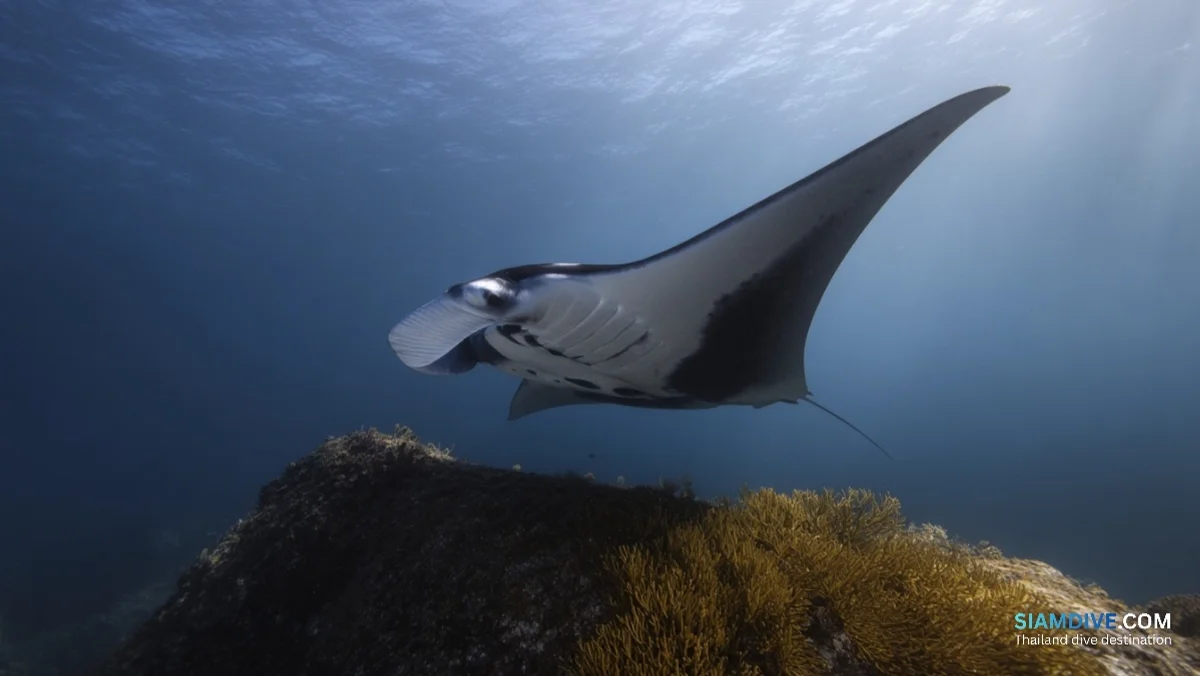
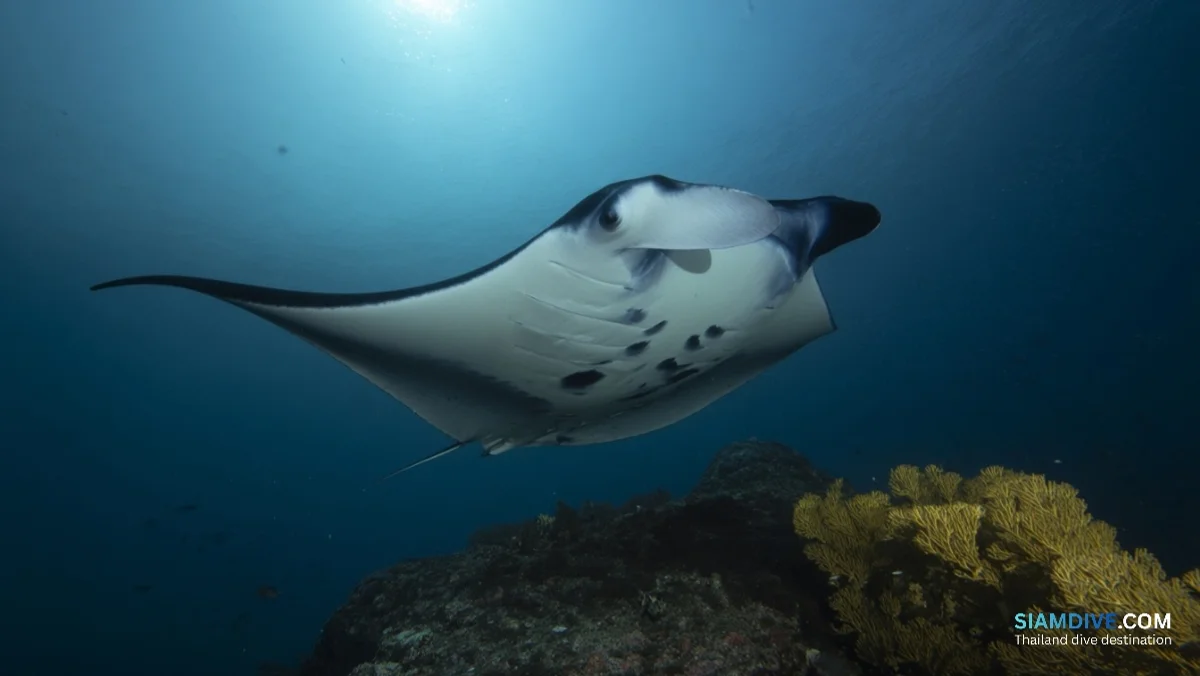
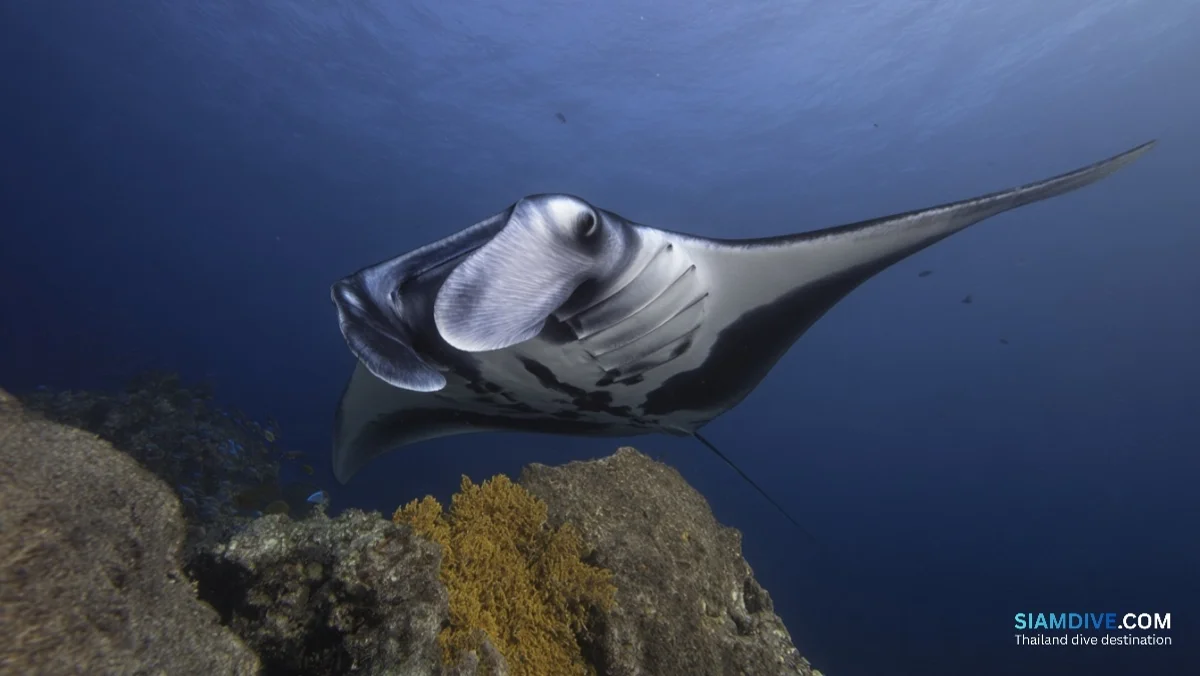
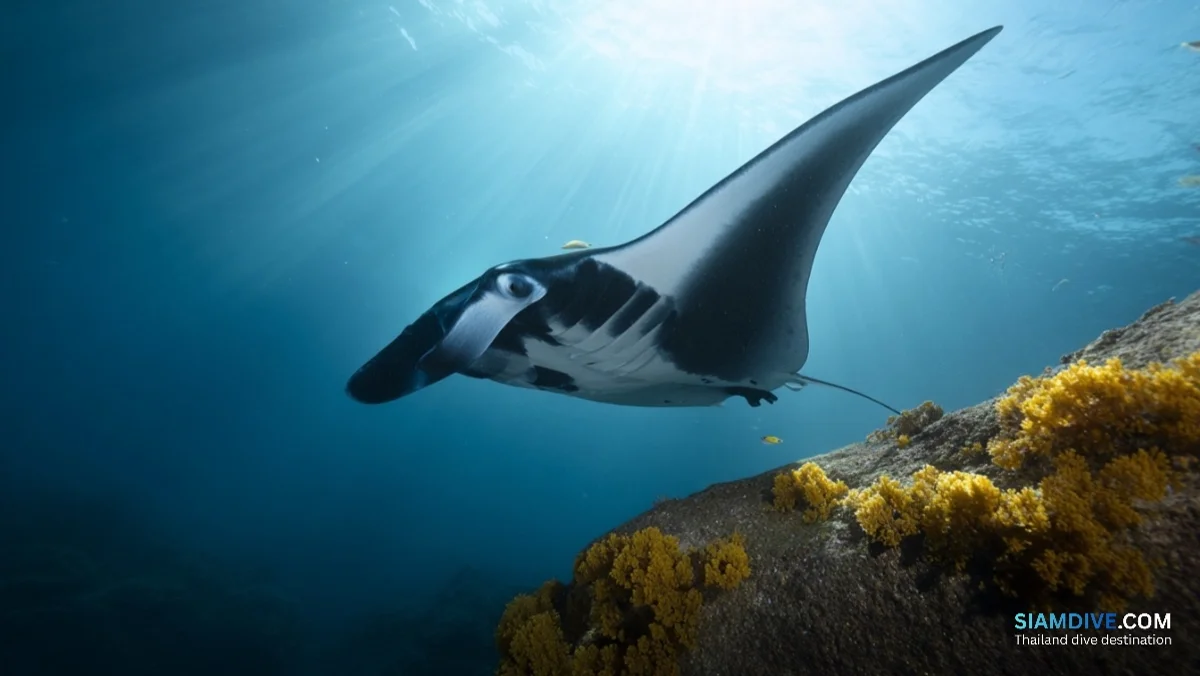
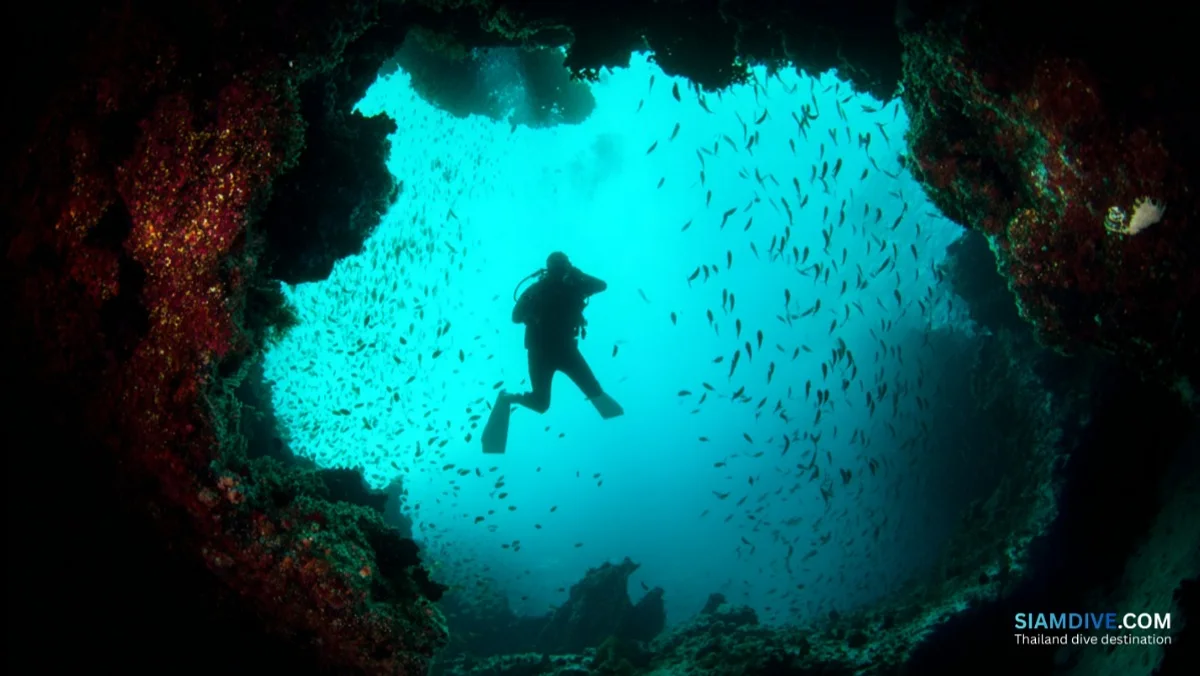
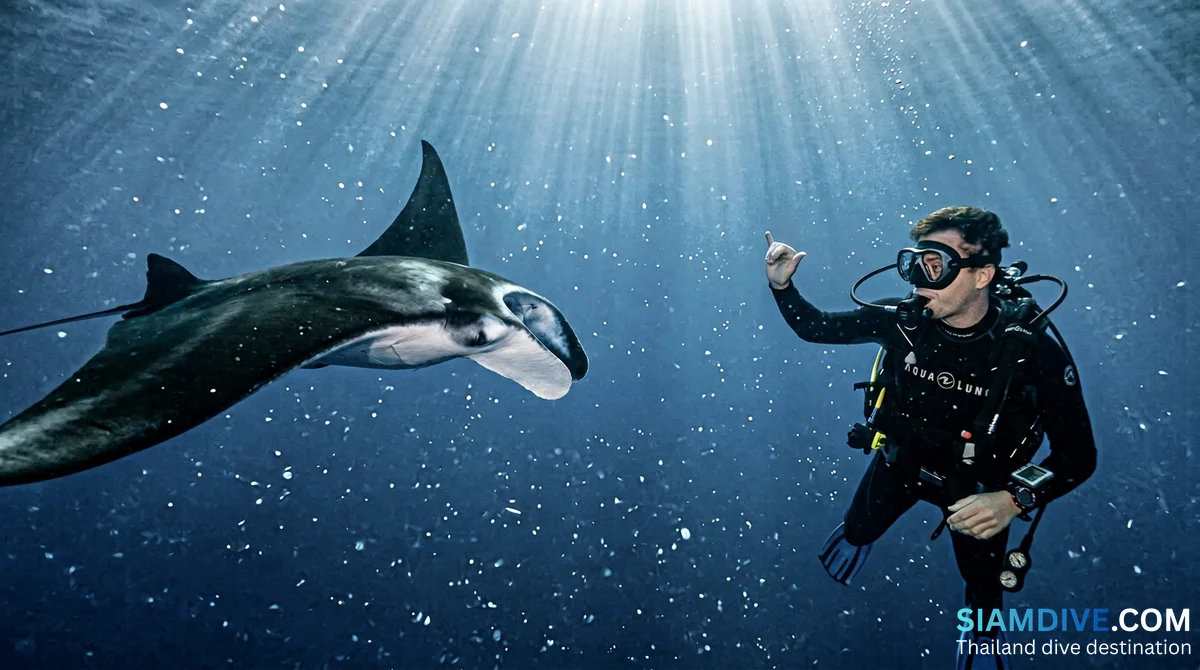
Before the first diver rolls off the stern, the mantas are already circling. They arrive at the submerged ridge on the western flank of Koh Bon most mornings between November and April, slowing from a cruising glide to a near-hover above the granite, wings tipped downward, gill slits flared open. Small wrasses dart in. The cleaning station is open for business.
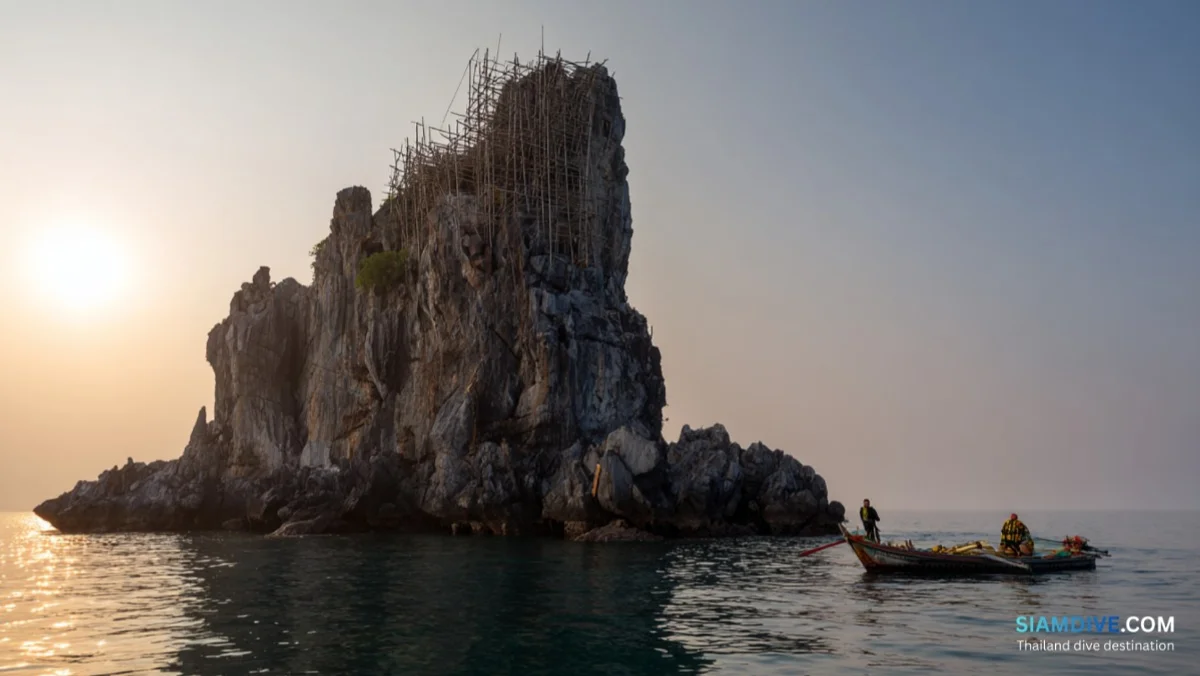
Koh Bon sits roughly 20 kilometres northwest of the main Similan archipelago -- the northernmost island inside Mu Ko Similan National Park. Above the waterline it is a steep, forested lump of rock with no beach and no facilities. Below the waterline, on its western side, two submerged pinnacles rise from depths beyond 40 metres to within 18 metres of the surface. That ridge, and the cleaning behaviour it hosts, is why liveaboard itineraries from Richelieu Rock routinely schedule a return stop here.
The Pinnacle: Topography at a Glance
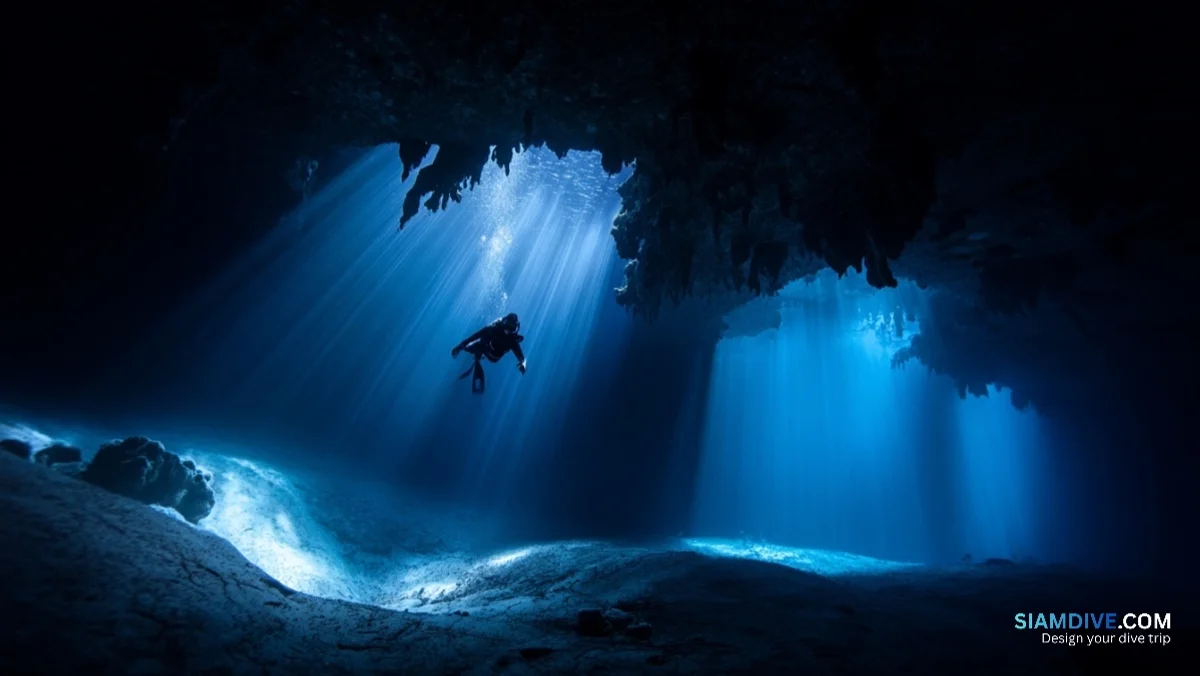
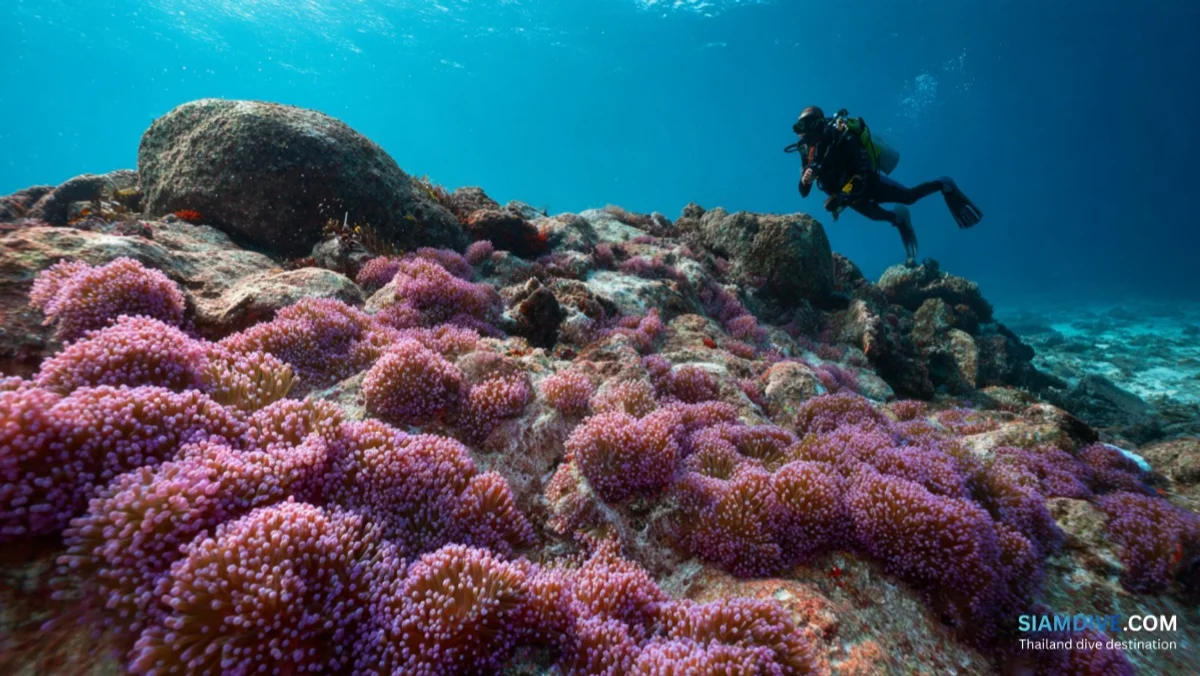
Two granite formations dominate the western side. The shallower pinnacle tops out at roughly 18 metres, while the deeper one crests near 24 metres. Between them, a saddle of hard coral and scattered boulders stretches across open sand at 28-30 metres. The western face drops as a near-vertical wall -- yellow soft corals coat most of it, with sea fans and gorgonians thickening below 25 metres. The eastern side slopes more gently toward the island's fringing reef, where hard corals and anemone colonies take over from around 12 metres upward.
- Shallowest point: 12 m (fringing reef, east side)
- Pinnacle 1 top: ~18 m
- Pinnacle 2 top: ~24 m
- Maximum recreational depth: 30-35 m (wall continues beyond 40 m)
- Bottom composition: granite boulders, hard and soft coral, sand patches
- Current exposure: moderate to strong; site is open to the Andaman Sea
The ridge alignment runs roughly north-south, which matters for current. When the Andaman pushes water from the west or northwest, the pinnacle acts as a barrier and creates a lee on the eastern side -- manageable drift. When the current swings to run north-south along the ridge, it accelerates through the saddle. Dive guides typically brief the group to start on the deeper pinnacle, work along the saddle, and ascend the shallower formation for a safety stop at 5 metres on the reef flat.
Why Mantas Come Here
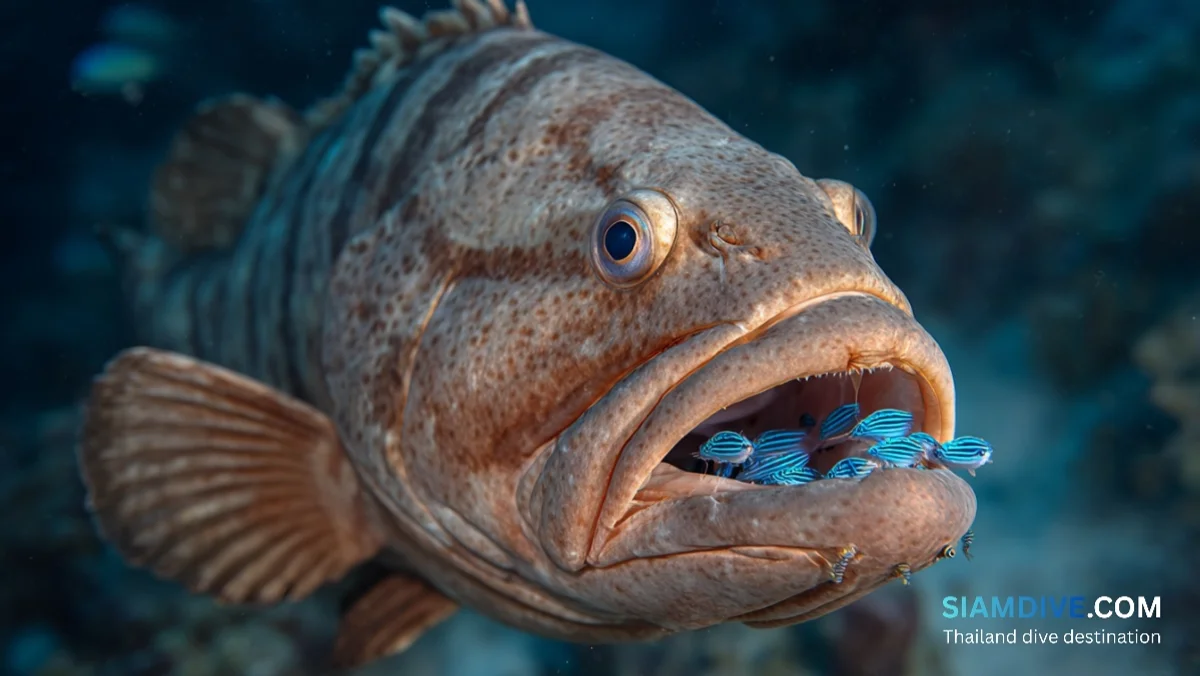
Reef manta rays (Mobula alfredi) do not wander aimlessly. Research published through the Manta Trust shows that after feeding on zooplankton in open water, mantas return to specific reef structures where resident cleaner fish -- mainly bluestreak cleaner wrasses -- remove ectoparasites, dead skin, and bacteria from their gill plates and undersides. The interaction is mutualistic: the wrasses get a meal, the manta gets maintenance. Injured mantas visit cleaning stations even more frequently, using the cleaner fish to keep wounds infection-free and accelerate scar tissue regrowth.
What makes Koh Bon's ridge particularly effective as a cleaning station is its exposure to nutrient-rich currents -- which attract both plankton (food for mantas) and the cleaner fish communities that colonise the coral. The pinnacle is essentially a one-stop shop: feed in the blue, then glide fifty metres to the ridge for a cleaning session that can last from a few minutes to well over half an hour. Adult females tend to clean the longest -- the Manta Trust recorded average sessions running 24 minutes longer for females than for males.
Approximately 20 individual mantas have been photo-identified at Koh Bon through belly-spot patterns, and they show strong site fidelity. Some return season after season to the same ridge, which aligns with a 2021 study published in Nature showing that mantas remember and revisit cleaning stations where they received quality service.
When to Dive Koh Bon for Mantas
The national park opens on October 15 and closes on May 15, giving a seven-month window. Mantas appear throughout the season, but frequency and reliability shift month by month.
- November - December: Early-season sightings are possible but sporadic. Water visibility often sits around 15-25 m as monsoon runoff clears. Water temperature: 28-29°C.
- January: Sightings become more regular. Visibility climbs above 25 m on good days. Plankton blooms begin drawing mantas closer to the ridge.
- February - March (peak): The highest concentration of encounters. Visibility frequently reaches 30-40 m. Calm seas. Multiple mantas at the station simultaneously are not unusual during this window.
- April - early May: Mantas still present but encounters taper off. Winds can pick up toward the end, and some liveaboard operators shorten their routes as the closure date nears.
A February 2025 encounter captured on video at the pinnacle showed an oceanic manta ray with a wingspan exceeding three metres gliding in from deep water and circling the ridge repeatedly. The 2024-2025 season in general saw increased manta activity at Koh Bon -- a trend that Khao Lak-based operators have tracked since the 2017-2018 season, when sightings began climbing after roughly two decades of gradual decline.
What Else Lives on the Ridge
Mantas own the headline, but the supporting cast at Koh Bon is formidable. The ridge itself attracts a rotating cast of pelagics that use the structure as a waypoint in open water.
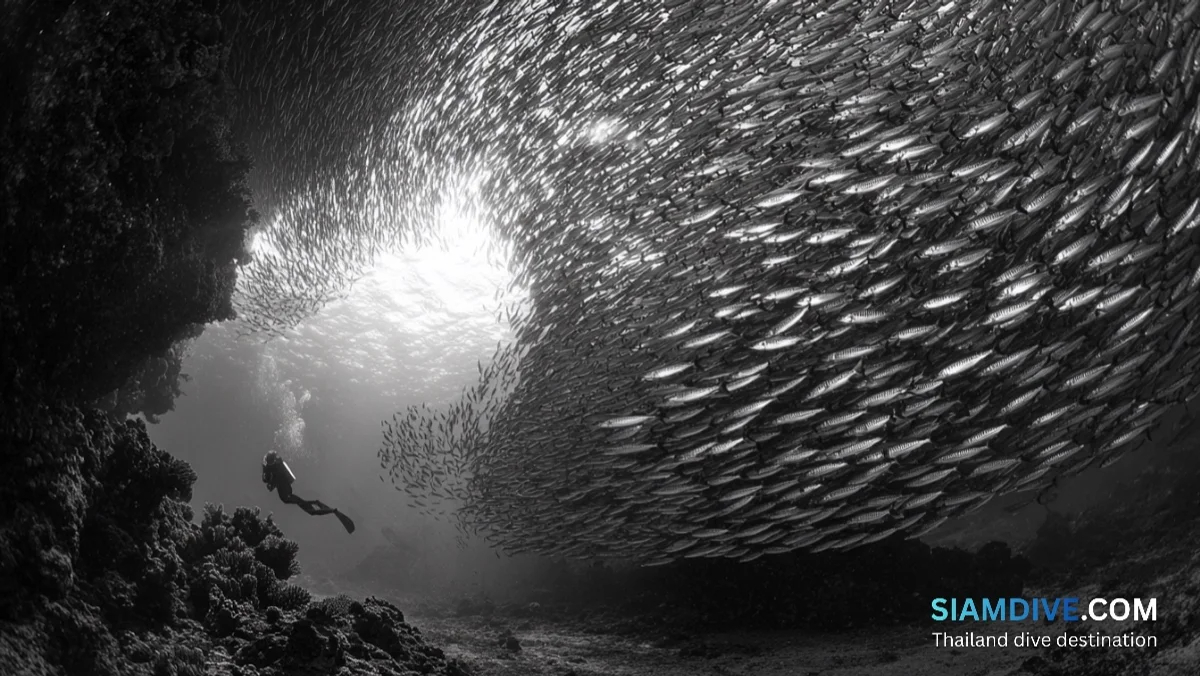
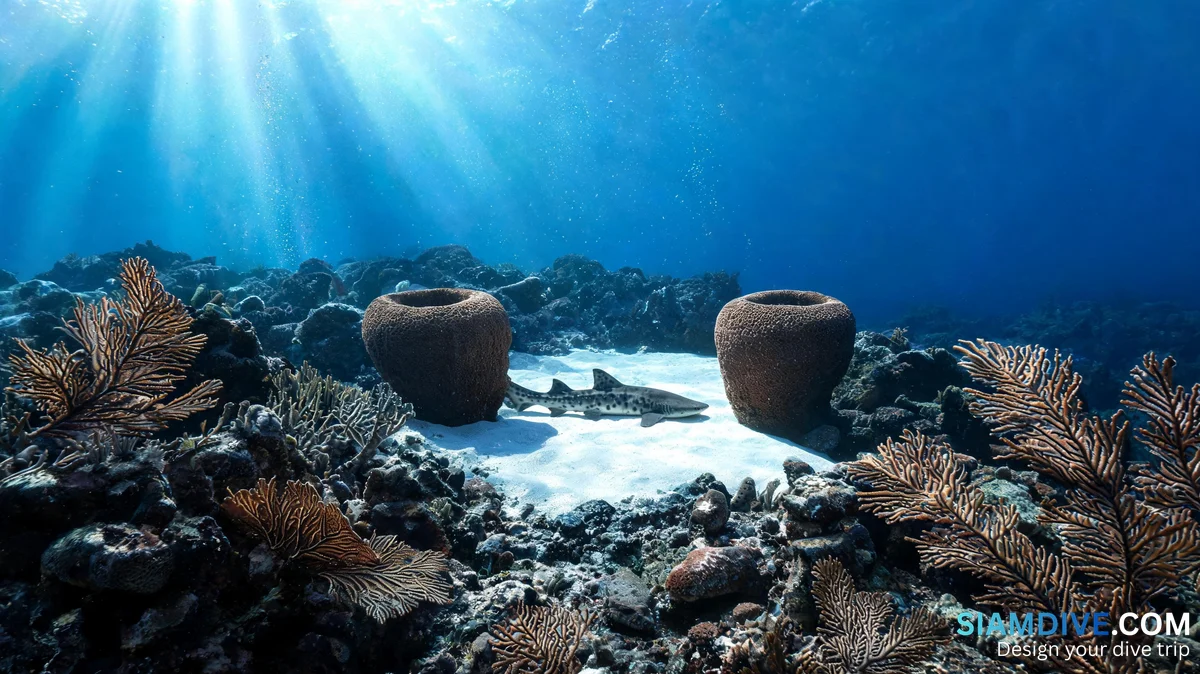
Blacktip reef sharks patrol the saddle between the two pinnacles -- typically three or four individuals at a time, circling at 22-28 metres. Schools of chevron barracuda hang in loose formations off the wall's edge, and great barracuda appear solo, drifting vertically like silver fence posts. Trevally boil through in hunting packs, especially in the early morning. Eagle rays pass over the sand patches on the eastern slope, and leopard sharks occasionally rest on the sandy bottom near the reef base -- the same species that favours Christmas Point in the main Similan group.
Closer to the reef, the yellow soft coral wall hosts hawksbill turtles grazing on sponges, banded sea kraits threading through crevices, and moray eels tucked into overhangs. Macro shooters find nudibranchs and porcelain crabs on the gorgonian fans below 25 metres. The fringing reef on the east side -- shallower, more sheltered -- is where most safety stops happen, and it holds its own with anemone gardens, parrotfish, and the occasional reef octopus changing texture against the hard coral.
Conditions, Currents, and Who Should Dive Here
Koh Bon is not a beginner site. The pinnacle sits in open water with no shore protection on its western face, and currents can shift direction mid-dive. Surface conditions range from flat calm (February peak) to two-metre swells (late season, transitional weather). Most operators rate it as suitable for Advanced Open Water divers or experienced Open Water divers with strong buoyancy control and at least 30 logged dives.
- Visibility: 15-40 m depending on season and plankton density
- Water temperature: 27-30°C; a 3 mm wetsuit is standard, 5 mm for those who chill easily
- Current: moderate to strong; surface current can differ from bottom current
- Recommended certification: PADI Advanced Open Water or equivalent
- Nitrox: useful for extending bottom time at 24-30 m on the deeper pinnacle
- Safety stop: done on the fringing reef at 5 m; reef hooks not commonly used here
The main risk factor is current combined with depth. Divers fixated on a manta encounter sometimes descend past their planned depth without realising it -- the blue water and sloping wall offer few visual references. A solid pre-dive briefing covers a maximum depth, a turn-pressure, and a rally point on the shallower pinnacle. Operators running day trips from Khao Lak (roughly 2.5-3 hours by speedboat) typically offer two dives: one on the pinnacle and one on the east-side reef or a nearby site like Koh Tachai Pinnacle.
Getting There: Liveaboard vs Day Trip
Two access routes exist, and the choice shapes the dive experience significantly.
Liveaboard (most common): Nearly all multi-day Similan liveaboard itineraries include Koh Bon. A typical 4-day/4-night trip covers the main Similan islands (sites like East of Eden and Elephant Head), then pushes north to Koh Bon and Koh Tachai before reaching Richelieu Rock. The advantage is timing -- liveaboards can hit Koh Bon at first light before day boats arrive, and they can schedule a second dive in the afternoon if conditions or manta activity warrant it.
Day trip from Khao Lak: Speedboats depart Tab Lamu pier around 07:00 and reach Koh Bon in approximately 2.5 hours. Day trips typically include two dives and return by late afternoon. Pricing for a two-dive Koh Bon day trip from Khao Lak runs approximately 6,000-7,000 THB per person including equipment, park fees, and lunch.
- National park entry fee (foreigners): 500 THB adult / 250 THB child
- Diver marine park fee (liveaboard): ~2,300 THB
- Park season: October 15 - May 15
- Day trip travel time from Khao Lak: ~2.5 hours each way
Manta Etiquette: How Not to Ruin the Encounter
A manta at a cleaning station is a manta that has chosen to be vulnerable. It slows down, opens its gill plates, and holds position -- trusting that the reef environment is safe. Divers who rush toward a hovering manta, fin aggressively, or attempt to touch it will trigger an avoidance response. The animal leaves. It may not return for hours.
PADI and the Manta Trust both recommend a passive approach: descend to the ridge, settle on a stable position (not on living coral), control buoyancy, and wait. Mantas that feel unthreatened often approach divers on their own, sometimes circling within arm's reach. The worst thing a diver can do is chase -- and the best thing is nothing at all.
Flash photography is another point of contention. While no Thailand-wide regulation bans underwater flash, the Andaman marine parks increasingly discourage strobe use near megafauna. Many dive guides now request that photographers switch to ambient light or red-filtered video when mantas are present.
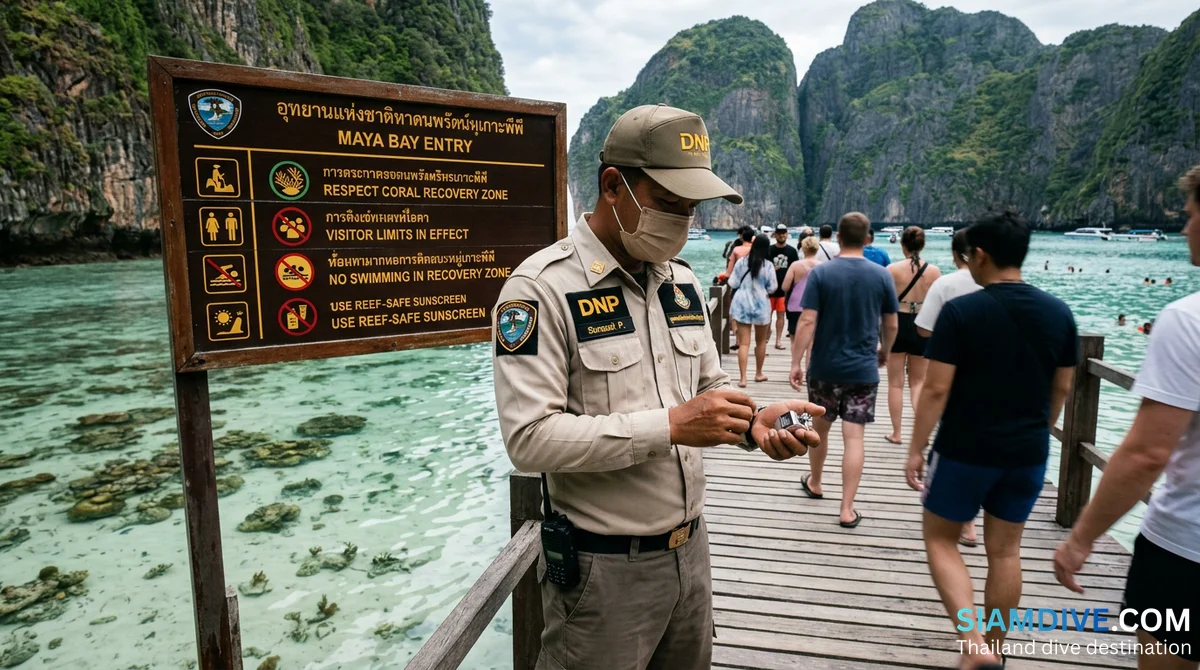
Koh Bon's ridge has survived decades of diving traffic because the national park enforces seasonal closures and limits the number of boats that can moor simultaneously. The five-month annual closure (May 16 to October 14) gives the cleaning station, the coral, and the resident wrasses a full monsoon season to recover. That cycle -- heavy visitation, then total rest -- is part of why the site still delivers encounters that other cleaning stations in Southeast Asia have lost.
Sources
- Thailand National Parks -- Mu Ko Similan National Park season, fees, and regulations
- Manta Trust -- Mobulid behavioural ecology: feeding, cleaning, and courtship
- Manta Trust -- The remarkable cleaning behaviour of reef manta rays
- SSI MyDiveGuide -- Koh Bon Pinnacle site profile
- Divezone -- Ko Bon dive site map and review