The King Cruiser Wreck: How a Sinking Ferry Became Phuket's Best Artificial Reef
14 เมษายน 2569
The King Cruiser sank in 1997 after hitting Anemone Reef. Today this 85-meter wreck at 18-33m depth teems with barracuda, lionfish, and soft coral.
A Ferry That Hit a Reef and Never Came Back Up
On May 4, 1997, the MV King Cruiser was making its regular passenger run from Phuket to Koh Phi Phi when it struck Anemone Reef head-on. The collision ripped open one of the hull's pontoons, and over the next few hours the vessel slowly took on water and sank. All passengers and crew were evacuated safely — no one was injured. The ferry settled upright on a sandy bottom at 33 meters, and within months divers started showing up. Nearly three decades later, the King Cruiser is the most popular wreck dive in southern Thailand and one of the best artificial reefs in the Andaman Sea.
Why This Wreck Is Worth the Dive
Wreck diving in Thailand doesn't offer many options. Most of the country's coastline sits over sand or coral reef, and purpose-sunk wrecks are rare outside of Pattaya. The King Cruiser fills that gap for anyone diving out of Phuket, Krabi, or Phi Phi. At 85 meters long with a 25-meter beam, the ship is big enough to spend an entire dive exploring without seeing everything. The hull structure is still largely intact — you can trace the outline of the car deck, the passenger compartments, and the wheelhouse, though years of corrosion and storms have collapsed some sections. What makes it genuinely interesting is the marine life. The wreck acts as a magnet in an otherwise featureless stretch of open water, concentrating fish in numbers you won't see on nearby natural reefs.
What the Wreck Looks Like Today
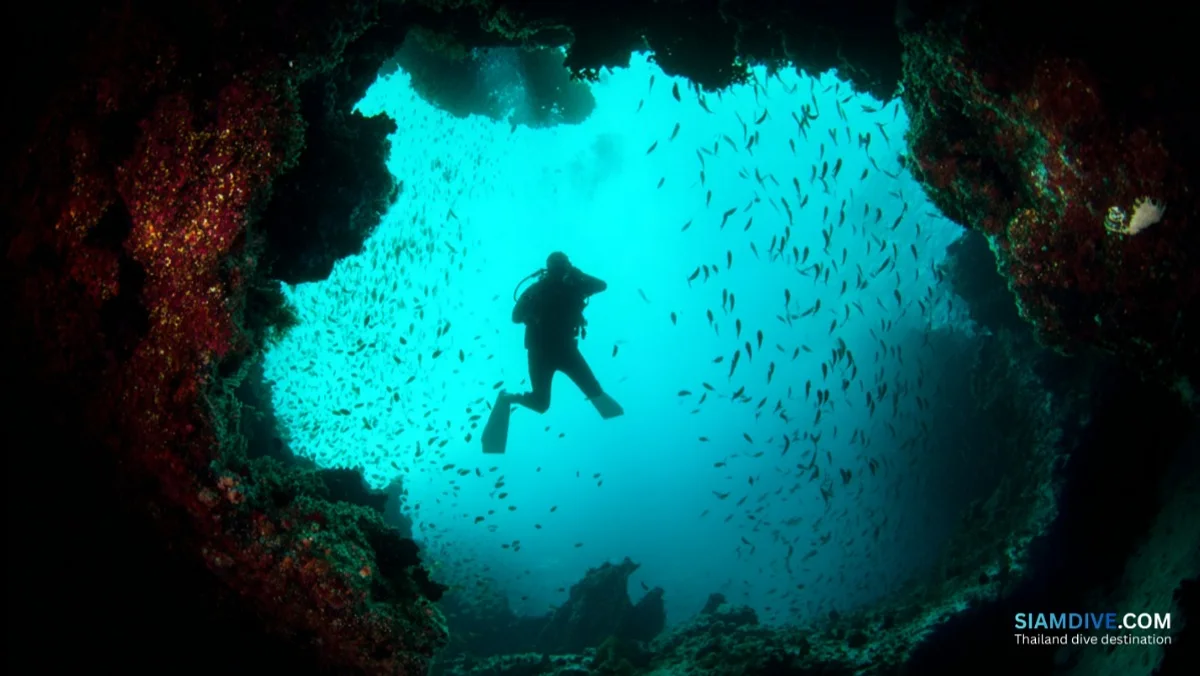
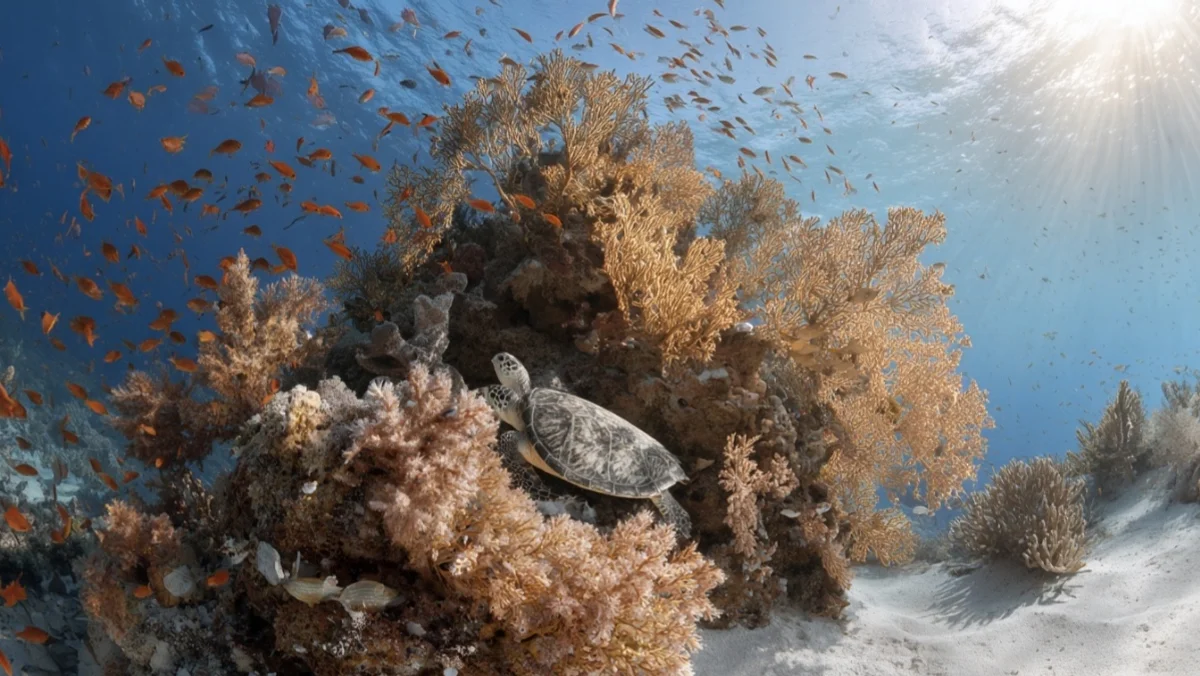
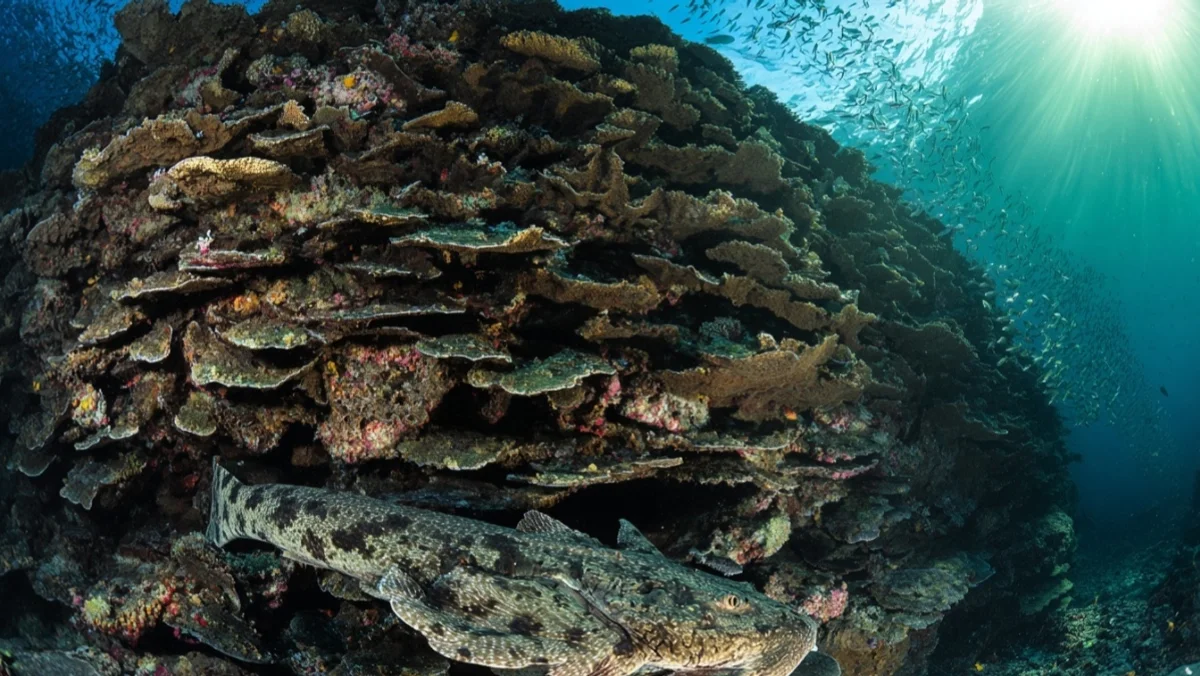
The King Cruiser has changed a lot since it sank. The wheelhouse, which originally rose to about 10 meters below the surface, has collapsed and the shallowest point now sits at around 18 meters. The stern section is the most intact and offers the best opportunities for swim-throughs — wide openings that you can pass through without squeezing or removing your tank. The mid-section has buckled inward but still holds its basic shape, with metal beams and railings creating frames that are now thick with soft coral growth. The bow is the most deteriorated, with large sections of hull plating peeled away, exposing the internal ribs of the ship. Every exposed surface — rails, hull plates, deck structures — is covered in barnacles, oysters, and soft coral in purple, orange, and yellow.
Marine Life on and Around the Wreck
The King Cruiser is essentially a giant fish apartment building. Here's what you'll find:
- Lionfish — dozens of them, perched on every ledge and railing, especially along the upper deck structures
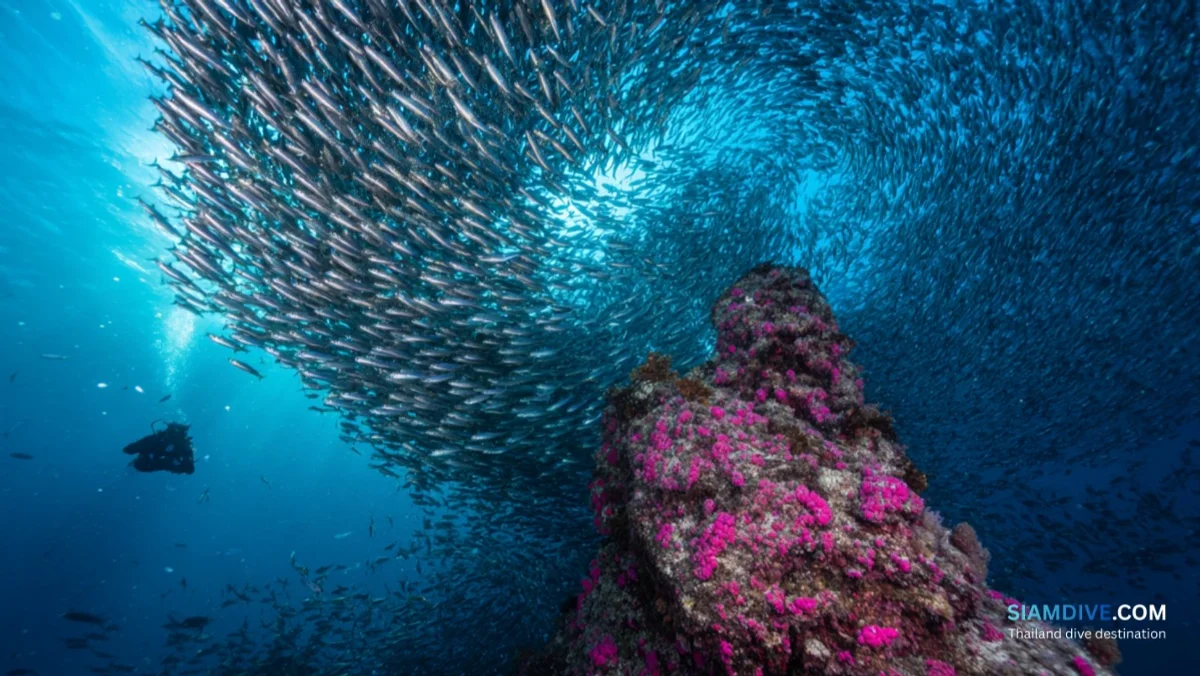
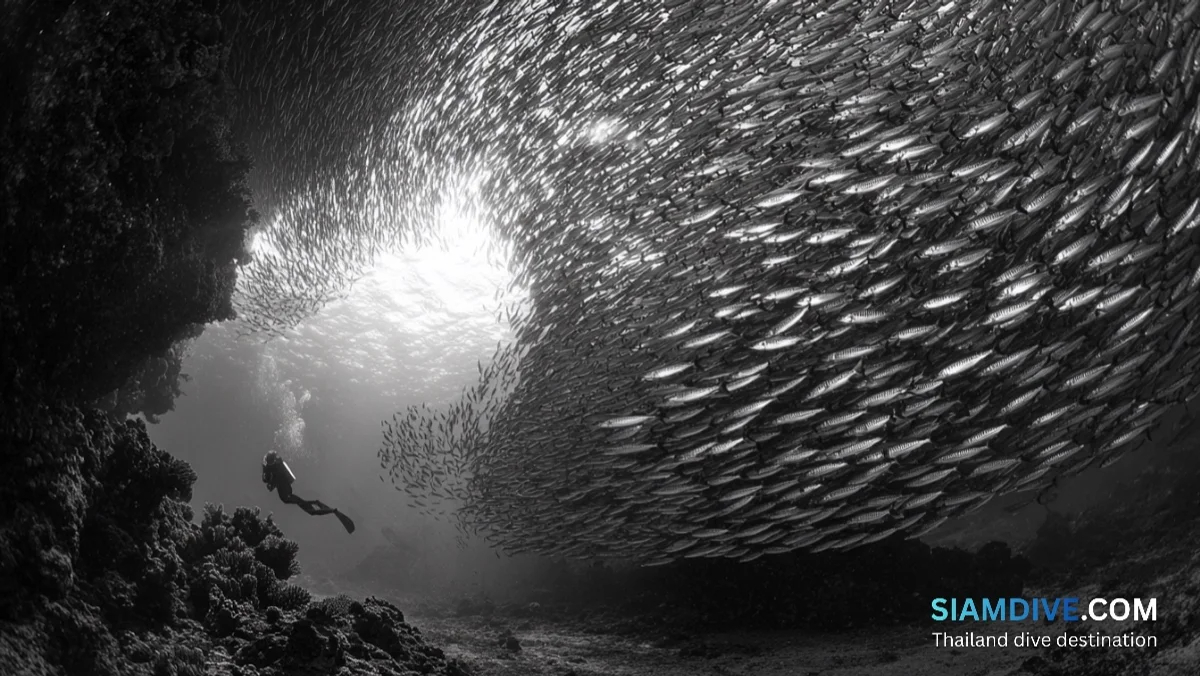
- Barracuda — large schools of chevron barracuda circle above the wreck, sometimes so thick they block out the light
- Groupers — giant groupers hide in the larger openings, some well over a meter long
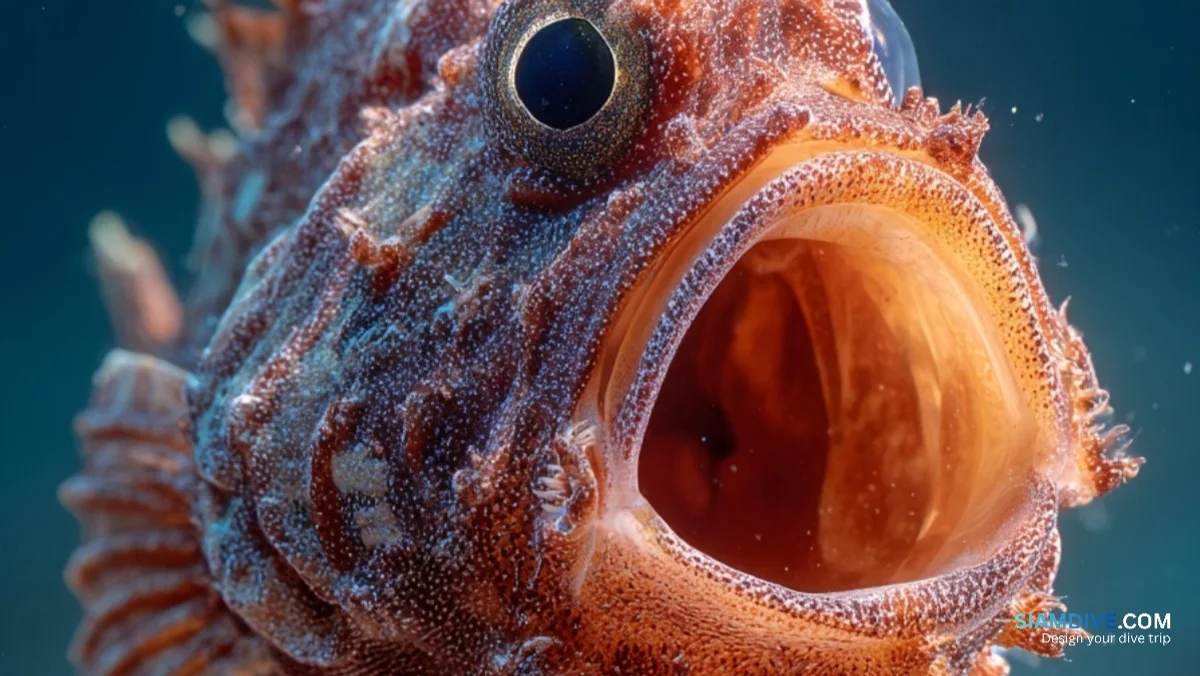
- Scorpionfish — camouflaged against the encrusted hull, nearly impossible to spot without a guide
- Trevally and jacks — hunting in packs around the wreck's perimeter, especially in the morning
- Glassfish — enormous clouds of silver glassfish fill the interior spaces, swirling when you swim through
- Moray eels — giant morays and honeycomb morays tucked into hull openings
- Nudibranchs and flatworms — colorful macro life on the encrusted surfaces for photographers who look closely
Best Season and Conditions
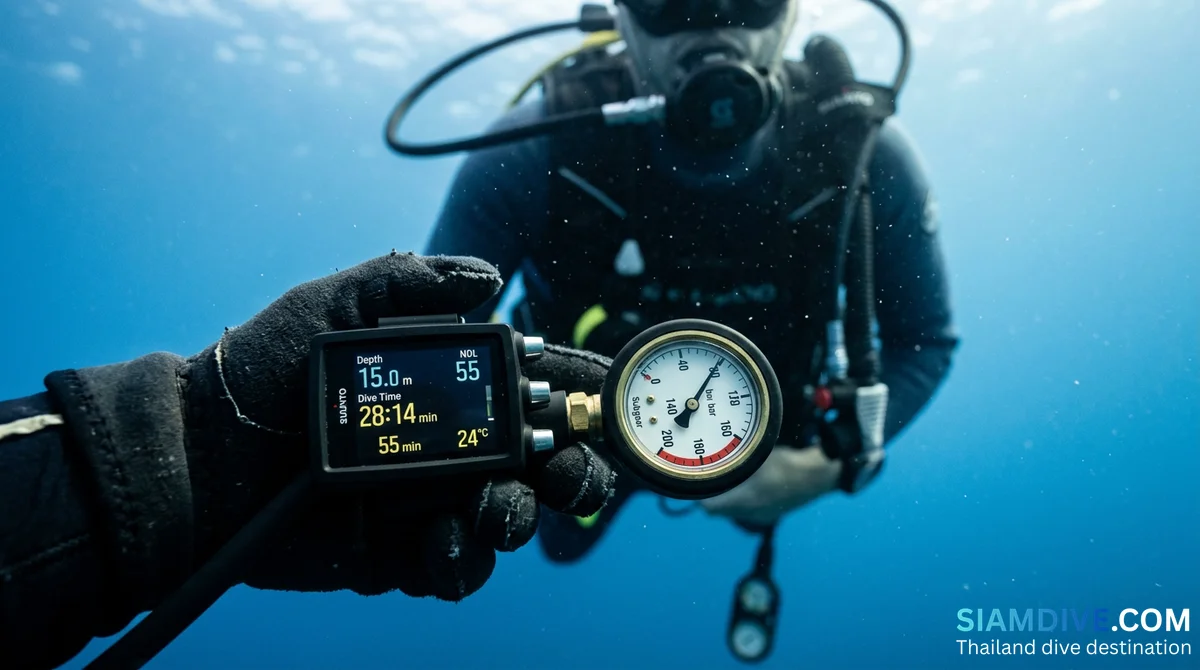
Like most Andaman Sea sites, the King Cruiser is best from November to April. Visibility ranges from 10 to 20 meters — rarely crystal clear because the wreck sits in open water where currents stir up sediment, but good enough to appreciate the full scale of the ship. Water temperature stays at 28-29°C year-round. The wreck sits at 18-33 meters, so bottom time is limited — you'll get 30-40 minutes at depth on a single tank of air, or closer to 50 minutes on nitrox. Currents can be moderate to strong, especially during tidal changes. Most operators time their dives around slack tide, but you should be comfortable swimming against a current if it picks up unexpectedly.
How to Get There
The King Cruiser lies roughly between Phuket and Koh Phi Phi, about 30 kilometers east of Chalong Bay. The boat ride takes 60-90 minutes from Phuket. Nearly every dive operator in Phuket offers day trips that combine the King Cruiser with one or two other sites — typically Shark Point and Anemone Reef, which are both within a few kilometers. Some operators running Phi Phi day trips also stop here on the way. Expect to pay 3,500-5,500 THB per person for a two or three-dive day trip including gear, lunch, and marine park fees. Trips depart from Chalong Bay around 7:30 AM and return by 4:00 PM.
What You Need Before Diving This Wreck
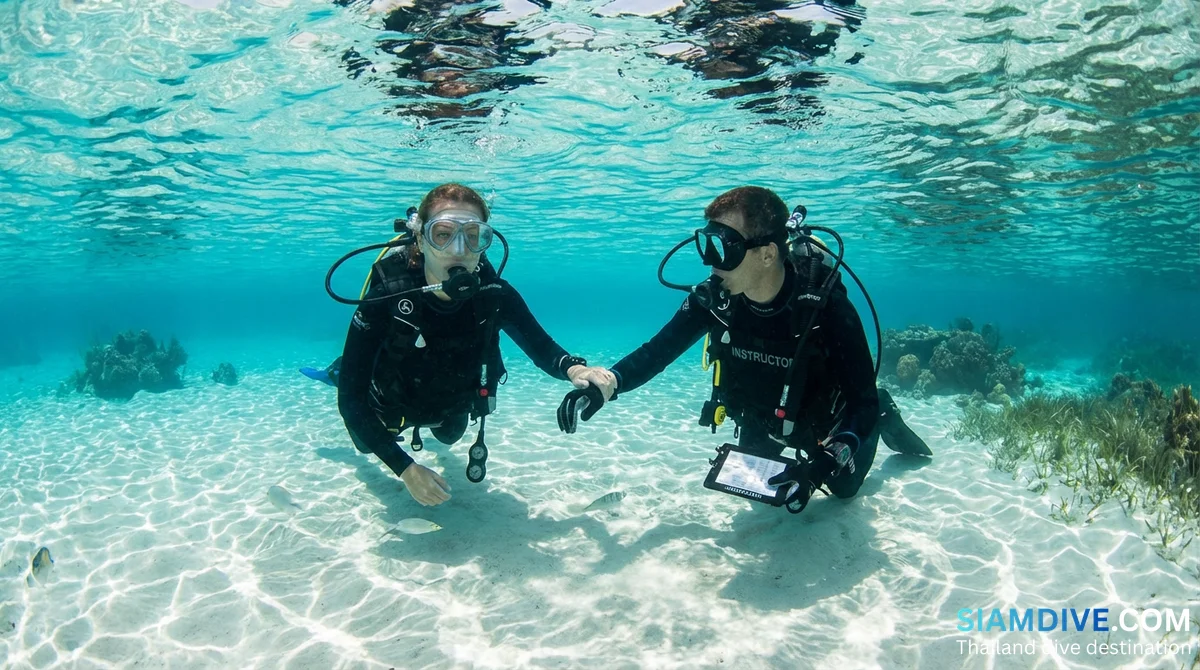
The King Cruiser isn't a beginner dive. The shallowest point is 18 meters, which means your entire dive happens below that depth — there's nothing to see at 5 or 10 meters here. An Advanced Open Water certification is the minimum, and some operators require it. Wreck penetration beyond the obvious swim-throughs in the stern is not recommended unless you have specific wreck diving training — the interior has sharp metal edges, silty floors, and limited exit points. Bring a dive torch even for the exterior; the overhangs and openings are dark and you'll miss a lot of the life hiding inside without one.
Nitrox certification is genuinely useful here. At 25-30 meters, the difference between air and EANx 32 can add 10-15 minutes to your bottom time, and on a wreck this size those extra minutes matter. Always carry an SMB — the site is in open water and surface currents can push you away from the boat during your safety stop.
A Wreck That Gets Better With Age
Most artificial reefs take decades to develop significant coral cover. The King Cruiser has had almost 30 years, and it shows. The soft coral is lush, the fish populations are dense, and the wreck itself has settled into a stable state that still offers interesting structure without the risk of imminent collapse. It's one of those dives where you surface and immediately want to go back down to see what you missed. Check dive trip schedules and current conditions at siamdive.com before booking.