Scuba Day TripsSnorkelingLand TourLiveaboardDive ResortFreedive Trips
Scuba CoursesFreedive Courses
Blog
I'm Afraid of the Ocean — Can I Still Learn to Dive?
← Blog

I'm Afraid of the Ocean — Can I Still Learn to Dive?

16 เมษายน 2569

Anxious about scuba diving? You are not alone. Learn how fear, claustrophobia and panic are gently managed by patient instructors, breathing techniques and Discover Scuba trials.

If your heart races at the thought of putting your face in the ocean, please breathe — you are in the right place, and you are very, very not alone. The honest truth is that most new divers show up nervous. Fear of drowning, of being far from the surface, of something brushing their leg, of a mask pressing on their face — these feelings are so common that any good instructor will simply nod, smile, and slow everything down for you.

This guide is for the anxious reader: the one who wants to try scuba diving but is quietly terrified. We will walk through what is fear, what is phobia, what science says about panic underwater, and what you can realistically ask for from a dive school on a first lesson.

Fear vs. Phobia — Which One Do You Have?

Most pre-dive anxiety is ordinary fear of the unknown. Fear responds beautifully to practice and information. After twenty minutes of breathing through a regulator in shallow water, most first-timers visibly relax. A true phobia — an uncontrollable, body-shaking terror even at the thought — is different and may need therapy (CBT, EMDR) before the pool. If you are unsure, book a Discover Scuba trial and see how your body reacts in chest-deep water. Your nervous system will tell you.

The Most Common Fears — and Why They Fade

Divers report the same short list: drowning, running out of air, sharks, getting stuck, pressure headaches, and panic. Each one has a real answer. You cannot drown while breathing from a working regulator. Your gauge is checked every few minutes by both you and your instructor. Sharks in most tropical waters ignore divers. Open-water scuba has no walls — you can swim up at any time (slowly). Pressure equalises with a gentle pinch of the nose. And panic is prevented by the one thing you are already doing right now: breathing.

The Science of Underwater Panic

When we are anxious, we take short, shallow breaths. Underwater, shallow breathing traps carbon dioxide in the lungs, which your brain reads as suffocation — even though your tank is full. The fix is beautifully simple: long, slow exhales. Empty the lungs fully and the panic signal dissolves. This is why every dive professional chants the same mantra: breathe slow, breathe deep, never hold your breath.

Claustrophobia: Real vs. Imagined

Standard open-water scuba gear is surprisingly open. There are no walls, no ceilings, no helmet sealing your face. You wear a soft silicone mask over your eyes and nose, a mouthpiece, and a wetsuit. The sea itself is the opposite of a closed space — it stretches endlessly around you. The equipment that can trigger claustrophobia — full-face masks, drysuits, hoods, cave overhead environments — is optional and not used in a beginner ocean dive in Thailand. If you know you are claustrophobic, tell your instructor: they will skip the hood and use a low-volume mask with a wide field of view.

Discover Scuba Diving — The No-Commitment Trial

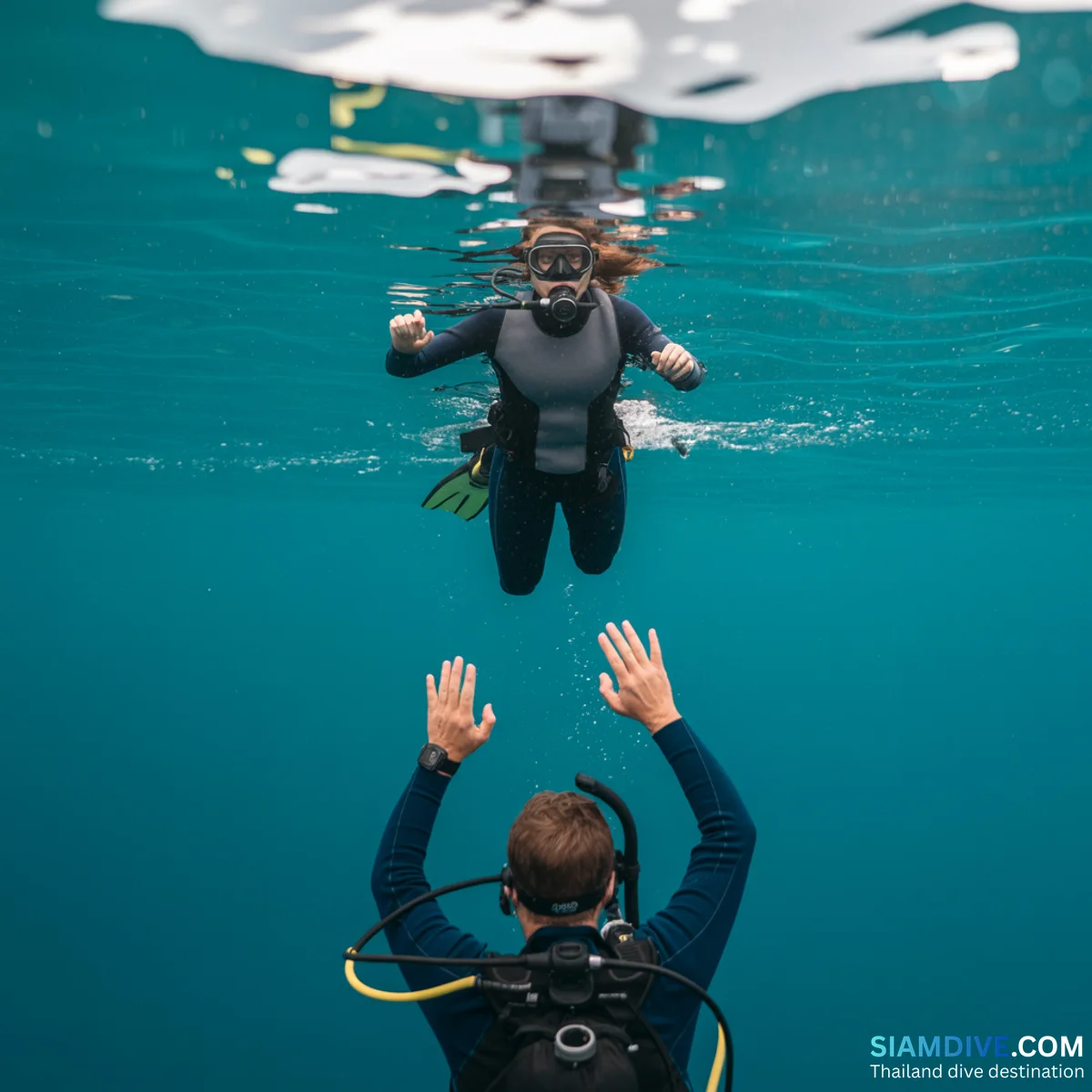
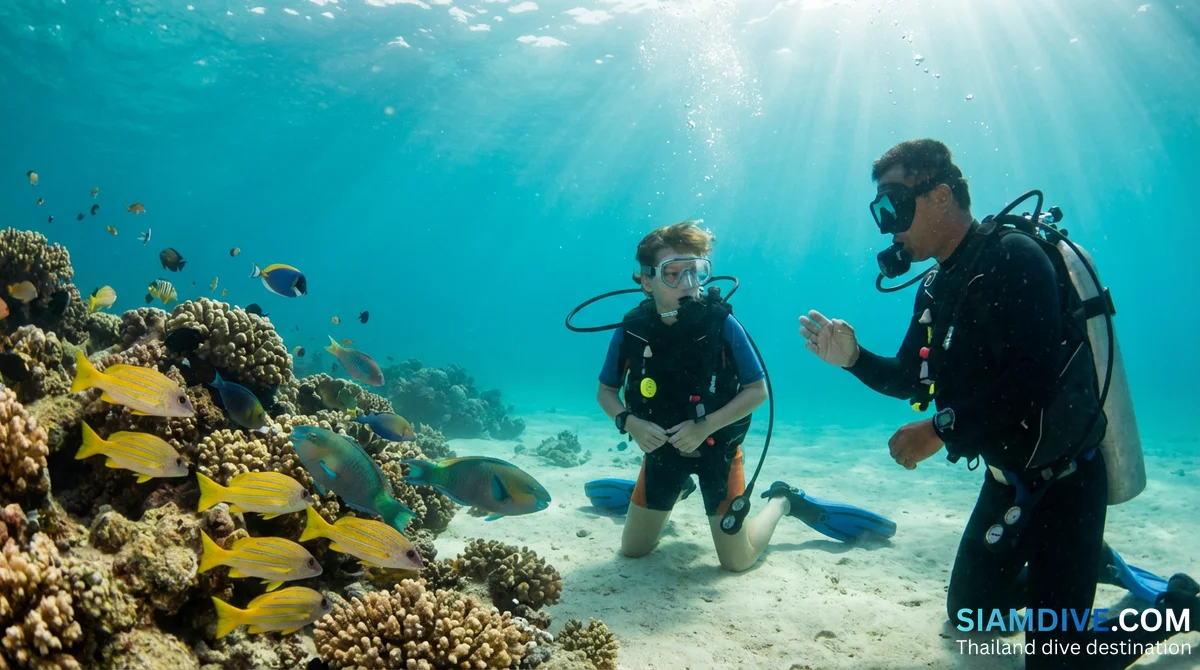
Before signing up for a four-day Open Water certification, try a half-day Discover Scuba Diving session. There is no exam, no homework, no certification pressure. An instructor stays literally within arm's reach for the entire dive, usually no deeper than 6–12 metres. If at any moment you want to stop, you signal and you go up together. Most people come back up grinning and asking when the next dive is. If you don't — you've lost half a day, not four. That is a very fair trade.

Breathing Techniques to Practise at Home

  • Box breathing (4-4-4-4): inhale 4 seconds, hold 4, exhale 4, hold 4. Repeat 5 rounds before your dive briefing.
  • 4-7-8 breathing: inhale 4, hold 7, exhale slowly for 8. Calms the nervous system fast.
  • Long-exhale breathing: inhale for 4, exhale for 6–8. Use this one underwater — it is the single most important habit you can build.
  • Belly breathing: place a hand on your stomach and make it rise before your chest does. Shallow chest-breathing feeds panic; belly-breathing starves it.

What to Ask Your Dive School (Please Ask)

You are the paying customer and you deserve a gentle experience. Before you book, write an email or WhatsApp and say these exact words: "I am nervous about diving. Can I have a private or small-group instructor, start in the pool, and go at my own pace?" A good school — and Siam Dive is one — will say yes without hesitation. A one-on-one instructor costs a little more and is worth every baht if it means the difference between a panic attack and a lifelong passion.

When Diving Is Not (Yet) For You

Please do not feel ashamed if the answer for today is "not yet." Untreated panic disorder, severe water phobia, uncontrolled asthma, and certain ear conditions are valid reasons to pause. Diving will still be there in six months. Talk to a doctor, talk to a therapist, build water confidence first in a local pool, and come back when your body feels ready. No wave, no reef, no fish is worth forcing yourself through trauma for.

You Are Not Broken — You Are Human

Almost every certified diver you will ever meet was scared on their first dive. Many report that the anxiety they carried into the water quietly disappeared somewhere around minute ten, replaced by a kind of weightless awe that is hard to describe on dry land. The ocean does not punish nervous people — it welcomes them gently if they go slow and breathe.

When you are ready, we would be honoured to meet you in the shallows. Visit siamdive.com to send us a message. Tell us your fear. We will listen, we will go slow, and we will be right next to you the whole way.
← กลับไปหน้า Blog

บทความแนะนำ

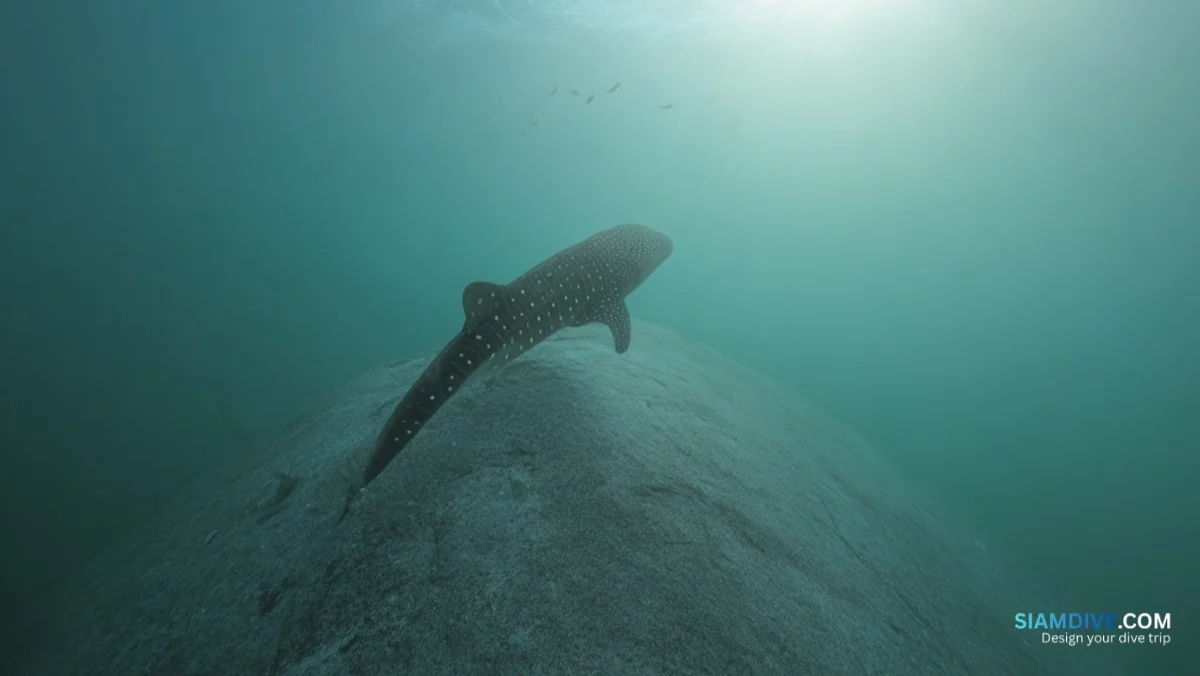
Whale Shark Encounters: What Every Diver Should Know

Whale Shark Encounters: What Every Diver Should Know

Whale shark behavior, encounter ethics, and Thailand's best sites from Richelieu Rock to Sail Rock — a factual guide for responsible divers.

Maya Bay Reopened — But the Rules Have Changed

Maya Bay Reopened — But the Rules Have Changed

Maya Bay closed for 4 years and reopened with strict new rules. Here's what divers and snorkelers can actually do there now, plus the best nearby dive sites.

Thailand vs the World: Where Should You Get Scuba Certified?

Thailand vs the World: Where Should You Get Scuba Certified?

Compare scuba certification costs, conditions, and quality across Thailand, Honduras, Philippines, and more — and discover why Koh Tao certifies more divers than anywhere on Earth.

Pattaya Diving from Bangkok: Wrecks & Reefs Just 2 Hours Away

Pattaya Diving from Bangkok: Wrecks & Reefs Just 2 Hours Away

Reefs around Koh Larn, two penetrable navy wrecks, and a 2-hour drive from Sukhumvit. Here's how Pattaya works as a Bangkok day-trip dive plan.

How to Start Scuba Diving: A Complete Beginner's Guide

How to Start Scuba Diving: A Complete Beginner's Guide

Ready to try scuba diving but don't know where to begin? This step-by-step guide covers everything from choosing a course to your first ocean dive.

Thailand Liveaboard Routes Compared: Which One Fits Your Diving

Thailand Liveaboard Routes Compared: Which One Fits Your Diving

Northern Andaman, southern Andaman, or Mergui? The three Thailand liveaboard routes dive completely differently — here's how to pick the right one.

8 Mile Rock Diving Guide: Koh Lipe's Deep Pinnacle

8 Mile Rock Diving Guide: Koh Lipe's Deep Pinnacle

A remote pinnacle 8 miles offshore with big pelagics, reef sharks, and untouched corals. Your guide to Koh Lipe's most rewarding advanced dive site.

First Liveaboard Trip in Thailand: What to Actually Expect

First Liveaboard Trip in Thailand: What to Actually Expect

Your first Thai liveaboard trip means early wake-ups, compact cabins, 3-5 dives daily, and a routine that clicks by day two. Here's the honest version.

March in Thailand: Why the Andaman Always Wins the Dive Trip

March in Thailand: Why the Andaman Always Wins the Dive Trip

Thailand has two seas. In March, only one delivers peak visibility, whale shark odds, and liveaboard access. Here's why seasoned divers always pick the Andaman.

Octopus Intelligence: The Smartest Creature Underwater

Octopus Intelligence: The Smartest Creature Underwater

Octopuses have 500 million neurons, use tools, recognize faces, and change color in milliseconds. Here is why divers never forget their first encounter.

Hin Daeng & Hin Muang Diving Guide: Thailand's Best Pinnacles

Hin Daeng & Hin Muang Diving Guide: Thailand's Best Pinnacles

Discover Hin Daeng and Hin Muang, Thailand's most thrilling deep-water pinnacles off Koh Lanta with manta rays, whale sharks, and 70m walls.

Scuba Diving Safety: A Beginner's Guide to Diving Safe & Smart

Scuba Diving Safety: A Beginner's Guide to Diving Safe & Smart

The five-minute pre-dive check, three golden rules, buddy system and emergency drills every diver must know. Real safety advice without the fluff.

Regulator Care and Setup: The Complete Guide for Divers

Regulator Care and Setup: The Complete Guide for Divers

Your regulator keeps you alive underwater. Learn how to set it up, maintain it between dives, and know when it needs professional servicing.

Hin Daeng & Hin Muang Liveaboard: Thailand's Wildest Walls

Hin Daeng & Hin Muang Liveaboard: Thailand's Wildest Walls

Hin Daeng and Hin Muang are Thailand's deepest soft coral walls — manta rays, whale sharks, and serious current. Here's how to dive them by liveaboard.

Hin Sawaeng Diving Guide: Koh Lipe's Wall and Pinnacle Gem

Steep walls, dramatic drop-offs, and rich marine life make Hin Sawaeng one of Koh Lipe's most rewarding dive sites. Complete guide with tips and conditions.

Tanote Bay Koh Tao Guide: Snorkeling, Diving, and Cliff Jumping

Tanote Bay Koh Tao Guide: Snorkeling, Diving, and Cliff Jumping

Tanote Bay on Koh Tao's east coast offers fringing reefs, a cliff jumping rock, and a sunken catamaran — the island's best all-in-one shore day.

PADI Open Water Course: What It Involves Day by Day

PADI Open Water Course: What It Involves Day by Day

A day-by-day breakdown of the PADI Open Water course — theory, pool sessions, open water dives, required skills, and what to expect at each stage.

What You Actually See Diving in Phuket (Not the Brochure Version)

What You Actually See Diving in Phuket (Not the Brochure Version)

Honest field log of Phuket dive-day marine life: leopard sharks, turtles, seahorses, frogfish — with real odds, not fantasy marketing promises.

Green Rock Koh Tao Diving Guide: The Island's Best Swim-Through Site

Green Rock Koh Tao Diving Guide: The Island's Best Swim-Through Site

Green Rock off Koh Nang Yuan offers Koh Tao's best boulder maze, The Chimney swim-through, dense macro life and advanced training — here's everything divers need.

Richelieu Rock Diving Guide: Best Site in Thailand 2025

Richelieu Rock Diving Guide: Best Site in Thailand 2025

Discover Richelieu Rock, Thailand's crown jewel of scuba diving. Whale sharks, manta rays, seahorses and world-class biodiversity await in the Andaman Sea.

ทริปแนะนำ

Hug Ocean Boat
daytrip

Hug Ocean Boat

Discover Phuket's Andaman Sea aboard Hug Ocean — a luxury 3-deck dive yacht for 80 guests with a thrilling water slide, sun-soaked top deck, and PADI-certified diving at Racha Yai and Racha Noi.

Aquarian Liveaboard
liveaboard

Aquarian Liveaboard

MV Aquarian — striking 2021-built red steel liveaboard, 31.4 m × 7.5 m, max 28 guests in 14 cabins. Free unlimited Nitrox via Coltri Sub membranes, one of Thailand's largest dive platforms, and full premium-hotel comfort.

Issara Liveaboard
liveaboard

Issara Liveaboard

MV Issara — high-end Thai steel-hulled liveaboard built 2016–17, 28.5 m × 6.5 m, 4 decks, max 22 guests in 11 hotel-style cabins. Indoor saloon, jacuzzi sun deck, full-board buffet dining.

Mandarin Queen 5
daytrip

Mandarin Queen 5

Brand-new Phuket dive boat — 26.2 m M/V Mandarin Queen 5 with spacious dive platform, lounge and upper sun deck. Daily day trips to King Cruiser Wreck, Shark Point, Anemone Reef, Racha Yai and Racha Noi.