How a 15-Baht O-Ring Ends a 4,000-Baht Dive Day
26 เมษายน 2569
A cracked tank valve O-ring costs less than street food. Miss it, and your dive day is over. Five warning signs, the 90-second swap, and which ring to pick.
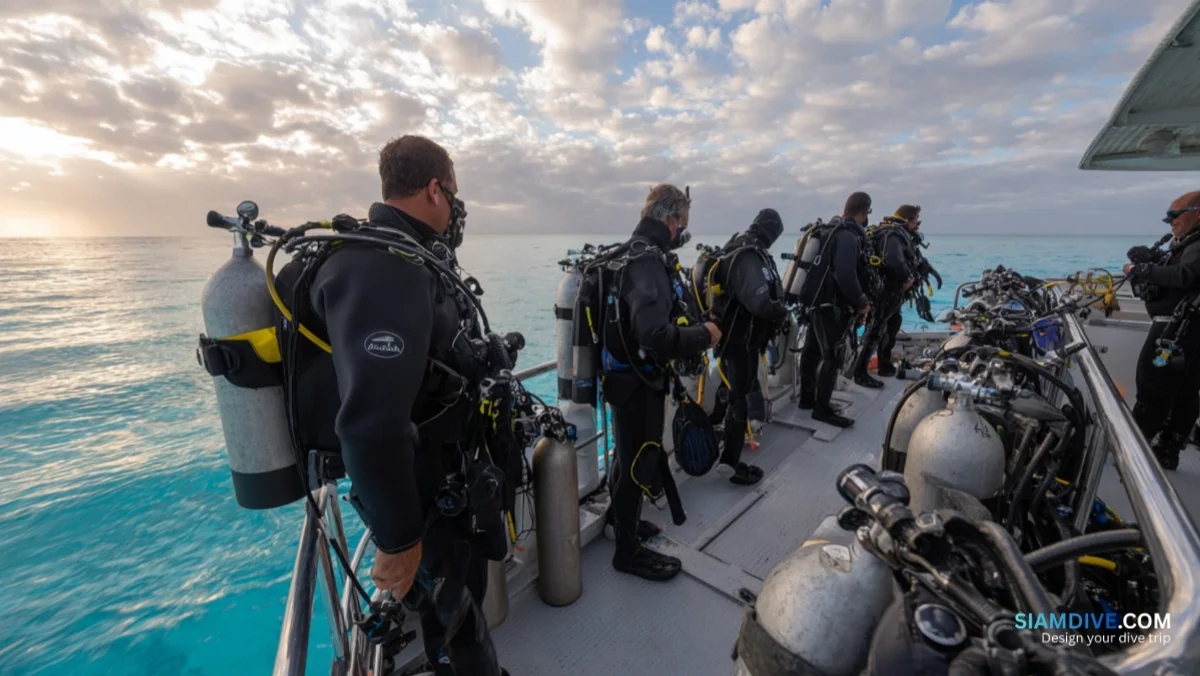
The hiss is barely louder than breathing. A thin ribbon of bubbles threading up from the gap between regulator and tank valve — easy to miss in the chaos of gearing up on a rocking day boat, impossible to ignore at 18 metres when the SPG needle starts dropping twice as fast as it should. The part responsible costs less than a plate of pad thai. It fails more often than any other component on a dive rig. And most divers have never looked at one on purpose.
The tank valve O-ring is the single most-replaced part in scuba diving. It sits in a groove smaller than a pencil eraser, holds back gas at 200+ bar, and gets swapped by rental staff who may or may not have inspected it since last week. Knowing what this ring does, how to read its condition, and when to refuse a cylinder can save a dive — or prevent an emergency ascent that nobody planned for.
What Happens at 200 Bar Inside a 6 mm Groove
A tank valve O-ring is a static seal. It sits in a machined groove on the valve face (yoke systems) or inside the regulator's DIN connector, compressed between two metal surfaces when the handwheel tightens. At 200 bar — the working pressure of a standard aluminium 80 — that ring absorbs roughly 2,900 psi of force across a contact area smaller than a fingernail.
The seal works through controlled deformation. Tightening the connection compresses the rubber by 15–25 percent, creating a gas-tight barrier. Too little compression and gas slips past. Too much and the rubber extrudes into the gap between metal faces, then shears under pressure. The margin between sealed and sheared is narrower than most divers expect.
Temperature shifts the equation. Thailand's surface heat — often above 35 °C on a Similan day boat — softens the elastomer, which firms up again in water at 27–28 °C. Over dozens of thermal cycles the rubber loses elastic memory: it stops returning to its original cross-section. That is when the slow leak begins, and it almost always starts so quietly that only a deliberate buddy check will catch it.
DIN, Yoke, or Nitrox — Which Ring Fits Your Setup
Not every tank valve O-ring is interchangeable. Installing the wrong size or material can produce anything from a slow drain to a catastrophic blowout at depth. The decision tree is short, but the consequences of skipping it are not.
- Yoke (A-clamp) valve — The O-ring sits in the valve face, visible when the dust cap comes off. Standard size: AS568-014 (the "thin" ring). This is the most common setup in Thailand and across tropical Asia. The ring belongs to the tank, not the regulator.
- DIN regulator connection — The O-ring lives in the regulator's threaded DIN plug, not the valve. Standard size: AS568-112 (the "thick" ring, 0.487 × 0.103 inches). The ring belongs to the regulator. When connecting to a DIN-compatible valve, no tank-side O-ring is needed.
- Nitrox above 40 % O₂ — Standard black nitrile (NBR) is not oxygen-compatible. Nitrile degrades faster under high-oxygen exposure and, in rare cases involving adiabatic compression, can ignite. The industry standard for enriched air above 40 % is Viton (FKM) — brown, typically 75 Shore A durometer. EPDM (often green) is another oxygen-safe alternative.
- Not sure what's on the tank? — Ask the fill station. Dive centres across Thailand stock both 014 yoke and 112 DIN rings in bulk. A replacement runs 10–30 baht — under a dollar. There is no scenario where diving on a questionable O-ring makes sense.
Five Signs the Ring Needs Replacing Right Now
An O-ring does not announce its retirement. It shows symptoms — and most of them are visible in a 10-second inspection before the regulator goes on the valve. Think of this as a decision tree: if you spot any of the following, the answer is always swap it.
1. Visible cracks or splits. Hold the ring between thumb and forefinger and stretch it slightly. Surface cracks that were not there last season mean the elastomer has dried out. Under 200 bar a cracked ring will shear, not seal.
2. Flat spots or permanent deformation. A healthy O-ring is round in cross-section. If one side has gone flat from sitting compressed in the groove, the rubber has lost elastic memory. It may still hold at the surface but gap at depth when metal contracts in cooler water.
3. Sticky or swollen texture. Contact with incompatible lubricant — petroleum-based grease on a Viton ring, for instance — causes the rubber to swell. A swollen ring will not seat properly and can extrude under pressure.
4. Hissing after hand-tightening. With the valve cracked open and the regulator connected, listen at the junction. A faint hiss — even one that disappears with a quarter-turn more — signals a seal on the edge. On a noisy boat, cup your hand behind the valve and feel for moving air.
5. Bubbles during the buddy check. The BWRAF pre-dive sequence includes a visual sweep of the first stage and valve connection. Bubbles streaming from the yoke or DIN junction mean the seal has already failed under pressure. Do not descend. Swap the ring on the spot — it takes less time than a three-minute safety stop.
How to Swap a Tank Valve O-Ring in 90 Seconds
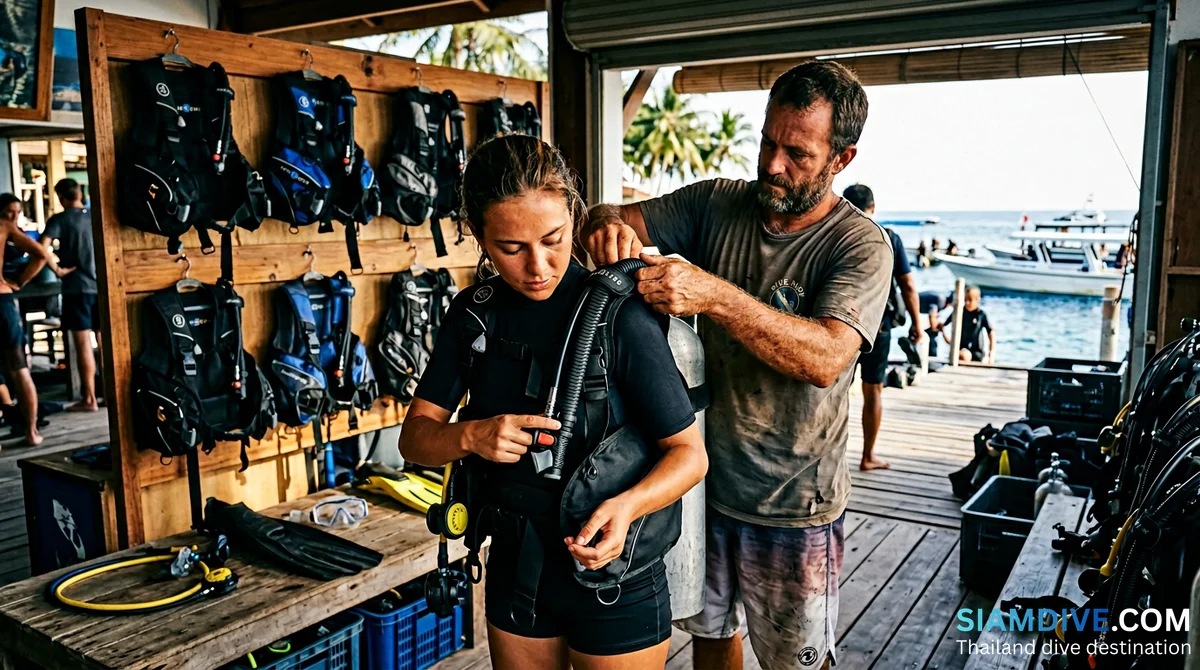
Every diver should carry a spare O-ring and an O-ring pick — a thin steel hook that looks like a dental explorer and lifts the ring from its groove without scoring the metal. The swap is five steps, none of them difficult.
Step 1 — Depressurise and disconnect. Close the tank valve. Purge the regulator to bleed residual pressure. Disconnect. Never attempt to remove an O-ring from a pressurised system.
Step 2 — Remove the old ring. Slide the pick under the O-ring at its groove and lever it out gently. Work slowly — a gouge in the groove wall creates a permanent leak path that no new ring will fix.
Step 3 — Inspect the groove. Wipe with a lint-free cloth. Check for metal burrs, salt crystals, or sand. A single grain of sand trapped under the new ring will cause a leak at pressure.
Step 4 — Lubricate the new ring. Apply a thin film of silicone grease — Christo-Lube MCG-111 or equivalent for nitrox setups. Roll the ring between your fingers to spread the lubricant evenly. Over-greasing attracts particulates; a barely-visible film is enough.
Step 5 — Seat and test. Press the new ring into the groove, making sure it lies flat without twists. Reconnect the regulator, slowly open the valve, and listen for five seconds. No hiss, no bubbles — the seal is good. The whole process, once practised, takes less time than assembling a camera tray.
The 30-Second Check That Catches Most Leaks
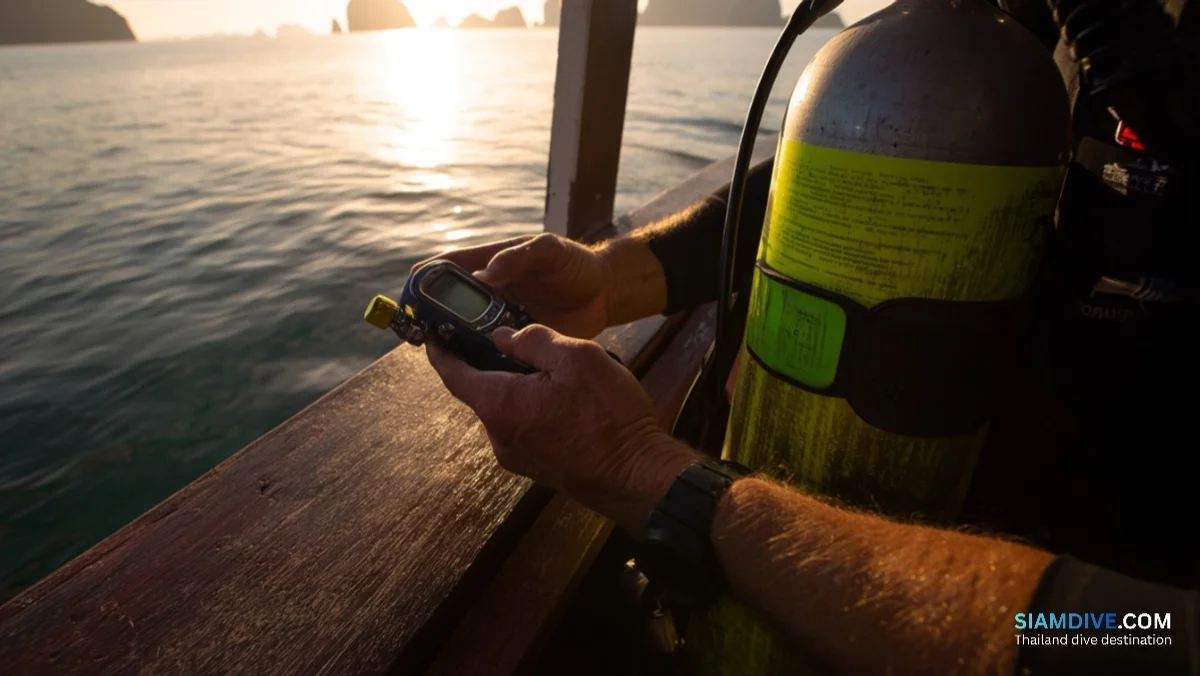
The best time to find a failing O-ring is on deck, not at 25 metres. A focused check adds half a minute to the standard BWRAF sequence and catches the majority of seal problems before they become underwater emergencies.
Valve-junction sweep. After connecting and pressurising, run two fingers along the yoke or DIN junction while your buddy watches the SPG. If the needle drops while neither diver is breathing from the regulator, gas is escaping somewhere. The O-ring is the most common culprit — though a loose handwheel or damaged valve seat can leak too.
Listen-and-feel method. In loud environments — boat engines, a running compressor — cup both hands behind the first stage and valve area. Escaping gas creates a cool draught against the palms even when the hiss is drowned out. This technique works especially well on DIN connections, where the leak point usually sits where the threaded plug meets the valve body.
Submersion test (shore dives). Entering from a beach? Dunk the assembled rig valve-down in knee-deep water before wading out. Bubbles from the junction are unmistakable and far easier to spot than on a pitching boat. Fix the problem on shore, not in the swim-out channel.
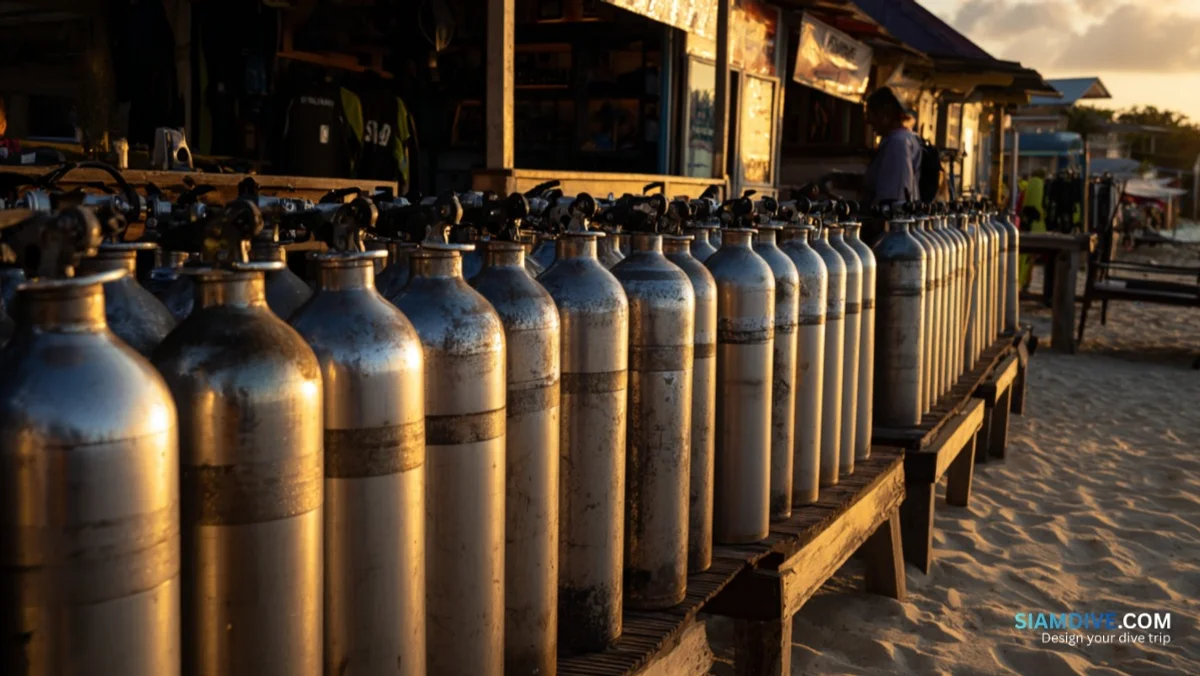
Thailand's busiest dive operations cycle through three to five boat-loads per day during peak season. Rental tanks see dozens of regulator connections per week. That kind of turnover accelerates wear on valve grooves and O-rings alike. A 30-second check is the simplest insurance against equipment surprises that high volume creates.
2026 and the Right-to-Repair Wave in Diving
A growing right-to-repair movement is reshaping how the dive industry thinks about field maintenance. Across online forums and trade shows in early 2026, the message from working divers is consistent: they want equipment they can inspect, service, and trust for a decade — not sealed units that demand factory return for a part worth less than a baht coin.
O-ring replacement sits at the centre of this shift. It is the simplest, most common field repair in recreational diving, yet a handful of integrated valve-and-regulator designs have made even this basic swap harder than it needs to be. The counterargument — that untrained divers might install the wrong material or size — has some merit. But the fix is better education, not less access to a consumable that costs 15 baht.
For divers visiting Thailand, the practical picture is encouraging. Local dive centres stock both yoke and DIN O-rings by the hundred. A save-a-dive kit with 10 assorted rings costs under 200 baht. And most Open Water courses now dedicate at least a few minutes to pre-dive equipment inspection. Knowing how to check and swap an O-ring turns a cancelled dive into a 90-second delay — and keeps the 4,000-baht dive day on track.
Building a Save-a-Dive O-Ring Kit
The whole kit fits in a ziplock bag the size of a playing card. What goes inside depends on the rig:
- Every setup — O-ring pick (single-hook steel), silicone grease (3 ml tube), one lint-free cloth
- Yoke divers — 4× AS568-014, NBR 70 durometer (black). Standard tank valve ring.
- DIN divers — 4× AS568-112, NBR 70 or 90 durometer (black). Sits in the regulator plug.
- Nitrox divers (above 40 % O₂) — 4× matching size in Viton FKM 75 (brown). Must be oxygen-cleaned.
- Travelling divers — Double up. Carry both 014 and 112 in both NBR and Viton. Rental gear abroad may use either system, and sourcing the right ring on a remote island at dawn is a problem nobody needs.
Buying tips:
- Skip unmarked bulk bags. Scuba O-rings conform to AS568 aerospace dimensional standards. At 200 bar the tolerance matters — a ring 0.1 mm too thin will not seal reliably.
- Match material to gas. Viton costs roughly three to five times more than nitrile. For standard air diving, NBR is the correct and cheaper choice. Reserve Viton for mixes above 40 % O₂.
- Store out of sunlight. UV degrades nitrile rubber within months. A sealed bag inside the kit, inside the gear bag, away from direct sun is all it takes.
- Replace annually regardless. Even a ring that looks pristine after 12 months of tropical thermal cycling has lost some elastic memory. At 10–30 baht per ring, yearly replacement is the cheapest maintenance line in all of diving.