Mergui Archipelago Liveaboard from Thailand: The Untouched Andaman
8 เมษายน 2569
The Mergui Archipelago is Asia's last frontier liveaboard — 800 islands, manta rays, whale sharks, almost no other boats. Everything you need to plan a trip from Ranong.
The Last Real Frontier in Asian Liveaboard Diving
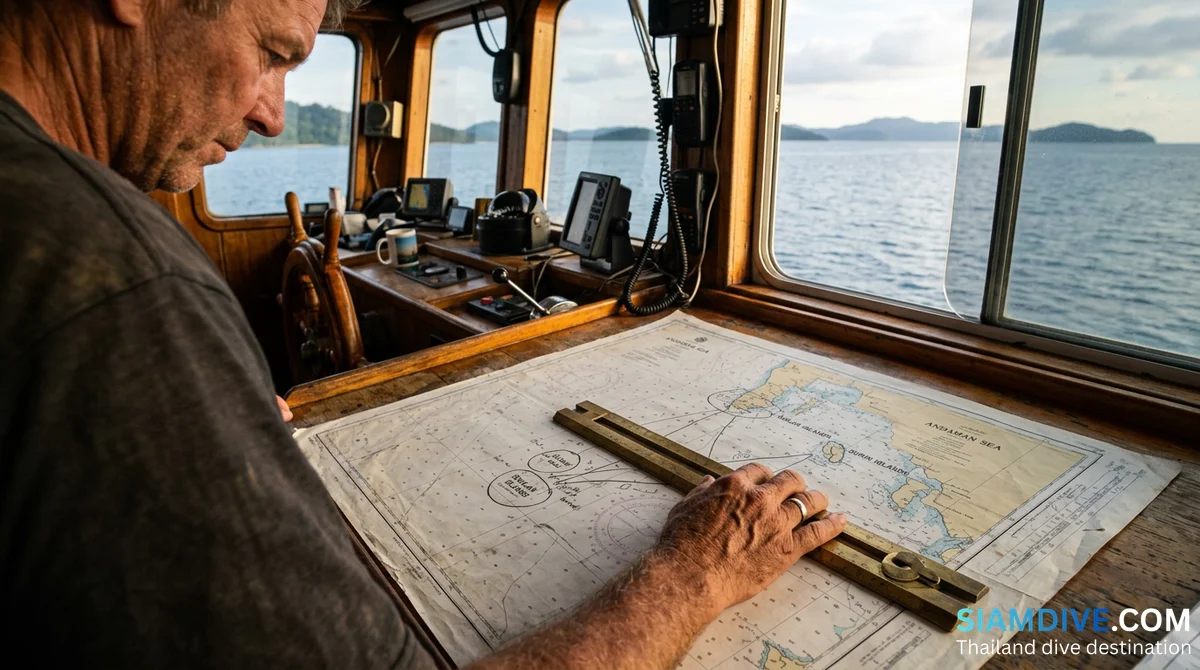
The Mergui Archipelago is over 800 islands scattered across the Andaman Sea off Myanmar's southern coast, and almost no one dives them. The reason is simple: the only practical way in is by liveaboard from Ranong on the Thai border, the season is short, and the trips are not cheap. The reward is reefs that have barely been touched since they reopened to foreigners in 1997, walls and pinnacles that have never seen a crowded mooring line, and a real shot at whale sharks and giant manta rays in water where you might be the only boat for the day.
If you have already done the Similans, Richelieu Rock, and the Phi Phi sites and you want something that still feels like exploration, this is the trip. Just understand what you are signing up for — long crossings, advanced diving, and Myanmar paperwork — before you book.
Why Mergui Is Different from Anything Else in Thailand
Thai liveaboards run weekly through the Similans and Surin all season long, and the popular sites have multiple boats on them most days. Mergui does not work like that. Trips are limited, departures are infrequent, and the geography itself keeps numbers low — the better dive sites sit a full overnight crossing from the border, and the archipelago is roughly the size of Sri Lanka. There simply is not enough boat traffic to crowd the reefs.
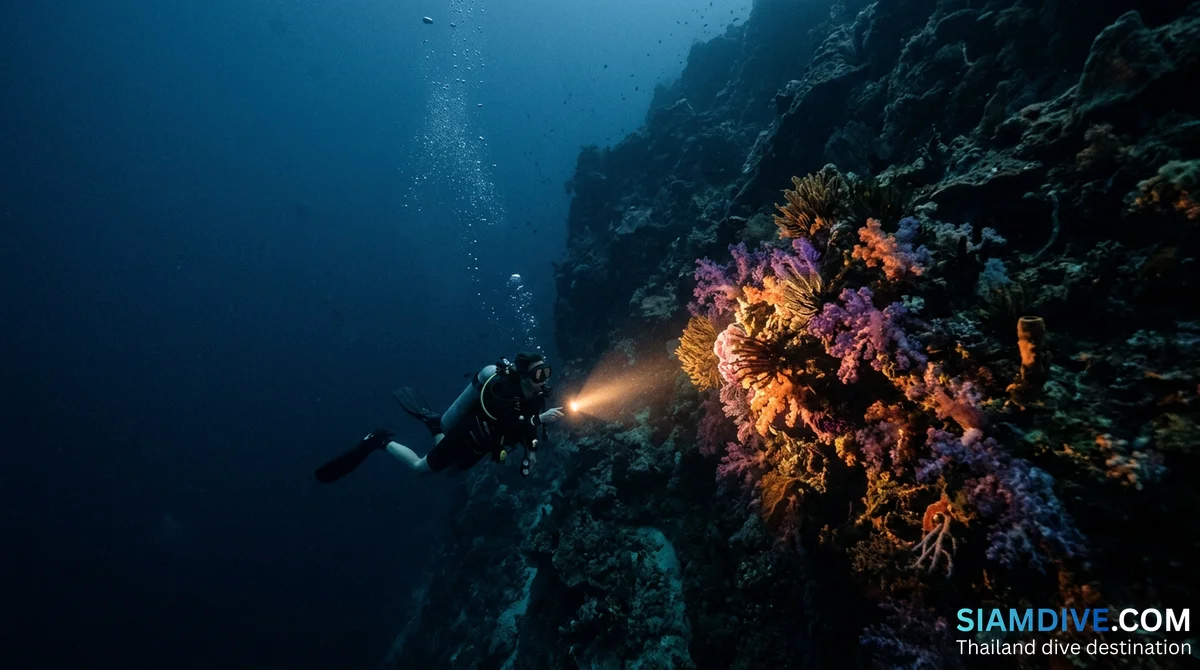
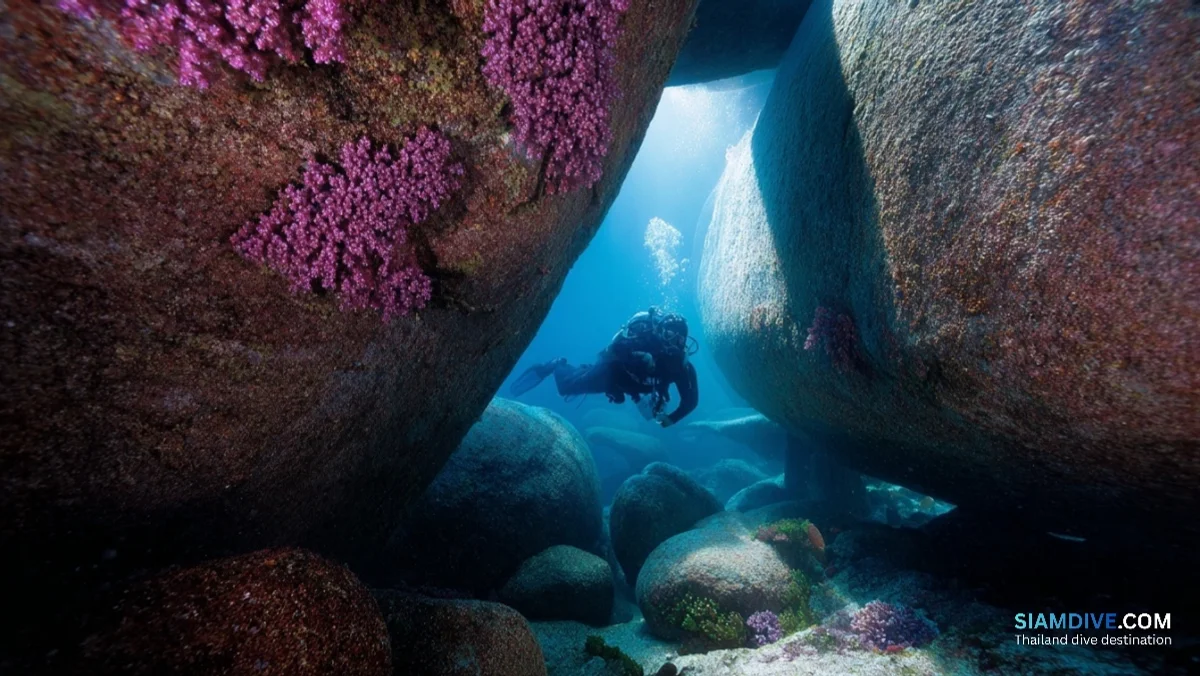
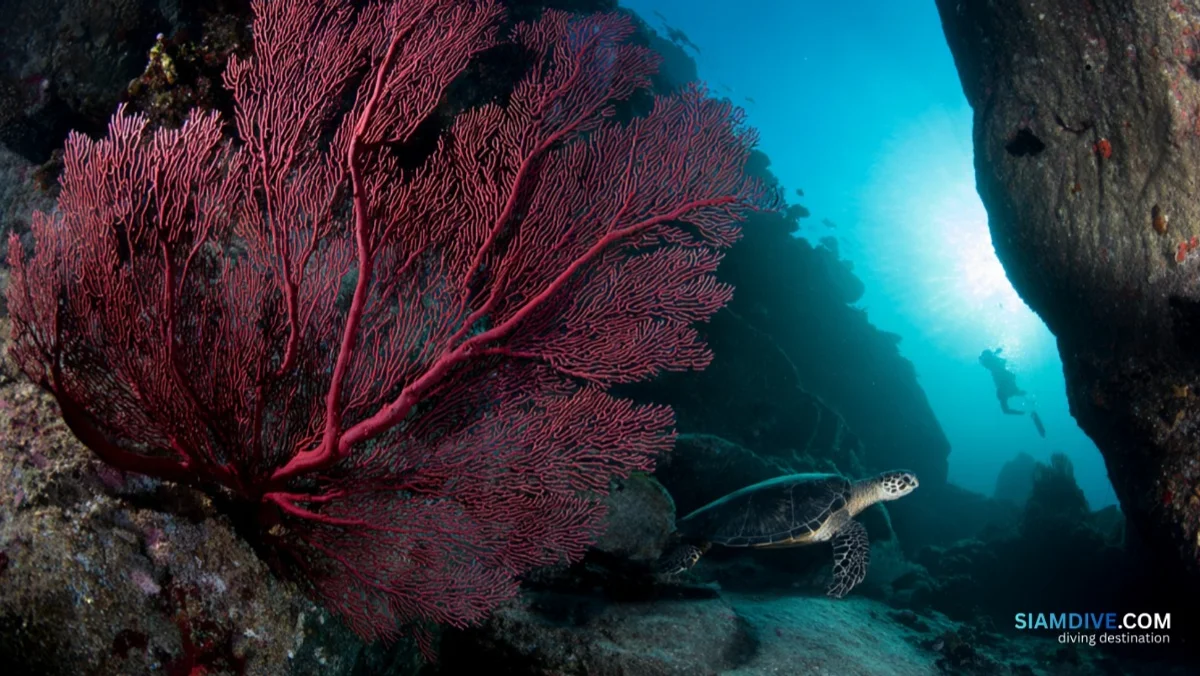
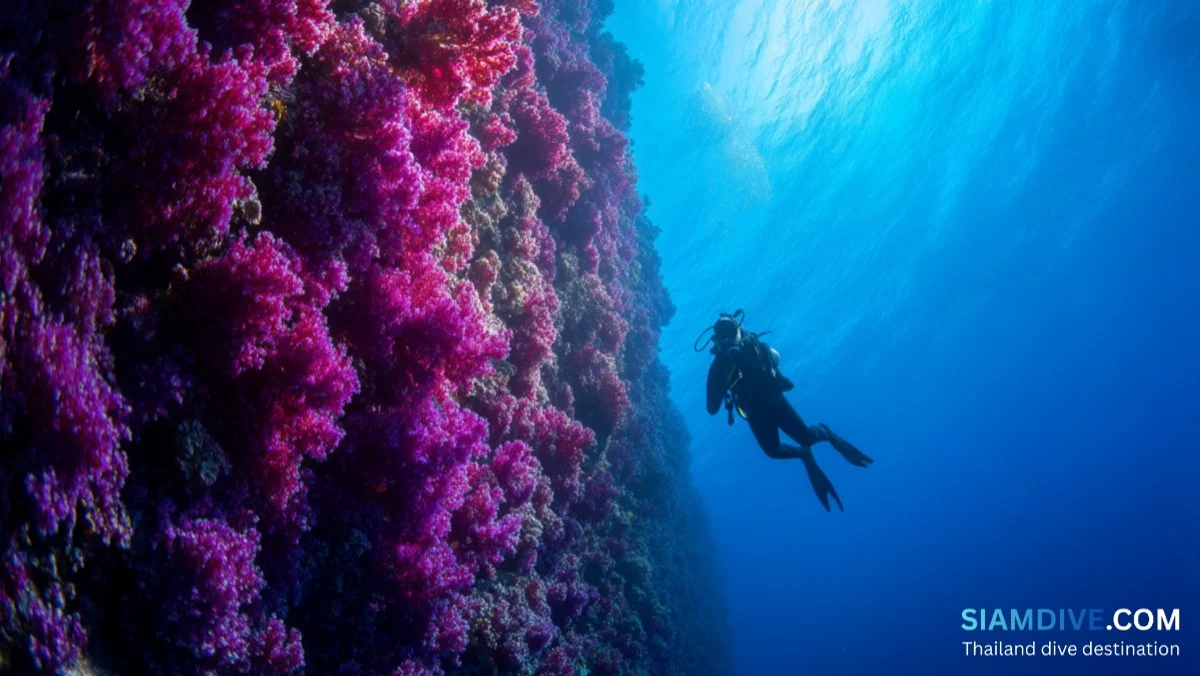
The diving is structurally different too. Mergui is built on granite pinnacles and limestone karst islands, which means towering walls, swim-through caves, fan forests at depth, and the kind of dramatic underwater topography you get at places like Komodo. Currents are real, depths can be significant, and the marine life leans pelagic.
The Dive Sites That Make Mergui Worth the Trip
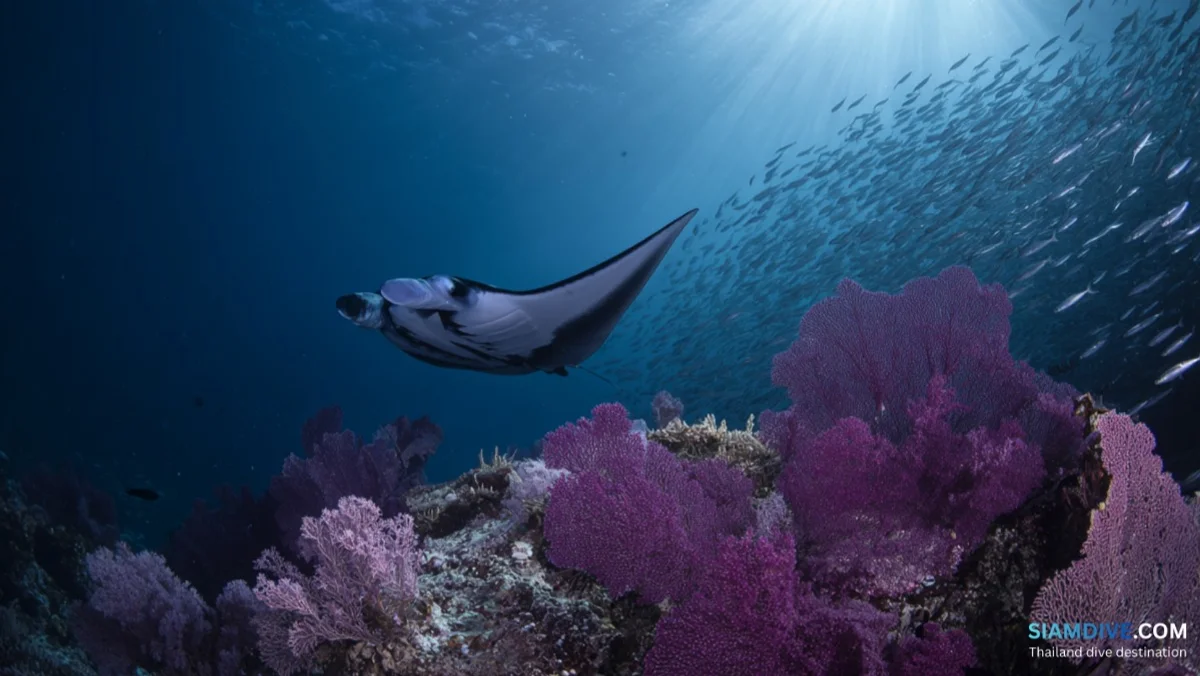
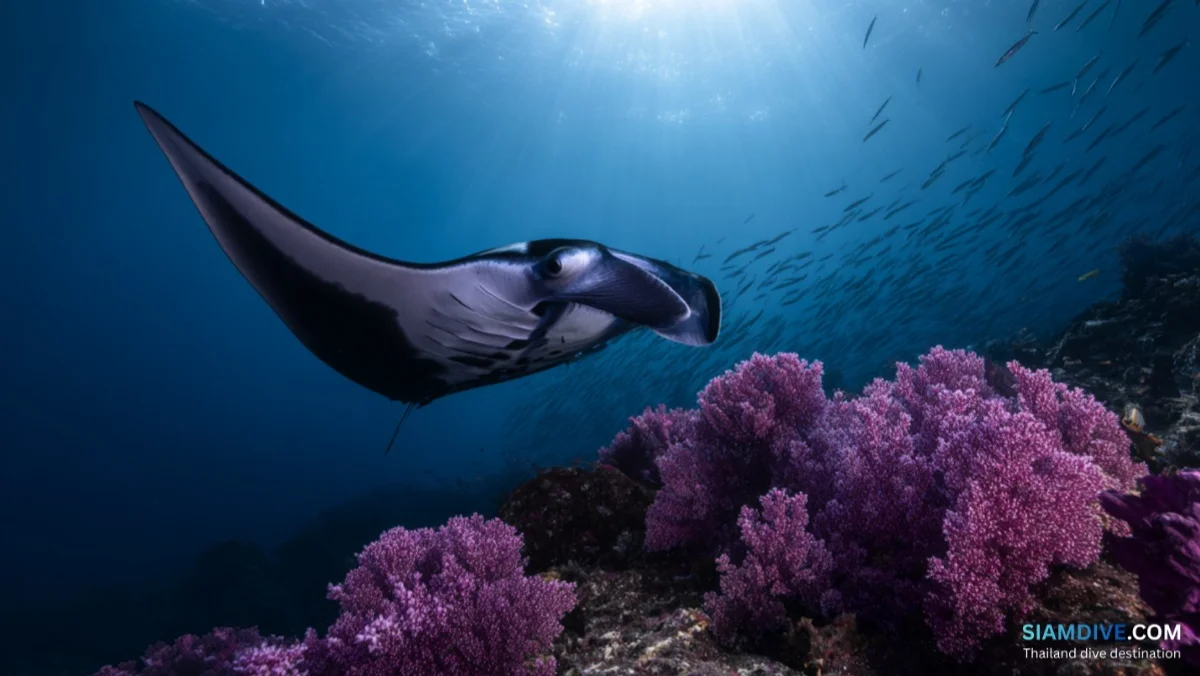
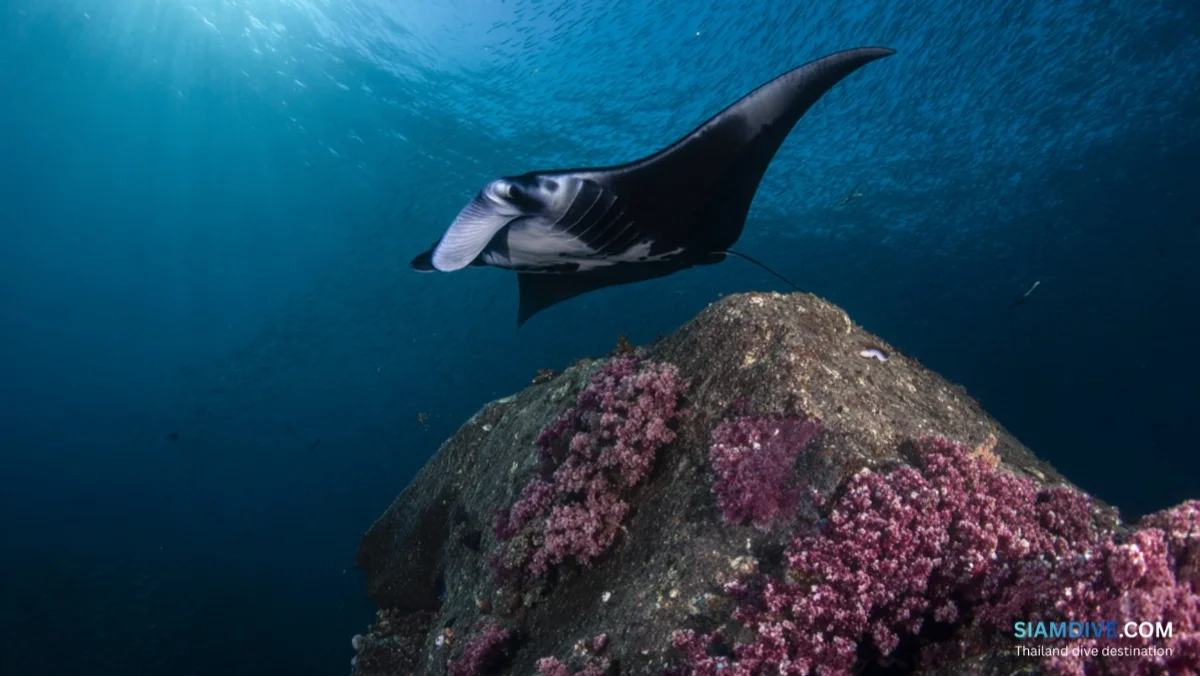
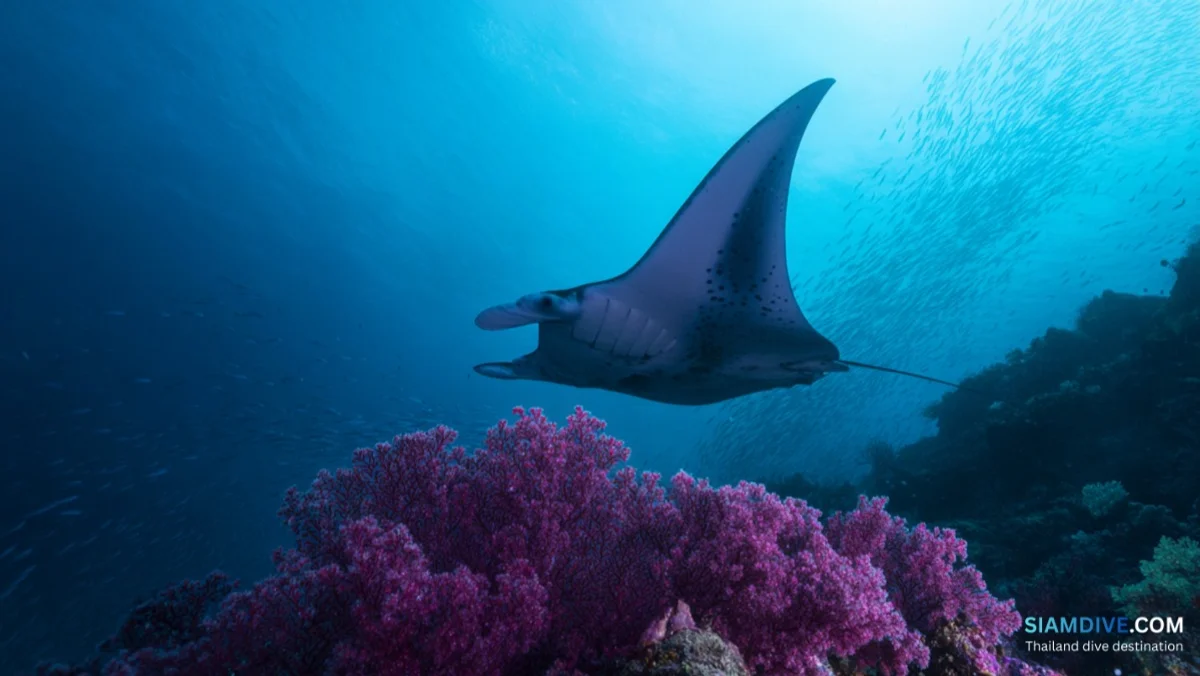
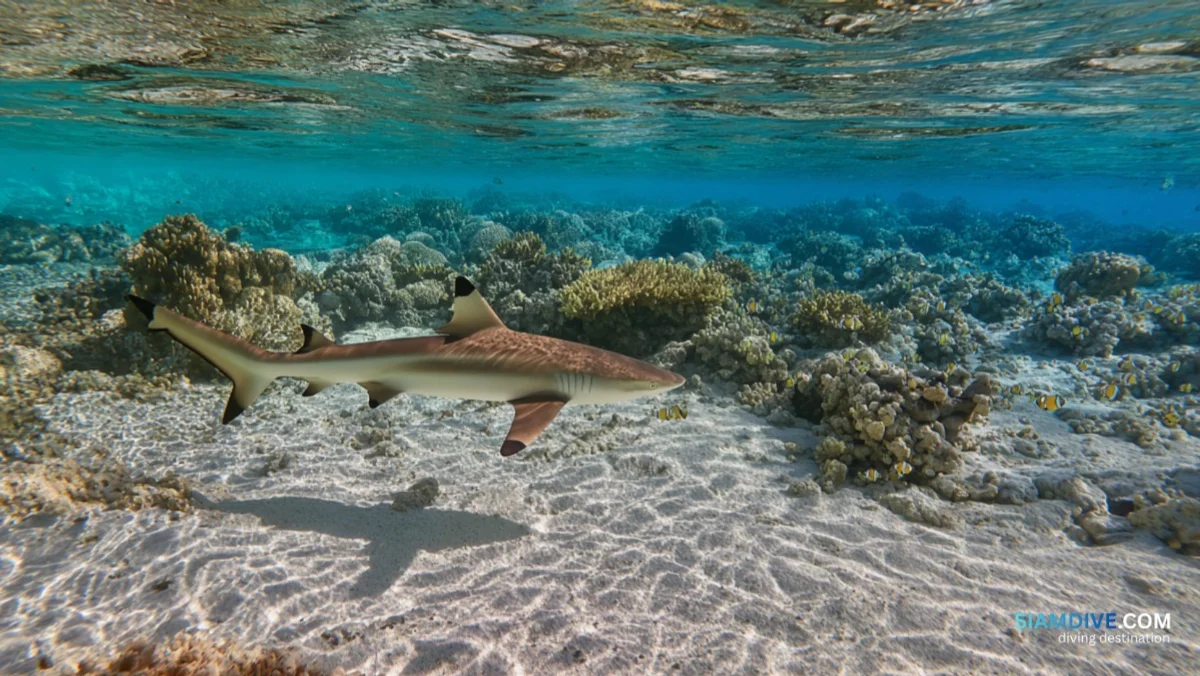
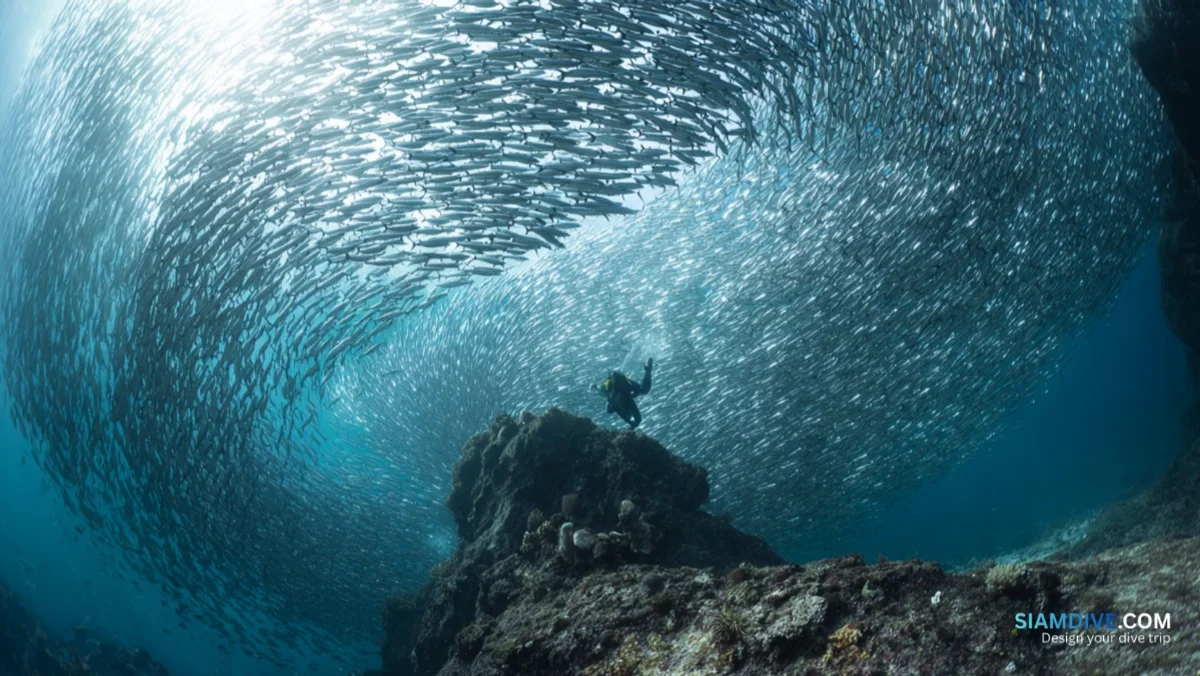
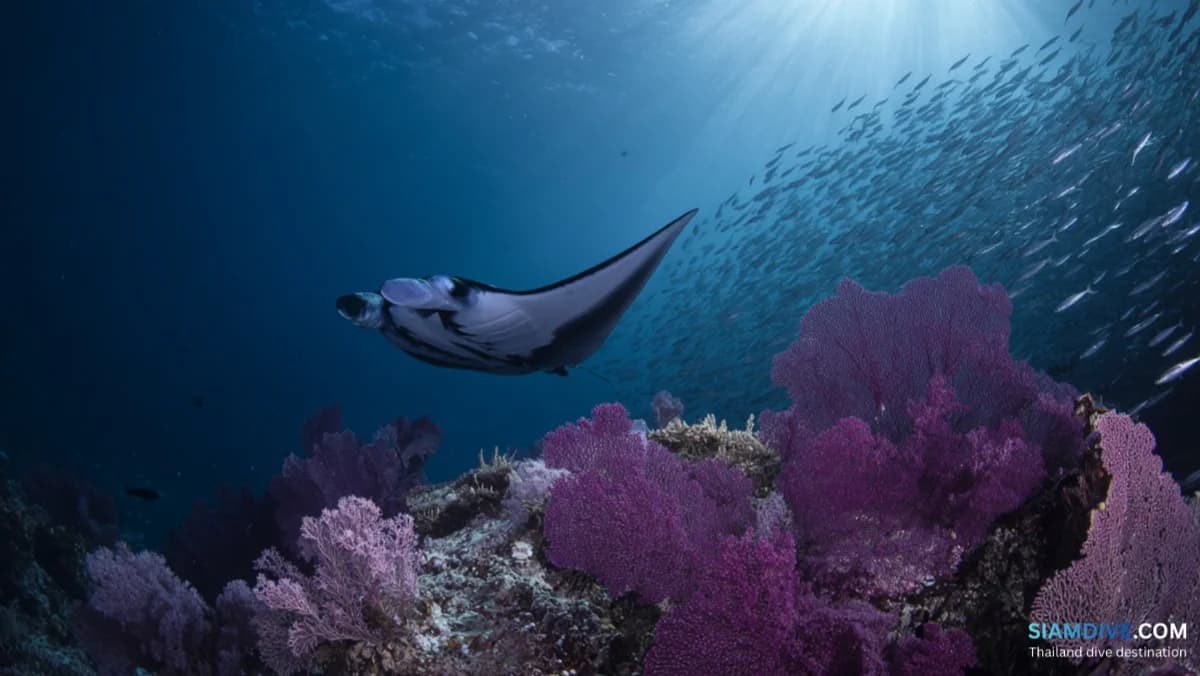
- Black Rock — the headline site of the entire archipelago. A lone pinnacle in deep blue water, famous for reef and oceanic manta cleaning stations from January through April. Whitetips, grey reef sharks, and schools of barracuda are routine. The day you get a manta train at Black Rock is the day you pay for the trip.
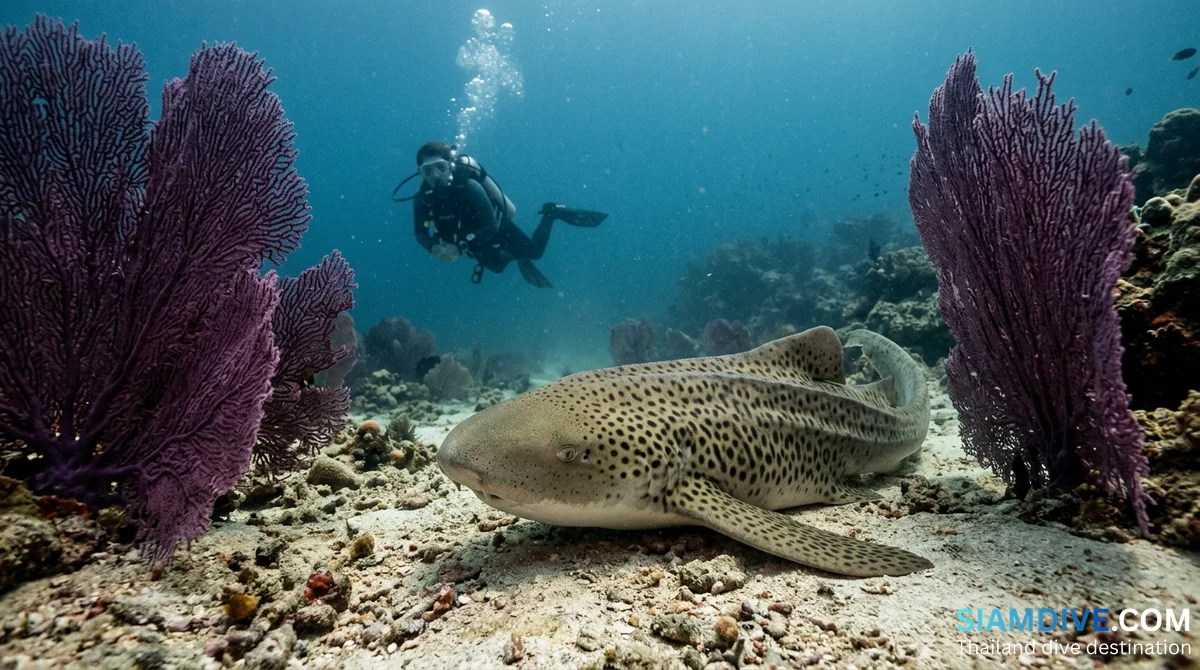
- Western Rocky — a wall and cavern system that holds nurse sharks tucked into the rocks during the day, plus a swim-through tunnel that exits onto open reef. Often the best wall dive of the trip.
- Shark Cave (Shark Lagoon) — usually saved for the final day. Grey reef sharks patrol the entrance and whale sharks turn up unannounced when the season is right.
- North and South Twin — paired sites known for fan forests at 20 to 30 meters and reliable big fish action on the corners.
- Tower Rock and High Rock — northern pinnacles with deep walls, lobsters in the cracks, and frequent manta sightings on the cleaning stations.
- Burma Banks — a series of seamounts further north. Rough crossings and big-fish bait, only the longer 9 to 10 night trips reach them.
Marine Life and What You Can Realistically See
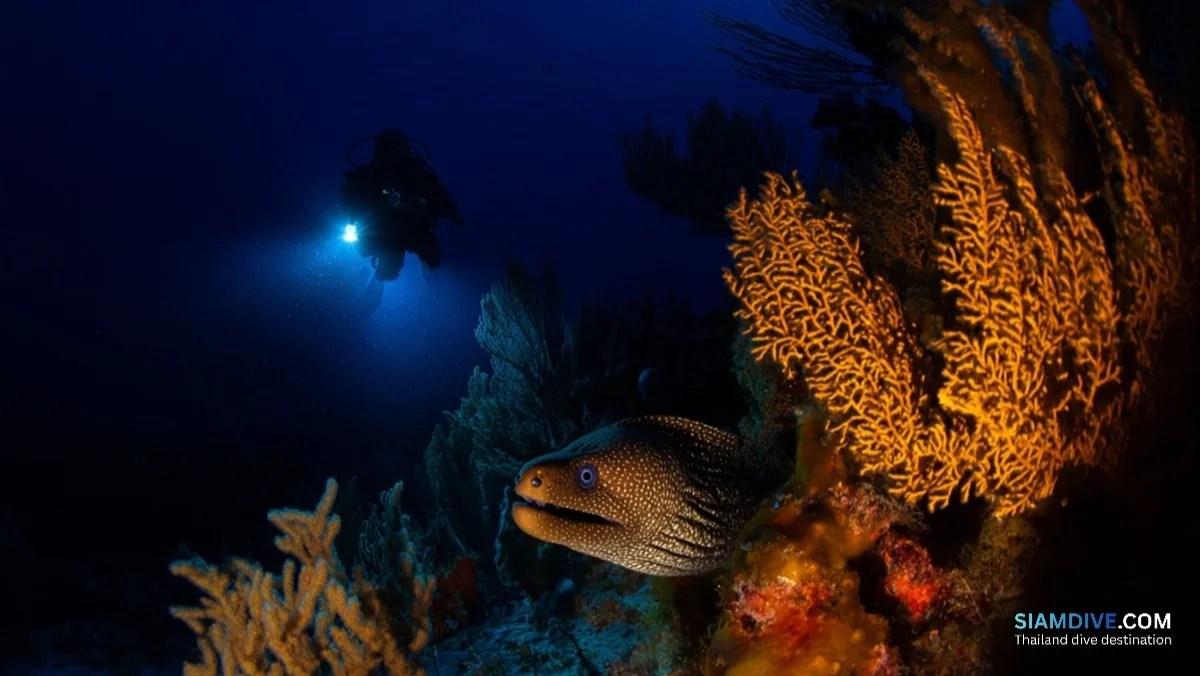
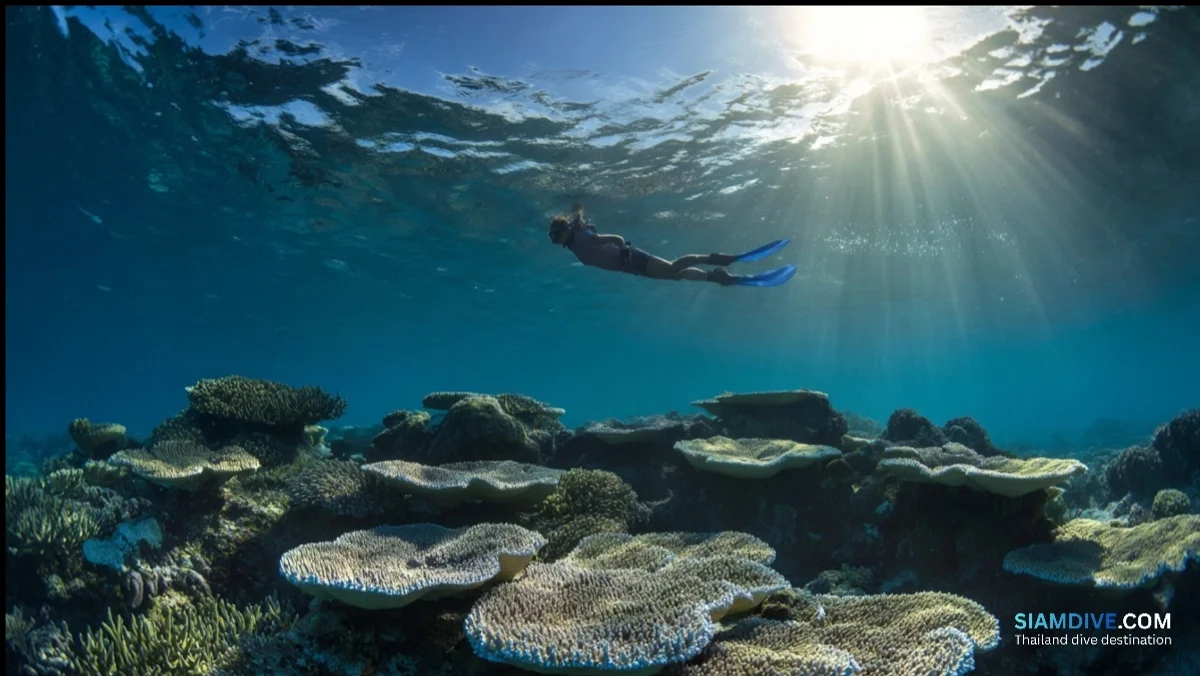
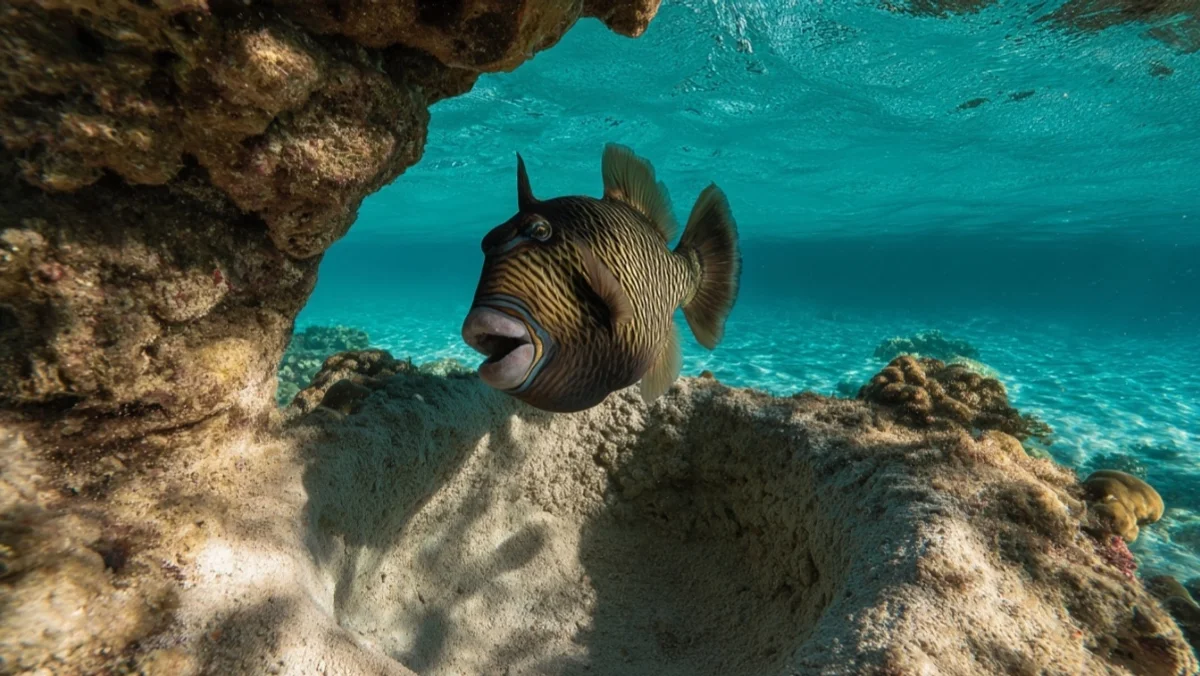
Mergui has the kind of biodiversity that comes with low fishing pressure and remote geography. On a single trip you can see whale sharks, both reef and oceanic mantas, grey reef and whitetip sharks, marbled and tawny nurse sharks, schooling barracuda, big-eye trevally tornadoes, frogfish, harlequin shrimp, ghost pipefish, and seahorses. Soft coral fans on the deep walls hit two meters across. Hard coral cover is exceptional in the shallows because almost no anchor damage exists.
The trade-off is that the same plankton blooms that bring whale sharks and mantas drop visibility from the gin-clear 30 meters you might get in early November to a soupy 10 to 15 meters in March. You pick your dates based on what you came for.
Logistics: Getting There and the Myanmar Permit
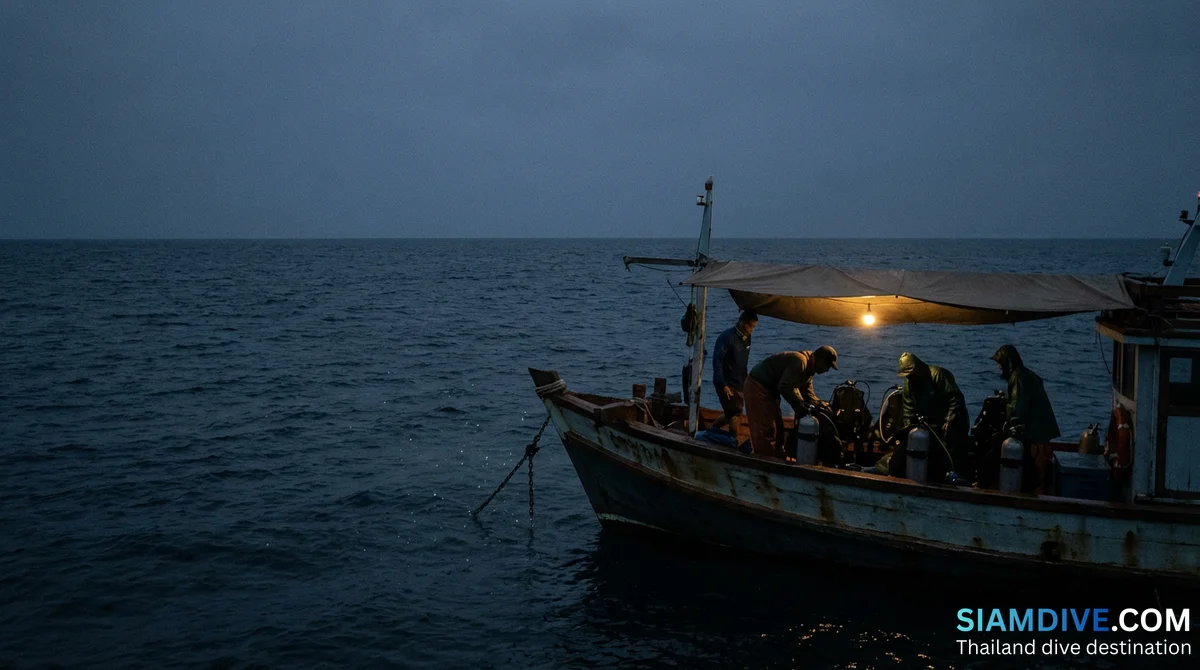
Every Mergui trip starts at Ranong on the Thai-Myanmar border. The standard sequence on Day 1 looks like this: arrive at the dive center mid-morning, gear fitting and lunch, exit Thai immigration at Ranong port, short boat ride across the estuary to Kawthaung in Myanmar, enter Myanmar immigration, board the liveaboard, and head north. Day 7 reverses the process — exit Myanmar at Kawthaung, re-enter Thailand at Ranong, transfer to your hotel or onward bus.
The Myanmar permit and visa are handled onboard by the operator. Cost is roughly 50 USD per diver, paid in cash on the boat. You do not arrange anything in advance beyond booking the trip and arriving at Ranong. Bring your passport with at least six months validity and several blank pages.
To reach Ranong itself, the easiest option is a direct flight from Bangkok Don Mueang on Nok Air or AirAsia, then a 20-minute taxi to the pier. From Phuket or Khao Lak, expect a 4 to 6 hour minivan ride or arrange operator transport. Many operators offer pickup from Phuket airport for an additional fee.
Operators, Boat Types, and What You Pay
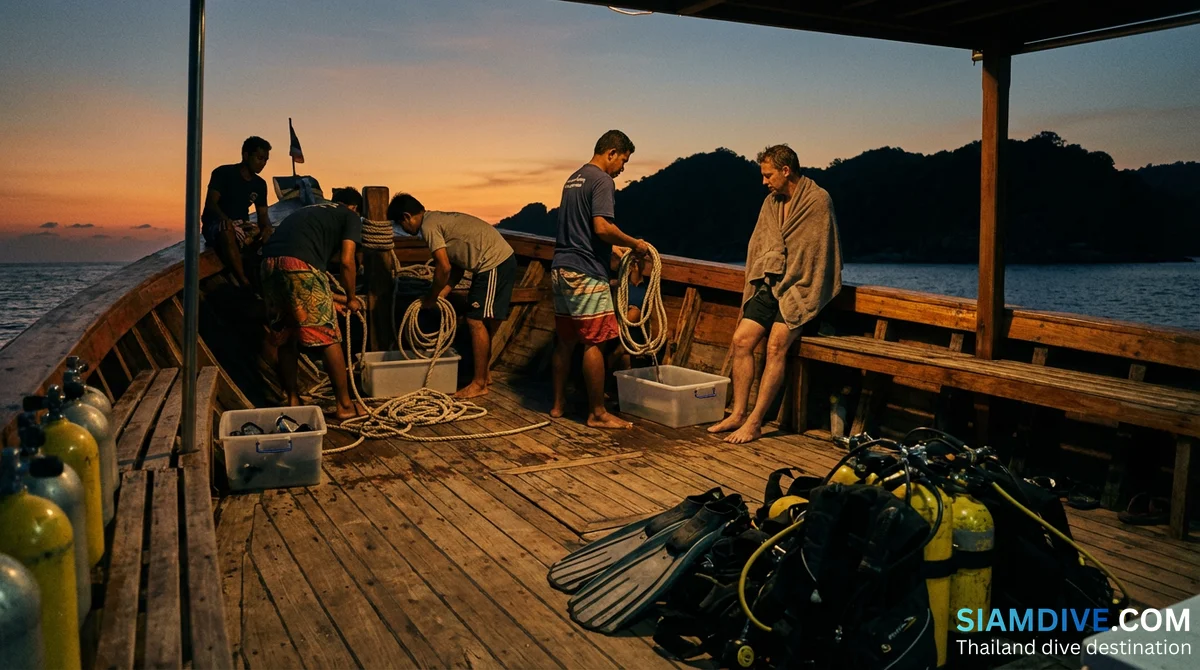
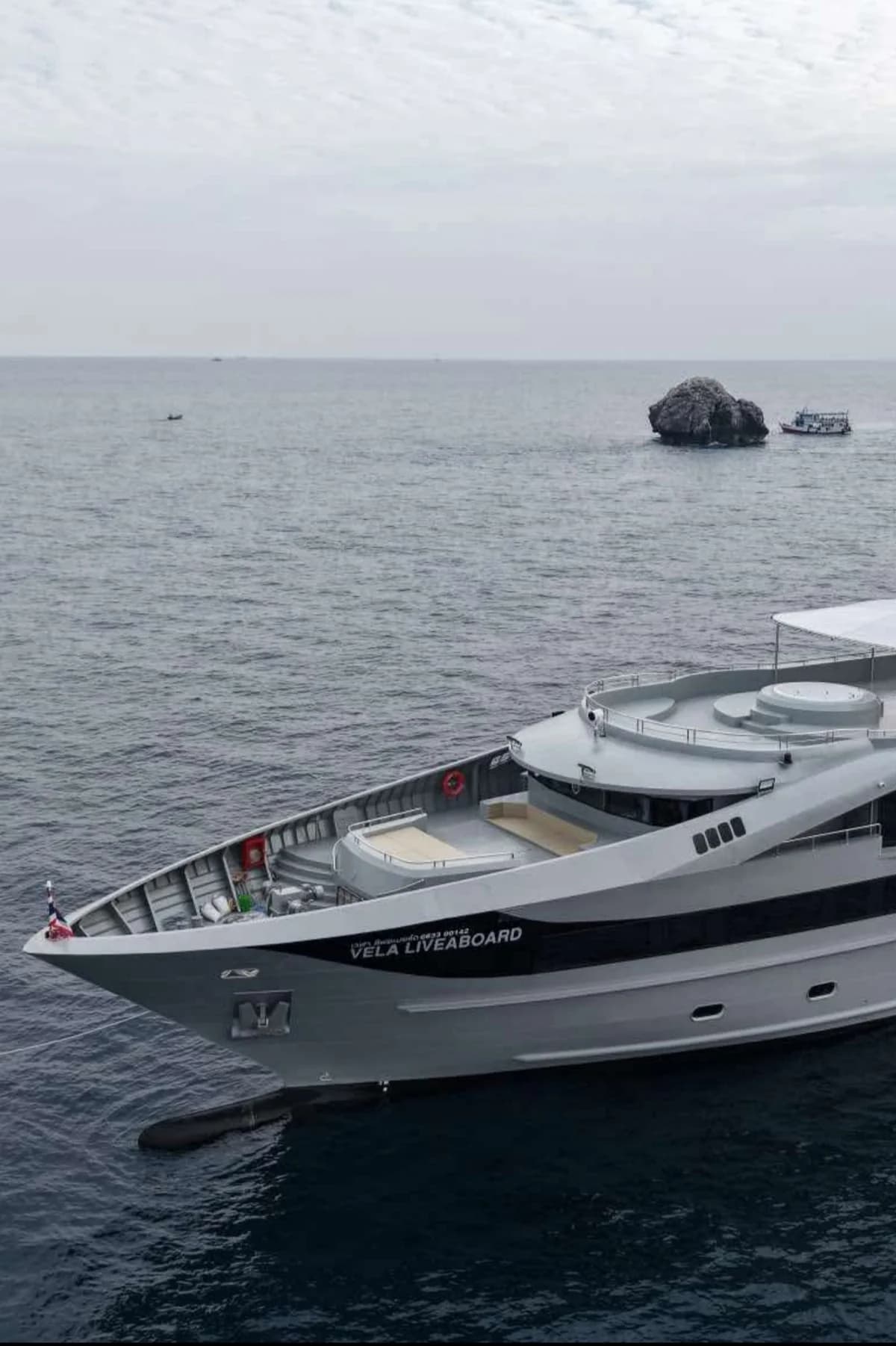
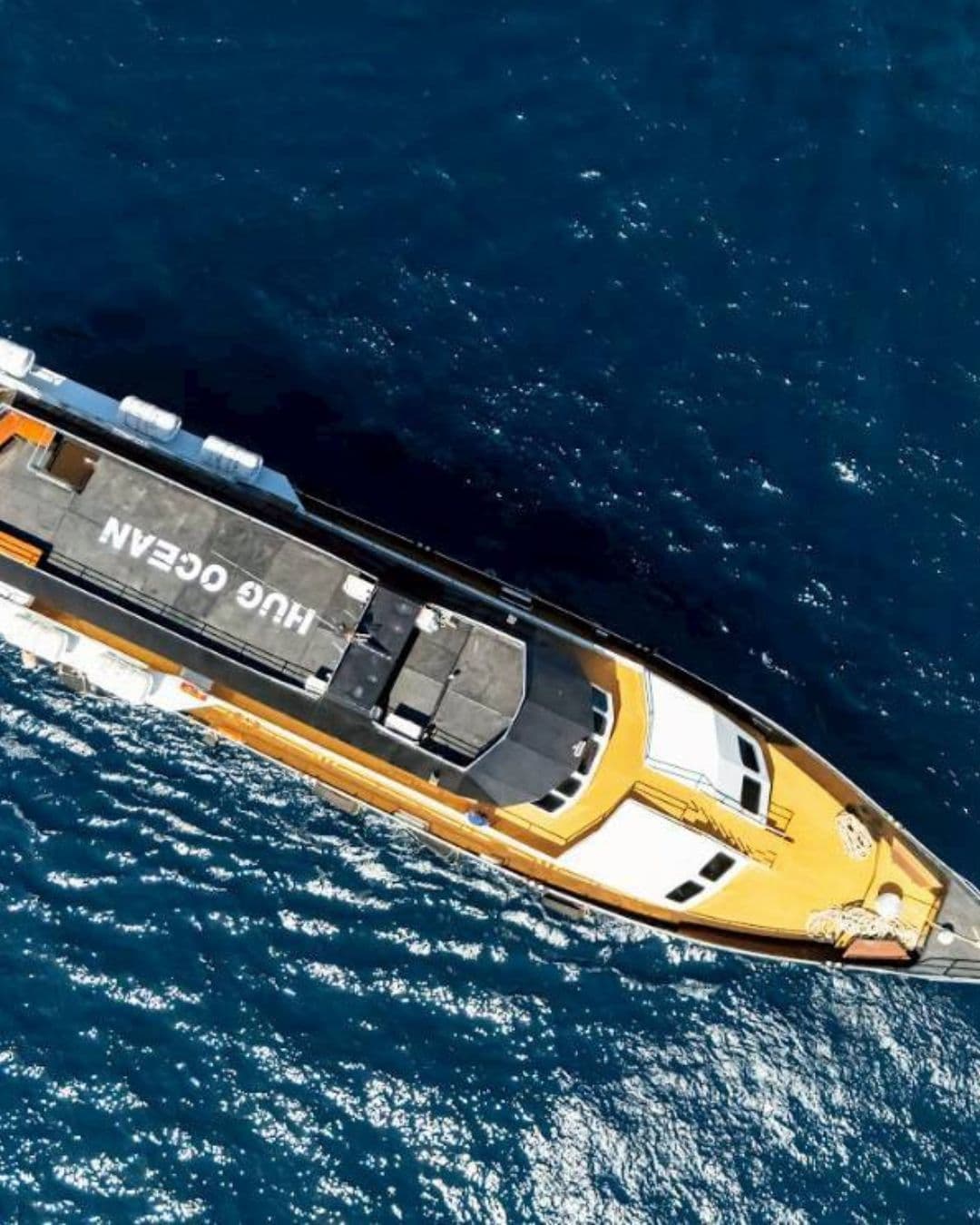
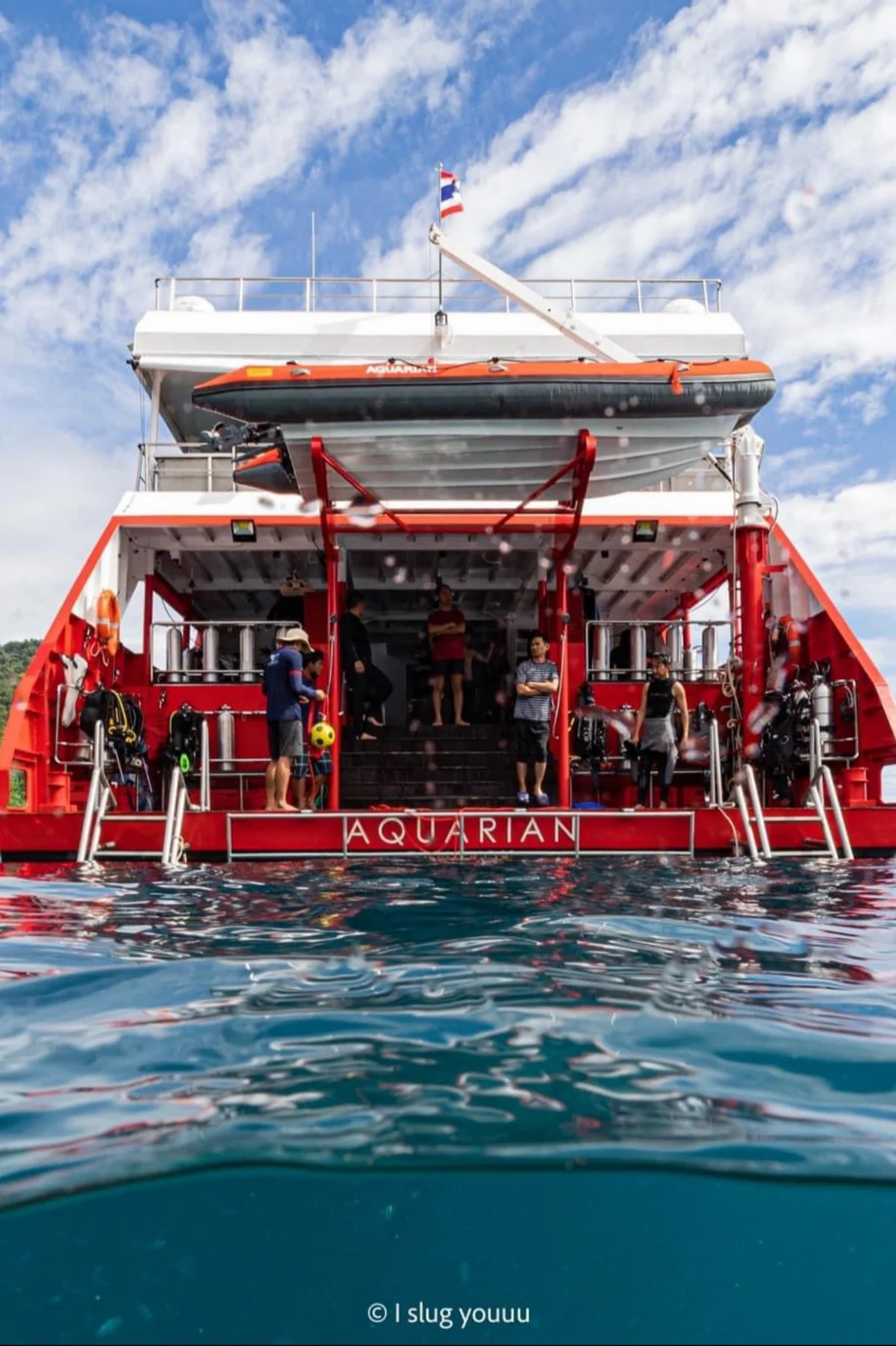
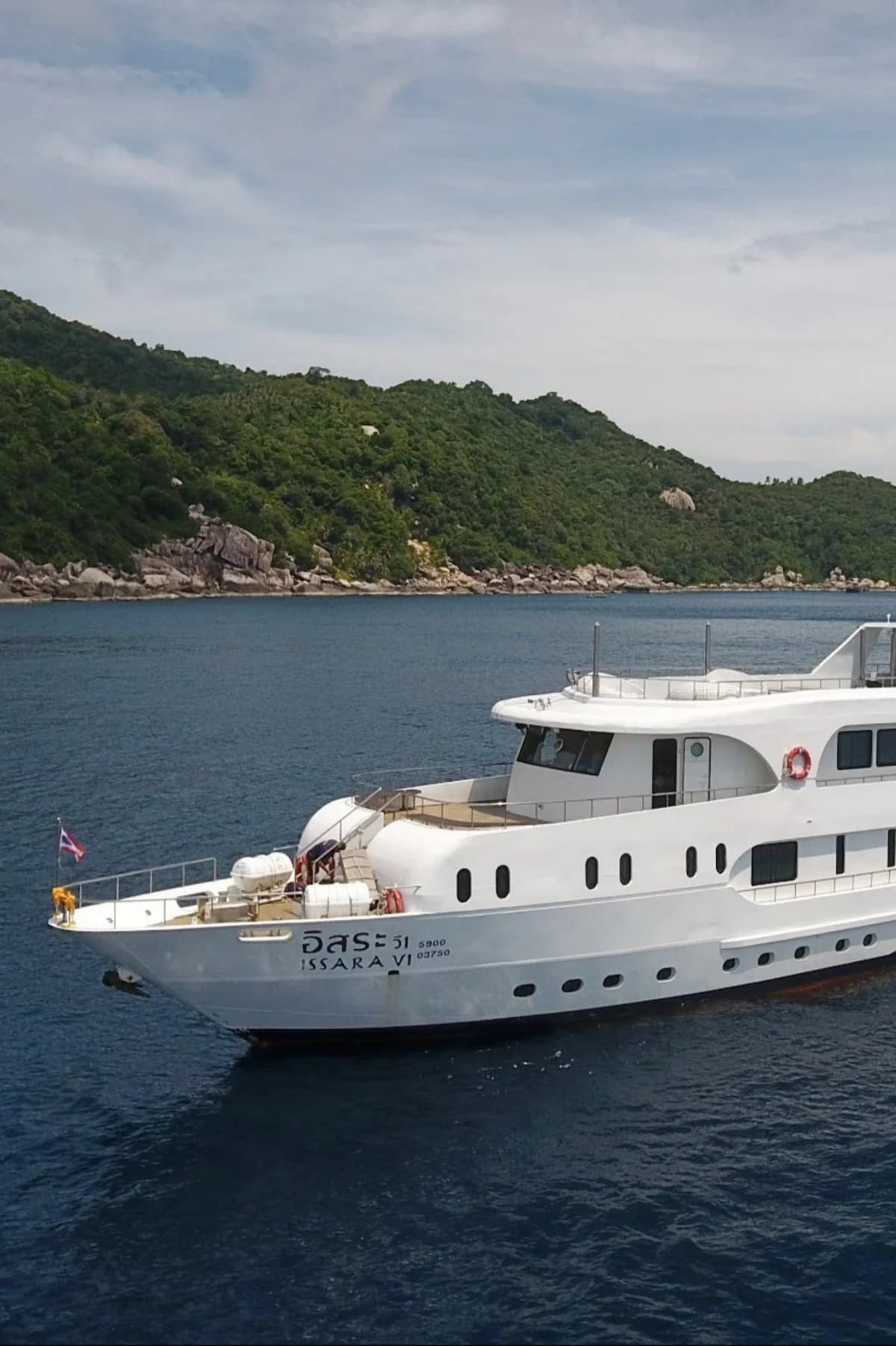
Only a handful of liveaboards run Mergui itineraries, and the season is November through May. Names you will see include MV Smiling Seahorse, Thailand Master, MV Sea World I, Dolphin Queen, and a few others. Boats typically take 16 to 22 divers, run Nitrox, and have ensuite cabins with air conditioning. Quality varies — read reviews carefully because there is no second chance once you are seven days from shore.
Pricing is the biggest sticker shock for divers used to Similan rates. Expect roughly:
- 6-night / 5-day trips: 48,000 to 60,000 THB per diver (around 1,400 to 1,800 USD)
- 7-night trips: 60,000 to 80,000 THB
- 9 to 10-night Burma Banks trips: 95,000 to 130,000 THB
- Myanmar permit and visa: approximately 1,800 THB / 50 USD on top, paid in cash onboard
- Park fees and fuel surcharges: sometimes added separately, ask before booking
Nitrox usually costs extra. Rental gear is available but limited — bring your own if you can.
Best Season and Practical Tips
The Mergui season runs November to May, but the windows matter. December and early January give you the calmest seas and cleanest visibility. February through April is peak manta and whale shark season but also peak plankton, so visibility drops. May is the gamble month — the seas can turn rough as the monsoon builds, but you sometimes get the best big-animal action of the year right before the boats stop running.
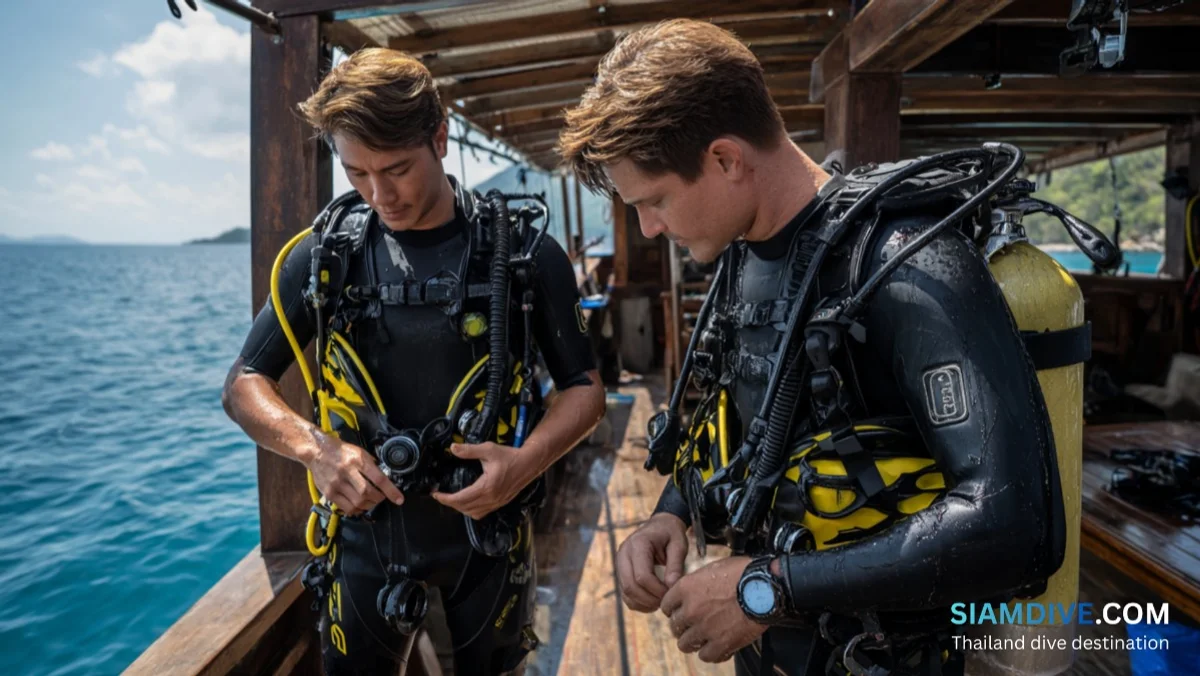
- Bring at least 50 logged dives. Operators often require 30 minimum but you will be more comfortable with more.
- Pack a 3mm wetsuit. Water sits at 27 to 30°C but you will be doing 3 to 4 dives a day for a week and you will get cold.
- Bring cash USD or Thai baht for the Myanmar permit, Nitrox, gear rental, and crew tips. ATMs do not exist between Ranong and the boat.
- Pack motion sickness medication. The crossings between dive sites can be rough, especially in May.
- Wait at least 24 hours after your last dive before flying — Burma Banks itineraries should plan 36 hours.
- Photographers should bring spare batteries and storage. There is no resupply for a week.
- Book at least 6 months ahead for peak season departures. The operators that run Mergui are small and slots disappear fast.
Final Thoughts
Mergui is not a beginner trip and it is not cheap, but it is the closest thing left in this part of the world to genuine exploration diving. You spend a week without phone signal, on reefs that may not see another dive boat for days, looking for animals most divers only meet by accident. If you have done the rest of Thailand and you want to know what the Andaman Sea looked like before mass tourism arrived, this is where you go. Browse Mergui departures from Ranong and check availability for the upcoming season at siamdive.com.