Blacktip Sharks at 3 Metres: Koh Chan Samae San
23 เมษายน 2569
Koh Chan hides blacktip reef sharks in knee-deep water, five clownfish species, and a whip coral forest at 16 metres — all inside a Navy-controlled marine park 45 minutes from Pattaya.
Blacktip Reef Sharks in Knee-Deep Water
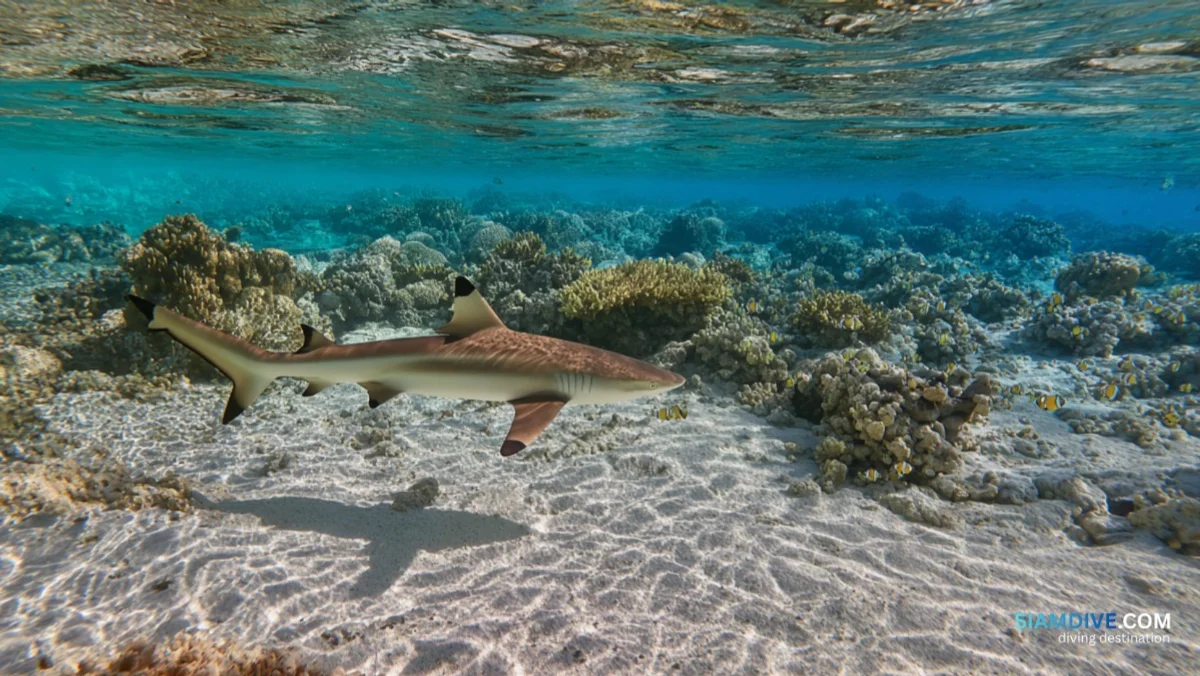
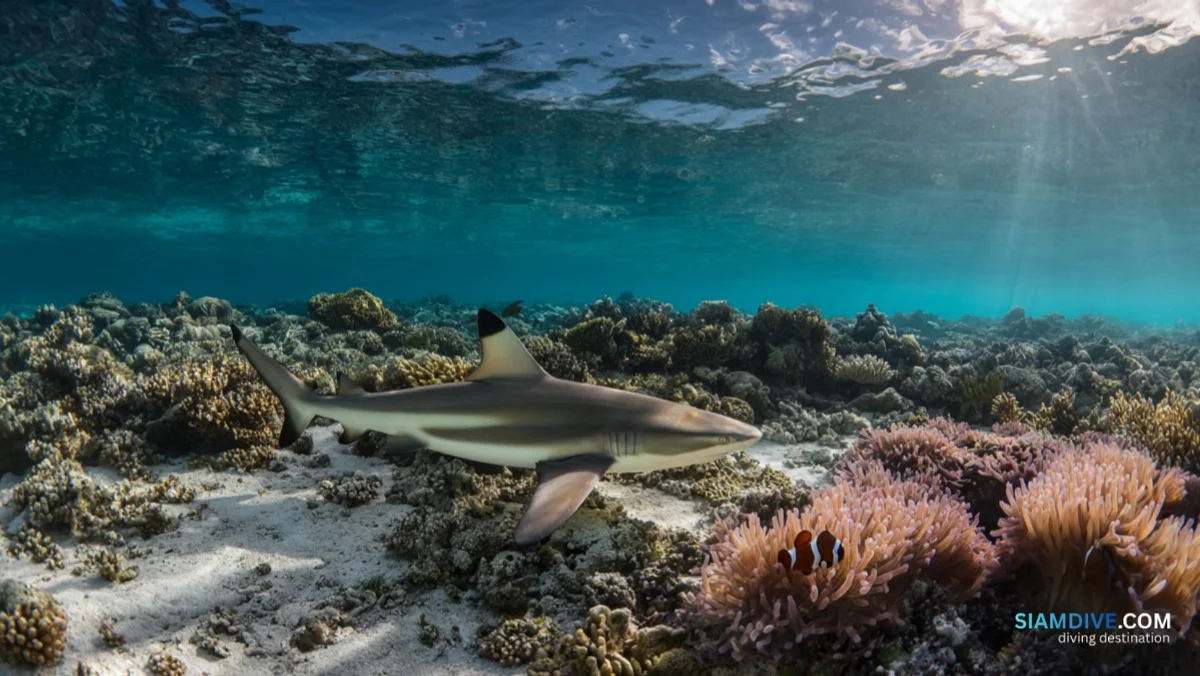
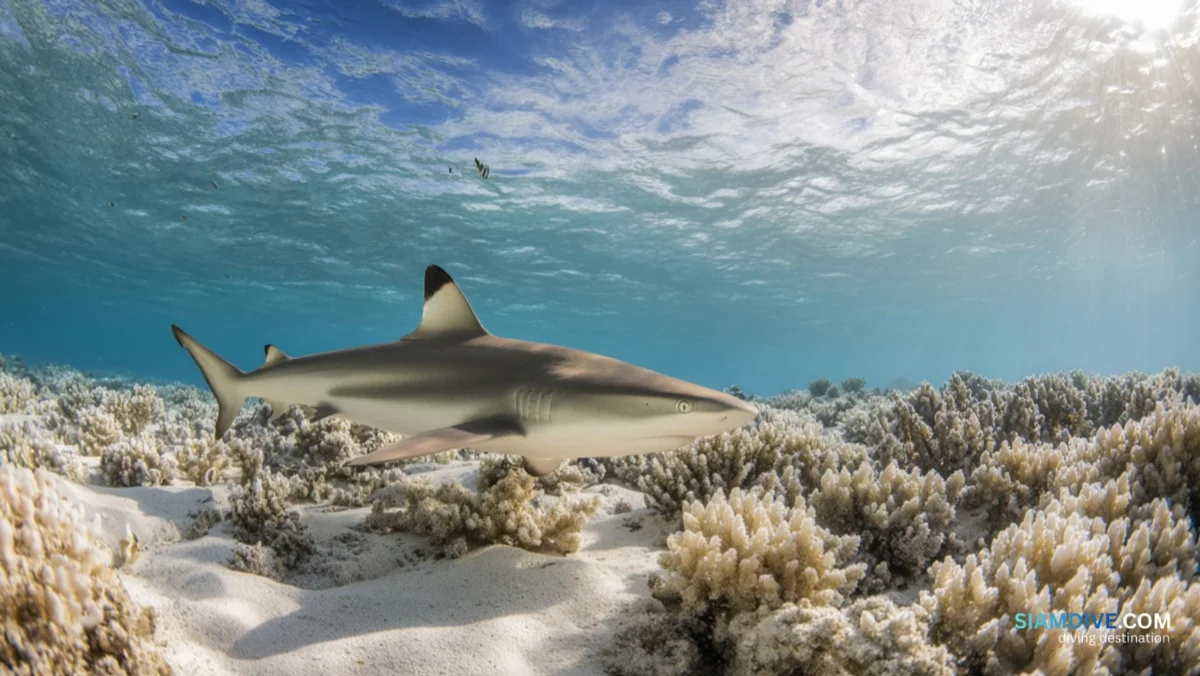
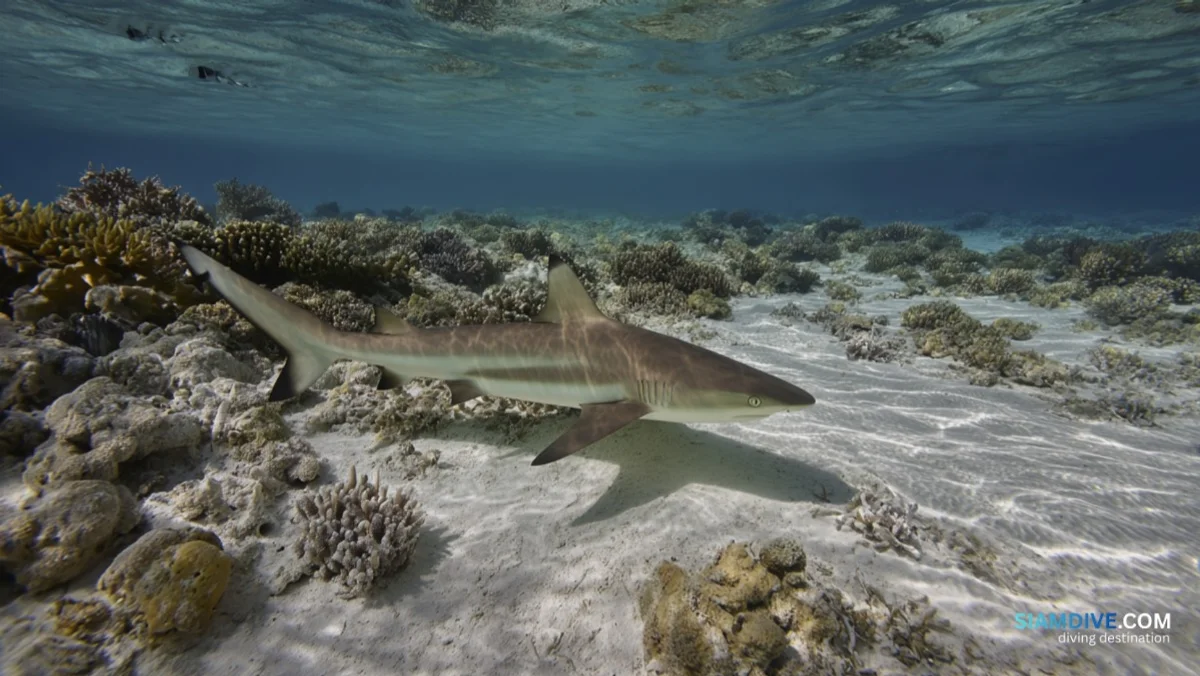
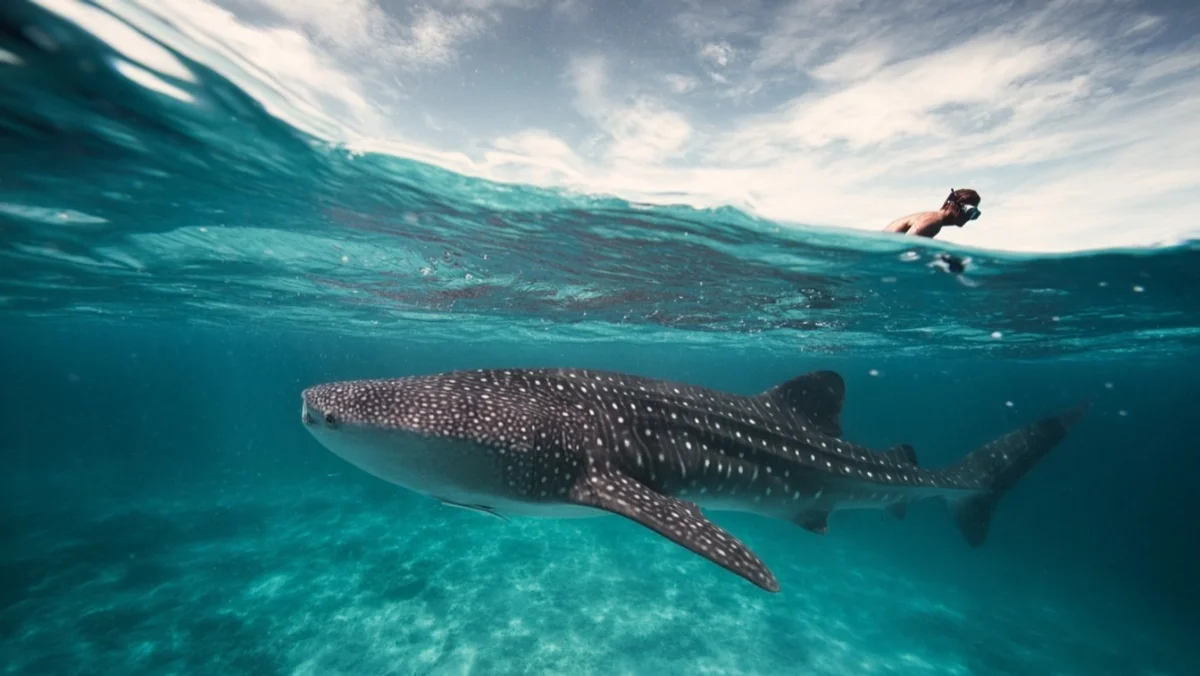
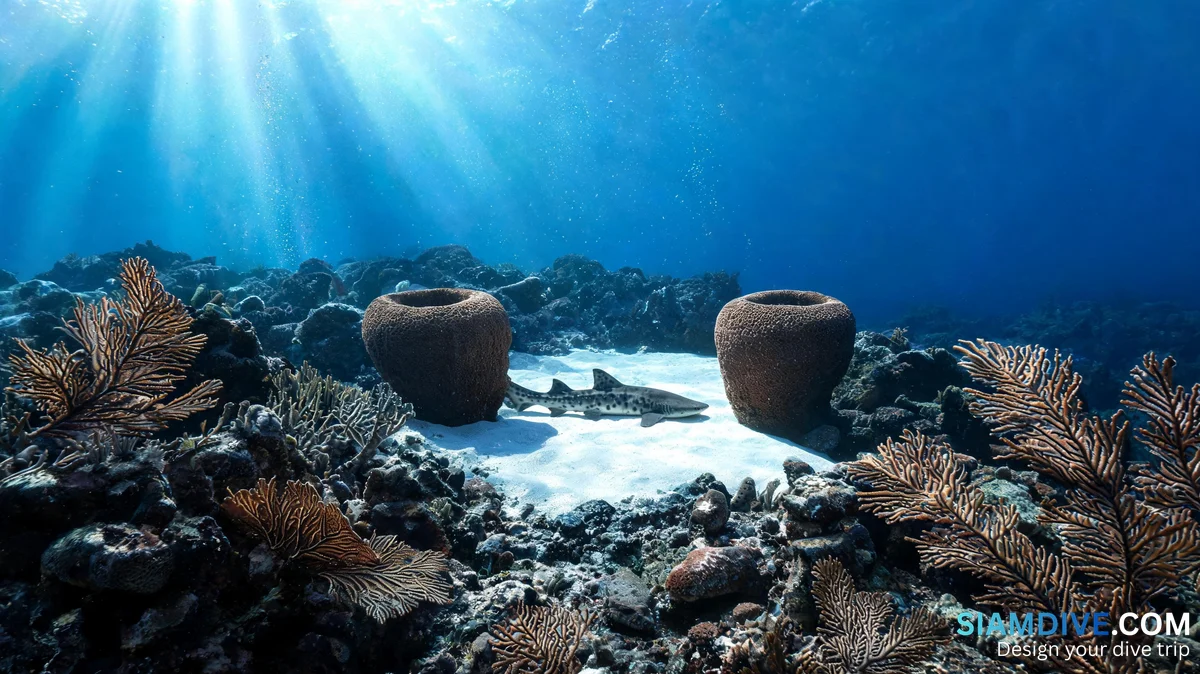
Three metres. That is all the water between a snorkeller's mask and a juvenile blacktip reef shark circling the sandy shallows off Koh Chan's northern bay. The shark is barely a metre long, unhurried, its black-tipped dorsal fin cutting the surface in slow arcs before it disappears over a patch of staghorn coral. Moments like these explain why Koh Chan — a small, rocky island in the Mu Ko Samae San archipelago — draws repeat visitors despite having no beach bar, no resort, and no mobile signal.
Koh Chan (เกาะจาน) sits roughly 9 kilometres south of the Khao Mar Jor pier in Sattahip, Chonburi Province. It is one of nine islands managed by the Royal Thai Navy as part of the Samae San marine park, which gained formal protected status in 2021. The island is small enough to swim around in twenty minutes, but its underwater topography holds more variety per square metre than most Gulf of Thailand reef sites — hard coral gardens from 3 to 10 metres, a sloping rock-and-sand bottom reaching 16 metres on the south side, and resident marine life that ranges from macro nudibranch to reef shark.
Site Layout: North Bay to Southern Reef Wall
Two distinct dive zones define Koh Chan. The northern bay — locally called Ao Khai — is sheltered, sandy-bottomed, and rarely deeper than 6 metres. Coral bommies dot the sand, each one a self-contained ecosystem hosting anemones, clownfish, and cleaning shrimp. Snorkellers and Open Water students share this zone without getting in each other's way.
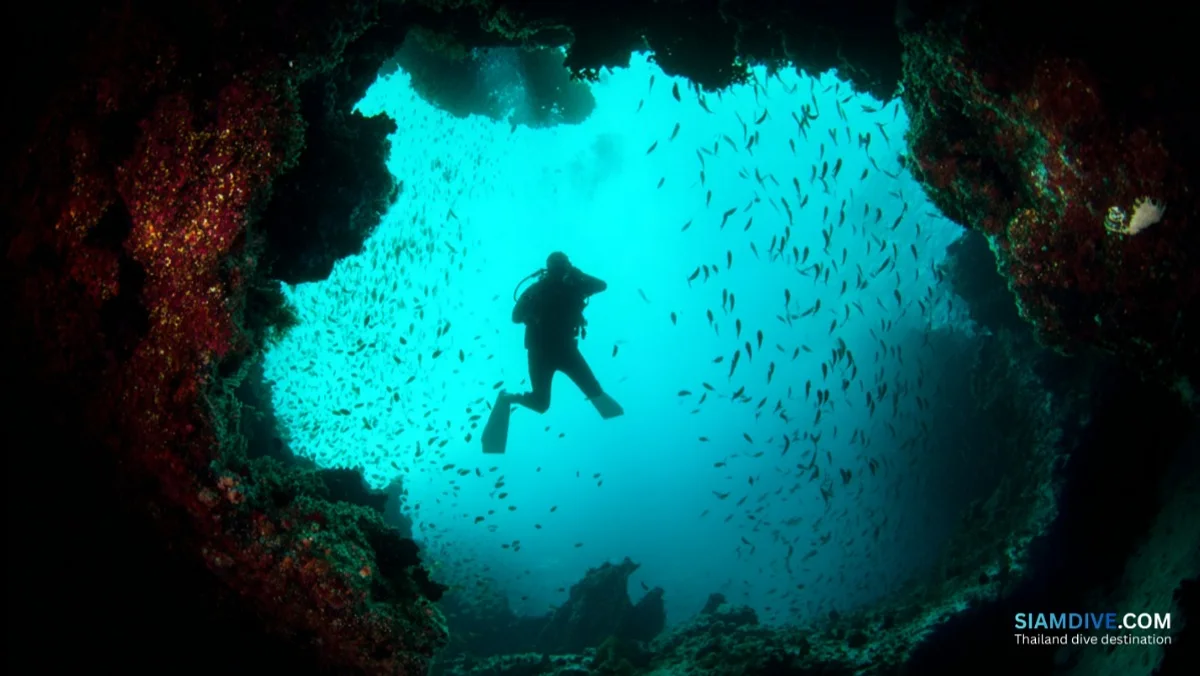
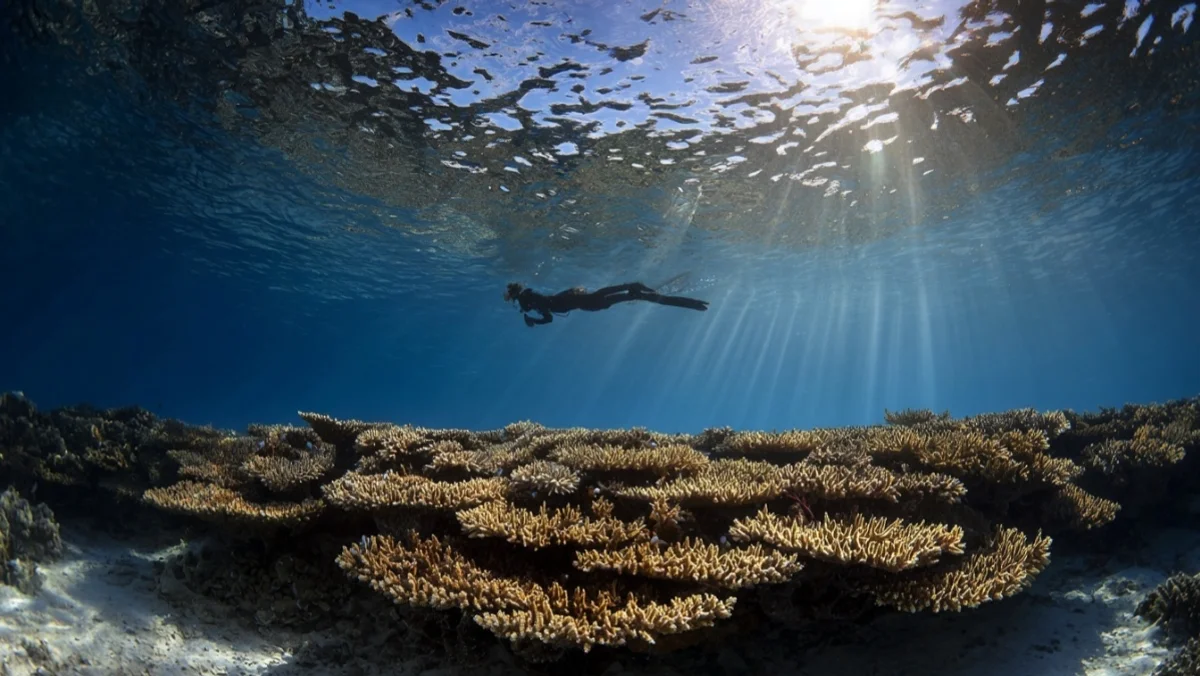
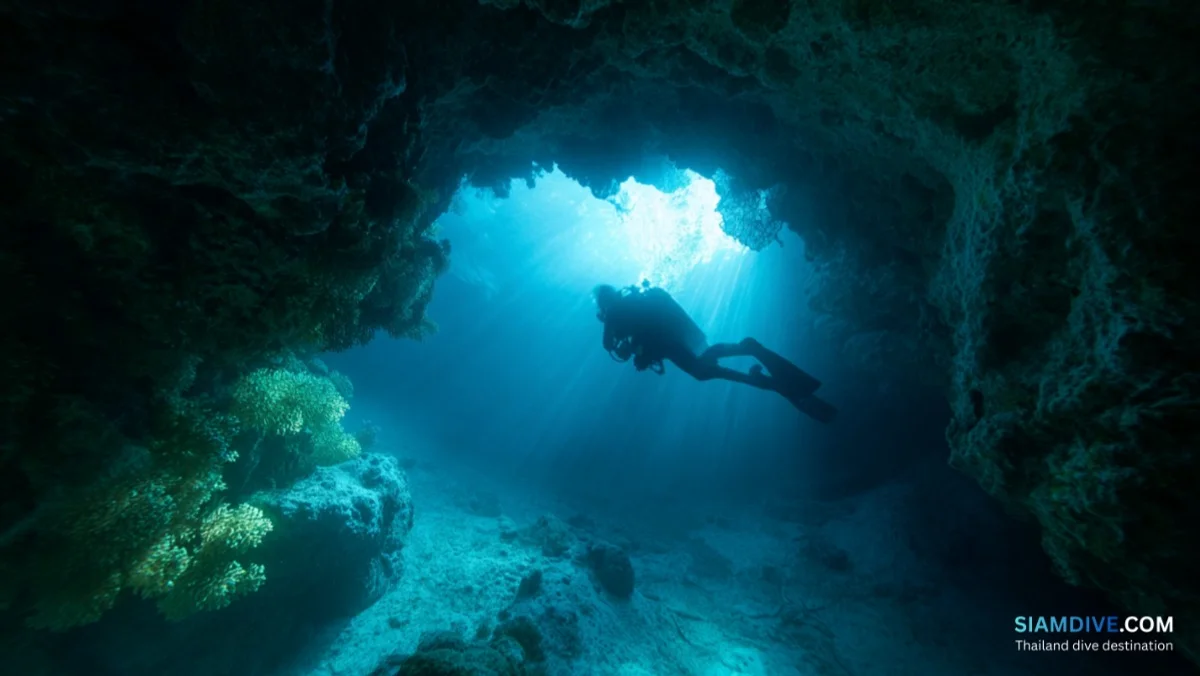
Swing around the eastern headland and the terrain changes. Boulders tumble from the rocky shoreline into deeper water, creating overhangs and small crevices that shelter moray eels, blue-spotted stingrays, and resting cuttlefish. The southern reef is where Koh Chan shows its strongest hand: dense hard coral coverage from 5 to 12 metres — mostly table coral, brain coral, and large colonies of starry coral — gives way to a forest of whip corals and sea fans anchored on rocky outcrops between 12 and 16 metres.
- Northern bay (Ao Khai): 2-6 m, sandy with coral bommies, calm current
- Eastern headland: 6-12 m, boulder field with overhangs and crevices
- Southern reef: 5-16 m, dense hard coral transitioning to whip coral forest
- Maximum recorded depth: 16 m (sand slope south side)
- Current: mild north, moderate-to-strong south (plan accordingly)
The current on the southern side deserves respect. During spring tides it can run hard enough to make finning against it pointless. Dive leaders familiar with the site time entries for neap tide windows or use the eastern headland as a natural shelter before drifting south with the flow.
Five Clownfish Species on One Reef
Koh Chan's coral bommies function as anemone apartments. At least five species of clownfish have been documented on the reef — including the saddleback clownfish, the Clark's anemonefish, and the ubiquitous false clown (the species that launched a generation of snorkellers after a certain animated film). Each anemone hosts a different species, sometimes separated by as little as two metres, which makes the northern bay a natural classroom for fish identification.
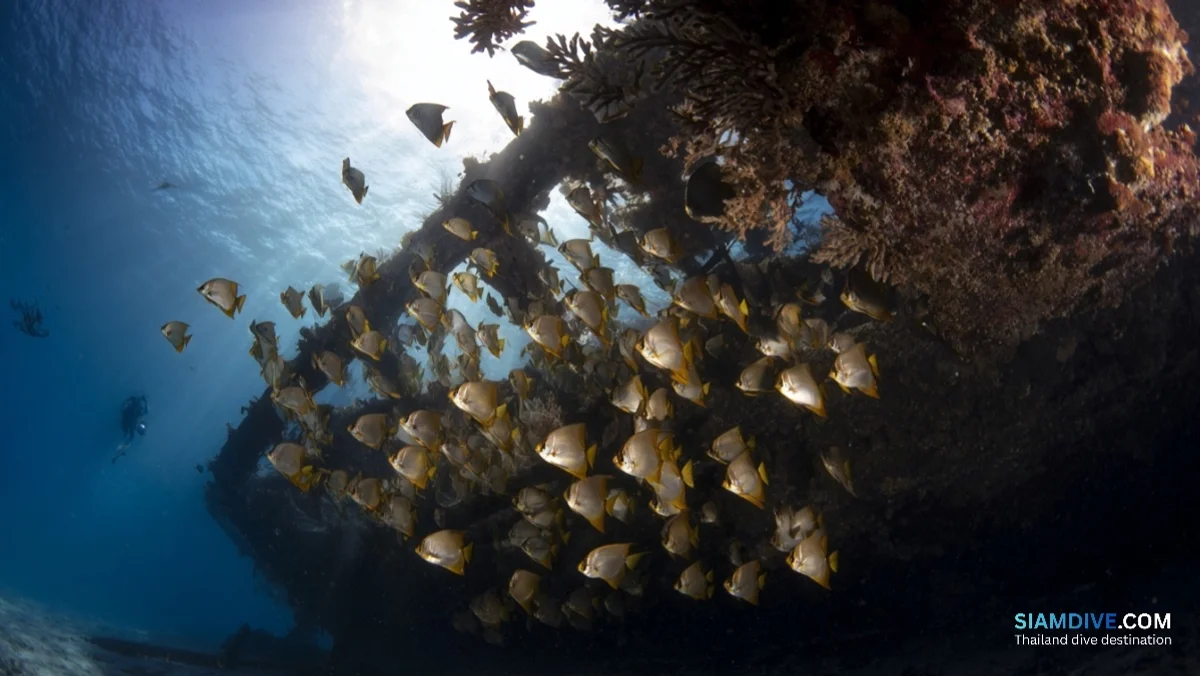
Beyond clownfish, the reef supports a roster that punches above its depth class. Parrotfish graze the hard coral during the day, leaving visible bite marks on the coral heads. Schools of fusilier sweep through mid-water. Angelfish and butterflyfish patrol the boulder overhangs. And on the sand slope at 14-16 metres, patient divers have reported finding the Costasiella — a leaf-shaped nudibranch sometimes called the "shaun the sheep" sea slug for its cartoon-like appearance.
Hard Coral Health: What the Reef Looks Like Today
Samae San's reefs have weathered both natural and human damage. Dynamite fishing, banned decades ago, stripped sections of reef flat around several islands. Coral bleaching events — most recently during regional temperature spikes — thinned coverage in shallow zones across the Gulf. Koh Chan's southern reef, however, has recovered better than most neighbouring sites.
The reef's recovery owes something to limited access. Because the Royal Thai Navy controls the entire island group, daily visitor numbers stay low compared to open-access reef systems like Pattaya's nearshore sites. Boat anchoring is restricted, and fishing within the marine park boundary carries penalties. Research conducted between 2018 and 2020 on artificial reef structures near Koh Samae San catalogued 99 fish species across 36 families, with the Pomacentridae family — damselfishes and clownfishes — dominating at 11 species. Seven of those species had not been previously recorded on the natural reefs of the archipelago, suggesting that the artificial structures are expanding the area's biodiversity rather than simply redistributing it.
Hard coral coverage between 5 and 12 metres remains the densest section. Table corals form overlapping canopies, and large boulder-sized starry coral colonies anchor the deeper zones. Soft corals — antipatharian black coral, whip corals, and gorgonian sea fans — take over below 12 metres where light levels drop and current delivers nutrients from the open Gulf.
Getting There: Navy Boats and Queue Numbers
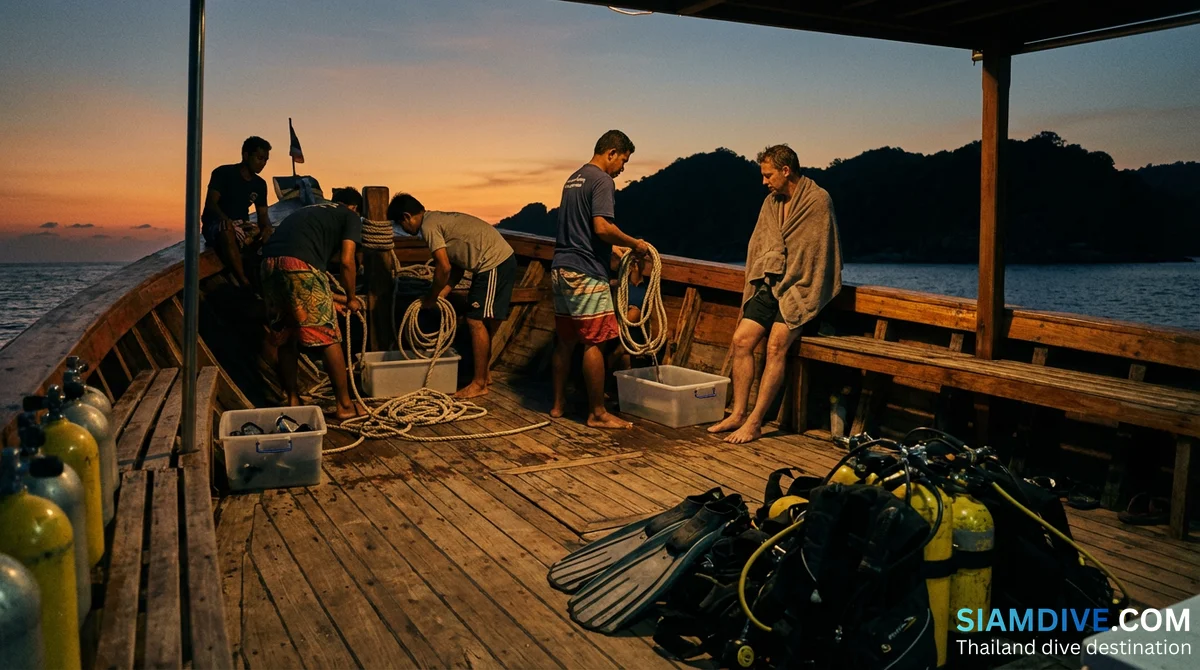
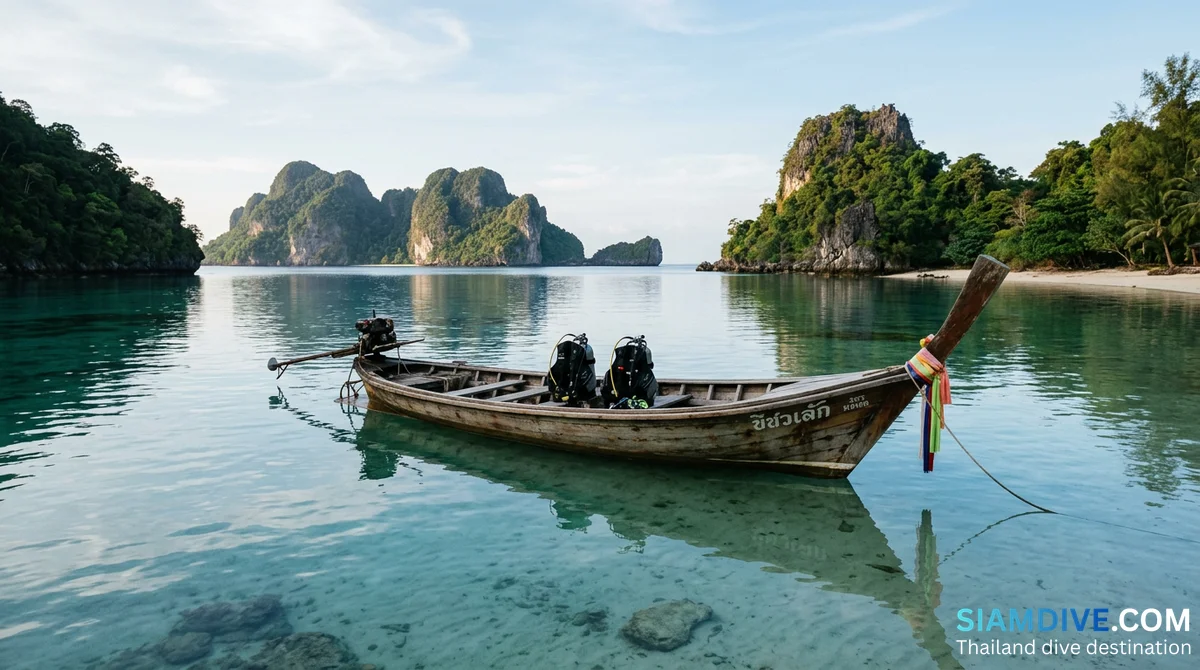
No private boats dock at Koh Chan without Navy clearance. All visitors depart from Khao Mar Jor pier (ท่าเรือเขามาจอ) in Sattahip, roughly 45 minutes southeast of Pattaya by road and about 2.5 hours from central Bangkok.
- Queue numbers: distributed from 07:00 at the Natural History Museum reception building
- Ticket sales: open at 08:00
- Departures: 6 daily runs between 09:00 and 14:00
- Entry fee: 300 THB (Thai nationals), 600 THB (foreigners) — covers round-trip boat and park access
- Dive gear: not provided; bring or rent from Sattahip-area operators
- Return boats: last departure from the islands around 15:00-16:00
Weekday mornings are the window for smaller crowds. Weekend and holiday slots fill early — arriving after 08:30 often means waiting for a later boat or being turned away entirely. The Navy enforces a daily visitor cap, which is part of the reason the reefs remain in the condition they do.
When to Dive Koh Chan
The Gulf of Thailand's eastern seaboard follows a different weather calendar than the Andaman coast. Koh Chan's best conditions run from September through December, when visibility regularly reaches 15-20 metres and surface conditions stay calm. January through March offers good diving with slightly reduced visibility (8-15 metres). The monsoon months of May through August bring lower visibility and rougher seas, though the Navy boat service operates year-round barring severe weather.
- Peak season: September-December — visibility 15-20 m, water temp 28-30 C
- Good season: January-March — visibility 8-15 m, water temp 27-29 C
- Low season: May-August — visibility 3-8 m, possible rough surface conditions
- Water temperature: 27-30 C year-round (3 mm shorty sufficient)
Neap tide days within any season offer the calmest conditions on the southern reef, where current is the primary variable. Checking a tide chart before booking a Sattahip dive trip can mean the difference between a relaxed drift along the whip coral forest and a workout that ends back at the boat with half a tank left.
Koh Chan vs. Neighbouring Samae San Sites
Each of the nine Samae San islands offers a different underwater personality. Koh Chan's strength is its beginner-to-intermediate accessibility paired with genuinely healthy reef. Compare that to Hin San Chalarm (Shark Fin Rock), which delivers better visibility year-round but sits in exposed water with stronger current — better suited to experienced divers. Koh Kham draws snorkellers with its white sand beach and shallow reef, while Koh Rong Khon drops into deeper territory favoured by Advanced Open Water divers.
For divers spending a full day in the Samae San area, a common two-dive plan pairs Koh Chan's southern reef in the morning — when light angles illuminate the hard coral canopy — with a second dive on Hin Yai (Big Rock) or the artificial reefs and wrecks in the wider Sattahip zone.
Planning Notes
Koh Chan is not a resort island. There is no fresh water, no food stall, no shade structure beyond the natural tree cover on the rocky shore. Divers and snorkellers bring everything they need — water, sun protection, reef-safe sunscreen — and carry everything out. That bare-bones simplicity is the point. The island exists for the reef, and the Navy intends to keep it that way.
A few practical details worth filing before the trip:
- Certification level: Open Water sufficient for north bay; Advanced Open Water recommended for southern reef drift
- Surface interval: rocky shoreline with limited flat ground; many divers do surface intervals on the boat
- Photography: macro lens for nudibranch and anemone detail in the north; wide-angle for coral canopy and sea fans on the south side
- Nitrox: available from some Sattahip-area operators; useful for extending bottom time on the 12-16 m southern reef
- Reef etiquette: no gloves, no touching coral, no standing on reef — the Navy and park staff enforce these rules
The 600 THB entry fee for foreign visitors covers transport and park access but not equipment rental or guide services. Several Sattahip and Pattaya-based dive operators run day trips to Samae San that bundle gear, guide, and boat logistics into a single package — typically priced between 2,500 and 4,500 THB depending on the number of dives and whether Nitrox is included.