Why Koh Rong Khon's 3-Knot Current Builds Better Reefs
23 เมษายน 2569
Koh Rong Khon sits metres from the Hardeep wreck yet hosts one of Samae San's healthiest reefs. Strong tidal current, 25 m depth, and decades of Navy protection explain why.
A Rocky Reef Shaped by Current
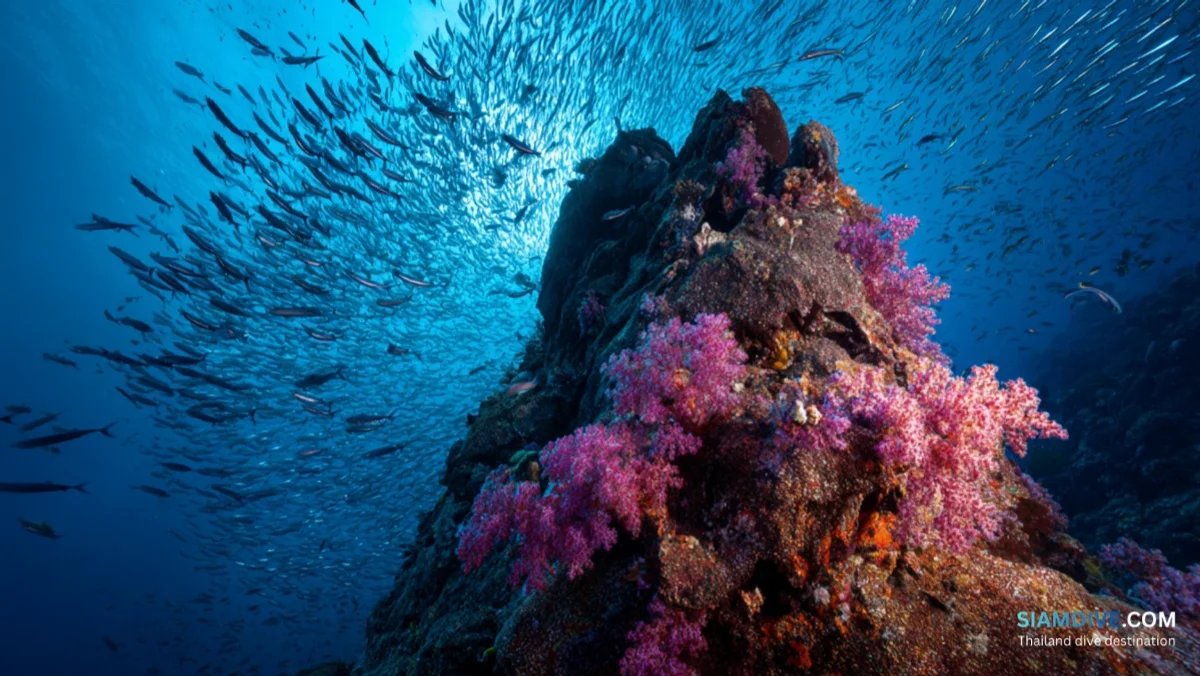
Three knots of tidal flow rip across the granite boulders twice a day, scouring sand from crevices and delivering plankton in sheets so thick the water dims to green. Most divers heading to Mu Ko Samae San book for the Hardeep wreck or the legendary Samaesan Hole. Koh Rong Khon sits barely fifty metres from the wreck site, yet its rocky reef draws far fewer bubbles — and that relative quiet is exactly why the coral here grows dense, the sea fans grow wide, and the blue-spotted stingrays sit undisturbed on every ledge.
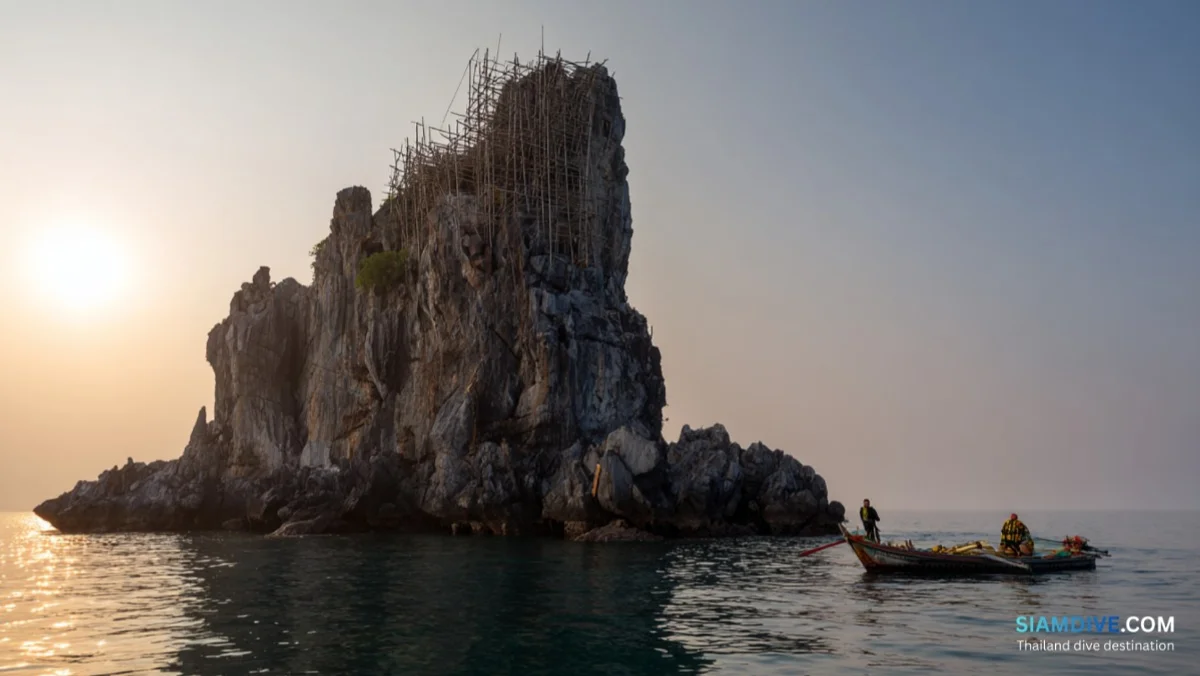
The island is one of nine in the Samae San group, a cluster of limestone and granite outcrops under Royal Thai Navy jurisdiction in Sattahip District, Chonburi Province. Designated a protected marine park in 2021, the archipelago caps daily visitors at 500 and enforces strict no-anchor zones. For Koh Rong Khon, those protections mean the reef has had decades of military buffer followed by formal conservation — a combination few dive sites in the upper Gulf of Thailand can claim.
What Lies Below 25 Metres
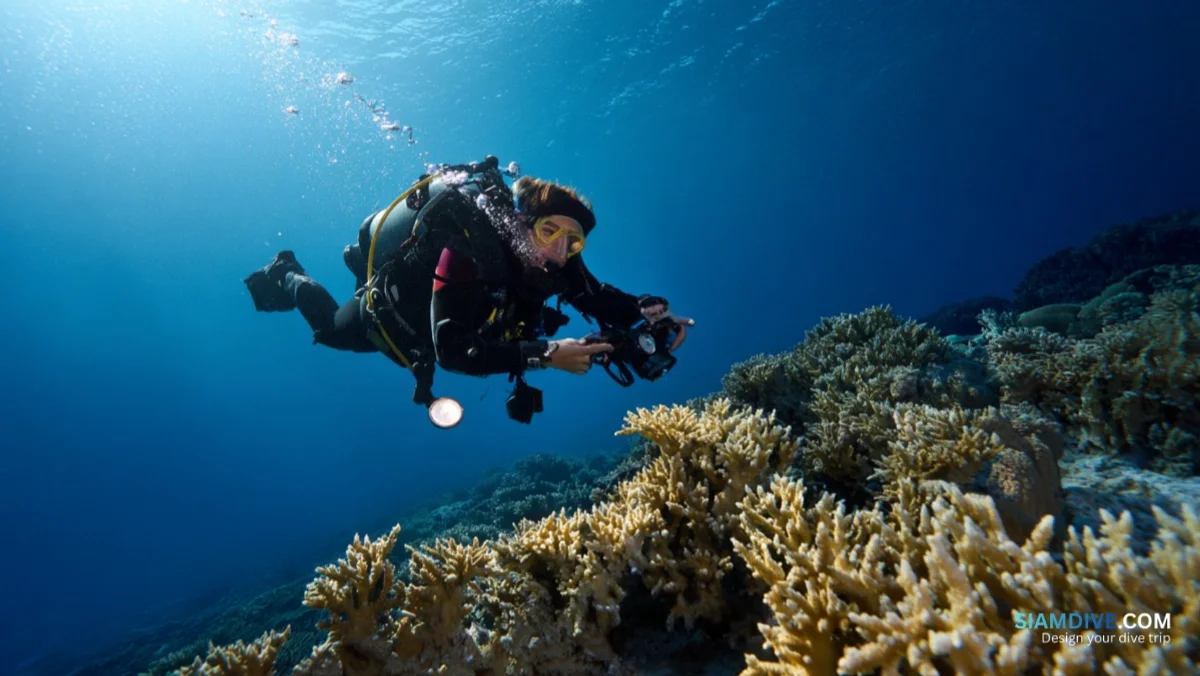
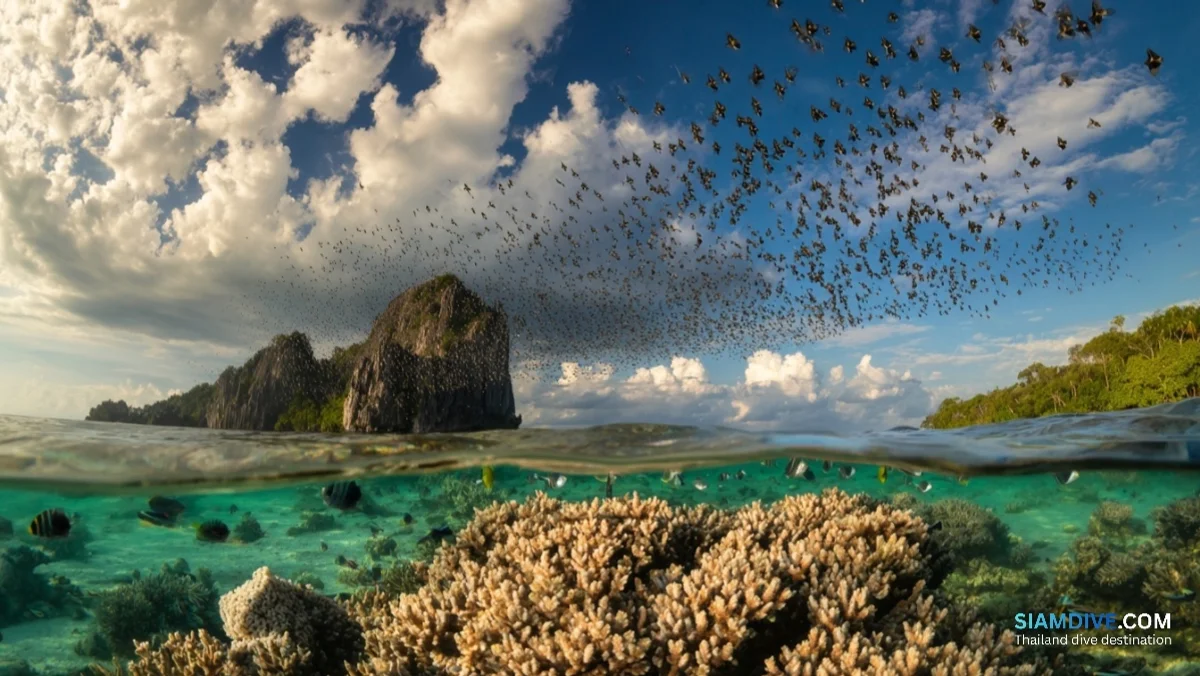
The reef starts shallow on the island's western flank, where hard coral colonies carpet the boulders from around 5 metres down. Staghorn coral, massive Porites heads, and leather coral dominate the upper tier. Between 8 and 15 metres the topography shifts to a jumble of granite blocks separated by sand channels — each gap hosting its own micro-ecosystem of gobies, cardinalfish, and cleaning shrimp.
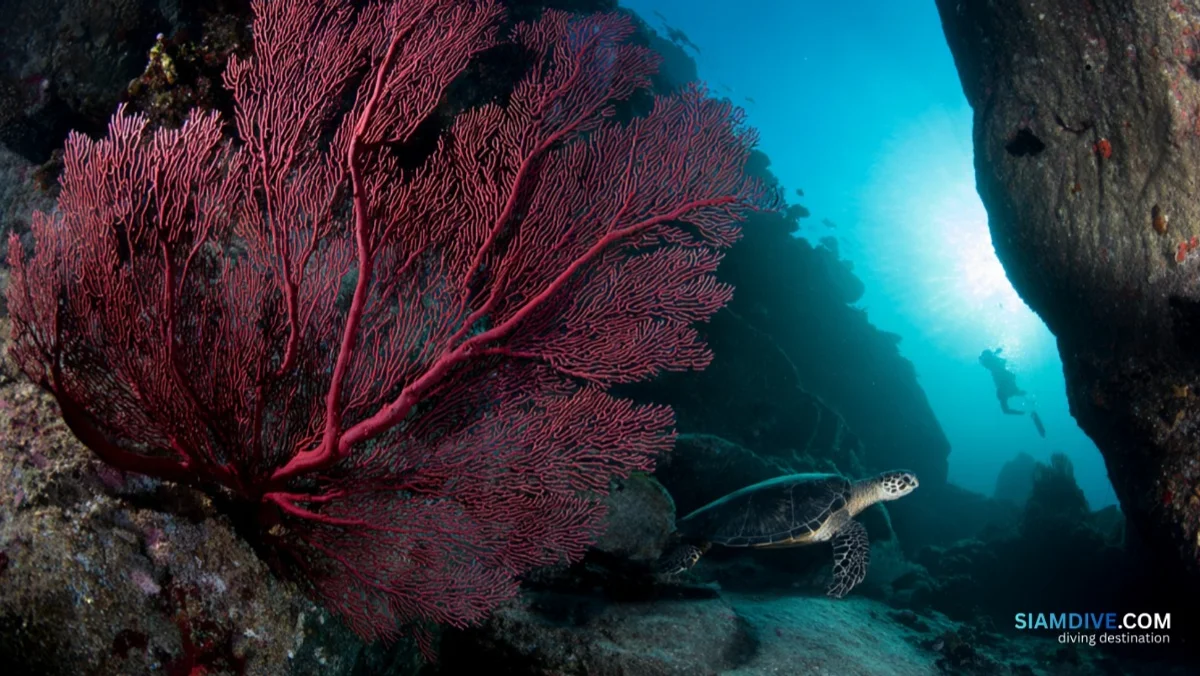
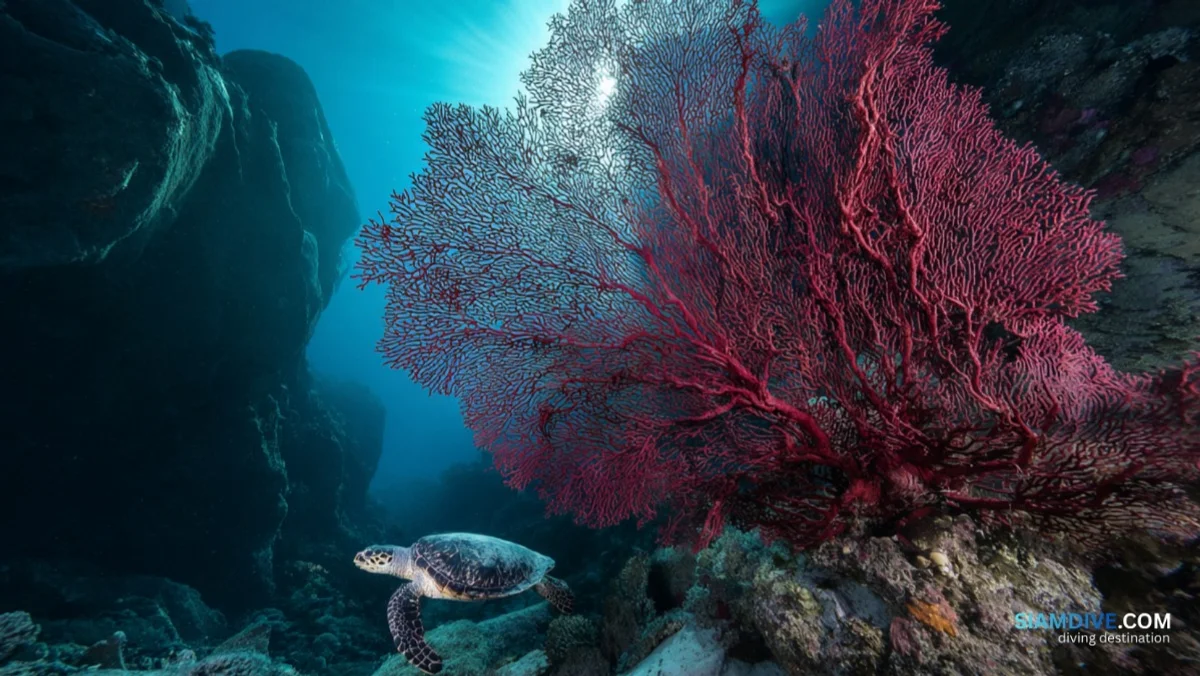
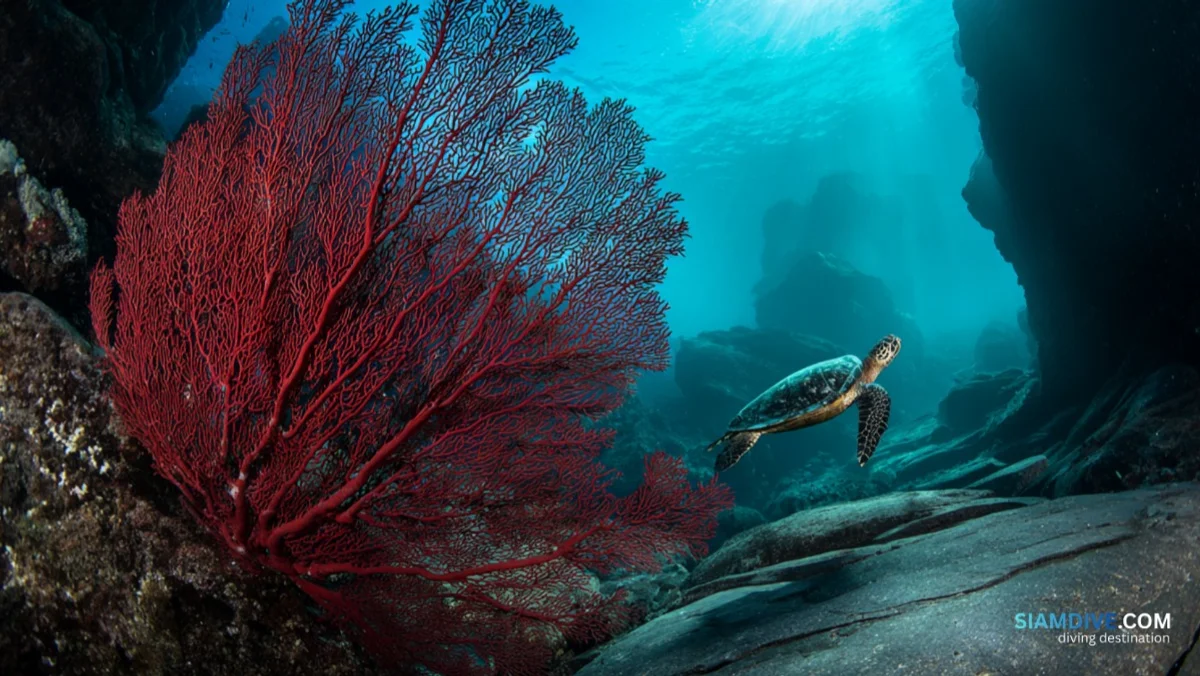
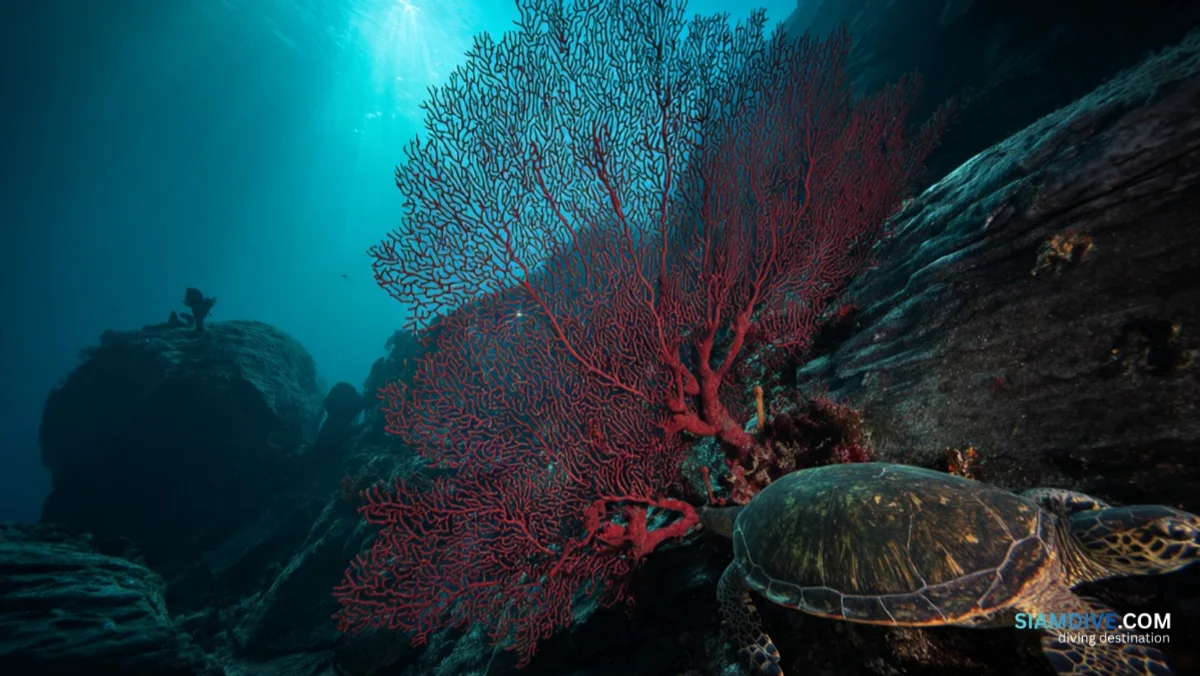
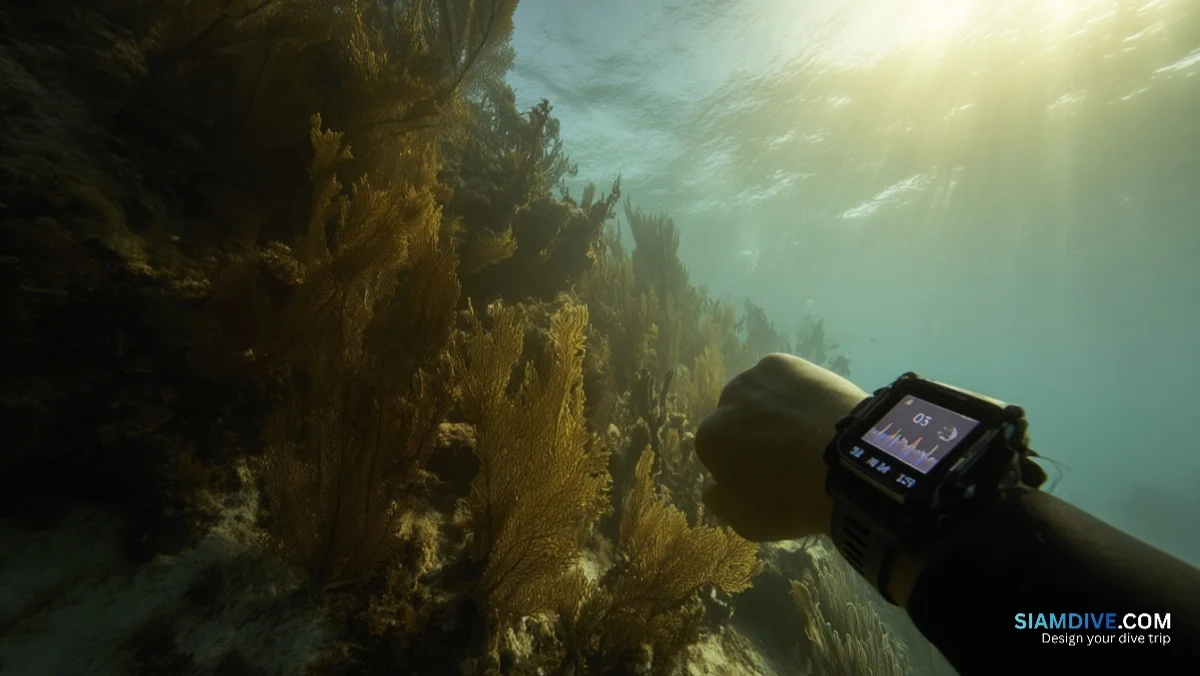
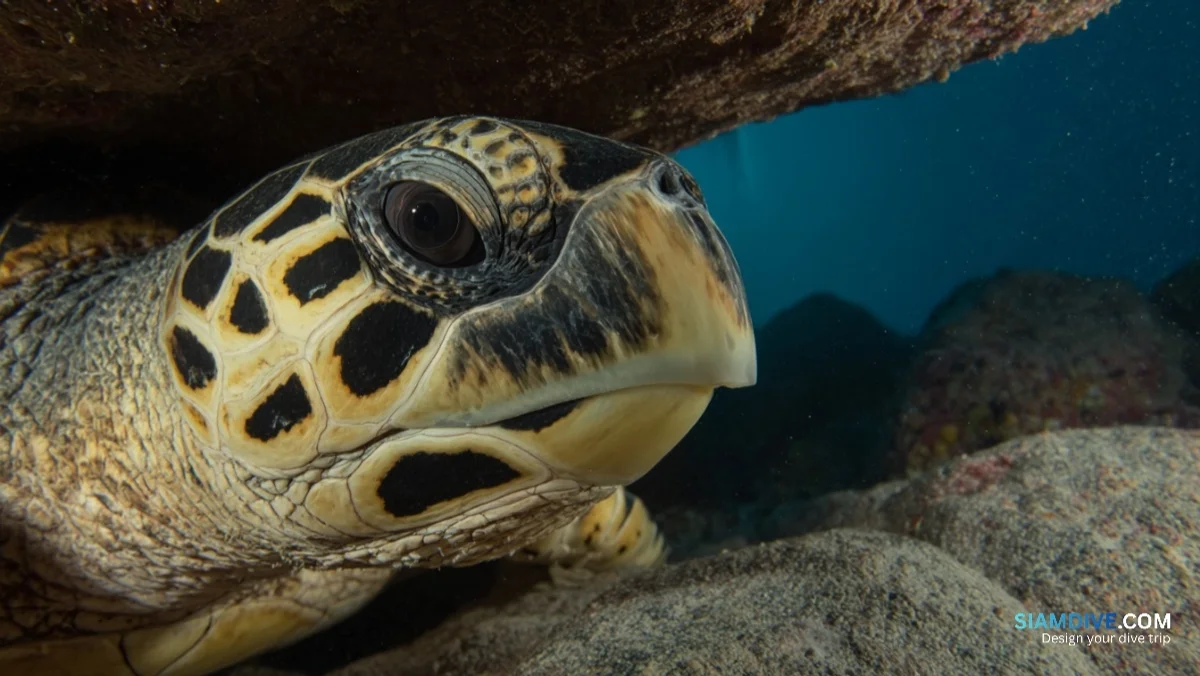
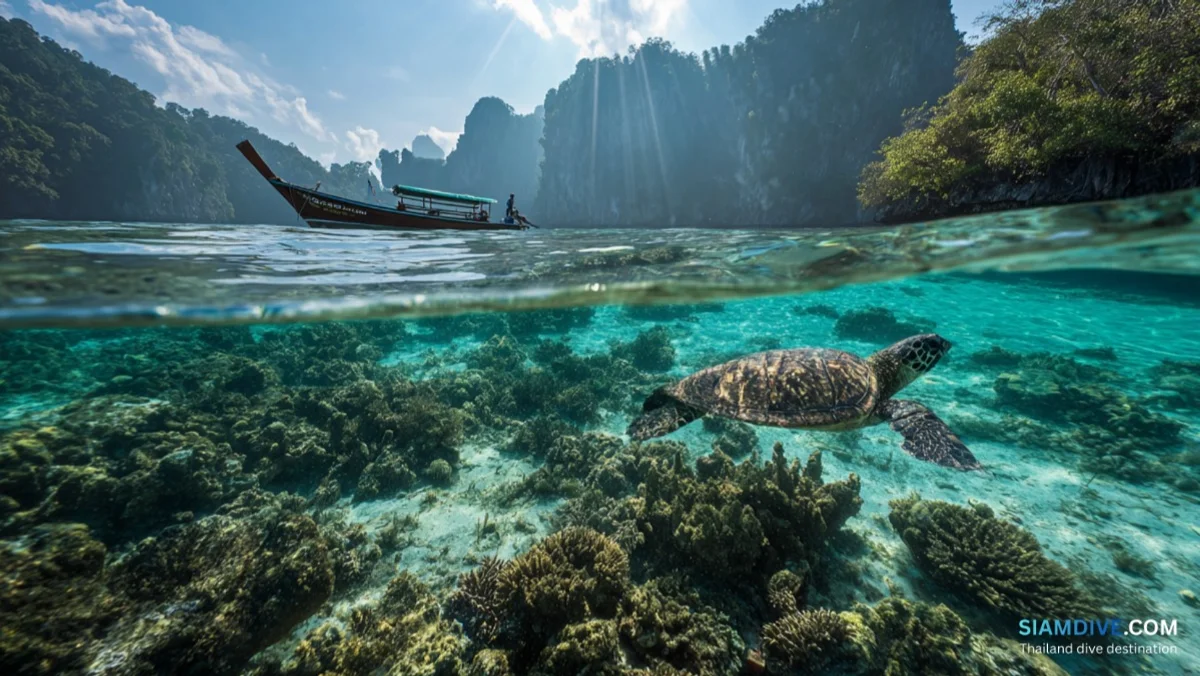
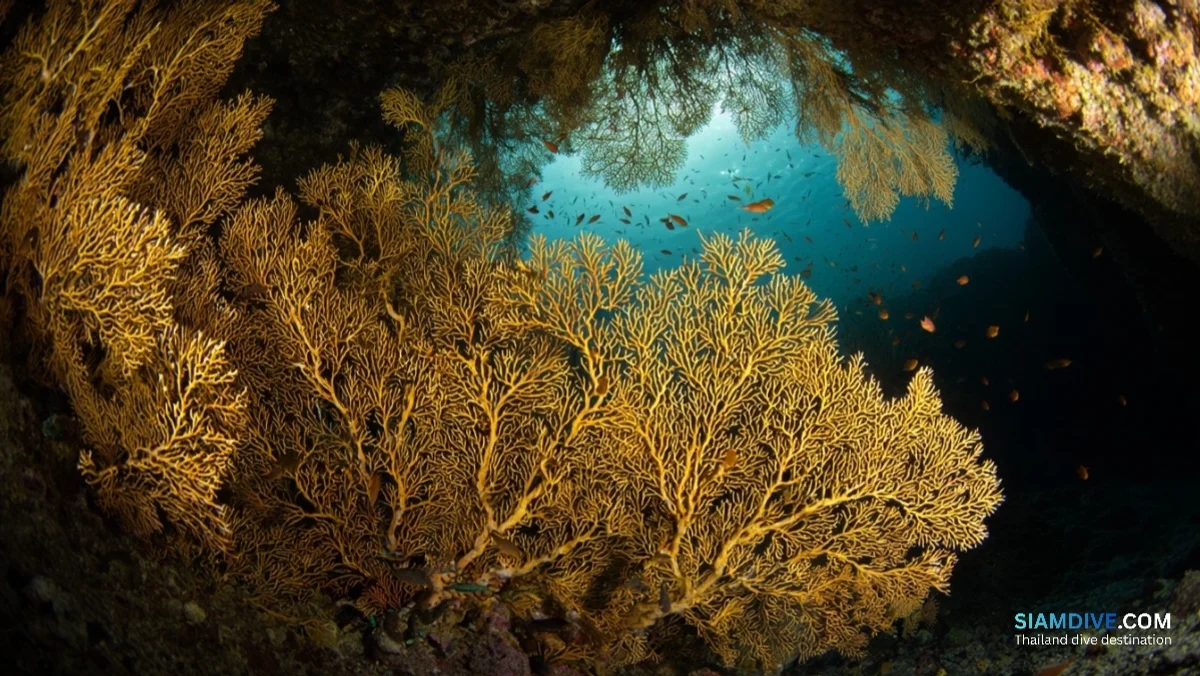
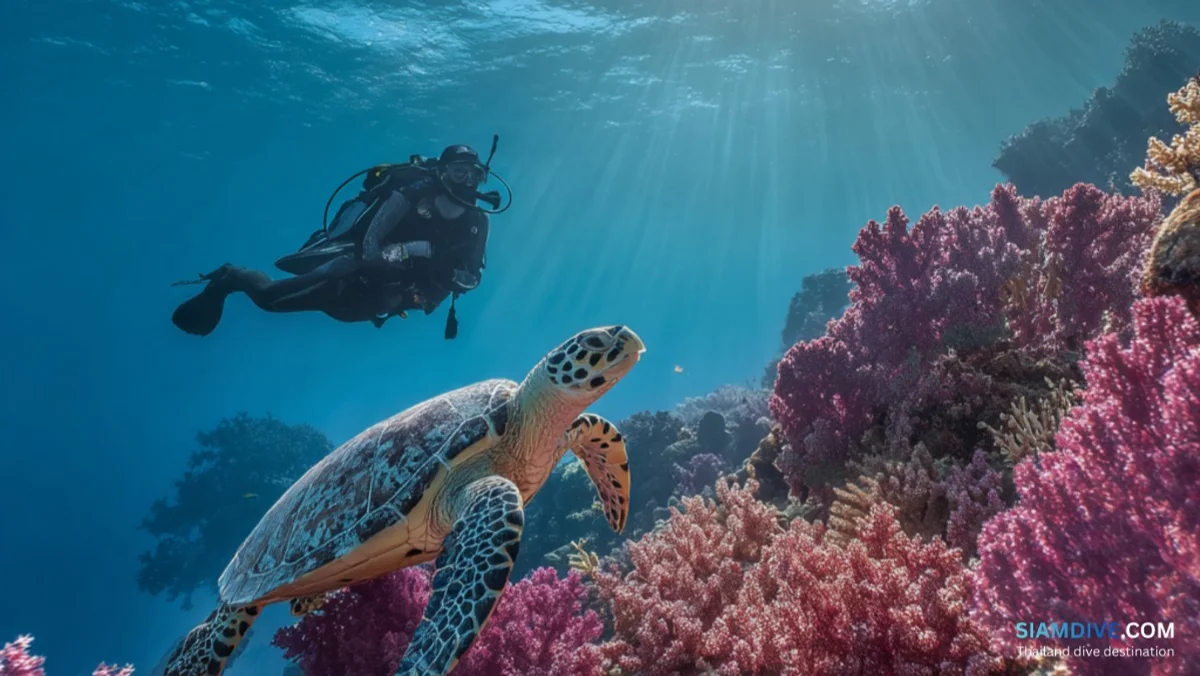
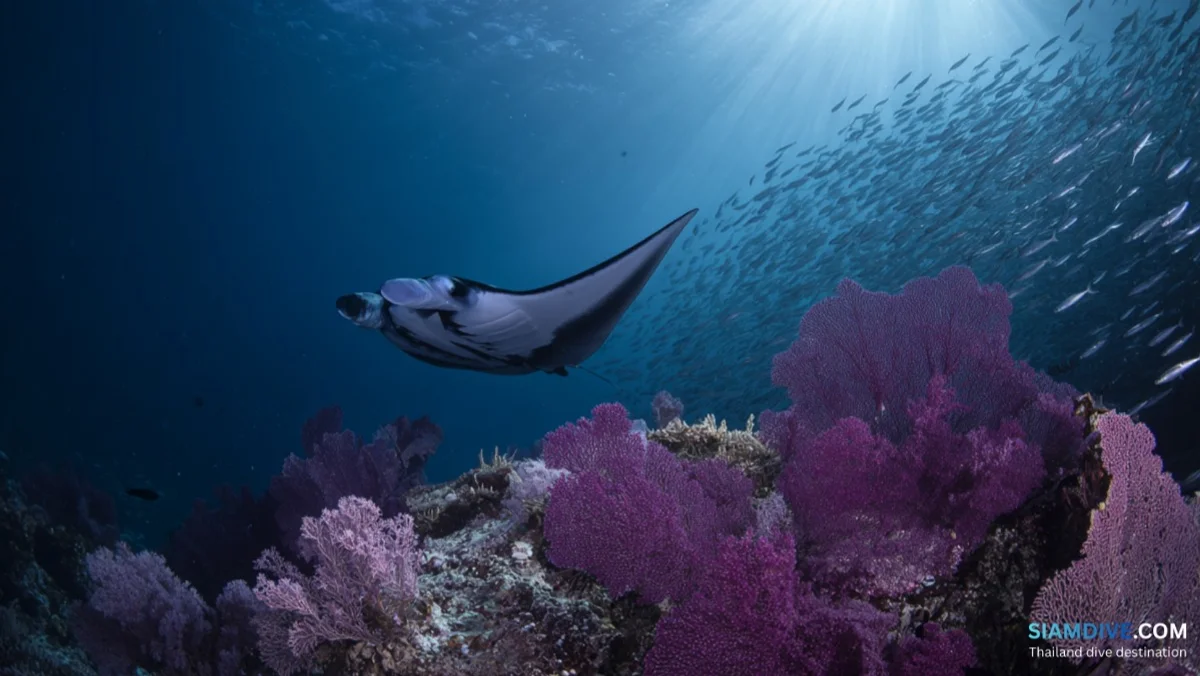
Below 15 metres the rock face steepens. Colourful soft corals and gorgonian sea fans colonise the overhangs, thriving in the nutrient-rich current that sweeps between Koh Rong Khon and neighbouring Koh Chuang. The maximum recreational depth reaches approximately 25 metres on the eastern side, where the boulders give way to a sandy slope. Divers comfortable with moderate current find the deepest sections the most rewarding: barrel sponges anchor to the rock, and hawksbill sea turtles rest in the lee of the largest formations.
- Maximum depth: ~25 m (eastern slope)
- Working depth: 8–18 m (best coral coverage)
- Bottom type: granite boulders, hard coral, sand channels
- Visibility: 5–20 m (season-dependent; best Oct–Dec)
- Water temperature: 27–31 °C year-round
- Current: up to 3 knots — plan dives around slack tide
Marine Life on a Current-Fed Reef
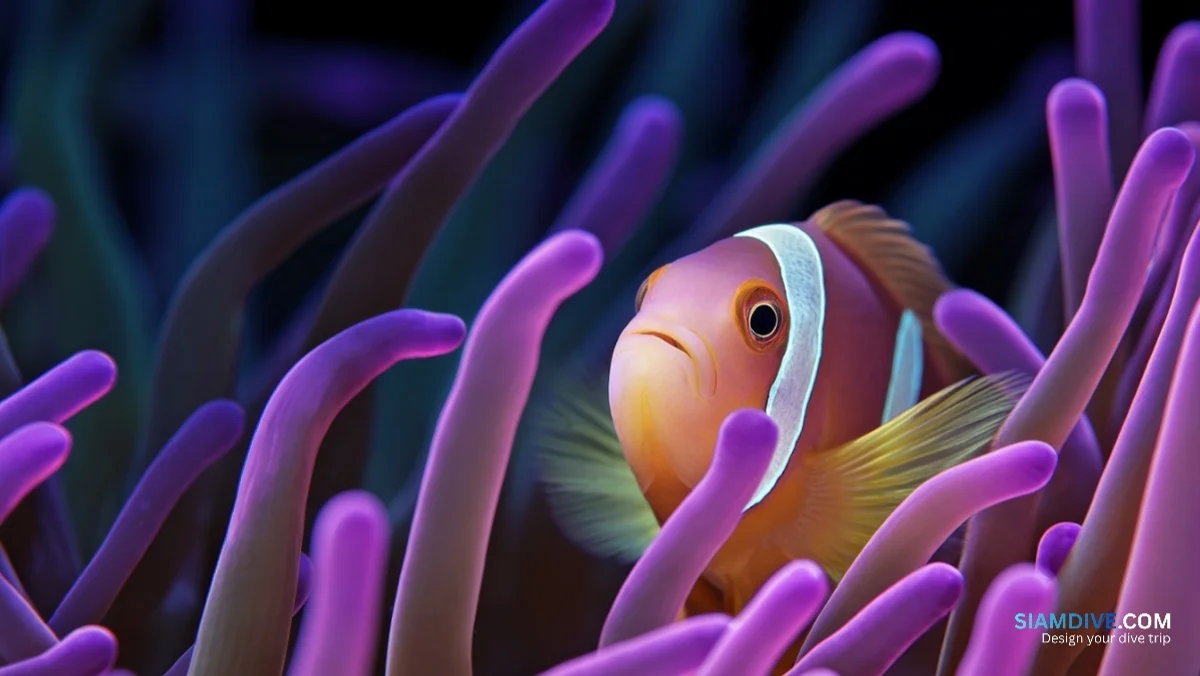
Nutrients carried by tidal flow support a food chain that begins with filter-feeding soft corals and ends with roaming barracuda schools. At least three species of clownfish occupy anemone patches across the reef — Clark's, skunk, and saddleback — each defending territory no larger than a dinner plate. Blue-spotted stingrays are common on the sandy patches between boulders, and moray eels — both giant and honeycomb varieties — peer from holes in the rock.
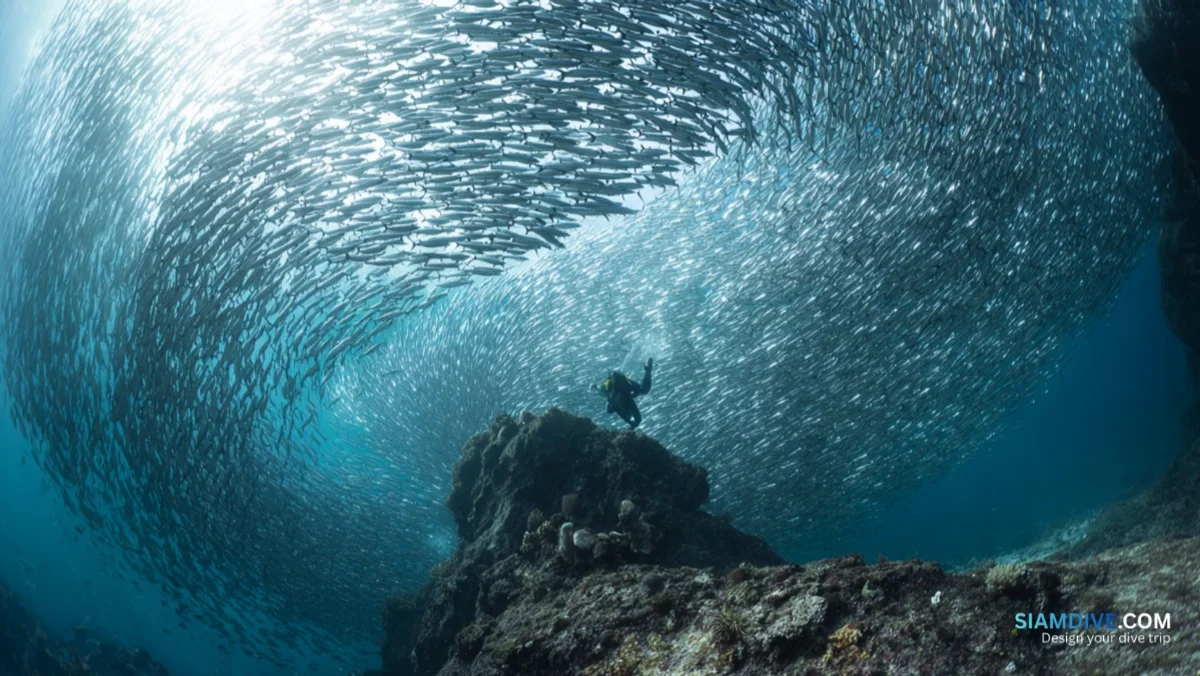
Larger visitors pass through seasonally. Bamboo sharks occasionally tuck themselves under overhangs at dawn. Hawksbill turtles forage on sponges in the 12–18 m band. Schools of yellow-tail barracuda, fusiliers, and trevally hunt above the reef crest, particularly when the current is running hard. Butterflyfish, angelfish, and parrotfish fill the mid-water during calmer spells. A 2020 fish census study at Samae San found the Pomacentridae family most dominant with 11 species, followed by Labridae and Gobiidae families at 8 species each — numbers that reflect the reef's structural complexity.
The WWII Wreck Next Door
Fifty metres from the reef's eastern edge, the SS Suddhadib — known to divers as the Hardeep — rests on her starboard side at 26–28 metres. A Thai-owned freighter requisitioned by the Imperial Japanese Navy during World War II, she was sunk by a British bombing raid on 1 June 1945. The 64-metre hull now hosts thick coats of soft coral, sea whips, and sponges, and the spacious interior allows limited penetration for experienced divers.
The proximity creates a natural dive plan: begin on Koh Rong Khon's reef in the shallows, drift east as the current allows, and finish at the wreck for the deeper portion of the profile. Alternatively, wreck divers ascending from the Hardeep can spend their safety stop and off-gas time over the reef's hard-coral gardens at 5–8 metres. Either way, a single dive covers both a healthy natural reef and one of the Gulf of Thailand's most historically significant wrecks. More context on the area's wreck heritage appears in our Samae San wreck diving guide.
Current, Tides, and When to Dive
Current is the defining factor at Koh Rong Khon. The channel between this island and Koh Chuang funnels tidal water at speeds that can reach 3 knots during spring tides — enough to make finning pointless and mask-clearing difficult. Planning around slack tide is not optional; it is the difference between a relaxed reef tour and an uncontrolled drift toward open water.
Neap tides offer the gentlest conditions. During these windows the current drops to a manageable half-knot, visibility improves as suspended sediment settles, and the reef's smaller residents — pipefish, nudibranchs, cleaning stations — become accessible for macro photography. An SMB is mandatory for every dive; boat traffic around the Samae San group is constant, and surface intervals on the island itself are not permitted.
- Best months: October–December (calm seas, best visibility up to 20 m)
- Also good: January–March (slightly more wind, visibility 10–15 m)
- Avoid: May–August (southwest monsoon, reduced visibility, stronger surge)
- Dive timing: slack tide windows, typically 45–60 minutes each cycle
- SMB: mandatory — boat traffic is heavy around the island group
Getting There and What It Costs
All access to the Samae San island group runs through Khao Mar Jor Pier in Sattahip, roughly 45 minutes southeast of Pattaya and about 2.5 hours from Bangkok. Tickets are sold at the Natural History Museum reception building near the pier starting at 8 AM, with queue numbers distributed from 7 AM. The daily visitor cap of 500 means weekend trips sell out early — arriving by 7:30 AM is a practical necessity.
Army-operated boats depart hourly from 9 AM to 1 PM, with the crossing to Koh Samae San taking 10–15 minutes. From there, dive operators arrange boat transfers to specific sites including Koh Rong Khon. The area is a comfortable day trip from Bangkok or Pattaya, though the early start and Navy logistics make it feel more like an expedition than a resort dive.
- Entrance fee (foreigners): 600 THB (includes round-trip Navy boat)
- Entrance fee (Thai nationals): 300 THB
- Daily visitor cap: 500 people
- Pier departure times: 9:00, 10:00, 11:00, 12:00, 13:00
- Travel from Pattaya: ~45 min by road to Sattahip
- Travel from Bangkok: ~2.5 hours by road
Dive Planning and Certification
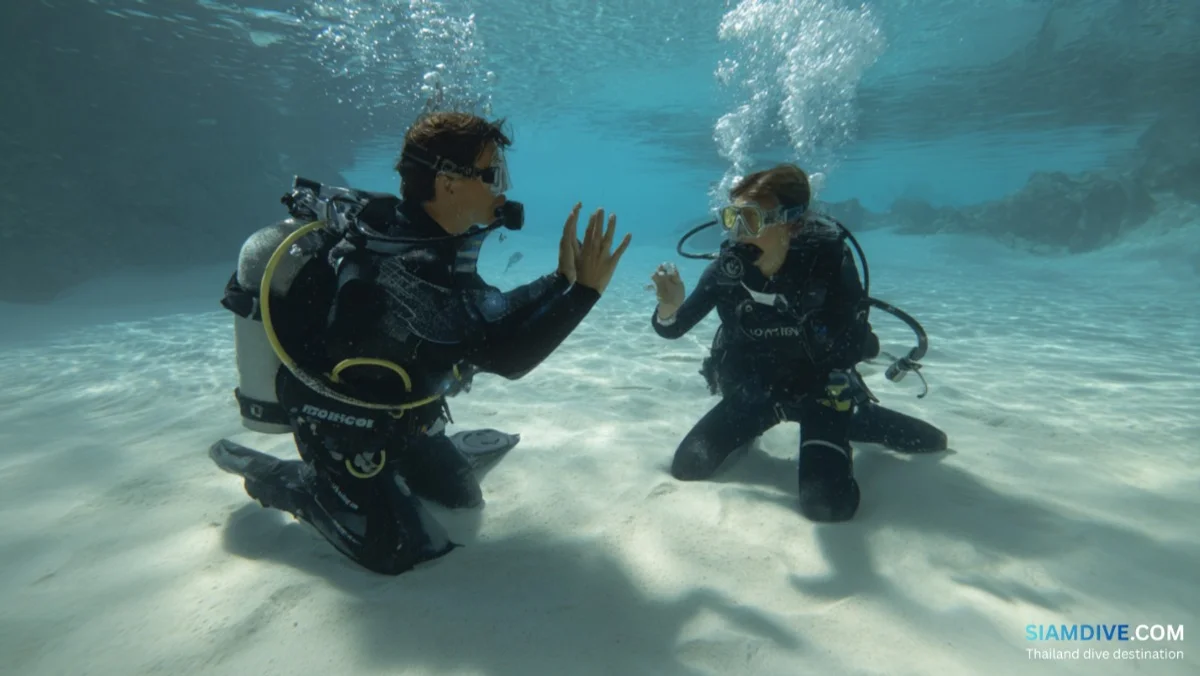
Open Water certification is the minimum for the shallow western reef between 5 and 18 metres. The eastern slope beyond 18 metres and any drift along the Hardeep corridor require Advanced Open Water or equivalent, and solid buoyancy control is non-negotiable in the current. Nitrox extends bottom time on the deeper sections — a worthwhile choice given the 25 m maximum and the temptation to linger at the gorgonian fans.
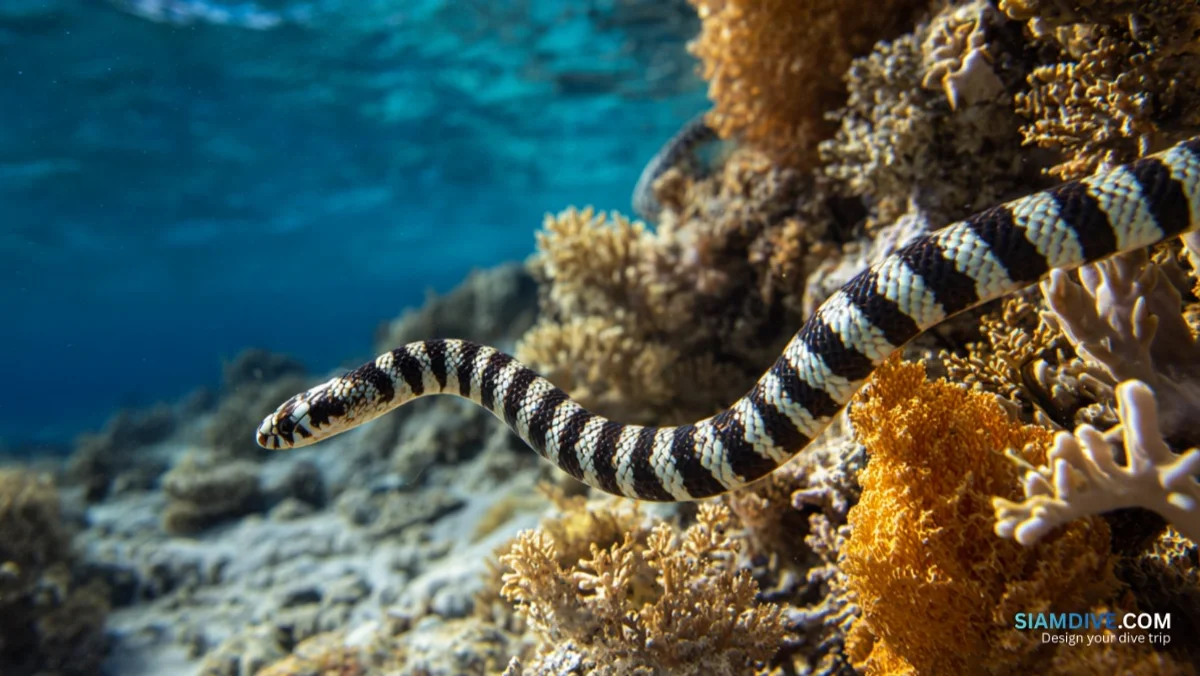
Night diving is permitted at Koh Rong Khon and transforms the reef. Lionfish emerge from ledges to hunt, banded sea kraits patrol the rock face, and the soft corals extend their polyps to feed in the dark current. Several Sattahip-based dive operators run evening trips during the calm season, though availability depends on Navy scheduling and sea conditions. For a look at other reef sites in the archipelago, see our coverage of Koh Chan's coral gardens, the dramatic formations at Hin San Chalarm, and the underwater park at Koh Kham.
A Reef That Benefits from Neglect
Koh Rong Khon does not have the name recognition of Richelieu Rock or the Instagram appeal of a Similan swim-through. What it has is decades of restricted access, a current regime that delivers food to every square metre of reef, and a location beside one of Thailand's best wreck dives. The combination means that each dive here offers two experiences — pristine natural reef and wartime history — within a single tank.
The 2021 marine park designation added formal monitoring to what the Navy's presence had already achieved informally: a reef largely free from anchor damage, overfishing, and tourist pressure. As more divers look beyond the Andaman side for Gulf of Thailand reef and wreck experiences, Koh Rong Khon is positioned to reward those who plan around the tides and arrive before the ticket window closes.
Sources
- PADI — Samaesan dive site overview
- Thailand National Parks — marine park regulations and fees
- DeeperBlue — Ko Samae San: Pattaya's best diving
- ScubaDiving.place — Ko Chan, Ko Rong Nang and Ko Rong Khon dive sites
- Chulalongkorn University / TCI — fish species composition at Samae San artificial reefs