83,000 m² of Coral on a Navy-Locked Island: Koh Kham
23 เมษายน 2569
Koh Kham packs 83,000 square metres of staghorn, table and brain coral into waters barely 3-15 metres deep — all under Royal Thai Navy guard in Sattahip's Samae San marine park.
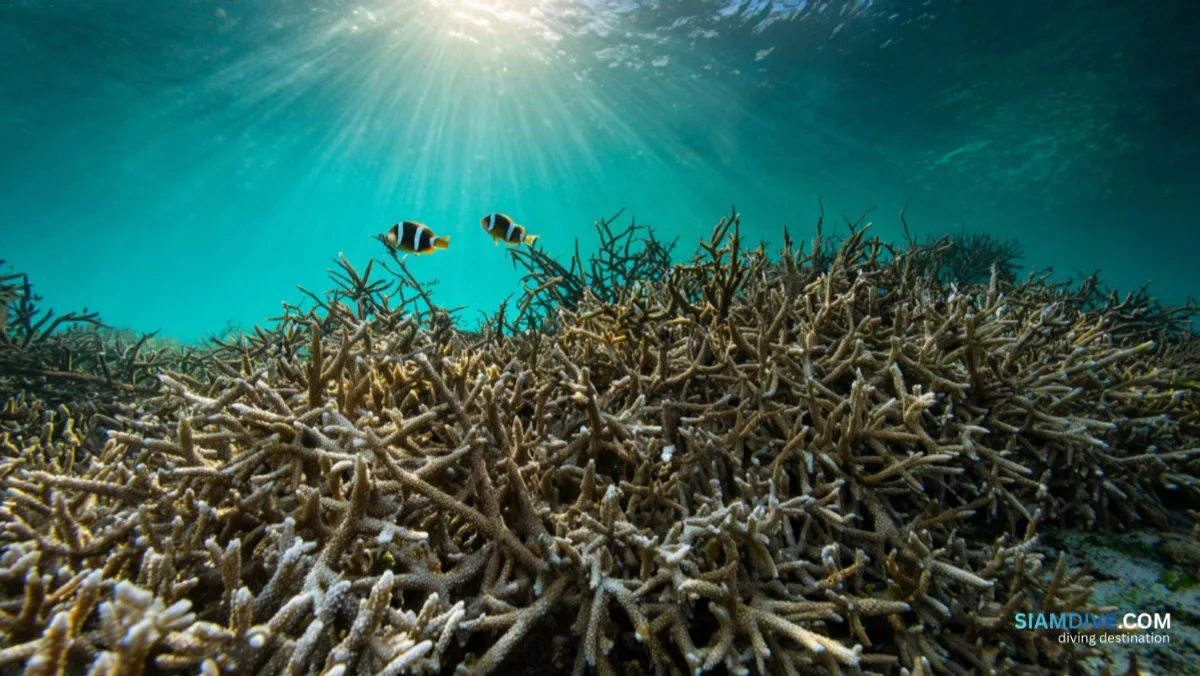
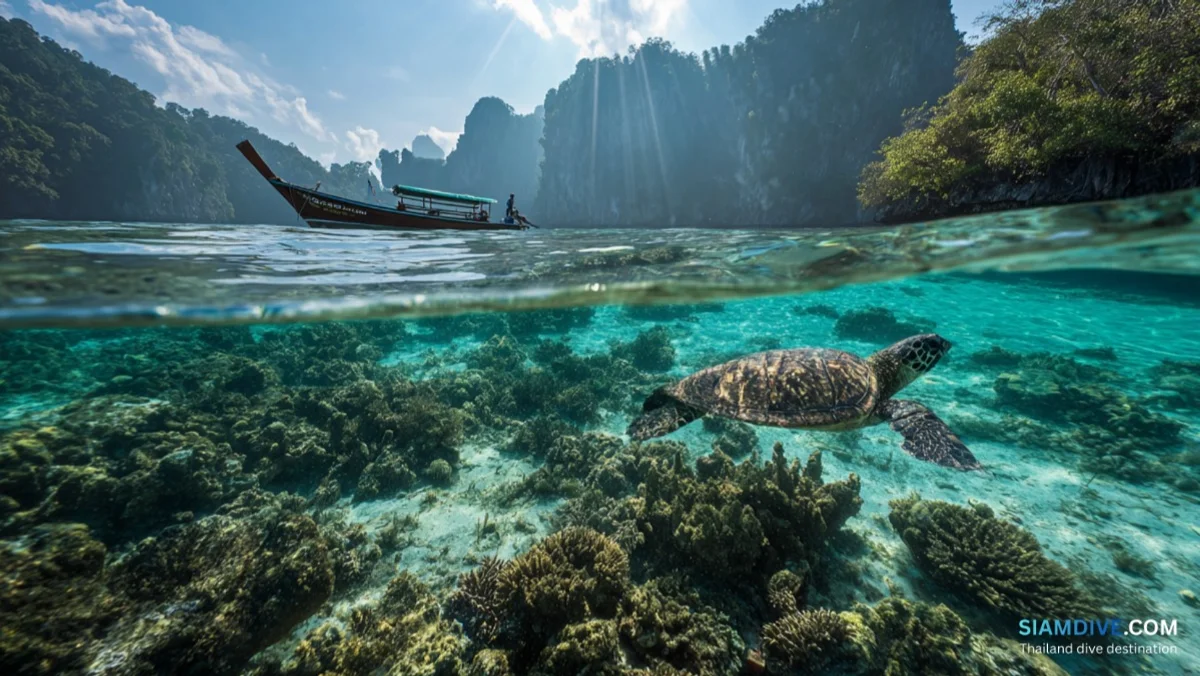
Eighty-three thousand square metres of living reef, and you can see most of it without going deeper than your head. Koh Kham sits just west of Koh Samae San in Sattahip's military waters — an H-shaped sliver of limestone covering barely 61 rai, ringed by staghorn thickets so dense that the shallows glow turquoise from above. The Royal Thai Navy runs access, caps visitor numbers, and bans overnight stays. The result is a coral garden that looks the way Gulf of Thailand reefs looked decades ago, before anchor chains and sunscreen did their work.
A Reef the Navy Keeps Locked
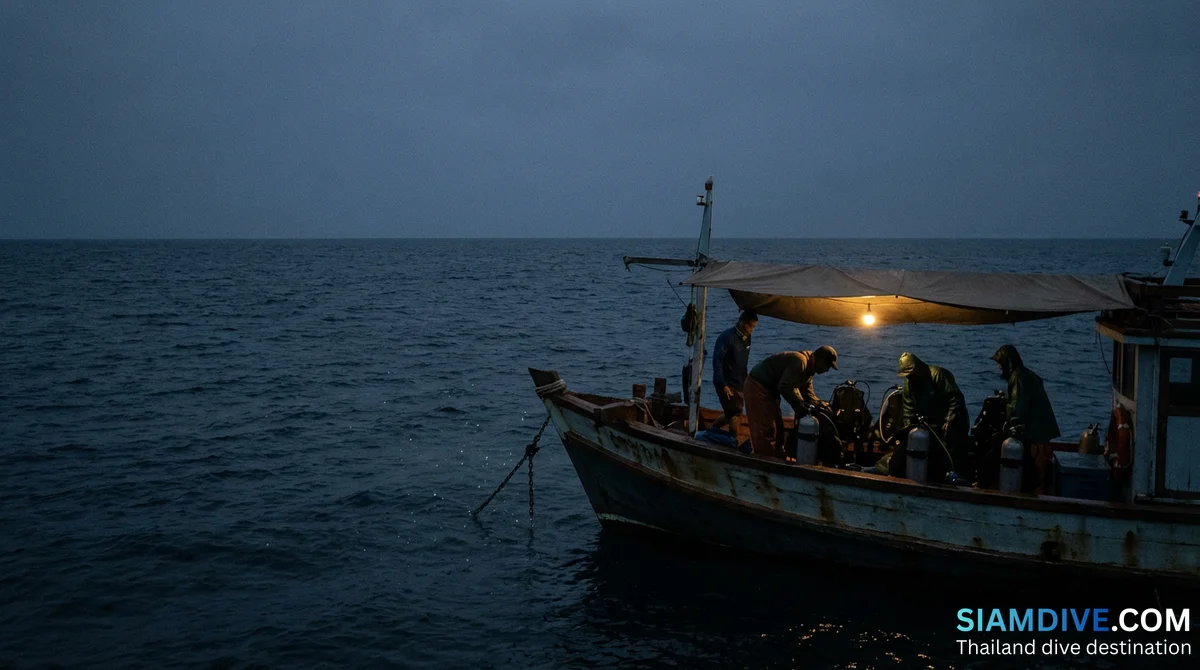
Koh Kham falls inside Mu Ko Samae San, a nine-island archipelago declared a protected marine park in 2021. The Navy's involvement predates that designation by years — conservation here is a royal initiative, not a tourism play. Boats leave from Ban Samae San Pier between 09:00 and 10:00, and every visitor must be off the island by 15:30. There are no bungalows, no beach bars, no overnight options. Waste goes back on the boat with you.
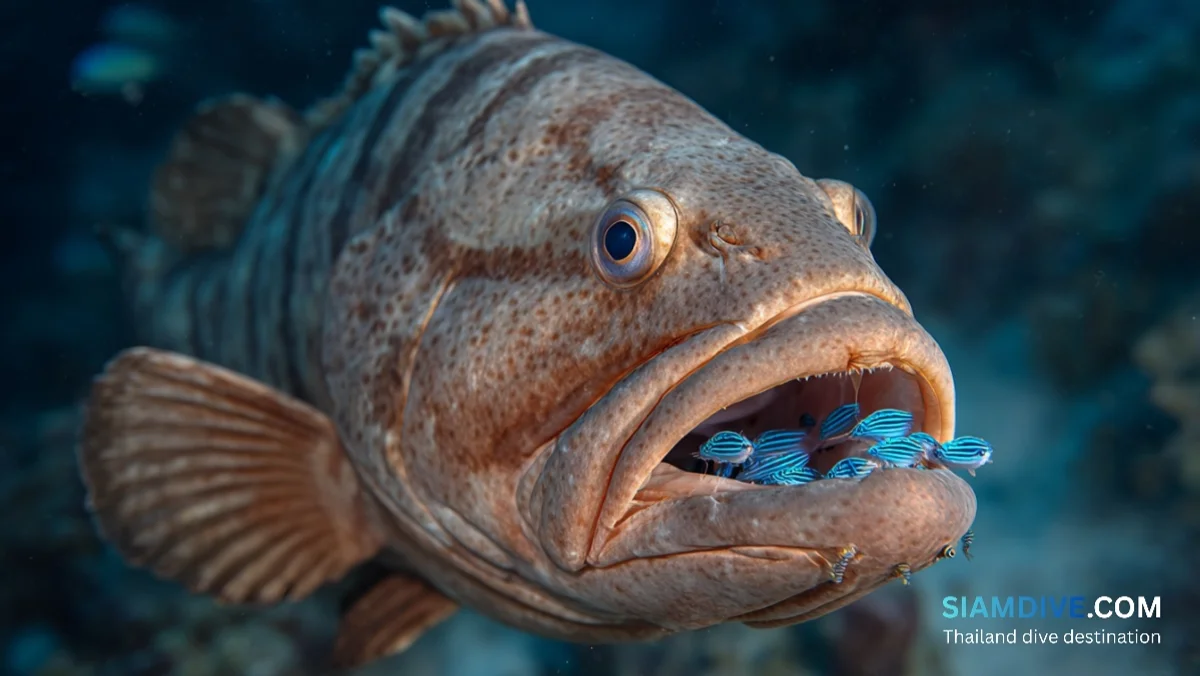
The restrictions matter. A 2020 fish-assemblage survey at Samae San documented 99 species across 36 families, with damselfish (Pomacentridae) dominating at 11 species, followed by wrasses (Labridae) and gobies (Gobiidae) at eight species each. That kind of diversity is rare in the inner Gulf, where most accessible reefs sit within day-trip range of millions of Bangkok residents.
- Marine park: Mu Ko Samae San (protected since 2021)
- Management: Royal Thai Navy ecotourism project
- Island area: approximately 61 rai (~9.8 hectares)
- Coral coverage: roughly 83,000 square metres around the island
- Daily access: limited visitor numbers, day-trip only
What Lives on 83,000 Square Metres of Reef
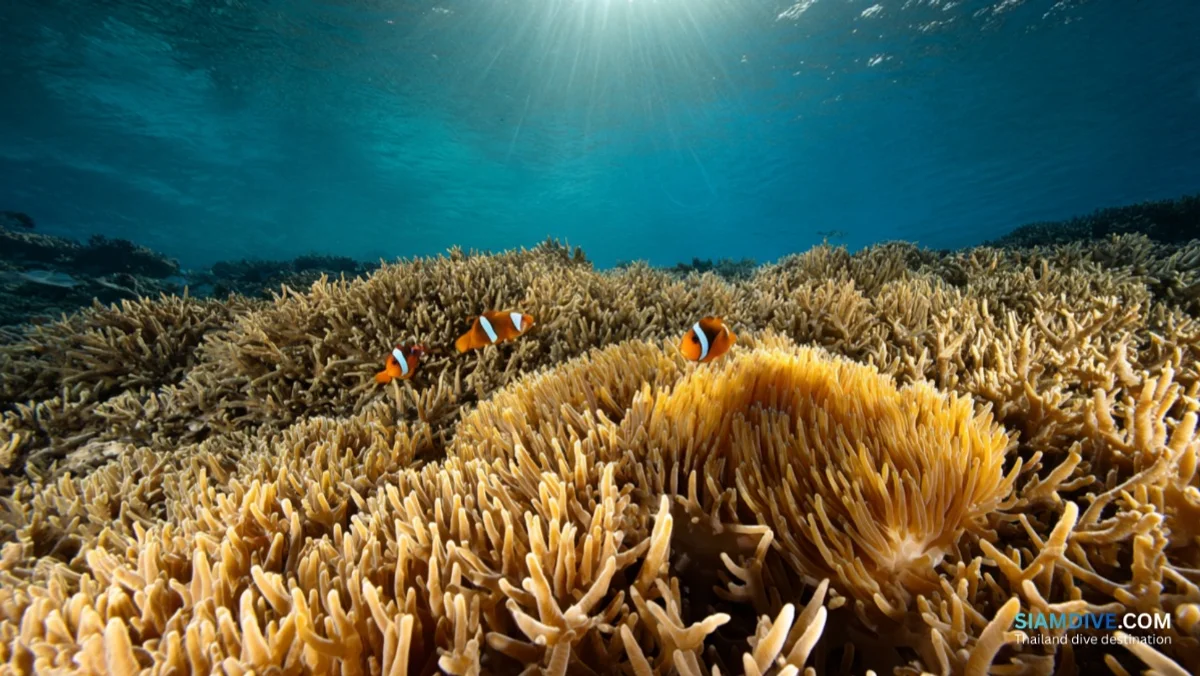
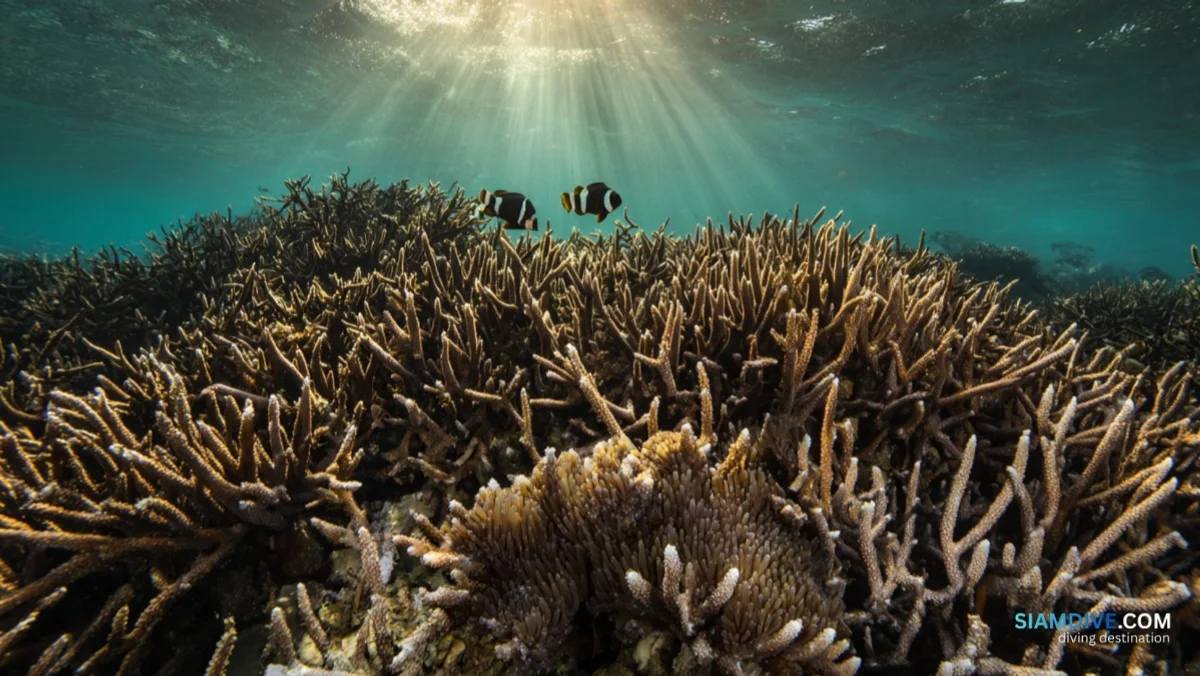
The coral carpet starts at around three metres and slopes to roughly fifteen, though most of the action clusters between three and six metres — shallow enough for snorkellers to hover directly above. Staghorn coral (Acropora) forms the backbone, branching into thickets that shelter juvenile fish. Table coral spreads in wide plates at slightly deeper points, and brain coral fills the gaps between, its grooved surface unmistakable even to first-time snorkellers.
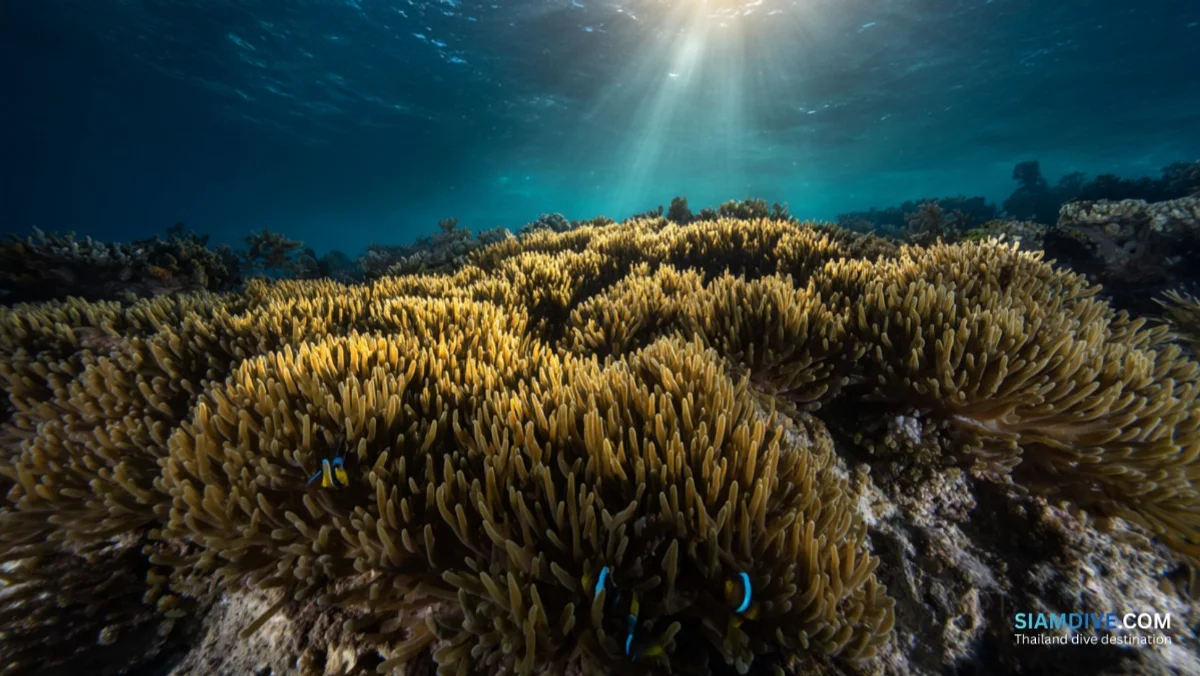
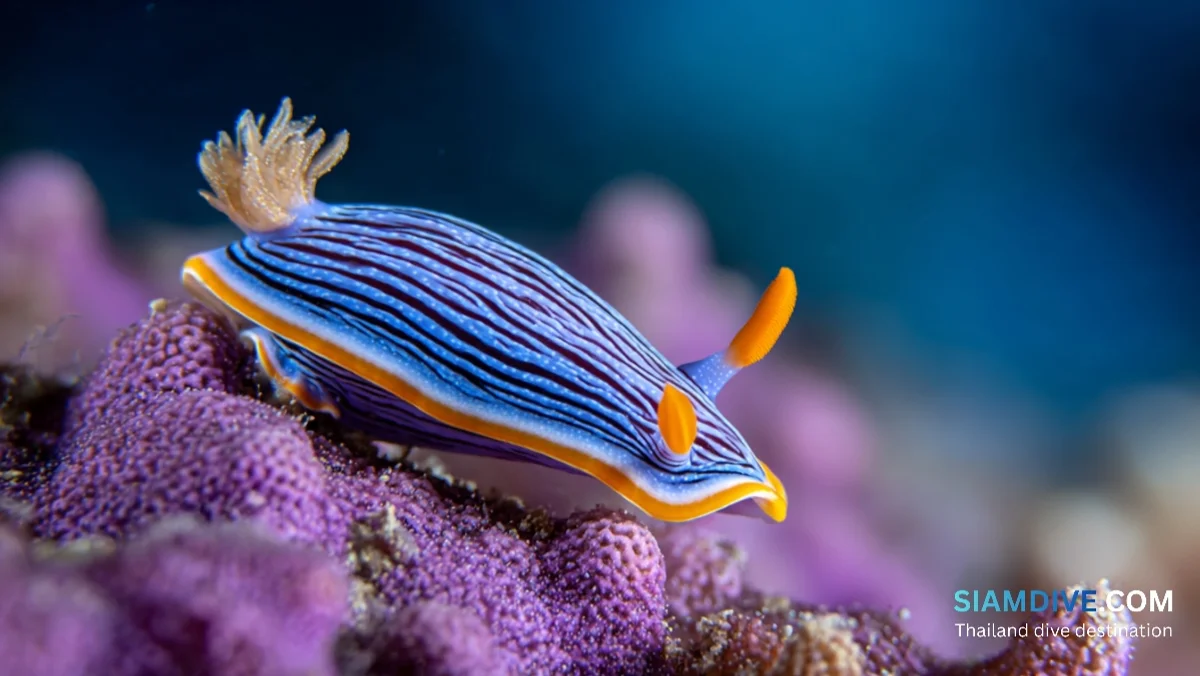
Soft corals and sea anemones colonise the rockier sections closer to the island's flanks. The anemones host resident Clark's anemonefish — the species most visitors call "Nemo" — and on calm days the fish hover so close to the surface that you can count the white bars from a kayak. Butterflyfish patrol the coral edges in pairs. Parrotfish crunch audibly through the hard coral, their teeth grinding calcium carbonate into the white sand that rings the island. Cuttlefish drift through the deeper sections, changing colour mid-stroke, and barracuda schools sometimes hang in the blue off the southern point.
Getting There and Getting In
All access routes funnel through Ban Samae San Pier (ท่าเรือบ้านแสมสาร), about nine kilometres offshore from Sattahip. From Bangkok, the drive takes roughly two and a half hours; from Pattaya, about 45 minutes south on the coastal road. Navy boats shuttle visitors to Koh Kham in approximately 15 to 20 minutes.
- Entry fee (Thai nationals): 300 THB per person
- Entry fee (foreigners, adult): 500 THB per person
- Entry fee (foreigners, child 90-120 cm): 300 THB per person
- Includes: round-trip boat transfer, snorkelling gear, kayak rental
- Boat departure: 09:00-10:00 from Ban Samae San Pier
- Return deadline: all visitors off the island by 15:30
- Operating days: primarily weekends and public holidays — check schedule before travelling
The pier also serves as the launch point for trips to the other Samae San islands. Divers heading to nearby Koh Chan's coral reef or the deeper sites at Hin Yai depart from the same dock, making it possible to combine a Koh Kham morning with an afternoon dive elsewhere in the archipelago.
Snorkelling vs. Scuba: What Each Level Gets
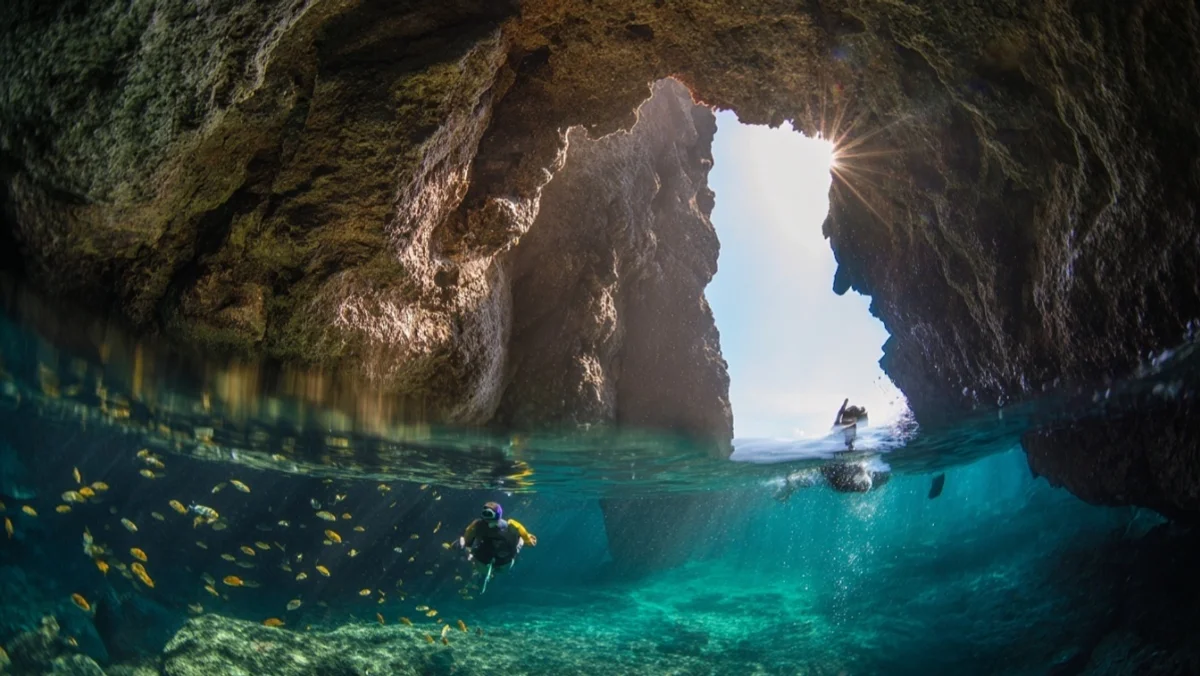
Most visitors come for the snorkelling, and the site delivers. The 3-6 metre depth band means reef features sit within arm's reach of the surface. Visibility regularly hits 10 to 15 metres during the peak season — sometimes pushing past 20 metres on exceptionally calm days between October and December. A glass-bottom boat tour runs 15 to 20 minutes for those who prefer to stay dry.
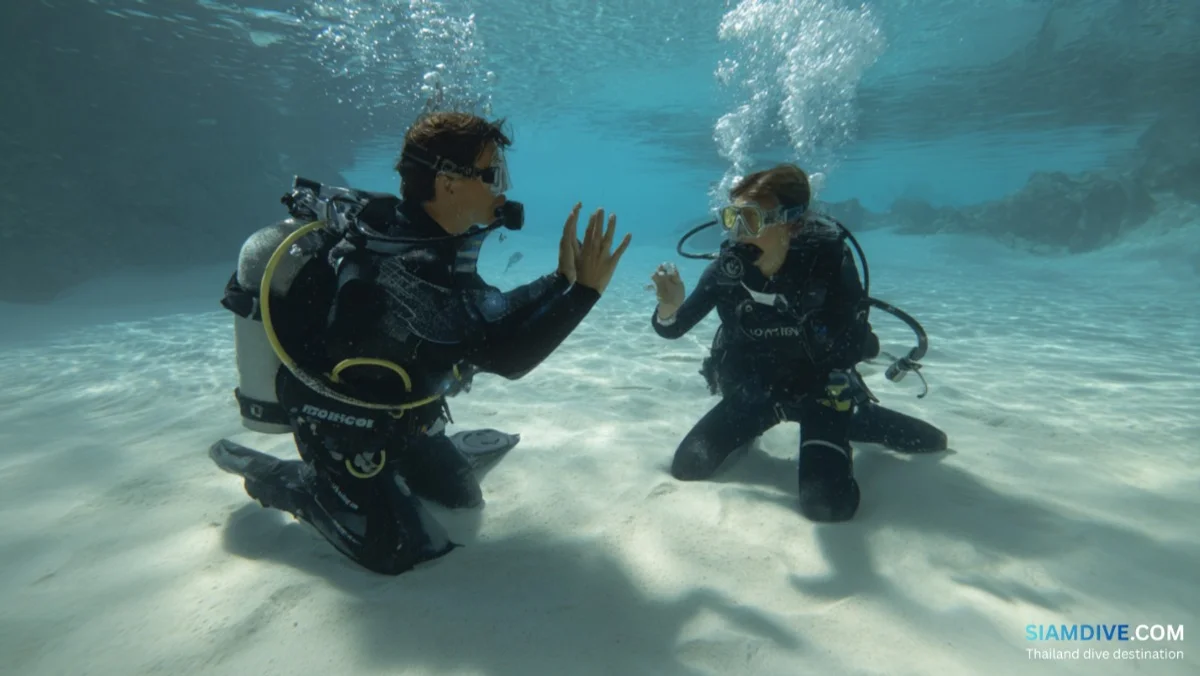
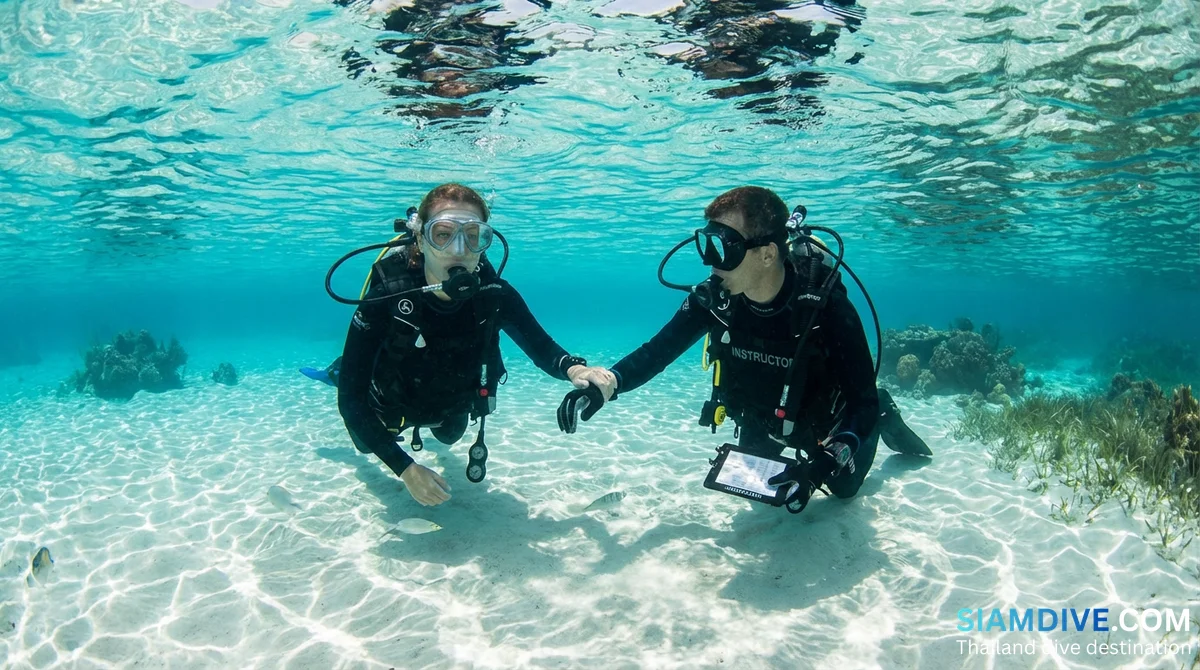
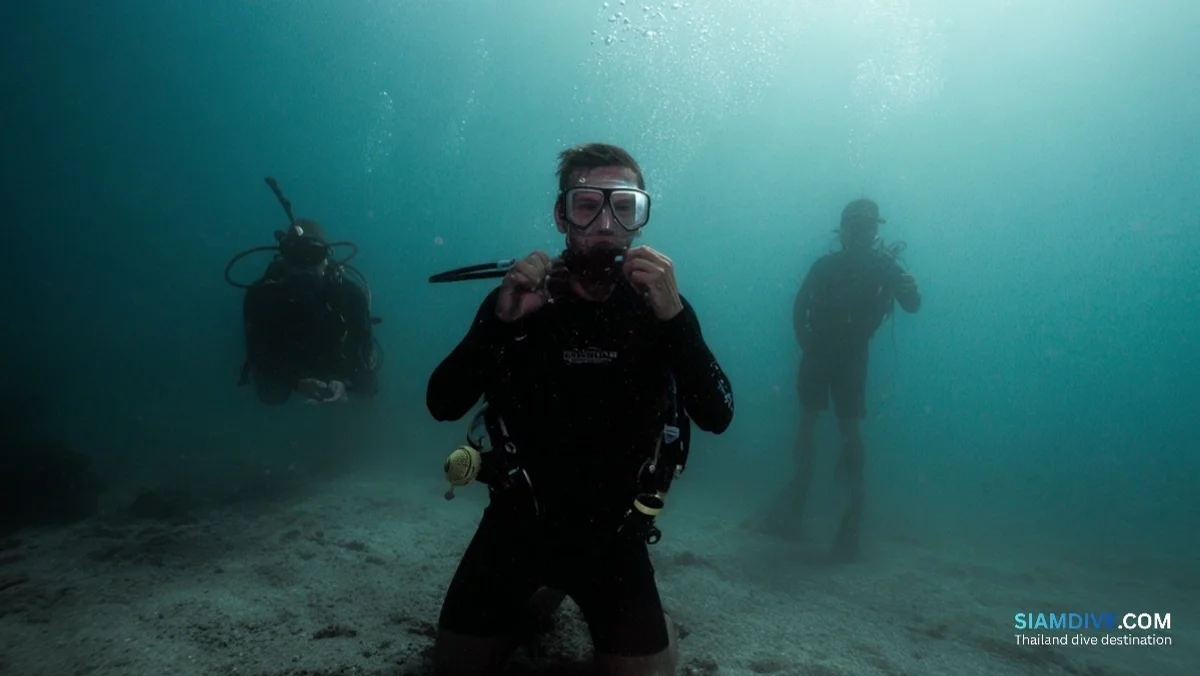
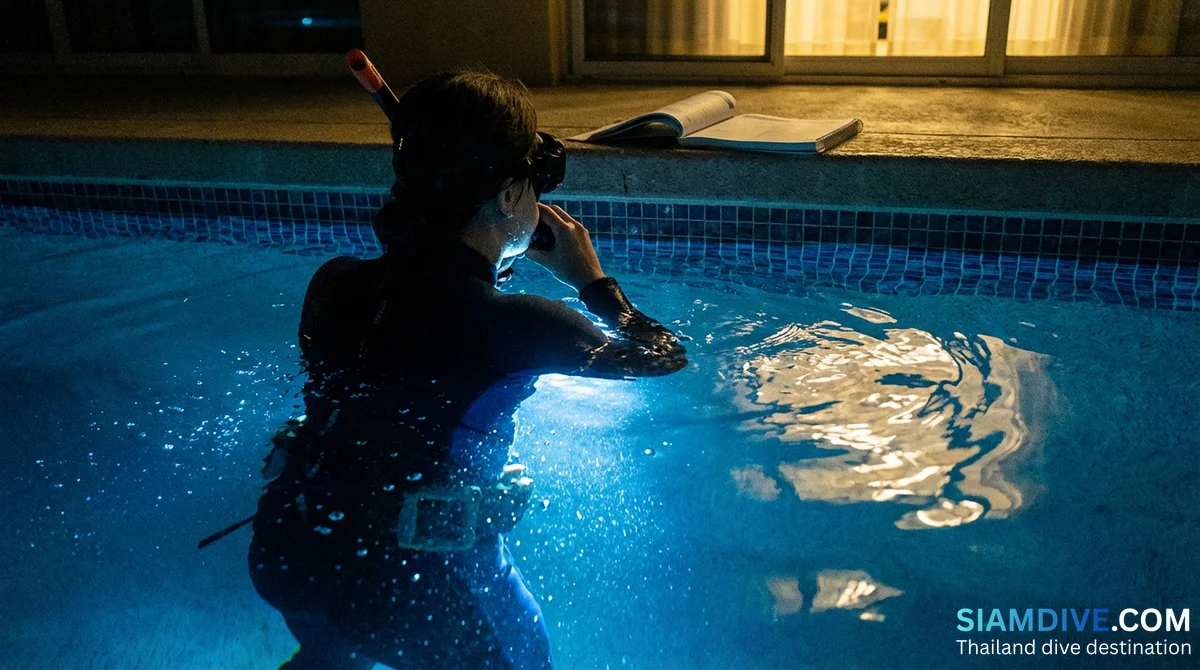
For certified divers, Koh Kham's appeal is different. The maximum depth of around 15 metres will not challenge an Advanced Open Water holder, but the coral density per square metre rivals sites that require twice the depth to reach. Open Water students can complete confined-water skills here without fighting current or losing visibility. The gentle slope from three metres to fifteen makes buoyancy practice forgiving — there is always reef below and surface above, with no sudden drop-offs or overhead environments to navigate.
The nearby sites in the Samae San group add depth for those who want it. Hin San Chalarm (Shark Fin Rock) sits within the same marine park and offers year-round visibility that ranks among the best in the Gulf. Divers often pair a shallow Koh Kham session with a deeper afternoon dive at Koh Rong Khon, where the reef drops past 20 metres.
Rules That Keep the Reef Alive
The Navy's conservation protocol goes well beyond a laminated sign at the pier. Every visitor receives a briefing on marine etiquette before boarding. Sunscreen containing oxybenzone or octinoxate — compounds linked to coral bleaching at the cellular level — is prohibited. Feeding fish is banned. Touching or standing on coral draws a firm correction from the Navy guides stationed on the island.
Plastic waste rules are equally strict: anything you bring to the island leaves with you on the return boat. The limited-access schedule means the reef gets more rest days than visitor days in any given month, a recovery window that few commercially operated dive sites in the Gulf can match.
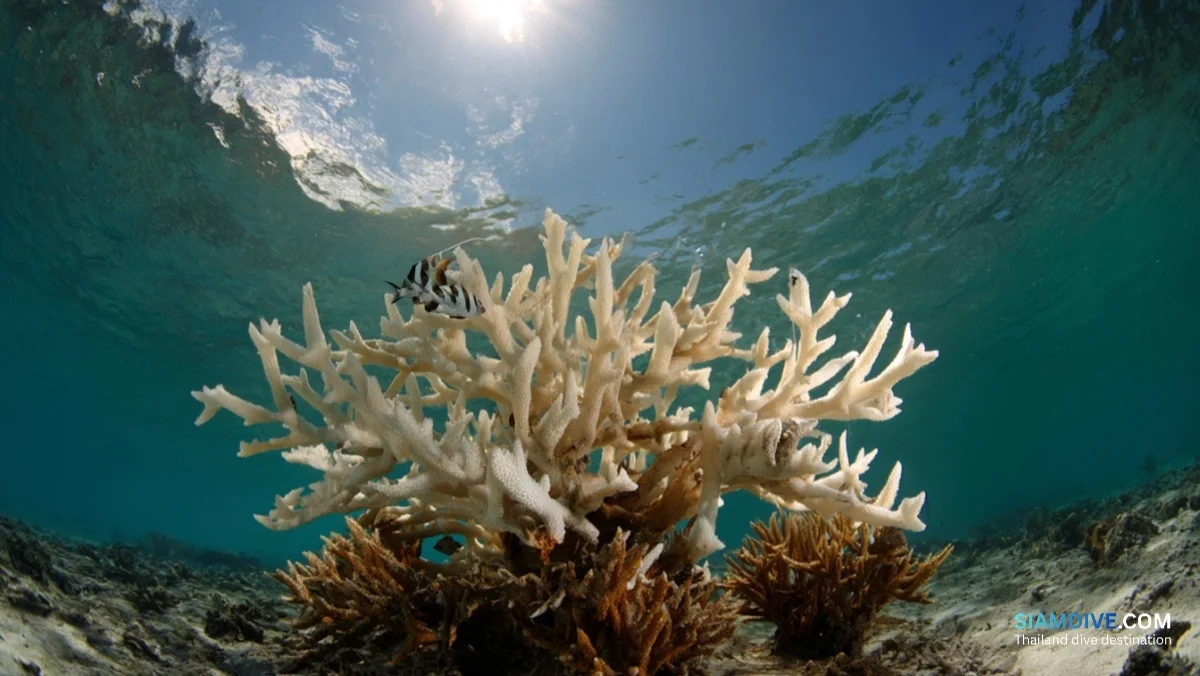
These measures appear to be working. While the Department of Marine and Coastal Resources (DMCR) documented coral bleaching across large sections of the Gulf during the 2024 marine heatwave, Samae San's reefs — including Koh Kham — showed comparatively better resilience. The restricted foot traffic and controlled snorkelling likely reduce the chronic stress that makes bleaching events worse.
When to Go: Season and Conditions
The Gulf of Thailand side of Sattahip runs on a different calendar from the Andaman coast. The best window for Koh Kham falls between September and December, when seas flatten, visibility peaks, and the water holds steady at 28-30 degrees Celsius. January through March remains good — slightly choppier, but coral colours stay vivid and fish life does not thin out. The island closes intermittently during the monsoon months (roughly May through August), and even when technically open, swells can make the boat crossing uncomfortable and reduce underwater visibility to five metres or less.
- Peak season: September-December (best visibility, calm seas)
- Good season: January-March (slightly rougher, still excellent coral)
- Off season: May-August (possible closures, reduced visibility)
- Water temperature: 27-30°C year-round
- Visibility range: 5-20 metres depending on season
Divers visiting during the peak months can combine Koh Kham with a full-day Pattaya diving day trip from Bangkok, adding deeper wreck dives or the Samae San wreck sites to a trip that starts in coral-garden shallows.
The Bigger Picture: 9 Islands, One Protected Chain
Koh Kham is one piece of a nine-island system that includes Koh Samae San, Koh Chan, Koh Chuang, Koh Rong Khon, Koh Rong Nang, Koh Raed, Koh Pla Muk, and the namesake Koh Kham. Together they form a gradient from shallow coral gardens to technical-depth sites — the Samaesan Hole, between the islands, drops 85 to 100 metres and ranks as the deepest recreational-adjacent site in the Gulf of Thailand.
For divers building experience, Koh Kham functions as the entry point. Start at three metres over staghorn coral, build comfort with marine life interactions, then graduate to the deeper reefs at Koh Chan (6-18 metres) and Hin Yai, before attempting the current-swept pinnacles further offshore. The entire progression happens within a single marine park, under consistent Navy oversight, with the same pier as home base.
The 2021 marine park designation brought formal legal protection to what the Navy had been doing informally for years. Fishing restrictions tightened, anchoring on coral became a fineable offence, and visitor quotas gained legal teeth. Early monitoring suggests the framework is holding: fish density in the Samae San group remains higher than at comparable sites in the eastern Gulf that lack similar protection.
Planning a Koh Kham Trip
Book through the official Koh Kham website (kohkham.com) or at the pier — third-party booking platforms often mark up prices or sell dates the island is actually closed. Arrive at Ban Samae San Pier by 08:30 to clear the brief orientation and board the first boat. Bring reef-safe sunscreen (zinc oxide or titanium dioxide based), a rash guard for sun protection, and an underwater camera if you have one. The included snorkelling gear is functional but basic — experienced snorkellers may prefer their own mask and fins.
Accommodation clusters around the Samae San village and along the Sattahip coast. Budget guesthouses start around 500-800 THB per night; mid-range resorts with sea views run 1,500-3,000 THB. Staying overnight in the area allows an early start and avoids the Bangkok traffic that can add two hours to the return drive.
Koh Kham does not try to be a full-day adventure park. The island is small, the reef is the main event, and by 15:30 everyone leaves. What remains after the boats pull away is exactly what makes the site worth protecting — 83,000 square metres of coral growing in water so shallow that the sun reaches every polyp, in a military zone where the reef gets more rest than any dive site on the tourist trail.
Sources
- Koh Kham Underwater Park — official site, fees, schedules and coral information
- Thailand National Parks — Mu Ko Samae San protected area
- Fish assemblage study at Samae San Island (academic journal) — species composition data
- Department of Marine and Coastal Resources (DMCR) — Gulf of Thailand coral monitoring
- Thailand Public Relations Department — Koh Kham ecotourism overview