Koh Talu's Rock Tunnel: 5 Islands for 650 Baht
24 เมษายน 2569
A 69-rai island off Rayong hides a natural rock tunnel, Rayong's best coral, and a literary island from Sunthorn Phu — all on a single budget day trip from Ban Phe pier.
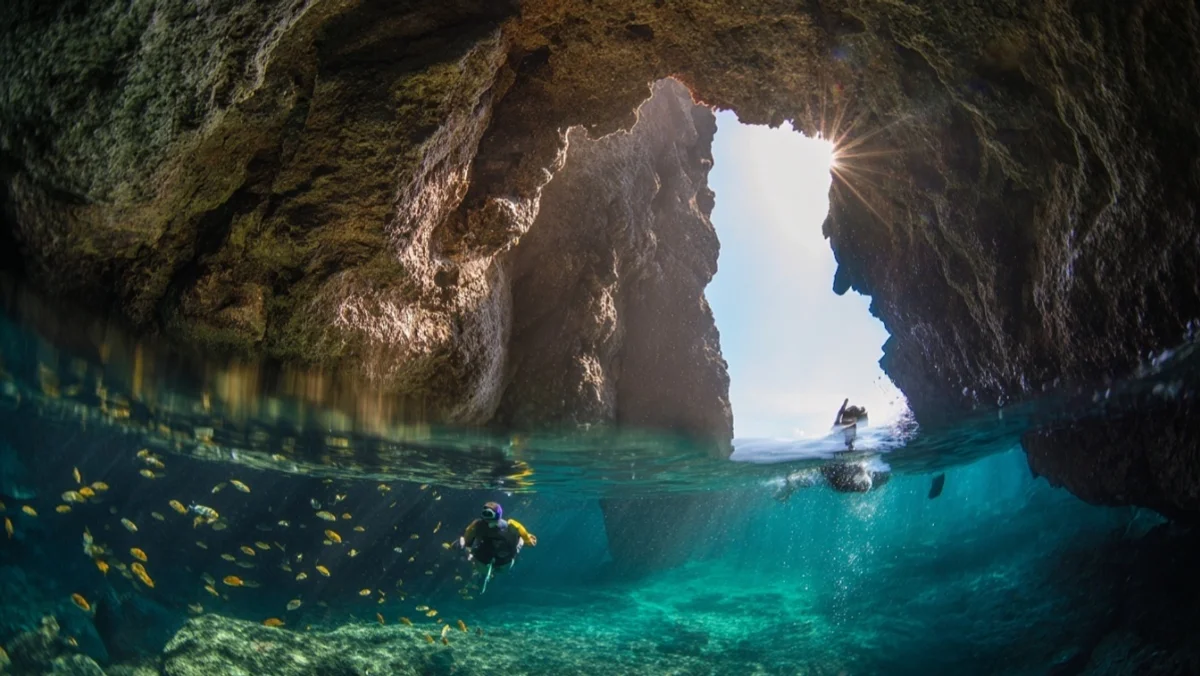
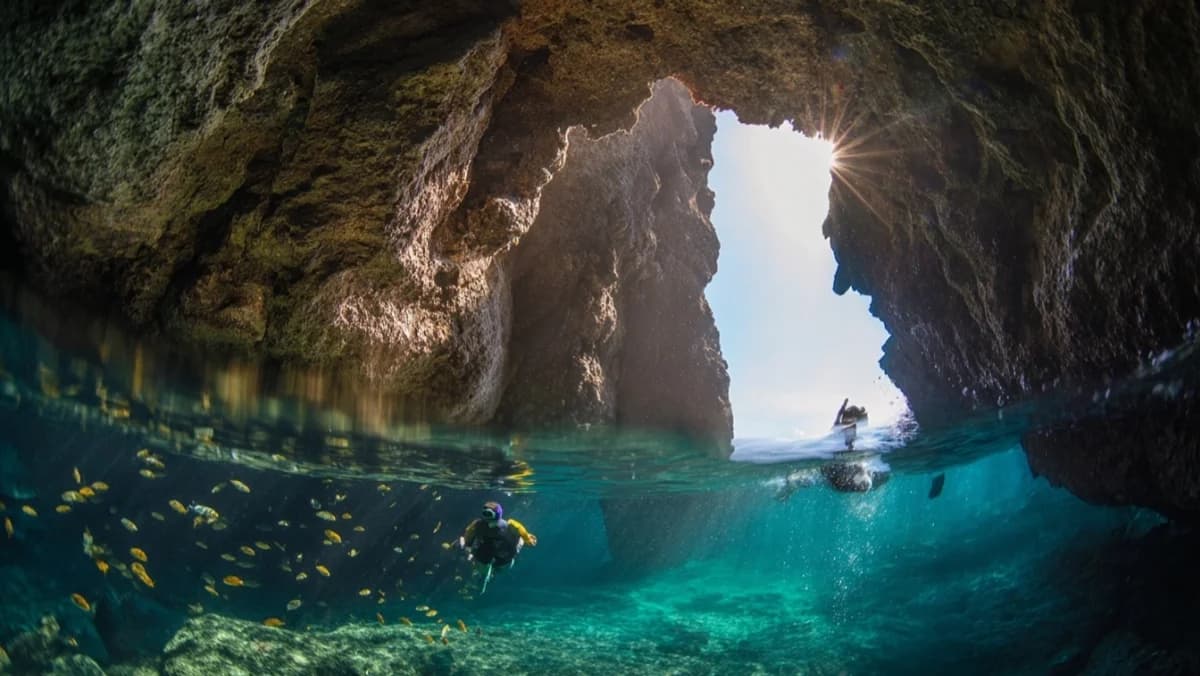
Somewhere between the ferry traffic bound for Koh Samet and the quiet southern arc of Rayong's coast, a 69-rai island rises from a five-metre seafloor with a hole punched clean through its western cliff. That hole — a natural rock tunnel carved by centuries of surf — is why the island carries the name Talu, Thai for "pierced through." It is also why snorkellers who find it tend to surface grinning, phones held aloft, backlit by the light that pours through the gap.
Koh Talu sits at the end of a budget island-hopping route that begins at Ban Phe pier in Rayong, threads past the literary island of Koh Kudi, and connects up to five islands for as little as 650 baht on a weekday. The coral here is shallow — five to thirteen metres — and the water warm enough year-round that a rashguard is all most visitors need. For snorkellers priced out of Similan liveaboards or short on vacation days, this is the Gulf of Thailand's answer: half a day, a fraction of the cost, and marine life that rewards anyone willing to dip below the surface.
What Makes Koh Talu's Rock Tunnel Worth the Boat Ride?
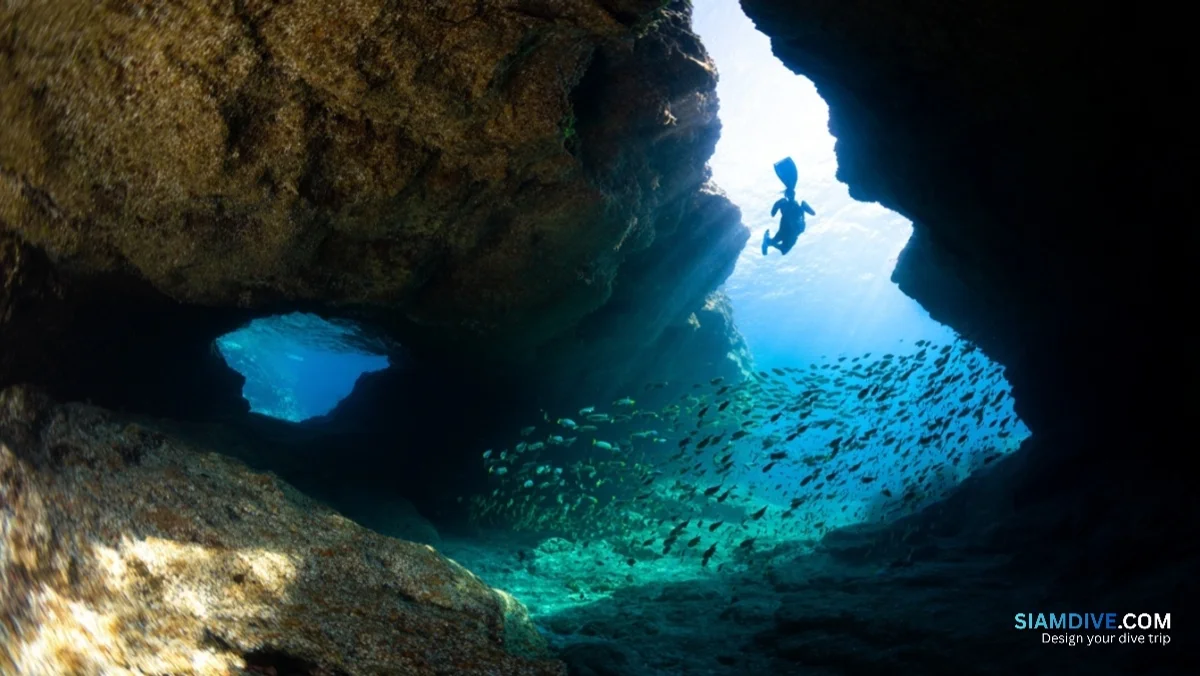
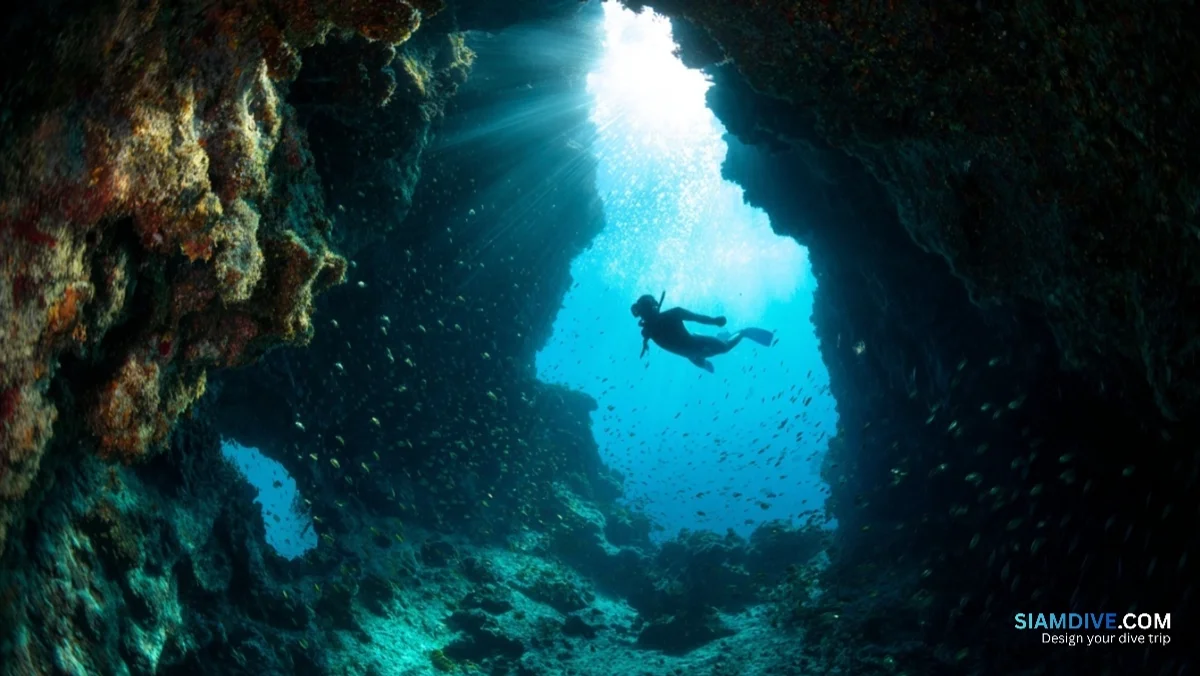
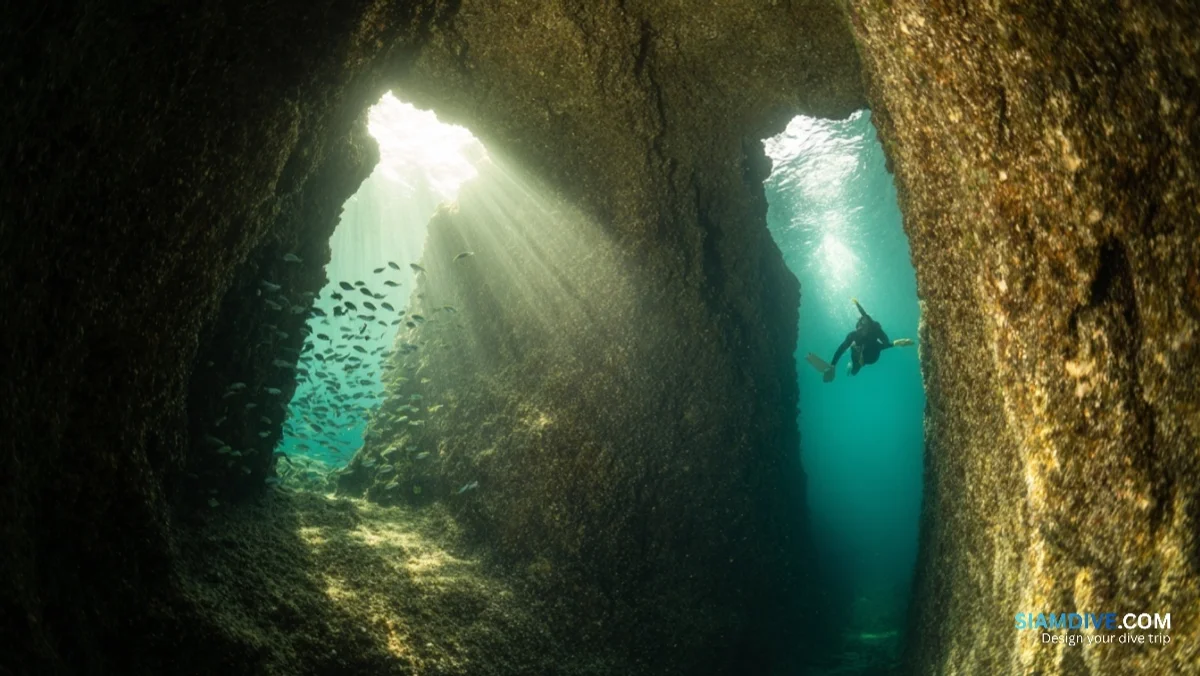
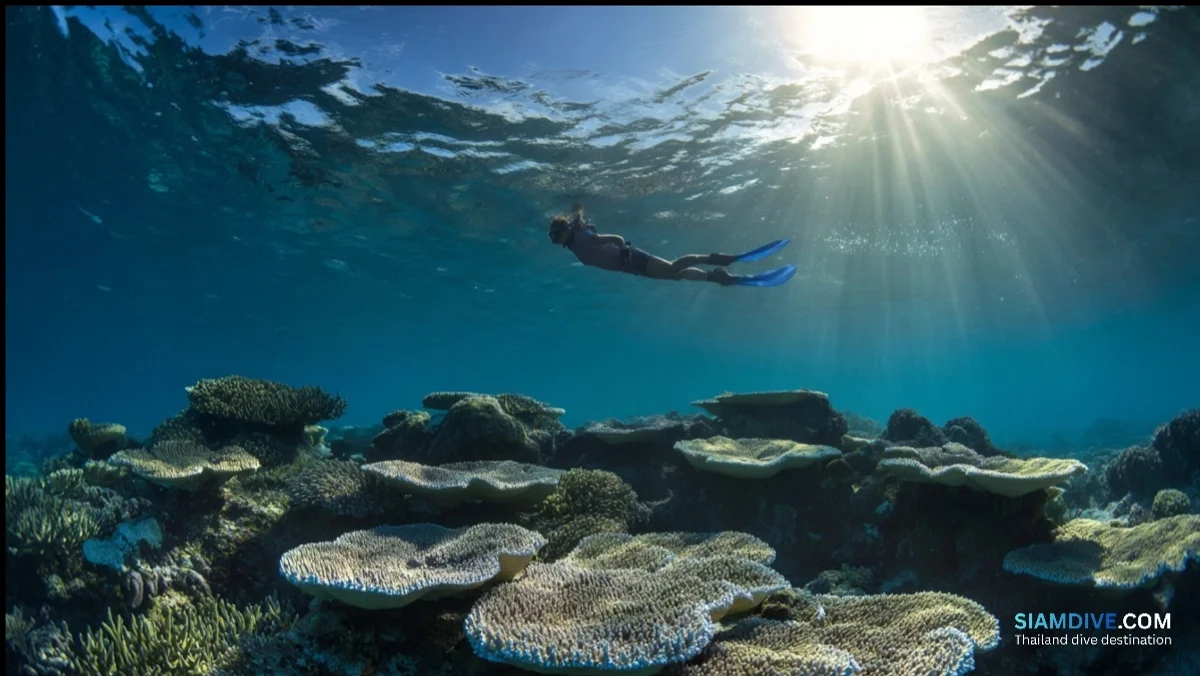
The defining feature of Koh Talu is geological, not biological. The island's western face is a steep cliff — sheer enough that boats approach from the sheltered east and south, where sandy beaches slope gently into the water. On the cliff side, wave erosion has opened a passage through the rock: a swim-through tunnel wide enough for a snorkeller to glide through with fins on, framed by encrusting coral and schooling damselfish. Light enters from both ends, and at midday the effect is a natural spotlight that turns the tunnel into a cathedral of refracted blue.
The tunnel itself is not deep — the ceiling sits only a couple of metres below the surface in most places, which means snorkellers can observe the play of light without needing to free-dive. The encrusting coral on the tunnel walls is predominantly hard coral, with occasional patches of soft coral in more sheltered crevices. The experience of passing through takes roughly a minute at a relaxed pace, though most visitors circle back for a second pass once they realise what the light does.
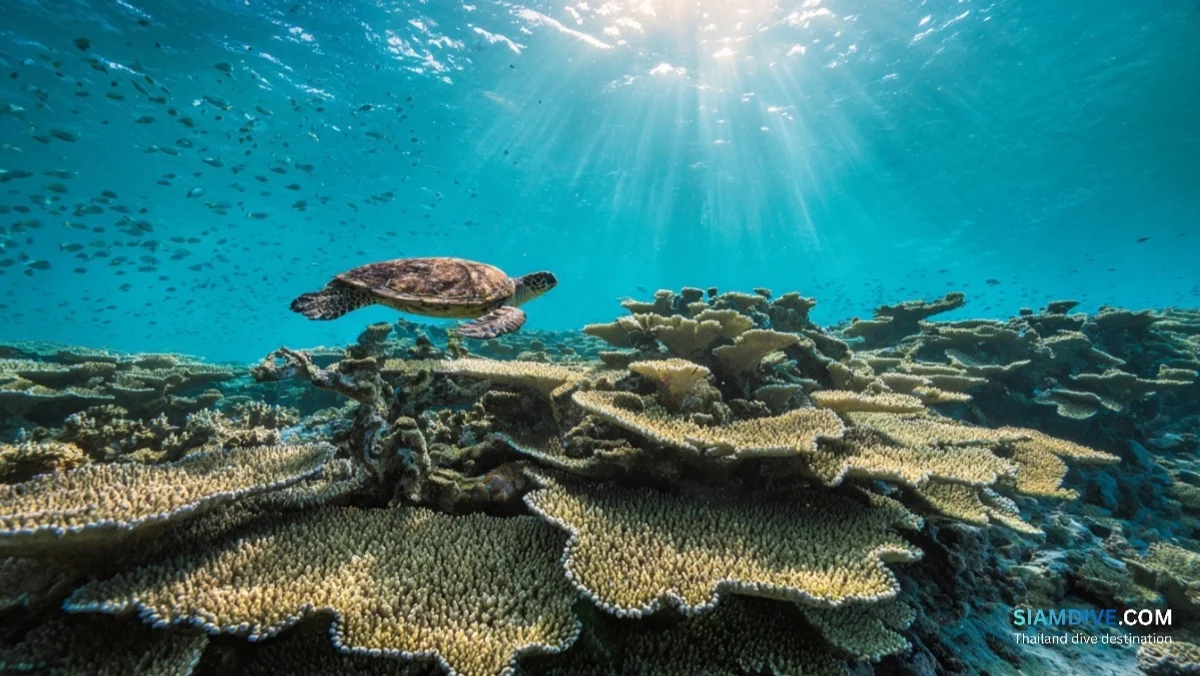
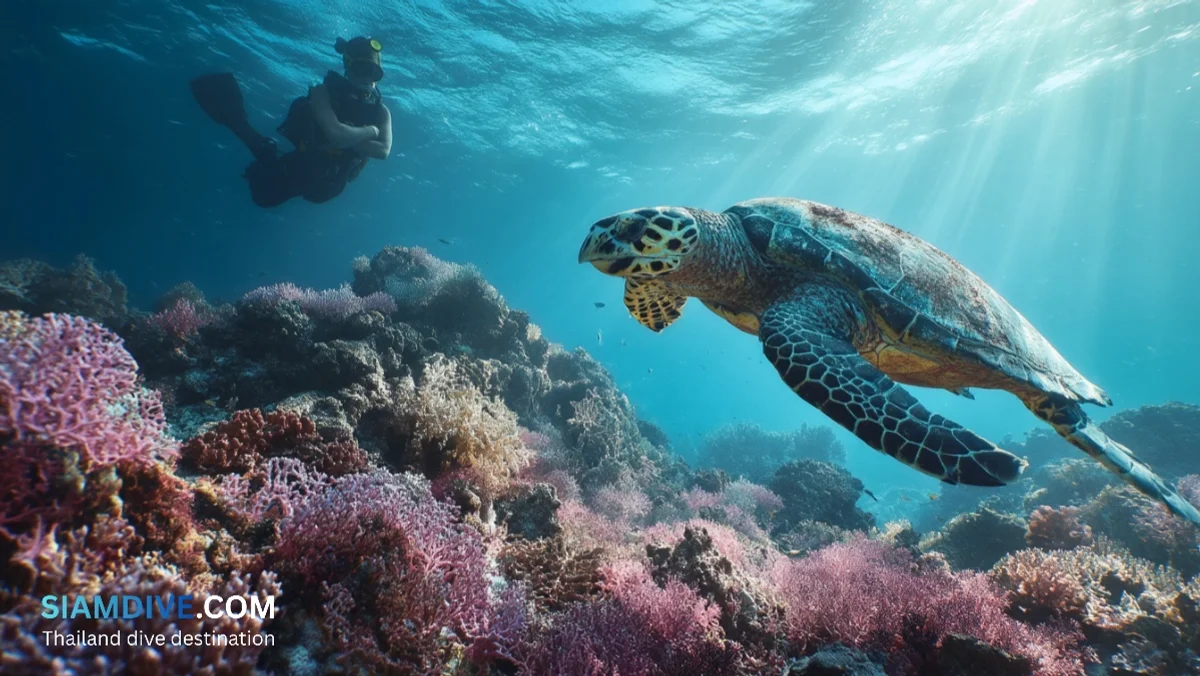
Tourism Authority of Thailand materials describe Koh Talu as home to "the most beautiful coral reef in Rayong's waters" — a claim that carries weight given the province's extensive coastline. The reef starts shallow. Brain coral colonies sit at three to five metres, giant clams wedge into crevices at six, and clownfish occupy anemone clusters scattered across the rubble zones. Sea urchins colonise the rocky substrate near the tunnel entrance, so reef shoes or booties are worth packing.
How Does Koh Kudi Connect to Sunthorn Phu?
Koh Kudi, the first or second stop on most island-hopping itineraries, is a different kind of island — flat, split into two smaller landmasses (Koh Tha Tai Kang Khao and Koh Tham Ruesi), and ringed by a wide shallow reef that makes it one of the easiest snorkel sites in the Gulf. Fish density here is high: the shallows act as a nursery, and on calm days visibility can stretch past ten metres.
But Koh Kudi's distinction is literary. The island appears in the works of Sunthorn Phu, Thailand's most celebrated poet, who travelled this stretch of coast in the early nineteenth century. Rayong provincial authorities formally recognise it as a "literary island" (เกาะวรรณกรรมของสุนทรภู่), a designation that adds cultural weight to what might otherwise be just another patch of coral. For visitors who read Thai — or who appreciate the idea that a snorkel stop has a footnote in the national literary canon — Koh Kudi offers something no reef alone can.
The reef around Koh Kudi is notably different from Koh Talu's. Where Talu's reef is concentrated around rock and cliff structure, Kudi's is a broad, flat expanse of mixed coral spreading out from sandy shallows. The diversity of fish species here tends to be higher precisely because the habitat variety — sand, rubble, coral bommies, and seagrass patches — supports different feeding strategies. Damselfish, wrasse, parrotfish, and the occasional small grouper patrol the shallows, while butterflyfish pair off over the coral heads.
What Does the 5-Island Route Look Like?
Operators running out of Ban Phe pier and the Khao Laem Ya–Mu Ko Samet National Park area offer several configurations. The most common:
- 3-island trip: 650 THB weekday / 790 THB weekend and holidays
- 5-island trip: Koh Kudi → Koh Kham → Koh Pla Teen → Koh Tam Khao Khao → Koh Talu
- 6-island tour (from Koh Samet): Koh Kudi → Koh Tha Tai Kang Khao → Koh Kham → Koh Kruay → Koh Pla Teen → Koh Talu
The 5-island route typically departs around 09:00 and returns by 15:00–16:00. Each island gets 30–45 minutes of snorkel time, which is enough to circle the shallow reefs but not enough to explore deeper contours. Koh Talu is usually the last stop — saved for the tunnel, which functions as the visual climax of the day.
The boat ride between islands ranges from ten to twenty minutes, depending on sea conditions and route order. Most operators use longtail boats or covered speedboats seating 10–20 passengers. Drinks and light snacks are usually included in the tour price, though lunch is not — some trips stop at a beach where vendors sell rice dishes, while others expect passengers to bring their own food.
Note: several Rayong dive and snorkel operators run these trips. Prices vary slightly by season and group size, but the 650-baht weekday rate is a reliable baseline for the 3-island configuration.
How Do You Get to Ban Phe?
Ban Phe pier — the same departure point used by Koh Samet ferries — is the gateway to the island-hopping route. From Bangkok, the drive takes roughly three hours via Motorway 7 (Bangkok–Chonburi) and then Highway 36 to Rayong. Several options exist for the transfer:
- Shared van from Bangkok: ~2,000 THB round trip, door-to-pier
- Public bus from Ekkamai Eastern Bus Terminal: cheaper but slower, around 200 THB one way
- Private car: parking is available near Ban Phe pier, though spaces fill up on weekends
For visitors already staying on Koh Samet, the 6-island tour departs directly from the island, eliminating the need to return to the mainland first. This is a convenient option for those who want to add a day of island-hopping to a beach holiday without backtracking.
What Gear Do You Need — and What Does It Cost?
- Full snorkel set rental (mask, snorkel, fins): ~600 THB/day from local operators
- Reef shoes or booties: recommended near Koh Talu's rocky west side (sea urchins)
- Rashguard: water temperature ranges 27–30 °C year-round; no wetsuit needed for snorkelling
- Underwater camera: the tunnel's light effects are the main photographic draw
- Accommodation near Ban Phe: 900–1,300 THB/night if staying overnight
- Reef-safe sunscreen: standard chemical sunscreens damage the corals you came to see
Bringing your own mask and snorkel is worth considering if you plan to snorkel more than once during your trip. Rental sets vary in quality, and a poorly fitting mask can turn a tunnel swim-through into a frustrating exercise in water clearing. Fins, however, are bulky enough that renting makes sense for most visitors.
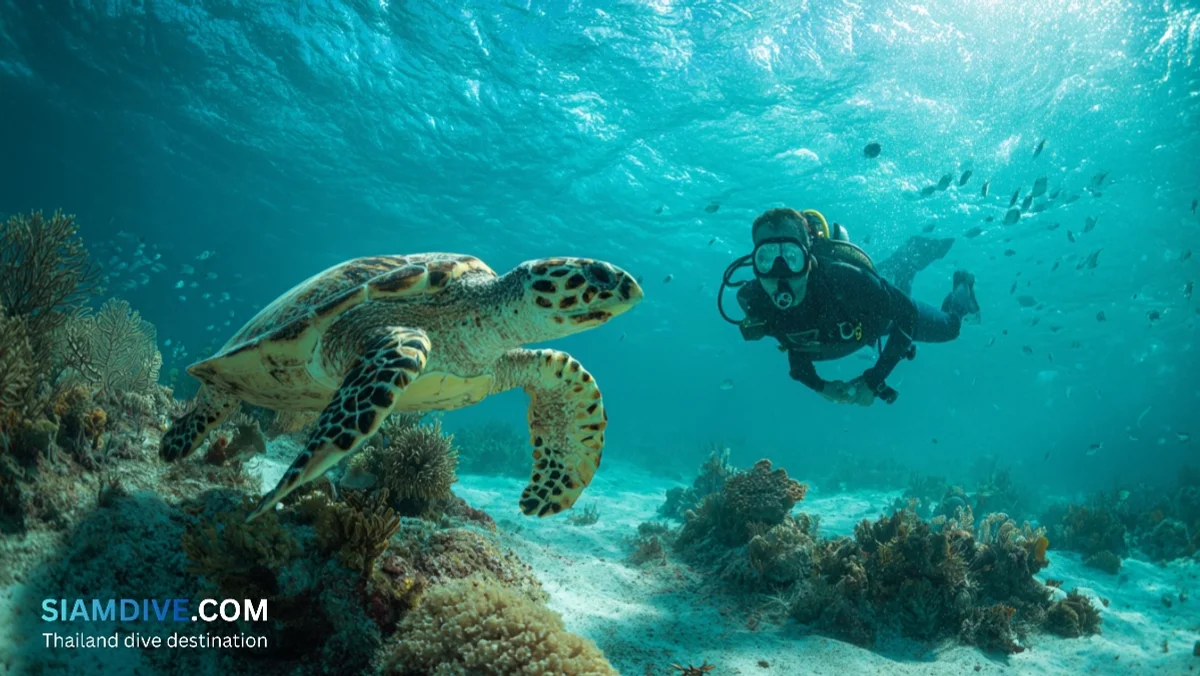
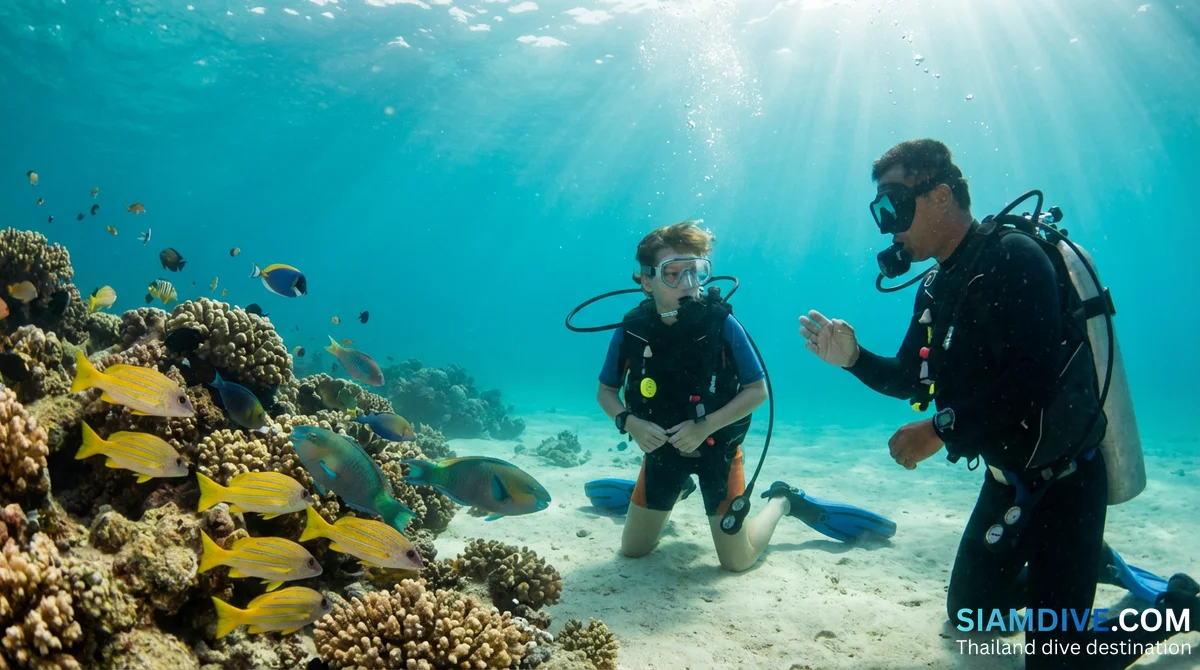
For divers considering scuba rather than snorkelling, the depth range of 5–13 metres makes Koh Talu a suitable site for newly certified Open Water divers. The gentle current and warm water lower the task-loading that can overwhelm beginners — a dynamic explored in more detail in our guide to common breathing mistakes that drain your tank early.
How Is the Coral Recovering After the 2024 Bleaching?
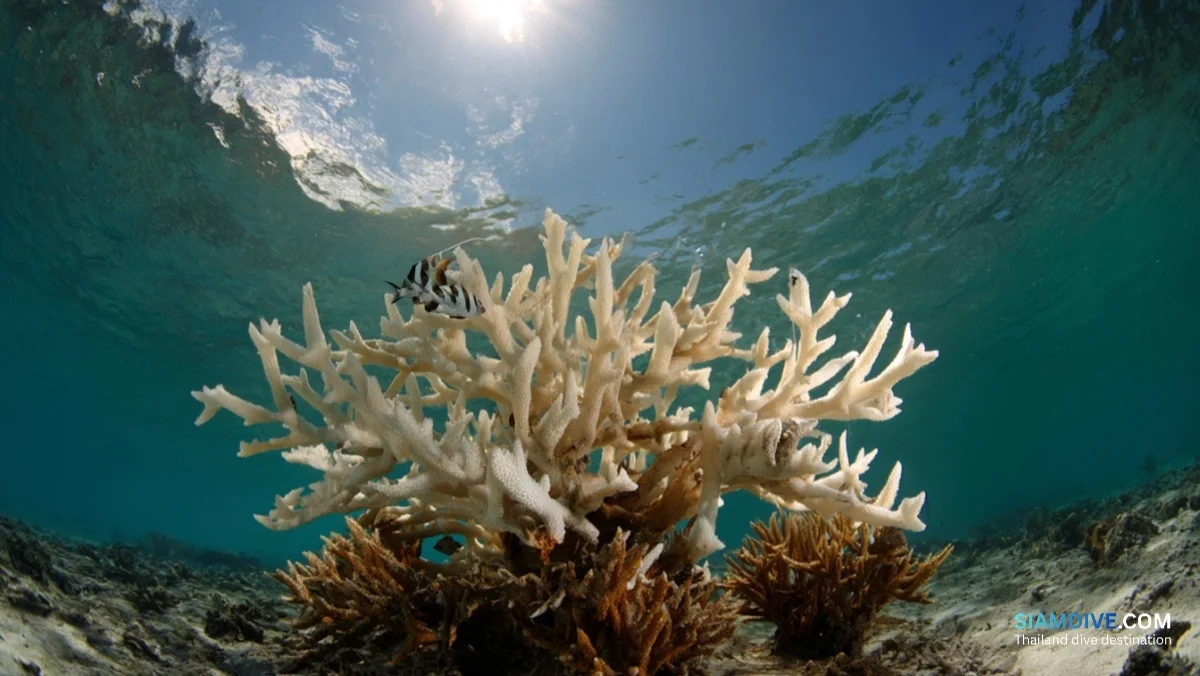
The 2024 mass bleaching event hit Gulf of Thailand reefs hard. Reporting from Bangkok Post indicated that roughly 90 percent of monitored sites showed bleaching, though subsequent surveys found approximately 60 percent recovery by early 2025. Thailand's Department of Marine and Coastal Resources (DMCR) has been conducting coral restoration work in Rayong waters, and the province's shallow reefs — including those around Koh Talu and Koh Kudi — are among the monitored sites.
For snorkellers, the practical takeaway: some patches will show pale or recently dead coral, particularly on sun-exposed tabletop formations. But the brain coral, which dominates Koh Talu's reef, tends to be more resilient than branching species. The dense skeletal structure of brain coral retains its symbiotic algae longer under heat stress, which is why these colonies often show partial rather than total bleaching. The giant clams and anemone clusters that host clownfish populations are largely intact. Recovery is uneven, but Rayong's reefs remain worth visiting — and visitor awareness of reef etiquette (no standing on coral, no anchoring on reef) contributes directly to recovery speed.
The coral situation contrasts with deeper sites like Koh Rong Khon in Samae San, where stronger currents help flush warm water and accelerate recovery. Shallow, sheltered reefs like those around Koh Kudi recover more slowly but remain accessible to snorkellers who would never reach a 20-metre reef.
When Should You Go — and When Should You Skip It?
The best window runs from January through April, when the Gulf of Thailand is calm, visibility peaks, and rainfall is minimal. A secondary good window opens in November and December, after the monsoon eases but before the peak-season crowds of Chinese New Year and Songkran.
Avoid June through September. Southwest monsoon swell wraps around the islands, visibility drops below three metres on bad days, and some operators suspend trips entirely. The rock tunnel on Koh Talu's west side takes the brunt of monsoon waves — swimming through it in rough conditions is not recommended even for strong swimmers. The surge inside a confined rock passage can push a snorkeller into the walls, and the encrusting coral and sea urchins that line those walls are not forgiving surfaces.
Weekdays consistently offer better experiences: smaller groups on the boats, fewer snorkellers crowding the tunnel for photos, and the lower 650-baht price point. Weekend and holiday surcharges push the 3-island trip to 790 baht — still cheap by any standard, but the real cost of a weekend visit is sharing the tunnel with thirty other people instead of eight.
Water temperature stays between 27 and 30 degrees Celsius year-round, so thermal comfort is never really an issue. The variable that matters most is visibility, and that is driven almost entirely by wind direction and recent rainfall. After heavy rain, runoff from the mainland can drop visibility to two metres even during the "good" season. Checking weather forecasts for the two days before your trip is more useful than checking the forecast for the day itself — it takes time for sediment to settle.
A Note on Names: Koh Talu Rayong vs Koh Thalu Chumphon
Thailand has multiple "pierced" islands. Koh Talu (เกาะทะลุ) in Rayong — covered in this article — is a 69-rai island off Ban Phe, accessible as a day trip. Koh Thalu in Chumphon province is a separate, larger island roughly 500 kilometres to the south, known for its own swim-through caves and overnight eco-resort. The two are sometimes confused in English-language search results. For Chumphon's version, see our separate guide to Koh Thalu's swim-through caves.
Both islands take their names from the same Thai word — ทะลุ, meaning "to pierce through" — but they occupy different seas (Gulf of Thailand near Rayong; Gulf near Chumphon), different depth ranges, and different price brackets. Rayong's version is the budget-friendlier option and the easier day trip from Bangkok.
Nearby Alternatives Worth Comparing
Rayong and the adjacent Sattahip–Samae San coast offer several sites that pair well with a Koh Talu trip or serve as alternatives if weather closes the route:
- Koh Kham, Sattahip: A navy-controlled island with 83,000 m² of documented coral cover — more structured reef than Koh Talu, but requires military permission. See the Koh Kham underwater park guide.
- Koh Chan, Samae San: Blacktip reef sharks patrol at three metres — a rare shallow encounter covered in our Koh Chan guide.
- Hin San Chalarm: A coral-covered pinnacle rising from deeper water, better suited to scuba than snorkelling. Details in the Hin San Chalarm feature.
Each of these sites occupies a different niche. Koh Kham has the most coral by area, Koh Chan has the best megafauna encounter for the depth, and Hin San Chalarm offers the most vertical reef profile. But for pure snorkelling accessibility and value, Koh Talu's tunnel and Koh Kudi's literary reef remain the combination that delivers the most for the least outlay. The 650-baht day trip is one of the cheapest ways to see healthy coral within three hours of Bangkok — and the rock tunnel is a geological bonus that no other site on this stretch of coast can match.