Why 45% of Gulf Corals Turned White — and What Divers See Now
21 เมษายน 2569
Nearly half of Gulf of Thailand coral colonies bleached in 2024. SST data, island-by-island damage, DMCR recovery rates, and what divers find on the reef now.
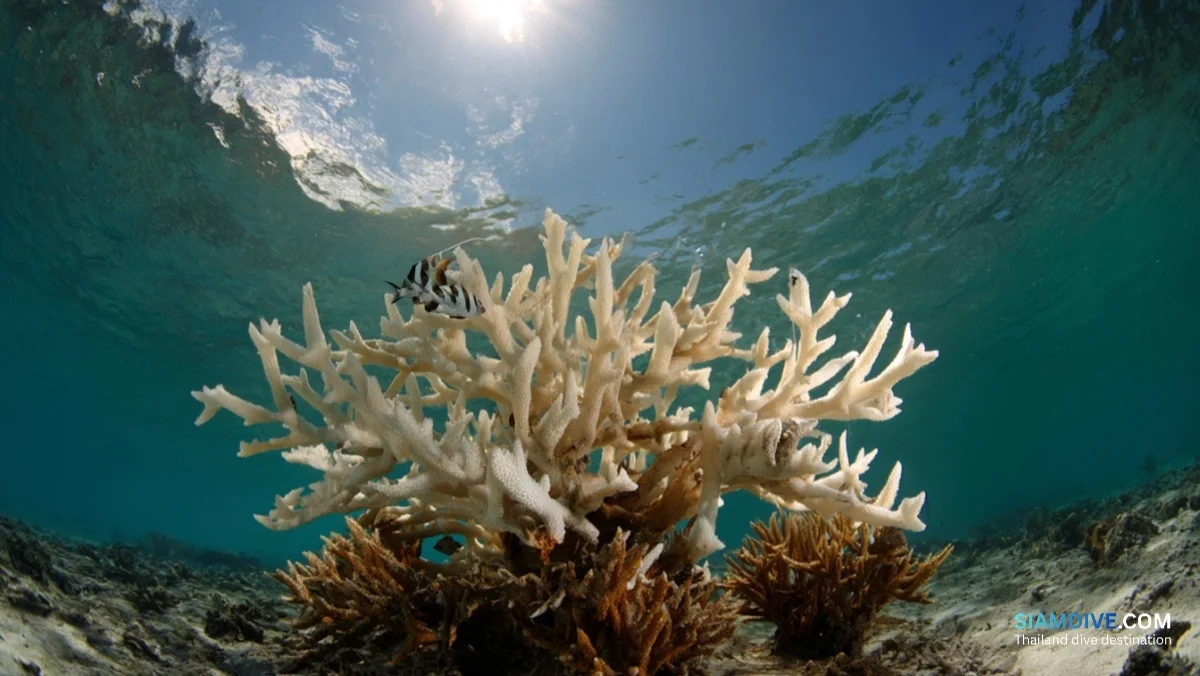
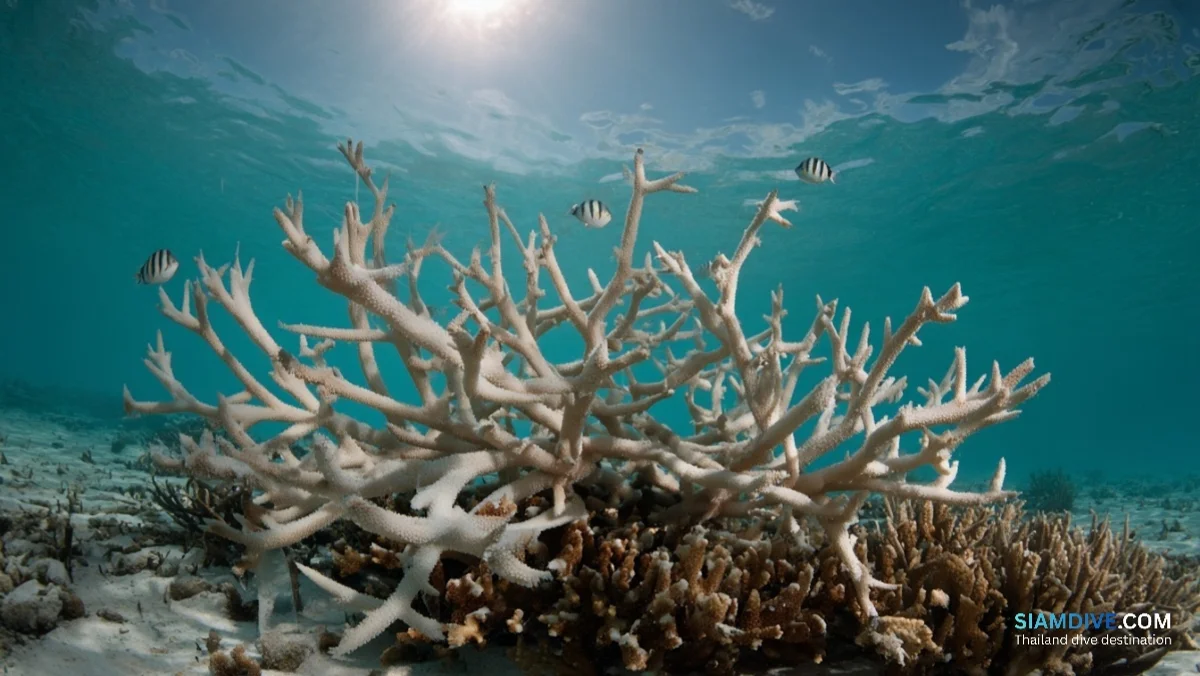
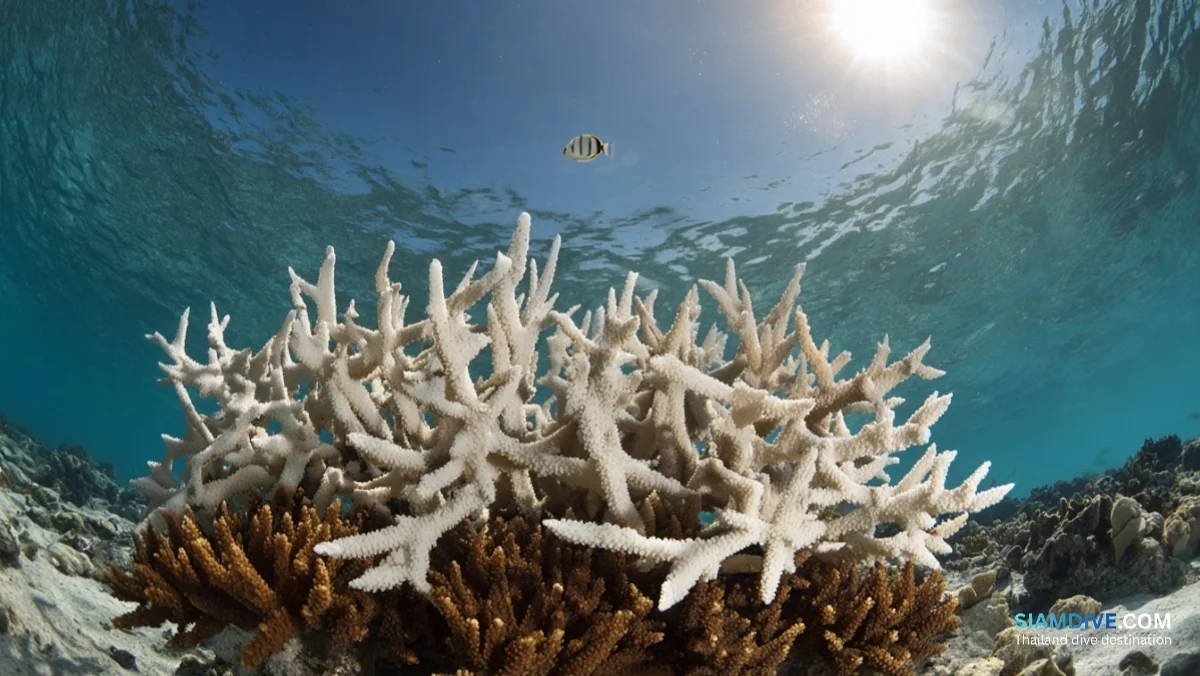
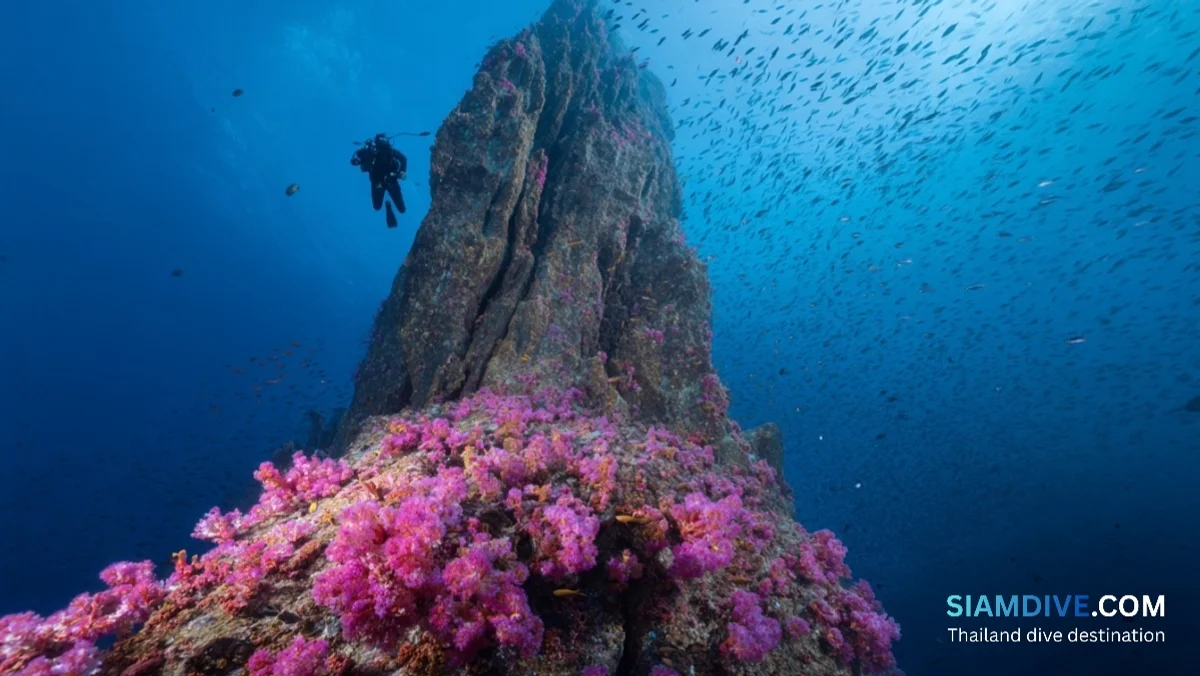
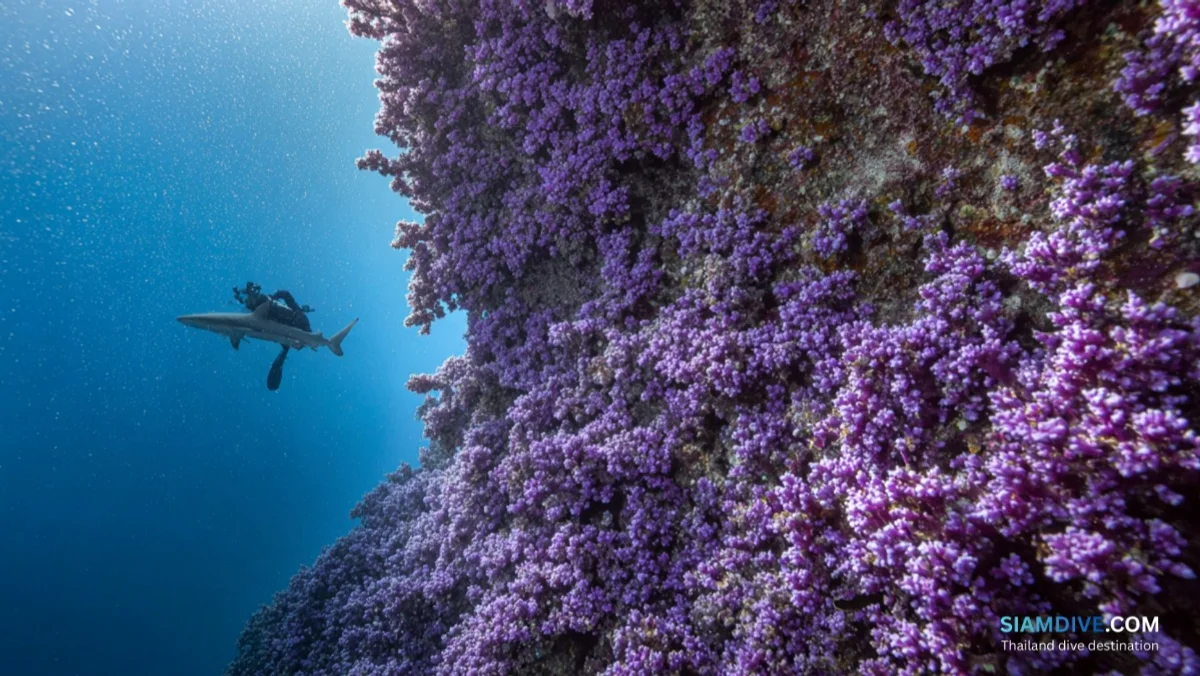
Thirty metres down off Koh Ngam Yai in Chumphon province, the staghorn thickets that once drew schools of fusiliers stand bone-white against blue water. No algae film, no predatory fish darting between branches — just bleached calcium carbonate catching midday light like a field of antlers left in the sun. The image, repeated across dozens of Gulf of Thailand reefs since mid-2024, is the visual signature of the most severe coral bleaching event the region has ever recorded.
Between April 2024 and early 2025, sustained sea-surface temperatures pushed nearly half of all monitored coral colonies in the Gulf past their thermal tolerance. Some islands lost more than 80 per cent of live cover in a single season. The numbers are difficult to argue with. But so is the recovery that has already begun — faster and stranger than many marine biologists expected.
Two Summers at 33°C
The trigger was heat, and it arrived in a measurable wave. NOAA's Coral Reef Watch recorded sea-surface temperatures in the eastern Gulf at 32.73°C in mid-2024, with underwater sensors near reef crests logging readings as high as 33°C. That figure sat 0.54°C above the already-elevated 2023 average — a gap that sounds trivial until translated into degree heating weeks (DHW), the metric marine scientists use to quantify accumulated thermal stress.
Four DHW typically triggers visible bleaching. Eight makes mortality likely. By June 2024, cumulative heat stress in the Gulf had crossed 15 DHW — a level that virtually guarantees mass bleaching across vulnerable colonies.
This was not a freak spike. The 2023–2025 global coral bleaching episode, declared by NOAA and the International Coral Reef Initiative on 15 April 2024, ranks as the most extensive in recorded history, touching roughly 84 per cent of the planet's reef systems. Thailand sat squarely inside the zone, with El Niño amplifying background warming through late 2023 and into the first quarter of 2024.
Gulf of Thailand SSTs have been climbing roughly 0.1°C per decade since the 1980s. For reef-building corals — organisms that bleach when temperatures exceed their seasonal maximum by just 1°C for four or more weeks — the margins had already been razor-thin long before the 2024 event.
Where the Gulf Took the Hardest Hit
Damage was not uniform. Some reefs escaped with partial bleaching and quick recovery; others lost the bulk of their live cover within weeks.
- Chumphon province — Ngam Yai Island recorded bleaching above 80 per cent, Kram Island above 70 per cent, and Ngam Noi Island above 60 per cent, making this cluster among the worst-affected in the entire Gulf.
- Koh Tao, Surat Thani — Long-running survey data from the island's Ecological Monitoring Programme showed a general decline in coral health across five monitored bays between 2016 and 2024, with diversity indices dropping even before the 2024 bleaching compounded the trend.
- Trat archipelago — Roughly 30 per cent of coral cover bleached, with a further 5 per cent mortality reported before temperatures fell.
- National park closures — Bleaching was detected across 19 national parks on both the Gulf and Andaman coasts, prompting authorities to temporarily shut 12 marine parks and restrict visitor access to weakened reef zones.
A coast-to-coast assessment published in January 2026 surveyed 99 nearshore reefs and 16 offshore pinnacles across eight provinces. The finding was sobering: many Gulf reefs have shifted in species composition, with structurally complex staghorn and branching corals recorded far less frequently than in previous decades. In their place, simpler boulder-forming species — tougher under heat stress, but offering less habitat for fish and invertebrates — now dominate. The reefs are alive, but they are flatter, quieter, and less productive than the systems that existed a decade ago.
What Happens When a Reef Turns White
The white is not paint. It is skeleton.
Reef-building corals get up to 90 per cent of their energy from zooxanthellae — microscopic algae that live inside their tissue and photosynthesise sugars in exchange for shelter. When water temperatures hold above the coral's seasonal maximum for roughly four weeks, the animal's stress response expels these algae. Without them, transparent tissue reveals the white calcium carbonate beneath. A bleached coral is not dead. It is starving.
If temperatures drop within two to four weeks, some colonies can reabsorb their algae and recover. Beyond that window, tissue begins to die. The skeleton is colonised first by turf algae, then by fleshy macroalgae, then by sediment. Structure flattens. Complexity disappears.
For divers, the shift is unmistakable. A healthy reef hums with activity — anthias pulsing in clouds, cleaner wrasse working stations, parrotfish scraping audibly at the surface. A bleached reef falls quiet. Fish scatter when food chains collapse. Visibility may actually improve — fewer particles suspended in the water column — but the silence is the thing you remember. It sounds like a reef with the volume turned off.
The Recovery Score
Against that backdrop, the numbers from Thailand's Department of Marine and Coastal Resources (DMCR) carry cautious weight. By late 2025, the department reported that over 60 per cent of corals affected by the 2024 bleaching had recovered, crediting a three-pronged strategy branded “Reduce, Refrain, Rescue.”
- Reduce — bans on fish feeding near reefs, removal of marine debris, and prohibition of sunscreens containing oxybenzone and octinoxate in national marine parks.
- Refrain — temporary closures of high-traffic snorkelling and diving sites during peak thermal stress, reducing physical contact on weakened colonies.
- Rescue — active intervention: coral fragment transplantation, deployment of artificial substrate, and nursery cultivation of heat-tolerant stock.
The 2025 restoration plan is specific: expand substrate area for larval settlement by 12 rai across seven provinces from Trat to Phuket, actively replant corals across 24 rai, and maintain 60,000 colonies in nurseries. Thailand's coral estate covers roughly 150 square kilometres — the restoration footprint is small relative to the whole, but it targets the highest-value sites first.
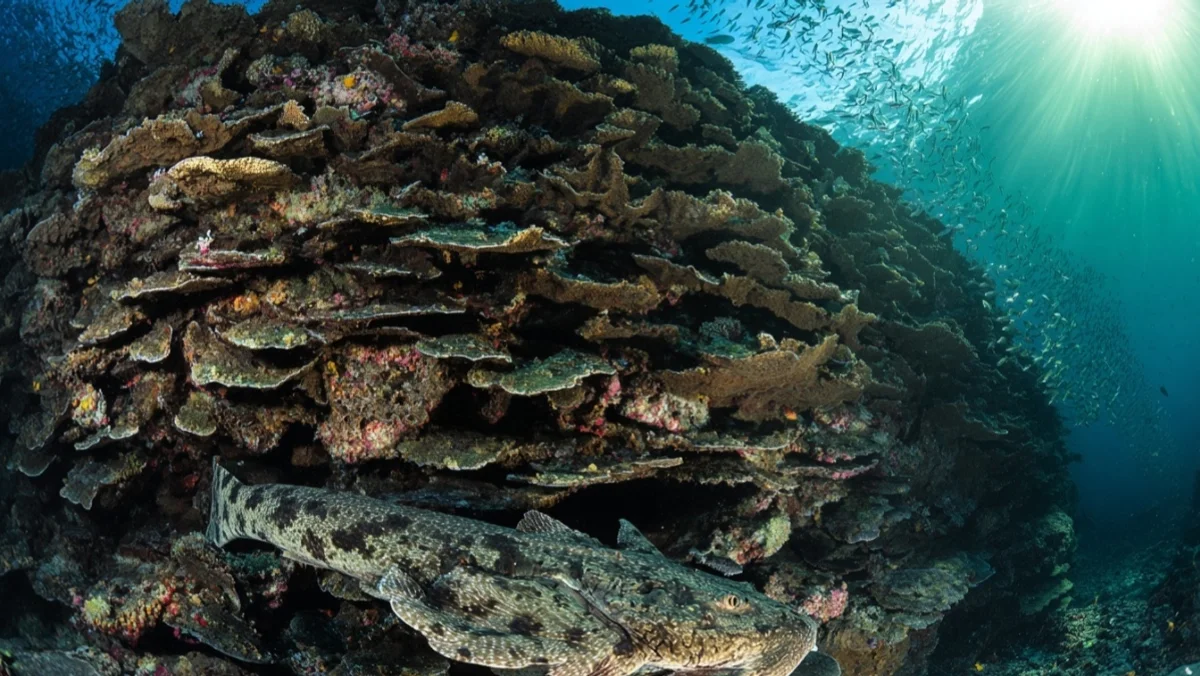
Koh Phangan offers one of the Gulf's clearest success stories. Hard coral cover around the island climbed from 37 to 55 per cent over recent monitoring cycles — a mean increase of 2.2 per cent per year — driven largely by fast-growing plate corals. Research published in Coral Reefs attributed the rebound to natural recruitment rather than human planting, suggesting that when thermal stress eases, some Gulf sites can recover on their own given enough time and reduced human pressure. The key words are some and enough time.
Corals That Refused to Bleach
At depths of one to two metres around Koh Tao — water so shallow that midday temperatures regularly hit 35°C — researchers documented something unexpected during the 2024 event. Coral colonies in these extreme shallows showed minimal to no signs of bleaching, even as colonies five metres deeper on the same reef turned white.
Fragments from these heat-resistant populations have since been transplanted to deeper, more damaged areas for study. The mechanism is not fully understood — it may involve pre-adapted zooxanthellae clades, genetic variation within the coral host, or simply decades of natural selection in an already-extreme environment. But the implication matters: natural thermal tolerance may already exist in small populations that conventional monitoring has overlooked because nobody expected survival at those temperatures.
Meanwhile, a different kind of insurance is being built in a laboratory. In June 2025, researchers at Phuket Rajabhat University opened Southeast Asia's first coral cryobank — a facility that deep-freezes live coral larvae and their symbiotic algae in liquid nitrogen at -196°C. The target species: cauliflower coral (Pocillopora), one of the Gulf's faster-recovering but still vulnerable genera. The preserved material — vials of Symbiodiniaceae algae no bigger than specks of dust — functions as a genetic backup. If a wild population collapses, its genetic code can be thawed and used in future restoration.
The Phuket lab is part of a wider network linking institutions in the Philippines, Taiwan, Indonesia, Malaysia, and Thailand. The ambition is a distributed genetic library spanning the Coral Triangle's most at-risk species — a frozen ark for reefs that may not survive the next decade of warming without intervention.
What Divers See in 2026
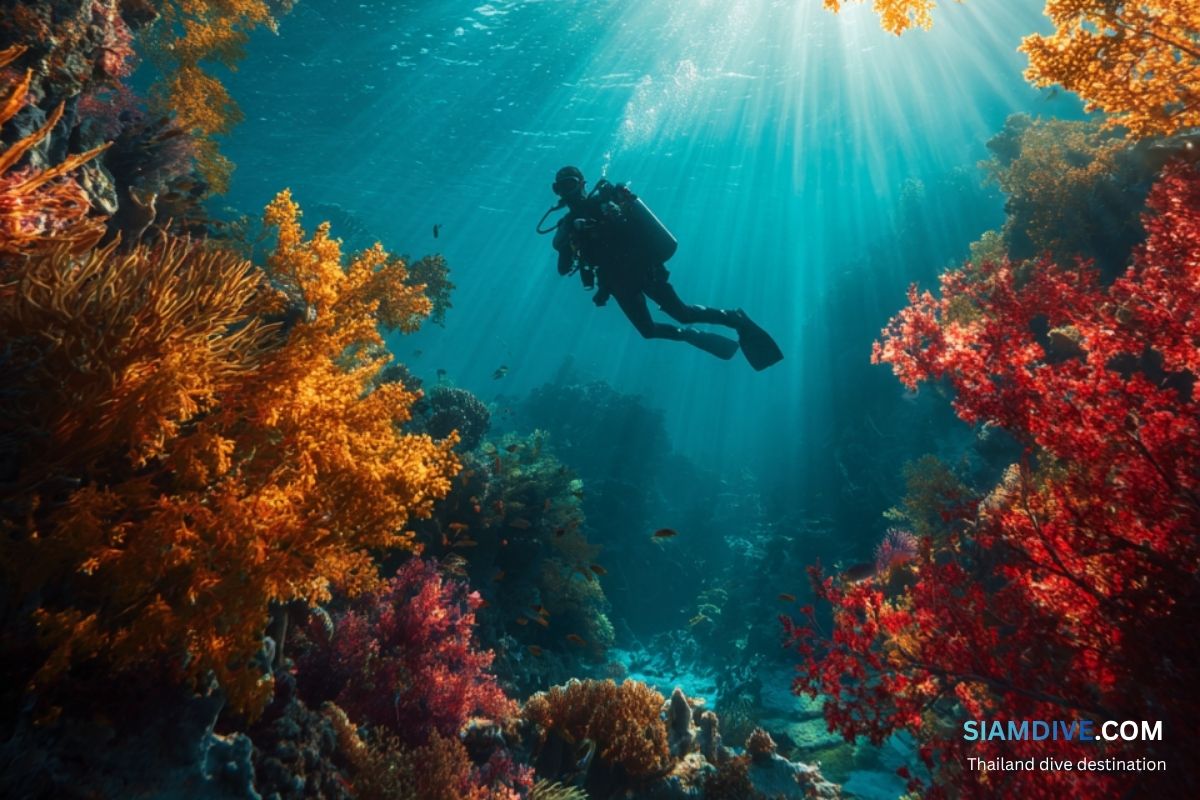
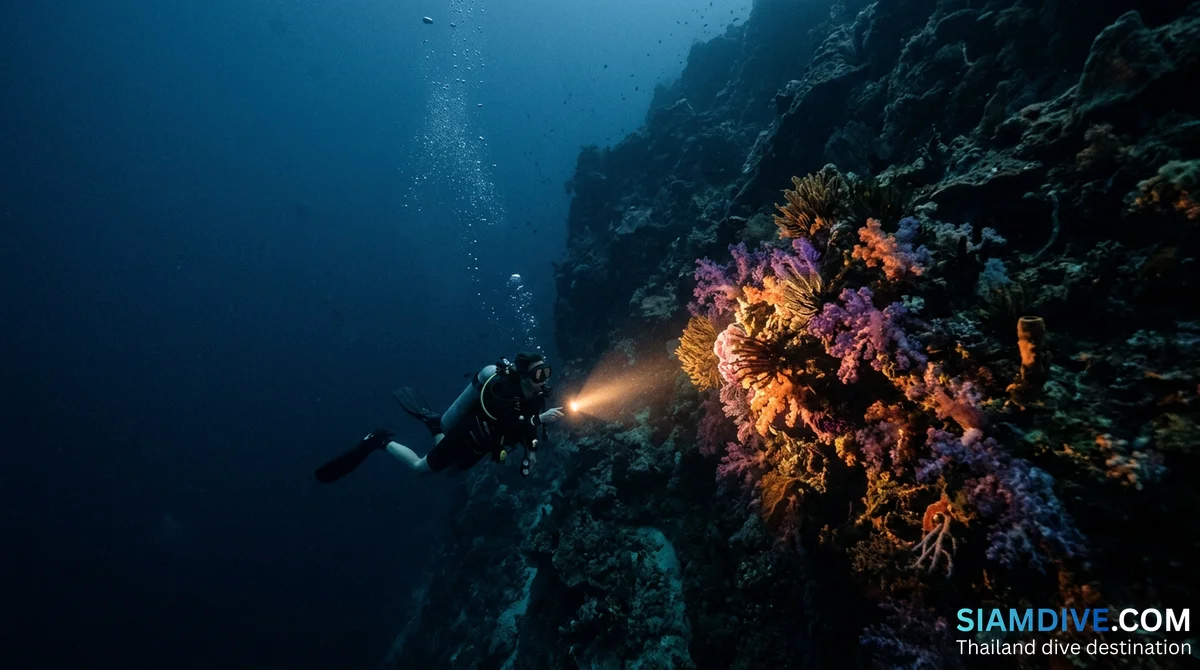
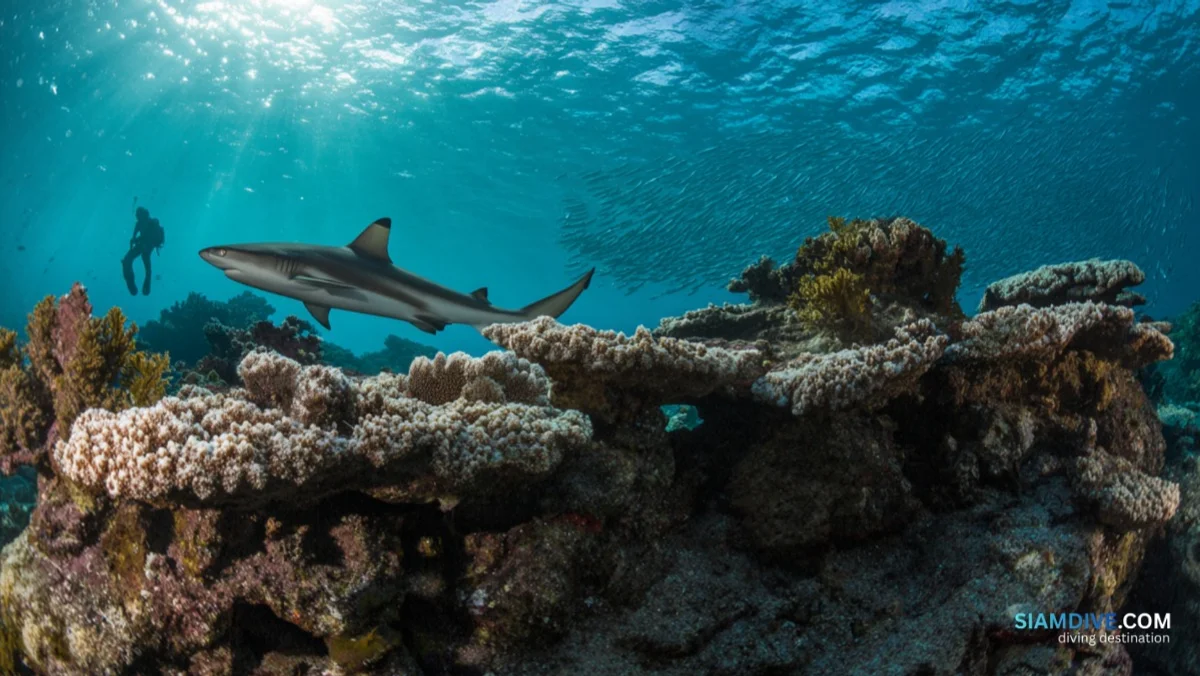
Conditions split sharply by site. Some northern Gulf reefs still show large tracts of white or algae-covered skeleton from the 2024 event. Others — particularly those in marine parks where closures held through the worst months — display patches of regrowth that would have seemed unlikely 18 months ago: nubs of new coral tissue spreading over old bases, small colonies of fast-recruiting species already fist-sized, damselfish staking out fresh territories on young growth.
- Visibility
- Gulf conditions in early 2026 have been running 10–25 metres depending on season and location, with peak clarity typically July through September.
- Reef state
- Expect mixed landscapes: healthy sections alongside bleached or recovering patches, often on the same dive. Macro life — nudibranchs, pipefish, shrimp — remains abundant on reef rubble where fish have thinned out.
- Marine park access
- Most Gulf parks have reopened, but visitor caps and no-touch zones are more strictly enforced than before. Fines for reef contact in marine parks can exceed 7,000 THB.
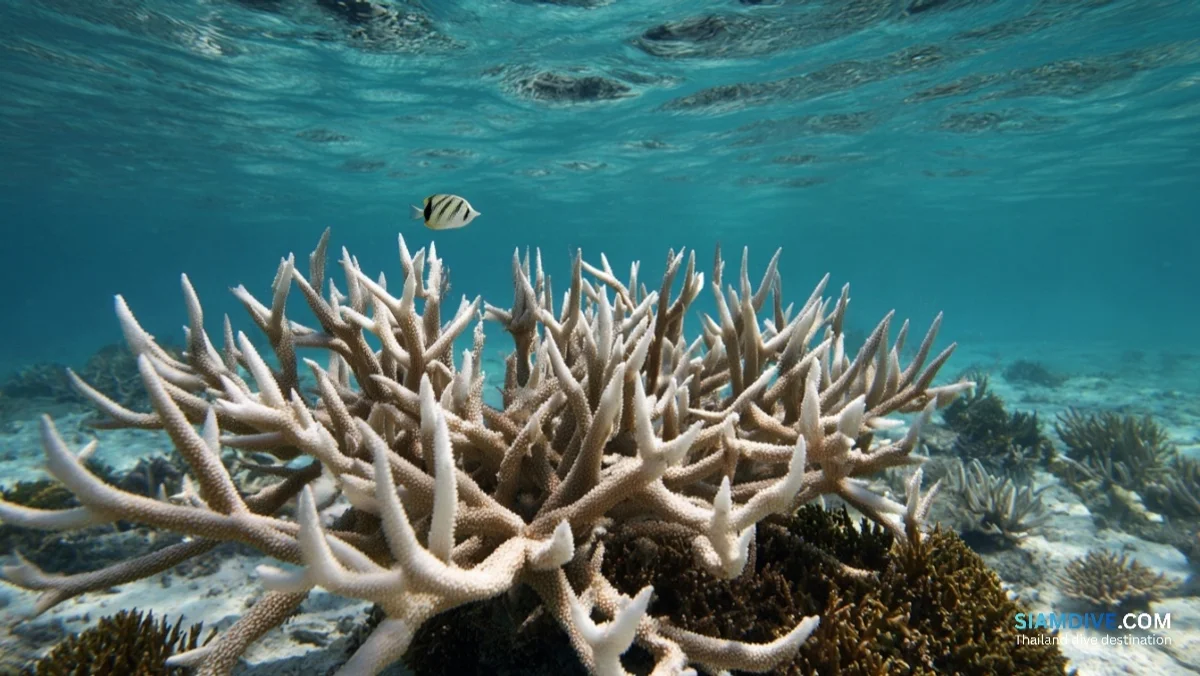
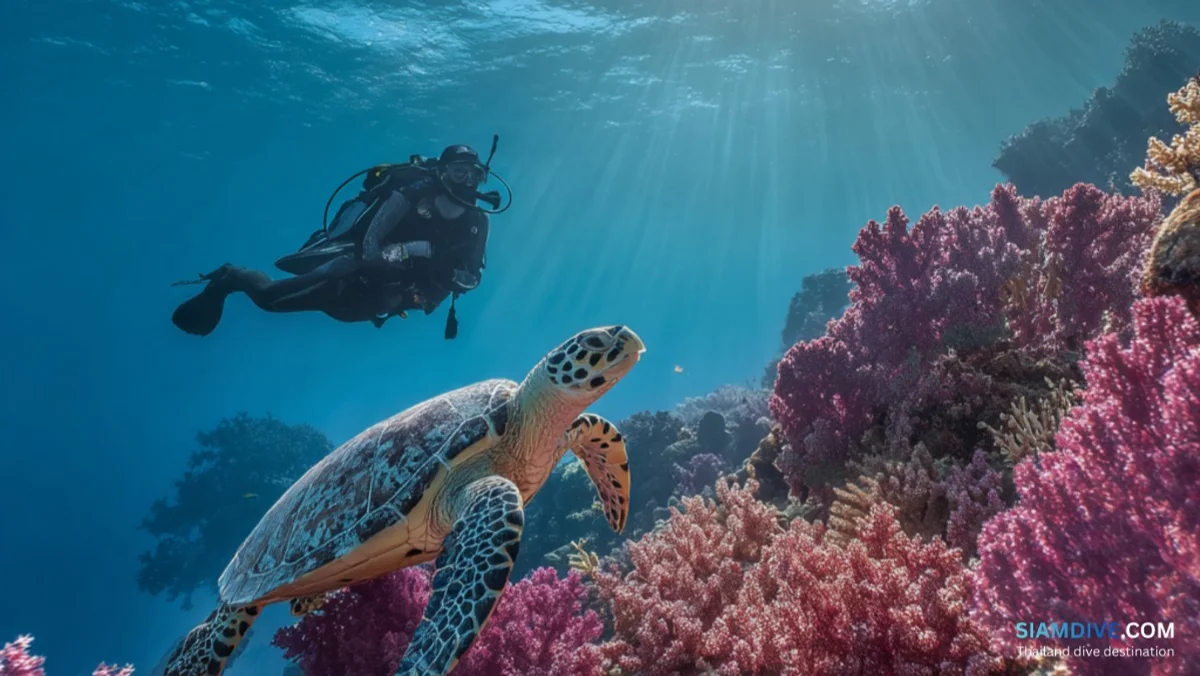
For divers visiting Gulf sites this year, the reef tells two stories at once. Damage is visible and real — flat rubble fields where branching corals once stood, colonies still streaked with pale tissue. Recovery is visible too: juvenile corals the size of coins, cleaning stations reopening, new growth reclaiming bare rock. Both are worth documenting. Both are the point.
Responsible practice matters more now than in any previous season. Buoyancy control, fin placement, and choosing operators who follow marine park protocols directly reduce the contact stress that slows recovery on weakened reefs. The simplest contribution a diver can make is also the most effective: stay off the coral, use reef-safe sunscreen, and report bleaching observations to DMCR's Coral Bleaching Monitoring Programme.
Reefs that have survived centuries of cyclones, crown-of-thorns outbreaks, and human pressure are now navigating temperatures they have never experienced. The Gulf of Thailand's coral is not finished — the data shows that clearly. But it is changing, and the window for the kind of recovery that preserves complexity rather than just cover is measured in years, not decades. What divers see underwater today is both a warning and an invitation to pay closer attention.
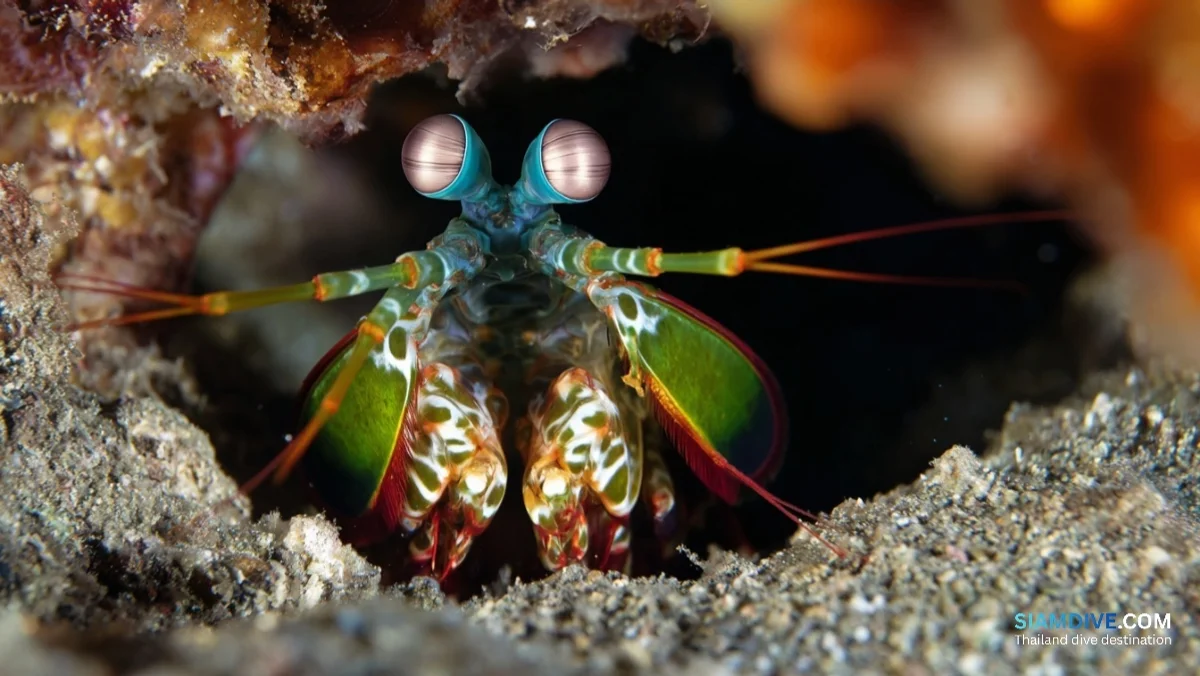
If you want to understand how Thai reefs rebuild, Boonsung's post-tsunami reef recovery shows what is possible on a longer timeline. For a different angle on marine life resilience, read about Thailand's mantis shrimp — a species that thrives in the rubble zones bleaching leaves behind. And if you are planning Gulf dives, our breakdown of Andaman versus Gulf conditions by month can help you choose the right coast for the right season.
Sources
- NOAA Coral Reef Watch — Eastern Gulf of Thailand thermal stress monitoring
- DMCR — Thailand Coral Bleaching Monitoring Programme
- Mongabay — Coast-to-coast coral assessment reveals Thailand’s reefs losing complexity (January 2026)
- Mongabay — Thailand’s coral cryobank tries to buy time for dying reefs (February 2026)
- PMC — Recent and rapid reef recovery around Koh Phangan Island, Gulf of Thailand