Whale Sharks in Thailand: Where and When to See Them
9 เมษายน 2569
Find whale sharks in Thailand at Chumphon Pinnacle, Richelieu Rock and more. Season guide, dive costs, and responsible encounter tips for 2026.
Few things compare to the moment a whale shark materializes from the blue. One second you're staring into open water, the next there's a 6-meter spotted giant gliding past you with the calm indifference of something that has existed for 60 million years. Thailand remains one of Southeast Asia's most accessible places to have this encounter, and the conditions here — warm water, strong plankton blooms, established dive infrastructure — make it realistic for divers of nearly every level.
Between the Gulf of Thailand and the Andaman Sea, the country offers two distinct corridors for whale shark activity. Each has its own season, its own character, and its own logistical reality. This guide covers all of it: where to go, when to book, what it costs, and how to do it without making the experience worse for the animal.
How Whale Shark Encounters Work
Whale sharks are filter feeders. They cruise through plankton-dense water with their mouths wide open, pulling in enormous volumes of water and filtering out tiny organisms — copepods, fish eggs, krill, and small fish. They're not hunting. They're grazing. This feeding behavior is exactly why they show up at specific sites during specific months: they follow the food.
An adult whale shark in Thai waters typically measures between 4 and 8 meters, though individuals over 10 meters have been recorded. They move slowly — around 3 to 5 km/h — which is why snorkelers and divers can keep pace. But "slow" is relative. When a whale shark decides to descend or change direction, you won't keep up. The encounter lasts as long as the shark allows it, which might be 30 seconds or 15 minutes.
They're completely harmless to humans. There's no predatory instinct directed at you. The biggest physical risk is getting clipped by the tail if you crowd the animal from behind — that caudal fin is powerful, and a careless diver can catch a solid hit. Stay to the side, match the shark's pace, and the whole thing unfolds without drama.
Best Dive Sites for Whale Sharks in Thailand
Thailand's whale shark encounters split across two bodies of water, and each has standout sites.
Gulf of Thailand
Chumphon Pinnacle — This is hands down the most reliable whale shark site in the Gulf. It's a submerged granite pinnacle about 11 km northwest of Koh Tao, dropping from around 14 meters to 36 meters. The structure creates upwellings that concentrate plankton, and whale sharks patrol this column regularly between March and June. Visibility here averages 15-25 meters during peak months.
Sail Rock — Sitting roughly between Koh Tao and Koh Phangan, Sail Rock is a massive underwater chimney that breaks the surface. The vertical swim-through and the nutrient-rich currents make it a magnet for pelagics. Whale shark encounters here are less predictable than Chumphon Pinnacle but they happen, and the overall dive quality is outstanding regardless.
Southwest Pinnacle — Another Koh Tao site, this cluster of submerged rocks sits at 25-30 meters depth. It doesn't produce whale shark sightings as frequently as Chumphon, but when conditions align — calm seas, good visibility, heavy plankton — sharks appear here too.
The Gulf of Thailand accounts for 48% of the country's recorded whale shark sightings between 1991 and 2023. That's a significant number, and it reflects both the genuine frequency of encounters and the sheer volume of divers passing through Koh Tao every year.
Andaman Sea
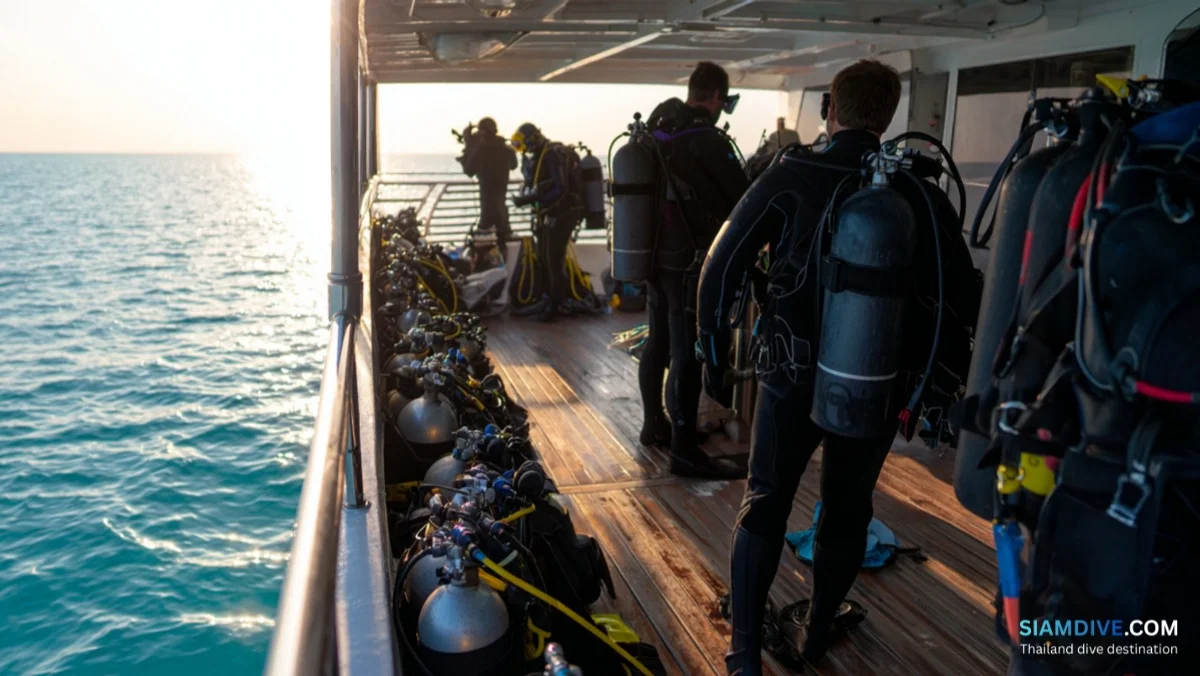
Richelieu Rock — Ask any experienced diver in Thailand for their single best dive site, and most will say Richelieu Rock. This horseshoe-shaped pinnacle in the Surin Islands marine park is a biodiversity hotspot, and whale sharks are part of the package during February through April. The site is only accessible by liveaboard, which filters out casual traffic and keeps encounters more controlled.
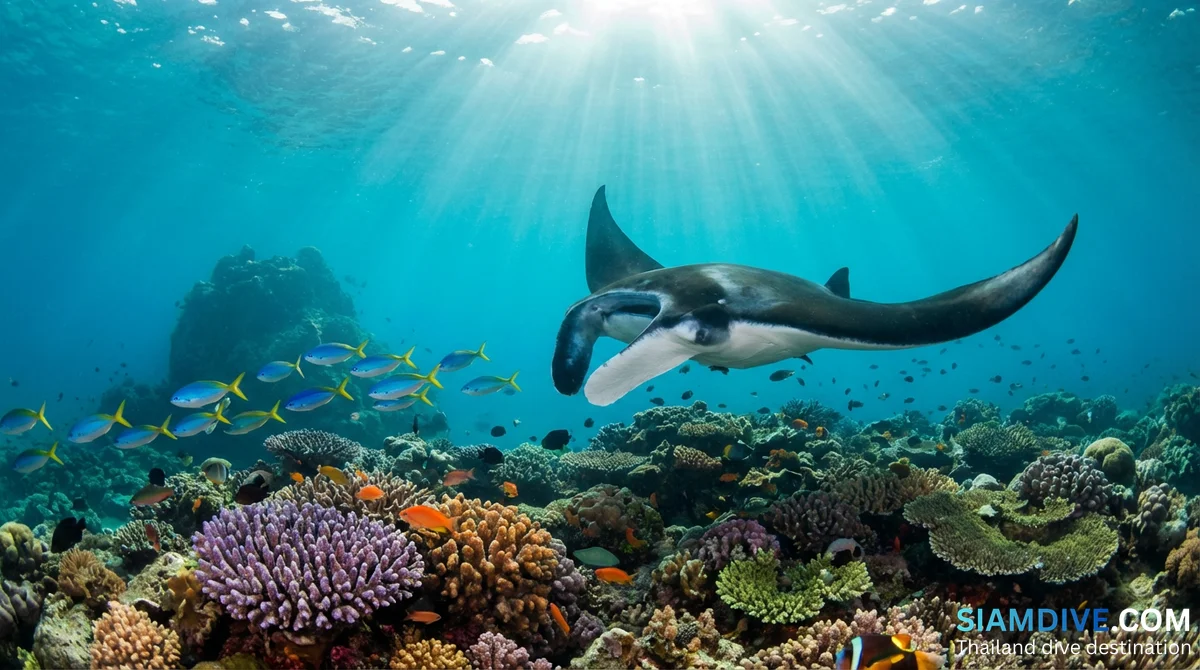
Hin Daeng and Hin Muang — These twin sites south of Koh Lanta feature dramatic walls and strong currents. Hin Muang drops to over 60 meters and holds Thailand's deepest wall. Whale sharks pass through here following plankton corridors, particularly between February and April. Manta rays are a common bonus.
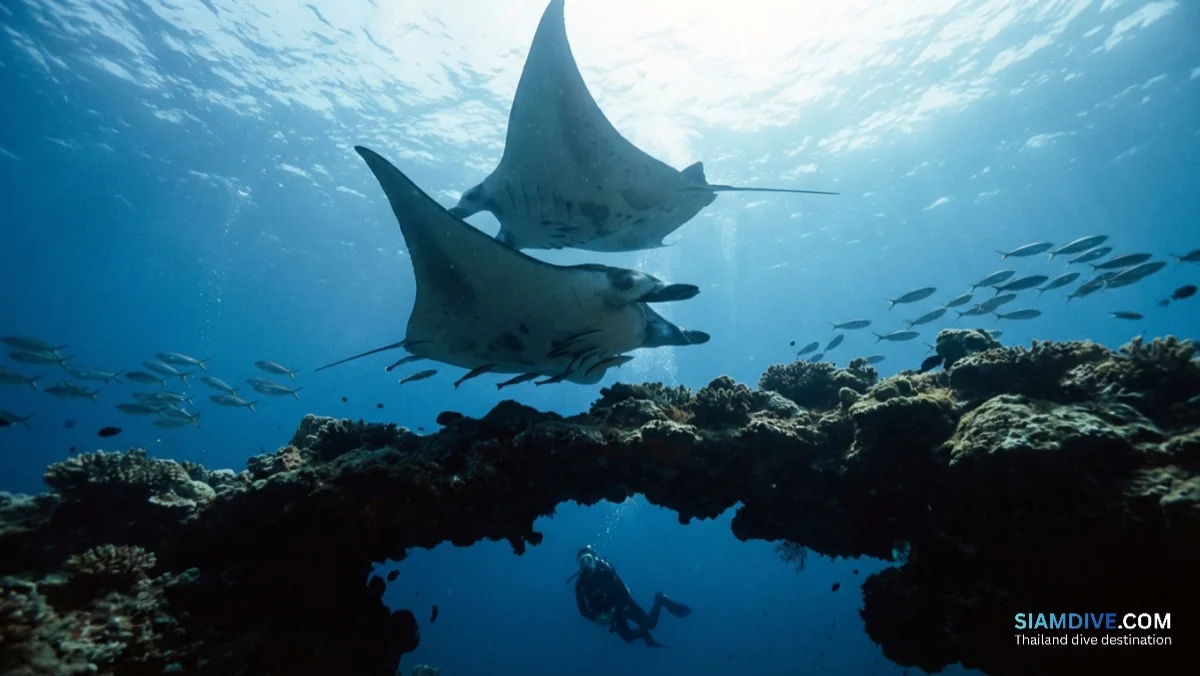
Koh Bon — Part of the Similan Islands group, Koh Bon's western ridge is a known manta cleaning station, but whale sharks also visit. The site is typically included in Similan liveaboard itineraries, giving you a shot at both species on the same trip.
When to Go: Season and Conditions
Timing matters enormously. Whale sharks follow plankton, and plankton blooms follow oceanographic patterns that shift with the monsoons.
Gulf of Thailand: The primary window runs from March through June. April and May tend to produce the highest number of sightings around Koh Tao. Water temperatures sit at 27-30°C, and visibility ranges from 15 to 25+ meters during settled conditions. The Gulf side stays diveable year-round, but whale shark probability outside March-June drops sharply.
Andaman Sea: The season is tighter — February through April, with March being the statistical peak for Richelieu Rock encounters. The Andaman side shuts down operationally during the southwest monsoon (roughly May to October), so you can't simply wait for better luck. When conditions are good, visibility regularly exceeds 20 meters.
Water temperatures across both regions hover between 27°C and 30°C during whale shark season. A 3mm wetsuit is standard, though some divers in April and May go with just a rashguard.
Gulf vs Andaman: Which Region to Choose
This comes down to your budget, your experience level, and how much time you have.
Choose the Gulf (Koh Tao) if: You want the most affordable option, you're comfortable with day-trip diving, and you can visit between March and June. Koh Tao has the highest concentration of dive shops in Thailand — over 50 at last count — which drives competition and keeps prices reasonable. A day trip including two dives at Chumphon Pinnacle runs between 2,000 and 5,000 THB depending on the operator and whether equipment is included. You can base yourself on Koh Tao for a week and make multiple attempts.
Choose the Andaman (liveaboard) if: You want the best overall dive experience and you're willing to invest more. Richelieu Rock is genuinely world-class — not just for whale sharks but for macro, reef diversity, and overall spectacle. Liveaboard trips running 4-5 days from Khao Lak typically cost 18,000-45,000 THB and cover the Similan Islands, Koh Bon, Koh Tachai, and Richelieu Rock. You'll log 15-19 dives across the trip, and your whale shark odds accumulate across multiple visits to key sites.
If you only have one shot, the Andaman route during March gives you the best single-trip probability combined with the best diving overall. If you have flexibility and a tighter budget, a week on Koh Tao during April-May stacks the odds in your favor through repetition.
Responsible Encounter Guidelines
Whale sharks tolerate human presence, but tolerance has limits. Repeated harassment changes behavior — sharks that get chased, touched, or surrounded by too many swimmers eventually leave the area or alter their feeding patterns. Every diver and snorkeler bears responsibility for keeping encounters sustainable.
The rules are straightforward:
- Maintain 3 to 5 meters distance. This isn't a suggestion. Getting closer stresses the animal and increases your risk of a tail strike. Use a wide-angle lens and let the shark fill the frame from a respectful distance.
- No touching. Ever. The mucus layer on a whale shark's skin protects it from infection. Your hand removes that protection.
- No flash photography. Strobes can startle the shark and disrupt natural behavior. Whale shark encounters happen in ambient light conditions that are perfectly adequate for modern cameras.
- Don't block the shark's path. Swim alongside, not in front. If the shark is heading toward you, move to the side. You are not a traffic obstacle it should have to navigate around.
- Use reef-safe sunscreen. Chemical sunscreens containing oxybenzone and octinoxate damage coral and contaminate the water column. Mineral-based alternatives with zinc oxide work just as well and don't contribute to the problem.
- Limit group size. Responsible operators cap the number of swimmers in the water at any one time. If your boat dumps 20 people on a whale shark simultaneously, you booked the wrong operator.
In 2022, 19 whale shark sightings were recorded in Thai waters — a number that suggests gradual recovery but also underscores how uncommon these animals remain. Every careless interaction chips away at the conditions that allow them to return.
Practical Tips: Cost, Operators, and What to Bring
Budget expectations: Day trips from Koh Tao targeting Chumphon Pinnacle or Sail Rock cost 2,000-5,000 THB per person. This typically includes two dives, equipment rental, lunch, and transport. Andaman liveaboards covering Richelieu Rock range from 18,000-45,000 THB for 4-5 day itineraries. Premium boats with smaller groups and better food sit at the upper end.
Choosing an operator: Look for SSI, PADI, or SDI affiliations and read recent reviews — not from 2019, from the last six months. Ask specifically about their whale shark encounter protocols: maximum swimmers in the water, briefing content, guide-to-diver ratio. Operators that take conservation seriously will explain their approach before you ask.
What to bring:
- Wide-angle camera setup (GoPro at minimum, mirrorless with 10-18mm or 14-30mm lens ideally)
- Reef-safe sunscreen — apply it 30 minutes before entering the water so it absorbs properly
- Rashguard for sun protection and minor sting defense
- Seasickness medication if you're prone — Chumphon Pinnacle in particular involves a 90-minute boat ride
- Towel and dry bag for electronics
Fitness and certification: Open Water certification is sufficient for most whale shark sites. Chumphon Pinnacle has areas below 18 meters that require Advanced Open Water, but whale sharks often appear in the shallower portions. Snorkelers can encounter whale sharks at surface level — some operators run combined snorkel-dive trips.
Final Thoughts
Thailand won't guarantee you a whale shark. No destination on earth can make that promise honestly. What Thailand does offer is a well-established infrastructure, affordable access, and two distinct marine regions that produce consistent seasonal activity. Your best strategy is simple: pick the right region, go during peak months, dive as many days as you can, and let probability work in your favor.
Start planning your whale shark trip at siamdive.com — compare dive operators, check liveaboard schedules, and find real-time reports from divers who've been in the water this season.