Never Dived Before? Here's Why Thailand Should Be Your First Ever Dive Trip
17 เมษายน 2569
Warm 29°C water, 30m visibility, the world's cheapest PADI courses, and reefs built for beginners. Here's why Thailand is the single best place on Earth to start diving.
The Country Where Everyone Learns to Dive
Koh Tao alone certifies more new divers than almost any other spot on the planet. That's not a marketing line — it's the reality of a small island whose entire economy runs on getting nervous first-timers comfortable underwater. If you've ever thought about trying scuba, Thailand is not just a good option. It is the obvious one. Warm water, cheap courses, protected reefs, and instructors who teach beginners every single day.
This post is for the person who hasn't dived yet — or who tried a Discover Scuba in Bali and didn't get hooked. Here's why Thailand fixes every reason you might have hesitated.
Reason 1: The Water Is Ridiculously Warm
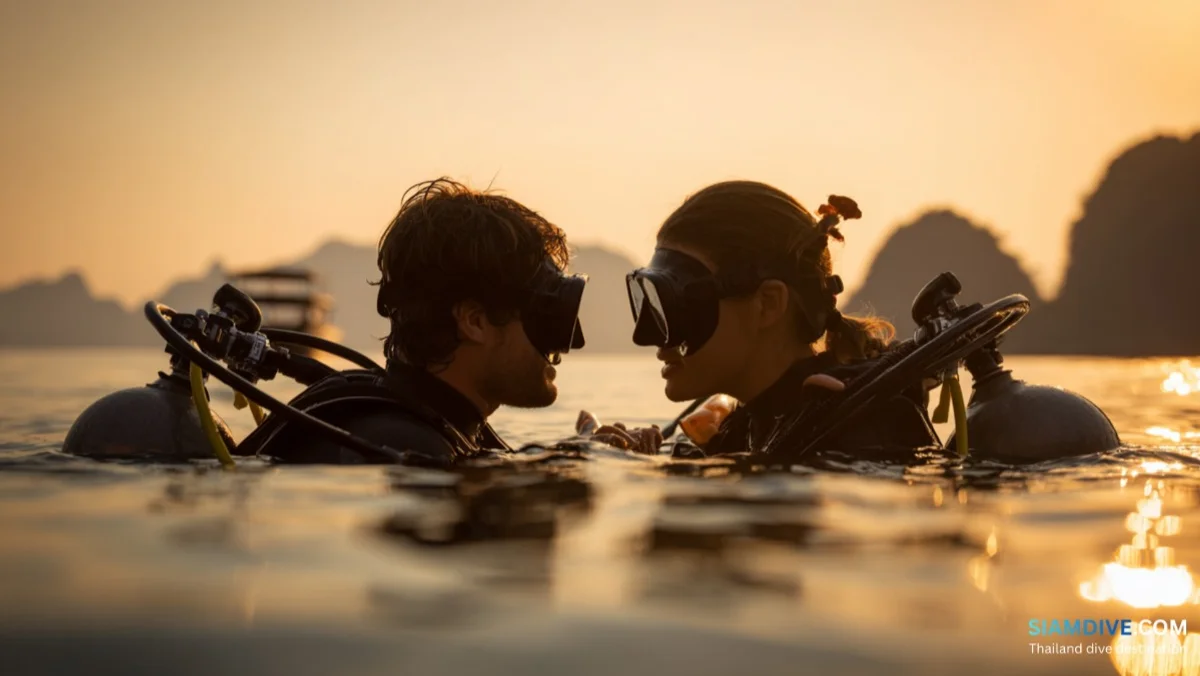
Thai sea temperatures sit between 27°C and 30°C (81–86°F) year round. You dive in a 3mm shorty wetsuit, sometimes just a rash guard. You are not cold. You are not distracted by shivering. Your first underwater breaths happen in water that feels like a bath.
Compare that to learning in the UK (10°C), California (15°C), or even Australia in winter (19°C) and you realize why people fly across the world to get certified in Thailand instead.
Reason 2: It's the Cheapest Certification on Earth
A full PADI Open Water course on Koh Tao runs roughly 9,500–12,000 THB (~$280–$350 USD) including equipment, eLearning, pool sessions, four training dives, and your international certification card. Phuket and Koh Phi Phi run a little higher at 14,000–16,000 THB. Either way, you're looking at less than the cost of a single Apple watch for a lifetime qualification.
Discover Scuba Diving (a half-day intro, no certification) starts at around 2,500 THB. If you just want to see whether you like breathing underwater before committing to a course, it's the smartest 75 dollars you'll spend on a trip.
Reason 3: The Training Sites Are Practically Designed for Beginners
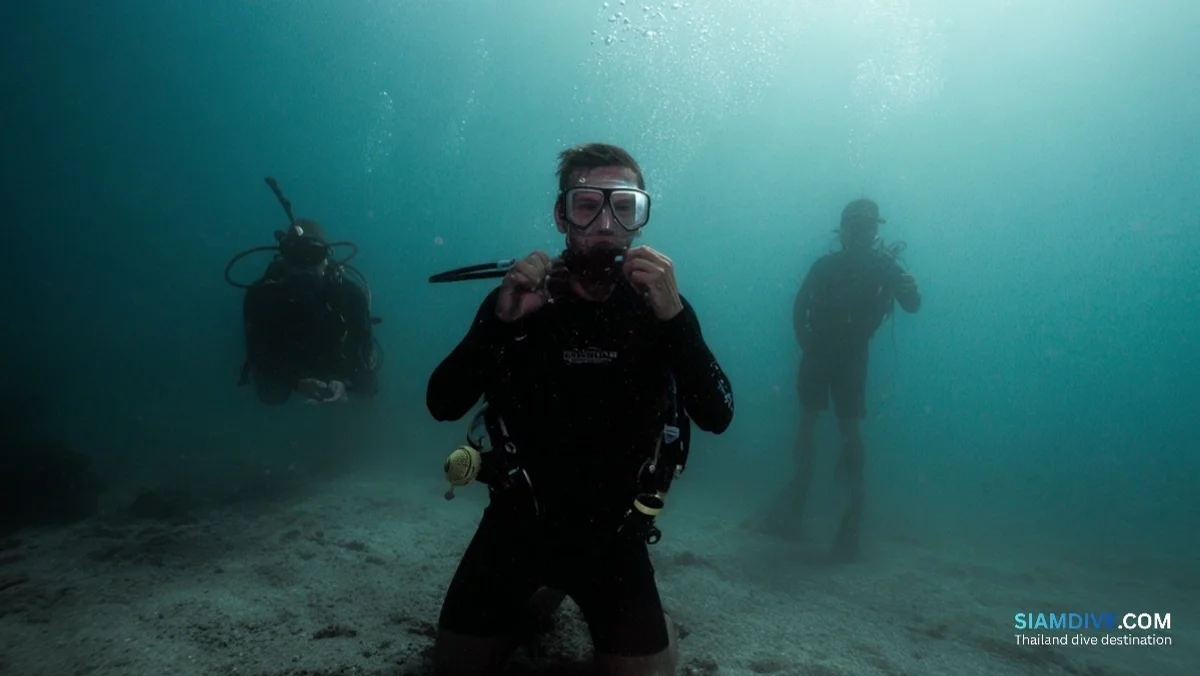
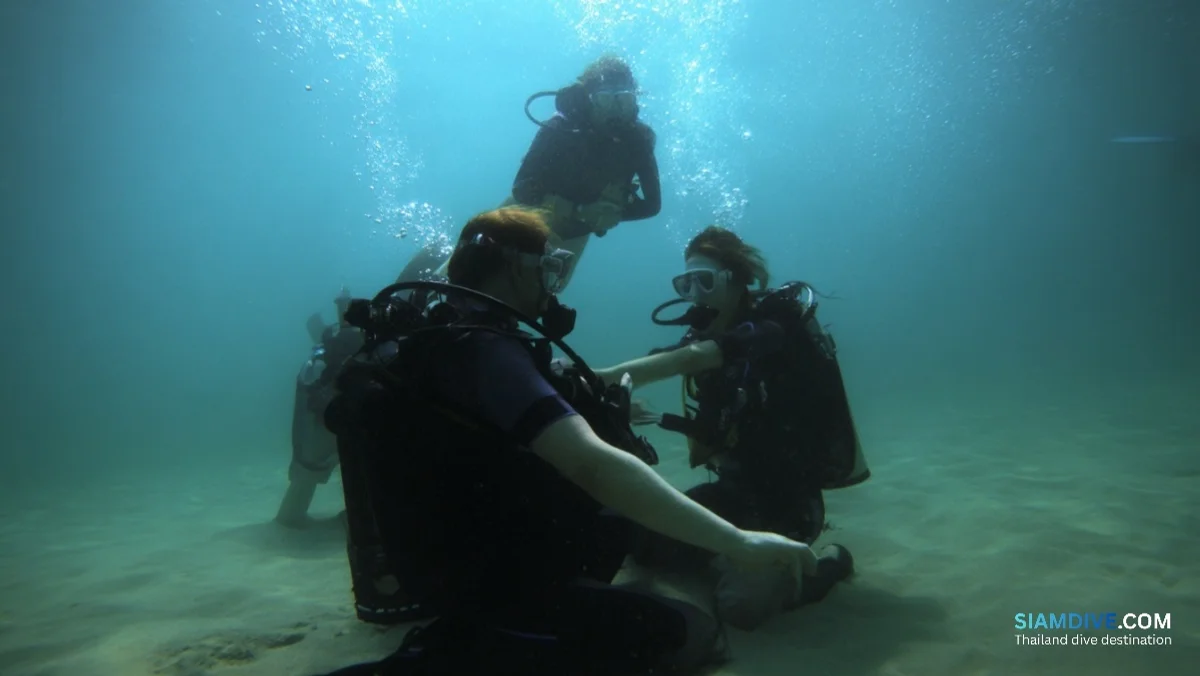
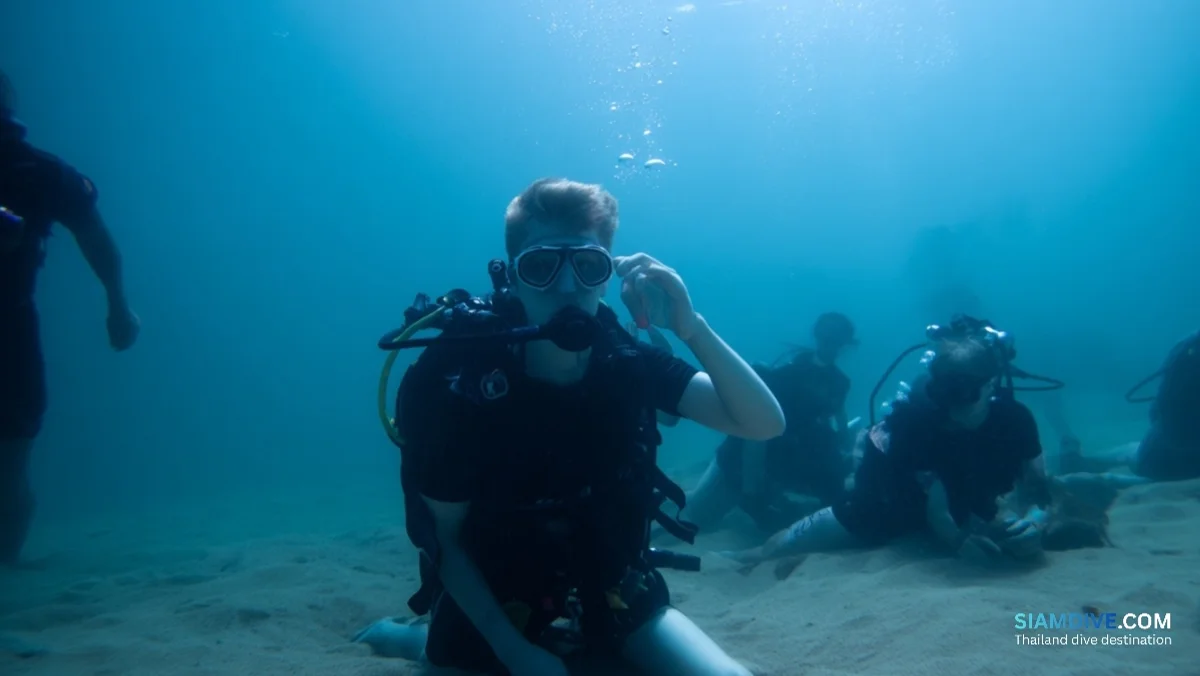
Sites like Japanese Gardens, Twins, White Rock, and Mango Bay (all Koh Tao) are shallow — usually 5 to 12 metres — with calm, clear water and no current. These aren't fallback sites for bad weather. They are purpose-used training grounds because their conditions match exactly what an Open Water student needs: a sandy bottom to kneel on, a gentle slope, easy navigation, and reef life within arm's reach.
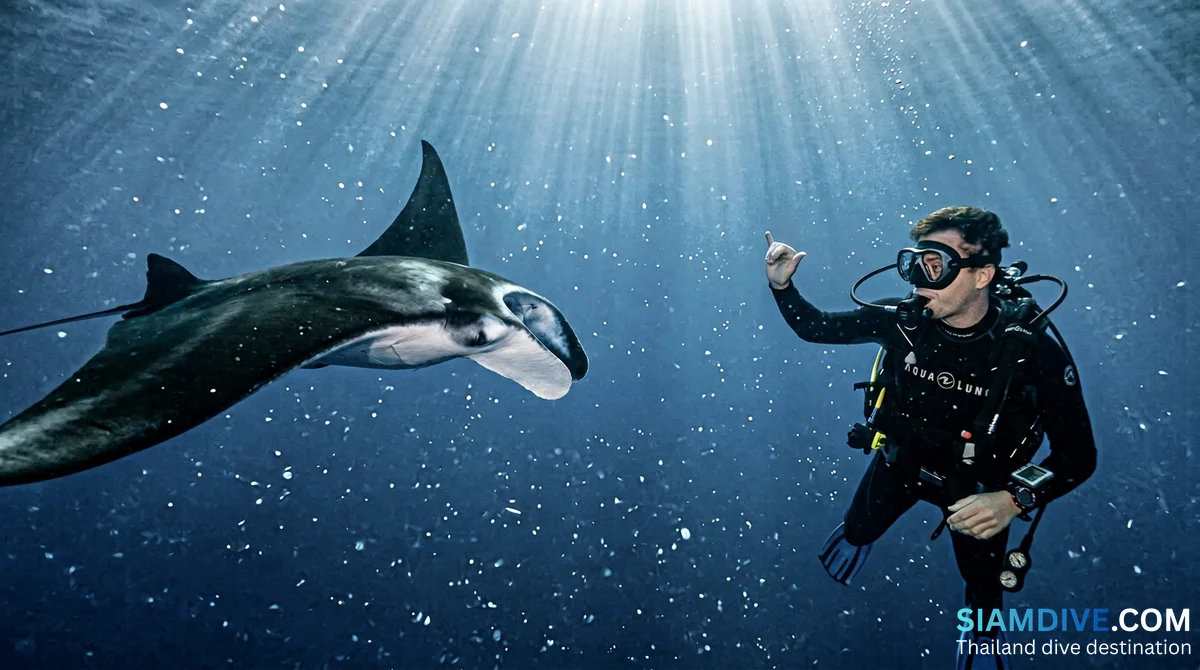
Krabi and Koh Phi Phi offer the same profile on the Andaman side. Calm, clear, protected — and the moment you're certified, you can jump onto sites with whale sharks and manta rays without leaving the country.
Reason 4: Visibility Is Genuinely Incredible
Peak season visibility (roughly October through May on the Andaman side, and year-round on the Gulf side) regularly hits 25–30 metres. For a new diver, clear water means confidence. You can see your buddy, your instructor, the bottom, and the surface all at once. That's the difference between a relaxing first dive and a stressful one.
Reason 5: You Can Certify Fast (Or Slow)
The standard PADI Open Water course runs 3 to 4 days. That fits a normal holiday — fly in Monday, certified by Friday, spend the weekend actually using the certification on fun dives.
If you want to take it slower, shops on Koh Tao will happily split the course across 5 or 6 days. If you want to go all-in, you can stack Open Water → Advanced Open Water → Rescue in under two weeks and walk out with 30+ logged dives.
Reason 6: Dive Shops Speak Your Language
Top dive centres in Thailand have instructors in English, Thai, Mandarin, Japanese, Korean, German, French, Russian, and more. This matters more than people realize. Your first dive involves vocabulary — equalize, purge, neutral buoyancy, controlled emergency swimming ascent — and having an instructor who teaches you that in your native language is the difference between understanding and pretending to understand.
Reason 7: It's Not Just About Diving
A lot of first-time divers worry about committing a whole trip to a hobby they haven't tried yet. In Thailand, you don't have to. Your course is usually 2–4 hours per day. The rest of the day you're on a beach, eating pad thai for 60 baht, getting a 300-baht massage, hopping a ferry to the next island. If you hate diving, you still have a perfect Thailand trip. Nobody says that about a dedicated dive boat in Indonesia or Palau.
What It Actually Costs — Ballpark for 10 Days
- Flights (from EU/US): $700–$1,200
- Accommodation 10 nights (mid-range): $300–$500
- PADI Open Water course: $300–$350
- 4 extra fun dives after certification: $120–$160
- Food and transport 10 days: $200–$300
Total: roughly $1,600–$2,500 for a full 10-day trip including certification. The same experience starting in the Maldives or Caribbean easily doubles.
The One Thing You Should Do Before You Arrive
Start the eLearning before your flight. PADI Open Water eLearning is 8–12 hours of videos and quizzes, and if you've done it all at home, your four days on the island are 100% in the water instead of split between water and classroom. You can also practise equalizing your ears on land (pinch nose, gently blow) — the single skill that trips up most first-time divers.
Where to Start
For a first certification, we genuinely recommend Koh Tao for budget and ease, Koh Phi Phi or Krabi for nicer scenery with calm conditions, or Phuket if you want an easy international airport arrival. All three work. None are wrong.
Browse certified dive centres, Open Water course packages, and island combos on siamdive.com and message the shop directly. See you underwater.