Scuba Diving Safety: A Beginner's Guide to Diving Safe & Smart
← Blog

Scuba Diving Safety: A Beginner's Guide to Diving Safe & Smart

8 เมษายน 2569

The five-minute pre-dive check, three golden rules, buddy system and emergency drills every diver must know. Real safety advice without the fluff.

Why Safety Comes Before Everything Else

Scuba diving is statistically safer than driving to the dive shop, but the ocean does not forgive shortcuts. Most accidents you read about are not freak waves or shark attacks — they are missed buddy checks, holding your breath on ascent, or a regulator that nobody bothered to test. The good news: every one of those is preventable in under five minutes. This is the short version of what your instructor wants you to actually remember.

The Pre-Dive Check (BWRAF)

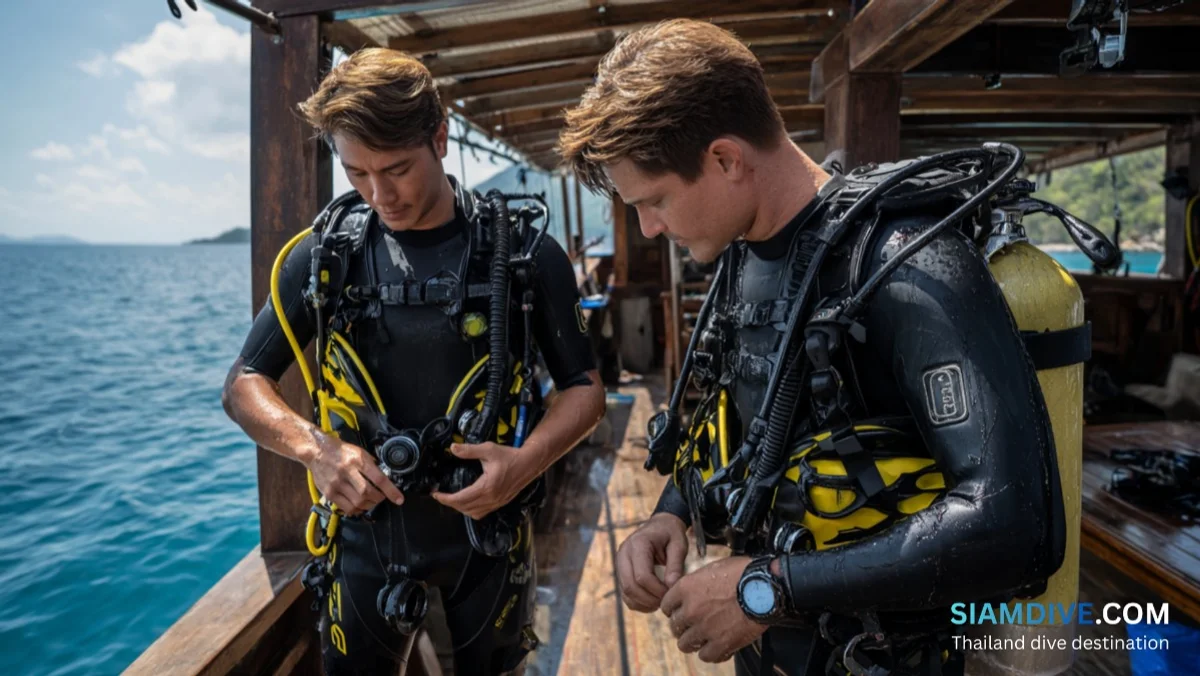
Run a BWRAF check on yourself and your buddy before you ever splash in. It takes 60 seconds and catches the things that get people killed.

  • B — Buoyancy: inflate and deflate the BCD. Both buttons must work.
  • W — Weights: belt or integrated pouches secure, quick-release accessible.
  • R — Releases: chest, waist, shoulders. Touch each one so you know where it is in the dark.
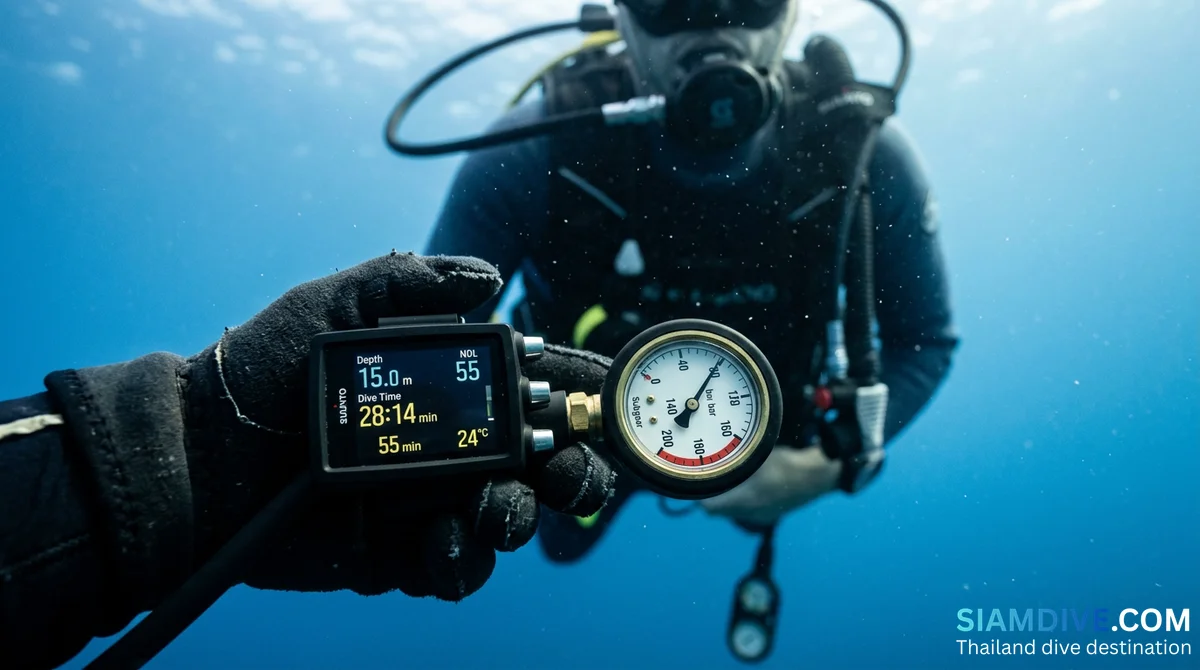
  • A — Air: tank valve fully open, gauge reads at least 200 bar / 3000 psi, breathe twice from the primary AND the octopus.
  • F — Final OK: mask, fins, computer on, signal "OK" to your buddy.

Skip BWRAF and you are gambling with someone else's life as well as yours.

The Three Golden Rules

Three rules account for almost every preventable diving fatality. Burn them into your head:

  • Never hold your breath. Air in your lungs expands as you go up. Hold it and your alveoli rupture — that is an arterial gas embolism, and it can kill you in two minutes. Breathe slowly, continuously, no exceptions.
  • Equalize early and often. Pinch your nose and gently blow every meter on descent. If your ear hurts, stop and ascend a meter. Push through the pain and you tear an eardrum.
  • Ascend slowly — 9 meters per minute, max. Your dive computer will yell at you if you exceed it. Add a 3-minute safety stop at 5 meters on every dive, even shallow ones. Slow ascents let nitrogen leave your blood the way nature intended.

The Buddy System Is Not Optional

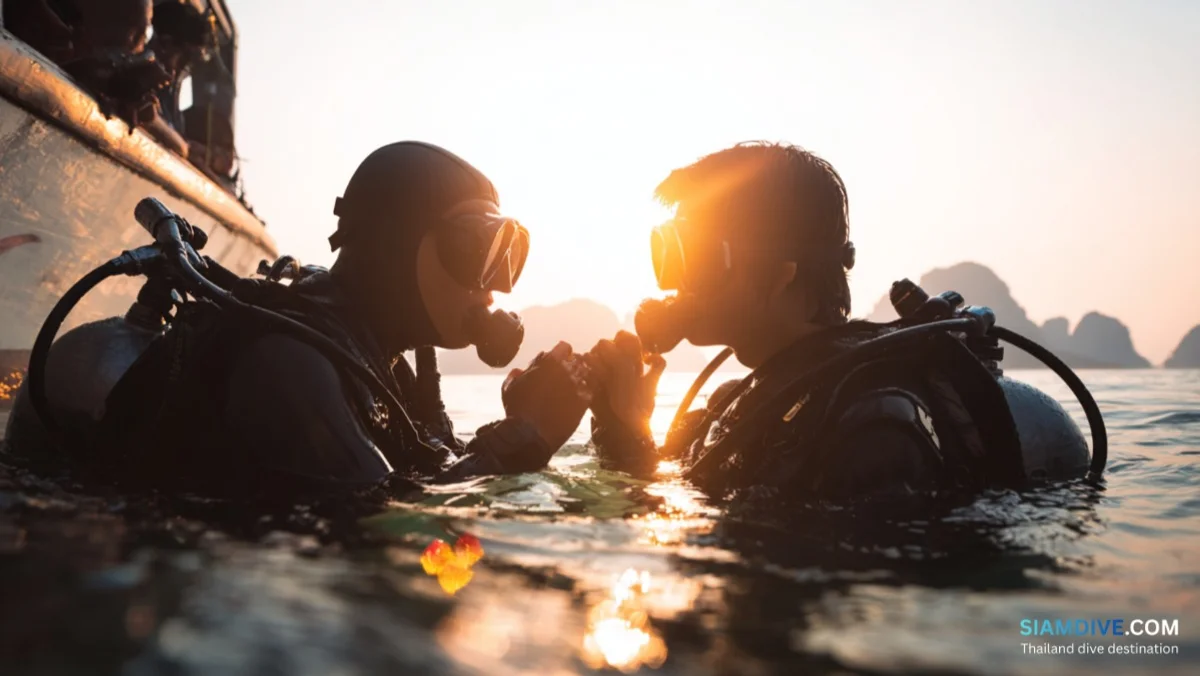
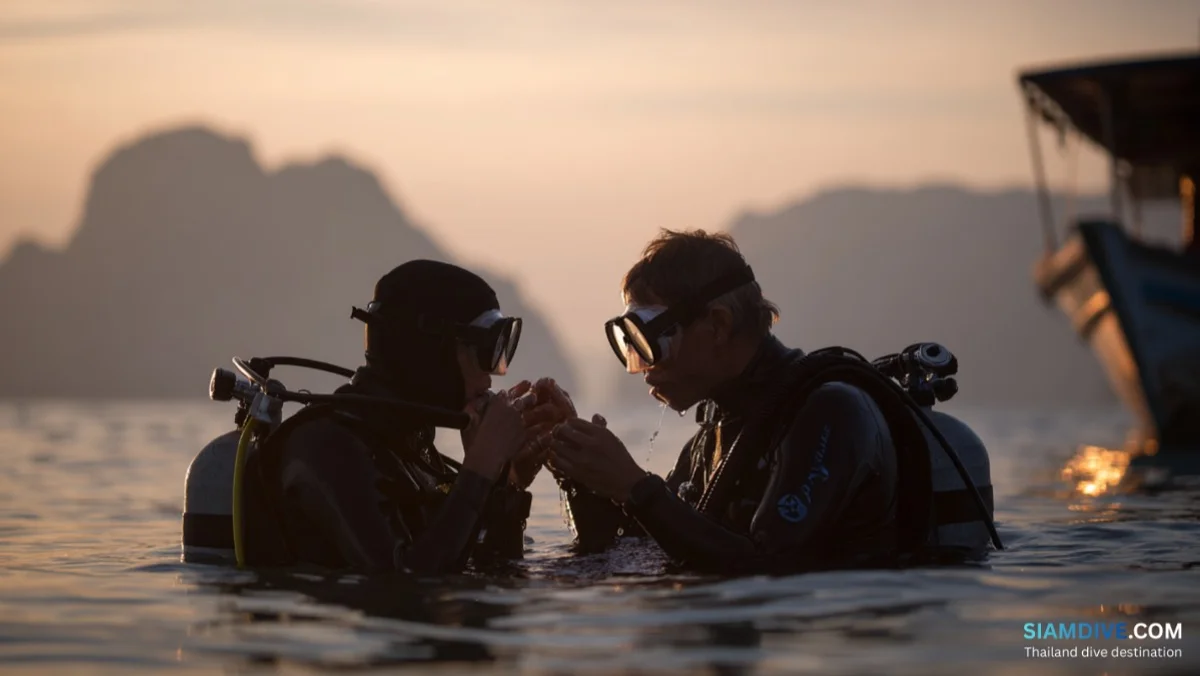
Your buddy is your backup brain, backup air supply, and backup hands. Stay within touching distance — not "I can see them across the reef" distance. Check each other's air every five minutes by signaling. Agree before the dive who leads, what you do if you get separated (one minute looking, then surface), and which signals you use. The single most common cause of dive incidents is buddy separation followed by panic. Don't be that statistic.

Recognizing Trouble Early

Most dive emergencies start small and escalate because nobody acted. Learn the signs:

  • Decompression sickness (the bends): joint pain, fatigue, dizziness, skin rash, numbness, confusion. Onset can be 30 minutes to 24 hours after surfacing. Get on 100% oxygen and call DAN immediately.
  • Nitrogen narcosis: below 30 meters you may feel drunk, slow, or overconfident. The fix is free: ascend a few meters and it disappears.
  • Panic: rapid breathing, wide eyes, frozen movements. Stop your buddy, get eye contact, mime slow breathing together until they regulate.
  • Out of air: the universal "cut throat" signal. Switch to the buddy's octopus, hold their BCD, ascend together at 9 m/min.

Emergency Procedures Worth Practicing

Skills get rusty fast. Every 10 dives, run through these in shallow water:

  • Mask removal and replacement at depth — practice until you can do it with eyes closed.
  • Regulator recovery — sweep your right arm back, find the hose, replace and clear.
  • Air-share ascent — both divers, octopus, slow controlled rise.
  • BCD oral inflation — when the inflator button fails, blow air in by mouth.
  • Cramp release — straighten the leg, pull the fin tip toward you.

If something goes seriously wrong on a real dive, the rule is: Stop. Think. Breathe. Act. In that order. Panicking divers die. Calm divers go home.

Mistakes Real Divers Actually Make

None of these are exotic — they are the everyday slips that hurt people:

  • Diving hungover, exhausted, or dehydrated. Your body cannot off-gas nitrogen properly.
  • Skipping the buddy check because "we're in a hurry."
  • Going below your training depth. An Open Water cert is 18 m. 30 m is Advanced. Stay in your lane.
  • Flying within 18 hours of a single dive (24 hours for multi-day trips). The pressurized cabin still bubbles your blood.
  • Trusting rental gear without testing it twice on land.
  • Ignoring an ear that won't equalize. One torn drum ends your trip.

Diving Safe in Thailand

Thailand has world-class diving, world-class operators, and unfortunately some cowboys. Pick a shop that runs a written briefing, mandatory BWRAF, max group size of 4 per guide, and carries oxygen on the boat. You can find PADI 5-star centers in Phuket, Koh Tao, Khao Lak, and Pattaya. The hyperbaric chamber for the Andaman side is at Wachira Phuket Hospital — keep that number on your phone before any dive trip. SiamDive lists vetted operators with safety standards, group ratios, and equipment quality so you do not need to guess. Browse trusted dive trips on siamdive.com and start your next dive on the right foot.
← กลับไปหน้า Blog

Gallery

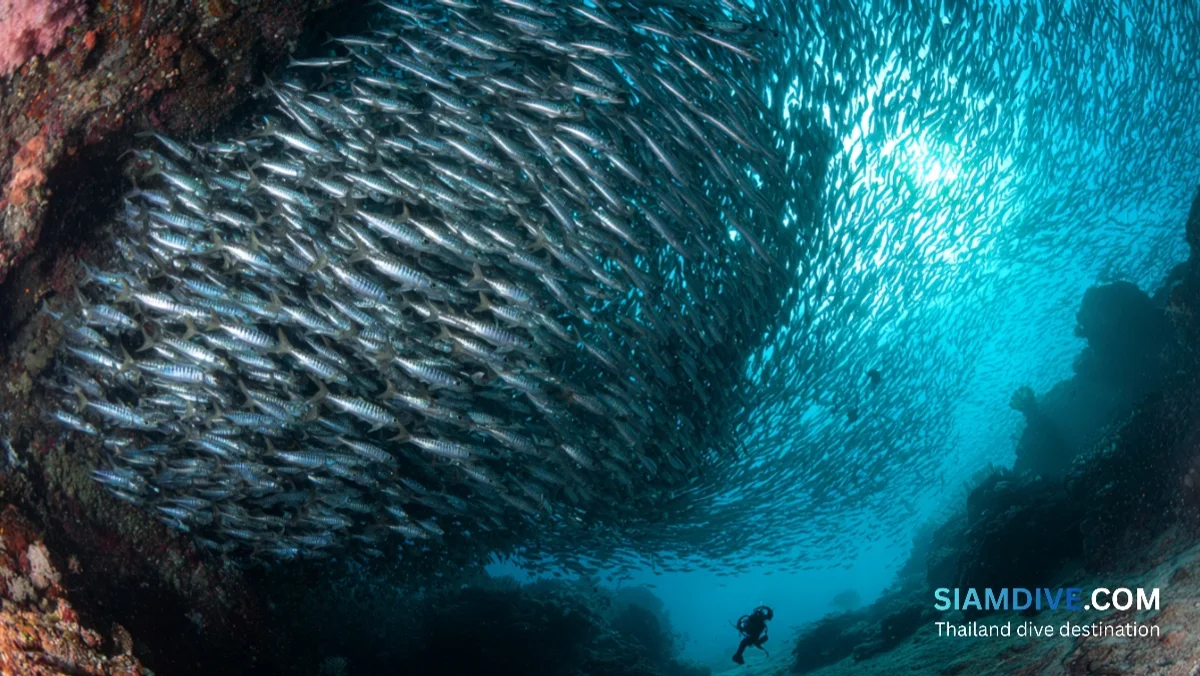
Scuba Diving Safety: A Beginner's Guide to Diving Safe & Smart — image 1Scuba Diving Safety: A Beginner's Guide to Diving Safe & Smart — image 2Scuba Diving Safety: A Beginner's Guide to Diving Safe & Smart — image 3Scuba Diving Safety: A Beginner's Guide to Diving Safe & Smart — image 4

บทความแนะนำ

5 Months Empty: What Actually Grows Back on Similan's Reefs

5 Months Empty: What Actually Grows Back on Similan's Reefs

Every May 15 the last boat leaves the Similans. When divers return five months later, the reefs look different. Here is what the data actually shows.

How to Actually Enjoy Scuba Diving: A Comfort & Confidence Guide

How to Actually Enjoy Scuba Diving: A Comfort & Confidence Guide

Buoyancy, breathing, weighting, trim and the mental game — the practical skills that turn diving from a workout into a 60-minute float. No fluff.

5 Nitrox Mistakes That Turn Extra Bottom Time Into Real Risk

5 Nitrox Mistakes That Turn Extra Bottom Time Into Real Risk

EAN32 extends your no-deco limits — but only if you avoid these five errors that trip up newly certified nitrox divers on Thai dive boats.

PADI vs SSI vs NAUI vs RAID: Does the Agency on Your Card Actually Matter?

PADI vs SSI vs NAUI vs RAID: Does the Agency on Your Card Actually Matter?

A diver's honest, no-marketing breakdown of the four big certification agencies — where they differ, where they don't, and what to actually look for.

Safe Diving Techniques: 8 Skills That Prevent Accidents

Safe Diving Techniques: 8 Skills That Prevent Accidents

Master the 8 essential safe diving techniques every diver must know — from buoyancy control and air management to emergency ascents and SMB deployment.

HTMS Chang Koh Chang

HTMS Chang Koh Chang

Dive into the HTMS Chang wreck.

What Your Body Needs in the 24 Hours After a Dive

What Your Body Needs in the 24 Hours After a Dive

Your dive may be over, but your body is still working hard. From rehydration and nutrition to no-fly rules and DCS warning signs, here's your complete post-dive recovery checklist.

Hin Phae Diving Guide: Koh Tao's Quiet Granite Pinnacle

Hin Phae Diving Guide: Koh Tao's Quiet Granite Pinnacle

Hin Phae is the small advanced pinnacle 30 m from the Sattakut wreck. Big groupers, healthy coral, and almost no other divers — here's how to dive it.

Nudibranchs: 10 Mind-Blowing Facts About the Ocean's Strangest Creatures

Nudibranchs: 10 Mind-Blowing Facts About the Ocean's Strangest Creatures

They steal weapons from their prey, glow in the dark, and breathe through their backs. Here are 10 facts about nudibranchs that will change how you look at every reef.

Air Consumption in Scuba Diving: How to Make Every Tank Last

Air Consumption in Scuba Diving: How to Make Every Tank Last

Learn how to reduce your air consumption and extend dive time. Practical tips on breathing, buoyancy, trim, and gas management for every level.

One Country, Every Type of Dive: Why Thailand Is the Most Underrated Bucket-List Destination

One Country, Every Type of Dive: Why Thailand Is the Most Underrated Bucket-List Destination

Whale sharks, manta rays, macro critters, wrecks, pinnacles, drift, coral gardens — Thailand delivers every style of diving within one country. Here's why that matters.

Marine Life Etiquette: A Diver's Guide to Not Being That Person

Marine Life Etiquette: A Diver's Guide to Not Being That Person

No touching, no chasing, reef-safe sunscreen and the ethics of underwater photography — the etiquette every diver owes the ocean.

Koh Haa Diving Guide: Five Islands of Crystal Clear Water

Koh Haa Diving Guide: Five Islands of Crystal Clear Water

Dive Koh Haa's lagoon, Cathedral cave, and deep pinnacles from Koh Lanta. All-level sites with 20-30m visibility and rich marine life.

Could You Tow an Unconscious Diver 100 Metres Right Now?

Could You Tow an Unconscious Diver 100 Metres Right Now?

Most rescue-certified divers haven't practised a surface tow since their course. Here are the red flags your skills have rusted and what to drill before your next trip.

Hin San Chalarm: Best Coral Pinnacle in Samae San

Hin San Chalarm: Best Coral Pinnacle in Samae San

Hin San Chalarm -- Shark Fin Rock -- rises from the Gulf of Thailand near Samae San, harbouring 28-metre coral walls, resident sea turtles, and the clearest visibility in the Sattahip archipelago.

A Warship with 7 Battle Stars Now Grows Coral at 30 Metres

A Warship with 7 Battle Stars Now Grows Coral at 30 Metres

A WWII landing ship that stormed Okinawa and Inchon sits upright at 30m off Koh Chang — blanketed in coral and visited by whale sharks.

The Junkyard Koh Tao Diving Guide: The Island's Quirkiest Artificial Reef

The Junkyard Koh Tao Diving Guide: The Island's Quirkiest Artificial Reef

The Junkyard off Mae Haad is Koh Tao's artificial reef built from recycled trash — toilets, bikes, and a thriving coral nursery with resident batfish and lionfish.

Explore 9 Eco Centers

Explore 9 Eco Centers

Discover 9 PADI Eco Centers in Thailand certified by UN Reef-World Green Fins for responsible scuba diving. Your ultimate guide by Siam Dive Center to sustainable dive sites.

Whale Shark Encounters: What Every Diver Should Know

Whale Shark Encounters: What Every Diver Should Know

Whale shark behavior, encounter ethics, and Thailand's best sites from Richelieu Rock to Sail Rock — a factual guide for responsible divers.

Similan Islands Diving Guide: Thailand's Underwater Paradise

Similan Islands Diving Guide: Thailand's Underwater Paradise

Everything you need to know about diving the Similan Islands — best dive sites, marine life, seasons, liveaboard tips, and how to get there from Khao Lak.

ทริปแนะนำ

Vela Liveaboard
liveaboard

Vela Liveaboard

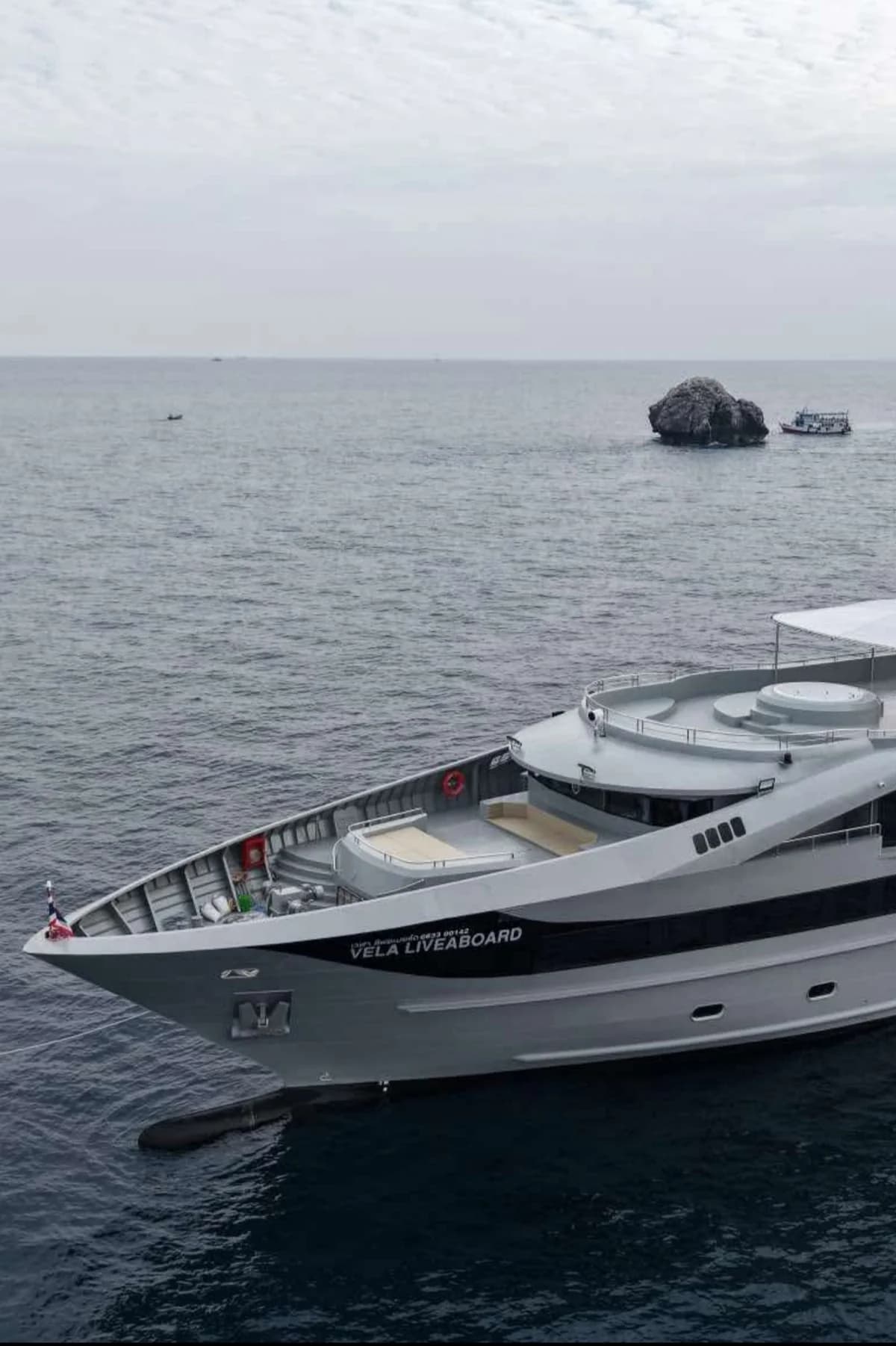
MV Vela / Vala — massive 43 m steel-hull liveaboard with only 20 guests max for ultimate space and privacy. King and twin AC en-suite cabins, large dive deck, indoor saloon and rooftop sun deck. Highest international safety standards.

Hug Ocean Boat
daytrip

Hug Ocean Boat

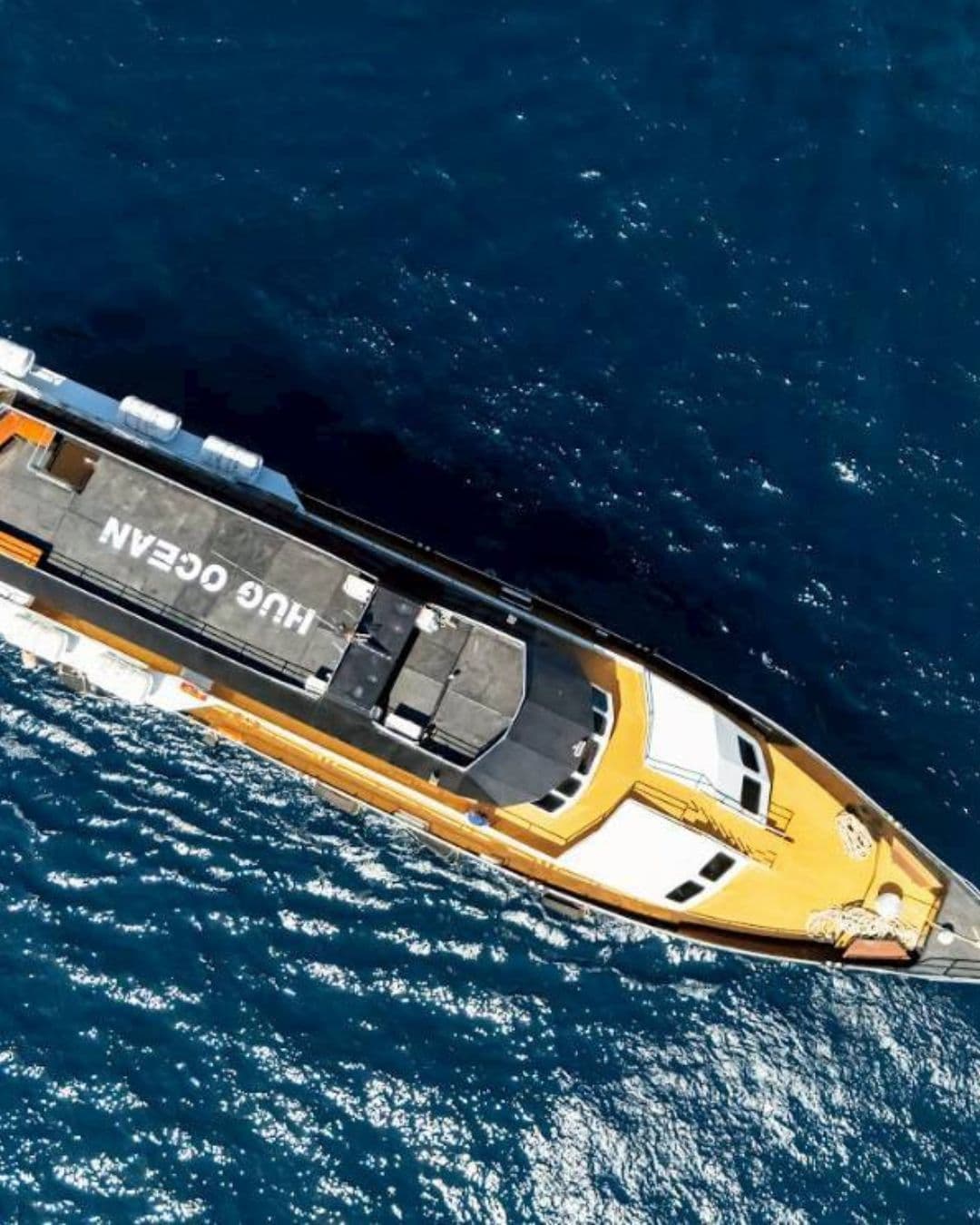
Discover Phuket's Andaman Sea aboard Hug Ocean — a luxury 3-deck dive yacht for 80 guests with a thrilling water slide, sun-soaked top deck, and PADI-certified diving at Racha Yai and Racha Noi.

Aquarian Liveaboard
liveaboard

Aquarian Liveaboard

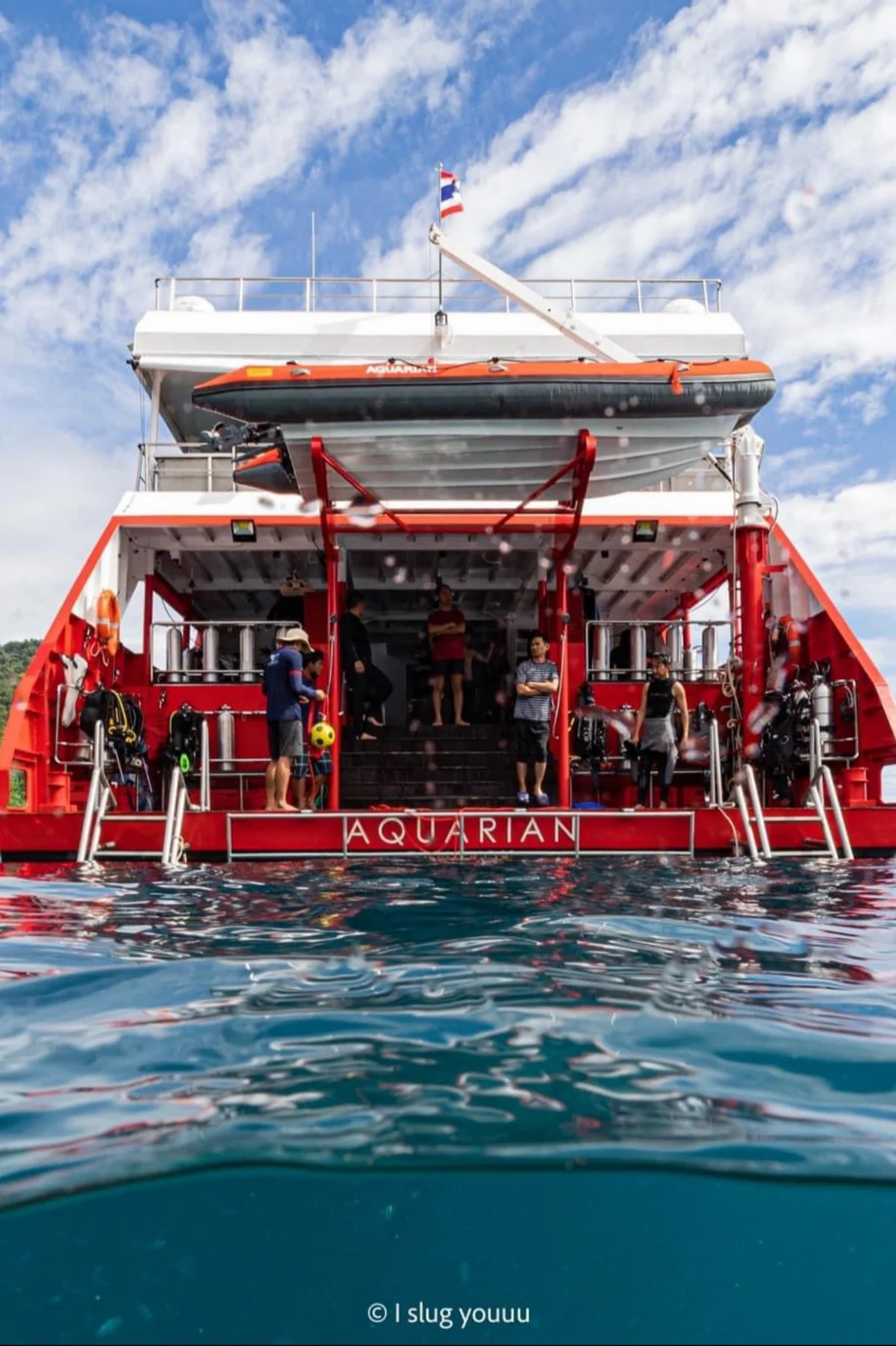
MV Aquarian — striking 2021-built red steel liveaboard, 31.4 m × 7.5 m, max 28 guests in 14 cabins. Free unlimited Nitrox via Coltri Sub membranes, one of Thailand's largest dive platforms, and full premium-hotel comfort.

Issara Liveaboard
liveaboard

Issara Liveaboard

MV Issara — high-end Thai steel-hulled liveaboard built 2016–17, 28.5 m × 6.5 m, 4 decks, max 22 guests in 11 hotel-style cabins. Indoor saloon, jacuzzi sun deck, full-board buffet dining.