Marine Life Etiquette: A Diver's Guide to Not Being That Person
9 เมษายน 2569
No touching, no chasing, reef-safe sunscreen and the ethics of underwater photography — the etiquette every diver owes the ocean.
Why Etiquette Underwater Actually Matters
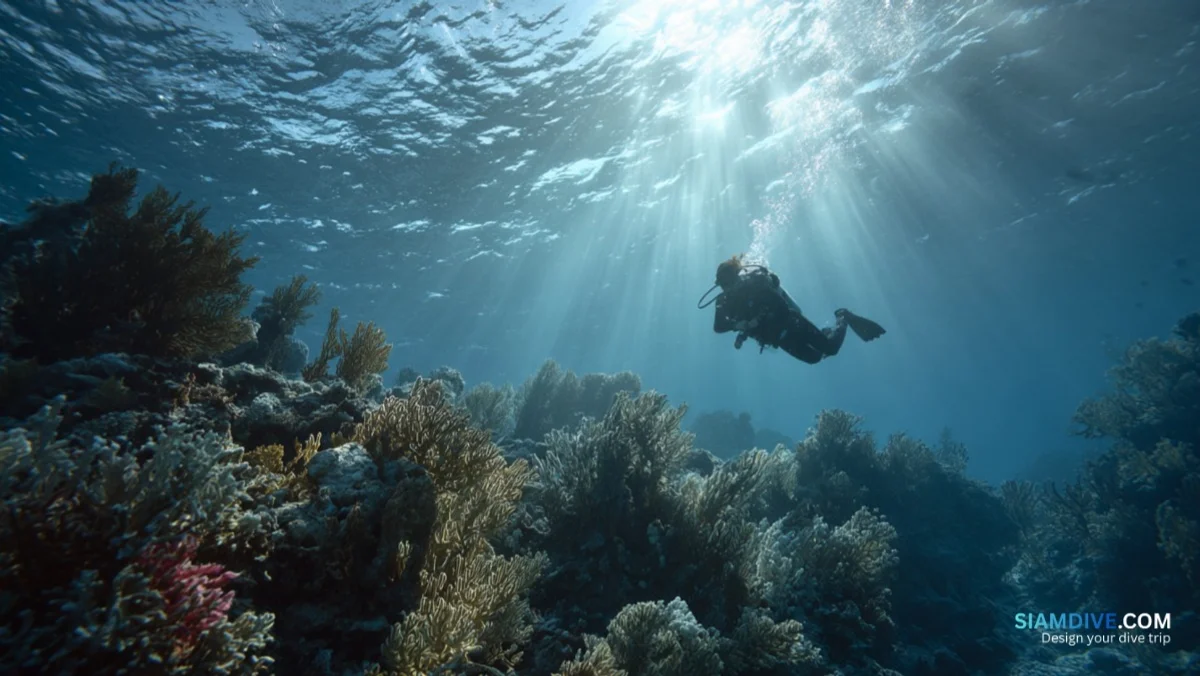
Coral grows about 2 millimeters a year. A single fin kick into a hard coral colony can erase 30 years of growth in one second. The reefs you and I dive on are not infinite, and they are not for our entertainment alone — they are the actual home of millions of animals trying to survive. Marine life etiquette is not about being a buzzkill. It is the line between a diver who deserves to be in the water and a diver the reef would rather see leave. Get this right and you become someone the dive industry actually respects.
The No-Touch Rule, and Why It's Not Negotiable
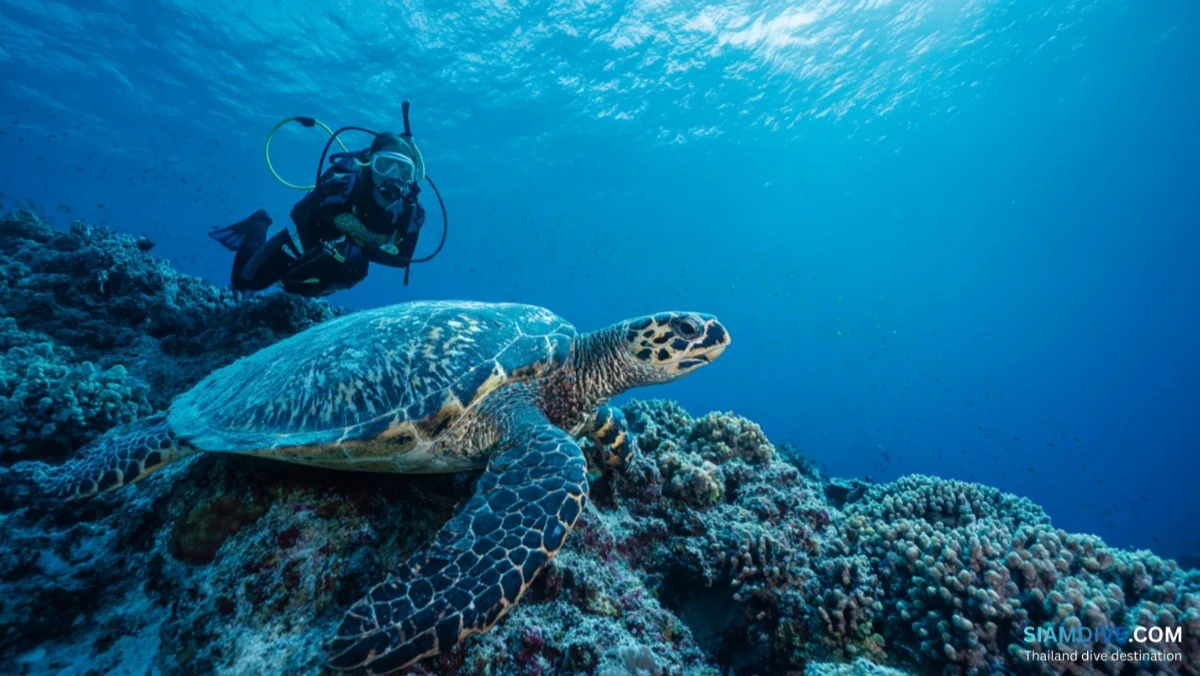
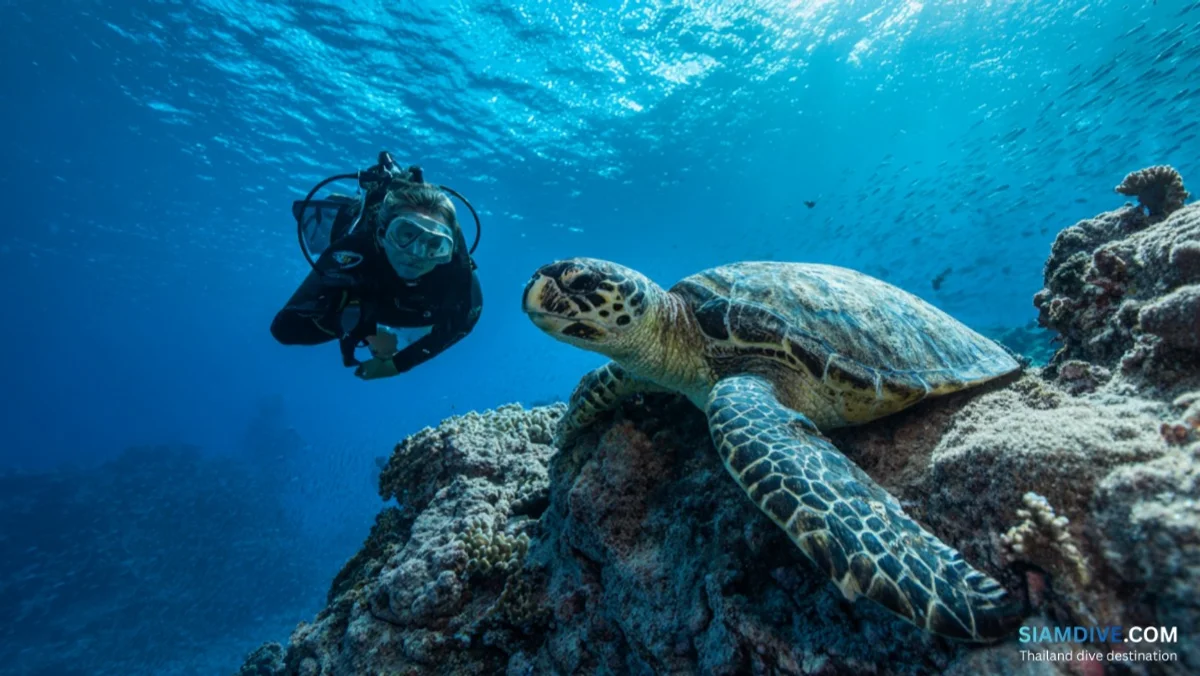
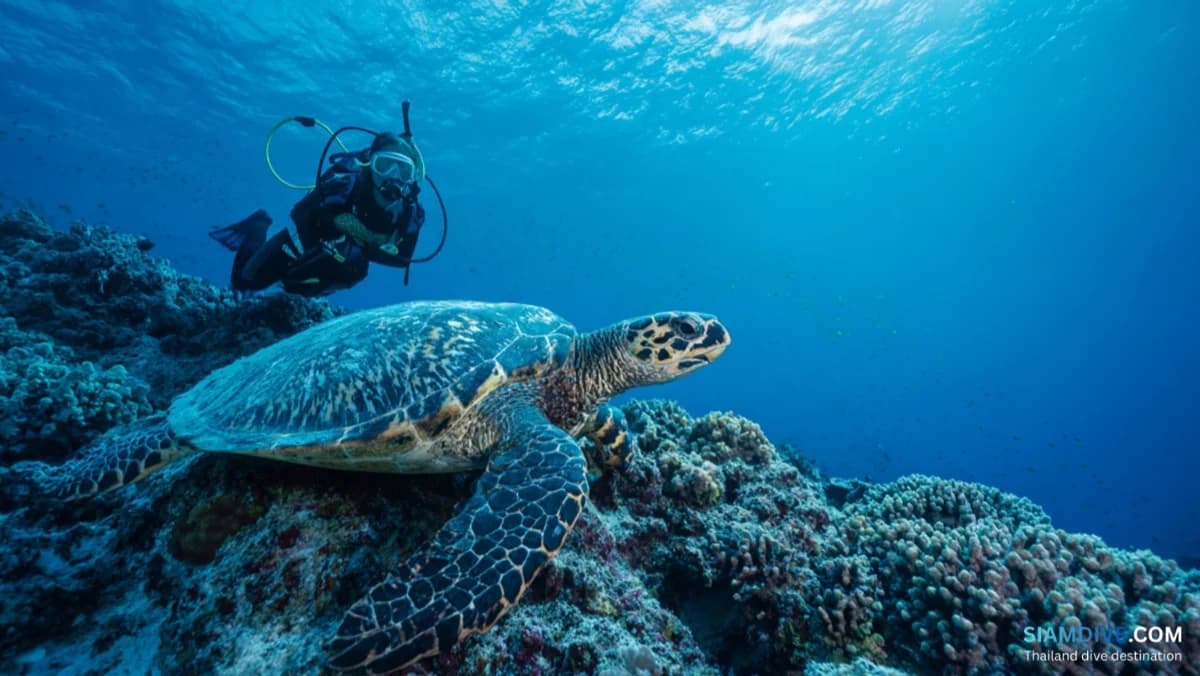
Touching marine life is the most common bad habit and the most damaging. Every fish has a protective mucus coating — touch it and you strip the coating, leaving the fish vulnerable to bacteria and parasites. Sea turtles get massively stressed when handled, and the popular "ride a turtle" photos circulating online have caused real harm to populations. Hard corals die when touched because oils on your skin disrupt the polyps' ability to feed.
- No touching corals. Not even "gently." The polyps cannot recover.
- No touching fish, turtles, rays, octopus, or anything else. Period.
- No grabbing the reef to stabilize yourself. Fix your buoyancy instead.
- No "manhandling" for photos. If you need to move the animal to get the shot, you don't need the shot.
Don't Chase. Let Them Come to You.
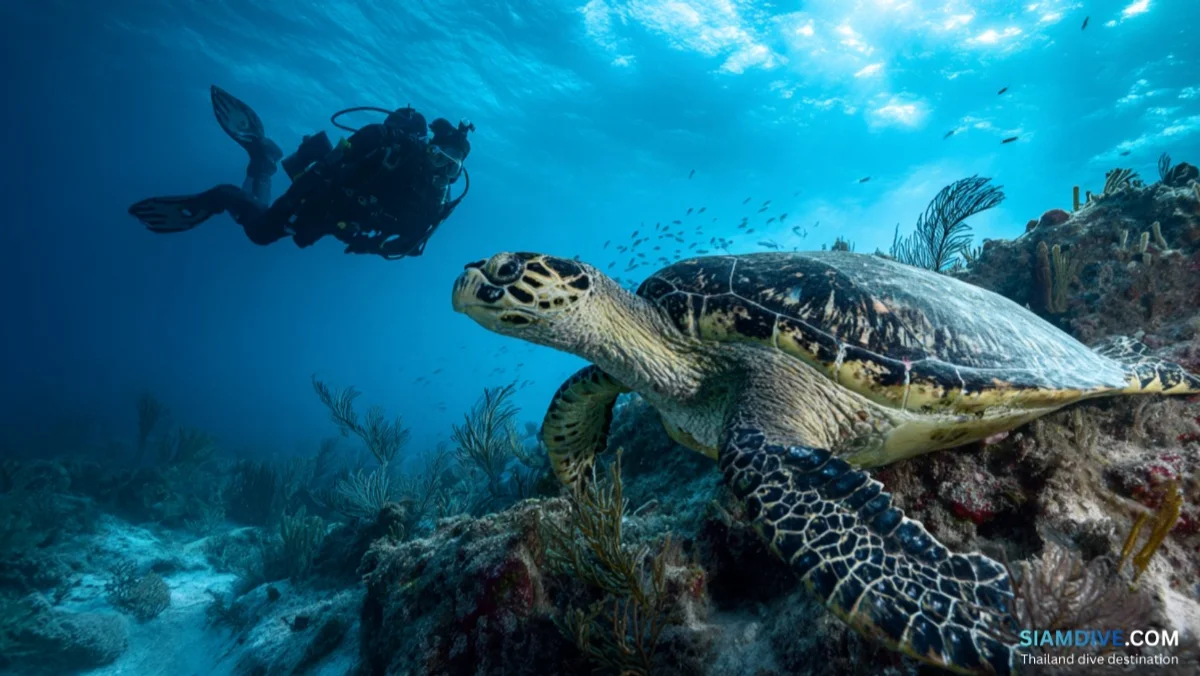
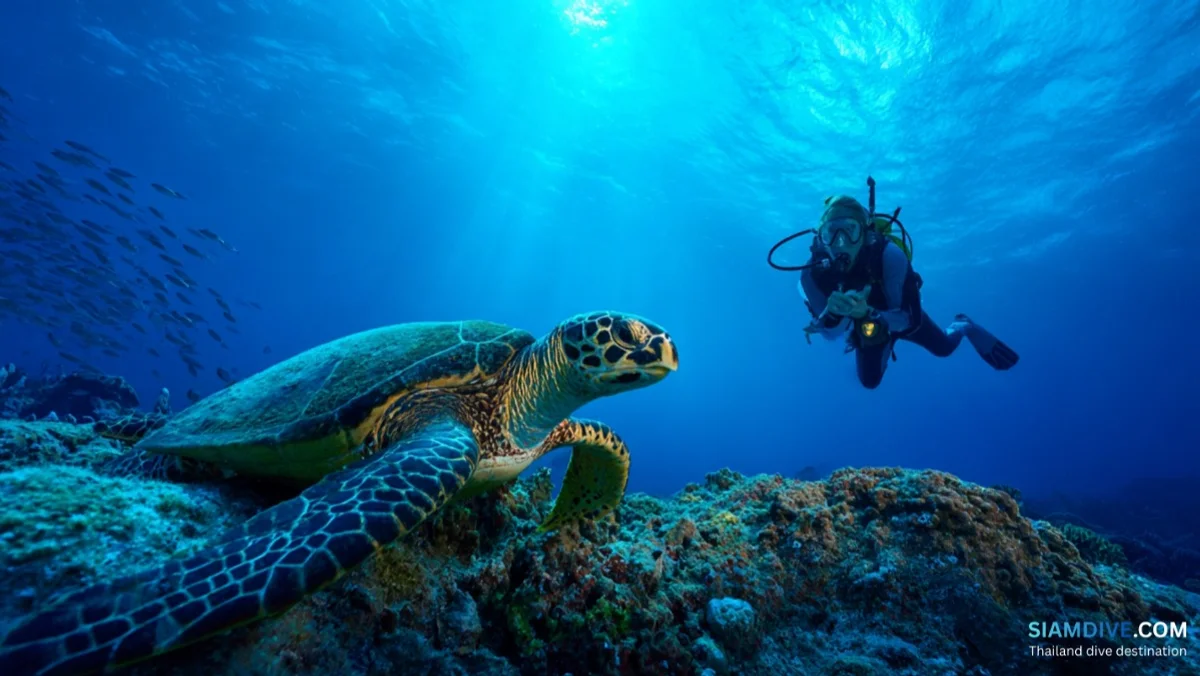
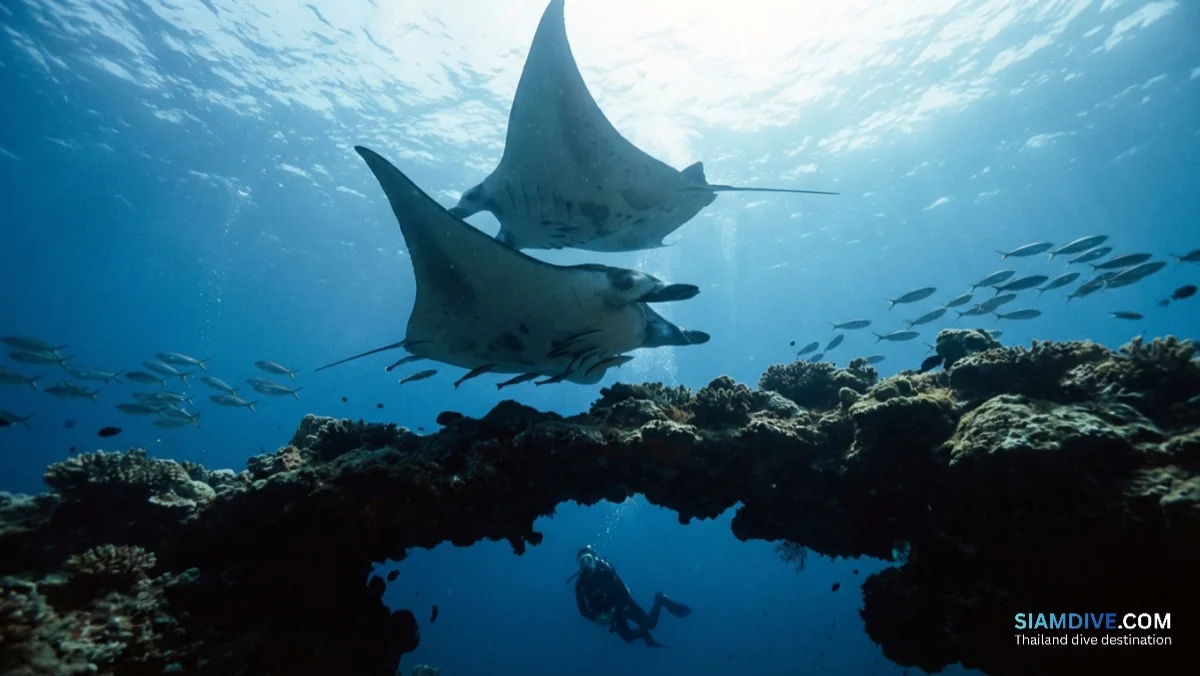
Animals that are chased, flee. Animals that are observed quietly often come closer out of curiosity. The exact same dive site shows you ten times more wildlife if you slow down, hover, and stop trying to swim up to everything. Manta rays in particular are intensely sensitive to chasing — once a diver starts kicking toward them, they leave the cleaning station and may not return for the rest of the day.
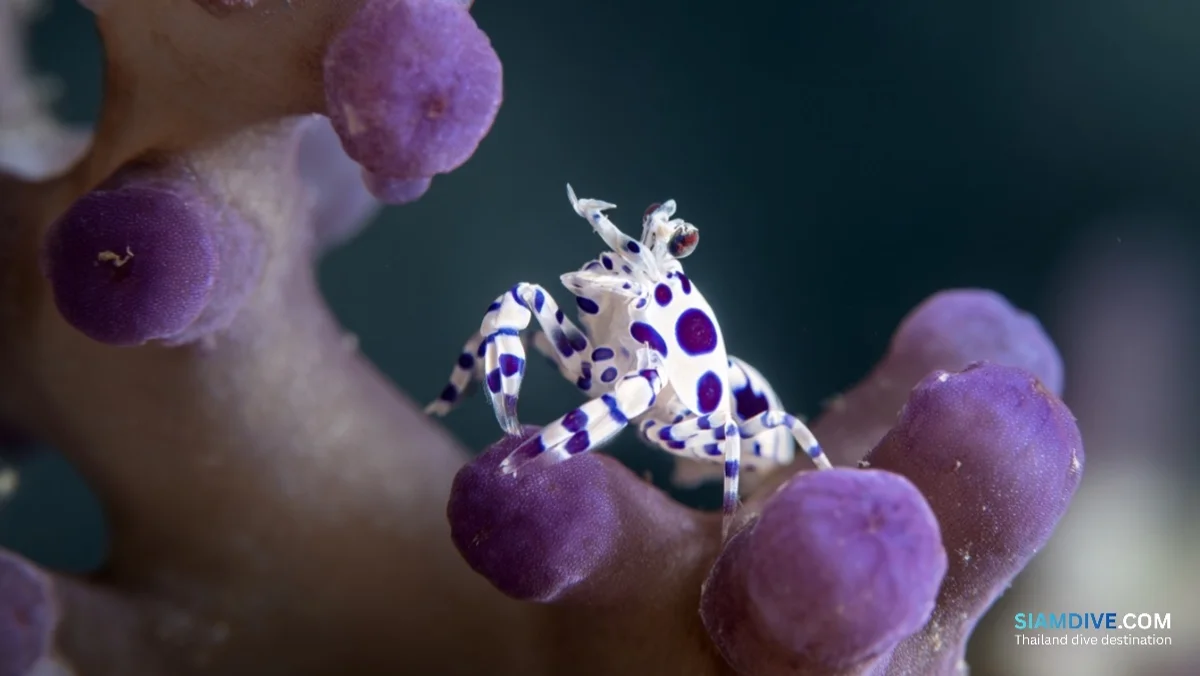
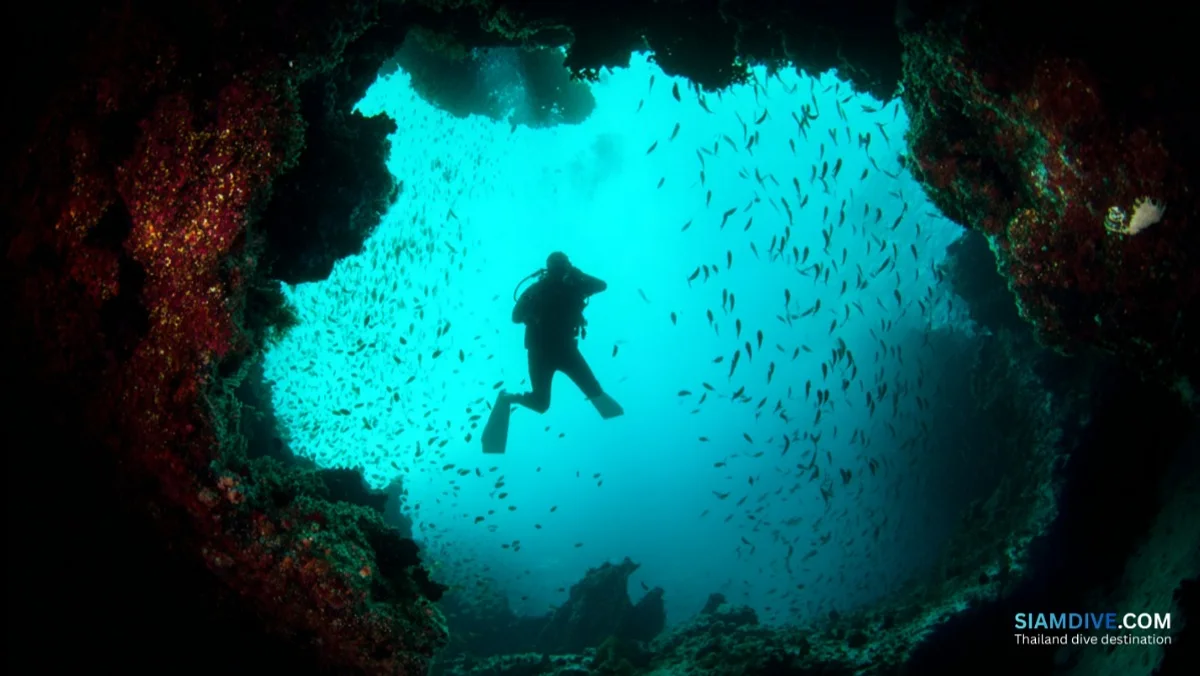
The rule is simple: pick a position, get neutrally buoyant, breathe slowly, and wait. The reef will start showing you things you'd never see while moving. Macro divers know this — that ghost pipefish, that harlequin shrimp, that nudibranch you photographed on the same rock last year? They're still there because nobody chases them.
Photography Without Being a Jerk
Underwater photographers earn a bad reputation faster than any other diver group, and usually deserve it. Common offenses:
- Monopolizing a subject: 8 minutes parked next to one seahorse while a queue forms.
- Strobe spam: firing strobes 20 times into a sensitive critter's eyes for one shot.
- Posing animals: moving a frogfish onto a "prettier" rock so the background looks better.
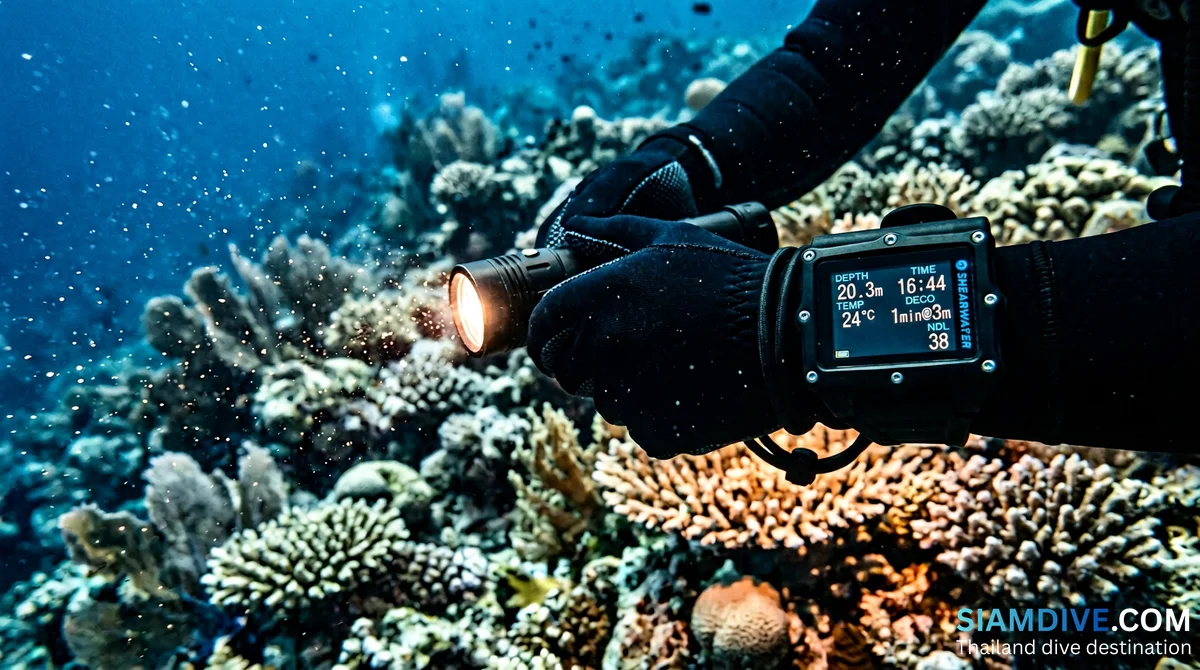
- Kicking the reef while focused on the viewfinder: task loading at its worst.
- Cutting off other divers who were watching the same animal first.
Be the photographer who waits their turn, gets the shot in three frames, and moves on. The shots you'll be most proud of in 10 years are the ones you took without disturbing anything.
Reef-Safe Sunscreen and Other Boat Habits
The ingredients oxybenzone and octinoxate in regular sunscreen damage coral DNA at concentrations as low as 62 parts per trillion — about one drop in 6.5 Olympic swimming pools. Hawaii, Palau, Bonaire and the US Virgin Islands have already banned them. Thailand banned them inside marine national parks in 2021. Look for "reef-safe" sunscreens with non-nano zinc oxide or titanium dioxide as the only active ingredients. The good ones cost about 400 baht for a tube and last all season.
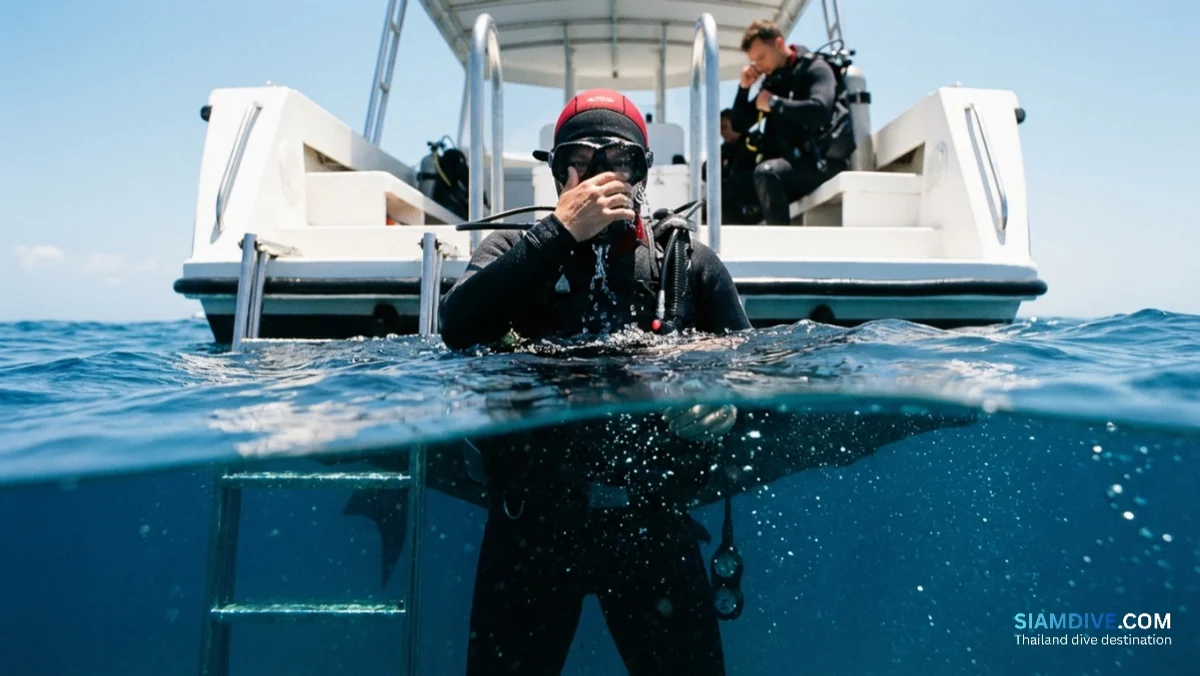
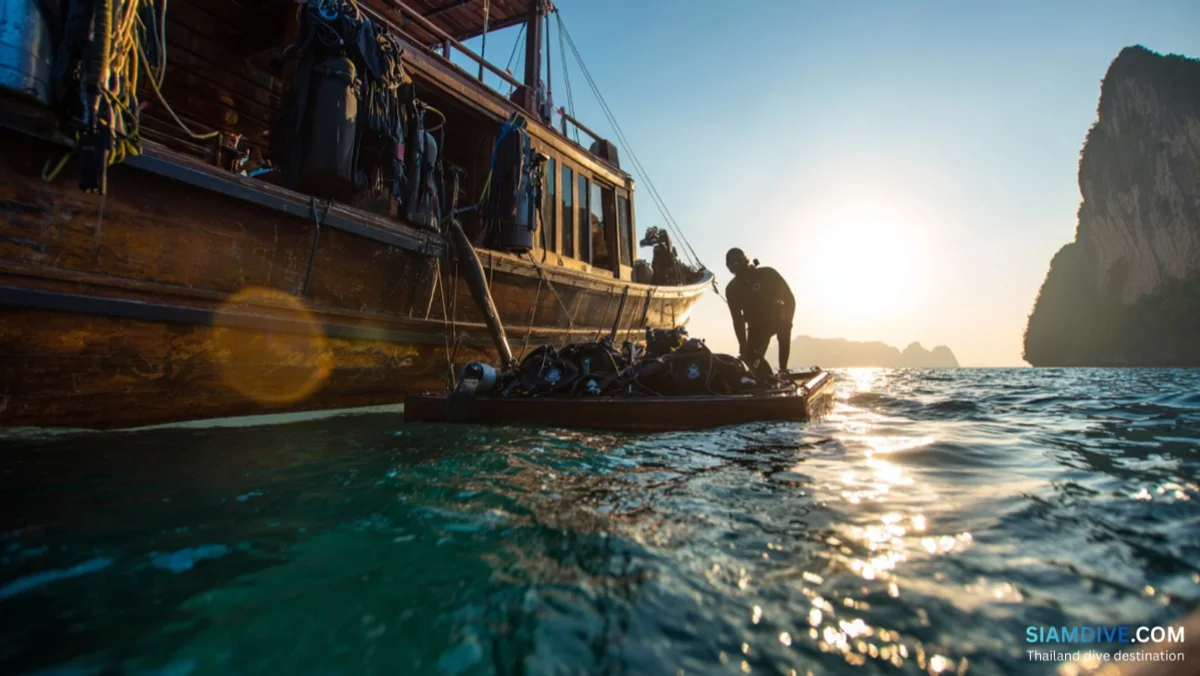
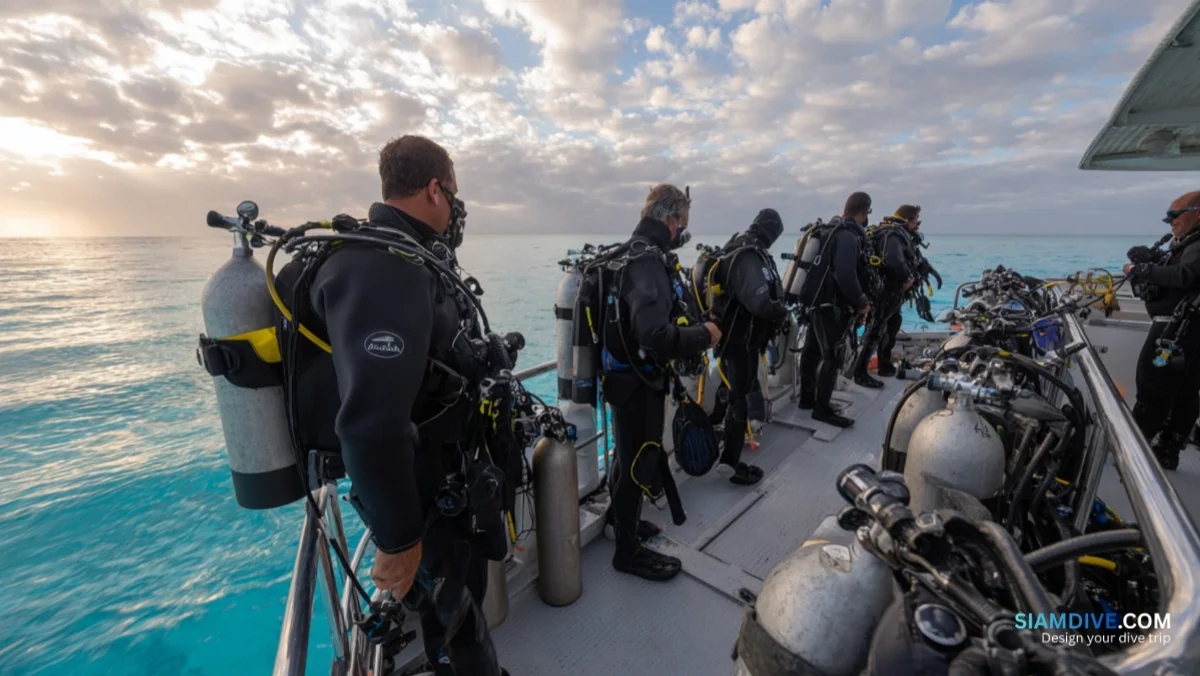
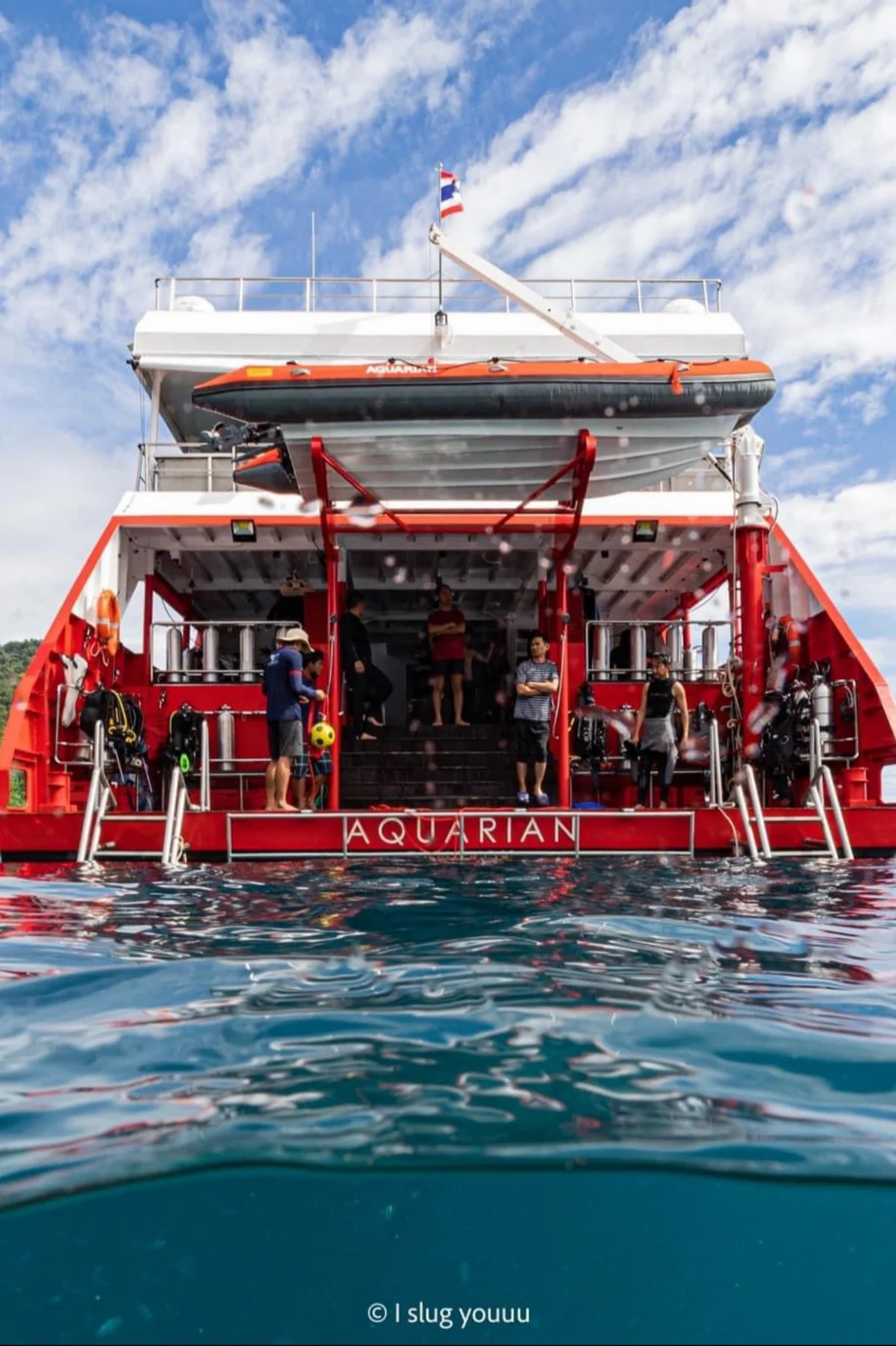
Other boat habits that matter: don't throw cigarette butts overboard, don't leave plastic water bottles on deck, ask if the boat uses anchors that destroy reefs versus mooring lines (good operators always use moorings), and tip the crew who actually carry your tanks.
Cleaner Stations, Mantas and Sharks
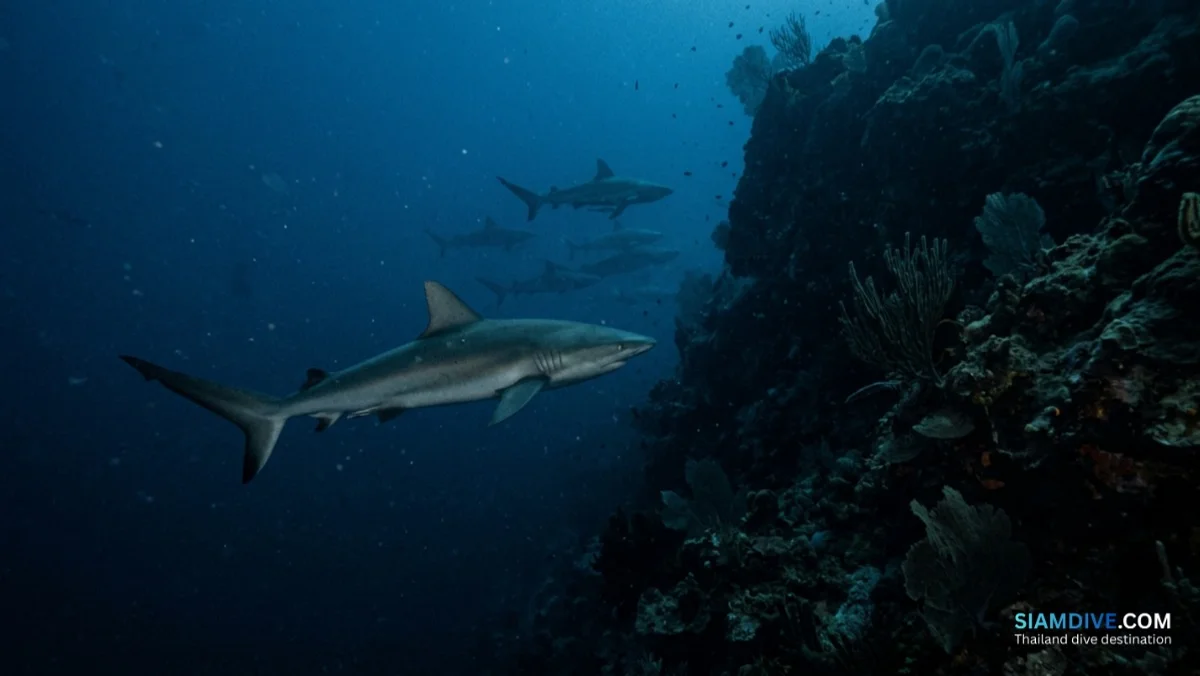
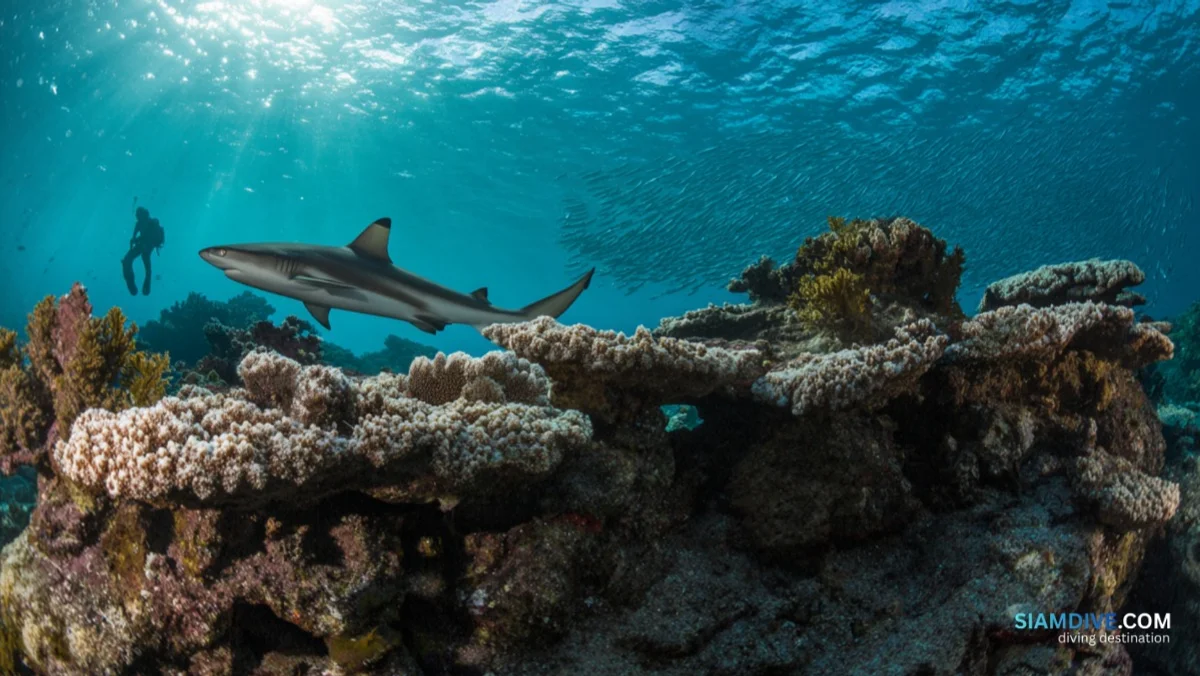
A cleaner station is where fish line up to be groomed by smaller wrasses and shrimps that eat their parasites. They are the underwater equivalent of a barber shop. Block the entrance with your fins and the entire system shuts down. Watch from 3–4 meters away, stay below the line of approach, and you'll see manta rays and reef sharks queue up like commuters.
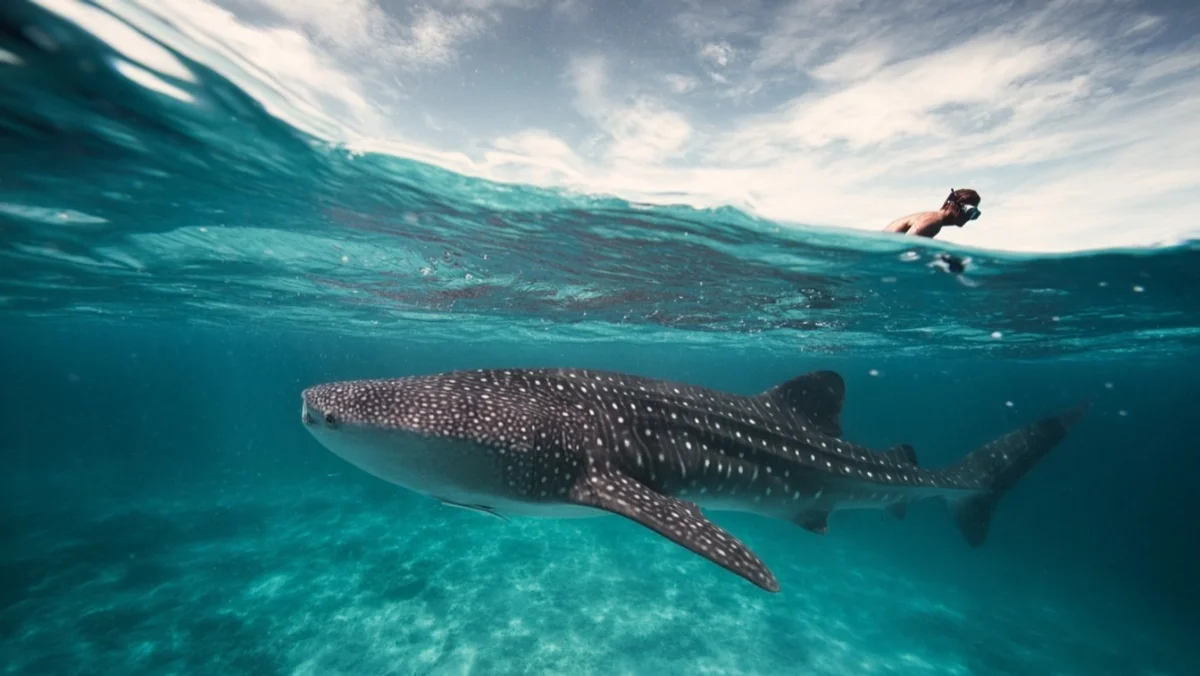
For larger animals: maintain at least 3 meters from manta rays, 4 meters from whale sharks, never get above them (it triggers their predator-evasion response), and never use flash. Don't try to touch their wings or fins. Sharks are not the threat — humans are.
The Hidden Cost of Souvenirs and Plastic
Picking up a "dead" shell from a reef removes a future home for a hermit crab. Picking up a sea fan piece is removing 50 years of growth. Most countries you dive in have laws against removing marine items — Thailand's National Park Act carries fines up to 500,000 baht and prison terms. The romantic idea of "just one shell from each trip" is how reefs got stripped in the first place.
Plastic is the bigger long-term problem. Bring a refillable bottle. Skip the plastic-wrapped snacks the boat hands out. If you see trash on the reef, pick it up — many operators run a "Dive Against Debris" program for this exact reason. A single dive can remove 2 kg of fishing line and plastic.
Before Every Dive — A Simple Etiquette Check
Make this a 10-second mental check before every dive briefing ends:
- Sunscreen: reef-safe and applied 30 minutes before water, not on the boat?
- Buoyancy: am I confident enough today to hover without grabbing anything?
- Camera: am I using a strobe? If yes, will I limit it to 1–2 flashes per subject?
- Discipline: will I let the guide lead and not chase anything?
- Mindset: am I here to observe, not to collect?
If you can't say yes to all five, sit out a dive and recalibrate. Nobody died from skipping one dive. Reefs die from divers who skip the etiquette check.
What You Can Do Beyond Just Diving Better
Choose operators that have actual conservation policies, not just marketing — ask if they participate in Dive Against Debris, Adopt the Blue, or Project Aware. In Thailand, that means picking centers that work with the Department of Marine and Coastal Resources, contribute to crown-of-thorns starfish removal, or run reef-monitoring programs. Tip more for guides who enforce no-touch rules with everyone on the boat. Report damaged reefs and injured animals to local authorities. SiamDive lists operators that have signed conservation pledges and small group ratios so your money actually rewards the right people. Find a responsible dive trip on siamdive.com and dive like the reef belongs to the next diver, not to you.