Could You Tow an Unconscious Diver 100 Metres Right Now?
24 เมษายน 2569
Most rescue-certified divers haven't practised a surface tow since their course. Here are the red flags your skills have rusted and what to drill before your next trip.
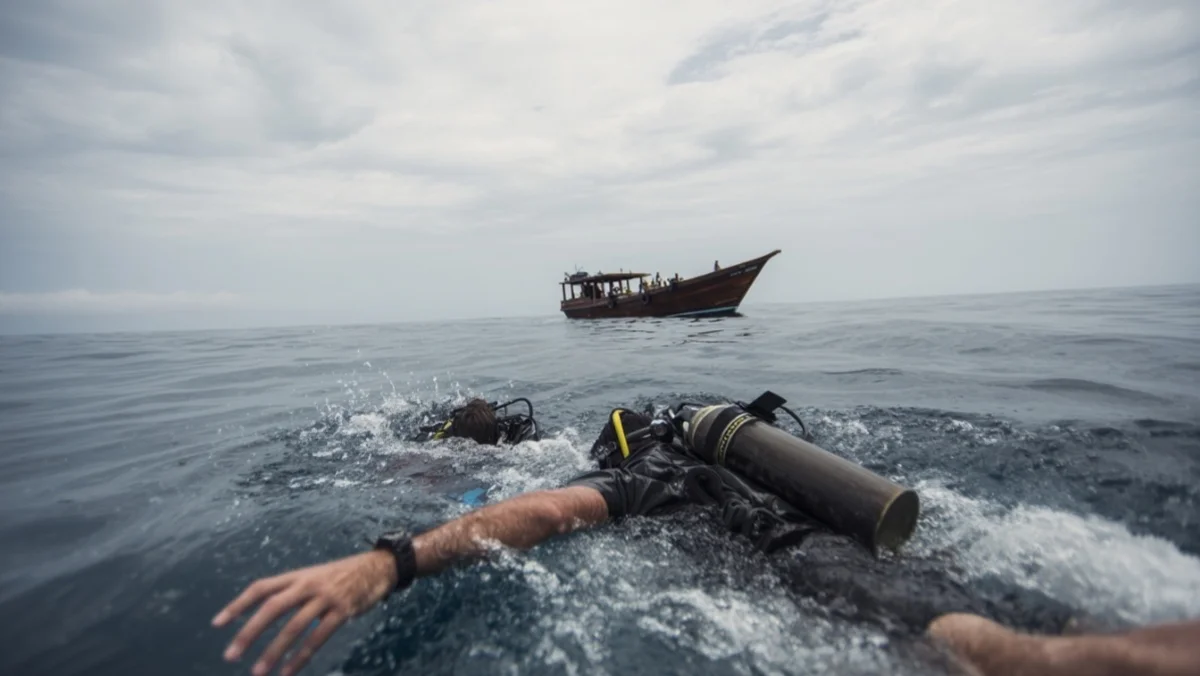
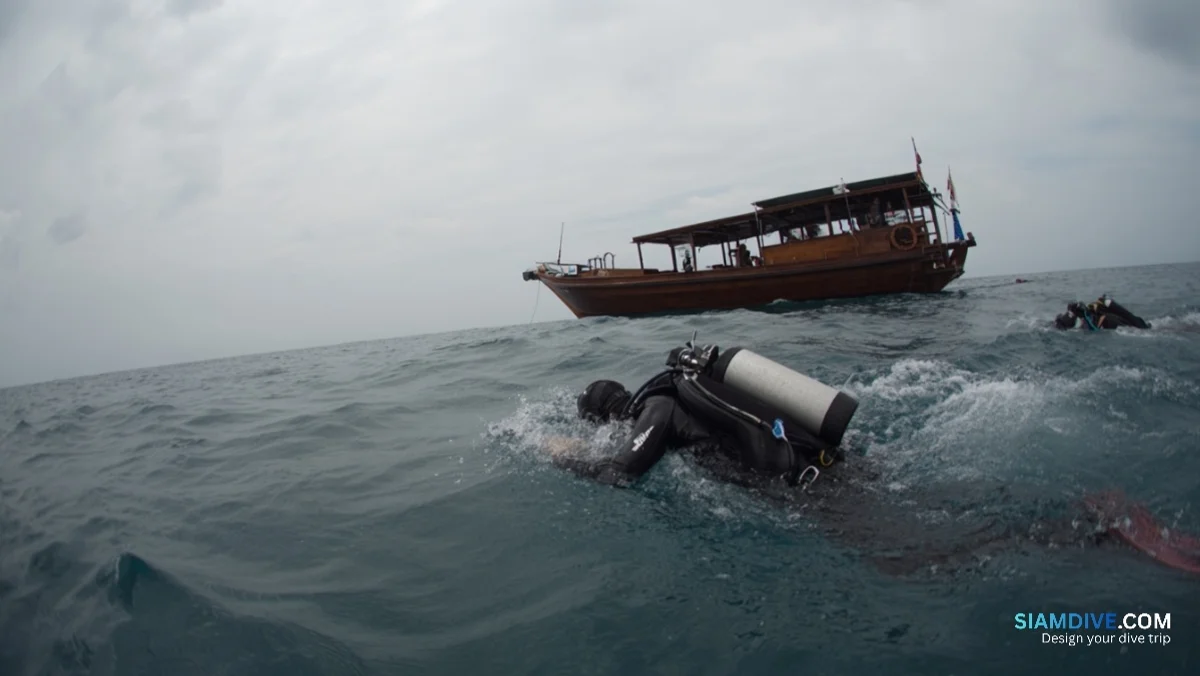
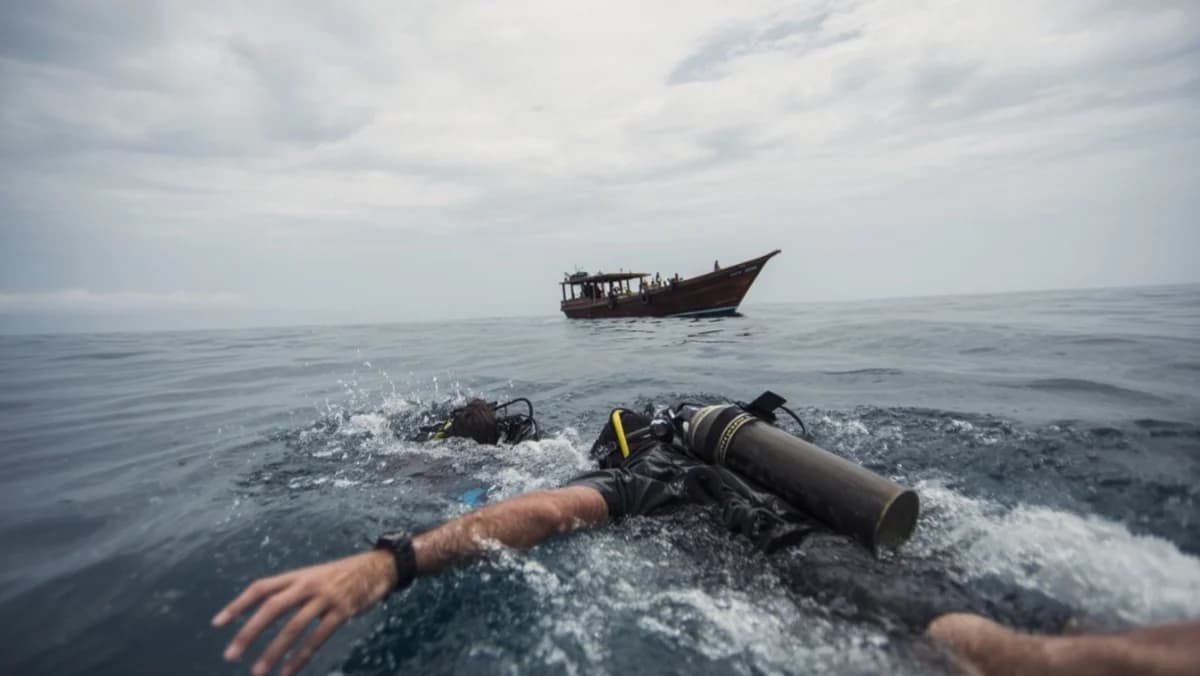
One hundred metres of open water. A limp body in a BCD. No current pushing you toward the boat, no crew close enough to throw a line. The clock started thirty seconds ago when your buddy surfaced face-down and stayed that way. Every rescue diver certified in the last twenty years drilled this scenario in a pool — and most have not repeated it since.
That gap between certification and readiness is not a character flaw. It is a predictable consequence of how perishable physical skills become when they are never refreshed. The question is not whether your rescue tow has degraded. The question is how much — and whether you would discover the answer in a swimming pool or in the Andaman Sea with a life depending on it.
What Happens When a Buddy Goes Limp
The textbook answer fits on a card: roll the diver face-up, ditch both sets of weights, inflate both BCDs, check the airway, begin rescue breaths, tow to the boat. Six steps. Maybe ninety seconds in a controlled environment. The open-water version adds swell, surface chop, salt spray flooding your mask, and the kind of adrenaline that turns fine motor skills into fumbling.
DAN's analysis of diving fatalities consistently identifies delay between surfacing and reaching definitive care as one of the most critical factors in survival. A diver who receives rescue breaths within the first minute has a measurably better prognosis than one who waits three or four minutes while a companion tries to remember the sequence. The difference is not superior technique. It is rehearsal.
In the first week of April 2026, nine divers drifted from their group off Hokkaido, Japan, triggering a multi-agency surface rescue. The same week, a dive boat capsized in the Cayman Islands while divers were still underwater. Neither event made mainstream headlines, but both reinforce what instructors have been saying for decades: surface emergencies happen on real trips, to real people, and the response window is measured in seconds.
Three Tows for Three Emergencies
A tired diver, a panicked diver, and an unconscious diver look similar from the boat. Up close, they are three completely different problems — and grabbing the wrong one the wrong way can put both of you under. PADI's Rescue Diver course separates them into distinct exercises for good reason.
Tired Diver — Underarm Push
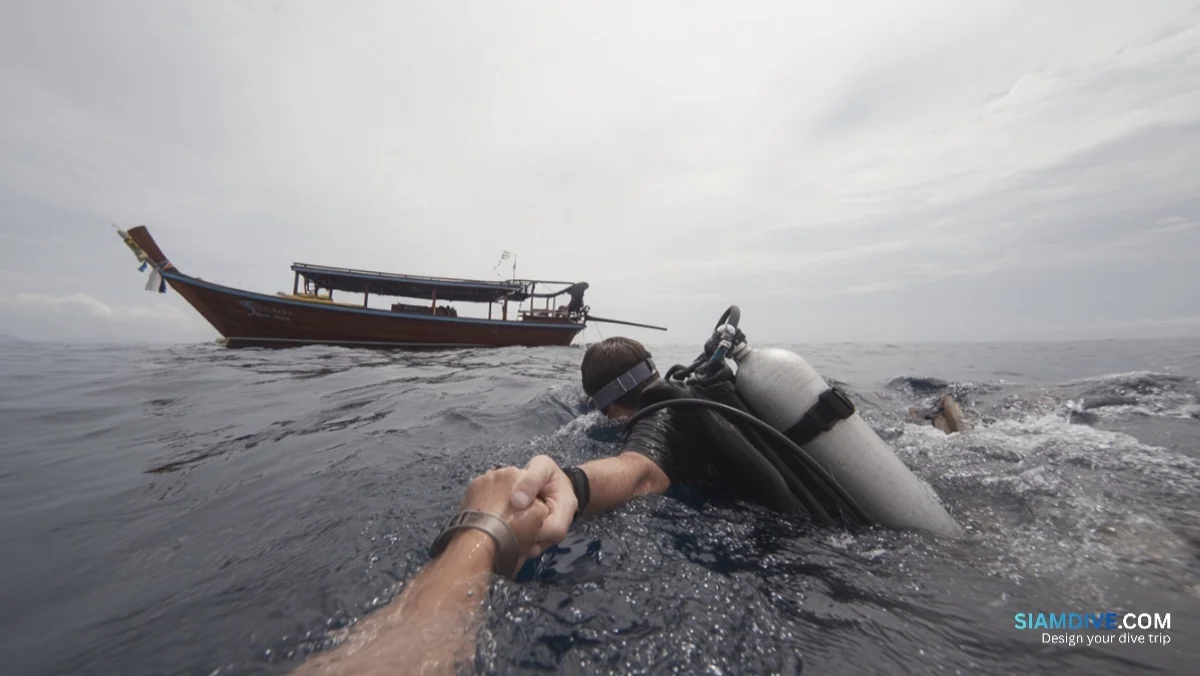
An exhausted but conscious diver needs reassurance first, propulsion second. The underarm push keeps you face-to-face: slide your arm under their armpit from the front, angle them slightly back, and kick. Maintain eye contact. Talk constantly. Ask them to fin gently — even negligible effort shifts their mindset from victim to participant, which can prevent the slide into panic.
Best for short distances under 50 metres in calm water, with a diver who can hold their own airway open.
Panicked Diver — Tank-Valve Tow
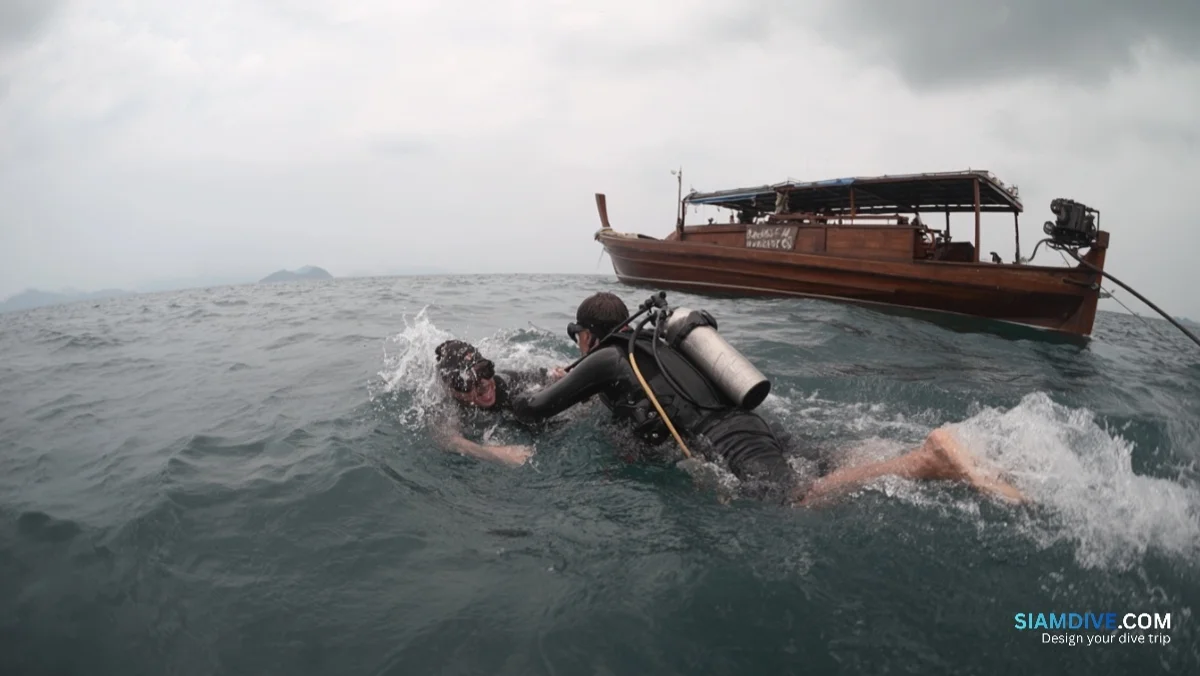
A diver in full panic is the most dangerous surface rescue for the rescuer. Thrashing arms and a death grip on anything within reach can drag you both down. The tank-valve tow places you behind the diver, out of grabbing range. Grasp the first-stage yoke or the valve itself, kick hard, and accept that eye contact is not possible in this position.
If the surface approach is unsafe, descend a metre or two, swim underneath, and surface behind the diver. The knee-cradle position — one knee raised as a barrier between you and the diver's flailing hands — buys time to establish buoyancy and control.
Unconscious Diver — Do-Si-Do Tow
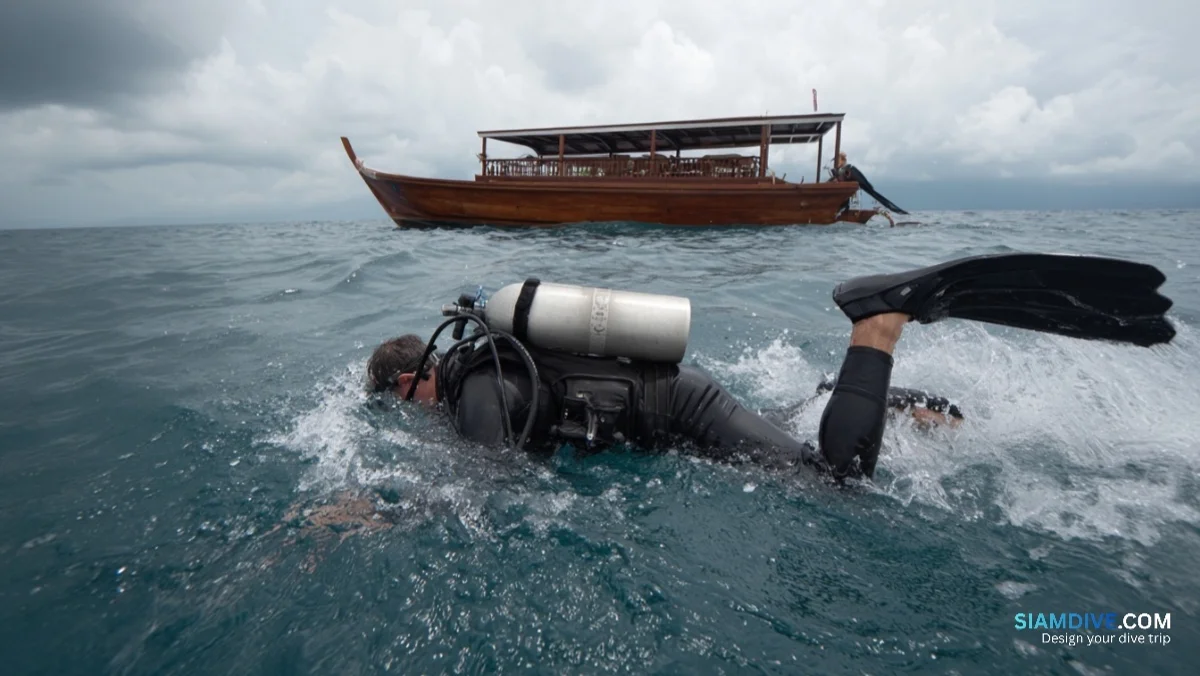
Speed wins here. The do-si-do technique positions the diver face-up on their back while you lie prone beside them. Slide your arm under their far-side armpit, grab the tank valve, and kick forward. Their face stays above water, and you can angle their head to deliver rescue breaths without breaking the tow — critical when the boat is still 80 metres away and every breath counts.
- Underarm push — face-to-face, eye contact, short distance, conscious diver only
- Tank-valve tow — from behind, no eye contact, best for panicked or combative divers
- Do-si-do tow — side-by-side, allows rescue breaths, the default for an unresponsive diver
Red Flags Your Rescue Skills Have Rusted
Score yourself honestly. Two or more of the following and a refresher belongs on the pre-trip checklist — not as a suggestion, but as a requirement you owe your buddy.
- You cannot name the three tow types without checking a manual
- You have not practised a surface tow since your Rescue Diver certification
- You do not carry a pocket mask in your BCD
- You have never delivered rescue breaths in open water — only in a pool
- You cannot recall the correct priority order: buoyancy → airway → tow → signal
- The last time you ditched weights was during your course
- Your EFR or CPR certification expired more than 24 months ago
- You do not know where the oxygen kit is stored on the boat you regularly dive from
- You have never towed a passive body more than 20 metres in open water
- You assume the divemaster will handle any emergency that arises
Research on emergency skill retention is unforgiving. Studies of medical professionals found that Advanced Life Support proficiency drops sharply within six months of training. Broader research on procedural skills shows measurable decay after just one to four months of non-practice. Rescue diving skills follow the same curve — muscle memory does not survive on good intentions.
The Real Distance to the Boat
Pool rescue exercises cover 15 to 25 metres. Enough to prove you understand the mechanics. Nowhere close to the distances Thai day trips demand.
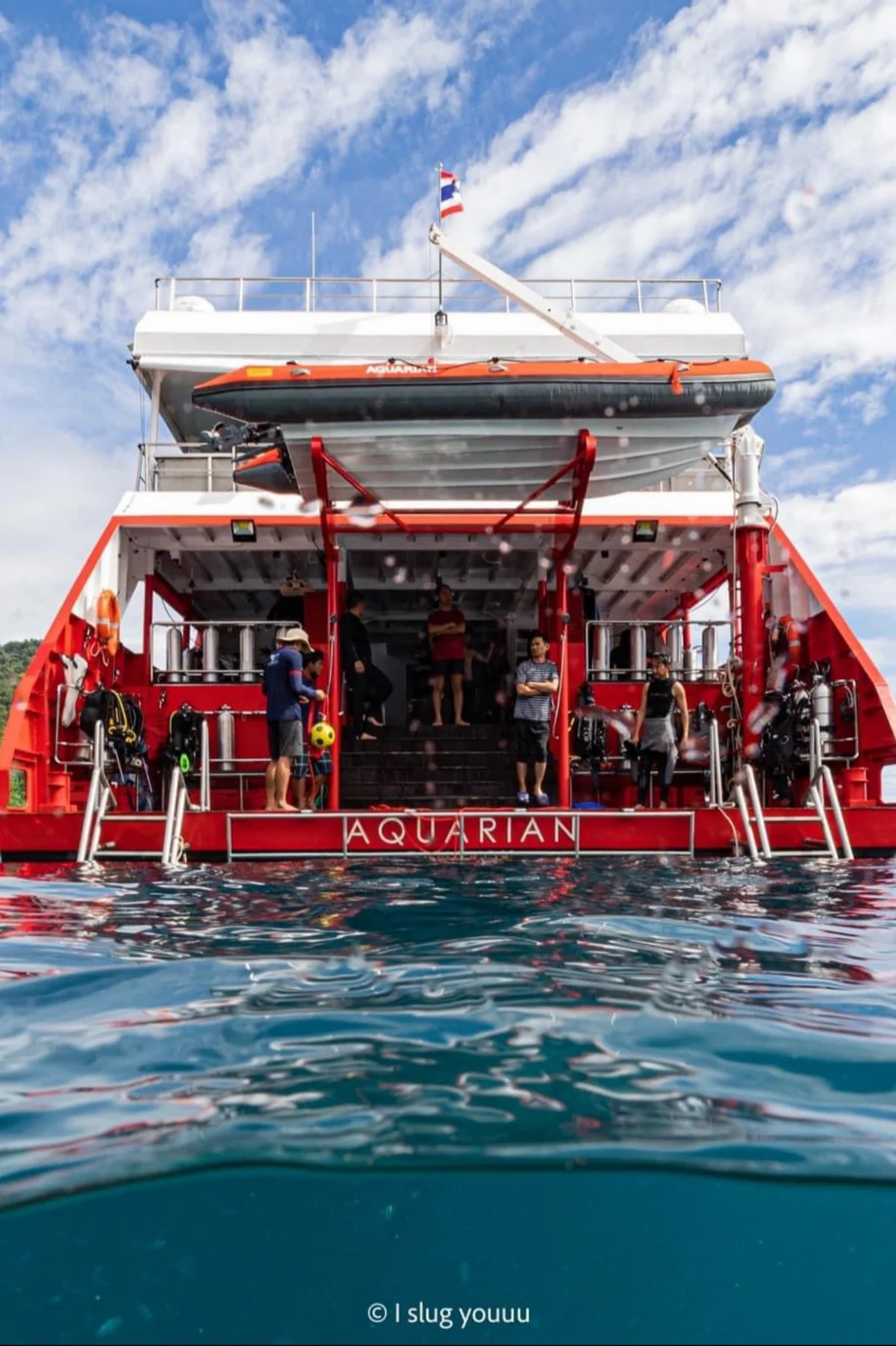
Boats anchored at popular Andaman sites — Koh Bon, Koh Tachai, Richelieu Rock — typically sit 50 to 150 metres from the reef edge or pinnacle where divers surface. Add drift from current, which can push a surfaced diver 30 to 50 metres sideways in a few minutes, and the actual tow distance stretches far beyond anything the pool prepared you for.
Five factors make real-world tows exponentially harder than training:
- Surface chop — half-metre waves make it difficult to keep an unconscious diver's airway clear during a tow
- Current drift — even a mild 0.5-knot surface current adds roughly 25 metres of lateral displacement per minute
- Equipment drag — two fully kitted divers create enormous hydrodynamic resistance from fins, BCDs, and tanks
- Rescuer fatigue — your own air consumption and exertion during the dive leave less energy for a surface sprint
- Visibility from the boat — crew may not see a raised hand or hear a whistle at 100+ metres, especially on a busy day with multiple groups in the water
A well-known ScubaBoard discussion frames the benchmark bluntly: tow an unconscious diver 100 yards in four minutes. Responses range from confident to humbling. Four minutes over roughly 90 metres is achievable — but only in flat water, by a fit diver who has practised recently. Add a metre of swell off Khao Lak in monsoon shoulder season and that timeline doubles.
A 15-Minute Drill That Resets Everything
Before your next trip — in a pool, or at a calm beach with waist-deep entry — run these five exercises with a willing buddy. Total time: roughly 15 minutes. Total cost: zero.
- Weight ditch + BCD inflate — Your buddy plays dead. Reach across, find their weight release, dump it, inflate their BCD. Target: under 10 seconds. Switch roles and repeat.
- Tank-valve tow, 50 metres — Buddy floats passively on the surface. Grab the valve, kick 50 metres. If you are gasping at the end, your cardio needs attention before the trip.
- Do-si-do tow, 30 metres — Position your buddy face-up, slide your arm under their far armpit, grab the valve, tow 30 metres while keeping their nose and mouth above water. This is harder than the tank-valve tow because of the asymmetric body position.
- Rescue breaths while towing — Deliver 10 simulated breaths (seal, tilt, exhale) while maintaining the do-si-do tow. A pocket mask makes this dramatically easier. If you do not own one, buy one before the trip — they cost less than a dive-site entry fee.
- Signal the boat — While towing with one arm, practise raising the other, blowing a whistle, or deploying an SMB one-handed. On a Thai day trip, the boat is your hospital. Getting its attention is as critical as the tow itself.
If any drill feels clumsy or impossible, that is your answer. A rescue skills refresher with a local instructor typically costs 2,000–4,000 THB and takes half a day — a fraction of the original certification, and far cheaper than discovering the gap at sea.
The First 60 Seconds — A Decision Tree
Surface emergencies compress decision-making into a window most people have never experienced outside a classroom. The following sequence, drawn from DAN and PADI emergency protocols, strips the response down to one action per ten-second block.
- 0–10 seconds: SHOUT
- Alert every diver and crew member within earshot. Point at the victim. Sound your whistle. A single raised fist is the universal surface distress signal.
- 10–20 seconds: BUOYANCY
- Ditch the victim's weights — integrated or belt, whichever you find first. Inflate their BCD. Inflate your own. Positive buoyancy for both of you is non-negotiable before anything else happens.
- 20–30 seconds: AIRWAY
- Roll the victim face-up if not already. Tilt the head back, lift the chin. Look, listen, and feel for breathing. Remove nothing from their face except push the mask onto the forehead.
- 30–40 seconds: BREATHE
- No breathing detected — deliver two full rescue breaths. Seal the nose, tilt the chin, exhale steadily. Use a pocket mask if you carry one. Do not stop to remove equipment; that comes later.
- 40–60 seconds: TOW
- Choose your tow. Do-si-do if you are delivering breaths. Tank-valve if the diver is breathing but unconscious. Begin moving toward the boat immediately — distance is the enemy.
- 60+ seconds: DELEGATE
- If another diver surfaces, assign a specific task: "You — signal the boat." "You — swim ahead and tell the crew to prepare oxygen." One rescuer plus one helper is vastly more effective than one rescuer working alone.
Six words, sixty seconds, a life: Shout — Buoyancy — Airway — Breathe — Tow — Delegate.
The Rescue Diver card in your wallet proves you learned this once. Whether you can execute it at 100 metres from a rocking day-trip boat, with adrenaline flooding your bloodstream and a real person going blue — that depends entirely on whether you have practised since the day the instructor signed you off.