70 Dive Schools on One Island: What Keeps Thai Prices Honest
24 เมษายน 2569
Koh Tao squeezes 70+ dive schools into 21 km², driving OW courses to 9,500 baht. How density keeps prices honest and standards high across Thailand.
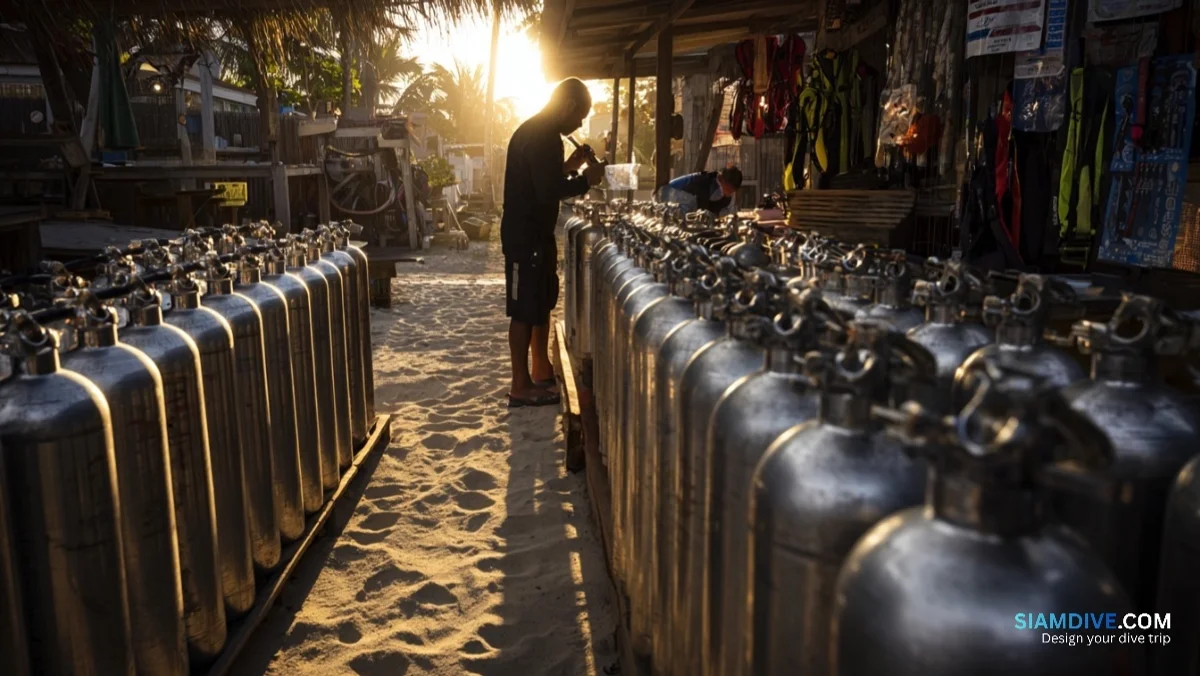
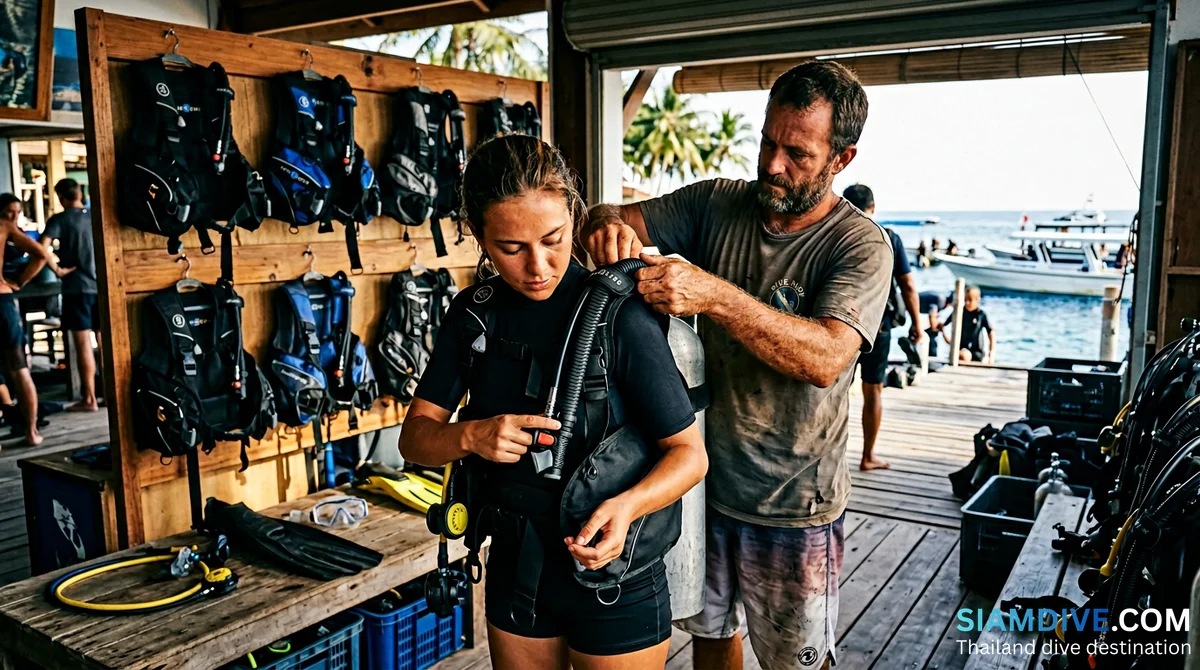
Walk down any soi on Koh Tao after sunset and the pitch starts before you reach the 7-Eleven. Open Water for 9,500 baht. Free accommodation. Free Nitrox upgrade. The next shop — forty metres down the same road — undercuts by 200 baht and throws in a GoPro rental. Cross the street and a third operation offers the same course with SSI instead of PADI, same price, and a rooftop bar tab on completion night.
This is what happens when roughly 70 dive schools crowd onto an island that covers 21 square kilometres — smaller than Manhattan's Central Park. The density is extreme, the competition is relentless, and the effect on both price and quality is something no single regulation or industry body could have engineered on purpose.
Three Schools Per Square Kilometre
PADI's booking platform lists 22 affiliated centres on Koh Tao. SSI, which now claims roughly half the island's training market, fields a separate roster. Add CMAS, NAUI, RAID, and a growing cluster of independent freediving outfits, and the total lands somewhere between 70 and 80 operations — about three per square kilometre of land.
No other dive destination on earth packs this many competitors into so little space. Phuket, with more than 500 square kilometres, spreads its dive shops across Patong, Kata, Chalong, and Rawai — far enough apart that a diver would need a taxi to compare prices. Khao Lak strings a handful of operators along a coastal highway that runs 30 kilometres north of Phuket airport. But Koh Tao concentrates the entire battlefield into a strip of beach bars and hand-painted signboards visible from a single walk along Sairee Beach.
The result is a market that punishes complacency faster than any regulator could. A shop that raises prices without adding visible value loses students to the neighbour within days. A school that earns a poor review on Google or TripAdvisor watches the correction happen in real time — because the alternative is never more than a two-minute stroll away.
What 9,500 Baht Actually Gets You
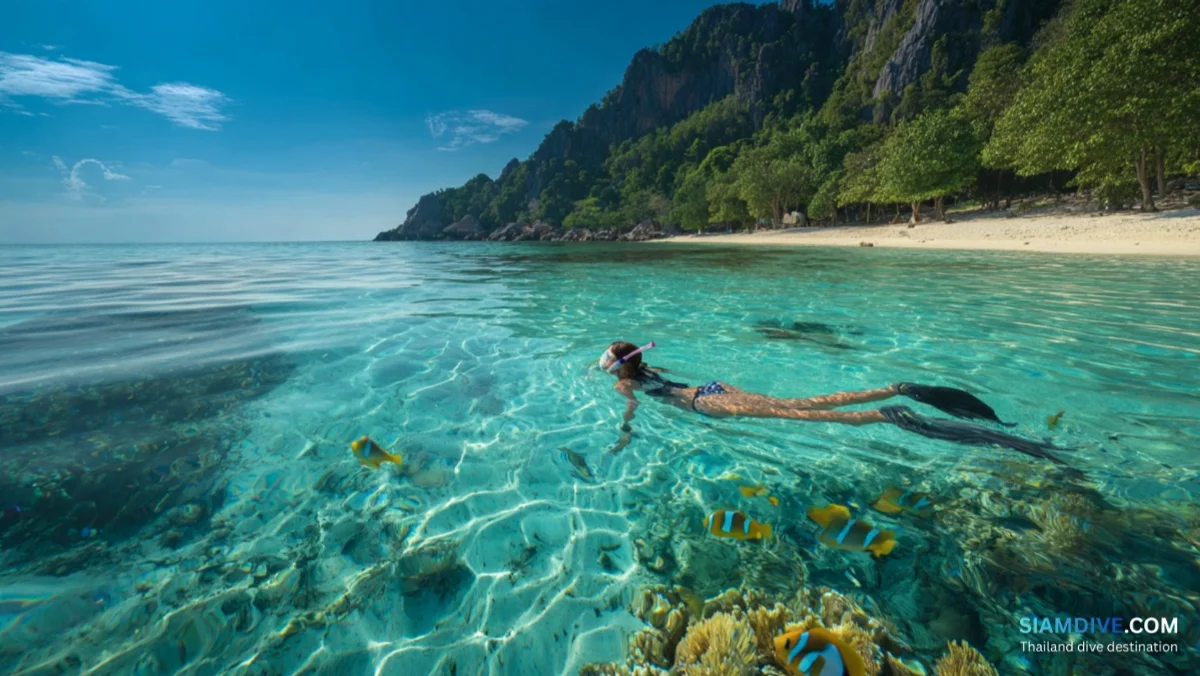
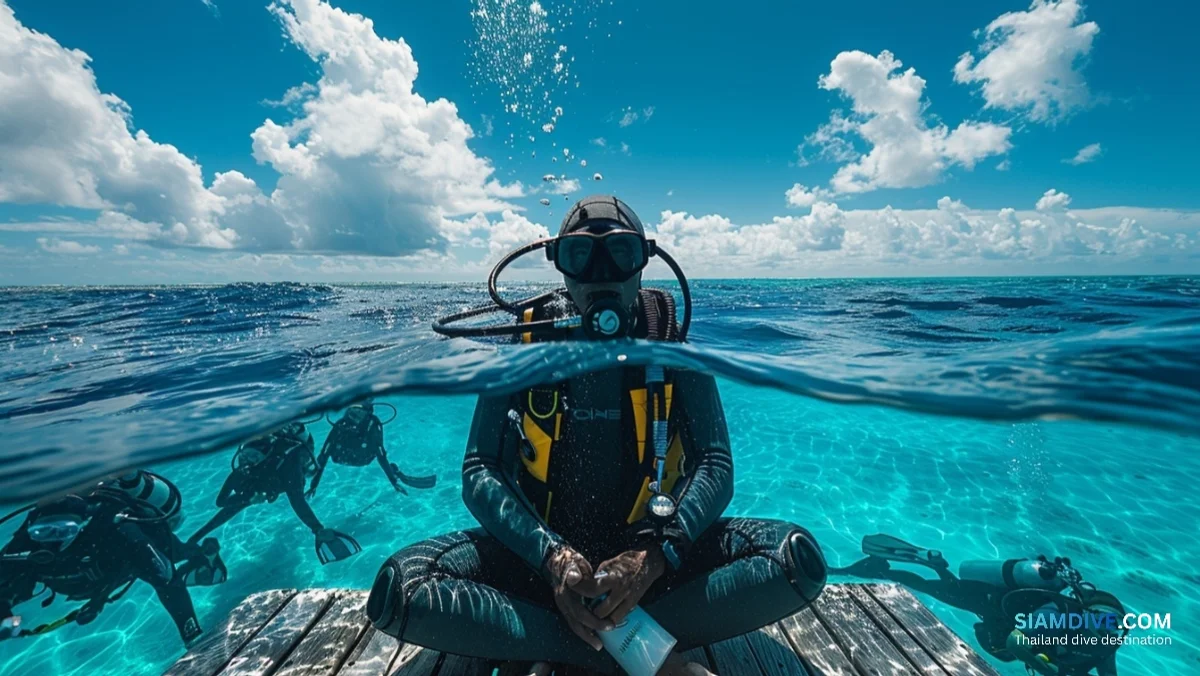
On Koh Tao, 9,500 baht — roughly $265 USD at current rates — covers a full PADI or SSI Open Water course: three to four days of pool and ocean training, equipment rental, certification fees, and digital learning materials. Several schools bundle free accommodation into the package. A few add a fun dive on the day after certification at no extra charge. The all-inclusive model is the norm, not the exception, because any hidden fee becomes a reason to walk next door.
The same certification in other popular training destinations costs more — sometimes sharply more:
- Bali, Indonesia — $300–$400 USD (~10,700–14,300 THB); accommodation usually separate
- Dahab, Egypt — $300–$400 USD; shore-based training keeps course costs competitive, but flights from Asia add $500+ to the total trip
- Cebu, Philippines — $320–$370 USD (~11,400–13,200 THB); comparable warm-water conditions but fewer schools per square kilometre
- Phuket, Thailand — 9,900–16,000 THB ($275–$445 USD); the wider range reflects the split between beach-based courses and boat-based training at offshore sites
- Cozumel, Mexico — $450–$600 USD; reef quality is world-class but pricing reflects North American operating costs
Thailand's advantage is not simply lower cost of living. It is the density of competition on Koh Tao specifically that anchors prices at the bottom of the regional range and forces every operator on the island to justify what the student gets for their money.
The Race to the Bottom That Never Happened
Cheap certification in a developing country raises a reasonable question: what gets cut? In many industries, intense price competition erodes quality until the product barely functions. In Thailand's dive market, the opposite has played out — largely because the product on sale is a safety-critical skill with international oversight that no local price war can override.
Every PADI centre worldwide operates under the same standards framework regardless of geography or course price. Equipment providing direct life support — regulators, buoyancy control devices, cylinders — must follow planned maintenance schedules and regular examination by trained technicians. The instructor-to-student ratio for Open Water ocean dives caps at 1:4 in water and 1:8 in confined settings. These are non-negotiable floors, audited through PADI's quality management system, and a centre that violates them risks losing its membership — which on Koh Tao means losing access to the largest customer pipeline in the country.
But floors only set the minimum. What pushes Thai shops above that baseline is the customer sitting two doors down at a competitor's briefing table. Dive schools on Koh Tao live and die by online reviews. A single post about a malfunctioning second stage or a rushed pool session can redirect hundreds of students to the next name in the search results. In a market this dense, reputation is the only defensible asset, and the fastest way to build it is to over-deliver on safety and teaching quality.
The instructor pipeline reinforces this cycle. Instructor Development Courses run year-round on Koh Tao and Phuket, producing a steady flow of newly minted divemasters and instructors, many of whom intern at the same schools that trained them. Competition for teaching positions is fierce enough that instructors who earn poor student feedback struggle to find contracts — another form of quality control that no written standard could enforce alone.
Regulators, Cylinders, and the Annual Overhaul
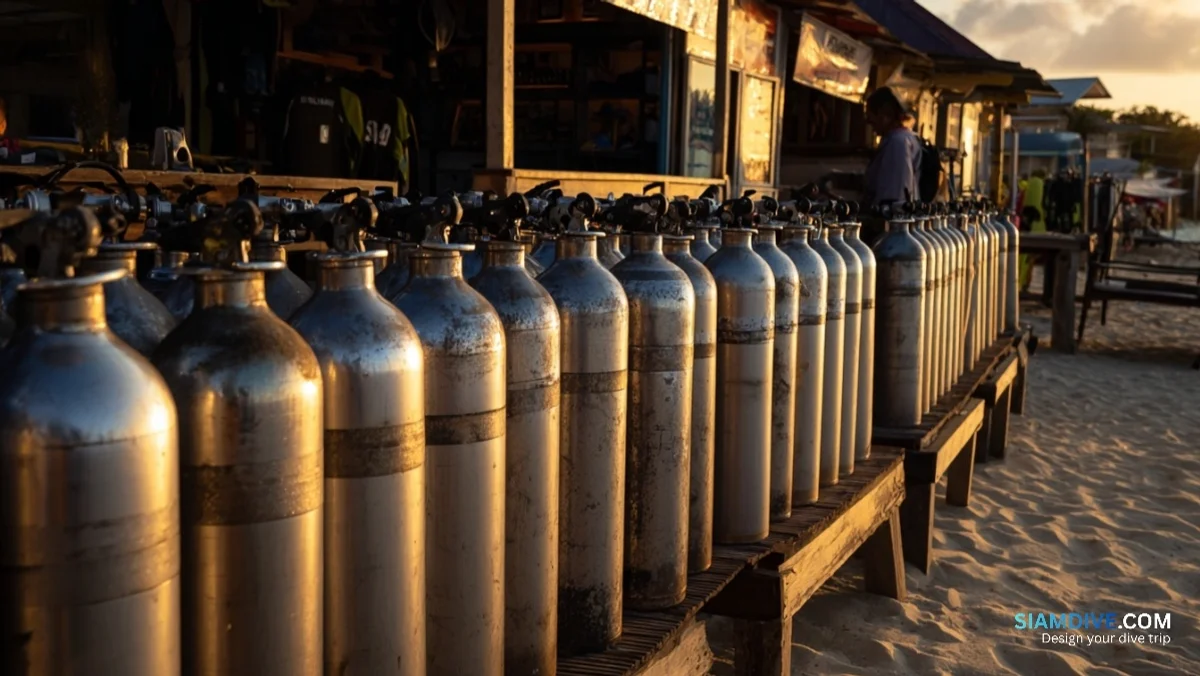
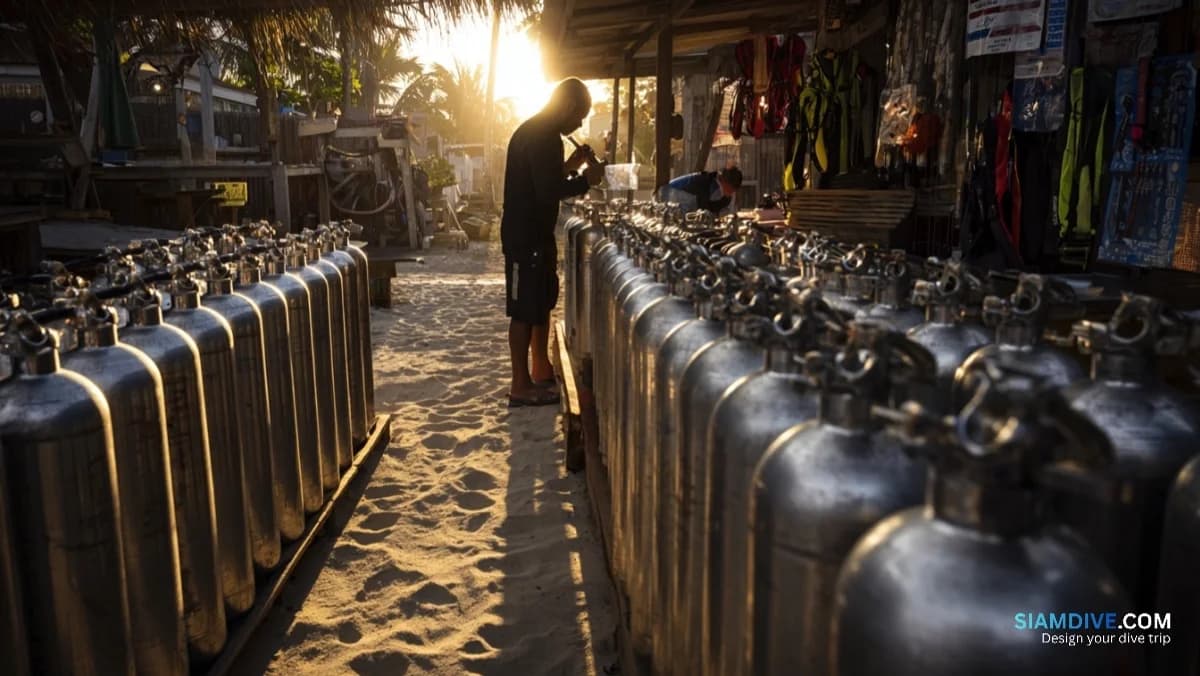
Equipment maintenance is where competition quietly raises the bar. PADI recommends regulator servicing annually or every 100 dives, whichever comes first. On Koh Tao, where a busy school runs eight to ten students through Open Water every week and sends fun divers out daily, those 100 dives accumulate in a matter of months. High-volume shops may service regulators three to four times a year simply to keep pace with the wear.
- Regulators — annual or every 100 dives; O-ring replacement, intermediate-pressure check, breathing-effort test
- BCDs — annual inspection of bladder integrity, inflator mechanism, and dump valves
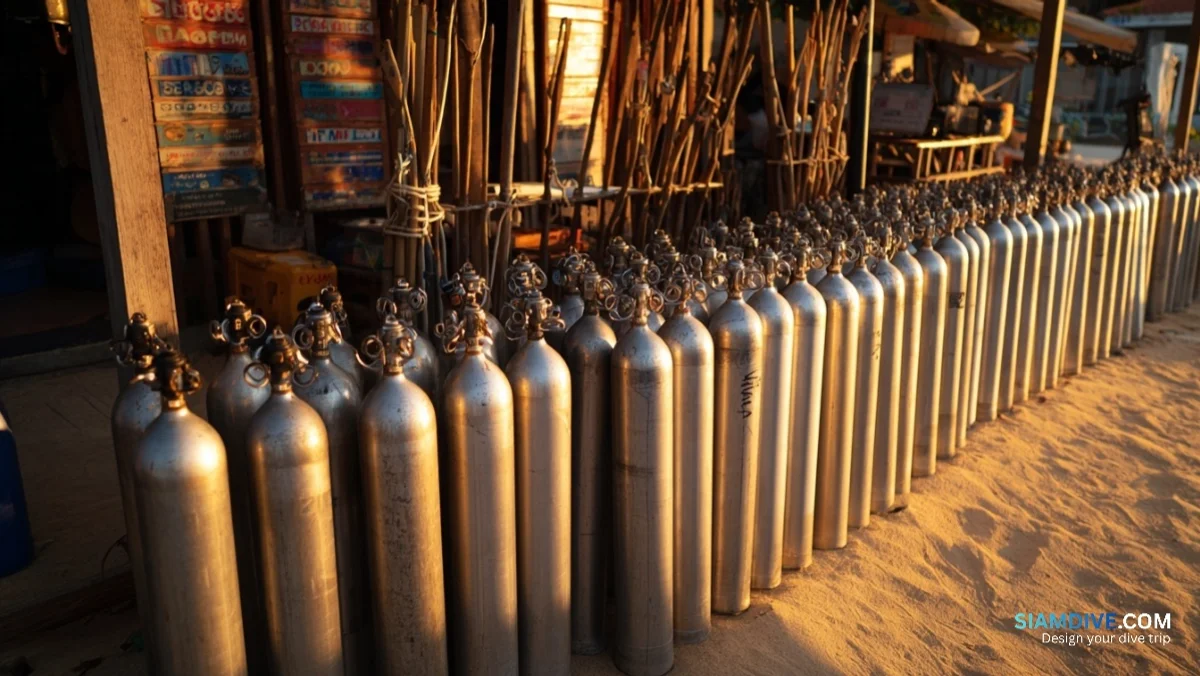
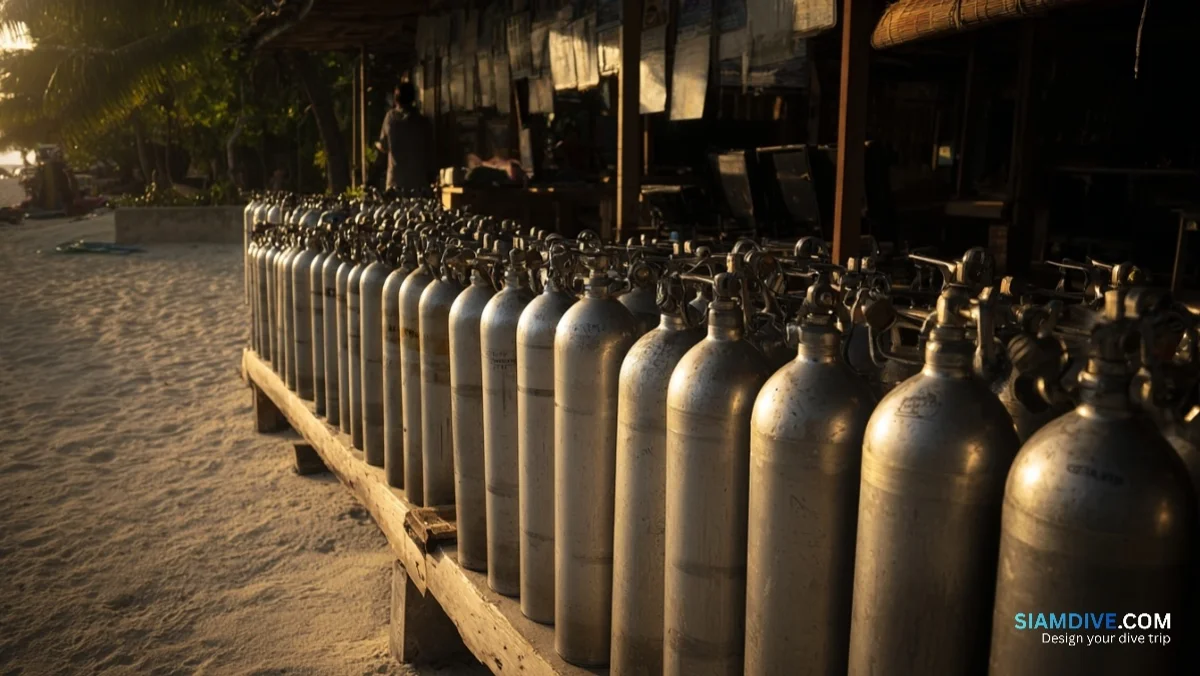
- Cylinders — visual inspection annually; hydrostatic testing every five years
- Dive computers — annual or biennial service; battery replacement and pressure-sensor calibration
On an island where 70 shops share the same pool of customers, the shop that skips a service cycle is the shop that eventually earns the review — "my reg breathed wet on the second dive" — and with it loses next month's bookings. Even something as basic as wetsuit thickness becomes a competitive differentiator: schools that stock both 3 mm and 5 mm suits for the cooler thermocline months signal that they pay attention to conditions, not just pricing.
Two and a Half Million Cards
That is how many PADI certifications Thailand has issued over the past 25 years — a volume only the United States exceeds. The country holds roughly 8% of all PADI certifications globally, making it the second-largest market on earth.
Scale on this level creates an ecosystem that smaller markets cannot replicate. Compressor technicians, equipment repair specialists, boat mechanics, and cylinder testing facilities all concentrate where the work is. Course directors with decades of local experience mentor incoming instructors through hundreds of student interactions before those instructors run courses independently. The supply chain runs deep enough to keep costs low without cutting corners on training or gear.
Participation is no longer just a foreign-tourist story, either. Thailand has recorded a 300% increase in Thai nationals entering the sport in recent years, expanding the customer base beyond the seasonal backpacker wave. That shift creates year-round demand in places like Phuket and Koh Tao, keeping shops staffed and equipment maintained even through the lower-traffic months when monsoon swells redirect diving from the Andaman coast to Gulf-side operations.
Beyond the Classroom
Price competition extends well past Open Water. Day trips from Phuket and Khao Lak to the Similan Islands typically range from 3,500 to 5,500 baht for two dives including full equipment — a figure that would barely cover a single guided tank at the Great Barrier Reef or Cozumel's Palancar Wall.
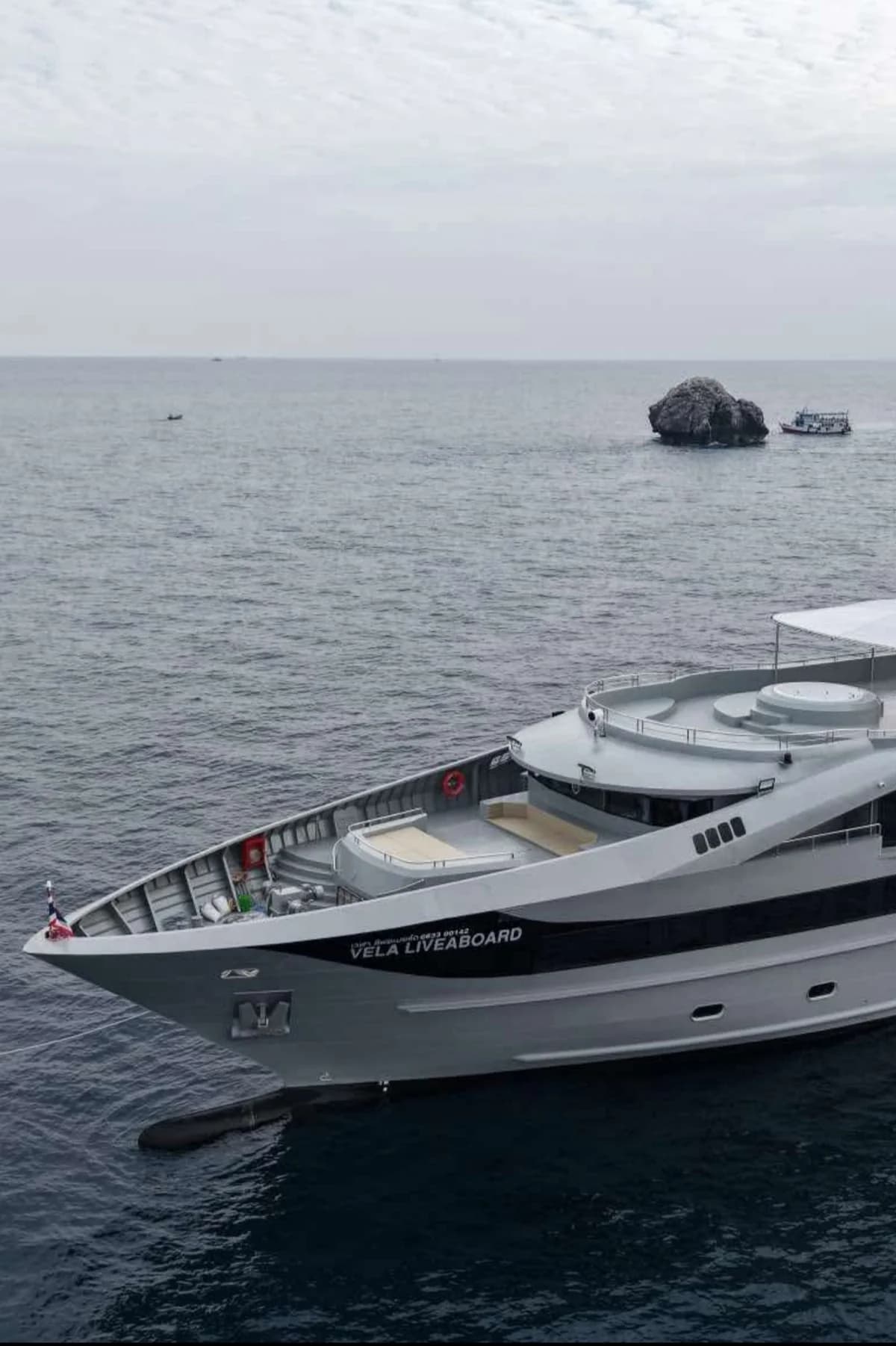
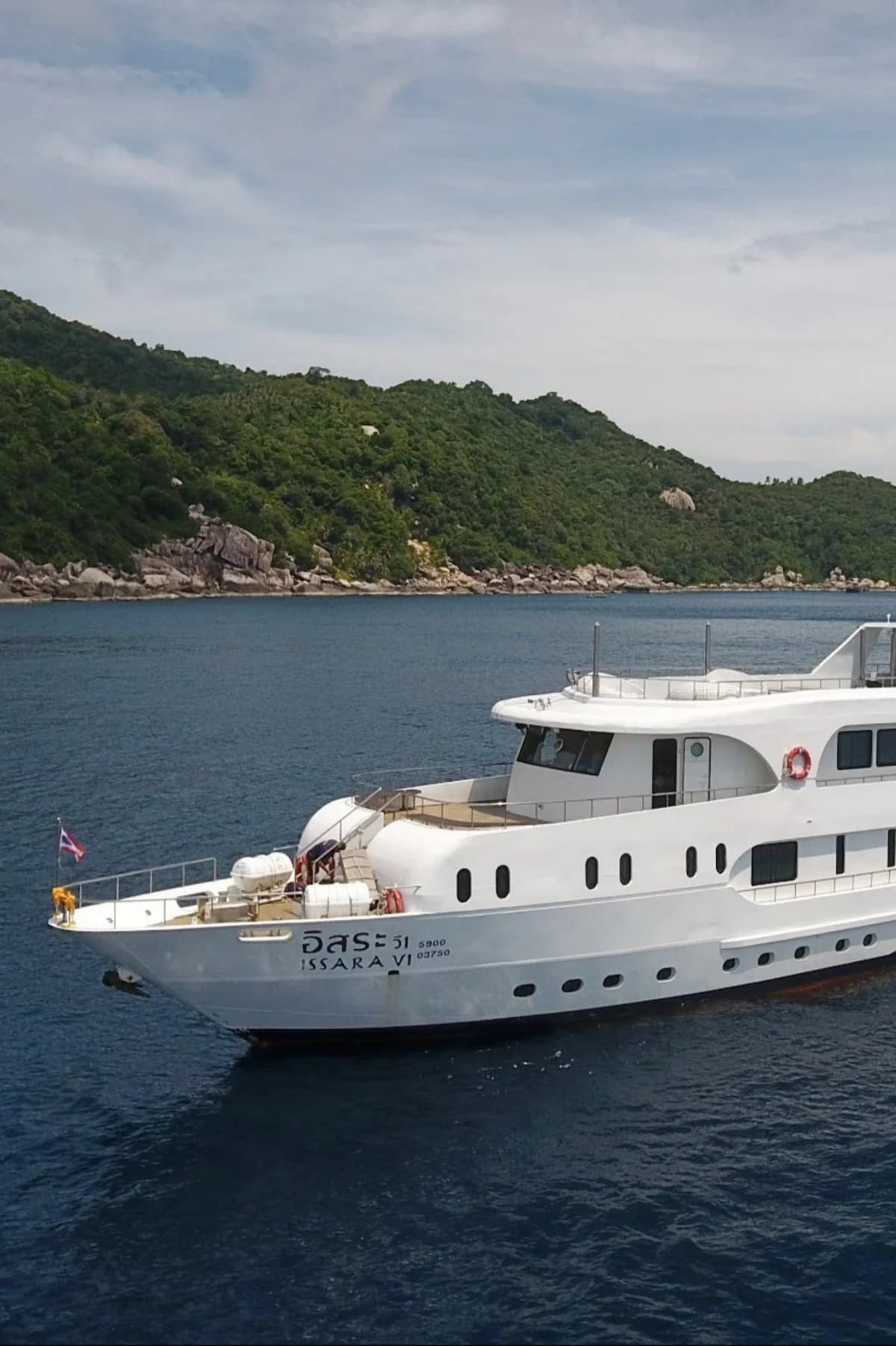
Liveaboard trips to the Similans start around 15,000 baht for a two-night, ten-dive itinerary aboard mid-range vessels. Premium boats with en-suite cabins and Nitrox run 25,000–40,000 baht for three to four nights. In both segments, enough operators compete for berths that prices stay within reach of recreational divers, not just specialists.
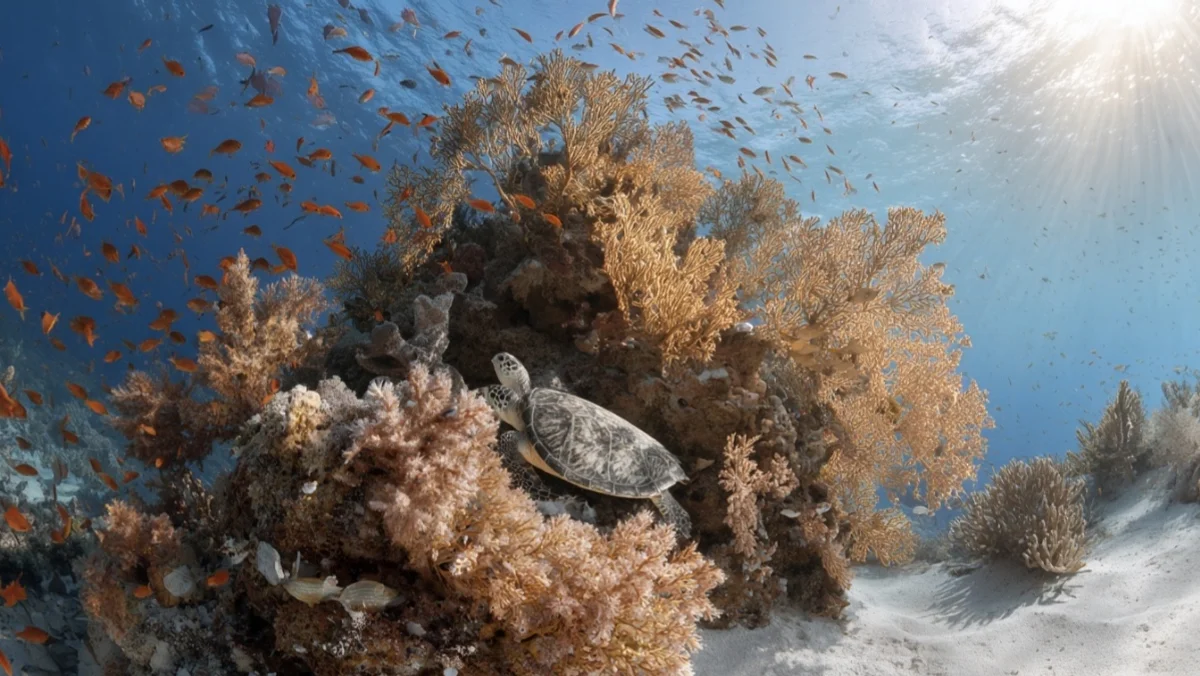
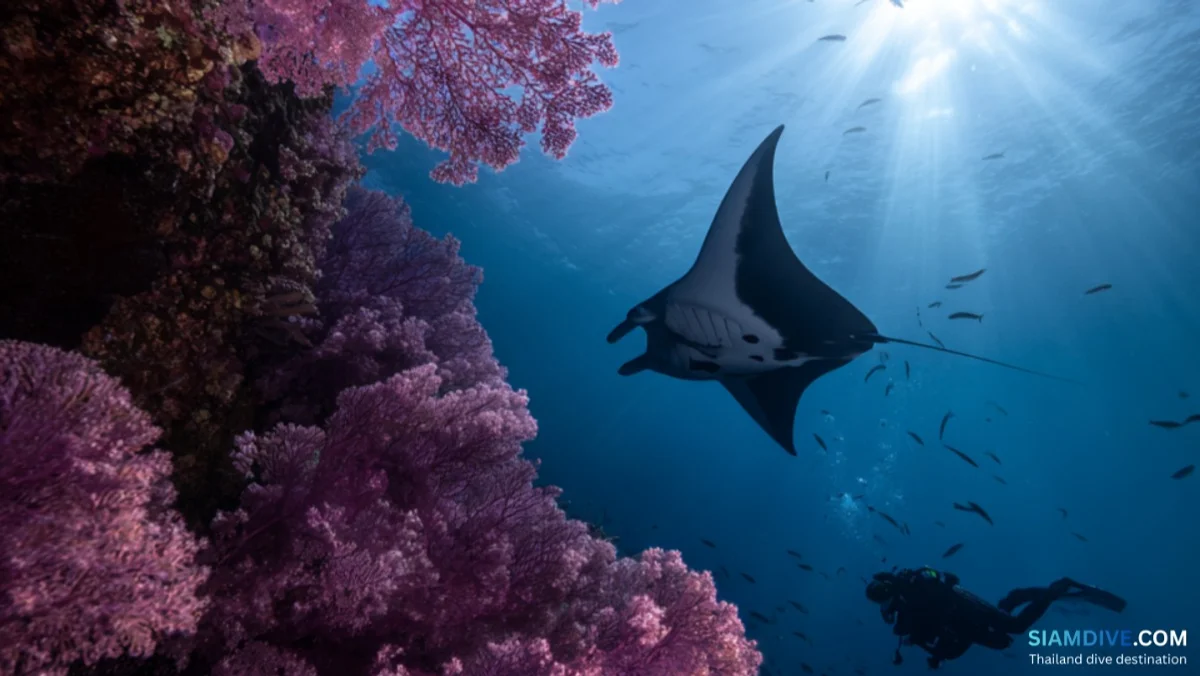
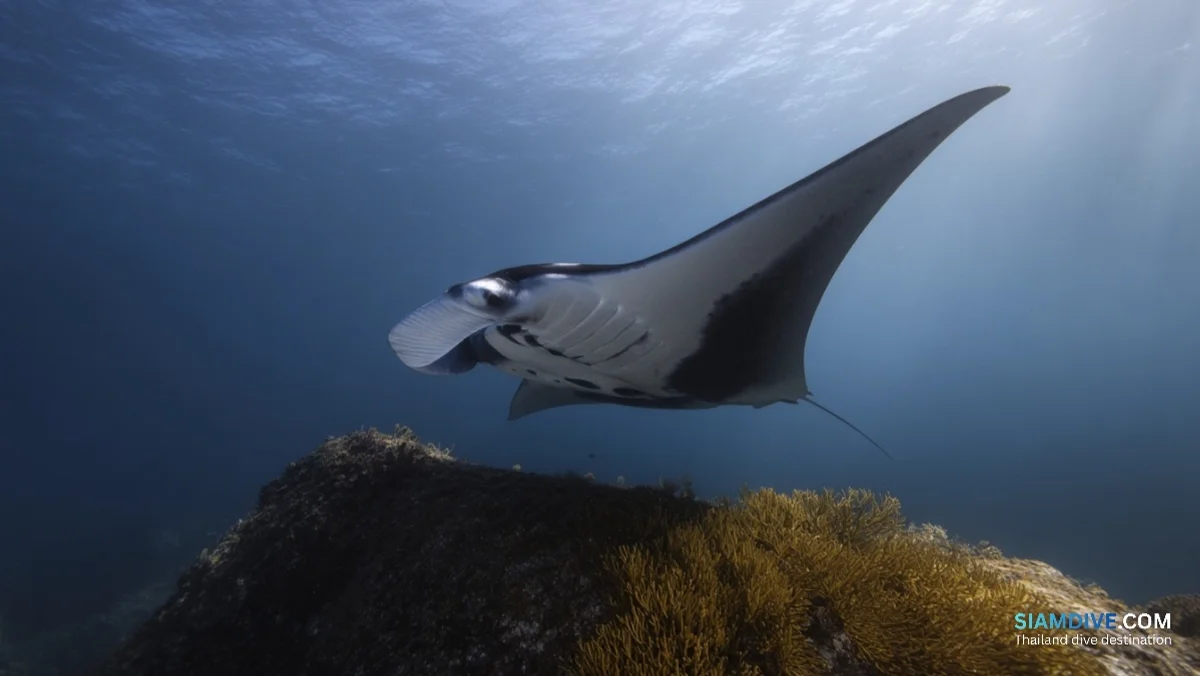
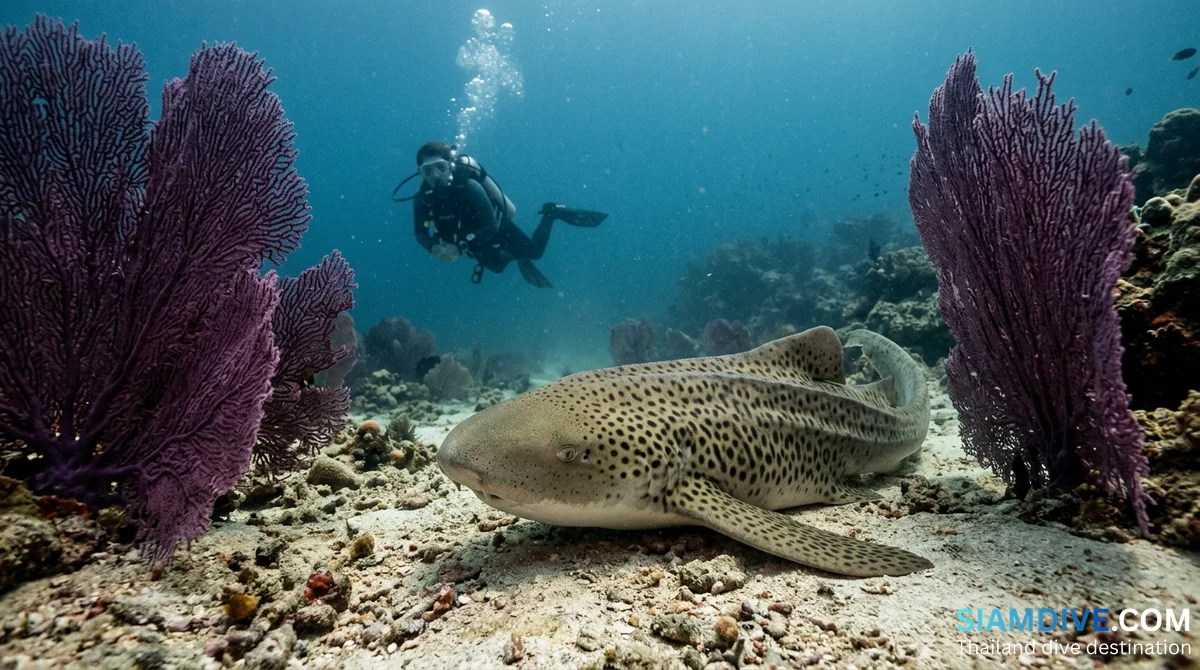
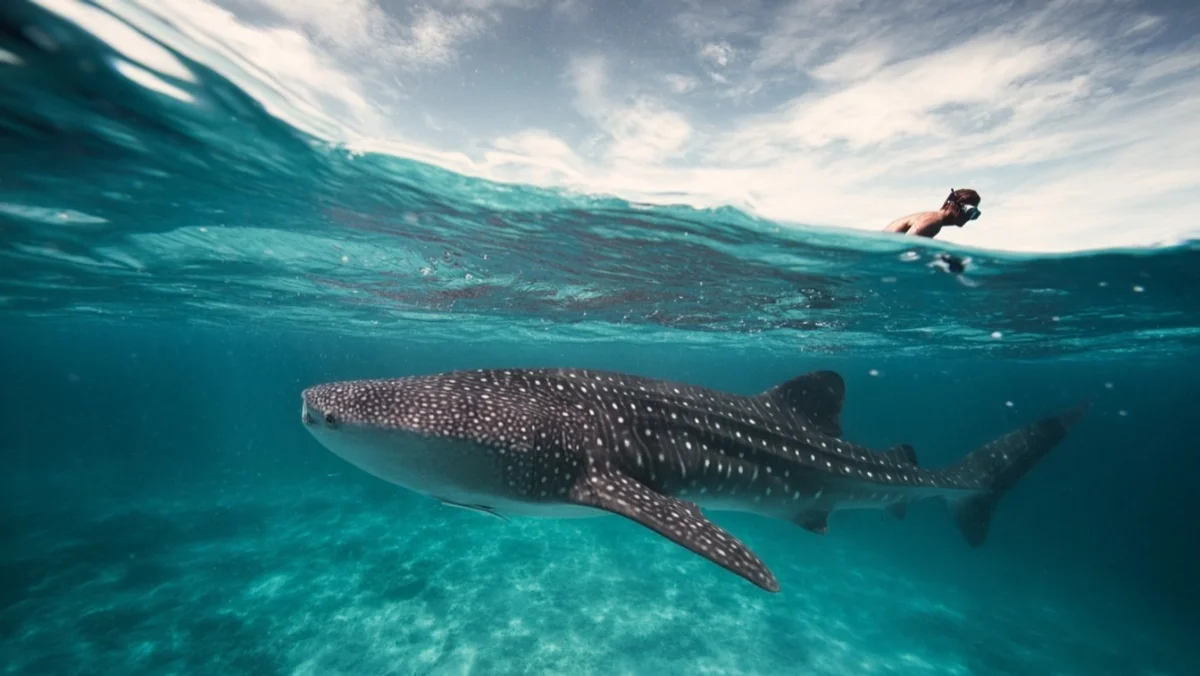
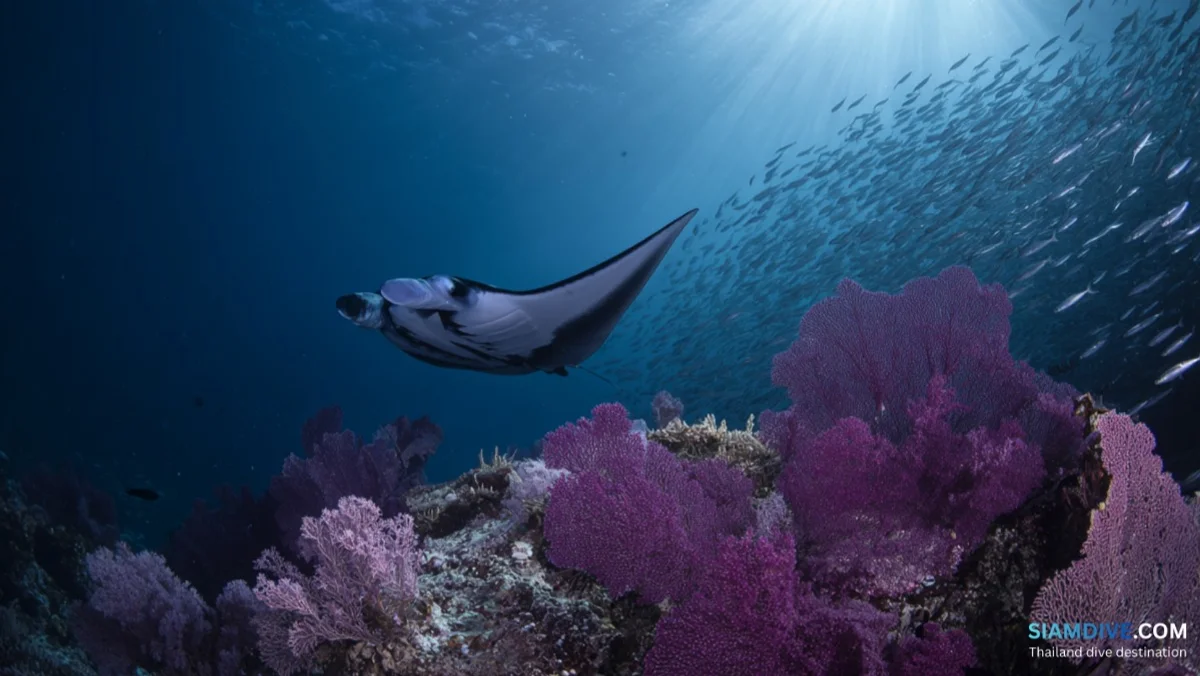
The marine life on these trips reinforces the value argument. Manta rays at Koh Bon's 24-metre ridge turn up reliably from November through April. Whale sharks that once concentrated around Koh Tao still appear at the northern Similan sites and at Koh Ran Ped during the Chumphon season. Giant trevally and leopard sharks patrol the same pinnacles that headline far more expensive destinations like the Maldives and Raja Ampat — yet the total cost of a week of diving in Thailand, including flights from Bangkok, accommodation, and ten dives, often comes in under what a single Maldives liveaboard charges for three nights.
The 2026 Push
"Healing is the new luxury" — that is the tagline behind a strategic partnership that TAT and PADI formalised in February 2026 to position Thailand as a premium wellness-led diving destination. The campaign pairs dive tourism with mindfulness, marine conservation, and adaptive accessibility, targeting longer-stay, higher-spend visitors who see underwater time as restoration rather than recreation.
Thailand now hosts nine PADI Eco Centers, each meeting UN-backed sustainability standards for environmental education and reef stewardship. Environmental regulations have tightened in parallel: since 2025, touching marine life, moving corals, or using non-reef-safe sunscreen in marine parks carries fines up to 100,000 baht. Licensed dive operators across the country must comply with enhanced safety regulations covering staff certifications and environmental protocols.
The institutional layer is new. The competitive layer is not. Two decades of dense, market-driven pressure on Koh Tao and across the Andaman coast built the instructor base, the maintenance culture, and the pricing structure that the TAT-PADI partnership is now packaging for a global audience. Government and industry bodies are not creating quality from scratch — they are certifying what market competition already produced.
Where the Competition Leads
An Open Water course for 9,500 baht at a school that services its regulators quarterly, employs certified instructors year-round, and operates under international training standards is not a compromise. It is the product of a market where 70 competitors on a 21 km² island have spent two decades refining the equation between price and quality.
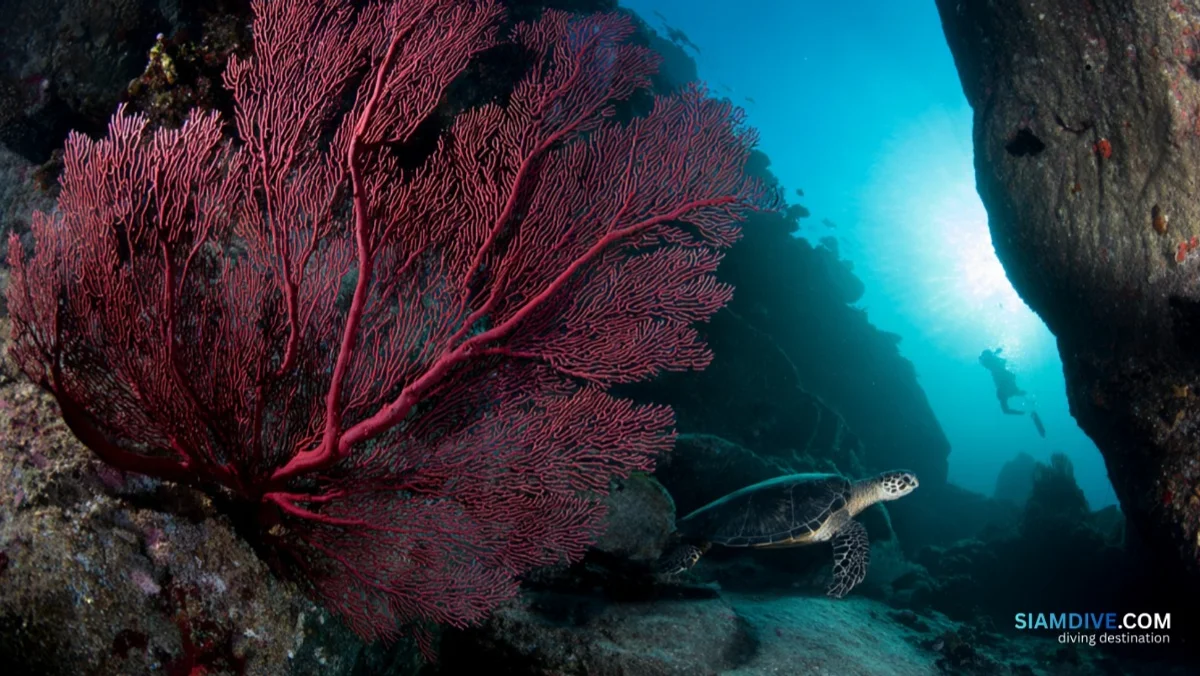
For divers planning a first certification or a return to the sport, the practical implication is clear: the competition that makes Thai diving affordable is the same force that makes it reliable. The shop that cuts corners on briefings or air management training does not survive long where the next five-star centre is a two-minute walk away. And the savings — often $100–$200 compared to the same course in Bali, Egypt, or the Philippines — leave enough in the budget for a Similan liveaboard or a week of fun diving at sites like East of Eden, where the coral garden starts at 12 metres and the competition for your attention comes not from dive shops, but from giant seafans.