Mango Bay Koh Tao Guide: The Island's Best Beginner Dive and Snorkel Site
← Blog

Mango Bay Koh Tao Guide: The Island's Best Beginner Dive and Snorkel Site

11 เมษายน 2569

Mango Bay on Koh Tao's north coast is the island's best beginner dive site and snorkel spot — calm water, vibrant reefs, and year-round conditions.

The Calmest Bay on Koh Tao

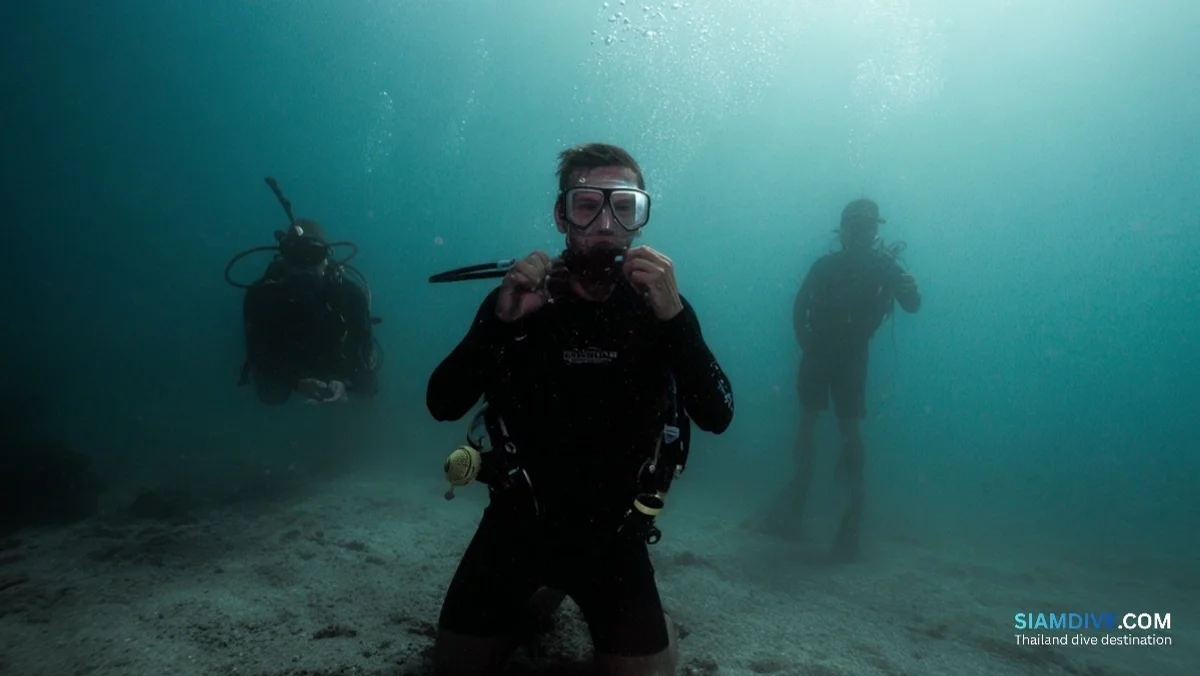
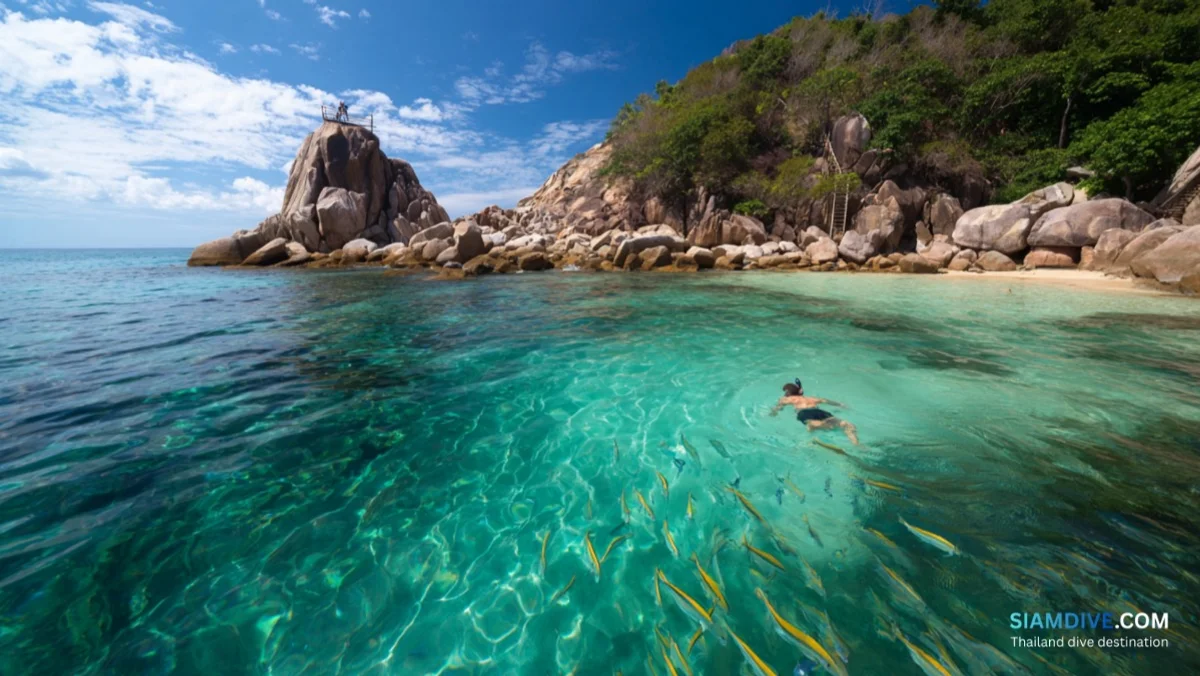
Mango Bay (Aow Muang) sits tucked into the north end of Koh Tao, a half-moon of white sand ringed by low jungle cliffs. The water inside the bay is so still it almost feels like a pool, which is exactly why dive schools love it for beginner training. Depths run from two meters near the beach out to about 18 meters at the deepest point, with coral bommies clustered along the east and west sides of the bay and a sandy bottom in the middle that is perfect for buoyancy drills.

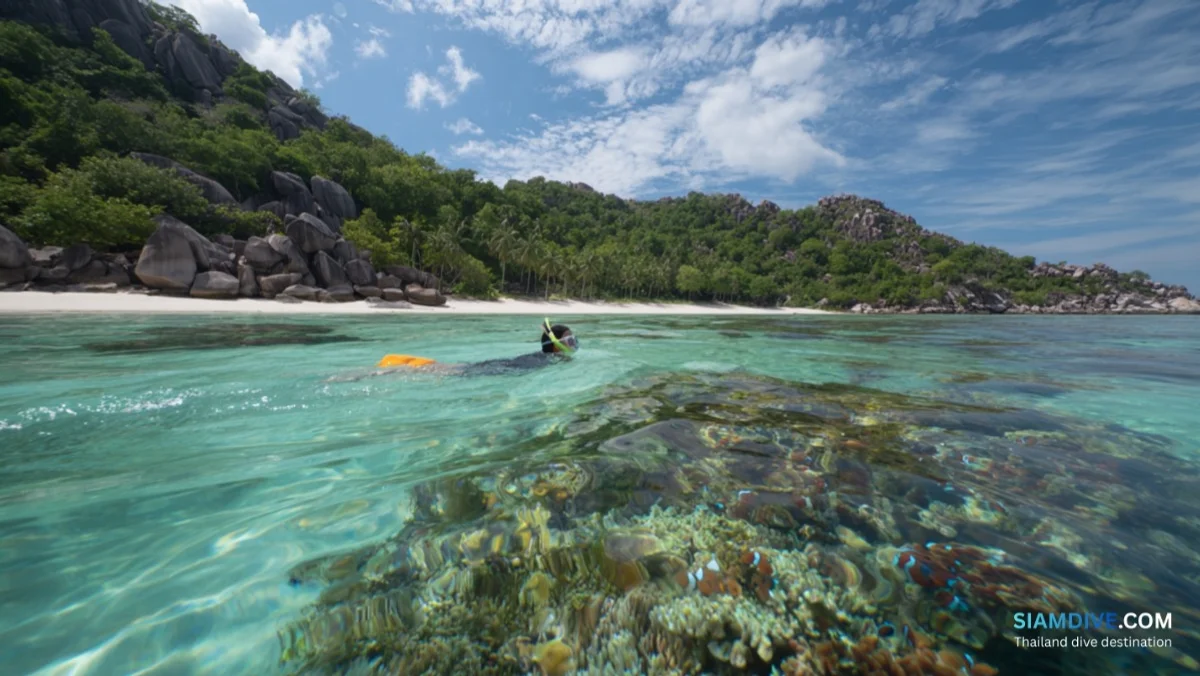
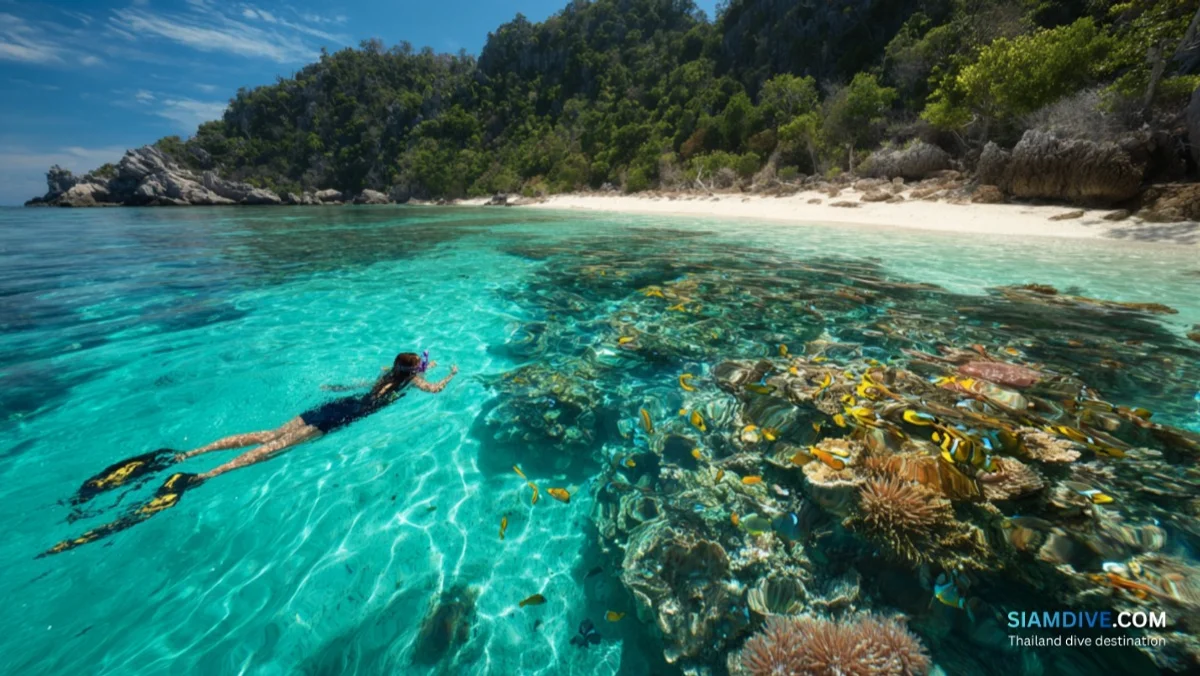
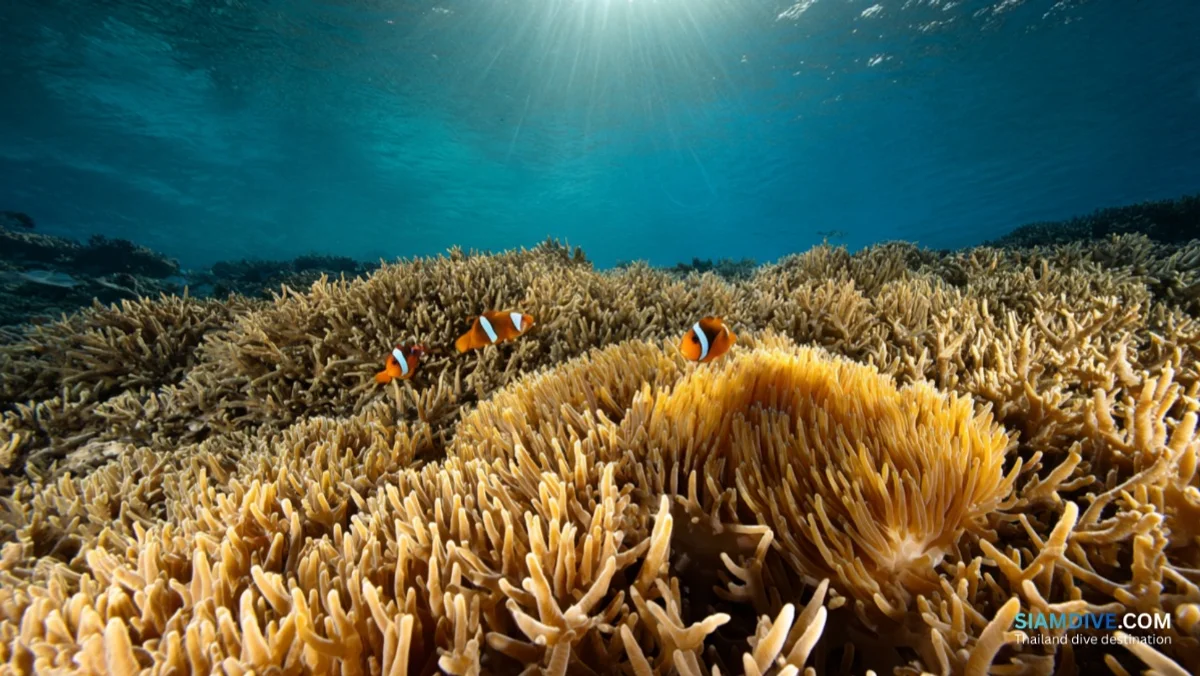
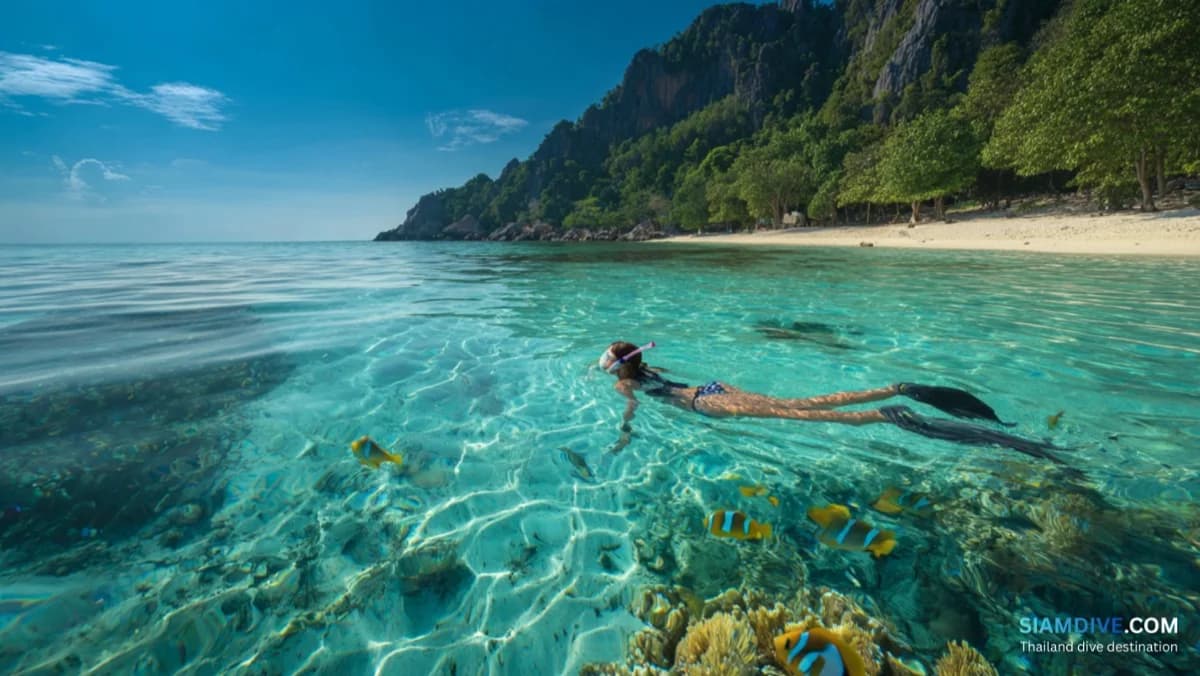
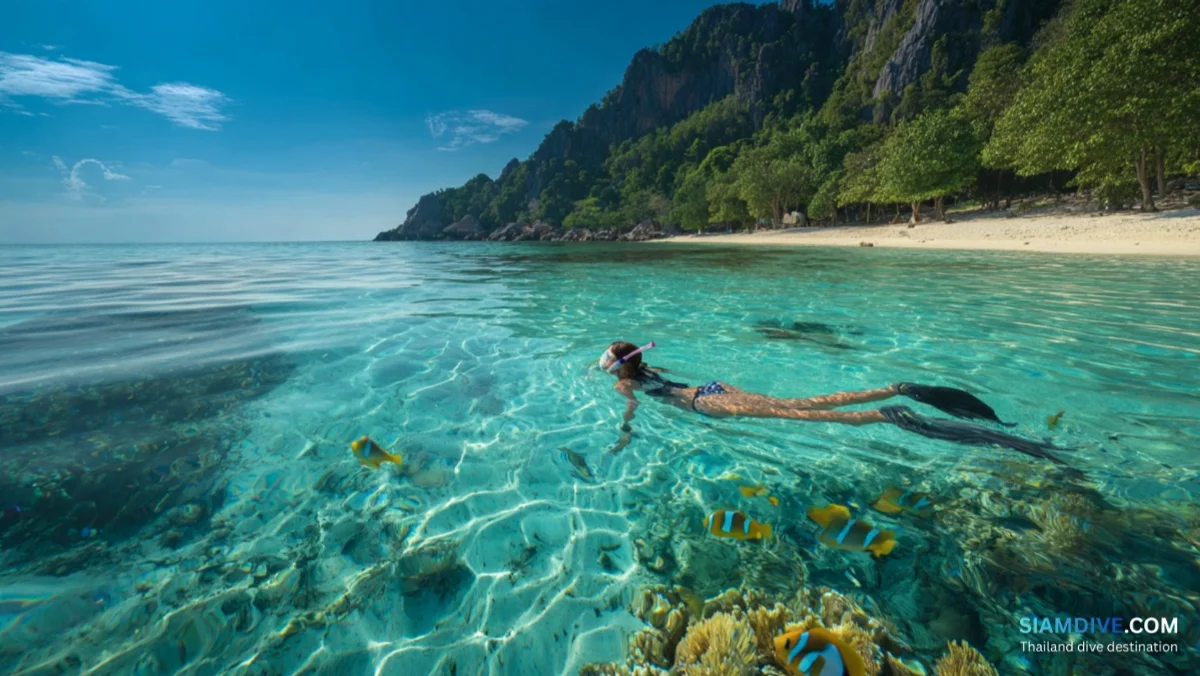
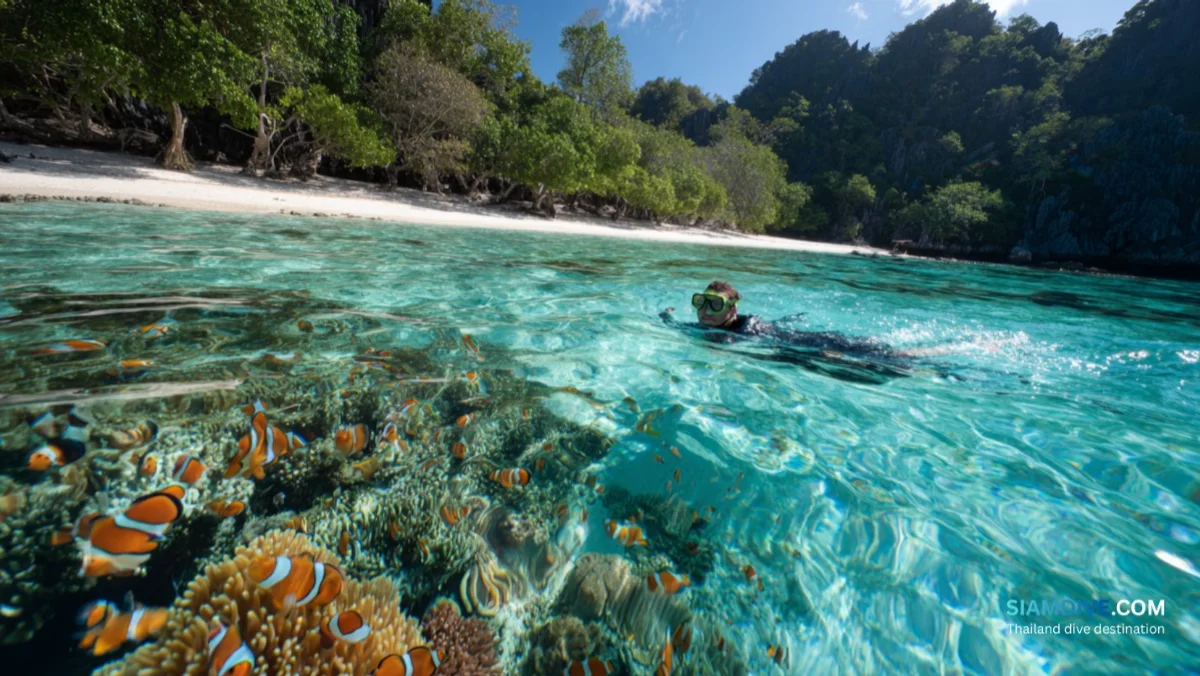
The bay is also one of the prettiest snorkel spots on the island. The reef is shallow enough that you can float on the surface and still see clownfish in their anemones three meters below, and the visibility during dry season pushes 20 to 30 meters when conditions cooperate. On a calm morning before the day-trip boats arrive, you can have the entire bay to yourself.

Why Mango Bay Works for Every Level

Mango Bay is where most new divers on Koh Tao do their first open water dives. The conditions are so forgiving — no current, a sandy bottom to settle on if you lose buoyancy, and a reef that starts at two meters — that instructors can focus on teaching skills instead of managing problems. Around 80% of Koh Tao's Open Water courses include at least one training dive here because it's consistent and calm year-round.

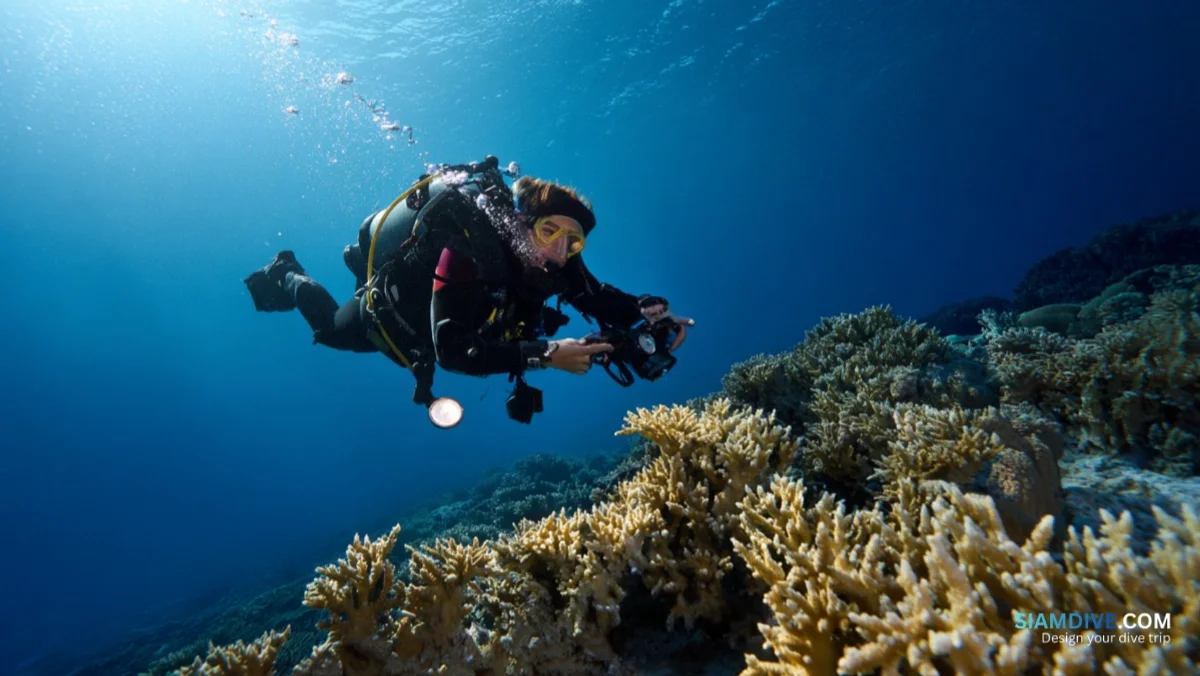
But it is not just a beginner site. More advanced divers who drift along the outer western edge can reach 14 to 18 meters with more fish life and some interesting coral structures. For photographers, the combination of calm water, good light, and colorful reef bommies makes Mango Bay an easy afternoon spot to get clean shots. And for snorkelers, it is genuinely one of the best beach-accessed reefs in the Gulf of Thailand.

What You Will See Underwater

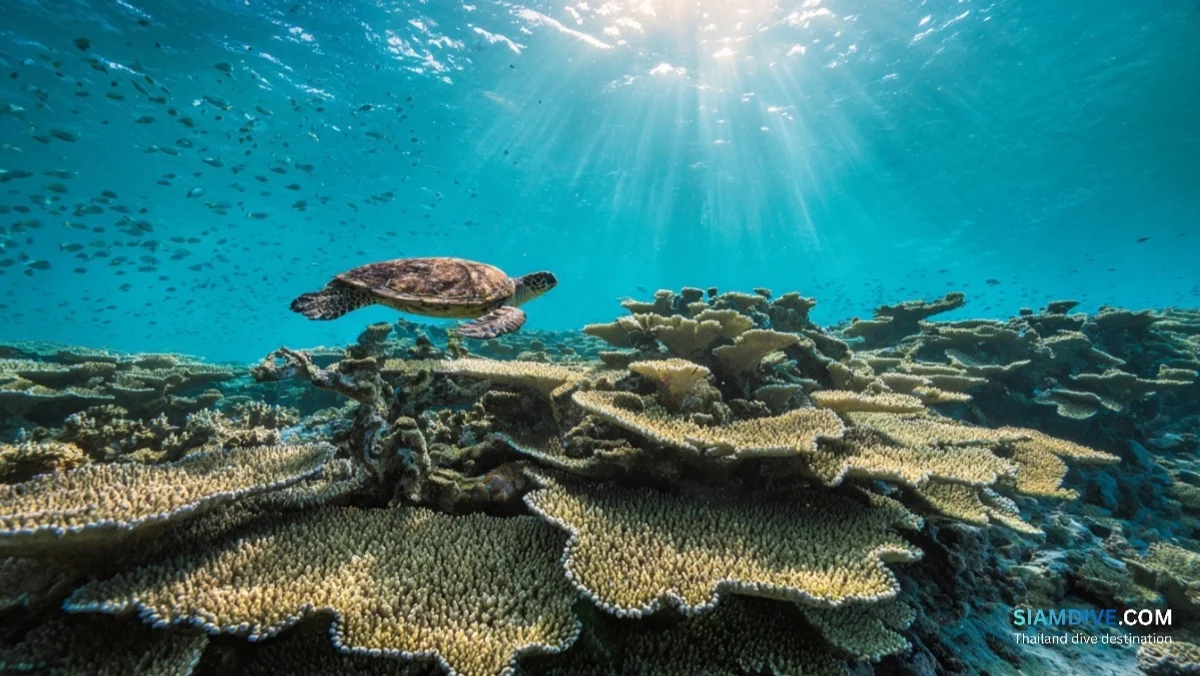
Mango Bay's reef is the classic tropical coral garden — not dramatic, but consistently full of life. The coral heads near shore host a resident population of reef fish that are so used to divers and snorkelers that you can approach them quite close without spooking them.

  • Schooling reef fish: butterflyfish, rabbitfish, damselfish, yellowtail barracuda in small groups, and the occasional fusilier school passing through
  • Anemone residents: clownfish are everywhere — the bay has dozens of anemones, each with a family of Nemos defending their home
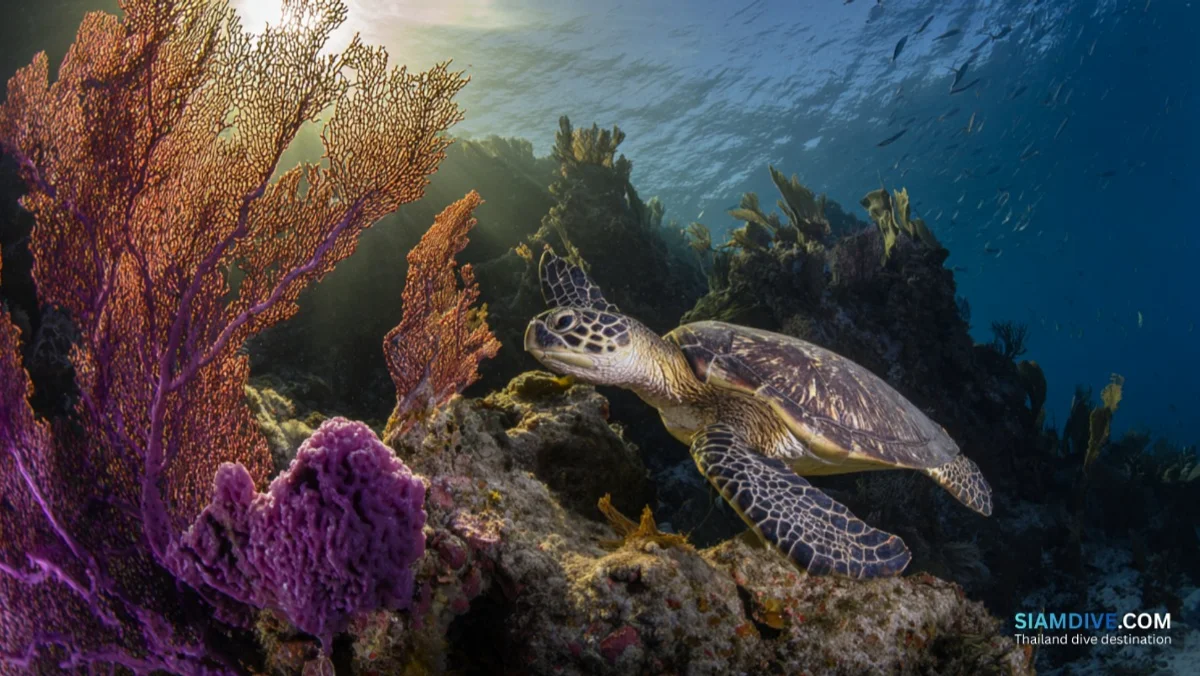
  • Reef patrollers: blue-spotted stingrays buried in the sand between coral heads, titan triggerfish (mostly non-aggressive outside breeding season), moray eels in cracks, and the occasional green turtle passing through
  • Bommies and artificial reefs: coral heads up to three meters tall, plus artificial reef cubes placed for buoyancy training that have grown their own coral cover
  • Macro on the sand: flatworms, small shrimp, and juvenile fish hiding among the sand patches

Snorkeling at Mango Bay

If you are not certified to dive yet, Mango Bay is still worth the trip. The snorkeling is honestly excellent. Enter from the sandy beach or the rock terrace on the east side of the bay, swim 20 meters out, and you are over the reef. The east side has the most coral cover, but the west side gets better light in the afternoon.

Bring your own mask and snorkel if you can — rentals at the resort are fine but get scruffy by the end of the day. Stay within the roped snorkel zone near the beach, especially when dive boats are on the buoys. Reef-safe sunscreen is not optional — regular sunscreen is the single biggest threat to the shallow corals here.

When to Go and What to Expect

Mango Bay is divable and snorkelable year-round, but the best conditions run from December to March. Dry season brings calm water, visibility up to 20 to 30 meters, and water temperature around 28 to 30°C. During southwest monsoon (May to October) the swell occasionally kicks up, but Mango Bay is sheltered enough that it is still usable on most days when the outer sites are closed.

The bay gets busy between 10 AM and 2 PM when day-trip boats arrive from Koh Samui and Koh Phangan. If you want a quieter experience, go early or late in the day. Most Koh Tao dive operators schedule Mango Bay for the afternoon second dive after a morning site like Chumphon or Green Rock, which means you arrive after the day-trippers have left.

How to Get to Mango Bay

Mango Bay is most easily reached by boat — either a dive boat, a snorkel tour, or a longtail water taxi from Mae Haad or Sairee. The water taxi is the best option if you want independence: negotiate a drop-off and pickup time, bring lunch, and spend the day. Prices vary but expect 300-500 THB per person.

You can also scooter to Mango Bay via a steep, bumpy road from Sairee Beach, but this route is only for experienced riders. The road is steep concrete with loose gravel in places, and rental shops will not insure you against accidents on it. Park at Mango Bay Boutique Resort and walk the final 300 meters down a rocky path to the beach. The resort charges 100 to 250 THB per person as a day-visitor entry fee, which usually includes beach access and use of the rock terrace.

For the very fit, you can hike from Sairee Beach via jungle trails — about 3 to 4 hours round trip — passing Mango Viewpoint along the way. It is a gorgeous walk but not what you want to do in diving gear.

Practical Tips Before You Go

  • Certification: Open Water is enough. No special training needed. If you are doing Discover Scuba Diving, this is the perfect site
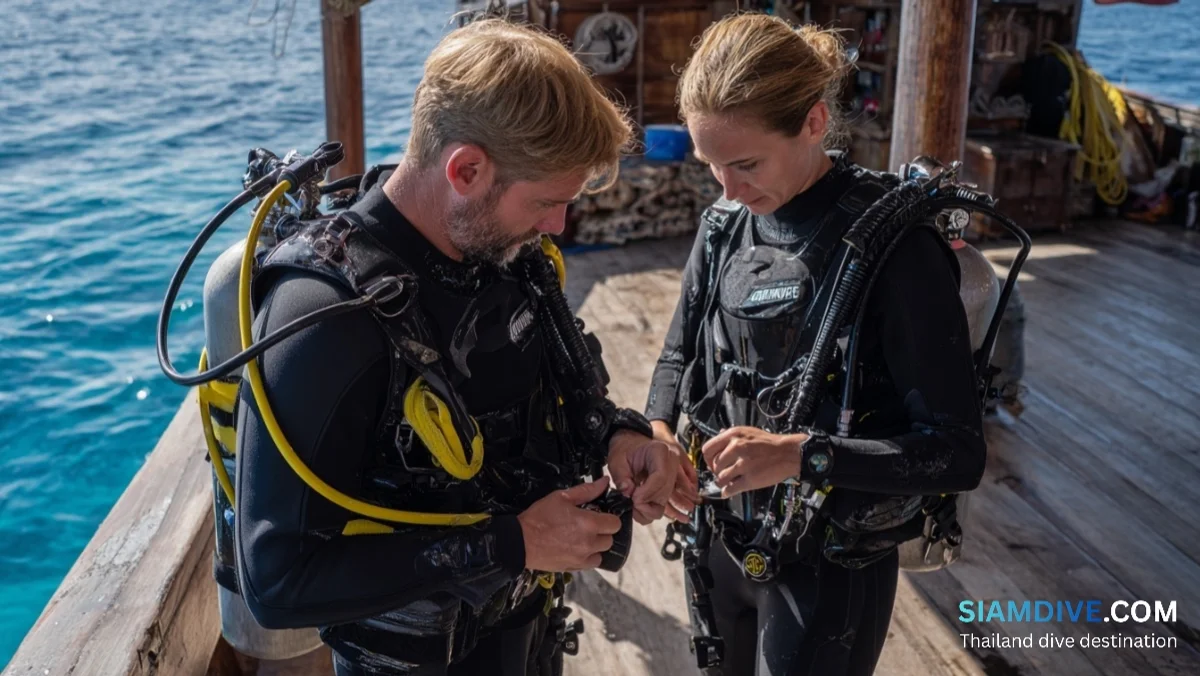
  • Rent gear at Mae Haad: most dive shops supply everything for a fun dive — mask, fins, BCD, tank, regulator — for about 1,000 THB for a two-tank trip
  • Avoid rented sunscreen: bring a reef-safe one from home. Most Thai shops still sell oxybenzone-based products that kill corals on contact
  • Snorkel in the roped zone: dive boats share the bay, and the zone keeps everyone safe
  • Check weather before hiking: the jungle trail becomes dangerous after rain — slippery clay, limited grip, real injury risk
  • Don't touch the titan triggerfish pits: the rules from the advanced Koh Tao sites apply here too during mating season. Give them a wide berth

Is Mango Bay Worth Visiting?

For new divers and snorkelers: absolutely. Mango Bay is the ideal introduction to reef diving in the Gulf of Thailand — calm, colorful, and consistent. For experienced divers looking for adrenaline or rare species, it is not the site to pick. But for a relaxed afternoon dive, a snorkel day with the family, or a first open water experience that will make someone fall in love with diving forever, it is one of the best bets on Koh Tao.

Planning a Koh Tao trip that includes Mango Bay? Find dive operators, snorkel tours, and liveaboards that cover the north coast on siamdive.com and get your first underwater experience sorted.
← กลับไปหน้า Blog

Gallery

Mango Bay Koh Tao Guide: The Island's Best Beginner Dive and Snorkel Site — image 1Mango Bay Koh Tao Guide: The Island's Best Beginner Dive and Snorkel Site — image 2Mango Bay Koh Tao Guide: The Island's Best Beginner Dive and Snorkel Site — image 3Mango Bay Koh Tao Guide: The Island's Best Beginner Dive and Snorkel Site — image 4

บทความแนะนำ

Hin San Chalarm: Best Coral Pinnacle in Samae San

Hin San Chalarm: Best Coral Pinnacle in Samae San

Hin San Chalarm -- Shark Fin Rock -- rises from the Gulf of Thailand near Samae San, harbouring 28-metre coral walls, resident sea turtles, and the clearest visibility in the Sattahip archipelago.

Triangle Pinnacle Diving Guide: The Gulf's Quietest Granite Site

Triangle Pinnacle Diving Guide: The Gulf's Quietest Granite Site

Hin Sam Liam is the Gulf of Thailand pinnacle that does not show up on the standard Koh Tao board. Big groupers, anemone gardens, and almost no crowds.

25 Metres, Zero Bar, 4 Seconds to Decide

25 Metres, Zero Bar, 4 Seconds to Decide

Insufficient gas triggers 41% of dive fatalities. Four risk factors at depth decide which emergency ascent gives the best chance of surfacing safely.

524 Km of Cave Behind a Pool Named Two Eyes

524 Km of Cave Behind a Pool Named Two Eyes

Two collapsed limestone pools north of Tulum open into one of the longest underwater cave systems ever mapped. Cavern diving here needs only an Open Water card.

83,000 m² of Coral on a Navy-Locked Island: Koh Kham

83,000 m² of Coral on a Navy-Locked Island: Koh Kham

Koh Kham packs 83,000 square metres of staghorn, table and brain coral into waters barely 3-15 metres deep — all under Royal Thai Navy guard in Sattahip's Samae San marine park.

Koh Thalu: Swim-Through Caves in Chumphon's Pierced Island

Koh Thalu: Swim-Through Caves in Chumphon's Pierced Island

A small limestone island in Mu Koh Chumphon National Park with a massive cavern punched clean through the rock — plus a heart-shaped cave, dense anemone colonies, and blacktip reef sharks on the deeper margins.

Never Dived Before? Here's Why Thailand Should Be Your First Ever Dive Trip

Never Dived Before? Here's Why Thailand Should Be Your First Ever Dive Trip

Warm 29°C water, 30m visibility, the world's cheapest PADI courses, and reefs built for beginners. Here's why Thailand is the single best place on Earth to start diving.

Whale Sharks in Thailand: Where and When to See Them

Whale Sharks in Thailand: Where and When to See Them

Find whale sharks in Thailand at Chumphon Pinnacle, Richelieu Rock and more. Season guide, dive costs, and responsible encounter tips for 2026.

Thailand Liveaboard Routes Compared: Which One Fits Your Diving

Thailand Liveaboard Routes Compared: Which One Fits Your Diving

Northern Andaman, southern Andaman, or Mergui? The three Thailand liveaboard routes dive completely differently — here's how to pick the right one.

Tanote Bay Koh Tao Guide: Snorkeling, Diving, and Cliff Jumping

Tanote Bay Koh Tao Guide: Snorkeling, Diving, and Cliff Jumping

Tanote Bay on Koh Tao's east coast offers fringing reefs, a cliff jumping rock, and a sunken catamaran — the island's best all-in-one shore day.

Koh Rok Diving Guide: Trang's Pristine Coral Paradise

Koh Rok Diving Guide: Trang's Pristine Coral Paradise

Explore Koh Rok's crystal-clear waters, healthy coral reefs, and rich marine life. Your complete guide to diving Thailand's best-kept Andaman secret.

The Pre-Dive Buddy Check Most Scuba Divers Skip

The Pre-Dive Buddy Check Most Scuba Divers Skip

Half of all scuba accidents could be prevented by a five-minute BWRAF buddy check. Here's why experienced divers skip it and how to do it right.

Octopus Intelligence: The Smartest Creature Underwater

Octopus Intelligence: The Smartest Creature Underwater

Octopuses have 500 million neurons, use tools, recognize faces, and change color in milliseconds. Here is why divers never forget their first encounter.

Why Divers Pay $350 to See Almost No Fish at the Blue Hole

Why Divers Pay $350 to See Almost No Fish at the Blue Hole

Almost no coral, limited fish, total darkness below 90 metres. Yet divers pay $350 to descend into Belize's Blue Hole. The answer hangs from the ceiling.

Should You Get Scuba Certified? An Honest Answer

Should You Get Scuba Certified? An Honest Answer

Real costs, time commitments, physical requirements, and risks of scuba certification — plus a smart way to test the waters before you invest.

Sail Rock Diving Guide: The Gulf of Thailand's Best Pinnacle

Sail Rock Diving Guide: The Gulf of Thailand's Best Pinnacle

Dive Sail Rock (Hin Bai) — the Gulf of Thailand's premier pinnacle with its famous chimney swim-through, whale shark sightings, and massive barracuda schools.

4 Breathing Mistakes That Empty Your Tank Before the Group

4 Breathing Mistakes That Empty Your Tank Before the Group

Beginners burn air at 20–30 L/min — double the rate of experienced divers. Four fixable habits close the gap, starting with a 12-second breath cycle.

Shark Island Koh Tao Diving Guide: The Gulf's Best Drift Site

Shark Island Koh Tao Diving Guide: The Gulf's Best Drift Site

Shark Island off Koh Tao's southeast tip offers advanced drift diving, purple coral walls, and occasional blacktip shark sightings — here's everything you need.

Cleaning Stations: The Secret Social Hubs of the Reef

Cleaning Stations: The Secret Social Hubs of the Reef

Discover cleaning stations — where predators open their mouths for tiny fish and shrimp to crawl inside. The most fascinating animal behavior you can witness on any dive.

Why Elephant Head's Granite Tunnels Demand a Second Dive

Why Elephant Head's Granite Tunnels Demand a Second Dive

Elephant Head Rock hides a 40-metre granite labyrinth of swim-throughs between Similan Islands 7 and 8 — and one dive is never enough to see it all.

ทริปแนะนำ

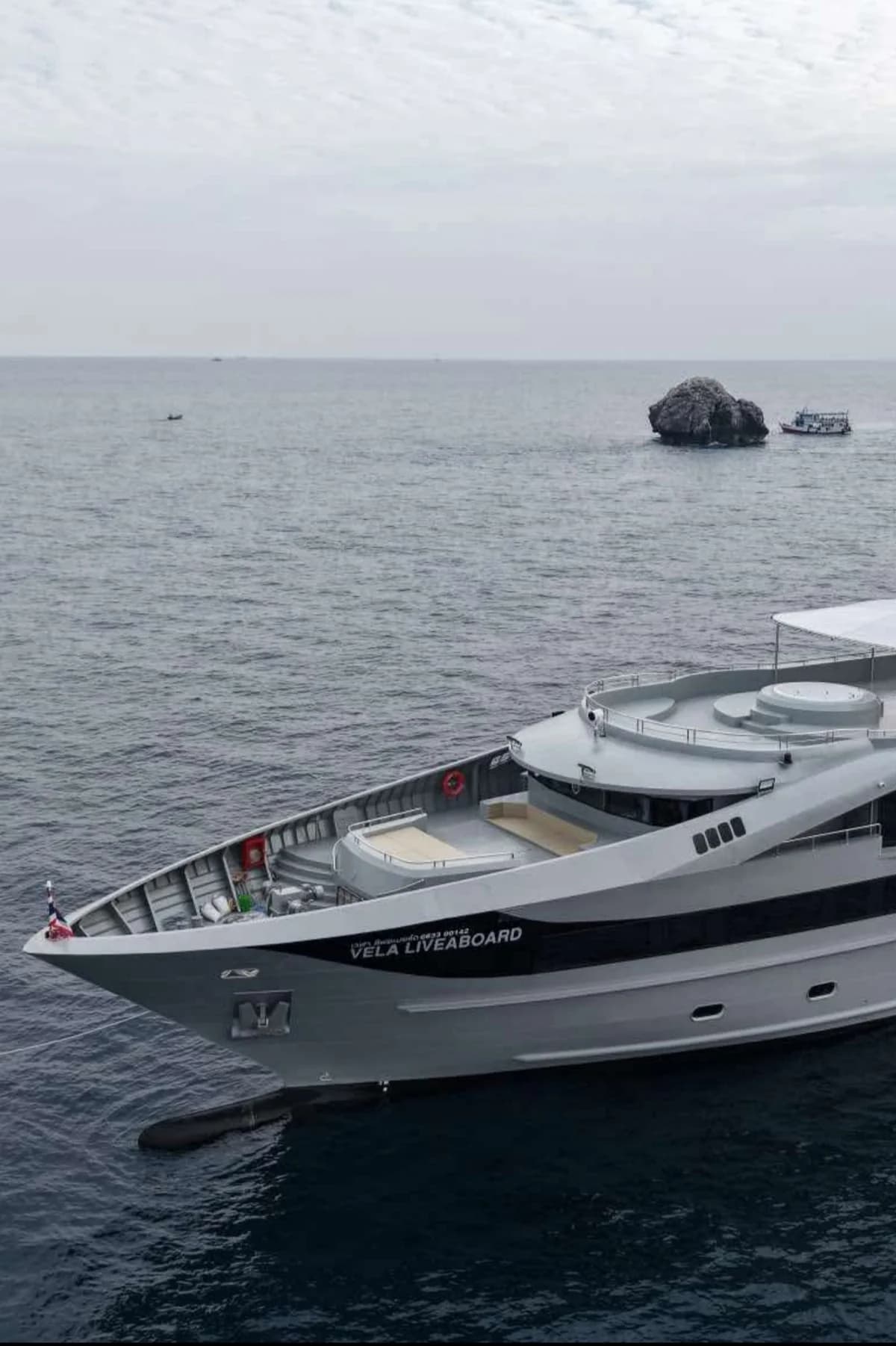
Vela Liveaboard
liveaboard

Vela Liveaboard

MV Vela / Vala — massive 43 m steel-hull liveaboard with only 20 guests max for ultimate space and privacy. King and twin AC en-suite cabins, large dive deck, indoor saloon and rooftop sun deck. Highest international safety standards.

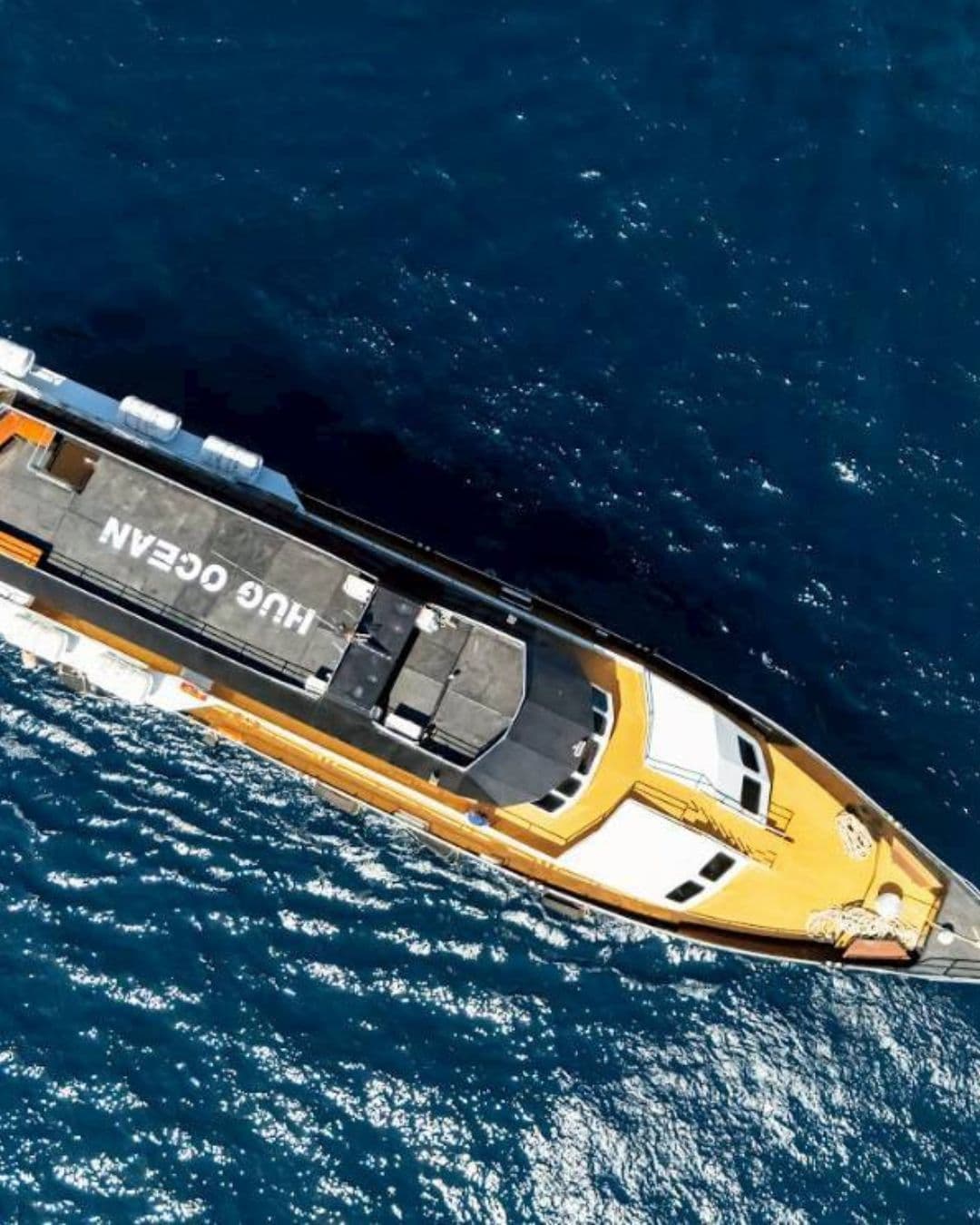
Hug Ocean Boat
daytrip

Hug Ocean Boat

Discover Phuket's Andaman Sea aboard Hug Ocean — a luxury 3-deck dive yacht for 80 guests with a thrilling water slide, sun-soaked top deck, and PADI-certified diving at Racha Yai and Racha Noi.

Aquarian Liveaboard
liveaboard

Aquarian Liveaboard

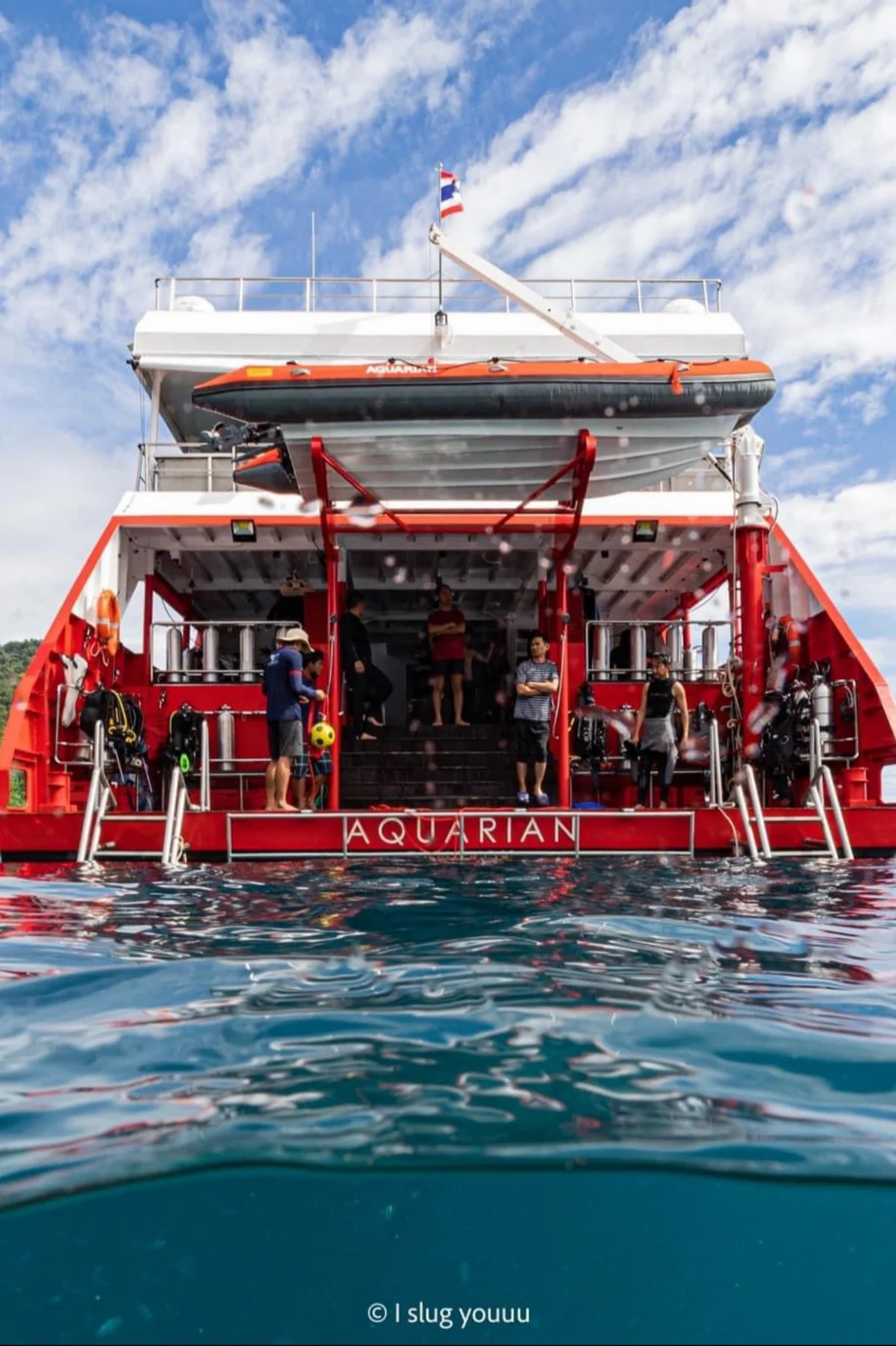
MV Aquarian — striking 2021-built red steel liveaboard, 31.4 m × 7.5 m, max 28 guests in 14 cabins. Free unlimited Nitrox via Coltri Sub membranes, one of Thailand's largest dive platforms, and full premium-hotel comfort.

Issara Liveaboard
liveaboard

Issara Liveaboard

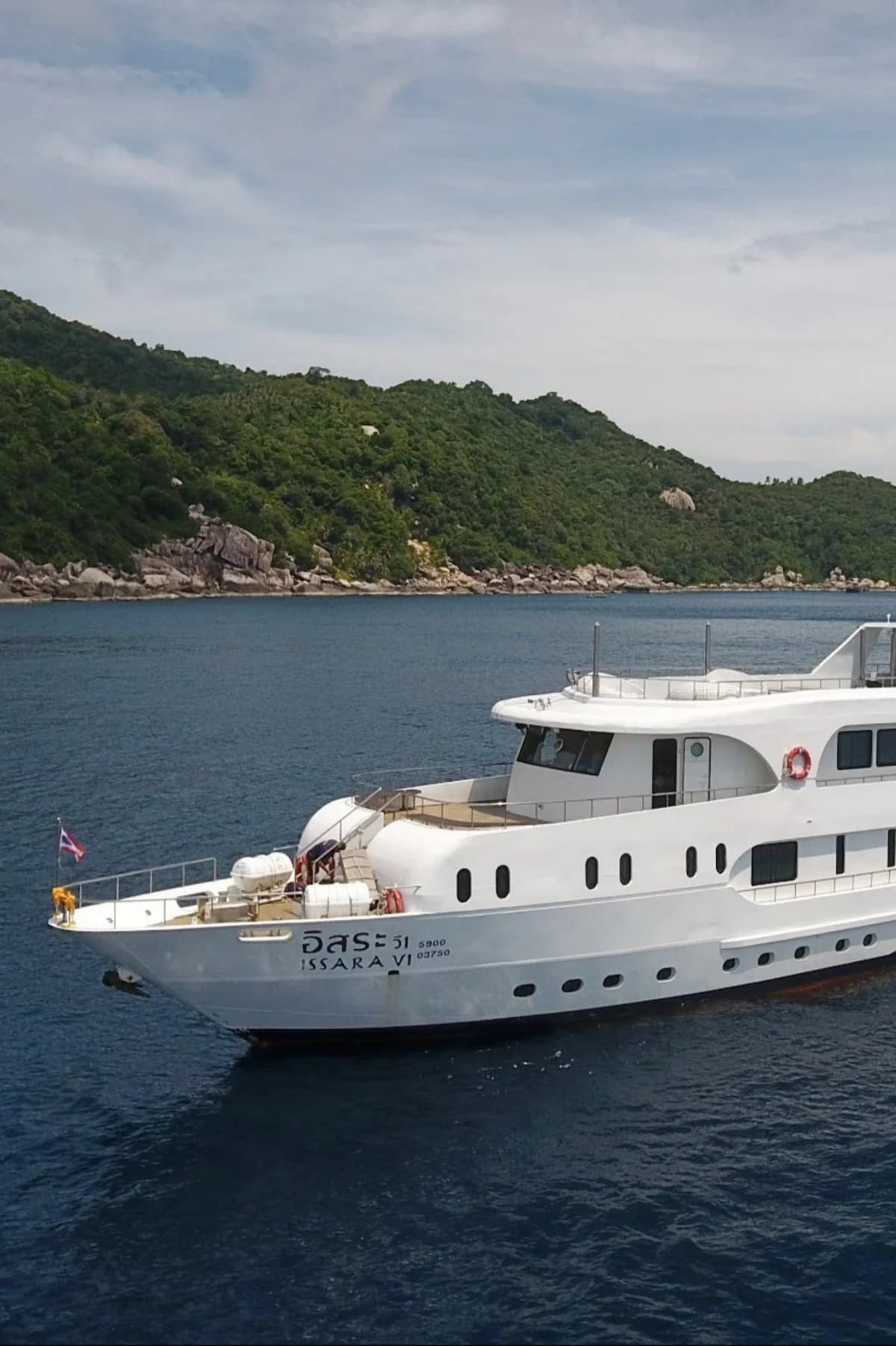
MV Issara — high-end Thai steel-hulled liveaboard built 2016–17, 28.5 m × 6.5 m, 4 decks, max 22 guests in 11 hotel-style cabins. Indoor saloon, jacuzzi sun deck, full-board buffet dining.