Shark Island Koh Tao Diving Guide: The Gulf's Best Drift Site
11 เมษายน 2569
Shark Island off Koh Tao's southeast tip offers advanced drift diving, purple coral walls, and occasional blacktip shark sightings — here's everything you need.
A Granite Fin Rising from the Gulf
Shark Island sits less than a kilometer off Koh Tao's southeast tip, a jagged lump of granite that looks exactly like a fin slicing the surface. That fin-shaped silhouette is where the name comes from, though the rock itself is what divers come for. Below the waterline, the boulder field drops to around 28 meters, with the average depth hovering near 14 meters and the top of the structure rising 10 meters above the swell.
This is an advanced site. Strong currents sweep through on roughly 40% of planned visits, and dive boats routinely swap Shark Island for a calmer alternative when the flow gets too aggressive. When it works, though, it is one of the most colorful and current-blessed dives on the island.
Why Experienced Divers Keep Coming Back
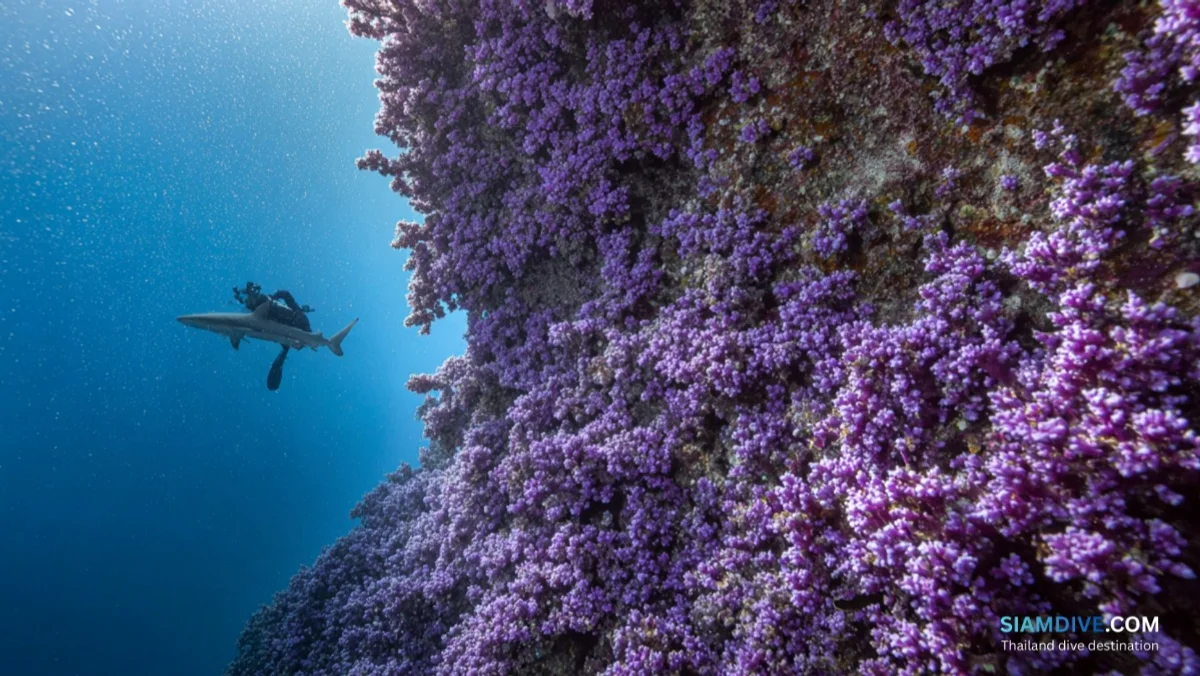
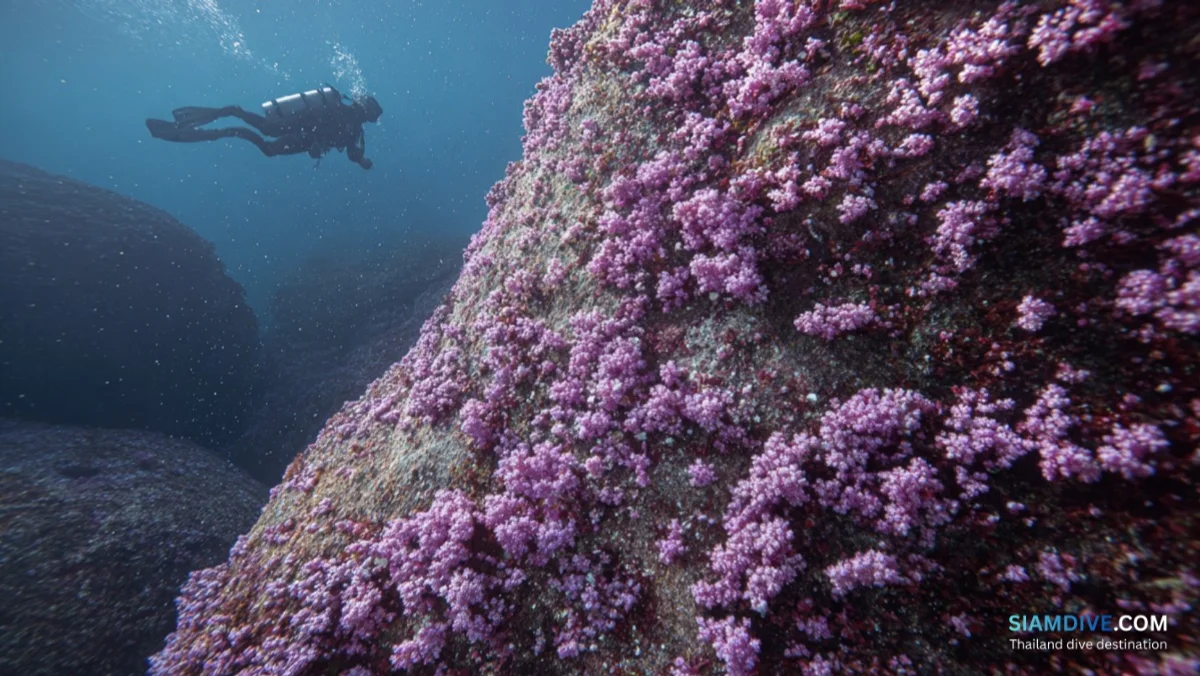
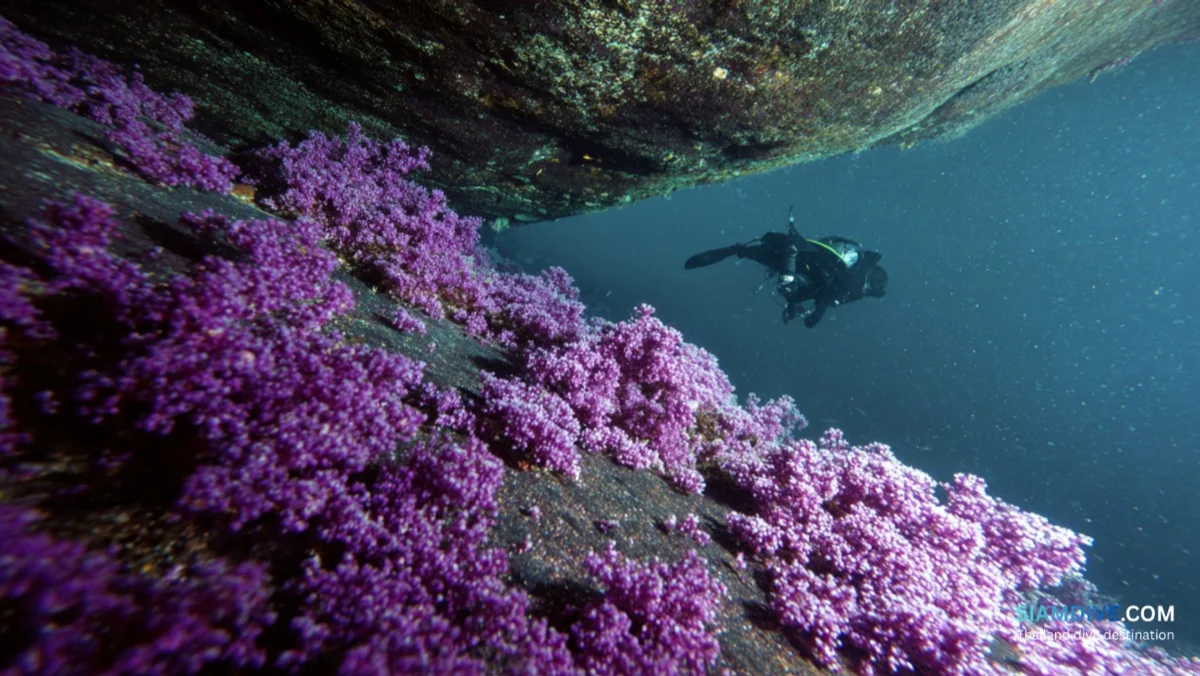
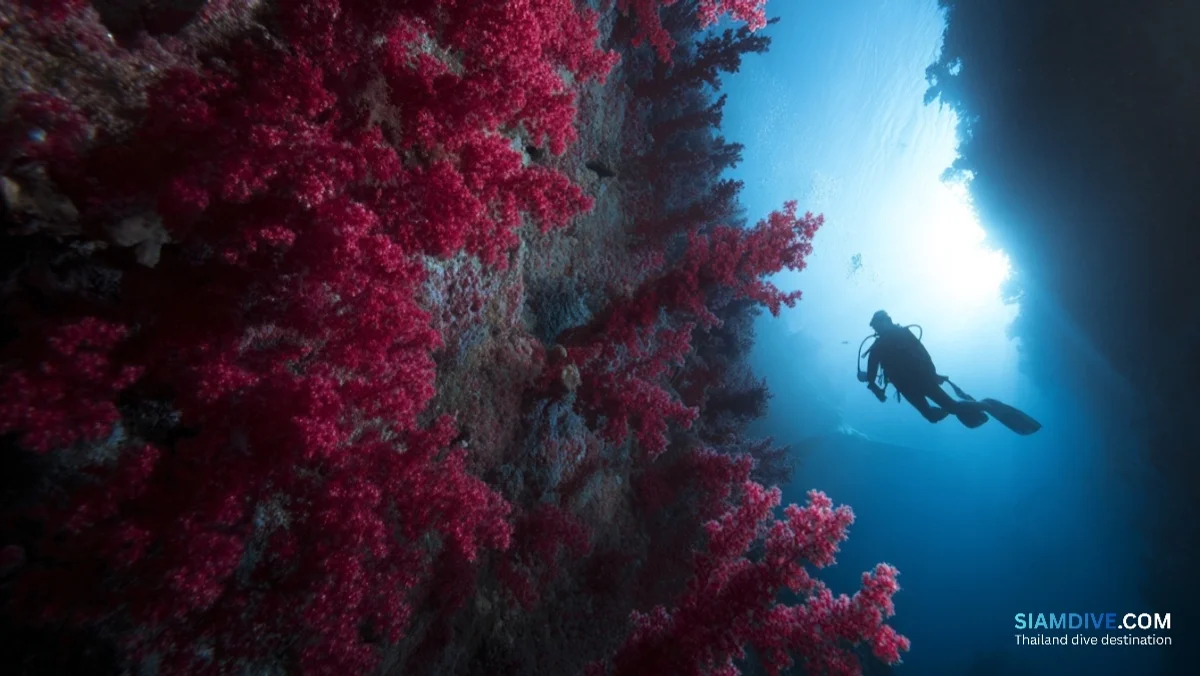
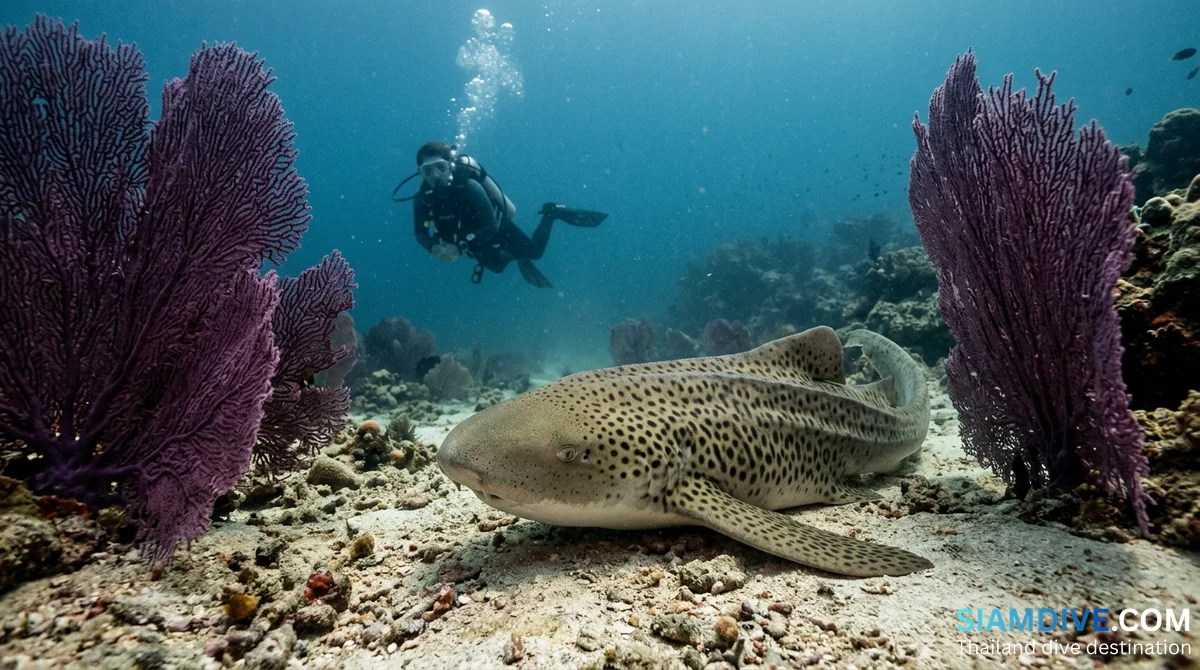
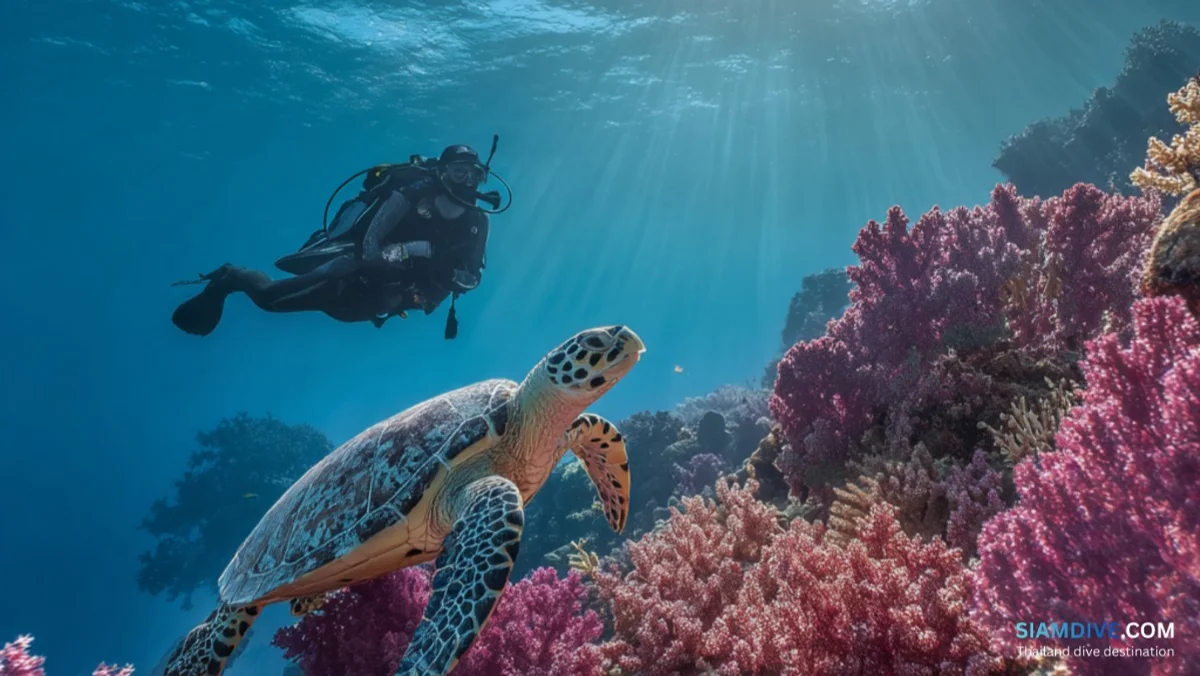
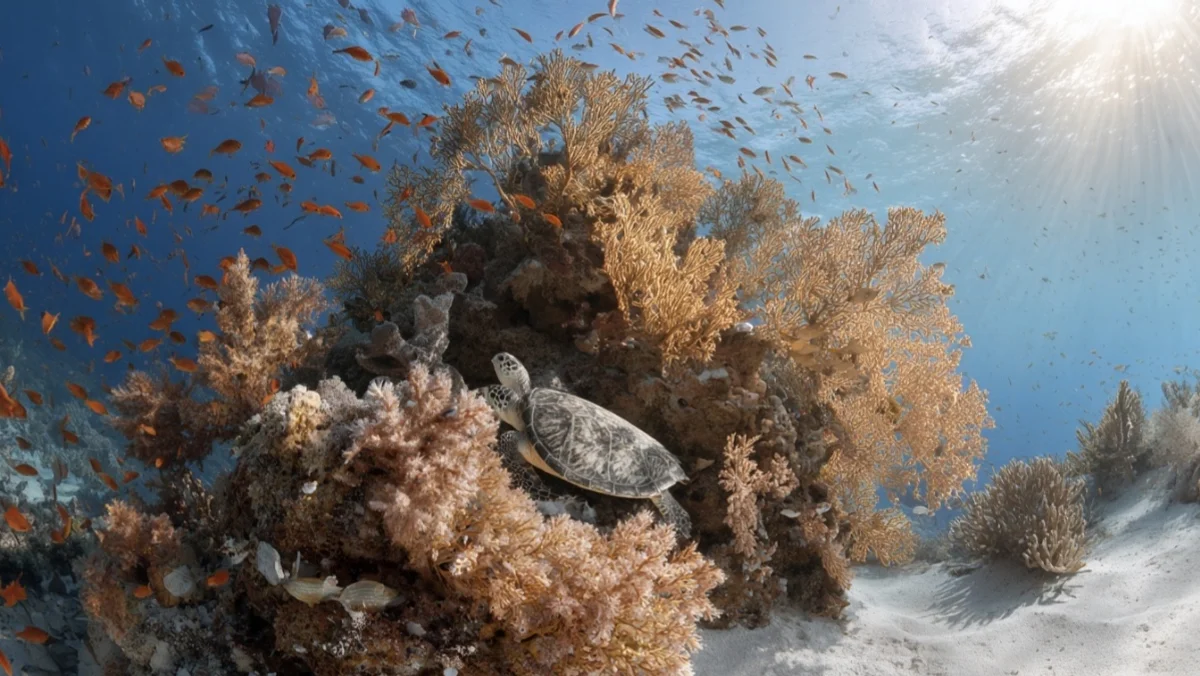
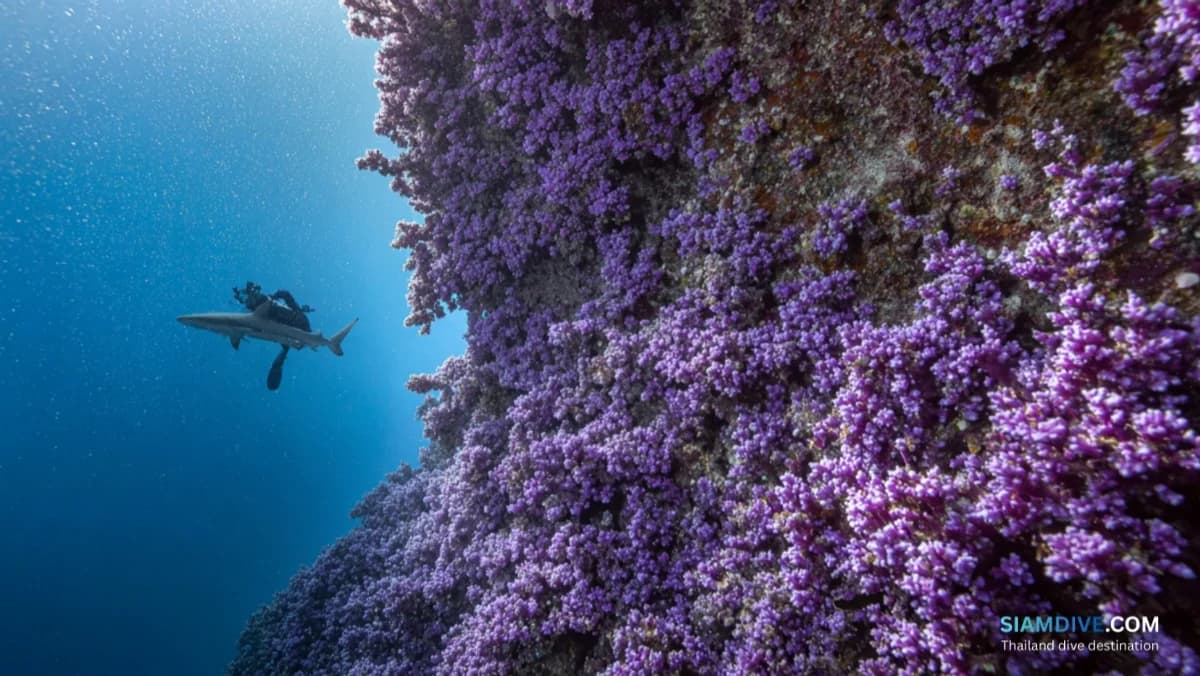
The appeal is a mix of topography and life. Granite boulders the size of houses create swim-throughs, arches, and caves. The moving water keeps the soft corals fat and feeding, which is why the walls here carry some of the densest purple tree coral coverage you will see anywhere in the Gulf of Thailand. Gorgonian fans, whip corals, and barrel sponges fill in the gaps.
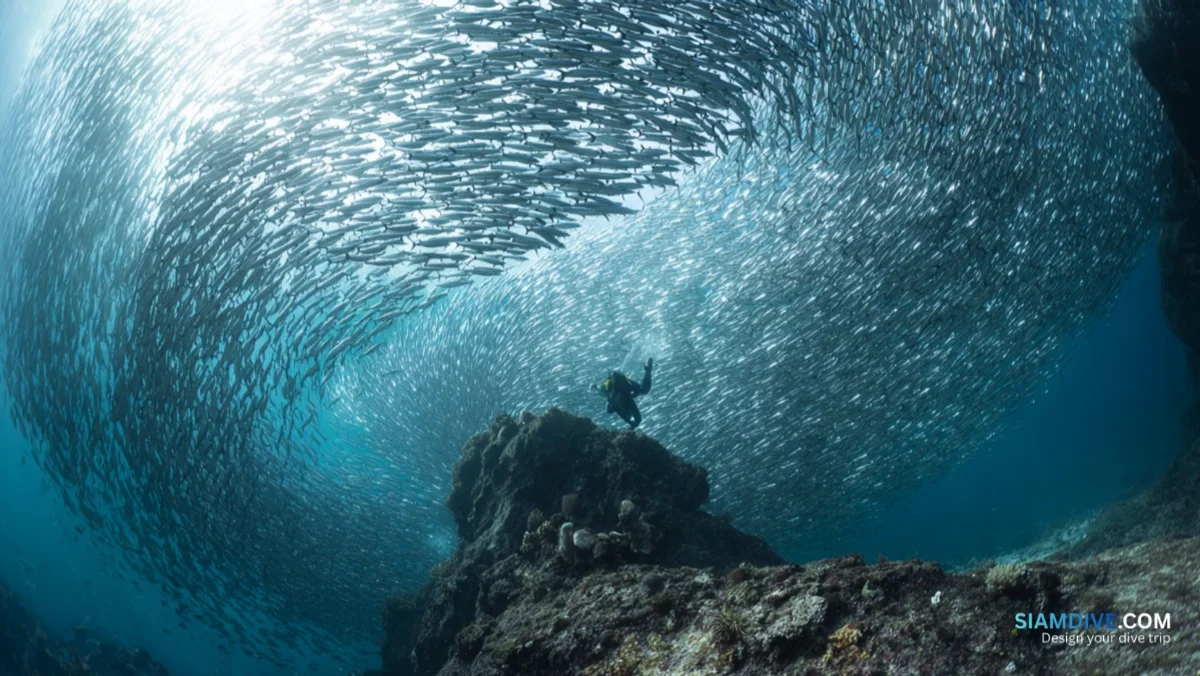
There is also the drift factor. On a strong tide, you drop in at the south end, hook onto rock to watch schools of blackcap butterflyfish stream past, then release and let the current sweep you around the pinnacle. It is the closest thing Koh Tao offers to a proper drift dive and it burns through far less air than fighting the flow would.
What You Will Actually See Down There
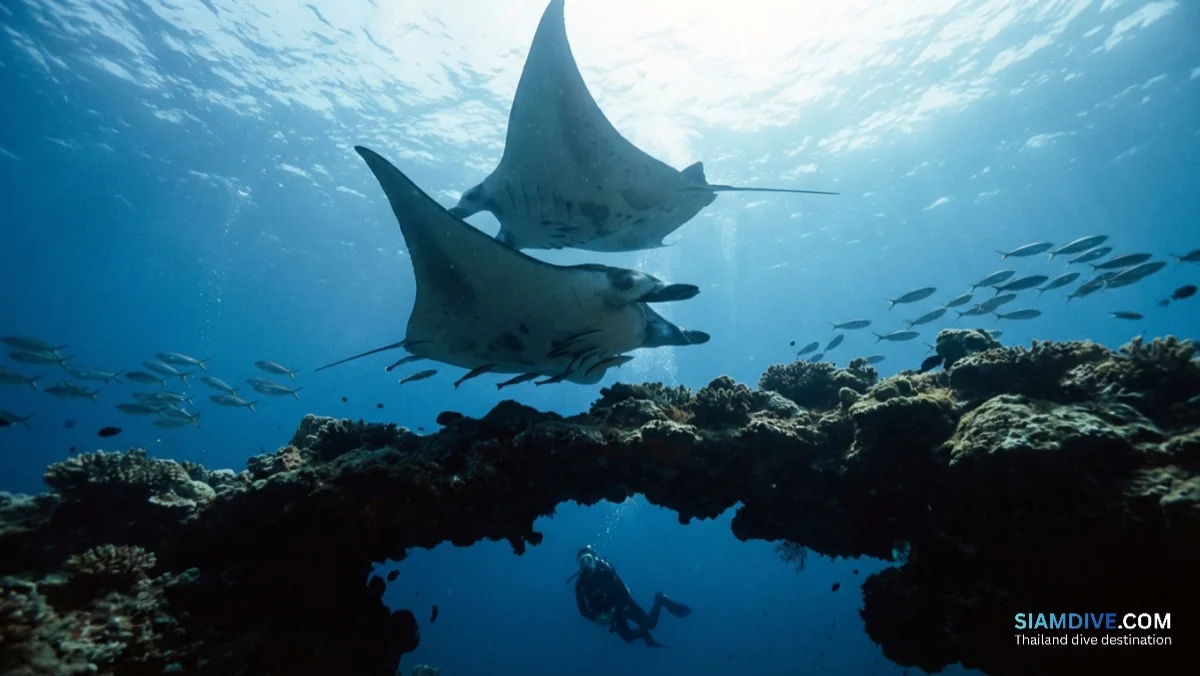
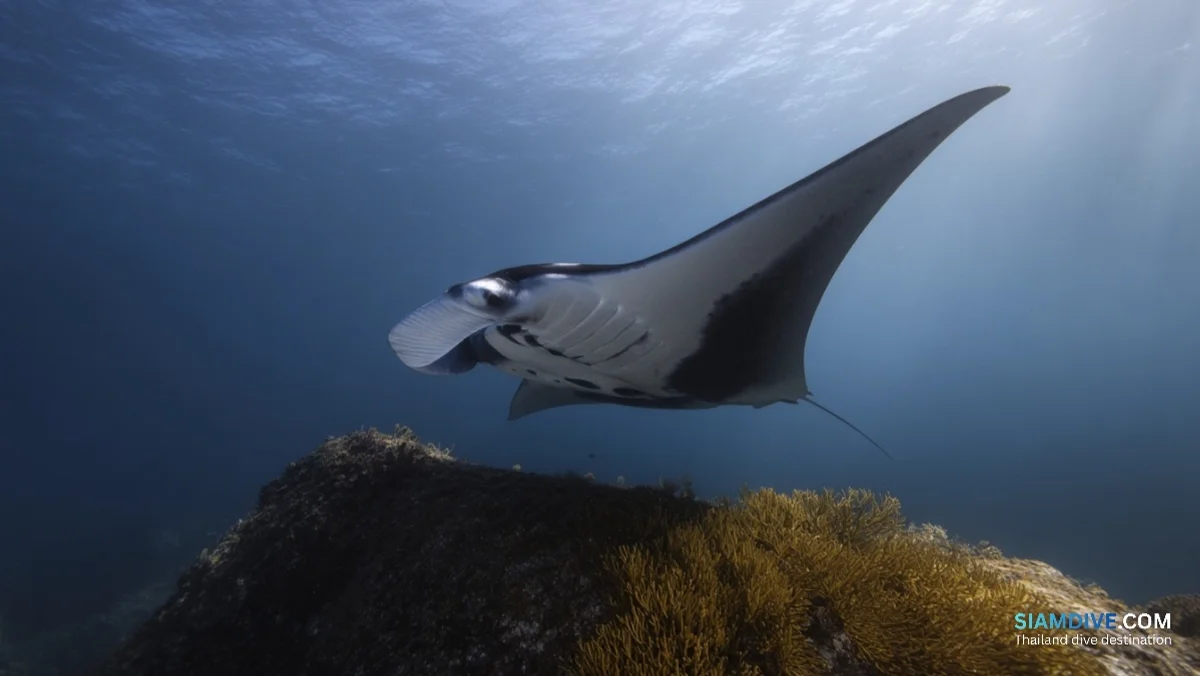
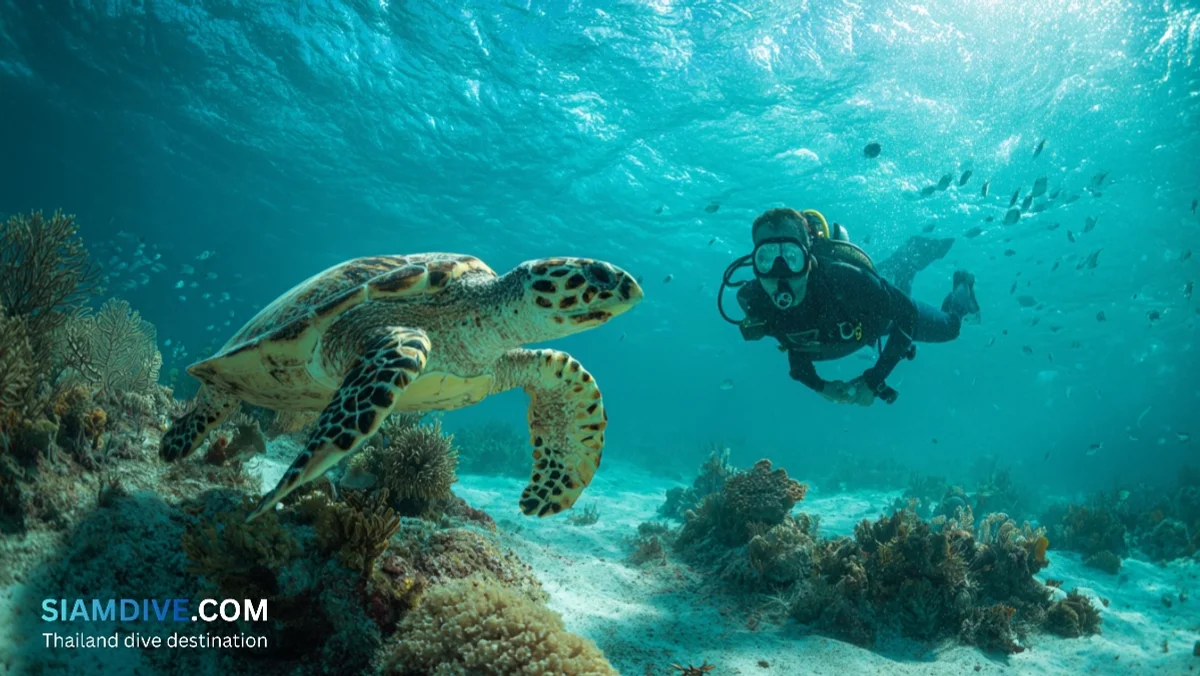
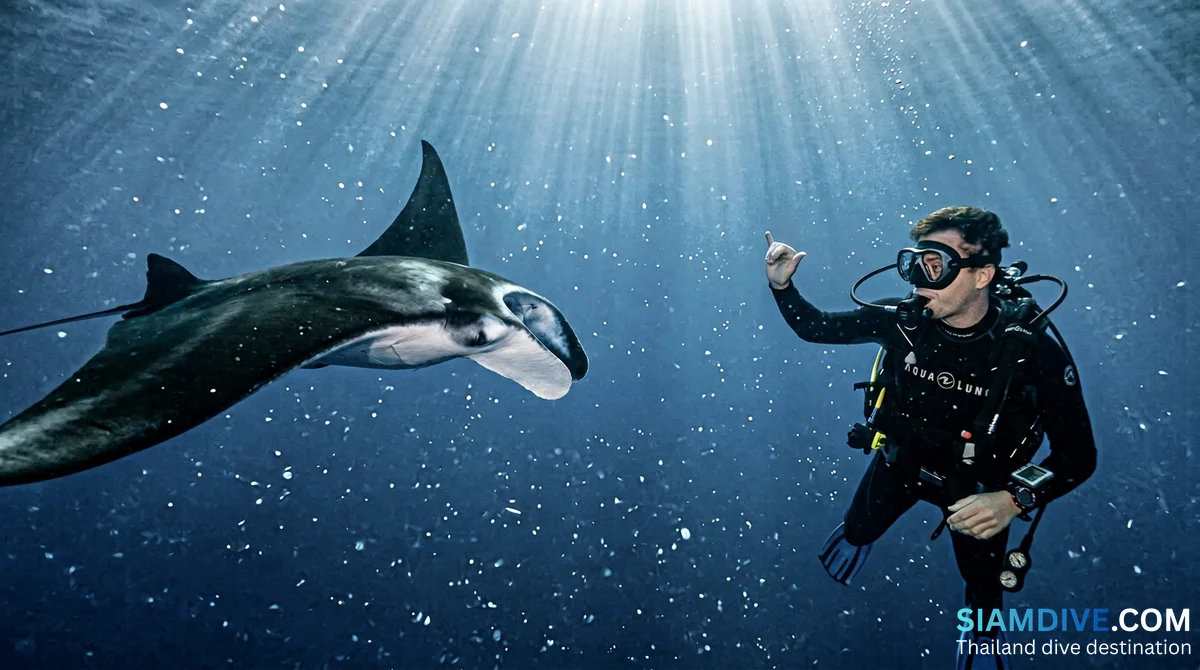
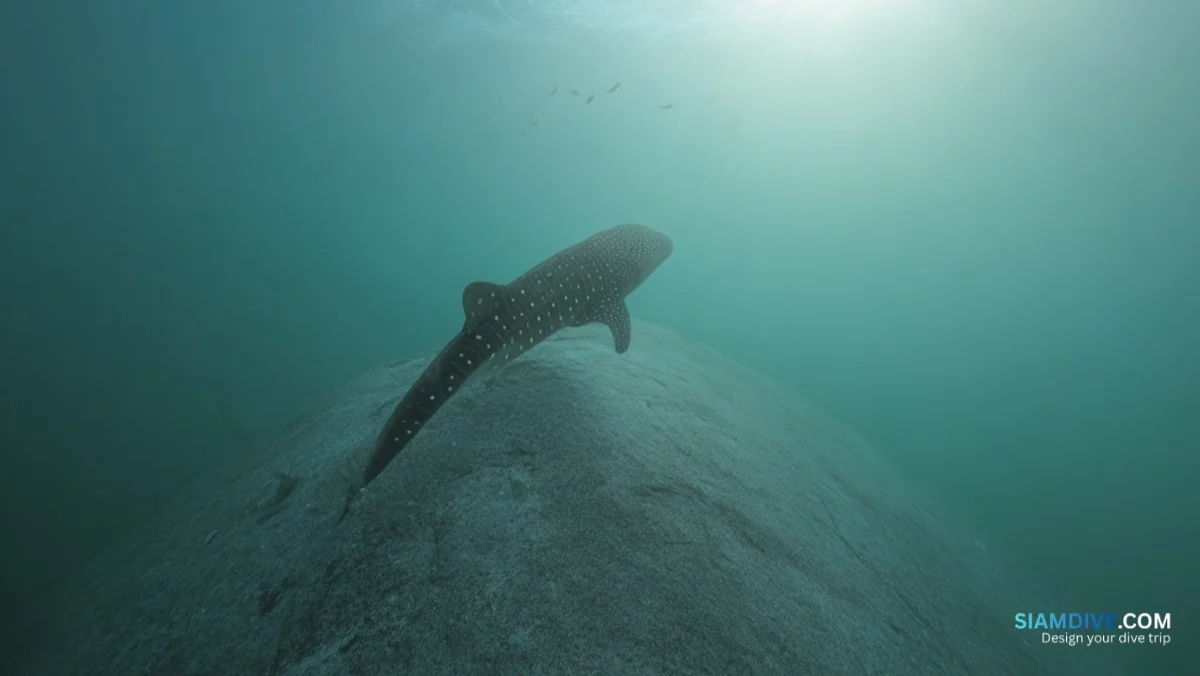
Blacktip reef sharks show up occasionally along current lines, which is fitting given the site's name, though they are never guaranteed. Green sea turtles cruise through more predictably, and whale sharks pass during peak plankton months between March and May. Under the rocky outcrops you will find blue-spotted ribbon-tail rays buried in the sand, along with moray eels wedged into crevices.
- Reef fish: schools of blackcap butterflyfish, titan triggerfish patrolling their nests, fusiliers, and bannerfish
- Macro: nudibranchs, wart slugs, and anemone shrimp hiding in the soft coral beds
- Larger species: giant grouper, batfish, and occasional barracuda patrolling the blue water off the wall
- Seasonal visitors: whale sharks during plankton blooms, blacktips along current seams
The MV Trident Wreck — A Bonus for Tech Divers
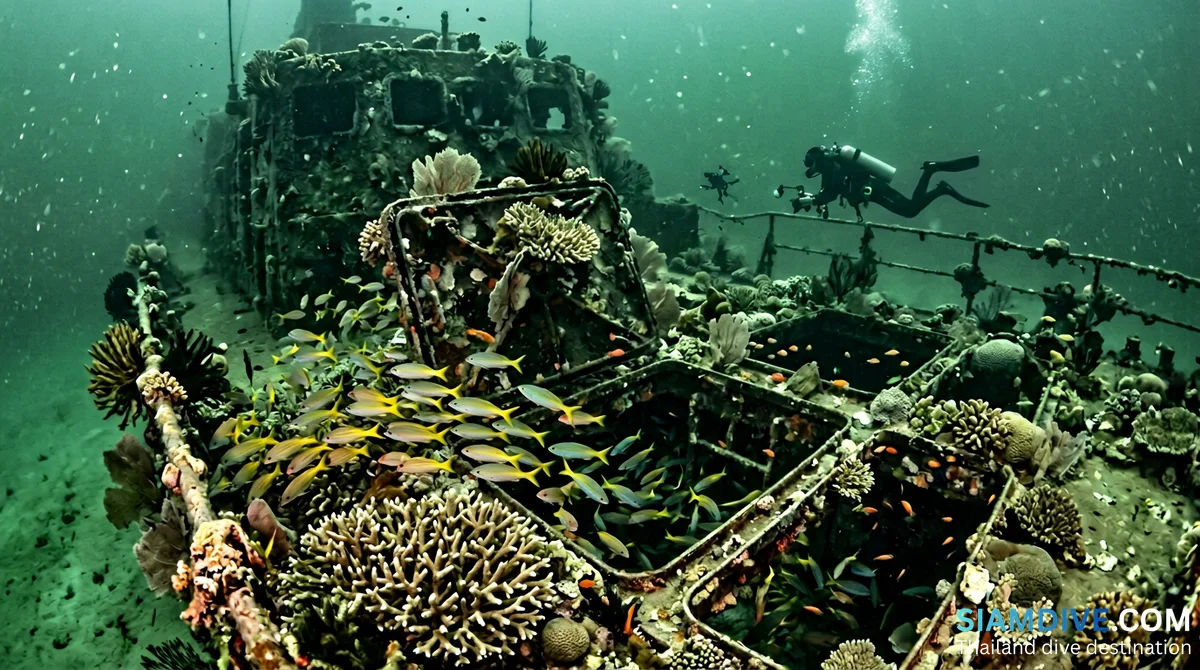
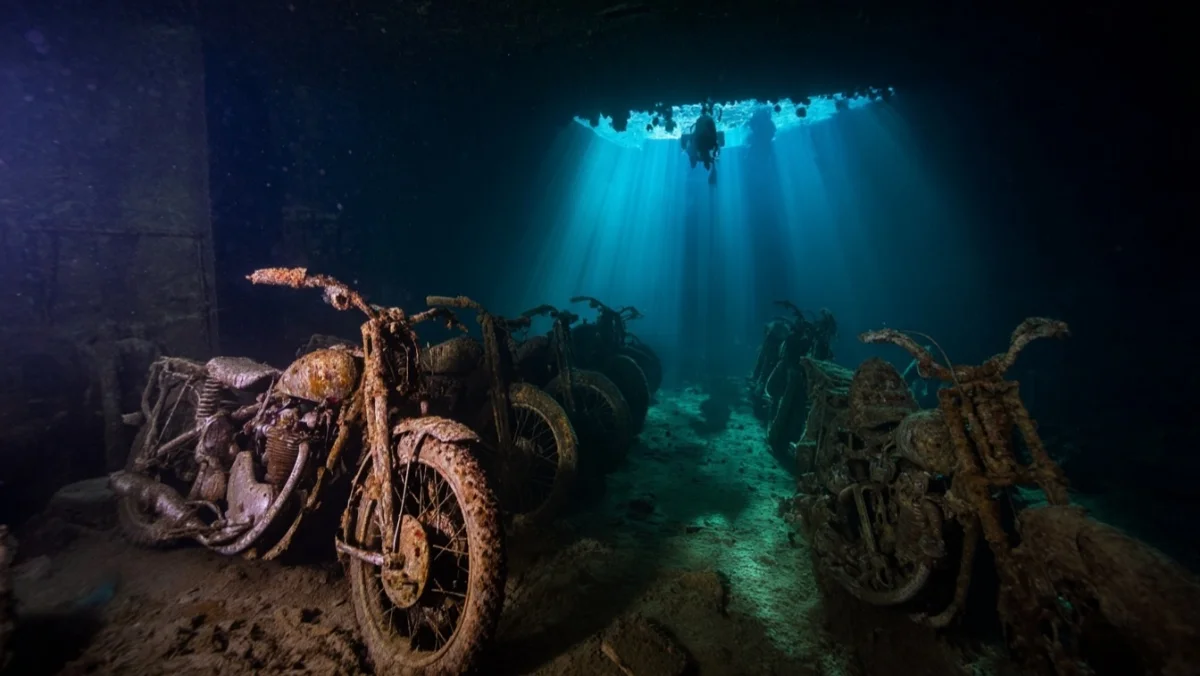
Roughly 15% of trips to Shark Island pair the main site with the MV Trident, a former German coastguard vessel scuttled nearby in 2010. It sits at 36 meters on the sand, making it off-limits to standard Advanced Open Water divers. To dive it you need Deep Diver certification, nitrox, and at least 30 logged dives. The reward is swim-throughs through the cargo holds and resident giant grouper that have claimed the wreck as home.
If you are chasing the wreck, ask your operator specifically — not every dive plan includes it, and conditions need to cooperate for the deeper profile to be safe.
When to Go and What to Expect
Dry season between December and May gives you the best shot at calm water and clean visibility. Visibility swings wildly here depending on the tide: 2 meters on a bad day, 30 meters on a clean one. The current is the real variable. Go when your operator says the conditions are right, not when your schedule says you want to dive. Full moon and new moon tides tend to push harder.
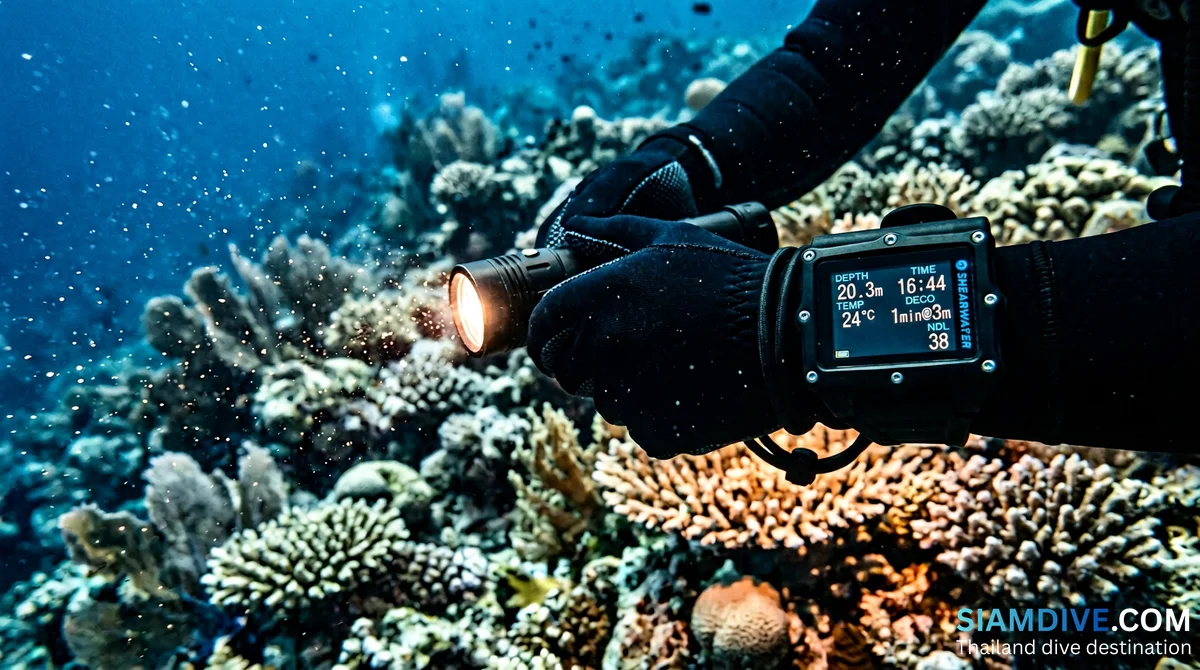
Water temperature stays between 28 and 30°C year-round, so a 3mm shorty is plenty. If you drift in currents, bring gloves or a reef hook — the operators on Koh Tao will usually supply them on request.
Getting There from Koh Tao
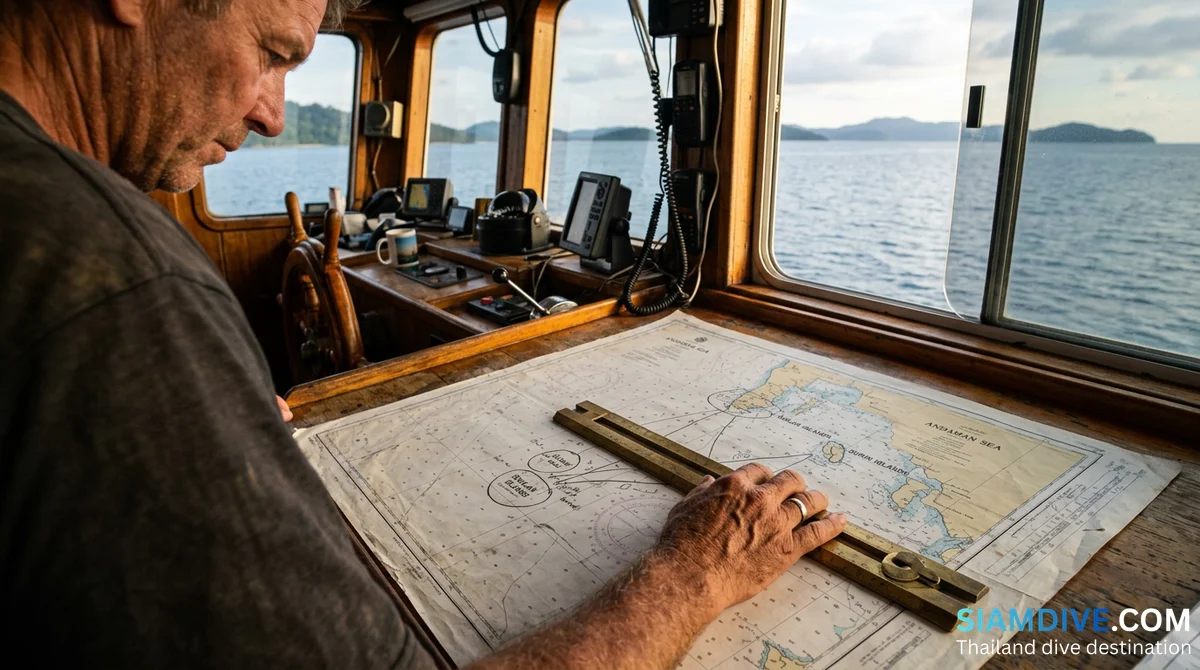
Shark Island is boat-only. Most operators depart from Mae Haad Pier and reach the site in about 30 minutes after a scenic loop around the south coast. The dive is almost always booked as part of a two-tank fun dive package — no operator runs solo trips out there because the surface interval matters if they need to switch sites. Black Turtle Dive, Big Blue Diving, and most of the bigger Koh Tao shops visit regularly when the conditions hold.
If you are coming to the island for the first time, Lomprayah ferries run from Chumphon in 1.5 hours and from Koh Samui in under two. Sairee Beach and Mae Haad both have dive operators within walking distance of the ferry.
Practical Tips Before You Dive
- Certification: Advanced Open Water is the minimum. You need depth clearance beyond 18 meters and confidence in current management.
- Buoyancy first: The soft corals carpet the boulders and titan triggerfish get territorial during nesting — keep off both.
- Watch the titans: Mating season triggerfish will chase divers. Swim horizontally away from their nest, not straight up — their defended cone goes vertical.
- Nitrox helps: Longer bottom times at 20 meters and lower nitrogen loading make it a no-brainer if you are certified.
- Backup plan: Accept that 4 out of 10 trips get redirected. Have a second site picked with your operator so nobody is disappointed.
Is Shark Island Worth It?
For Advanced Open Water divers or better, yes — this is one of the few Koh Tao sites where the drift diving actually feels like proper drift diving, and the soft coral density rewards anyone who dives with a camera. For open water divers still building their current skills, it is the wrong place to cut your teeth. Koh Tao has a dozen gentler sites to practice on first.
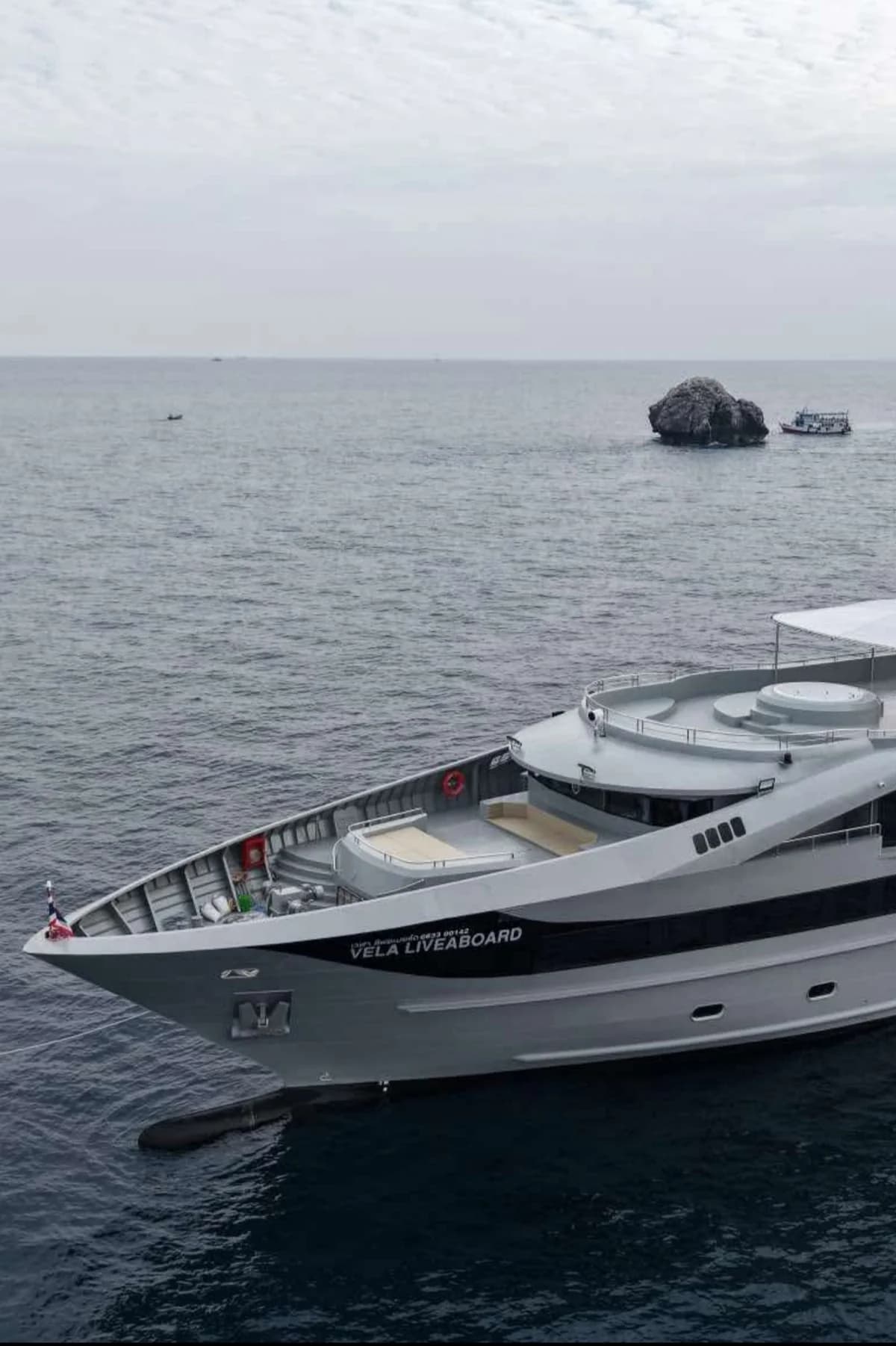
Ready to plan a Koh Tao dive trip that includes Shark Island? Browse liveaboards and dive packages on siamdive.com to find operators who run the southeast loop when conditions allow.