Scuba Day TripsSnorkelingLand TourLiveaboardDive ResortFreedive Trips
Scuba CoursesFreedive Courses
Blog
Racha Noi: Phuket's Offshore Island Where Manta Rays Show Up Unannounced
← Blog

Racha Noi: Phuket's Offshore Island Where Manta Rays Show Up Unannounced

14 เมษายน 2569

Racha Noi offers Phuket's clearest water, manta ray encounters, and uncrowded dive sites. A 40-minute speedboat ride from Chalong to a different world.

Forty Minutes from Chalong, a Different Ocean

Racha Noi sits about 32 kilometers south of Phuket — the farther of the two Racha islands, and the one without hotels, beach bars, or crowds. There's no pier, no permanent settlement, just granite boulders dropping into deep blue water. The island is uninhabited, which means no runoff, no sewage, no boat fuel slicks. The result is some of the clearest water you'll find anywhere near Phuket, with visibility regularly hitting 25-30 meters during peak season. For divers who've spent their Phuket trips on the closer, busier sites, Racha Noi feels like arriving in a completely different ocean.

The Manta Ray Factor

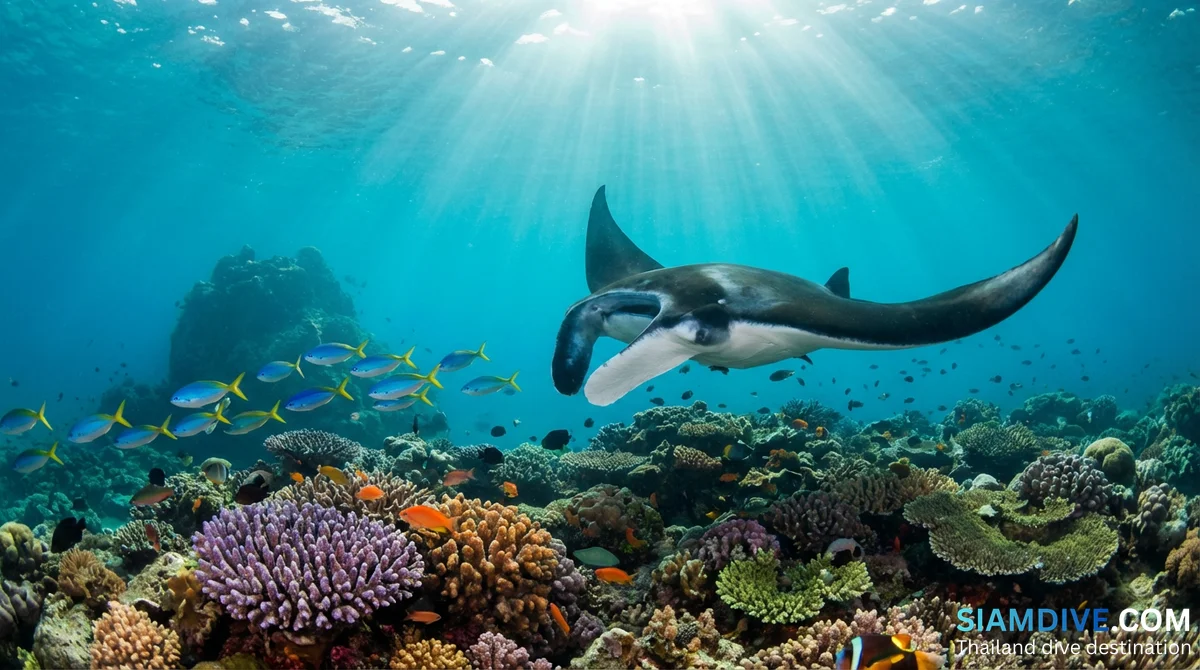
Racha Noi is one of the few spots near Phuket where manta rays appear with any regularity. They aren't guaranteed — this isn't the Maldives — but between February and April, oceanic mantas cruise through the deeper water around the island's southern tip, feeding on plankton blooms carried by seasonal currents. Sightings happen maybe one in every three or four dives during peak months, which by Andaman Sea standards is exceptional. The mantas here are big, often 3-4 meters wingspan, and they tend to circle cleaning stations on the rocky reef rather than just passing through. When one shows up, you drop everything else and just watch. There's nothing quite like a manta banking overhead, blocking out the sun for a second, then gliding away into the blue.

The Best Dive Sites at Racha Noi

The island has several distinct dive sites, each with its own character:

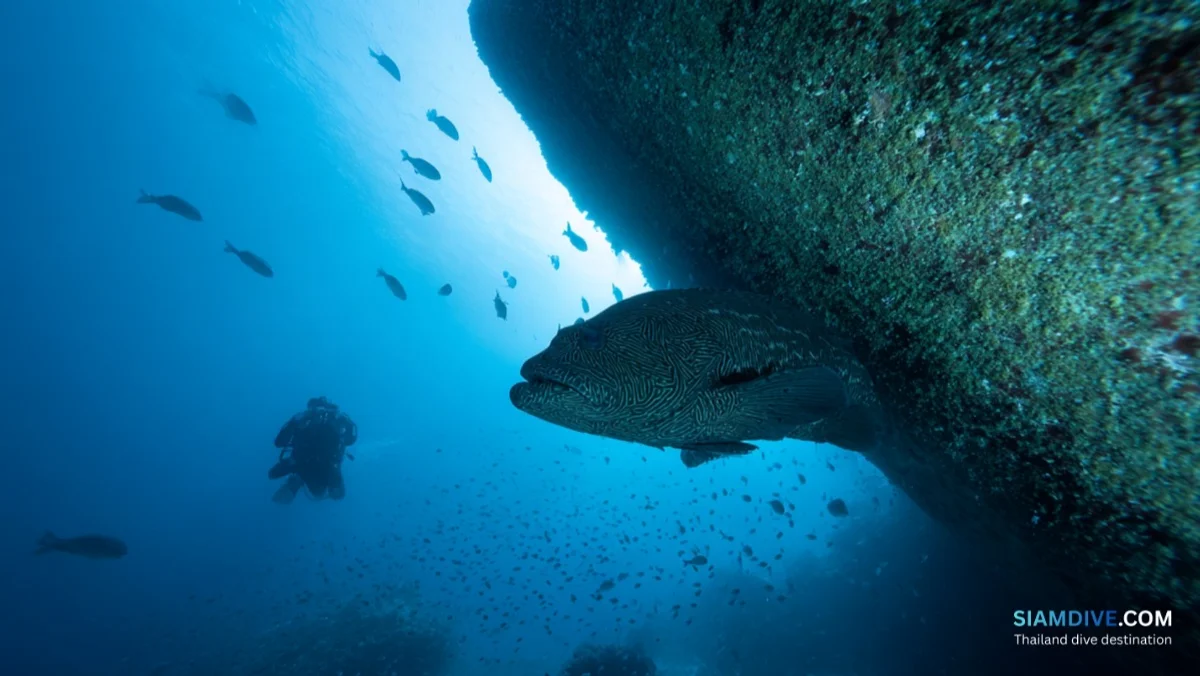
  • South Tip — the deep site, dropping from 5 meters to 40+ along granite boulders. This is where the mantas show up, and where you'll also find marble rays resting on the sand, reef sharks patrolling the deeper edges, and large schools of yellowtail fusiliers. Strong currents are common here, so it's an advanced dive.
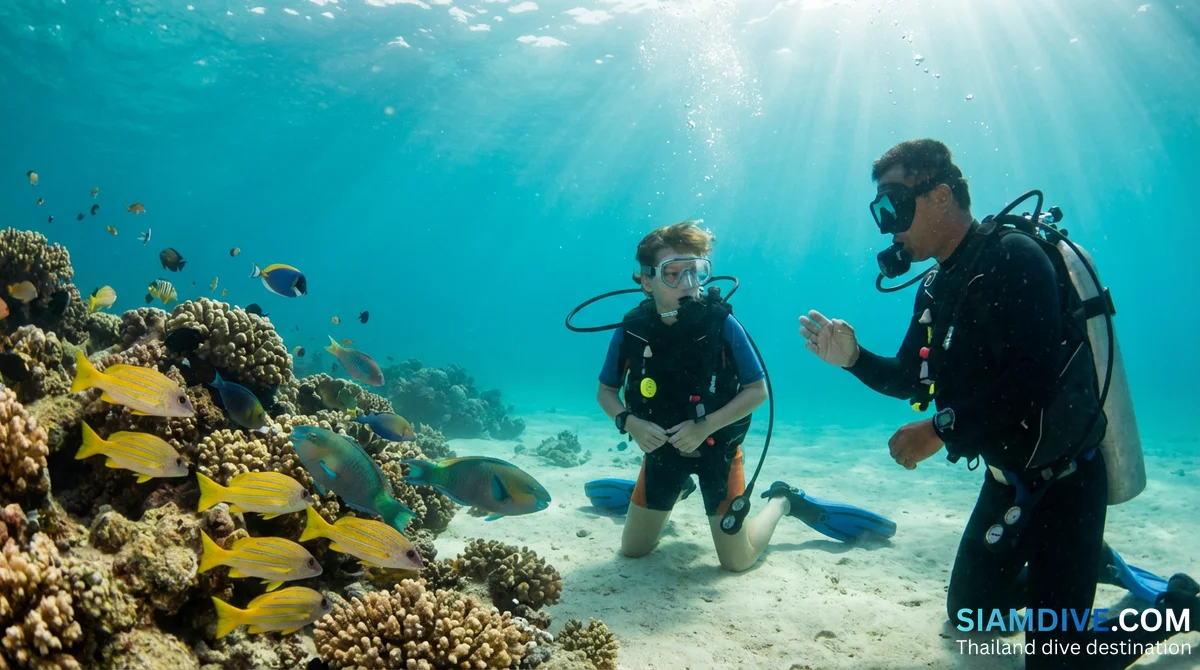
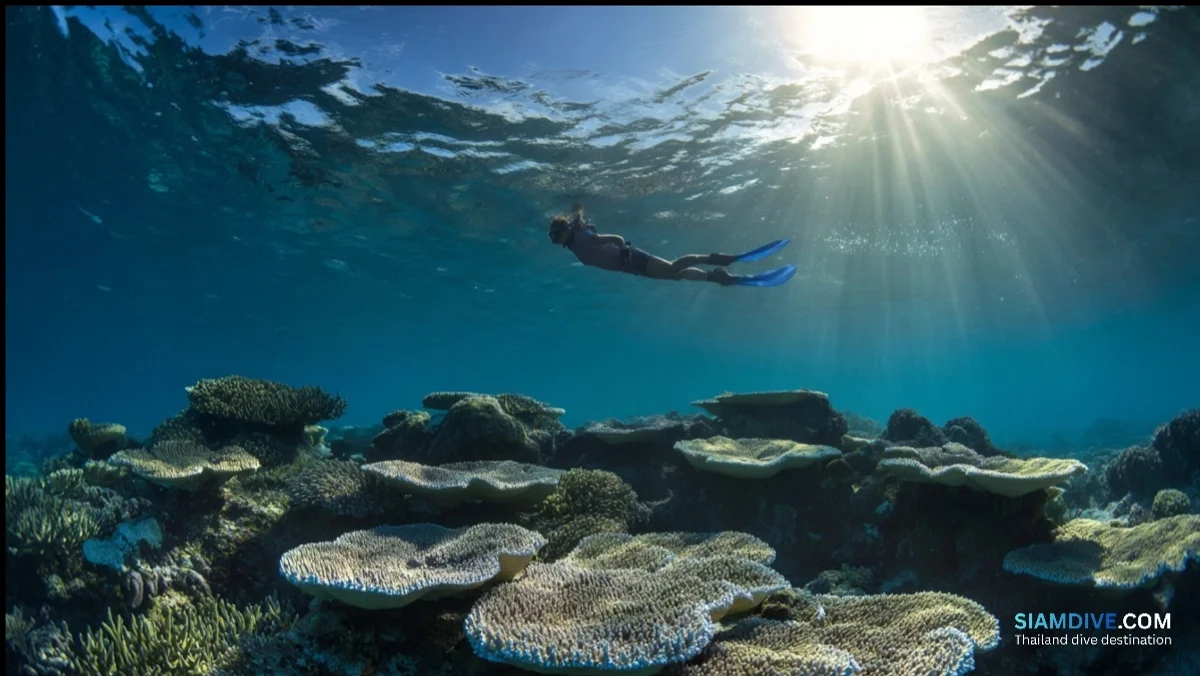
  • Banana Bay (West) — a sheltered bay with a gentle slope from 5 to 25 meters. The rocky bottom is covered in hard coral, and the fish life is diverse: triggerfish, parrotfish, porcupinefish, and the occasional turtle. Good for all certification levels when conditions are calm.
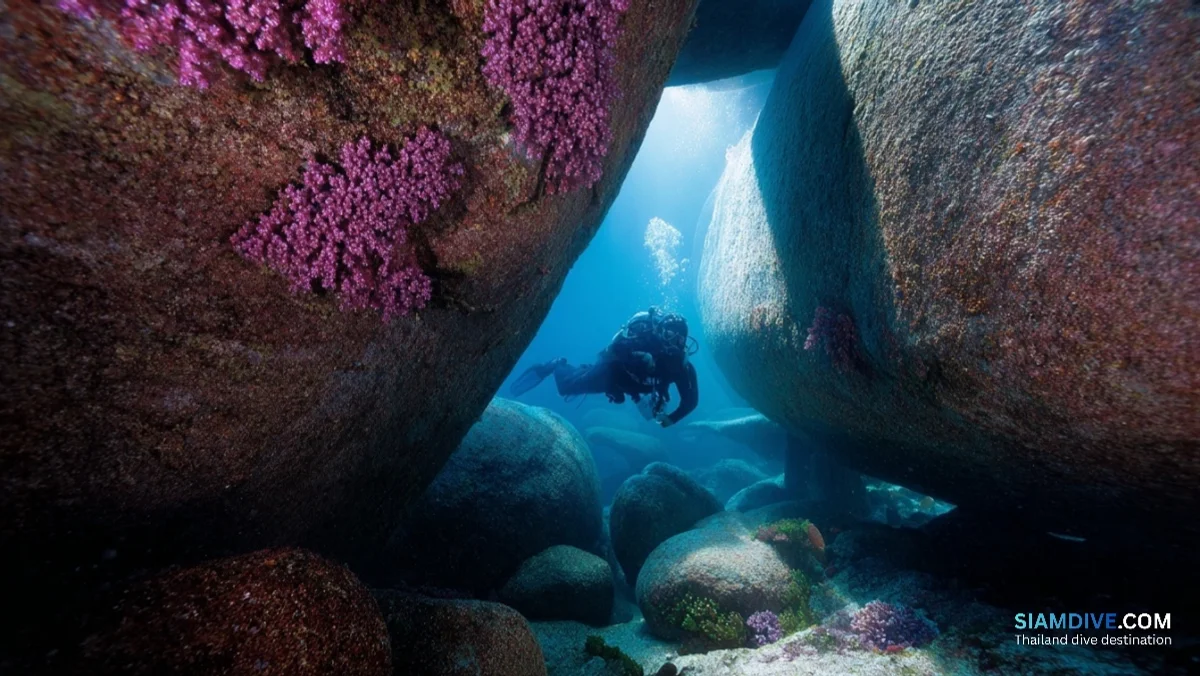
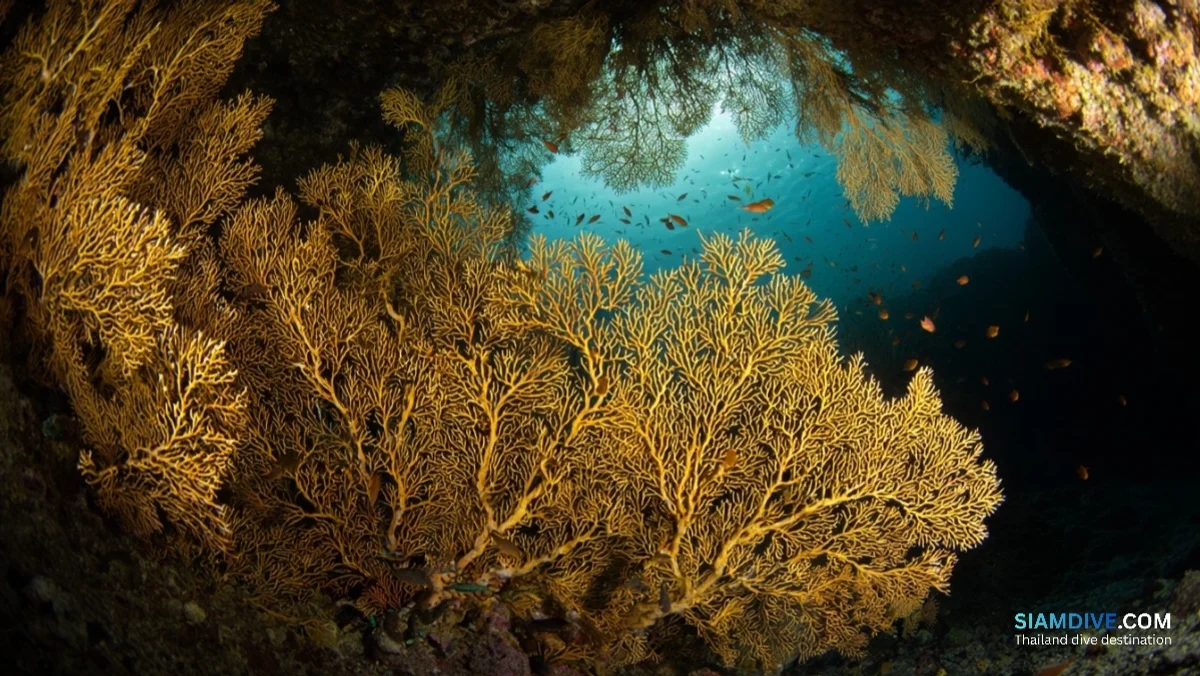
  • Camera Bay — named because photographers love it. Huge granite boulders create swim-throughs and overhangs at 10-22 meters, with soft coral filling every crevice. Frogfish hide on the rocks here if you're patient enough to spot them.
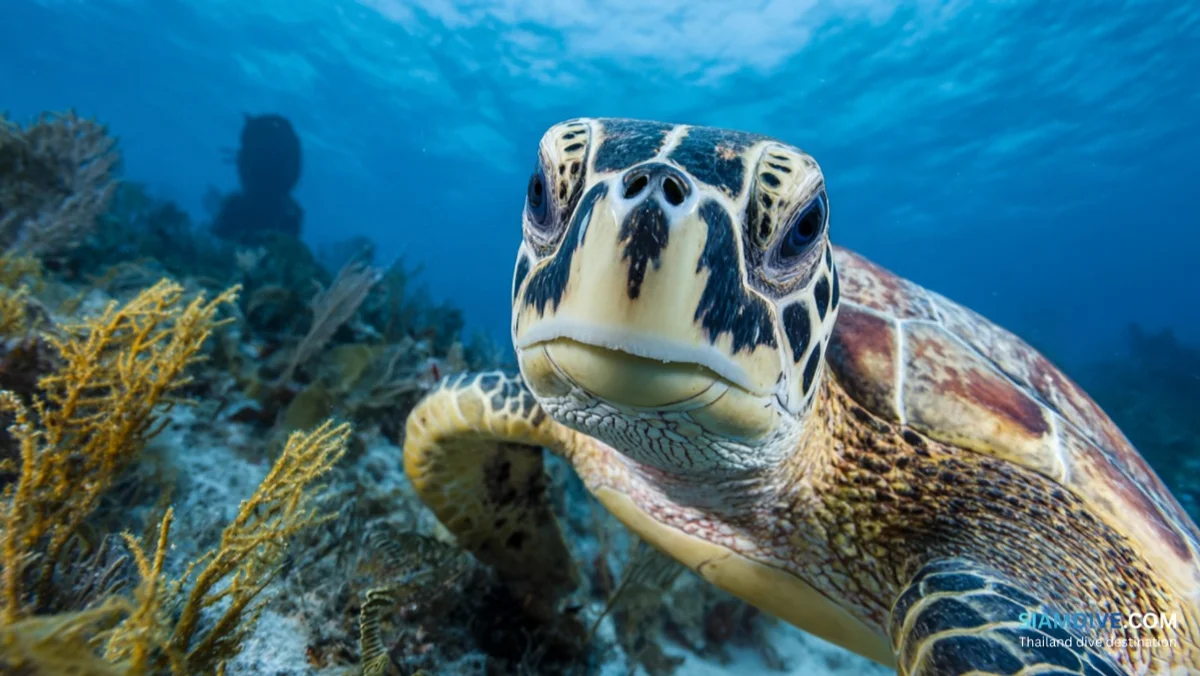
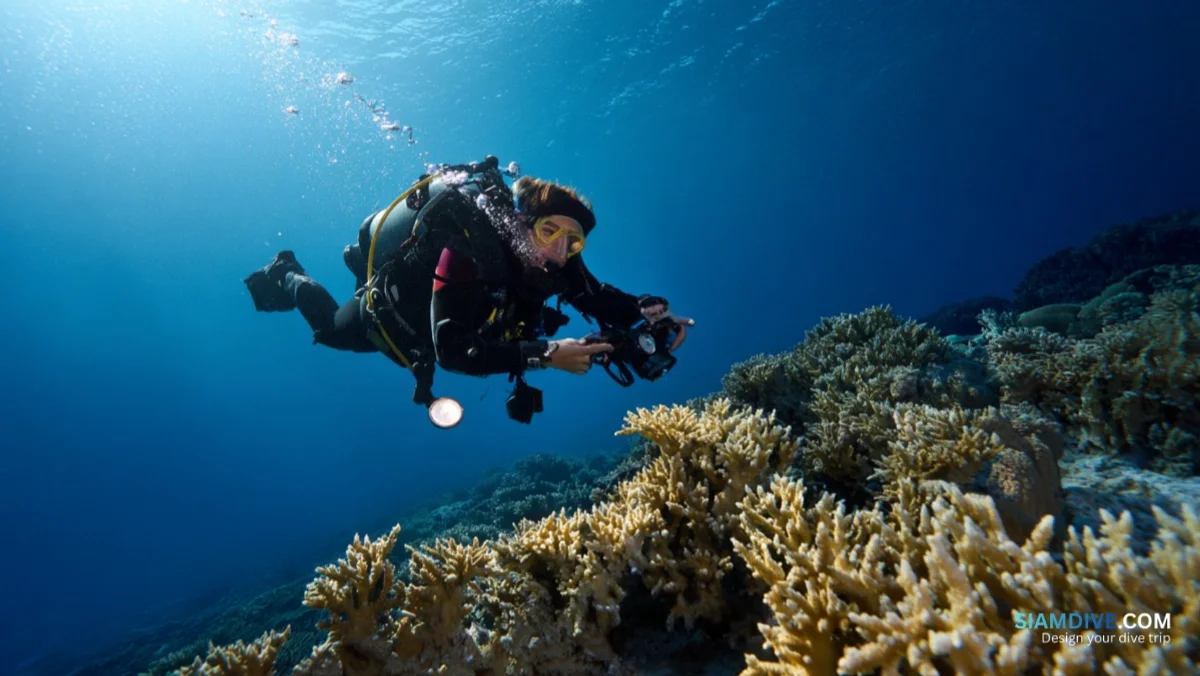
  • Staghorn Reef (North) — a field of staghorn coral at 8-18 meters, unusual for this area. Clouds of damselfish and chromis hover above the coral, and hawksbill turtles feed here regularly.

Marine Life Beyond the Mantas

Even on dives without manta sightings, Racha Noi delivers. The rocky reef structure supports a different community than the soft-coral-dominated sites closer to Phuket:

  • Marble rays — resting on sandy patches between boulders, common at South Tip and Banana Bay
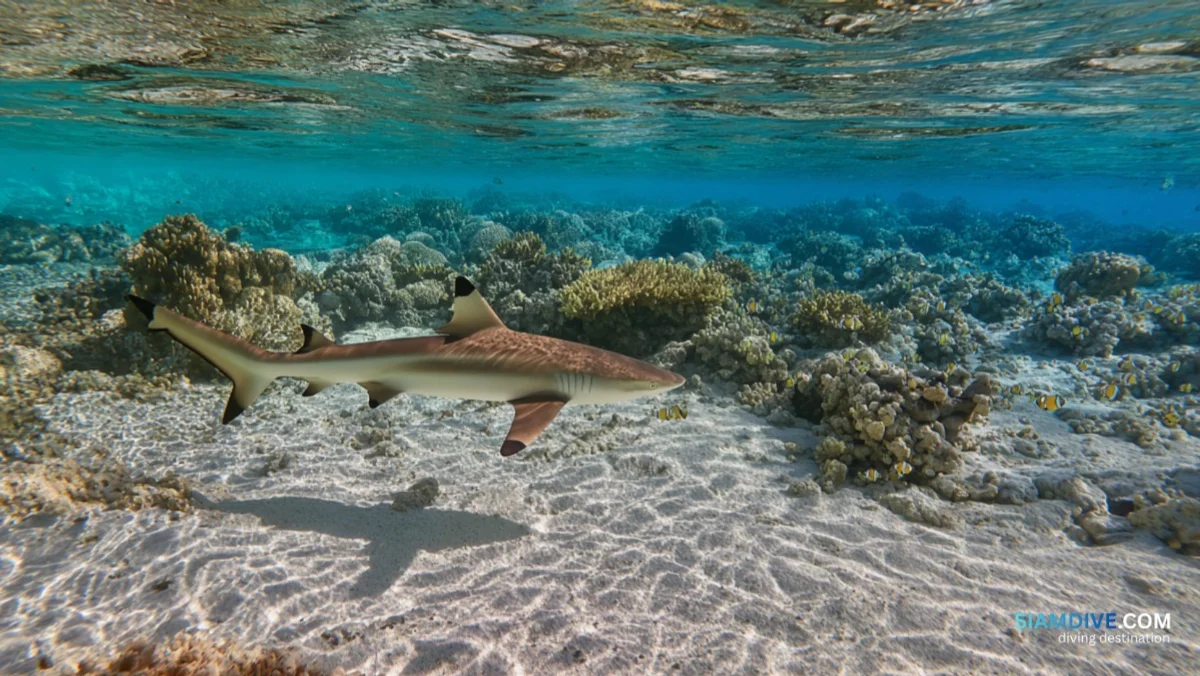
  • Blacktip reef sharks — occasionally seen cruising the deeper sections, more common early morning
  • Hawksbill turtles — feeding on sponges around the northern reef, surprisingly approachable
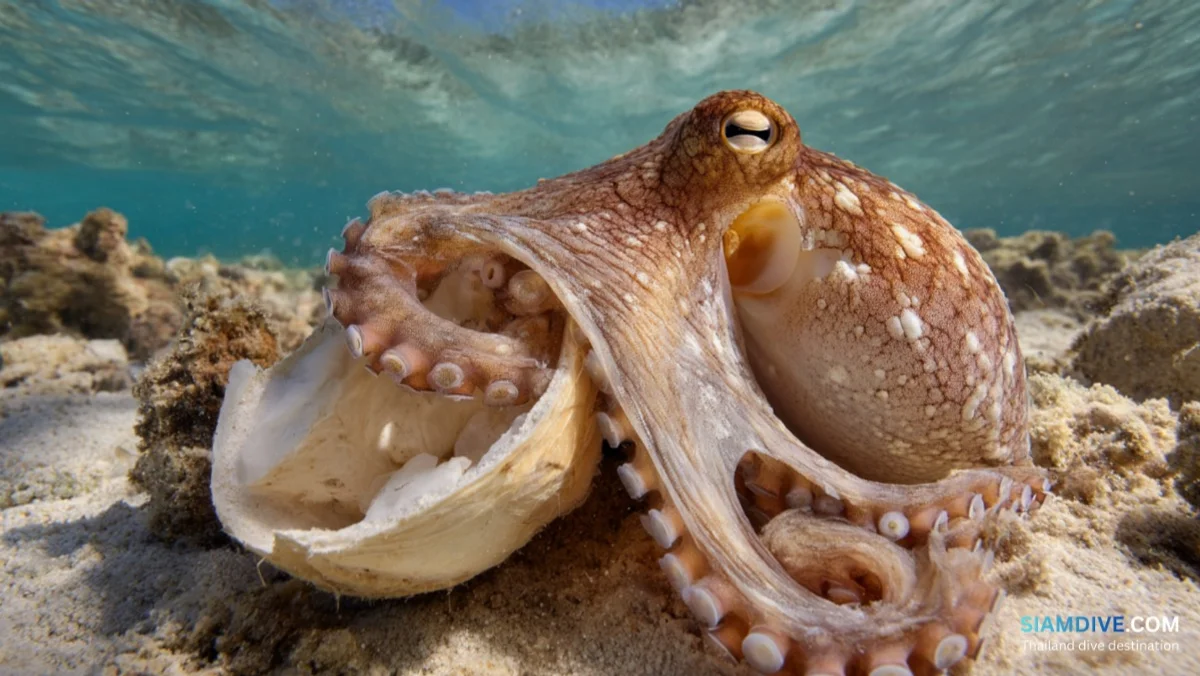
  • Octopus — hunting in the boulder fields, especially at Camera Bay during afternoon dives
  • Frogfish — well-camouflaged on encrusted rocks, a favorite for macro photographers
  • Barracuda and trevally — schools patrolling the drop-offs at South Tip
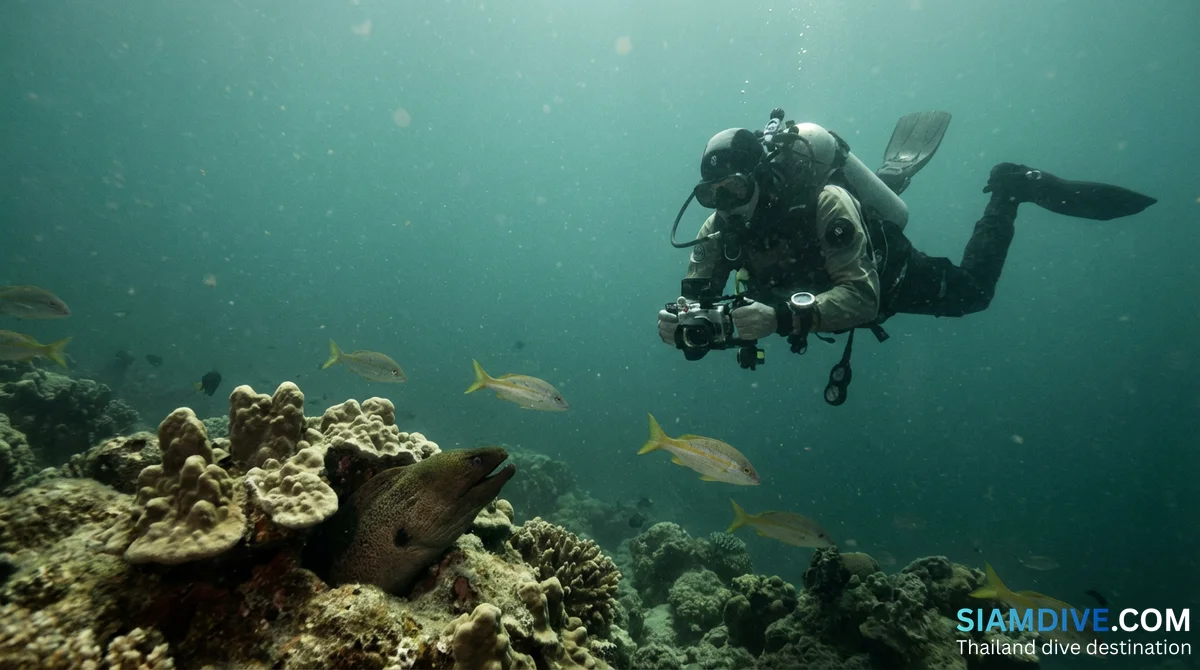
  • Moray eels — giant morays and white-eyed morays in crevices throughout all sites

Best Time to Visit Racha Noi

The diving season runs from November to May, with the best conditions from December through March. Visibility peaks at 25-30 meters in January and February when the water is calmest and clearest. Water temperature ranges from 27-30°C — a 3mm shorty is fine for most people, though deeper dives at South Tip can feel cooler at 40 meters. The manta season specifically runs from late January through April, coinciding with plankton blooms. May is still diveable but conditions become less predictable, and by June the southwest monsoon makes the boat ride uncomfortable and many operators stop running trips here.

Getting to Racha Noi from Phuket

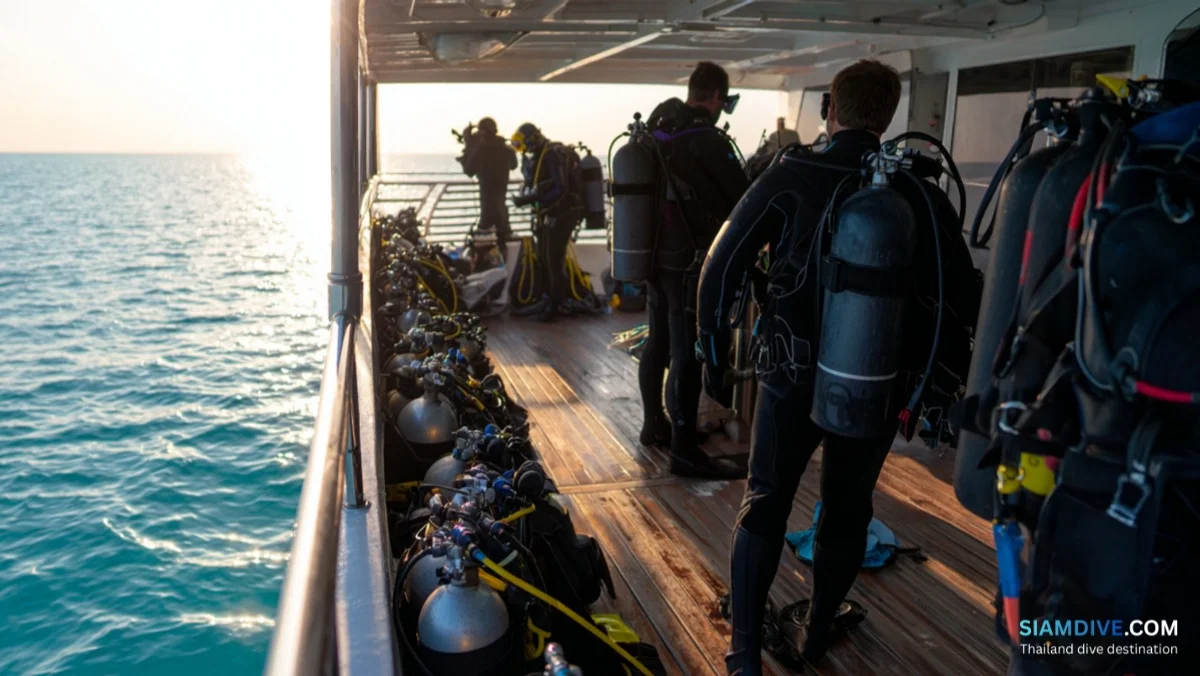
All dive trips to Racha Noi depart from Chalong Bay. The speedboat ride takes 35-45 minutes, depending on sea conditions. Most operators offer full-day trips with three dives — typically two at Racha Noi and one at nearby Racha Yai on the way back. Some trips do all three dives at Racha Noi if conditions and group preference allow. Day trip prices range from 4,000-6,000 THB per person ($115-170 USD), which covers gear rental, tanks, lunch on the boat, and the national park fee. Trips leave around 7:30-8:00 AM and return by 3:30-4:00 PM. Because the island is farther out, Racha Noi trips are more weather-dependent than closer sites — operators will switch to Racha Yai or cancel if seas are too rough.

Tips for Making the Most of Your Dives

If mantas are your goal, tell your operator. Some dive centers specifically target South Tip when manta season is on, while others follow a standard rotation. Ask before you book. Nitrox helps at South Tip, where you might be hovering at 25-30 meters waiting for a flyby — the extra bottom time is worth the small surcharge. Bring a reef hook if you have one; currents at South Tip can be strong enough that holding position without one burns air fast.

For photography, Camera Bay is the clear winner. The boulders and overhangs create natural compositions, the water clarity means you can shoot wide-angle without a lot of backscatter, and the frogfish are a macro bonus. Get there early in the morning — the light through the water at 8-9 AM is the best you'll get.

Racha Noi — Phuket's Best-Kept Offshore Secret

Most tourists visiting Phuket never make it past Racha Yai, and the dive sites closer to shore get the bulk of the traffic. Racha Noi stays relatively quiet because it's farther, more weather-dependent, and can't be combined with a beach day on the island. That's exactly what makes it good. Fewer divers, clearer water, bigger marine life, and the chance of a manta encounter that you'll talk about for years. Plan your trip around the season and conditions — check current availability at siamdive.com for operators that run dedicated Racha Noi trips.
← กลับไปหน้า Blog

บทความแนะนำ

Green Rock Koh Tao Diving Guide: The Island's Best Swim-Through Site

Green Rock Koh Tao Diving Guide: The Island's Best Swim-Through Site

Green Rock off Koh Nang Yuan offers Koh Tao's best boulder maze, The Chimney swim-through, dense macro life and advanced training — here's everything divers need.

Whale Shark Encounters: What Every Diver Should Know

Whale Shark Encounters: What Every Diver Should Know

Whale shark behavior, encounter ethics, and Thailand's best sites from Richelieu Rock to Sail Rock — a factual guide for responsible divers.

Andaman Sea vs Gulf of Thailand: Picking Your Dive Region

Andaman Sea vs Gulf of Thailand: Picking Your Dive Region

Compare Thailand's two dive coasts side by side — marine life, visibility, seasons, costs, and which region fits your experience level.

What You Actually See Diving in Phuket (Not the Brochure Version)

What You Actually See Diving in Phuket (Not the Brochure Version)

Honest field log of Phuket dive-day marine life: leopard sharks, turtles, seahorses, frogfish — with real odds, not fantasy marketing promises.

Koh Ha Yai Diving Guide: The Cathedral Cave and Beyond

Koh Ha Yai Diving Guide: The Cathedral Cave and Beyond

Home to the famous Cathedral cave and chimney swim-through, Koh Ha Yai delivers some of Koh Lanta's most memorable dives. Complete guide inside.

Hin Daeng & Hin Muang Liveaboard: Thailand's Wildest Walls

Hin Daeng & Hin Muang Liveaboard: Thailand's Wildest Walls

Hin Daeng and Hin Muang are Thailand's deepest soft coral walls — manta rays, whale sharks, and serious current. Here's how to dive them by liveaboard.

7 Phuket Dive Sites That Prove You Don't Need a Liveaboard

7 Phuket Dive Sites That Prove You Don't Need a Liveaboard

Leopard sharks, a 85m wreck, and technicolor limestone pinnacles—all under 2 hours from Chalong Pier. Here's every day-trip dive site around Phuket.

Can You Actually Learn to Dive? The Medical Checklist No One Explains

Can You Actually Learn to Dive? The Medical Checklist No One Explains

The honest guide to scuba medical forms: hard disqualifiers, conditions that need a doctor's sign-off, the real swim test, and what to do if you answered YES.

Why Your Dive Mask Fogs (And 4 Fixes That Actually Work)

Why Your Dive Mask Fogs (And 4 Fixes That Actually Work)

Learn why dive masks fog up and discover proven anti-fog methods, from new mask prep to proper storage. Plus expert tips on cleaning, strap replacement, and when to retire your mask.

HTMS Chang Koh Chang

HTMS Chang Koh Chang

Dive into the HTMS Chang wreck.

Koh Rok Diving Guide: Trang's Pristine Coral Paradise

Koh Rok Diving Guide: Trang's Pristine Coral Paradise

Explore Koh Rok's crystal-clear waters, healthy coral reefs, and rich marine life. Your complete guide to diving Thailand's best-kept Andaman secret.

The Pre-Dive Buddy Check Most Scuba Divers Skip

The Pre-Dive Buddy Check Most Scuba Divers Skip

Half of all scuba accidents could be prevented by a five-minute BWRAF buddy check. Here's why experienced divers skip it and how to do it right.

BCD Care: The Bladder Flush Most Divers Skip (And Pay For Later)

BCD Care: The Bladder Flush Most Divers Skip (And Pay For Later)

Learn the essential BCD maintenance steps most divers overlook — from proper bladder flushing to dump valve care, storage tips, and when it's time to replace your buoyancy control device.

Storing Your Dive Gear for Months? The Checklist That Prevents Expensive Surprises

Storing Your Dive Gear for Months? The Checklist That Prevents Expensive Surprises

Seasonal diver? Heading home after a trip? Follow this item-by-item storage checklist so your regulator, BCD, wetsuit, and tank survive months of downtime.

Never Dived Before? Here's Why Thailand Should Be Your First Ever Dive Trip

Never Dived Before? Here's Why Thailand Should Be Your First Ever Dive Trip

Warm 29°C water, 30m visibility, the world's cheapest PADI courses, and reefs built for beginners. Here's why Thailand is the single best place on Earth to start diving.

HTMS Sattakut Wreck Koh Tao Diving Guide: The Island's Signature Dive

HTMS Sattakut Wreck Koh Tao Diving Guide: The Island's Signature Dive

HTMS Sattakut is Koh Tao's largest wreck, a 48-meter ex-navy landing craft sunk in 2011. Deck at 18 m, stern at 30 m — here's how to dive it right.

How to Choose the Right Liveaboard Trip in Thailand

How to Choose the Right Liveaboard Trip in Thailand

A practical guide to picking the best Thailand liveaboard for your budget, experience level, and dream dive sites from Similan to Richelieu Rock.

BCD Basics: Choosing, Fitting, and Using Your Buoyancy Device

BCD Basics: Choosing, Fitting, and Using Your Buoyancy Device

Everything divers need to know about BCDs — from jacket vs back-inflate vs wing, to getting the right fit, underwater technique, and long-term care.

Hin Daeng & Hin Muang Diving Guide: Thailand's Best Pinnacles

Hin Daeng & Hin Muang Diving Guide: Thailand's Best Pinnacles

Discover Hin Daeng and Hin Muang, Thailand's most thrilling deep-water pinnacles off Koh Lanta with manta rays, whale sharks, and 70m walls.

Mango Bay Koh Tao Guide: The Island's Best Beginner Dive and Snorkel Site

Mango Bay Koh Tao Guide: The Island's Best Beginner Dive and Snorkel Site

Mango Bay on Koh Tao's north coast is the island's best beginner dive site and snorkel spot — calm water, vibrant reefs, and year-round conditions.

ทริปแนะนำ

Hug Ocean Boat
daytrip

Hug Ocean Boat

Discover Phuket's Andaman Sea aboard Hug Ocean — a luxury 3-deck dive yacht for 80 guests with a thrilling water slide, sun-soaked top deck, and PADI-certified diving at Racha Yai and Racha Noi.

Aquarian Liveaboard
liveaboard

Aquarian Liveaboard

MV Aquarian — striking 2021-built red steel liveaboard, 31.4 m × 7.5 m, max 28 guests in 14 cabins. Free unlimited Nitrox via Coltri Sub membranes, one of Thailand's largest dive platforms, and full premium-hotel comfort.

Issara Liveaboard
liveaboard

Issara Liveaboard

MV Issara — high-end Thai steel-hulled liveaboard built 2016–17, 28.5 m × 6.5 m, 4 decks, max 22 guests in 11 hotel-style cabins. Indoor saloon, jacuzzi sun deck, full-board buffet dining.

Mandarin Queen 5
daytrip

Mandarin Queen 5

Brand-new Phuket dive boat — 26.2 m M/V Mandarin Queen 5 with spacious dive platform, lounge and upper sun deck. Daily day trips to King Cruiser Wreck, Shark Point, Anemone Reef, Racha Yai and Racha Noi.