10 Reef Stations on a Rope: Koh Mattra's Underwater Trail
23 เมษายน 2569
Thailand's first underwater nature study trail runs along Koh Mattra's eastern reef in Chumphon, with 10 signed stations from giant clams to sea fans at 1-8 metres depth.
Thailand's First Underwater Nature Trail Sits on a Quiet Island Most Divers Skip
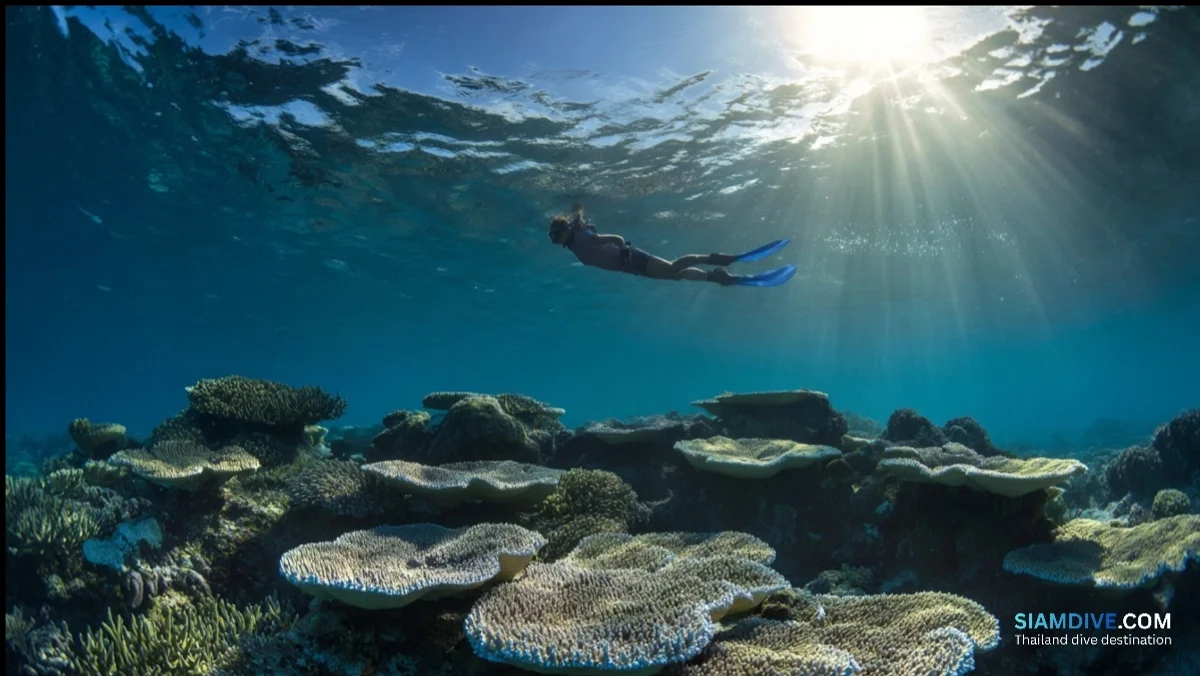
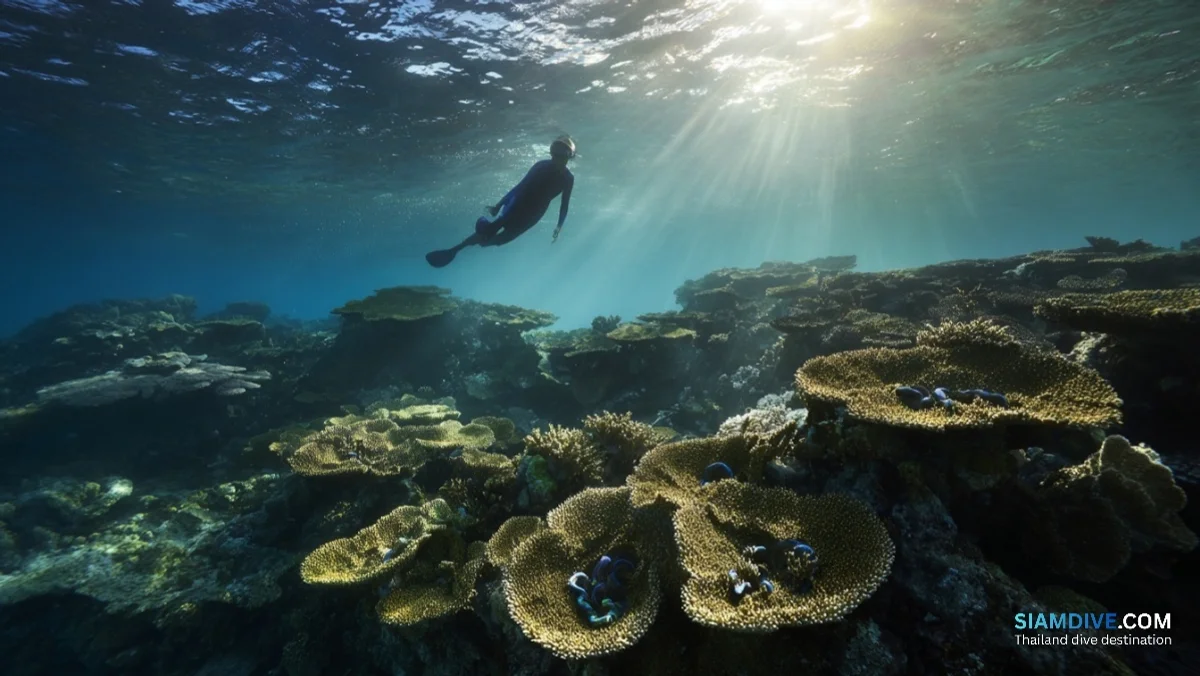
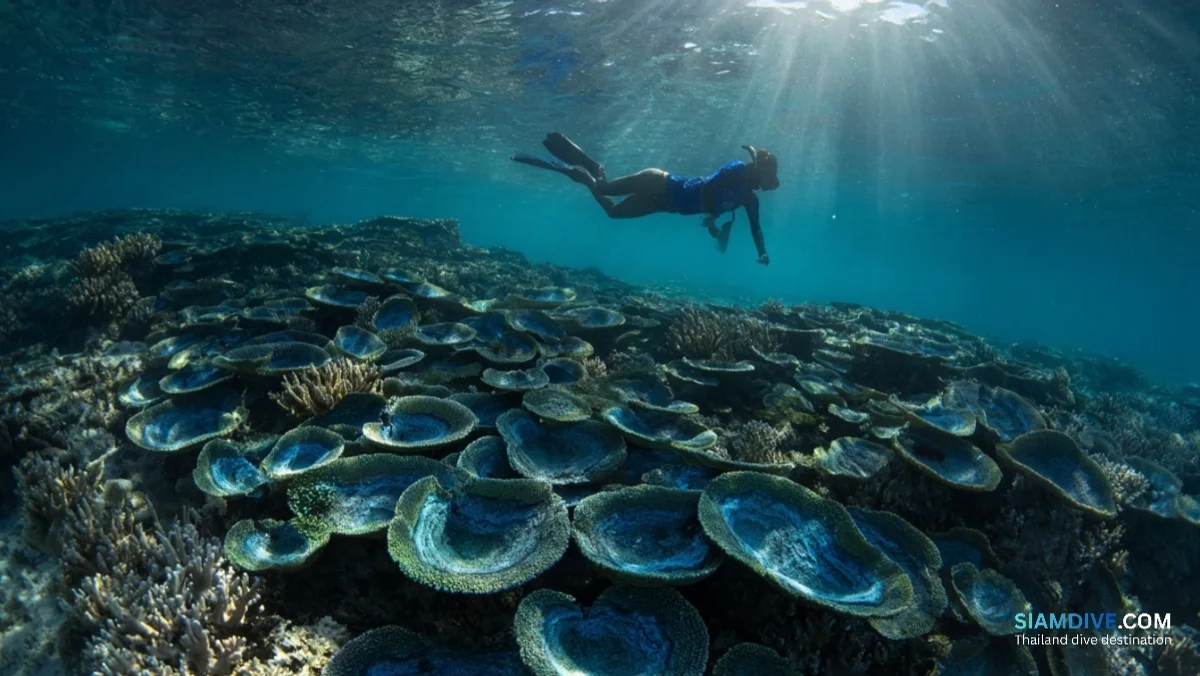
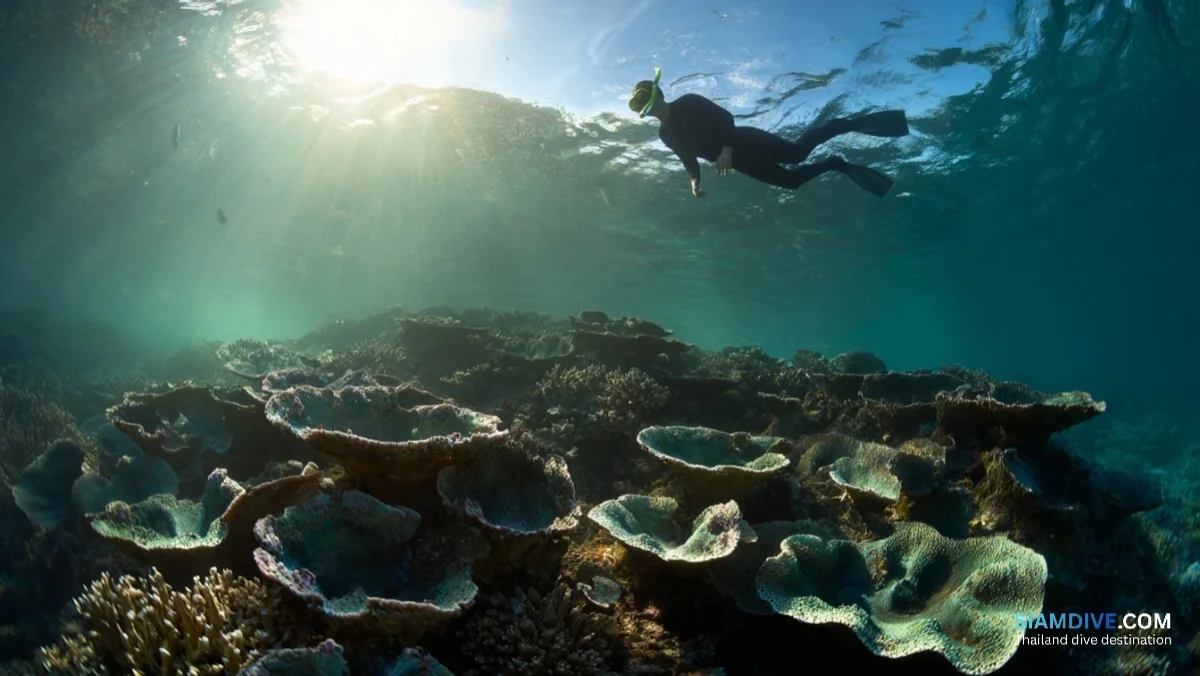
Ten interpretation stations line the seabed off a small cape on Koh Mattra's eastern shore, each marked with a waterproof sign explaining the organism directly ahead. A giant clam the size of a dinner plate, its mantle pulsing electric blue. A brain coral colony that has been building itself, layer by layer, for decades. A cluster of tube worms that retract at the shadow of a passing fin. This is not a museum exhibit behind glass; it is a living reef at three to eight metres depth, open to anyone willing to put on a mask and follow the rope line.
Mu Koh Chumphon National Park established this snorkelling trail as the first underwater nature study path in Thailand, and Koh Mattra hosts one of its two shallow-water routes (the other sits off Koh Ngam Yai). Yet the island remains remarkably uncrowded. Boats arrive on alternating days, and the overnight bungalow operation is limited to a single family-run guesthouse. For divers and snorkellers tired of fighting for space on popular Gulf of Thailand reefs, Koh Mattra offers something increasingly rare: a coral garden you can read like a book, at your own pace, with nobody rushing you back to the boat.
Where Koh Mattra Sits and How to Get There
Koh Mattra (เกาะมาตรา) lies approximately 6.5 kilometres from the Mu Koh Chumphon National Park headquarters, nestled among the 40-plus islands that compose this marine protected area in Chumphon Province. The island covers roughly 0.489 square kilometres of forested granite, rimmed by white-sand beaches that alternate with tumbled boulder shoreline.
- Province: Chumphon, upper Gulf of Thailand
- Marine park: Mu Koh Chumphon National Park (est. 24 November 1989)
- Distance from shore: ~6.5 km from park office at Laem Thaen pier
- Island area: 0.489 km²
- Departure pier: Laem Thaen (แหลมแท่น / บ้านปากคลอง) or Had Sai Ree
- Travel time by longtail: 30-45 minutes
- Tour schedule: Even-numbered days (odd days serve the Ngam Yai / Ngam Noi route)
Day-trip snorkelling tours typically bundle Koh Mattra with three neighbouring islands: Koh Lang Ka Jiw, Koh Lawa, and Koh Lak Raet. The four-island circuit costs between 1,200 and 2,000 THB per person, including mask, snorkel, fins, and a guide sheet for the underwater trail stations.
The Underwater Nature Trail: 10 Stations from Shore to Reef Edge
What separates Koh Mattra from a typical snorkelling stop is structure. The national park's marine biologists surveyed the reef, identified the most representative organisms, and installed numbered signs at ten stations along a fixed rope line. Snorkellers receive a laminated guide card before entering the water, keyed to each station number. The route begins in shallow sand at roughly one metre and progresses outward across the fringing reef flat to the reef slope, maxing out around eight metres.
The ten stations cover a cross-section of Gulf of Thailand reef ecology:
- Station 1-2: Boulder corals (Porites spp.) and encrusting forms on the inner reef flat
- Station 3-4: Brain corals (Platygyra) and honeycomb corals, some colonies exceeding one metre across
- Station 5-6: Giant clams (Tridacna spp.), the island's signature residents, bred here by local villagers in cooperation with the national park
- Station 7: Tube worms (Sabellastarte spp.) and blue sponges colonising dead coral rubble
- Station 8-9: Mixed coral gardens featuring staghorn, hump, and soft corals on the reef slope
- Station 10: Sea fans and long sea whips at the deeper reef edge, transitioning to sand
The trail takes 45 to 90 minutes depending on how long snorkellers linger at each station. Depth never exceeds eight metres, making the entire route accessible without scuba certification. Certified divers sometimes swim the same trail on a single tank, spending extra time at the deeper stations where sea fans spread in the mild current.
Giant Clams and the Reef Ecosystem
Koh Mattra has earned the nickname "home of giant clams" among Chumphon boatmen. The cape on the island's eastern side shelters a breeding programme where villagers cultivate Tridacna clams alongside the natural population. During a single snorkel pass, it is common to count dozens of individuals, their iridescent mantles ranging from cobalt blue to emerald green to golden brown.
Giant clams are filter feeders that also host symbiotic algae in their mantle tissue, much like coral polyps. Their presence in healthy numbers signals good water quality and stable reef conditions. The clams at Koh Mattra benefit from the island's position inside the marine park boundary, where fishing restrictions and boat anchor regulations have been enforced since the park's establishment in 1989.
Beyond the clams, the reef supports a roster of tropical species typical of Gulf of Thailand shallows:
- Clownfish (Amphiprion spp.): Several anemone colonies host resident pairs
- Damselfish and chromis: Schooling above staghorn thickets
- Parrotfish: Audible crunching as they graze algae off dead coral
- Pufferfish: Often resting in sand pockets between coral heads
- Wrasses: Including the green parrot wrasse (ปลาเขียวพระอินทร์), one of the more photogenic residents
- Moray eels: Tucked into crevices at the reef edge
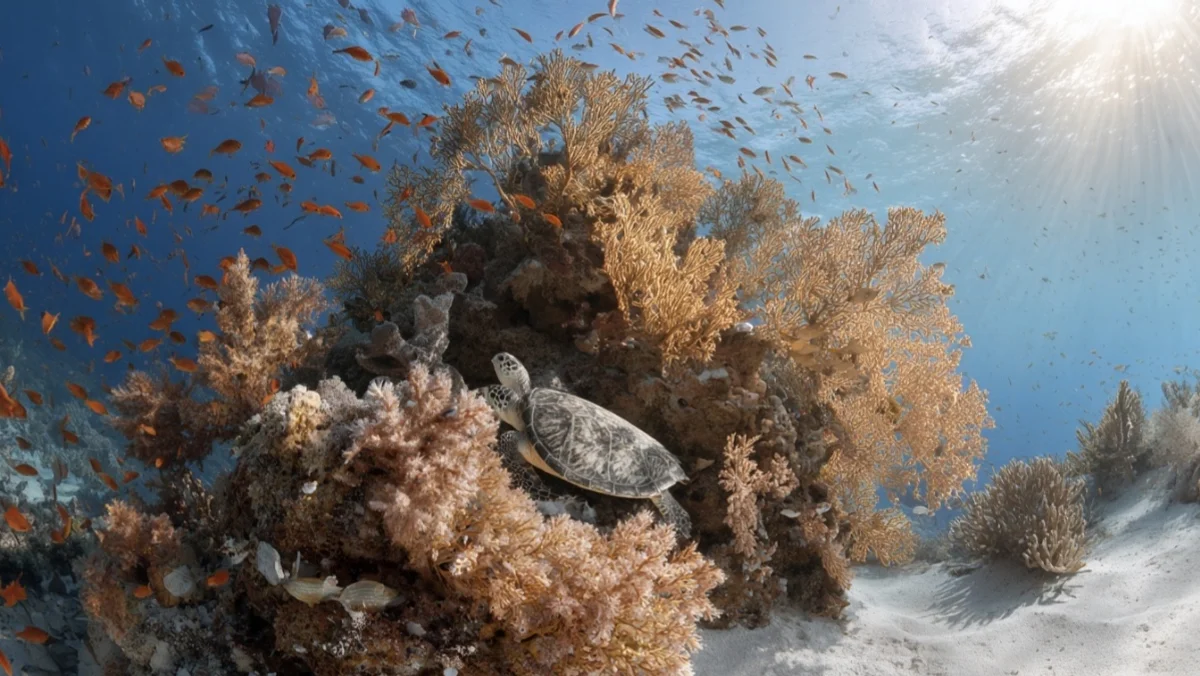
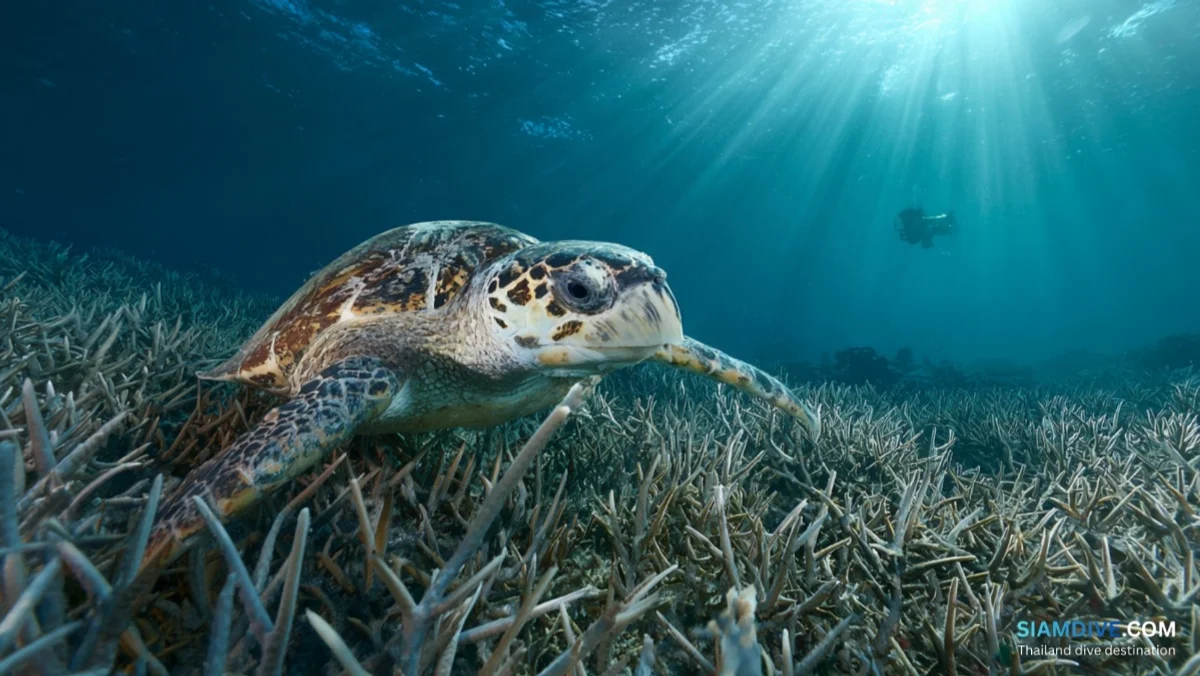
The diversity here does not match the deeper sites around Hin Lak Ngam or Koh Ran Ped, where black coral forests and pelagic visitors dominate. But for a shallow reef accessible to first-time snorkellers and junior open-water divers, the species count is impressive.
Season, Visibility, and Conditions
Chumphon's diving calendar runs opposite to the Andaman coast. While Phuket and the Similan Islands shut down for monsoon between May and October, the Gulf side of the isthmus enters its calmest, clearest window.
- Best season: March through September
- Peak clarity: May, when visibility can reach 15-20 metres on good days
- Water temperature: 28-30 °C year-round; 3 mm shorty wetsuit sufficient
- Current: Mild to negligible at the Mattra trail; stronger at exposed sites like HTMS Prab
- Surface conditions: Typically flat March-June; occasional afternoon chop July-August
- Monsoon closure: October through February, when northeast monsoon brings rough seas
Because the underwater trail sits on the east-facing cape, it catches early morning light at a low angle that illuminates the giant clams beautifully. Afternoon tours see more backscatter. Photographers should request the first boat out if shooting wide-angle reef portraits.
Above the Surface: Beaches, Crabs, and an Overnight Option
Koh Mattra is the only island in the Chumphon marine park that offers overnight accommodation. The single guesthouse, Baan Lung Khao, provides basic rooms within walking distance of two beaches. Staying overnight transforms a day-trip snorkelling stop into something quieter: dawn swims on an empty reef, sunsets over the mainland silhouette, and the strange soundtrack of hairy-legged mountain crabs (ปูไก่) rustling through shoreline trees after dark. These land crabs climb trunks and produce calls that reportedly resemble baby chicks, a surreal experience for visitors expecting only the sound of waves.
The island's interior is forested granite, without formal hiking trails but with enough scramble-worthy boulders to fill a rest-day afternoon. The beaches on the western side collect less boat traffic and offer the best swimming at high tide.
How Koh Mattra Fits Into a Chumphon Dive Trip
Most visitors to Chumphon's marine park aim for the headline sites: whale sharks at Koh Ran Ped and Ran Kai during the April-May peak, black coral forests at Hin Lak Ngam, or the HTMS Prab 741 wreck for advanced wreck penetration. Koh Mattra does not compete with those sites on drama. What it offers instead is a different kind of dive day: educational, unhurried, and suitable for mixed groups where some members are certified divers and others are snorkelling for the first time.
A practical three-day itinerary for Chumphon diving might look like this:
- Day 1: Four-island snorkelling tour (Koh Mattra trail, Koh Lak Raet, Koh Lawa, Koh Lang Ka Jiw)
- Day 2: Two-tank dive at Hin Lak Ngam and Koh Thalu's swim-throughs
- Day 3: Whale shark search at Ran Ped / Ran Kai (March-July season)
National park entrance fees apply: 200 THB for foreign adults, 100 THB for children. The fee covers all islands visited within the park on that day.
Conservation Notes and Visitor Responsibility
The underwater trail at Koh Mattra exists because the national park invested in interpretation infrastructure rather than simply opening reefs to foot traffic. The rope line keeps snorkellers on a defined path, reducing accidental contact with live coral. The guide cards encourage observation over collection. And the alternating-day boat schedule effectively halves the visitor load compared to a daily-access policy.
These measures matter. Coral reefs in the Gulf of Thailand face cumulative pressure from coastal development, agricultural runoff, and rising water temperatures. The Department of Marine and Coastal Resources (DMCR) monitors reef health across the Chumphon island group, and the data from Koh Mattra's reef has generally shown stable coral cover in recent survey periods, likely aided by the island's relatively remote position and regulated access.
Visitors can support this stability with basic reef etiquette: no standing on coral, no touching giant clams (the mantle retracts, stressing the animal), no feeding fish, and no collecting shells or coral fragments. Reef-safe sunscreen without oxybenzone is strongly recommended, though shade shirts and rash guards reduce the need for sunscreen altogether.
Koh Mattra will never top a list of the world's most dramatic dive sites. It does not need to. What it provides is something the diving industry talks about more than it delivers: genuine education at the reef's own pace, on a reef healthy enough to be worth learning from.