Sail Rock Diving Guide: The Gulf of Thailand's Best Pinnacle
6 เมษายน 2569
Dive Sail Rock (Hin Bai) — the Gulf of Thailand's premier pinnacle with its famous chimney swim-through, whale shark sightings, and massive barracuda schools.
Why Sail Rock Is the Gulf of Thailand's Must-Dive Site
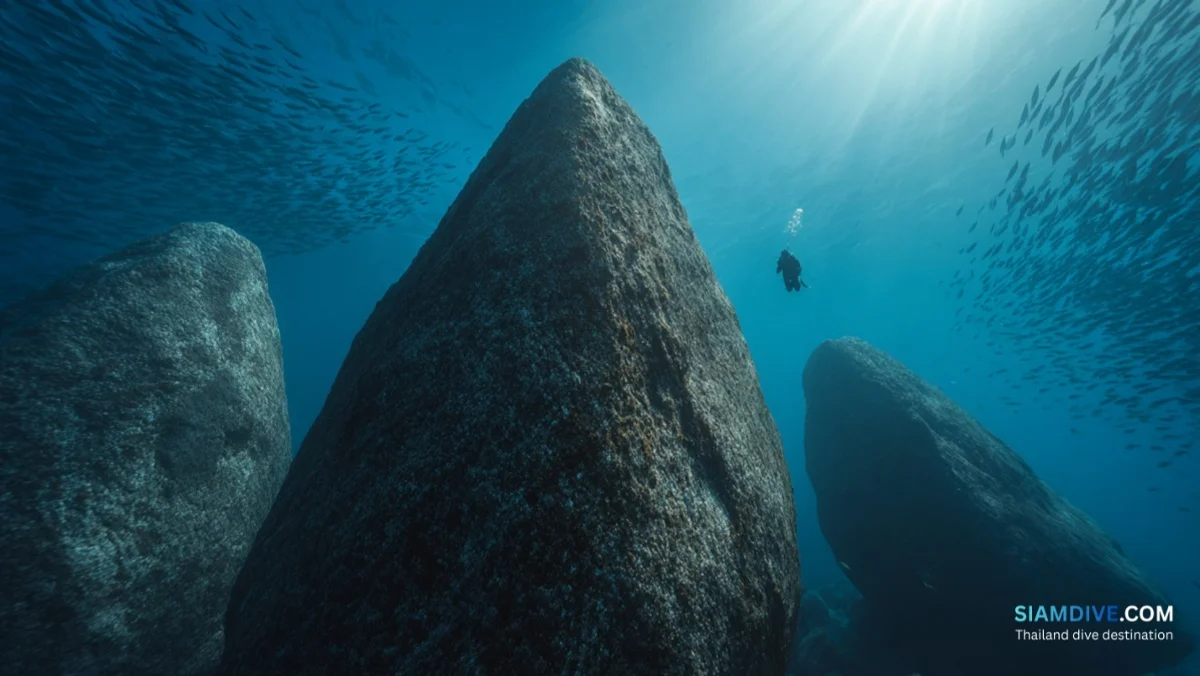
Rising from the deep blue waters between Koh Phangan and Koh Tao, Sail Rock — known locally as Hin Bai — is a solitary granite pinnacle that breaks the surface like a giant stone sail. Beneath the waterline, it plunges over 40 meters into the Gulf of Thailand, creating one of the most exciting and accessible dive sites in all of Southeast Asia. Sail Rock is famous for three things that set it apart from every other dive site on the Gulf coast: a vertical chimney swim-through that is unique in Thai waters, the most consistent whale shark sightings in the Gulf, and barracuda schools so dense they form living walls of silver that block out the light above. For any diver visiting the Gulf coast of Thailand — whether based on Koh Tao, Koh Phangan, or Koh Samui — Sail Rock is the one site you absolutely cannot skip.
The Famous Chimney Swim-Through
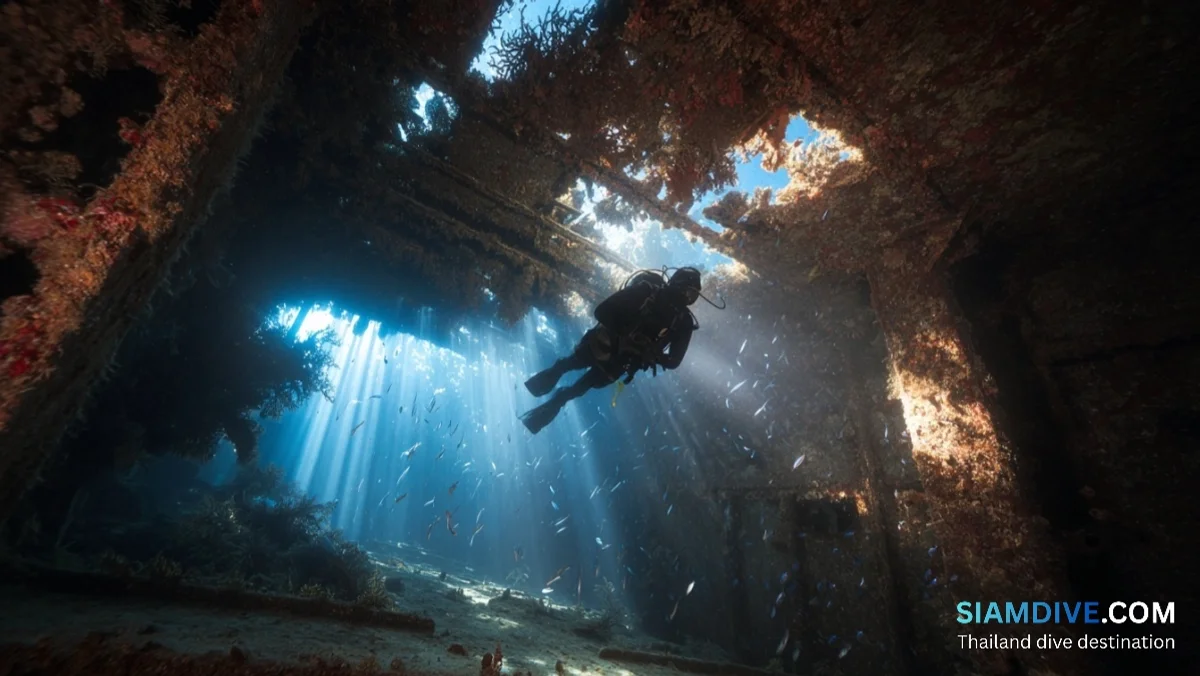
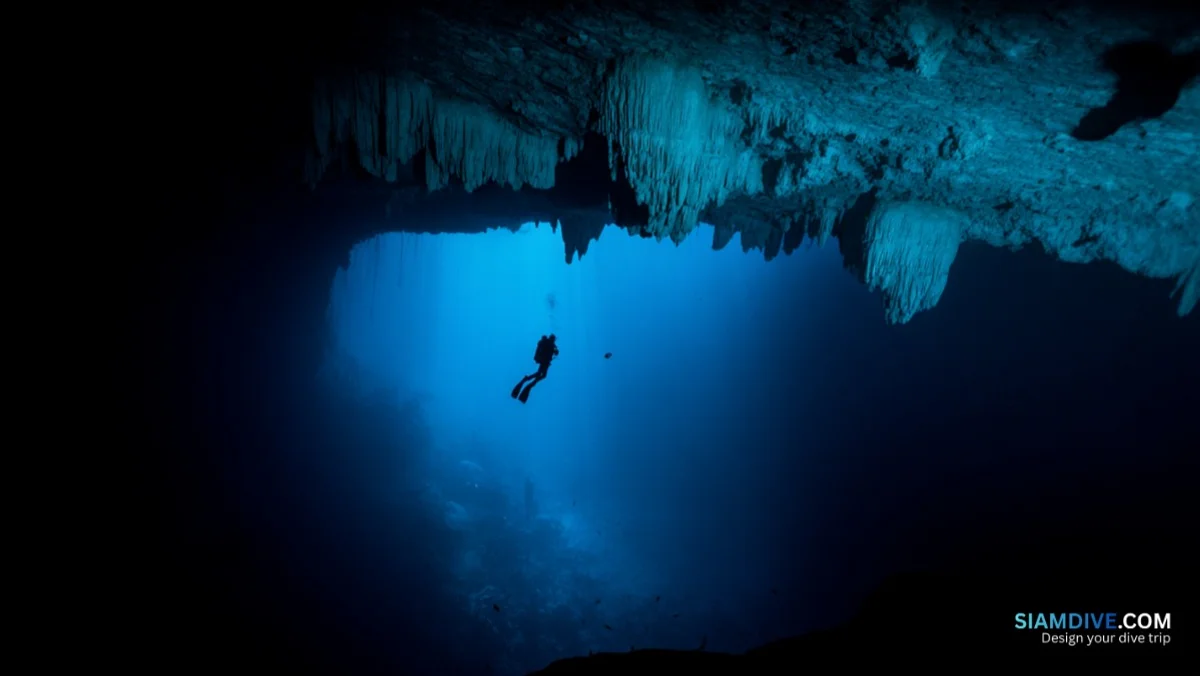
Sail Rock's signature feature is a vertical chimney — a natural shaft carved through the heart of the pinnacle that runs from approximately 18 meters depth up to about 5 meters below the surface. You enter through a wide opening in the rock wall at depth, swim vertically upward through the passage while soft corals and anemones cling to the walls around you, and emerge near the top with sunlight streaming in from above in dramatic shafts. The ascent through the chimney is one of the most memorable experiences in Thai diving — the combination of rising through solid rock while fish circle you and light pours in from overhead creates a cathedral-like atmosphere that photographs beautifully and feels almost spiritual.
The chimney is accessible to Open Water divers, which is part of what makes Sail Rock so special — you do not need an advanced certification to experience its most iconic feature. However, comfortable buoyancy control is absolutely essential. The passage is narrow enough that you need to ascend vertically without touching the fragile walls, which are covered in living organisms. Divers without solid buoyancy skills risk damaging the chimney or, worse, getting wedged. If your buoyancy is not yet second nature, practice in open water before attempting the chimney.
Marine Life: From Whale Sharks to Barracuda Walls
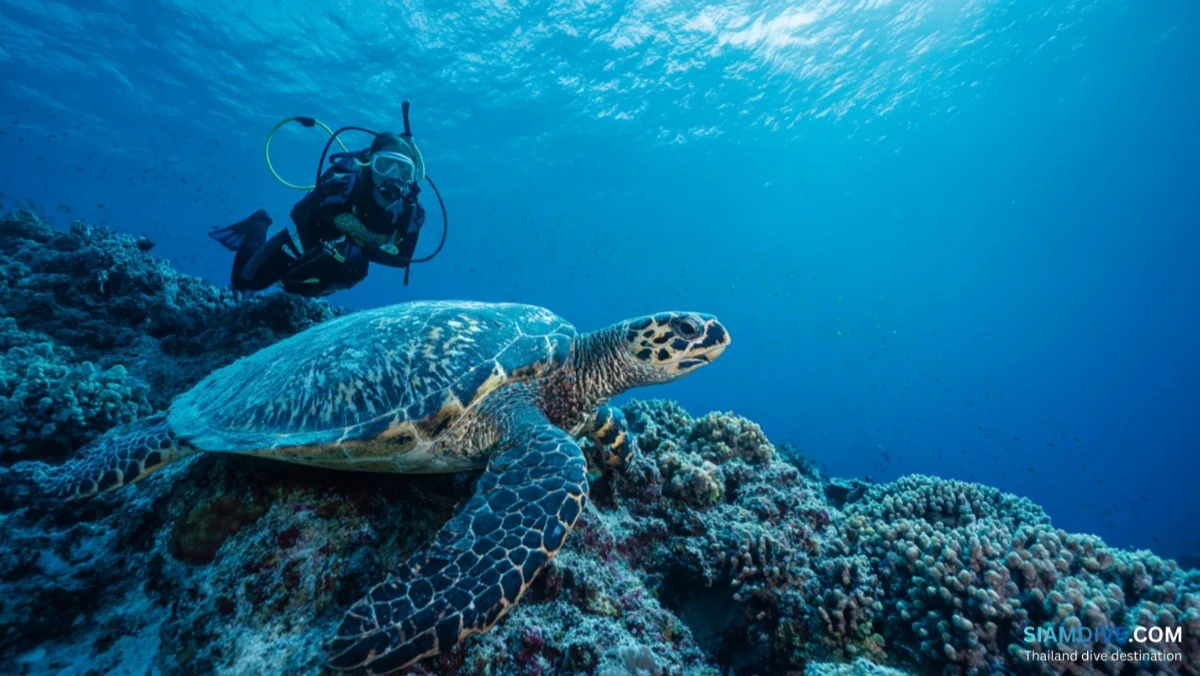
Sail Rock sits in open water where the deeper Gulf currents bring nutrients up against the pinnacle, creating a magnet for pelagic life that is unusual for the generally shallower Gulf of Thailand. The marine life here punches well above what you might expect from a Gulf coast dive site:
- Whale sharks: Sail Rock is the Gulf of Thailand's most reliable whale shark site. These gentle giants — the world's largest fish, reaching over 12 meters — are drawn to the plankton-rich waters around the pinnacle. Sightings peak between March and May during the first plankton bloom, and again from September to November during the second bloom. While never guaranteed, multiple whale shark sightings per week are common during peak months, and some divers have encountered them on back-to-back dives. Whale sharks here tend to cruise at diveable depths of 10-25 meters, giving patient divers genuine opportunities for extended close encounters.
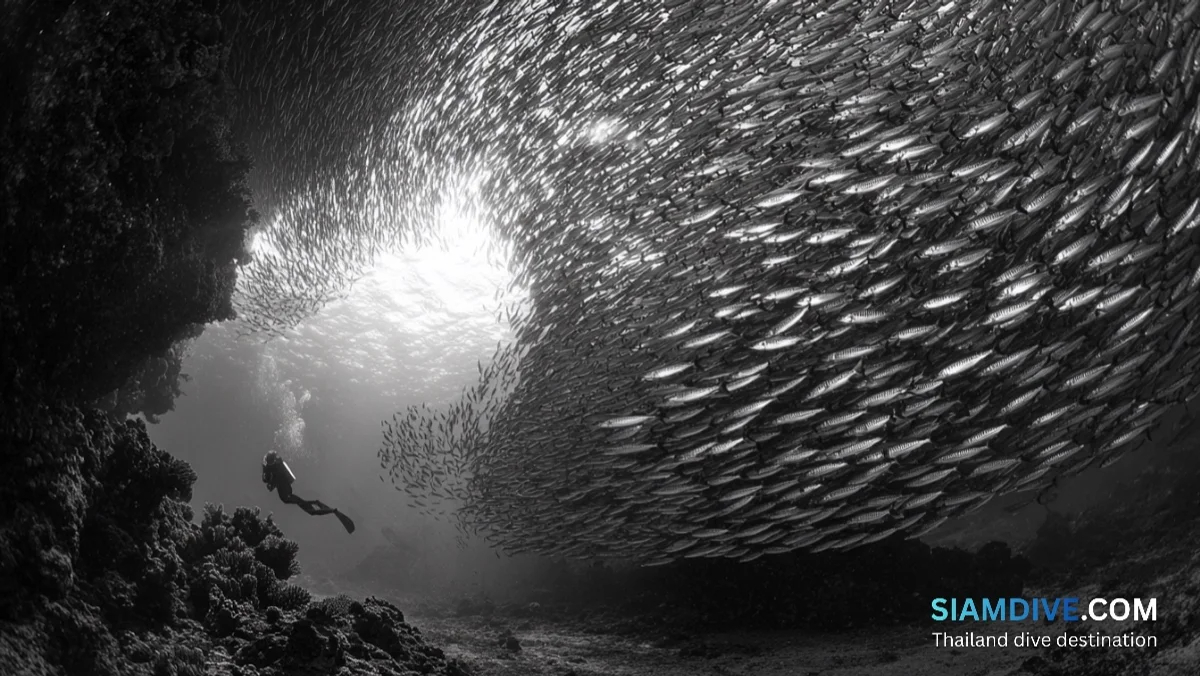
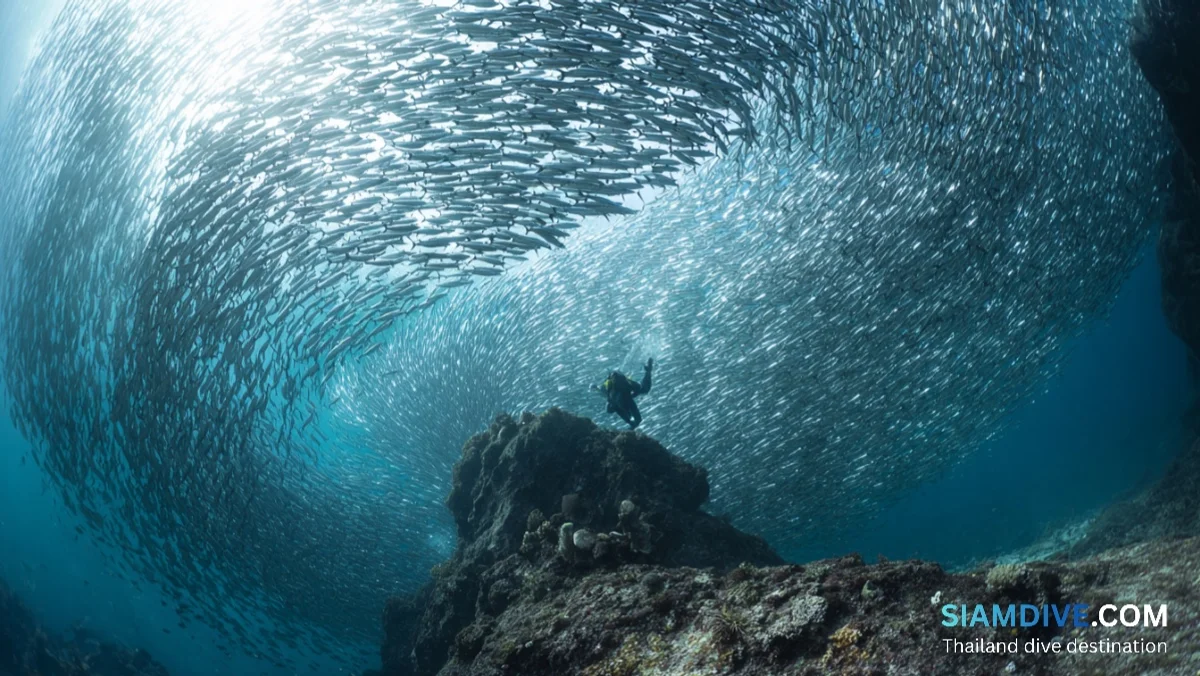
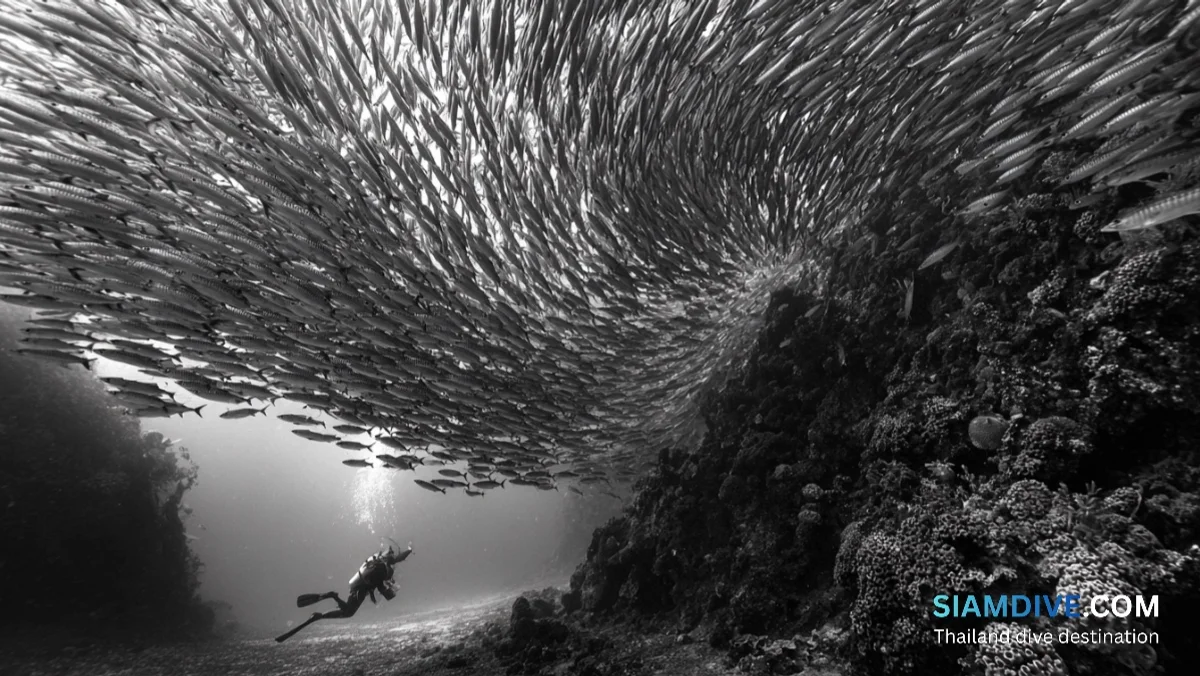
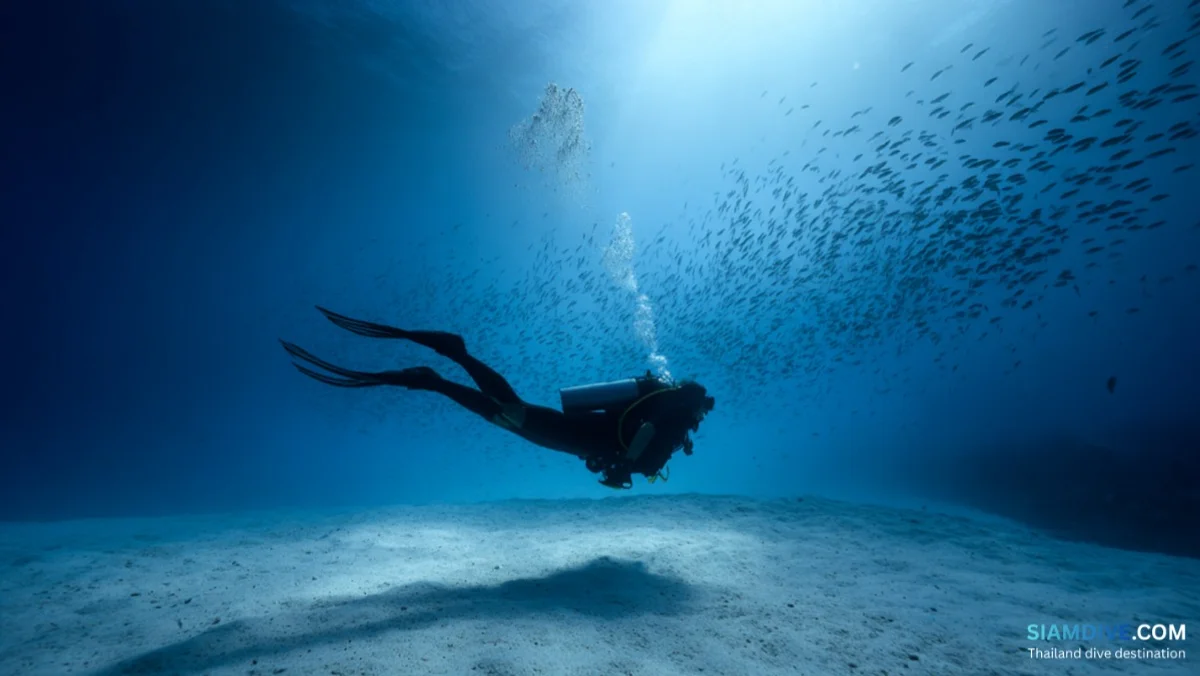
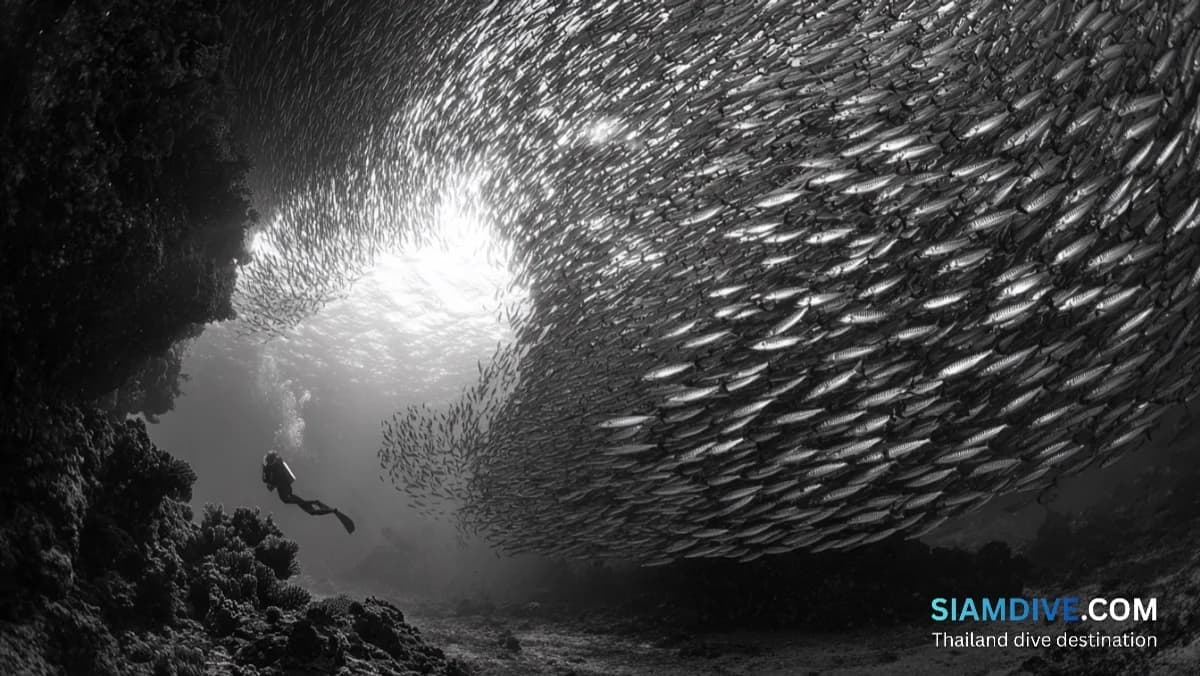
- Barracuda schools: Massive schools of chevron barracuda — often numbering in the thousands — circle the pinnacle in hypnotic tornado formations that are a signature sight at Sail Rock. The schools are present year-round but are largest and most active in the morning, when they form tight spiraling columns that can extend from the reef top to the surface. This is one of the most photographed and filmed underwater scenes in Thai diving, and seeing it in person is genuinely breathtaking. The barracuda are not aggressive toward divers and will often continue their formation just meters away from you.
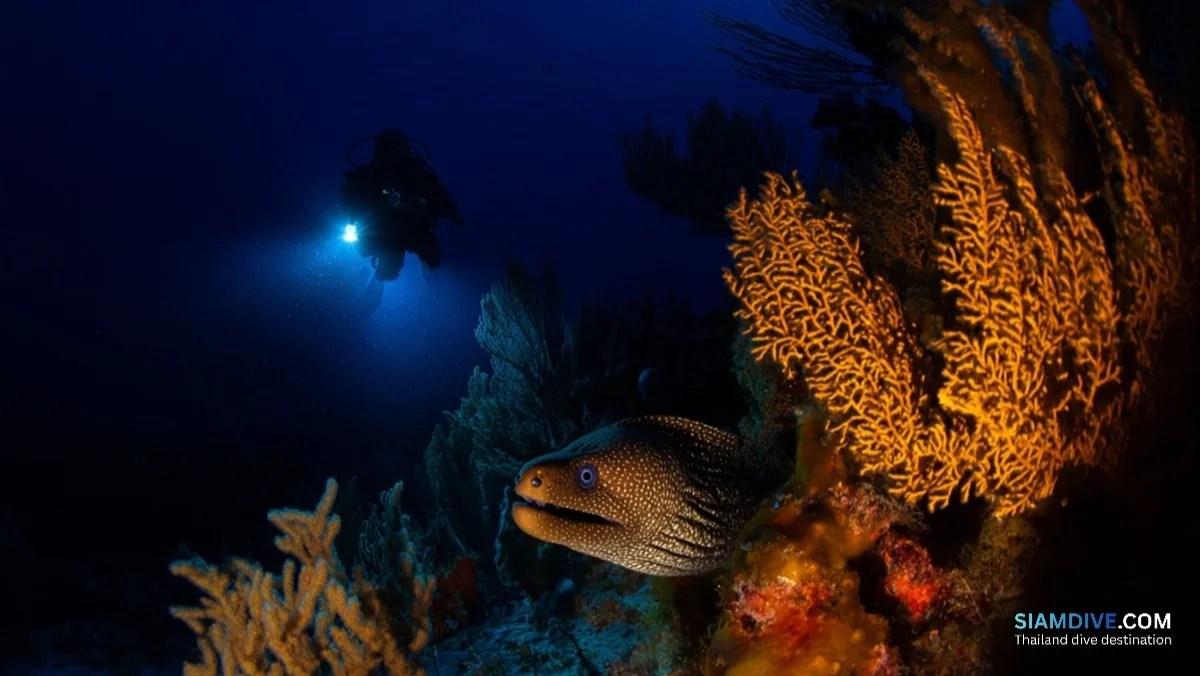
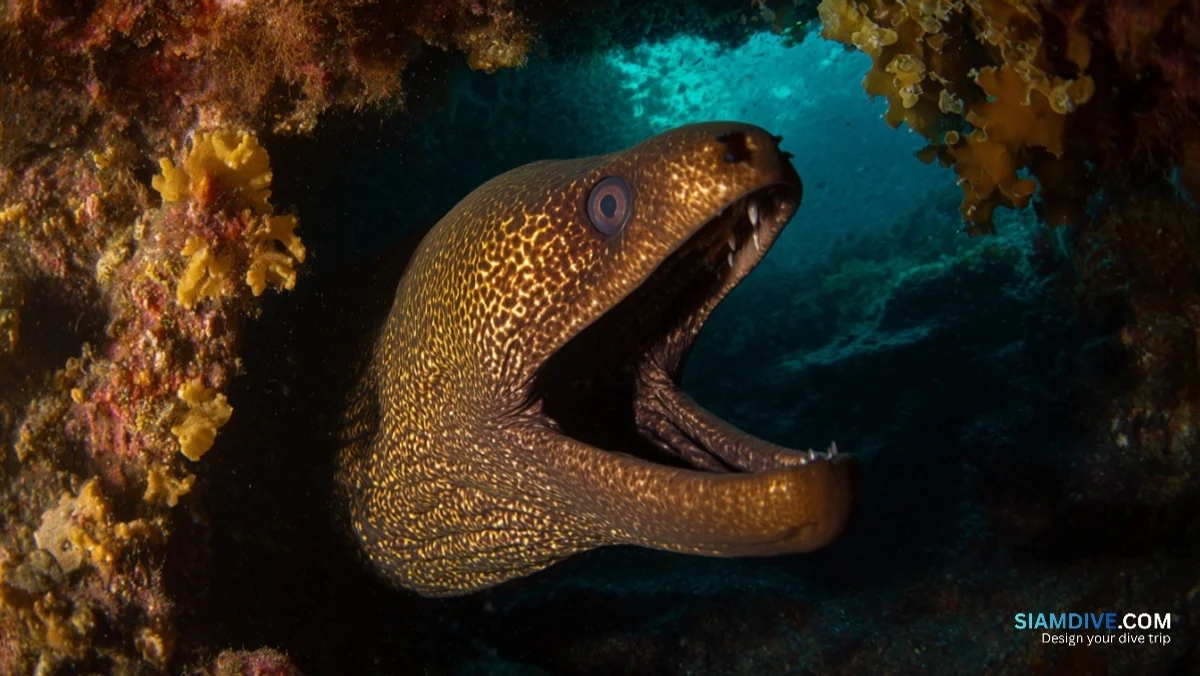
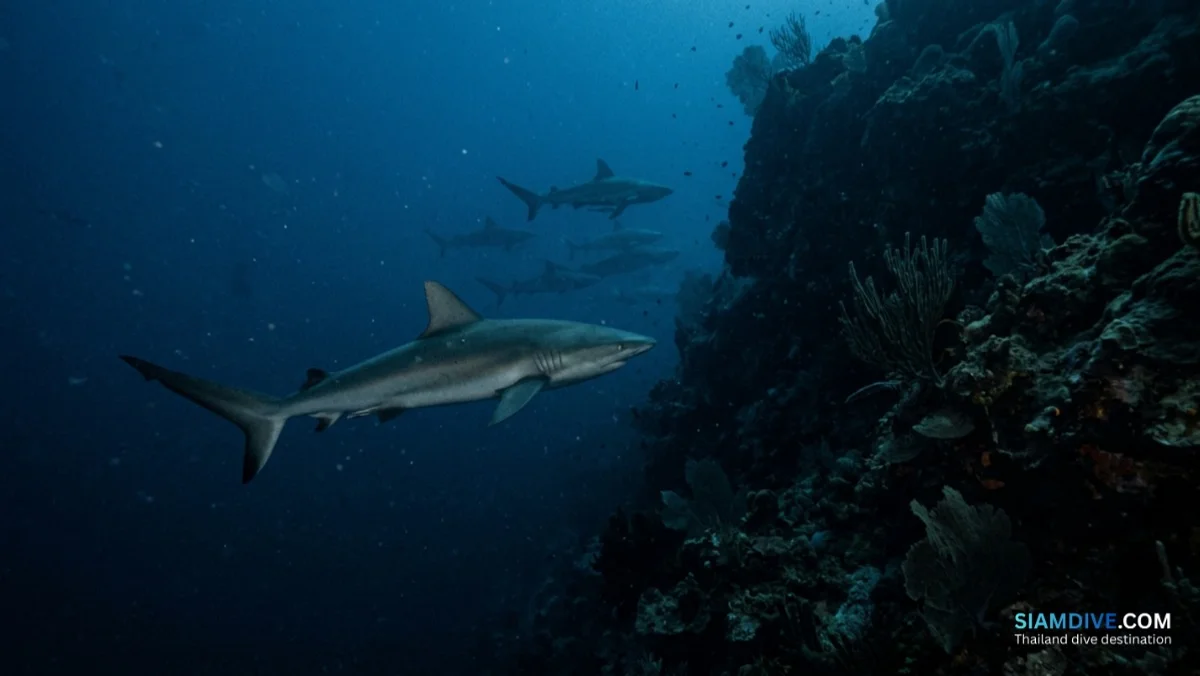
- Other highlights: Giant groupers weighing well over 100 kilograms lurk in the deeper crevices. Enormous schools of batfish gather in the mid-water, their flat bodies catching the light as they pivot in formation. Trevally and queenfish hunt along the edges of the pinnacle. Dense colonies of anemones host clownfish across the shallower sections. Bannerfish form walls of black-and-white along the rock face. The deeper sections host sea whips, soft corals, and occasional bull shark sightings that add an edge of excitement. At night, the pinnacle transforms: hunting lionfish stalk the ledges, cuttlefish hover in the torchlight, and decorator crabs emerge from hiding.
Best Time to Dive Sail Rock
One of Sail Rock's greatest advantages over Andaman Sea dive sites is that it is diveable year-round. There is no monsoon closure, no seasonal shutdown — you can dive Sail Rock in every month of the year. That said, conditions do vary:
- March-May: The best overall conditions. Visibility reaches 15-25 meters (excellent for the Gulf), water temperature climbs to a comfortable 29-30°C, and the first plankton bloom of the year brings the peak whale shark season. Seas are typically calm, making the boat ride comfortable. This is the prime window for serious divers.
- June-August: Good diving continues. Occasional rain squalls pass through but rarely affect underwater conditions significantly. Visibility remains reasonable at 10-20 meters. Whale sharks are still occasionally spotted. Water temperature stays warm at 28-29°C.
- September-November: The second whale shark peak driven by the autumn plankton bloom. Visibility can drop to 8-15 meters during heavy bloom periods, but this nutrient-rich water is exactly what brings the biggest animals. Some of the most spectacular whale shark encounters at Sail Rock happen during this window. Occasional storms can cancel trips on specific days.
- December-February: Cooler water at 26-28°C and generally good visibility of 10-20 meters. Fewer whale sharks during this period, but the resident marine life — barracuda, batfish, groupers, anemone communities — is as active as ever. The site is less crowded, which some divers prefer.
How to Get There
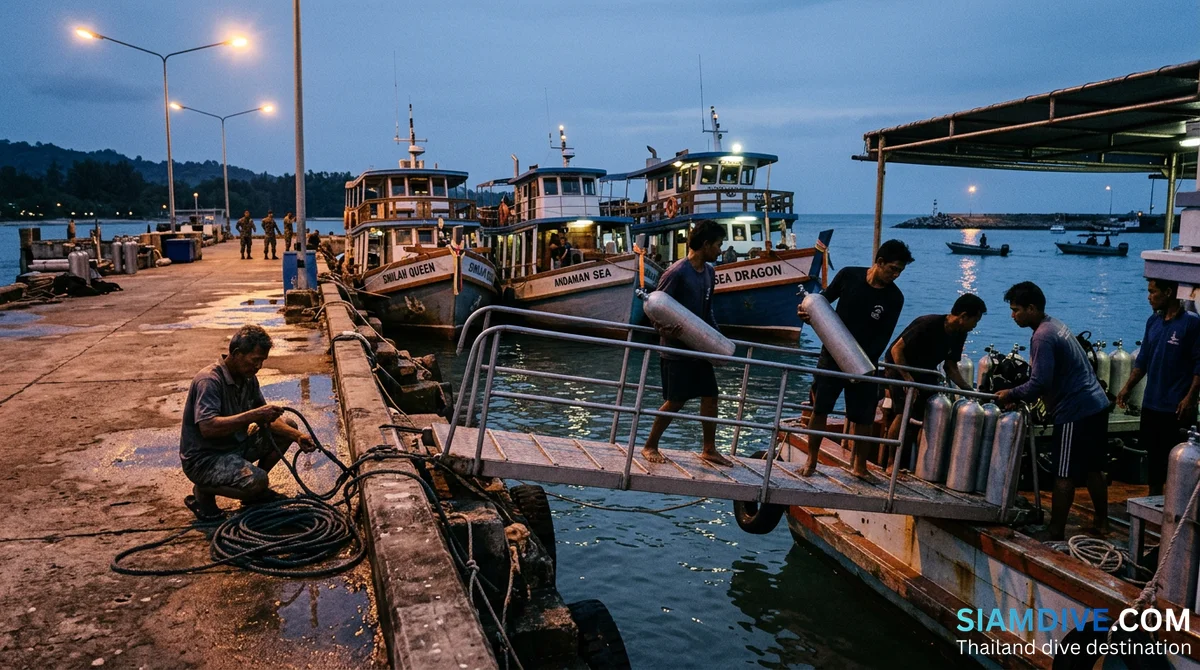
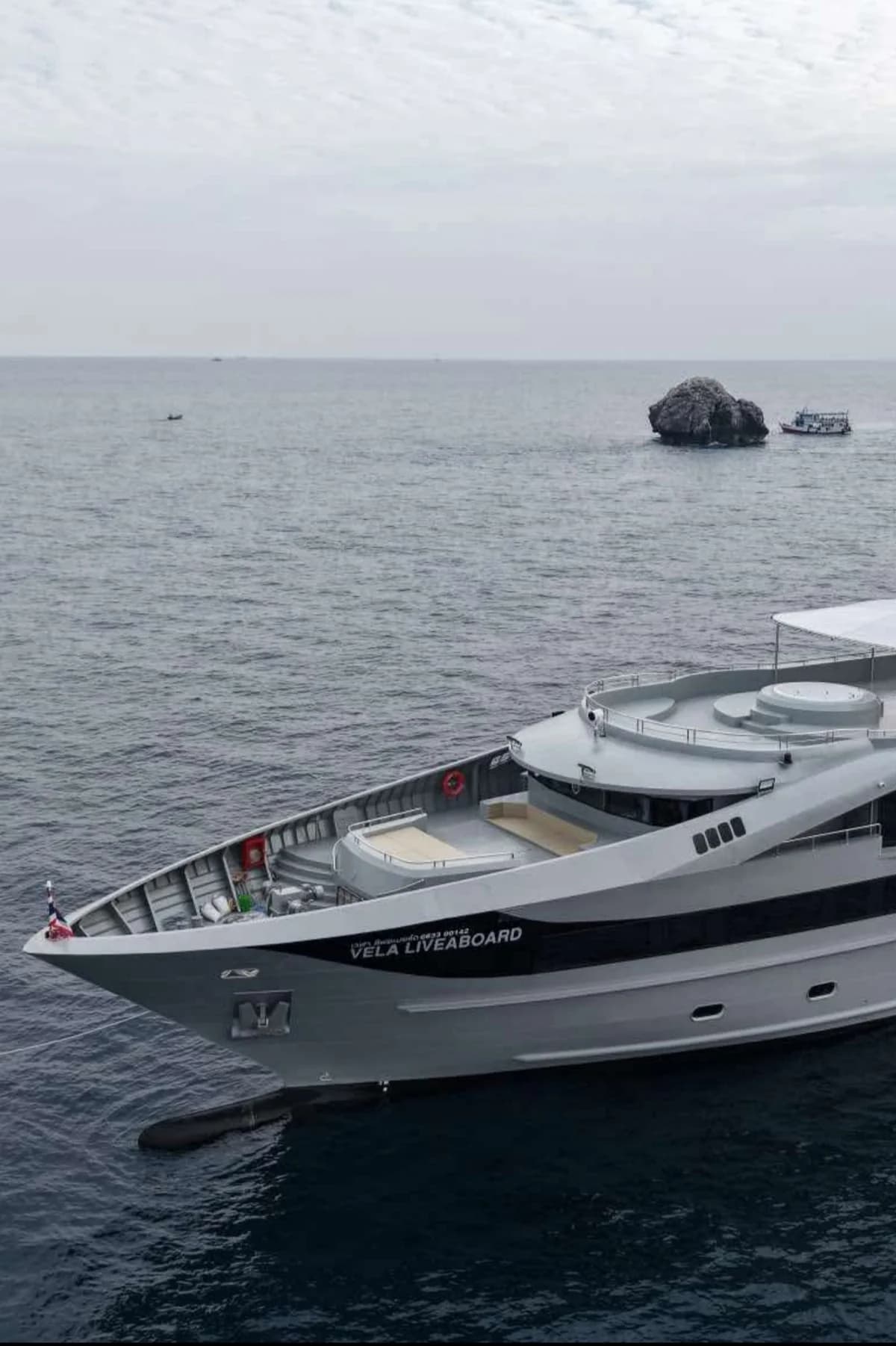
Sail Rock is located roughly equidistant between Koh Phangan and Koh Tao, making it accessible from both islands as well as from Koh Samui. The boat ride takes approximately 45-60 minutes from Koh Phangan or Koh Tao, and about 60-90 minutes from Koh Samui. Most dive operators offer full-day trips that include two boat dives at Sail Rock, surface interval snacks, lunch, drinking water, and hotel transfers.
To reach the departure islands: the most common route is to fly into Koh Samui airport (direct flights from Bangkok, Singapore, and other regional hubs) and take a 30-minute ferry to Koh Phangan, or a longer ferry to Koh Tao. Alternatively, fly to Surat Thani on the mainland and take a ferry — 2-4 hours depending on the service type (express catamaran versus night ferry). Both Koh Phangan and Koh Tao have well-established dive shop communities with PADI and SSI operators offering daily Sail Rock trips during good weather. Koh Phangan offers the slightly shorter boat ride and tends to have fewer divers per trip, while Koh Tao has the widest selection of dive operators and price competition.
Tips for Diving Sail Rock
- Book with reputable operators: On Koh Phangan, shops like Asia Blue Scuba, Blue Horizon Diving, and Oh-Hoo have excellent safety records, experienced guides who know Sail Rock intimately, and well-maintained equipment. On Koh Tao, the sheer number of shops means quality varies — check recent reviews and ask about guide-to-diver ratios.
- Prepare for open-water currents: Sail Rock sits in open water with no nearby reef to break the flow. Currents can be strong and unpredictable, sometimes changing direction mid-dive. Listen carefully to the dive briefing about which side of the pinnacle to descend on, where to shelter if current picks up, and the ascent plan. Carry an SMB.
- Master your buoyancy before the chimney: The chimney swim-through is narrow and its walls are covered in fragile living organisms. You need to be able to ascend vertically through the shaft without touching anything. If you are not confident in your buoyancy control, watch others go through first and attempt it on your second dive when you are more familiar with the site.
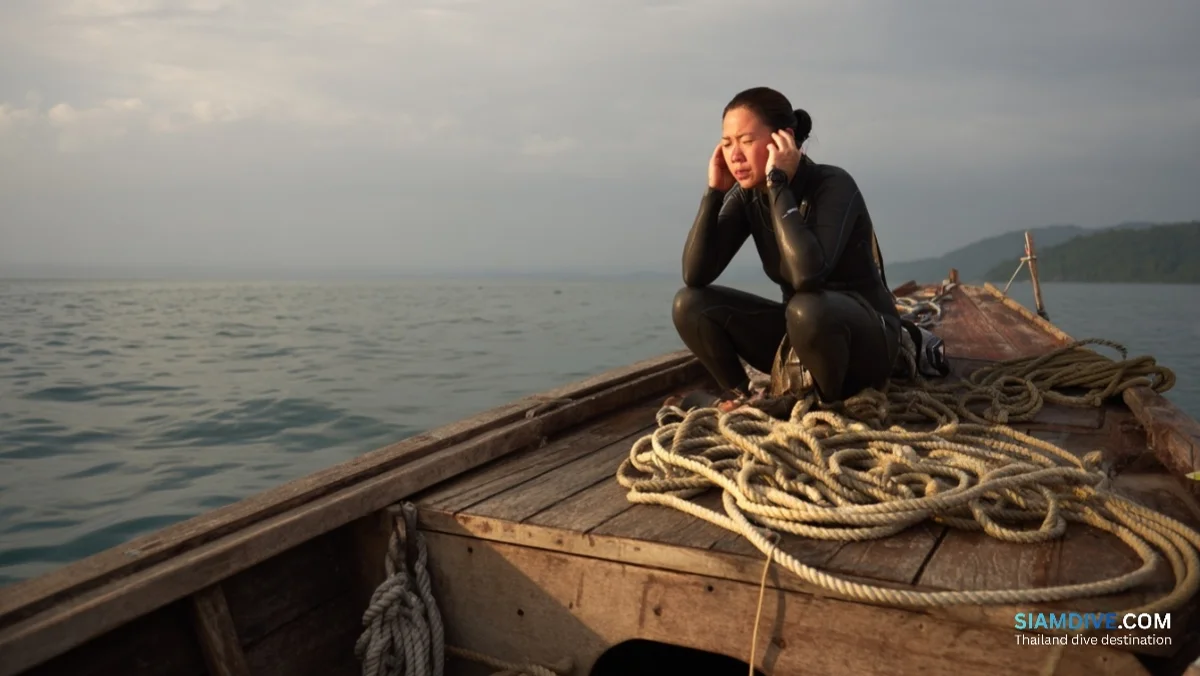
- Bring motion sickness medication: The open-water boat ride from any departure island can be rough, especially during transitional weather between seasons. The ride back is often rougher than the ride out because the wind typically picks up during the day. Take medication before departure, not on the boat.
- Go early in the day: Morning dives at Sail Rock typically offer better visibility, more active barracuda formations, and statistically more whale shark sightings. If your operator offers a choice of morning or afternoon departure, always choose morning.
- Multiple visits dramatically increase whale shark odds: If encountering a whale shark is your main objective, do not pin everything on a single trip. Plan to stay on Koh Phangan or Koh Tao for at least 3-4 days during peak season (March-May or September-November) and dive Sail Rock multiple times. Experienced divers at these islands report that 3-4 visits during peak months gives an excellent probability — though of course nothing in the ocean is ever guaranteed.
Final Thoughts
Sail Rock proves conclusively that world-class diving in Thailand is not limited to the Andaman Sea. This solitary pinnacle rising from the Gulf of Thailand delivers whale sharks, the most dramatic barracuda formations in the country, and a chimney swim-through that you will remember for the rest of your diving life — all year-round and all within an hour's boat ride from two of Thailand's most popular islands. Its accessibility, its year-round availability, and its unique combination of features make it arguably the single most important dive site in the Gulf of Thailand. Do not leave the Gulf coast without diving Sail Rock. Find operators, trip schedules, and current conditions at siamdive.com.