Every Khao Lak Dive Boat Leaves the Same Pier Until May 15
18 เมษายน 2569
Thap Lamu is Khao Lak's only dive pier, and it empties for 153 days every year. A 2026 guide to departures, day trips, and what actually works May–October.
A 7pm departure from Thap Lamu looks chaotic from the parking lot and ordinary from the briefing deck. Thirty minutes south of Khao Lak town, the navy port holds most of the dive boats Thailand's Andaman coast has any business running. On any night from mid-October to mid-May, eight to twelve liveaboards slip their lines between 8 and 10pm and sail five hours through the dark to the Similan Islands. Miss that seven-month window and the pier empties. That schedule — tied to one pier, bounded by a 153-day park closure — is the real shape of diving out of Khao Lak.
Thap Lamu: The Only Pier That Matters
The dive boats do not leave from Khao Lak's beach. They leave from Thap Lamu Pier, a sheltered naval port 12 km south of central Khao Lak, roughly 20 minutes by taxi. Fishing trawlers, navy patrol craft, and dive catamarans share the same wharf. There is no second marina handling divers — day boats and liveaboards both load here.
The reason is geography. The Similan Islands sit 65 km offshore from this exact stretch of coast, which makes Thap Lamu the closest mainland port with enough depth and shelter to run liveaboards. A boat leaving from Phuket has to cover another 50–60 km of open water to reach the same dive sites. For day boats, that difference alone is the case for Khao Lak: 50 to 80 minutes of speedboat time from Thap Lamu gets divers to the Similan sites, while the equivalent run from Phuket Chalong Pier is closer to two hours.
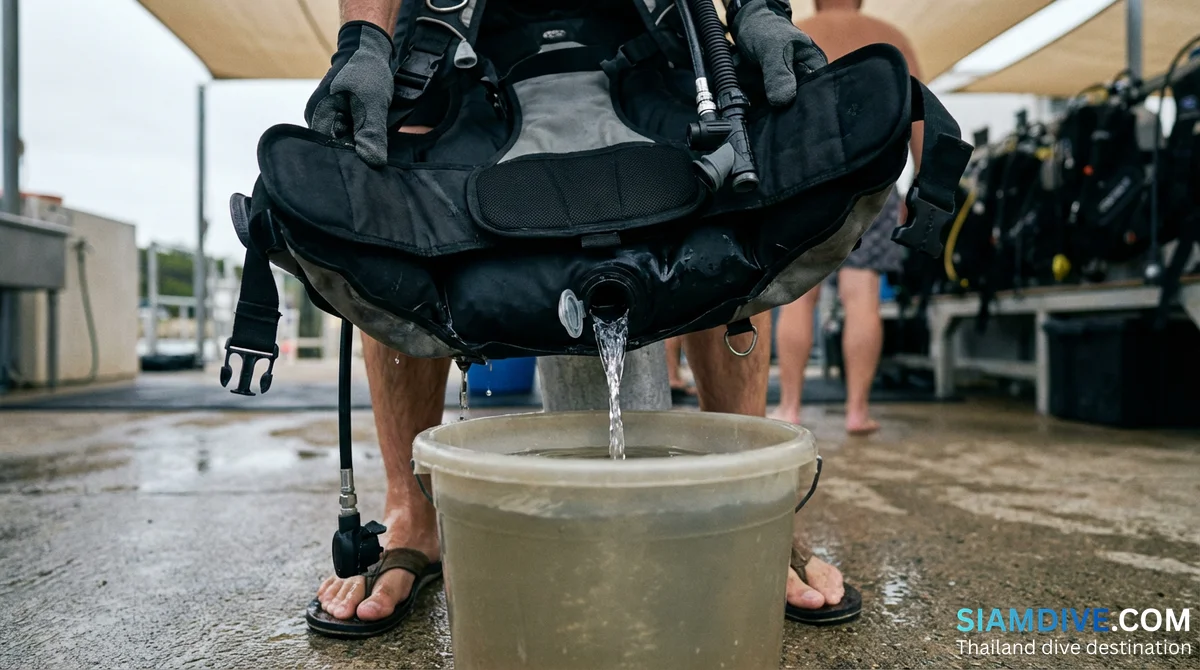
The pier itself is unglamorous. A concrete wharf, a fill station at the south end, a fuel dock for the navy, and a cluster of dive-shop vans dropping guests off two to three hours before any boat casts off. There is no terminal, no check-in counter; briefings happen on the deck of each boat or in a canopy tent beside the parking lot. Divers who expect a marina with cafés and departure lounges are in the wrong country. What Thap Lamu offers is a working port 30 minutes from an international airport, and that is enough to make it Thailand's busiest single point of dive departure.
Why the 20-Minute Drive Beats Phuket's Two Hours
Divers who land in Phuket and then liveaboard from Khao Lak often underestimate how much time the transfer swallows. The numbers from Thailand's published tour logistics:
| Origin | Drive time to Thap Lamu | Distance |
|---|---|---|
| Khao Lak town | ~20 min | 12 km |
| Phuket International Airport | ~90 min | ~70 km |
| Phuket town (Patong / Chalong) | ~2 hours | ~100 km |
| Krabi Airport | ~3 hours | ~200 km |
Most liveaboards pick up from both Phuket and Khao Lak hotels, but the Khao Lak-based diver keeps roughly two hours of their trip day that a Phuket-based diver spends in a transfer van. On the return, the same math runs in reverse: boats that dock at Thap Lamu around 3pm deliver Khao Lak guests home by 4pm and Phuket guests by 6pm or later. For a three-day liveaboard, that is a quarter of a dive day, and it is the main reason shops recommend Khao Lak accommodation for anything longer than a single overnight trip.
Day Trips: What Fits in a Single Thap Lamu Morning
Three day-trip itineraries run out of Thap Lamu in season, and a fourth shoulder option survives year-round when weather allows. The menu, with typical 2026 pricing:
| Site | Depth | One-way travel | Certified day trip (2026) |
|---|---|---|---|
| Boonsung Wreck (coastal) | 14–20 m | ~40 min | 2,500 THB + 7% VAT (Khao Lak Scuba Adventures) |
| Similan Islands (3 dives) | 5–40 m | 50–80 min | 5,600 THB + 700 park fee (Sea Bees) |
| Koh Bon / Koh Tachai | 18–40 m | ~90–120 min | from 6,500 THB + park fees |
| Richelieu Rock (rare) | 14–35 m | ~2.5 hrs | from 7,500 THB + park fees |
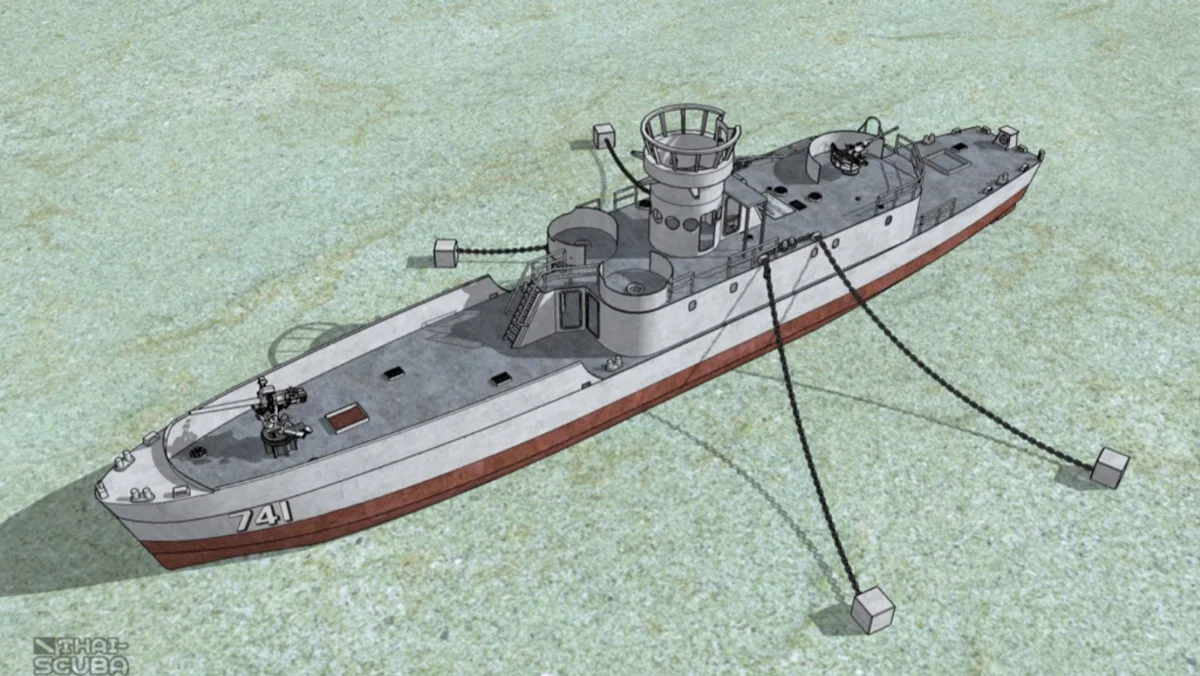
The Boonsung Wreck is the site that keeps Khao Lak day trips alive. It is a 1984 sinking of a tin-mining dredger, sitting in 14 to 20 metres of water about an hour off Bang Niang Beach. The wreck is shallow enough for Open Water divers, close enough that shops can run it as an afternoon trip rather than a full-day excursion, and outside the national park, which means it is not subject to the Similan seasonal closure. For advanced divers, a combined day with the Boonsung plus a second coastal reef runs roughly 2,500 to 3,800 THB with gear.
The Similan day trip is a different animal. Speedboats carrying 20–40 passengers leave around 7:30 in the morning, run three dives across Islands 7, 8, and 9, and land back at Thap Lamu by 5pm. It is a long day with the tank rigs strapped to outriggers rather than on a dedicated dive deck — fine for certified divers, uncomfortable for anyone who still thinks about buoyancy. See our Similan Islands Diving Guide for a site-by-site breakdown of what a day boat can cover versus what requires a liveaboard.
Liveaboards: The 7pm Departure Ritual
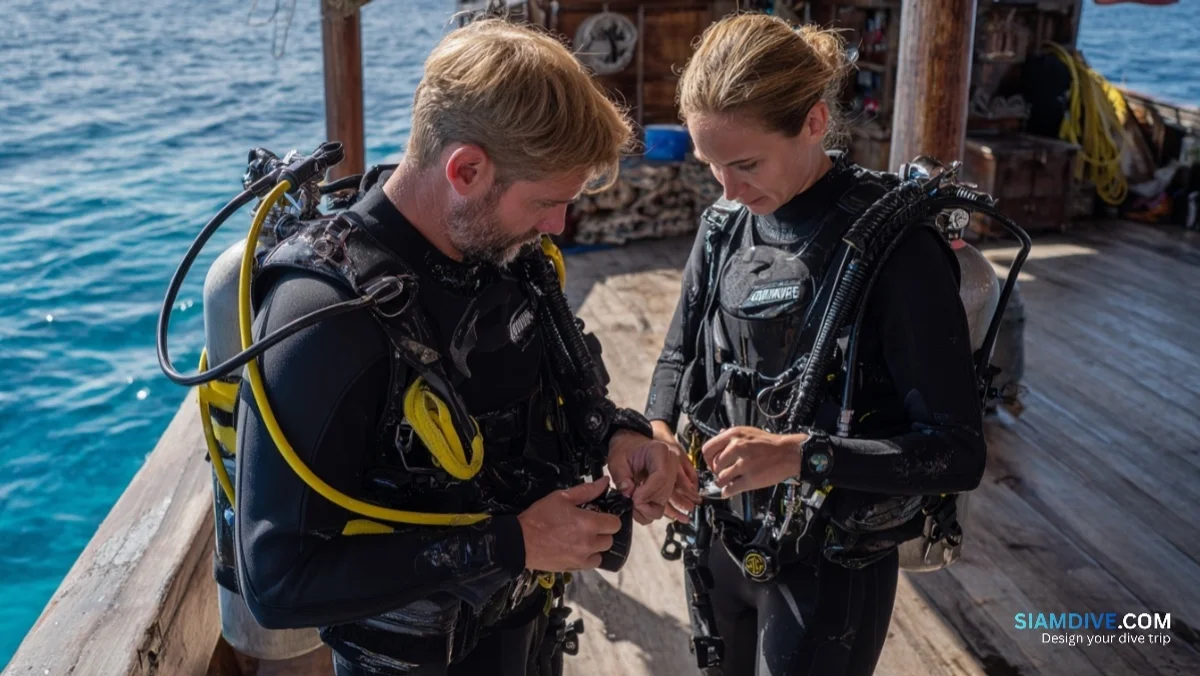
The liveaboard day begins at Thap Lamu's forecourt around 6pm. Crews are moving tanks from fill stations to boat decks; dive briefings are being stapled; guests arrive from Khao Lak hotel transfers between 6:30 and 7:30. Most boats cast off between 8pm and 10pm and cruise overnight with only the captain awake. Four dives a day start at 6:30 the next morning, before either the sun or the tourist speedboats reach the sites.
The fleet leaving Thap Lamu in 2026 is larger and newer than most divers expect:
- MV Sawasdee Fasai — 37-metre steel hull, departs Thap Lamu in the evening and returns around 3pm on the final day. Standard 4D4N Similan/Koh Bon/Richelieu route.
- MV DiveRACE Class X — launched mid-March 2026, brand-new hull running 4-night Similan / Koh Bon / Koh Tachai itineraries from roughly THB 13,000 per day.
- Manta Queen fleet — multiple hulls operated by Khao Lak Scuba Adventures, budget and mid-range pricing on the same week of 4D4N routes.
- Sawasdee Fasai, DiveRACE, Deep Andaman Queen, MV Pawara and MV Thailand Aggressor all share the same pier. The booking question is less "which pier" and more "which boat class and which itinerary length."
For a breakdown of which route suits which diver, the Thailand liveaboard routes comparison covers the northern (Similan-Koh Bon-Richelieu) versus southern (Hin Daeng-Hin Muang) trade-offs, and How to Choose the Right Liveaboard Trip in Thailand walks through cabin class, dive volume, and deposit structures.
The 15 May Shutdown
Mu Ko Similan National Park operates on a fixed 7-month open season. The 2025–26 dates, confirmed by the park authority and by every Thai tour operator publishing 2026 schedules:
- Open: 15 October 2025 → 15 May 2026
- Closed: 16 May 2026 → 14 October 2026
- Daily visitor cap during open season: 3,850 people across the entire park
The closure is not negotiable. The park does not issue permits, concession dives, or operator exemptions during the off-season. The reason is partly biological — coral recovery during the southwest monsoon — and partly practical: sea state between June and September makes the 65 km open-water run from Thap Lamu genuinely dangerous for anything smaller than a liveaboard.
Entry fees during the open season, per the 2025–26 schedule:
| Visitor | Park entry (per day) | Diving fee (per day) | Total daily (diver) |
|---|---|---|---|
| Foreign adult | 500 THB | 200 THB | 700 THB |
| Thai adult | 50 THB | 200 THB | 250 THB |
| Thai child | 20 THB | 200 THB | 220 THB |
A 4-day liveaboard that re-enters the park boundary on multiple days typically bills foreign divers 1,800–2,300 THB in park fees on top of the boat price. Operators collect this separately in cash or via the pre-trip invoice; it is rarely bundled into a headline "liveaboard price." The diving fee is charged per day of diving rather than per dive, which matters when a boat re-enters the park on days three and four of a four-night itinerary and re-triggers the full 700 THB foreign-adult daily total.
What Khao Lak Does from 16 May to 14 October
The honest answer is: less than the marketing suggests. When Mu Ko Similan closes, roughly 70% of Khao Lak's dive centres reduce staff, move instructors to Phuket-based operations, or shut the Khao Lak shopfront entirely until September. The boats sit at Thap Lamu and have their engines serviced. This is the genuine shoulder season, and it is not a diving season.
Three things still work:
- Non-Similan Andaman liveaboards. Sea Dragon Dive Center is running an 18 May–30 June 2026 Andaman route (4D4N, 14 dives including one night dive) covering Koh Haa, Hin Daeng, Hin Muang, Phi Phi, and Racha Noi. These sites sit in the southern Andaman outside Similan park boundaries and remain legally divable through early monsoon.
- Boonsung Wreck day trips. The wreck is in coastal water outside park control, so day boats run it whenever the sea state allows — typically June mornings, rarely after mid-July.
- Phuket day trips via Chalong. A Khao Lak-based diver in June can shift 90 minutes south and pick up Racha Noi / Shark Point / Phi Phi day trips out of Phuket, where the dive calendar runs twelve months.
For divers choosing a base in the shoulder season, the Phuket vs Koh Tao vs Khao Lak comparison is worth reading: the answer for June–September is usually "not Khao Lak."
Booking the Pier: Timing, Deposits, and the Andaman Advantage
Thap Lamu runs three distinct booking seasons during its seven-month window:
| Window | Demand | Conditions | Pricing note |
|---|---|---|---|
| Late Oct – early Dec | Medium | Season opens; visibility improving | Shoulder pricing, good availability |
| Dec – mid-Jan | High (holiday) | Good viz; Western holiday crowd | Peak holiday pricing, book 2–3 months ahead |
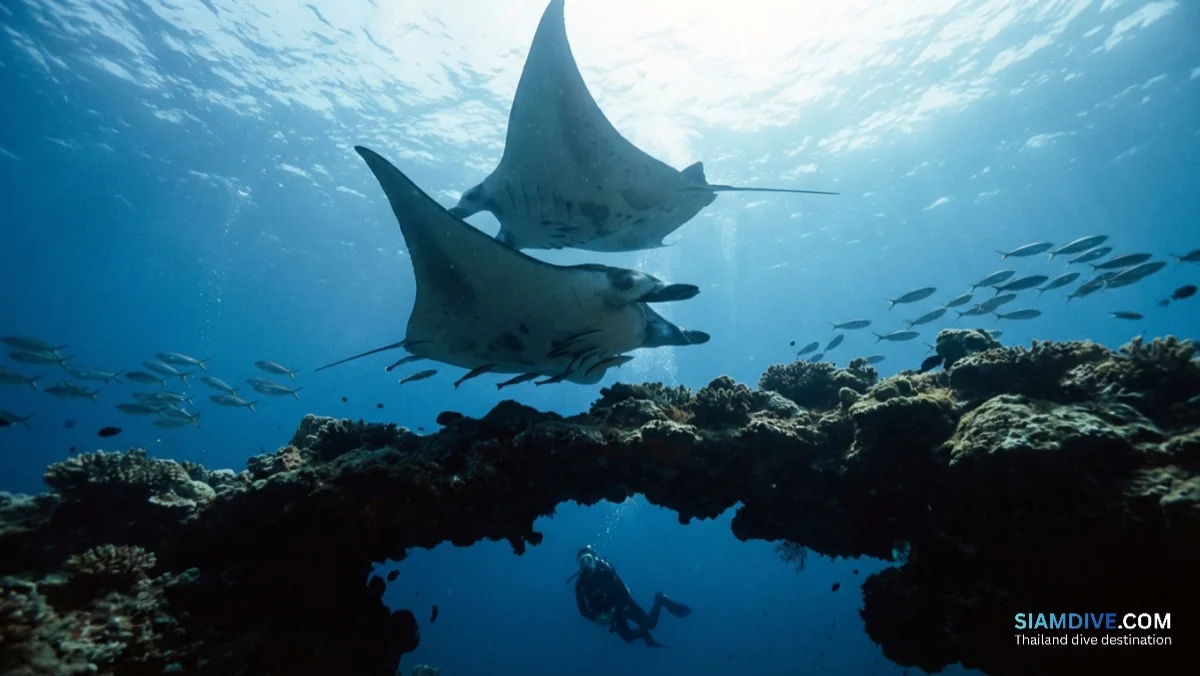
| Late Jan – mid-April | Very high | Best viz of the season; manta and whale-shark peak | Full peak; 3–6 months lead time |
| Mid-April – 15 May | Low | Good conditions through early May, deteriorating late | Late-season discounts appear |
February and March are the months the Andaman usually beats the Gulf, and they are the hardest weeks to secure a cabin at Thap Lamu. For the 2026–27 season, Big Blue Diving is currently taking 20% deposits on cabins with the full balance due 1 October 2026, plus a 10% early-booking discount on 2026–27 trips — a typical early-bird structure for the pier.
The short version for anyone deciding where to base a dive trip to the Andaman: Thap Lamu is the pier, Khao Lak is the base, and the calendar closes on 15 May. Everything else — the boat choice, the itinerary length, the cabin class — is a second-order decision once those three facts are set.
Sources
- Dive Happy — Thap Lamu Pier, Khao Lak
- 5 Star Marine Phuket — Similan Islands close 15 May 2026
- Aussie Divers Phuket — Similan and Surin National Park fees 2025–26
- Sea Bees Diving — Khao Lak Wreck day trip pricing
- Thailand Liveaboards — MV DiveRACE Class X 2026 schedule
- Sea Dragon Dive Center — 2026 Andaman shoulder-season itinerary
- Nation Thailand — Similan Islands close for 5 months (3,850 daily cap)