What 3,000 Lumens Actually Do to a Sleeping Reef Fish
29 เมษายน 2569
Research shows reef fish lose memory at 0.5 lux. A spec-by-spec comparison of 1,000 vs 3,000 lumen dive torches — and why a red filter changes everything.
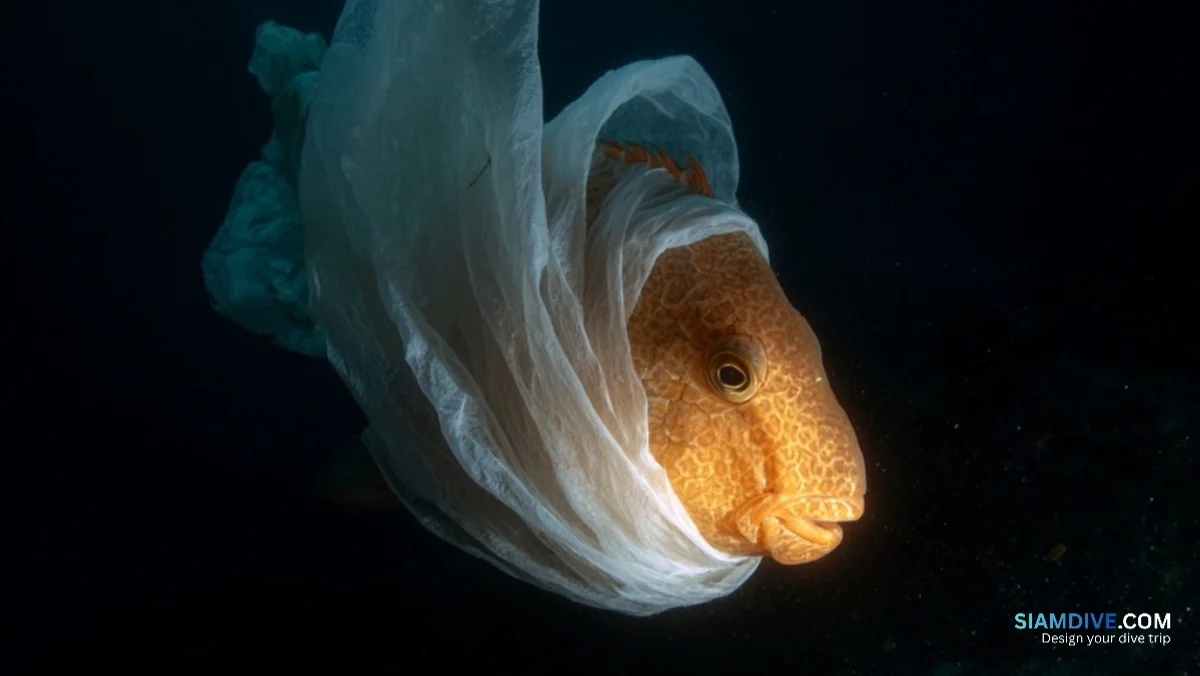
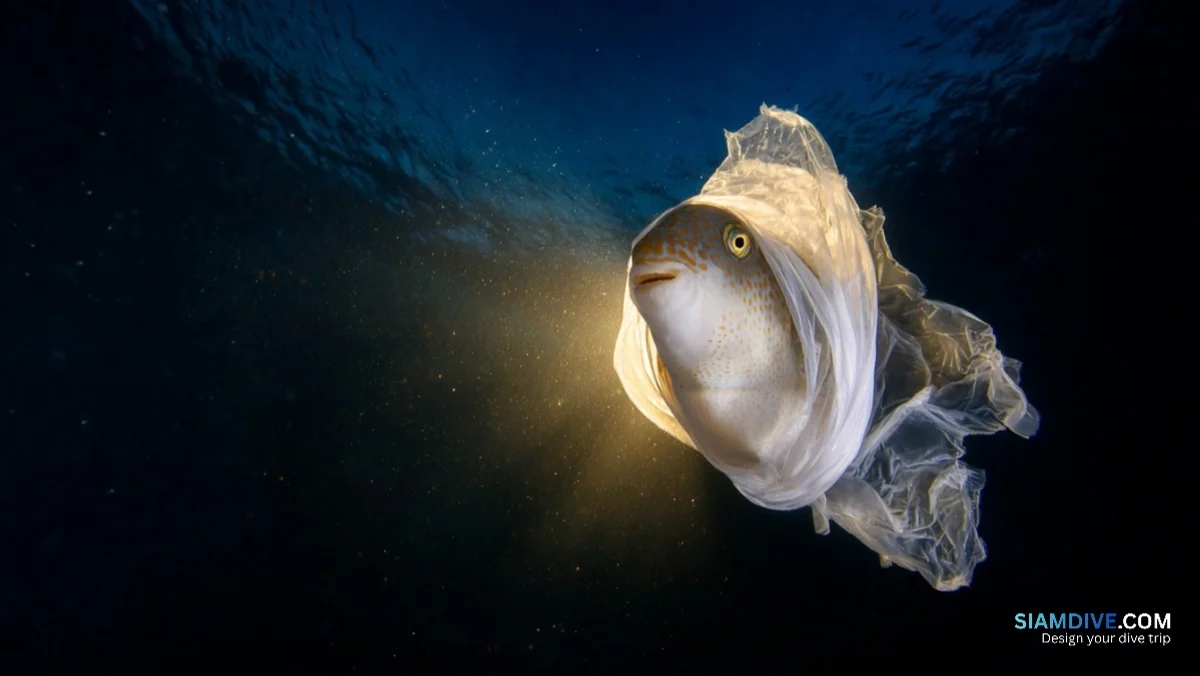
A parrotfish wraps itself in a mucus sleeping bag at 12 metres. The membrane is translucent, fragile, and took twenty minutes to spin. A diver swings a 3,000-lumen torch across the boulder, and the cocoon lights up like a lantern. The fish thrashes, tears through its own membrane, and bolts into open water. Whatever metabolic reset that cocoon provided — protection from parasites, camouflage from moray eels — is gone for the night.
That diver probably picked the brightest torch on the shelf because bright sells. Lumen counts sit front and centre on every product box — 1,000, 3,000, sometimes 5,000 — and the assumption is straightforward: more output equals better visibility. Underwater, the equation fractures. Light travels through seawater differently than air, marine life responds to artificial illumination in ways that peer-reviewed research is only now quantifying, and the torch that cuts through Phuket's monsoon murk may be ecological overkill on a clear Similan night dive.
The Number on the Box vs. the Number in the Water
Lumens measure total light output at the source — the emitter, before the lens, the reflector, and the water column take their cut. Seawater absorbs and scatters photons at a rate that air cannot match. Red wavelengths vanish within the first 5 metres of depth. By 20 metres, even a 3,000-lumen beam delivers a fraction of its rated intensity to whatever it strikes.
Beam angle matters as much as raw output. A 6-degree spot concentrates energy into a tight cone that pierces distance but illuminates a patch the size of a dinner plate. A 70-degree flood spreads the same energy across a wall of coral, delivering less intensity per square centimetre but far more coverage. A 1,000-lumen torch with a 12-degree beam can illuminate a moray's den at 15 metres with more useful punch than a 3,000-lumen flood at the same distance.
Then there is backscatter. In particulate-heavy water — monsoon-season Gulf of Thailand, post-storm Andaman sites — a high-output beam reflects off suspended sediment and creates a bright fog between the diver and the subject. Reducing output or switching to a wider beam angle often produces better effective visibility than adding lumens. The spec sheet never explains this, because the spec sheet sells a number.
What Half a Lux Does Inside a Fish Eye
Reef fish are not passive targets. Their retinas adapt to ambient light on timescales that would surprise most gear reviewers.
A 2022 study published in Molecular Ecology demonstrated that both juvenile and adult reef fish show rapid light-induced plasticity in their visual system. Opsin gene expression — the molecular machinery that converts photons into neural signals — shifted within hours of altered light conditions and reverted within 24 hours once normal lighting returned. The fish's eye is fast, but the disruption window during exposure is real and measurable.
Chronic exposure makes things considerably worse. Research published in Proceedings of the Royal Society B tracked juvenile anemonefish exposed to artificial light at an intensity of 4.3 lux — roughly what a 1,000-lumen torch delivers at 8 metres distance — over 18 to 23 months. Survival dropped 36 percent. Growth declined 44 percent. The control group, living under natural moonlight at 0.03 lux, outperformed on every metric.
A January 2026 study on Amphiprion ocellaris pushed the finding into shorter timeframes: artificial white light impaired learning and memory after just two consecutive nights of exposure, with effects emerging at intensities as low as 0.5 lux. Blue and green wavelengths caused the most damage. Red light, at every intensity tested, had no detectable effect on cognition. That single data point reshapes the buying decision for anyone who dives reefs at night.
None of this means a single torch sweep kills a reef. It means the assumption that marine life does not care is wrong, and the gap between a responsible light choice and a damaging one is measurable in both lumens and wavelength.
1,000 vs 3,000 — Six Dimensions That Shift the Choice
Strip away the marketing and the comparison breaks into six measurable dimensions. Each one shifts depending on where and how you dive.
- Usable range in clear water (25 m+ visibility) — A 1,000-lumen spot reaches comfortably to 10–12 metres, covering every realistic signalling and creature-spotting scenario on a tropical night dive. A 3,000-lumen spot extends that to roughly 18–20 metres — useful for wide-angle video lighting but rarely necessary for navigation.
- Usable range in murky water (sub-5 m visibility) — Backscatter punishes high-output lights. A 3,000-lumen beam in sediment-heavy water creates a wall of reflected particles that reduces contrast rather than improving it. Divers at Gulf of Thailand sites often report better results stepping down to 1,000 lumens or switching to a flood beam.
- Burn time on a single charge — A compact 1,000-lumen torch running a single 18650 cell delivers roughly 90–125 minutes on high, enough for two standard dives before recharging. A 3,000-lumen torch on a 21700 cell runs 60–80 minutes at full output — which may not cover a second dive without swapping batteries or plugging into USB-C between dives.
- Weight and trim impact — The 1,000-lumen class averages 180–250 grams in water. The 3,000-lumen class, with its larger battery and heat-sink body, runs 300–450 grams. That extra mass on one arm affects trim the same way an oversized mask shifts face squeeze — most divers compensate without realising they have started to.
- Marine impact at operating distance — At arm's length on a night dive, a 3,000-lumen spot delivers well above the 0.5-lux threshold that impaired clownfish cognition in controlled studies. A 1,000-lumen flood sits closer to the threshold. A red-filtered variant of either drops below it entirely.
- Price in Thailand — The 1,000-lumen bracket runs 2,500–4,500 THB for a reliable branded unit. The 3,000-lumen bracket starts at 4,000 THB and climbs past 8,000 THB for models with adjustable beams and USB-C direct charging.
Three Torches, Three Budgets
These are not ranked first to third — each fills a different slot in the decision tree below.
- 1,000-lumen compact (2,500–3,500 THB) — Typical specs: single 18650 cell, 12-degree spot or switchable spot/flood, 90–120 minutes burn on high, depth rated to 100 metres, approximately 200 grams in water. This is the torch that fits a BCD pocket, covers a night dive from briefing to safety stop, and does not overpower a reef at arm's length. It lacks the reach for wide-angle video, but most recreational night divers never need it.
- 1,500-lumen adjustable (4,000–5,500 THB) — The newer adjustable-beam models let a single torch work as both a spot for signalling — as narrow as 4 degrees — and a flood for scanning at up to 72 degrees. A 21700 cell gives 100–130 minutes. The adjustability adds one more dial to manage, but the versatility suits divers who alternate between murky Gulf sites and clear Andaman walls without carrying two torches.
- 3,000-lumen primary (5,500–9,000 THB) — Built for technical divers, videographers, and conditions that justify the output. 21700 cell, 6-degree spot beam, 60–80 minutes on high, 150-metre depth rating, thermal management circuitry that dims output automatically before the housing overheats. For wide-angle video, this is the minimum useful output. For a standard night dive on a Thai reef, it is more tool than the task requires.
The Red-Light Fix
Deep-sea researchers solved the marine-impact problem decades ago. Red light — wavelengths above 620 nanometres — is the first colour seawater absorbs. By 5 metres depth, almost no ambient red light remains, which means most reef fish have either reduced or absent photoreceptors for it. Shining a red beam at a sleeping parrotfish produces no measurable startle response in field observations, and the 2026 clownfish study confirmed that red light caused zero detectable memory impairment at any tested intensity.
Two practical options exist:
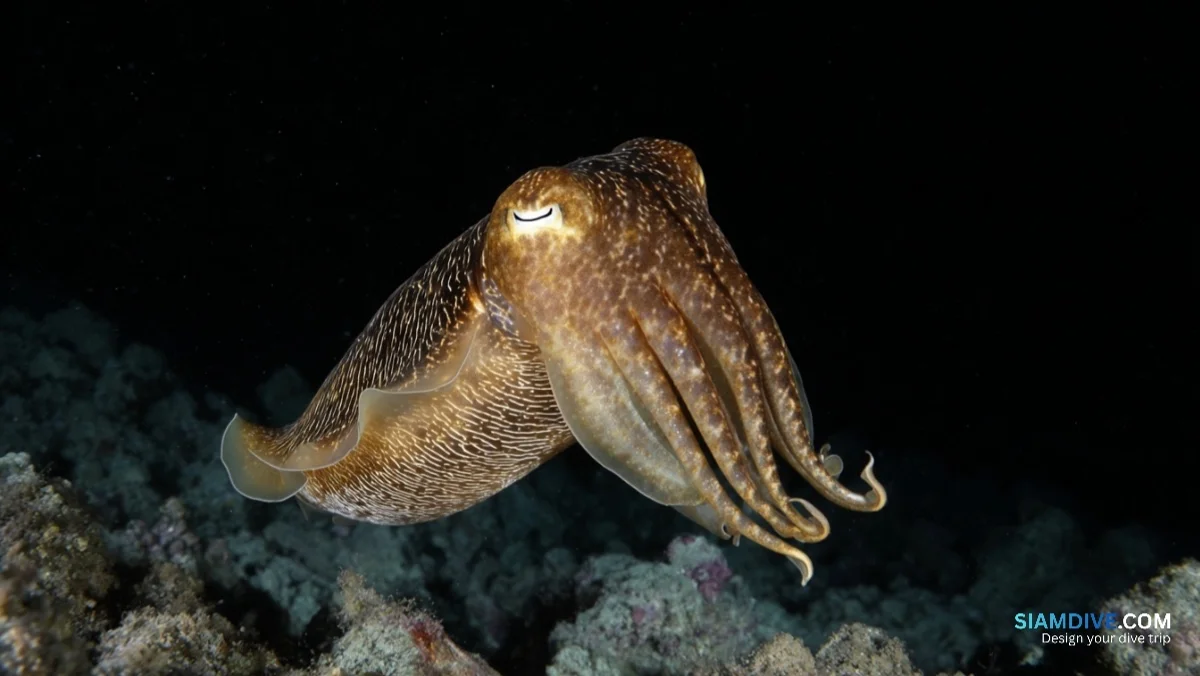
- Screw-on red filter — Fits most standard-diameter torch heads. Cuts total output by roughly 40 percent but preserves the beam pattern. Cost: 300–800 THB. Works well for observing cuttlefish colour displays and sleeping reef fish without disrupting natural behaviour.
- Dedicated red-LED mode — Some models include a secondary red LED alongside the main white emitter. Output is typically 50–200 lumens in red, more than enough for navigation and creature observation. The switch sequence — usually a long-press or double-tap — needs to become muscle memory before the dive, not during it.
Neither option works for underwater photography or video. Colour rendition under red illumination is unusable for imaging. Photographers face an inherent trade-off: the output that makes a good image is the output that most disrupts the subject. The ethical middle ground is short, targeted bursts rather than sustained illumination — light the shot, take the shot, kill the light.
Beam Manners After Dark
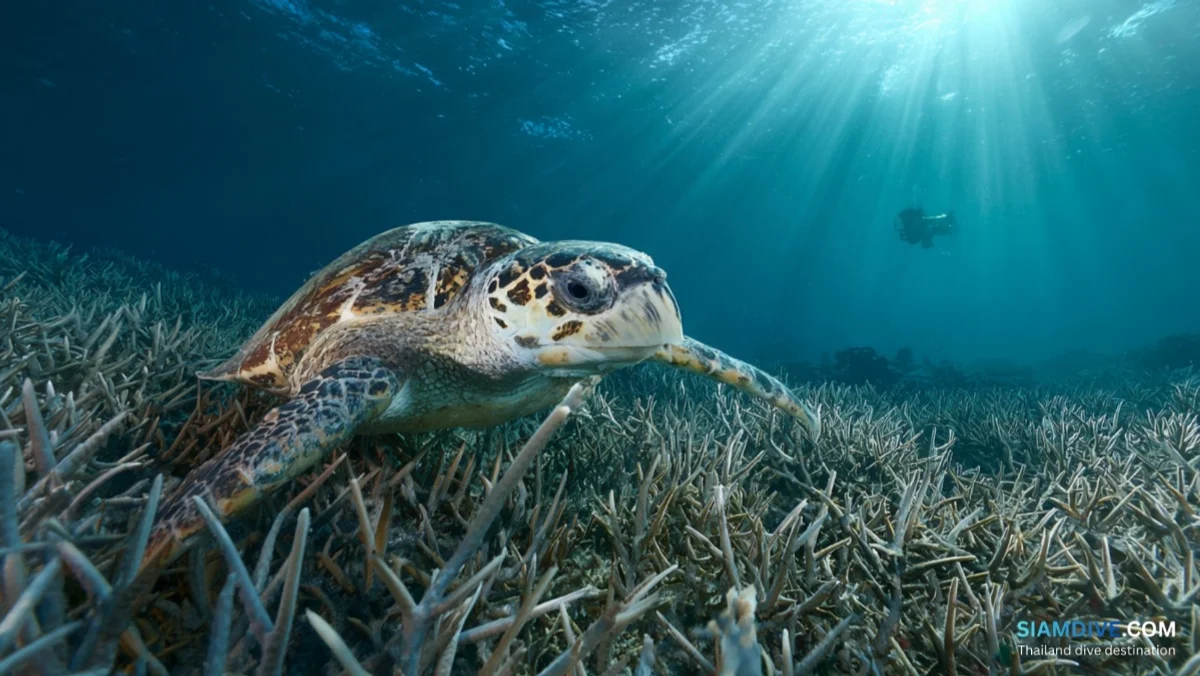
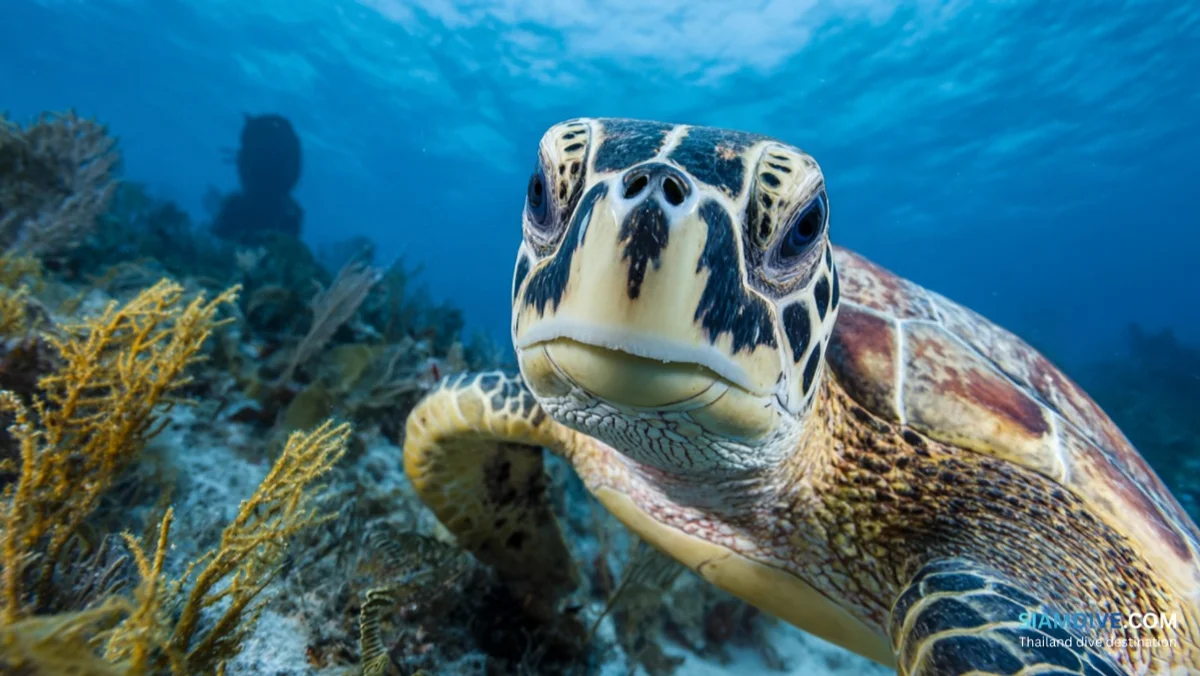
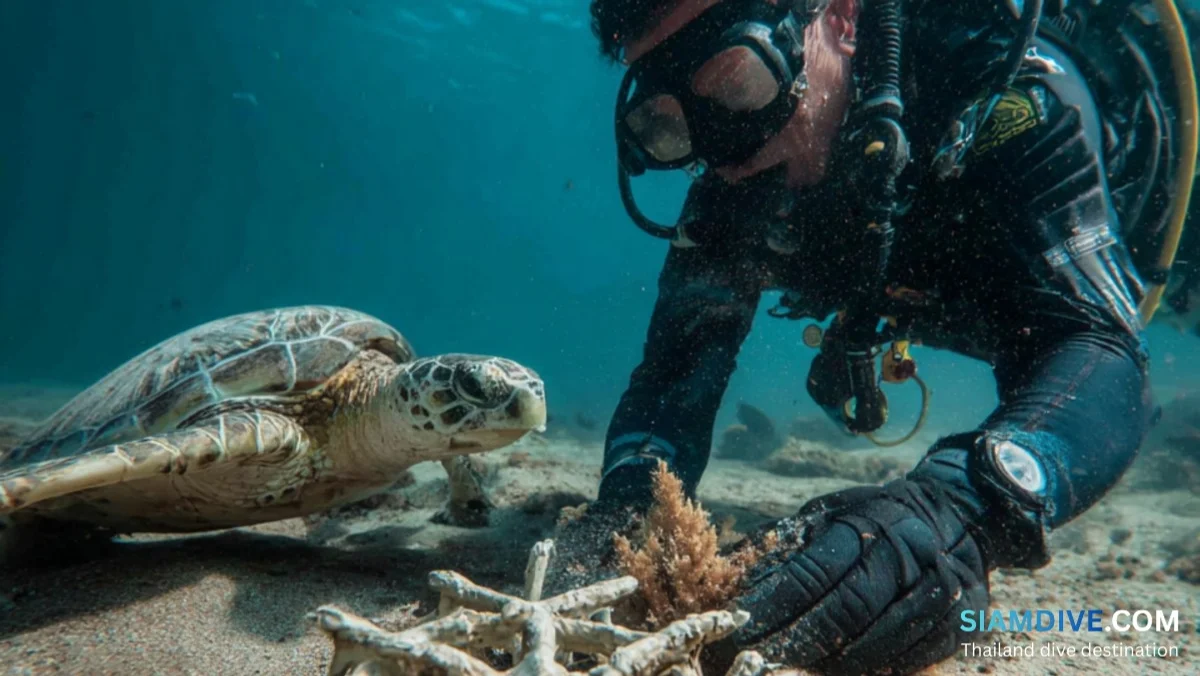
Hardware matters less than how it is used. A 1,000-lumen torch aimed directly at a resting turtle causes more disruption than a 3,000-lumen torch angled at the substrate beside it.
- Use the spill, not the hotspot — The outer ring of a beam delivers enough light to identify and observe marine life without the concentrated intensity of the centre. Point the hotspot at rock or sand near the subject and let the spill do the work.
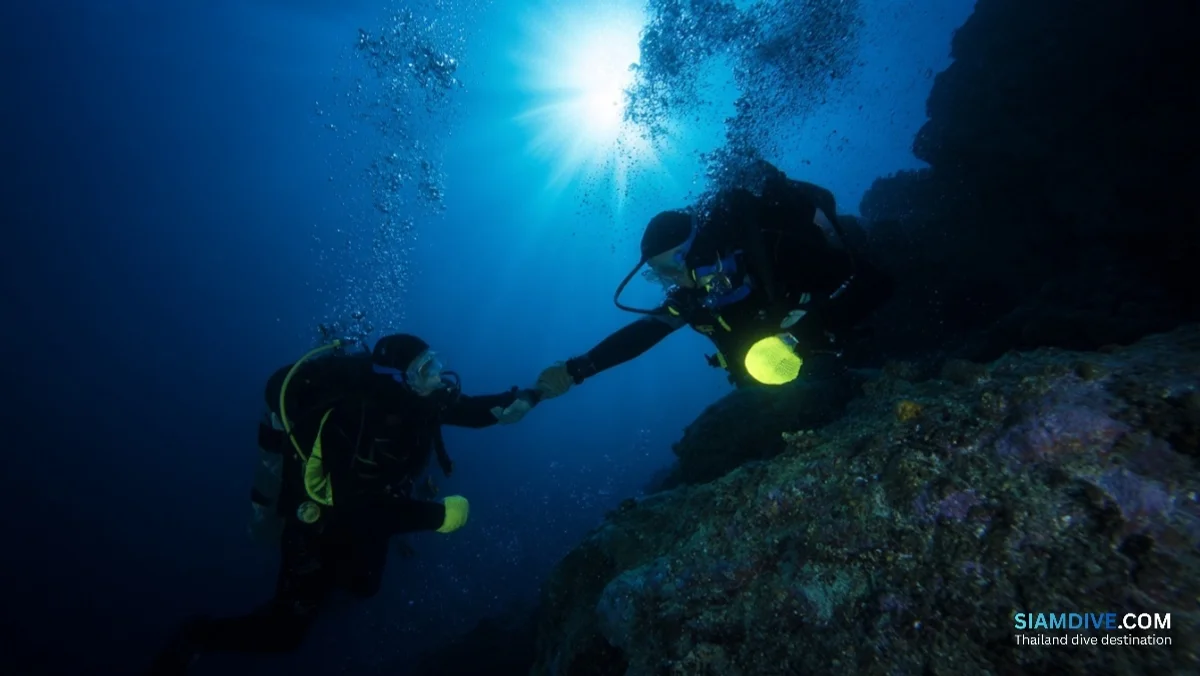
- Angle down, not out — Default beam direction should sit 30–45 degrees below horizontal. This lights the reef ahead without sweeping across open water where pelagics rest and sleeping fish hang motionless. Signal your buddy by circling the beam on the substrate — never swing it across their mask.
- Dim before closing distance — Most modern torches offer multiple power settings. Drop to the lowest level when approaching a subject. High output belongs to transit between sites, not observation.
- Kill the light for bioluminescence — Plankton sparking, flashlight fish blinking, coral fluorescence — the best night-dive moments demand total darkness. Divers who leave their torch on continuously miss most of them.
Which Output Fits Your Water
The answer depends on three variables, not one.
- Clear tropical water, visibility above 15 metres (Similan, Surin, Andaman coast dry season) — A 1,000-lumen spot or flood with a red filter is the most responsible primary torch. The water does not need more output, and the reef benefits from less.
- Green or murky water, visibility below 5 metres (Gulf of Thailand rainy season, river-influenced sites) — A 1,500-lumen adjustable beam earns its price. Flood mode reduces backscatter; spot mode handles signalling.
- Video, tech, or documentation dives (wreck penetration, wide-angle shooting, reef health surveys) — A 3,000-lumen primary or higher is justified, paired with protocol: short bursts, beam angled away from eyes, and a red-mode secondary for non-filming segments.
The dive industry has spent a decade marketing lumens the way the car industry markets horsepower — as though the number alone determines the value of the tool. On a reef at midnight, that logic inverts. The torch that does the least harm while still doing its job is the one worth carrying.
Sources
- Molecular Ecology — Rapid light-induced plasticity in reef fish visual systems (2022)
- Proceedings of the Royal Society B — Long-term ALAN exposure reduces survival and growth in coral reef fish
- Deep-Sea Research — Using red light for in situ observations of deep-sea fishes
- PMC — Impacts of artificial light at night in marine ecosystems: a review
- PADI — Night diving tips and torch signal protocol