How Your Sunscreen Becomes Poison Inside a Coral Cell
28 เมษายน 2569
Corals convert common UV filters into light-activated toxins. Thailand now fines offenders 100,000 baht — and the science explains why.
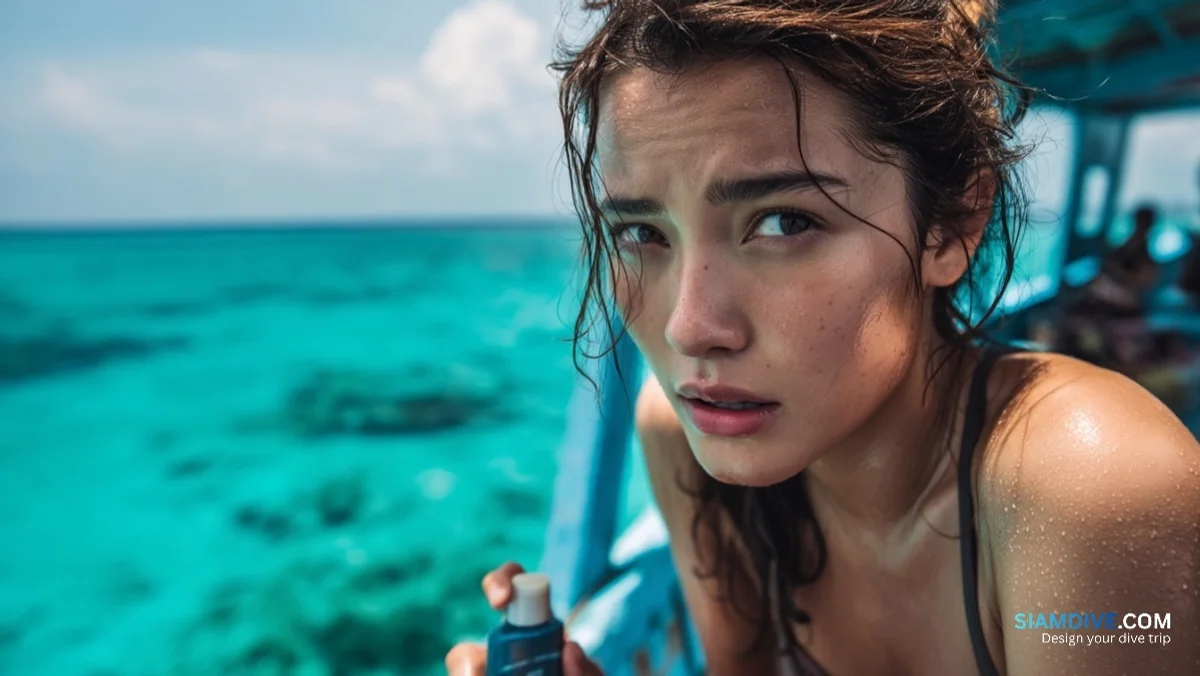
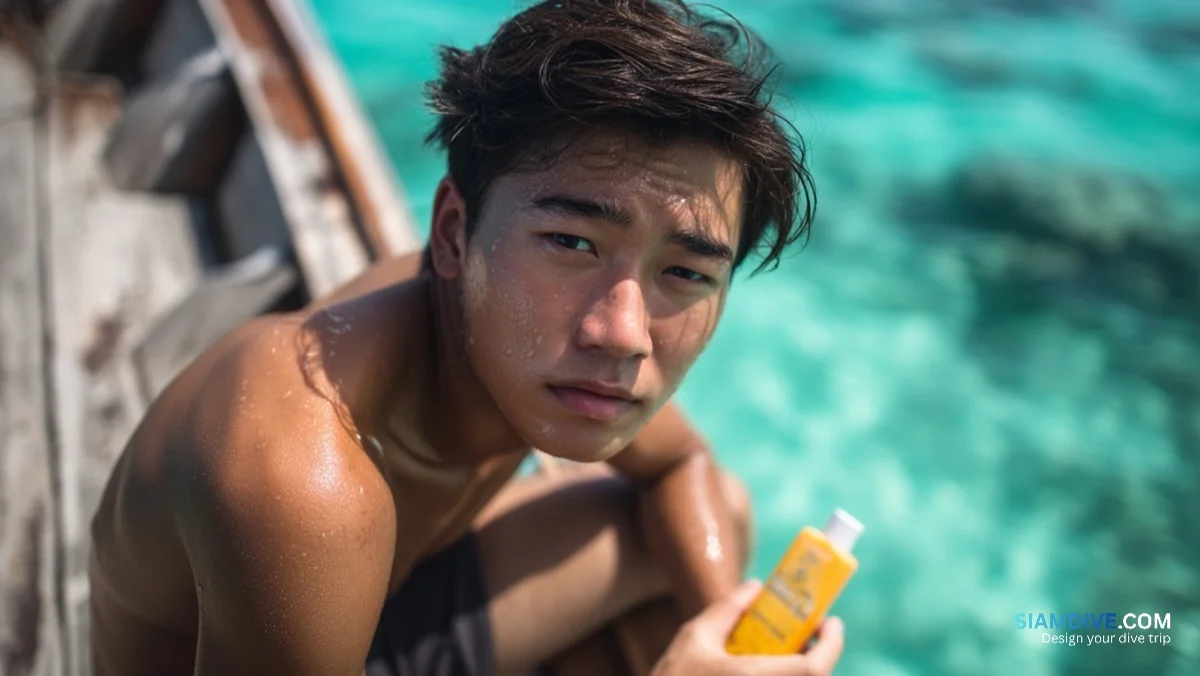
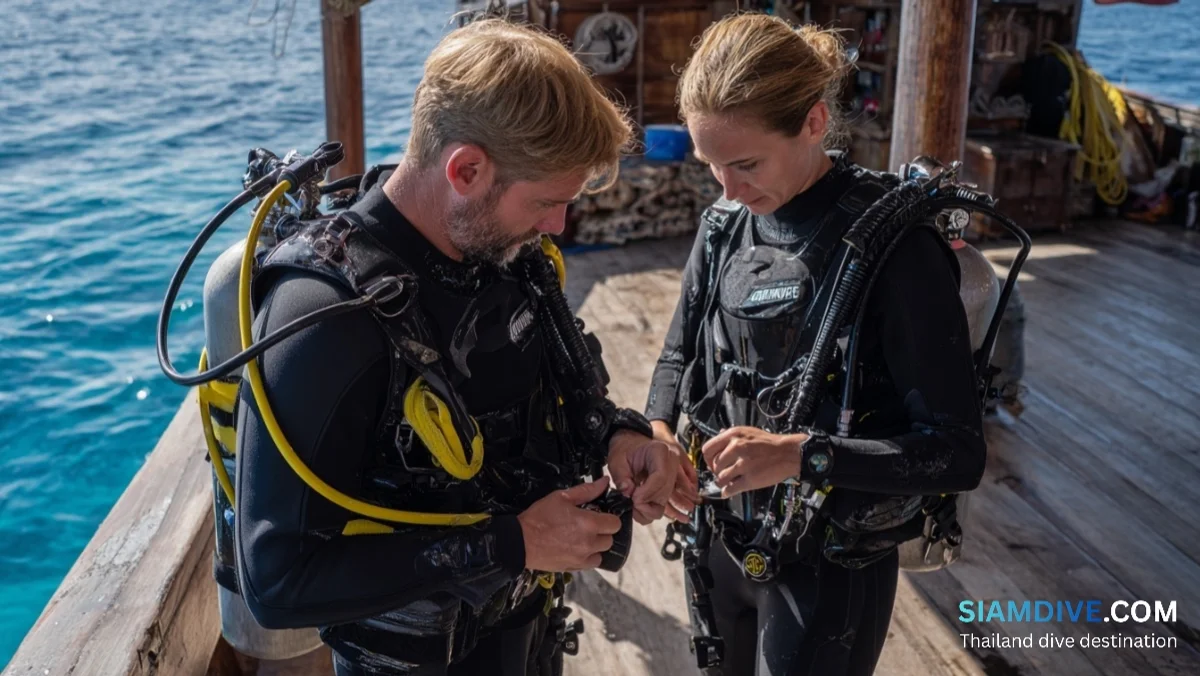
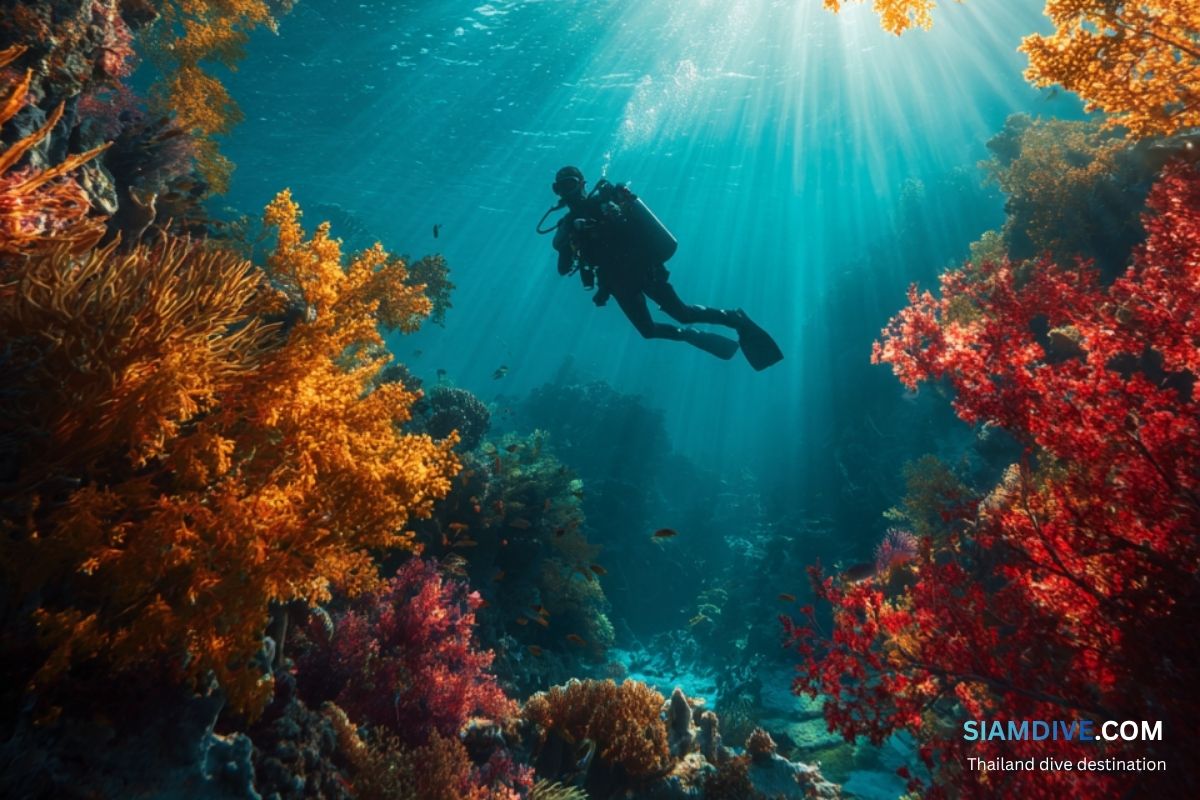
Somewhere in the Andaman Sea right now, a diver is squeezing SPF 50 onto sun-scorched shoulders before a giant-stride entry. The lotion feels protective — and for the skin, it is. For the staghorn coral twelve metres below, that same milky film carries one of the most efficient cell-killing mechanisms marine biologists have ever documented. The compound responsible sits in more than 3,500 consumer sunscreens worldwide, goes by the chemical name benzophenone-3, and does not simply coat coral tissue — it enters the cells, gets chemically remodelled, and turns sunlight itself into a weapon.
What Happens Inside the Coral Cell?
Oxybenzone — the ingredient listed as benzophenone-3 on the back of the bottle — triggers a chain reaction once it contacts coral tissue. Researchers at Stanford University identified the mechanism in 2022. Corals and their symbiotic anemones metabolise oxybenzone the way a human liver processes a drug: they attach a sugar molecule to it, converting it into a glucoside. That conversion, meant to neutralise the compound, backfires. The resulting metabolite becomes a phototoxin — a molecule that weaponises sunlight against the very cell that created it.
Under UV radiation, the phototoxin generates reactive oxygen species inside coral tissue, shredding cell membranes and DNA. The visible result looks like thermal bleaching, but the cause is chemical. Four distinct damage pathways have been documented: increased bleaching susceptibility at temperatures below the normal threshold, genotoxicity, abnormal skeleton growth through endocrine disruption, and gross deformities in coral larvae.
One detail makes the picture worse. Healthy corals host zooxanthellae — symbiotic algae — that can absorb oxybenzone metabolites and buffer the toxicity. Bleached corals have already expelled their algae. They lose this chemical shield at exactly the moment they need it most, stacking chemical assault on top of thermal stress. A reef already fighting rising sea temperatures faces a second front from the sunscreen washing off swimmers overhead.
How Little Does It Take?
The lethal concentrations are low enough to unsettle anyone who has ever applied sunscreen before a snorkel. Coral cell cultures begin dying — 20 percent mortality, the LC20 threshold — at just 0.062 micrograms per litre for the most sensitive species tested. The phototoxin's potency depends heavily on light: after 24 hours of UV exposure, 50 percent of coral larvae died at 139 µg/L, while the same test in darkness required 779 µg/L to reach identical mortality. Sunlight multiplies the poison's power roughly fivefold — which means shallow, sunlit reefs are the most vulnerable.
Field measurements put those lab numbers in real-world context:
- Hanauma Bay, Oahu: 136–27,880 ng/L of oxybenzone recorded in reef water
- U.S. Virgin Islands: 75 µg/L to 1.4 mg/L — well into the lethal range for coral larvae
- Per-swimmer release: an estimated 6–14 mg of oxybenzone per swim session
Multiply one swimmer's contribution by the thousands of visitors at a popular snorkel site on a busy day, and the arithmetic shifts from micrograms to grams entering the water column every hour. At Hanauma Bay, researchers estimated that visitors deposit roughly four kilograms of sunscreen-laden water into the bay on a typical summer Saturday. The reef does not get a rest day between tourist seasons.
Four Chemicals, 100,000 Baht
Thailand did not wait for a nationwide sales ban. In August 2021, the Department of National Parks, Wildlife and Plant Conservation prohibited four chemicals inside all marine national parks. The law sat loosely enforced for four years — park rangers rarely inspected bottles at boat landings, and most tourists had no idea the regulation existed. Then, in October 2025, enforcement escalated under the National Park Act 2019, with fines up to 100,000 baht (roughly US$3,070) for anyone entering a park wearing sunscreen containing any of the banned substances.
The four chemicals on Thailand's prohibited list:
- Oxybenzone (benzophenone-3) — phototoxin precursor, bleaching accelerant
- Octinoxate (ethylhexyl methoxycinnamate) — disrupts coral reproduction and larval development
- 4-Methylbenzylidene camphor — endocrine disruptor in marine organisms
- Butylparaben — preservative linked to coral larval deformity
The rule covers every marine national park in the kingdom: the Similan Islands, Mu Ko Surin, Mu Ko Ang Thong, Hat Noppharat Thara–Mu Ko Phi Phi, and dozens more. Step off a dive boat at any of these sites with banned sunscreen on your skin, and you are breaking the law.
In April 2025, the Tourism Authority of Thailand launched a Sunscreen Amnesty programme in Krabi, where tourists could swap chemical sunscreen for a reef-safe mineral alternative free of charge. The signal was deliberate: Thailand would rather educate than punish — but the fine exists for those who do not listen.
Sale Ban vs. Use Ban
Walk into a Bangkok 7-Eleven and the shelf is lined with SPF 50 tubes containing oxybenzone — all perfectly legal to buy. That one fact captures the difference between Thailand's approach and Hawaii's.
Hawaii's Act 104, effective January 1, 2021, banned the sale and distribution of sunscreens containing oxybenzone or octinoxate statewide. Tourists can still bring a tube from the mainland, but no retailer in the islands will sell one. Maui County pushed further in 2022, prohibiting all non-mineral sunscreens entirely. Palau took the broadest approach, restricting both sale and use of a wide list of reef-harming chemicals beginning in 2020.
Thailand targeted the point of use, not the point of sale. Chemical sunscreens remain on pharmacy shelves and convenience-store racks from Bangkok to Hat Yai. The ban activates only when you cross a marine national park boundary. Banning retail sales was politically difficult in a country where the majority of sunscreens on the market still contain at least one prohibited ingredient; targeting behaviour at the park gate proved more achievable. The trade-off is clear: a sale ban prevents the product from entering the country at all, while a use ban relies on every visitor knowing the rule before they board the boat.
- Hawaii (Act 104): sale ban on oxybenzone + octinoxate, statewide since January 2021
- Maui County: all non-mineral sunscreens banned since 2022
- Thailand: use ban on 4 chemicals inside marine parks, fine up to 100,000 THB
- Palau: broad chemical ban on sale and use since 2020
Where Thai Reefs Stand Right Now
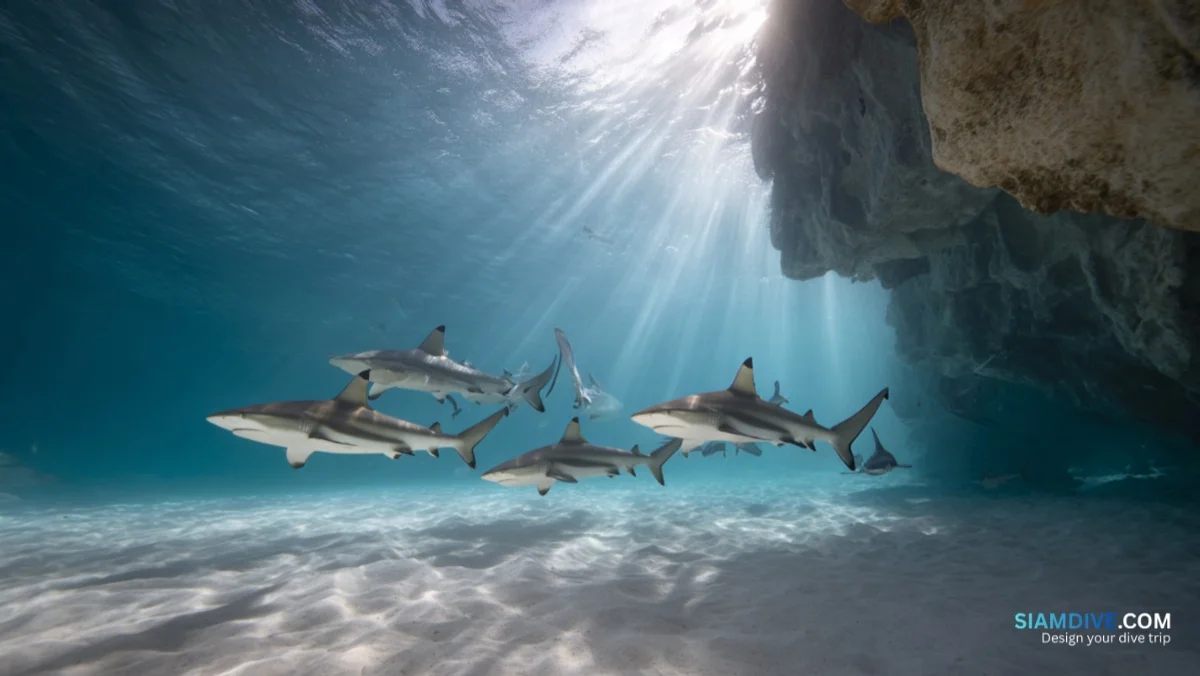
A coast-to-coast assessment published in January 2026 found that Thailand's reefs are losing structural complexity after repeated marine heat waves between 2022 and 2024. The 2024 mass bleaching event hit 60–80 percent of corals nationwide. Recovery in the Andaman Sea now sits at 60–70 percent, with bleaching mortality at 30–40 percent — better than initially feared, but far from full restoration.
The Department of Marine and Coastal Resources launched a 2025 restoration plan spanning seven provinces: 12 rai of new substrate for coral larval settlement, 24 rai of active replanting, and 60,000 coral colonies maintained in nurseries. In February 2026, a coral cryobank began freezing genetic material from Thai reef species as an insurance policy against the possibility that warming seas outpace conventional restoration. For more on how Thailand monitors reef health, counting indicator species often matters more than planting new coral.
Ocean temperature is the primary threat. Sunscreen chemistry is secondary — but every additional stressor compounds the damage on reefs already stretched to their limits. Oxybenzone is one stressor each diver can eliminate in under a minute, simply by reading a label before stepping off the boat. For a look at what happens to Similan reefs during the five-month park closure, the recovery data is encouraging.
Does 'Reef-Safe' Actually Mean Anything?
The phrase appears on hundreds of bottles. No government regulates it. The U.S. FDA has not defined "reef-safe" or "reef-friendly." Thailand has no certification standard. Any manufacturer can stamp the words on a label without meeting a single measurable criterion.
What the science does support is narrower: sunscreens using non-nano zinc oxide or titanium dioxide as the sole active UV filters show dramatically lower toxicity to coral cells. The non-nano distinction matters. Particles smaller than 100 nanometres can be ingested by coral polyps, introducing potential toxicity at the cellular level. Non-nano particles remain on the skin surface and, when they wash off, are too large to enter coral tissue.
Beyond the four chemicals on Thailand's list, several other common UV filters — avobenzone, octocrylene, and homosalate — have shown toxicity to marine organisms in laboratory studies, though regulations have not caught up. A product free of oxybenzone and octinoxate may still carry chemicals that harm coral; the only way to be certain is to confirm that mineral filters are the sole active ingredients. Watch for butylparaben, too — one of Thailand's four banned chemicals — which turns up even in sunscreens marketed as "natural" or "eco-friendly."
The Diver's Checklist
Choosing the right sunscreen takes thirty seconds at the pharmacy shelf. Knowing what to look for takes even less.
- Read the back, not the front. Ignore marketing claims. Flip to the active ingredients. The only acceptable entries: zinc oxide or titanium dioxide — nothing else in the active filter list.
- Look for "non-nano." If the label does not specify particle size, assume nano. Products marketed for diving increasingly state it clearly.
- Apply 15 minutes before water entry. Mineral sunscreen needs time to bond to skin. Entering the water immediately sends most of it straight into the water column.
- Cover more, apply less. A UPF 50+ rash guard blocks 98 percent of UV radiation with zero chemical runoff. Target sunscreen to exposed zones only — face, ears, neck, tops of feet — and let fabric handle the rest. For a complete approach to diver sun protection above and below the surface, the full guide covers rash guards, hats, and timing.
- Reapply on the boat, not in the water. Applying a fresh layer while snorkelling delivers the dose directly to the reef zone at close range.
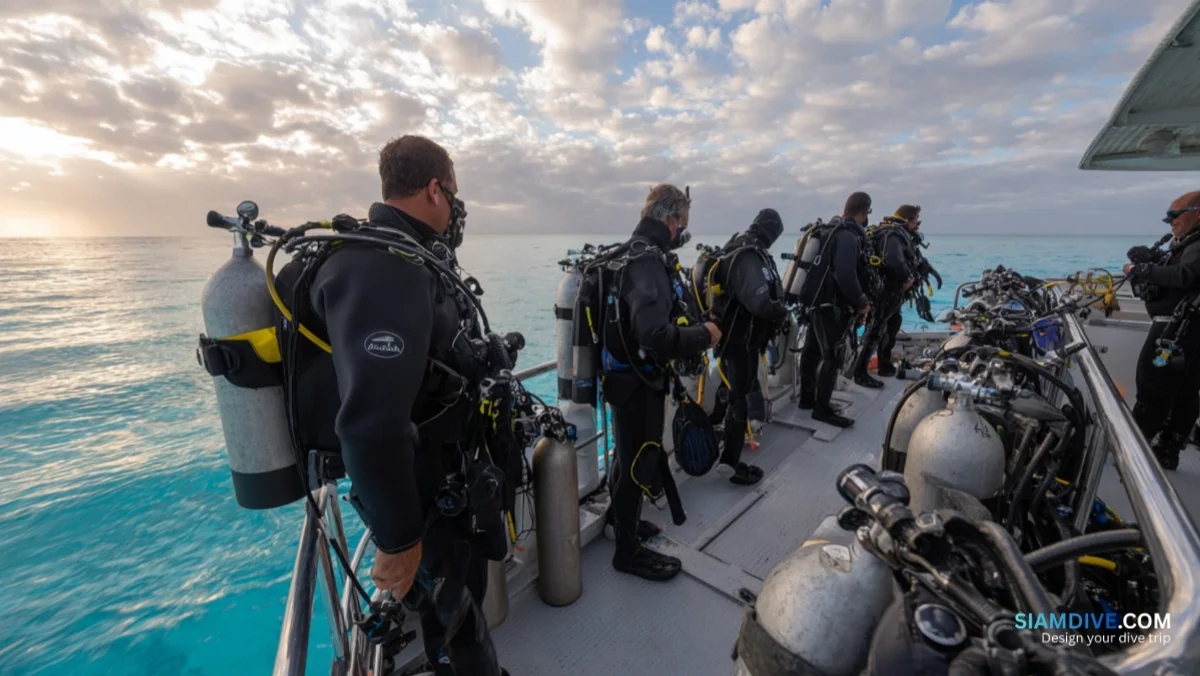
Some dive operators in the Similan Islands and Mu Ko Surin now keep mineral sunscreen on the boat, offering it alongside the pre-dive briefing. The practice is not yet universal, but the direction is clear: reef protection is becoming part of the briefing, not an afterthought. Dive centres that adopted the swap report that most guests comply once they understand the science — the barrier is knowledge, not willingness.
In a country with 26 marine national parks and some of the most biodiverse reef systems in Southeast Asia, every bottle matters. The reef cannot choose what washes off a swimmer's skin. It cannot refuse the phototoxin its own cells produce from whatever drifts down from the surface. That decision sits entirely with the person holding the bottle — and in Thailand's marine parks, the law now backs it with a six-figure fine.