Triangle Pinnacle Diving Guide: The Gulf's Quietest Granite Site
11 เมษายน 2569
Hin Sam Liam is the Gulf of Thailand pinnacle that does not show up on the standard Koh Tao board. Big groupers, anemone gardens, and almost no crowds.
Three Rocks, One Pinnacle, Almost No Crowds
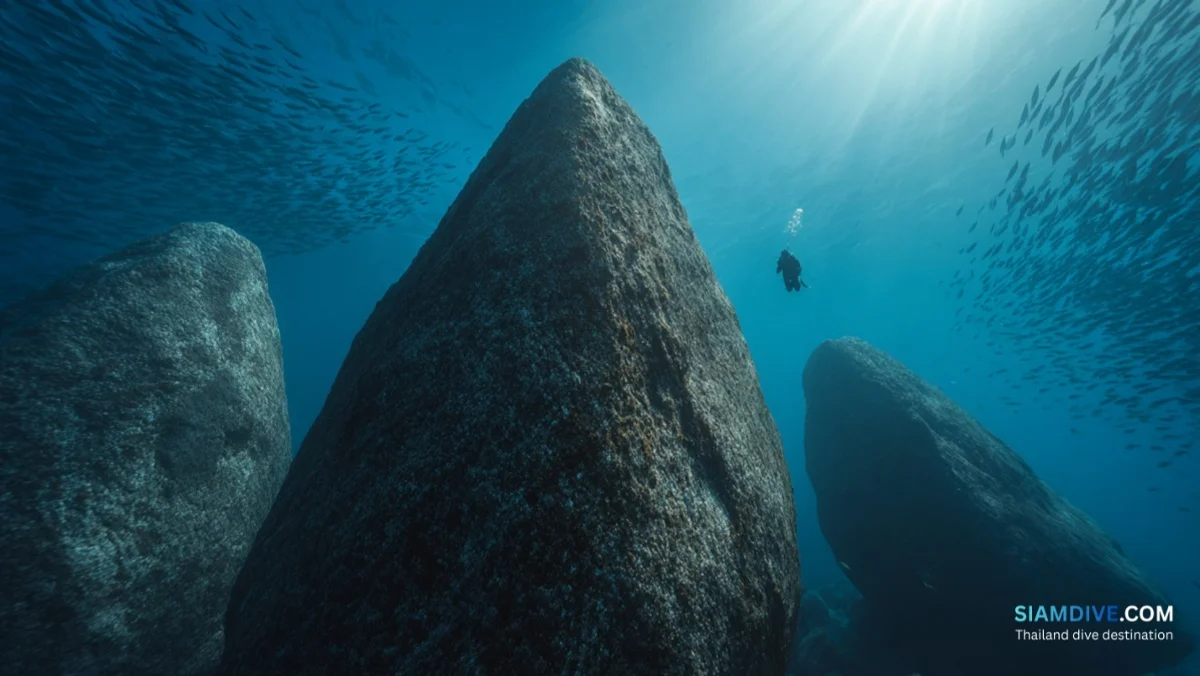
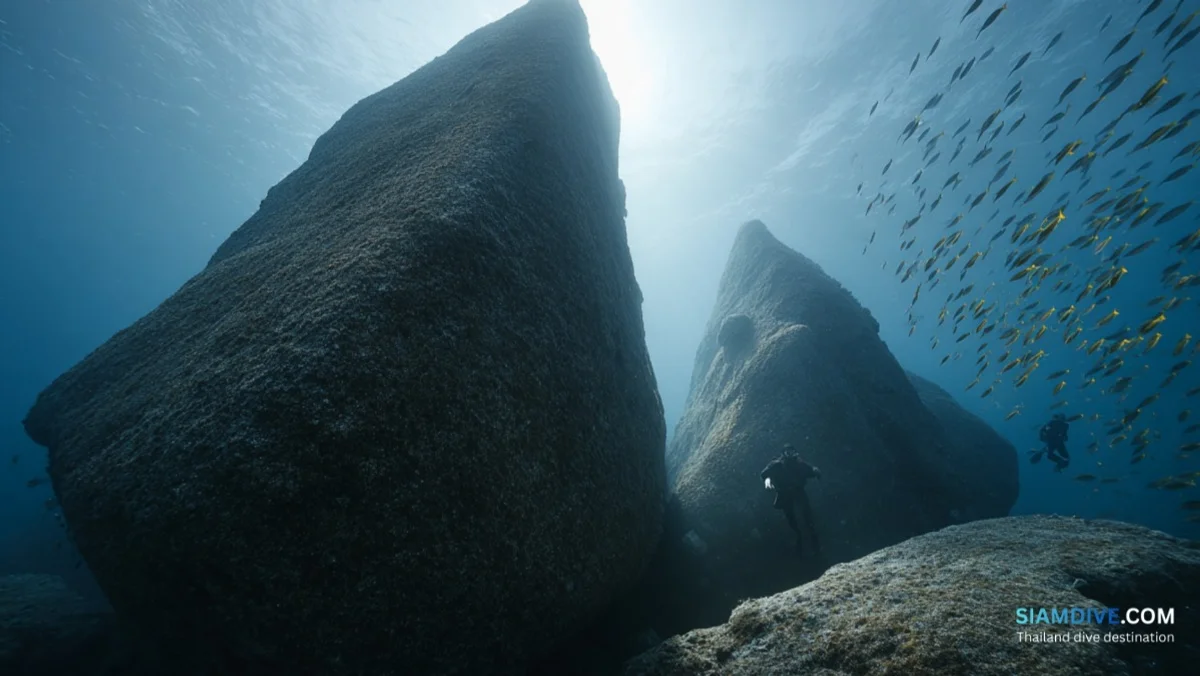
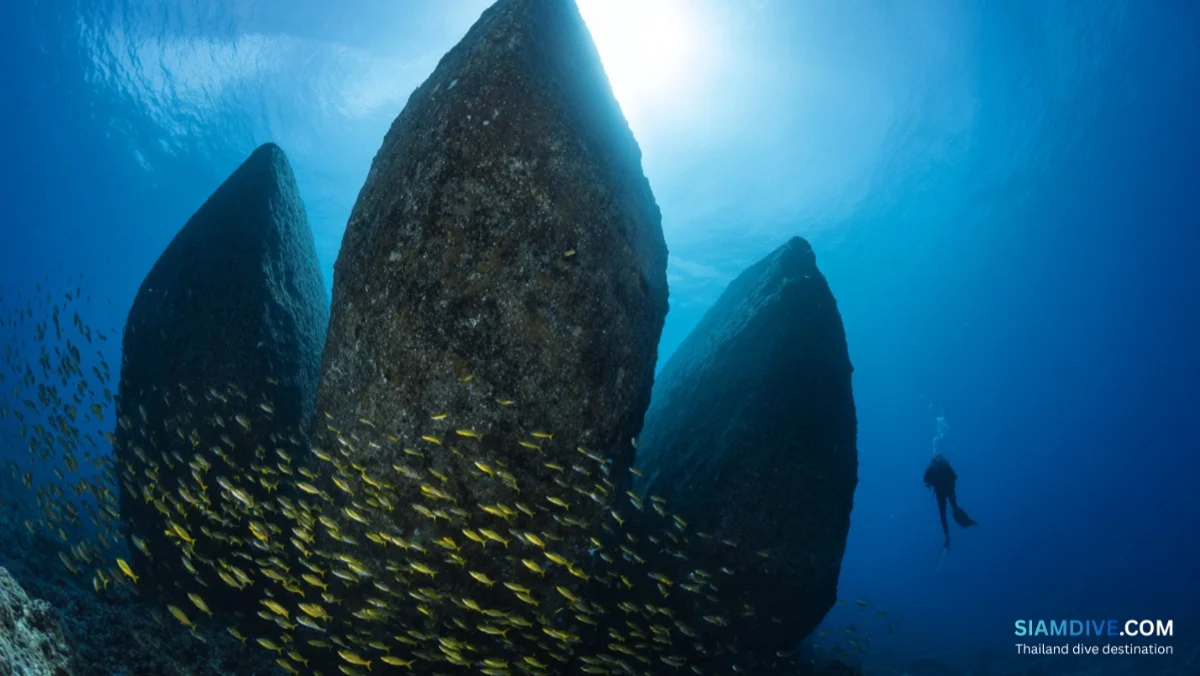
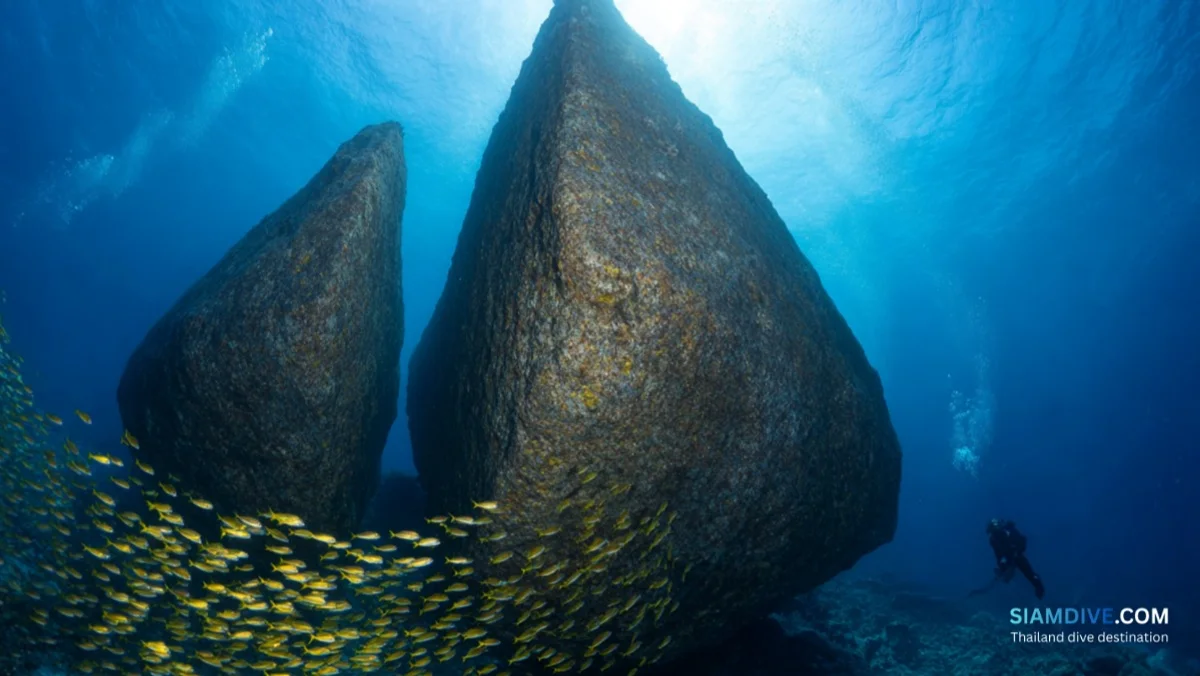
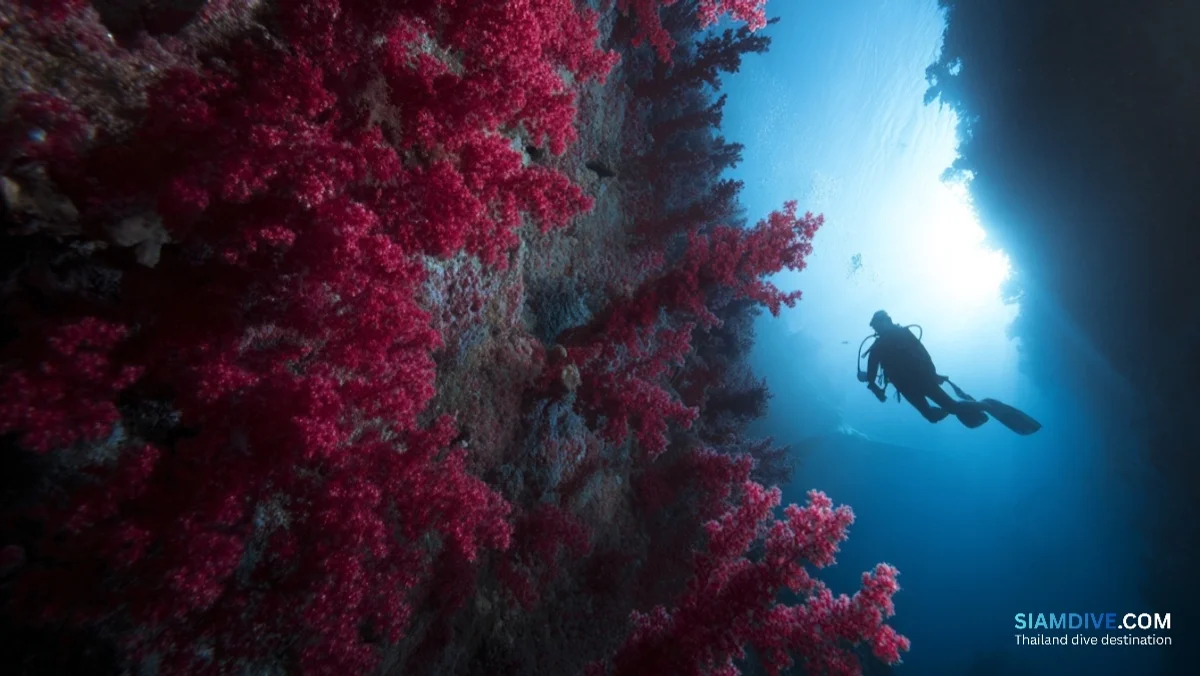
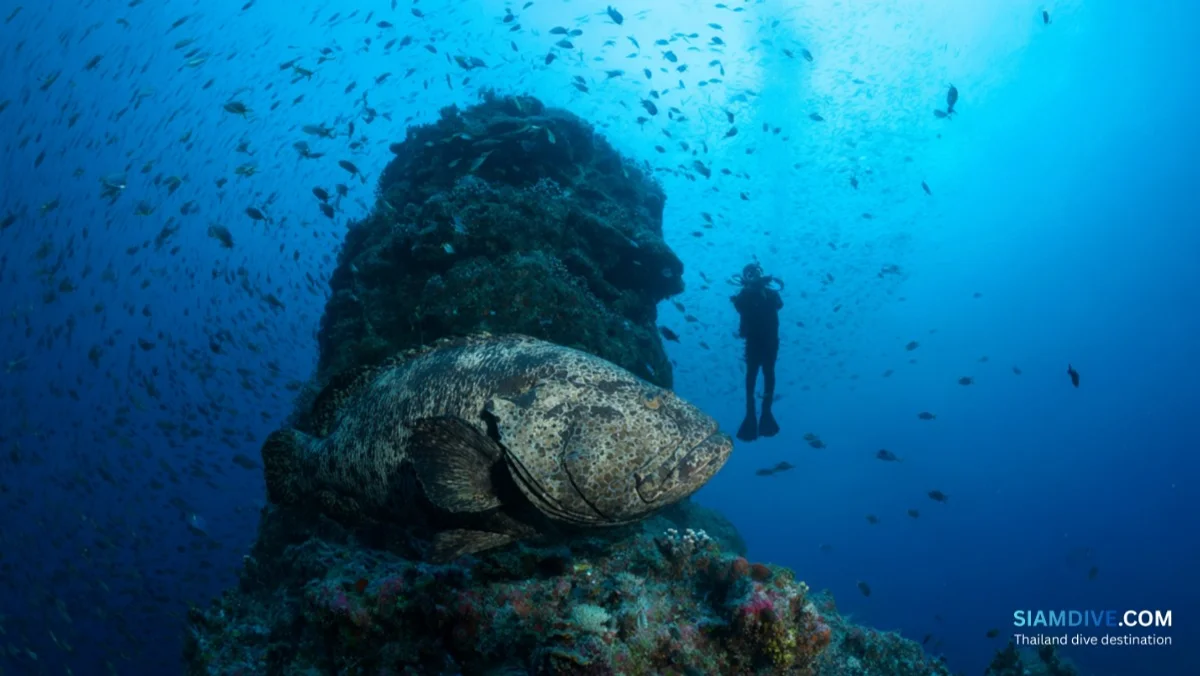
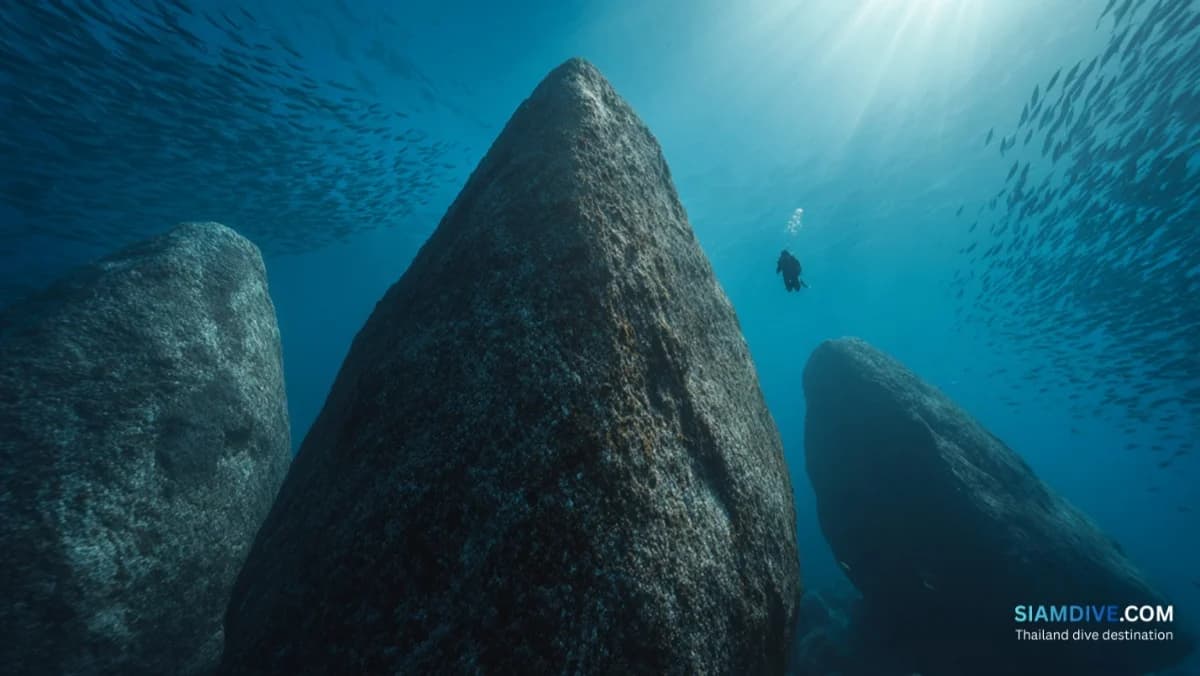
Hin Sam Liam — กองหินสามเหลี่ยม in Thai, Triangle Rock Pinnacle in English — is one of those Gulf of Thailand sites that lives in conversation but rarely on the day boat schedule. It is a cluster of three large granite boulders sitting on a deeper sand floor, rising from about 35 meters to a top of around 14 meters. Locals call it Triangle Pinnacle because the three rocks form a rough triangle when you look at the dive map. Underwater, that triangle becomes a maze of crevices, swim-throughs, and shadow zones where the bigger fish hold court.
If you have already done Chumphon Pinnacle and Sail Rock and want to add a Gulf of Thailand pinnacle that does not get hit by every day boat in Koh Tao, this is the one to ask for. It demands deeper certification and a guide who actually knows the site, but the payoff is the kind of empty pinnacle dive that is genuinely hard to find in this part of the country anymore.
Why This Site Stays Off the Standard Boards
Most Koh Tao dive shops run the same five or six sites every day. Triangle Pinnacle is not one of them. The boat ride is longer than the standard west-coast loop, the depths require Advanced Open Water at minimum, and the conditions can shut it down on short notice if the wind is wrong. So unless a customer asks specifically, the dive boat goes somewhere easier. The result is a site that sees a fraction of the divers Chumphon Pinnacle sees, even though they share most of the same marine life.
For divers, that is the entire selling point. Empty mooring lines, smaller groups, and a guide who is genuinely happy that someone asked for a dive they actually like leading. The trade-off is that you have to plan it. You cannot walk into a Sairee dive shop at 7 a.m. and expect Triangle Pinnacle on that morning's boat. Book a day or two ahead and tell them what you want.
The Dive Itself
The standard profile starts at the mooring on the shallowest of the three rocks, around 14 meters. From there you spiral down the eastern side past coral-encrusted ledges to about 28 meters, then traverse the gap between the second and third boulders. There is a wide swim-through near the base of the central rock that is big enough for two divers at a time and wide enough that you do not need to remove anything to clear it. Past 30 meters the bottom flattens into sand, and the third boulder rises out of that sand like a small mountain.
The recommended profile is to ascend slowly along the third rock, working your way back toward the mooring along the western side. There is usually mild current running from south to north, so most guides plan the dive to put the current at your back on the way back. Total time on the bottom is 25 to 30 minutes if you stay disciplined with depth, with a safety stop on the shallow top of the first rock surrounded by anemones and damselfish.
Marine Life on the Pinnacle
Triangle Pinnacle has the standard cast of Gulf of Thailand pinnacle residents, plus a few specialties that come from its triangular shape and the eddies it creates in current.
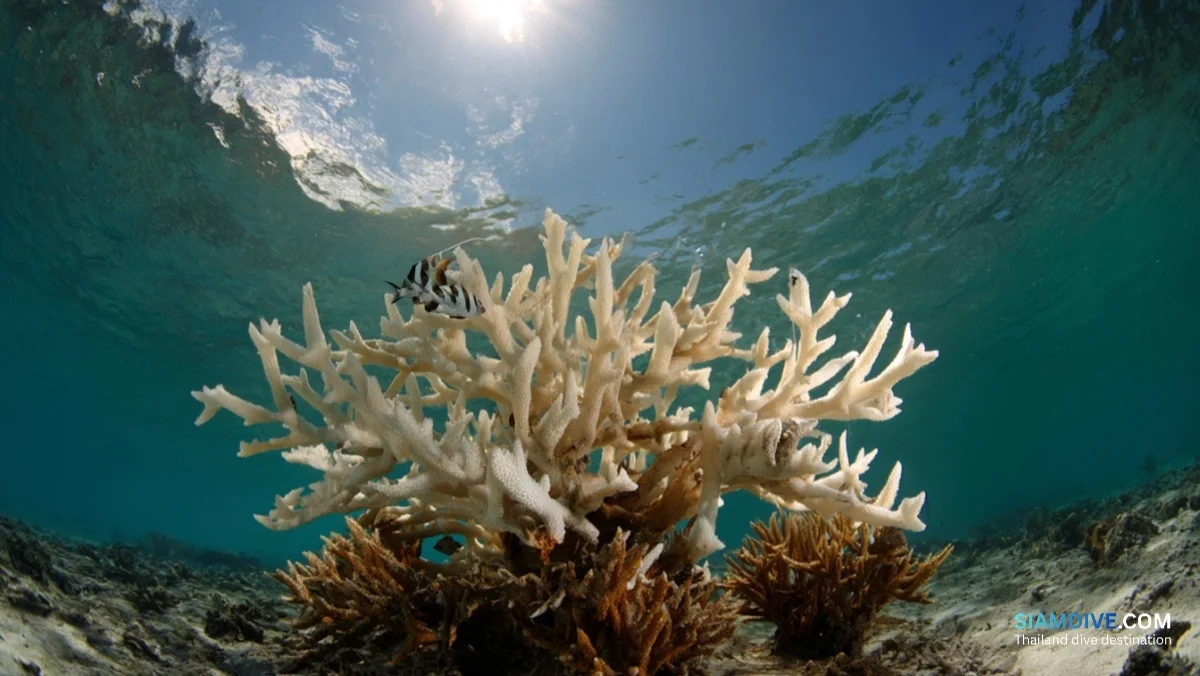
- Pink anemonefish carpet blanketing the shallow top — the same dense anemone garden you find at Chumphon Pinnacle but smaller and easier to photograph.
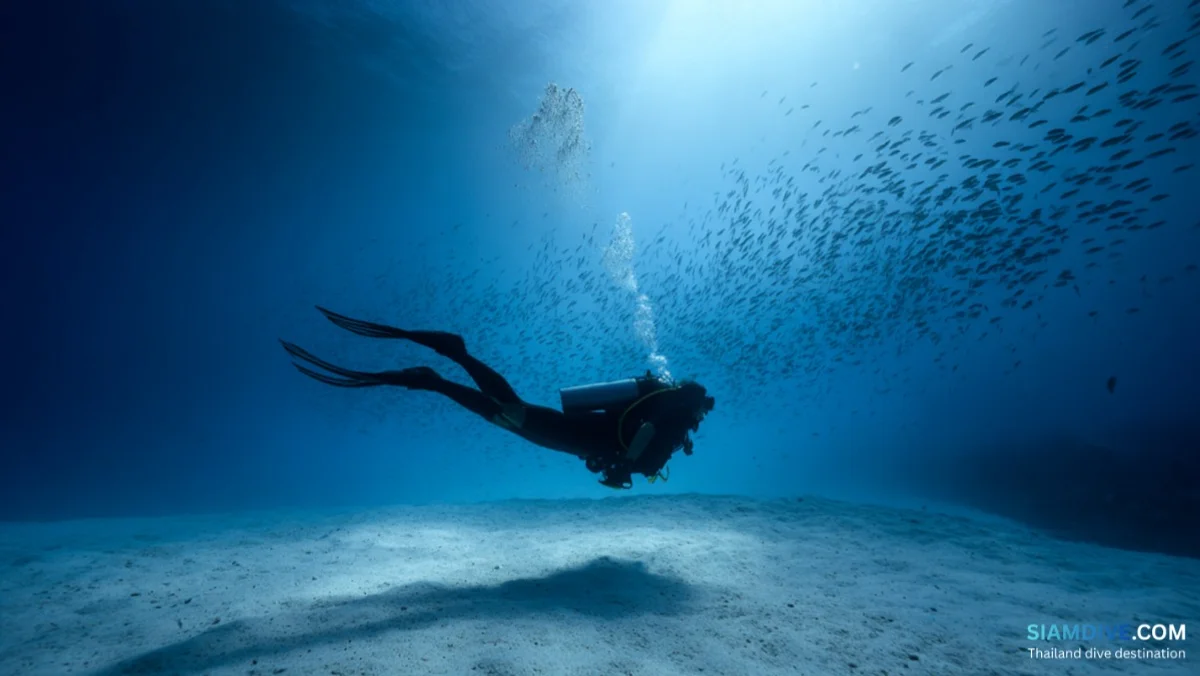
- Yellowtail and chevron barracuda schools hanging in the blue water on the upcurrent side of the boulders.
- Big groupers and marbled groupers tucked into the deeper crevices. The largest specimens are usually under the central rock's overhang.
- Fusiliers, rainbow runners, one-spot snappers moving in coordinated schools when the current picks up.
- Moray eels, banded boxer shrimps, ghost pipefish for the divers who slow down and look into the cracks.
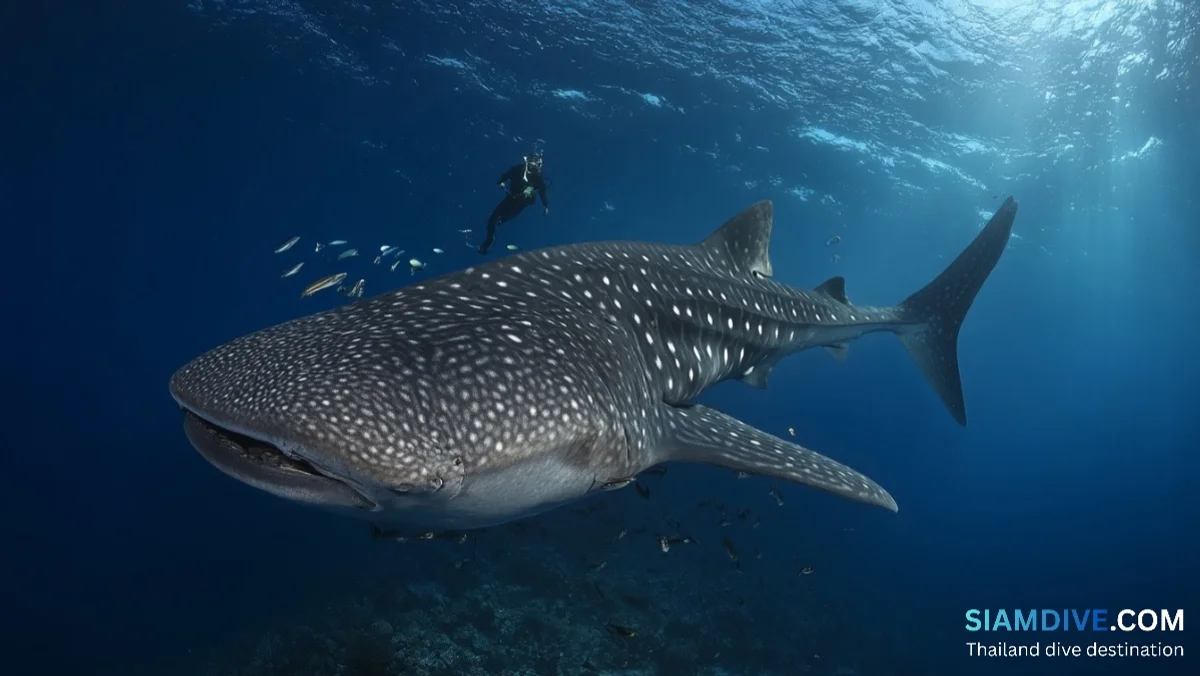
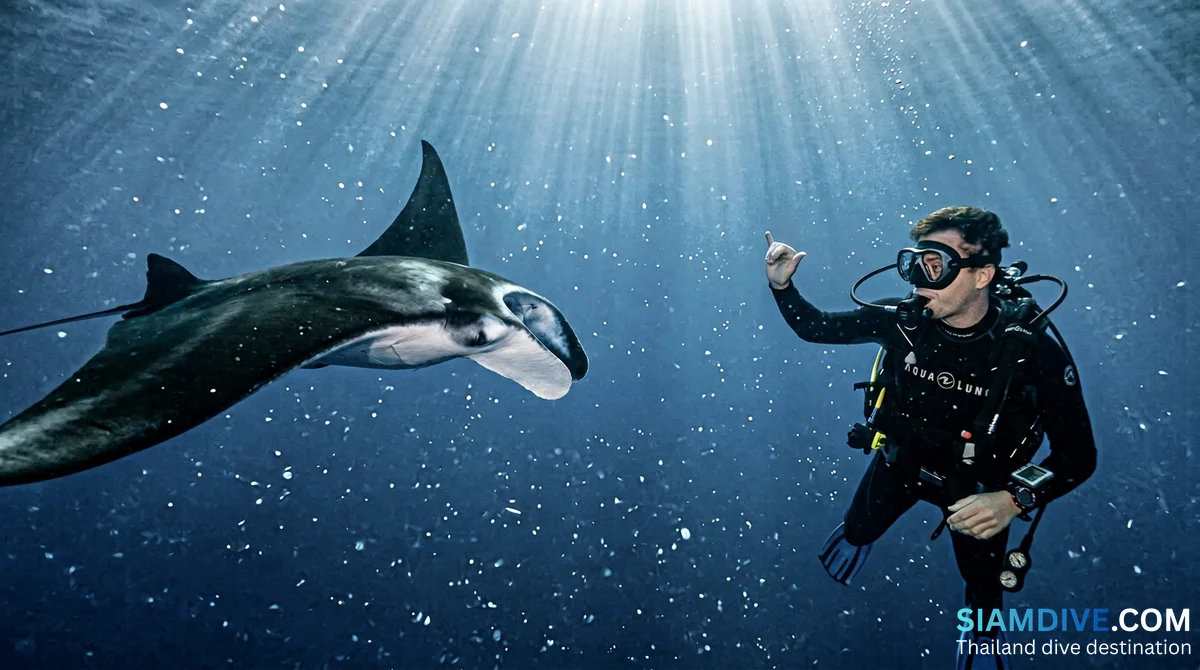
- Whale sharks, occasional but real. They show up at the same times of year they appear at the other Gulf pinnacles, usually March-October during plankton blooms.
When to Dive Triangle Pinnacle
The Gulf of Thailand has a long dive season. Triangle Pinnacle is best from March to October when the surface is calm and visibility runs 15 to 25 meters on most days. April and May are the highest-probability months for whale sharks because the plankton blooms that draw them in also coincide with the warmest water. November through February is doable but gets shut down by the northeast monsoon — boat trips become unpredictable and visibility drops below 10 meters. Water temperature stays around 28-30°C all year, so a 3 mm wetsuit is enough.
How to Book This Dive
You need to be on Koh Tao or Koh Phangan to dive this site reasonably. From Koh Tao the boat ride is about 45 minutes to an hour depending on conditions. From Koh Phangan it is closer to 90 minutes, so most operators there will not run it as a standalone — you would need to combine it with Sail Rock on a long day. Almost no one runs Triangle Pinnacle from Chumphon mainland because the boat ride is too long.
To get to Koh Tao, the simple options are the Lomprayah catamaran from Chumphon (1.5 hours), Songserm slow boat (about 3 hours, cheaper), or the longer route via Surat Thani and Koh Samui. Once on the island, walk into a dive shop in Sairee or Mae Haad and ask explicitly for Triangle Pinnacle or Hin Sam Liam. Not every shop runs it. Two-tank trips with this site as one of the dives run 2,500 to 3,200 baht depending on the operator.
Practical Tips Before You Book
- Advanced Open Water is the minimum. The dive plan stays under 30 meters, but the bottom drops to 35 and currents can push you deeper if you are not paying attention.
- Bring your dive computer. This is not a site to estimate your no-deco limit. Rental computers work but if you have one, use it.
- Tell the shop you want a small group. Five divers is comfortable on this site. Eight is too many for the shallow top of the rocks.
- Ask about the current direction before you giant-stride. The dive plan changes depending on whether the current is running south to north or the reverse. A good guide briefs this clearly.
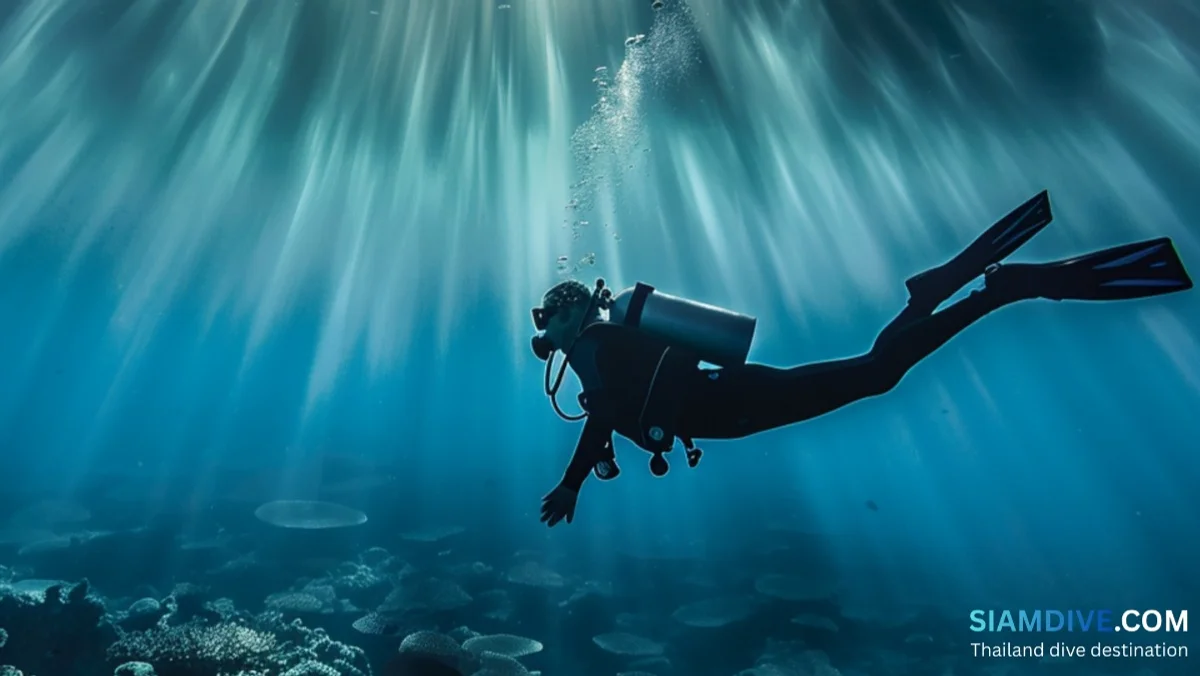
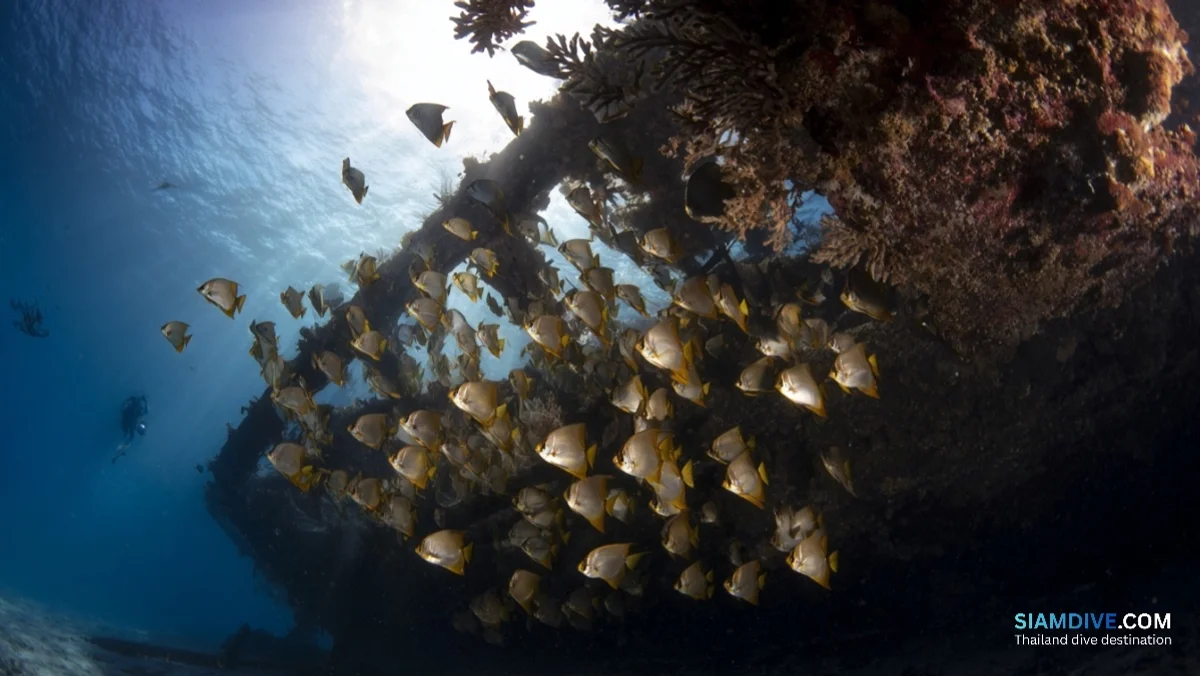
- Bring a wide-angle camera if you have one. The boulder geometry makes this a spot where wide-angle pays off more than macro. The anemone gardens at the top look great from below with sun rays.
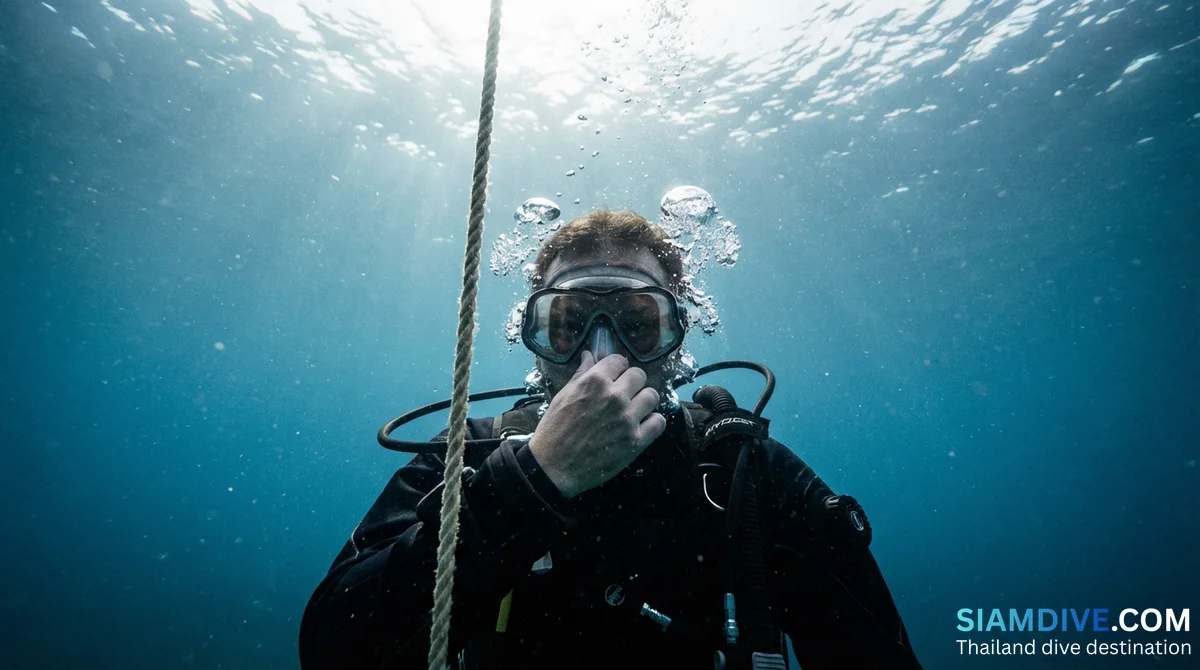
- Hook in only if you know how. When current spikes, the experienced divers hook into the rocks at the safety stop level. If you have not done this before, ask your guide to demonstrate at the surface first.
A Pinnacle Worth Asking For
Triangle Pinnacle is a dive you have to want. Nobody is going to volunteer it on a packed weekend boat, and it does not show up on the standard fun-dive board. But for divers who already know Koh Tao and want a Gulf of Thailand pinnacle that is not a parking lot, this is the one. Plan the trip and book a Koh Tao boat that actually runs Hin Sam Liam through siamdive.com — we work with the dive shops that know which moorings are theirs and which days the conditions line up. Tell them you want the triangle, not the standard board, and they will deliver.