March in Thailand: Why the Andaman Always Wins the Dive Trip
17 เมษายน 2569
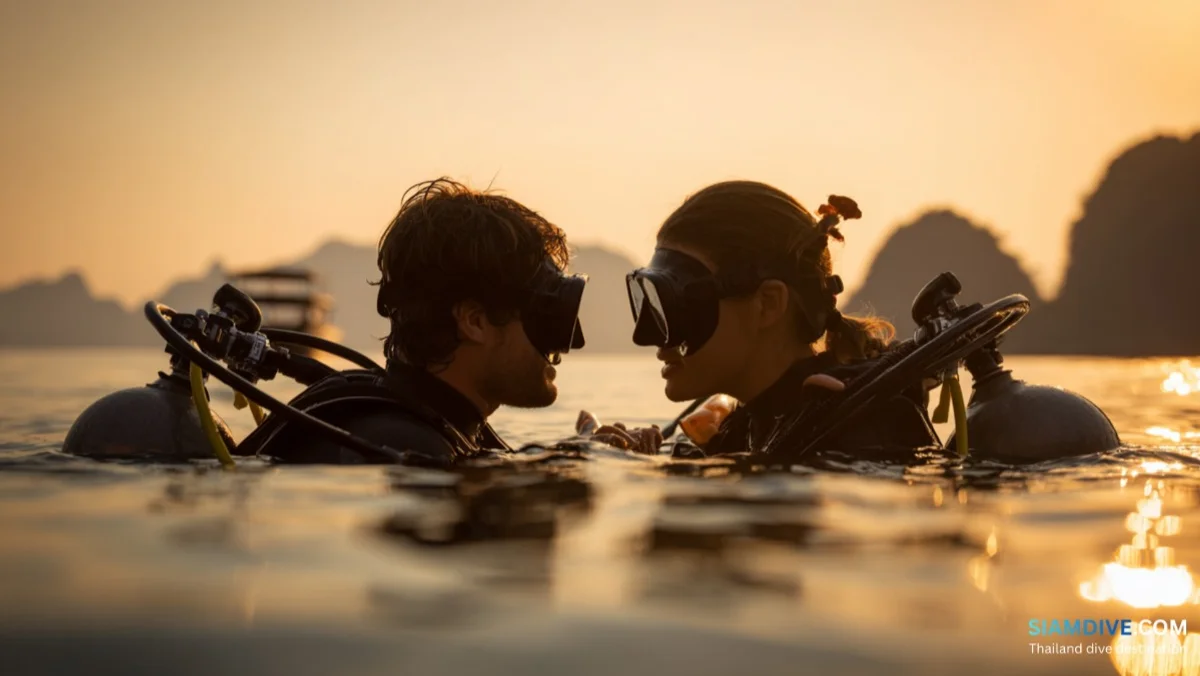
Thailand has two seas. In March, only one delivers peak visibility, whale shark odds, and liveaboard access. Here's why seasoned divers always pick the Andaman.
Here's the choice every Thailand diver faces exactly once a year, around late January: you're booking a dive trip for March — the peak of Thailand's high season — and you have to pick a coast. West side (Andaman — Phuket, Khao Lak, Similans, Richelieu) or east side (Gulf — Koh Tao, Koh Samui, Koh Phangan). Both are famous. Both are warm. Both have decades of shops and solid operators. But March is the one month of the year when the answer isn't close. It's the Andaman. Every time.
This post is the case. If you're already sold on the Gulf for lifestyle or certification reasons, that's a different conversation — we wrote about why Thailand is the world's cheapest place to learn and the Gulf is legitimately hard to beat for that. But for an experienced diver with two weeks of holiday in March, the Andaman is a different league.
Why March Is Actually the Year's Biggest Decision for Thailand Divers
Most of the year, picking between Thailand's two coasts is a lifestyle call. The Gulf is calmer, cheaper, and more social. The Andaman is wilder, more dramatic, and more expensive. Fine. Pick whichever matches your trip.
March breaks the tie for three reasons that stack on top of each other: visibility peaks, the big animals are there, and the liveaboard window is open. None of those three things are true for the Gulf in March. All three are true, simultaneously, for the Andaman.
That's the thesis. Here's the evidence.
The Visibility Gap: 20-40m vs Inconsistent 12-20m
This is the one that wins the argument by itself.
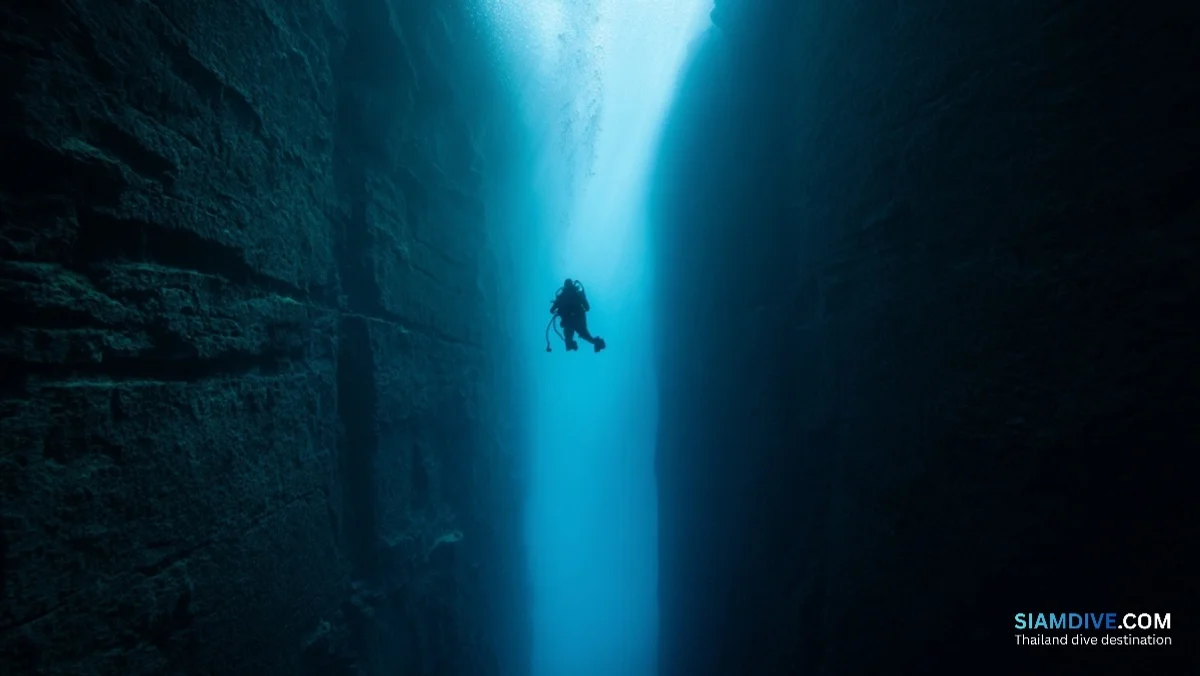
From February through April, the Andaman Sea holds its clearest water of the year. Multiple Khao Lak operators report consistent 20-40 metre visibility during this window, with 30 metres treated as "normal" rather than exceptional. March is the middle of that run — no early-season murk, no pre-monsoon haze yet.
The Gulf in March sits in an awkward transitional slot. The northeast monsoon (November through March) is technically winding down, but the water hasn't fully settled. Koh Tao visibility in March typically ranges 12-20 metres, occasionally better, often worse after a short rain event. The Gulf's signature visibility window — the one its operators proudly quote — is May through September, not March.
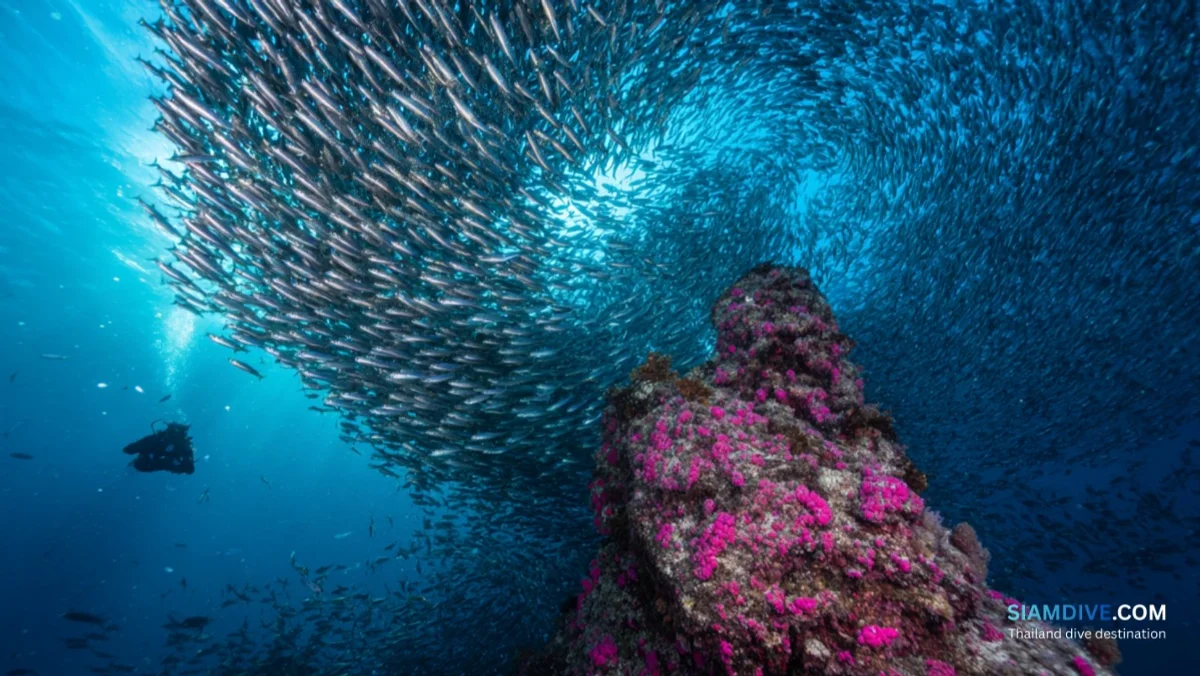
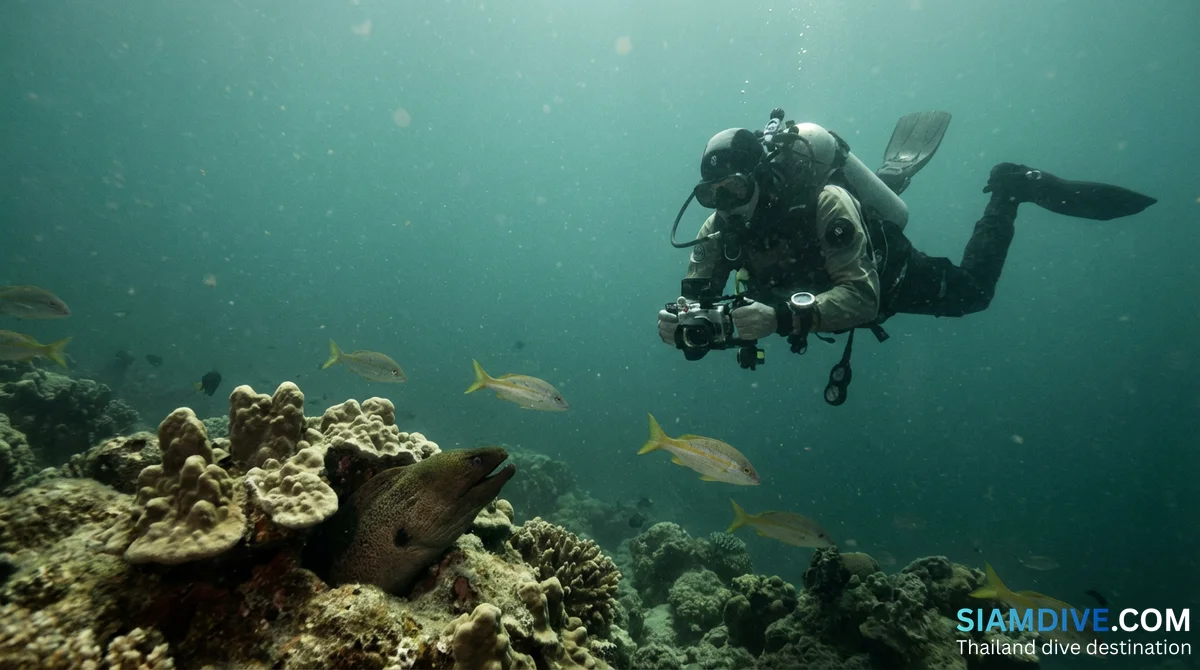
What this means on the reef: at Richelieu Rock in March you can see the whole pinnacle in one pass. At Chumphon Pinnacle or Sail Rock in March you might see a slice of it at a time. That difference compounds across a 4-day trip.
March Visibility at a Glance
- Andaman (Similans / Surin / Richelieu): 20-40m typical, 30m common
- Gulf (Koh Tao / Koh Phangan): 12-20m typical, sometimes dipping to 8-10m after rain
- Andaman water temp: 28-31°C
- Gulf water temp: ~29°C
Water temperature is a wash. Visibility isn't.
The Big-Animal Window That Closes in May
Here's the other argument, and it's the one that non-divers don't appreciate but experienced divers organise entire years around.
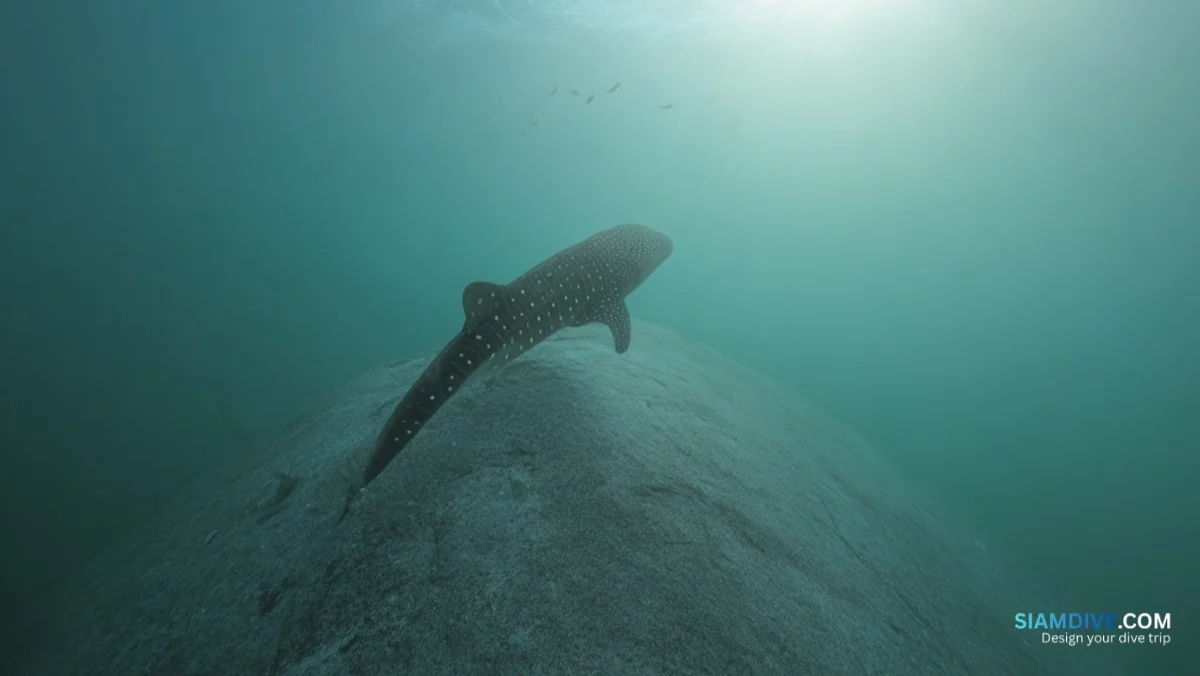
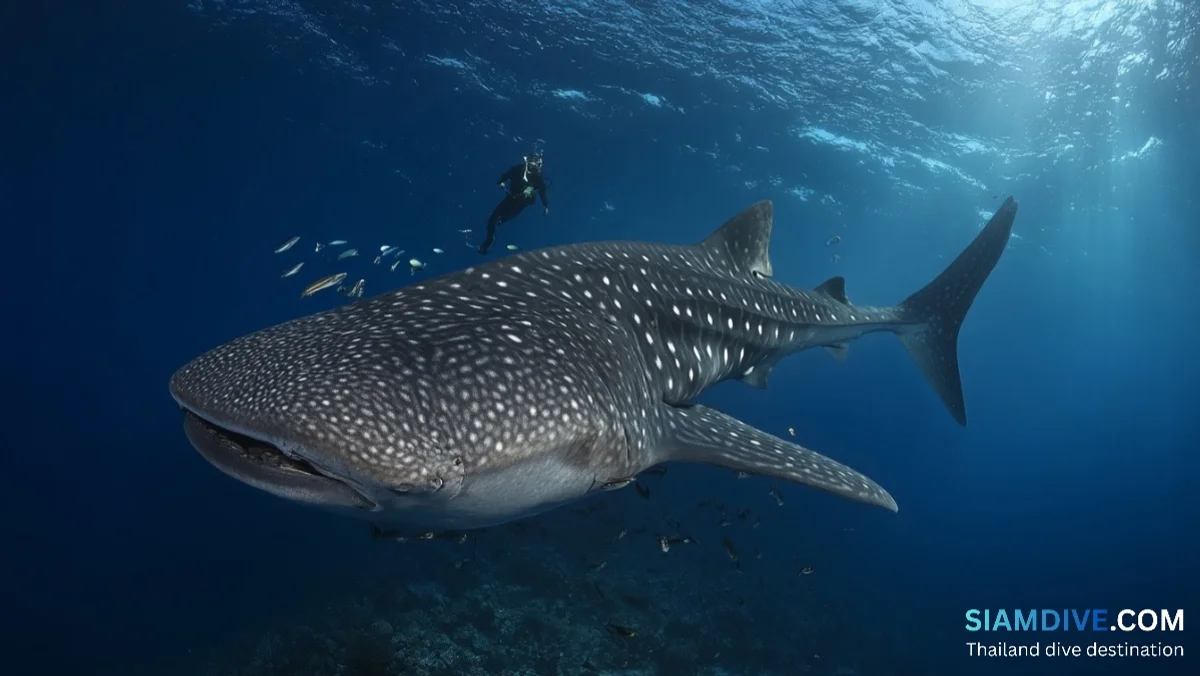
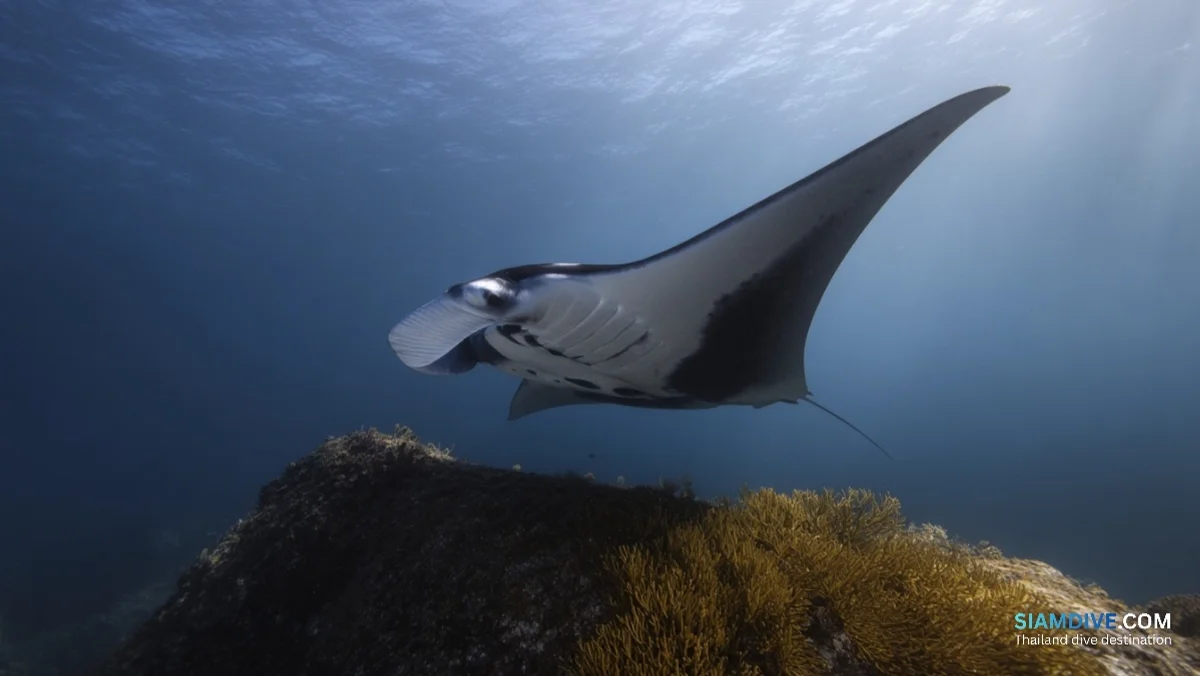
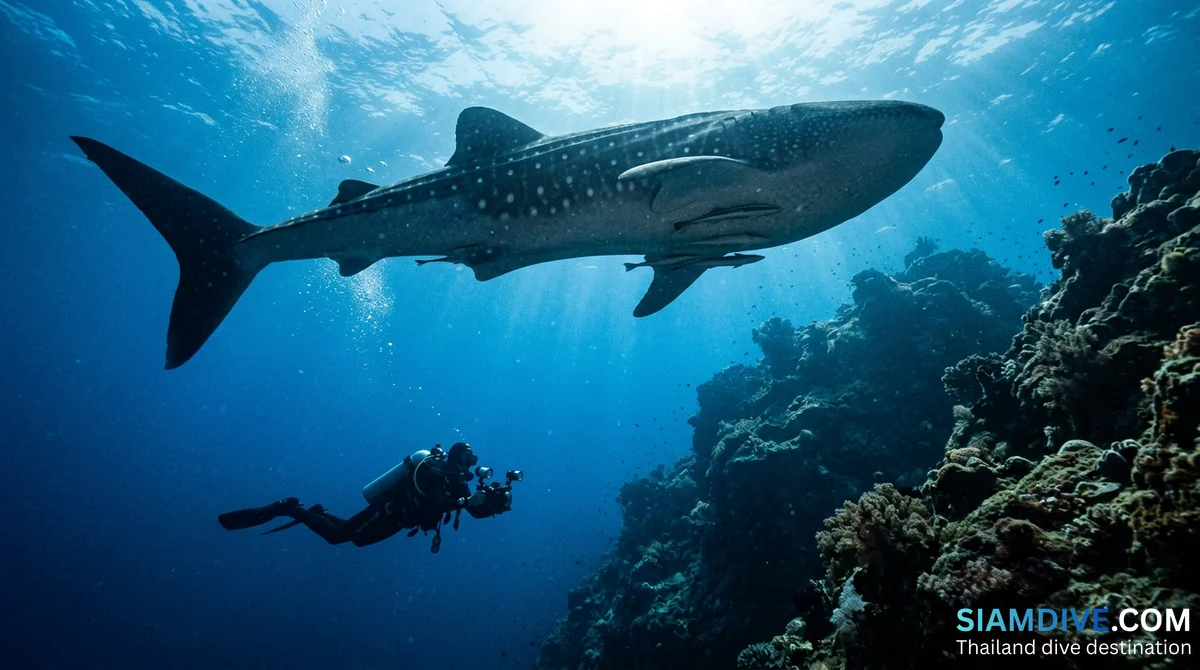
Whale sharks and manta rays peak in the Andaman between February and April. March is dead centre. Richelieu Rock — a solitary horseshoe pinnacle roughly four hours by boat from Khao Lak — has the best whale shark record in the country. Nutrient-rich upwellings bring plankton; plankton brings whale sharks; March is when both crest. Koh Bon, on the same route, has a cleaning station ridge where oceanic mantas hover for 20-40 minutes at a time during this window.
The Gulf gets whale sharks too, mainly at Sail Rock and Chumphon Pinnacle, and mainly from March to May. But the density is different. Andaman operators track sightings almost daily through March; Gulf sightings are more scattered. If your trip is built around encountering these animals, the base rates aren't comparable.
Manta rays in the Gulf? Effectively zero. You're in the wrong ocean for them. Koh Bon and Hin Daeng on the Andaman side are where they live.
The Liveaboard Advantage That Doesn't Exist in the Gulf
Thailand's serious multi-day diving is an Andaman product. The Similan and Surin Islands are national marine parks with a hard open-and-close schedule: October 15 through May 15. Outside those dates, the park is physically closed to the public — liveaboards cannot go. March is mid-season, dead-centre, peak trip availability.
The Gulf has no equivalent. A few small overnight options exist — a couple of boats run weekend trips from Koh Tao — but there's no real liveaboard culture. You dive from land, day-by-day, and go back to your guesthouse each evening. That's a perfectly good way to dive, but it isn't the same experience as four days on a boat hitting 14-16 dives in remote water.
Current Similan Liveaboard Prices for March 2026
- Bavaria (3 or 6 night Similan + Surin): from 6,400 THB per day
- South Siam 4 (3 day / 2 night): from 6,950 THB per day
- MV DiveRACE Class X (launching mid-March 2026, 4-night trips): from 13,000 THB per day
Day-trip diving from Khao Lak or Phuket to Phi Phi, Shark Point, or King Cruiser runs 3,200-3,900 THB for two tanks. If you can't take the liveaboard time commitment, the day-trip product on the Andaman side is still outstanding in March.
In the Gulf, a two-tank day trip from Koh Tao runs 1,800-2,200 THB — cheaper, but you're diving shallower and less varied sites.
The 29°C Wash: Why Water Temp Isn't the Tiebreaker
You'll see articles online that try to separate the two coasts by water temperature. Don't trust them. In March, both seas are around 29°C. You dive in a 3mm shorty or just a rashguard in either place. Anyone telling you the Andaman is "cooler" or the Gulf is "warmer" in March is quoting old data or making it up.
The real thermal difference is weather above water. The Gulf in late March can be oppressively hot and humid (the pre-monsoon build-up starts then). The Andaman stays sunny and dry through March. If you get seasick or hate heat on a boat, that's another small Andaman point.
When the Gulf Still Wins (And When to Pick It)
Fair is fair. There are real reasons to pick the Gulf in March that we need to acknowledge:
- Learning to dive. Koh Tao remains the cheapest place on Earth to do a PADI Open Water course (9,500-12,000 THB). If someone in your group is certifying for the first time, the Andaman course options cost 14,000-16,000 THB for the same certification. March is fine for learning in the Gulf; the training sites are sheltered and the viz hit is manageable.
- Budget travel. Gulf accommodation is 30-50% cheaper than Andaman during high season. If you're there for six weeks, not one, the Gulf stretches your money further.
- Community. Koh Tao has a denser, more permanent diver community than any Andaman town. If you're travelling solo and want to make friends at the bar, this matters.
- Party scene. Full Moon Parties, Half Moon Parties — all Gulf side. Irrelevant if you just want to dive, but real for a lot of visitors.
None of those override the big-three dive argument, but they're legitimate trade-offs.
A Real March Andaman Plan for 2026
If this post has convinced you, here's the trip to book, with real 2026 pricing:
- Days 1-2: Fly to Phuket or Krabi. One day to rest and a check-dive at Phi Phi or Racha Yai (3,200 THB day trip). Get your buoyancy back if you haven't dived in months.
- Days 3-6: 4-day / 4-night Similan liveaboard from Thap Lamu Pier in Khao Lak. 14-16 dives including Richelieu Rock, Koh Bon, Koh Tachai, and the Similan islands themselves. Budget 32,000-55,000 THB (1,000-1,700 USD) per person including park fees. Still a third the cost of the same trip in the Maldives.
- Day 7: Offload and rest in Khao Lak. Shore day, sleep, eat, do laundry. Do not fly — wait at least 18 hours post-dive before getting on a plane.
- Days 8-10: Phuket day diving. King Cruiser wreck, Shark Point, Anemone Reef. 3,200-3,900 THB per day. Stay near Chalong Pier.
- Days 11-12: Travel to Bangkok or fly home. No diving within 18 hours of the flight.
Total: 12 days, 20-24 logged dives, peak visibility, realistic whale shark odds at Richelieu, manta shot at Koh Bon. That is what the Andaman in March gives you.
What We Booked Last March (The Honest Trip Report)
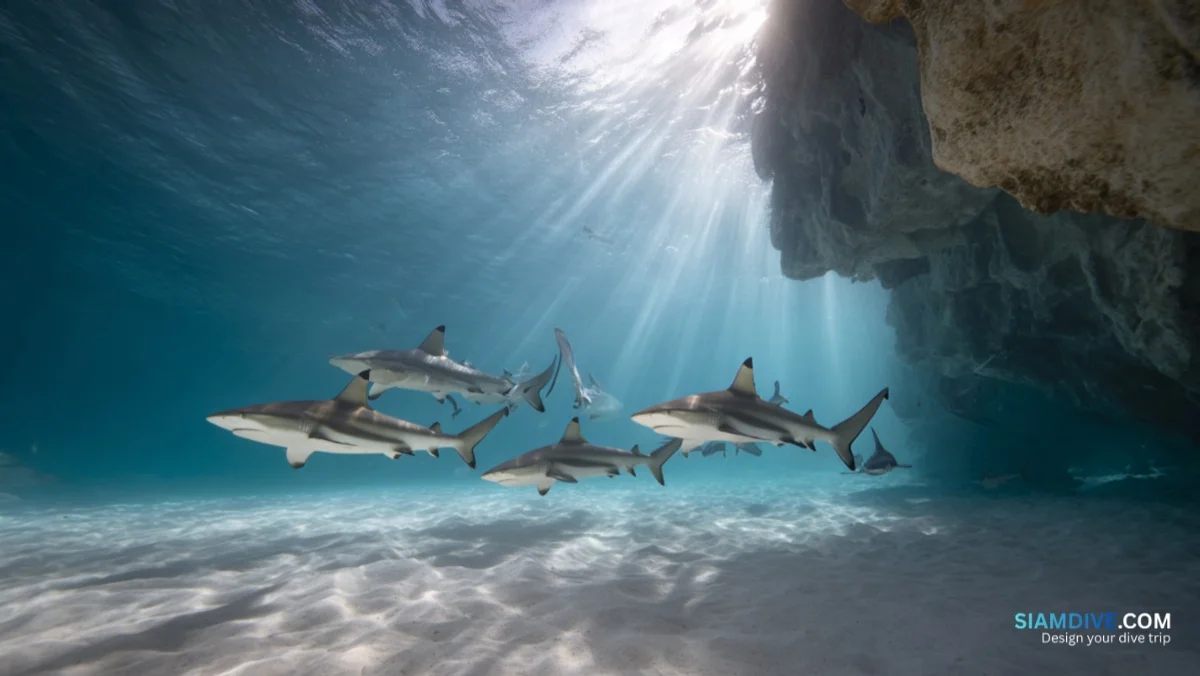
When we ran this itinerary in March 2025, we did the Bavaria liveaboard from Khao Lak — four nights, 14 dives, about 27,000 THB per person including all food and park fees. Visibility ran 25-32 metres across the whole trip. We saw one whale shark at Koh Tachai on day three (not Richelieu, which surprised the dive guide), two manta rays at Koh Bon on day one, and roughly thirty reef sharks stacked up. Water temp averaged 29.4°C. We slept on a stable boat, woke up anchored at new sites every morning, and never saw land on the dive days.
The Gulf in the same month — we checked — was reporting 14-18m visibility at Sail Rock, no whale sharks that week, and the ferries from the mainland were running the reduced low-monsoon schedule. Same country, completely different experience.
The 2026 Update You Should Know
Mid-March 2026 sees the launch of the MV DiveRACE Class X, a new purpose-built liveaboard out of Khao Lak running 4-night Similan trips from 13,000 THB per day. The boat has fewer cabins than older vessels (closer to a boutique product), which means fewer divers per site and a generally quieter experience. If you can stretch the budget, that's the 2026 upgrade we'd flag.
If not, Bavaria, South Siam 4, and Similan Quest remain solid mid-range picks — and all three still run from Thap Lamu through mid-May.
Ready to Book?
Browse Similan liveaboards, Khao Lak day trips, and Phuket dive shops on siamdive.com and message the operators directly. March availability tightens fast after mid-February — if you want the good liveaboards on specific dates, don't wait until the last week.
Sources
- Diving in Thailand: Complete Guide to the Andaman Sea and Koh Tao (2026)
- Diving in the Similan Islands: things to know before you go
- Whale Sharks Season at Similan Islands, Thailand
- The Whale Shark in Thailand — Sunrise Divers
- Best Time To Dive Koh Tao | Crystal Dive
- Similan Islands Liveaboard Index — LiveAboard.com