That Hard Pull at 30 Metres Is Your First Stage Talking
21 เมษายน 2569
When your regulator fights you at depth, intermediate pressure tells the story. A five-minute pre-dive IP check and annual service are all it takes.
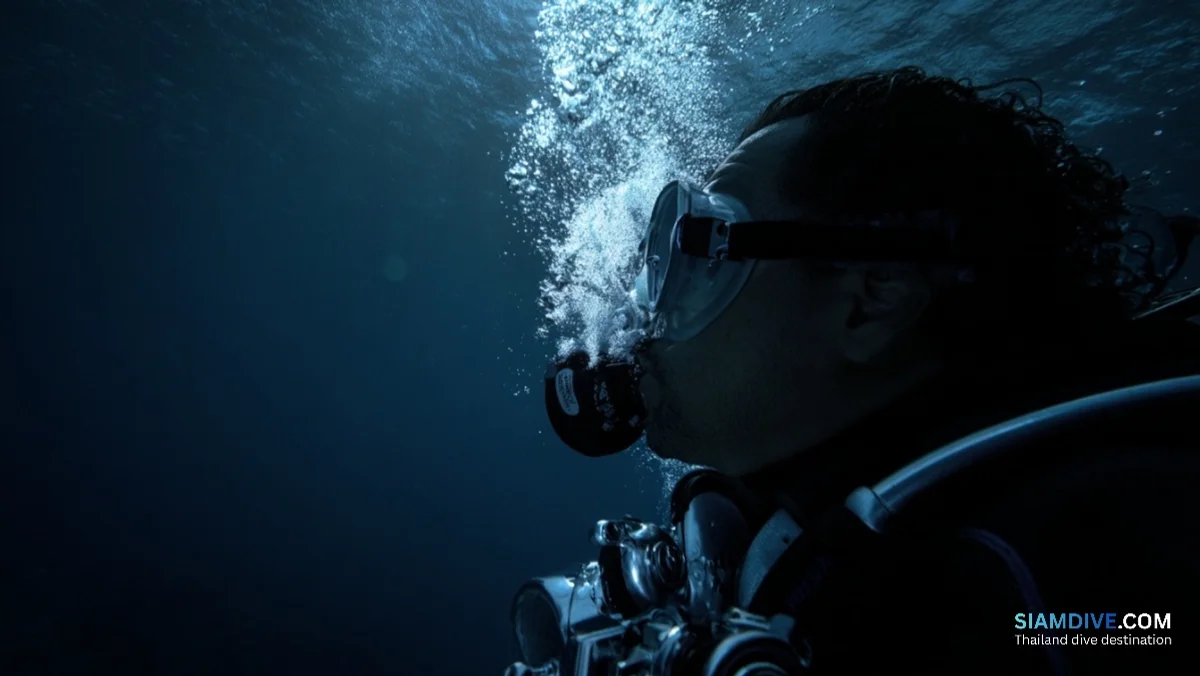
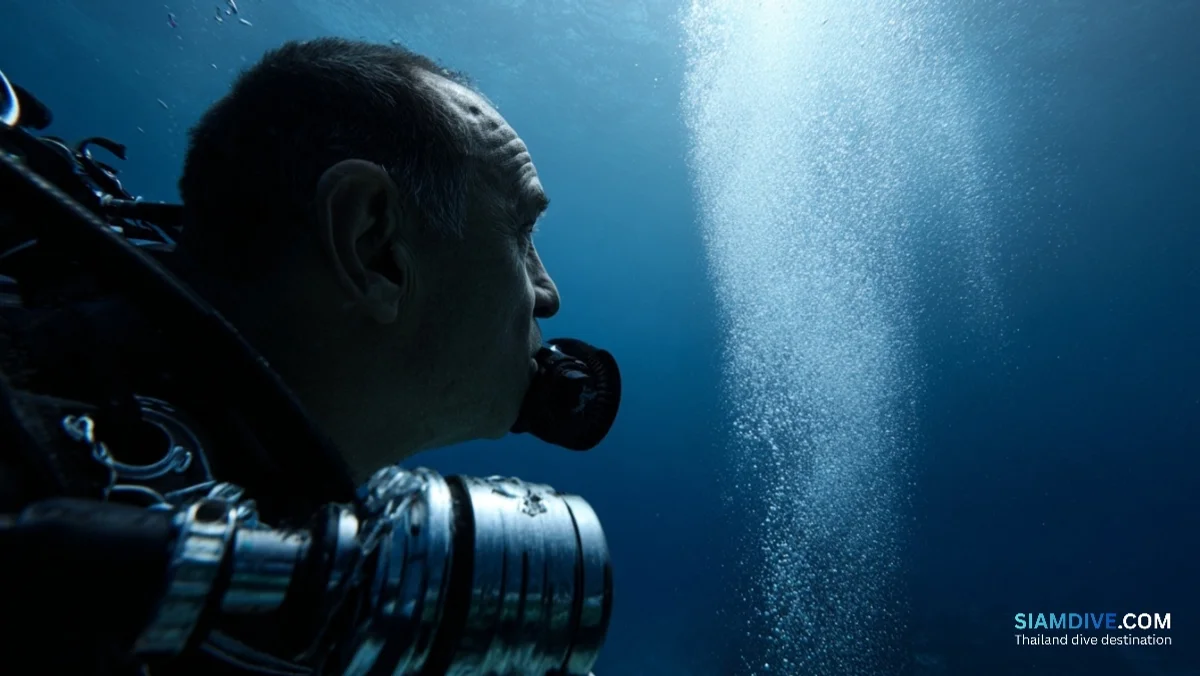
Thirty metres down, the air gets thick. Not literally — the gas mix in your tank hasn't changed — but the pull through the mouthpiece tightens, each inhalation arriving a half-second late, as if the regulator is thinking about whether to deliver. Most divers blame depth itself, shrug, and surface. The smarter move is to listen to what the first stage is actually telling you, because that resistance is a diagnostic signal with a surprisingly specific cause.
This is a walkthrough of the mechanism behind hard breathing at depth, the numbers that separate normal from failing, and the checks you can run on a dive deck before you even get wet.
What 4 Bar of Ambient Pressure Does to Your First Stage
At the surface, your first stage reduces tank pressure — usually 200 to 232 bar — down to an intermediate pressure (IP) of roughly 9 to 10 bar above ambient. That "above ambient" part is the key. At 30 metres, ambient pressure is 4 bar. The first stage must now deliver IP at 4 bar higher than it does at the surface, because the second stage needs that pressure differential to crack open its valve and push air into your lungs against the surrounding water column.
A healthy, balanced first stage handles this seamlessly. IP tracks ambient pressure upward as you descend, maintaining the same over-ambient margin at 30 metres as it does at 3. But if the internal mechanism is worn, corroded, or out of adjustment, that margin narrows. The second stage valve has to work harder to crack, and the diver feels it as increased breathing effort — a subtle drag that worsens with depth.
- Surface IP (typical): 9.0–10.3 bar above ambient (130–150 PSI)
- At 30 m (healthy reg): same margin maintained — IP rises proportionally with depth
- At 30 m (worn reg): IP margin drops 0.5–1.5 bar below spec, second stage starved
- Manufacturer tolerance: most brands allow ±0.3 bar from spec before recommending service
Balanced vs Unbalanced — Where the Gap Opens
Not all first stages respond to depth the same way, and the split comes down to a single engineering choice: whether the high-pressure seat is isolated from tank pressure or exposed to it.
Unbalanced piston designs let tank pressure act directly on the high-pressure seat. While the tank is full, the system works fine — incoming pressure helps keep the valve open. As tank pressure drops below 80 bar and ambient pressure climbs with depth, two forces squeeze the IP margin from both sides. The result: noticeably harder breathing in the last third of the tank at depth. This is physics, not a defect, but it catches divers off guard if they've never felt it before.
Unbalanced diaphragm models behave differently — IP actually rises as tank pressure falls, which can push the second stage toward free-flow rather than hard breathing. Both failure modes matter, but for opposite reasons.
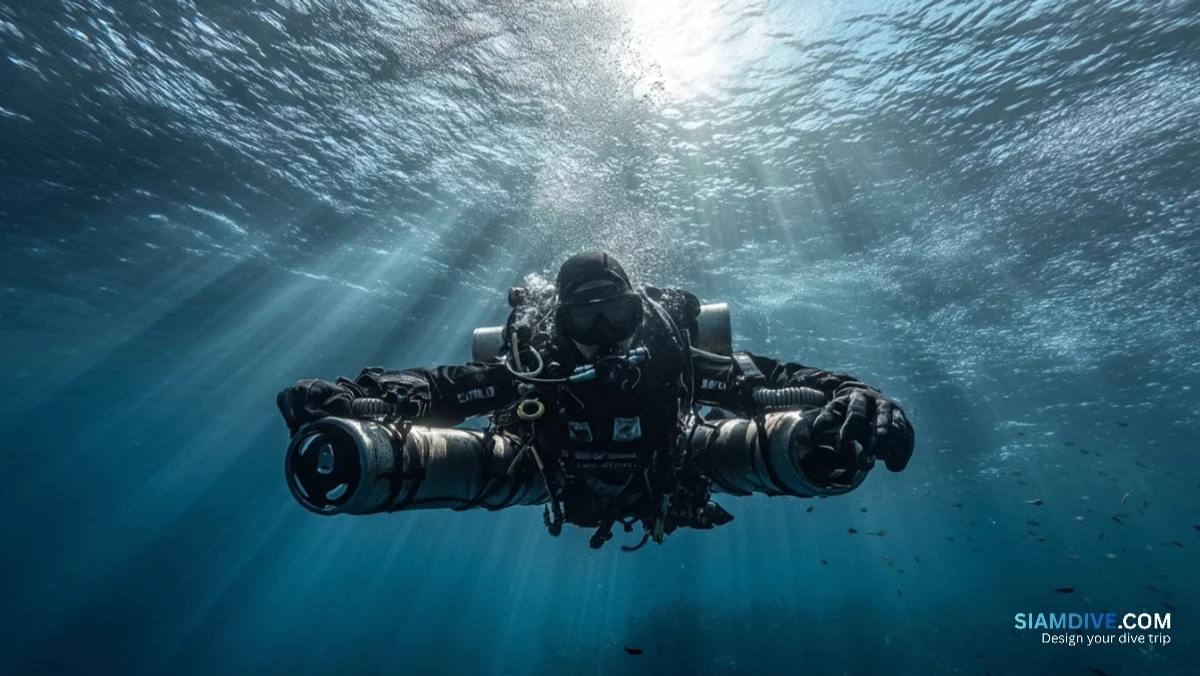
Balanced first stages — whether piston or diaphragm — isolate the HP seat from supply pressure. IP stays stable whether the tank reads 200 bar or 50 bar, and whether you're at 5 metres or 40. This is why deep-diving specialty courses and technical diving configurations overwhelmingly spec balanced regulators.
- Unbalanced piston at 30 m, 70 bar tank
- IP can drop 1–2 bar below spec → harder breathing, especially on exertion
- Unbalanced diaphragm at 30 m, 70 bar tank
- IP can rise 1–2 bar above spec → second stage may free-flow
- Balanced (either type) at 30 m, 70 bar tank
- IP holds within ±0.3 bar of surface reading
If you're diving deeper than 25 metres regularly, or finishing dives below 70 bar tank pressure, a balanced first stage isn't a luxury — it's the baseline specification that prevents depth-dependent breathing resistance. Plenty of rental regulators in Thailand and across Southeast Asia still run unbalanced piston designs, which is why that hard pull shows up on deep wall dives at sites like Hin Daeng more than on shallow reef tours.
IP Creep — the Quiet Signal Before a Free-Flow
Breathing resistance at depth is one symptom. A more dangerous cousin lives in the same mechanism: IP creep. After each inhalation, intermediate pressure should snap back to its set point and hold. In a regulator with a worn high-pressure seat — where the hard metal seat and soft seat material no longer seal airtight — IP returns to set point but then continues to climb, slowly, like a faucet that won't fully close.
Creep of 0.3 bar over 30 seconds might not register during a dive. Creep of 1.5 bar over 10 seconds will eventually force the second stage open, producing a free-flow that dumps your gas supply in minutes. The shift from "slightly hard breathing" to "uncontrollable free-flow" can happen between two dives on the same day trip if the seat degrades just enough during a surface interval.
What causes seat wear? Salt crystals embedding in the soft seat after inadequate rinsing. Prolonged storage under pressure (leaving the reg attached to a charged tank). UV degradation of elastomers. And simple age — rubber hardens, springs lose tension, and the lock-up pressure drifts. DAN reports that approximately 11% of documented dive incidents involve equipment failure, with regulator malfunction as a recurring category.
Five Pre-Dive Minutes That Change the Outcome
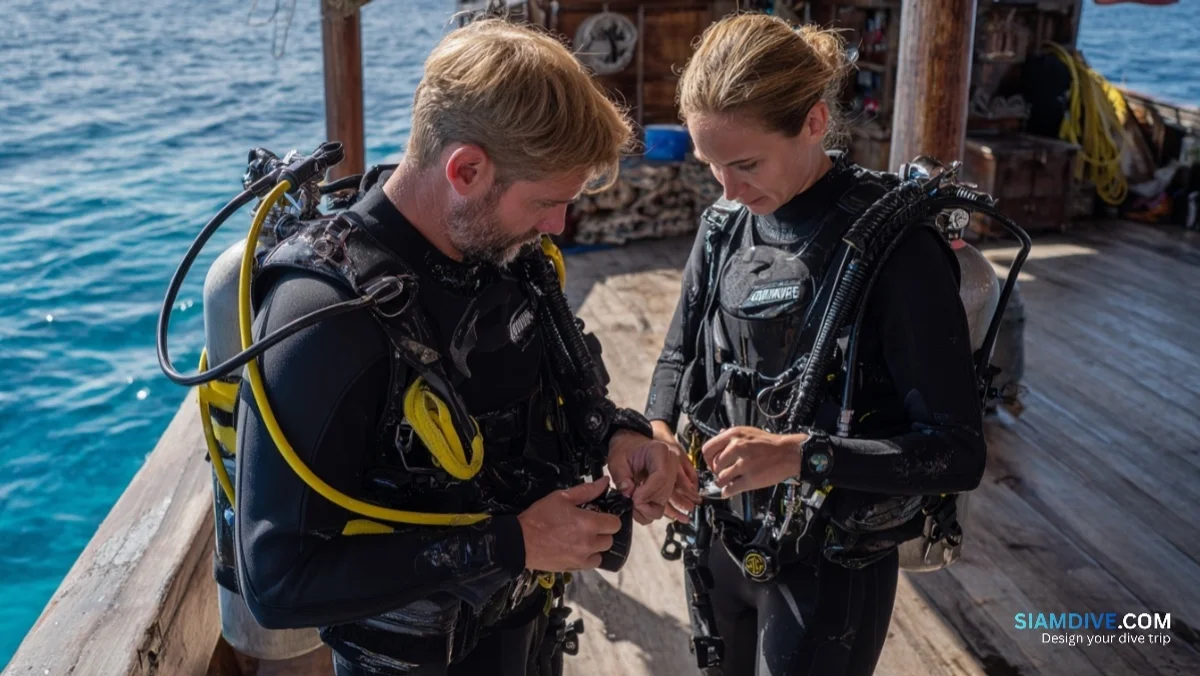
You don't need a technician's toolkit to catch most of these issues before entering the water. Five minutes and a pressure gauge are enough.
Step 1 — Static IP read. Connect a console gauge or standalone IP gauge to the first stage's LP port. Pressurize. The needle should settle between 9.0 and 10.3 bar above ambient for most brands (Apeks specs 9–10 bar; others vary slightly — check your manual). If IP reads below 8.5 or above 11, the reg needs a bench.
Step 2 — Watch for creep. After the needle settles, leave it pressurized for 60 seconds without breathing. A healthy first stage holds rock-steady. If the needle drifts upward by more than 0.3 bar, the HP seat is leaking internally. The reg should not go in the water.
Step 3 — Bleed-down test. Purge the second stage for two seconds, then watch IP recover. It should return to the original set point within one second. A sluggish return — climbing slowly back over three to five seconds — signals a sticky piston or corroded spring. Breathable, but schedule service soon.
Step 4 — Breathe through each second stage. Block off the inflator hose to the BCD, then inhale through each second stage. The air should arrive with moderate resistance — it is traveling the full path from first to second stage — but it should not feel like sucking through a narrow straw. If one second stage breathes significantly harder than another on the same first stage, the problem is likely in that second stage's diaphragm or valve, not the first stage.
Step 5 — Visual check of the dust cap and filter. Remove the first stage from the tank and inspect the sintered filter disc. Green or white corrosion around the HP port means water has entered the first stage — likely from rinsing without the dust cap seated. A clogged filter restricts airflow before any internal mechanism comes into play, and it is the most common cause of hard breathing that gets misattributed to other problems.
When a Rinse Is Not Enough
Post-dive care buys time between services but does not replace them. Soaking in fresh water removes surface salt; it does nothing for internal seat wear, spring fatigue, or dried-out O-rings. The industry standard, backed by DAN and most manufacturers, is a full overhaul once per year or every 100–200 dives, whichever comes first.
"Once a year" sounds frequent until you look at what a technician actually finds inside a first stage that has gone 18 months without service. HP seat material compressed into a permanent groove. Piston O-rings with visible cracking. Spring tension 15% below factory spec. Any one of these shifts IP enough to feel the difference at 30 metres — and all of them advance silently between dives.
- Annual overhaul cost (Thailand): 2,500–5,000 THB depending on brand and parts
- Parts most commonly replaced: HP seat, LP seat, piston/diaphragm O-rings, springs
- Service red flags: IP creep >0.3 bar, increased breathing resistance, visible corrosion on filter, free-flow tendency
- Extended-interval brands: some manufacturers (Atomic, Poseidon) advertise 2-year intervals due to titanium or advanced seat materials — follow the manual, not the rumour
Dive shops across Thailand service regulators year-round, but peak-season demand (November through April) means longer turnaround. Sending gear in during May or June — the Andaman off-season — typically cuts wait time in half and avoids the last-minute scramble before a Similan or Richelieu Rock liveaboard.
What 2026's Recall Notices Mean for Working Divers
Two manufacturer recalls in the past year underscore how seriously seat and port geometry affect safety. Huish Outdoors issued a stop-use notice for certain Hollis 200LX second stages manufactured between May 2017 and May 2025 after reports of internal components fracturing. No in-water incidents were reported, but the failure mode — a fractured component inside the second stage — could cause complete loss of gas delivery at depth.
Separately, Aqualung recalled specific batches of Calypso regulators after discovering a manufacturing defect: a hole drilled out of specification in the high-pressure port left the wall thickness dangerously thin. Under pressure, a wall rupture would cause uncontrollable free-flow from the second stage. Both recalls were voluntary, both caught before fatalities, and both reinforce the same lesson: the tolerances inside a regulator are measured in fractions of a millimetre, and even factory processes occasionally miss them.
If you own either model, check serial numbers against the manufacturer's recall list before your next dive. For divers renting gear in Thailand, ask the shop when regulators were last serviced and whether recall checks have been completed — a question that takes ten seconds and can prevent the kind of incident that surfaces later in ways nobody expects.
The Takeaway Is a Number
Hard breathing at depth is not a mystery and it is not "just how regulators work." It is a measurable deviation from a specific pressure spec — 9 to 10 bar above ambient for most first stages — caused by identifiable mechanical wear. A five-minute IP check before a dive detects it. An annual service prevents it. And knowing whether your first stage is balanced or unbalanced tells you in advance whether depth and low tank pressure will compound the problem.
The regulator is the one piece of life-support equipment between you and the water column. When it talks at 30 metres, the right response is not to shrug. It is to read the gauge.