Similan Islands Diving Guide: Thailand's Underwater Paradise
6 เมษายน 2569
Everything you need to know about diving the Similan Islands — best dive sites, marine life, seasons, liveaboard tips, and how to get there from Khao Lak.
Why the Similan Islands Are Thailand's Top Dive Destination
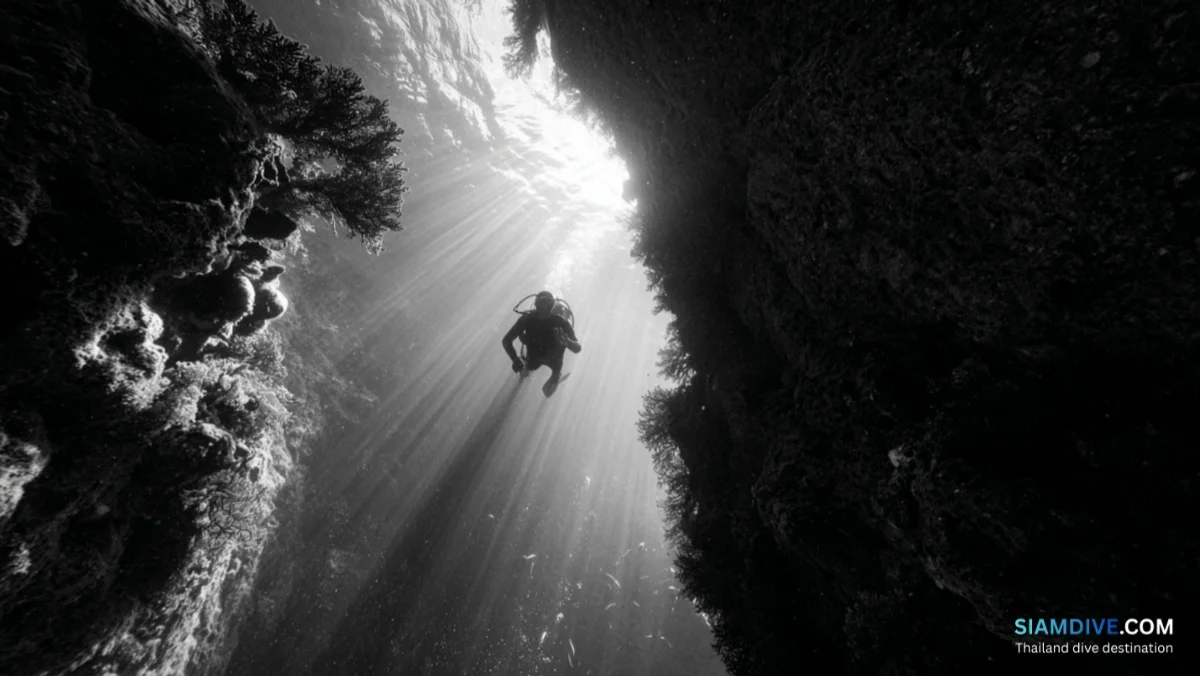
Located 70 kilometers off the coast of Khao Lak in the Andaman Sea, the Similan Islands National Park consistently ranks among the world's best dive destinations. Nine granite islands surrounded by crystal-clear water with visibility reaching 30 meters, dramatic underwater boulder formations, pristine coral gardens, and regular encounters with manta rays and whale sharks — the Similans deliver an underwater experience that few places on earth can match. The park is open only from mid-October to mid-May, creating a limited window that makes every dive season feel special. Whether you come on a day trip or a multi-day liveaboard, the Similans will redefine what you thought Thai diving could be.
Best Dive Sites in the Similan Islands
The park offers over 20 dive sites ranging from gentle coral gardens to challenging current-swept pinnacles. Here are the five that define the Similan experience:
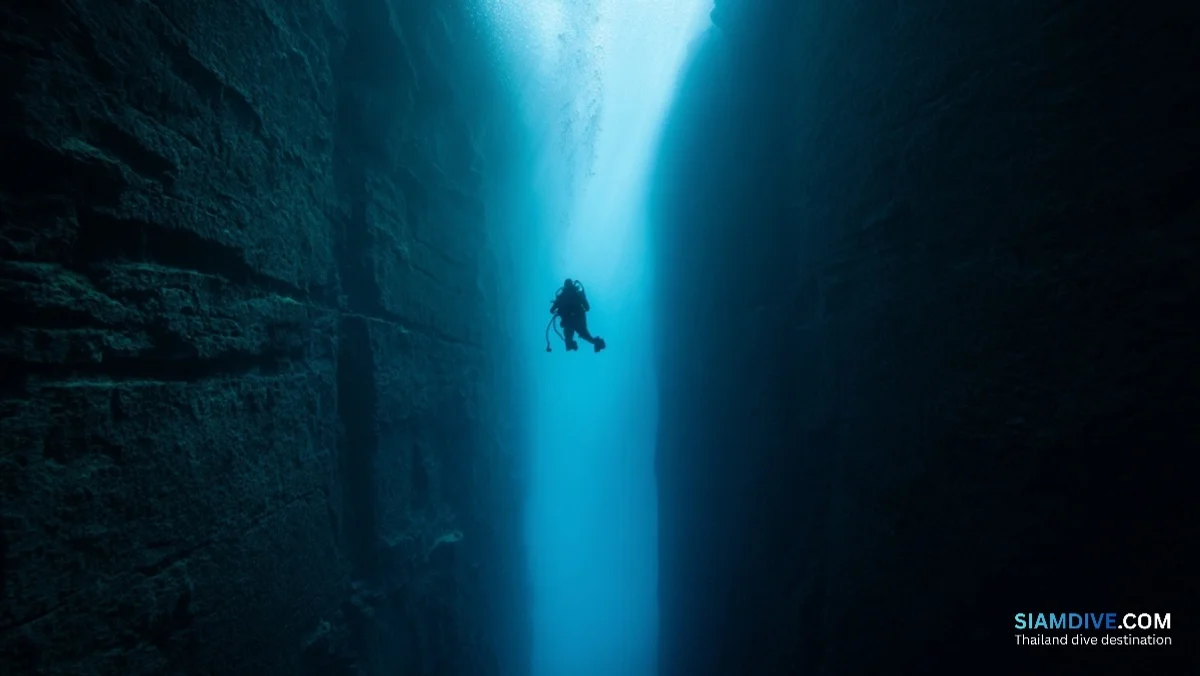
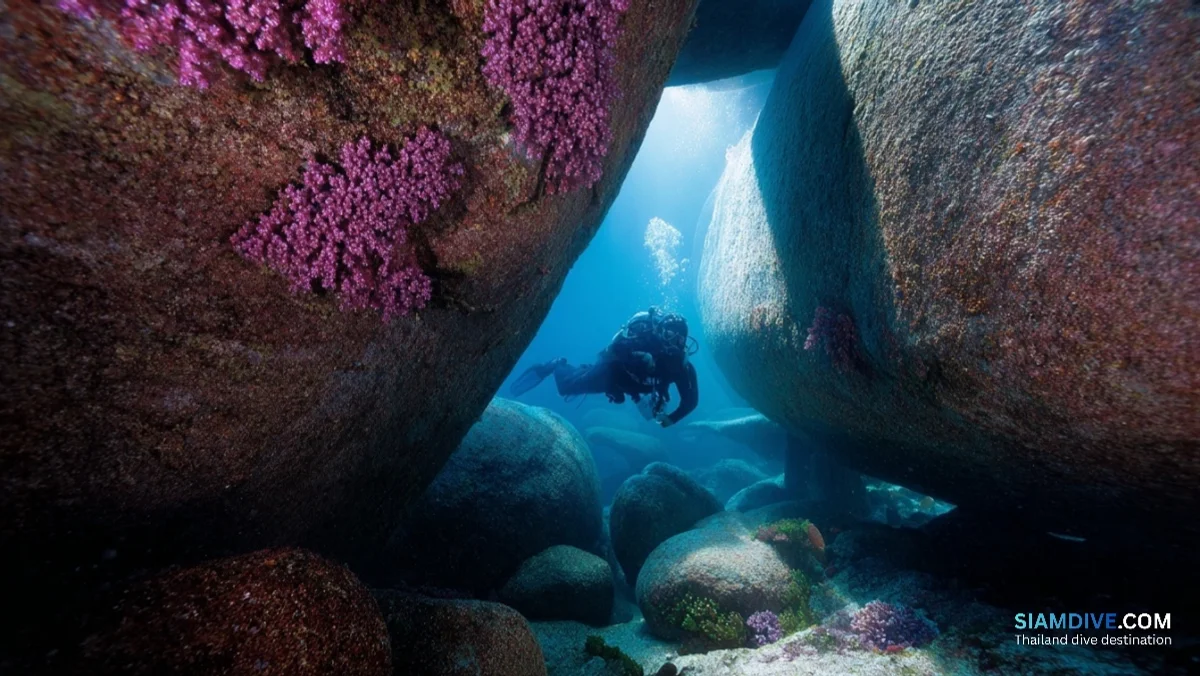
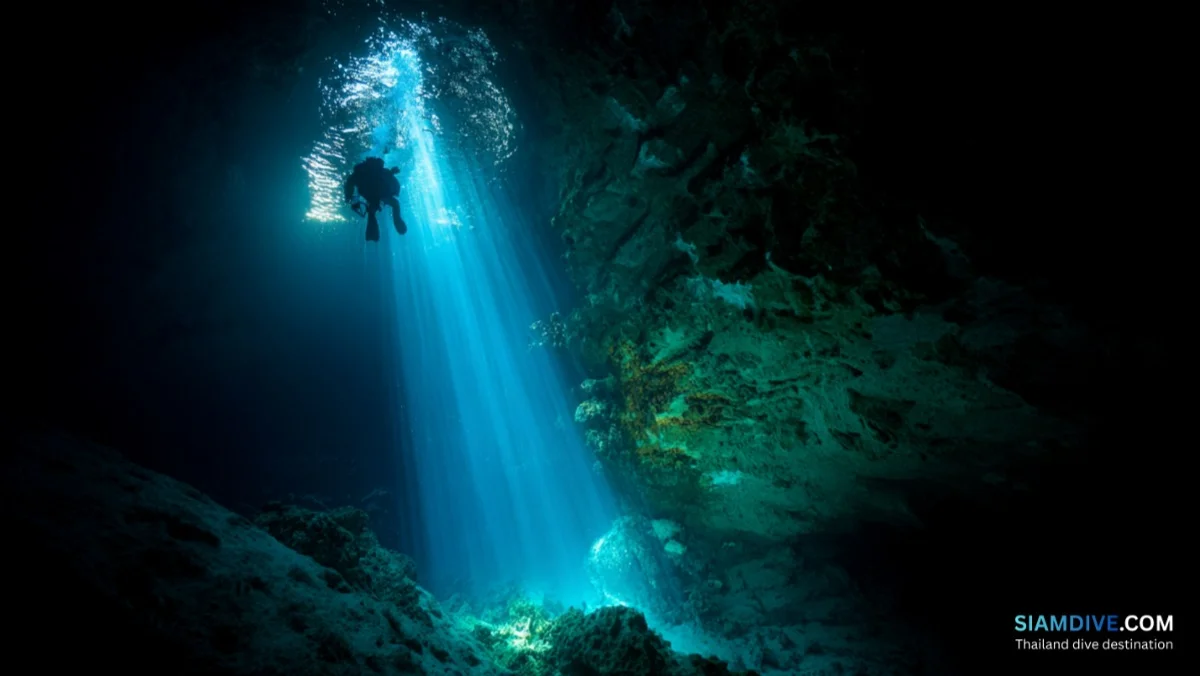
- Christmas Point (Koh Ba Ngu, Island 9): Massive granite boulders create swim-throughs, archways, and overhangs draped in soft corals. Leopard sharks rest on the sandy bottom, and the boulder formations are unlike anything else in Thailand. The topside landscape is equally dramatic, with house-sized rocks balanced on top of each other. Suitable for Advanced Open Water and above.
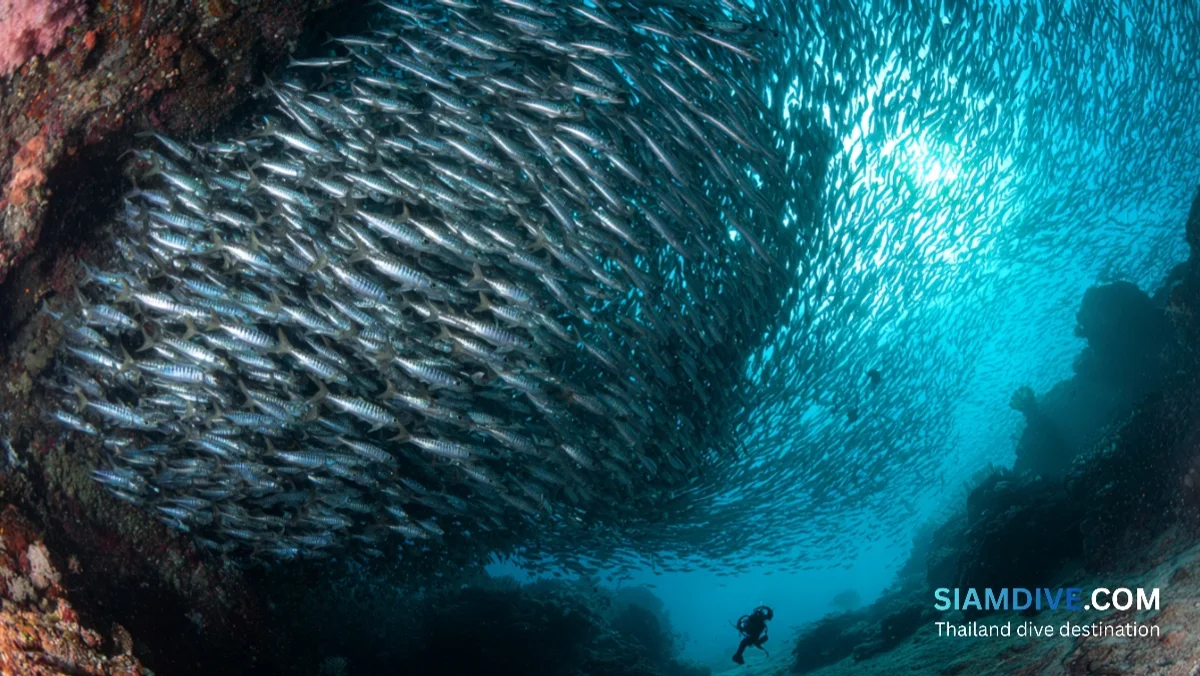
- Elephant Head Rock: A submerged rock formation between Islands 7 and 8 with spectacular swim-throughs and crevices. Strong currents bring nutrient-rich water that attracts barracuda schools and reef sharks. The rock breaks the surface slightly and extends down to over 30 meters, with different environments at every depth. Advanced divers only due to currents and depth.
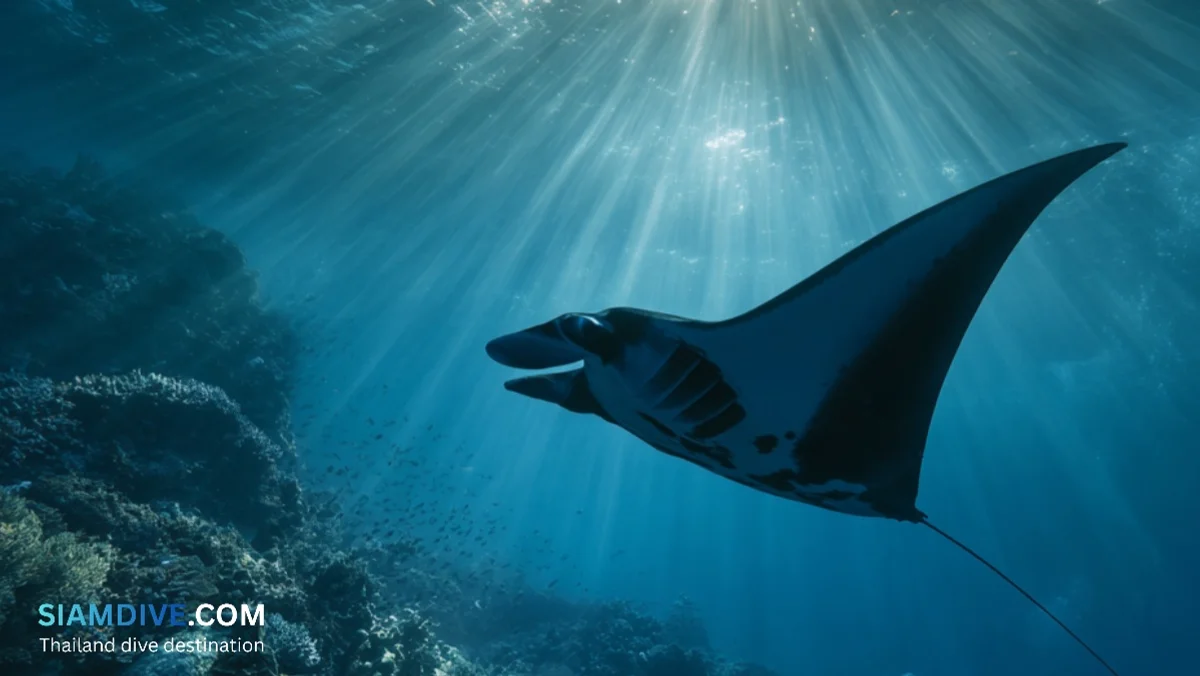
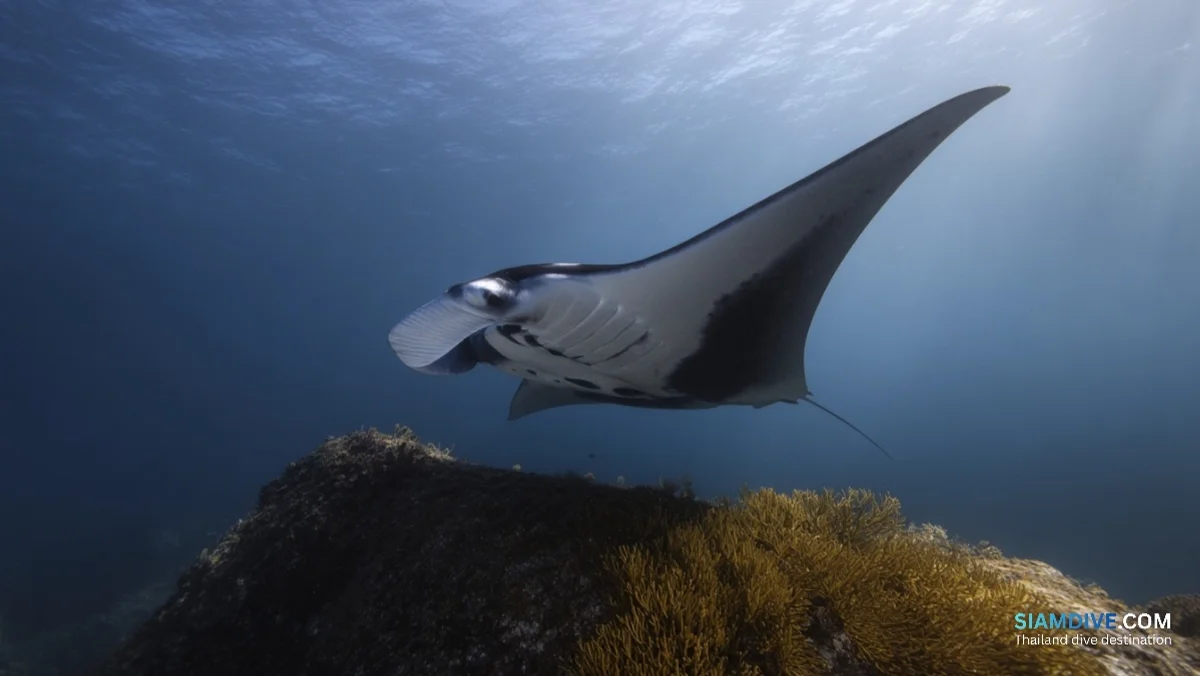
- Koh Bon: The premier manta ray cleaning station in the Andaman Sea. Mantas visit year-round but peak between February and April. A submerged ridge drops from 12 to 40 meters with healthy hard corals and constant fish action. Even without mantas, the ridge itself is a spectacular dive with eagle rays, reef sharks, and schools of trevally patrolling the drop-off.
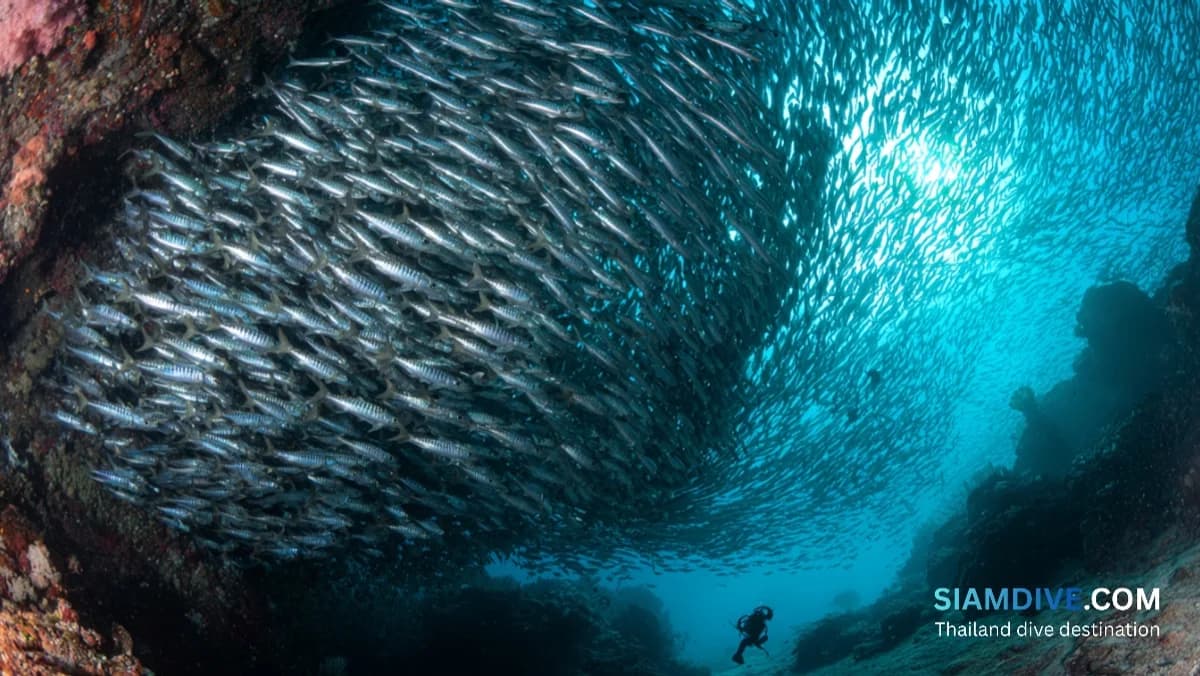
- Koh Tachai Pinnacle: A challenging deep-water pinnacle rising from over 40 meters to about 12 meters below the surface. Strong, unpredictable currents make this site demanding, but the marine life is extraordinary — whale sharks, mantas, and massive schools of trevally, barracuda, and fusiliers that can number in the thousands. A reef hook is essential. Not for beginners under any circumstances.
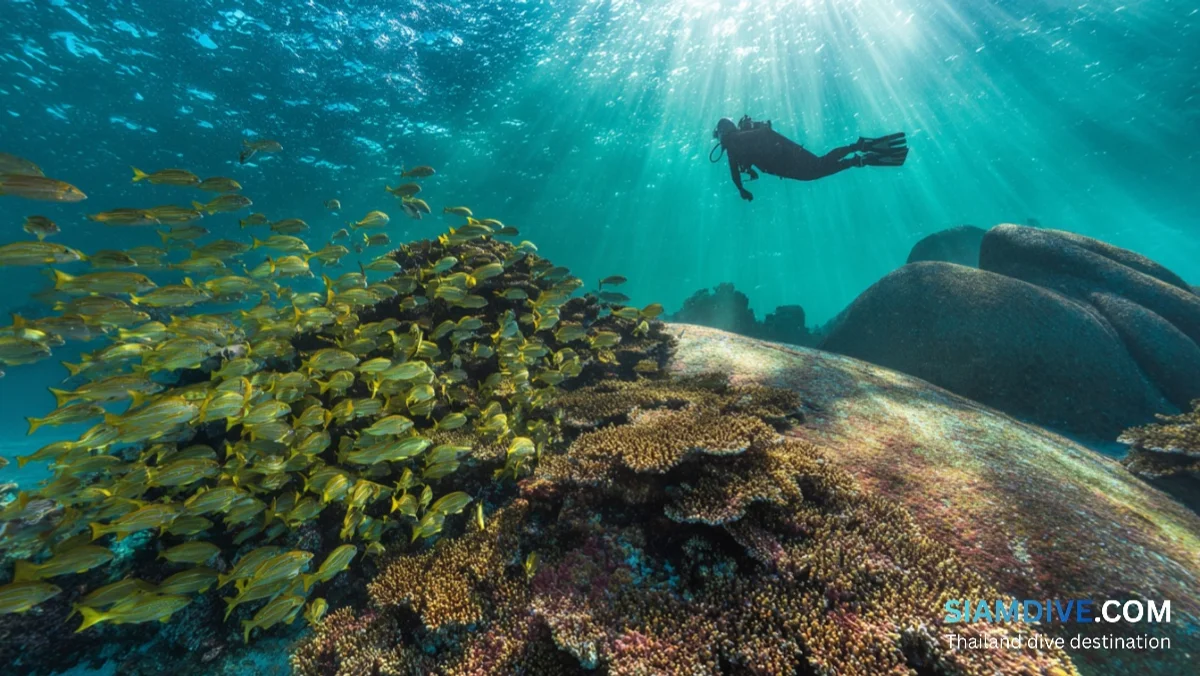
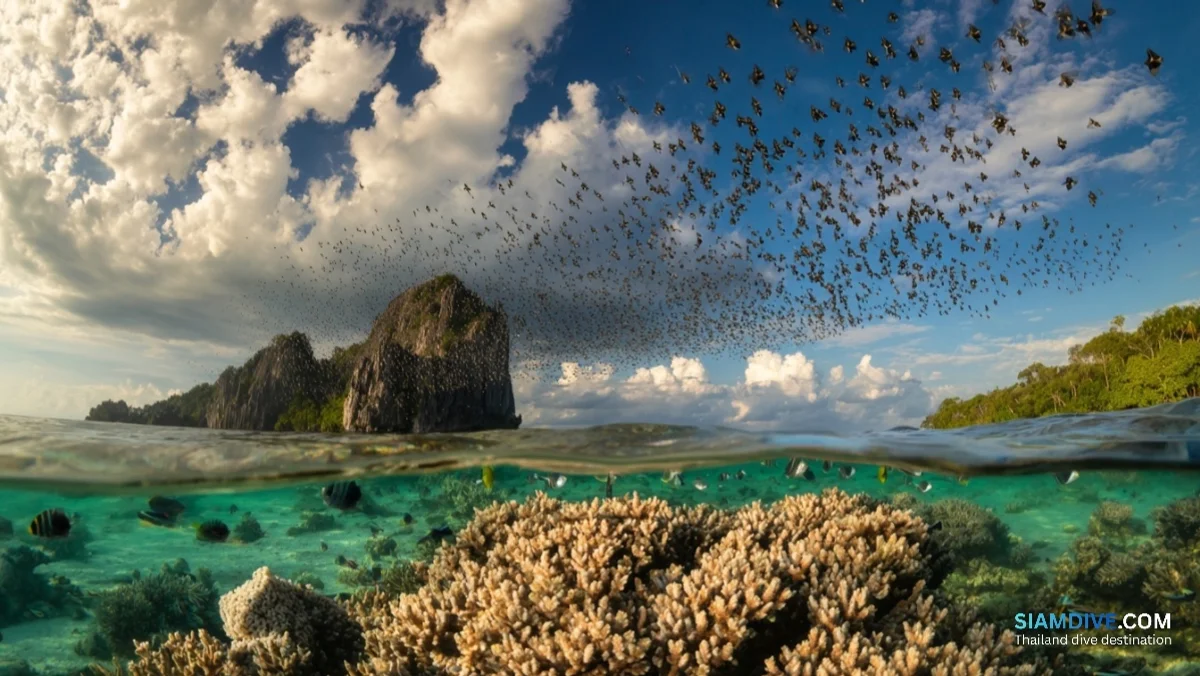
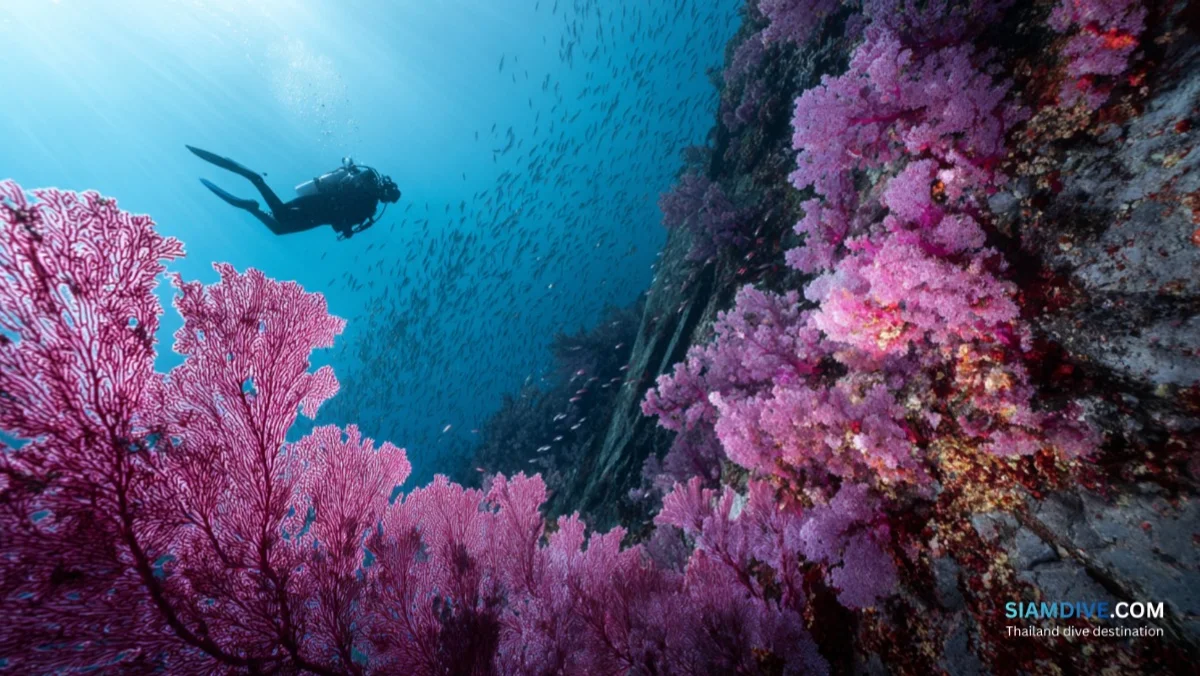
- Fantasy Reef (Island 8): Gentle currents, stunning hard coral gardens in pristine condition, and abundant reef fish make this ideal for all certification levels. The coral coverage here is among the healthiest in the park, with staghorn, table, and brain corals in excellent condition. One of the best sites in Thailand for wide-angle underwater photography.
Marine Life You'll Encounter
The Similans sit at the intersection of deep Andaman Sea currents and shallow reef systems, creating a biodiversity hotspot that supports both pelagic visitors and resident reef communities. Manta rays are the headline attraction, with a resident population at Koh Bon that can be observed at cleaning stations almost daily during peak season. These gentle giants have wingspans of up to 5 meters and often make multiple passes over the cleaning station, giving divers extended encounters. Whale sharks pass through between February and May, though sightings are never guaranteed — they are most commonly spotted at Koh Tachai and Richelieu Rock.
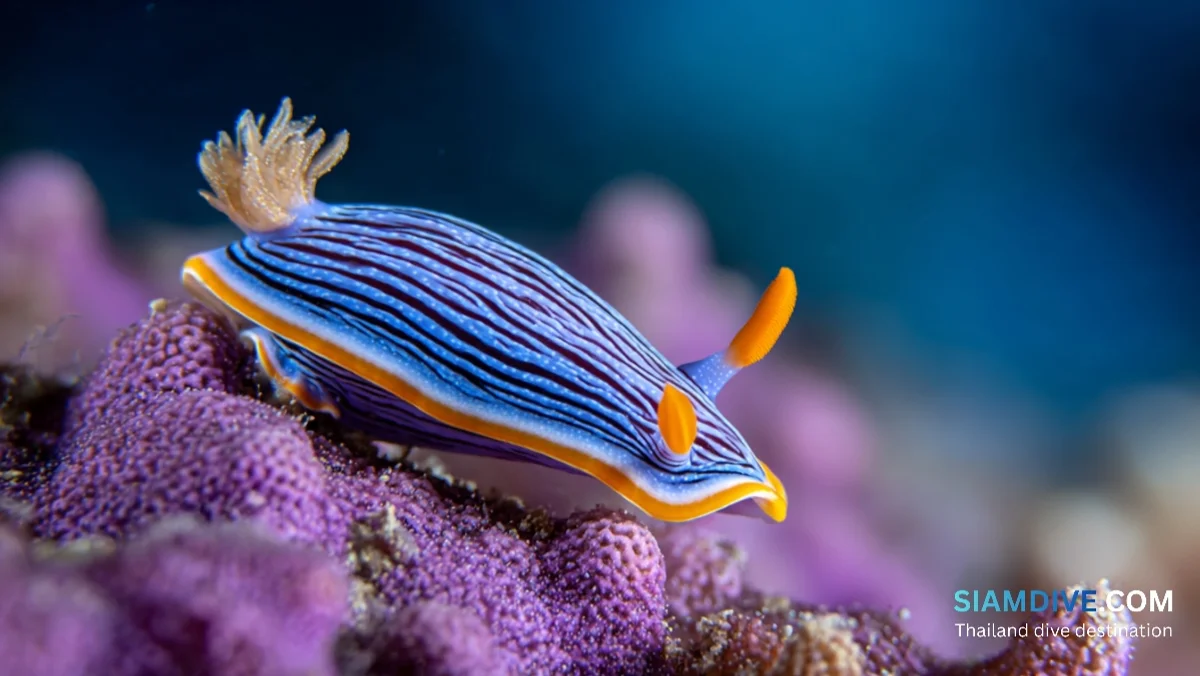
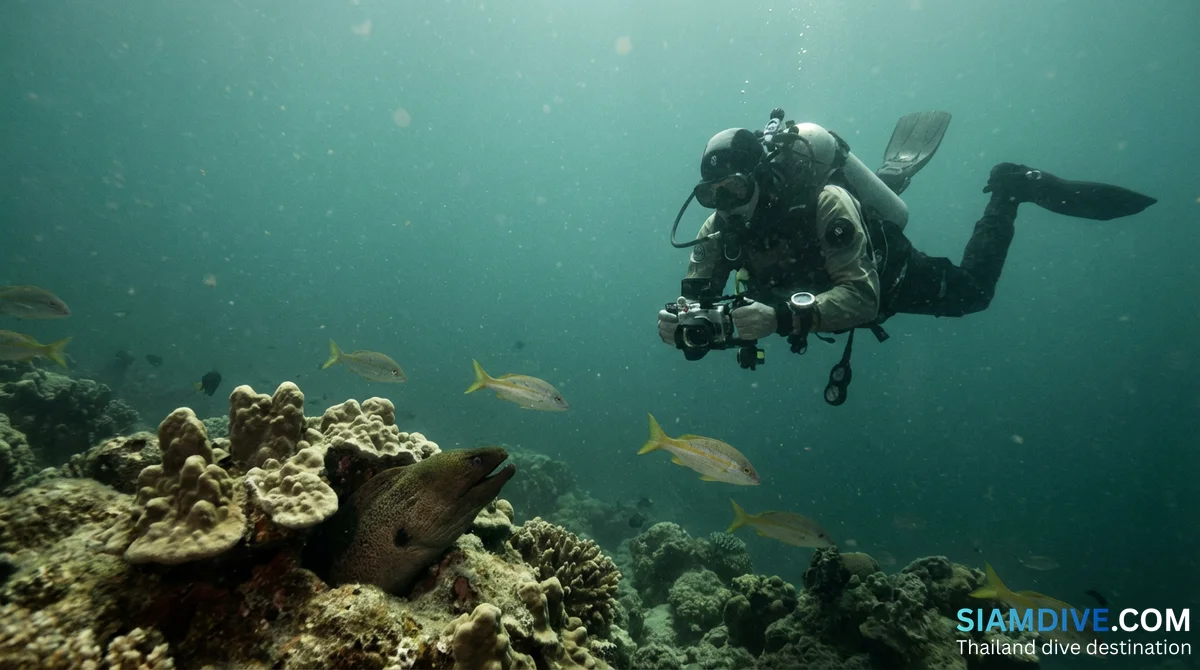
Beyond the megafauna, expect blacktip and whitetip reef sharks patrolling the drop-offs, giant trevally hunting in packs, barracuda schools numbering in the hundreds, Napoleon wrasse approaching divers with curiosity, and both hawksbill and green sea turtles feeding on the reef. Octopus are common on night dives, often hunting in the open. Moray eels — giant, honeycomb, and whitemouth — peer from crevices at every site. The reef fish diversity is extraordinary: clouds of orange anthias, butterflyfish pairs, angelfish, surgeonfish schools, triggerfish, and clownfish in pristine anemone homes. Macro enthusiasts will find nudibranchs, ghost pipefish, ornate pipefish, and pygmy seahorses on careful inspection of sea fans and gorgonians.
Best Time to Dive
The Similan Islands National Park is open from mid-October to mid-May and completely closed during the southwest monsoon from June to September. Within this window, conditions shift noticeably through the season:
- October-December: The season opens with fewer boats and a sense of freshness on the reefs. Visibility is good at 20-25 meters, water temperature hovers around 28-29°C, and the first manta sightings at Koh Bon typically begin in November. This is a great time for divers who prefer quieter conditions and do not mind slightly lower chances of whale shark encounters.
- January-February: Peak season with the best overall conditions. Visibility reaches 25-30 meters, seas are calm and flat, and all dive sites are accessible. Liveaboards fill up quickly during this window, so booking 3-6 months in advance is essential. Manta encounters at Koh Bon are frequent and reliable.
- March-April: The warmest water of the season at 29-30°C brings the highest probability of whale shark encounters and peak manta activity. Plankton blooms can reduce visibility to 15-20 meters at some sites, but this is exactly what attracts the largest animals. If whale sharks are your priority, this is when to come.
- May: The season winds down with rougher seas becoming possible as the monsoon approaches. Fewer operators run trips, but diving can still be excellent on calm days. Discounted liveaboard rates are sometimes available.
How to Get There
The Similans are accessed exclusively from the Andaman coast, with Khao Lak serving as the primary gateway. Fly into Phuket International Airport, then transfer to Khao Lak by minivan or private car — approximately 1.5 hours north along the coast. Day trip speedboats depart from Tab Lamu pier near Khao Lak, reaching the islands in about 1.5 hours. Day trips typically include 2-3 dives and a beach lunch on one of the islands.
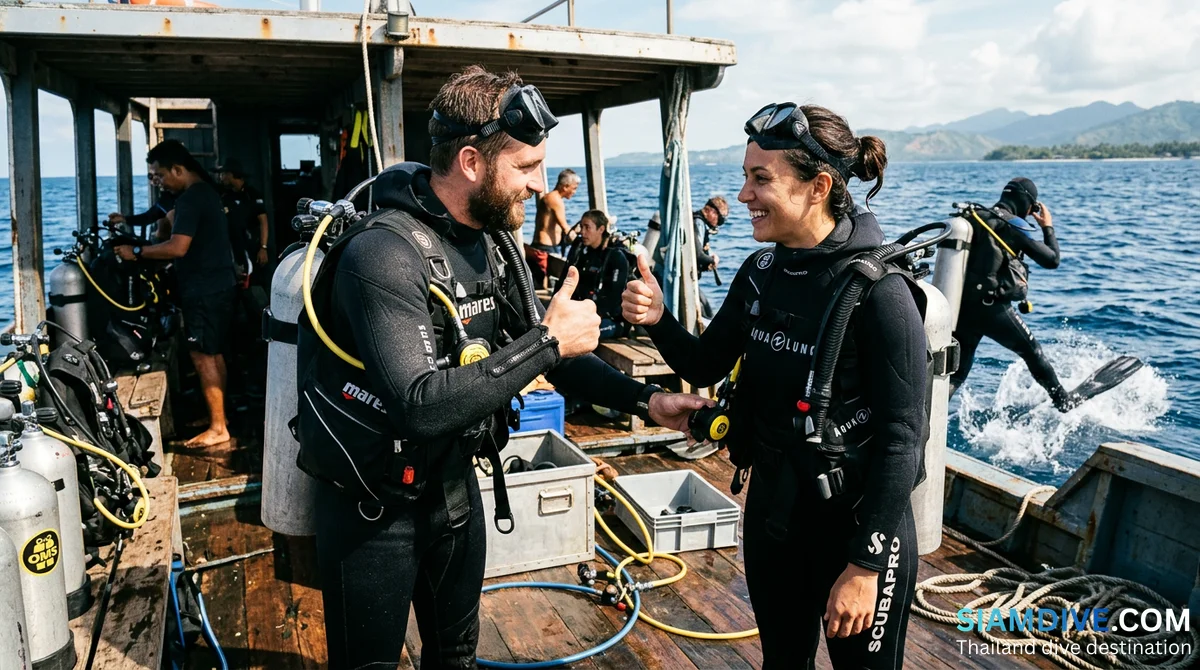
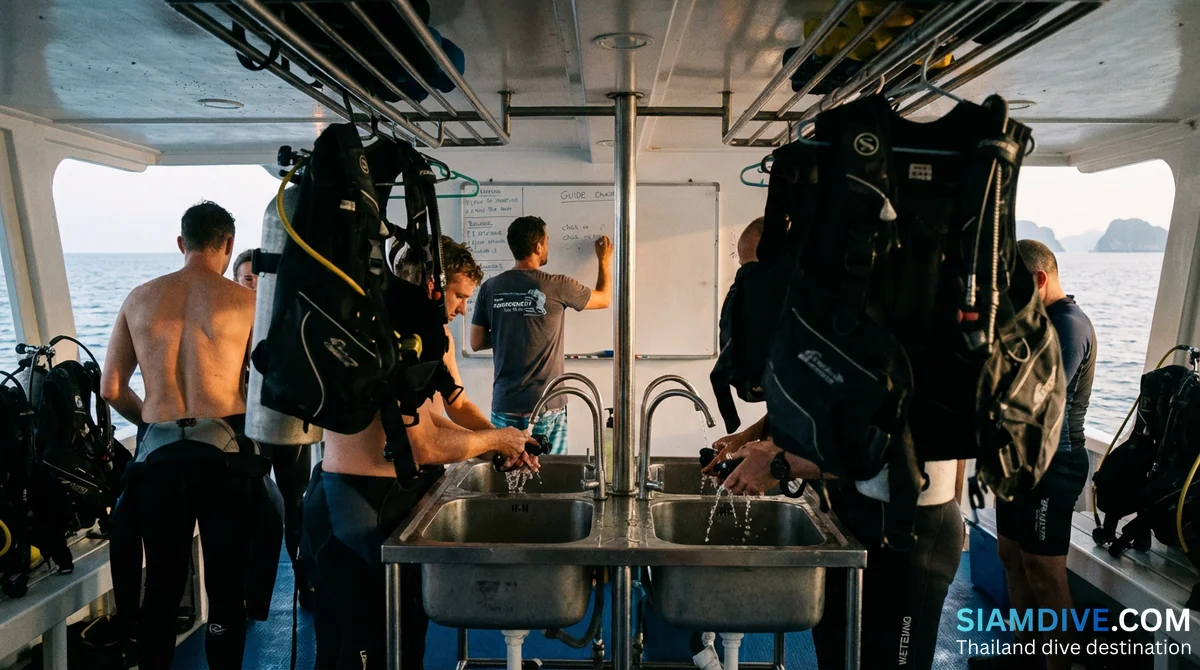
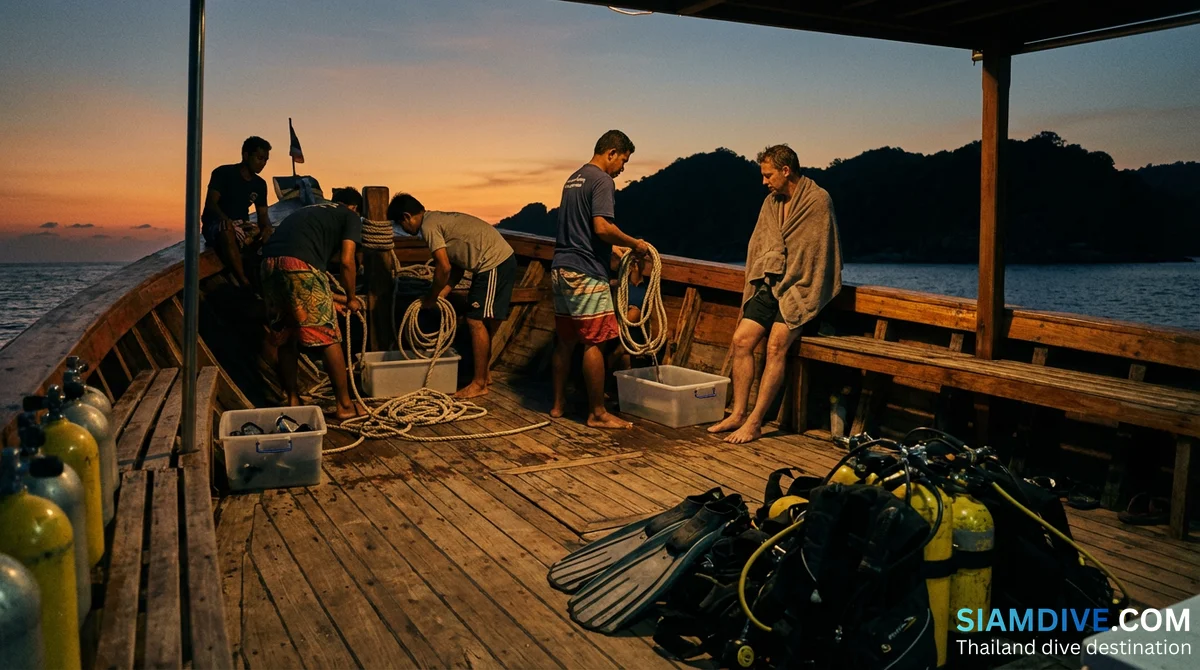
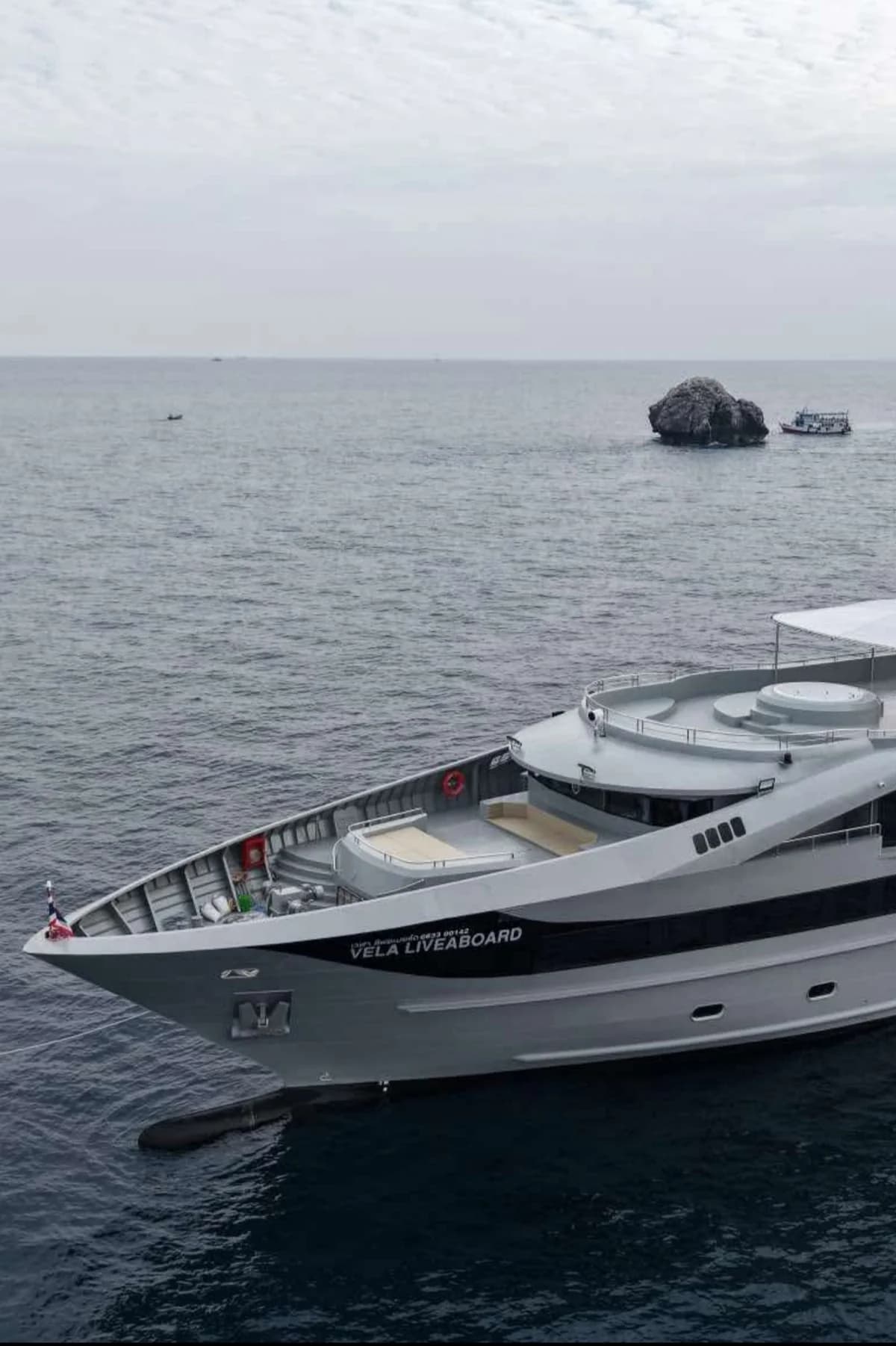
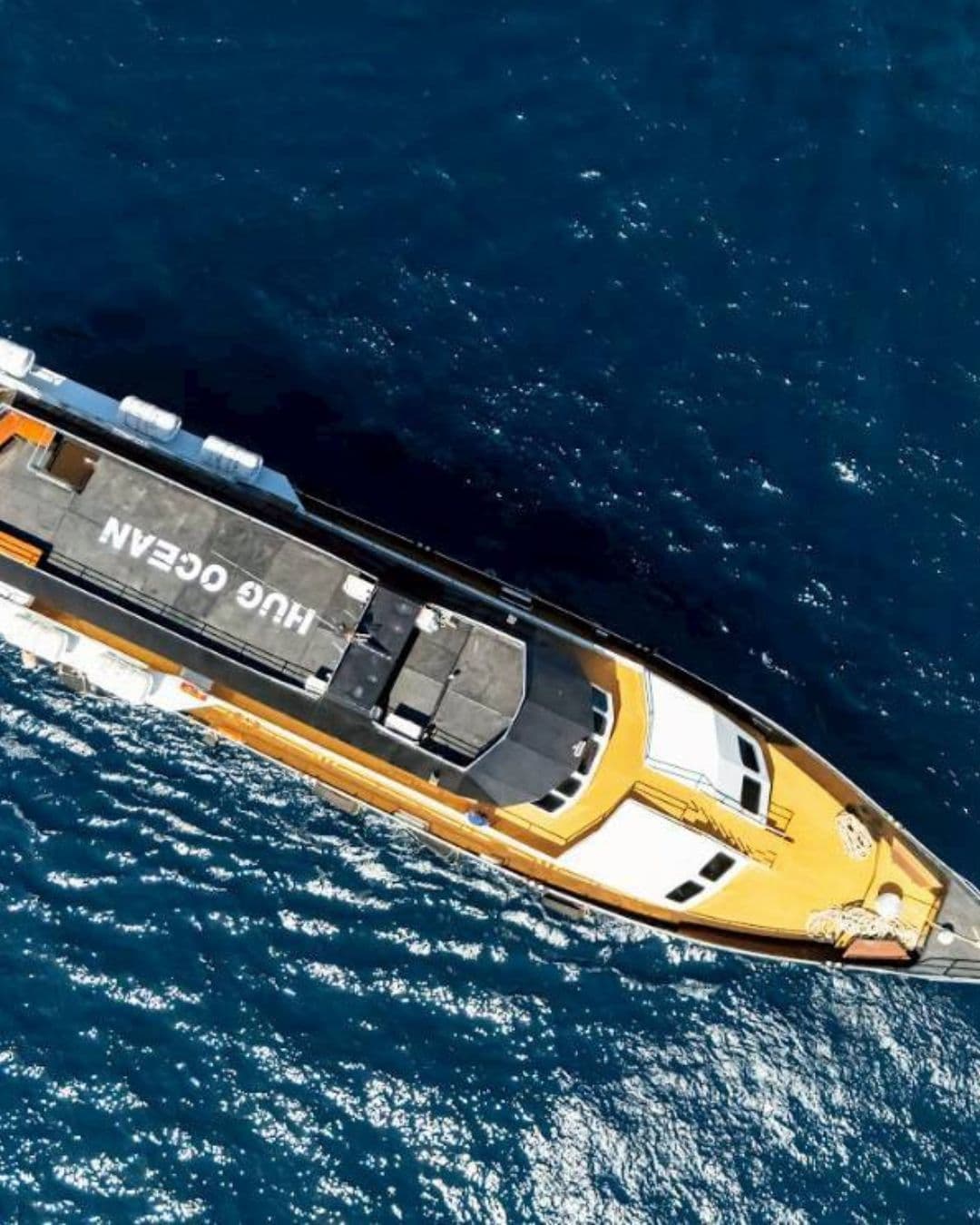
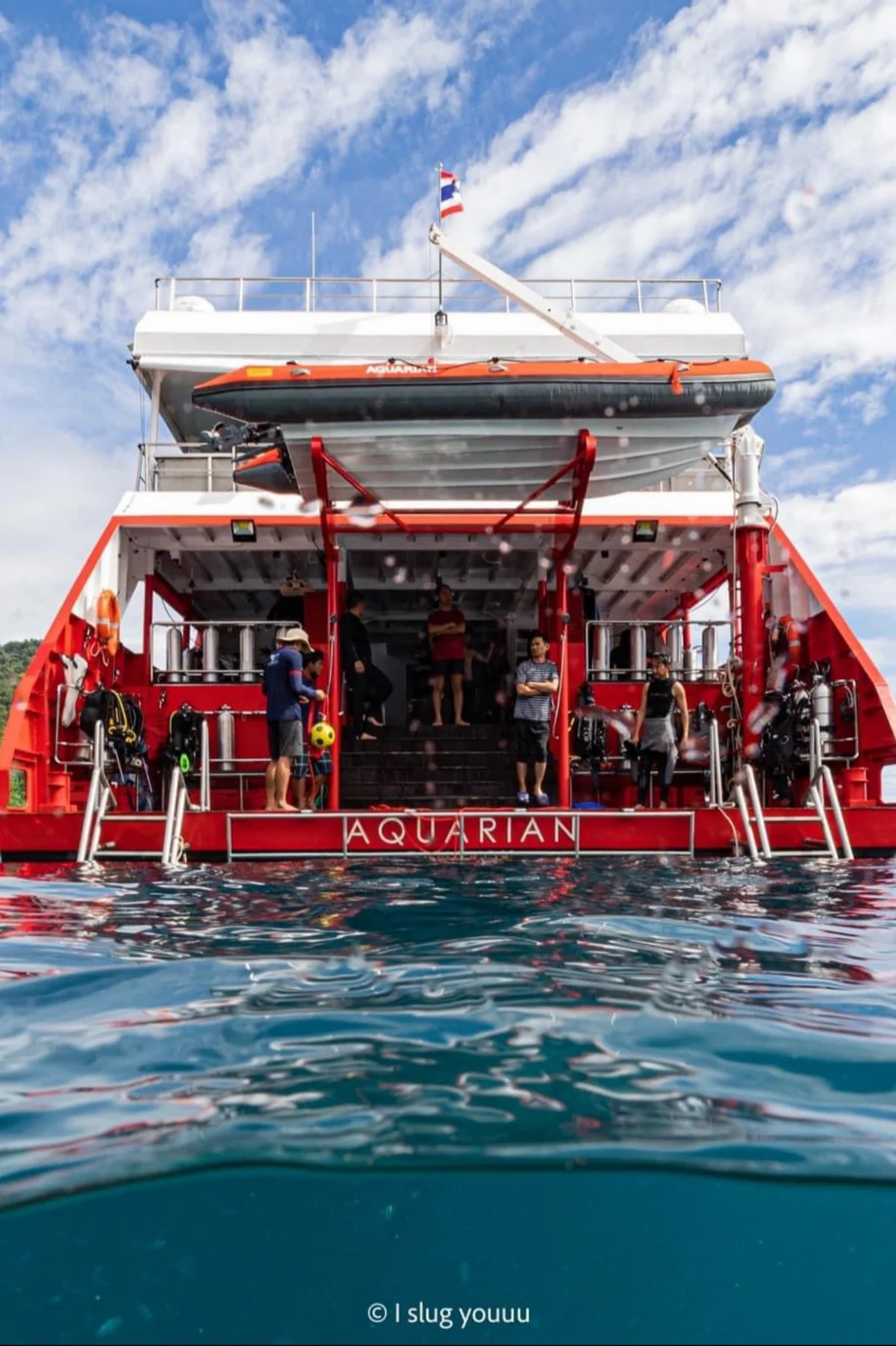
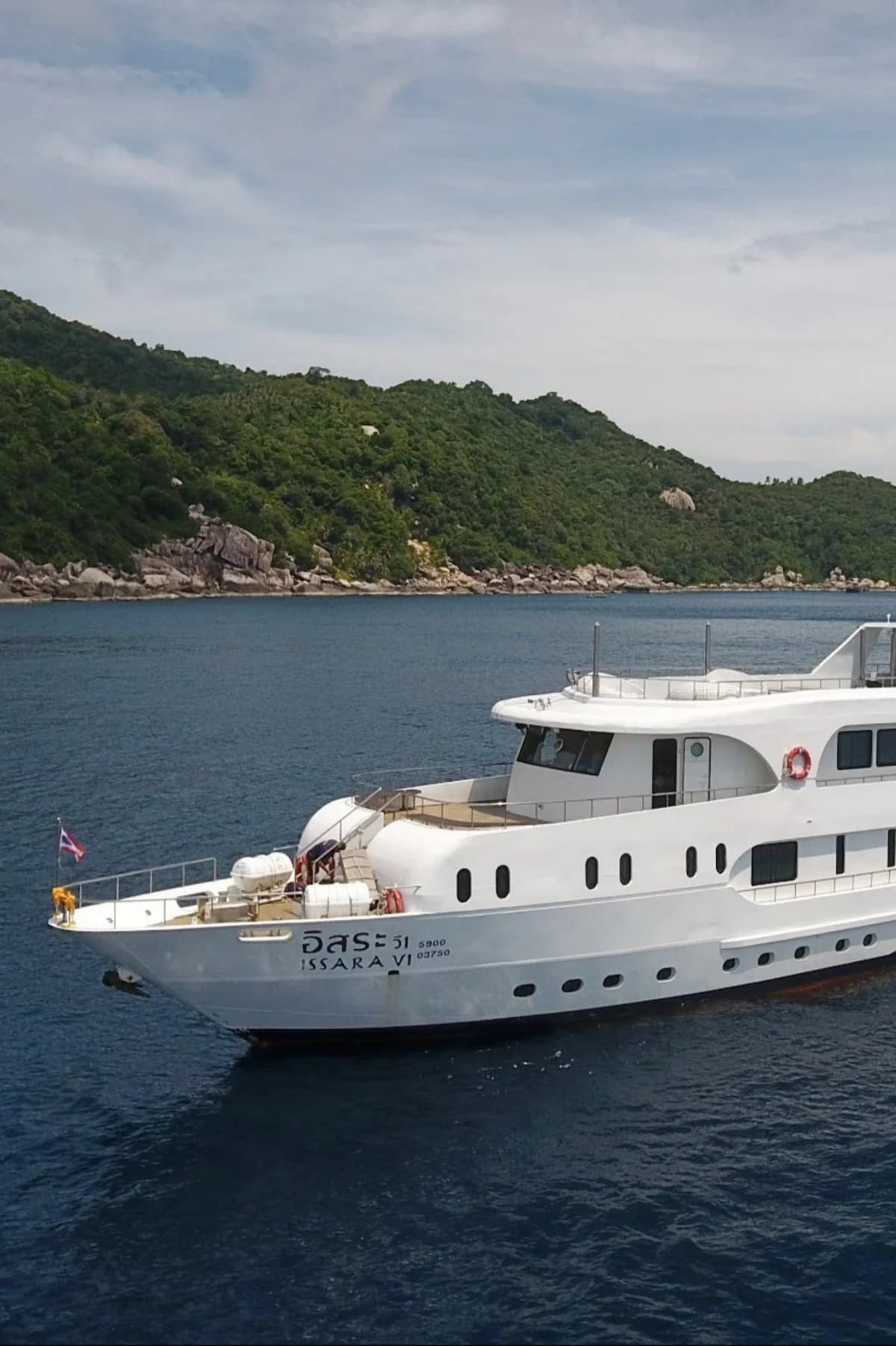
However, liveaboards are the strongly recommended option for serious divers. Day trips are limited to the southern islands and cannot reach the premier sites of Koh Bon, Koh Tachai, and Richelieu Rock. Liveaboards offer 3-4 dives per day including night dives, access to the full range of sites across multiple days, and eliminate the exhausting daily boat commute. Typical trips range from 2 nights/3 days (southern Similans only) to 4 nights/5 days (full route including Koh Bon and Richelieu Rock) to 7 nights with up to 22 dives covering everything from the Similans through the Surin Islands. National park entry fees are approximately 500 THB for foreign visitors, payable on board.
Tips for Diving the Similan Islands
- Book liveaboards early: Peak season trips (January through March) on popular boats sell out 3-6 months in advance. If you have specific dates, do not wait. Budget boats fill up just as fast as luxury ones.
- Bring motion sickness medication: The crossing from Khao Lak to the Similans is open sea and can be rough, especially early and late in the season. Even experienced sailors sometimes get caught out. Take medication before boarding, not after you feel sick.
- Advanced certification opens the best sites: Elephant Head Rock, Koh Tachai Pinnacle, and the deep sections of Koh Bon require Advanced Open Water or equivalent. If you only have Open Water, many liveaboards offer AOW courses on board during the trip — this is an excellent option.
- Currents are real and unpredictable: Several Similan dive sites have strong currents that can change direction during a dive. Always carry a surface marker buoy (SMB) and know how to deploy it. A reef hook is useful at Koh Tachai and Koh Bon. Listen carefully to dive briefings about current direction and contingency plans.
- Respect the national park rules: No gloves allowed (to prevent touching coral), no touching any marine life, no feeding fish, no collecting shells or coral fragments. These rules are actively enforced and are the reason the Similans remain in such pristine condition. Violations can result in fines.
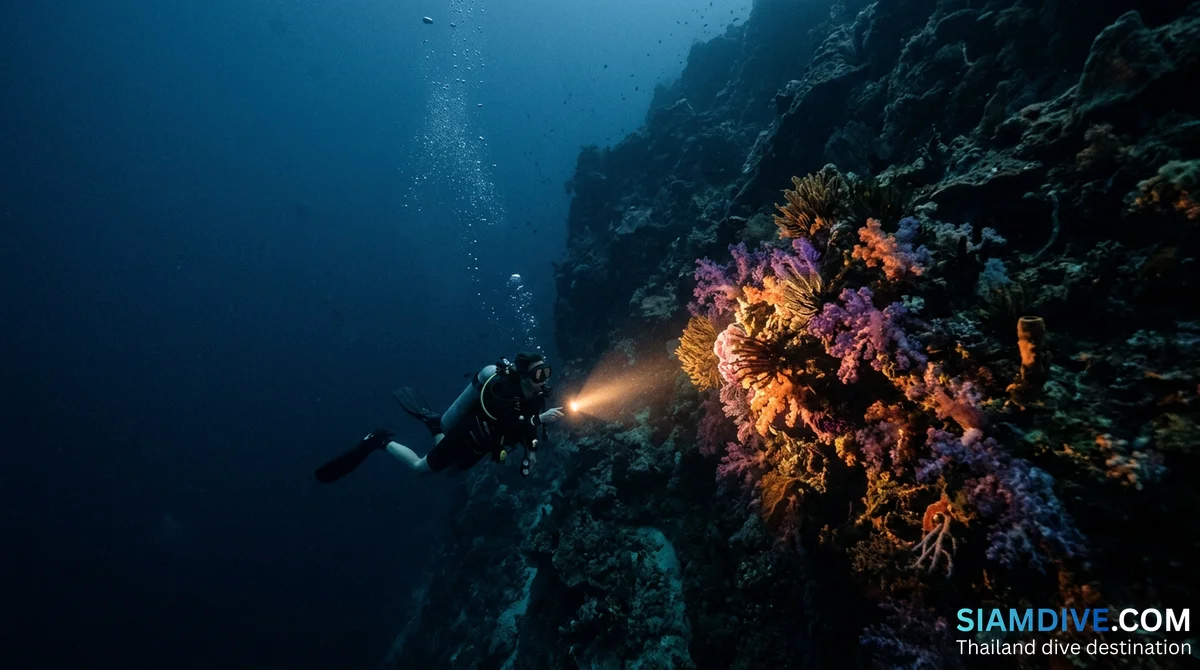
- Night dives from liveaboards are magical: Sheltered anchorages provide calm conditions for night dives where you can find hunting octopus, sleeping parrotfish in their mucus cocoons, bioluminescent plankton trailing behind your fins, Spanish dancers, and lobsters out foraging. Do not miss these.
Final Thoughts
The Similan Islands represent Thai diving at its absolute best — world-class visibility, dramatic granite landscapes unlike anywhere else in Southeast Asia, pristine coral gardens that have benefited from decades of national park protection, and the genuine possibility of swimming with manta rays and whale sharks on any given dive. The limited October-to-May season creates urgency, and the liveaboard format creates a level of immersion that day trips simply cannot match. If you dive in Thailand only once in your life, make it the Similans. Plan your liveaboard trip and find the best operators at siamdive.com.