Why Solo Divers Fly Past Bali and Book Thailand Instead
27 เมษายน 2569
Thailand's hostel-dive-shop pipeline, $6 dorm beds, and zero-supplement liveaboards explain why 65% of Songkran bookings come from solo travelers.
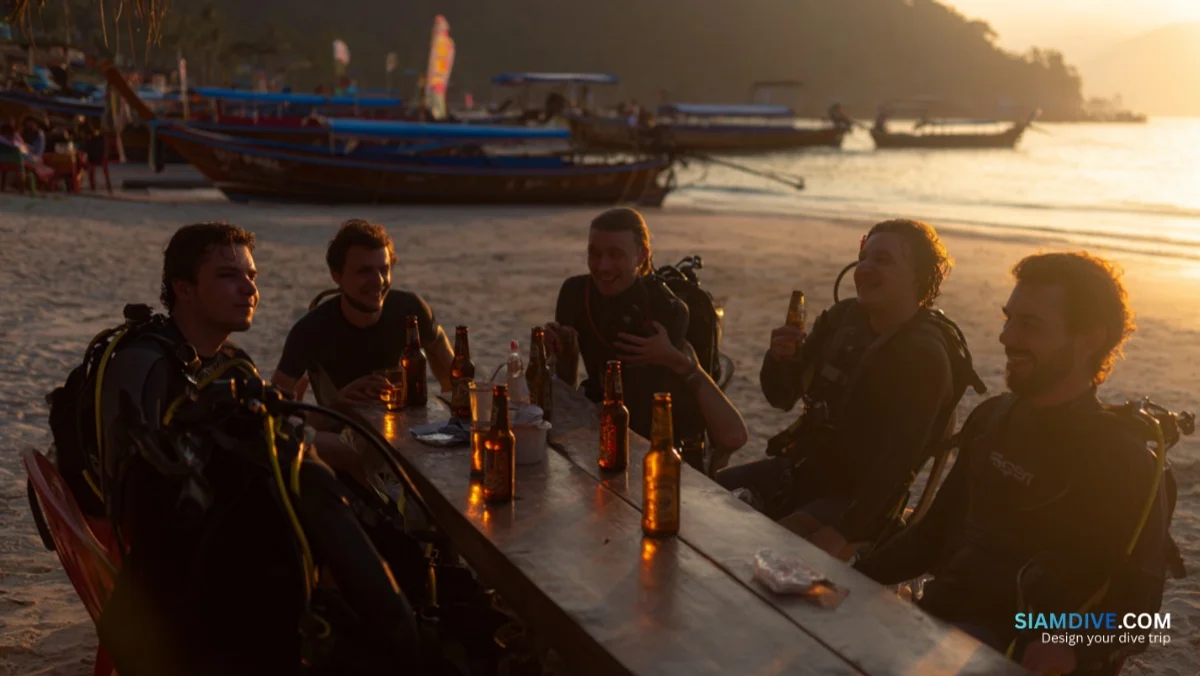
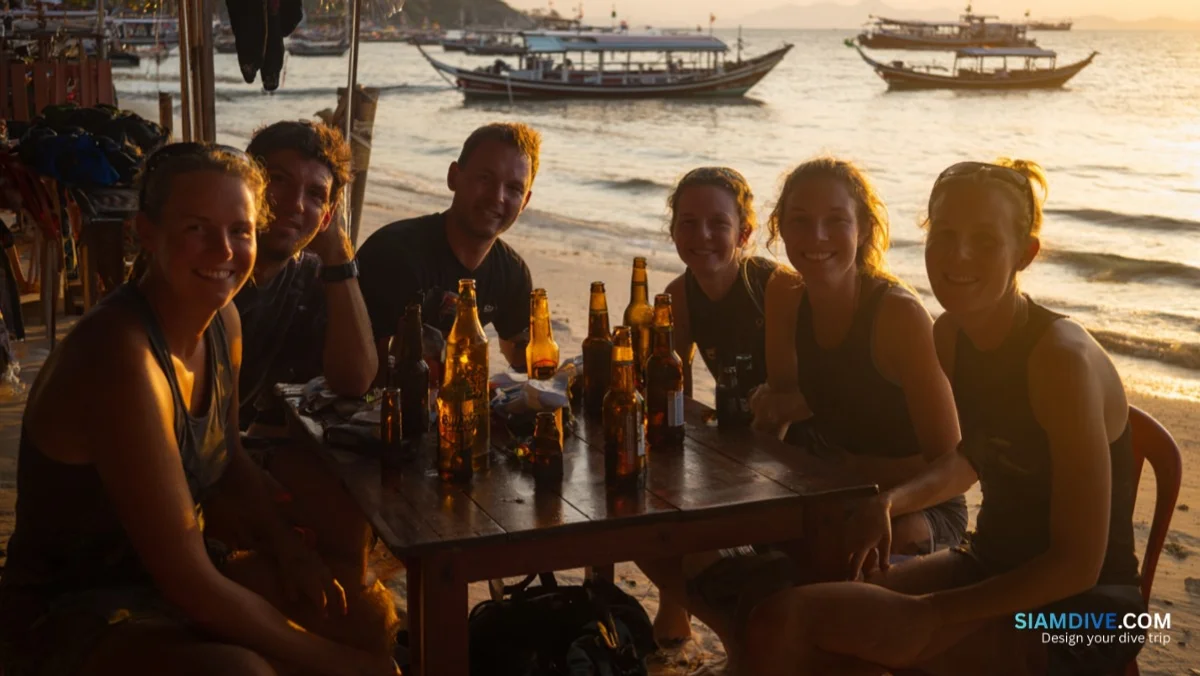
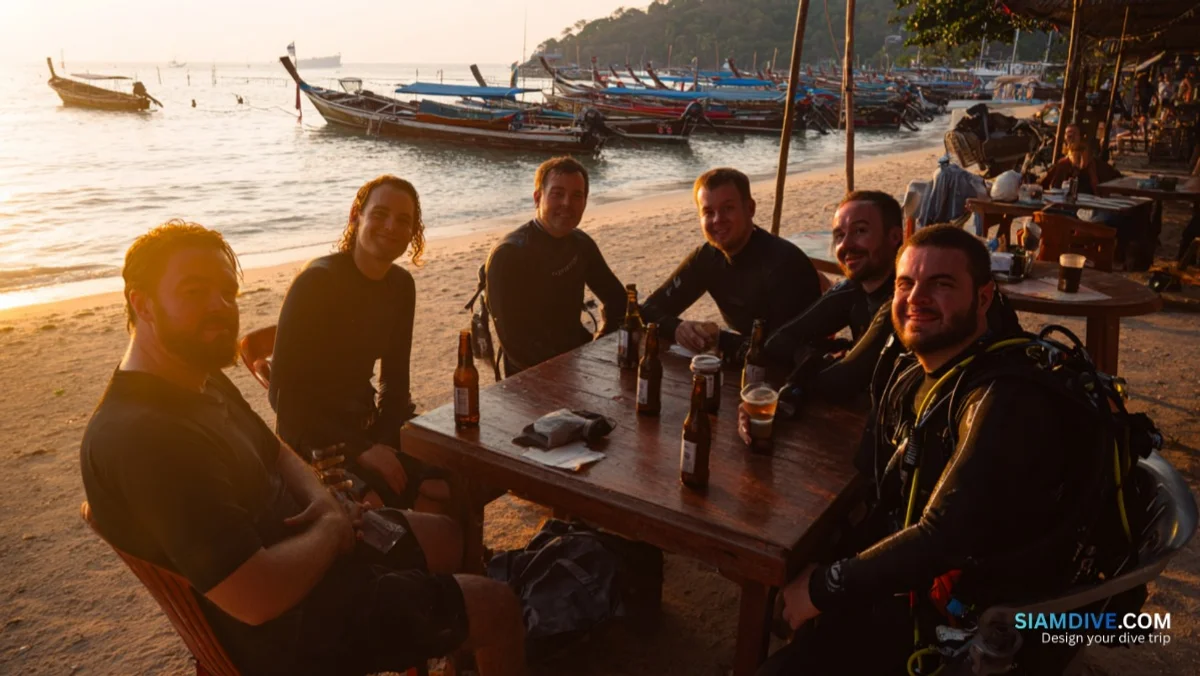
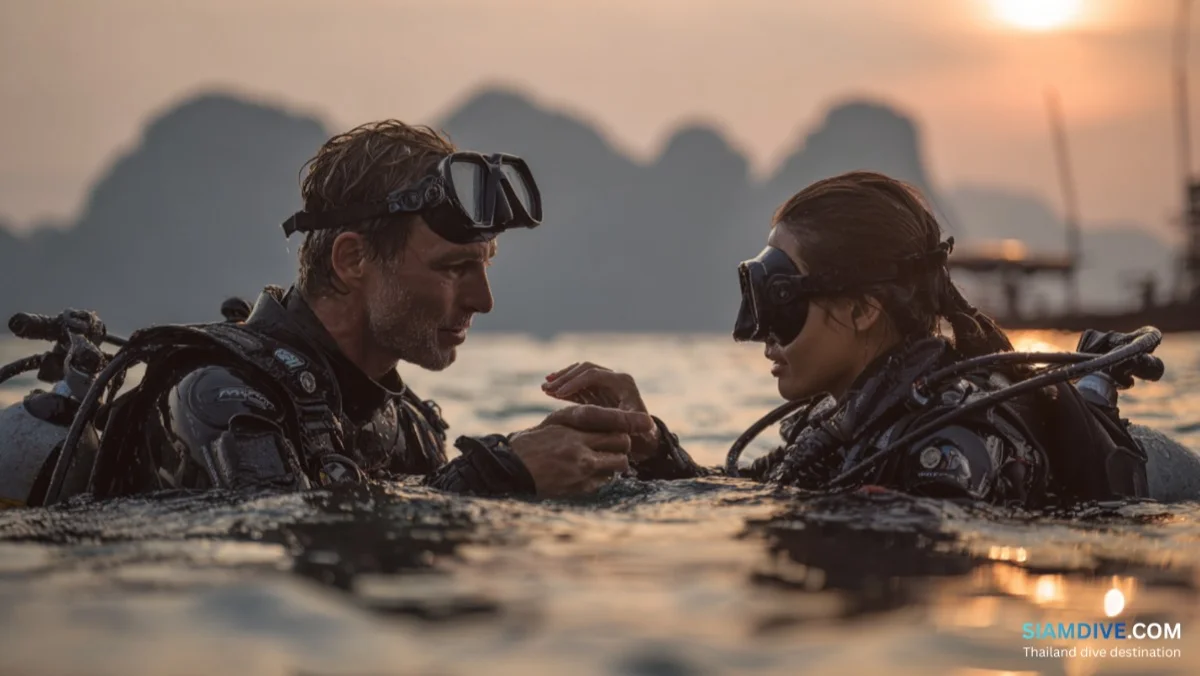
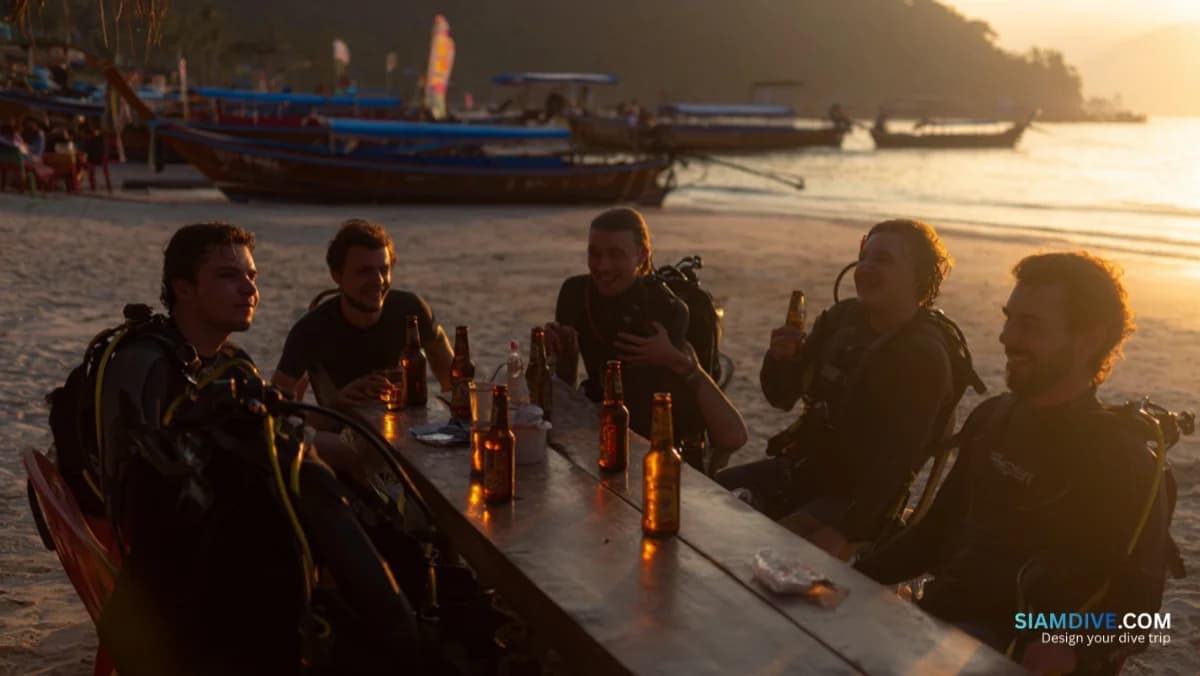
The table of six at Sairee Beach just met this morning. Two Australians on a gap year, a Japanese marine biologist between contracts, a German nurse stretching her holiday by three weeks, and a couple from Bangkok finishing their Advanced certification — all strangers at the 7 a.m. briefing, all splitting a Chang tower by sunset. Somewhere between the third descent to 18 metres and the evening debrief at a plastic table on the sand, the group decided to book a liveaboard together next week. This scene replays nightly across Koh Tao's beachfront bars, and it is the single most persuasive argument Thailand has over any competing dive destination for people traveling alone.
Solo dive trips are supposed to be complicated. Finding a buddy, negotiating logistics in a foreign language, figuring out which dive shop won't gouge a lone traveler — the friction compounds quickly. Thailand has spent two decades quietly eliminating every one of those barriers, building an ecosystem so efficient that the hardest part of a solo dive holiday is now choosing which of 70 schools to walk into first.
A $550-Billion Market Lands on Thai Sand
The solo travel industry hit $549.78 billion globally in 2025, and analysts at Grand View Research project it will reach $1.62 trillion by 2033 — a compound annual growth rate of 14.6%. Solo travel bookings worldwide have grown by more than 40 percent since 2020, making solo travelers one of the largest and fastest-growing segments in tourism. Thailand sits squarely in the centre of that wave.
The proof is in the booking data. During the Songkran period over the past three years, solo travelers accounted for 65 to 75 percent of all reservations — a figure that surprised even the Tourism Authority of Thailand. Kensington Tours ranked the country fifth worldwide among top solo travel destinations for 2025, ahead of New Zealand and Portugal.
For divers, the pull is specific. Koh Tao issues the second-highest number of dive certifications on the planet after Cairns, Australia. Its roughly 70 dive schools run courses in English, Thai, German, Japanese, French, and Mandarin — sometimes all on the same morning briefing schedule. SSI holds about 50 percent of the island's market share, with PADI claiming most of the rest. When an industry that large revolves around groups of strangers learning an intense skill together, the social infrastructure does not need to be manufactured. It builds itself.
Dorm Bed to Reef in 200 Metres
Walk the sand road behind Sairee Beach and every third building is a dive school, a hostel, or both at once. Koh Tao runs on a model that barely exists at this scale anywhere else: the hostel-dive-shop ecosystem.
Taco Shack sits wall-to-wall with Taco Divers, its SSI-affiliated dive centre — guests roll out of their bunks, grab a free breakfast, and walk to the briefing room barefoot. The hostel earns consistent praise for hitting the balance between social energy and actual sleep. Deishaview Jungle Hostel doubles as DV DIVE, an operation designed for backpackers and digital nomads who want to log dives between remote-work sessions. The Dearly pushes the concept further — a design hostel with premium dorms and luxury private rooms that also holds a PADI 5-Star Dive Resort rating.
This integration matters because it removes the most awkward friction of diving alone. You do not need to find a shop, negotiate a price, or arrange transport across town. Your coursemates sleep in the bunk above you. Your dive buddy is already at breakfast. The competition between 70 schools on one small island keeps prices transparent and service quality high — a lone traveler walking in off the street pays the same rate as a group of five.
Dorm beds start from $4 a night on booking platforms, with averages around $6–7 for a well-reviewed social hostel on Sairee Beach. Private rooms average around $43 for solo travelers who prefer their own space. Compare that to Labuan Bajo in Indonesia, where the hostel scene exists but is thinner, newer, and generally pricier, or to Sorong — the gateway to Raja Ampat — where the concept barely applies at all.
What the Price Sheet Actually Says
Thailand's per-dive cost is not the lowest in Southeast Asia — that distinction belongs to the Philippines on most routes. But the total cost of a solo dive trip, once accommodation, food, and transport stack up alongside the dive fees, tilts the equation toward Thailand almost every time.
- OW certification, Koh Tao: 9,000–11,000 THB ($250–305), including materials and gear rental
- Fun dive, Koh Tao: around 1,000 THB per dive ($28)
- Fun dive, Moalboal (Philippines): 1,200–1,500 PHP per dive ($21–26)
- Fun dive, Tulamben (Bali): from $30 with full gear included
- Dorm bed, Koh Tao: $4–7 per night
- Dorm bed, comparable Philippine island: $9–22 per night
- Private room, Koh Tao: from $43 per night
Per dive, Moalboal edges Koh Tao out by two to five dollars. But accommodation runs $5–15 more per night on Philippine islands with limited supply, and during peak season rooms book out fast with prices spiking further. Over a two-week solo trip, the food gap alone saves $100–150. Thailand's street food culture — pad thai for 40–60 THB, rice-over-curry for 50–80 THB, grilled skewers for 20 THB, all available on every corner until midnight — has no equivalent at that scale in Moalboal or Malapascua. The 80-baht pad thai after a night dive is not just a meal; it is the reason the daily all-in budget stays under $30.
Transport seals the gap. Thailand's train-bus-ferry network runs on published schedules and books online in minutes. Philippine island-hopping means ferries that cancel in bad weather and domestic flights that spike by 200 percent during holiday weeks. For a solo traveler watching a budget, predictability matters as much as the base price.
Buddy Boards and the Morning Briefing
The biggest anxiety for solo divers is not money — it is showing up without a partner. Thailand's volume solves this problem mechanically, every single morning.
OW and Advanced courses run daily from dozens of Koh Tao schools. A typical six-person OW group includes four or five solo travelers. They room together in the attached hostel, study theory together over iced coffees, practise buddy checks at dinner, and surface from their first open-water descent as people who have shared something intense enough to override the usual weeks of small talk that friendships normally require.
The pattern holds after certification. Multiple dive schools report that course groups routinely continue traveling as a unit — moving from Koh Tao to Khao Lak for a Similan liveaboard, or south to Koh Lanta for the quieter Andaman day-trip sites. The bond is structural, not accidental: shared risk at depth and shared learning under pressure compress the friendship timeline into four days.
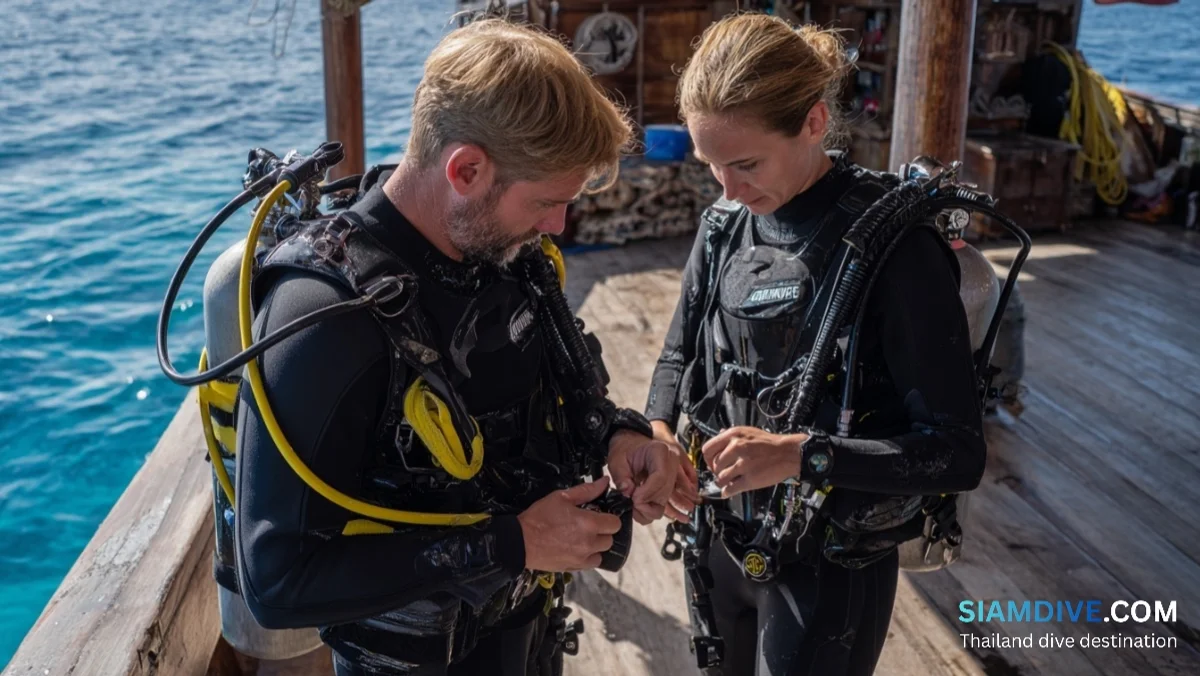
For already-certified divers doing fun dives, buddy matching happens at the briefing stage. Shops pair singles by certification level and comfort zone. Group sizes cap at four divers per guide, which means you know your buddy's name, experience, and signals before you hit the water. Compare this to the anonymous 12-diver cattle boats that run out of some Indonesian harbours, and the difference is immediate. If something shifts at 30 metres — a narcosis red flag your buddy should catch — a group of four has eyes on everyone.
Liveaboards Without the Single-Cabin Tax
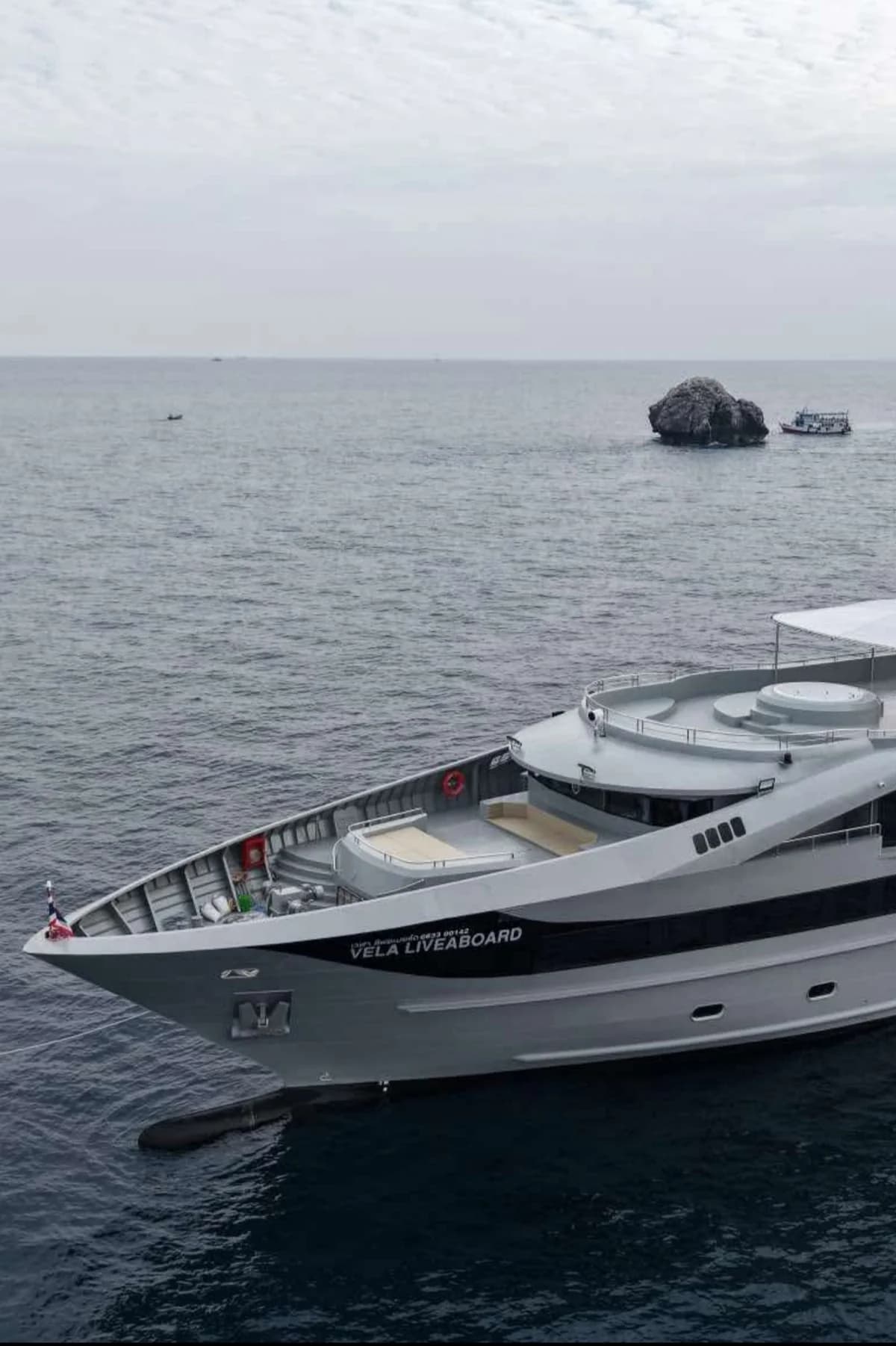
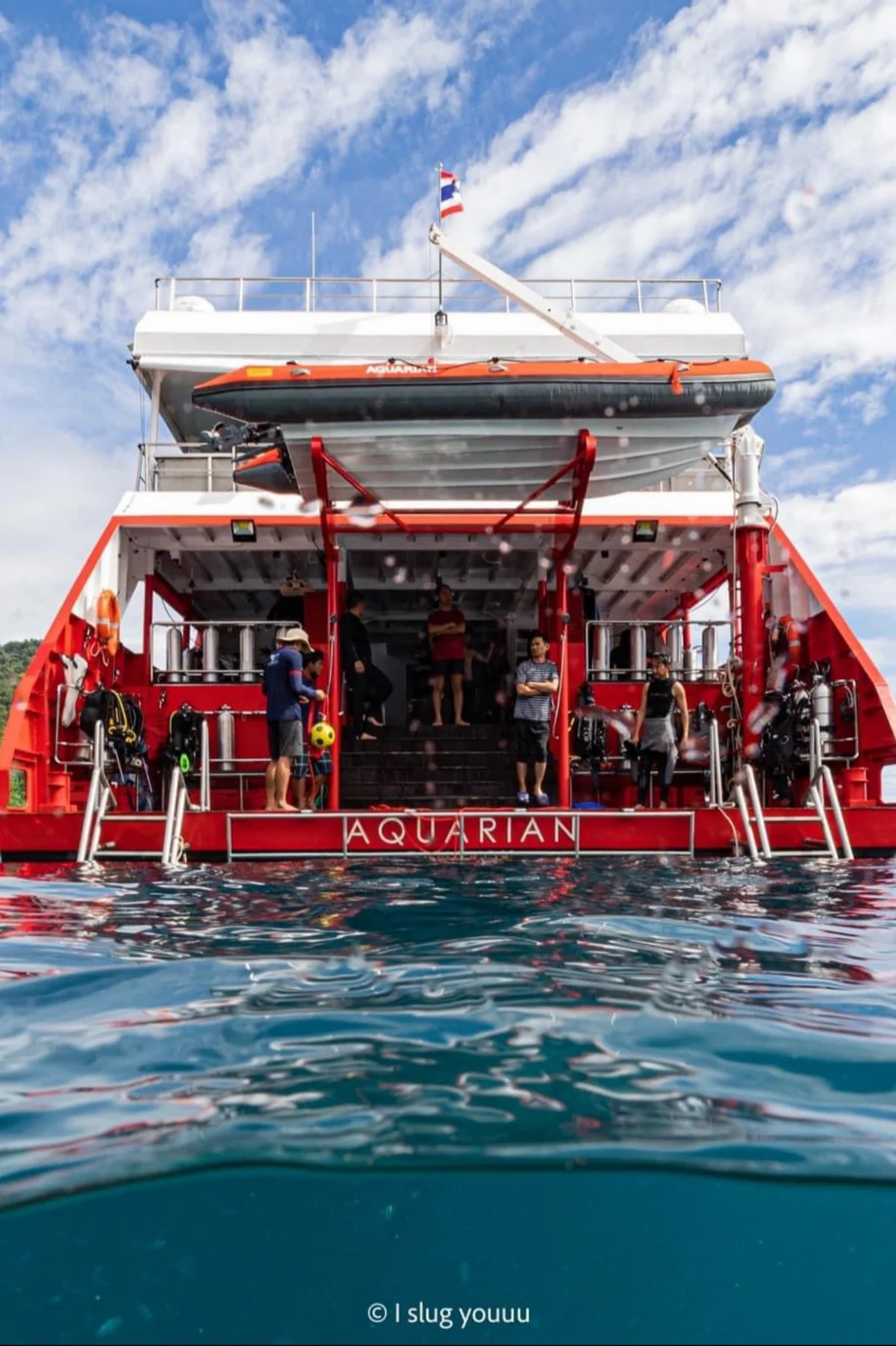
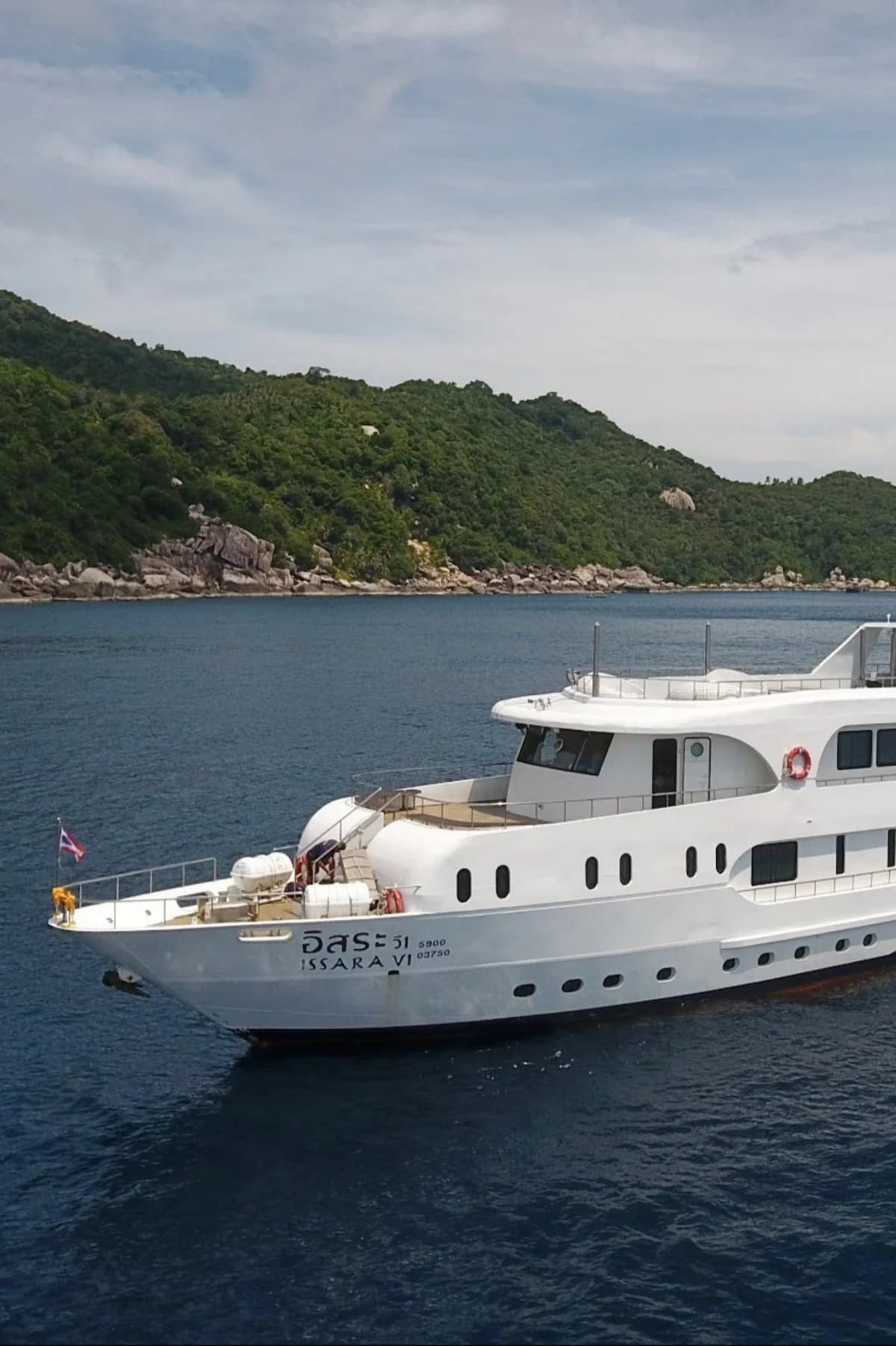
Solo travelers dread the single supplement — that 30 to 60 percent surcharge for occupying a cabin alone. Thailand's Similan season, running November through April, offers more options to dodge it than almost any dive destination worldwide.
- Sea of Fantasea: single cabin priced identically to a shared-cabin berth — no supplement at all
- Oktavia: 5-day/5-night single occupancy from 35,900 THB
- South Siam 3 and 4: 3-day/2-night single cabin from 36,800 THB, shared bathroom
- Hallelujah: VIP single cabin with private en-suite at 53,000 THB — fills fast, guarantees privacy
One fleet notes that in nine out of ten departures, solo travelers end up with their own cabin regardless, because boats routinely sail with fewer guests than maximum capacity. With a maximum of four divers per guide, group integration happens naturally — by the second evening aboard, the line between "solo traveler" and "group member" has usually vanished.
The Infrastructure Gap Nobody Mentions
Marine life dominates every dive-destination comparison. Logistics deserve equal attention, especially for someone navigating a foreign country alone.
Getting to Koh Tao from Bangkok: overnight sleeper train to Chumphon — around 500 THB for a second-class berth — then a morning catamaran. Total transit: 10 to 12 hours, all bookable online, all running reliably. Getting to Khao Lak for the Similans: domestic flight to Phuket (1,500–3,000 THB), then a one-hour minivan transfer north to Tab Lamu pier. Organised, signposted, and documented in a hundred blog posts.
Now compare. Getting to Raja Ampat means flying to Sorong — a city with no direct international flights. Transfers run through Jakarta, Bali, Makassar, or Manado, adding one to two full days of transit. There are no ride-hailing apps in Sorong. Hotels near the port serve a function, not a social purpose. The marine park entry fee adds cost on top of already-expensive liveaboards. For a solo diver, the isolation starts at the airport and does not let up until the boat pushes off from the dock.
Komodo fares better. Labuan Bajo is a 1.5-hour flight from Bali with a growing hostel and dive scene. But the hostel-dive-shop integration that powers Koh Tao does not exist there at scale. The Philippines offers genuine solo-diver warmth in Moalboal, but inter-island transport remains the budget wildcard: ferries cancel in rough seas, and domestic flights spike without warning during holidays.
What Thailand Does Not Win
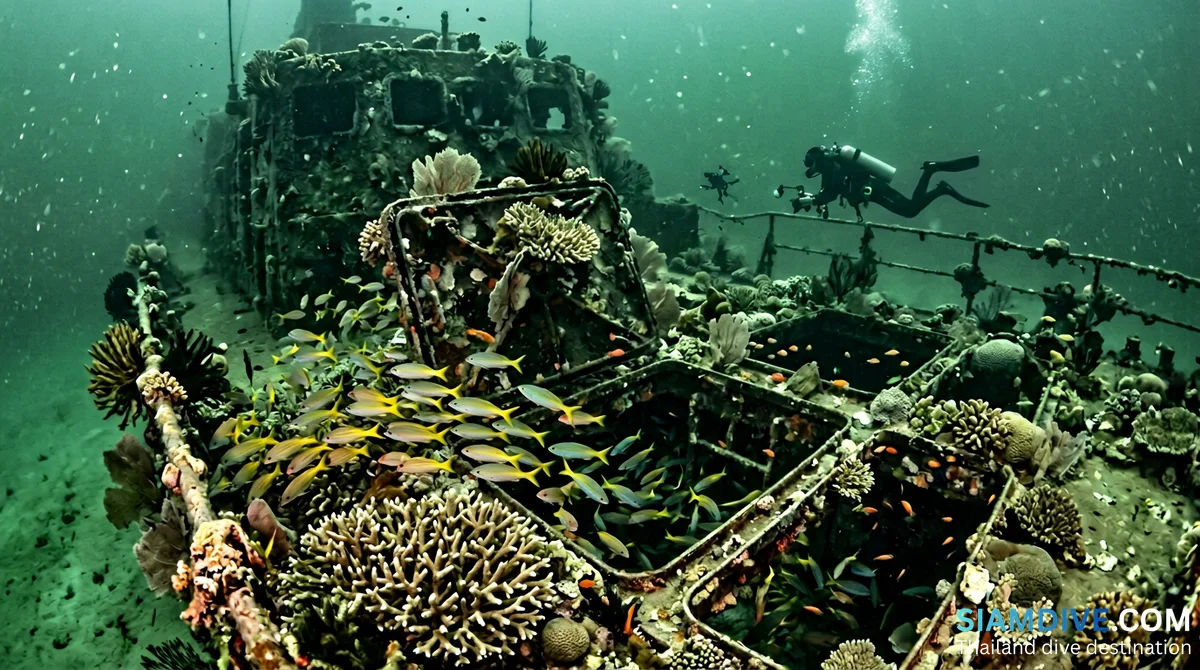
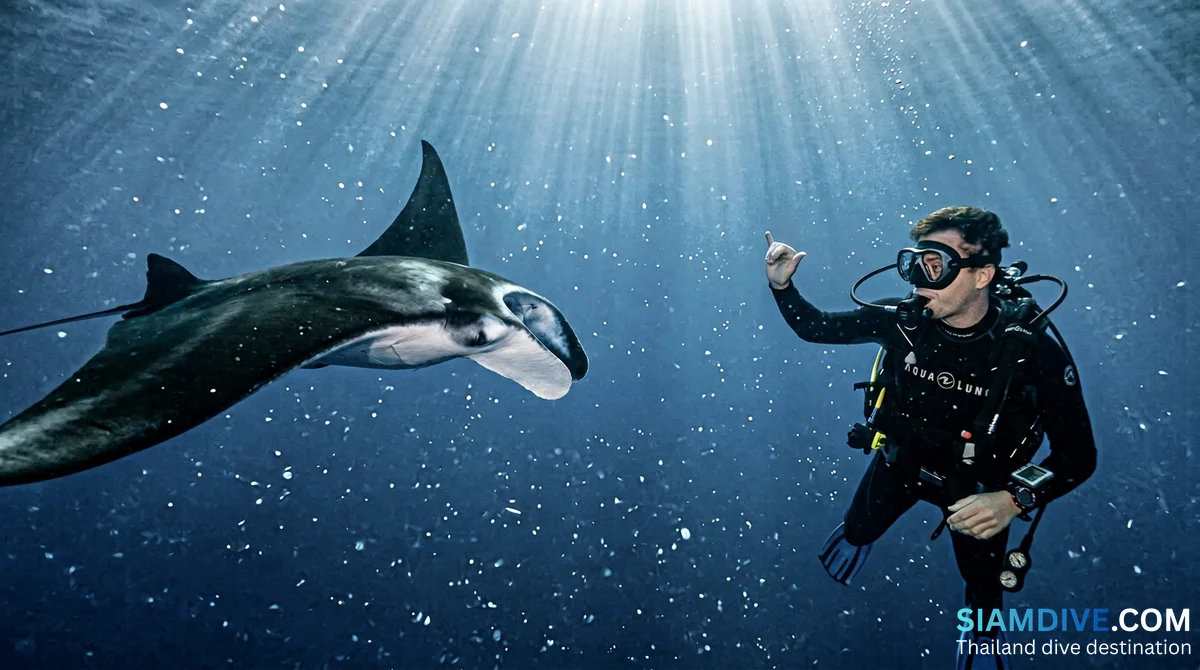
Honesty serves solo divers better than a sales pitch. Raja Ampat's reef biodiversity — more than 1,500 fish species and 600 coral species documented across its archipelago — outpaces anything in Thai waters. Komodo's manta aggregation sites rival Koh Bon on a good day and surpass it on a great one. The Philippines' Tubbataha Reefs Natural Park offers sheer wall diving that Thailand simply cannot match.
If raw marine biodiversity is the only variable, Indonesia and the Philippines win specific matchups. Thailand's advantage is everything that wraps around the dive itself: the social scaffolding, the price envelope, the logistical ease, and the sheer volume of other solo divers who chose the same destination for the same reasons. For a certified diver who wants both quality underwater encounters and a community that forms by breakfast, Thailand stacks the odds in a way no other destination currently replicates.
Late April, Right Now
As of late April 2026, Koh Tao sits in its prime window. Water temperatures hold steady at 28–30°C. Visibility stretches to 25–30 metres on most sites. The sea goes flat for days at a stretch — perfect conditions for new divers and experienced ones alike.
This is also whale shark season. Chumphon Pinnacle, Southwest Pinnacle, and Sail Rock are the three highest-probability sites for encounters between April and May. No guarantee — whale sharks are wild animals with their own schedules — but the statistical odds peak right now.
The catch: Songkran and Easter push visitor numbers up, and popular hostels on Sairee Beach book out three to five days in advance. Solo travelers who want beachfront proximity should plan ahead. But that crowding is part of the point. More solo travelers means more potential dive buddies, more evening conversations, more strangers heading to the same briefing tomorrow morning. In Thailand's dive ecosystem, volume is not a drawback. It is the product.