The Junkyard Koh Tao Diving Guide: The Island's Quirkiest Artificial Reef
11 เมษายน 2569
The Junkyard off Mae Haad is Koh Tao's artificial reef built from recycled trash — toilets, bikes, and a thriving coral nursery with resident batfish and lionfish.
Koh Tao's Weirdest Dive Site
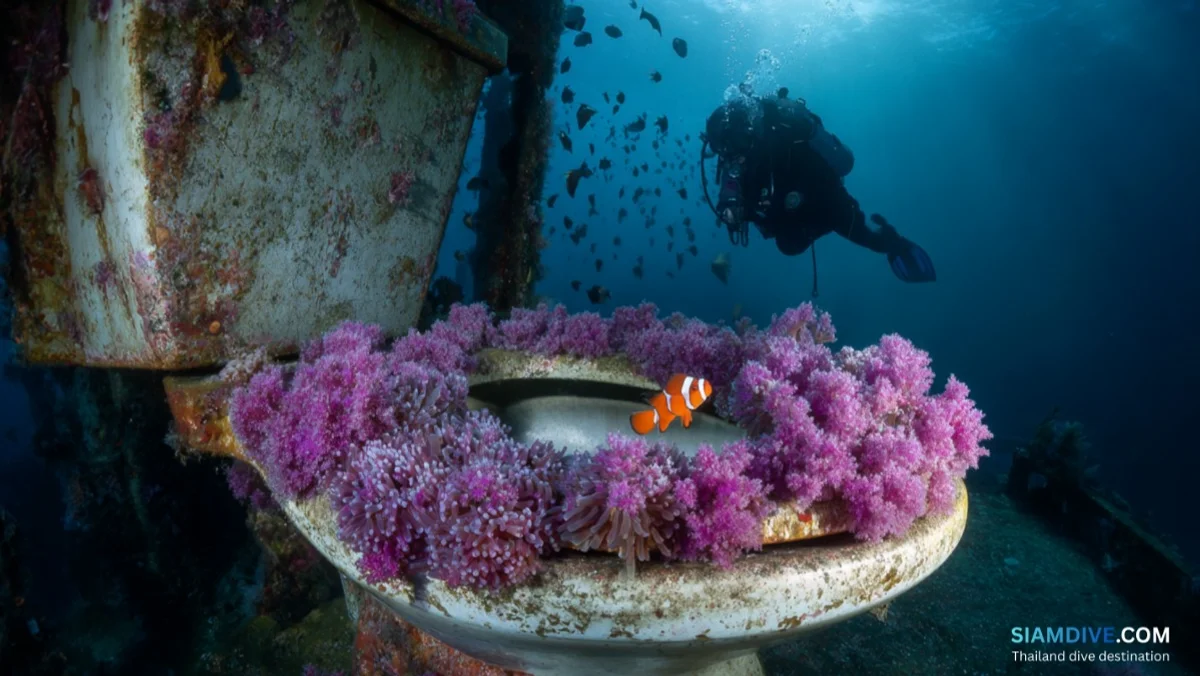
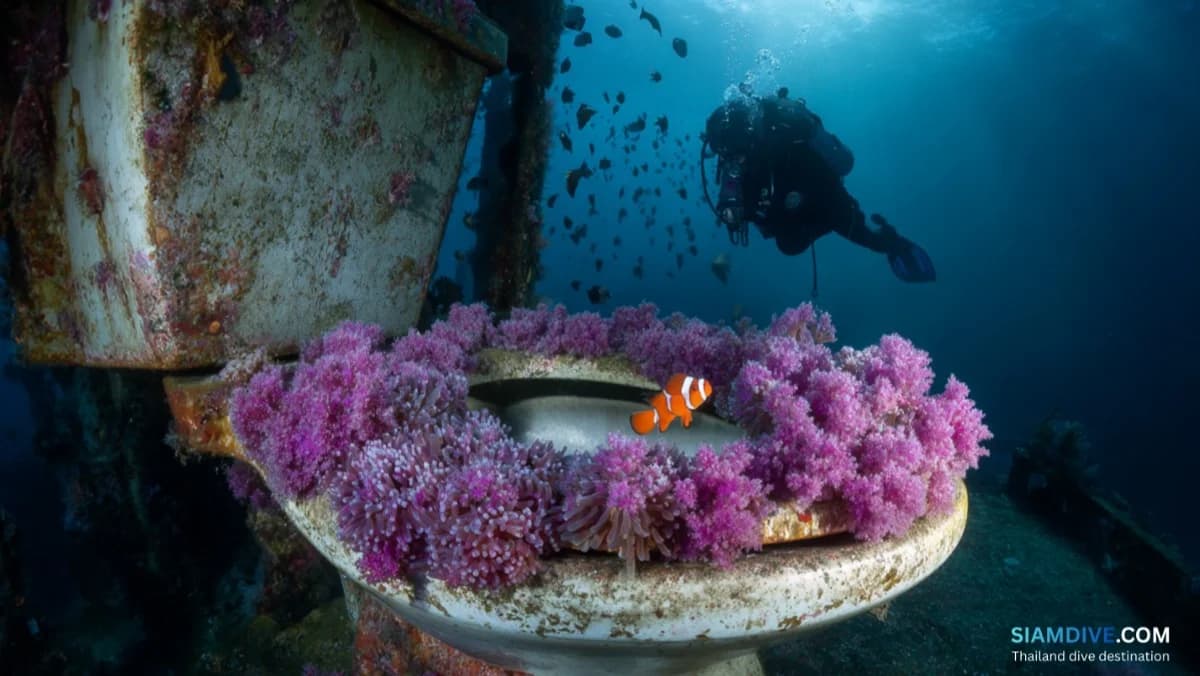
The Junkyard is exactly what it sounds like: a shallow artificial reef built from recycled trash on the seafloor about 400 meters off Mae Haad Beach. It has toilets bolted to concrete slabs, old bicycles, gym equipment, steel sculptures, and dome-shaped reef modules — plus a growing coral nursery that wraps around all of it. The site was built in 2006 by Eco Koh Tao as a coral restoration project, using donated scrap metal and other materials that would otherwise have ended up in a landfill. Nearly two decades later it is one of the best beginner and night dive sites on the island.
Most first-time visitors to Koh Tao never hear about The Junkyard. The famous sites get all the marketing — Chumphon Pinnacle, Sail Rock, and the HTMS Sattakut wreck. But ask any local instructor where they take students for night dives, buoyancy training, or a weird afternoon dive, and The Junkyard comes up every time. It is a 15-minute boat ride from the main pier and sits in 5 to 12 meters of water, which makes it accessible to Open Water divers and useful for everything from training to underwater photography.
Why The Junkyard Is a Must-Visit for Divers
The site works for three types of divers: beginners building skills, photographers looking for weird subjects, and anyone who wants to see how fast nature reclaims human junk when given a chance. The shallow depth, light currents, and sandy bottom make it one of the safest training sites on Koh Tao. Dive schools run Open Water courses here daily, and it is one of the go-to sites for Advanced Open Water peak performance buoyancy dives because you can thread the needle between coral nursery structures without bumping anything.
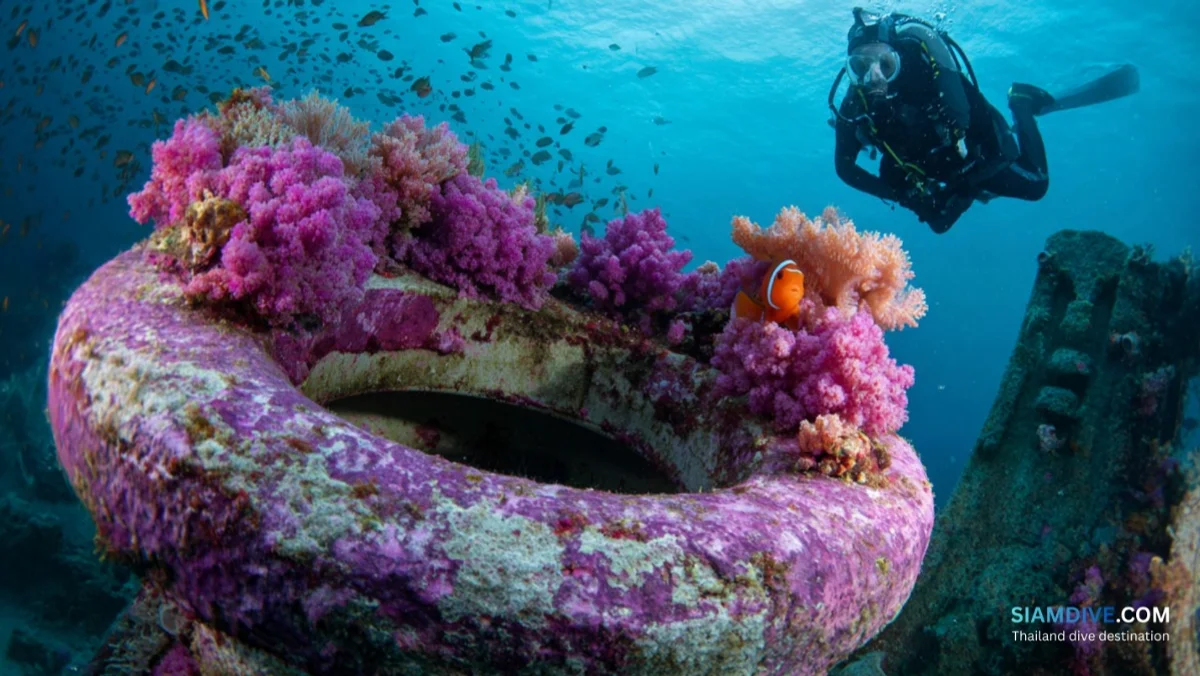
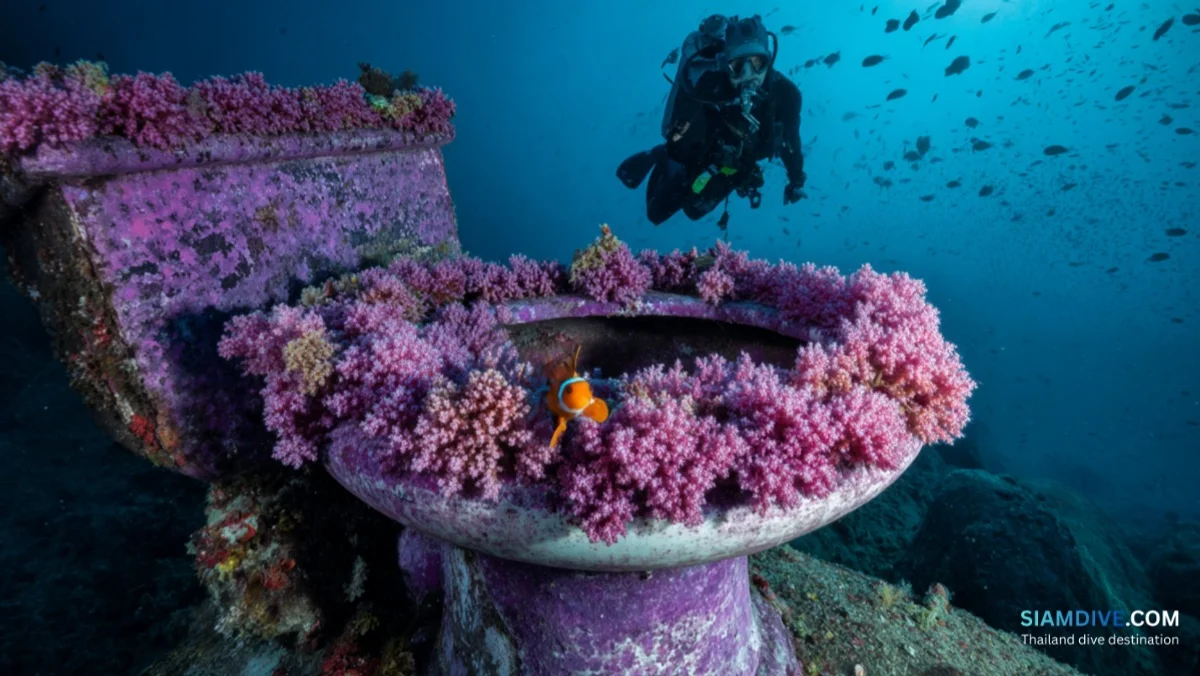
For photographers, the mix of man-made objects and reef life is uniquely compelling. A toilet covered in soft coral with clownfish in the bowl is not something you see on other Koh Tao sites. The site also runs bioluminescent night dives on the right tides — if you cup your hands in the dark water and swish, plankton sparks up around your fingers. That alone is worth the trip.
What You Will See on the Reef
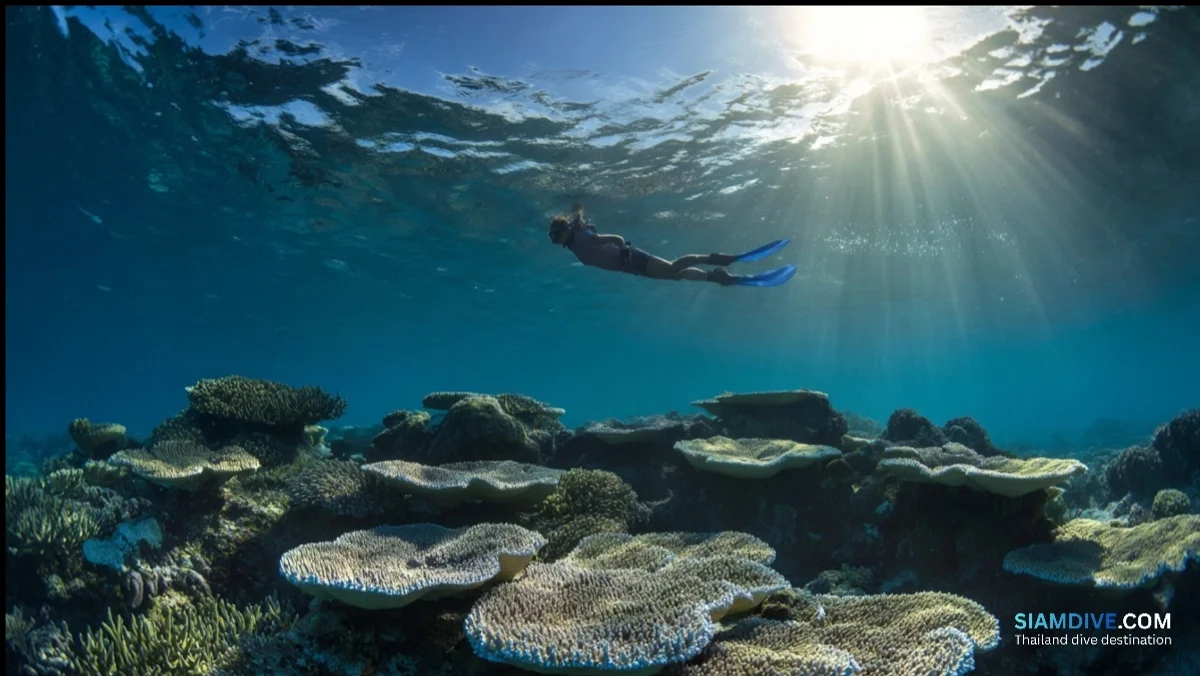
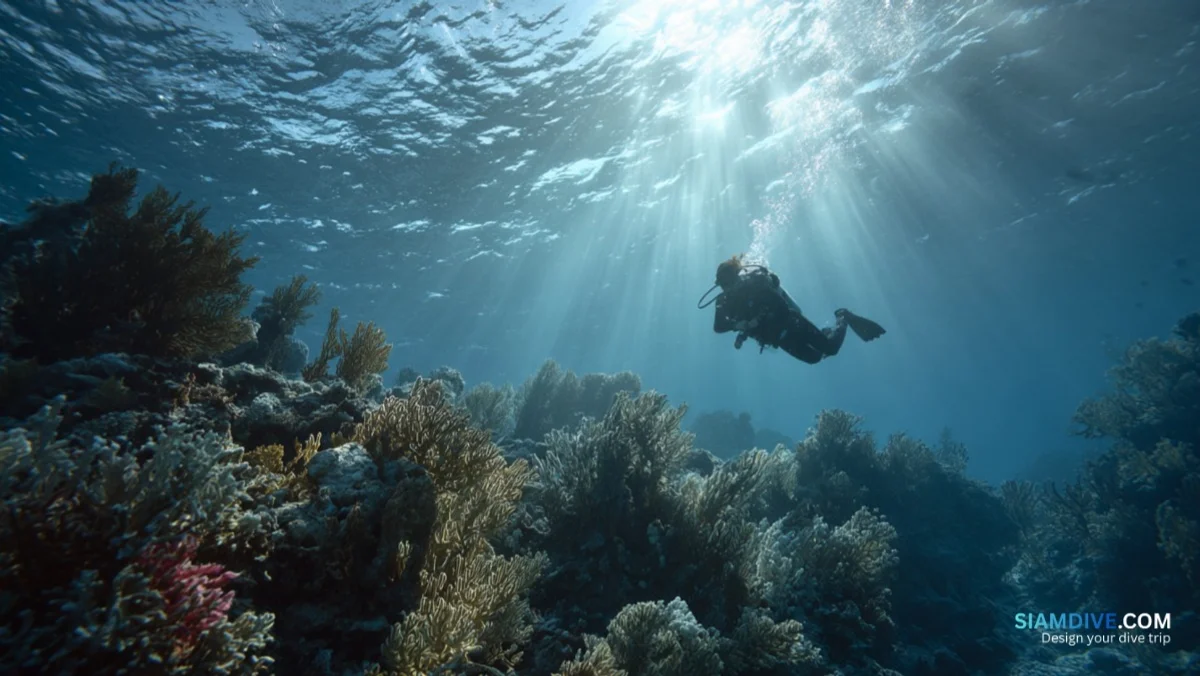
After nearly 20 years the artificial structures have become a proper reef. Soft corals coat the steel frames, hard corals have grown up the sides of the concrete domes, and the coral nursery at the center holds hundreds of fragments in various stages of growth. Giant clams were released here as part of the conservation program, and some of them now sit the size of dinner plates. The marine life that has moved in reflects the diverse structure — there are hiding spots for shy species and open water above for larger visitors.
- Batfish: a resident school hangs around the steel frames, often the first fish you see on the descent
- Lionfish: two resident lionfish hunt through the reef modules after dark, great for photos but never touch them
- Copper-banded butterflyfish: skittish and beautiful, usually in pairs near the coral nursery
- Yellow-spotted rabbitfish: hang in loose groups above the reef, feeding on algae
- Saddleback clownfish: living in anemones that have settled on the concrete structures — one of the more unusual clownfish species on Koh Tao
- Cuttlefish: common, especially on night dives when they come out to hunt
- Morays, blue-spotted stingrays, yellow boxfish, masked porcupine pufferfish, yellow margin triggerfish: round out the reef residents
- Giant clams: a conservation success story — look for them nestled into the coral modules
Best Dive Types at The Junkyard
The Junkyard is one of those sites that gets better the more ways you dive it. Most dive shops on Koh Tao run specific types of dives here rather than just generic fun dives.
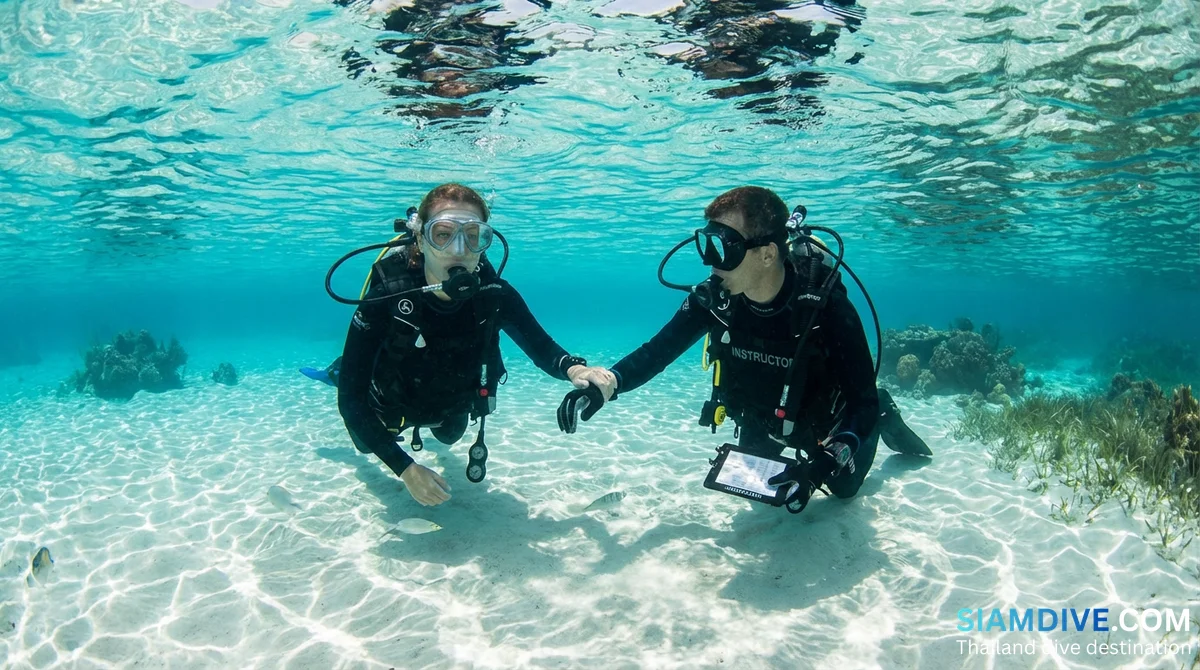
Open Water training: shallow depth, sandy patches for skill practice, and structures for orientation exercises. You can complete most Open Water skills at 5 to 10 meters without a current to worry about.
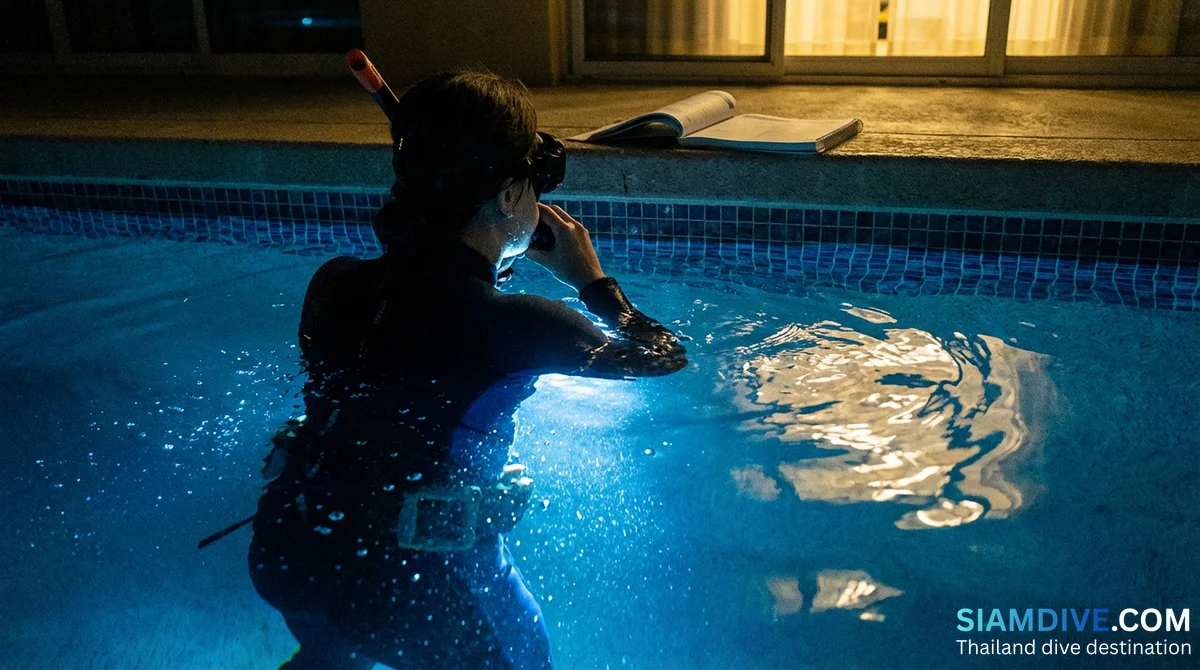
Night dives: this is where The Junkyard really shines. The artificial structures cast dramatic shadows in torch light, and the bioluminescence on the right nights turns the whole dive into a glowing experience. Lionfish and cuttlefish hunt after dark, and octopuses sometimes come out of cracks in the reef modules.
Peak performance buoyancy: Advanced Open Water students use the site for precise buoyancy exercises because the narrow gaps between structures punish sloppy trim. Passing through without scraping anything builds real skills fast.
Self-guided fun dives: because the site is small, shallow, and has no current, some experienced divers book it as a guideless fun dive to explore at their own pace. Check with your operator first — not all shops allow self-guided dives here.
Conditions at The Junkyard
The Junkyard sits in 5 to 12 meters of water (with some sections of the coral nursery as shallow as 3 meters and the deepest edges around 13 meters). Visibility averages 2 to 12 meters depending on the day, with the best conditions during the dry season. The site is calm and flat most of the year, with one major exception: during southwest monsoon (May to October) wind swell can hit the exposed west coast and make the site unusable for several days at a time. On those days your dive shop will move you to a more sheltered site.
Currents are almost always light or non-existent, which is why it is such a popular training site. Water temperature holds at 28 to 30°C year-round. A 3mm shorty is all you need, plus a good torch if you are doing a night dive.
How to Get to The Junkyard
The Junkyard is boat-access only. From Koh Tao dive shops, the boat ride takes about 15 minutes from Mae Haad Pier — so short that it is often the site of choice for a quick second afternoon dive or for last-minute bookings. Most Koh Tao dive operators run Junkyard dives daily, and because it is so close to shore, it is a good site for people prone to seasickness who do not want a longer boat ride.
To reach Koh Tao itself, Lomprayah ferries run daily from Chumphon (1.5 hours), Surat Thani (2.5 hours), and Koh Samui (about 2 hours). Dive operators are scattered across Mae Haad and Sairee Beach, most within walking distance of the ferry pier. Popular shops that run The Junkyard include Eco Koh Tao (the site's creators), Big Blue Diving, Sairee Cottage Diving, and Calypso Diving.
Practical Tips Before You Dive
- Certification: Open Water is all you need. Discover Scuba students also dive here as part of their introductory experience
- Bring a torch for day dives too: the shadows under the dome modules hide lionfish, morays, and nudibranchs that are much easier to spot with a light
- Practice buoyancy before you go: the tight gaps between structures are unforgiving to sloppy trim, and this is where most accidental coral contact happens
- Book a night dive: the site is genuinely different in the dark — bioluminescence on the right nights, hunting lionfish, and cuttlefish showing their best colors
- Do not touch the lionfish: they are photogenic but their dorsal spines deliver a painful sting. Stay 30 cm away, and never try to block their path
- Ask about conservation: Eco Koh Tao still runs the site and welcomes divers who want to learn about the coral nursery program and giant clam releases. Some dives become informal tours
- Watch your fins: the coral fragments on the nursery frames are years of careful work. One careless fin kick can wipe out a season of growth
Is The Junkyard Worth It?
For beginner divers, night dive enthusiasts, or photographers who want something different from coral walls and reef fish, The Junkyard is one of the most worthwhile sites on Koh Tao. The quirky mix of recycled junk and real coral reef is a reminder that the ocean recovers when people give it a chance — which is the whole point of the site. It is not the dramatic pinnacle dive you brag about to friends, but it is the kind of dive that sticks with you and makes you think. For many divers, it ends up being the favorite dive of their Koh Tao trip despite being the least photogenic on paper.
Ready to dive The Junkyard on your Koh Tao trip? Find dive shops that include the site on their daily schedule on siamdive.com and book a training session, night dive, or just a weird afternoon under Mae Haad.