Hin Lak Ngam: Thailand's Black Coral Capital in Chumphon
23 เมษายน 2569
Two rocky outcrops inside Mu Koh Chumphon National Park shelter Thailand's highest concentration of black coral — and virtually no other divers.
Thailand's Black Coral Capital Hides in Plain Sight
Eight hundred metres north of Koh Ngam Yai, two weather-beaten rock outcrops break the surface of the Gulf of Thailand. Below the waterline, their granite flanks plunge to 20 metres and disappear into forests of black coral so dense that marine biologists from Thailand's Department of Marine and Coastal Resources have called this area the highest concentration of black coral in the country. The site is Hin Lak Ngam, and on most days of the year not a single other dive boat is anchored here.
Where Exactly Is Hin Lak Ngam?
Hin Lak Ngam sits inside Mu Koh Chumphon National Park, a 317-square-kilometre marine protected area established on 24 November 1989 that encompasses more than 40 islands off the coast of Chumphon Province. The site lies roughly 2.5 kilometres south of Koh Ngam Noi and about 800 metres north of Koh Ngam Yai, placing it squarely in the heart of Chumphon's richest diving corridor. Boats depart from either Laem Thaen Pier or Had Sai Ree Pier, and the crossing takes approximately 90 minutes.
- GPS area: Near Koh Ngam Yai/Koh Ngam Noi cluster
- National park: Mu Koh Chumphon, est. 24 Nov 1989
- Departure piers: Laem Thaen (Ban Pak Khlong) or Had Sai Ree
- Boat time: ~90 minutes from shore
- Park entry fee: 200 THB (foreigners), 40 THB (Thai nationals)
What Makes Black Coral Special?
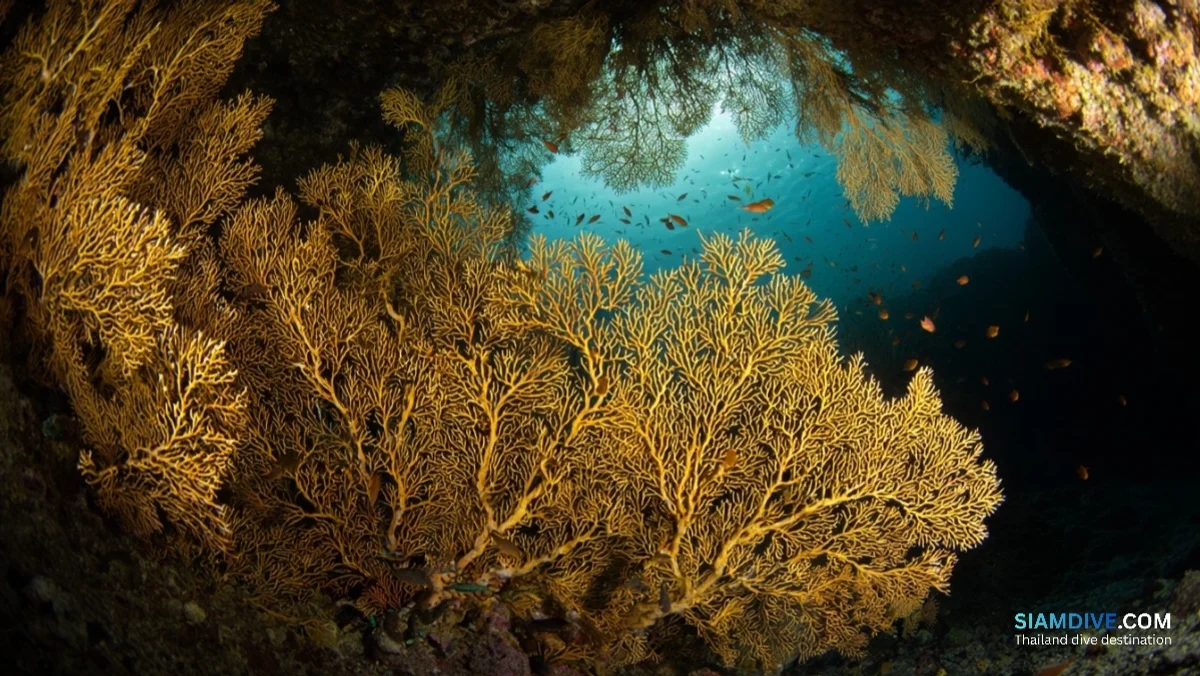
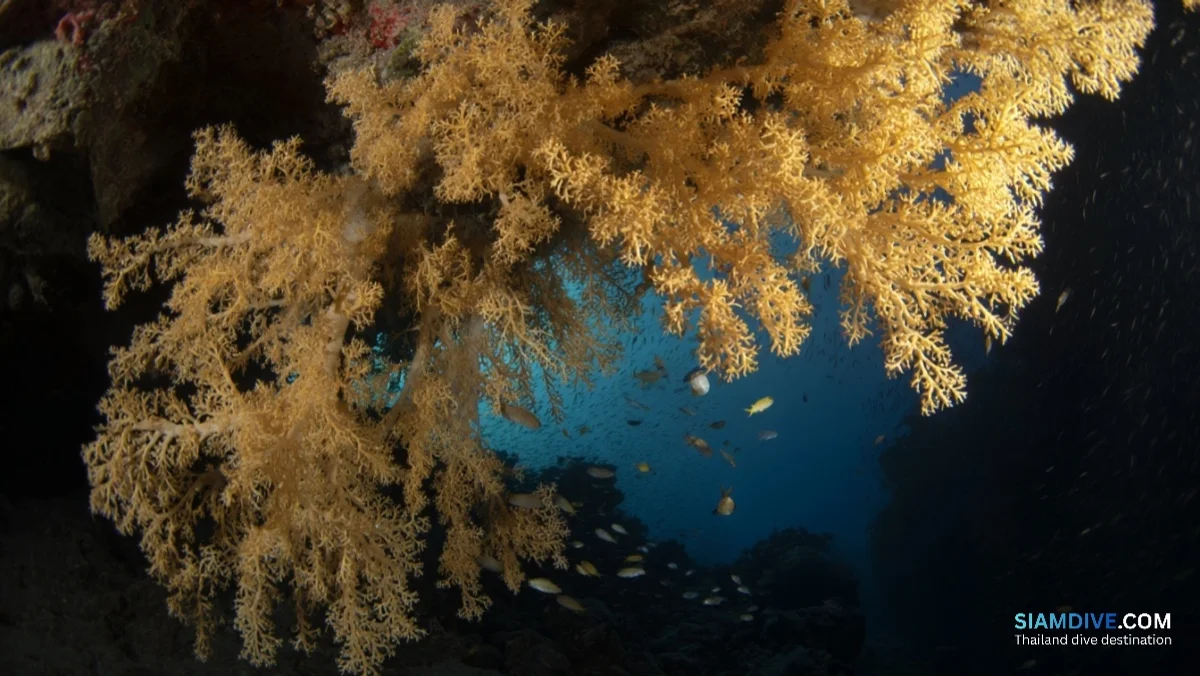
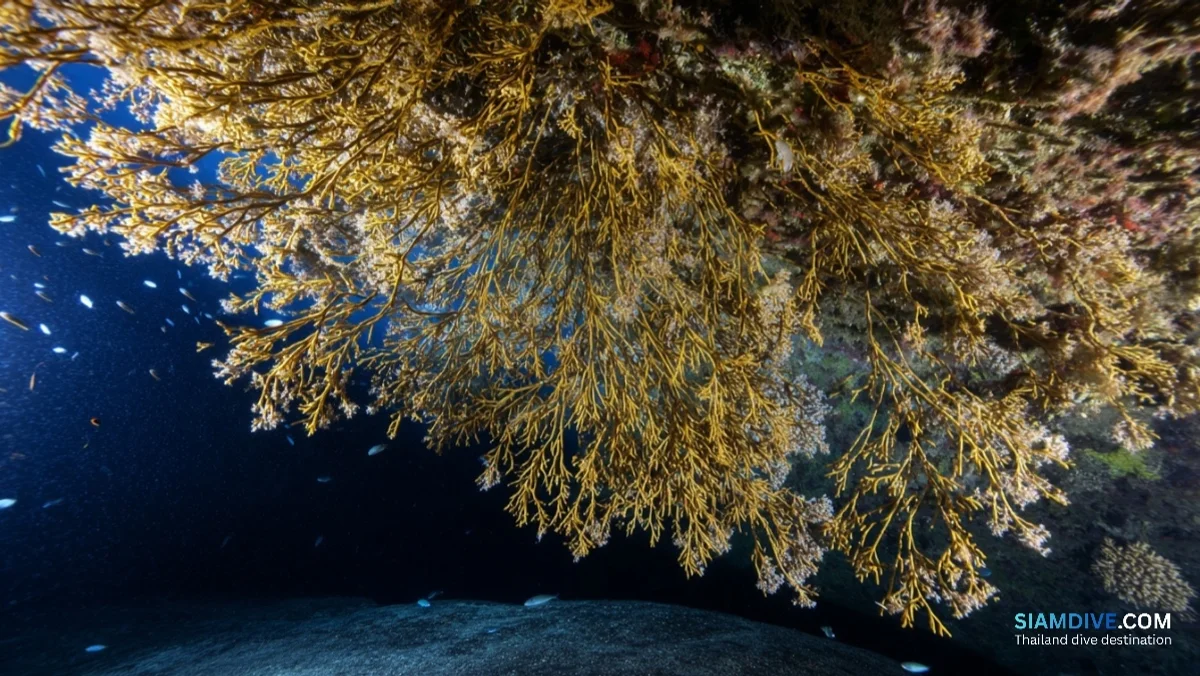
Despite the name, black coral (order Antipatharia) is rarely black on the outside. Living colonies branch outward in vivid yellows, whites, golds, and deep reds. The "black" refers to the colour of the skeleton beneath the tissue, a dense, horn-like material prized for centuries in jewellery — which is precisely why every species of Antipatharia has been listed under CITES Appendix II since 1981. Thailand strengthened its own protections in 1992 by adding all coral orders, including Antipatharia, to its national list of protected wildlife. Under the amended 2019 Wildlife Conservation and Protection Act, possessing or trading protected coral carries a maximum fine of one million baht and up to ten years in prison.
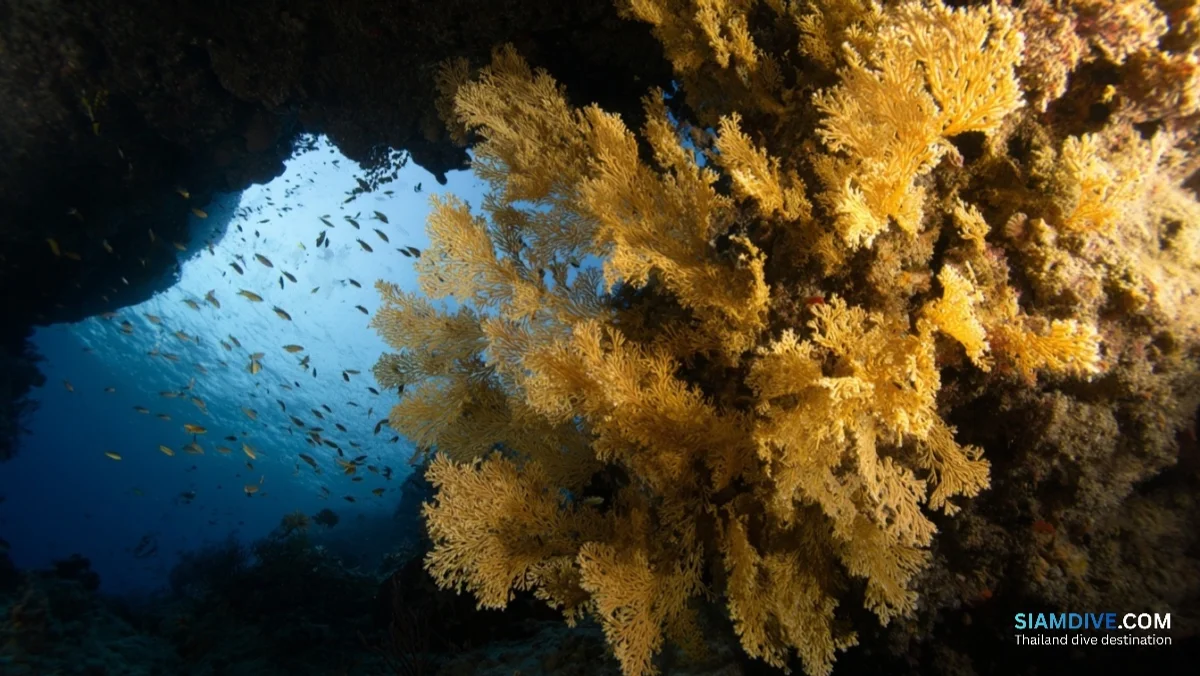
At Hin Lak Ngam, the black coral colonies remain undisturbed. The branches grow in multi-coloured profusion across the granite substrate between 9 and 18 metres, creating habitat architecture that attracts dense aggregations of reef fish. Thailand's Tourism Authority has described Hin Lak Ngam as the most beautiful diving spot in Chumphon's waters — a claim supported by the sheer density of Antipatharian colonies found nowhere else in the Gulf of Thailand at comparable depths.
Dive Site Profile: Depths, Conditions, and Layout
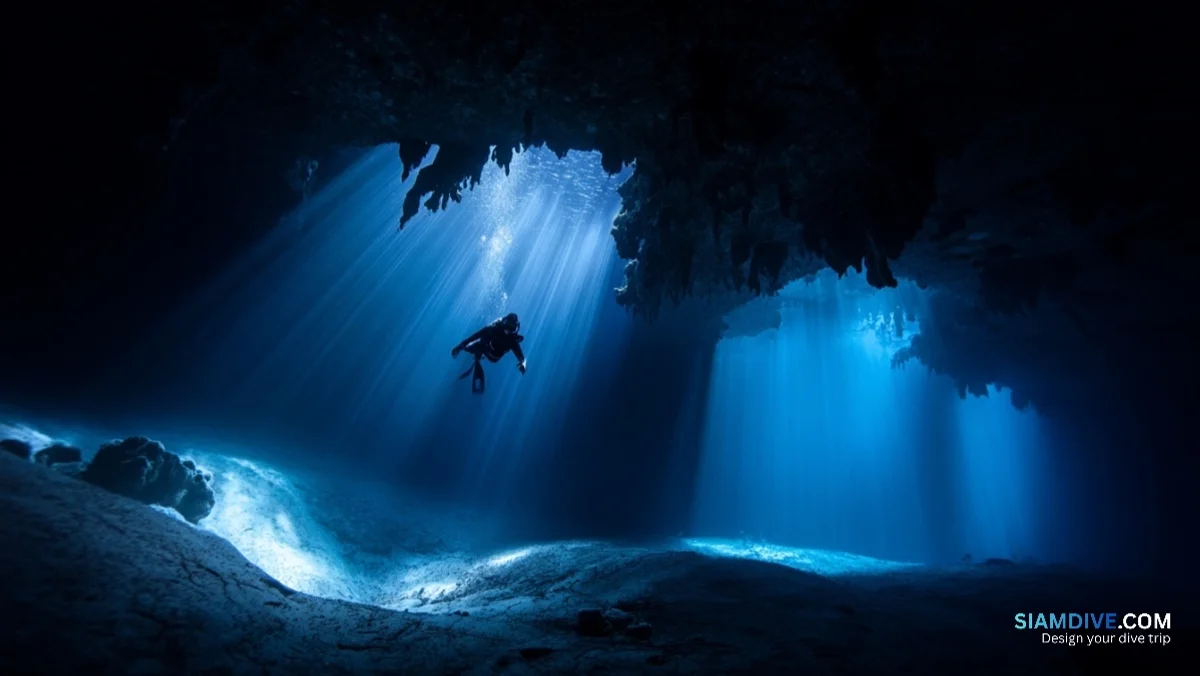
The two rocky outcrops that form Hin Lak Ngam create an underwater landscape of ridges, overhangs, and sloping walls. Hard coral reef extends nearly to the surface, making the shallows accessible to snorkellers, while the most rewarding sections for scuba divers sit between 10 and 15 metres.
- Depth range: 5–20 m (best section 10–15 m)
- Visibility: 8–20 m depending on tide and current (best in May)
- Current: Mild to moderate; can be strong on occasion
- Water temperature: 28–30 °C year-round
- Skill level: Open Water and above
- Dive type: Reef wall / rocky outcrop exploration
The granite surfaces host a mosaic of hard coral species — staghorn, table, brain, and cabbage corals — interspersed with soft corals, barrel sponges, and beds of sea anemones. But the defining feature remains the black coral. Colonies branch from crevices and overhangs in overlapping layers, some extending more than a metre from the rock face. The overall effect resembles an underwater garden unlike anything found at more commercial dive sites further south.
Marine Life: From Clownfish to Whale Sharks
Mu Koh Chumphon National Park holds the highest diversity of fish species in the Gulf of Thailand, according to surveys by the Department of National Parks. Hin Lak Ngam benefits directly from this richness. The black coral architecture creates feeding stations and shelter for species at every trophic level.
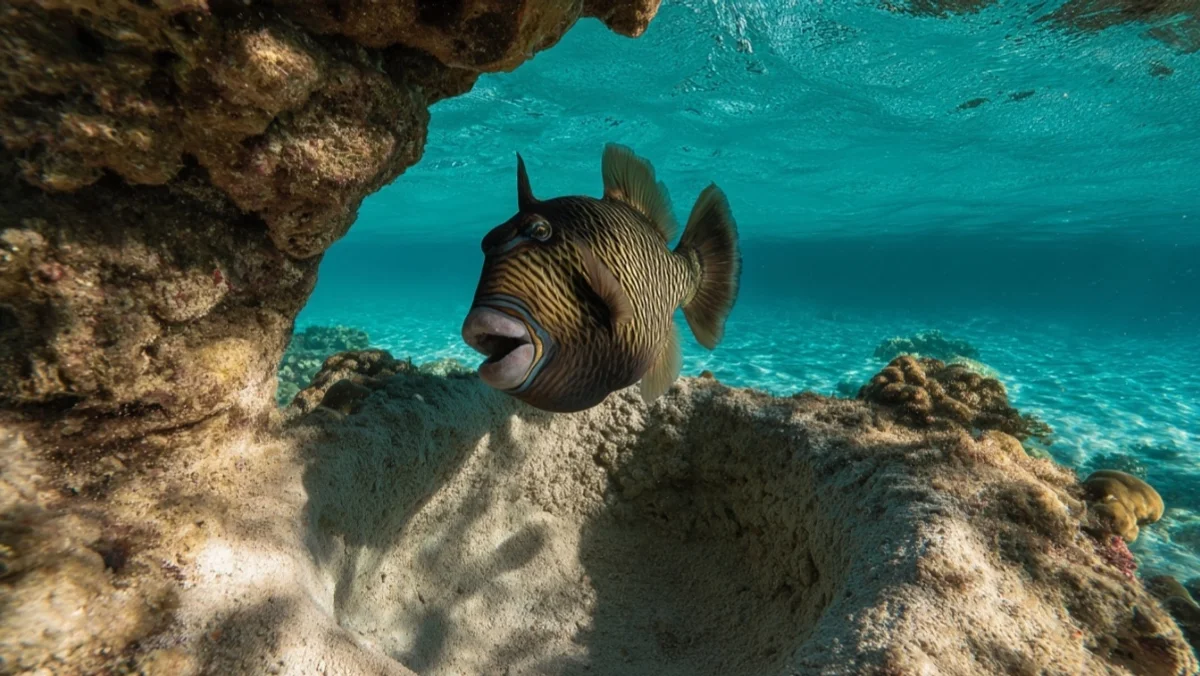
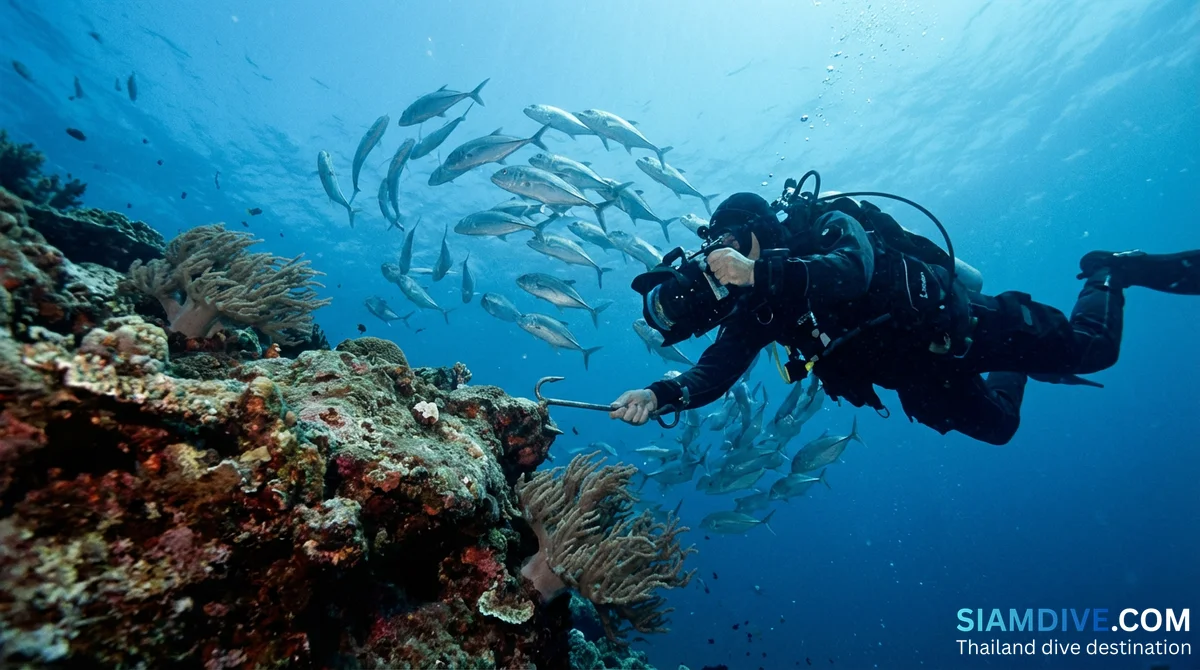
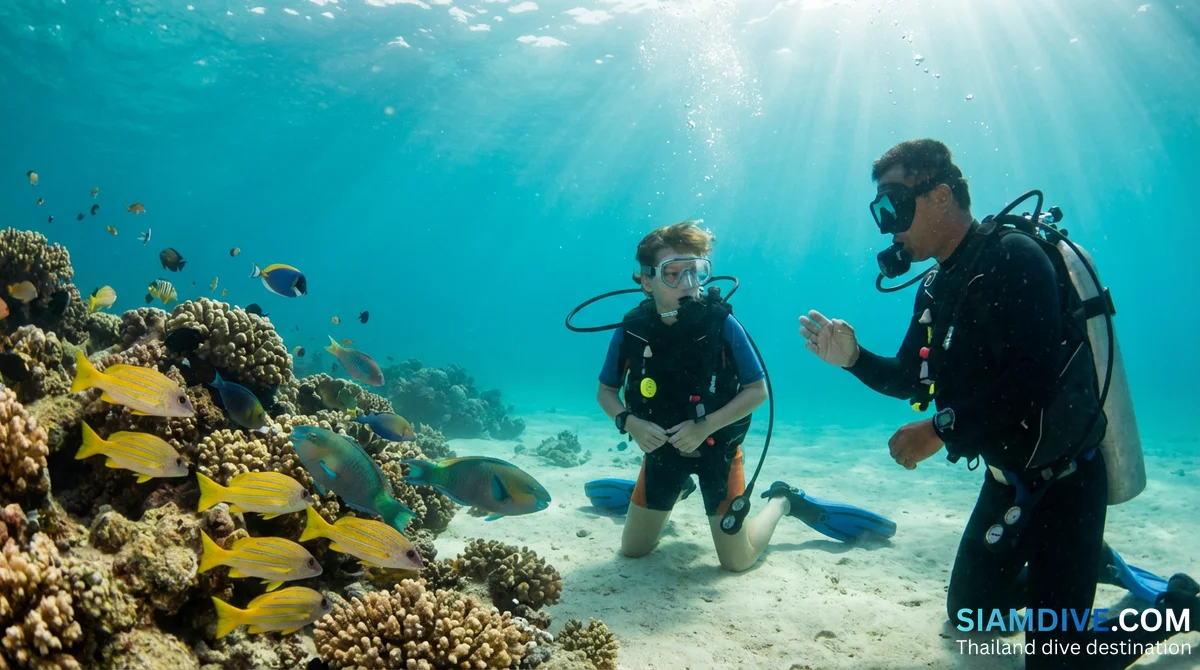
Resident reef fish include triggerfish, Moorish idols, porcupinefish, pufferfish, and several species of butterflyfish. Anemone beds host multiple clownfish species. Groupers and moray eels occupy the crevices between boulders, while schools of yellow-stripe trevally and yellow-band fusilier cruise the water column above the reef. Red sea whips and Neptune's cup sponges add splashes of crimson to the predominantly golden tones of the coral.
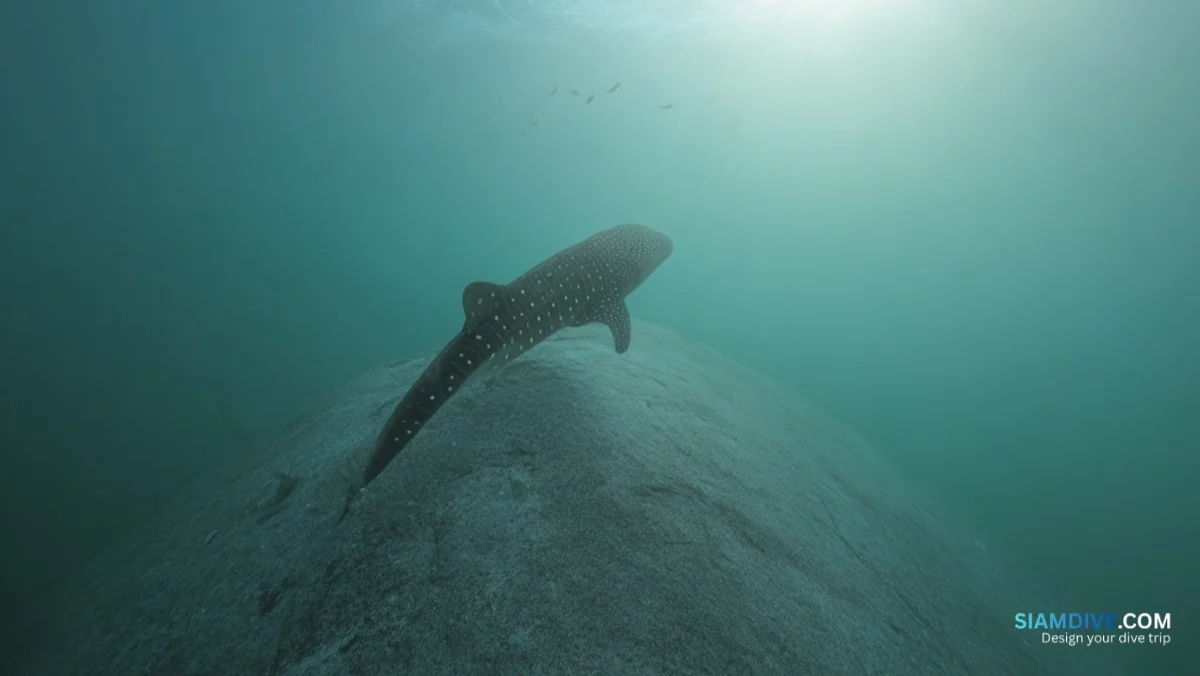
Between March and July, whale sharks transit through Chumphon's waters, with peak sightings in April and May. While the nearby islands of Ran Ped and Ran Kai draw the most whale shark encounters, divers at Hin Lak Ngam occasionally spot these animals passing through. During Songkran 2025, whale sharks appeared daily near the Ngam Yai cluster, contributing to an estimated 20 million baht in diving tourism revenue for the province.
Best Season and Timing
Chumphon's dive season runs from March to September — the exact inverse of Andaman Sea destinations like Richelieu Rock. This scheduling quirk means that divers can enjoy world-class Thai diving year-round by switching coasts. When the Andaman shuts down for monsoon season in May, Chumphon's Gulf waters are at their clearest.
May stands out as the optimal month for Hin Lak Ngam. Visibility regularly reaches 15–20 metres, currents are typically mild, and the water temperature hovers near 30 °C. The whale shark window overlaps neatly: March through July offers the best chance of a pelagic encounter on the crossing or at neighbouring sites.
October through February brings the northeast monsoon. Seas become rougher, visibility drops, and most dive operators in Chumphon scale back their schedules. While diving is not impossible during these months, trip cancellations are common.
Getting There and Logistics
Chumphon city is accessible by air (Chumphon Airport, domestic flights from Bangkok), rail (the southern trunk line stops at Chumphon Station), or road (Highway 41, roughly 6.5 hours from Bangkok by car). From Chumphon, the main diving piers at Laem Thaen and Had Sai Ree are 15–20 minutes by road.
Day-trip dive packages to the Ngam Yai cluster — which typically include Hin Lak Ngam, Koh Ngam Yai, and sometimes Koh Mattra — range from 2,500 to 4,500 THB depending on the number of dives and equipment rental. Snorkelling day trips run 1,200–2,000 THB. Operators generally limit group sizes, which keeps the underwater experience uncrowded — often fewer than ten divers at a site on any given day.
Because Hin Lak Ngam sits within a national park, divers must pay the standard park entry fee (200 THB for foreign visitors, 40 THB for Thai nationals). Equipment rental, if needed, is typically included in dive packages or available as an add-on.
Conservation and Responsible Diving
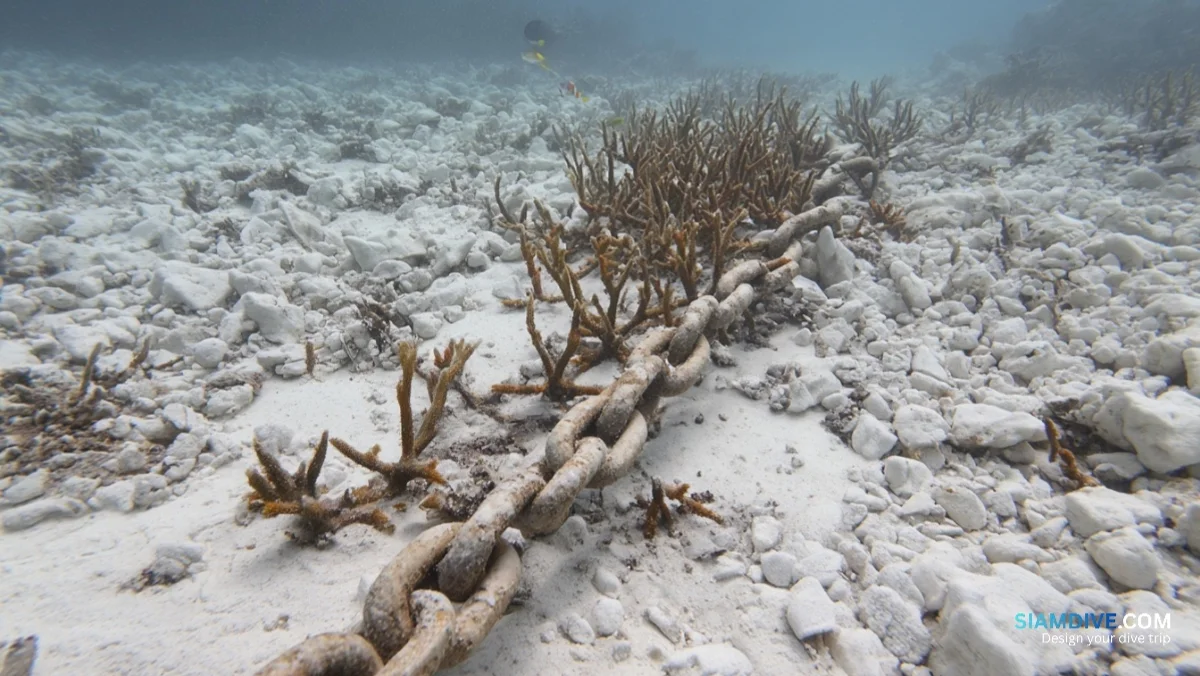
Black coral grows slowly — some species add as little as a few centimetres per year. The colonies at Hin Lak Ngam represent decades, possibly centuries, of growth. Maintaining neutral buoyancy and keeping fins clear of the reef are not just good practice here; they are essential for preserving a resource that cannot recover quickly from physical damage.
Mu Koh Chumphon National Park was the first marine park in Thailand to install underwater nature trails, with information signboards placed along the reef at sites including Hin Lak Ngam. These trails guide divers along pre-set routes that minimise contact with sensitive coral areas while highlighting key species. The park's management, under the Department of National Parks, Wildlife and Plant Conservation, actively monitors coral health and periodically restricts access to damaged zones.
The low diver traffic at Chumphon's sites is itself a form of protection. Compared to the heavy boat traffic at Koh Tao or the Similan Islands, sites like Hin Lak Ngam see a fraction of the visitor load. For divers who prioritise reef health alongside their own experience, this matters.