Storing Your Dive Gear for Months? The Checklist That Prevents Expensive Surprises
16 เมษายน 2569
Seasonal diver? Heading home after a trip? Follow this item-by-item storage checklist so your regulator, BCD, wetsuit, and tank survive months of downtime.
Why Long-Term Storage Can Destroy Good Gear
You spent thousands on a regulator, BCD, wetsuit, computer, and camera housing. Then you flew home, tossed the gear bag in a closet, and forgot about it for six months. When you unzipped that bag before your next trip, you found corroded metal, cracked neoprene, a dead battery leaking acid, and a faint smell of mildew that no amount of rinsing could fix.
This happens more often than most divers admit. Salt, moisture, UV light, heat, ozone, and pressure from folding or stacking are silent killers. The good news: 30 minutes of prep before storage can save you hundreds — sometimes thousands — in repairs or replacements. Here is the item-by-item checklist.
The Pre-Storage Ritual: Rinse, Dry, Inspect
Before you store anything, every single piece of gear must go through three steps:
- Thorough freshwater rinse. Use lukewarm water — not hot, not cold. Soak small items for 20-30 minutes. For regulators, rinse while still pressurized on a tank if possible, so no water enters the first stage.
- Complete air dry. Hang or lay gear in a shaded, well-ventilated area for 24-48 hours. Never store anything damp. Moisture is the number one cause of mold, corrosion, and stuck valves.
- Visual inspection. Check for cracks, fraying, corrosion, or worn O-rings. If anything looks questionable, send it for service now — not the week before your next trip when every tech is booked solid.
Regulator: Dust Cap On, Hoses Flat
Your regulator is the most expensive and most sensitive piece of life-support equipment you own. Treat it accordingly.
- Rinse while pressurized if possible. If not, make absolutely sure the dust cap is dry and seated firmly before rinsing — water in the first stage causes internal corrosion and can compromise the diaphragm.
- Dry completely, then place the dust cap back on snugly.
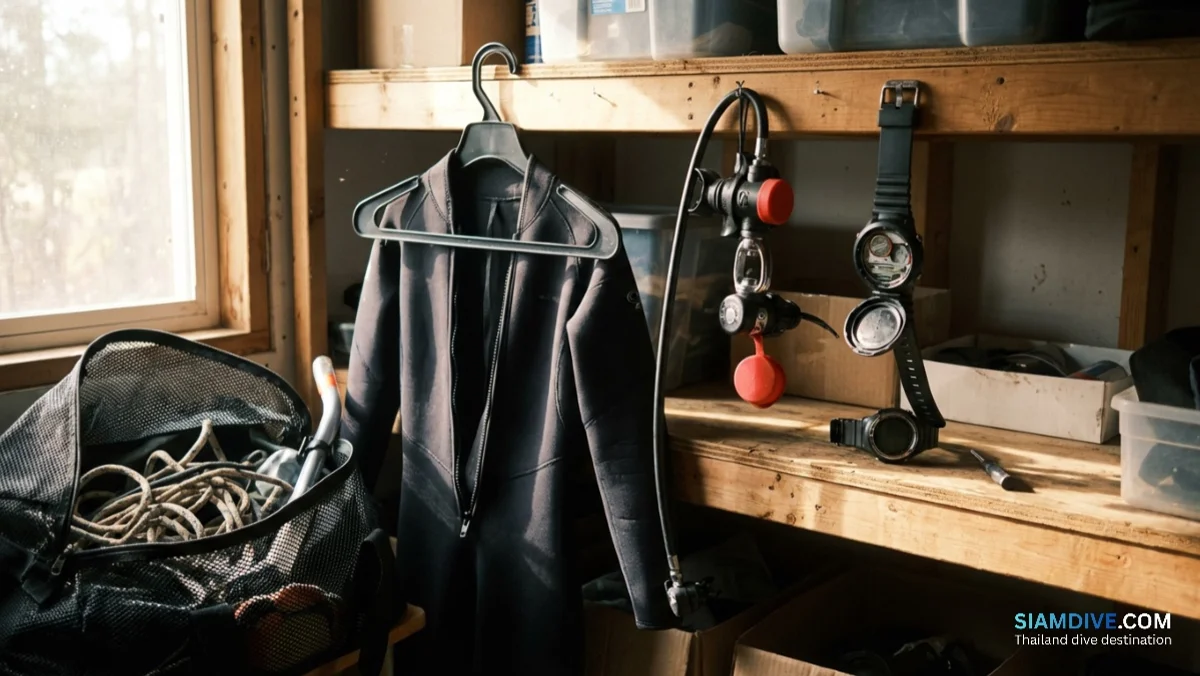
- Store in a padded regulator bag with hoses loosely coiled — never kinked, never hanging by the hoses. Hanging puts stress on hose connections and the swivel joints.
- Keep away from ozone sources (electric motors, certain air purifiers) and direct UV light. Both degrade rubber and silicone components.
- The pressurize-or-not debate: Some technicians recommend storing regulators with slight residual pressure to keep the seat sealed. Others say atmospheric storage is fine if the dust cap is secure. Either way, the dust cap is non-negotiable.
- Service schedule: If it has been more than 12 months or 100 dives since the last service, get it done before storage. Internal contaminants harden over time and become much harder to remove.
BCD: Partially Inflated, Bladder Flushed
A BCD stored deflated in a bag will develop internal bladder walls that stick together, trapping moisture and breeding mold.
- Flush the bladder: Disconnect the low-pressure inflator hose, fill the bladder about one-third with fresh water through the oral inflator, reattach, shake and invert several times, then drain completely through the dump valves.
- Dry thoroughly — inside and out. Leave dump valves open while drying so air circulates through the bladder.
- Store partially inflated on a wide hanger or laid flat. Partial inflation prevents the internal walls from bonding and keeps the bladder in shape.
- Cool, dark place. UV degrades nylon webbing and fades fabric. Heat accelerates material breakdown.
- Check buckles and Velcro — sand trapped in buckles causes wear; Velcro loses grip when clogged with debris.
Wetsuit: Hang Wide, Never Fold
Neoprene has a limited lifespan, and bad storage accelerates its death dramatically.
- Rinse inside and out with fresh water. For extended storage, use a wetsuit-specific cleaner to remove body oils and bacteria that cause odor and material breakdown.
- Dry completely — inside first, then flip and dry outside. Never machine dry or place in direct sun.
- Hang on a wide-shouldered wetsuit hanger or drape over a thick bar. Wire hangers create permanent shoulder creases. Folding compresses neoprene cells and creates permanent creases that reduce insulation.
- Store in a cool, dark location. Ideal: 10-24°C (50-75°F), under 60% humidity.
- Zipper care: Apply a thin coat of silicone-based zipper lubricant (beeswax also works). This prevents the teeth from corroding or seizing during months of inactivity.
- Never store in a plastic bag — neoprene needs to breathe.
Mask and Fins: Simple but Often Neglected
Mask
- Rinse, dry, and store in a hard case or the original box. Loose masks in gear bags get scratched lenses and deformed skirts from pressure.
- Keep away from heat and direct sunlight — silicone skirts warp and yellow with UV exposure.
- Do not rest anything on top of the lens.
Fins
- Rinse, dry, and store flat. Standing them upright or stacking heavy items on the blades can warp them permanently.
- For full-foot fins, stuff the foot pockets lightly with newspaper to absorb residual moisture and hold shape.
- Spring straps and rubber straps: check for cracks or loss of elasticity before storage. Replace worn straps now so they are ready next season.
Dive Computer: Battery and Firmware
Modern dive computers are robust, but batteries and seals need attention during long storage.
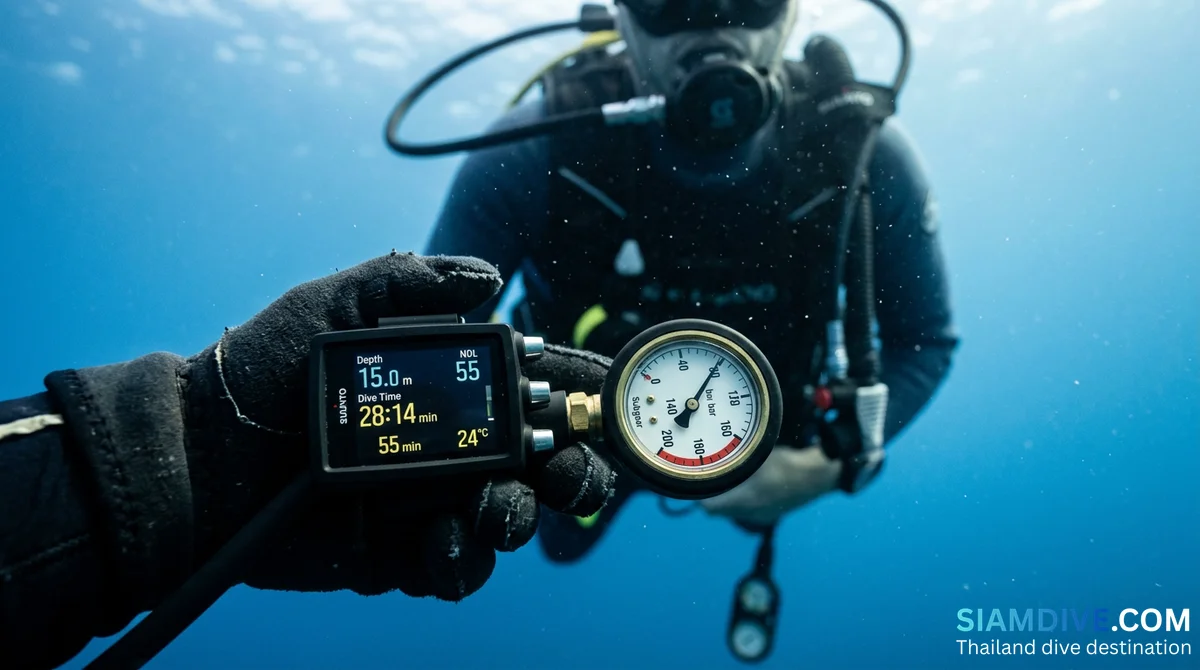
- If storing for more than 6 months, remove the user-replaceable battery to prevent leakage and corrosion of contacts. For computers with non-replaceable batteries, ensure the battery level is above 50% — a fully drained lithium cell can become permanently damaged.
- Rinse and dry the computer, paying attention to the sensor ports and button recesses where salt hides.
- Store dry in a protective case or padded pouch.
- Before your next trip: reinstall the battery, check firmware updates from the manufacturer, and verify sensor accuracy with a known-depth test or altitude check. Dive computers can drift after long storage.
Tank: 200 PSI Residual, Upright and Secured
Scuba tanks are tough, but moisture and empty storage cause internal corrosion that leads to failed visual inspections — and expensive tumbling or even condemnation.
- Never store a tank completely empty. Leave approximately 200 PSI (14 bar) of residual pressure. This keeps moisture from entering through the valve and prevents internal condensation.
- Store upright if possible. If a small amount of moisture is present, it pools on the thick base rather than spreading across the thinner sidewall. If you must store on its side, secure it so it cannot roll.
- Check your visual inspection date. In most regions, tanks require a visual inspection annually and a hydrostatic test every 5 years. If your VIP is due before your next dive season, get it done now.
- Valve care: Hand-tighten the valve — do not overtighten. Leave the dust cap or DIN plug in place to keep debris out.
Camera Housing: O-Rings Out, Greased, Stored Separately
Underwater camera housings depend entirely on O-ring seals. One compromised O-ring means a flooded housing and a destroyed camera.
- Remove all O-rings, clean them, inspect for nicks or flat spots, and apply a thin layer of manufacturer-recommended silicone grease.
- Store O-rings separately in a small ziplock bag away from heat. Leaving them compressed in grooves for months causes permanent deformation (compression set).
- Leave the housing open — do not latch it shut without O-rings. Store in a padded case with silica gel.
- Remove the camera body and store it separately with a body cap and lens caps.
Gear Bag and Storage Environment
The bag and the room matter as much as the individual pieces inside.
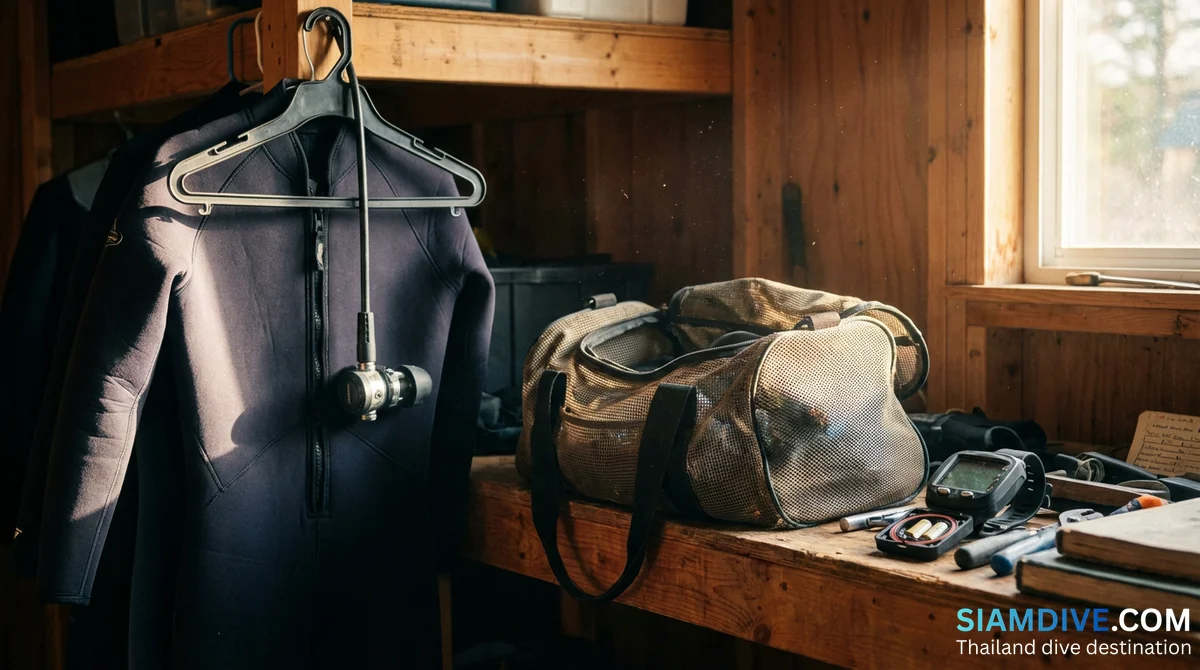
- Leave the gear bag open and unzipped during storage. A sealed bag traps humidity and creates a mold incubator.
- Ideal conditions: 10-24°C (50-75°F), 50-55% relative humidity. Avoid attics, garages, and basements — temperature swings and dampness are gear killers.
- Silica gel packs: Place 1-2 ounces per cubic foot of storage space. Silica gel absorbs up to 40% of its weight in moisture. Replace or recharge (bake at 120°C for 2 hours) every few months.
- In tropical climates: A small room dehumidifier is worth the electricity cost. Target 50-55% humidity. Mold grows aggressively above 60%.
- Avoid storing near chemicals — solvents, gasoline, and pool chlorine can damage rubber, silicone, and neoprene.
The Pre-Trip Revival Checklist
Months have passed. Your gear has been resting in perfect conditions. Before you dive again, run through this checklist:
- Service dates: Is your regulator within its annual service window? Is your tank VIP current?
- Batteries: Reinstall dive computer battery, test torch, check camera housing strobes.
- O-rings: Reinstall camera housing O-rings, check tank valve O-ring, inspect regulator DIN O-ring.
- Inflate your BCD and leave it overnight — if it loses pressure, there is a leak.
- Wetsuit check: Try it on. Neoprene compresses over time. If it is loose, it is time for a new one.
- Buddy check everything on the first dive — treat it as a shakedown dive, not a deep wall dive. Shallow, relaxed, close to the exit.
Take care of your gear during the off-season, and it will take care of you when it matters most. Need help finding your next dive trip or the right service centre? Browse liveaboards, dive shops, and courses at siamdive.com.