How to Time Richelieu Rock for Whale Sharks Before May 15
20 เมษายน 2569
Richelieu Rock's purple horseshoe pinnacle hosts whale sharks from February to April — with the park closing May 15, here's what the final weeks offer.
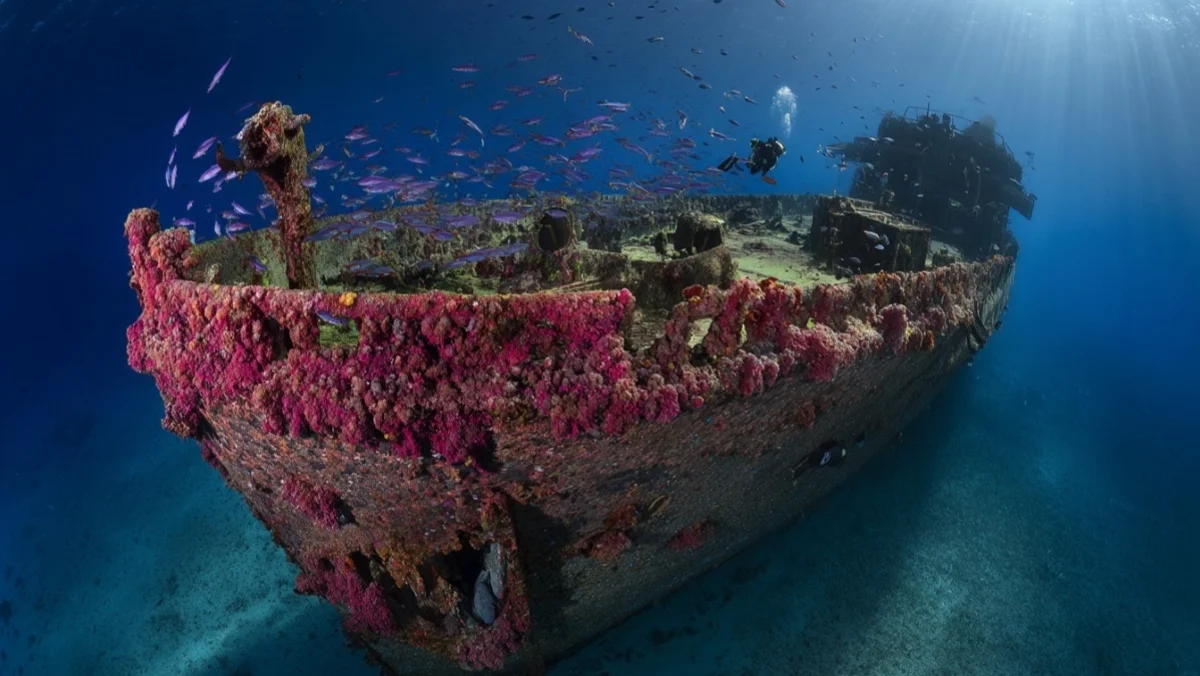
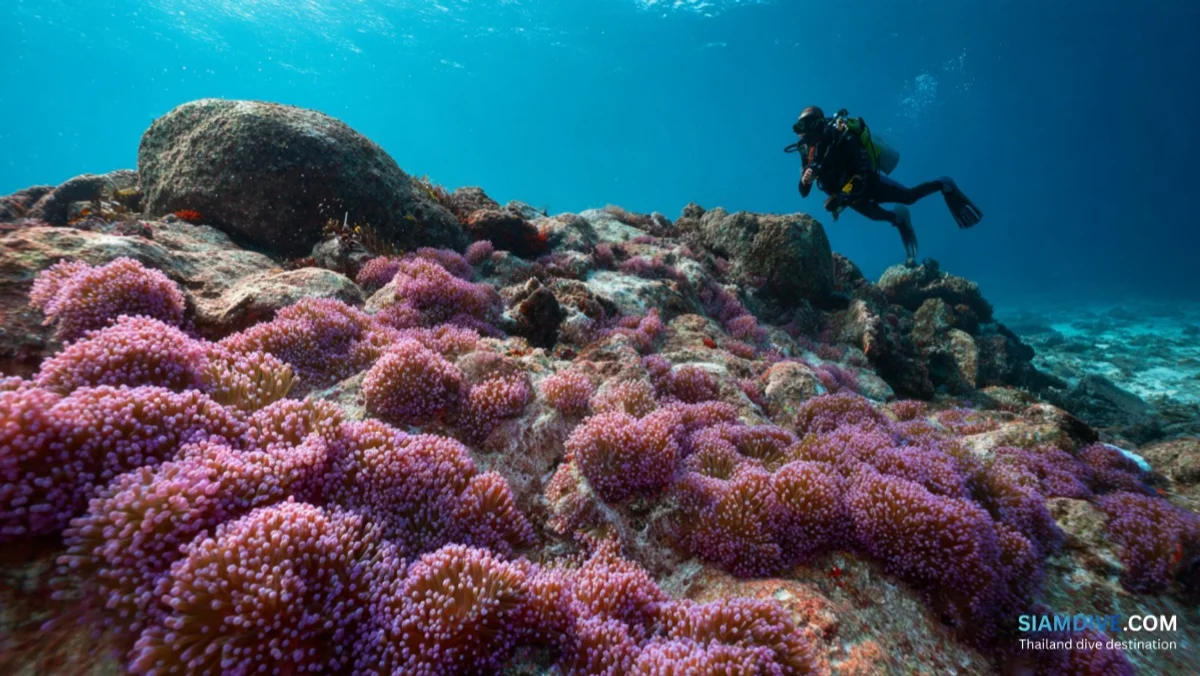
At low tide, a sliver of rock breaks the surface forty-five kilometres from the Thai mainland — blink and it looks like a barnacle-crusted reef flat going nowhere. Drop below the waterline and the geometry flips: a horseshoe of limestone plunges to 35 metres, every vertical surface upholstered in purple soft coral so dense that the rock beneath has vanished. This is Richelieu Rock, routinely called the best single dive in Thailand, and the claim holds up not because of marketing but because of a collision of topography, biology, and Indian Ocean current patterns that exists nowhere else in the Andaman Sea.
A Horseshoe Rising from 35 Metres
The formation is a submerged limestone pinnacle sitting inside Mu Ko Surin National Park, roughly 18 kilometres east of the Surin Islands and 70 kilometres from the nearest stretch of Thai coast at Khao Lak. Its namesake is Admiral Andreas du Plessis de Richelieu, a French-born officer who led the first hydrographic survey of the Andaman Sea for the Royal Thai Navy in the late nineteenth century. The rock he charted turned out to be shaped like a horseshoe open to the south — a detail that creates three distinct dive zones on a single descent.
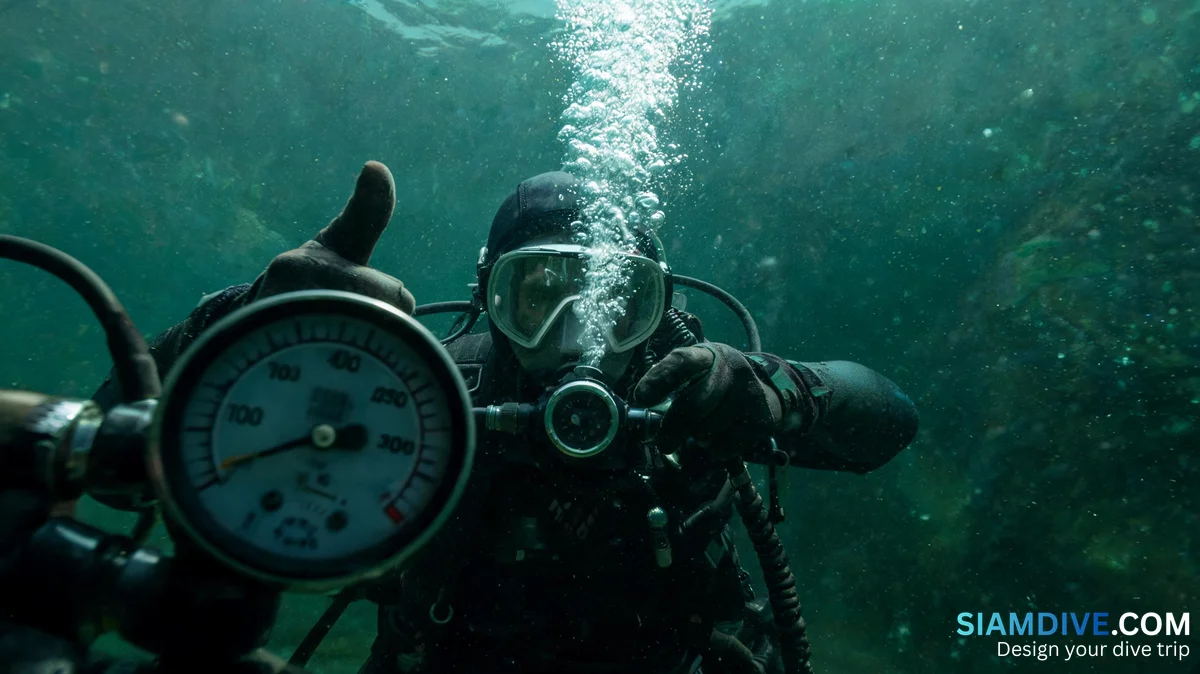
The north wall drops steeply from 5 metres to beyond 30, with overhangs and small caves pocking the rock face where moray eels and octopuses shelter. The east and west arms of the horseshoe run parallel at 12 to 25 metres, forming a sheltered interior where currents slow and fish concentrate into dense, swirling clouds. The south side opens onto sandy patches between 15 and 25 metres — territory for bottom-dwellers like scorpionfish, leopard sharks resting between feeding runs, and the occasional guitar shark lying flat at 30 to 40 metres.
- Depth range
- 5–35 metres (pinnacle tip sits 1–2 m below the surface at high tide)
- Visibility
- 15–30 m; best February through April when 25 m+ is common
- Water temperature
- 27–30 °C surface, 25–28 °C at depth; November–December thermoclines can dip to 25 °C
- Experience level
- Advanced Open Water recommended; Open Water divers possible in calm conditions with a guide
This narrow depth profile means a single dive covers everything from shallow macro hunting at 5 metres to deep pelagic encounters at 35 — no other site on the Similan–Surin circuit compresses that range into one dive plan.
Purple Down to the Crevices
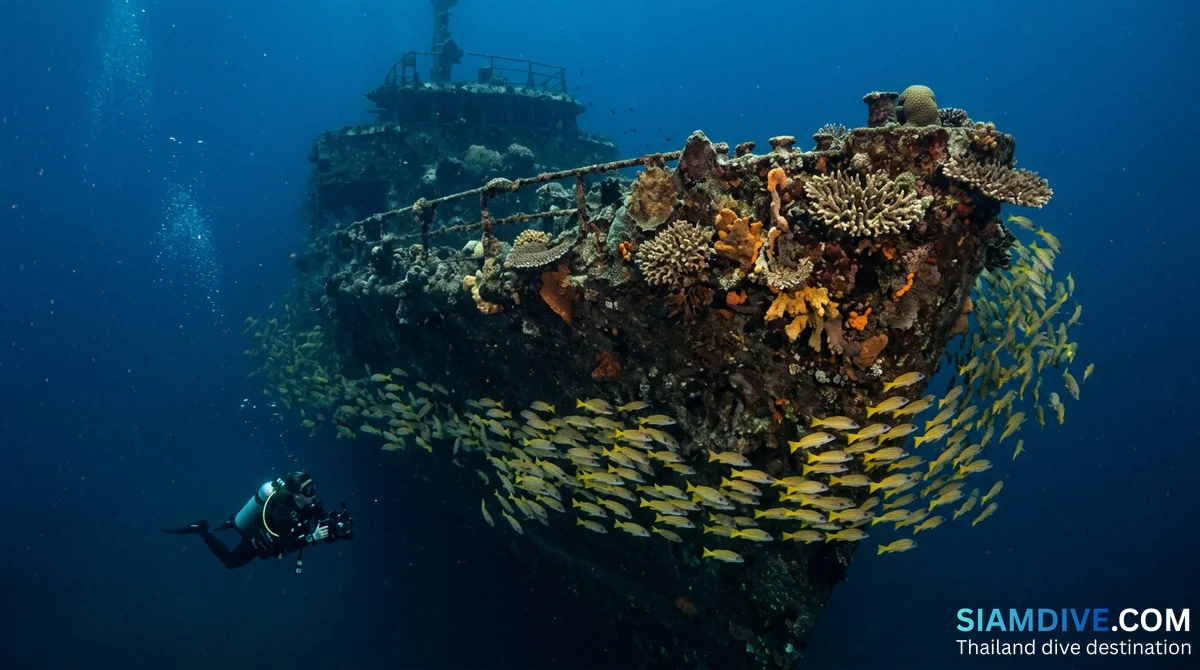
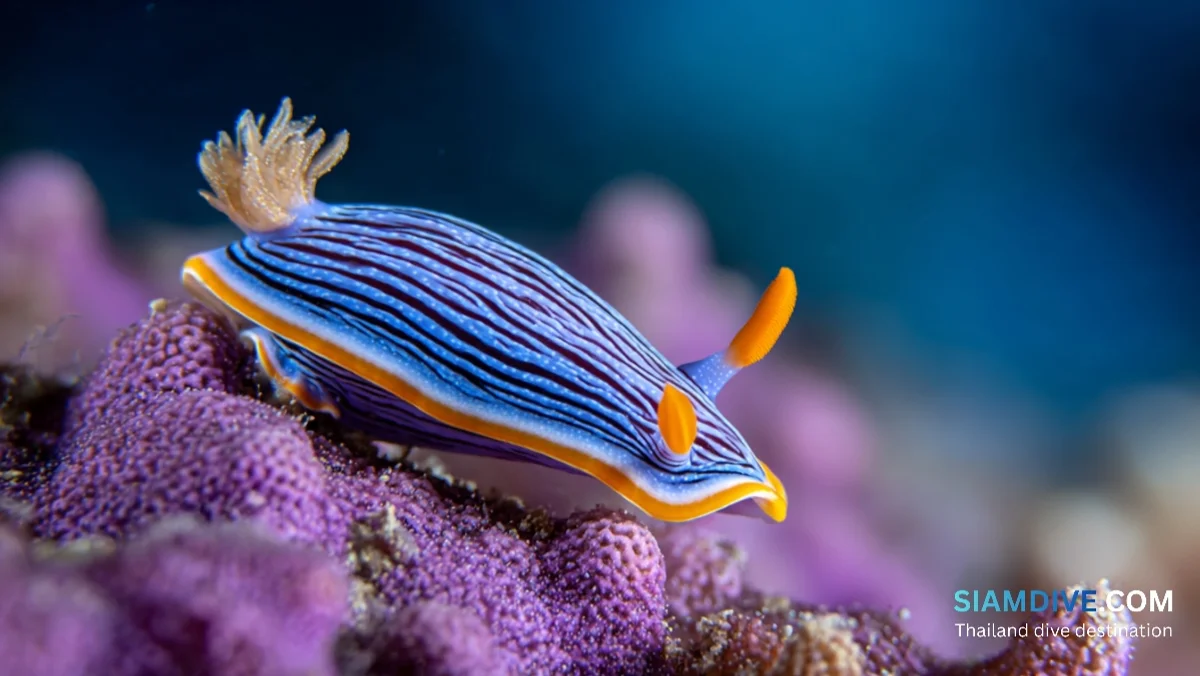
The colour hits before anything else registers. Dendronephthya soft corals — purple, magenta, and deep red — coat the rock in layers thick enough to obscure the limestone underneath. Sea fans angle into the current at every depth. Anemones with resident clownfish colonies cluster along the sheltered interior of the horseshoe, and barrel sponges punctuate the deeper walls where the light thins out.
The density is not accidental. Richelieu Rock sits in a current corridor between the Andaman Basin and the shallower waters surrounding the Surin archipelago. Nutrient-rich water sweeps across the pinnacle on both flood and ebb tides, feeding the filter-feeding soft corals that give the site its signature palette. During peak season — February through April — visibility often stretches past 25 metres, and the purple walls become the kind of wide-angle frame that underwater photographers build entire liveaboard itineraries around.
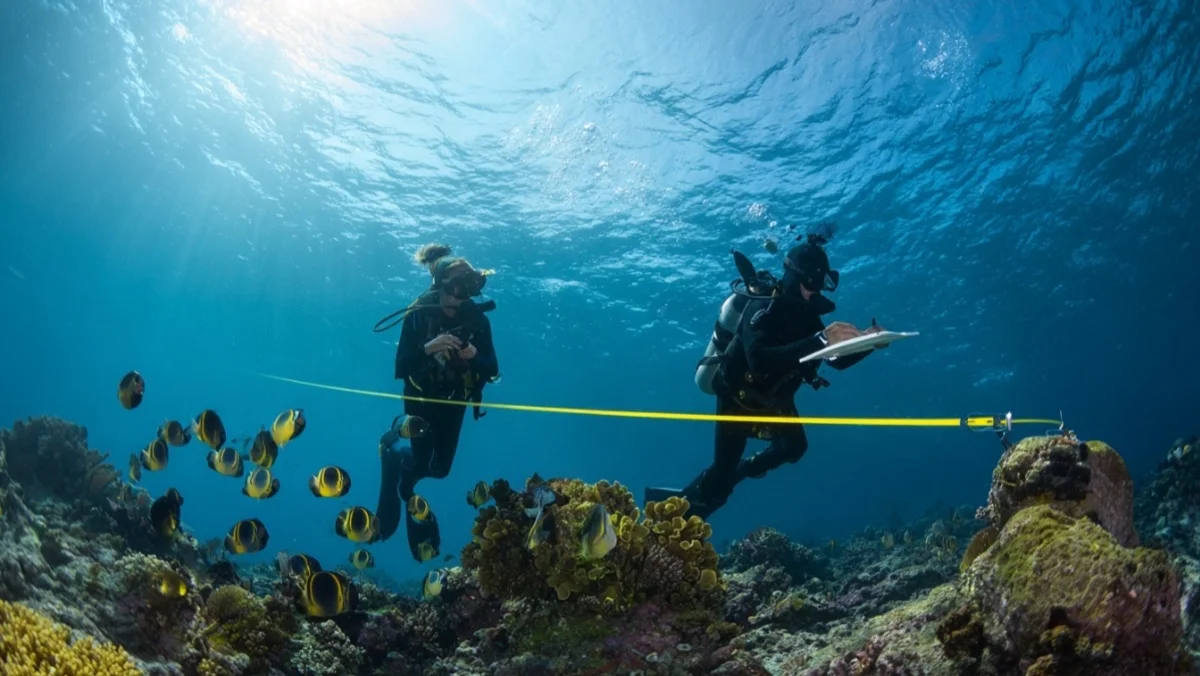
Coral health at the pinnacle has remained notably stable compared to shallower reefs along the Thai coast. The site's depth, distance from shore, and national park protections — including a strict no-anchor policy — insulate it from coastal runoff and physical damage. Rangers from Mu Ko Surin patrol the area during the open season, and dive boats use mooring lines rather than dropping anchor on the reef.
The Whale Shark Lottery Runs February to April
Whale shark encounters at Richelieu Rock sit in a frustrating middle ground — neither guaranteed nor truly rare — and that ambiguity is precisely what keeps divers rebooking year after year. Sightings cluster between February and April, when plankton blooms intensify along the Andaman shelf. In a typical six-month season, Khao Lak-based operators collectively report roughly ten confirmed whale shark encounters at the site, though individual seasons swing from near-zero to over twenty.
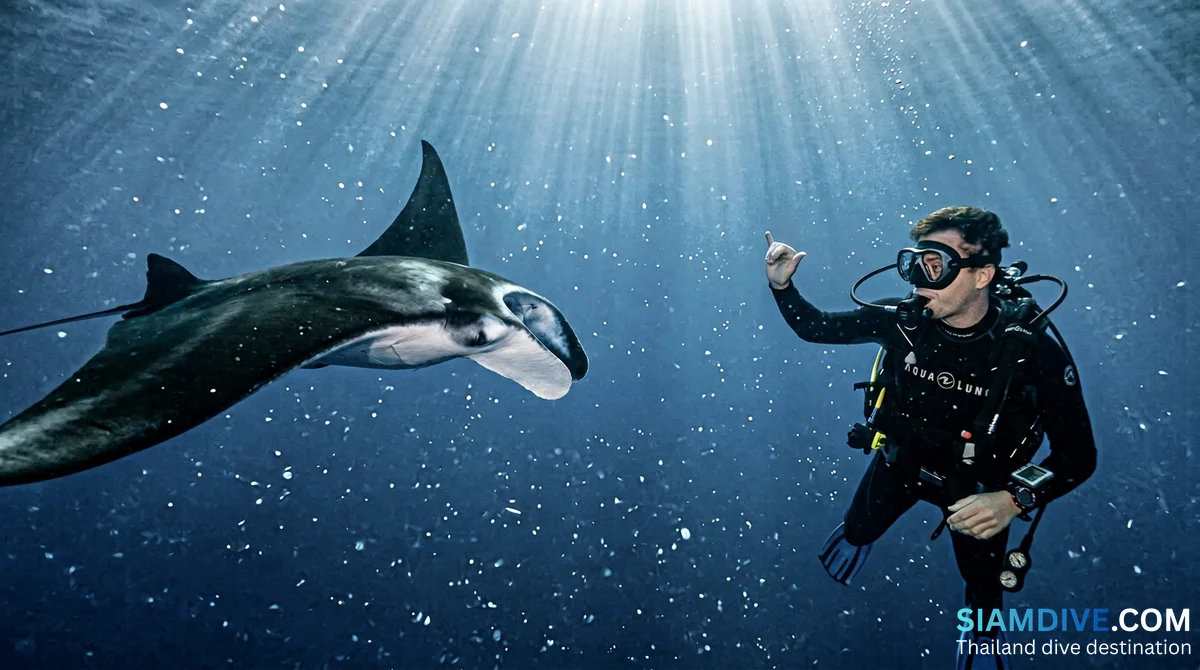
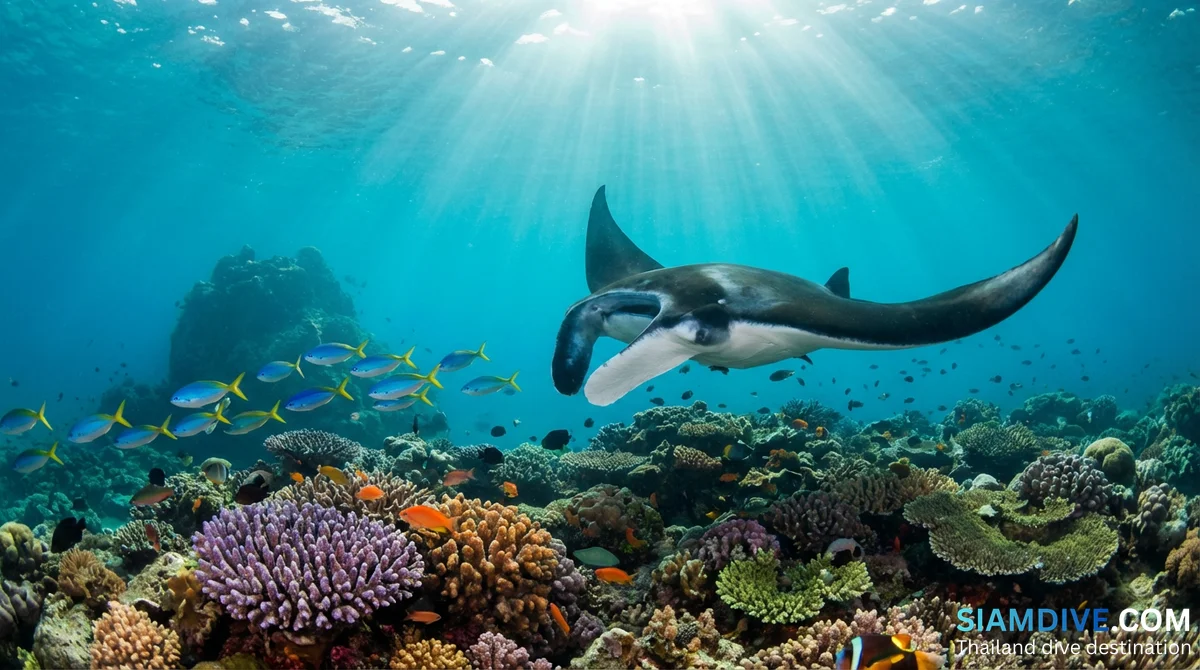
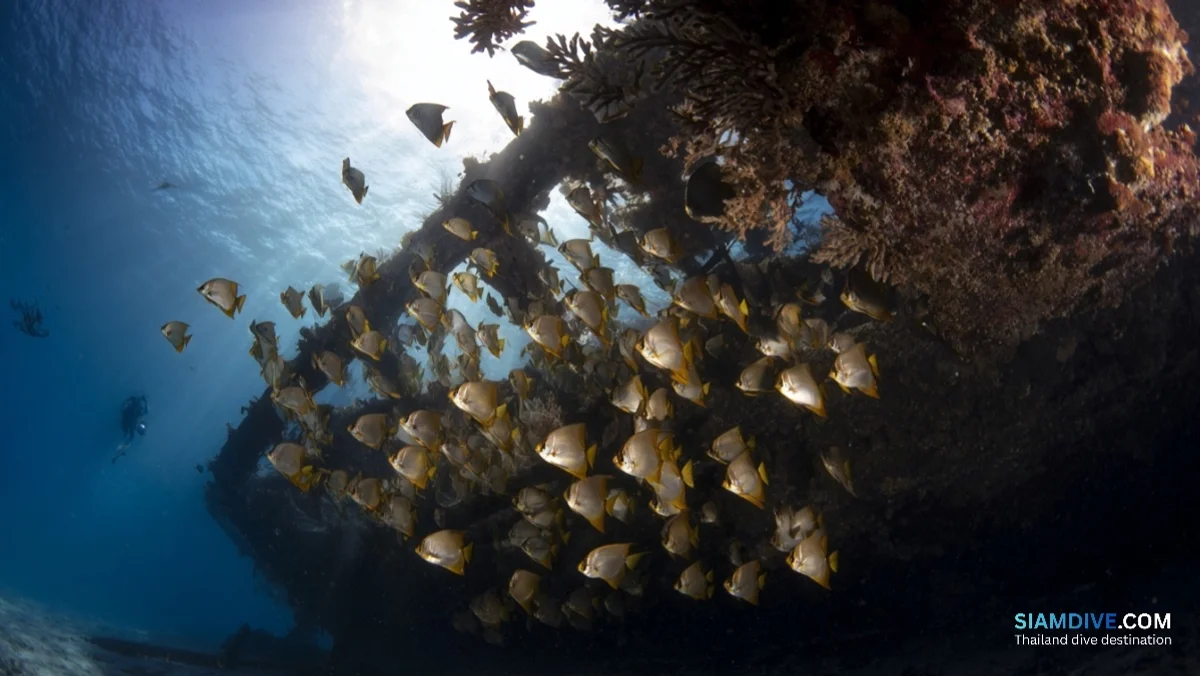
Manta rays use the pinnacle as a cleaning station during the same window, cruising the shallower sections of the horseshoe where cleaner wrasse work their gill slits in slow, methodical passes. Eagle rays, marble rays, and whitetip reef sharks patrol the deeper perimeter year-round. Blacktip reef sharks circle the shallower crown, and cuttlefish — some over half a metre long — hover along the east arm during morning dives. But it is the whale shark lottery that fills liveaboard berths months in advance.
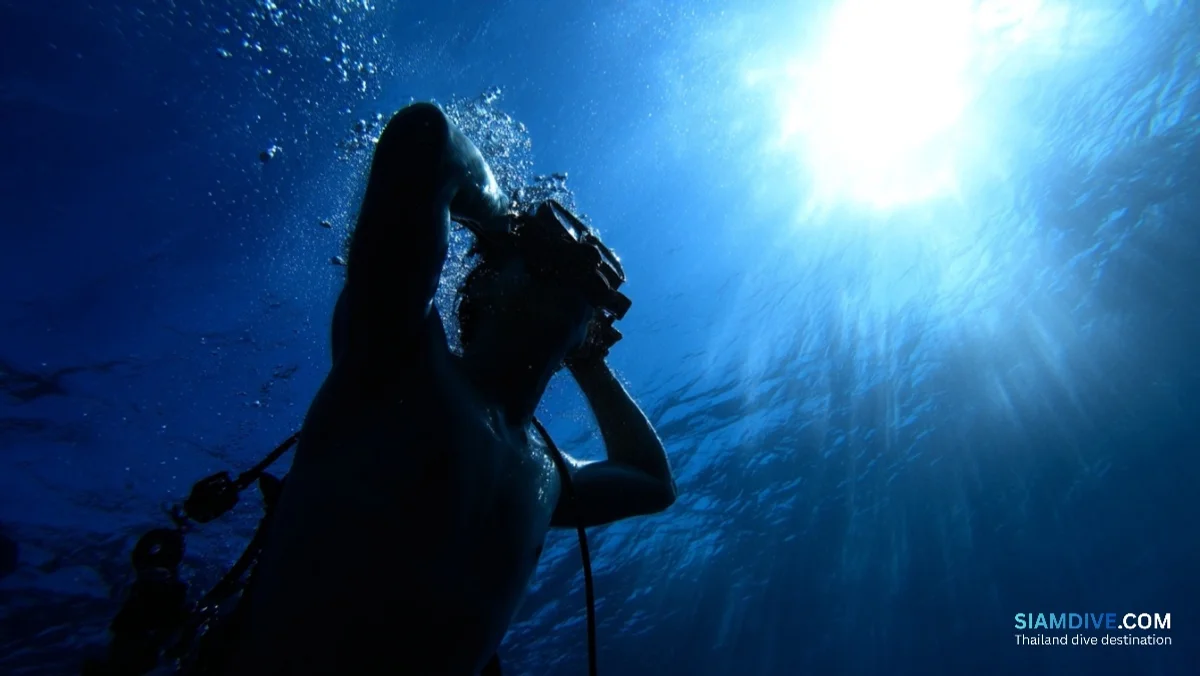
The mechanism is straightforward: the same currents that feed the soft corals also concentrate plankton against the horseshoe's walls, and whale sharks follow the food. On days when the plankton count spikes, divers finishing their safety stop at five metres may find themselves sharing that water column with a twelve-metre filter feeder — an encounter that tends to reorder personal dive-site rankings permanently.
Macro or Wide-Angle? The Lens Decision Nobody Wins
Underwater photographers face a dilemma at Richelieu Rock that has no correct answer. The site supports both macro and wide-angle shooting at a level that most single dive sites cannot match, and the biggest frustration — according to years of Dive Photo Guide commentary — is that choosing one means missing the other.
On the macro side, the horseshoe shelters residents that hunters travel days to find elsewhere:
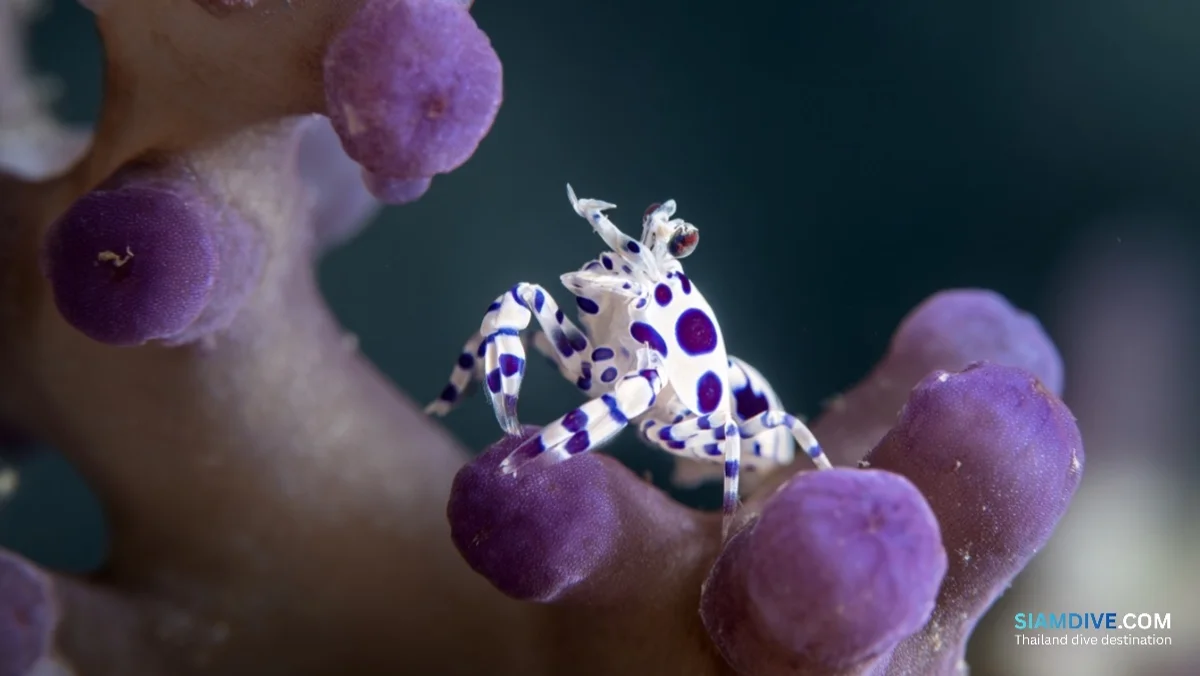
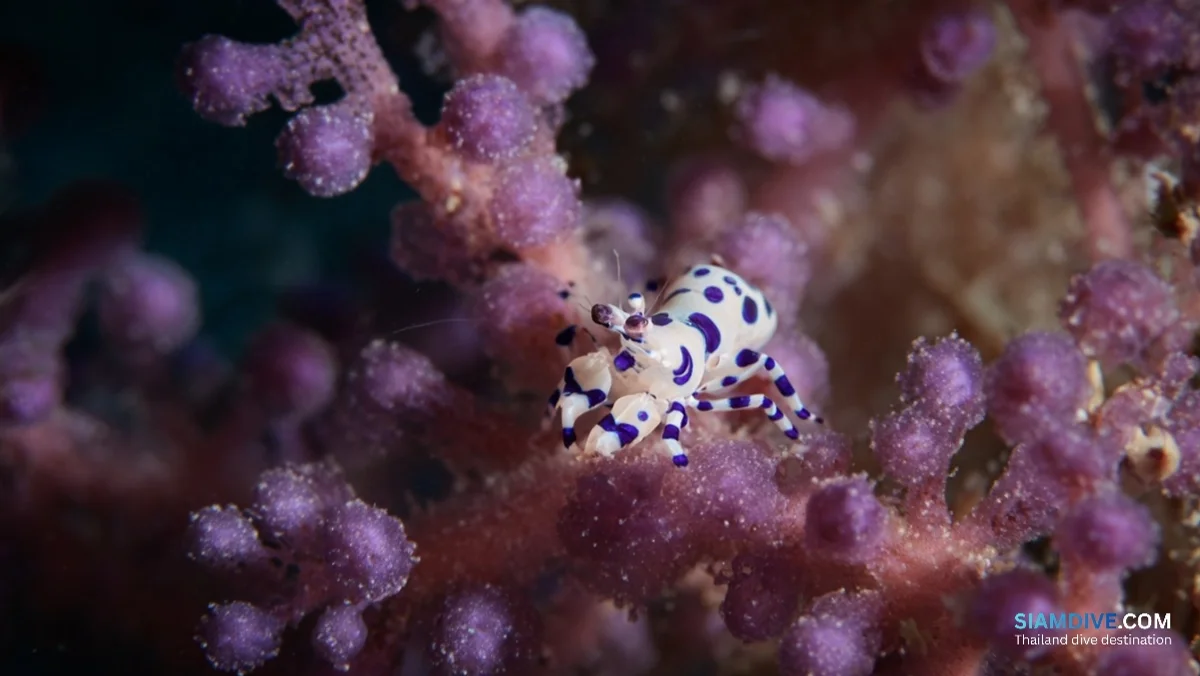
- Harlequin shrimp — at least one breeding pair is resident on the pinnacle at any given time, typically found on the interior walls between 10 and 18 metres. Their Picasso-patterned bodies make them one of the Andaman's most-photographed invertebrates.
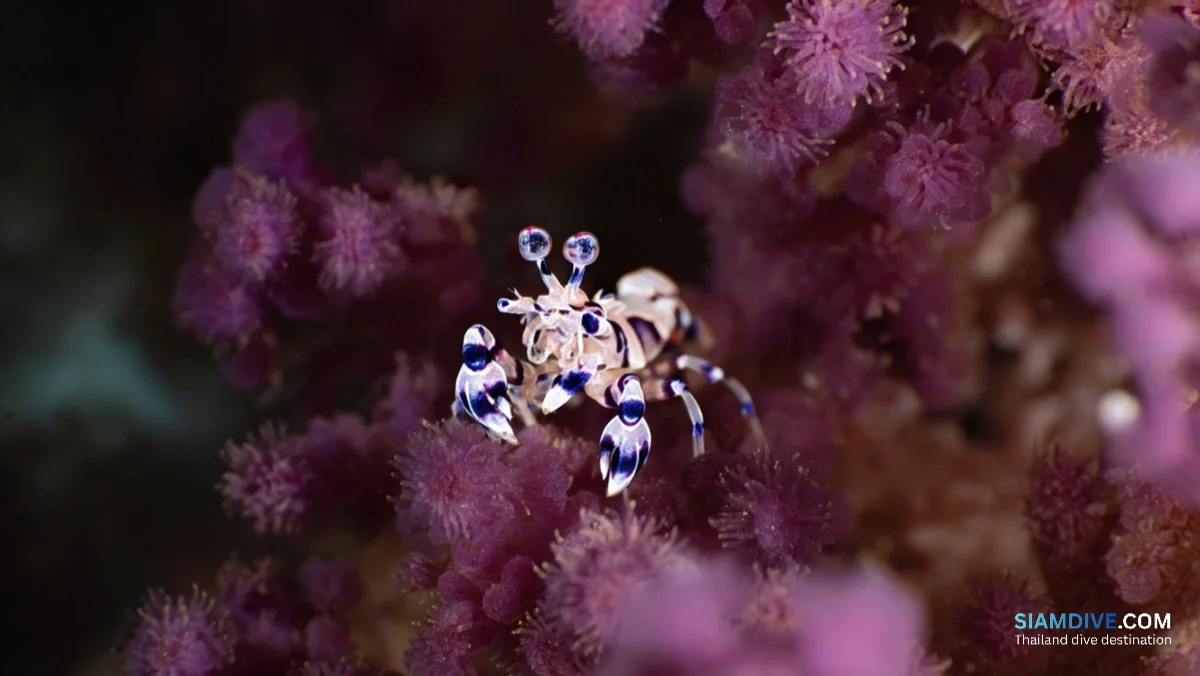
- Ornate ghost pipefish — masters of camouflage, hanging head-down among the soft coral branches. Spotting one requires a guide who knows their current position; they shift feeding spots weekly.
- Tigertail seahorses — clinging to sea fans and gorgonians along the east arm, small enough to miss without a slow sweep of the reef.
- Giant frogfish — a long-term resident that sits motionless at mid-depth and has become something of a mascot for the site among repeat visitors.
The wide-angle side is equally compelling. Schools of chevron barracuda hang in rotating columns above the pinnacle's crown, while clouds of glassfish pulse through the horseshoe interior like silver curtains parting and closing. Add a manta ray cruising the background and the purple-draped walls as a backdrop, and you have the frames that define Thailand's dive photography portfolio.
Most photographers who visit on a liveaboard request two or three dives at Richelieu Rock specifically so they can shoot macro on one descent and wide-angle on the next. Repetition here reveals more, not less.
Reading the Currents at the Horseshoe
Currents are the variable that separates a comfortable dive from a physical one. The pinnacle sits in open water with no surrounding reef structure to break incoming flow, and tidal shifts can change conditions mid-dive without warning.
- Slack tide — delivers the easiest diving. Visibility peaks, fish aggregate tighter against the rock, and photographers can hold position on the wall without fighting drift.
- Moderate current — pushes divers along the east or west arm in a gentle drift, which is the standard dive plan for most boats and often the most productive for macro finds along the wall.
- Strong current — requires staying in the lee of the horseshoe interior. Visibility can drop to 10 metres as suspended particulate increases, but the sheltered zone remains diveable.
- Down currents — occur occasionally on the south (open) side of the horseshoe and deserve respect from any diver venturing below 25 metres.
Guides familiar with the site read the surface chop and plan entry accordingly. On strong-current days, the dive becomes a sheltered exploration of the horseshoe interior — still rewarding, because that is where macro density is highest and the soft coral canopy is thickest.
Liveaboard or Day Trip — and What the Park Charges
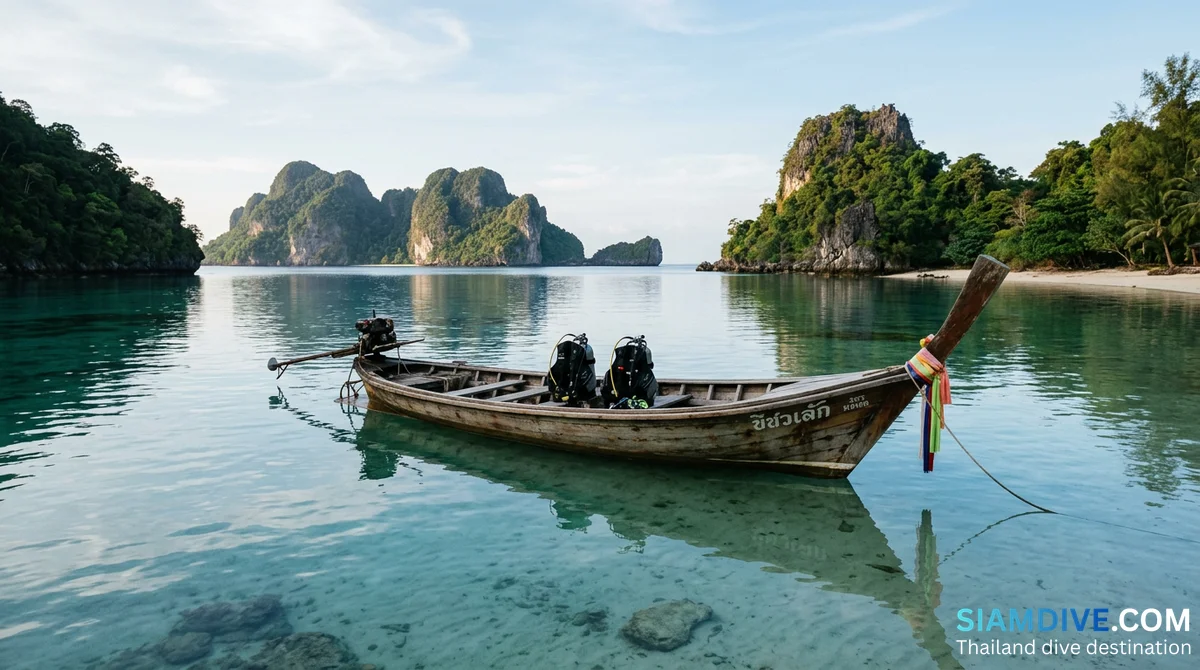
Two routes lead to Richelieu Rock from Khao Lak, and the choice depends on time, budget, and stomach tolerance for open-water crossings.
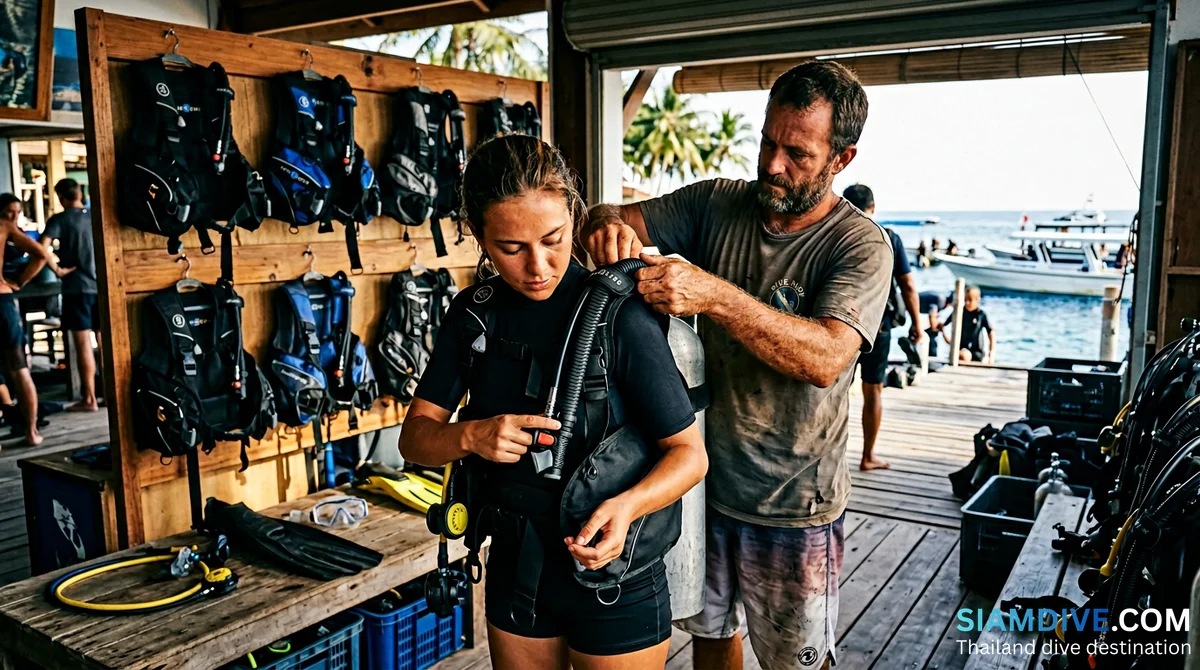
- Liveaboard (3–7 nights) — the standard approach, combining Richelieu with Koh Bon, Koh Tachai, and the Similan Islands. A 4-night trip typically includes 2–3 dives at Richelieu Rock and 10–13 dives total. Pricing for the 2025–2026 season starts around 20,000–30,000 THB per person depending on vessel and cabin class, excluding park fees.
- Speedboat day trip — departure around 06:00, return by 17:00, offering 2 dives at Richelieu Rock. Day-trip pricing runs 5,500–8,000 THB. The ride is 2.5–3 hours each way, which matters for anyone prone to seasickness on the Khao Lak boats.
National park fees are separate and payable in Thai baht cash — no cards, no ATMs on the boat:
- 4-day liveaboard — 2,300 THB per person (combined Similan + Surin parks)
- 7-day liveaboard — 2,700 THB per person
- Day trip (Surin park entry) — approximately 500 THB per person for foreign nationals
These fees fund park maintenance, reef monitoring programmes, and the ranger patrols that keep anchor damage at the site close to zero.
Three Weeks Left Before the Monsoon Shuts the Door
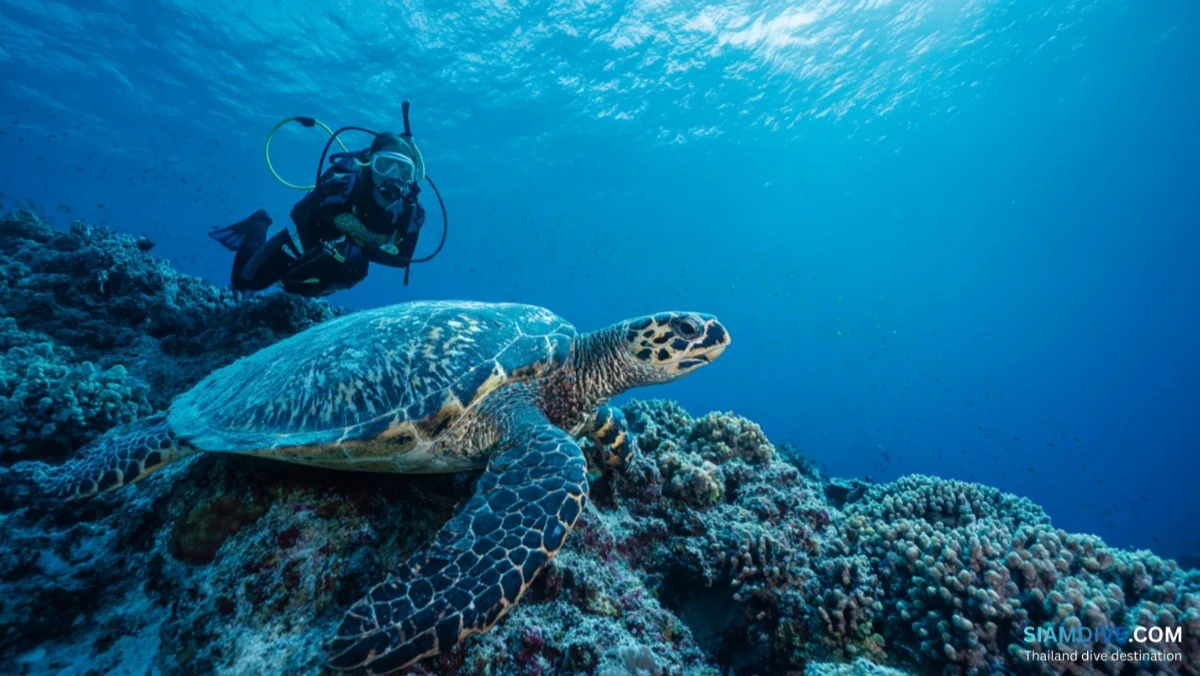
As of late April 2026, the Mu Ko Surin season has fewer than three weeks remaining. The park closes on May 15 alongside the Similan Islands, when the southwest monsoon makes open-water crossings unsafe and the five-month recovery period begins. The Thailand Department of National Parks confirms that this annual shutdown protects the reefs, coincides with sea turtle nesting on the Surin Islands, and gives the coral cover time to regenerate before the next wave of divers arrives in October.
The final weeks carry a tradeoff worth understanding. Visibility can dip below 20 metres as plankton density peaks — the same plankton bloom that draws whale sharks into the horseshoe. Late-April and early-May liveaboard departures out of Khao Lak still run, but berths thin rapidly after Songkran. Anyone planning a visit this season is working against a hard calendar deadline.
The next window opens in mid-October 2026 when both parks reopen and early-season conditions — cooler water, transitional visibility, fewer boats on the mooring — offer a different character at the same site.
For divers weighing whether Richelieu Rock justifies the trip: the site has appeared on global top-ten dive lists for over two decades, and the horseshoe's combination of pelagic potential, macro density, and visual drama is the reason. Even on a moderate-visibility, no-whale-shark day, the purple walls and the residents they shelter make the argument on their own.