HTMS Sattakut Wreck Koh Tao Diving Guide: The Island's Signature Dive
11 เมษายน 2569
HTMS Sattakut is Koh Tao's largest wreck, a 48-meter ex-navy landing craft sunk in 2011. Deck at 18 m, stern at 30 m — here's how to dive it right.
Koh Tao's Only Real Wreck, and the Reason Half the Island Upgrades to Advanced
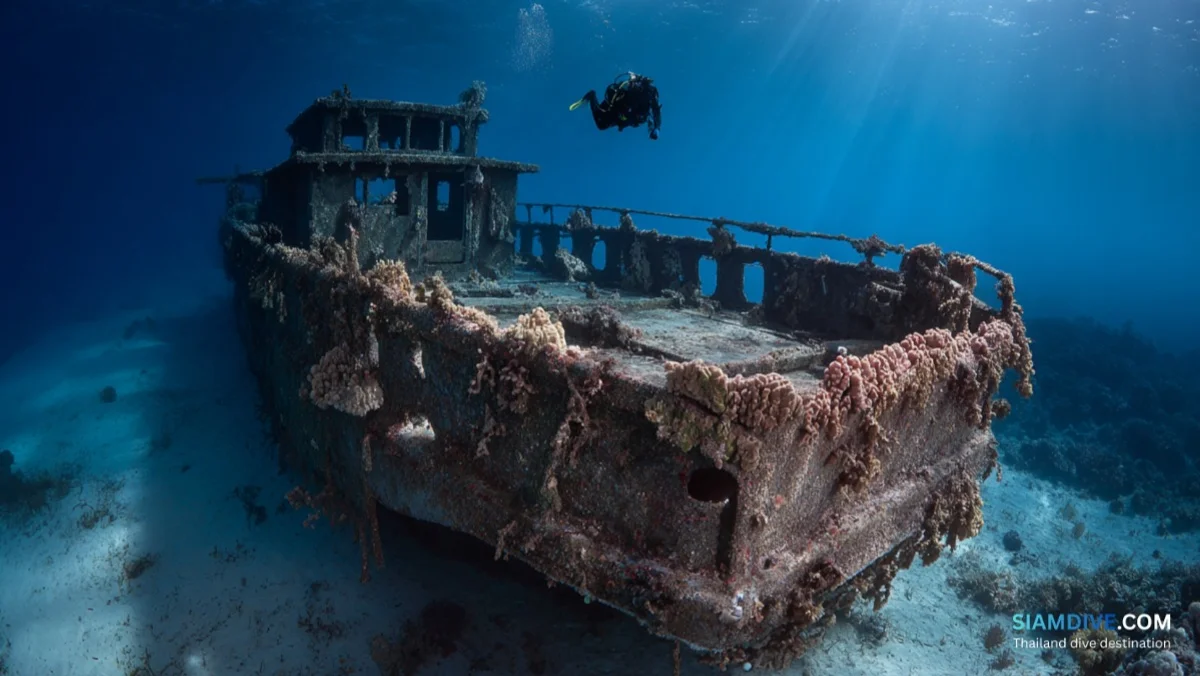
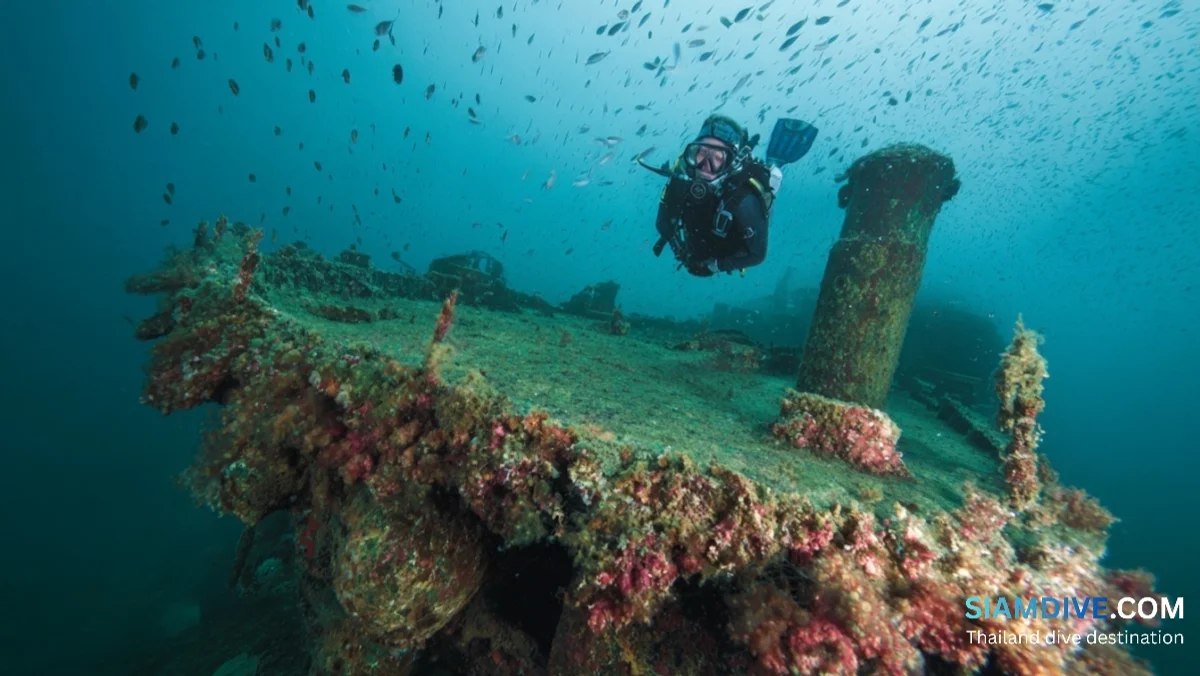
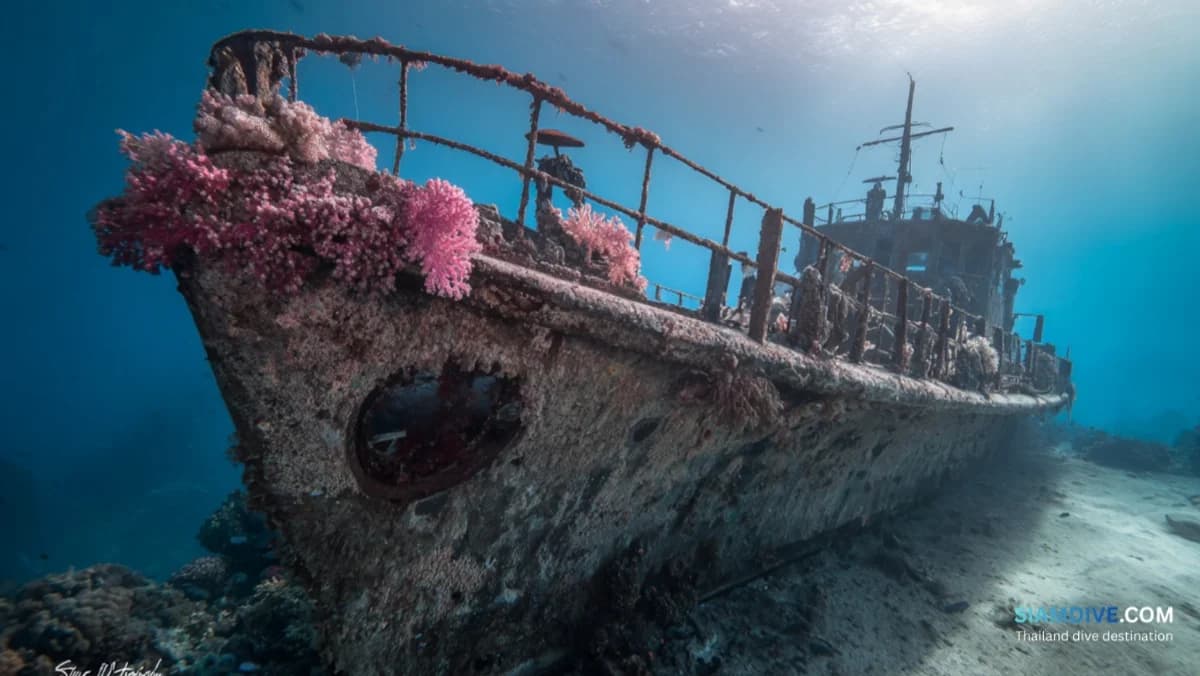
HTMS Sattakut is a 48-meter ex-US Navy landing craft sunk off the west coast of Koh Tao on June 18, 2011. The ship started life as the USS LCI-742 during World War II and spent decades in service with the Royal Thai Navy before the government decommissioned it and dropped it on a sandy bottom near Hin Pee Wee pinnacle as part of an artificial reef program. The wheelhouse sits at 18 meters. The stern touches sand at 30 to 32 meters. It is the largest wreck on Koh Tao and the site most Open Water divers upgrade their card for.
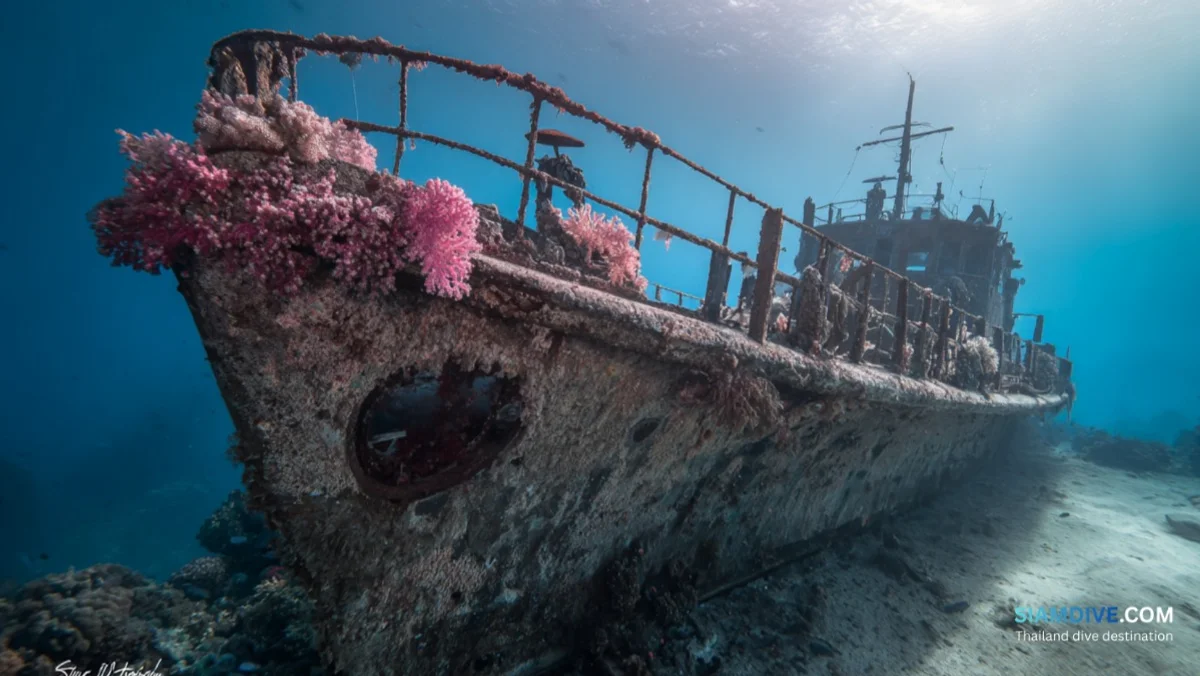
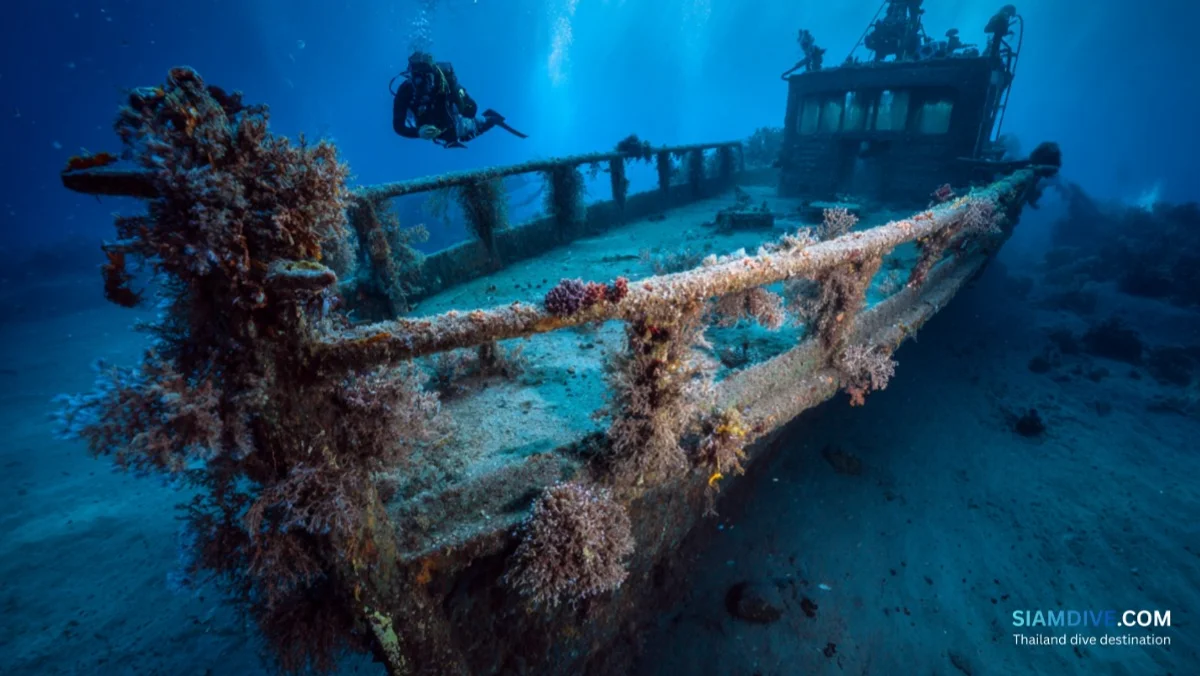
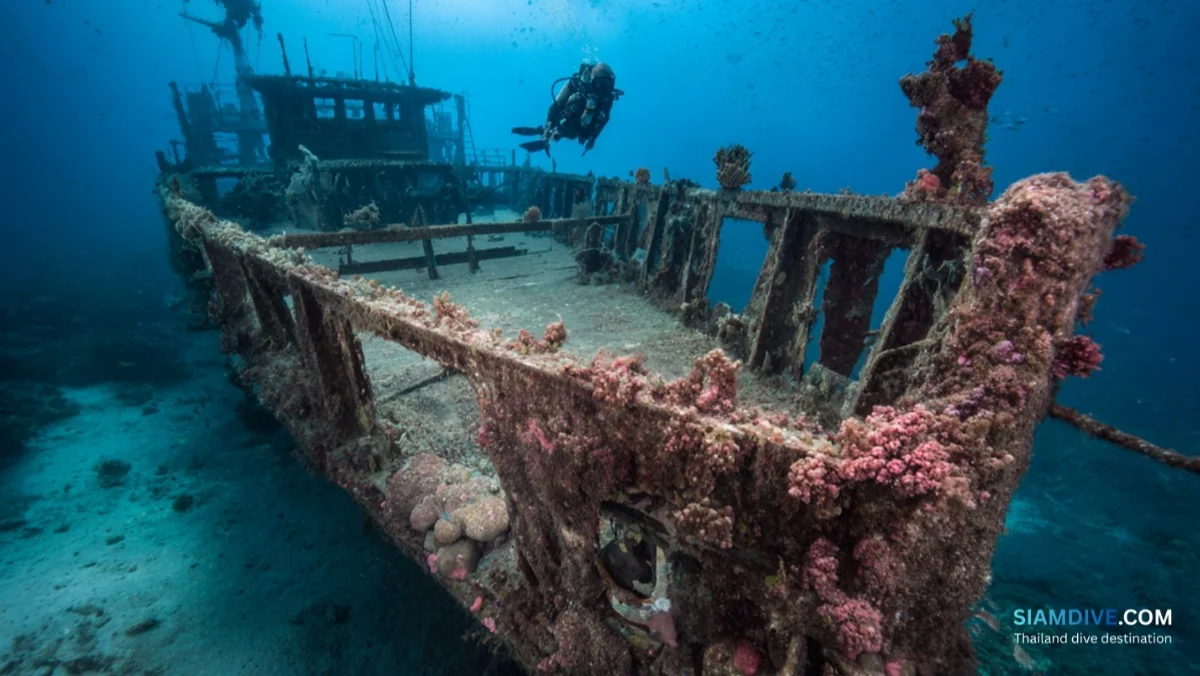
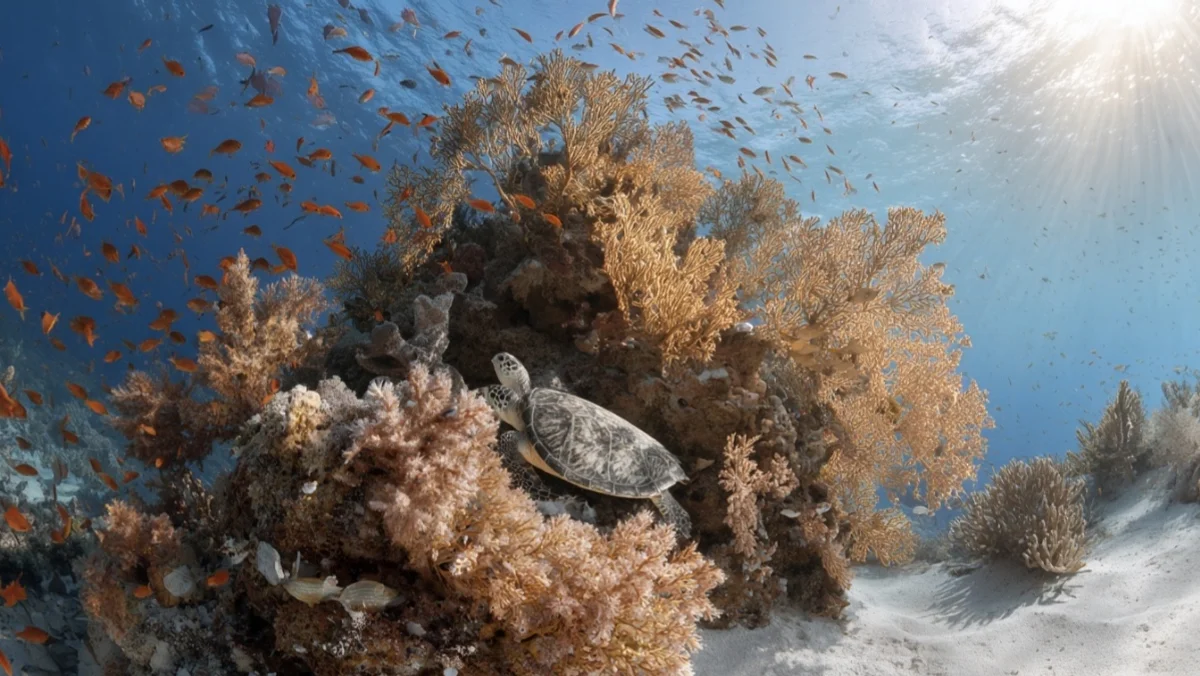
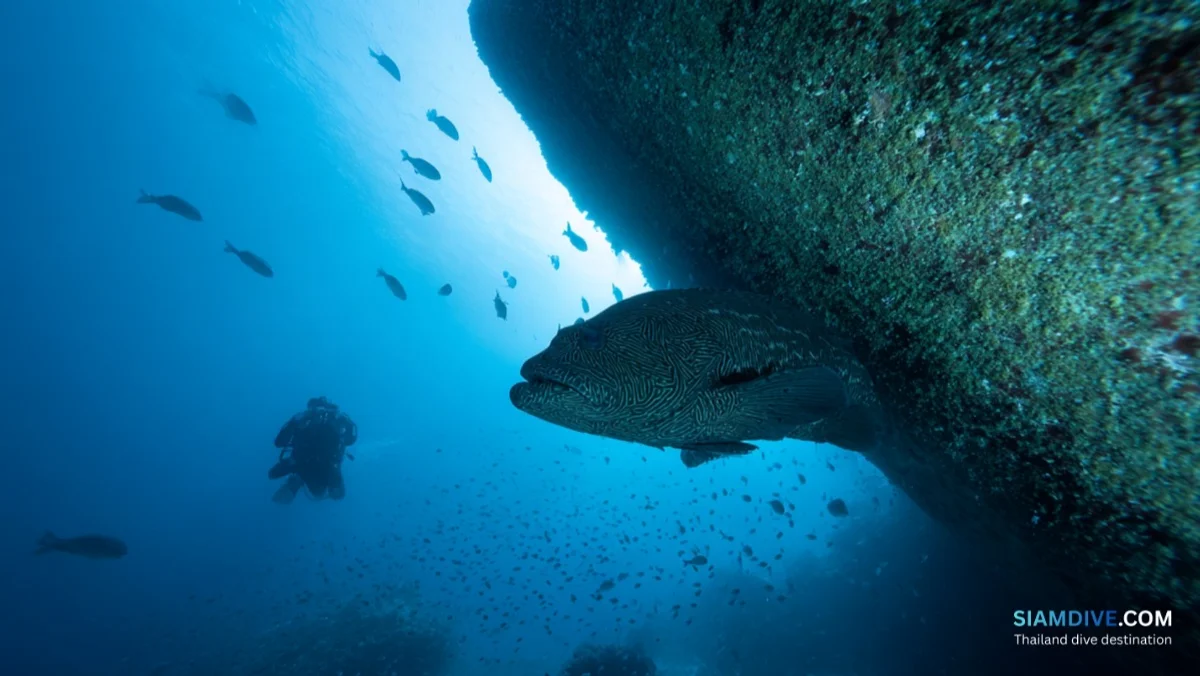
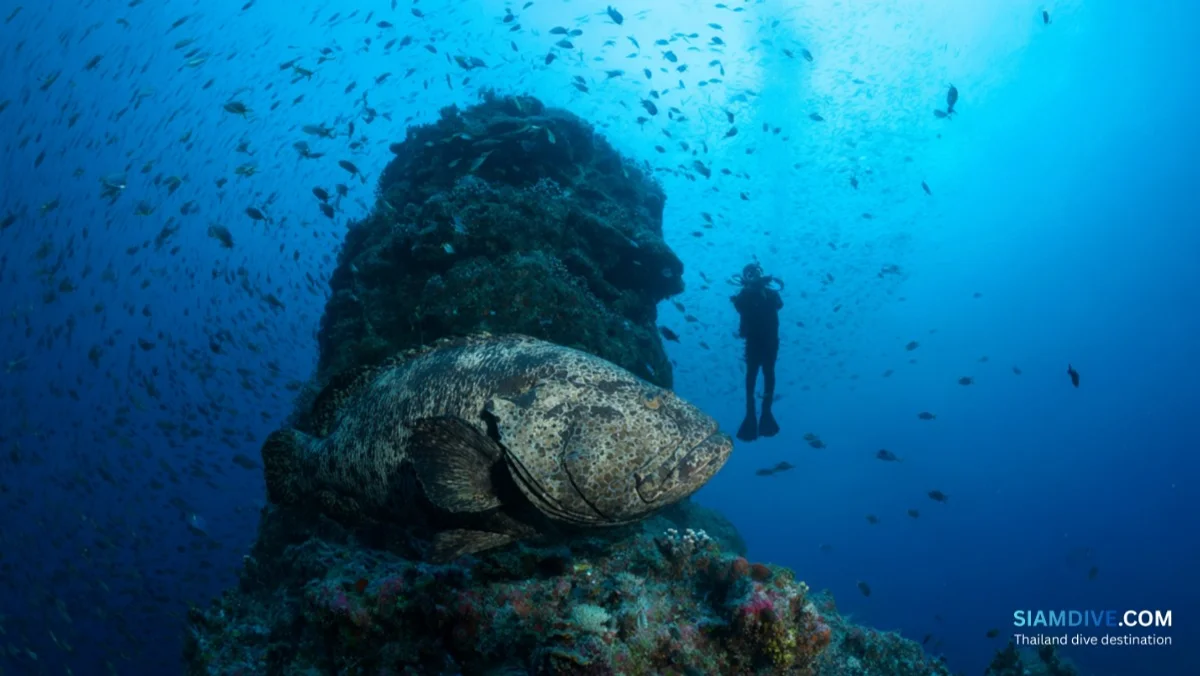
Fifteen years into its underwater life, the Sattakut has settled into the reef around it. Soft coral grows on the railings. A resident giant grouper lives on the bridge. Schools of fusiliers circle the superstructure. The wreck sits upright, which makes navigation easy and penetration possible for qualified divers. It is not the most dramatic wreck in Thailand — that title belongs to the HTMS Chang near Koh Chang — but it is the most accessible real wreck on the Gulf side of the country.
Why the Sattakut Is a Must-Visit for Divers
Most divers come to Koh Tao for shallow coral and get hooked by the wreck. That progression is by design. Dive shops on the island sell the Sattakut as the main reason to upgrade from Open Water to Advanced, because the deck sits at 18 meters — the edge of the OW limit — and the stern at 30, which is exactly the depth that AOW training covers. If you are on Koh Tao and want one specific reason to advance your certification while you are there, this is it.
For divers who already have the AOW card, the Sattakut is the site you pair with Hin Pee Wee for the cleanest two-site day on the west coast. The wreck first at depth, then a safety stop at the shallow pinnacle 30 meters away. For wreck specialty students, it is where every Koh Tao wreck course gets run because the ship has well-planned penetration routes cut before sinking — staircases, corridors, swim-throughs, and open cargo areas that are safe to enter with proper training. It is the rare wreck in Thailand where the wreck course and the wreck dive happen in the same place.
What the Dive Looks Like
You descend the mooring line to the wheelhouse at 18 meters. From there, you can circle the upper deck to see the twin cannons on the bow and stern, look at the portholes from outside, and hang off the railings where the soft coral has taken over. Down the port or starboard side, the main deck opens at 22-25 meters, and then the stern drops to 30-32 meters over the sandy bottom. A typical dive runs 25 to 30 minutes of bottom time at the deeper end, then a slow ascent back along the deck to the wheelhouse for the safety stop.
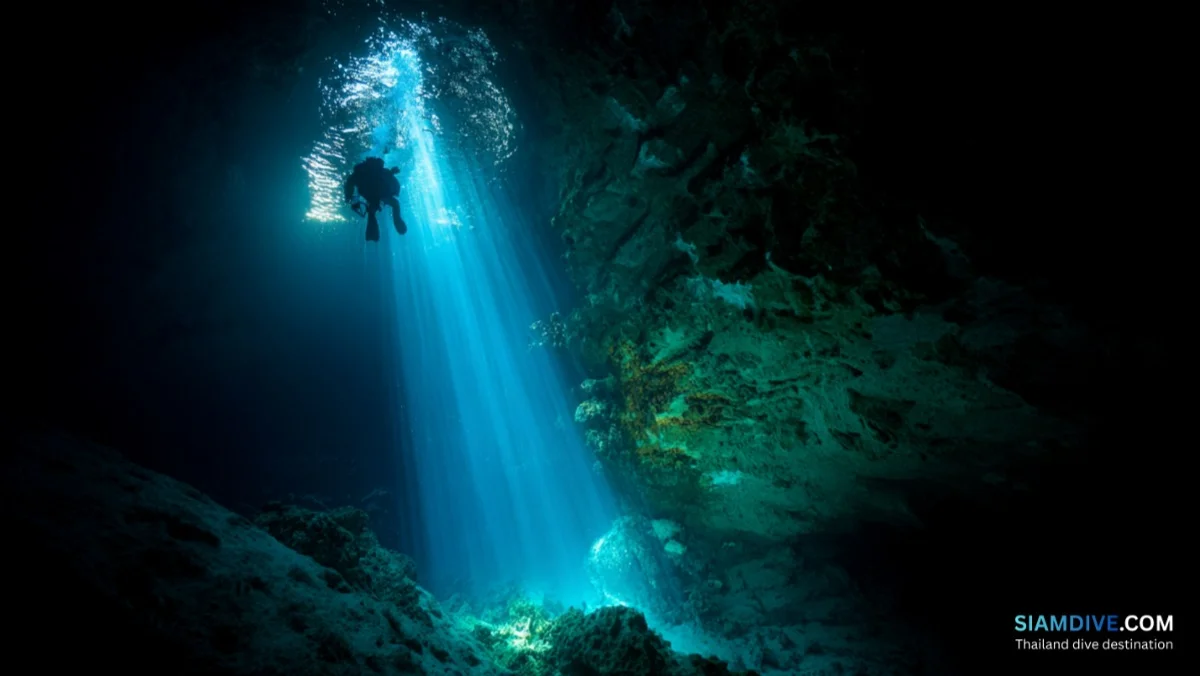
Penetration is possible for qualified divers. The two-level steering cabin is the most interesting entry point — short corridors with good natural light coming through the portholes, and the swim-throughs between cargo areas are wide enough for two divers at a time. You need a wreck specialty card to penetrate formally, but most operators will take AOW divers into the larger open sections under a divemaster's direct supervision. If you want to go deeper into the hull, book the PADI Wreck Specialty course — the Sattakut is the exact wreck the course is designed around.
Marine Life on the Wreck
Fifteen years underwater is enough time for a wreck to grow into its own ecosystem. The Sattakut now hosts:
- A resident giant grouper on the bridge. Same fish every day. The divemasters have named it.
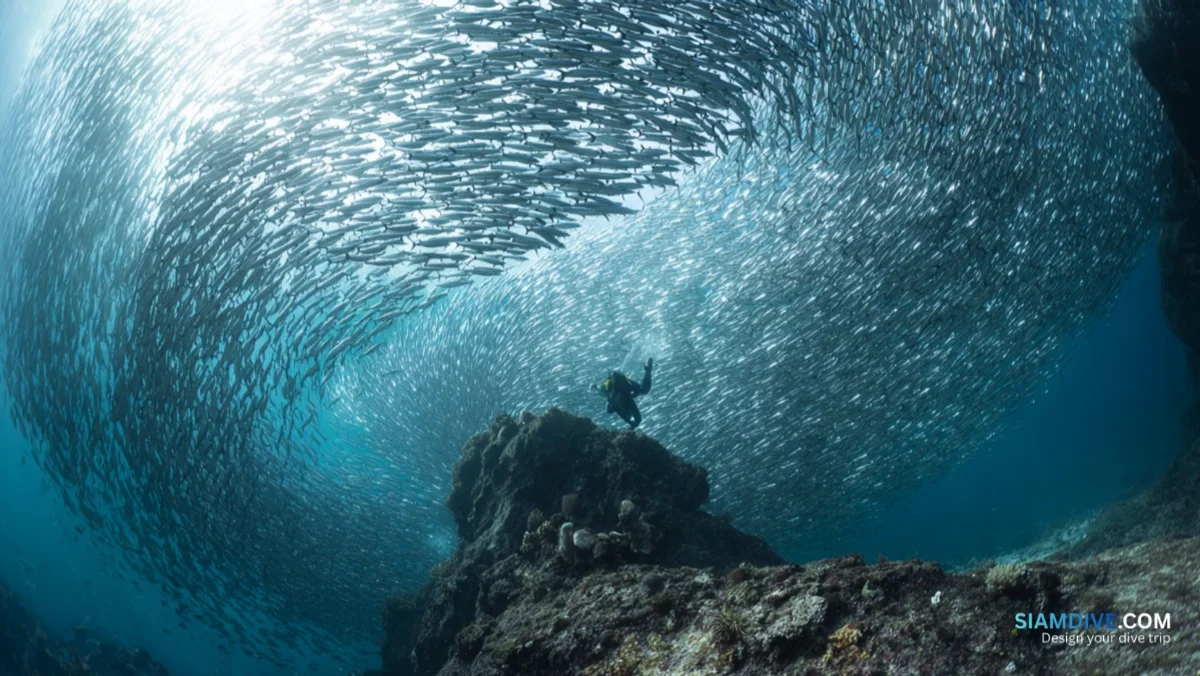
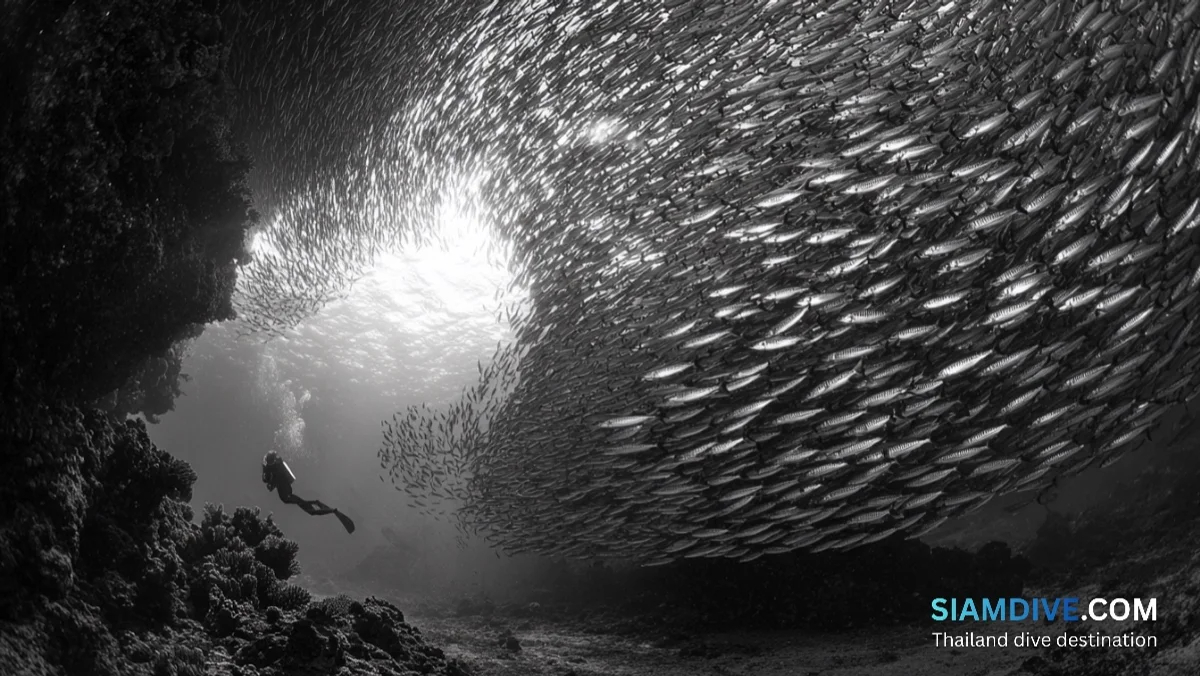
- Schools of fusiliers and yellowtail barracuda circling the superstructure, especially in the mornings when the current picks up.
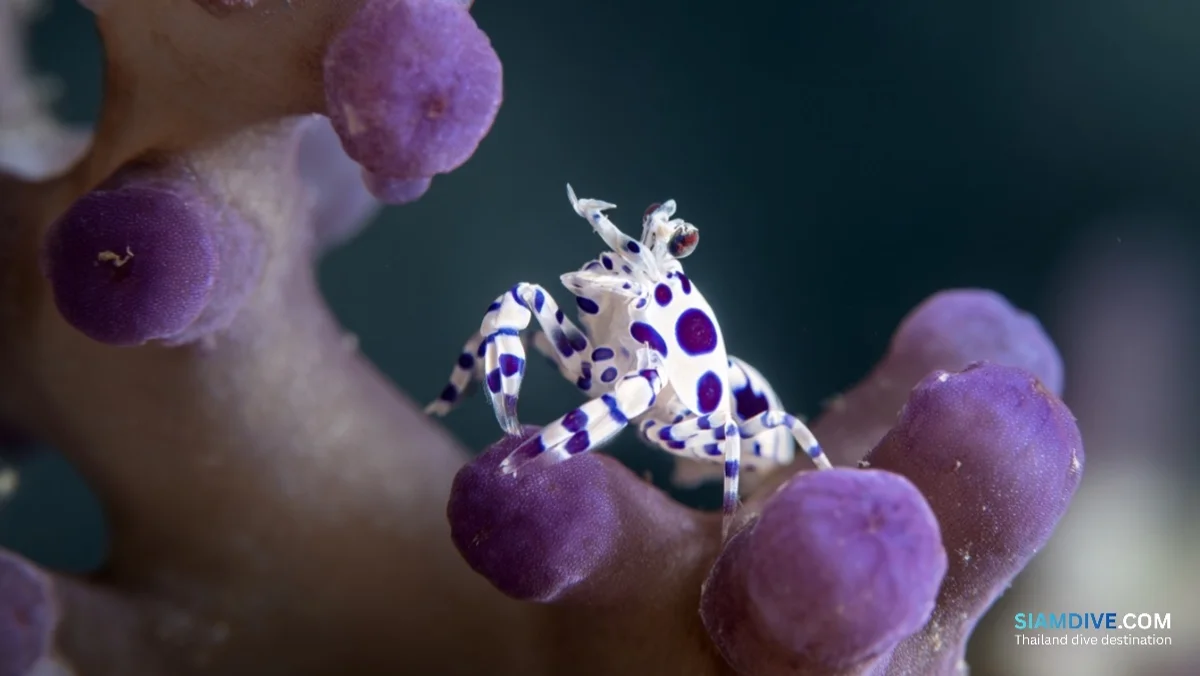
- Durban dancing shrimp on the interior staircases. Delicate, translucent, and specifically a night-dive or torchlight creature.
- Scorpionfish hiding near the portholes and door frames. They are almost impossible to see without a guide pointing them out. Watch your hand placement on the wreck.
- Moray eels in the cargo area crevices, often obvious from outside.
- Blennies and small crabs in the deck structure.
- Soft coral and anemones growing on the railings and superstructure — good subjects for wide-angle photography with the wreck silhouette in the background.
- Batfish, trevally, and the occasional triggerfish cruising the mid-water around the wreck.
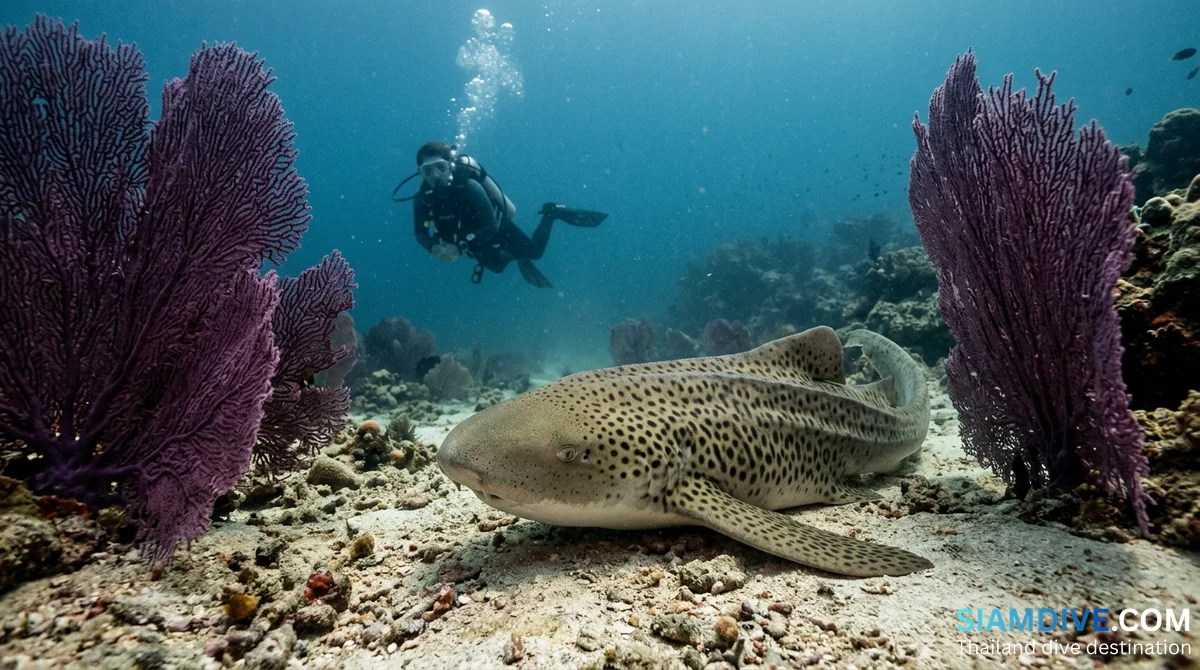
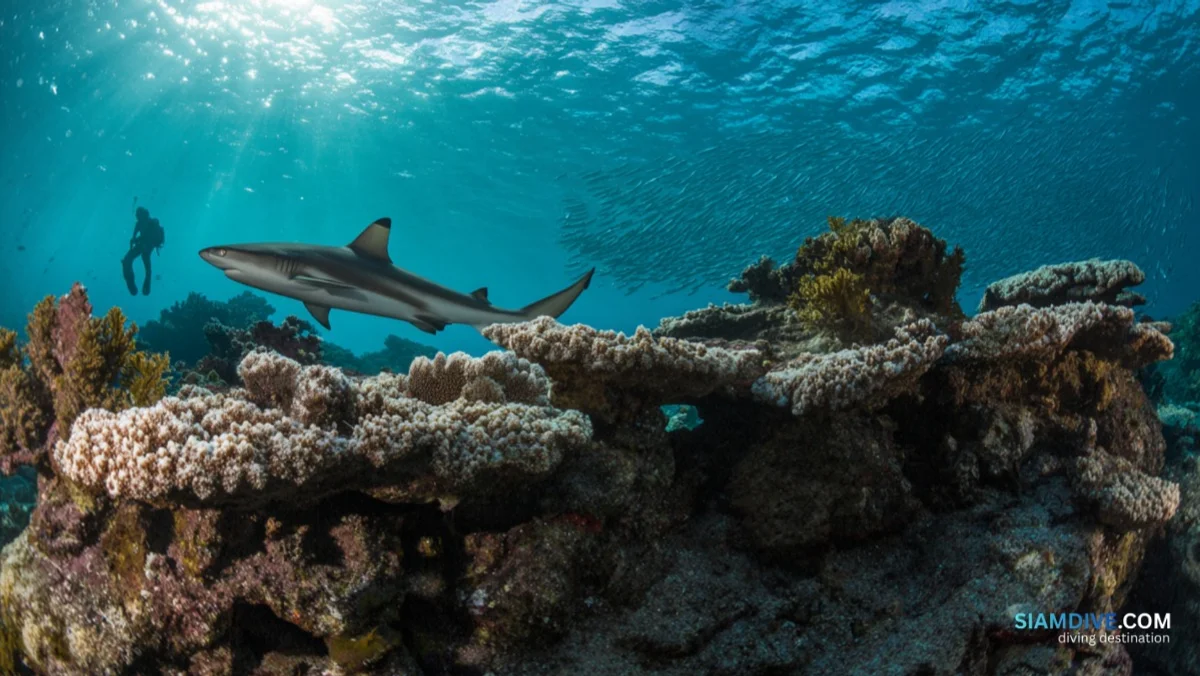
- Whale sharks and reef sharks seasonally, usually on the way past. Not residents.
Best Time to Dive the Sattakut
The Sattakut is best from March through September when visibility runs 20 to 30 meters, surface conditions are calm, and water temperature sits at 28-30°C. March and April are peak whale shark weeks — if one is going to pass through, it happens in this window, and the Sattakut is on the route from Hin Pee Wee. July and August have the clearest average visibility but also the most crowded boats in the year.
February and October-November are shoulder seasons — 10-20 meter visibility, lower prices, fewer boats on the mooring line, and still very divable. The November to February monsoon can drop visibility to 5-15 meters and make the crossing rough, but Koh Tao's west coast is usually still dive-able most days. If you are booking specifically to dive the wreck, aim for March to September. If you are already on the island in the wet months and get a calm day, take the trip.
How to Get There
You need to be on Koh Tao. From Bangkok:
- Fly + ferry: Bangkok to Koh Samui on Bangkok Airways (about 1 hour), then Lomprayah or Seatran catamaran to Koh Tao (1.5-2 hours). Fastest option.
- Train + ferry: Overnight train to Chumphon (about 8 hours), then Lomprayah catamaran to Koh Tao (1.5 hours). Best for comfort vs cost.
- Bus + ferry: Southern Bus Terminal to Chumphon (6-7 hours), then ferry. Cheapest.
Once on the island, the Sattakut is 15 to 20 minutes by boat from Mae Haad pier, just past the west coast pinnacles near Sairee Beach. Any dive shop on the island runs it — Big Blue, Sairee Cottage, Ban's, Crystal, LB Diving, and most of the PADI 5-star centers have it in their standard two-tank rotation. Two-tank trips with the Sattakut as one dive run 2,000 to 2,800 baht depending on the operator, gear rental, and whether your second dive is Hin Pee Wee or a shallower site. Wreck Specialty courses are usually 8,000 to 11,000 baht for two days.
Tips for Diving at the Sattakut
- Advanced Open Water is the practical minimum. OW divers can join as an adventure dive on the deck at 18 meters, but you miss the best of the wreck — the stern, the cargo areas, and the deeper swim-throughs.
- Bring a torch. Even the external exploration is much better with a torch because the portholes and doorways hide scorpionfish and shrimp you cannot see in ambient light. For any penetration, a torch is not optional.
- Watch your hands on the wreck. Scorpionfish sit near the portholes and door frames, and they are perfectly camouflaged. Keep your hands off the railings unless you can see exactly what you are gripping.
- Use Nitrox if you are qualified. The Sattakut is the exact profile where Nitrox pays off — 18 to 30 meter depth range, 30 minute bottom time, and the extra margin on your no-deco limit means you actually get to explore instead of watching your computer.
- Pair it with Hin Pee Wee. The small pinnacle 30 meters away is the natural second site — shallower, easier on your deco load, and a nice contrast to the wreck. Most operators default to this pairing.
- Take the Wreck Specialty course here. If you have ever wanted the PADI Wreck Specialty card, this is the dive site to do it at. The penetration routes are well-designed, the visibility is good, and the instructors run the course dozens of times a year.
- Do not touch the wreck. Marine growth is fragile. Hovering with good buoyancy over the deck rather than resting on it is part of the etiquette here, and it also keeps you off the scorpionfish.
- Book in the morning. Mid-afternoon boats hit the wreck when visibility has dropped and other divers have stirred up the silt. Morning is cleaner.
The Koh Tao Wreck That Upgrades Your Dive Logbook
HTMS Sattakut is not just a wreck dive — it is the reason a lot of Koh Tao divers upgrade to Advanced and then to Wreck Specialty in the first place. Fifteen years into its artificial reef life, the ship is intact, the marine life has settled in, and the pairing with Hin Pee Wee gives you the single best two-site day on the west coast of the island. If you are booking a Koh Tao trip and you have at least 15 logged dives, put the Sattakut on the schedule. Book through siamdive.com — we work with the shops that run the wreck as a standard trip, not an upsell, and the ones that offer Wreck Specialty courses on the same hull. It is the wreck that makes Koh Tao more than a training island.