Samaesan Wreck Diving: Sattahip's Quieter Alternative to Pattaya
8 เมษายน 2569
HTMS Hardeep, drift sites at Koh Chuang and Koh Chan, and a 2-hour drive from Bangkok. The honest guide to diving Samaesan and Sattahip.
Samaesan: The Quieter Side of Bangkok Day-Trip Diving
If you've already done Pattaya twice and you're looking for something with fewer boats and more current, Samaesan is the next stop south. The fishing village sits at the southern tip of the Sattahip district, about 180 kilometres from central Bangkok and roughly 30 kilometres past Pattaya. The drive is barely longer than to Pattaya itself, but the dive scene is a different animal — fewer day-trippers, smaller boats, and a chain of six islands that don't see the same volume of fins kicking sand around.
This is the area divers come for once they've outgrown the Koh Larn cluster. Currents are stronger, the marine life list is longer, and there's a WWII-era cargo wreck called HTMS Hardeep that anchors the whole region. It's not a beginner playground. It's where you go after your Open Water card has a few stamps in it.
HTMS Hardeep — The Wreck That Defines Samaesan
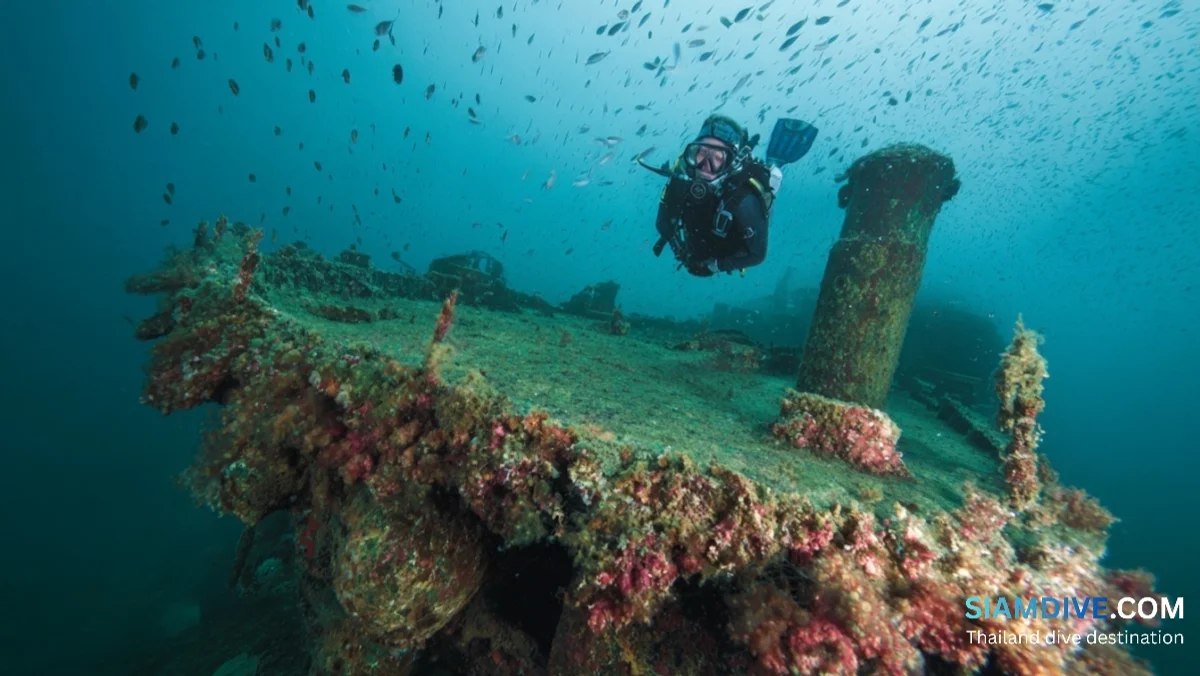
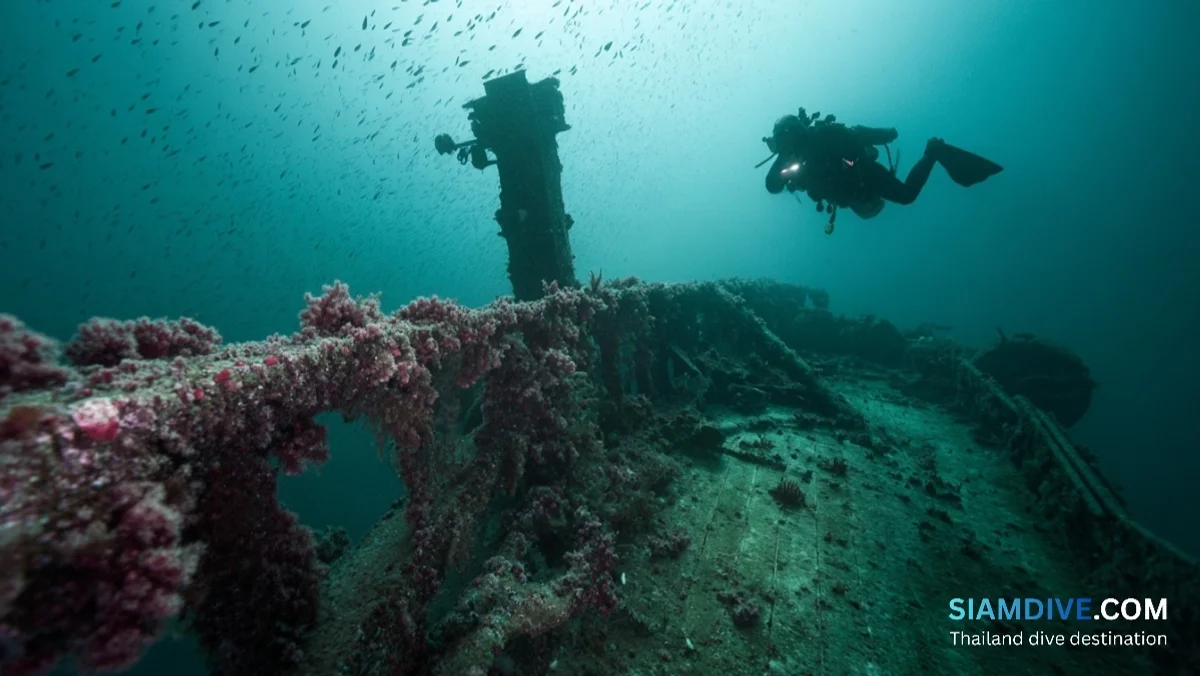
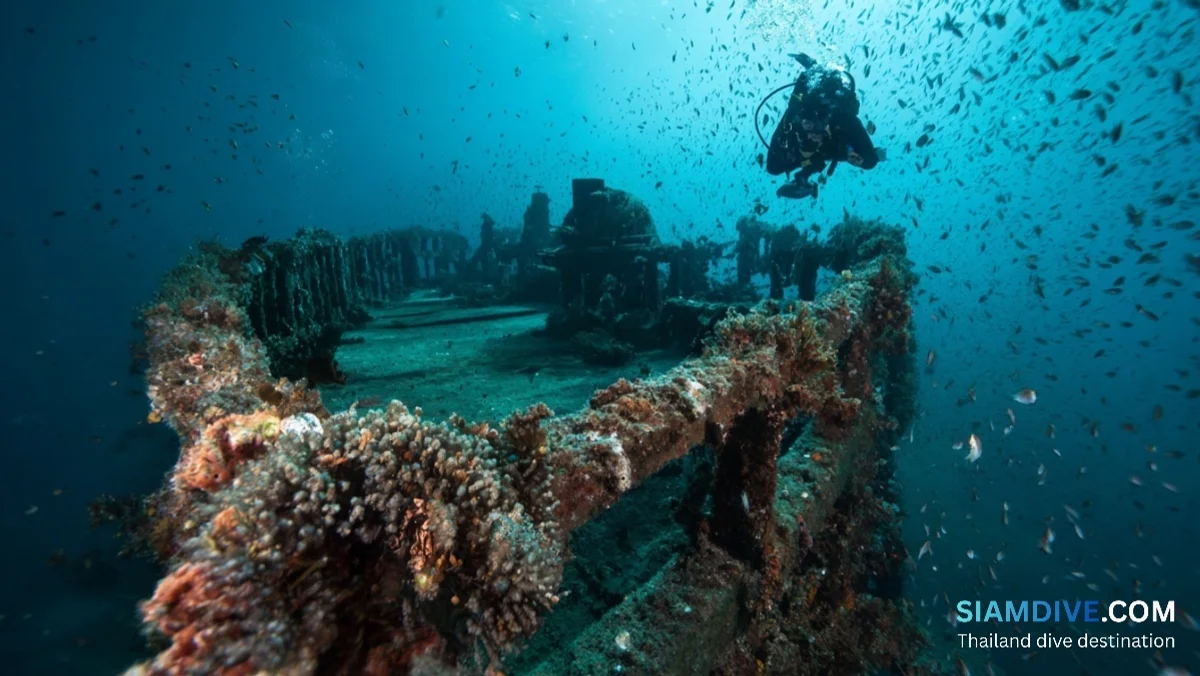
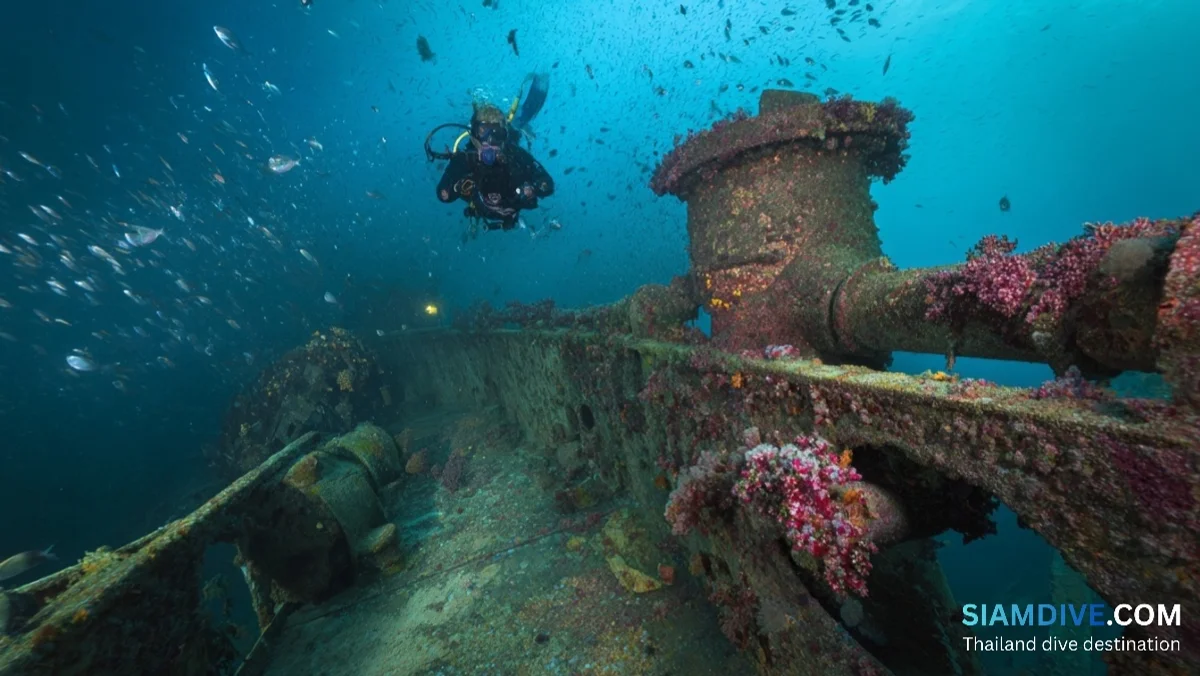
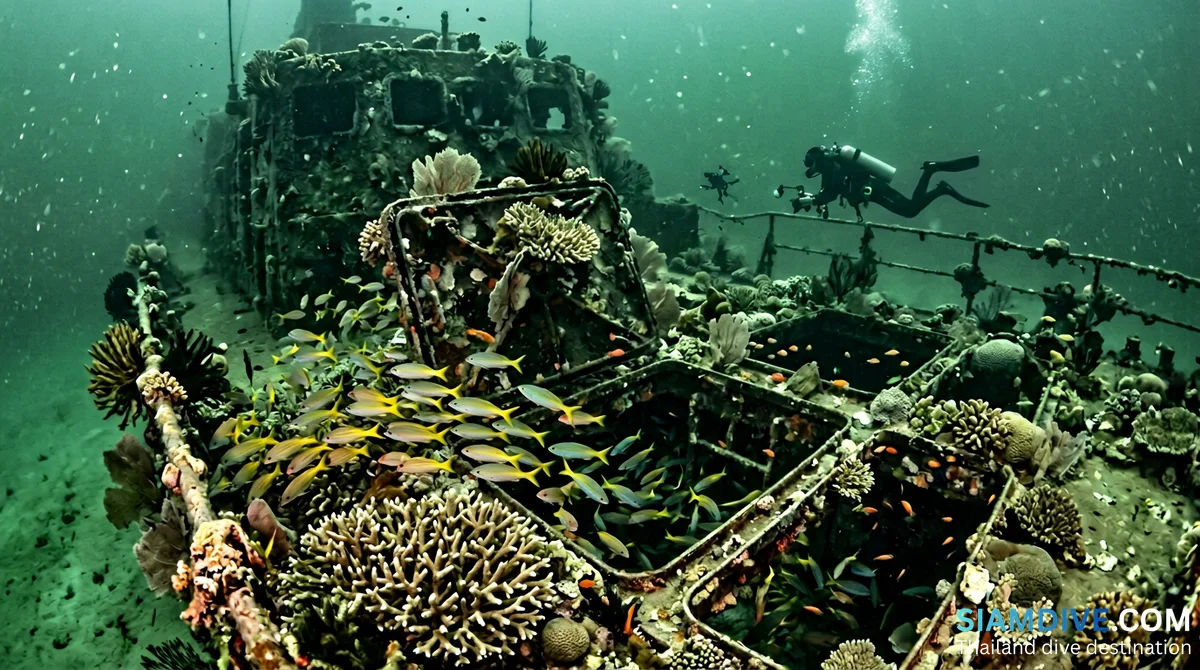
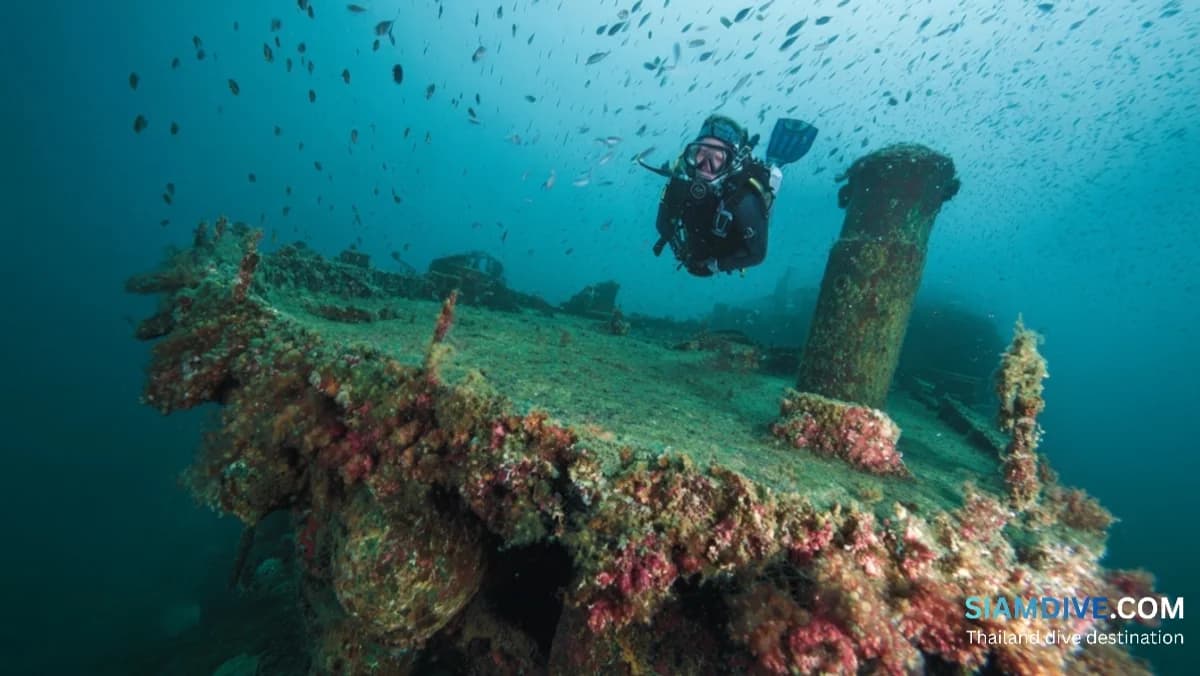
HTMS Hardeep was originally the SS Suddhadib, a 60–80 metre coal-fired cargo and passenger steamer. The story of how she ended up on the seabed is murky — most accounts point to either a 1941 bomb attack during the Franco-Thai conflict or a sinking under Japanese use during WWII. Either way, she now lies on her starboard side off Koh Chuang at a maximum depth of around 26 metres, with the shallowest part of the hull at about 16 metres.
What makes her interesting isn't the depth — it's the penetration. The cargo hold known as "the Cathedral" is large, open, and atmospheric, with light shafts cutting through cracks in the hull. The engine room still has its crankshaft visible. Experienced wreck divers can navigate the entire deck and several internal compartments, though anything beyond surface penetration deserves a Wreck Specialty card and a guide who knows the layout.
Heads up: there are unexploded bombs in the immediate area that the Thai Navy has marked off. Don't go wandering. Stay on the wreck and listen to your divemaster.
The Reef Sites Around Koh Chuang and Koh Chan
Samaesan has six main islands, but most diving happens around two of them — Koh Chuang (sometimes spelled Koh Chang, not to be confused with the larger Koh Chang near Cambodia) and Koh Chan. Both are uninhabited, both have healthy reef systems on their sheltered sides, and both can deliver 15–20 metre visibility on a calm day.
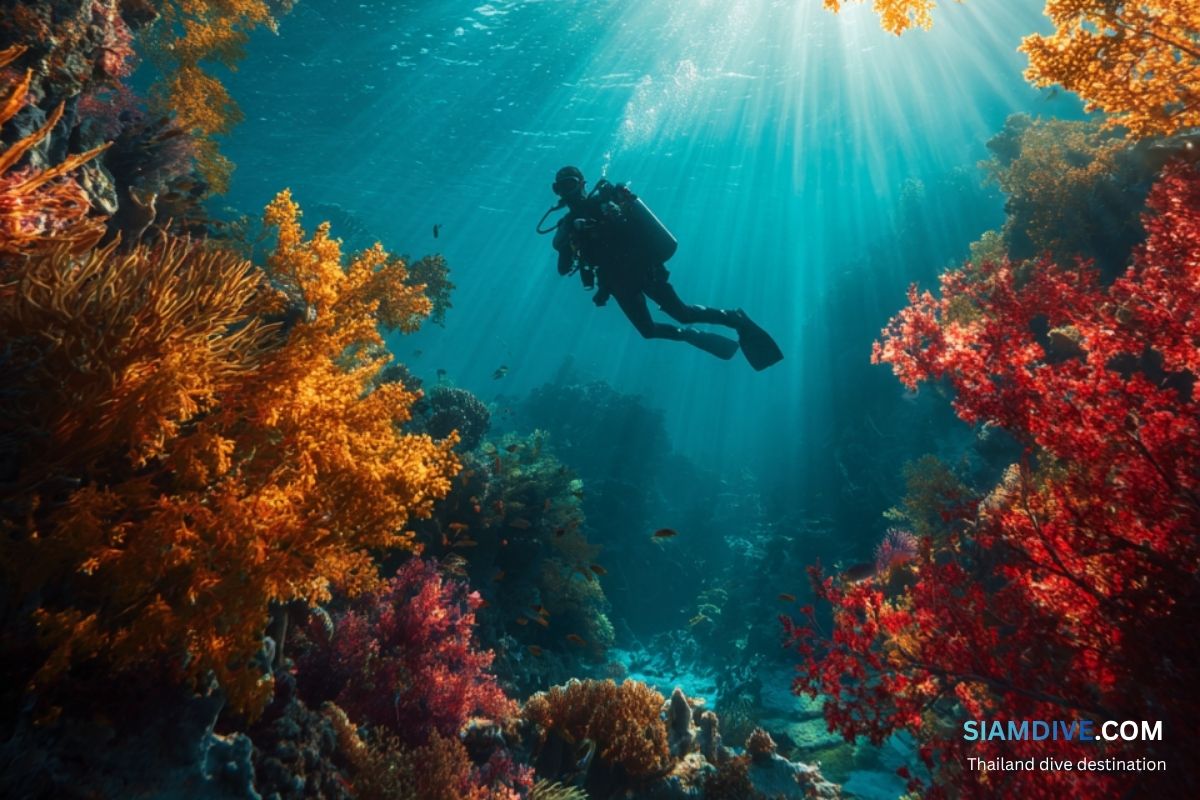
The standout features are the rock formations — pinnacles, walls, and granite boulder structures that drop from 5 to 20 metres. The two sister rocks of Koh Ron Khon and Koh Ron Nang are famous locally as drift dive sites where the current rips through on incoming tides. On slack high tide they're peaceful coral gardens; an hour later the same site can be a drift adventure where you hold on, let go, and fly past walls of soft coral.
Some bleaching and historic anchor damage show on certain sections, but the macro life and fish density on the better sites still hold up well against most Gulf of Thailand destinations.
Marine Life You Should Expect
The bigger reason divers prefer Samaesan over Pattaya is the chance of larger encounters. The list isn't guaranteed on any single dive, but over a few visits you can reasonably expect:
- Sharks — bamboo sharks resting under ledges, occasional blacktip and tawny nurse sharks on the deeper sites
- Turtles — hawksbill turtles are the most common, sometimes feeding right on the reef in front of you
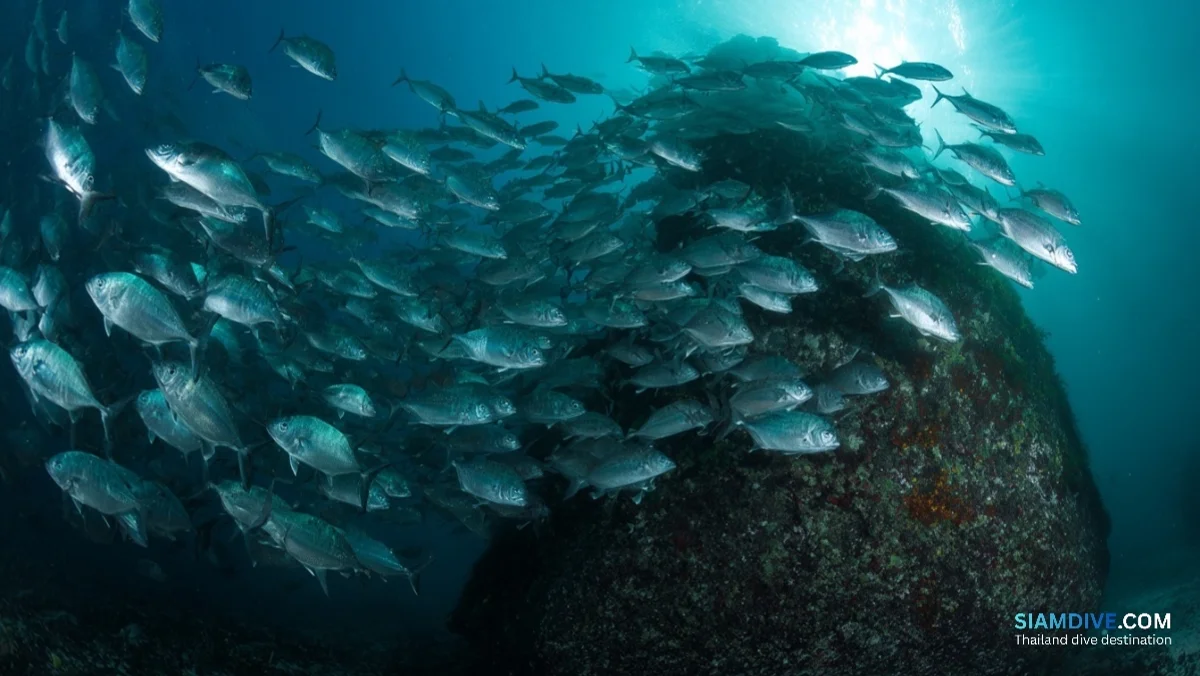
- Pelagic schools — trevallies, barracudas, and fusiliers passing the pinnacles on the current
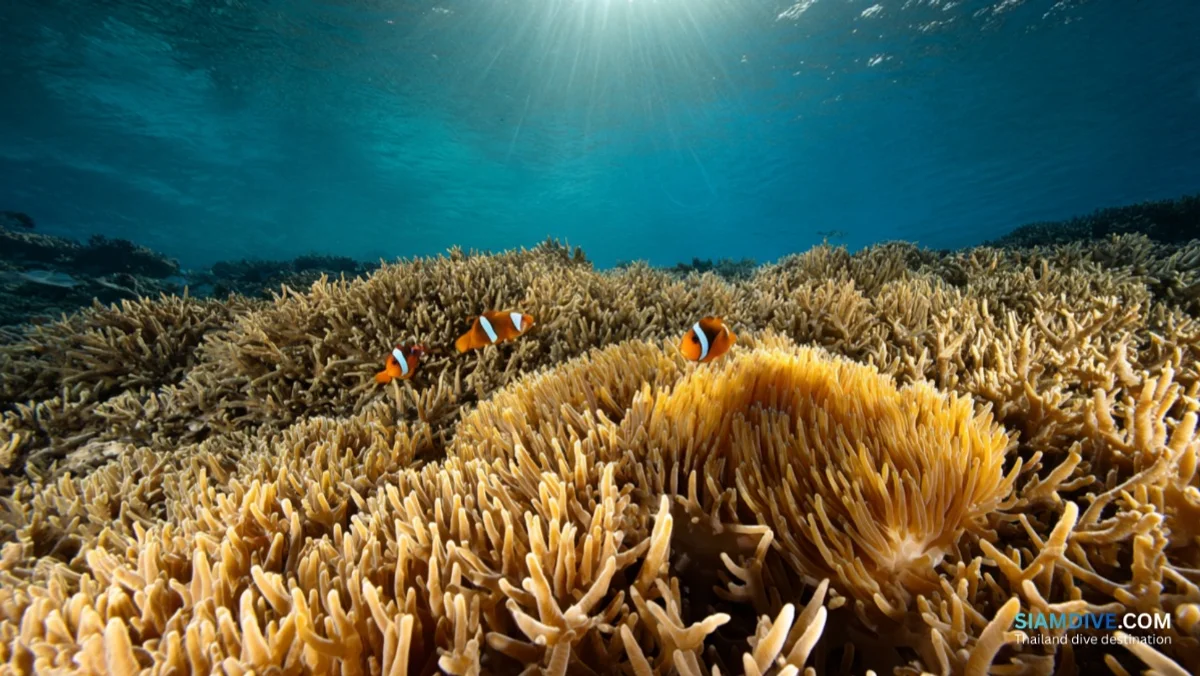
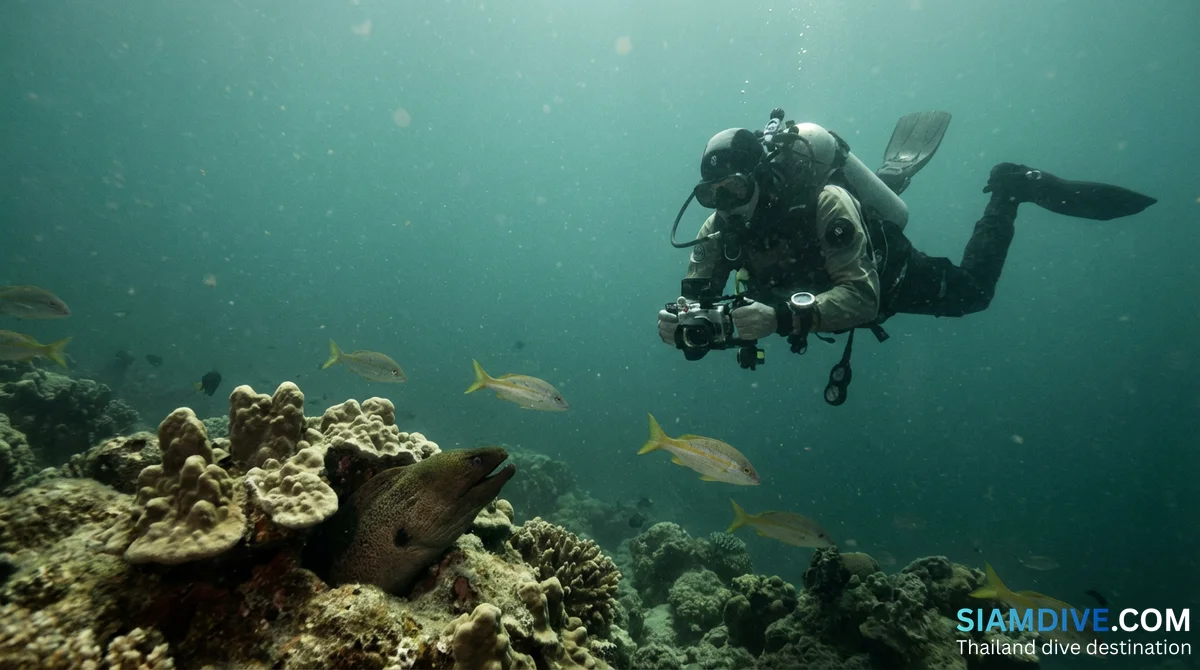
- Macro — porcelain crabs in anemones, whip coral shrimps, nudibranchs in serious numbers, and the occasional well-camouflaged scorpionfish
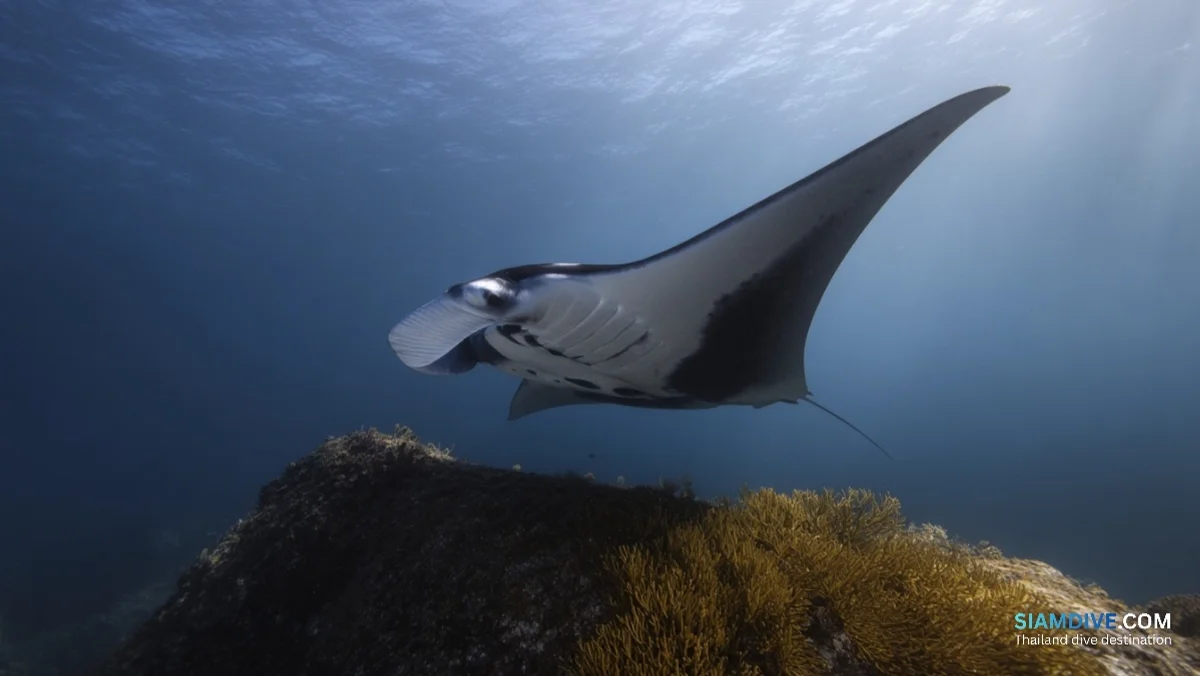
- Rays — blue-spotted stingrays on the sand patches, and very rarely a passing eagle ray
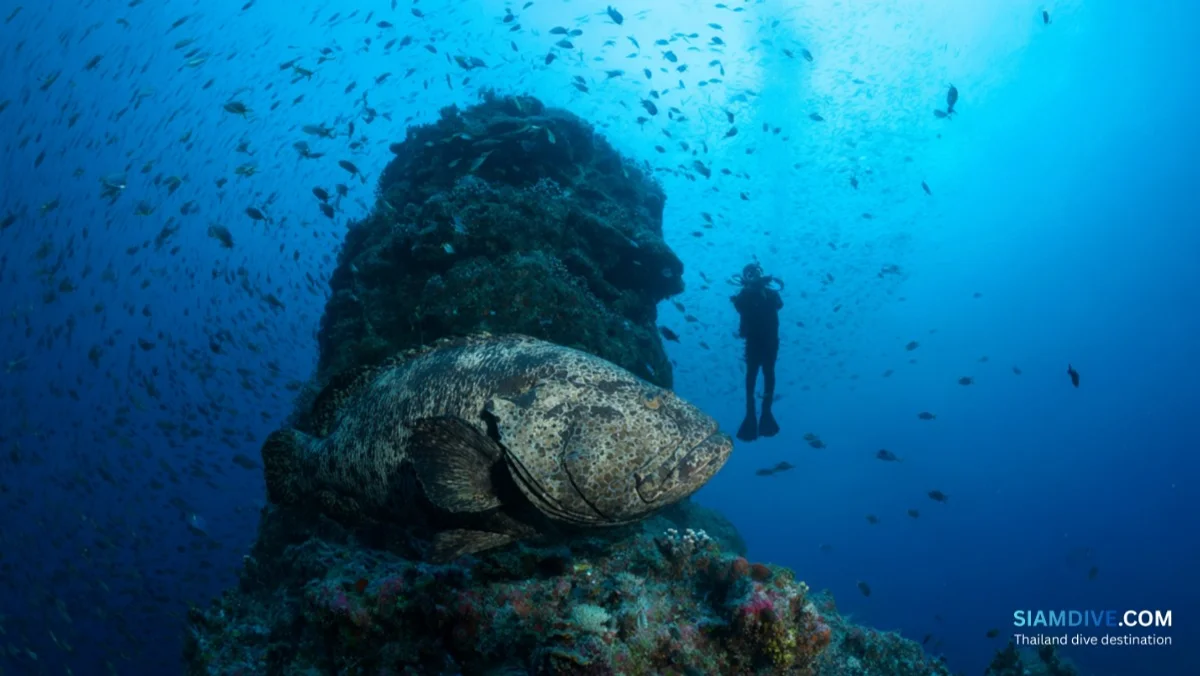
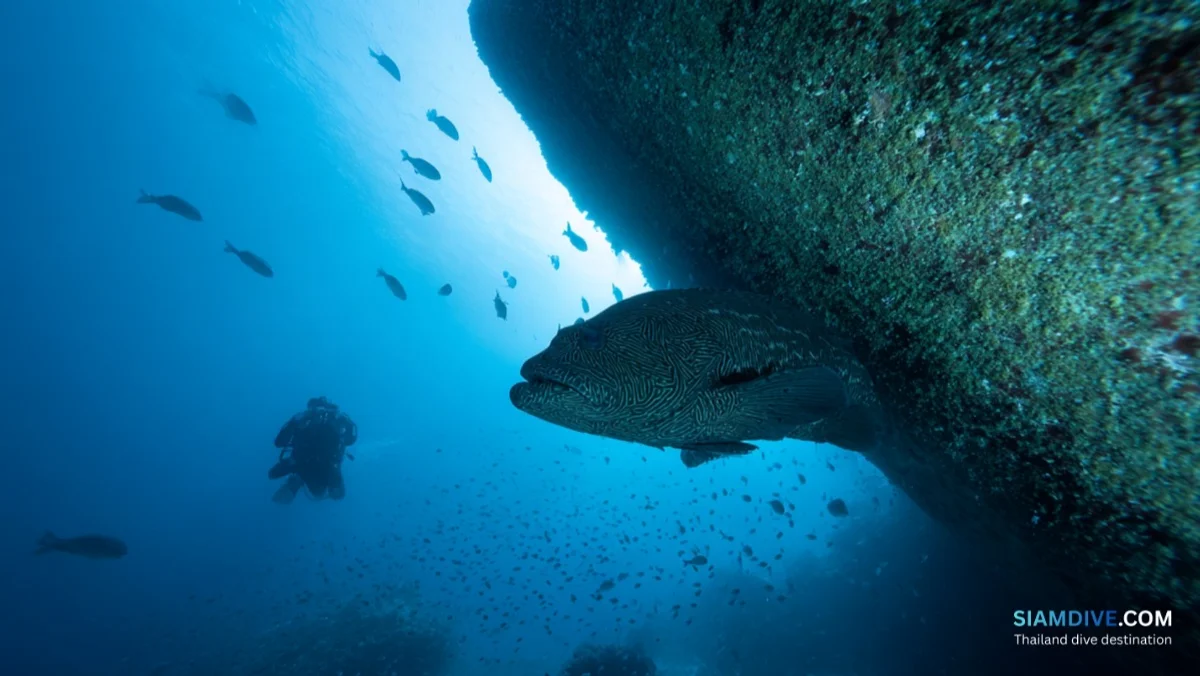
The HTMS Hardeep itself attracts a separate crowd — groupers, batfish drifting in the cargo holds, sweetlips lined up under the hull, and cuttlefish hunting in the rigging.
Conditions, Currents and the Tide Rules
Samaesan diving is built around tide tables. The rule of thumb most local guides follow is straightforward: dive on slack high tide for the calm reef experience, dive on the incoming or outgoing for drift action. Visibility tends to be best on slack high or on a dropping tide — anywhere from 10 to 20 metres on a good day, occasionally less when the sediment kicks up.
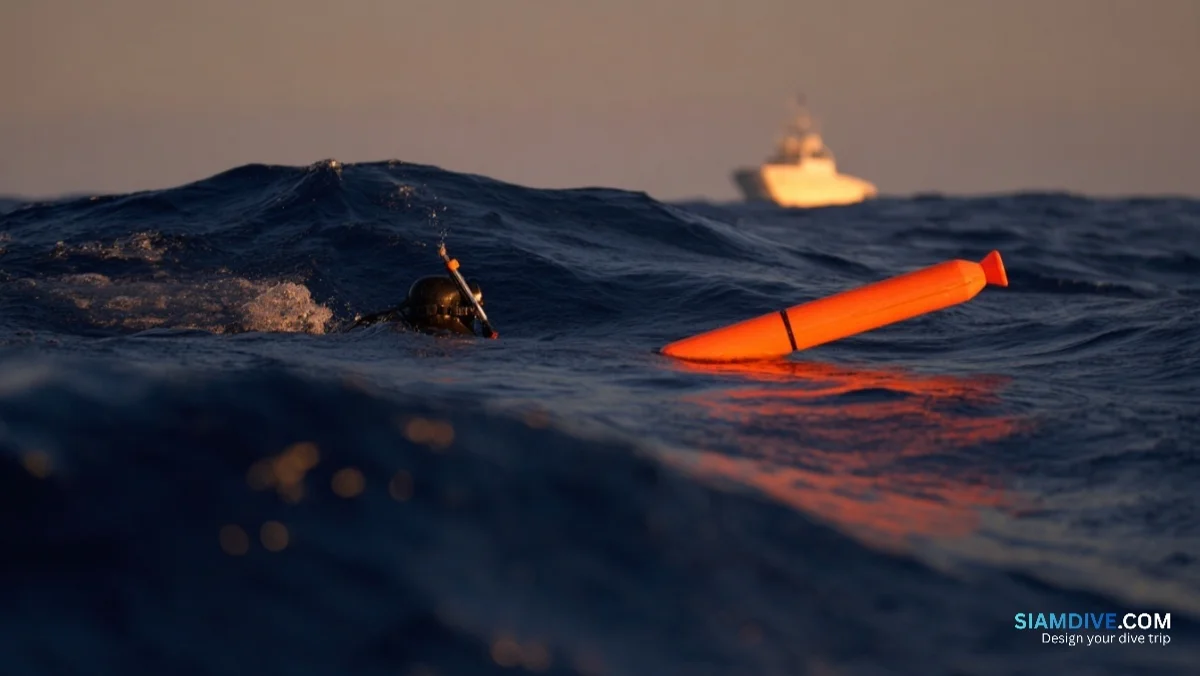
Currents here are not gentle. On a strong tidal flow you can be pushed several hundred metres in one dive, which is exhilarating if you're prepared for it and uncomfortable if you're not. If you're newly certified, ask your dive shop specifically which sites they're running and whether the tide is right for your level.
Water temperature stays at 27–30°C year-round. A 3 mm wetsuit is enough most of the year, though some divers wear a 5 mm in January and February when the surface cools slightly.
How to Get to Samaesan from Bangkok
Samaesan is closer to Bangkok than you'd think — about 2 hours by car if traffic cooperates. Your options:
- Driving — Take Motorway 7 toward Pattaya, then continue south on Sukhumvit Road (Highway 3) past Pattaya to the Sattahip district. The dive shops in Samaesan and Sattahip are signed off the main road. Total drive: 2–2.5 hours from Bangkok.
- Bus — From Ekkamai or Mo Chit to Sattahip (210–410 THB, 2 hours 40 minutes to 3 hours 50 minutes), then a local songthaew or motorbike taxi to Samaesan village.
- Minivan — From Ekkamai to Sattahip is around 210–270 THB and takes about 2.5 hours.
- Booking through a Pattaya operator — Several Pattaya dive centres include Samaesan trips in their schedule, particularly for HTMS Hardeep. They handle all the transport from your hotel.
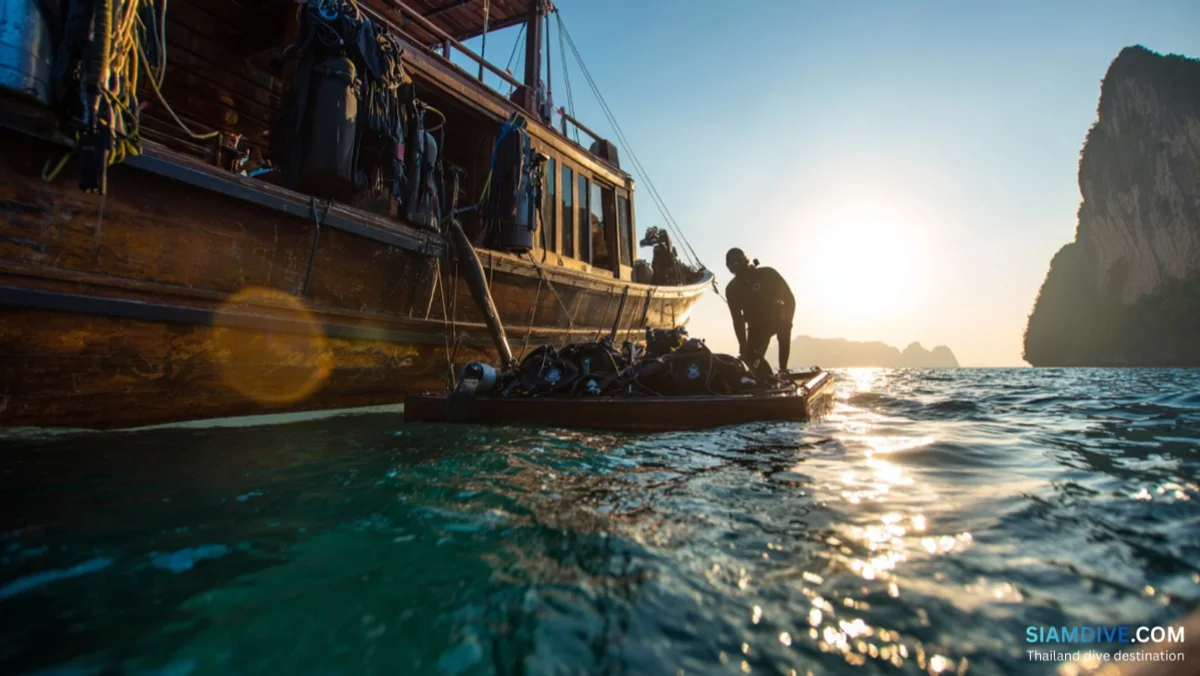
There aren't many dive shops actually based in Samaesan village itself. Most dive trips are run by Pattaya-based operators who drive south for the day, or by Sattahip operators with their own pier. Either works.
Booking, Certifications and What to Bring
For HTMS Hardeep specifically, an Advanced Open Water certification is the minimum and a Wreck Specialty is strongly recommended if you want to do penetration. For the reef sites at Koh Chuang and Koh Chan, Open Water is enough on slack tide, but anything resembling a drift dive really needs Advanced or a guide who can manage less experienced divers in current.
Standard Samaesan day-trip pricing runs 3,000–4,500 THB for two dives, gear included, lunch on the boat. That's slightly more than Pattaya because the operator overhead is lower-volume. Nitrox is available at most of the established centres if you want longer bottom times on the wreck.
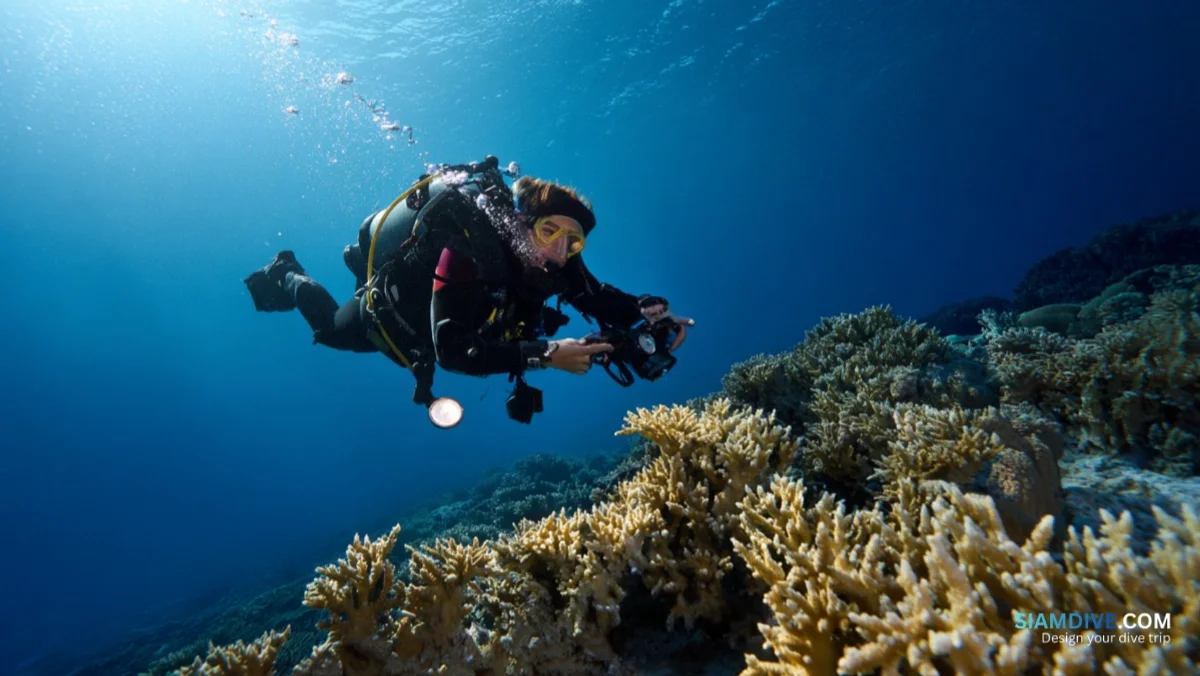
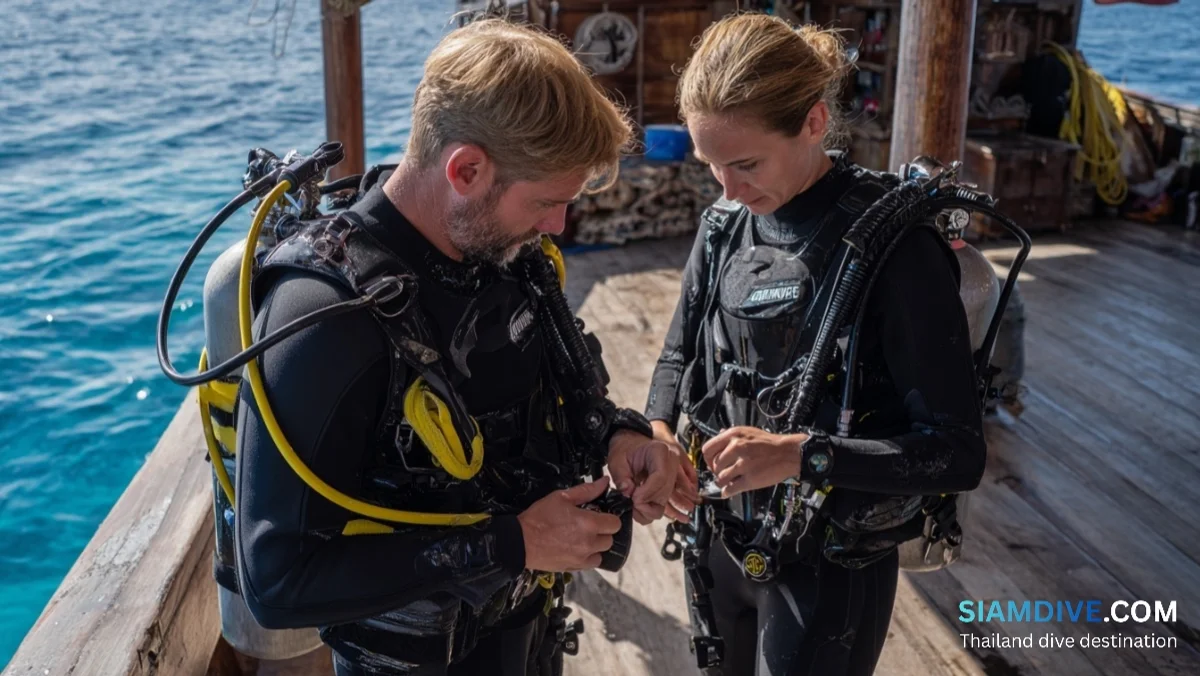
Bring your certification card (digital is fine), logbook, motion sickness tablets if you're sensitive to small boats, and a torch if you plan to look into the Hardeep's compartments. Underwater camera setups are welcome and the Cathedral cargo hold is one of the most photogenic wreck spaces in the Gulf of Thailand.
Final Thoughts
Samaesan is the dive area that rewards repeat visits. The first trip is usually HTMS Hardeep and a reef warm-up. The second trip is when you start asking which tide is best and which sites have the current you want. By the third trip you stop comparing it to Pattaya entirely — it's its own thing, quieter, more technical, and closer to home than you expected.
If you're ready to look beyond the Koh Larn day-trip routine, browse Samaesan and Sattahip dive operators on siamdive.com to find a shop that runs the schedule you want.