200 Square Metres of Reef Gone in One Anchor Drop
1 พฤษภาคม 2569
A single anchor chain destroys decades of coral growth in seconds. Here is the science behind the damage and the low-cost fix Thailand's marine parks are racing to install.
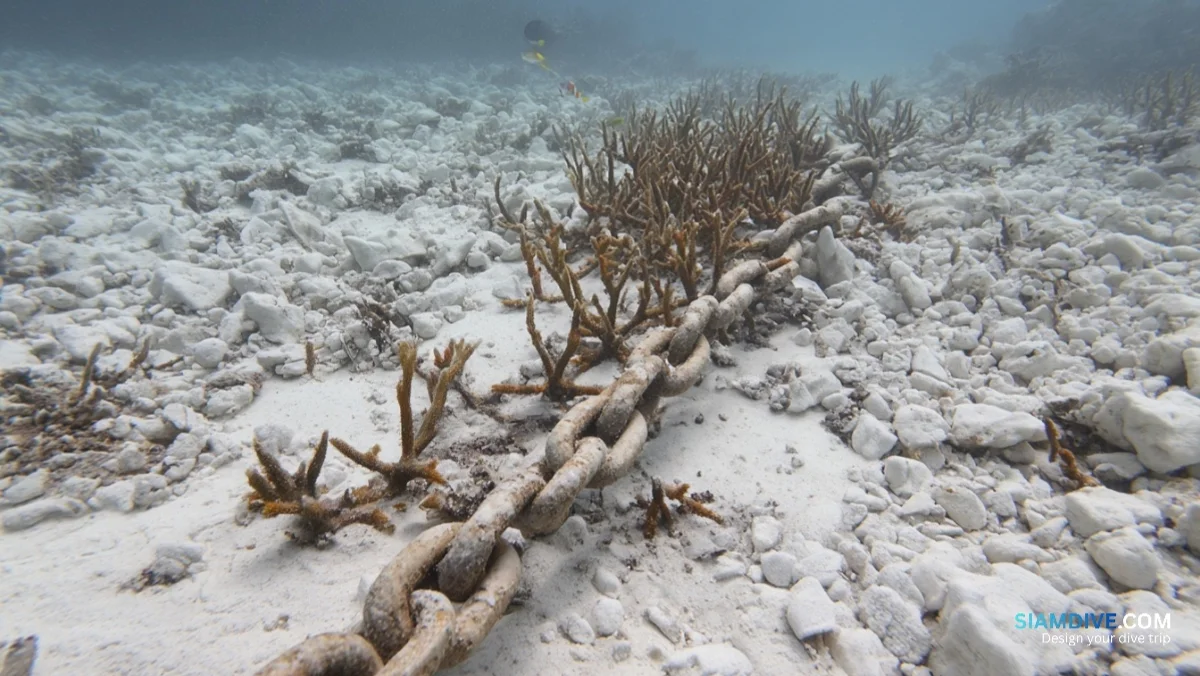
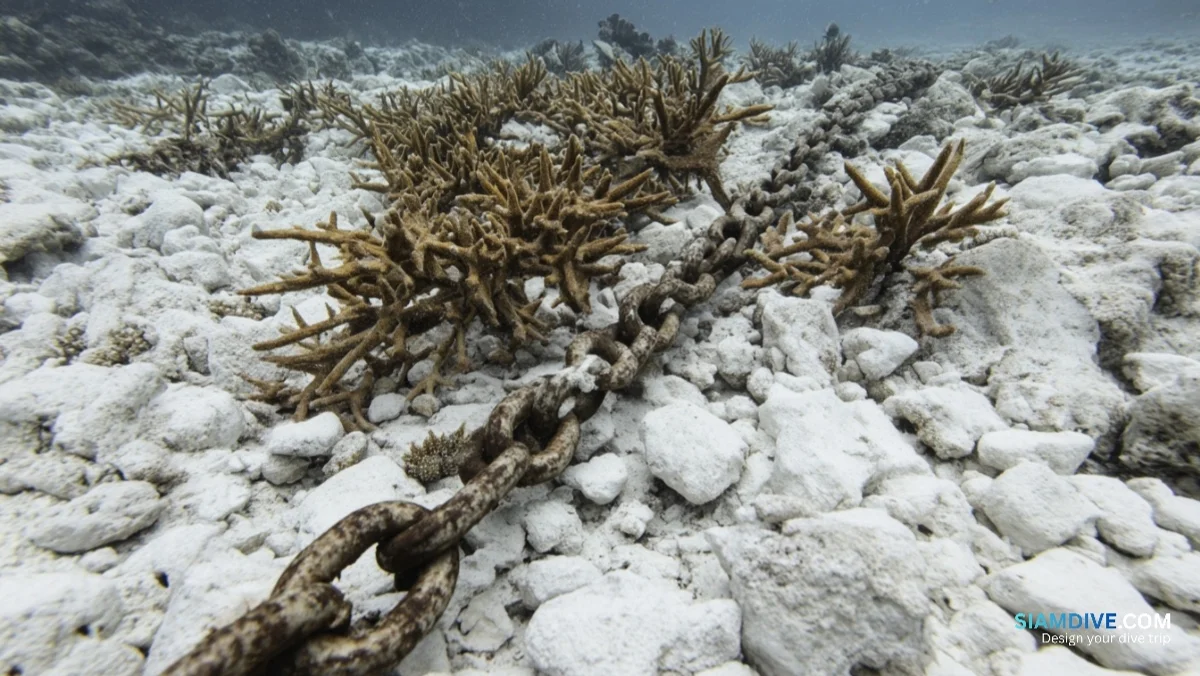
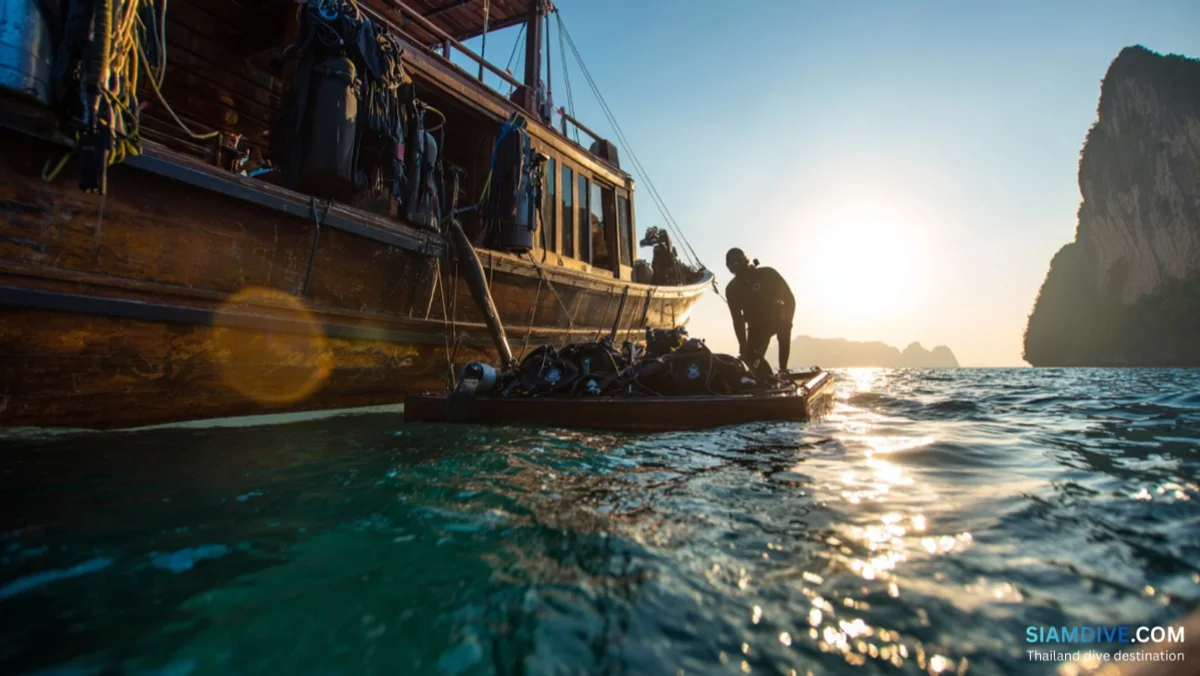
The chain runs out fast — a hundred links of galvanised steel, each one roughly the weight of a closed fist, dropping through twelve metres of clear water. The first link hits branching staghorn coral with a grinding crunch that carries across the reef. As the boat swings on the current, the chain tightens and begins to sweep. Branch tips snap under tension. Tissue peels off skeleton in white strips. A cloud of calcium carbonate dust rises and drifts across the adjacent colonies like smoke. By the time the captain finishes tying off the line on deck and starts the dive briefing, the anchor and its trailing chain have already scoured a patch of seabed wider than most living rooms. Nobody dives down to check.
What the Chain Does That the Anchor Cannot
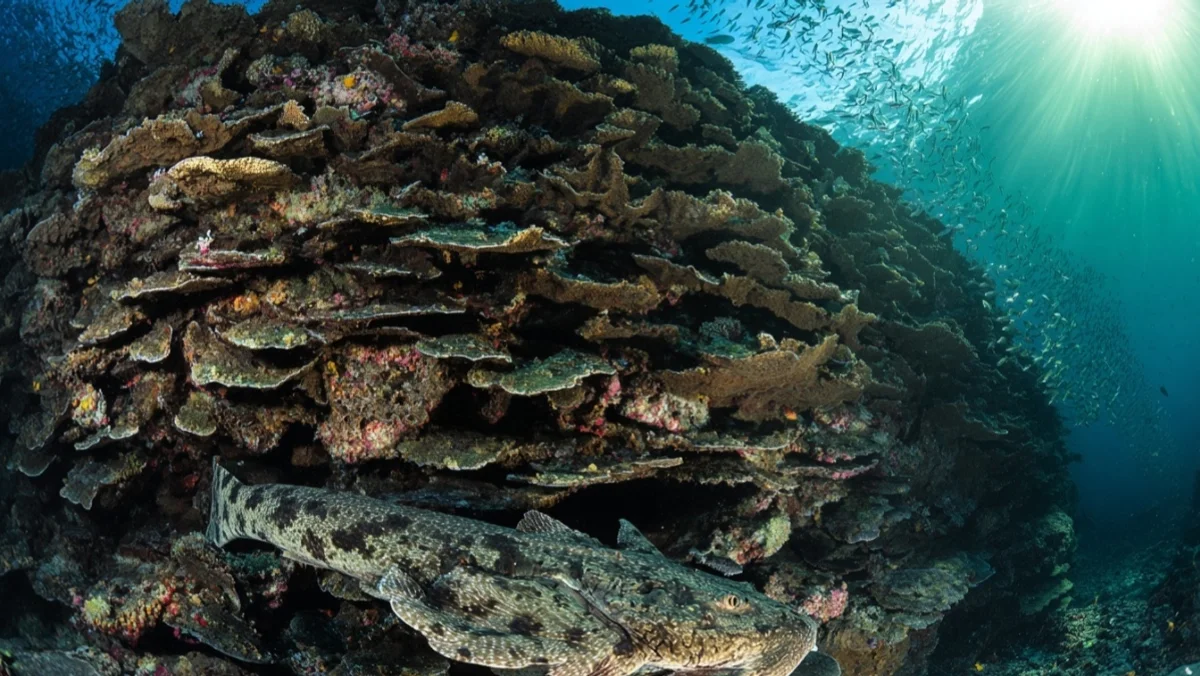
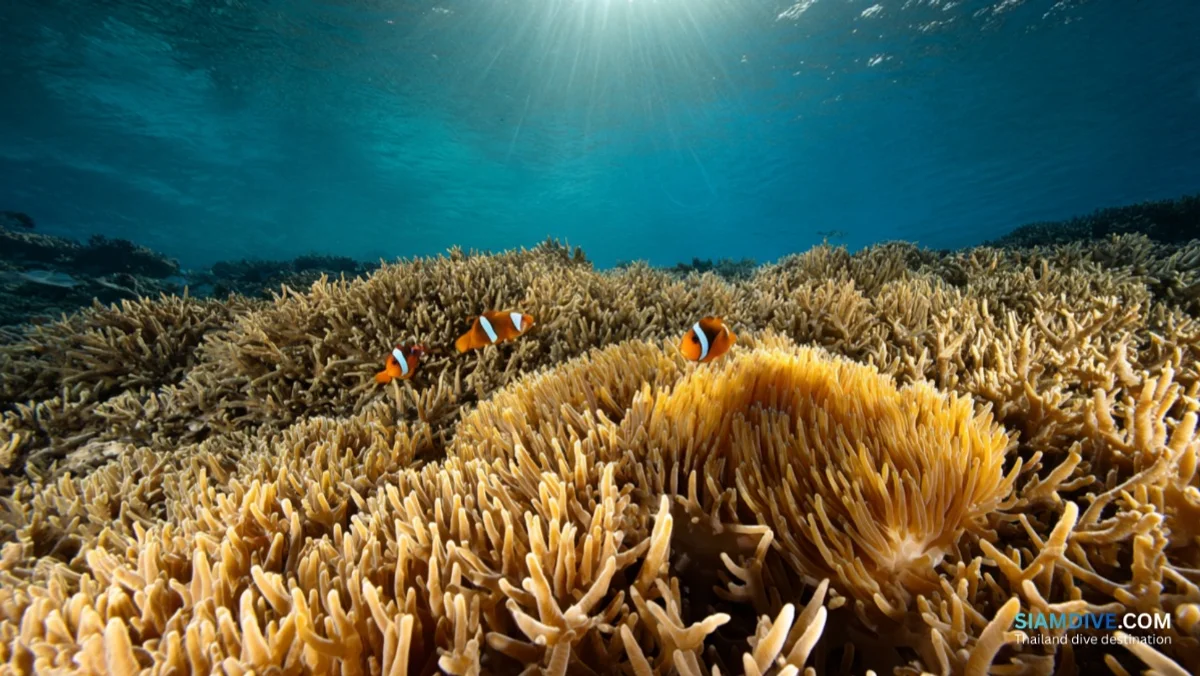
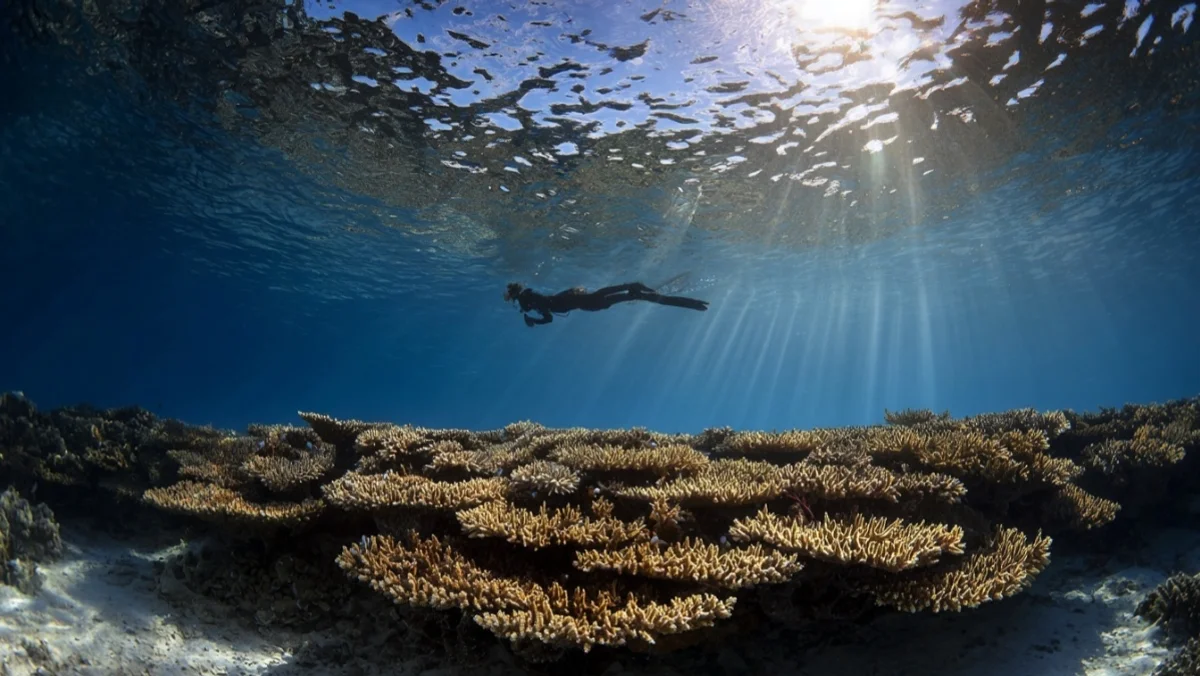
An anchor on its own causes blunt-force damage — a pronged steel weight built to dig into substrate. When it lands on reef instead of sand, it punches through coral colonies that have been depositing calcium carbonate at a pace of 0.3 to 2 centimetres per year. Branching species like staghorn and elkhorn, the ones that build the intricate three-dimensional architecture fish depend on for shelter, are the most vulnerable. A single impact can fragment a colony that took fifteen years to reach arm's length.
But an anchor is a point of contact. The chain is a line of continuous destruction.
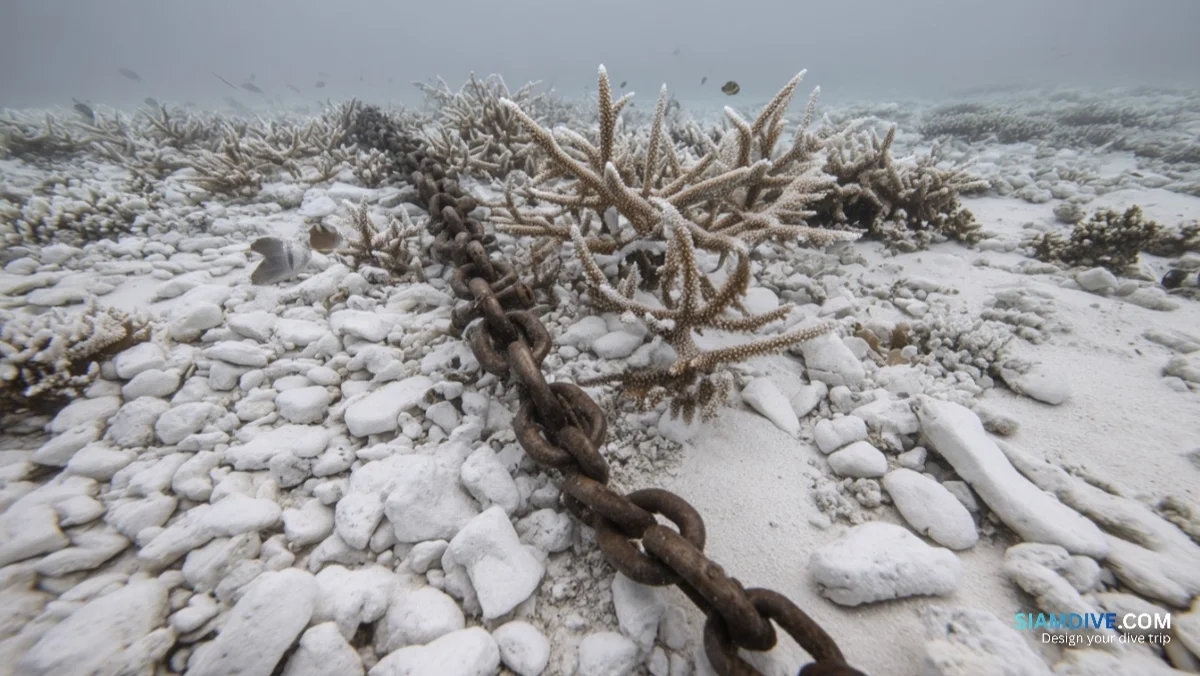
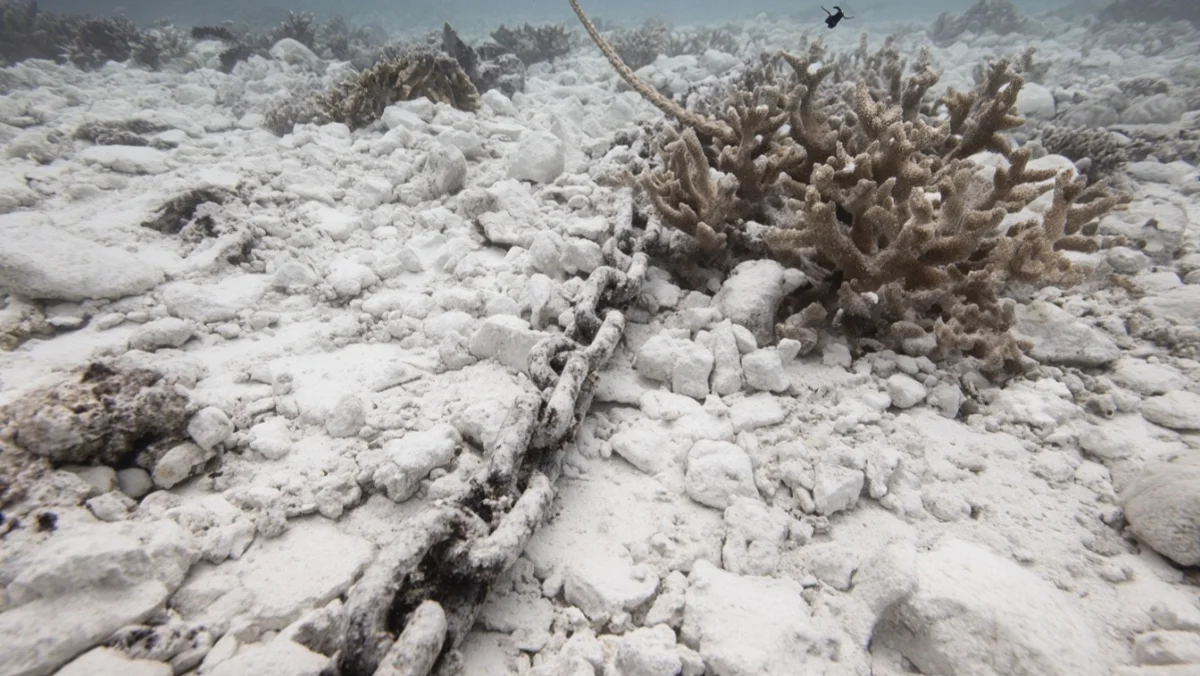
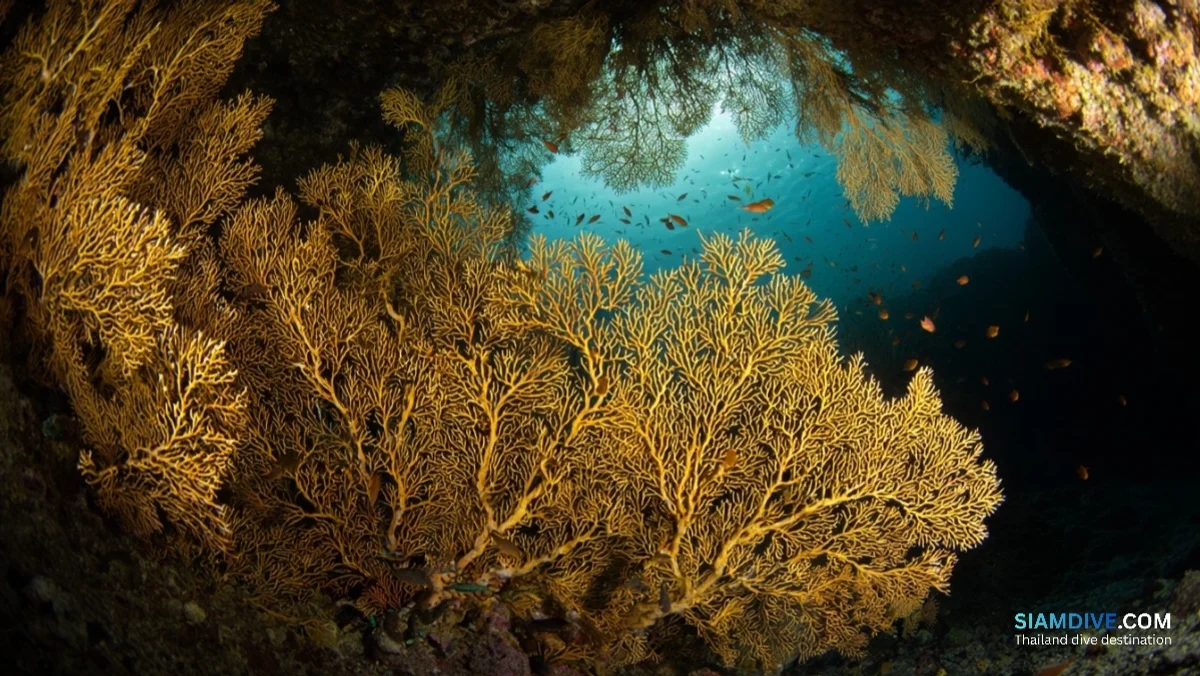
A typical dive boat drops 5 to 10 metres of heavy chain behind the anchor to keep the rode angle low and the hold secure. As the vessel drifts on wind or current, the chain sweeps an arc across the seabed, grinding over every hard and soft coral in its path. Tissue is abraded down to bare skeleton. Sediment kicked up by the scraping settles on colonies further out, smothering polyps that need light to photosynthesise. Plate corals crack under the chain's weight. Fan corals — which grow perpendicular to the current to filter-feed — snap at the base and rarely recover.
A 15-metre boat with 8 metres of chain can scour a circle of roughly 200 square metres per tide swing, an area the size of a tennis court. Research published in Ocean & Coastal Management measured the impact zone at between 50 and 200 square metres per anchoring event, depending on vessel size, chain length, and substrate hardness. The chemical damage from sunscreen entering coral cells generates more headlines, but chain drag operates at a scale and speed that no dissolved compound can match. Sunscreen weakens tissue over weeks. A chain demolishes structure in seconds.
Fifty Years to Grow, Thirty Seconds to Crush
Coral does not heal the way skin or bone does. A snapped branch can survive if it lands upright on stable hard substrate — fragment propagation is, in fact, how some nurseries grow new colonies. But in the chaos of an anchor strike, most fragments tumble across sand, land inverted, smother neighbouring polyps, and die. Turf algae colonise the cleared surface within days, forming a dense mat that blocks new coral larvae from settling. The substrate is lost before recovery can begin.
The clearest field measurement of what this means over time came from Crab Cove in the British Virgin Islands. A single anchoring event in 2004 was tracked by University of Rhode Island researchers over the years that followed. Their finding, published in PLoS ONE: the coral cover loss and structural-complexity decline from that one deployment matched 23 years of cumulative degradation observed at an undisturbed adjacent reef. One afternoon equalled more than two decades of natural wear.
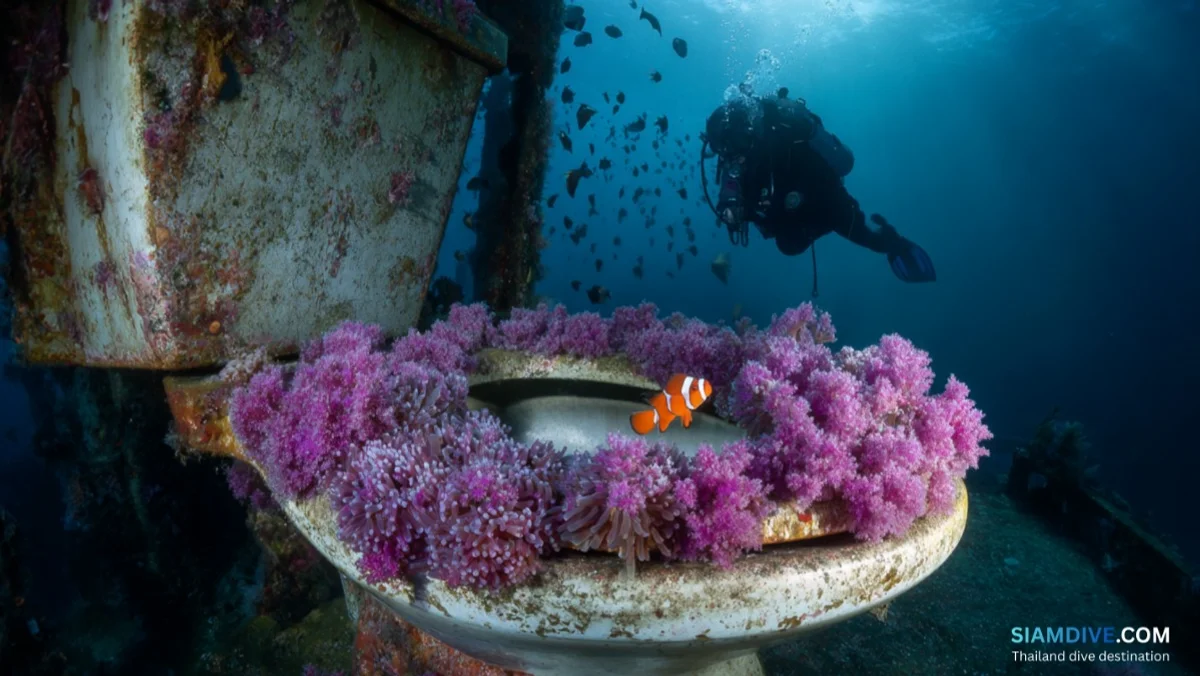
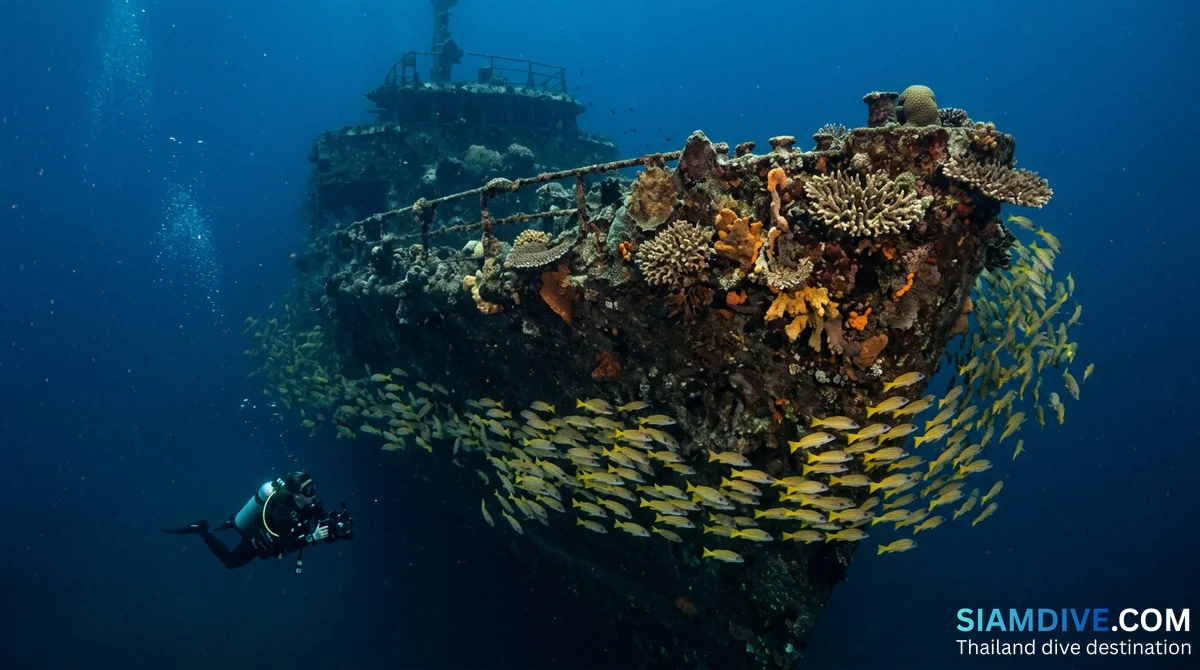
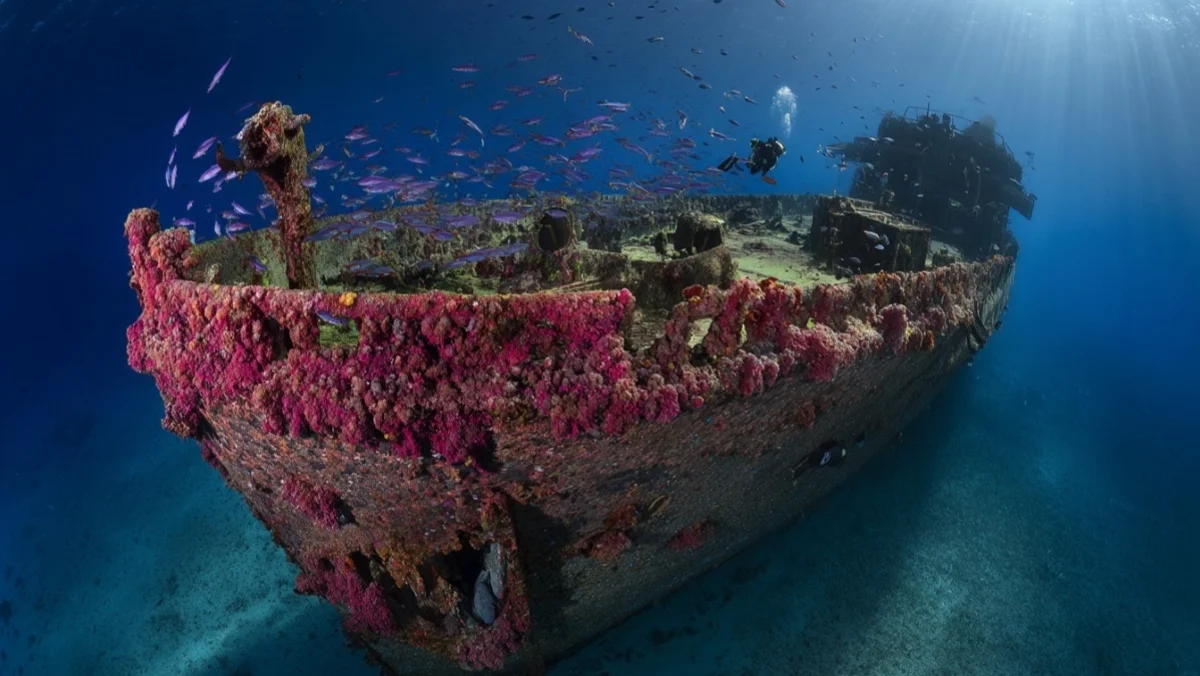
On artificial structures like sunken warships in the Gulf of Thailand, a thin coral crust takes decades to develop. A healthy natural reef — with interlocking branches, plate shelves, and overhanging ledges that create habitat for hundreds of species — represents biological investment that no restoration programme can replicate at speed. Growth is measured in fractions of a centimetre per year. Destruction is measured in the time it takes a chain to swing.
How Phi Phi Lost a Reef Flat and Tied It Back Together
At the Phi Phi Islands, the threat was not a rogue container ship. It was the daily arithmetic of longtail boats and speedboats ferrying tourists to Maya Bay, Pileh Lagoon, and the dive sites around Bida Nok and Bida Nai. Each boat carried a small anchor. Each anchor trailed a short chain. Dozens of boats landed every morning, hundreds accumulated every week. The damage compounded until it was visible from the surface — pale scars on the reef flat where branching coral had been ground to limestone rubble.
Hat Noppharat Thara – Mu Ko Phi Phi National Park responded with a survey-and-install programme. A research team covered more than 160 locations across the Phi Phi archipelago, Koh Poda, and Chicken Island in three days, photographing each site and marking GPS waypoints with temporary buoys. The park's dive team followed behind, installing permanent mooring lines — heavy rope secured to large concrete blocks placed on sandy patches between coral formations, with surface buoys colour-coded by vessel size so captains could match their boat to the right mooring.
The system works by subtraction. Remove the anchor and the chain disappears with it. Boats tie to the buoy, swing on the line, and the reef directly below stays untouched. Maintenance is the ongoing cost — checking lines for chafe, replacing buoys bleached or cracked by tropical sun, repositioning blocks that shift in monsoon swells — but it costs a fraction of what reef restoration would demand if the corals were left to be ground down season after season.
Thailand's Department of Marine and Coastal Resources has reinforced the legal framework. Under the 2019 Wild Animal Reservation and Protection Act, all corals are classified as protected wildlife. Dropping an anchor on a natural reef or a designated restoration site is a prosecutable offence, and DMCR diving officers have enforced it — most recently after an oil tanker was found to have illegally anchored in the Gulf and crushed a mapped coral formation. Meanwhile, researchers at Phuket Rajabhat University opened a coral cryobank in mid-2025, freezing genetic material as insurance against the possibility that some reef systems cannot survive in the wild. The programme, documented by Mongabay in February 2026, signals how seriously Thailand treats reef loss at every scale — from the laboratory bench to the mooring block on the seabed.
A Buoy Costs Less Than a Single Lost Dive Day
Strip the debate down to raw arithmetic and the argument ends quickly.
- One mooring buoy installed
- US $1,500–$3,000, covering concrete block, chain, line, surface buoy, and dive-team labour
- Reef protected per buoy
- Up to 200 square metres of seabed directly below the mooring zone, safe from anchor and chain contact
- Recovery time for anchor-damaged reef
- 30 to 50 years for branching coral species — assuming no repeat anchoring, which rarely holds
- Daily revenue per healthy dive site
- Thousands of dollars in park entrance fees, boat charters, and equipment rental — revenue that drops as the reef degrades
In the Florida Keys, marine biologist John Halas developed the modern mooring-buoy system and tested it at Key Largo's French Reef in 1981. The National Marine Sanctuary now maintains more than 490 buoys across 3,800 square miles. Each installation takes a five-diver team and several hours of underwater drilling and cementing. Over four decades the buoy programme has logged nearly 20,000 labour hours — a serious commitment, but a fraction of the economic value the Keys' reefs generate annually through tourism, fishing, and coastal protection.
The Halas system now operates in more than 38 countries. For Thai marine parks collecting entrance fees of 300–500 baht per foreign visitor and processing hundreds of guests daily, outfitting a key dive site with 20 mooring buoys would cost less than a single week's gate revenue. The payoff lasts as long as the reef survives.
More Boats, Fewer Anchors, New Problems
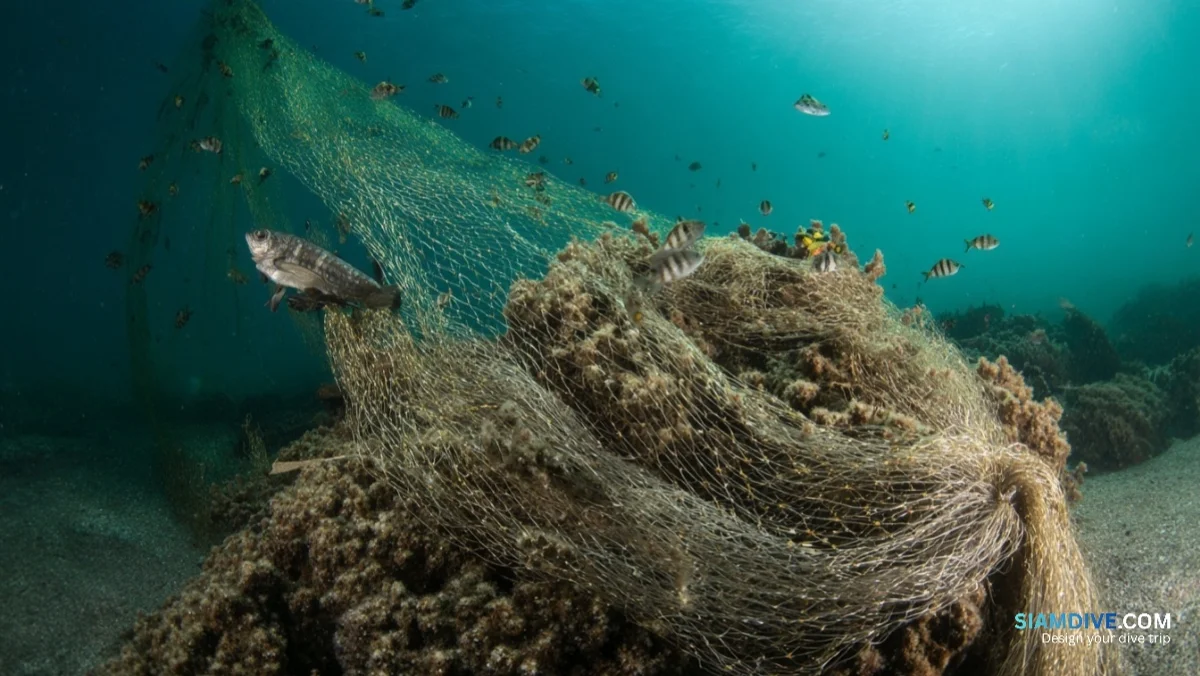
Mooring buoys are not a complete answer, and pretending otherwise has cost reefs elsewhere. A study in Ocean & Coastal Management found that sites fitted with moorings attracted 3.6 times more boat traffic than unmoored sites — the infrastructure made access easier and cleared operators of the guilt of dropping anchor. The density of boats anchoring on coral at moored sites fell by roughly half, a clear gain. But the sheer increase in vessel numbers brought secondary pressures: propeller wash stirring sediment, higher diver traffic stressing fish populations, and mooring lines chafing against the substrate during swells.
Green Fins, the UN Environment Programme initiative working with dive operators across Southeast Asia, recommends buoys as one tool among several. Their anchoring guidelines emphasise capacity limits — how many boats may tie to a site per day — alongside mandatory maintenance schedules and enforcement against operators who anchor anyway because every buoy is taken. The same kind of indicator-species monitoring used to track reef decline helps measure whether buoys are improving outcomes or merely slowing losses.
The pattern from Florida, the Whitsundays, and Phi Phi is consistent: mooring buoys cut anchor damage sharply, but without managed access they trade one type of reef pressure for another.
Five Questions Before Your Next Boat Trip
Divers seldom choose where the anchor lands. That decision belongs to the captain. But you choose which captain to hire and what you treat as normal.
- Does this site have mooring buoys? Ask before booking. A shop that cannot answer the question has not thought about where its anchors land
- Does your boat actually use them? Some crews anchor beside empty buoys because tying on takes an extra few minutes. That should not be acceptable
- Where is the anchor landing? An anchor on sand beside a reef is standard practice. A chain draped across live coral is destruction you can see happening in real time
- Is this a Green Fins operator? Members commit to anchoring alternatives as part of their environmental code of conduct. Thailand has active Green Fins centres in Phuket, Koh Tao, and Koh Lanta
- Will you report what you see? Thai national parks accept violation reports. One complaint may not shift policy. A documented pattern of reports from paying visitors will
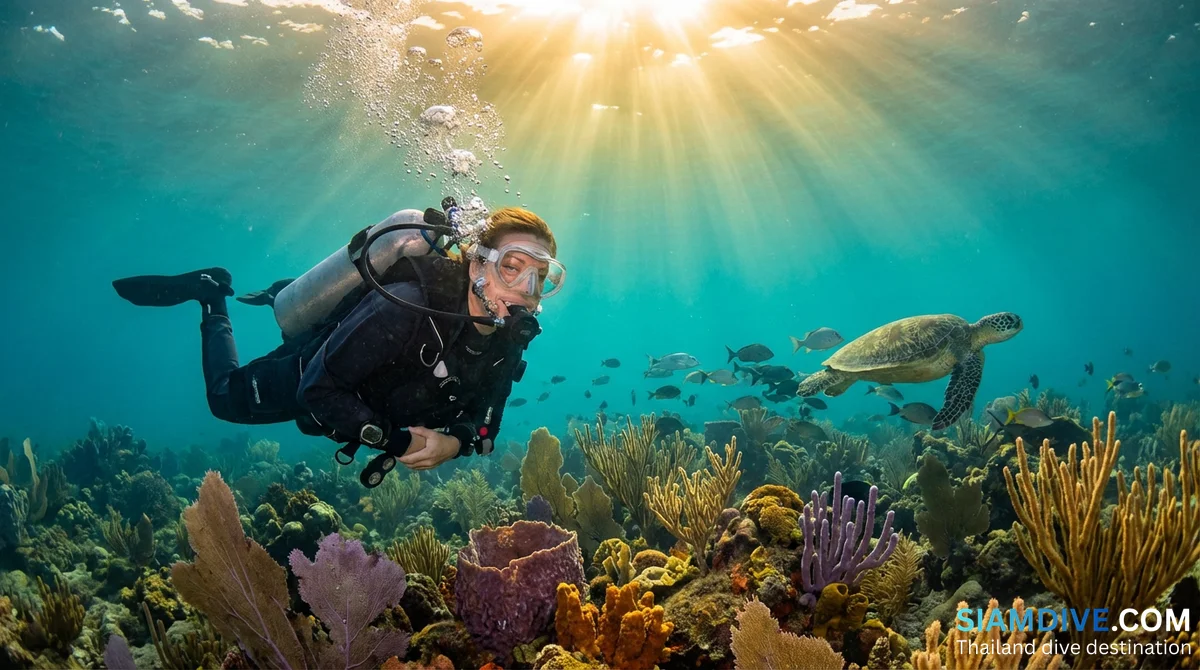
The mooring buoy is a concrete block, a rope, and a plastic float. Cheap, simple, unglamorous. Alongside basic torch discipline on night dives, it is one of the most direct ways a diver can protect the reef they travelled to see — not by planting coral fragments or cleaning a beach, but by making sure no anchor touches living reef in the first place.
Sources
- NCBI — Episodic Disturbance from Boat Anchoring in Coral Reef Decline (PLoS ONE)
- DAN Alert Diver — Mooring Buoys: A System Anchored in Florida Keys History
- Green Fins — Alternatives to Anchoring Guidelines
- Mongabay — Thailand's Coral Cryobank (February 2026)
- Thailand National Parks — Hat Noppharat Thara – Mu Ko Phi Phi