How to Find and Book Day Dive Trips in Thailand
14 เมษายน 2569
A practical guide to finding, comparing, and booking one day scuba diving trips across Thailand — from choosing operators to avoiding costly mistakes.
Why Planning Your Day Trip Actually Matters
Thailand has hundreds of dive operators spread across dozens of islands. Walk down any main street in Koh Tao or Phuket and you'll pass five dive shops before lunch. That sounds convenient until you realize the quality gap between operators is massive — one charges 2,000 THB and takes groups of 12, another charges 3,500 THB with groups capped at 4. Both say "day trip" on the sign outside.
The difference between a forgettable dive and one you'll talk about for years often comes down to 30 minutes of research before you hand over your money. This guide covers exactly what to look for, where to search, how much to pay, and which warning signs mean you should walk away.
Where to Search for Day Trips
Your best starting points are a mix of platforms and local research:
- Operator websites directly — Most reputable shops have their own booking system. Chang Diving on Koh Chang, ScubaBirds on Koh Tao, and Duck'n'Dive on Koh Nangyuan all take online reservations with clear pricing. Booking direct often means better cancellation terms and no middleman markup.
- TripAdvisor — Still the most useful aggregator for diving. Filter by location, duration (4 hours to full day), and price range. The "bubble rating" system and verified reviews from 2025-2026 give you a realistic picture. Look for operators with 90%+ recommendation rates.
- Walk-in at dive shops — If you're already on the island, visiting shops in person lets you see the equipment firsthand, meet the guides, and sometimes negotiate a better rate. This works especially well on Koh Tao where competition keeps prices low.
- Hotel concierge — Your accommodation often has partnerships with local operators. The markup is usually small (5-10%) and the convenience of arranged transfers can be worth it.
Avoid random Facebook ads or operators with no web presence at all. A legitimate dive shop in 2025 has at minimum a website and verifiable reviews somewhere.
What a Good Day Trip Package Includes
A standard one-day dive trip in Thailand gives you 2 dives with surface intervals, and the package should cover:
- Full equipment — BCD, regulator, wetsuit, mask, fins, tank, weights, and ideally a dive computer. If they charge extra for a computer, ask why.
- A qualified guide — PADI or SDI/TDI certified divemaster or instructor. Not a "dive buddy" who learned last month.
- Meals — Breakfast, lunch, fruit, water, and soft drinks on the boat. Most operators include this; a few cheaper ones skip lunch, which makes a long boat day miserable.
- Boat transport — Speedboat or traditional dive boat to the sites. Transit time varies from 20 minutes (Pattaya nearshore) to 2 hours (Koh Tao to certain sites).
- Insurance — Basic dive accident coverage. Ask if it's included or if you need your own DAN policy.
Things typically NOT included: national park entrance fees (400-500 THB for foreigners), alcohol, underwater camera rental, tips, and hotel pickup from remote areas.
How Much You Should Expect to Pay
Prices in 2025 vary by location, but here's a realistic range for a 2-dive day trip per person:
- Koh Tao: 2,000-3,500 THB ($55-95 USD) — the cheapest in Thailand thanks to fierce competition among 70+ dive shops on a tiny island.
- Pattaya: 2,500-4,000 THB ($70-110 USD) — budget-friendly but the sites are basic compared to islands.
- Koh Chang: 3,000-4,500 THB ($85-125 USD) — mid-range with uncrowded sites in the national park.
- Koh Samui: 3,500-5,000 THB ($95-140 USD) — often includes ferry to Koh Tao sites, which adds cost.
- Phuket: 3,000-5,000 THB ($85-140 USD) — Phi Phi and Racha Islands; premium pricing but better marine life.
- Koh Lanta: 3,500-5,500 THB ($95-155 USD) — highest prices but also the best visibility and rarest species.
If someone quotes you under 1,500 THB for a full day trip with 2 dives and gear, something's being cut — usually safety, equipment quality, or group size.
Red Flags That Signal a Bad Operator
Walking away from a bad operator is cheaper than dealing with the consequences. Watch for these:
- No certification display — A real PADI/SDI center has their certification visible. If they dodge the question, leave.
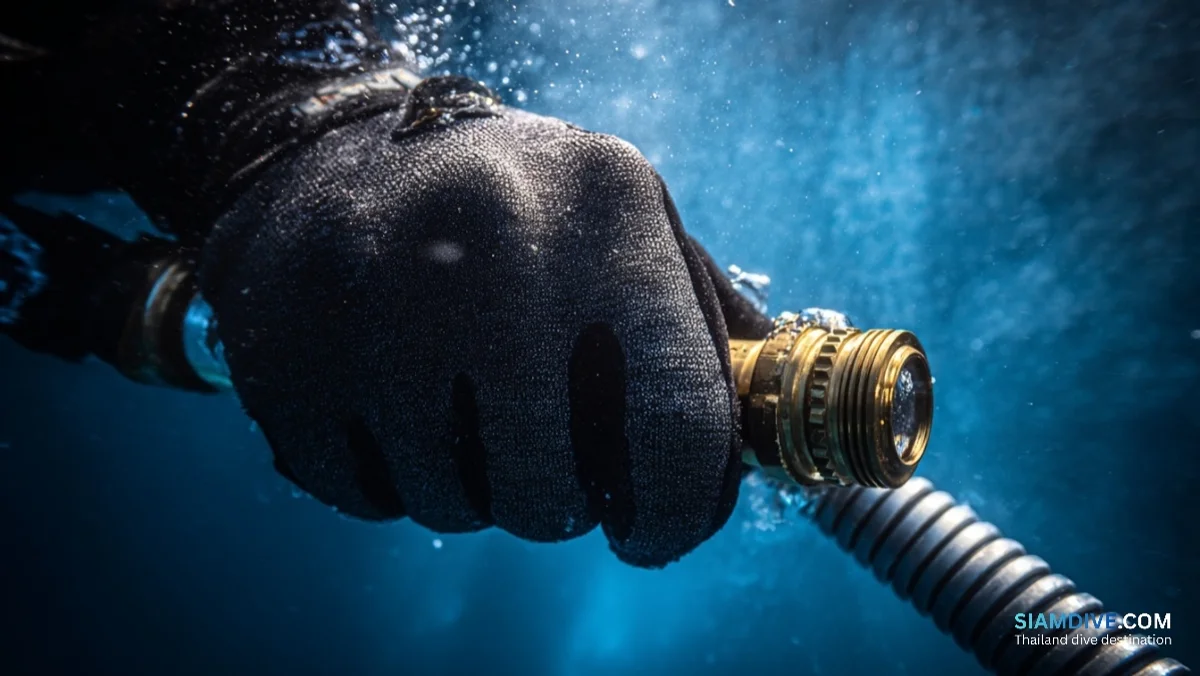
- Rusty or damaged equipment — Check the regulators, BCDs, and tanks before boarding. Worn mouthpieces and fraying straps are signs of neglected maintenance.
- Oversized groups — More than 6 divers per guide underwater is a safety issue. The best operators cap it at 4.
- No briefing — Every dive should start with a site briefing covering depth, currents, marine life, hand signals, and emergency procedures. Skipping this is a major red flag.
- Pressure to buy courses — If you came for a fun dive and they're pushing you toward a 3-day course instead, they care more about the upsell than your experience.
- No cancellation policy — Reputable operators offer free cancellation at least 24 hours in advance. No refund at all? That's a walk-away.
- Ignoring weather warnings — An operator who insists on going out in rough conditions is gambling with your safety.
How to Book: Step by Step
Here's the process that avoids most problems:
- Pick your island first — Your destination determines which dive sites you'll see. Decide based on what marine life you want (turtles? sharks? mantas?) and your budget.
- Research 3-4 operators — Read reviews from the last 6 months. Conditions and management change fast in Thailand's dive industry.
- Contact them directly — Ask about group sizes, guide-to-diver ratio, equipment age, and what's included. How they respond tells you a lot about how they'll treat you on the boat.
- Confirm your certification level — Fun dives require an Open Water cert or equivalent. "Discover Scuba" or "Try Dive" programs work for non-certified divers but limit depth to 12 meters.
- Book online or in person — Online booking locks in your spot during peak season (November-April). Walk-in works fine in low season when boats aren't full.
- Confirm the night before — Weather changes quickly. A good operator will contact you about pickup time and any schedule adjustments.
Practical Tips for a Better Day Trip
- Book morning departures — Visibility is usually better early, and afternoon wind chop can make surface intervals less comfortable.
- Bring your own mask if you have one — Rental masks are the most common source of frustration. A mask that fits your face makes the entire dive better.
- Take seasickness medication before the boat — Even experienced divers get queasy on Thai longtail boats. Take it 30 minutes before departure, not after you feel sick.
- Bring cash for extras — Park fees, tips, and drinks are rarely available on card. Have 1,000-2,000 THB in cash beyond your dive cost.
- Check your logbook — If you haven't dived in over a year, tell the operator. A good one will pair you with a guide for a refresher. A bad one won't ask.
- Protect your skin — Use reef-safe sunscreen and wear a rash guard. The Thai sun between dives will burn you faster than you expect.
- Don't fly within 18-24 hours after diving — Plan your last dive day with enough gap before your flight. Decompression sickness is rare but preventable.
Ready to Book Your Day Trip?
Thailand's one-day dive trips are some of the best value in the world. Whether you pick Koh Tao for its affordability, Koh Lanta for its pristine reefs, or Phuket for convenience, the key is choosing an operator that treats safety and experience as seriously as their pricing. Do the homework upfront and you'll have a dive day that's worth every baht. Check out siamdive.com for curated trip options across all major Thai dive destinations.