20 Mantas, 1 Rock, and the Tiny Fish That Bring Them Back
30 เมษายน 2569
At Koh Bon’s pinnacle, a 2-centimetre cleaner wrasse runs the show — picking parasites from manta gills and keeping 20 identified giants loyal to one reef.
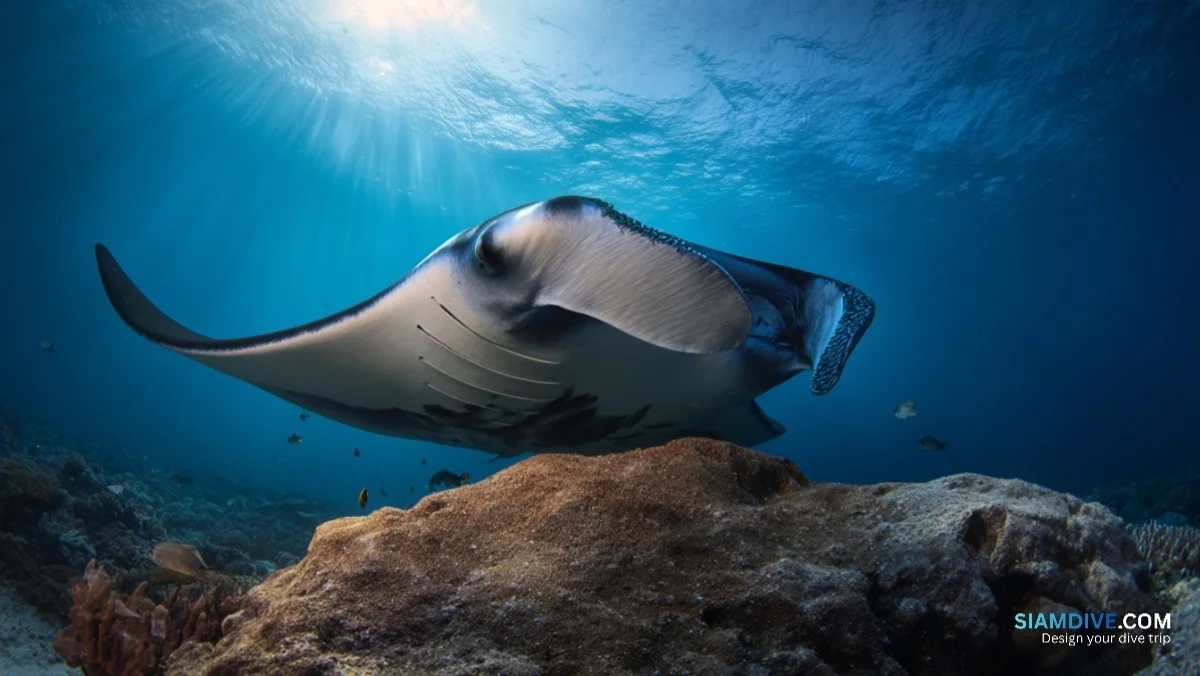
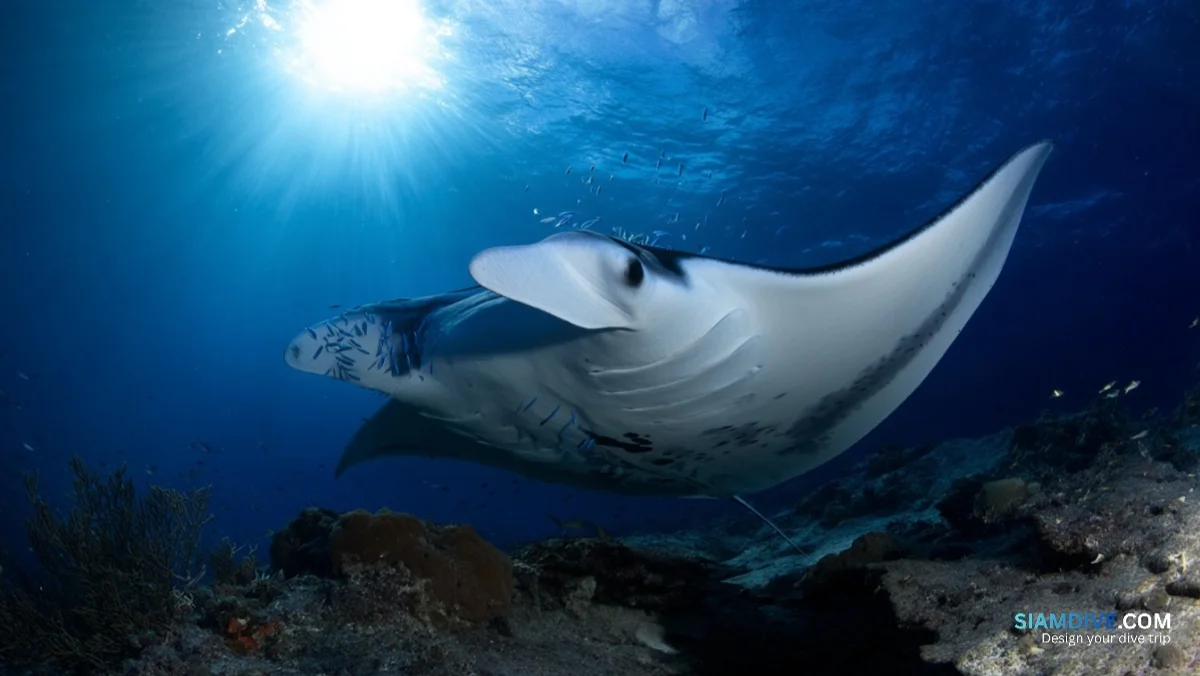
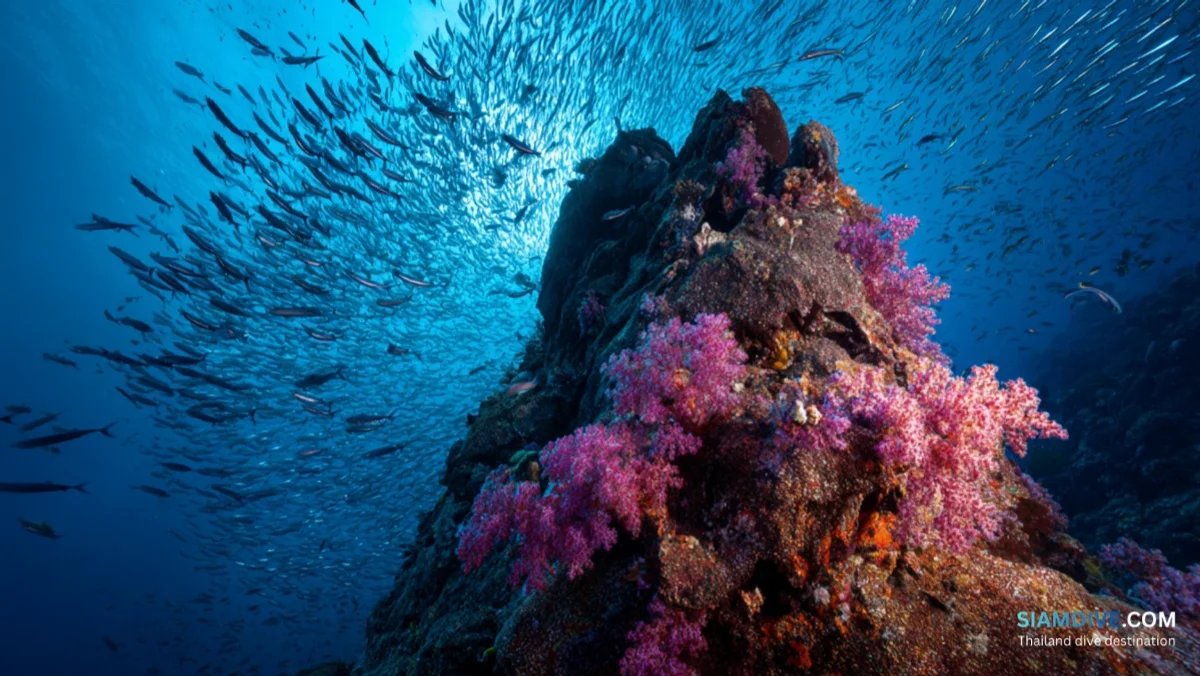
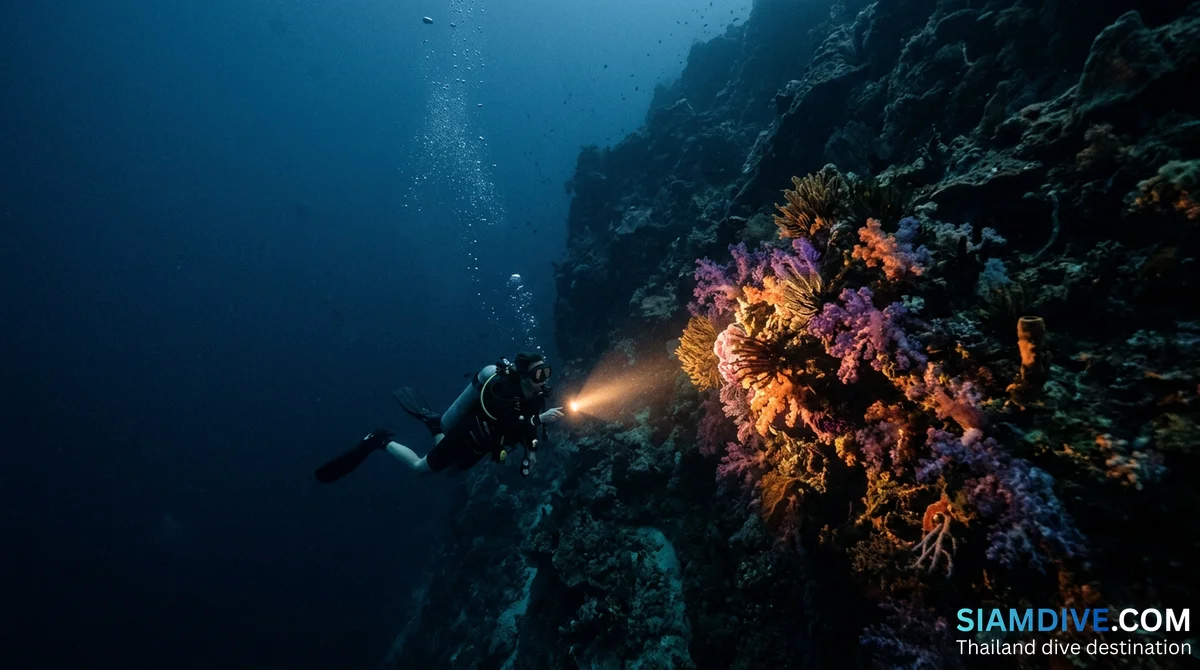
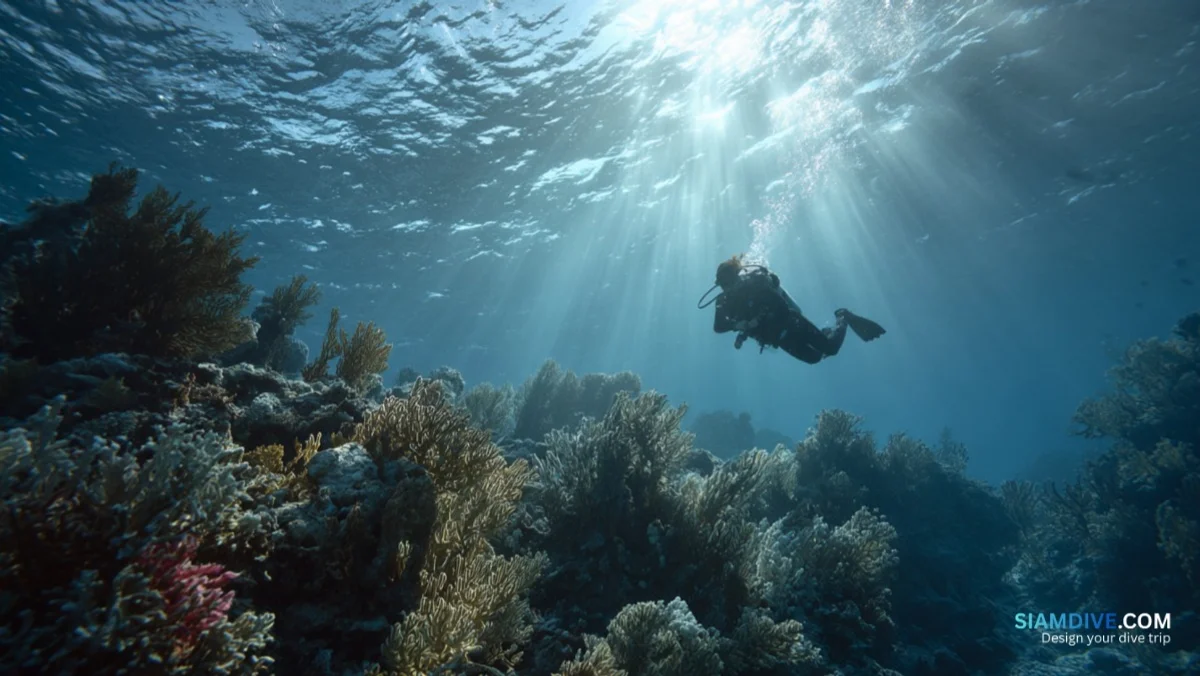
Eighteen metres below the surface at Koh Bon, a reef manta ray the width of a small car glides to a halt above a knob of hard coral. She tilts forward, gill slits spread wide, and waits. Within seconds, a blue-streaked cleaner wrasse no longer than a thumb darts into the gap between the gill plates. For the next several minutes, the largest fish on the reef holds perfectly still while one of the smallest picks parasites from tissue most divers never see. This transaction — repeated dozens of times each day across a single submerged ridge in the Andaman Sea — is the reason Koh Bon has become Thailand's undisputed manta capital.
Smaller Than Your Finger, Bigger Than Their Role
The blue-streaked cleaner wrasse, Labroides dimidiatus, tops out around 10 centimetres as an adult — small enough to disappear behind a sea fan. It is an obligate cleaner, meaning it feeds almost exclusively by removing parasites from other fish rather than foraging on its own. Its preferred prey: the larval stage of gnathiid isopods, blood-sucking crustaceans barely visible to the naked eye that latch onto gill tissue, pelvic regions, and pectoral fins.
Mantas are not the wrasse's only clients. On a busy reef, L. dimidiatus services hundreds of species daily, setting up territories around prominent coral heads and advertising availability with a distinctive bobbing dance. But mantas are the marquee clients — large, slow-moving, and carrying several square metres of gill surface for parasites to colonise. Research published in Marine Biology found that both L. dimidiatus and moon wrasse (Thalassoma lunare) target manta gills with the highest frequency of cleaning interactions, followed by the pelvis and pectoral fins. The gills make biological sense: warm, blood-rich, and sheltered — ideal real estate for gnathiids.
The payoff is measurable. Studies on reef fish show that cleaner wrasse reduce parasite loads by a factor of 4.5 within 12 hours. For a manta carrying gill tissue measured in square metres rather than square centimetres, that arithmetic translates to hundreds of parasites removed per cleaning visit — enough to justify a detour from open-water feeding grounds that may lie kilometres away.
Three Years Later, Same Rock
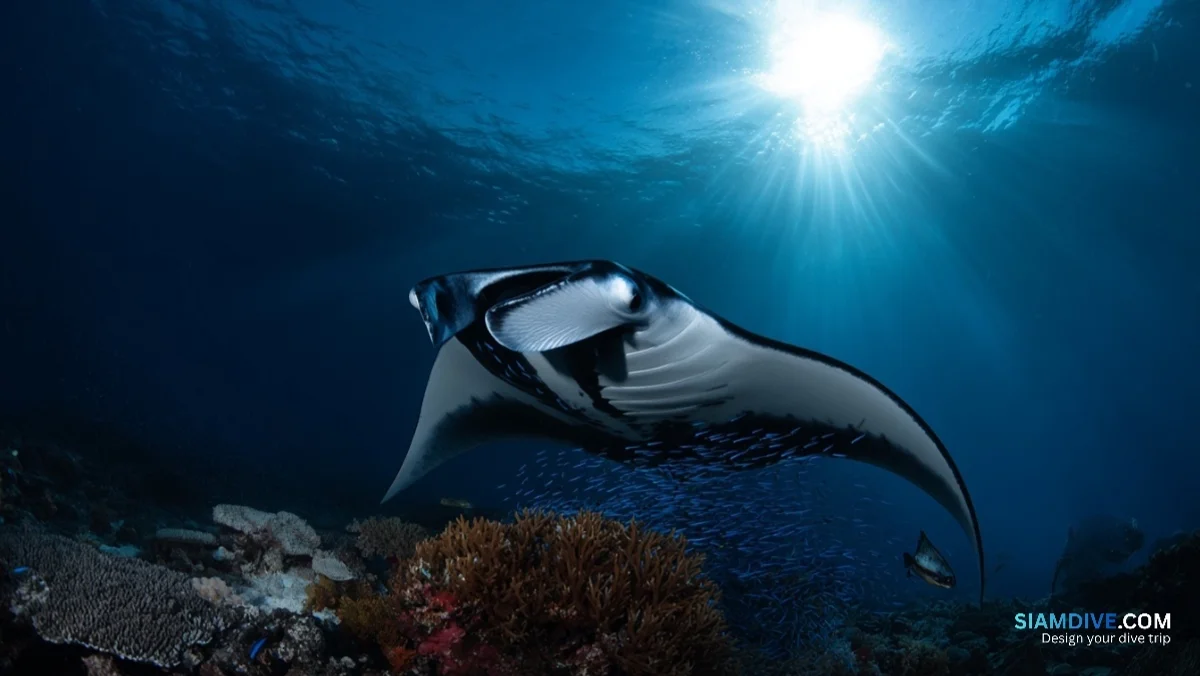
Manta rays are pelagic animals. They feed on plankton in open water, sometimes covering dozens of kilometres in a single day, wings tilted into currents that carry the microscopic food they filter through their cephalic fins. Yet they return — reliably, repeatedly — to the same handful of reef features scattered across their range.
A 2021 study (Armstrong et al., published via PMC) tracked this behaviour in detail. The researchers found that manta ray space use at cleaning stations was significantly associated with L. dimidiatus distribution and hard coral substrate. Cleaning interactions dominated the mantas' habitat use at these sites, taking precedence over feeding and even courtship. The conclusion was striking: mantas maintain a long-term cognitive map of reef environments where quality cleaning is reliably available.
How long-term? A 2024 study tracking oceanic mantas in Indonesia's Bird's Head Seascape recorded one individual returning to the same cleaning site over a span exceeding three years. At Koh Bon, the Thailand Manta Project — an affiliate of the UK-based Manta Trust — tells a parallel story. Around 20 individual mantas have been identified by their unique belly-spot patterns, and several reappear season after season at the same pinnacle, often visiting the same coral head within the broader site.
A fish with a brain-to-body ratio closer to a mammal's than to most other fish is choosing this particular rock based on memory — not accident, not instinct alone, but something that looks a great deal like a decision informed by experience.
The 11 a.m. Appointment
Cleaning at Koh Bon does not happen around the clock. Research on giant manta rays at seamount cleaning stations in the Philippines found that cleaning events clustered between 11:00 and 16:00, with current strength and ambient water temperature acting as gatekeepers. Strong currents push wrasses off their stations and shift manta behaviour toward feeding in the plankton-rich flow. Cool water slows the whole interaction down.
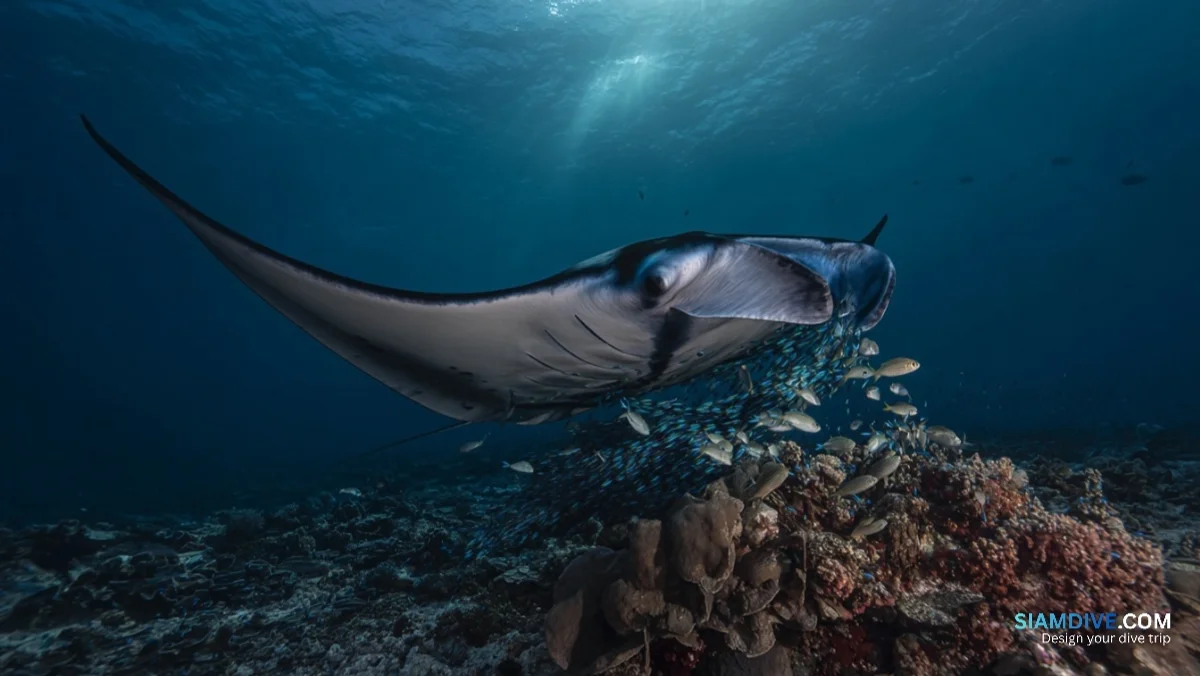
At Koh Bon, this midday window aligns with what dive guides observe season after season. Morning dives on the pinnacle often feature mantas cruising the ridge or feeding in the current, wings tilted into the flow, cephalic fins unfurled to funnel plankton. By late morning, the parade shifts to the cleaning stations on the plateau's hard coral patches. Mantas queue — sometimes three or four stacked at different depths — each hovering with an eerie stillness while wrasses work the client ahead of them in line.
The pattern suggests that cleaning and feeding are complementary activities rather than competing ones, scheduled around current cycles and the sun's angle. Feed in the morning when plankton concentrations peak with the tidal push. Clean at midday when the flow eases and the wrasses are active. Return to the blue for an afternoon feed if conditions allow. It is not an appointment in the human sense, but it keeps a tighter schedule than most divers' surface intervals.
Inside a Manta's Gills
Gnathiid isopods are small — typically one to three millimetres — but relentless. They attach to gill tissue and feed on blood and mucus, then drop off the host to moult on the reef substrate before climbing back onto the next passing fish for another meal. A single manta can harbour dozens at any given moment, concentrated where blood flow is richest and the tissue is thinnest. Left unchecked, heavy infestations stress gill tissue, reduce oxygen exchange efficiency, and leave the animal open to secondary bacterial infections that healthy mucus membranes would normally repel. For an animal that must keep swimming to breathe — mantas are ram ventilators, forcing water over their gills by forward motion — compromised gill function is not a nuisance but a survival threat.
The cleaning interaction itself is not gentle. Wrasses probe between gill rakers, nipping at attached parasites with specialised jaw teeth shaped for precision extraction rather than crushing force. Moon wrasses are less surgical — they scrape broader areas and occasionally take bites of protective mucus along with the parasites, a behaviour researchers describe as "cheating" within the mutualistic contract. The manta tolerates it because even an imperfect cleaning beats carrying a full parasite load back into open water.
What makes the scene remarkable is the trust on display. A manta at a cleaning station slows its gill ventilation, reduces its swimming speed to near-zero, and positions itself to expose its most vulnerable anatomy to a fish small enough to swallow whole. Cuttlefish rewrite their skin in milliseconds as a defensive reflex — a flash response to threats. Mantas do the opposite. They hold still, open up, and wait for the work to be done. Divers who witness it for the first time often compare it to watching a large animal settle into a veterinary examination, trusting hands it cannot see.
20 Faces in a Photo Album
Every reef manta ray carries a unique pattern of spots and markings on its ventral surface — a biological fingerprint that does not change over the animal's lifetime, much like a human iris or a whale shark's constellation of dots. The Thailand Manta Project, coordinated through the Manta Trust, uses these patterns to build an identification database for manta populations across the Andaman Sea.
At Koh Bon, the catalogue has grown to approximately 20 reliably identified individuals. Some carry scars from fishing line encounters or propeller strikes — wounds that healed but left permanent marks in the skin. Others show crescents from shark bites that tell a story of predation survived. Each scar adds a chapter to the animal's biography, and the photo-ID archive reads like a medical chart spanning years of open-ocean life.
The data has revealed a pattern researchers call micro-fidelity: certain individuals favour specific cleaning stations within the broader pinnacle area, returning to the same coral head across multiple seasons rather than distributing randomly across available sites. This behaviour reinforces the cognitive map hypothesis and raises a question the research has not yet answered — do mantas learn cleaning station locations from each other, or does each animal discover them independently?
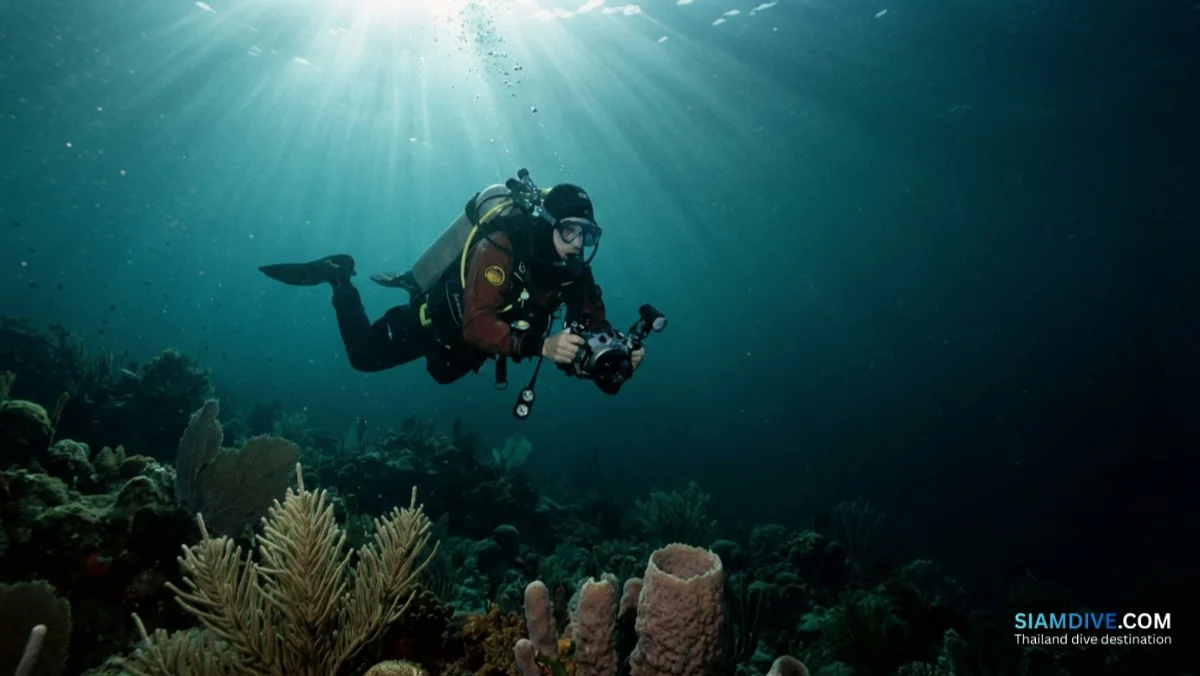
The project runs on diver contributions. Liveaboard guests and day-trip divers who photograph manta bellies and submit images through the Manta Trust's portal add data that no single fixed camera could replicate. During the 2024–2025 Similan season, a February dive at Koh Bon produced encounters with multiple giant oceanic mantas in a single session — a sharp reminder that even populations studied for years can still deliver days that rewrite the field notes.
When to Be at Koh Bon
Seven months is all the park gives. Mu Ko Similan opens in mid-October and closes in mid-May, and Koh Bon — at the park's northern edge — compresses its manta window into an even tighter slice. Sightings concentrate between January and April, with February and March typically producing the highest encounter rates as plankton-rich upwellings draw feeding mantas close to the reef and the cleaning stations see peak traffic.
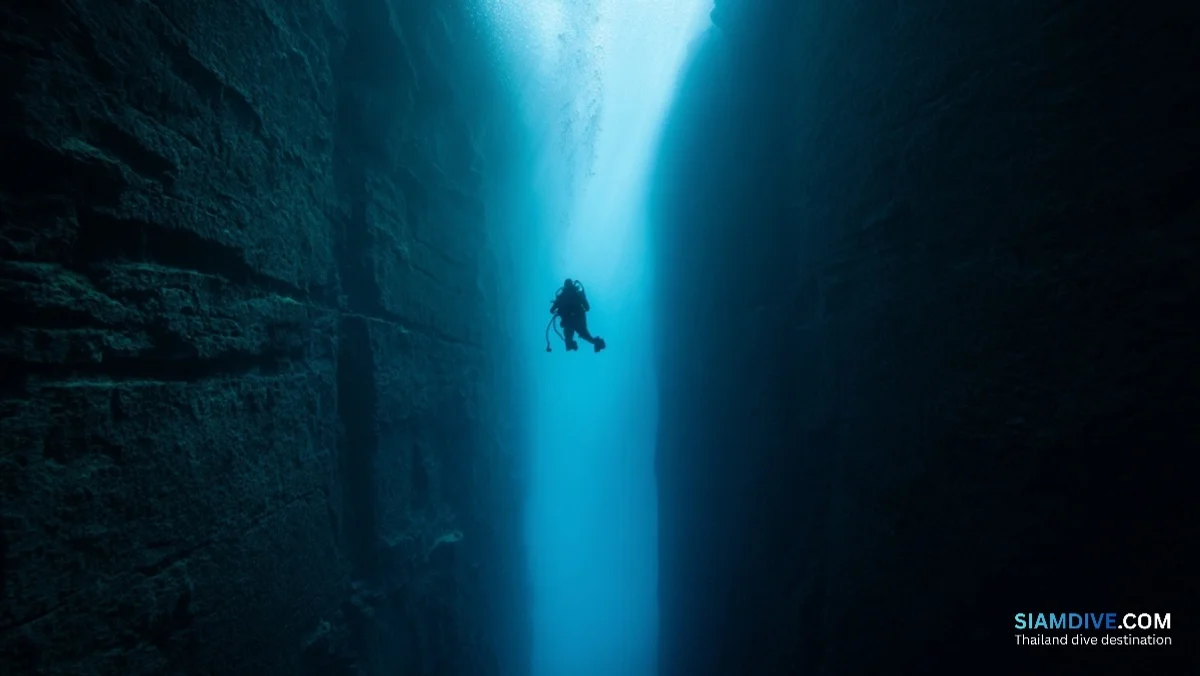
- Pinnacle depth — shallowest point at 18 metres, walls dropping beyond 40 metres
- Visibility — 25–35 metres in peak season, occasionally exceeding 40 metres in February
- Water temperature — 27–29 °C through the manta window
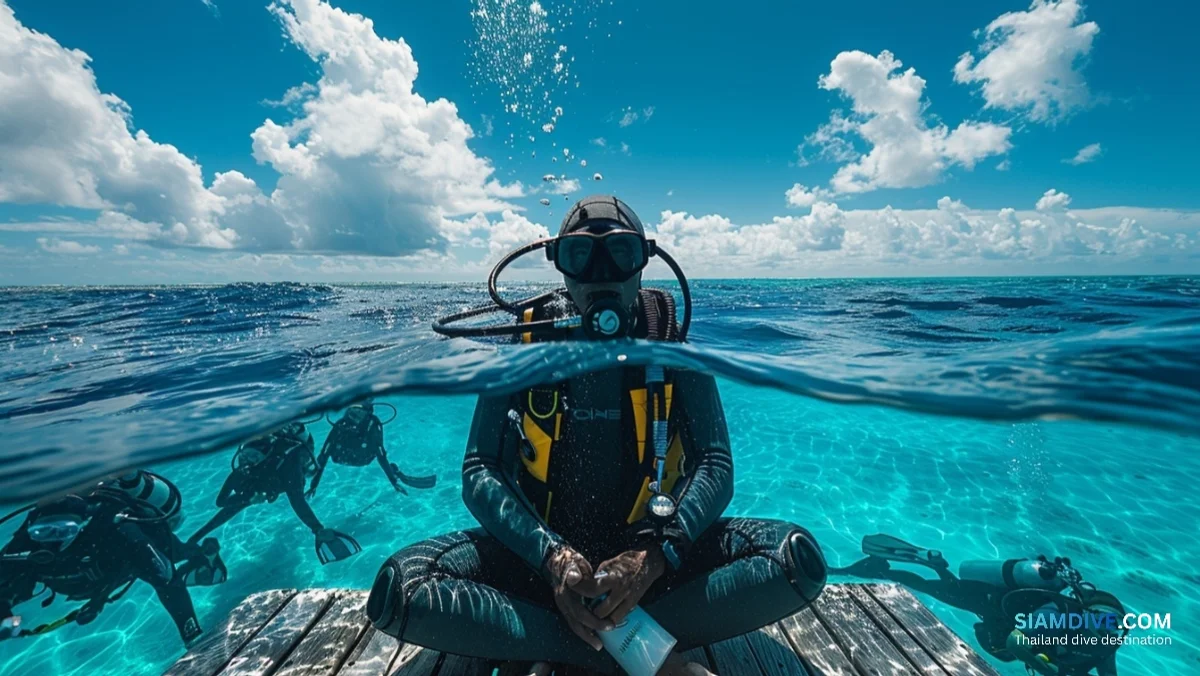
- Certification — Advanced Open Water or equivalent recommended; the pinnacle has no shallow bailout point
- Park fees (2025–2026 season) — 500 THB Similan entry + 200 THB daily diving permit; a typical 4-day liveaboard covering Similans, Koh Bon, Koh Tachai, and Richelieu Rock totals approximately 1,800 THB in combined park fees
Most encounters happen on liveaboard itineraries that include Koh Bon as a dedicated stop, though day trips from Khao Lak also reach the site when seas allow. Mantas move between Koh Bon and Koh Tachai during the season — a transit corridor that experienced liveaboard captains exploit by scheduling both sites on consecutive days to maximise the odds.
No dive shop guarantees a manta encounter, and any that does is selling fiction. But the biology tilts the odds: where the wrasses set up cleaning territories on healthy hard coral, the mantas follow, because the cost of parasites is higher than the cost of the detour. Frogfish ambush prey in six milliseconds. Butterflyfish signal reef health by their presence or absence. At Koh Bon, a cleaner wrasse smaller than a crayon holds a population of giants loyal to a single underwater ridge — and the full story of why is still being written, one belly photograph at a time.
Sources
- Manta Trust — Thailand Manta Project
- Armstrong et al. (2021) — Mutualism promotes site selection in a large marine planktivore
- Marine Biology — Current strength, temperature, and bodyscape modulate cleaning services for giant manta rays
- Frontiers in Fish Science (2024) — Oceanic manta ray visitations at cleaning stations in Indonesia
- Thailand National Parks — Mu Ko Similan National Park