What Your Body Needs in the 24 Hours After a Dive
17 เมษายน 2569
Your dive may be over, but your body is still working hard. From rehydration and nutrition to no-fly rules and DCS warning signs, here's your complete post-dive recovery checklist.
Your Body Doesn't Stop Working When You Surface
The moment you climb back onto the boat, your dive computer may say the dive is over — but your body disagrees. Nitrogen off-gassing continues for hours after surfacing, as dissolved inert gas slowly exits your tissues through your bloodstream and lungs. This is why the 24-hour window after any dive is critical. What you eat, drink, and do during this period directly affects how efficiently your body eliminates excess nitrogen and recovers from the physical demands of diving.
Think of it this way: during your dive, your body absorbed nitrogen under pressure. Now it needs to release that gas safely, bubble-free. Every choice you make post-dive either helps or hinders that process.
Rehydrate Immediately — Water, Electrolytes, Coconut Water
Dehydration is one of the biggest risk factors for decompression sickness, and diving is inherently dehydrating. Breathing dry compressed air, immersion diuresis (your body producing more urine underwater), sweating in tropical heat, and exposure suits all strip fluid from your body.
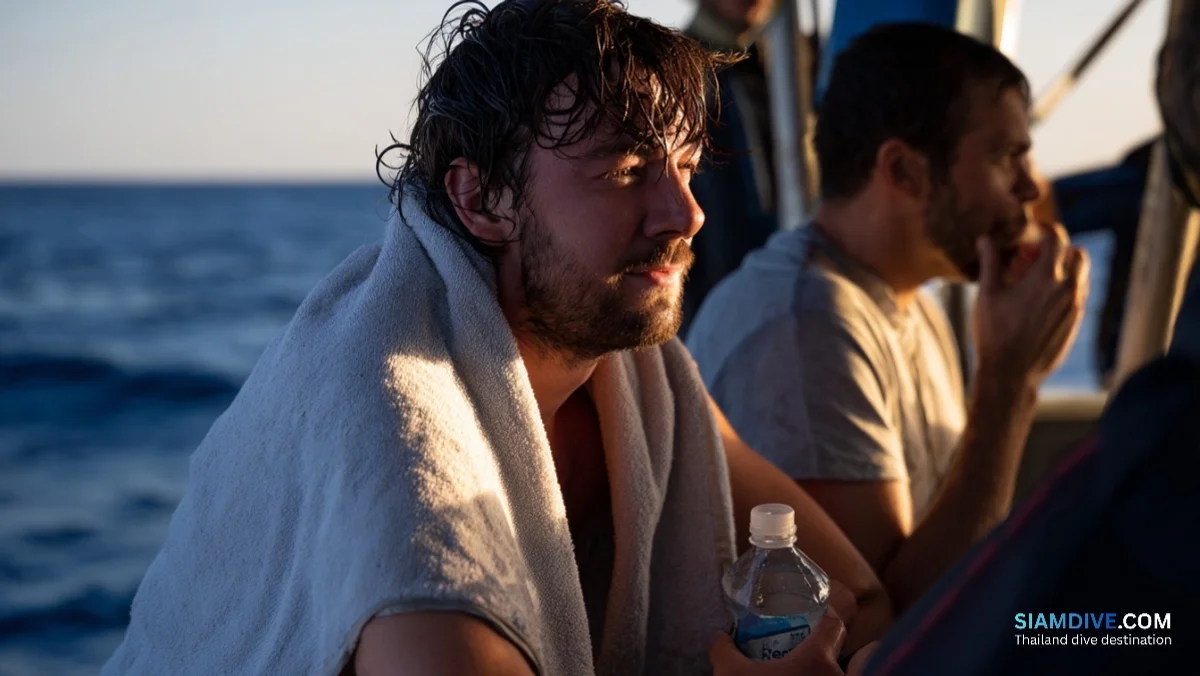
Start drinking water the moment you surface. Aim for at least 500ml within the first 30 minutes. Electrolyte drinks are excellent because you lose sodium, potassium, and magnesium through sweat. Coconut water is a natural, dive-trip-friendly option packed with potassium and minerals. Avoid sugary sodas — they can actually worsen dehydration.
Proper hydration helps your blood flow smoothly, which is essential for efficient nitrogen elimination. Thick, dehydrated blood moves slowly and makes off-gassing harder.
Eat Smart — Carbs and Protein Within One Hour
Diving burns more calories than most people realize. Cold water exposure, fin kicks, carrying gear, and even the metabolic cost of breathing dense air at depth all add up. Your body needs fuel to recover.
Eat a balanced meal within one hour of your last dive. Focus on complex carbohydrates (rice, pasta, whole grain bread) to replenish glycogen stores, and lean protein (grilled fish, chicken, eggs, tofu) to support muscle repair. Add fruits and vegetables for vitamins and antioxidants that combat oxidative stress from pressure changes.
Many experienced divers swear by a post-dive banana — it's quick, potassium-rich, and easy on the stomach if you're feeling a bit seasick from surface intervals on a rocking boat.
Rest and Recovery — No Strenuous Exercise for 2–4 Hours
Your body is busy off-gassing nitrogen, and vigorous physical activity can interfere with this process. Increased heart rate and blood flow changes during heavy exercise may promote bubble formation in your tissues.
Avoid strenuous exercise, heavy lifting, and intense workouts for at least 2–4 hours after diving. This includes running, weight training, CrossFit, and even carrying heavy dive gear up steep boat ladders faster than necessary.
What you can do: gentle walking, light stretching, and relaxed movement are perfectly fine and may actually help circulation. Yoga-style stretches that target your shoulders, back, and legs can relieve the muscle tension that comes from diving in sometimes awkward positions.
Many divers report unusually good sleep quality after a dive day — the combination of physical activity, fresh air, and sun tends to promote deep rest. Just be mindful if you're sleeping at altitude, as even moderate elevation can affect off-gassing.
The No-Fly Rule — Wait 18 to 24 Hours
This is the most well-known post-dive rule, and it exists for a very good reason. Aircraft cabins are pressurized to an equivalent altitude of 1,800–2,400 meters (6,000–8,000 feet). This reduced pressure can cause dissolved nitrogen to form bubbles in your body — essentially creating decompression sickness at 30,000 feet with no recompression chamber in sight.
Current guidelines from DAN (Divers Alert Network):
- Single no-decompression dive: Wait at least 12 hours (18 hours recommended)
- Multiple dives per day or multi-day diving: Wait at least 18 hours
- Decompression dives: Wait at least 24 hours
When in doubt, wait 24 hours. A missed flight is inconvenient; a DCS hit at altitude is dangerous. Plan your last dive day accordingly — many divers make their last day a shallow reef dive or skip diving entirely before a flight.
Avoid Hot Tubs, Saunas, and Hot Showers
After a long dive day, a hot soak sounds heavenly — but it's one of the worst things you can do. Heat causes blood vessels to dilate rapidly, which can promote nitrogen bubble formation and growth in your tissues. This significantly increases your risk of decompression sickness.
According to DAN research, jumping into a hot tub or sauna immediately post-dive increases decompression stress considerably. The rapid warming effect is particularly dangerous when your body still has a substantial gas load.
What to do instead:
- Use a lukewarm shower — comfortable but not hot
- Wait at least 3–4 hours before using a hot tub or sauna
- If you're at a resort, enjoy the pool (ambient temperature) instead
Skip the Deep Tissue Massage — Gentle Stretching Is Fine
Your muscles are sore, your shoulders ache from tank weight, and that Thai massage shop near the dive center is calling your name. Resist the temptation — at least for today.
Deep tissue massage can mobilize nitrogen microbubbles trapped in your muscles and push them into your bloodstream. The intense pressure and manipulation of deep massage techniques essentially "squeeze" gas out of tissues in an uncontrolled way, potentially triggering DCS symptoms.
Wait at least 12–24 hours after your last dive before getting a deep tissue or sports massage. In the meantime, gentle self-massage, foam rolling with light pressure, and stretching are safe alternatives that can relieve post-dive muscle tension without the risk.
Alcohol — Wait at Least 2 Hours (Longer Is Better)
The post-dive beer is a diving tradition, but timing matters. Alcohol is a powerful diuretic that accelerates fluid loss — exactly what your dehydrating, off-gassing body doesn't need.
Drinking alcohol too soon after diving compounds dehydration risk during the critical off-gassing window. Alcohol also impairs your ability to recognize early DCS symptoms. That "weird tingling" you might dismiss as being tipsy could actually be neurological decompression sickness.
The smart approach:
- Wait at least 2 hours after your last dive
- Drink at least 1 liter of water first
- Keep alcohol consumption moderate
- If you had deep or repetitive dives, consider waiting even longer
Know the Warning Signs — When to Seek Help Immediately
Decompression sickness can appear within minutes of surfacing or up to 24 hours later. About 50% of DCS cases show symptoms within the first hour, and 90% within 6 hours. Knowing what to look for could save your life or a dive buddy's life.
Seek emergency medical help immediately if you experience any of these after diving:
- Joint pain — especially shoulders, elbows, knees, or ankles (the classic "bends")
- Dizziness or vertigo — the room spinning or balance problems
- Skin rash or mottling — blotchy, marbled skin (cutaneous DCS)
- Breathing difficulty — chest pain, coughing, shortness of breath ("the chokes")
- Numbness or tingling — in limbs, hands, or feet
- Extreme fatigue — beyond normal post-dive tiredness
- Confusion or slurred speech — neurological DCS
- Weakness in limbs — difficulty walking or gripping
Many DCS symptoms mimic dehydration or exhaustion. When in doubt, contact DAN or seek hyperbaric treatment. Early recompression therapy is most effective within the first few hours. Never "wait and see" if symptoms feel unusual — it's always better to get checked and be fine than to delay treatment.
Log Your Dive and Rinse Your Gear
While your memory is fresh, log your dive — depth, time, temperature, air consumption, and how you felt during and after the dive. This data is invaluable for tracking your diving patterns, improving your skills, and providing critical information if any medical issues arise later.
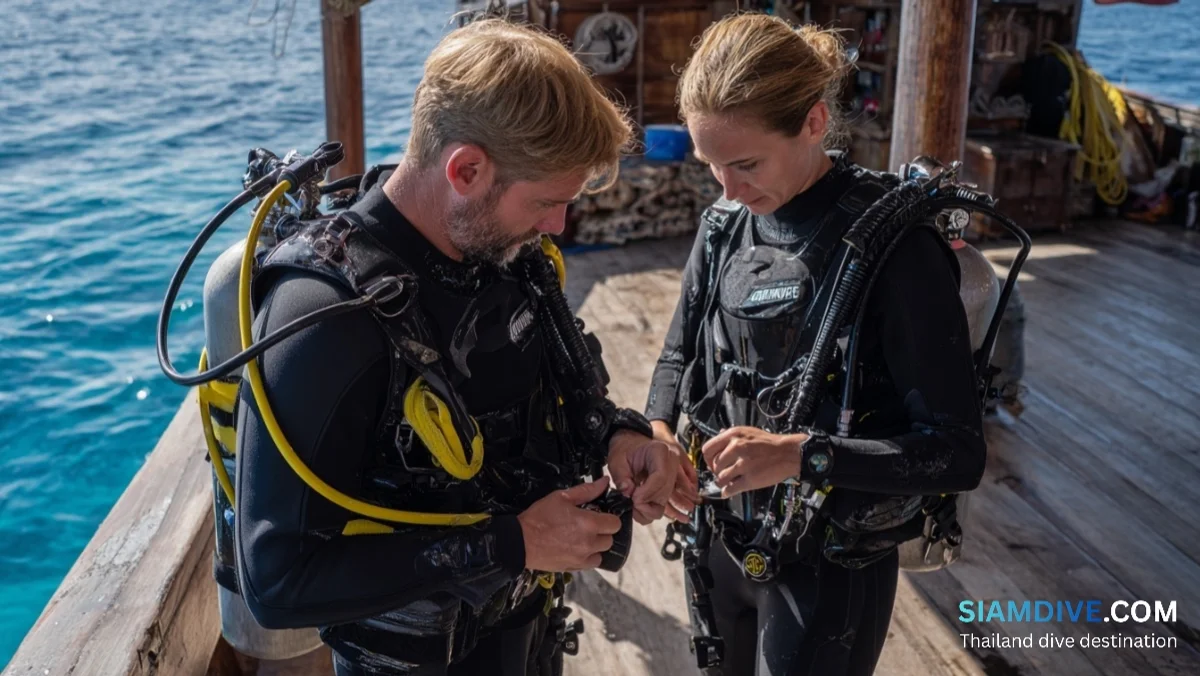
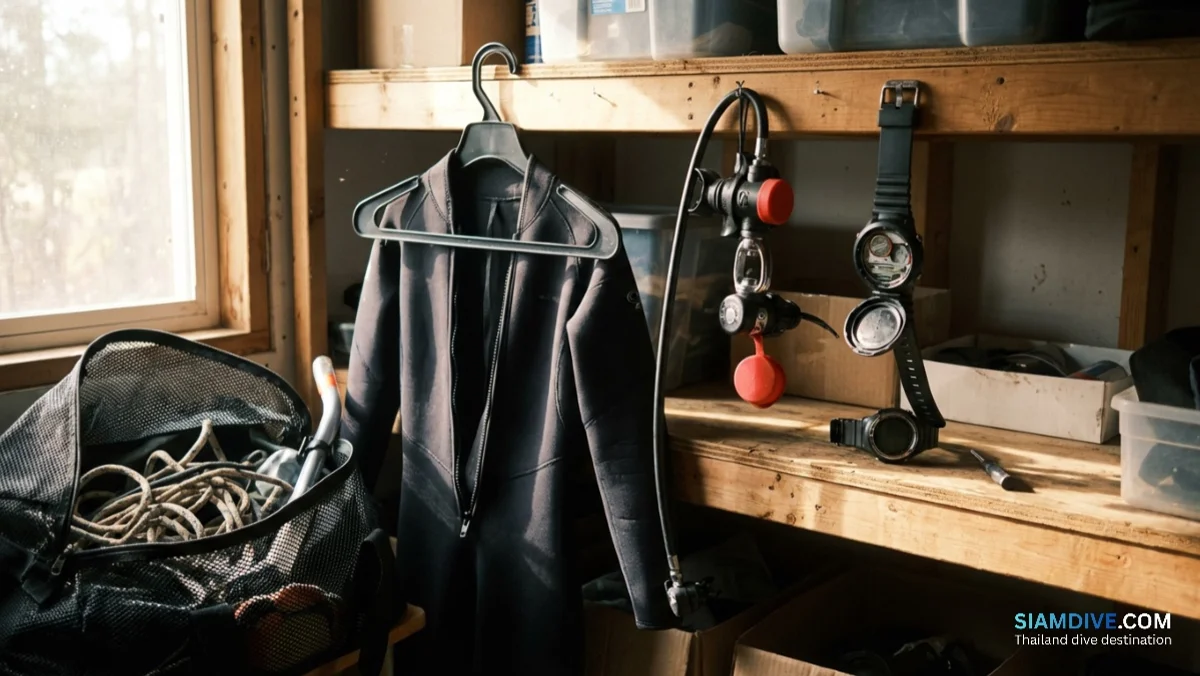
Take time to rinse all your gear with fresh water. Salt, sand, and chlorine corrode equipment and shorten its lifespan. Pay special attention to regulators, BCD inflator mechanisms, and computer sensors. A thorough rinse routine after every dive day keeps your gear reliable and ready for the next adventure.
Your body works incredibly hard during and after every dive. Treat the post-dive period with the same respect you give your pre-dive safety checks. Hydrate, eat well, rest, avoid heat and altitude, watch for symptoms, and give your body the time it needs to return to equilibrium. Smart recovery today means safer diving tomorrow.