Why Elephant Head's Granite Tunnels Demand a Second Dive
23 เมษายน 2569
Elephant Head Rock hides a 40-metre granite labyrinth of swim-throughs between Similan Islands 7 and 8 — and one dive is never enough to see it all.
Three Boulders and a Free Descent
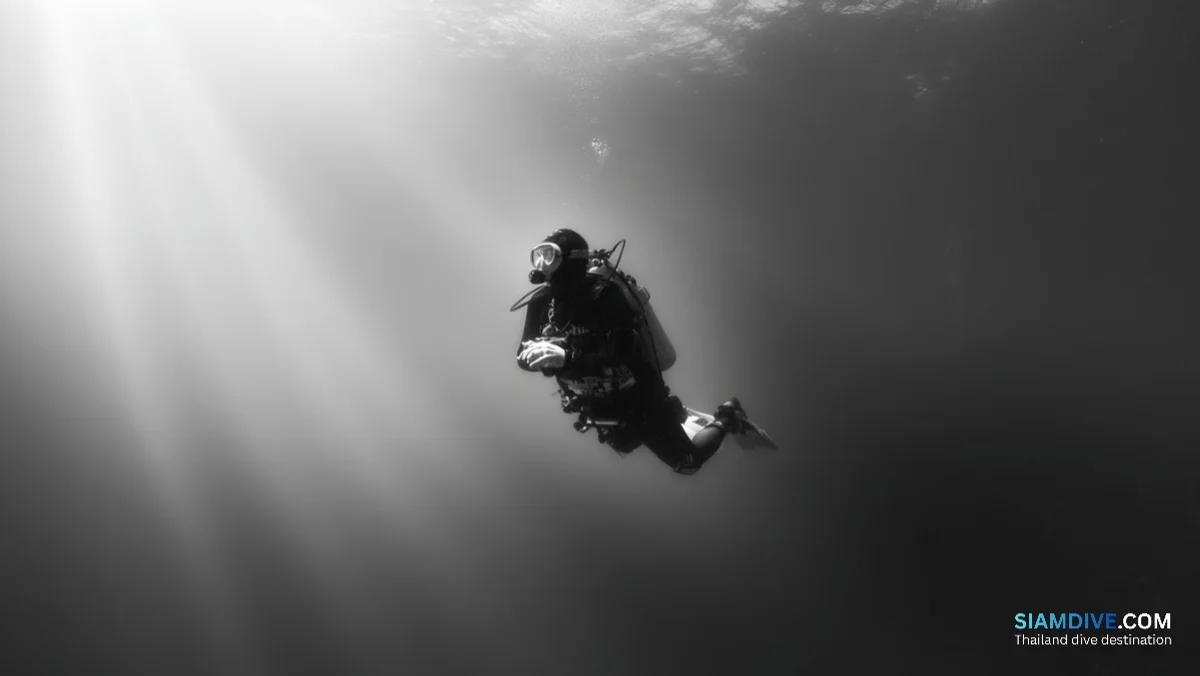
Three granite boulders break the surface between Similan Islands 7 and 8, rising from a sandy seabed 40 metres below. The easternmost rock — tilted, massive, vaguely proboscidean — gave Elephant Head Rock its name. Underwater, the scene multiplies: dozens of stacked boulders create a vertical labyrinth of swim-throughs, archways, and caverns that runs from 5 metres down past 30. No mooring line holds the dive boats here. Descending into the blue, divers drop free to around 25 metres and navigate by topography, which is part of the reason Elephant Head (known locally as Hin Pousar) has earned its reputation as the most demanding — and most rewarding — dive site in the Similan chain.
The Boulder Maze: Topography and Layout
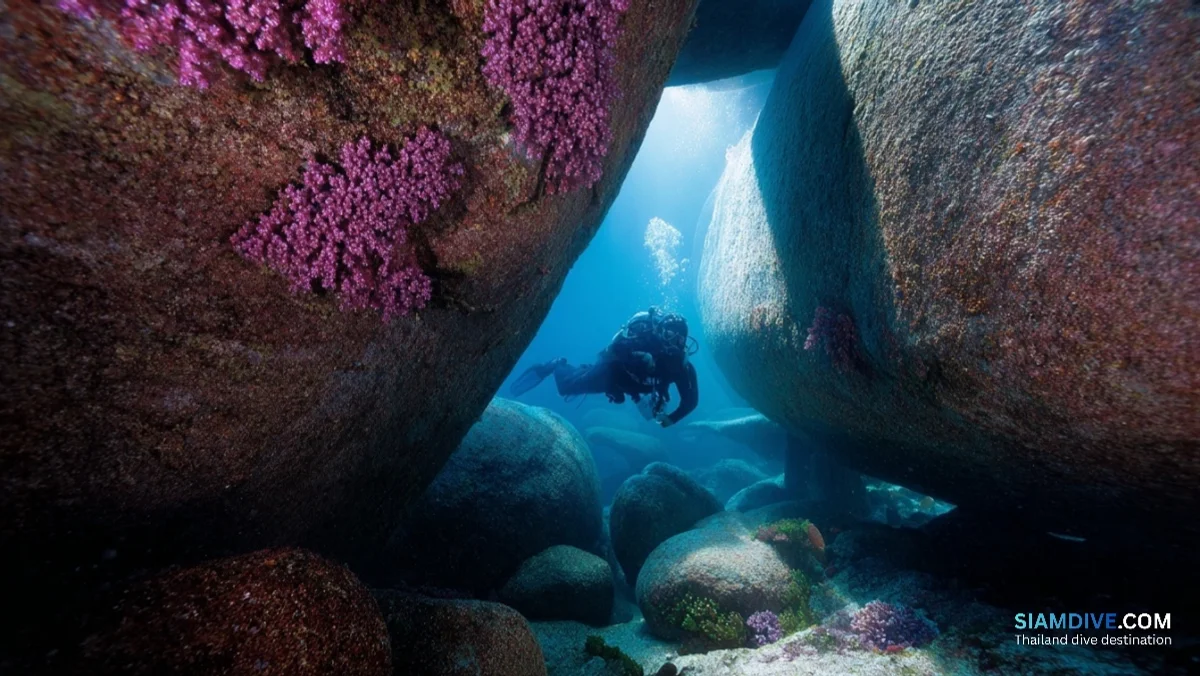
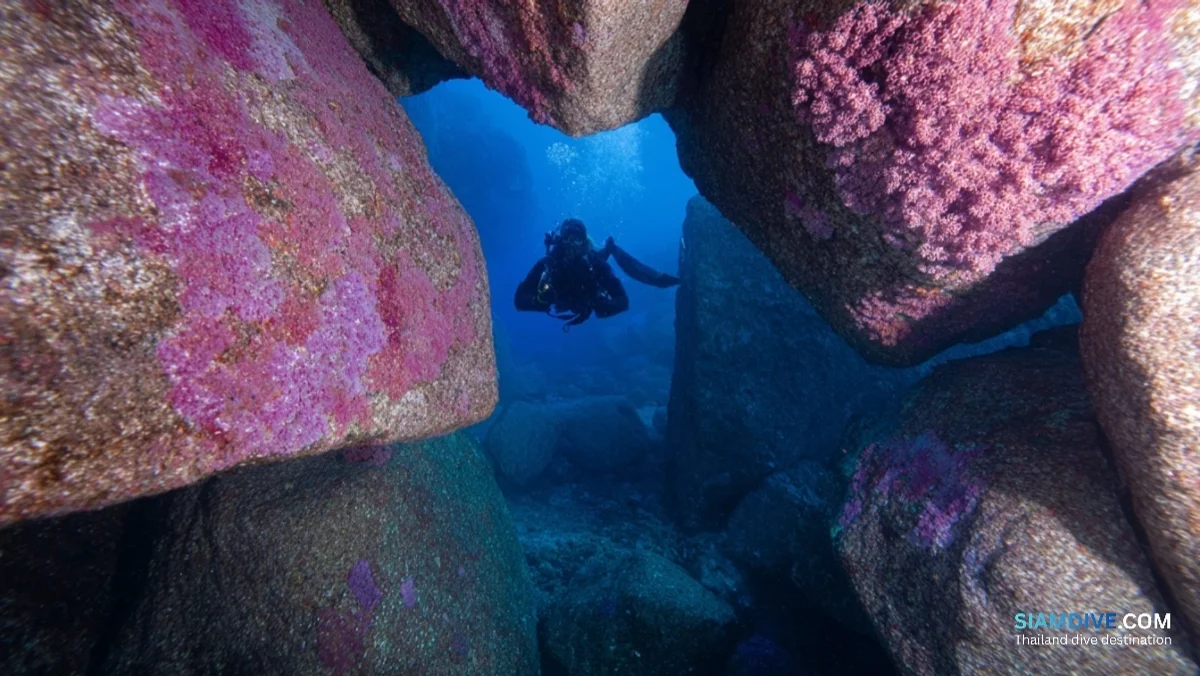
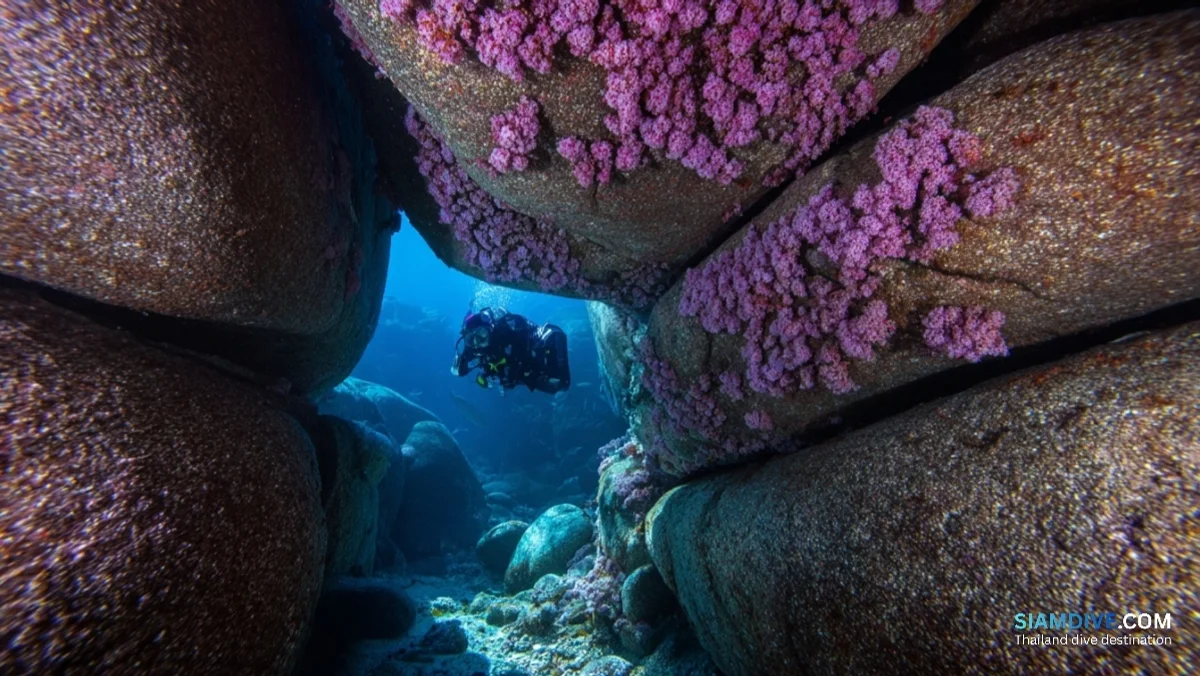
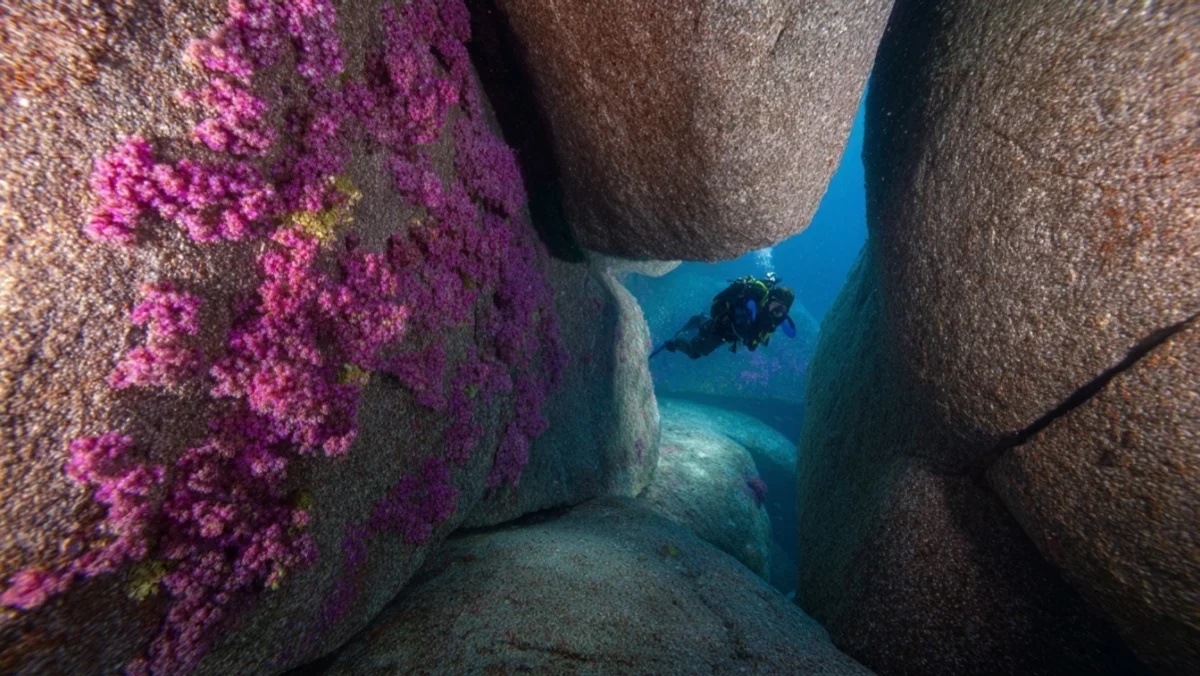
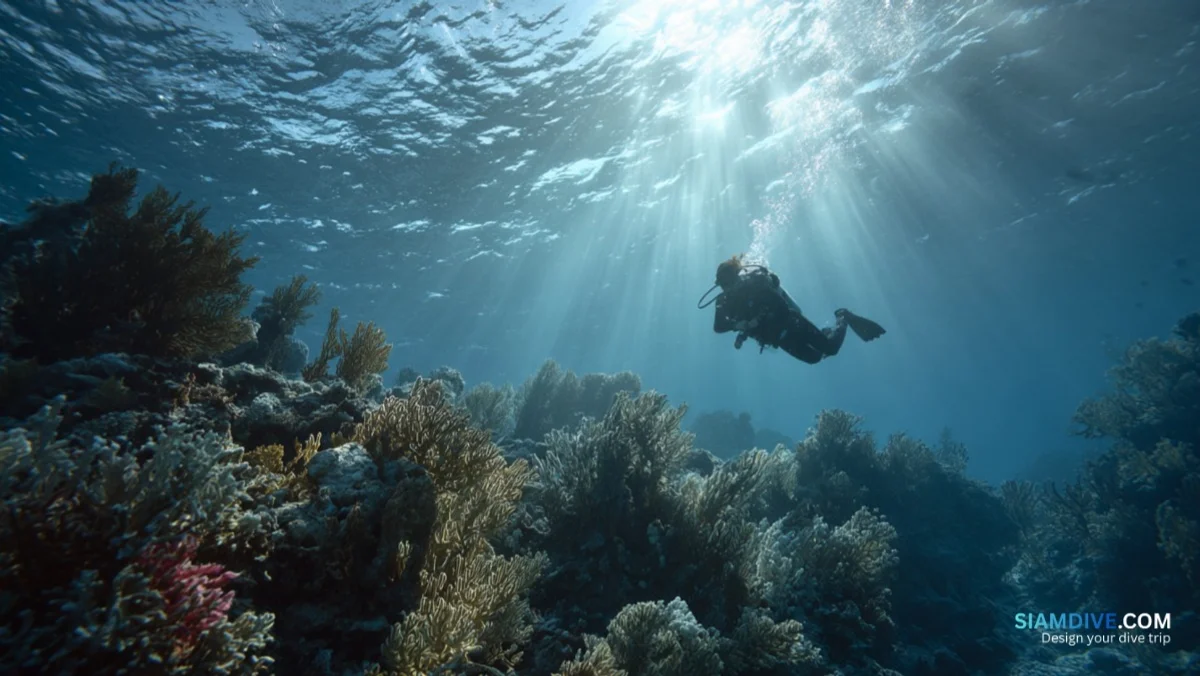
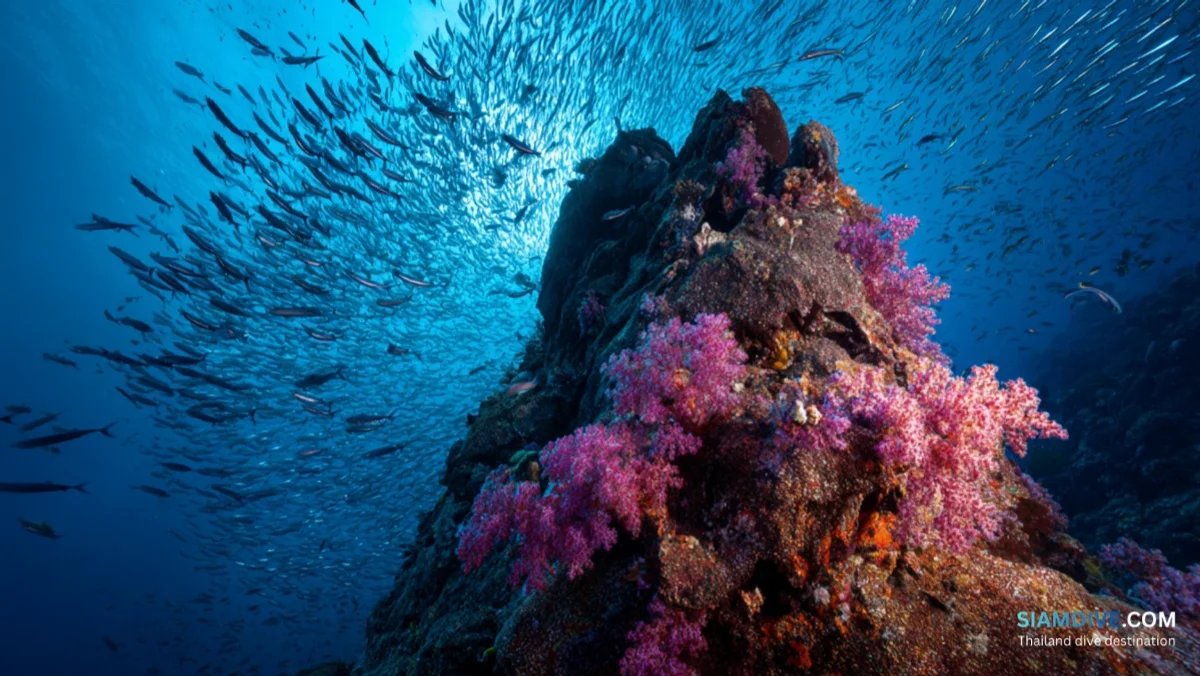
Picture a giant's game of dice frozen mid-tumble. The granite blocks sit at odd angles, some the size of small houses, leaving gaps that form tunnels wide enough for two divers abreast and crevices barely passable in single file. Light filters down through the cracks in shifting blue-white shafts, and soft corals coat the ceilings in pinks and purples. The main swim-throughs cluster between 12 and 25 metres, though smaller passages open up as shallow as 5 metres. Below 30 metres the boulders give way to open sand, and the site drops steeply past 40 metres — some profiles mark it beyond 50.
- Surface feature: 3 large granite boulders breaking the waterline
- Location: Open water between Island 7 (Koh Payu) and Island 8 (Koh Similan), approximately 1.5 km offshore
- Depth range: 5–40 m (recreational), 50 m+ on the sand slope
- Main swim-throughs: 12–25 m, with smaller passages from 5 m
- Seabed: Sand at 40 m, sloping deeper on the outer edges
- Mooring: None — free descent required
Navigation matters here more than at most Similan sites. Without a reference line, divers who hesitate on the surface risk getting swept off the rocks by current. The standard approach is to enter the water, equalise quickly, and descend directly to the boulder formation. From there, the rocks themselves become the map.
Currents and Conditions
Elephant Head sits in open water, fully exposed to the Andaman's tidal flow. Currents range from mild to fierce, and the site is at its strongest around full and new moon phases. On a calm day the drift is manageable and adds a gentle push through the swim-throughs; on a strong-current day, finning against the flow burns air fast, and less experienced divers can find themselves pinned against boulders or swept past the site entirely.
Visibility typically sits between 20 and 30 metres during the October-to-May diving season, climbing to 30–40 metres during the peak months of December through April. Water temperature holds steady at 28–30 °C, warm enough for a 3 mm wetsuit or even a shorty on calm days. The park — Mu Ko Similan National Park — opens each year on October 15 and closes on May 15, and the 2025–2026 season has followed that calendar precisely.
- Current strength: Mild to strong; strongest at full/new moon
- Visibility: 20–30 m typical; 30–40 m December–April
- Water temperature: 28–30 °C year-round during open season
- Season: October 15 – May 15 annually
- Best months: February–March for calm seas and peak visibility
What Lives in the Labyrinth
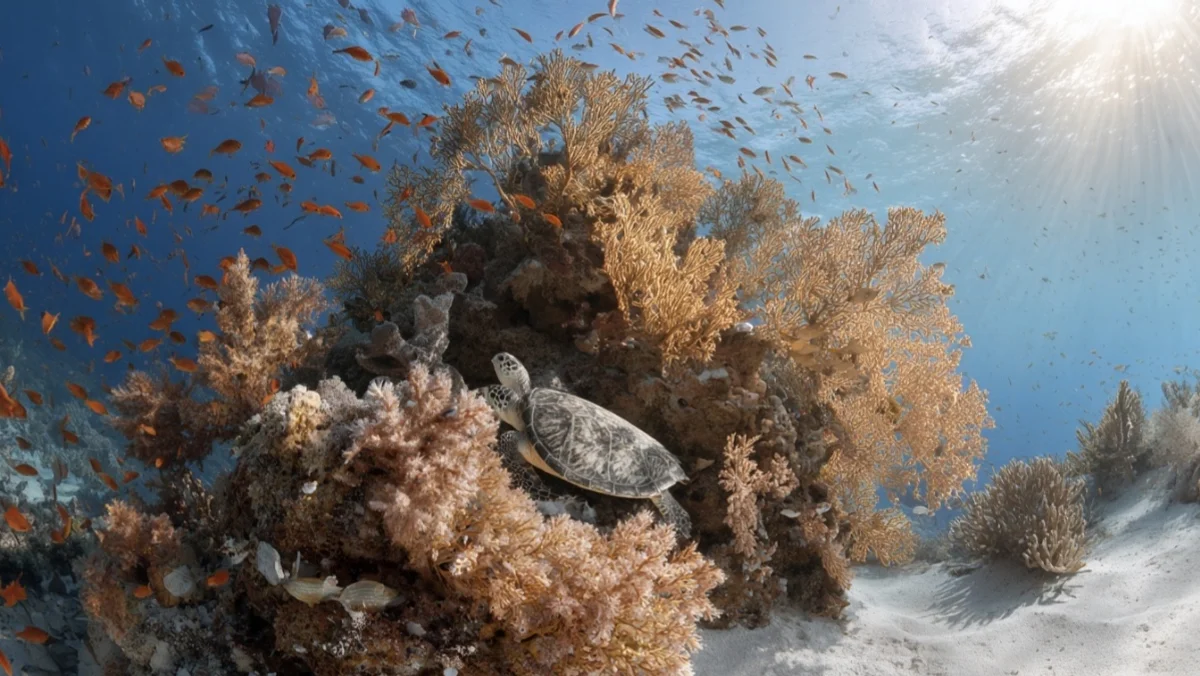
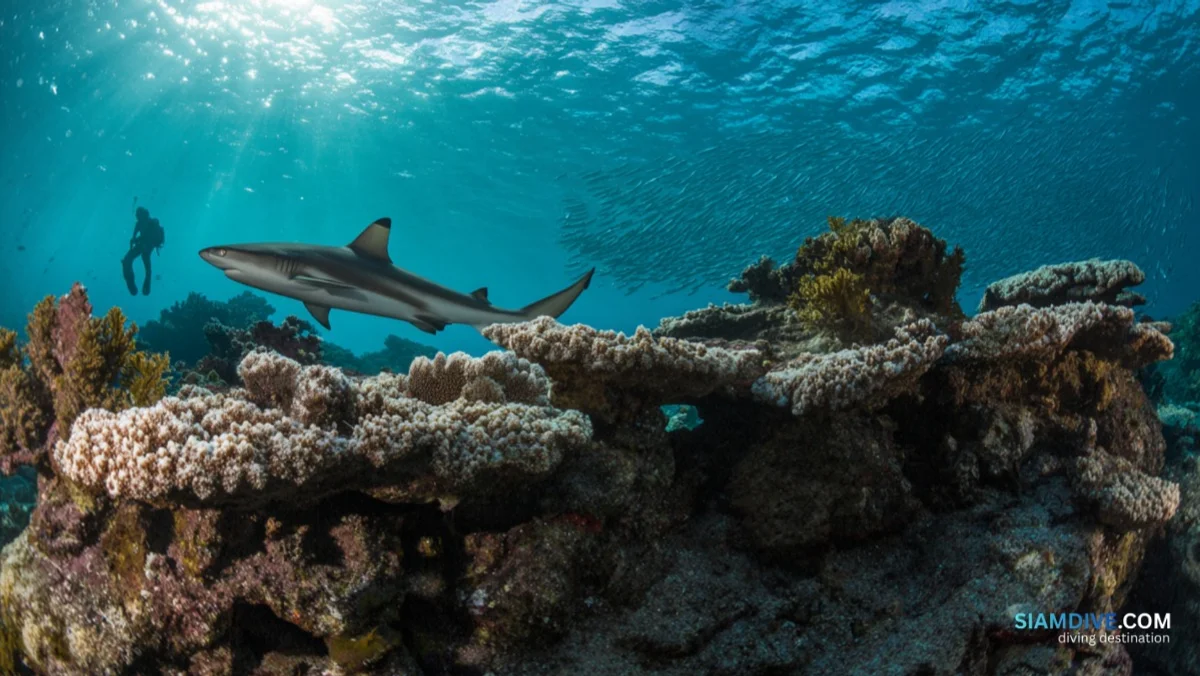
Soft corals and sea fans drape the archway walls in dense clusters — orange, crimson, and violet — swaying gently in whatever current the boulders cannot block. These are the first things most divers photograph, and they are worth the frame. But the real pull at Elephant Head is the sharks. Leopard sharks (zebra sharks to taxonomists) rest on sandy ledges between boulders, occasionally stirring when a diver's bubbles drift too close. Whitetip reef sharks patrol the swim-through exits, and blacktip reef sharks cruise the perimeter where the boulders meet open water.
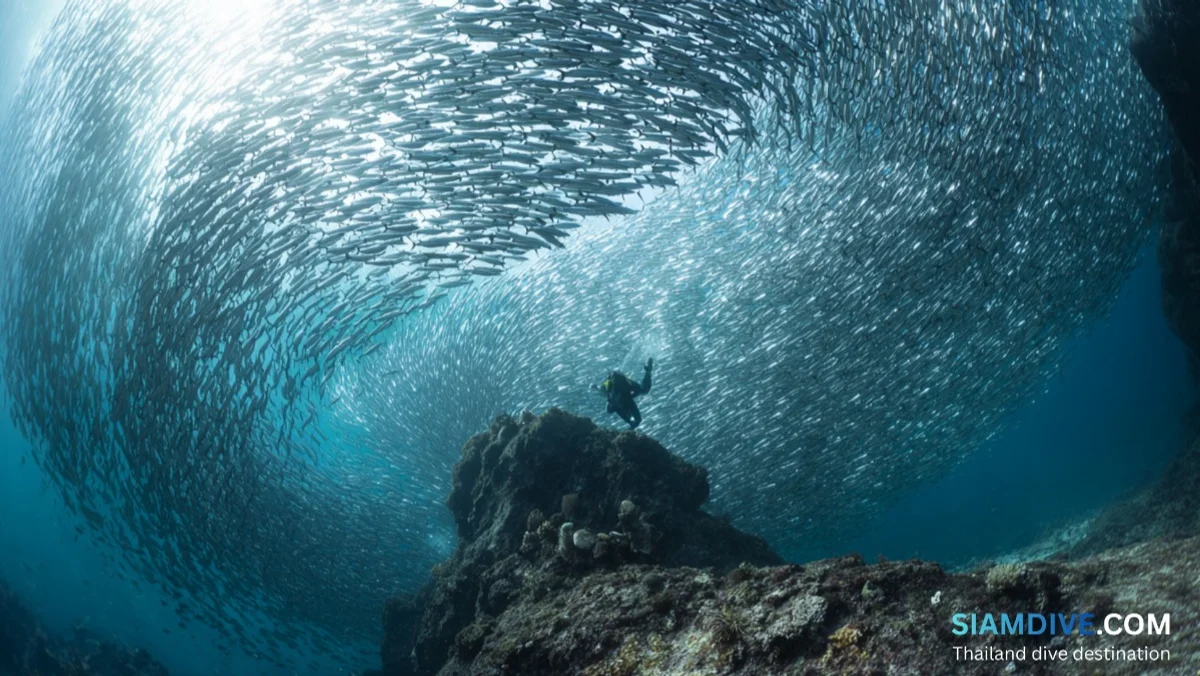
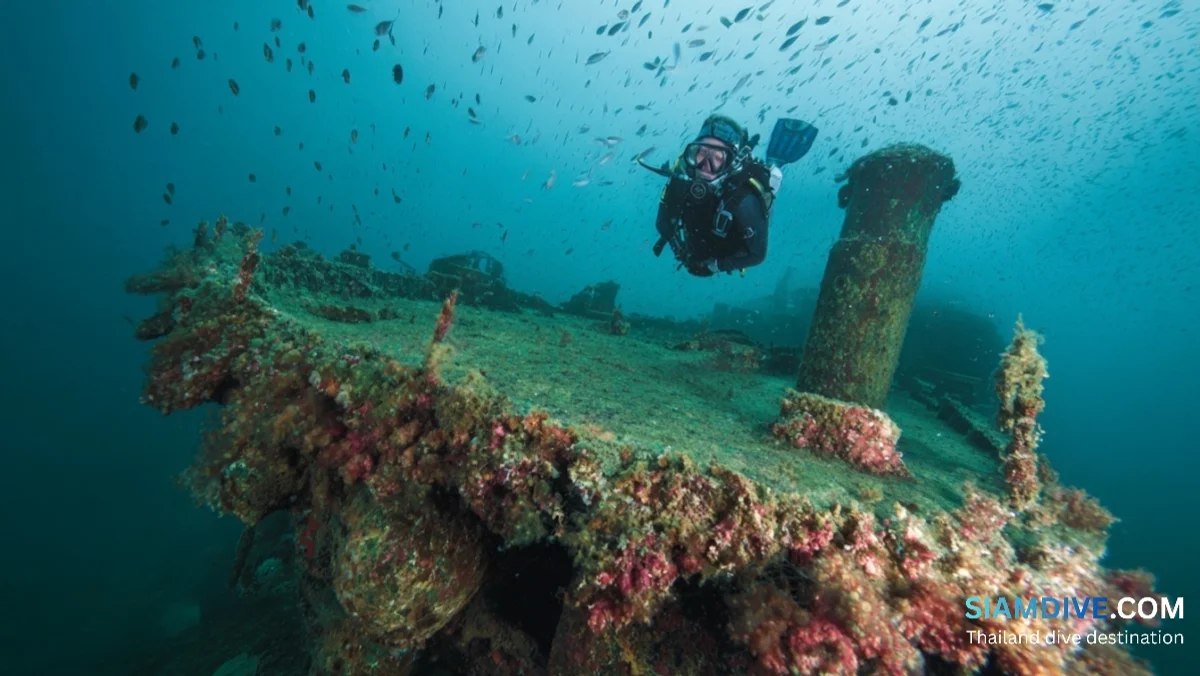
Beyond the sharks, the boulder crevices shelter a surprisingly rich macro world. Clearfin lionfish hang inverted under overhangs. Spider crabs cling to coral fans. Blue-ringed angelfish and McCosker's flasher wrasse add colour at mid-depth. Larger visitors — schools of big-eye snappers, trevally hunting in loose formations — move through the upper water column, sometimes thick enough to dim the light from above.
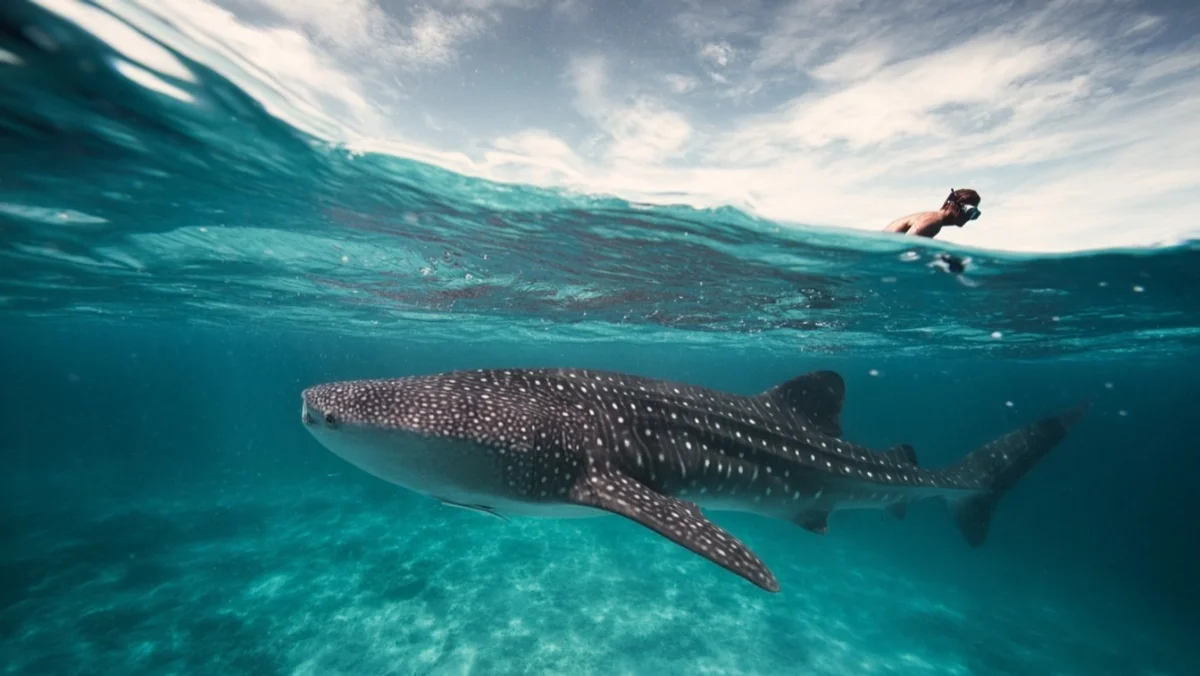
Toward the end of the season, from March through May, Elephant Head occasionally draws pelagic visitors. Manta rays have been spotted circling the outer boulders, and whale shark sightings — rare but documented — add a lottery-ticket thrill to every late-season dive. Nearby Koh Bon Pinnacle remains the more reliable manta site, but Elephant Head's depth and current attract its own share of open-ocean traffic.
Who Should Dive Here — And How
This is not a beginner site. The combination of free descent, strong currents, overhead environments in the swim-throughs, and depths regularly exceeding 25 metres puts Elephant Head firmly in advanced territory. Most operators recommend Advanced Open Water certification at minimum, with solid buoyancy control and at least 30 logged dives. PADI rates sites with similar profiles as requiring experience with drift and deep diving, and Elephant Head fits that description precisely.
Nitrox (EANx32) is worth carrying. A typical dive plan runs 18–25 metres for 45–50 minutes, and enriched air extends bottom time and adds a safety margin on repetitive dives — particularly relevant for liveaboard divers doing three or four dives a day across the Similan route. The standard liveaboard itinerary visits Elephant Head alongside Christmas Point, East of Eden, and the deeper sites at Koh Tachai and Richelieu Rock.
- Recommended certification: Advanced Open Water (PADI/SSI equivalent) minimum
- Suggested experience: 30+ logged dives with current and deep experience
- Gas: Air or EANx32 (Nitrox widely available on liveaboards)
- Typical dive profile: 18–25 m for 45–50 minutes
- Key skills: Free descent, buoyancy control in overhead environments, current awareness
Getting to Elephant Head
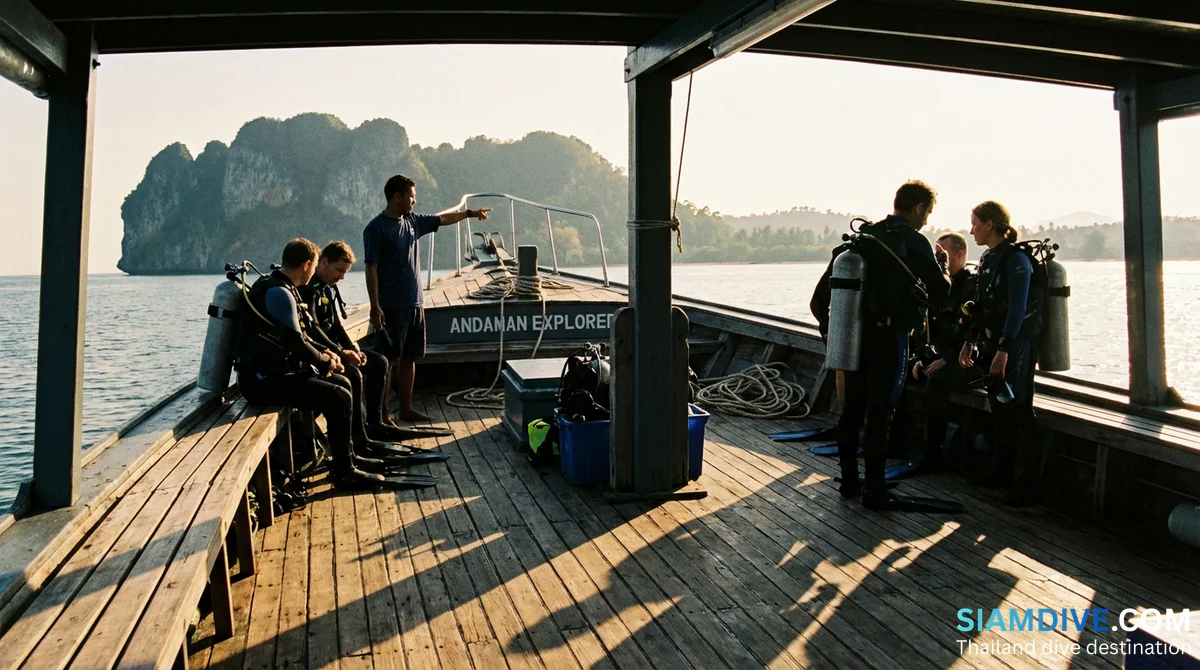
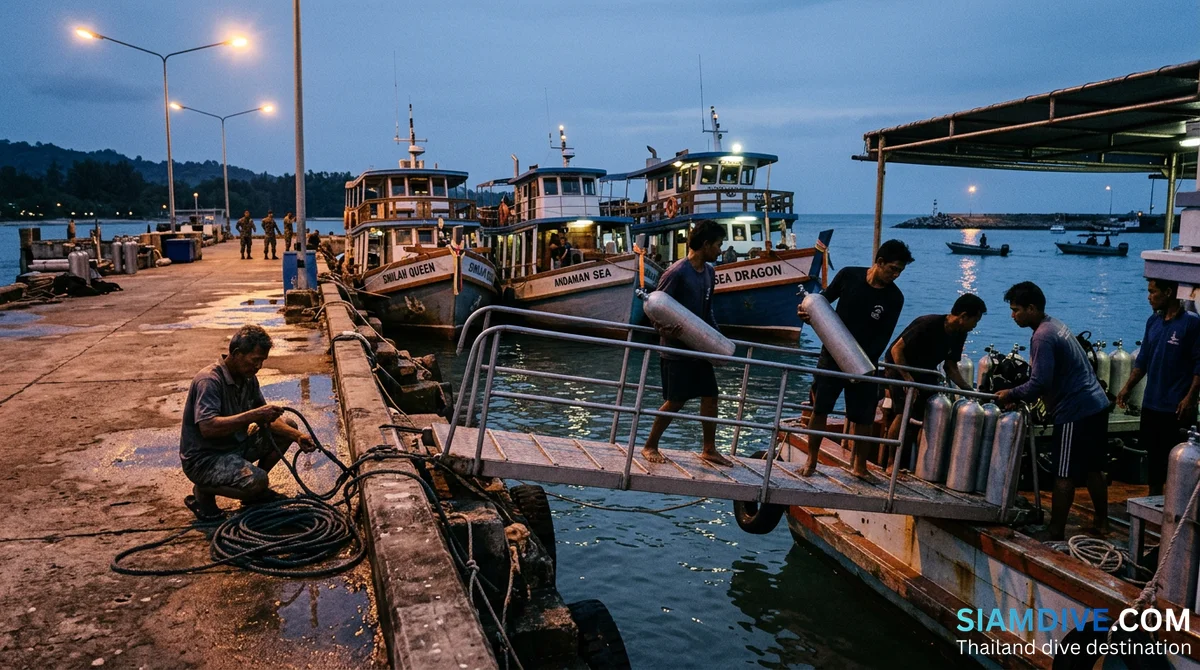
Elephant Head Rock is accessible almost exclusively by liveaboard. Day trips from Khao Lak reach the Similan Islands in roughly 60–90 minutes by speedboat, but most day operators focus on the eastern (sheltered) dive sites — East of Eden, Anita's Reef — where conditions are calmer and suitable for mixed groups. Elephant Head, exposed on the western side between Islands 7 and 8, is a regular stop on the multi-day liveaboard circuit that loops from Khao Lak through the Similans, Koh Bon, Koh Tachai, and Richelieu Rock.
For the 2025–2026 season, the national park entry fee for foreign visitors stands at 400 THB, with an additional diver marine park fee of approximately 2,300 THB for liveaboard guests. Day trips from Khao Lak (two dives at easier sites) start around 6,150 THB. Liveaboard pricing varies widely by vessel class and trip duration — three-night itineraries covering the Similan-to-Richelieu route are the most common format, and many vessels sell out months in advance for the February–March window.
Dive Planning: Making the Most of the Maze
A single dive at Elephant Head rarely feels like enough. The boulder maze is large enough that two dives at the site can follow completely different routes — one threading through the deep swim-throughs at 20–25 metres, another staying shallow at 10–15 metres to explore the upper archways and the coral-encrusted boulder tops where reef fish congregate. Liveaboard itineraries that offer a second pass at Elephant Head, often scheduled for early morning when currents tend to be gentler, are worth seeking out.
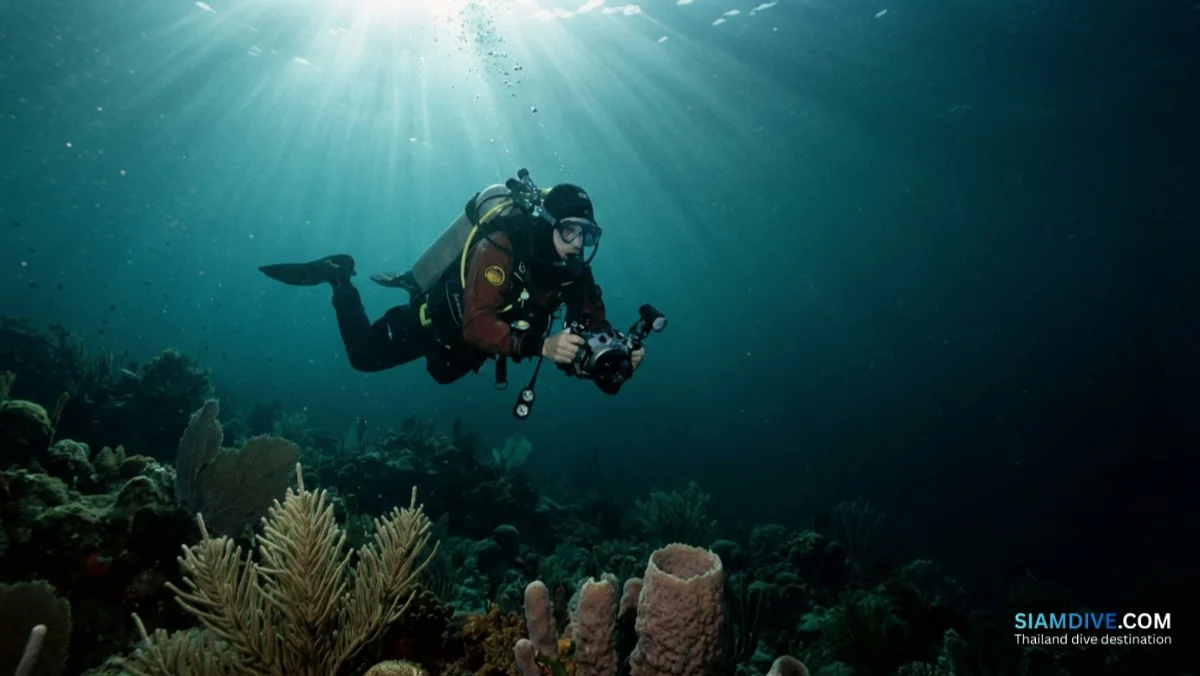
Photographers should plan for low ambient light inside the swim-throughs. A wide-angle lens and dual strobes are the standard kit — the tunnels frame divers against blue water exits in a way few other Andaman sites can match. For video, a compact light helps pick up the soft coral colours that otherwise vanish into blue-grey at depth. The gorgonian sea fans at 15–20 metres, backlit by sun penetrating the boulder gaps, produce the site's most iconic shots.
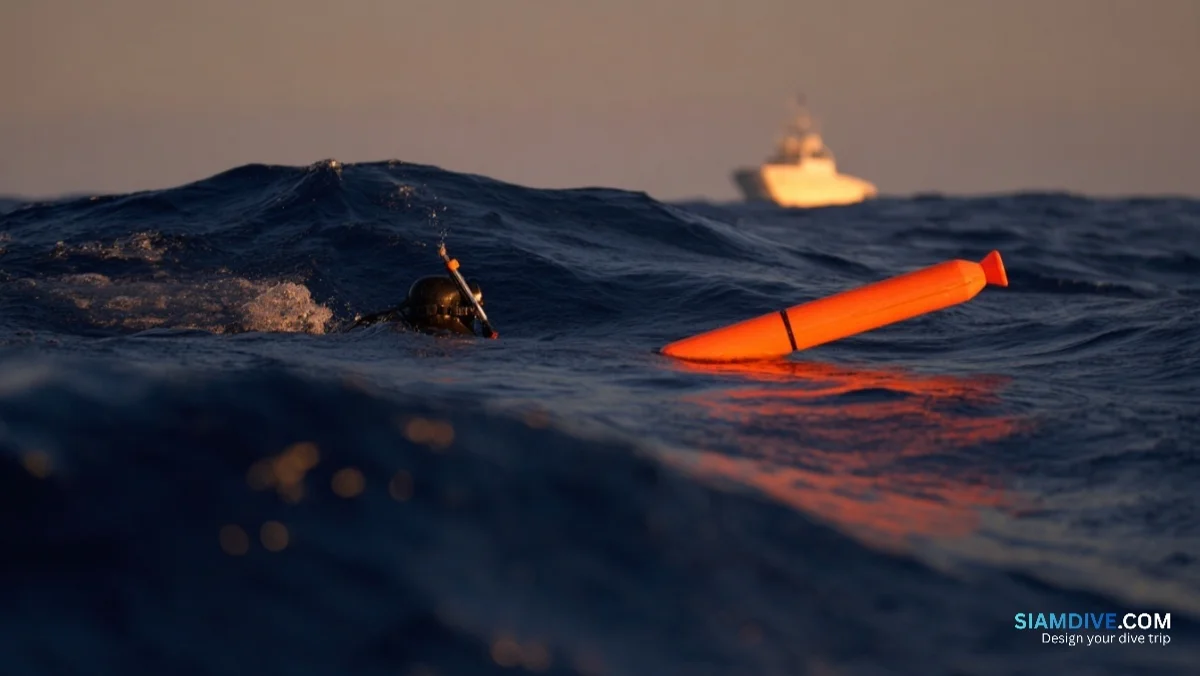
Safety-wise, maintaining visual contact with a buddy matters more here than at open-reef sites. The maze creates blind corners, and current can shift mid-dive. Carrying a surface marker buoy (SMB) is essential — ascending into open water between boulders with boat traffic above requires a visible signal. The February–March peak delivers the best combination of calm seas, high visibility, and warm water, making it the ideal window for a first visit to Elephant Head's granite labyrinth.