Darwin's Arch Lost Its Bridge — the Sharks Never Noticed
2 พฤษภาคม 2569
The arch fell in 2021 — but 200 hammerheads still circle Darwin's pillars every dawn. Currents, cleaning stations, and magnetic rock explain why.
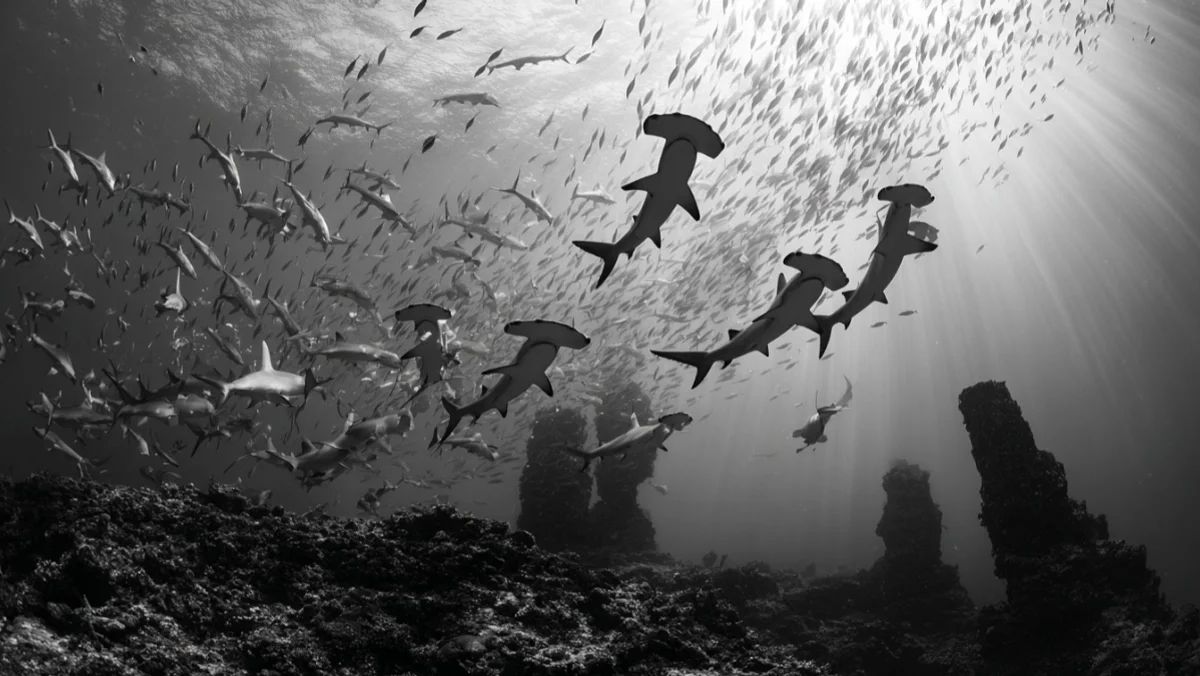
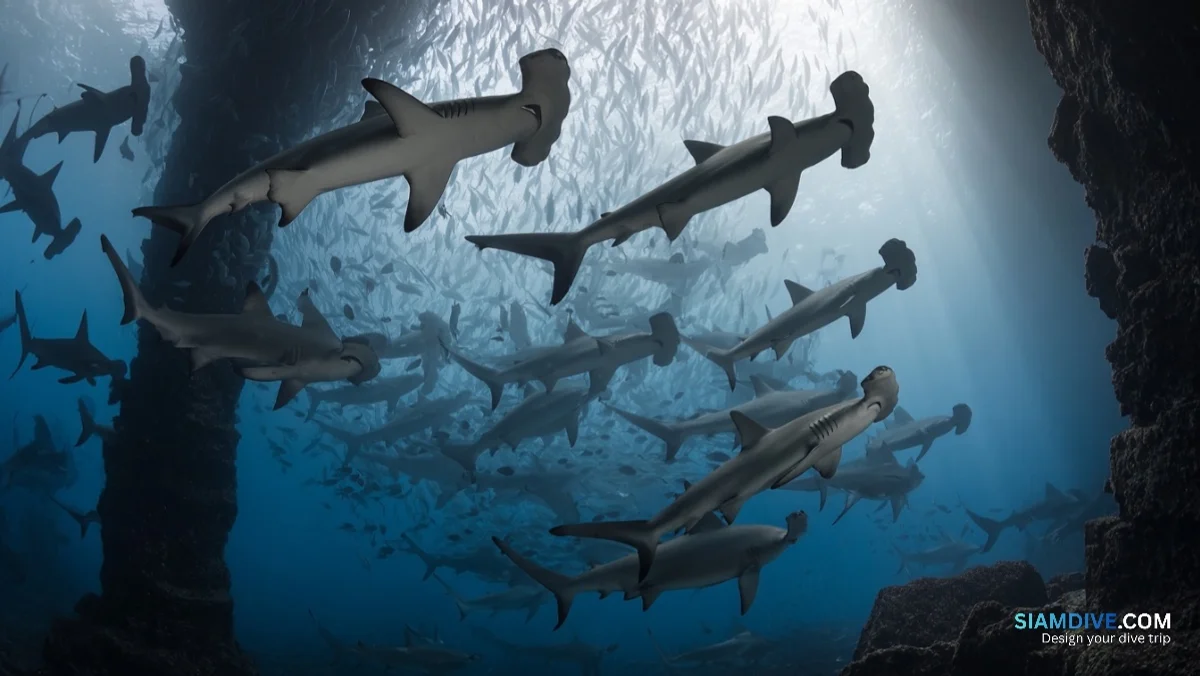
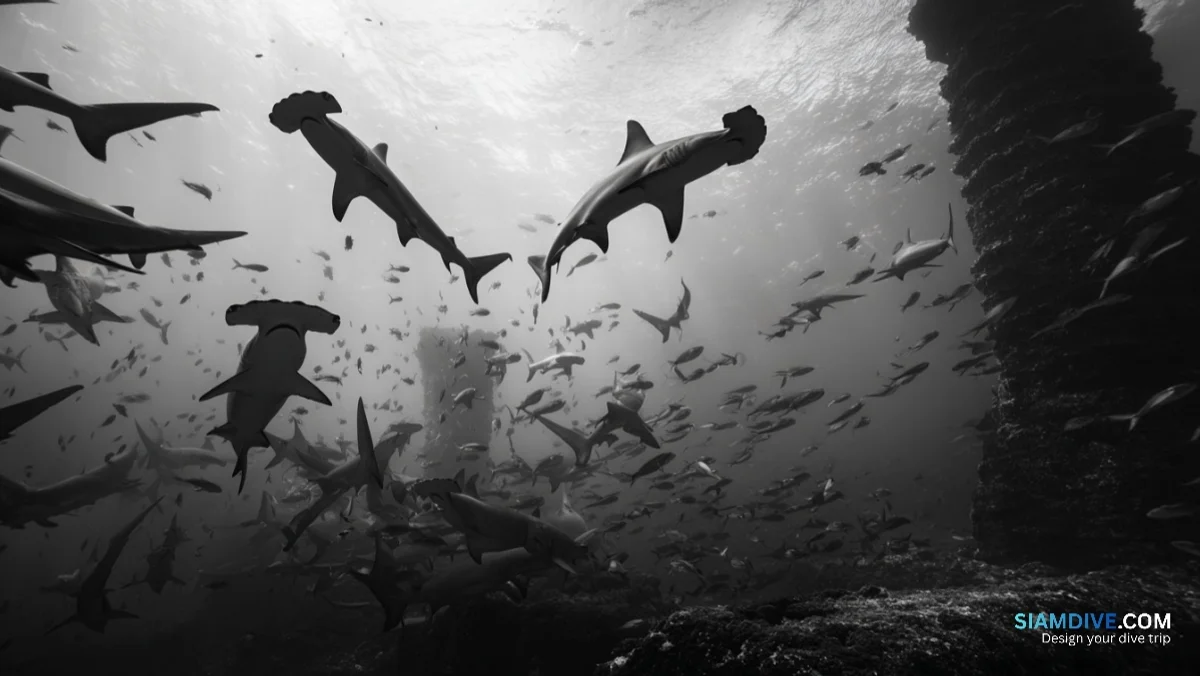
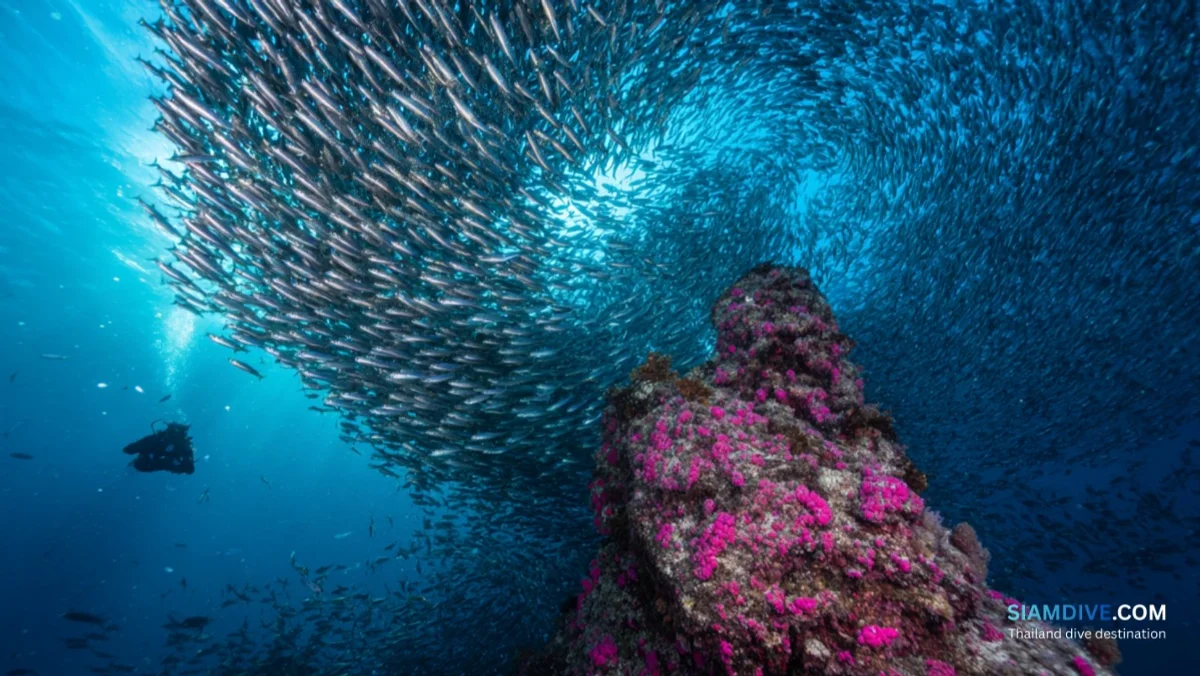
Two stone pillars stand where a bridge used to be. Forty metres below them, the first hammerhead appears at the edge of visibility — a silhouette with that unmistakable T-shaped head, cruising out of the blue at a depth where sunlight still has authority. Then the second. Then twenty more. By the time the school fills the frame, counting becomes pointless: the estimate runs past two hundred, a slow-motion carousel of scalloped hammerheads spinning at this exact GPS coordinate for longer than anyone has kept records.
Darwin's Arch — or what remains of it — sits 165 km northwest of the nearest inhabited Galápagos island. No runway, no dock, no shelter. Just volcanic rock, open Pacific, and one of the highest concentrations of pelagic life ever documented at a single dive site.
The Day the Arch Fell
At 11:20 a.m. on May 17, 2021, the natural stone bridge connecting Darwin's twin pillars gave way. Erosion from decades of wave action and wind finally snapped the span that gave the site its name. Ecuador's Environment Ministry attributed the collapse to natural forces — nothing anthropogenic, nothing sudden except the final crack.
Dive guides on the liveaboard anchored nearby watched rubble slide into the shallows. Social media mourned an icon. And beneath the surface, the hammerheads kept circling.
The submerged platform at 6–10 metres, the wall dropping beyond 30, the cleaning stations tucked into crevices — all remained exactly where they were the dive before. The arch had been a landmark for boats and birds, not for sharks. Locals coined a new name for the remnants: the Pillars of Evolution. It suits a dive site better than any marketing team could have managed.
Five years later, trip reports still describe the same spectacle: hundreds of hammerheads in the water column, whale sharks during the cold months, cleaning stations running at full capacity. The bridge was decoration. The current is the architecture.
What Makes One Rock Worth a 1,200-Kilometre Swim
Satellite-tagged scalloped hammerheads have been tracked travelling more than 1,200 km from Costa Rica's Golfo Dulce to Darwin's Arch, according to the Galápagos Science Center. The question is not whether hammerheads choose this spot — it is why they commute across open ocean to reach it.
Three factors converge here that exist almost nowhere else in combination.
The current collision. The cold, nutrient-rich Humboldt Current sweeps north from Antarctica along South America's western coast and collides with the warmer Cromwell Current — a deep equatorial undercurrent that upwells violently around the Galápagos. Darwin and Wolf Islands sit at the northern edge of the archipelago, directly in the collision zone. The result is a wall of plankton, baitfish, and dissolved oxygen that stacks against the submerged rock. For a pelagic predator, it is the equivalent of a motorway junction where every lane delivers food.
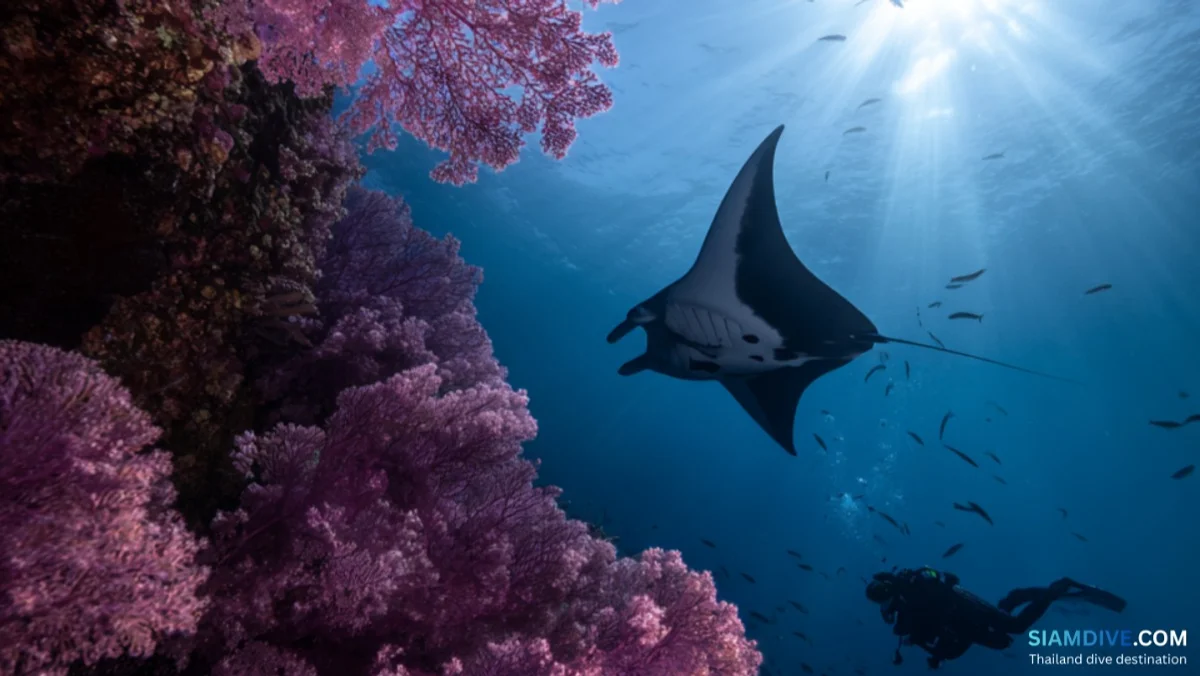
Cleaning stations. King angelfish and barberfish set up shop in the crevices of the platform. Hammerheads queue — there is no other word for it — hovering at unusual angles while small fish pick parasites from their gills and skin. Divers regularly observe hammerheads tilting 45 degrees or rolling belly-up, behaviours rarely seen at sites without dedicated cleaning infrastructure. The dynamic mirrors what happens at Thailand's Koh Bon Pinnacle, where mantas line up for the same barberfish service — different ocean, identical transaction.
Magnetic navigation. Scalloped hammerheads are believed to navigate using Earth's magnetic field. Volcanic seamounts like Darwin produce local magnetic anomalies — essentially signposts in an otherwise featureless ocean. Researchers suspect these anomalies serve as waypoints along migratory corridors connecting Galápagos with Cocos Island, Malpelo, and the Central American coast. The rock itself is part of the route, not just the destination.
Two Seasons, Two Oceans
Darwin delivers year-round, but the character of each dive shifts so dramatically that repeat visitors often book both seasons.
- Cold season (June–November) — Water temperature drops to 16–24 °C as the Humboldt Current dominates. Visibility tightens to 10–15 m on average, sometimes less. Plankton blooms cloud the water but trigger a feeding chain that draws in whale sharks, manta rays, and the largest hammerhead schools of the year. Galápagos Conservancy research shows that during this period, 90 % of tagged hammerhead movements stay within the Marine Reserve. Expect thermoclines that swing temperature 5 °C between your head and your fins, strong surge, and the kind of current that makes a reef hook feel essential.
- Warm season (December–May) — The Panama Current slides in from the north, lifting water temperature to 22–28 °C and pushing visibility to 15–30 m. Hammerhead schools shrink in number but never disappear — and clearer water makes wide-angle photography far more productive. Green turtles appear in greater numbers, schooling yellowfin tuna fill the mid-water column, and the reef itself becomes easier to appreciate.
The consensus among operators running Wolf–Darwin itineraries: July through October delivers the biggest pelagic shows, January through April the best conditions for shooting them. Neither season disappoints.
Species Roll Call Beyond the Hammerheads
Hammerheads headline every trip report from Darwin, but the supporting cast would justify the flight to Quito on its own.
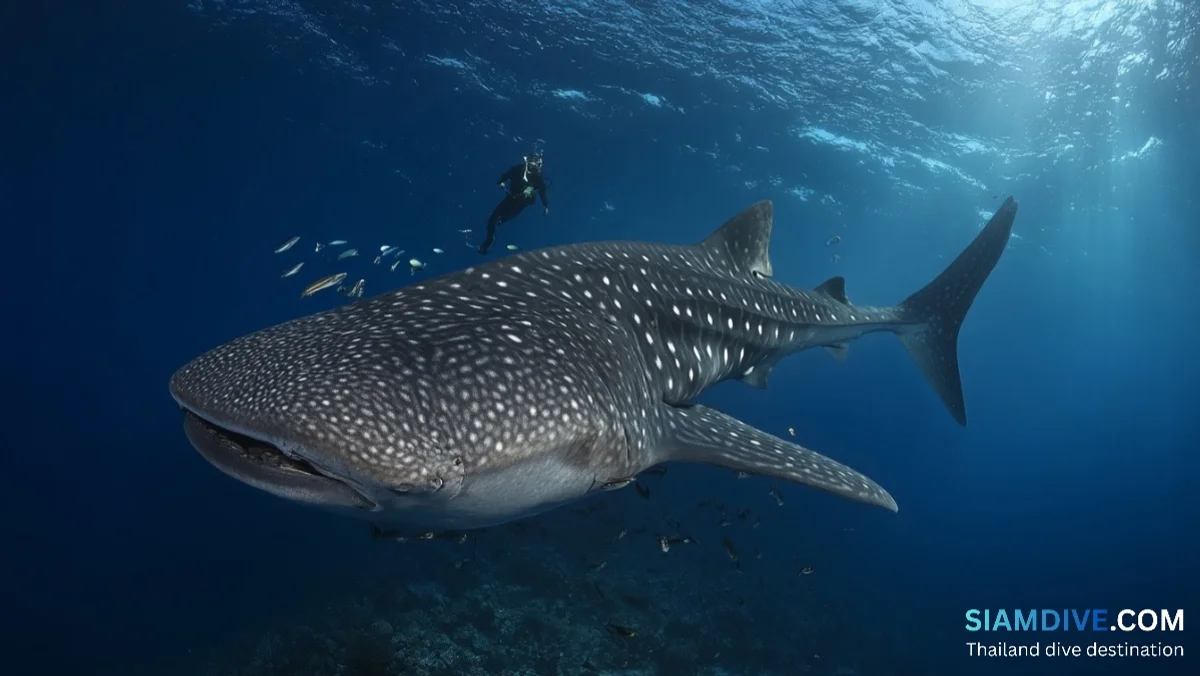
- Whale sharks — Seasonal visitors June–November, sightings peaking August–October. Individuals exceeding 12 metres have been photographed at the site. Many encounters happen near the surface during safety stops — a surreal end to an already surreal dive.
- Galápagos sharks — Resident year-round, patrolling the wall in groups of 5–15. Grey, heavy-bodied, with a rounded dorsal fin and no prominent markings.
- Silky sharks — Seen in the blue beyond the platform, especially during current-heavy dives. Groups of 20–30 are routine.
- Bottlenose dolphins — Regular visitors on the surface interval, sometimes buzzing divers during safety stops.
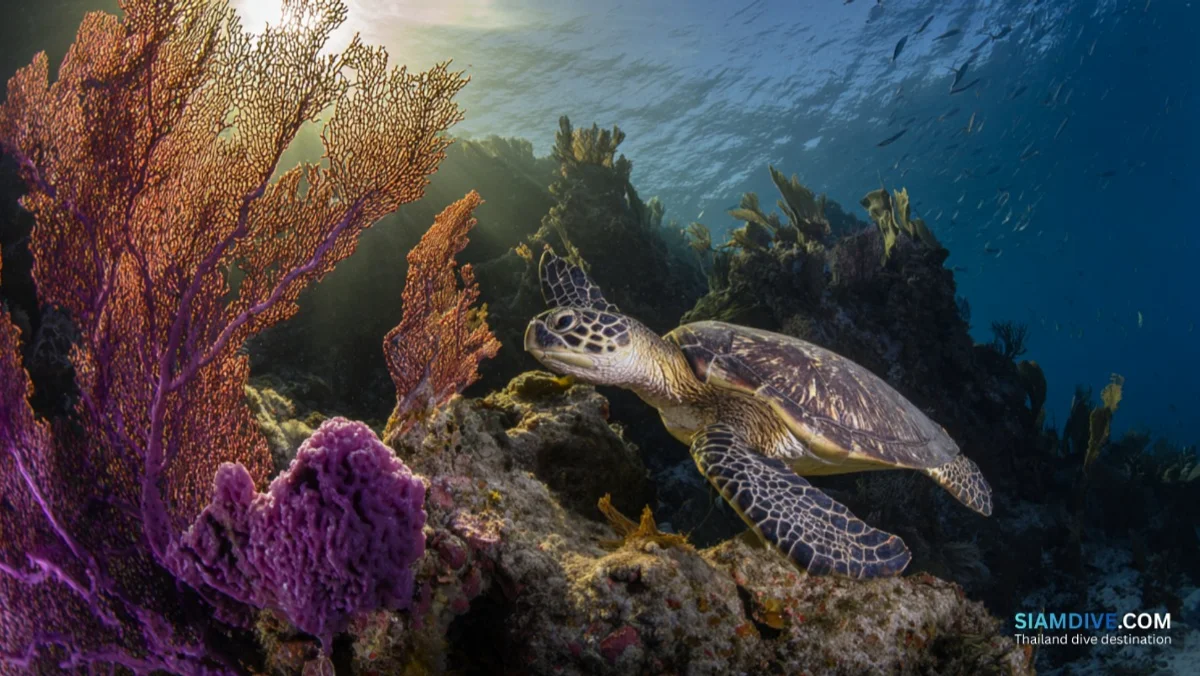
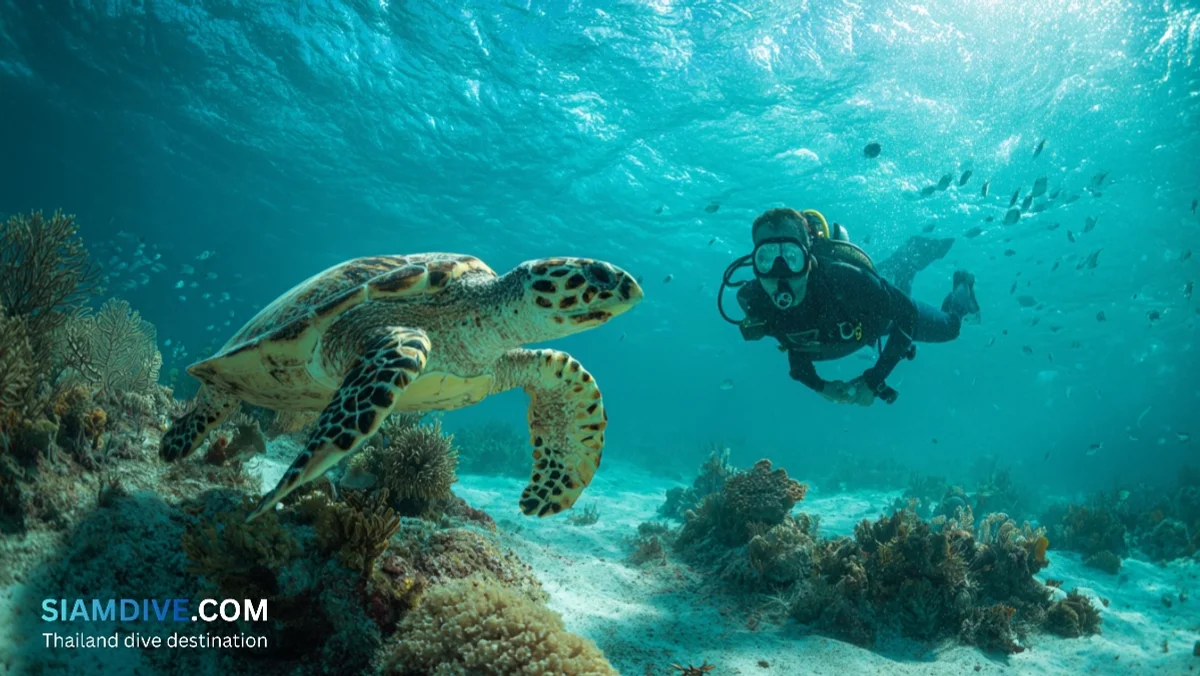
- Green sea turtles — Resting on the platform and along ledges, more numerous December–May.
- Eagle rays and golden rays — Cruising wall edges, occasionally in formations of 30 or more.
- Marine iguanas — Unique to Galápagos. Occasionally spotted grazing on algae in the shallows — the only lizard on Earth that forages underwater.
For another destination where a single underwater feature draws improbable species density, see why Cousteau chose Poor Knights.
The Price of Getting There
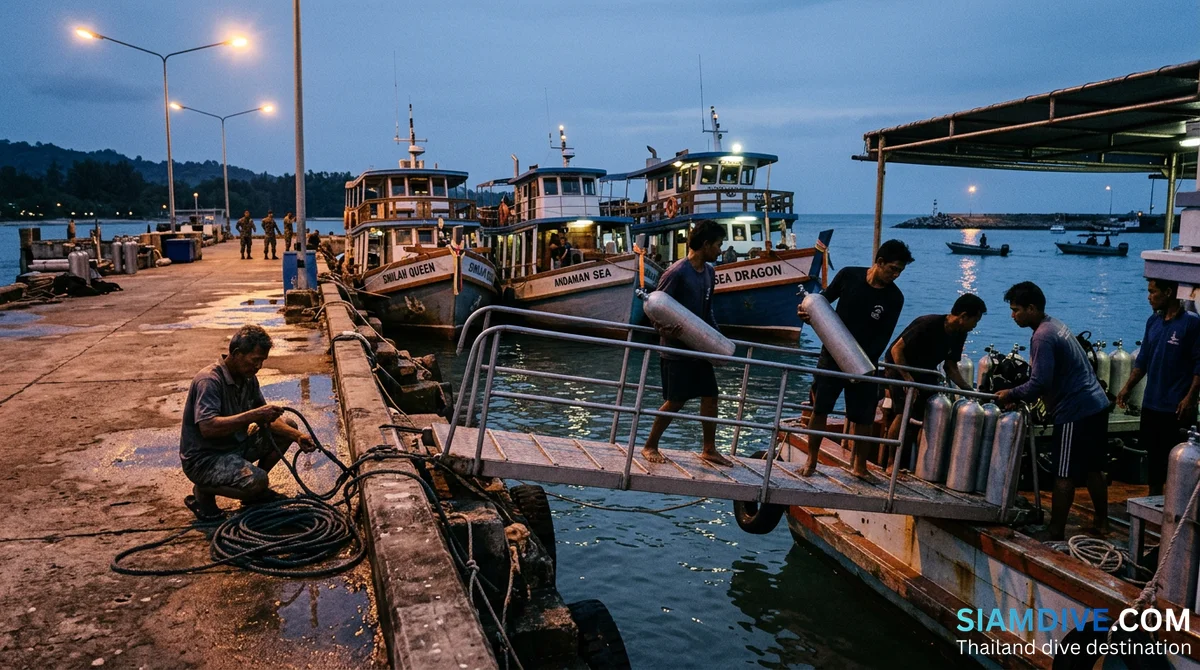
Darwin Island has no infrastructure — no dock, no mooring buoy ashore, no shelter. The only access is by liveaboard, typically a 7- or 8-night itinerary covering both Wolf and Darwin alongside closer sites like Cousin's Rock, Cabo Douglas, and Cape Marshall.
- Standard 8-day liveaboard (2026)
- From USD 6,390 per person, double occupancy — up to 4 dives daily, meals, airport transfers, 2 land excursions included
- Luxury 8-day expedition (2026)
- From USD 7,500 per person, double occupancy
- Galápagos National Park fee
- USD 200 per adult foreign visitor
- Flights to Galápagos
- Round trip Quito or Guayaquil to Baltra or San Cristóbal: approx. USD 400–500
- Minimum certification
- Advanced Open Water; most operators require 50+ logged dives and proof of recent cold-water or current experience
All-in, a week at Darwin runs USD 7,000–8,500 before international airfare. That is roughly what a Maldives liveaboard week costs — but where a Maldives trip delivers gentle reef and predictable mantas, Darwin delivers raw Pacific chaos and species diversity that few sites on Earth can match.
A Critically Endangered Schoolyard
The spectacle at Darwin's Arch rests on a conservation knife-edge. The IUCN reclassified scalloped hammerheads as Critically Endangered in 2019 — a reflection of steep global population declines driven by bycatch and the shark-fin trade.
Galápagos is one of the last strongholds. In 2017, the Galápagos National Park Directorate confirmed the first hammerhead nursery in the archipelago, along the northeastern coast of Santa Cruz Island — a discovery that reshaped understanding of the species' reproductive cycle in the Eastern Tropical Pacific. Those nursery grounds earned designation in 2023 as one of the IUCN's first Important Shark and Ray Areas (ISRAs), strengthening the legal framework for expanded protections.
The Charles Darwin Foundation runs long-term shark ecology research, tracking migratory corridors within the Marine Reserve and across the wider region. Every tagged hammerhead adds a data point. Every data point strengthens the case for keeping these waters closed to industrial fishing.
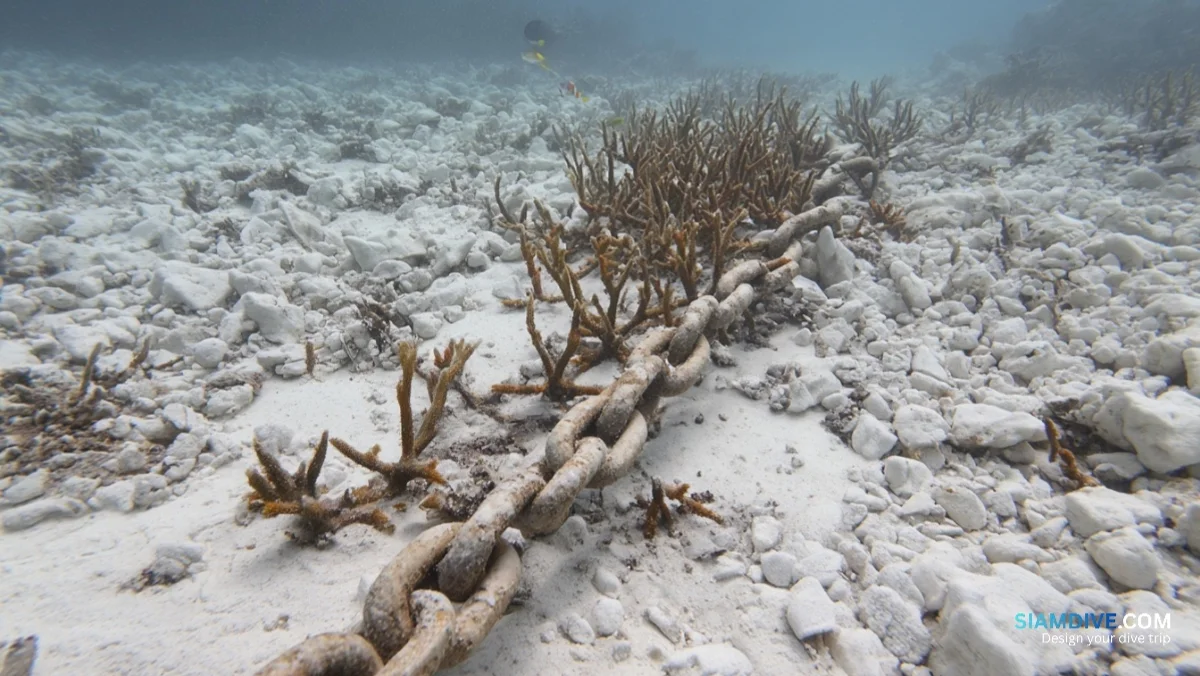
Every diver who descends at Darwin's Arch watches an animal that could vanish within a generation — or, if protections hold and nursery sites remain intact, could stabilise. That uncertainty is part of what makes the dive land differently from any other. For a closer look at how human activity erodes the habitats marine aggregations depend on, see what a single anchor drop can destroy.
Planning the Dive
- Getting there — Fly to Quito or Guayaquil, then connect to Baltra (GPS) or San Cristóbal (SCY). Most liveaboards depart San Cristóbal late afternoon on Day 1, reaching Wolf Island by the following morning. Darwin is another 6–8 hours northwest.
- Exposure protection — 7 mm wetsuit or semi-dry for cold season; 5 mm may suffice December–May. Hood, gloves, and reef hook are essential regardless.
- Nitrox — EANx certification saves bottom time and reduces surface-interval fatigue across 3–4 daily dives over a full week.
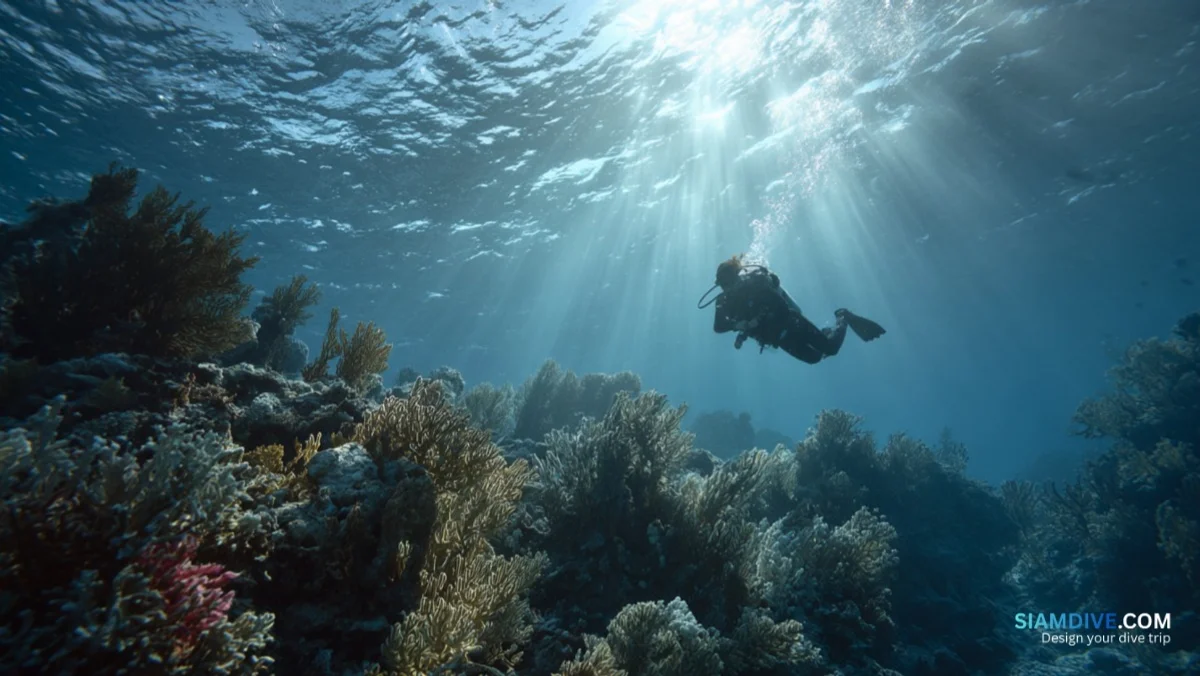
- Typical dive profile — Negative entry into 1–3 knot current. Descend to the platform at 6–10 m, hook into rock, and watch the parade. Wall dives along the drop-off reach 20–30 m. Safety stop at 5 m in open blue — often with dolphins or whale sharks drifting through.
- Photography — Wide-angle only. Fisheye or 10–17 mm rectilinear behind a dome. Strobes help in cold season when particles fill the water; natural light works December–May. The hammerhead wall shot requires patience — they approach closest when a diver holds position and breathes slowly.
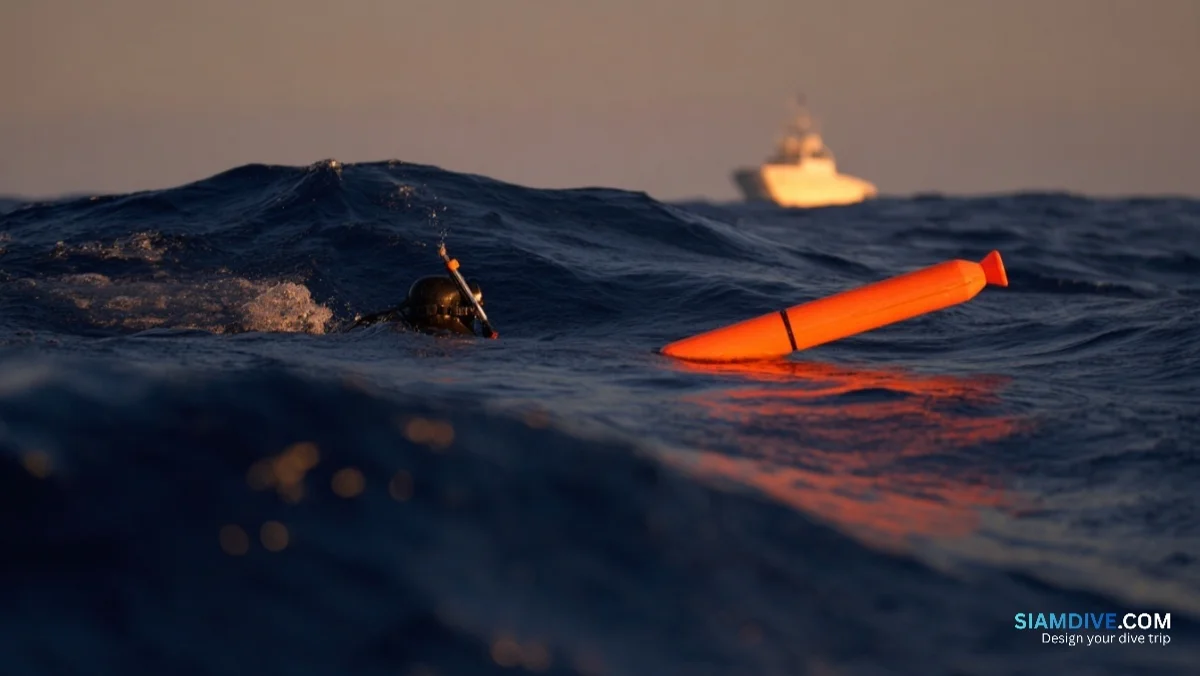
If you are building current-diving skills before attempting Darwin, SMB handling in drift is worth practising first.